Creative education is not a conveyor belt. It’s a crucible.
In the UK’s industrial strategy, the creative industries are rightly recognised as a pillar of national growth. But this recognition comes with a familiar risk: that education will be seen merely as a supplier of skills, a passive pipeline feeding talent into pre-existing systems.
This is a pervasive attitude, which so strongly influences the possibilities for students, they can be anxious about being “industry ready” before they’ve had the chance to explore or define fully what kind of practitioners they want to become. This is a reductive view and one we must resist. Creative higher education is not a service department for industry. It is a cultural force, a site of disruption, a collaborator and a generator of futures not yet imagined.
Partners not pipelines
Creative education does not simply serve industry – it co-shapes it. Our job is not just to deliver talent into predefined roles, but to challenge the boundaries of those roles altogether. We cultivate new forms of knowledge, artistic practice, and cultural leadership. As Michael Salmon has noted, HE’s relationship with the industrial strategy needs rethinking – we think especially in fields where “skills” are not easily reduced to training targets or labour force projections. Education is not just about plugging gaps; it’s about opening space for new kinds of thinking.
Christa van Raalte and Richard Wallis have called for “a better quality of conversation” about the skills agenda in screen and creative sectors. Their point that simplistic, linear approaches to “skills gaps” are not fit for purpose should land hard within our own walls too. We need a better quality of conversation around the creative skills agenda. Narrow, supply-side thinking is not only reductive, it risks cutting off the very dynamism on which the industry depends.
Our graduates don’t only “enter” the creative industries. They redefine them. They found new companies, invent new formats, challenge power structures, and expand what stories get told and who gets to tell them. To conceive of specialist creative HE as mainly a workforce provider is to misunderstand its essence. Our institutions are where risk-taking is possible, where experimentation is protected, and where the creative freedoms that industry often cannot afford are made viable.
Resistance from within
The danger isn’t just external. It’s internal too. Even within our own institutions, we sometimes absorb the language and logic of the pipeline. We begin to measure our worth by the requirement to report on short-term employability statistics. We are encouraged by the landscape to shape curricula around perceived “gaps” rather more than emerging possibilities. The pressure of metrics, league table and reputation help us to believe that our highest purpose is to serve, rather than to shape.
This internalisation is subtle and corrosive. It narrows our vision. It makes us reactive instead of generative. And it risks turning spaces of radical creativity into echo chambers of industry demand. It is a recipe for sameness and status quo, a situation many call to change.
We must be vigilant. We must ask ourselves: are we designing education for the world as it is, or for the world as it could be? Are we opening access, nurturing the disruptors, the visionaries, the cultural architects — or only the job-ready?
When creative institutions start to measure their value predominantly through short-term employability metrics, or shape curriculum mainly around perceived industry gaps, we lose the distinctiveness that makes us valuable in the first place.
We risk:
Designing education around current norms, not future needs
Prioritising technical proficiency over critical inquiry
Favouring students most likely to succeed within existing structures, rather than supporting those most likely to change them
If we define our purpose only in terms of industry demand, we abandon much responsibility.
From pipeline to ecosystem
What we need is a new compact: not “education as service provider,” but “education as ecosystem partner.” A pipeline feeds. An ecosystem nurtures, nourishes and grows.
This approach:
Recognises specialist creative HE as a site of research, innovation and values-driven practice
Treats industry as a collaborator, not a master – collaboration is especially present in research activity and creative projects led by industry professionals
Encourages co-creation of skills agendas, not top-down imposition
Embraces long-term thinking about sector health, sustainability, and inclusion – not just short-term workforce readiness
The creative economy cannot thrive without imagination, critical thinking, inclusion, and cultural complexity; all things specialist institutions are powerfully placed to nurture. But this can only happen if we reject limiting narratives about our role. The industrial strategy may frame education as an economic lever to support the growth in the creative industries, but we must resist being reduced to a lever alone. Meeting the opportunities in the strategy is both an invitation to engage with sector needs, help shape the future and a challenge to the cultures of training, pedagogy and research whose long roots exercise power in specialist HE.
If we want to protect and evolve the value of creative higher education, we must speak with greater clarity and confidence to government, to industry, and to ourselves. This is not about resisting relevance or rejecting partnership. It’s about ensuring that our contribution is understood in full: not only as a supply chain, but as a strategic and cultural force.
Importantly, we must acknowledge that our graduates are not just contributors to the UK’s creative economy – they are cultural ambassadors on a global stage. From Emmy, Oscar and BAFTA winning actors to internationally celebrated designers, technical artists, writers and directors (and so much more) UK-trained creatives shape discourse, aesthetics, and industries across the world. To frame their education in purely national economic terms is to limit its scope and power.
Because the purpose of creative education isn’t just to help students find their place in the industry. It’s to empower them – and us – to shape what that industry becomes.
This audio is auto-generated. Please let us know if you have feedback.
The Trump administration is tapping agencies other than the U.S. Department of Education to implement its agenda in colleges and K-12 schools, sometimes circumventing typical rulemaking procedures that would allow districts months to give feedback on and prepare for policy changes before they roll out.
The use of other agencies to set or enforce education policy marks a significant shift from typical K-12 policymaking, some education policy experts say.
“This is a paradigm shift on the part of how the federal government articulates and connects some of these tools to their education priorities,” said Kenneth Wong, a professor of education policy at Brown University. “So I think going forward, we might be seeing broader use of this wider range of policy tools in the area of education policy changes.”
This month, for example, a policy change from the U.S. Department of Energy could take effect that would undo some students’ protections related to sex discrimination under Title IX, disability discrimination under Section 504 and racial discrimination under Title VI.
The changes would only apply to colleges receiving Energy Department funds, as opposed to public institutions nationwide — which would have been the case had the rules come from the Education Department. The Energy Department provides over $2.5 billion in research funding to more than 300 colleges annually. The agency also distributed just over $160 million to 28 schools in fiscal year 2025, according to department spokesperson Ben Dietderich.
As a result of the quietly proposed policy changes, colleges receiving Energy Department grants would no longer, among other things:
Be required to facilitate noncontact sports team tryouts for women if there is no equivalent women’s team. For example, if a college had a men’s baseball team but no women’s softball team, women would no longer be guaranteed the opportunity to try out for a spot on the men’s baseball team.
Be permitted to proactively “overcome the effects of conditions that resulted in limited participation therein by persons of a particular sex.” This would remove protections that allow schools to have gender-conscious after-school or college programs to provide women and girls opportunities they have historically been denied, such as in STEM fields and technical training, according to Shiwali Patel, senior director of Safe and Inclusive Schools at National Women’s Law Center and a Title IX attorney.
Be required to prevent systemic racial discrimination that may result from seemingly neutral policies, as a result of the department rescinding guardrails protecting against policies that cause a “disparate impact” on underserved students. Disparate impact investigations have previously addressed issues such as Black students being disciplined at higher rates than students of other races.
The agency issued the policy changes through a process called direct final rulemaking, which allows it to issue a rule without going through the rulemaking process twice to incorporate changes based on public feedback and publish a final version. The expedited process is usually used for noncontroversial changes and when an agency does not expect significant pushback.
The rules are to take effect July 15 as long as no “significant adverse comments” were received by June 16. Dietderich did not respond as to whether the agency received significant adverse comments.
However, a review of some publicly available comments show that the direct final rules — posted May 16 — have been controversial, with multiple civil rights organizations explicitly telling the Energy Department they are submitting “significant, adverse” comments for its review.
Other agencies launch civil rights investigations and enforcement
The Energy Department situation isn’t the first time the Trump administration has deployed agencies other than the Education Department to set or enforce education policy. In fact, the administration has used the departments of Justice, Agriculture, and Health and Human Services over the past few months to investigate sex and race discrimination at schools and enforce compliance.
The administration notably used these agencies in an unprecedented investigation into the Maine Department of Education, spurred by a public disagreement between President Donald Trump and Maine Gov. Janet Mills, a Democrat, over the state’s athletic policy allowing transgender athletes on women’s and girls’ sports teams.
That dispute kicked off a string of Title IX investigations by several federal agencies that provide funds to Maine.
They included a four-day probe launched by HHS. And because HHS rather than the Education Department conducted the probe, it didn’t have to follow the standards spelled out in the Education Department’s Office for Civil Rights case processing manual. That manual ensures the Education Department conducts investigations according to certain timelines, for example, allowing up to 90 calendar days for negotiations to take place and 10 days for schools or states to sign onto a resolution agreement.
In addition, the U.S. Department of Agriculture froze funds to some of the state’s schools over the Maine Department of Education’s alleged Title IX violations.
“USDA, alongside other federal agencies, will continue to pause and, where appropriate, terminate categories of education programming in Maine if these Title IX violations are not resolved to the satisfaction of the Federal Government,” said an April 2 letter from Agriculture Secretary Brooke Rollins to Mills.
A court order eventually overturned the USDA funding freeze as part of an agreement struck in May between Maine and the USDA.
These Title IX enforcement actions through HHS, USDA and the Education Department culminated in the Trump administration referring the cases to the Department of Justice, which announced a civil lawsuit against Maine over Title IX compliance in April.
Since then, the administration has used these agencies to initiate and enforce other investigations into schools and states — including over antisemitism under Title VI — in states like California and Minnesota.
Sonja Trainor, executive director of the National School Attorneys Association, acknowledged that federal agencies have been setting and enforcing education policy outside of formal legal channels for many years.
But “what’s different now is the speed with which policy priorities are materializing into funding terminations and direct enforcement,” Trainor said in an email. “Of particular concern, of course, is funding and the prospect of being sued from many possible angles when policy shifts quickly.”
Wong said the Energy Department policy changes potentially taking effect could serve as a test case, as the Maine case did for civil rights investigations.
That means if the Energy Department’s changes went uncontested by districts concerning significant adverse effects, and thus go through in about 60 days as is usual for direct final rules, other agencies will also try setting education policy this way, Wong said.
“Basically every single school, in practically every single school district, has some grants from one of the many agencies in the federal government,” said Wong.
So while the immediate impact of the Energy Department changes would be limited to those that receive its funding, ultimately many more schools could be affected.
Policies related to diversity, equity and inclusion and Title IX are particularly susceptible here, said Wong. “I think there’s a whole bunch of standards that the current secretary of education is redefining, and so these other agencies are likely to provide a vehicle to kind of challenge the practice in the local school systems.”
Before Trump took office, the Education Department had 4,133 employees. After the mass layoffs, the department will have fewer than 2,200 staffers.
Photo illustration by Justin Morrison/Inside Higher Ed | Tierney L. Cross/Getty Images | Matveev_Aleksandr and raweenuttapong/iStock/Getty Images
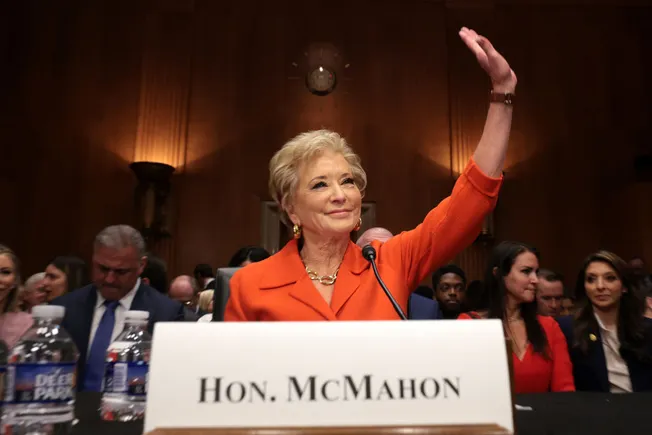
The Supreme Court gave Education Secretary Linda McMahon the go-ahead Monday to proceed in firing half the department’s staff and transferring certain responsibilities to other agencies.
The unsigned, one-paragraph order does not explain why a majority of justices decided to overturn a lower court injunction that an appeals court upheld. It did, however, explain that the injunction will remain blocked as lawsuits challenging mass layoffs at the department continue. The high court order represents a major step forward in President Donald Trump’s effort to dismantle the 45-year-old agency.
“Today, the Supreme Court again confirmed the obvious: the President of the United States, as the head of the Executive Branch, has the ultimate authority to make decisions about staffing levels, administrative organization, and day-to-day operations of federal agencies,” McMahon said in a statement about the decision. The department will now “promote efficiency and accountability and to ensure resources are directed where they matter most—-to students, parents, and teachers.”
The American Federation of Government Employees, the union representing the department’s staff, said the ruling was “deeply disappointing” and would allow the Trump administration to continue implementing an “anti-democratic” plan that is “misalign[ed] with the Constitution.” Sheria Smith, president of AFGE Local 252, added that just because McMahon can dismantle the department, that doesn’t mean she has to.
“Let’s be clear,” Smith wrote, “despite this decision, the Department of Education has a choice—a choice to recommit to providing critical services for the American people and reject political agendas. The agency doesn’t have to move forward with this callous act of eliminating services and terminating dedicated workers.”
The original ruling from a Maryland district judge required McMahon to reinstate more than 2,000 employees who were laid off in March. (As of July 8, 527 of those employees had already found other jobs.)
Higher education policy advocates and laid-off staffers warned that the department was already struggling to keep up with the overload of civil rights complaints and financial aid applications. With half the workforce, they said, fulfilling those statutory duties would be nearly impossible.
In addition to the layoffs, the lower court order prevented McMahon from carrying out Trump’s executive order to close the department to the “maximum extent appropriate and permitted by law.” Department officials later revealed in court filings that the order blocked a plan to send funding for career and technical education programs to the Department of Labor.
The departments reached an agreement in May regarding the CTE programs, but neither said anything about it publicly. CTE advocates worry that putting Labor in charge of about $2.7 billion in grants could sow confusion and diminish the quality of these secondary and postsecondary career-prep programs. Others see the shift as the beginning of the end of the Education Department. Democrats in Congress have objected to the plan, which can now move forward.
After news of the Supreme Court order dropped Monday, education policy experts sounded the alarm and took issue with the lack of explanation.
“The president can’t close down ED by fiat but Congress and SCOTUS sure can facilitate it,” Dominique Baker, an associate professor of education and public policy at the University of Delaware, wrote on BlueSky.
Daniel Collier, an assistant professor of higher education at the University of Memphis, also chimed in, asking, “Am I in the minority by believing that all SCOTUS rulings should have a well detailed and written rationale attached and there should be no exceptions?”
The Supreme Court’s order included a scathing 18-page dissent from Justice Sonia Sotomayor. Justices Ketanji Brown Jackson and Elena Kagan joined in full. Sotomayor noted that the department plays “a vital role” in the nation’s education system by “safeguarding equal access” and allocating billions of dollars in federal funding. Knowing this, she added, “only Congress has the power to abolish the department.”
“When the executive publicly announces its intent to break the law, and then executes on that promise, it is the judiciary’s duty to check that lawlessness, not expedite it,” Sotomayor wrote. “Two lower courts rose to the occasion, preliminarily enjoining the mass firings while the litigation remains ongoing. Rather than maintain the status quo, however, this court now intervenes, lifting the injunction and permitting the government to proceed with dismantling the department. That decision is indefensible.”
Others, however, said the Supreme Court made the right call.
“There is nothing unconstitutional about the executive branch trying to execute the law with fewer people, which is what the Trump administration is doing,” said Neal McCluskey, director of the Center for Educational Freedom at the Cato Institute, a libertarian think tank, who also contributed an opinion piece to Inside Higher Ed today. If the Trump administration wanted to eliminate the Department of Education unilaterally, he said, “It would have fired everyone. Not only did it not do that, but members of the administration have stated that it is ultimately Congress that must eliminate the department.”
This audio is auto-generated. Please let us know if you have feedback.
The U.S. Supreme Court on Monday allowed the Trump administration to proceed with laying off nearly half the U.S. Department of Education’s staff — a significant victory for the administration’s mission to dissolve the department to the greatest extent possible.
The decision in New York v. McMahongreen-lights the department’s reduction in force initiated in March as the original question of the layoffs’ legality works its way through the lower courts. The layoffs closed department offices and spurred concerns from public school advocates that the education system would descend into chaos with little federal oversight.
The Monday order allowing the reduction in force to continue was met with dissent from liberal justices Sonia Sotomayor, Elena Kagan and Ketanji Brown Jackson, who called the majority’s decision “indefensible” in their 18-page dissent.
“When the Executive publicly announces its intent to break the law, and then executes on that promise, it is the Judiciary’s duty to check that lawlessness, not expedite it,” they said.
U.S. Secretary of Education Linda McMahon, who was tasked with shutting down the department to the greatest extent “permitted by law,” celebrated the decision.
“Today, the Supreme Court again confirmed the obvious: the President of the United States, as the head of the Executive Branch, has the ultimate authority to make decisions about staffing levels, administrative organization, and day-to-day operations of federal agencies,” McMahon said in a statement.
Until now, the department’s RIF had left staff — who were technically still employed but had been on administrative leave since March — in limbo. The Trump administration had planned to lay off employees June 9, but U.S. District Judge Myong Joun ruled in May that the layoffs left the department as “a shell of itself” and required that staff remain employed in a preliminary injunction.
The layoffs leave the department with only about 2,183 employees out of its previous approximately 4,133.
“A department without enough employees to perform statutorily mandated functions is not a department at all,” Joun wrote. In a separate case, the same judge last month also ordered that the department’s Office for Civil Rights be restored to its former self.
Joun’s May order required the department to routinely report to the district court the steps it was taking to restore its staff — which it did by sending out multiple surveys to employees on administrative leave as a way of “actively assessing how to reintegrate you back to the office in the most seamless way possible.” At the same time, the department was appealing its case to the Supreme Court, hoping its RIF would be allowed through.
The Monday order from the Supreme Court means those employees can be terminated even as the case over the legality of the layoffs proceeds in the lower court.
The Supreme Court’s decision to allowthe layoffs was preceded by another decision from the high court in April that also bolstered the Trump administration’s attempts to close the department. That ruling maintained a freeze on over $600 million in teacher training grants that the administration called “divisive.”
It also follows a Supreme Court decision last week allowing mass terminations to move forward across other federal agencies.
Are statutory obligations impacted?
The department argued that depleting its staff by almost half — including closing down civil rights offices and leaving only a handful of employees in the office that administers the National Assessment of Educational Progress — does not impact its statutory obligations. McMahon has told concerned lawmakers that NAEP is administered through contracts that remain in place.
In the meantime, however, former employees and Democratic lawmakers allege the department has already missed key deadlines on tasks that are required by law, and that no one remains in place to oversee the contracts and ensure the quality of the work.
The annual Condition of Education report, for example, was due to Congress by June 1 — an obligation that the department missed “for the first time ever,” according to Sen. Patty Murray, D-Wash.
In place of fresh data analysis that the National Center for Education Statistics released each year on over 20 topics — including those relevant to current events such as the COVID-19 pandemic and school shootings — the department repurposed already-released analysis on a handful of topics, former NCES employees said.
The department said on its website it would be ”updating indicators on a rolling basis” due to its “emphasis on timeliness” and would determine “which indicators matter the most.” More than a month after the missed June 1 deadline, however, the report still only includes a highlights page with five topics linking to data tables.
Democratic lawmakers also sounded alarm bells over the agency’s delay in distributing grant funding, including Title I-A grant funds, saying it took three times as long to distribute the money than under the Biden administration’s fully staffed department.
The Title I-A program provides $18.4 billion by formula to more than 80% of the nation’s school districts.
As a result of the delay, lawmakers said, states and districts would have less time to allocate funds meant to help students experiencing homelessness and other underserved students.
Decision sparks outcry
The order sparked outcry on Monday from the American Federation of Government Employees Local 252, the union representing the more than 1,000 Education Department employees laid off.
“This effort from the Trump administration to dismantle the Department of Education is playing with the futures of millions of Americans, and after just four months, the consequences are already evident across our education system,” said Sheria Smith, the union’s president, in a statement. Smith called the Supreme Court decision “deeply disappointing.”
A union official said the decision could also negatively impact federal education funding and services, a concern shared by the American Federation of Teachers, which is part of a coalition of parties in the lawsuit challenging the layoffs.
“This unlawful plan will immediately and irreparably harm students, educators and communities across our nation,” the coalition said in a statement.
However, the U.S. Department of Education said in a Monday statement that it “will now deliver on its mandate to restore excellence in American education.”
“As we return education to the states, this Administration will continue to perform all statutory duties while empowering families and teachers by reducing education bureaucracy,” the department said.
If you’re a university leader today, you’re juggling a lot: enrollment challenges, tightening budgets, shifting student expectations, and the rise of non-traditional competitors. Amid all this, one asset might not be getting the attention it deserves — your university’s brand.
No, not just your logo or tagline. We’re talking about brand equity — the value your institution holds in the minds of students, parents, alumni, faculty, employers, and the public. It’s about reputation, trust, recognition, and connection. And in a competitive market, it matters now more than ever.
What is brand equity in higher education?
Think of it this way: Brand equity is what people think and feel when they hear your university’s name. It’s the difference between being someone’s first-choice school versus just another option.
It shows up in the pride alumni feel when they wear your sweatshirt, the confidence prospective students have when they see your graduates succeed, and the trust employers place in your credentials. It’s shaped by every experience — from the way your website tells your story, to how your faculty engage in the classroom, to the tone of your communications during a crisis.
It’s what drives alumni to give, students to enroll, and faculty to choose you over other institutions. When a university has strong brand equity, people trust it, recognize it, and feel loyal to it. That kind of reputation can spark a ripple effect of positive influence across an entire institution.
Understanding the impact of brand equity across an institution
Brand equity touches every dimension of institutional life, influencing how people experience, perceive, and engage with your university across the student and stakeholder journey. Let’s take a look at its impact in six key areas.
1. Enrolling new students
Choosing a college is a huge decision for students and their families. Today’s students are more informed than ever and expect an institution that’s respected, innovative, and committed to their success.
That’s where your brand can make an impact. If your university has a strong, positive reputation, you’re more likely to make their shortlist. Schools with solid brand equity are seen as high-quality, forward-thinking, and worth the investment, which makes all the difference in a world where competition is fierce and the landscape is changing fast.
2. Attracting top faculty
It’s not just students who care about a school’s reputation — faculty and academic leaders do too. A strong, well-respected brand sends a clear message: This place is serious about excellence, values academic freedom, and encourages innovation.
It’s not just about prestige — top talent also wants to be somewhere that fosters genuine, supportive relationships with students. A respected brand signals a vibrant academic culture where everyone’s invested in each other’s success.
3. Fostering alumni pride
When a university has strong brand equity, it’s not just about reputation — it’s about the sense of pride and connection it creates. Alumni who feel proud of their alma mater are more likely to stay involved, whether that means attending events, volunteering, or giving back financially.
A strong brand also helps foster a lasting sense of community and belonging well beyond graduation. In short, when your brand is trusted and respected, alumni remain engaged — and they’re more likely to support the institution not only with their resources but by recommending it to future students within their networks.
4. Securing strategic partnerships
Whether you’re aiming to partner with major companies, secure government grants, or build global collaborations, having a strong brand can be a significant factor. Organizations want to work with universities they respect, trust, and recognize as leaders in their field.
When your university’s brand is strong and clear, opportunities that are imperative to your institution open up more quickly. Meanwhile, lesser-known schools often struggle to get noticed. Building a strategic and strong brand is your best way to stand out and secure meaningful partnerships that benefit your students and your bottom line.
5. Staying resilient amid market disruption
Higher education is under pressure from various directions shifting demographics, financial constraints, and evolving expectations. A strong brand is essential to stay resilient and relevant.
When controversy, crises, or big changes hit, your brand becomes your safety net. People are far more likely to give you the benefit of the doubt if they already respect and trust you. That reputation can be the difference between weathering the storm and facing long-term damage.
6. Boosting visibility through rankings
While rankings aren’t everything, they do influence perception. Many ranking systems factor in peer reputation, which is directly tied to your brand. The same goes for media coverage. The stronger your brand, the more likely you are to be recognized as a thought leader and trusted voice in the field.
Ready for a Smarter Way Forward?
Higher ed is hard — but you don’t have to figure it out alone. We can help you transform challenges into opportunities.
Practical tips for building brand equity that lasts
University leaders can’t afford to view brand as merely a marketing function— it’s so much more than that. Brand must be seen as a strategic asset embedded in everything from big-picture planning to day-to-day decisions. It’s part of how you attract students, build partnerships, and earn trust.
So how can you turn brand equity into a competitive advantage for your institution? Here are a few key moves to get started:
1. Know what you stand for
Start with a clear sense of who you are and what makes your school unique. What do you want people to feel when they think of your institution? Your brand promise should reflect your values, vision, and personality — and it should feel real, not like something cooked up in a boardroom.
2. Take time to truly know your audience
What matters most to your students, parents, alumni, and faculty? What are they proud of, and what do they wish were better? Take time to listen — through surveys, conversations, and social media — and use those insights to shape your strategy and message.
3. Tell one clear, consistent story
Your brand shows up everywhere: your website, your campus tours, your social media posts, even how your staff answers the phone. Make sure that story feels authentic, easy to understand, and consistent across every touchpoint. Developing comprehensive brand guidelines, share them widely across the institution, and conduct regular audits to ensure every touchpoint reinforces a unified, memorable experience for all audiences.
4. Get your people involved
Your brand isn’t just a logo — it’s how people talk about your institution and the trust they place in it. That means faculty, staff, students, and alumni all have a role to play. Keep them in the loop, give them the tools to share your story, and make them feel like part of the bigger picture. Want to get more people talking about — and proud of — your school? Make it easy for them. Share what’s happening through newsletters and social media and provide your community with tools that help them show off their connection. When faculty, staff, students, and alumni feel informed, celebrated, and included, they’re more likely to stay engaged — and more likely to brag about being part of your institution.
5. Make sure the experience matches the message
If you’re promising innovation, inclusivity, or career readiness, you better be delivering that on campus, in the classroom (both online and in person), and beyond. Brand equity grows when expectations match real experiences. That’s why creating a seamless website experience is so important — it directly impacts how much trust students place in your institution and it’s offerings.
6. Get the word out (strategically)
Raising awareness isn’t just about marketing louder — it’s about marketing smarter. Use the right mix of channels, from digital ads and social media to speaking opportunities for university leaders. And don’t forget about earned media and storytelling that highlights real student success. Do this by building a strategic content plan that aligns messaging across platforms, targets the right audiences, and consistently showcases the impact your institution makes.
7. Keep a pulse on your reputation
What are people actually saying about your school? Check in regularly using surveys, online reviews, social listening, and even informal feedback. This will help you spot issues early and see what’s working.
8. Be prepared to evolve
Higher ed is changing fast, so your brand needs to be flexible. Stay grounded in your core values, but be open to shifting your tone, visuals, or messaging as your audience and the world around you change.
Build a brand with a lasting legacy and immediate impact
In an age of increasing competition and shifting student expectations, brand equity is no longer a luxury — it’s a leadership priority. With students having endless options, donors getting more selective, and reputations spreading instantly, your brand equity can be a serious competitive edge.
Investing in a strong, authentic, and trusted brand can lay the foundation for long-term success. The institutions that thrive in the years ahead will be those that treat their brand as a central part of their overall strategy instead of a marketing afterthought.
Because in higher ed, your brand isn’t what you say it is — it’s what people believe it to be. And that belief? That’s your brand equity.
Ready to strengthen your institution’s brand equity? Explore how a strategic marketing approach can help you stand out and thrive. Let’s talk!
Innovation Starts Here
Higher ed is evolving — don’t get left behind. Explore how Collegis can help your institution thrive.
New Zealand relaxes some immigration rules – including upping the number of hours overseas students can work outside of their studies – in its bid to attract more international students
Immigration New Zealand unveils ambitious plan to tempt 35,000 more international students to the country by 2034
Government shines light on economic benefits of international education, but says it will keep an eye on education quality and the impact on local communities as the sector grows
The New Zealand government has launched the International Education Going for Growth plan, as part of its broader strategy to increase international student enrolments from 83,700 in 2024 to 119,000 by 2034, and double the sector’s value from NZ$3.6 billion ( £1.60 billion) to NZ$7.2 billion (£3.20 billion).
On Monday, Immigration New Zealand announced changes to immigration rules to help the country “attract more international students, maintain high education standards, and manage immigration risks”.
On November 3 this year, INZ will implement changes to increase the permitted work hours for eligible study visa holders from 20 to 25 hours per week, and extend in-study work rights to all tertiary students enrolled in approved exchange or study abroad programs, including those on one-semester courses.
As per data published by INZ, currently 40,987 study visa holders have in-study work rights with 29,790 set to expire on or before March 31 2026, with the remaining 11,197 visas expected to lapse after that date.
The new rules on work hours will apply only to students who have been granted a visa from November 3 onward, meaning those with existing visas limited to 20 hours per week will need to reapply to avail the increased allowance.
On average in 2024, an international student spent NZ$45,000 across the year. That means… ultimately more jobs being created Erica Stanford, New Zealand education minister
“This (increase in work hours) will apply to all new student visas granted from that date, even if the application was submitted earlier,” read a statement by INZ.
“If you already have a student visa with a 20-hour work limit and want to work up to 25 hours, you will need to apply for a variation of conditions or a new student visa. The relevant immigration fees will apply.”
While international students in years 12 and 13 are eligible under the new rules, they will still be required to obtain both parental and school permission to work during the academic year, even with the increased limit of 25 hours per week.
Moreover, international graduates who do not qualify for post-study work rights may soon have access to a short-duration work visa of up to six months, giving them time to seek employment in their field under the Accredited Employer Work Visa pathway.
The government is also investigating how to make it easier for students to apply for multi-year visas.
“International education is one of our largest exports, injecting NZ$3.6 billion into our economy in 2024. It also provides opportunities for research, strengthening trade and people-to-people connections, which are important to drive investment, productivity and innovation in New Zealand,” read a statement by education minister, Erica Stanford.
“On average in 2024, an international student spent NZ$45,000 across the year. That means more visits to our cafes and restaurants, more people visiting our iconic attractions and ultimately more jobs being created.”
As per data released by Education New Zealand, international enrolments are inching toward pre-Covid levels, with 2024 figures (83,425) now reaching 72% of the 2019 total of 115,705.
According to ENZ chief executive Amanda Malu, while China and India remain New Zealand’s two largest international student markets, accounting for 34% and 14% of enrolments respectively, they are followed by Japan (9%), South Korea (4%), Thailand (3%), the United States (3%), Germany (3%), the Philippines (3%), and Sri Lanka (3%)
It’s important to strike the right balance between increasing student numbers, maintaining the quality of education, and managing broader impacts on New Zealanders Erica Stanford, New Zealand education minister
New Zealand wants to “supercharge” this rising momentum and position New Zealand as the destination of choice for international students, according to Stanford.
This includes increasing awareness of New Zealand as a study destination from 38% in 2024 to 44% by 2034, and raising the proportion of prospective students who rank the country among their top three study choices from 18% to 22% over the same period.
“To achieve our ambitious target, we’re taking a considered and strategic approach. It’s important to strike the right balance between increasing student numbers, maintaining the quality of education, and managing broader impacts on New Zealanders. Our plan will deliver that,” stated Stanford.
In Free Speech Coalition v. Paxton, the U.S. Supreme Court broke new ground in applying relaxed First Amendment scrutiny to state-imposed burdens on lawful adult access to obscene-for-minors content. The decision appeared outcome-driven to uphold laws that require websites with specified amounts of sexually explicit material to verify users’ ages. However, the Court indicated the holding applies only “to the extent the State seeks only to verify age,” such that, if handled in a principled manner, FSC v. Paxton should have relevance only for speech to which minors’ access may be constitutionally restricted.
FSC v. Paxton involved Texas HB 1181’s mandate that online services use “reasonable age verification methods” to ensure those granted access are adults if more than a third of the site’s content is “sexual material harmful to minors,” which the Court treated as content First Amendment law defines as “obscene for minors.” If an adult site knowingly fails to age-verify, Texas’ attorney general may recover civil penalties of up to $10,000 per day, and $250,000 if a minor actually accesses pornographic content. HB 1811 is one of over 20 state adult-content age-verification laws recently passed or enacted.
Obscenity is among the few categories of speech the First Amendment doesn’t protect. In 1973’s Miller v. California, the Court defined obscenity as speech that (1) taken as a whole appeals primarily to a “prurient interest” in sex (i.e., morbid, unhealthy fixation with it); (2) depicts or describes sexual or excretory conduct in ways patently offensive under contemporary community standards; and (3) taken as a whole, lacks serious literary, artistic, political, or scientific value. The Court has limited the test’s scope to what it calls “hardcore pornography.” Material that is “obscene for minors” is that which satisfies the Miller test as adjusted to minors. Sexually explicit material can thus be obscene for minors but fully protected for adults.
Under these tests, the government may ban obscene speech and restrict access by those under 18 to speech that is “obscene for minors,” but it cannot cut off adults’ access to non-obscene sexual material.
It’s long been accepted that, to access adult, potentially obscene-for-minors material in the physical world, showing identification to prove age may be required. So, a law requiring ID to access such content online might seem analogous on its face.
But online age-verification imposes risks physical ID checks do not. An adult bookstore clerk doesn’t save a photocopy of your license or track the content you access. Nor will hackers, therefore, try to access the ID. These are just some of the reasons surveys consistentlyshow a majority of Americans do not want to provide ID to access online speech — whether adult material or other content, like social media.
Texas’ HB 1181 is similar to two federal statutes the Supreme Court invalidated around the turn of the millennium. In 1997, the Court in Reno v. ACLU unanimously struck down portions of the Communications Decency Act that criminalized transmitting “obscene or indecent” content. And in 2002’s Ashcroft v. ACLU, it considered whether the Child Online Protection Act violated the First Amendment in seeking to prevent children’s access to “material harmful to minors” in a way that incorporated age verification.
For decades, the Court has held statutes that regulate speech based on its content must withstand judicial review under strict scrutiny, which requires the government to demonstrate that the law is necessary to serve a compelling government interest and is narrowly tailored to achieve it using the “least restrictive means.” For laws restricting access to online speech, the Court held the laws in Reno and Ashcroft unconstitutional because they failed strict scrutiny. These cases followed in the footsteps of Sable Communications vs. FCC (1989) and United States v. Playboy (2000), in which the Court applied strict scrutiny to invalidate laws governing adult material transmitted by phone and on cable television stations, respectively.
But in FSC v. Paxton, the Court subjected Texas’ age-verification law for online adult content to only intermediate scrutiny. Under this standard of review, a speech regulation survives if it addresses an important government interest unrelated to suppression of speech, directly advances that interest in a direct and material way, and does not burden substantially more speech than necessary. The Court justified applying a lower level of scrutiny on the ground that minors have no First Amendment right to access speech that is obscene to them. Accordingly, it reasoned, even if adults have the right to access “obscene for minors” material, it is “not fully protected speech.” From there, the Court concluded that “no person — adult or child — has a First Amendment right to access speech that is obscene to minors without first submitting proof of age.” And it upheld the Texas law under intermediate scrutiny, concluding the regulations only incidentally restrict speech that can be accessed by adults.
The upshot is, going forward, it will be easier to justify laws restricting minors’ access to off-limits expression even if the law burdens adults’ access to material that is otherwise lawful for them.
At the same time, the majority opinion sought to limit the type of content that can be restricted only to material that meets the legal definition of “obscene-for-minors” material, and not anything that might be considered generally inappropriate.
As the Court held in Brown v. Entertainment Merchants Assn. (2011), “minors are entitled to a significant measure of First Amendment protection, and only in relatively narrow and well-defined circumstances may government bar public dissemination of protected materials to them.” And in Reno, which involved similar attempts to limit provision of online content to minors, the Court held the government could not ban “patently offensive” and “indecent” (but not obscene) material for everyone in the name of protecting children.
Free Speech Coalition should not be read as approving age verification laws for online speech generally that do not specifically target “obscene for minors” material. Its narrow focus will not support the recent spate of social media age-verification laws that have met significant judicial disapproval. Such laws have been enjoined in Arkansas, Mississippi, California, Utah, Texas, Ohio, Indiana, Florida, and most recently last week, when a federal court held Georgia’s version “highly likely [to] be unconstitutional” because it interferes with minors’ rights “to engage in protected speech activities.”
The risk, of course, is that governments will seek to leverage FSC v. Paxton decision beyond its limited holding, and/or that lower courts will misuse it, to justify prohibiting or regulating protected speech other than that obscene as to minors. In defending laws that implicate the First Amendment, the government often argues it is regulating only conduct, or unprotected speech, or speech “incidental” to criminal conduct.
Courts for the most part have seen through these attempts at evasion, and where a speech regulation applies based on topic discussed or idea or message expressed, or cannot be justified without reference to its function or content, courts apply strict scrutiny. Under FSC, however, would-be regulators have another label they can use — “partially protected speech” — and the hope that invoking it will lead to intermediate scrutiny.
Only time will tell if the Court will keep the starch in its First Amendment standards notwithstanding what should be the purple cow of FSC v. Paxton.
Africa is home to more than 3,200 recorded freshwater fish species — a number that grows annually as new species are described, including 28 in 2024 alone. Yet many of these species live in isolation, bound to single lakes or rivers. The continent’s geography, fractured by plateaus, mountains and deserts, has produced distinct and stunning radiations of life.
Consider the cichlids of Africa’s Great Lakes: Lake Malawi alone harbours over 800 species, most found nowhere else. Some parent their young by brooding them in their mouths; others, like Nimbochromis livingstonii, feign death to lure prey. In the Congo’s lightless rapids, Lamprologus lethops has evolved with skin-covered eyes.
Lungfish, relics of the Devonian era, survive years of drought by burrowing into mud and breathing air through primitive lungs. The ornate bichir, another ancient lineage, gulps air through a lung-like swim bladder and can endure short stints out of water if kept moist.
Cichlids and cuckoo catfish
In Lake Tanganyika, the cuckoo catfish surreptitiously deposits its eggs among those of mouthbrooding cichlids, leaving its young to be raised — at the expense of their foster siblings — by another species.
These are not curiosities, but rather sentinels. Freshwater fish are the regulators of aquatic ecosystems — grazers, predators, cleaners and recyclers of aquatic systems.
They “are an aquatic version of the canary in the coal mine for Africa’s rivers, lakes and wetlands,” the report warns. “If the continent’s freshwater ecosystems deteriorate to the point where they can’t support thriving fish populations, they won’t be healthy enough to continue to underpin Africa’s societies and economies”.
The cost is already being felt. On the Kafue Flats in Zambia, once a thriving fishing ground that supplied 15-22% of the nation’s catch, dam construction has altered seasonal flood pulses. Permanent inundation has decoupled the river from its floodplain. Five key fish species have become commercially extinct.
In Salonga National Park in the Democratic Republic of Congo, local fishers have resorted to toxic fishing methods, poisoning the very waters they depend on. Along the Rufiji River in Tanzania, traditional species like the Rufiji tilapia are declining under pressure from monofilament nets and habitat loss.
Despite the devastation, the report also offers hope. Community-led conservation is showing results. In Tanzania’s Lake Tanganyika region, 21 Beach Management Units — local organizations of fishers, elders, and women — are enforcing seasonal fishing bans and banning destructive gear. In Zambia’s Liuwa Plain and conservancies in Namibia, fishers are co-managing resources with support from WWF and The Nature Conservancy.
Conserving freshwater ecosystems
In Angola, community leaders are building bottom-up monitoring systems to track and protect fish stocks. In Madagascar, captive breeding programs are trying to save rainbowfish and cichlids teetering on the edge of extinction.
Still, freshwater ecosystems remain the “forgotten sibling” of terrestrial and marine conservation. Their decline has unfolded quietly, out of sight of many global decision-makers. “It’s time we stopped treating freshwater fishes as an afterthought,” said Nancy Rapando, WWF’s Africa Food Futures Lead. “They are central to Africa’s biodiversity, development and future. We must act now before the rivers dry out.”
The report outlines a science-based Emergency Recovery Plan — a six-pillar framework that includes restoring natural river flows, improving water quality, protecting habitats, ending unsustainable use, controlling invasive species and removing obsolete dams to let rivers run free.
“These six pillars have all been successfully implemented successfully around the world,” said Eric Oyare, WWF Africa’s freshwater lead. “With bold leadership, African countries can adapt them to local contexts.”
The Freshwater Challenge, a growing coalition aiming to restore 300,000 kilometres of degraded rivers and 350 million hectares of wetlands now includes 20 African countries.
But headlined declarations are not enough. What’s required is a shift in how governments, funders and societies value the submerged world. For decades, development decisions — from damming rivers to draining wetlands — have ignored the true cost of fish loss. Policies rarely account for the food, labour and cultural systems tied to inland fisheries.
“Africa’s freshwater fishes are not forgotten by the people who depend on them, whose lives and livelihoods are interwoven with the continent’s rivers, lakes and wetlands and the fish beneath their surface,” the report said. “But they have invariably been out of sight and out of mind for policymakers, especially when it comes to big decisions that impact freshwater ecosystems.”
Questions to consider:
1. What is the goal of the COP15 meeting in Brazil this year?
2. Why do freshwater lakes deserve the same protections as oceans?
3. What freshwater lake is nearest to you and what lives in it?
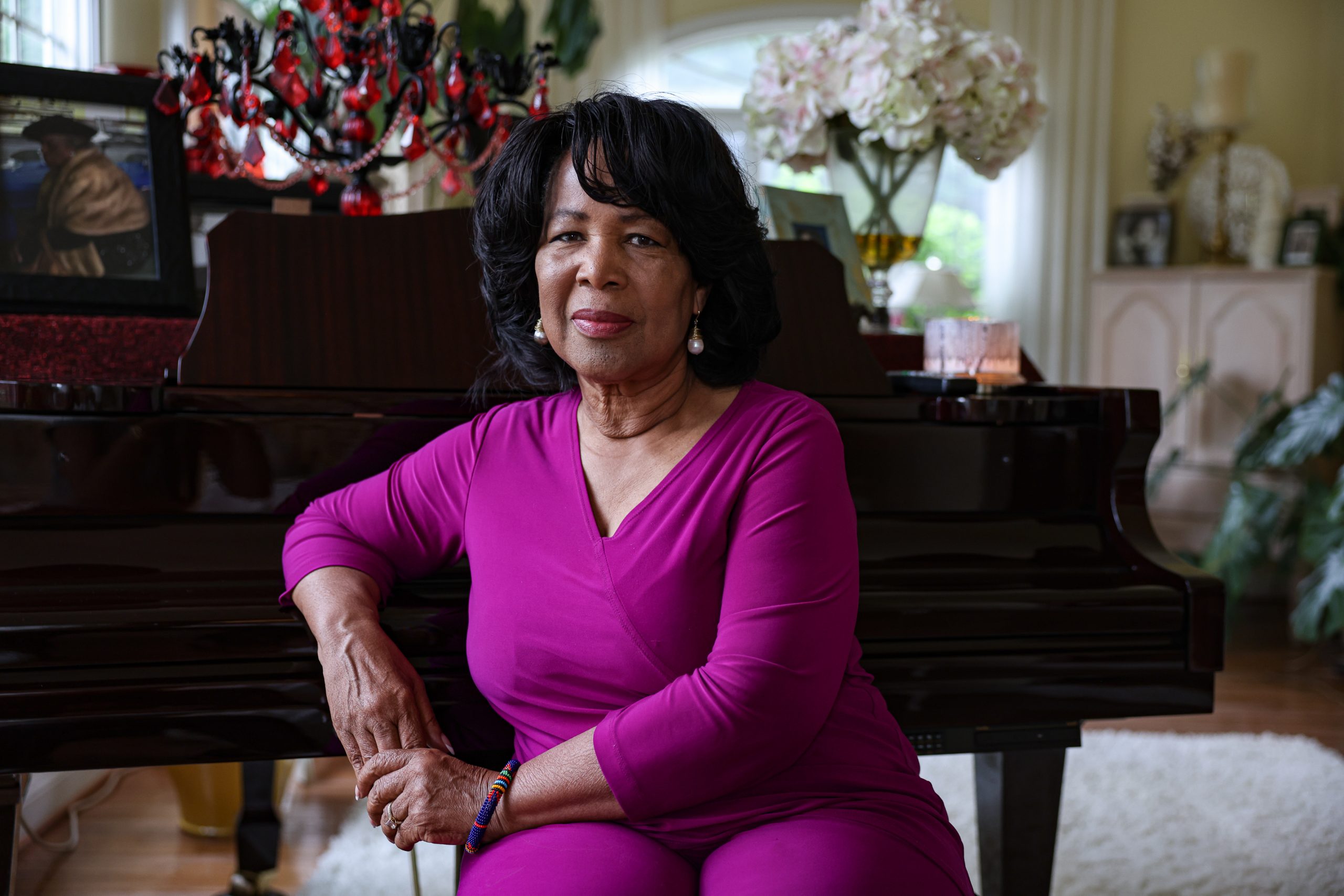
Peggy Carr, the former commissioner of the National Center for Education Statistics, at her Maryland home on July 1. Carr worked for the Education Department for more than 35 years before the Trump administration placed her on administrative leave on Feb. 24. Credit: Valerie Plesch for The Hechinger Report
Peggy Carr’s last day on the job came so abruptly that she only had time to grab a few personal photos and her coat before a security officer escorted her out of her office and into a chilly February afternoon. She still doesn’t know why she was summarily dismissed as commissioner of the National Center for Education Statistics (NCES), where she helped buildthe National Assessment of Educational Progress into the influential Nation’s Report Card. NCES is the federal government’s third-largest statistical agency after the Census Bureau and the Bureau of Labor Statistics. Running it for three and a half years was the capstone of Carr’s 35-year career at the Education Department.
And suddenly, she was out in the cold with no explanation.
“I would say that what has happened is a professional tragedy, not just for me, but for all of NCES and my staff,” said Carr, 71, in a recent interview. “But for me, it really was a personal tragedy because I have spent my career helping NCES build its solid reputation as a premier statistical agency in the federal system.”
Carr doesn’t know if the decision to fire her came from the White House, Elon Musk’s Department of Government Efficiency or an outside policy advocate.
But she is clear about what was lost by the firing of the head of a nonpartisan statistical agency: an objective assessment of how American students are doing. And she finds it “ironic,” she said, that her increasingly grim reports were President Donald Trump’s public rationale for dismantling the Education Department.
Although Carr was the first woman and the first Black person to run NCES, her “firsts” go back decades. She joined NCES in 1993, after teaching statistics at Howard University and a stint as a statistician in the Education Department’s Office of Civil Rights. “I was the first person of color in NCES to ever have a managerial job, period,” said Carr. She broke a long record: The education statistical agency dates back to 1867, created in the aftermath of the Civil War as part of an effort to help the South recover during Reconstruction. She was appointed commissioner by former President Joe Biden in 2021.
Related: Our free weekly newsletter alerts you to what research says about schools and classrooms.
“It’s a kill-the-messenger strategy,” she said. “We have just been the messenger of how students in this country are faring.”
Congress established a six-year term for the commissioner so that the job would straddle administrations and insulate statistics from politics. Carr’s term was supposed to extend through 2027, but she made history with yet another first: the first NCES commissioner to be fired by a president.
Carr wasn’t thinking about her gender or her race, despite the fact that three days earlier, Trump had abruptly fired another Black senior official, Gen. Charles Q. Brown Jr., the chairman of the Joint Chiefs of Staff. “Maybe they found out I was the only Biden appointee left in the department,” Carr said. “Maybe they didn’t realize that until then.”
Carr has reason to be puzzled by her firing. She is hardly a radical. She defended standardized tests against charges that they are racist. She publicly made the case that the nation needs to pay attention to achievement gaps, even if it sometimes means putting a spotlight on the low achievement of Black and Hispanic students. “The data can reveal things about what people can do to improve it,” Carr said.
She was dismissed on Feb. 24, more than a week before Education Secretary Linda McMahon’s Senate confirmation on March 3. The department named Carr’s deputy, Chris Chapman, to act as her replacement, but subsequently fired him in a round of mass layoffs on March 11. The agency was then leaderless until July 7,when another senior department official was told to add NCES to his responsibilities.
Civil servant
In January, at the start of the second Trump administration, Carr thought her job was relatively safe. As a career civil servant, she’d worked with many Republican administrations and served as second in command under James “Lynn” Woodworth, whom Trump appointed as NCES commissioner in his first term. Both Woodworth and Carr say they had a good working relationship because they both cared about getting the numbers right. Indeed, Woodworth was so troubled and disturbed by Carr’s dismissal and the fate of the nation’s education statistics agency that he spoke out publicly, risking retaliation.
Even Carr’s fiercest critics, who contend she was an entrenched bureaucrat who failed to modernize the statistical service and allowed costs to balloon, condemned the humiliating way she was dismissed.
“She deserves the nation’s gratitude and thanks” for setting up a whole system of assessments, said Mark Schneider, who served as the director of the Institute of Education Sciences (IES), which oversees NCES, from 2018 to 2024 and as NCES commissioner from 2005 to 2008.
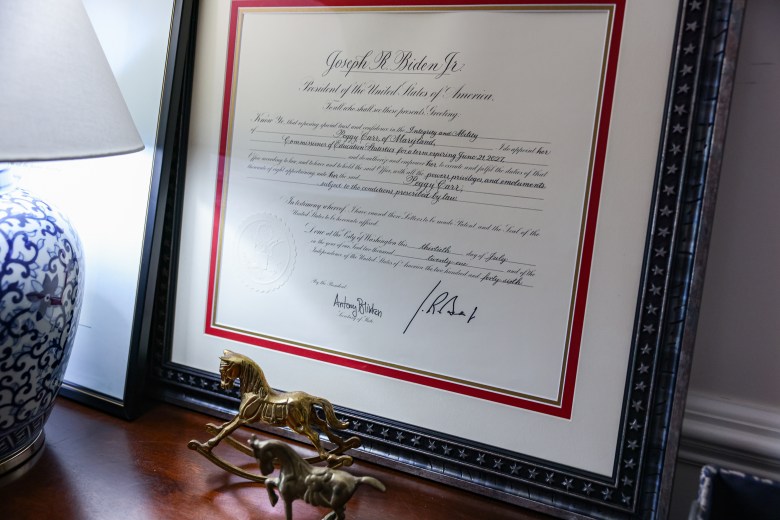
The official appointment of Peggy Carr as commissioner of the National Center for Education Statistics by former President Joe Biden. Credit: Valerie Plesch for The Hechinger Report
A landing team
The transition seemed normal at first. A “landing team” — emissaries from the Trump transition team — arrived in mid-January and Carr briefed them three times. They asked questions about NCES’s statistical work. “They were quite pleasant, to be honest,” Carr said. “They seemed curious and interested.”
Days later, DOGE arrived. Still, Carr wasn’t worried. “We actually thought we were going to be OK,” Carr said. “We thought that their focus was going to be on grants, not contracts.”
The Institute of Education Sciences had awarded millions of dollars in grants to professors and private-sector researchers to study ways to improve diversity and equity in the classroom — priorities that were now out of favor with the Trump team. Carr’s agency is housed under the IES umbrella, but Carr’s work didn’t touch upon any of that.
However, NCES has an unusual structure. Unlike other statistics agencies, NCES has never had many statisticians on staff and didn’t do much in-house statistical work. Because Congress put restrictions on its staffing levels, NCES had to rely on outside contractors to do 90 percent of the data work. Only through outside contractors was the Education Department able to measure academic achievement, count students and track university tuition costs. Its small staff of 100 primarily managed and oversaw the contracts.
Keyword searches
Following DOGE instructions, Carr’s team conducted keyword searches of DEI language in her agency’s contracts. “Everyone was asked to do that,” she said. “That wasn’t so bad. The chaotic part really started when questions were being asked about reductions in the contracts themselves.”
Carr said she never had direct contact with anyone on Musk’s team, and she doesn’t even know how many of them descended upon the Education Department. Her interaction with DOGE was secondhand. Matthew Soldner, acting director of IES, summoned Carr and the rest of his executive team to his office to respond to DOGE’s demands. “We met constantly, trying to figure out what DOGE wanted,” Carr said. DOGE’s orders were primarily transmitted through Jonathan Bettis, an Education Department attorney, who was experienced with procurement and contracts. It was Bettis who talked directly with the DOGE team, Carr said.
The main DOGE representative who took an interest in NCES was “Conor.” “I don’t know his last name,” said Carr. “My staff never saw anyone else but Conor if they saw him at all.” Conor is 32-year-old Conor Fennessy, according to several media reports. His deleted LinkedIn profile said he has a background in finance. (Fennessy has also been involved in getting access to data at Health and Human Services and spearheading cuts at the National Park Service, according to media reports.) Efforts to reach Fennessy through the Education Department and through DOGE were unsuccessful.
“It was chaotic,” said Carr. “Bettis would tell us what DOGE wanted, and we ran away to get it done. And then things might change the next day. ‘You need to cut more.’ ‘I need to understand more about what this contract does or that contract does.’”
It was a lot. Carr oversaw 60 data collections, some with multiple parts. “There were so many contracts and there were hundreds of lines on our acquisition plans,” she said. “It was a very complex and time-consuming task.”
Lost in translation
The questions kept coming. “It was like playing telephone tag when you have complicated data collections and you’re trying to explain it,” Carr said. Bettis “would sometimes not understand what my managers or I were saying about what we could cut or could not cut. And so there was this translation problem,” she said. (Efforts to reach Bettis were unsuccessful.) Eventually a couple of Carr’s managers were allowed to talk to DOGE employees directly.
Carr said her staff begged DOGE not to cut a technology platform called EDPass, which is used by state education agencies to submit data to the federal Education Department on everything from student enrollment to graduation rates. For Carr, EDPass was a particular point of pride in her effort to modernize and process data more efficiently. EDPass slashed the time it took to release data from 20 months in 2016-17 to just four months in 2023-24.
Carr said DOGE did not spare EDPass. Indeed, DOGE did not spare much of NCES.
On Feb 10, only about a week after DOGE arrived, Carr learned that 89 of her contracts were terminated, which represented the vast majority of the statistical work that her agency conducts. “We were in shock,” said Carr. “What do you mean it’s all gone?”
Even its advocates concede that NCES needed reforms. The agency was slow to release data,it usedsomeoutdated collection methods and there were places where costs could be trimmed. Education Department spokesperson Madi Biedermann said that the department, “in partnership with DOGE employees,” found contracts with overhead and administrative expenses that exceeded 50 percent, “a clear example of contractors taking advantage of the American taxpayer.”
Piloting an old airplane
Carr said she was never a fan of the contracting system and wished she could have built an in-house statistical agency like those at the Census Bureau and the Bureau of Labor Statistics. But that would have required congressional authorization for the Education Department to increase its headcount. That never happened. Carr was piloting an old airplane, taped together through a complicated network of contracts, while attempting to modernize and fix it. She said she was trying to follow the 2022 recommendations of a National Academies panel, but it wasn’t easy.
The chaos continued over the next two weeks. DOGE provided guidelines for justifying the reinstatement of contracts it had just killed and Carr’s team worked long hours trying to save the data. Carr was particularly worried about preserving the interagency agreement with the Census Bureau, which was needed to calculate federal Title I allocations to high-poverty schools. Those calculations needed to be ready by June and the clock was ticking.
The DOGE sledgehammer came just as schools were administering an important international test — the Program for International Student Assessment (PISA). The department was also in the midst of a national teachers and principals survey. “People were worried about what was going to happen with those,” said Carr.
Even though DOGE terminated the PISA contract, the contractor continued testing in schools and finished its data collection in June. But now it’s unclear who will tabulate the scores and analyze them. The Education Department disclosed in a June legal brief that it is restarting PISA. “I was told that they’re not going to do the national report, which is a little concerning to me,” Carr said. Asked for confirmation, the Education Department did not respond.
Another widely used data collection, the Early Childhood Longitudinal Survey (ECLS-K 2024), which tracks a cohort of students from kindergarten through elementary school, was supposed to collect its second year of data as the kindergarteners progressed to first grade. “We had to give up on that,” said Carr.
NAEP anxiety
Carr said that behind the scenes, her priority was to save NAEP. DOGE was demanding aggressive cuts, and she worked throughout the weekend of Feb. 22-23with her managers and the NAEP contractors to satisfy the demands. “We thought we could cut 28 percent — I even remember the number — without cutting into critical things,” she said. “That’s what I told them I could do.”
DOGE had been demanding 50 percent cuts to NAEP’s $185 million budget, according to several former Education Department employees. Carr could not see a way to cut that deep. The whole point of the exam is to track student achievement over time, and if too many corners were cut, it could “break the trend,” she said, making it impossible to compare the next test results in 2026 with historical scores.
“I am responsible in statute and I could not cut NAEP as much as they wanted to without cutting into congressionally mandated activities,” Carr said. “I told them that.”
While Carr and DOGE remained far apart in negotiations over cost, a security officer appeared at her office door at 3:50 p.m. on Feb. 24. Carr remembers the exact time because colleagues were waiting at her door to join her for a 4 p.m. Zoom meeting with the chair of the board that oversees NAEP.
The security officer closed the door to her office so he could tell her privately that he was there to escort her out. He said she had 15 minutes to leave. “Escort me where? What do you mean?” Carr asked. “I was in shock. I wasn’t even quite understanding what he was asking, to be honest.”
The security officer told her about an email saying she was put on administrative leave. Carr checked her inbox. It was there, sent within the previous hour.
The security officer “was very nice,” she said. “He refused to call me Peggy,” and addressed her as Dr. Carr. “He helped me collect my things, and I left.” He opened the doors for her and walked her to her car.
“I had no idea that this was going to happen, so it was shocking and unexpected,” Carr said. “I was working like I do every other day, a busy day where every minute is filled with something.”
She said she’s asked the department why she was dismissed so abruptly, but has not received a response. The Education Department said it does not comment to the public on its personnel actions.
Packing via Zoom
Two days later, Carr returned to pick up other belongings. Via Zoom, Carr’s staff had gone through her office with her — 35 years worth of papers and memorabilia — and packed up so many boxes that Carr had to bring a second car, an SUV.
When Carr and her husband arrived, she said, “there were all these people waiting in the front of the building cheering me on. The men helped me put the things in my husband’s car and my car. It was a real tearjerker. And that was before they would be dismissed. They didn’t know they would be next.”
Less than two weeks later, on March 11, most of Carr’s staff — more than 90 NCES staffers — was fired. Only three remained. “I thought maybe they just made a mistake, that it was going to be a ‘whoops moment’ like with the bird flu scientists or the people overseeing the weapons arsenal,” Carr said.
The fate of NCES remains uncertain. The Education Department says that it is restarting and reassessing some of the data collections that DOGE terminated, but the scope of the work might be much smaller. Carr says it will take years to understand the full extent of the damage. Carr was slated to issue a statement about her thoughts on NCES on July 14.
The damage
The immediate problem is that there aren’t enough personnel to do the work that Congress mandates. So far, NCES has missed an annual deadline for delivering a statistical report to Congress — a deadline NCES had “never, ever missed” in its history, Carr said — and failed to release the 2024 NAEP science test scores in June because there was no commissioner to sign off on them. But the department managed to calculate the Title I allocations to high-poverty schools “in the nick of time,” Carr said.
In addition to the collection of fresh data, Carr is concerned about the maintenance of historical datasets. When DOGE canceled the contracts, Carr counted that NCES had 550 datasets scattered in different locations. NCES doesn’t have its own data warehouse and Carr was trying to corral and store the datasets. She’s worried about protecting privacy and student confidentiality.
An Education Department official said that this data is safe and will soon be transferred to IES’s secure servers.
Peggy Carr holds artwork made by a former colleague at the National Center for Education Statistics. NAEP stands for the National Assessment of Educational Progress, which Carr helped build into the influential barometer of how American students are faring. Credit: Valerie Plesch for The Hechinger Report
In the meantime, Carr says she plans to stay involved in education statistics — but from the outside. “With this administration wanting to push education down to the states, there are opportunities that I see in my next chapter,” Carr said. She said she’s been talking with states and school districts about calculating where they rank on an international yardstick.
Carr is in close touch with her former team. In May, 50 of them gathered at a church in Virginia to commiserate. A senior statistician gave Carr a homespun plaque of glued blue buttons spelling the letters NAEP with a shiny gold star above it. It was a fitting gift. NAEP is regarded as the best designed test in the country, the gold standard. Carr built that reputation, and now it has gone home with her.
This story about Peggy Carr was written by Jill Barshay and produced by The Hechinger Report, a nonprofit, independent news organization focused on inequality and innovation in education. Sign up for Proof Points and other Hechinger newsletters.
The Hechinger Report provides in-depth, fact-based, unbiased reporting on education that is free to all readers. But that doesn’t mean it’s free to produce. Our work keeps educators and the public informed about pressing issues at schools and on campuses throughout the country. We tell the whole story, even when the details are inconvenient. Help us keep doing that.
This audio is auto-generated. Please let us know if you have feedback.
The Trump administration is tapping agencies other than the U.S. Department of Education to implement its agenda in schools, sometimes circumventing typical rulemaking procedures that would allow districts months to give feedback on and prepare for policy changes before they roll out.
The use of other agencies to set or enforce education policy marks a significant shift from typical K-12 policymaking, some education policy experts say.
“This is a paradigm shift on the part of how the federal government articulates and connects some of these tools to their education priorities,” said Kenneth Wong, a professor of education policy at Brown University. “So I think going forward, we might be seeing broader use of this wider range of policy tools in the area of education policy changes.”
This month, for example, a policy change from the U.S. Department of Energy could take effect that would undo some students’ protections related to sex discrimination under Title IX, disability discrimination under Section 504 and racial discrimination under Title VI.
The changes would only apply to schools receiving Energy Department funds, as opposed to public schools nationwide — which would have been the case had the rules come from the Education Department. The Energy Department distributed just over $160 million to 28 schools in fiscal year 2025, according to department spokesperson Ben Dietderich. The agency also provides over $2.5 billion annually to more than 300 colleges and universities to fund research.
As a result of the quietly proposed policy changes schools receiving Energy Department grants would no longer, among other things:
Be required to facilitate noncontact sports team tryouts for girls if there is no equivalent girls’ team. For example, if a school had a boys’ baseball team but no girls’ softball team, girls would no longer be guaranteed the opportunity to try out for a spot on the boys’ baseball team.
Be permitted to proactively “overcome the effects of conditions that resulted in limited participation therein by persons of a particular sex.” This would remove protections that allow schools to have gender-conscious after-school or college programs to provide women and girls opportunities they have historically been denied, such as in STEM fields and technical training, according to Shiwali Patel, senior director of Safe and Inclusive Schools at National Women’s Law Center and a Title IX attorney.
Be required to prevent systemic racial discrimination that may result from seemingly neutral policies, as a result of the department rescinding guardrails protecting against policies that cause a “disparate impact” on underserved students. Disparate impact investigations have previously addressed issues such as Black students being disciplined at higher rates than students of other races.
The policy changes were issued through a process called direct final rulemaking, which allows an agency to issue a rule without going through the rulemaking process twice to incorporate changes based on public feedback and publish a final version. The expedited process is usually used for noncontroversial changes and when an agency does not expect significant pushback.
The rules are to take effect July 15 as long as no “significant adverse comments” were received by June 16. Dietderich did not respond as to whether the agency received significant adverse comments.
However, a review of some publicly available comments show that the direct final rules — posted May 16 — have been controversial, with multiple civil rights organizations explicitly telling the Energy Department they are submitting “significant, adverse” comments for its review.
Other agencies launch civil rights investigations and enforcement
The Energy Department situation isn’t the first time the Trump administration has deployed agencies beyond the Education Department to set or enforce education policy. In fact, the administration has used the departments of Justice, Agriculture, and Health and Human Services over the past few months to investigate sex and race discrimination at schools and enforce compliance.
The administration notably used these agencies in an unprecedented investigation into the Maine Department of Education, spurred by a public disagreement between President Donald Trump and Maine Gov. Janet Mills, a Democrat, over the state’s athletic policy allowing transgender athletes on girls’ and women’s sports teams.
That dispute kicked off a string of Title IX investigations by several federal agencies that provide funds to Maine.
They included a four-day probe launched by HHS. And because HHS rather than the Education Department conducted the probe, it didn’t have to follow the standards spelled out in the Education Department’s Office for Civil Rights case processing manual. That manual ensures the Education Department conducts investigations according to certain timelines, for example, allowing up to 90 calendar days for negotiations to take place and 10 days for schools or states to sign onto a resolution agreement.
In addition, the U.S. Department of Agriculture froze funds to some of the state’s schools over the Maine Department of Education’s alleged Title IX violations.
“USDA, alongside other federal agencies, will continue to pause and, where appropriate, terminate categories of education programming in Maine if these Title IX violations are not resolved to the satisfaction of the Federal Government,” said an April 2 letter from Agriculture Secretary Brooke Rollins to Mills.
A court order eventually overturned the USDA funding freeze as part of an agreement struck in May between Maine and the USDA.
These Title IX enforcement actions through HHS, USDA and the Education Department culminated in the Trump administration referring the cases to the Department of Justice, which announced a civil lawsuit against Maine over Title IX compliance in April.
Since then, the administration has used these agencies to initiate and enforce other investigations into schools and states — including over antisemitism under Title VI, — in states like California and Minnesota.
Sonja Trainor, executive director of the National School Attorneys Association, acknowledged that federal agencies have been setting and enforcing education policy outside of formal legal channels for many years.
But “what’s different now is the speed with which policy priorities are materializing into funding terminations and direct enforcement,” Trainor said in an email. “Of particular concern, of course, is funding and the prospect of being sued from many possible angles when policy shifts quickly.”
Wong said the Energy Department policy changes potentially taking effect next week could serve as a test case, as the Maine case did for civil rights investigations.
That means if the Energy Department’s changes went uncontested by districts concerning significant adverse effects, and thus go through in about 60 days as is usual for direct final rules, other agencies will also try setting education policy this way, Wong said.
“Basically every single school, in practically every single school district, has some grants from one of the many agencies in the federal government,” said Wong.
So while the immediate impact of the Energy Department changes would be limited to those that receive its funding, ultimately many more schools could be affected.
Policies related to diversity, equity and inclusion and Title IX are particularly susceptible here, said Wong. “I think there’s a whole bunch of standards that the current secretary of education is redefining, and so these other agencies are likely to provide a vehicle to kind of challenge the practice in the local school systems.”‘