This blog is by Dr Clive Winters, Pro-Vice-Chancellor (Strategy and Governance) at Coventry University Group.
Today is Josh Freeman’s last day at HEPI. Josh has run the HEPI blog alongside his other duties for most of the past two years and has been a fabulous colleague. We will miss him and wish him all the best for the future and in his new role at the Office for Students.
When levelling up was popular in political and media circles, it was a source of bemusement to some of us in Higher Education. After all, universities as anchor institutions have been helping level up our communities and delivering economic impact for decades, or even longer.
Coventry University Group is now a global education provider, but its roots go back to 1843 when entrepreneurs and industrialists created Coventry School of Design to deliver a skilled workforce. Nearly two centuries later, we have never lost that core ethos of meeting local needs and we continue to work with businesses to provide job-ready graduates with the skills and creative thinking to improve their communities.
Our emblem is a Phoenix, chosen because of the city’s long history of regeneration and rebirth – a story only possible through our ongoing commitment and agility to evolve with the city and deliver the skills and innovation ecosystem needed to raise and maintain aspirations, mobility and prosperity. We have always been of the city and for the city of Coventry and have transplanted our mission of creating better futures into more cities and regions with campuses in London, Scarborough and Poland.
Education is based on place and each location is different, with social, economic and geographical factors driving local need and the gaps in skills, health and prosperity that we can help to fill. Our research and knowledge exchange activity complements our excellence in teaching to allow us to operate as a collaborative partner of choice, developing holistic solutions for local communities. We deliver technical, professional and vocational education and research that impacts on people and places. We co-create our courses with employers, our research is undertaken in collaboration and partnership, and knowledge exchange activity is designed with businesses not for them.
When trying to capture this in an economic impact report on our activity in Coventry, we assumed the figures would be large, impressive and surprising to some but would not tell the full story of how we contribute to place and society. So, we asked the consulting team at Hatch to look at our wider impacts and not just add up the pounds.
In simple economic terms, our main campus had a gross quantifiable economic footprint of 6,730 FTE jobs and £320m in Gross Value Added (GVA) in Coventry (2021/22). One in every 20 jobs in the city can be traced back to our presence. For every four direct on-campus jobs, a further three are supported across the city through the multiplier effects generated by the Group’s activity.
But that doesn’t calculate the true extent to which we are woven into the economic and social fabric of Coventry, helping the city adapt and grow for 180 years. Our 5,000 health students on placements populate the teams in the wards and clinics of our local hospital, working alongside our alumni in the health and care sector in Coventry. The Research Centre for Care Excellence is a partnership with University Hospitals Coventry and Warwickshire (UHCW) empowering staff to develop ideas to make ‘patient first’ improvements. Patients feel the benefits, almost certainly without ever knowing the role we played. We are also working with UHCW and other NHS bodies to use our city centre estate to bring health services closer to patients and are the first university to be co-located in a Community Diagnostic Centre. Real people benefit from our work.
Coventry was the home of bicycle design and manufacturing before becoming the UK’s motor city and is now vying to position itself at the forefront of the net zero transport revolution. Many of the brightest and best car designers and engineers in the UK have Coventry degrees, and we continue to meet the evolving needs of the city – upskilling 1,200 JLR staff though an electrification development programme and conducting 34 net zero collaborative research projects in just two years. We are moving the city forwards into a brighter, better future.
The song We’ll Live and Die in These Towns seems an unusual choice for any place to have as an (unofficial) anthem, as it speaks of desperation and resignation to the fate of the working classes. But it has been embraced, not least by supporters of Coventry City, possibly because it somehow transmits a strong sense of identity based on where you are from, of place. Alongside the defiant chorus, the lyrics include the line, ‘nothing ever happened on its own’. People have to make things happen and Coventry is a city where we make things happen, but we don’t do that on our own. We do it with someone and for someone in collaboration and partnership as an anchor institution, that is the key to real economic impact.
What if I told you the education system isn’t broken—it’s working exactly the way it was built to? That’s not just a soundbite from my TEDx Talk—it’s my lived experience.
I grew up in a historically underserved neighborhood in Houston, Texas, zoned to one of the lowest-performing elementary schools in the city. But due to a granted academic transfer, I ended up attending a top-performing public school just three miles away. Same city. Different ZIP code. Completely different resources—and trajectory.
That three-mile difference changed everything. And today, as a doctoral student and aspiring professor, I can see how those early disparities still show up in our college classrooms.
Here’s the thing: public school funding in the U.S. depends heavily on local property taxes. That means wealthier neighborhoods get better schools—often with state-of-the-art facilities, robust extracurriculars, and college prep courses—while nearby communities may struggle with crumbling infrastructure and underpaid staff (Owens-Young 2023).
Part of my dissertation, I compared two elementary schools less than three miles apart. One had a PTA raising over $100,000 annually. The other didn’t have working air conditioning. These weren’t just different schools—they were different worlds. And students from those environments bring that context with them when they walk into our lecture halls.
But what we see in higher education—missed assignments, low engagement, quiet classrooms—isn’t always a motivation issue. Often, it’s a preparedness gap. And that gap isn’t the student’s fault.
As faculty, we can’t change where our students come from. But we can shape what they experience once they’re here. Below are four strategies I use in the classroom to help level the playing field:
1. Start by Asking, Not Assuming
Instead of assuming a lack of interest, ask about their background. I use a quick, anonymous prompt on the first day of class: “What’s one thing you overcame to get here today?” One student wrote about taking two buses from the other side of town after getting their younger siblings off to school. That kind of insight changes how we teach.
2. Rethink Participation
Not everyone feels comfortable speaking up in class. Consider using written reflections, discussion boards, or tools like Jamboard and Padlet. For instance, in one of my leadership classes, I use a shared Google Doc where students add thoughts anonymously. The quieter students thrive—and the louder ones gain new perspectives.
3. Normalize Struggle
Students from under-resourced schools often view academic struggle as failure. That’s why I share my own story of nearly failing out during undergrad. I also let students revise one major assignment. One student improved from a 72 to a 90—and more importantly, realized they were capable all along.
4. Offer Flexible Assessment Options
Some students express themselves better visually or verbally. I once had a student create a narrated photo essay instead of a traditional paper—it was powerful, reflective, and demonstrated full mastery. When students see that their strengths are valued, their confidence grows.
None of these ideas require overhauling your entire course. But they do require intentionality. And that’s what makes the difference.
I’ve been the under-resourced student, and now I’m becoming the professor I wish I had—someone who saw potential beyond performance.
We don’t control our students’ ZIP codes. But we do influence how they feel in our classrooms—and whether they believe they belong there.
Lloyd Lindley Jr. is a PhD student in Educational Leadership and Organization at Texas Woman’s University, a TEDx speaker, and author of “From the Hood to Understood”. He is the co-founder of a grassroots nonprofit that advocates for equitable access to education, mentorship, and financial literacy in underserved communities. Lloyd has been featured on Good Morning Houston and KTSU Radio for his impactful community work and continues to champion culturally responsive teaching and student empowerment at all levels of education.
References
Owens-Young, Jessica. 2023. “The ZIP Code Effect.” American University.
What if I told you the education system isn’t broken—it’s working exactly the way it was built to? That’s not just a soundbite from my TEDx Talk—it’s my lived experience.
I grew up in a historically underserved neighborhood in Houston, Texas, zoned to one of the lowest-performing elementary schools in the city. But due to a granted academic transfer, I ended up attending a top-performing public school just three miles away. Same city. Different ZIP code. Completely different resources—and trajectory.
That three-mile difference changed everything. And today, as a doctoral student and aspiring professor, I can see how those early disparities still show up in our college classrooms.
Here’s the thing: public school funding in the U.S. depends heavily on local property taxes. That means wealthier neighborhoods get better schools—often with state-of-the-art facilities, robust extracurriculars, and college prep courses—while nearby communities may struggle with crumbling infrastructure and underpaid staff (Owens-Young 2023).
Part of my dissertation, I compared two elementary schools less than three miles apart. One had a PTA raising over $100,000 annually. The other didn’t have working air conditioning. These weren’t just different schools—they were different worlds. And students from those environments bring that context with them when they walk into our lecture halls.
But what we see in higher education—missed assignments, low engagement, quiet classrooms—isn’t always a motivation issue. Often, it’s a preparedness gap. And that gap isn’t the student’s fault.
As faculty, we can’t change where our students come from. But we can shape what they experience once they’re here. Below are four strategies I use in the classroom to help level the playing field:
1. Start by Asking, Not Assuming
Instead of assuming a lack of interest, ask about their background. I use a quick, anonymous prompt on the first day of class: “What’s one thing you overcame to get here today?” One student wrote about taking two buses from the other side of town after getting their younger siblings off to school. That kind of insight changes how we teach.
2. Rethink Participation
Not everyone feels comfortable speaking up in class. Consider using written reflections, discussion boards, or tools like Jamboard and Padlet. For instance, in one of my leadership classes, I use a shared Google Doc where students add thoughts anonymously. The quieter students thrive—and the louder ones gain new perspectives.
3. Normalize Struggle
Students from under-resourced schools often view academic struggle as failure. That’s why I share my own story of nearly failing out during undergrad. I also let students revise one major assignment. One student improved from a 72 to a 90—and more importantly, realized they were capable all along.
4. Offer Flexible Assessment Options
Some students express themselves better visually or verbally. I once had a student create a narrated photo essay instead of a traditional paper—it was powerful, reflective, and demonstrated full mastery. When students see that their strengths are valued, their confidence grows.
None of these ideas require overhauling your entire course. But they do require intentionality. And that’s what makes the difference.
I’ve been the under-resourced student, and now I’m becoming the professor I wish I had—someone who saw potential beyond performance.
We don’t control our students’ ZIP codes. But we do influence how they feel in our classrooms—and whether they believe they belong there.
Lloyd Lindley Jr. is a PhD student in Educational Leadership and Organization at Texas Woman’s University, a TEDx speaker, and author of “From the Hood to Understood”. He is the co-founder of a grassroots nonprofit that advocates for equitable access to education, mentorship, and financial literacy in underserved communities. Lloyd has been featured on Good Morning Houston and KTSU Radio for his impactful community work and continues to champion culturally responsive teaching and student empowerment at all levels of education.
References
Owens-Young, Jessica. 2023. “The ZIP Code Effect.” American University.
Are you thinking about starting a podcast? I invited Dr. Anna Clemens to share her podcasting journey. We talk about how social media and online presence has changed for researchers in 2025. And, how storytelling can help people connect with your research in meaningful ways.
Dr. Anna Clemens is an academic writing coach who specializes in scientific research papers. She runs the Researchers’ Writing Academy, an online course where she helps researchers to get published in high-ranking journals without lacking structure in the writing process.
Jennifer van Alstyne: Hi everyone, this is Jennifer Van Alstyne. Welcome to the Social Academic Podcast. I’m here with Dr. Anna Clemens of the Researchers’ Writing Academy. Anna, I’m so happy to have you here today. First, because you’re my friend and we’ve been trying to do this for multiple years now. I’m so happy! And second because I want to share the program that you’ve created for scientists to help them write better. It’s actually something I’ve recommended to clients of mine, something clients of mine have participated in. So I wanted to share you with everyone who listens to the podcast. Would you please introduce yourself?
Dr. Anna Clemens: Yeah, of course. Thank you so much for having me. And I’m super excited. And it’s been such a joy having some of your clients in the program.
I run a program called the Researchers’ Writing Academy, where we help researchers, well, kind of develop a really structured writing process so they can get published in the journals they want to get published in. We kind of look a bit more toward top-tier journals, high-impact journals. But honestly, what we teach kind of helps you wherever you want to go.
I have a background in chemistry. So my PhD’s in chemistry and I transitioned into writing after that. So it’s a really fun way to be able to combine kind of my scientific knowledge with writing and helping folks to get published and make that all really time efficient.
Jennifer: Gosh, that’s amazing. I think that I did not have a lot of writing support when I was in grad school. And I really felt like even though I’m an excellent writer, like I’m a creative writer, like that’s what I went to school for.
Anna: You write poetry.
Jennifer: I write poetry and I think I’m a good academic writer, but I feel like I had to teach myself all of that. And it was a lot of correction after something was already submitted in order to bring it closer to what was actually publishable.
Anna: Right.
Jennifer: I lost so much time by not knowing things. So I love that you created a program to support people who maybe aren’t getting the training that they need to publish in those high impact journals.
Anna: Yeah, because that’s so common. Like, honestly, who gets good academic writing training? That’s really almost nobody.
I often see even people who do go on, do some kind of course of their university if they offer some kind of course. They’re often not really so focused on the things that I’m teaching, which is like a lot of storytelling and a lot like being efficient with your writing, like kind of the step by step. You kind of often know just like academic English, how do I sound good? And I think honestly, this is less important than knowing how to really tell a story in your paper and having that story be consistent and not losing time by all the like edits and rewrites, etc., that are so frustrating to do.
Storytelling for Researchers and Scientists
Jennifer: Hmm, you brought up storytelling. That’s really insightful.
As a creative writer, story is so important to the words that we create and how people can connect with them. Why is storytelling important for researchers?
Anna: Well, I think it’s because we’re all humans, right? So we just as humans, really need storytelling to be able to access information in the best way and to connect to that information and to kind of put it into the kind of frameworks that we have already in our minds.
This is what a lot of researchers really overestimate is like, your research is so incredibly specific, right? It’s so much, like that thing to you, it’s all like when you’re doing it, you’re like, of course you know every detail about it. And you just forget how little other people know. It’s even if they’re in the same field because we always think, “Oh, no, everyone knows what I know.” Also a bit this feeling of like, not quite realizing like, it’s also called like the experts curse I think, when you are an expert in something, and you don’t realize how little other people know. And you kind of undervalue what you know.
So anyway, if you really want your papers to be read, if you want to get published, you need to be able to, to make it accessible to like the journal editor, right? The peer reviewers, but also the readers later, they need to be able to understand the data in a way that makes sense to them. And I think that’s where storytelling comes in. Also, it really helps with structuring the writing process. Like honestly, if you think about storytelling first, the really nice side effect is your writing process will be a lot easier because you don’t have to go back and edit quite so many times.
Jennifer: Oh, that’s fascinating. So not only does it improve how the research is being communicated It improves the process of writing it too.
Anna: I think so. Yeah, because when you’re clear on the story, everything is clear in your head from the start. And you don’t need to kind of . . . I mean, when you write a paper for the first time, or even people who’ve written a few papers, they still sometimes start writing with the introduction. And it’s such a waste of time. Like they just start at the start, right? And then they end up like deleting all those paragraphs and all those words after when they actually have written so much that they then after a while understand the story that they want to tell. And instead, what I’m suggesting is like, define the story first. And I like guide people through how to do that.
Because I think the problem is you don’t really know how to do it when you don’t have like a framework for it. You have kind of the framework there from the start. So you know what the story is and you don’t have to kind of figure out the story while you’re writing. Instead, you know what the story is and the way I’m teaching it, I’m like giving people prompts so that it’s really easy to define the story because also story is really elusive, I think. Or we use it in this elusive way often when we like we kind of use it as like a throwaway term. Oh, yeah, you you should tell a story in your paper. And you go like, “Yeah, I guess. But what does that mean?” I’m trying to like give a definition for that. So that is like really clear. Okay?
Jennifer: I appreciate that. I think so many people aren’t sure what it means. And even if they think they know what it means, they don’t necessarily know how it applies to their scientific writing. So that’s really interesting.
Researchers’ Writing Academy
Jennifer: I want to talk about podcasts, but actually, since we’re already talking about program stuff right now, I’m curious about the format of your program because people who are listening to this may not be familiar with your work. And I want to make sure that they get to hear about all the cool things that they get if they join.
Anna: Yeah, the Researchers’ Writing Academy is very comprehensive.
Jennifer: Yeah, in a good way.
Anna: It’s almost hard to tell people about it because there’s so much in there. So, what people get is like, there’s an online course, we call it the journal publication formula, that’s like the step-by-step system, walks you through online lessons that you can watch, super short digestible lessons that walk you through step-by-step. So you can just write your paper alongside the lessons.
And then because we noticed that you really may want some help actually writing in your day to day work, right? Because we’re also incredibly busy. And then it’s just helpful to have some kind of accountability, some community, and that’s what we offer as well. So we do a lot of things around accountability and we have like, cowriting sessions, for example, where we meet, we have six now, six per week across time zones.
Jennifer: Wow, that’s amazing! So if you’re anywhere in the world, there’s a chance that one of those six times during the day will work for you. Oh my gosh, that’s so cool.
Anna: Yeah. I mean, they should work. I mean for Europe and the US, most of them will work. Or not, but it depends where in the US you are, etc. But even like a few in Australia, there’s at least one per week that will work for you depending on how long you want to stay up. Some people do, we have one client who comes, he likes to do writing after his kids are in bed. So he loves nine to 10pm, you know, like, yeah. So yeah, there’s a lot. And we do like, writing retreats every now and again, and writing sprints. So we like offer a lot of support around that. And we have like a really lovely community that are so supportive. Actually, I just talked to one member today, and she just got promoted to full professor.
Jennifer: Exciting
Anna: And she was like, “I couldn’t have done it without this community.” This was so like, valuable, not only getting the feedback on her article, but also, just knowing that like, there’s the support. And that’s really, I mean, that’s so lovely for me to hear, because this is honestly what I dreamed of. This is what I wanted to build. And it’s really nice knowing that people do, you know, really, not only reach career goals, but have a supportive community because academia can be a little toxic.
Jennifer: Yeah, yeah, there’s so many reports that have come out and said, mental health struggles, toxicity, it’s consistent. Yeah.
Anna: And honestly, writing plays a big part in that, because like, kind of the way we are normally not talking about writing. I think writing like, it’s, you sometimes see like, more seasoned academics. They sometimes are really good at writing and then act as if they have it all figured out, but not share their process. So you as like a novice writer think, “Shit, I should have figured it out. Like, why do I not know how this works?”
Jennifer: This is easy for them.
Anna: Yeah, exactly. The other day, someone said to me, “Yeah, I know this professor and he just writes his paper while I’m talking to him at a conference.” And I’m like, “Oh, okay, this is an interesting process.”
Jennifer: Wow. Like, it’s so clear in his brain that he can focus on that and a conversation at the same time. Fascinating.
Anna: Fascinating. And honestly, you don’t have to do that. But she kind of thought like, “This is who I have to be. This is how I have to do it.” That creates so much pressure. And yeah, writing just hits like, emotionally, it’s really hard, right? When we feel like we are procrastinating, when we have really low confidence in our writing and just feel really disappointed in ourselves because we’re like overly perfectionistic, can’t send stuff off, keep like, you know, refining sentences. It’s just really, really hard.
This is really why a community is so beautiful when we can all just open up about how hard it is and also give each other tips. Like, I just love when people, you know, share also what’s working for them. And like, down to little techniques. Like the other day, someone was sharing in the community about how they started having like their Friday afternoons as like a margin in their calendar. So, if they didn’t get, you know, to all the things they had done, if there was any derailing event, they still had like time on a Friday. A little hack like that, right?
That just like makes you more productive, makes you just honestly feel better about your work. Because we’re really tough on ourselves often. Like we’re really harsh and just, you know, having like a community that has this kind of spirit of being kind to yourself and working with your brain and not against it. Yeah, that’s really, really . . . that’s a really lovely place. Really supportive.
Jennifer: That sounds amazing. I’m curious about who should join your program because it sounds like it’s so supportive. It sounds like there’s community and accountability and training. So, I love all of that, but there’s probably some people who the program’s not right for. So, like, maybe who shouldn’t join and who should definitely join?
Anna: Yeah, that’s a good question. I mean, it is in terms of like career stage, it’s pretty open from PhD student up to professor. And we have all of those kind of career stages in the program. The biggest group is assistant professors, just so you know, like who you can expect to be in the program. And also the PhD students who are in there are often older. It’s really interesting. They’re often like second kind of career type students who maybe have, you know, chosen that path a little later in life. Just a little side note. It’s kind of interesting.
Jennifer: I think that makes so much sense because if I’m going back for like a PhD later on, I’m like, “I’m going to get all the support that I can to make the most of this time.” And joining a program like yours would make so much sense to me.
Anna: Yeah, they’re probably also busier most of the time because their parents or other stuff going on in their lives already.
Jennifer: Yeah, that’s what makes it easier to have time for like the life and the people that you care about because you already have these processes in place.
Anna: Yeah, yeah. So as to who shouldn’t join or who this wouldn’t be a good fit for, we don’t actually serve researchers in the humanities. So there’s this really science-based, social sciences included. And you know, physical sciences, life science, earth science, all the sciences we are super happy to have inside the program just because the general publication formula is super focused on just that type of research and really honestly quite focused on like original research papers, even though we have members who write review papers using it because honestly, the process isn’t very different. But we are like, just the examples, everything is from like original research papers. So just FYI.
Otherwise, I would say like we’re really super supportive and we don’t have like a lot of this like hustle culture, you know. This is all about, we don’t believe in like, having to wake up at 4am to have your whole three hour morning routine, including writing done, because a lot of us like have kids or have other kinds of commitments. So there is a lot of like kind of understanding that, you know, all of this has to work for real life. And not just for, I don’t know, people who have, yeah, men I guess who have a lot of support in the background traditionally, right? This is how research has been done. And yeah, even though we do have really lovely men in the program as well. So it’s not just women, but I guess this is kind of the approach that, yeah, we have in the community, in the academy.
Jennifer: I love that. So not hustle culture. More let’s learn these processes and have accountability together so that we can move towards this goal of publishing with kindness.
Anna: Yeah. It’s so funny, like this being kind. I mean, we often say like, “Be kind to yourself,” because sometimes we don’t achieve the goals we set, often we don’t achieve the goals we set ourselves, right? And what I always say is it’s a data point. Like, this was a really good data point this week, because just reflect on what happened. Oh, did your child get sick? Oh, there you go. So maybe you now need to have a process, what happens if my child gets sick? Because then, you can’t plan that, right? So you have to have, or it’s good to have in your kind of system, in your writing system, in your writing practice, that you account for that. Some kind of strategy, what you do when that happens. Or like, this took me a lot longer to complete, like, I thought I would get my introduction section done this week, but actually, I didn’t. Well, really good data point. Actually, maybe it takes you longer.
Look at how where you spend the time doing this section. This is really good to know for next time. Actually, maybe schedule one or two days more for this. So that’s kind of like the approach, the vibe that like is in there. So it’s not so, it’s not harsh.
Jennifer: Yeah, I like that vibe. That’s my kind of vibe.
Anna: Mine too. Yeah, mine too. And it really crystallized for me because I once was in a business coaching program where the vibe was really different. You probably remember me talking about this because I did tell you at the time, and it was so awful for me. And I really. . . but until then, it was really a bummer because I spent a lot of money on it.
Jennifer: And you’re like, “My community needs kindness and support for each other.
Anna: This was my big learning. Apparently, I needed to spend a lot of money to really have this like so, so clear that this is not for me. Like the bro-y culture is not for me. I need the kindness. Because otherwise, it doesn’t work. I don’t work like that if someone tells me I have to, I don’t know, have all these non-negotiables everyday.
Jennifer: Yeah, like change who you are.
Anna: Yeah, like you just have to do it. Like it’s just about the discipline. You know, I don’t think that works. I honestly don’t think it works in the long term. Like maybe you can force yourself for like a few months or years and then you’re burning out or something. Like, I just don’t see how this is a sensible approach.
Jennifer: No. And I remember at the time you mentioned that you felt burned out. Like you were being affected by the culture that you were experiencing. So creating a warm culture for people inside your program, the Researchers’ Writing Academy is wonderful. Everyone gets to benefit from your research.
Anna: Right? Yea!
Anna’s podcasting journey
Jennifer: So I want to chat a little bit about online presence because I mean, we met online, we mostly communicate online, but also like you have taken some actions this year in particular to have a stronger online presence through a new avenue, which is podcasting. I’m curious because when I started my podcast, it was like not very intentional. It was like, “Oh, I just better record this thing and like, it’s going to make it like a little more accessible than if it was just in writing.” And the podcast kind of evolved into a regular series after I had already decided to start it. Whereas you came in more with a plan, you had purpose, you had drive to do more episodes than I could imagine. And so what was it like to kind of get that spark of an idea that like, I want a podcast?
Anna: Yeah, I’ve had this, I mean, I had this desire for a long time. Many, many years. I always wanted to have a podcast.
Jennifer: Really?
Anna: Really because I listen to podcasts a lot. Like I’m really into them. And years ago, someone told me you would have such a good voice for podcasts. I was like, really? I don’t, because when you listen to your own voice, you’re like, “No, I don’t think so.” And I still don’t know whether this is really true, but I wanted to be more online. Like kind of, I wanted to have an online presence that wasn’t just social media.
Because honestly, I have such a weird relationship to social media, myself. It does like cognitively do something to my brain that isn’t always good, you know. Like hanging out there too much or getting sucked in, especially back on Twitter, now on Bluesky it’s a little bit like that too. There’s sometimes a lot of negativity. And I feel like people are too harsh, coming back to the being too harsh. I just can’t take it. Like, it’s not for me, but also just the fact that there’s just a lot going on there.
I wanted to be available to people somewhere else. And a podcast and I did actually simultaneously, like launch my podcast on YouTube as well. So it’s like a video podcast. That just made sense to me. Like, that just felt really aligned with what I like to consume, what I think my ideal clients like to consume. And where I also felt like I can like express myself, I guess, in a really good way. I mean, I do love writing, I do actually have a blog too. But it’s almost like when you have a blog, unless you’re like really, really good at SEO, which is a little hard in my niche, to be honest. Like nobody reads it, right? Unless you like amplify it through social media.
Jennifer: Actively sharing it. It’s its own marketing.
Anna: Yeah, yeah. So it’s still like social media connected. And I kind of wanted to have another avenue. Anyway, yeah. Talking also, I also like talking. So podcast made sense.
Jennifer: That’s amazing. When I started my podcast, it was kind of just like, you know, going on zoom and hitting record. What is your process like? Are there other people involved? What is the kind of behind the scenes for your podcast?
Anna: Yes, I have solo episodes. And I also have episodes with former clients or current clients actually, like members of the research as writing academy or alumni. And I also had one with one of my team members, our kind of client experience manager, Yvonne, where we talked about community. And I also had you on, right, as a guest expert. I think you’re the only guest expert actually we’ve had so far.
Jennifer: I feel so special. That’s amazing.
Anna: So yeah. The process for interviews, I would think of questions ahead of time. And we, for example, then chatted about the questions. This is also what I did with Yvonne. Just have a quick chat. I think both times it was written, like through Slack, just like, “Hey, does this make sense? Where do we want to go with this? Okay, maybe this should be a different discussion. Let’s focus on that.” And similar, actually, with the clients I interviewed. I would just send them a list of questions and be like,” Hey, you don’t need to prepare anything, but if you want to do” and then basically hop on and have a conversation and it’d be quite natural. And like this one where, you know, you don’t necessarily have to follow a script, you just go where it takes you.
For my solo episodes, it’s a little bit different where I do write an outline. And honestly, like, what surprised me was this took a lot of time. Even when I knew what I wanted to say, and maybe this is me being too perfect, too much of a perfectionist, because I would go back. So I’d write the outline, I would go back the next day or the day after I read it again and have more ideas. I’d be like, “No, no, this should be like this.” So, it took me a lot of time. But then also, I think the outlines got better and better and better. And then I was really, you know, proud of the episodes. I was like, “Yeah, I really expressed this, I think, in a good way.” Because what I did afterwards then is I took this transcript from that episode and turned those into a blog post.
Then with the blog post, I’m like, “Yeah, they’re really meaty. There’s so much in there.” Like, there’s so much longer than my other blog posts that were just blog posts without podcast episodes. So that was really interesting to me. Just like, you know, understanding I guess a little bit more about the process of writing or synthesizing ideas and concepts. And yeah, after the outline, I would record on my own, I would record the episodes with that outline like in front of me. So kind of a bullet point outline.
Jennifer: It sounds like your brain really likes the outlining process. And when you come back the second time, you have ideas to flush it out and tell the story even better. That’s really cool.
Anna: Yeah, it was honestly really fun writing those outlines. Because recording sometimes, especially in the beginning, was a little more stressful than I expected. It was shockingly stressful because I’m on video a lot. I thought it would be rather easy to record cause of my experience. And I think it would have been pretty easy if I just had done audio, but because I was also doing video, it felt a lot harder because it’s really hard to read an outline and look in the camera at the same time.
Jennifer: Oh yeah.
Anna: Like really, really hard. And I also couldn’t spend even more time like rehearsing the outline to the point where I didn’t need to look at it anymore. Like I didn’t feel like that made sense. And I was really struggling with that. And I was just like, being a little unhappy about it. Because when I talk, like when I’m like, I’m on a lot of calls, you know, inside the Academy, for example, or like interviews like this. And I find, for me it’s quite natural already to look at the camera. Like, I look at the camera a lot. But when I have an outline, you know, it’s like you do look at it. It was so hard. And actually, you helped me a lot with that.
Yeah, because I was sharing this, that I was really unhappy with my recordings because of, I wasn’t looking at the camera. And you said, “Well, look, so many people aren’t even recording video for that exact reason. And you’re putting something out that is less perfect than you hope will still be so useful to the people, to people watching it. Honestly, that doesn’t matter.” And then I was like, “Yeah, this is like perfectionism.” It was all right. I just wanted to have it perfect. And I had a different standard for myself. But I didn’t need to be there. Like I was just not there. And that was totally fine. It didn’t need to be quite as polished as I thought maybe it should be.
Jennifer: Yeah, and I think that we don’t give ourselves enough grace for like our first things, right? Like the first episodes, like the first launch of something new. Like, we want it to be really great because it’s new and because it represents us. But sometimes like, we’re just not there in terms of our own practice or our own skills, like something may need to build or improve for us to get to where we dream about being. And that’s okay. I really didn’t think, I didn’t have those negative feelings when I started my podcast, but so many of my clients and so many of the people that I’ve met along the way have talked about the first maybe five or six episodes being just such a struggle.
Looking at themselves on video, listening to themselves speak, doing the editing themselves. It brought up all of those feelings about like watching themselves and what it would be like for other people to watch them. But the truth is that like you are watching yourself and doing all of those things more than anyone else is. Like, if someone else is watching it, they may not even listen to or watch the entire thing. And if they are, maybe they’re doing something else, like cleaning up their room. You know, if it’s a podcast, it’s not something that people will always sit there and like stare at your face and look at everything you did that was wrong. That’s what we’re doing.
Anna: Yeah, yeah. Yeah. You’re so right.
Jennifer: For me, this year I have Sir Nic who does all of this kind of sound editing for me and he’s here in the virtual studio with us making sound levels all good. And then my husband Matthew does the video editing. So I don’t have to look at myself anymore or listen to myself. And it is so nice! It’s, oh my goodness, it’s such a relief for me to have those things off my plate. Do you have support on your team for podcast things or is it just the people who are working on, you know, the different kind of accountability coaching and things that are in the program?
Anna: Yeah, I did have support. So I outsource the editing, video and audio editing.
Jennifer: Love that.
Anna: I couldn’t have done it myself, honestly, like not so much. I mean, it takes a lot of time. I think people often underestimate just how much time this takes. And especially if you want the audio to be kind of good, you do want someone, an audio engineer I think. This was important to me to have like a decent microphone, decent audio. So I actually invested quite a lot in this space. I started recording in my former office. I’m not in there now anymore, but it had really high ceilings. So I put all these sound panels up, these like boards and I bought curtains that I now brought into this room as well to like reduce the echo. And that was just worth it to me. But yeah, I did have support. And then in-house, like on my team, my operations manager, she also helped me with the podcast. Like she would do a lot of like even reviewing episodes and suggesting maybe further edits. So I didn’t have to watch myself very much.
Jennifer: Oh, that’s great.
Anna: She would also take out little like clips from the episode that we then put on social media. Like as YouTube shorts, for example.
Jennifer: Yeah.
Anna: Yeah, so it was a really, really smooth process with a lot of support.
Jennifer: Yeah, getting support was something that I didn’t think my podcast deserved in the beginning, but now I feel like my listeners do. My listeners deserve that. If I can keep doing it for them, I’m going to. So I’m glad we got to chat about that because a lot of people are like, “Oh, I’m just going to go on Zoom and record.” And then maybe they’re surprised when the editing process is a lot longer. But also the first few episodes, if you’re starting something new like editing, like audio stuff, like even just being on video, it’s going to be hard. And it might not be as good as you want it to be at first, but it’s going to get better. It’s going to get better. Oh, before we… Oh, sorry. Go ahead.
Anna: No, no, no. I just said so true.
Social media for academics post-Elon
Jennifer: Well, I wanted to chat about the social media landscape and how things have been changing since Elon took over Twitter. I know you are on Bluesky now. I would love to hear a little bit about your experience of that platform.
Anna: Yeah, I’m on Bluesky now and I’m not on X or Twitter anymore. I mean, I do still have the account, but I don’t check it anymore. Some people are still finding me through there, though. That’s kind of interesting. I see it in my data, but I haven’t logged in in like months. Bluesky is very similar to Twitter, honestly, in the sense of the type of conversations that are happening there. But at least for me, there’s a lot less engagement than there was. And I’m actually wondering whether a lot of academics gave up on social media after Twitter went downhill, because there was this like really great academic community on Twitter through which I guess we met.
Jennifer: Yeah.
Anna: Back in the day. And I don’t see that happening on Bluesky. Bluesky does have a few other features, like additional features though that I really like. Like the way you can customize your feed a lot better. You can create those lists. So if you’re new to Bluesky, you can just like, there’s probably a list for researchers in your field.
“I struggle with writing a compelling story that is interesting outside of my field, yet doesn’t oversell my data.” ✍️
Jennifer: Yeah, like the starter packs and the different lists you could put together.
Anna: Exactly, starter packs. That’s what it’s called. Yeah. So you can just like hit follow all and you already have a feed full of people you want to have in your feed. And getting started is kind of really cool on Bluesky. I do think, I don’t know, something is different about the algorithm over there, but I’m not an expert. I don’t really know, but it feels like not as much things are like going viral per se.
Jennifer: Yeah.
Anna: Maybe a little more one to one.
Jennifer: Yeah. Oh, that’s really interesting. When I when I first joined Bluesky, which was much later than everyone else. It was really just last month. I found that it was very quiet. I connected with the people that were like the most talkative on Twitter. I hadn’t run Sky Follower Bridge or any of the tools to help me get connected yet because I wanted to see what the platform was like naturally. Like if someone was just signing up for the first time without having been on Twitter. And I was able to find people pretty easily. Like the people that I most often talked to or connected with, guests on The Social Academic, those kinds of things. But I wasn’t finding conversations. Like the people who I knew from social media weren’t talking all that much. They weren’t posting original content the way that they had on other platforms.
And when I did run Sky Follower Bridge and found all of the people from Threads, from X, etc. I realized that like so many people had accounts that they just hadn’t connected with people yet. Like they, you know, maybe started their account during the big X exodus and then they connected with 12 people because that’s who they found when they first got there. And when they didn’t find their community, it’s like maybe they stopped logging in. And I think that’s really normal for people. Like you’re going to look for the warmth in the conversations or just like the people talking and watching it, being able to see it without even participating in it. Like if you don’t see when you get there, it’s kind of like, “Well, why am I going to spend time in this space?” I had to do a lot more work than I expected in order to find the conversations. And I had to connect with a lot more people without knowing that they were going to follow me back. Like without that anticipation in order for me to feel connected. But once I did that, once I was following, like I follow like over a thousand people now, once I did that, it started to feel like old Twitter to me. Like the community and conversation. Yeah, there’s a lot of people who aren’t talking there, but I was just surprised how much effort it took to get to that feeling. More than other platforms for me.
Anna: Do you enjoy it now? Like the way you liked Twitter?
Jennifer: You know, I don’t think I really enjoy any one social media platform over another anymore. I feel like my relationship with creating content has changed a lot in that I found more ease and I found less pressure and I found like good processes that work for me. And because of that, I don’t spend a lot of time on social media. Like I’m not on there browsing for conversations the way that I think I did when I was on X. Like old Twitter, I liked spending time there and jumping into conversations. And now social media is more, I don’t intentionally put in my day as much anymore. That’s what it is. And I like that. I like how my relationship with social media has changed. But no, I haven’t gone back to how I engaged in old Twitter, I think. What about you?
Anna: That makes sense. Yeah, it’s similar for me, actually. I have to say I go through phases with it. So I do put out like content on several platforms like Threads, Bluesky and LinkedIn and then like YouTube as shorts. And I do go in and kind of check, does anyone comment? Like is anyone starting a conversation? I do this several times a week. But I don’t get sucked in as much anymore, if ever. Yeah, and I’m like super intentional about the time I spend there, I guess.
Jennifer: How are you intentional?
Anna: Well, I kind of set myself a timer as well.
Jennifer: Oh, like a literal timer.
Anna: So I don’t let myself like do more than, I don’t know, five minutes per platform.
Jennifer: Really?!
Anna: If there is like, of course, if there is comments, like actual, interesting conversations to join, I will, you know, override, but I’m really trying not to, not to get sucked in because it’s so easy for me. I don’t know. My brain is really-
Jennifer: That is really smart. I’ve never set a timer for that short amount of time. I’ll be like 30 minutes, you know, 30 minutes a day. Like if I’m going to have a timer maybe that’s what I would set it for. But five minutes is so much more specific, direct. That would wake my brain up. I should try something like that if I get sucked in again.
Anna: Yeah, I like it. I do like it. And because now I feel like the social media landscape for academics has changed in a way. They’re used to be, or for me they’re used to be just Twitter. I was basically just on Twitter and I didn’t really do anything on any other platform whereas now it’s a lot more spread out. And, I don’t know, there’s good and bad things about that. But now I feel like, “Okay, I need to spend time on LinkedIn. I need to spend on Blue Sky and on Threads.” So, you know, I just can’t spend like that much time anymore on just one platform. So it has to be kind of a bit more time efficient.
Jennifer: Okay, so you’re on Bluesky, Mastodon, YouTube, LinkedIn-
Anna: I’m not on Mastodon. Threads.
Jennifer: Not on Mastodon. Threads, LinkedIn and YouTube.
Where can people find your blog and your podcast? I want people to be able to get connected with you after this.
Anna: Thank you so much for that lovely conversation. And it was so fun finally being a guest on your show.
Jennifer: I’m so happy. Anna, I am so happy to have shared the Researchers’ Writing Academy with people because I really believe in your program. I believe in the process. And I know that you’re someone who goes in and updates things and improves them. And so I’ve always recommended the Researchers’ Writing Academy to professors. And I really encourage you if you’re listening to this to check it out.
Jennifer receives no monies or gift when you sign up for the Researchers’ Writing Academy or any of the other recommendations she shares on The Social Academic.
Dr Anna Clemens is an academic writing coach who specializes in scientific research papers. She runs the Researchers’ Writing Academy, an online course where she helps researchers to get published in high-ranking journals without lacking structure in the writing process.
Sign up for Anna’s free training on how to develop a structured writing process to get published in top-tier journals efficiently.
Additionally, a 2024 report by Universities UK found that 18 per cent of students have used a drug in the past with 12 per cent imbibing across the previous 12 months. With a UK student population of 2.9m, this suggests the drug-savvy portion is around 348,000 to 522,000 people.
It’s prudent, therefore, for anyone involved within student safety provision to know that the UK is currently mired in a drug death crisis – a record 5,448 fatalities were recorded in England and Wales in the most recent statistics, while Scotland had 1,172, the highest rate of drug deaths in Europe.
In an attempt to ameliorate some of this risk, seven UK universities recently took delivery of nitazene strips to distribute among students, facilitated by the charity Students Organising for Sustainability (SOS-UK). These instant testing kits – not dissimilar to a Covid-19 lateral flow test in appearance – examine pills or powders for nitazenes: a class of often deadly synthetic opioids linked with 458 UK deaths between July 2023 and December 2024.
While these fatalities will have most likely been amongst older, habitual users of heroin or fake prescription medicines, these strips form part of a suite of innovative solutions aimed at helping students stay safe(r) if they do choose to use drugs.
The 2024 Universities UK report suggested drug checking and education as an option in reducing drug-related harm, and recommended a harm reduction approach, adding: “A harm reduction approach does not involve condoning or seeking to normalise the use of drugs. Instead, it aims to minimise the harms which may occur if students take drugs.”
With that in mind, let’s consider a world where harm reduction – instead of zero tolerance – is the de facto policy and how drug checking or drug testing plays a part in that.
Drug checking and drug testing
Drug checking and drug testing are terms that often get used interchangeably but have different meanings. Someone using a drug checking service can get expert lab-level substance analysis, for contents and potency, then a confidential consultation on these results during which they receive harm reduction advice. In the UK, this service is offered by The Loop, a non-profit NGO that piloted drug checking at festivals in 2016 and now have a monthly city centre service in Bristol.
Drug testing can take different forms. First, there is the analysis of a biological sample to detect whether a person has taken drugs, typically done in a workplace or medical setting. There are also UK-based laboratories offering substance analysis, that then gets relaid to the public in different ways.
WEDINOS is an anonymous service, run by Public Health Wales since 2013, where users send a small sample of their substance alongside a downloadable form. After testing, WEDINOS posts the results on their website (in regards to content but not potency) normally within a few weeks.
MANDRAKE is a laboratory operating out of Manchester Metropolitan University. It works in conjunction with key local stakeholders to test found or seized substances in the area. It is often first with news regarding adulterated batches of drugs or dangerously high-strength substances on the market.
Domestic testing is also possible with reagents tests. These are legally acquired chemical compounds that change colour when exposed to specific drugs and can be used at home. They can provide valuable information as to the composition of a pill or powder but do not provide information on potency. The seven UK universities that took delivery of nitazene strips were already offering reagents kits to students as part of their harm reduction rationale.
Although the Misuse of Drugs Act 1971 specifies that certain activities must not be allowed to take place within a university setting, the Universities UK report argued that universities have some discretion on how to manage this requirement. Specifically, it stated: “The law does not require universities to adopt a zero tolerance approach to student drug use.”
How to dispense testing apparatus
The mechanisms differ slightly between SUs but have broad similarities. We spoke with Newcastle and Leeds (NUSU and LUU) who both offer Reagent Tests UK reagent testing kits, fentanyl strips and now nitazene strips. Reagent’s UK kits do not test for either of these two synthetic opioids. They vary in strength compared to heroin – and there are multiple analogues of nitazene that vary in potency – but an established ballpark figure is at least 50 times as strong.
All kits and tests are free. Newcastle’s are available from the Welfare and Support centre, in an area where students would have to take part in an informal chat with a member of staff to procure a kit. “We won’t ask for personal details. However, we do monitor this and will check in with a welfare chat if we think this would be helpful,” says Kay Hattam, Wellbeing and Safeguarding Specialist at NUSU. At Leeds, they’re available from the Advice Office and no meeting is required to collect a kit.
Harm reduction material is offered alongside the kits. “We have developed messaging to accompany kits which is clear on the limitations of drug testing, and that testing does not make drugs safe to use,” says Leeds University Union.
Before the donation, kits were both paid for by the respective unions and neither formally collected data on the results. Both SUs both make clear that offering these kits is not an encouragement of drug use. Kay Hattam draws an analogy: “If someone was eating fast food every day and I mentioned ways to reduce the risks associated with this, would they feel encouraged to eat more? I would think not. But it might make them think more about the risks.”
You’ll only encourage them
In 2022, in a report for HEPI, Arda Ozcubukcu and Graham Towl argued, “Drug use matters may be much more helpfully integrated into mental health and wellbeing strategies, rather than being viewed as a predominantly criminal justice issue.”
The evidence backs up the view that a harm reduction approach does not encourage drug use. A 2021 report authored by The Loop’s co-founder Fiona Measham, Professor in Criminology at the University of Liverpool, found that over half of The Loop’s users disposed of a substance that tested differently to their intended purchase, reducing the risk of poisoning. Additionally, three months after checking their drugs at a festival, around 30 per cent of users reported being more careful about polydrug use (mixing substances). One in five users were taking smaller doses of drugs overall. Not only does this demonstrate that better knowledge reduces risk of poisoning in the short-term, but it also has enduring positive impacts on drug-using behaviours.
SOS-UK has developed the Drug and Alcohol Impact scheme with 16 universities and students’ unions participating. This programme supports institutions in implementing the Universities UK guidance by using a variety of approaches to educate and support students in a non-stigmatising manner.
Alongside them is SafeCourse, a charity founded by Hilton Mervis after his son Daniel, an Oxford University student, died from an overdose in 2019. The charity – which counts the High Court judge Sir Robin Knowles and John de Pury, who led the development of the 2024 sector harm reduction framework, among its trustees – is working to encourage universities to move away from zero tolerance.This is through various means, including commissioning legal advice to provide greater clarity on universities’ liability if they are not adopting best practice, and checking in one year on from the Universities UK report, to ascertain how they’re adapting to the new era of harm reduction.
SafeCourse takes the view that universities must not allow themselves to be caught up prosecuting a failed war on drugs when their focus should be student safety, wellbeing and success. A harm reduction approach is the best way of achieving those ends.
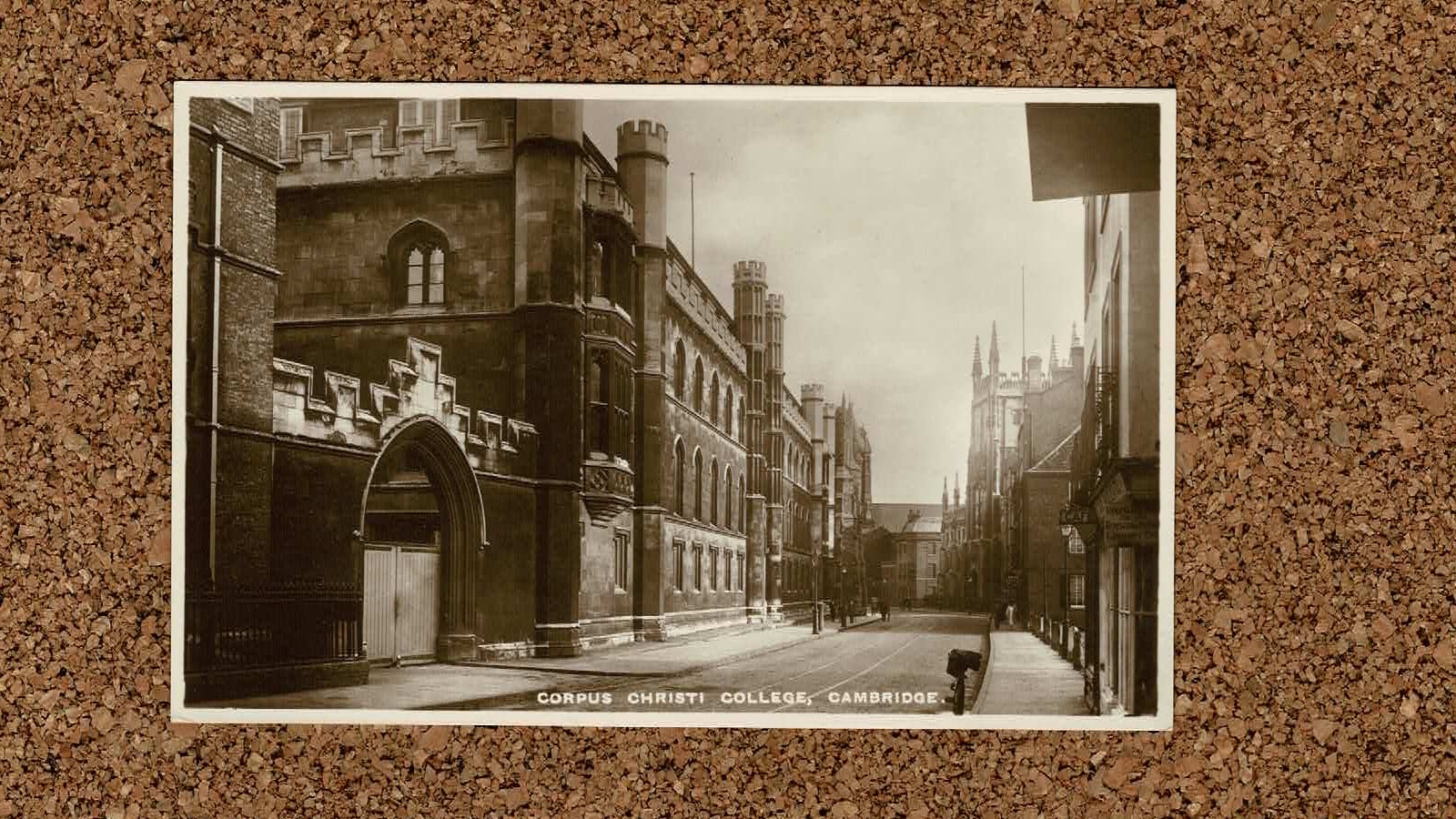
The large majority of the old Oxbridge colleges were founded by rich and powerful individuals. One exception to that rule is Corpus Christi College, Cambridge. This was instead founded by (some of) the townspeople of Cambridge, and specifically by the Guild of Corpus Christi and the Guild of the Blessed Virgin Mary. Its mission was to train priests, in a town and country shocked by the impact of the Black Death. And one particular benefactor was notable: Margaret Andrew, who died in 1349 and gave lands to both guilds.
What was a guild? There’s a fabulously helpful website which discusses their origin in Suffolk, and as Cambridge is next door there might not be too much difference. I’ll summarise: the word comes from the Old English term frith-gilds, associations of ten townsmen or villagers, and date from the 800s. These initially were to help enforce the peace – a medieval neighbourhood watch, if you like – but over time their character changed to take on a religious role and to act as a mutual insurance club of sorts, enabling people to have decent funerals, and celebrate saints days and the like. All of this was to help the members spend less time in purgatory after death.
Guilds became associated with specific saints and, later, with specific parish churches. The Guild of the Blessed Virgin Mary probably doesn’t need much explanation. Guilds of Corpus Christi became popular following Pope Urban IV’s founding of the feast of Corpus Christi (the body of Christ) in 1264. Indulgences – get out of purgatory free cards – were granted to those who celebrated it, and so gilds began to be formed to do so.
The love affair between the towns and the college didn’t last long. 1381 was the year of the Peasant’s Revolt, which was very active in East Anglia and Essex, Cambridge’s next-door counties. And in that year a mob from the town led by the mayor of Cambridge ransacked the college, burning books and causing mayhem, in protest against the college’s rapacious behaviour as a landlord. The specific crime was to enforce candle rents – charges payable based upon the number of candles or wax tapers present in their tenants’ homes. And in a broader context of revolt against authority, grievances would easy have been used to fan the flames.
At this time the college, although formally known as The College of Corpus Christi and the Blessed Virgin Mary in the University of Cambridge, was referred to as Bene’t College or Benet Hall. This was because it used the neighbouring St Bene’t’s Church until in 1577 it got its own chapel. Bene’t is short for Benedict, the founder of the Benedictine order, by the way.
The 1500s were notable for the college for other reasons too. In 1544, Henry VIII’s suppression of the monasteries was in full flow. The college’s master, Matthew Parker, obtained Anglo-Saxon manuscripts from several, and left them to the college, making the core of the Parker collection, of which the college is, reasonably, very proud.
In 1569 Queen Elizabeth I imposed a master upon the fellows of the college, removing for a while their right to elect a master. In 1573 the college imposed new rules requiring that Latin, not English, be spoken by scholars during full term. The punishment for transgression was being “beaten at the Buttery hatch”, which sounds both unpleasant and like a top quality innuendo. (Imagine Kenneth Williams saying it while playing Thomas Cromwell in Carry On Henry and try not to smile.)
We saw earlier that the college was founded just after the Black Death; and in 1630 another visitation of the plague took place. It seems that everyone in the college fled, except the master, a Dr Butts, who stayed behind to try to organise relief. The strain of it all was too much: he was found in 1632, having hanged himself.
During the Civil War the Oxbridge colleges – rich foundations with collections of silver – often gave their wealth to one side or the other. Presumably under duress. Corpus Christi bucked this trend, by giving fellows leave of absence, and asking them to take some of the college silver with them for safekeeping, just as someone has to take the primary school hamster home to be looked after over the school holidays. And that is why Corpus Christi’s silverware collection is better than many other colleges today.
The centuries rolled by, as they do. There were new buildings during the eighteenth and nineteenth centuries, and college life continued. The nineteenth century saw some evangelical zeal, but the number of students was also falling. Until 1906 Corpus Christi had always been led by a clergyman; the appointment of Robert Townley Caldwell as master. He was a colonel, commanding the 3rd battalion of the Gordon Highlanders in the mid-1890s, and a prominent freemason. He combined this with a career as a mathematician at Corpus Christi. His innovation was to change the policy on recruitment, so that it no longer focused on students who were, or wished to become, clergy. And accordingly the college began to grow again.
In 1953 Francis Crick and James Watson announced their discovery of the double helix at The Eagle, which was – and still is – owned by the College. And the college became co-educational in 1980.
Notable alumni include:
Christopher Marlowe, who arrived as a scholar at the college in 1580. His mysterious absences and high Buttery bills only add to the suggestion of his intelligence work, alongside his playwrightry (and yes, this is a proper word)
Basil Henry Liddell Hart, soldier, military historian – especially of the first world war – and theorist
Greetings from early July. I’m back home in northern Virginia where the heat is blazing and the humidity sopping. Weather.com thinks it “feels like 102° F” and I agree. The cats also agree, because they retreated elegantly inside to air conditioning after a brief outside stroll.
I wrote “back home” because my wife and I spent last week celebrating our 32nd anniversary in Canada (here’s one snapshot). Afterwards I was hoping to get back into the swing of things, blogging, Substacking, vlogging various topics already under way, but things have been advancing at such a manic pace that I have to leap in in a hurry.
Case in point: after blogging about campus closures, cuts, and mergers last month more closures and cuts (albeit no mergers) have appeared in just the past few weeks. In this post you’ll see a list of these, with links to supporting news stories and official documents. Alas, this has become a tradition on this site. (From last year: March 1, March 20, March 28, April, May, June, July, September, November. From this year: February, June.) My book on peak higher education is now in the editing process; hopefully by the time it appears the topic won’t be simply historical.
Today we’ll touch on one closure, then focus on cuts, with a few reflections at the end.
1. Closing colleges and universities
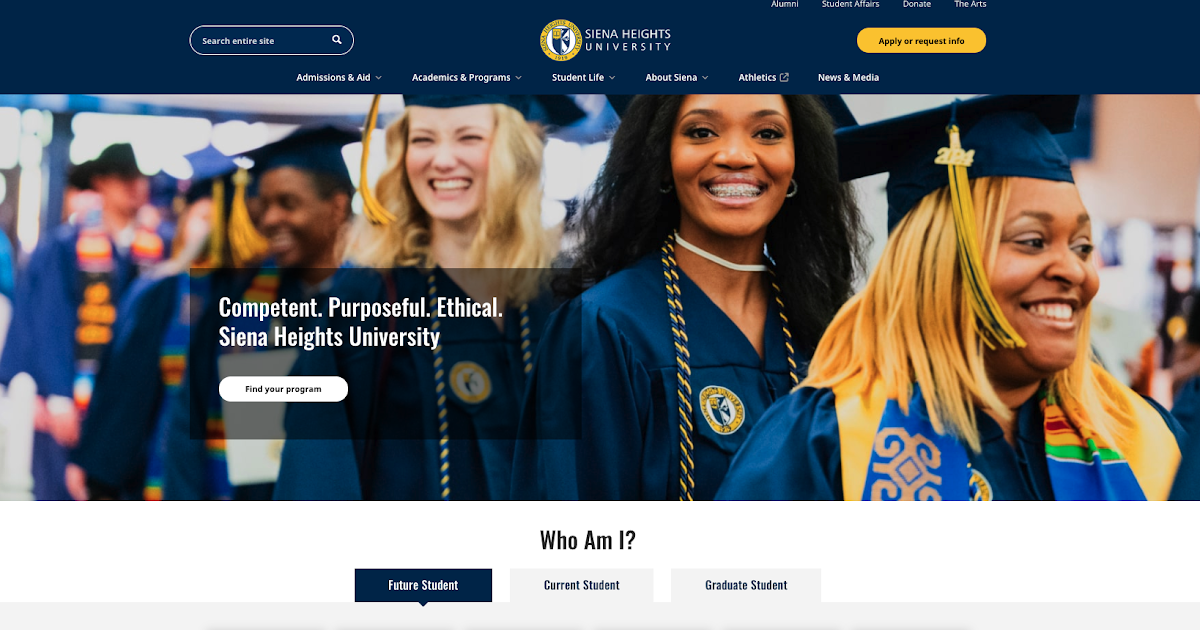
In Michigan Siena Heights University (Catholic) will close after the upcoming academic year. The reasons: “the financial situation, operational challenges, and long-term sustainability,” according to the official statement. A local account concurs, “citing rising costs and stiffer competition for new students.”
The official website doesn’t reflect this on its front page.
2. Program and staffing cuts
Also in Michigan, Concordia University (Lutheran) is shutting down most of its Ann Arbor campus programs. A much smaller set of offerings is what’s next:
Starting June 2025, the private Lutheran institution will offer just nine programs — all in medical-related fields — on its physical campus. That’s down from 53 campus programs the university currently lists on its website. It will offer another seven online programs, mostly in education fields, which is down from more than 60 currently.
Also nearby, Michigan State University (public, research) announced its intention to cut faculty and staff positions this year. The drivers: inflation boosting costs, especially in health care; Trump administration research funding cuts; possible state support cuts; potential international student reduction.
Brown University (research; Rhode Island) is planning to cut an unspecified number of staff this summer. Furthermore, “[a]dditional measures include scaling back capital spending and adjusting graduate admissions levels after limiting budget growth for doctoral programs earlier this year.” The reasons here are financial, but based on the Trump administration’s cuts to federal research funding, not enrollment problems.
The Indiana Commission for Higher Educationannounced shutting down a huge sweep of academic programs across that state’s public universities. More than 400 degrees will end, with 75 ended outright and 333 “merged or consolidated” with other programs. The whole list is staggering. There’s a lot of detail in that Indiana plan, from defining student minima to establishing various options for campuses, appealing closures to timelines for revving up new degrees. It’s unclear how many faculty and/or staff cuts will follow.
Columbia College Chicago (private, arts focused) laid off twenty full-time professors. The school is facing enrollment declines and financial problems. Nearly all of these faculty member are – were – tenure track, which makes this another example of the queen sacrifice.
University of California-Santa Cruz (public, research) is terminating its German and Persian language programs, laying off their instructors. This sounds part of a broader effort to cut costs against a deficit, a deficit caused by “rising labor costs and constrained student enrollment growth,” according to officials.
Boston University (private, research) announced it would lay off 120 staff members as part of a budget-cutting strategy. BU will also close 120 open staff positions and “around 20 positions will undergo a change in schedule” (I’m not sure what that means – shift from full time to part?). The reasons: Trump administration cuts and uncertainty, plus the longstanding issues of “rising inflation, changing demographics, declining graduate enrollment, and the need to adapt to new technologies.”
The president of Temple University (public, research, Pennsylvania) discussed job cuts as part of a 5% budget cut. Reasons include lower enrollment which led to “a structural deficit [for which] university reserves were used to cover expenses.”
Champlain College (Vermont) is closing some low-enrolling majors. The avowed goal is to “design a new ‘career-focused’ curriculum for the fall of 2026 ‘that is focused on and driven by employer needs and student interests.’”
The accounting program, for instance, saw its enrollment decline from 60 students in 2015 to 20 in February 2024, according to documents from the school’s Academic Affairs Committee. The law program, similarly, had little student interest, Hernandez said, and had only three students apply in the fall of 2023, while the data analytics program had only two applications.
At the same time the school is facing serious challenges. Enrollment has sunk from 4,778 students in 2016 to 3,200 last year. The college ran deficits in some reason years and a federal audit criticized the amount of debt it carries. This year “the college’s bond rating was lowered, and its outlook downgraded to ‘negative’ by S&P Global Ratings.”
Looking across the lake from Burlington, near Champlain’s campus back in 2017: a cheery image to balance sad stories.
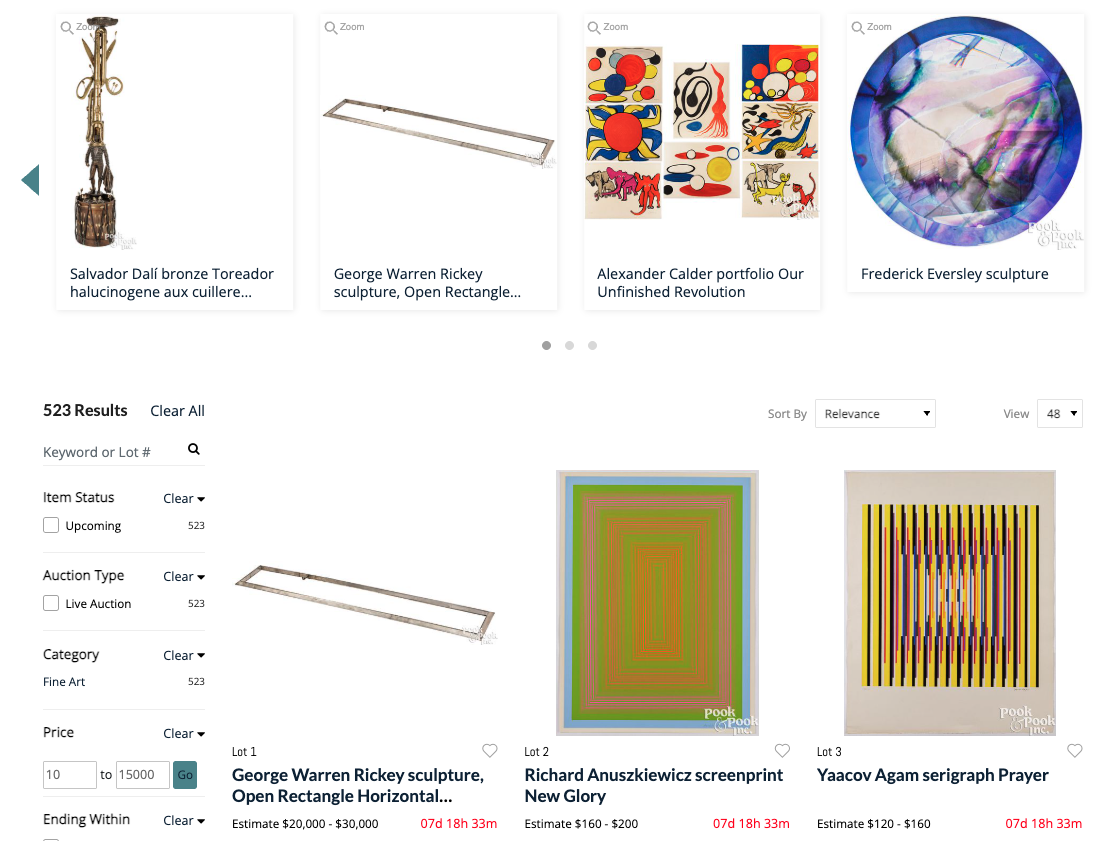
A small but symbolic cut is under way at Albright College (private, liberal arts, Pennsylvania), whose president decided to sell their art college at auction. “It includes pieces by Karel Appel, Romare Bearden, Robert Colescott, Bridget Riley, Leon Golub, Jasper Johns, Jacob Lawrence, Marisol, Gordon Parks, Jesús Rafael Soto and Frederick Eversley, among others.”
Why do this? according to the administration, it was a question of relative value:
“We needed to stop the bleeding,” says James Gaddy, vice-president for administration at Albright, noting that over the past two years the college has experienced shortfalls of $20m. Calling himself and the college’s president Debra Townsley, both of whom were hired last year, “turn-around specialists”, Gaddy claimed that Albright’s 2,300-object art collection was “not core to our mission” as an educational institution and was costing the college more than the art is worth.
“The value of the artworks is not extraordinary,” he says, estimating the total value of the pieces consigned to Pook & Pook at $200,000, but claimed that the cost of maintaining the collection was high and that the cost of staffing the art gallery where the objects were displayed and (mostly) stored was “more than half a million dollars” a year.
A screenshot of some of the auction lots.
3 Budget crises, programs cut, not laying off people yet
Cornell University is preparing staff cuts in the wake of Trump administration research funding reductions.
The University of Minnesota’s administration agreed to a 7.5% cut across its units, along with a tuition increase. The president cited frozen state support and rising costs.
New York University (NYU) announced a 3% budget cut. So far this is about “emphasizing cuts to such functions as travel, events, meals, and additional other-than-personal-service (OTPS) items.” NYU will keep on not hiring new administrators and is encouraging some administrators and tenured professors to retire.
Yale University paused ten ongoing construction projects because of concerns about cuts to federal monies.
Reflections
Many of these stories reflect trends I’ve been observing for a while. Declining enrollment is a major problem for most institutions. The strategy of cutting jobs to balance a budget remains one at least some leaders find useful. The humanities tend to suffer more cuts than others (scroll down the Indiana pdf for a sample). Depending on the state, state governments can increase budget problems or alter academic program offerings.
The second Trump administration’s campaign against higher education is drawing blood, as we can see from universities citing the federal research cuts in their budgets and personnel decisions. Note that this is before the One Big Beautiful Bill Act’s provisions take hold, from capping student aid to increasing endowment taxes. And this is also before whatever decrease will appear with international student enrollment this fall. (Here’s my video series on Trump vs higher ed; new episode is in the pipeline.)
Note the number of elite institutions in today’s post. In the past I’ve been told that the closures, mergers, and cuts primarily hit low-ranked and marginal institutions, which was sometimes true. But now we’re seeing top tier universities enacting budget cuts, thanks to the Trump administration.
Let me close by reminding everyone that these are human stories. Program cuts hurt students’ course of student. Budget cuts impact instructors and staff of all kinds. When we see the statistics pile up we can lose sight of the personal reality. My heart goes out to everyone injured by these institutional moves.
Finally, I’d like to invite anyone with information on a college or university’s plans to close, merge, or cut to share them with me, either as comments on this post, as notes on social media, or by contacting me privately here. I write these posts based largely on public, open intelligence (news reports, investigations, roundups) but also through tips, since higher education sometimes has issues with transparency. We need better information on these events.
(thanks to Will Emerson, Karl Hakkarainen, Kristen Nyht, Cristián Opazo, Peter Shea, Jason Siko, George Station, Nancy Smyth, Ed Webb, and Andrew Zubiri for supplying links and feedback)
The Education Department said Thursday that federal money shouldn’t fund dual enrollment, adult education and certain career and technical education for “illegal alien” students, whether they’re adults or K–12 pupils who are accessing postsecondary education.
Department officials said in a news release that they are rescinding parts of a 1997 Dear Colleague letter that had allowed undocumented students to access those programs.
In the interpretative rule published on the Federal Register, the department declared that “non-qualified alien adults are not permitted to receive education benefits (postsecondary education benefits or otherwise) and non-qualified alien children are not eligible to receive postsecondary education benefits and certain other education benefits, so long as such benefits are not basic public education benefits. Postsecondary education benefits include dual enrollment and other similar early college programs.”
Education Secretary Linda McMahon said in the release that “under President Trump’s leadership, hardworking American taxpayers will no longer foot the bill for illegal aliens to participate in our career, technical, or adult education programs or activities. The department will ensure that taxpayer funds are reserved for citizens and individuals who have entered our country through legal means who meet federal eligibility criteria.”
Augustus Mays, vice president of partnerships and engagement at EdTrust, an education equity group, said in a statement that the change “derails individual aspirations and undercuts workforce development at a time when our nation is facing labor shortages in critical fields like healthcare, education, and skilled trades. This decision raises barriers even higher for undocumented students who are already barred from accessing federal financial aid like Pell Grants and student loans.
“Across the country, we’re seeing migrant communities targeted with sweeping raids, amplified surveillance, and fear-based rhetoric designed to divide and dehumanize,” Mays said. “Policies like this don’t exist in a vacuum. They are rooted in a political agenda that scapegoats immigrants and uses fear to strip rights and resources from the most vulnerable among us.”
Missouri has passed a law protecting the right of students to gather and speak on campuses across the state. On Wednesday, Missouri Gov. Mike Kehoe signed into law SB 160, which defends the freedom of student organizations to set leadership and membership requirements that are consistent with their beliefs.
Although the bill was later amended to include provisions unrelated to the student organization protections for which we advocated, the final law still marks a meaningful victory for students at Missouri’s public colleges and universities.
The First Amendment guarantees the right to freely associate with others who share their beliefs — or not associate with those who don’t. FIRE has consistentlyopposedpolicies that force student groups to eliminate belief-based membership rules to gain official college recognition. As we said in March when Utah signed similar protections into law, it makes little sense, for example, “to force a Muslim student group to let atheists become voting members or for an environmentalist student group that raises awareness about the threats of climate change to allow climate change skeptics to hold office.”
In a letter to Missouri’s legislature supporting SB 160, we explained that the right to associate freely extends to students at public universities and to the student organizations they form. The Supreme Court agrees, and has repeatedly upheld this principle, affirming in Healy v. James that public colleges cannot deny official recognition to student organizations solely based on their beliefs or associations. Similarly, in Widmar v. Vincent, the Court ruled that a public university violated the First Amendment by denying a religious student group access to campus facilities because of its religious beliefs.
However, the Court’s decision in Christian Legal Society v. Martinez upheld the constitutionality of “all-comers” policies — requiring student organizations to accept any student as a member or leader, even those who oppose the group’s core beliefs. But the ruling applies only when such policies are enforced uniformly. In practice, universities often apply these policies selectively. For example, some religious organizations have been forced to accept members and leaders who do not share their faith, while secular groups have been allowed to set their own membership and leadership requirements without administrative intervention.
This selective enforcement results in viewpoint discrimination. SB 160 is meant to correct that imbalance. It states that schools cannot take any action against a student association or potential student association:
(a) Because such association is political, ideological, or religious;
(b) On the basis of such association’s viewpoint or expression of the viewpoint by the association or the association’s members; or
(c) Based on such association’s requirement that the association’s leaders be committed to furthering the association’s mission or that the association’s leaders adhere to the association’s sincerely held beliefs, practice requirements, or standards of conduct.
With the enactment of this bill, Missouri joinsa growingnumberof states strengthening protections for the First Amendment rights of student organizations on campus.
FIRE thanks Missouri lawmakers and Gov. Kehoe for affirming that students don’t shed their constitutional rights at the campus gates.