This year marks 100 years since the Leverhulme Trust was established. It’s a moment for us to reflect on the extraordinary research the Trust has supported over that period – but also to look forward.
That’s why the Leverhulme Trust Board has decided to commit an additional £100 million to UK university research over the next few years, on top of our usual £120m annual spend.
Investing in the future
This is not a nostalgic gesture. It is a deliberate investment in a university sector that continues to deliver world-class research, even as it faces immense financial pressure. The UK’s research base is one of the country’s greatest assets. However, it is under strain, despite the welcome increase in funding for research and development in the recent spending review.
Universities are grappling with rising costs and uncertainty around international student income. In this context, the Trust’s centenary investment is a celebration of the sector’s excellence and, we hope, a timely contribution to sustaining that excellence.
We are directing this funding where we believe it can make the greatest difference: into blue skies research and supporting the next generation of researchers. These are areas where funding has become increasingly difficult to secure, and where we can therefore add the most value. We are, however, not changing our usual approach, which is to leave academics, who are at the forefront of their fields, to determine the questions that are most important and pressing.
Blue sky bedrock
Blue skies research – curiosity-driven, often interdisciplinary, and sometimes high-risk – is the core mission of the Trust. This kind of research is also the bedrock on which much social, technological and economic progress rests. It is easy to identify vitally important blue skies research retrospectively. Much harder to prove its value in advance.
Our award to Kostya Novoselov early in his career looks prescient – he went on to win the Nobel for his work on graphene. But predicting which of the novel projects we fund will pay off in the long term is very tricky. While the Trust’s support for Chris Stringer’s work with the Natural History Museum completely changed our understanding of early human life in Britain, it’s hard to put a value on that.
The need to demonstrate likely impact, combined with research funding streams that are more focused on specific economic priorities, has made it harder for some disciplines to pursue discovery research. The value of quality research (QR) funding in England, which was once the major source for discovery research, has also declined by 15 per cent since 2010.
Yet, it is blue skies research that often leads to the most profound breakthroughs. Charity funding that is patient and takes risks can therefore make a real contribution here.
Investment at every stage
To that end, the Trust will use £50m to establish new research centres, each receiving up to £10 million to tackle big questions over a decade. This research centre model has proven to be highly effective, not only in addressing critical issues, but also in building research capacity. Previous Leverhulme Centres have contributed to areas such as climate change, wildfires, the origins of life, ethical AI, and demographic modelling, to name but a few.
We are also investing in the next generation of researchers. We will commit an additional £20m to doctoral training, doubling our usual spend, to support approximately 200 PhD students. This is another area under financial pressure, particularly in some arts and humanities fields.
This investment is not just about producing future academics. We know that not all PhD graduates will stay in academia. Nor should they. One of the strengths of the UK’s research system is its ability to develop talent that contributes across a range of sectors. I recently spoke with a Leverhulme-funded doctoral student whose work explores the ethics of algorithmic decision-making. Their research is deeply theoretical, but its implications are hugely practical. Whether they end up in academia, government, or industry, their skills will be vital in tackling the AI-related challenges ahead.
And funding academics at the beginning of their career is only part of the story. Our centenary awards will support mid-career researchers in building their first research team, a challenging transition given the increasing teaching demands in some institutions. We will also provide funding to support aspiring scholars from underrepresented groups, as well as provide mentoring and networking opportunities. We want to ensure that talented individuals from all backgrounds can access research careers and thrive within them.
Charity funding as part of a research ecosystem
Charities like the Leverhulme Trust have long played a significant role in supporting UK research, contributing about £2 billion per annum in total. But charity funding is not designed to support the basic infrastructure of universities. This means that any grant we award to a university also requires a contribution from the institution itself because, like most charities, we do not cover overhead costs, which is undoubtedly a challenge for universities.
As the Nurse Review highlighted, both domestic student teaching and university research are cross-subsidised from other income streams. Further, while the UK’s research system is one of the most productive and internationally connected in the world, it is also one of the most financially exposed and the model of relying on the cross-subsidy of research with income from international students has come under immense pressure.
We therefore need to find additional ways to sustain the research capacity that underpins so much of the UK’s economic, social, and cultural life. This is not just about protecting and preserving what we have; it is about shaping what comes next. Research is not a luxury. It is a necessity, especially in a world facing complex challenges, from climate change to economic and technological disruptions.
To maintain the UK’s position as a global research leader, we need a funding system that provides long-term stability.
We hope our investment will not only help to sustain the intellectual ambition that defines the UK’s research community but also prompt a wider conversation – one about how we value research, how we fund it, and how we ensure that its benefits are shared as widely as possible.
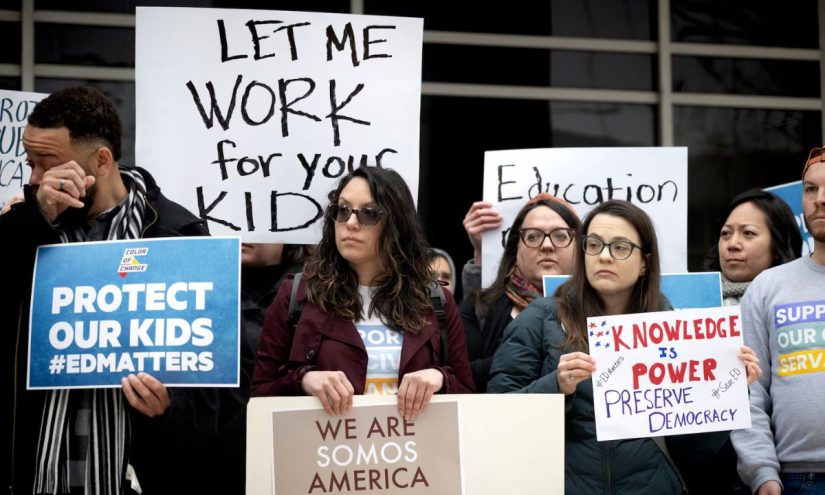
Ordered to bring back roughly 1,300 laid-off workers, the U.S. Department of Education instead has spent weeks ostensibly working on the logistics. Meanwhile, the Trump administration wants the U.S. Supreme Court to decide they don’t have to restore those jobs after all.
The legal argument over the job status of Education Department workers is testing the extent to which President Donald Trump and Education Secretary Linda McMahon can reshape the federal bureaucracy without congressional approval.
The employees, meanwhile, remain in limbo, getting paid for jobs they aren’t allowed to perform.
An analysis done by the union representing Education Department employees estimates the government is spending about $7 million a month for workers not to work. That figure does not include supervisors who are not part of the American Federation of Government Employee Local 252.
“It is terribly inefficient,” said Brittany Coleman, chief steward for AFGE Local 252 and an attorney in the Office for Civil Rights. “The American people are not getting what they need because we can’t do our jobs.”
McMahon announced the layoffs in March, a week after she was confirmed by the Senate, and described them as a first step toward dismantling the Education Department. A few days later, Trump signed an executive order directing McMahon to do everything in her legal authority to shut down the department.
The Somerville and Easthampton school districts in Massachusetts, along with the American Federation of Teachers, other education groups, and 21 Democratic attorneys general sued McMahon over the cuts. They argued the layoffs were so extensive that the Education Department would not be able to perform its duties under the law.
U.S. District Court Judge Myong Joun agreed, issuing a sweeping preliminary injunction in May that ordered the Education Department to bring laid off employees back to work and blocked any further effort to dismantle or substantively restructure the department.
The Trump administration sought a stay of that order, and the case is on the emergency docket of the Supreme Court, where a decision could come any day.
In the administration’s request to the Supreme Court, Solicitor General John Sauer argued that the harms the various plaintiffs had described were largely hypothetical, that they had not shown the department wasn’t fulfilling its duties, and that they didn’t have standing to sue because layoffs primarily affect department employees, not states, school districts, and education organizations.
Sauer further argued that the injunction violates the separation of powers, putting the judicial branch in charge of employment decisions that are the purview of the executive branch.
“The injunction rests on the untenable assumption that every terminated employee is necessary to perform the Department of Education’s statutory functions,” Sauer wrote in a court filing. “That injunction effectively appoints the district court to a Cabinet role and bars the Executive Branch from terminating anyone.”
The Education Department did not immediately respond to a request for comment.
Last week, Joun issued a separate order telling the Education Department that it must reinstate employees in the Office for Civil Rights. The Victims Rights Law Center and other groups had described thousands of cases left in limbo, with children suffering severe bullying or unable to safely return to school.
Meanwhile, the Education Department continues to file weekly updates with Joun about the complexities of reinstating the laid-off employees. In these court filings, Chief of Staff Rachel Oglesby said an “ad hoc committee of senior leadership” is meeting weekly to figure out where employees might park and where they should report to work.
Since the layoffs, the department has closed regional offices, consolidated offices in three Washington, D.C. buildings into one, reduced its contracts for parking space, and discontinued an interoffice shuttle.
In the most recent filing, Oglesby said the department is working on a “reintegration plan.”
Coleman said she finds these updates “laughable.”
“If you are really willing to do what the court is telling you to do, then your working group would have figured out a way to get us our laptops,” she said.
This story was originally published by Chalkbeat. Chalkbeat is a nonprofit news site covering educational change in public schools. Sign up for their newsletters at ckbe.at/newsletters.
Cass McBride pulled into the parking lot of Atlantic Cape Community College just as the morning fog was lifting. The campus was quieter than she remembered—fewer cars, fewer conversations, fewer reasons to linger. The culinary arts building stood at the edge, windows clouded with dust, the café shuttered and dark.
Javi Sandoval sat beside her, scrolling through an email on his cracked phone screen. The college had just announced what everyone already knew: Atlantic Cape’s culinary program would be consolidated with Rowan College at Burlington County by the fall. The words were clean and administrative—“efficiency,” “realignment,” “cost savings”—but everyone understood the message. This place was being downsized, absorbed, and eventually erased.
“They’re moving all the classes to Mt. Holly,” Javi said. “That’s over an hour away. No shuttle, no support. Just go if you can. Or don’t.”
Cass nodded, her hands resting on a worn-out canvas bag filled with cookbooks and a half-used chef’s coat. “They say it’s about opportunity. But it feels like they’re just trimming away everything that made this place ours.”
Inside the student center, the old café was locked, its chalkboard menu still faintly showing specials from months ago—creamy risotto, grilled seasonal vegetables, apple tart. Meals once made by students, for staff and faculty, as part of their hands-on learning.
They walked around to the back hallway near the faculty offices, hoping to find someone who could give them real answers. That’s where they found Professor Reilly, sitting on a bench with a cardboard box beside him—books, a stained apron, and a union button that read: EDUCATION IS NOT A BUSINESS.
Reilly had taught part-time in the culinary program for over a decade—early morning sections, night classes, summer workshops. He was known for lecturing about labor history in the middle of baking demonstrations, quoting Eugene V. Debs while folding dough.
“They gave me fifteen minutes,” he said when Cass asked what had happened. “No severance. Just a letter. Said my ‘contract wasn’t renewed due to program restructuring.’ They didn’t even spell my name right.”
Javi sat down next to him. “I thought you were protected. Weren’t you in the union?”
Reilly chuckled. “We tried. We organized. But it’s hard when most of us are part-time and disposable. Admin smiles during bargaining, then turns around and guts your job through ‘curricular updates.’ They always find a way.”
Cass asked him if he’d stay in the area.
“I’ll stay,” he said. “Because this is where the students are. Because someone needs to remind them they’re not crazy for wanting more than just job training and debt. They deserve an education that feeds the soul, not just the economy.”
That night, Cass and Javi drove out past Pleasantville, where empty storefronts now stood beside a few remaining restaurants, barbershops, and bodegas. They passed through Margate and Ventnor, where beach homes glowed in early evening light, and the golf courses were still lush and quiet. In Somers Point, they saw the “Help Wanted” signs outside the waterfront restaurants—jobs with no benefits and long hours, perfect for students who no longer had classes to attend.
The casinos in Atlantic City still blinked and buzzed, but the crowds were thinner, and most of the profits came from online betting now—clicks from phones, not chips on tables.
They camped that evening just off Route 542, in a small clearing where the Pines bent gently in the wind. The stars came out slowly.
“I miss the kitchen,” Javi said. “The way Reilly used to talk about food—like it was a kind of justice.”
Cass pulled out her copy of The Grapes of Wrath, the one Reilly had recommended. She turned to a page he had dog-eared for her. “‘And the little screaming fact that sounds through all history: repression works only to strengthen and knit the repressed.’”
Javi looked up at the trees. “I keep thinking about people like Bernie Sanders and AOC. The way they talk about socialism, unions, public schools—for them, it’s not just politics. It’s survival. Dignity. Like what Reilly was trying to teach.”
Cass smiled, the firelight flickering on her face. “Yeah. It makes you think maybe this isn’t the end. Maybe it’s the start of something different.”
The wind moved through the Pines, steady and low, like an old voice telling stories to those who still cared to listen.
ELKHART, Ind. — Ever since Ty Zartman was little, people told him he had to go to college to be successful. “It was engraved on my brain,” he said.
But despite earning straight A’s, qualifying for the National Honor Society, being voted prom king and playing on the high school football and baseball teams, the teen never relished the idea of spending another four years in school. So in fall 2023 he signed up through his Elkhart, Indiana, high school for an apprenticeship at Hoosier Crane Service Company, eager to explore other paths. There, he was excited to meet coworkers who didn’t have a four-year degree but earned good money and were happy in their careers.
Through the youth apprenticeship, Ty started his day at the crane manufacturing and repair business at 6:30 a.m., working in customer service and taking safety and training courses while earning $13 an hour. Then, he spent the afternoon at his school, Jimtown High, in Advanced Placement English and U.S. government classes.
In June, the 18-year-old started full-time at Hoosier Crane as a field technician.
“College is important and I’m not dissing on that,” Ty said. “But it’s not necessarily something that you need.”
Elkhart County is at the forefront of a movement slowly spreading across Indiana and the nation to make apprenticeships a common offering in high school.
In 2019, as part of a plan to boost the region’s economic prospects, county leaders launched an effort to place high schoolers in apprenticeships that combine work-based training with classroom instruction. About 80 students from the county’s seven school districts participated this academic year, in fields such as health care, law, manufacturing, education and engineering. In April, as part of a broader push to revamp high school education and add more work-based learning, the state set a goal of 50,000 high school apprentices by 2034.
Tim Pletcher, the principal of Jimtown High, said students are often drawn first to the chance to spend less time in class. But his students quickly realize apprenticeships give them work-based learning credits and industry connections that help them after graduation. They also earn a paycheck. “It’s really causing us to have a paradigm shift in how we look at getting kids ready for the next step,” he said.
Related: Become a lifelong learner. Subscribe to our free weekly newsletter featuring the most important stories in education.
This “earn and learn” model is taking hold in part because of deepening disillusionment with four-year college, and the fact that well-paying jobs that don’t require bachelor’s degrees are going unfilled nationally. The past three presidential administrations invested in expanding apprenticeships, including those for high schoolers, and in April, President Donald Trump signed an executive order calling for 1 million new apprentices. In a recent poll, more than 80 percent of people said they supported expanding partnerships between schools and businesses to provide work-based learning experiences for students.
Yet in the United States, the number of so-called youth apprenticeships for high schoolers is still “infinitesimally small,” said Vinz Koller, a vice president at nonprofit group Jobs for the Future. One estimate suggests they number about 20,000 nationally, while there are some 17 million high school students.By contrast, in Switzerland — which has been praised widely for its apprenticeship model, including by U.S. Education Secretary Linda McMahon — 70 percent of high schoolers participate. Indiana is among several states, including Colorado, South Carolina and Washington, that have embraced the model and sent delegations to Switzerland to learn more.
Elkhart, Indiana, known as the “RV capital of the world,” saw widespread unemployment during the Great Recession. That led community leaders to focus on apprenticeships as a way to diversify their economy. Credit: Camilla Forte/The Hechinger Report
Experts including Ursula Renold, professor of education systems at the Swiss Federal Institute of Technology (ETH) Zurich, note that importing the model to the United States at a large scale won’t be simple. Most businesses aren’t accustomed to employing apprentices, parents can be resistant to their students trading four-year college aspirations for work, and public transportation to take students to apprenticeships is limited, especially in rural areas. Many high schoolers don’t have a driver’s license, access to a car or money for gas. School districts already face a shortage of bus drivers that makes transporting students to apprenticeships difficult or impossible.
Still, Renold, who is known as the “grande dame of apprenticeships,” said Indiana’s commitment to apprenticeships at the highest levels of state government, as well as the funding the state has invested in work-based learning, at least $67 million, seem to be setting the state up for success, though it could take a decade to see results.
“If I had to make a bet,” said Renold, “I would say it’s Indiana who will lead the way.”
Elkhart County’s experiment with apprenticeships has its roots in the Great Recession. Recreational vehicle manufacturing dominates the local economy, and demand for the vehicles plummeted, contributing to a regional unemployment rate at that time of nearly 20 percent. Soon after, community leaders began discussing how to better insulate themselves from future economic instability, eventually focusing on high school education as a way to diversify industries and keep up with automation, said Brian Wiebe, who in 2012 founded local nonprofit Horizon Education Alliance, or HEA, to help lead that work.
Elkhart County, Indiana, was the first community in Indiana to encourage businesses to employ high school students as apprentices, where they can earn work-based learning credits and make industry connections that help them, even if they decide to go on to college. Credit: Camilla Forte/The Hechinger Report
That year, Wiebe and two dozen local and state political, business, nonprofit and education leaders visited Switzerland and Germany to learn more about the apprenticeship model. “We realized in the U.S., there was only a Plan A, a path to college,” he recalled. “We were not supporting the rest of our young people because there was no Plan B.”
HEA partnered with Elkhart County school districts and businesses, as well as with CareerWise, a youth apprenticeship nonprofit that works nationally. They began rolling out apprenticeships in 2019, eventually settling on a goal of increasing participation by 20 percent each year.
In 2021, Katie Jenner, the new secretary of education for Indiana, learned about Elkhart’s apprenticeships as she was trying to revamp high school education in the state so it better prepared students for the workforce. Elkhart, as well as six other apprenticeship pilot sites funded by Indianapolis-based philanthropy the Richard M. Fairbanks Foundation, provided a proof of concept for the apprenticeship model, said Jenner.
In December, the state adopted a new diploma system that includes an emphasis on experiential and work-based learning, through apprenticeships, internships and summer jobs.
On a weekday this winter, 17 sophomores at Elkhart’s Concord High School were sitting at computers, creating resumes they planned to use to apply for apprenticeships. The students were among some 50 sophomores at the high school who’d expressed interest in apprenticing and met the school’s attendance and minimum 2.5 GPA requirements, out of a class of roughly 400. They would receive coaching and participate in mock interviews before meeting with employers.
Becca Roberts, a former English teacher who now oversees the high school’s college and career programs, said apprenticeships help convince students of the importance of habits like punctuality, clear communication and regular attendance. “It’s not from a book,” she said. “They’re dealing with real life.”
Becca Roberts, who oversees college and career programs at Concord High School in Indiana, helps students research different companies offering apprenticeships, including job descriptions, work schedules and commuting distances. Credit: Camilla Forte/The Hechinger Report
One student, Ava Cripe, said she hoped for an apprenticeship of some sort in the health care field. She’d only been a pet sitter and was nervous at the thought of having a professional job. “You’re actually going out and working for someone else, like not for your parents or your grandma, so it’s a little scary,” she said.
CareerWise Elkhart has recently beefed up its support for students and businesses participating in apprenticeships. It employs a business partnership manager and customer success managers who help smooth over issues that arise in the workplace — an apprentice who isn’t taking initiative, for example, or an apprenticeship that isn’t sufficiently challenging. “Before, if an issue came up, a business would just fire a student or a student would leave,” said Sarah Koontz, director of CareerWise Elkhart County. “We’re now more proactive.”
In Elkhart and across the state, the embrace of work-based learning has worried some parents who fear it will limit, not expand, their children’s opportunities. In previous generations, career and technical programs (then known as vocational education) were often used to route low-income and Black and Hispanic students away from college and into relatively low-paying career paths.
Anitra Zartman, Ty’s mother, said she and her husband were initially worried when their son said he wanted to go straight to work. They both graduated from college, and her husband holds a master’s degree. “We were like, ‘Don’t waste your talent. You’re smart, go to college.’” But she says they came around after seeing how the work experience influenced him. “His maturity has definitely changed. I think it’s because he has a responsibility that he takes very seriously,” she said. “He doesn’t want to let people down.”
Her eldest daughter, Senica Zartman, also apprenticed during her final two years of high school, as a teacher’s assistant. She is now in college studying education. “The apprenticeship solidified her choice,” Anitra Zartman said, and it helped her decide to work with elementary students. Anitra Zartman said she would encourage her two youngest children to participate in apprenticeships too.
Ty Zartman works from 6 a.m. to noon at his apprenticeship at Hoosier Crane Service Company before he goes to school for afternoon classes. Credit: Camilla Forte/The Hechinger Report
Sarah Metzler, CEO of the nonprofit HEA, said apprenticeships differ from the vocational education of the past that tended only to prepare students for relatively low paid, entry-level jobs. With apprenticeships, she said, students must continually learn new skills and earn new licenses and industry certifications as part of the program.
Litzy Henriquez Monchez, 17, apprentices in human resources at a company of 50 people, earning $13.50 an hour. “I deal with payroll, I onboard new employees, I do a lot of translating. Anything that has to do with any of the employees, I deal with,” she said. She’s also earning an industry-recognized certification for her knowledge of a human resources management system, and says the company has offered to pay for her college tuition if she continues in the position.
Koontz said most companies pay for their apprentices to attend Ivy Tech, a statewide community college system, if they continue to work there. One is even paying for their apprentice’s four-year degree, she said.
Attracting employers has proven to be the biggest challenge to expanding youth apprenticeships — in Elkhart and beyond. In total, 20 companies worked with the Elkhart school districts last year, and 28 have signed on for this coming school year — only enough to employ about a third of interested students.
The obstacles, employers say, include the expense of apprentices’ salaries, training and other costs.
Metzler and others, though, point to studies showingbenefits for employers, including cost savings over time and improved employee loyalty. And in Indiana, the Fairbanks foundation and other organizations are working on ways to reduce employer costs, including by developing a standard curriculum for apprenticeships in industries like health care and banking so individual companies don’t bear the costs alone.
Business leaders who do sign on say they are happy with the experience. Todd Cook, the CEO of Hoosier Crane Service Company, employs 10 high schoolers, including Ty Zartman, as engineering and industrial maintenance technician apprentices, approximately 10 percent of his staff. He said the pipeline created by the apprenticeship program has helped reduce recruiting costs.
“We’re starting to build our own farm system of talent,” he said. Students initially earn $13 an hour, and finish their apprenticeship earning $18. If they continue with the company, he said, they can earn up to $50 an hour after about five years. And if they go on to become trainers or mentors, Cook said, “Honestly, there is no ceiling.”
Transportation has been a limiting factor too. There’s no public transit system, and students who can’t rely on their parents for rides are often out of luck. “We’d love to offer a bus to every kid, to every location, but we don’t have people to run those extra bus routes,” said Principal Pletcher.
The state has tried to help by investing $10 million to help students pay for costs such as transportation, equipment and certifications. Each school that provides work-based learning opportunities also receives an additional $500 per student.
Indiana has a goal to employ 50,000 high school students as apprentices by 2034. State leaders in business, education, government and nonprofits are working closely with Swiss experts to adopt a youth apprenticeship program similar to the one in that country. Credit: Camilla Forte/The Hechinger Report
Trump’s executive order called for the secretaries of education, labor and commerce to develop a plan by late August for adding 1 million new apprenticeships. The order does not set a date for reaching that milestone, and it applies to apprentices of all ages, not just high schoolers. Vinz Koller of Jobs for the Future said the goal is modest, and achievable; the number of youth apprenticeships has doubled just in the past few years, he said, and California alone has a goal of reaching 500,000 apprenticeships, across all ages, by 2029.
Still, the order did not include additional funding for apprenticeships, and the Trump administration’s proposed budget includes major cuts to workforce development training. In an email, a White House spokesperson said the administration had promoted apprenticeships through outreach programs but did not provide additional information including on whether that outreach had a focus on youth apprenticeships.
Back in Elkhart, Ty Zartman, the Hoosier Crane apprentice, has begun his technician job with the company after graduating in early June. He is earning $19 an hour. He is also taking a class at the local community college on electrical work and recently received a certificate of completion from the Department of Labor for completing 2,000 hours of his apprenticeship.
Anitra Zartman said she wishes he’d attended more school events like pep rallies, and sometimes worried he wasn’t “being a kid.” But Ty said his supervisor is “super flexible” and he was able to go to the winter formal and prom. “I think I still live a kid life,” he said. “I do a lot of fun things.”
Of his job, he said, “I love it so much.”
Contact editor Caroline Preston at 212-870-8965, via Signal at CarolineP.83 or on email at [email protected].
The Hechinger Report provides in-depth, fact-based, unbiased reporting on education that is free to all readers. But that doesn’t mean it’s free to produce. Our work keeps educators and the public informed about pressing issues at schools and on campuses throughout the country. We tell the whole story, even when the details are inconvenient. Help us keep doing that.
The U‑6 unemployment rate, the broadest measure of labor underutilization reported by the Bureau of Labor Statistics (BLS), is showing signs of upward pressure. Unlike the headline U‑3 rate, which only includes those actively seeking work, the U‑6 figure captures a more complete picture of employment. It includes discouraged workers, marginally attached individuals, and those working part-time for economic reasons.
According to the most recent data from the BLS and the Federal Reserve Bank of St. Louis, the U‑6 rate inched up from 7.7 percent in June 2024 to a recent peak of 8.0 percent in February 2025. Since then, it has remained elevated, recording 7.9 percent in March and 7.8 percent in both April and May. The June 2025 figure dropped slightly to 7.7 percent but remains among the highest levels seen since 2023.
The U‑6 rate tends to rise when more people are involuntarily working part-time or when marginally attached workers reenter the job search but fail to secure full-time employment. These dynamics suggest that while headline unemployment may appear stable—hovering around 4.1 percent in June—the underlying labor market may be more fragile than it seems.
This persistence in underemployment raises concerns about the quality of jobs available, wage stagnation, and economic resilience, particularly for lower-income workers and those in precarious positions. A growing number of Americans want full-time employment but are unable to find it. Others are technically outside the labor force but remain discouraged or marginally attached to it.
In the broader context, the U‑6 rate serves as a counterbalance to optimistic economic narratives. The apparent stability in the U‑3 rate masks lingering vulnerabilities, especially as sectors like retail, hospitality, and education continue to rely heavily on part-time labor or are facing budgetary constraints. For those watching the post-pandemic economy, particularly in relation to student debt, workforce readiness, and higher education policy, these indicators suggest a structural weakness in job creation and labor absorption.
The gradual rise of U‑6 is not just a statistical footnote. It signals that the labor market is not fully healed and that a portion of the population remains economically sidelined. It is a metric worth monitoring as debates around economic recovery, fiscal policy, and employment strategies continue.
For readers of the Higher Education Inquirer, this trend reinforces the need to consider broader employment conditions when evaluating the health of the U.S. economy, particularly for recent graduates, contingent faculty, and other workers navigating a precarious job landscape.
I just got word that the second edition of The Professor Is In book – orig. planned for September – might be *delayed*!
It can’t ship out until we sell the extra inventory of the 1st edition that is still on hand at Amazon, Random House, and other sellers (about 2000 copies).
I REALLY want the second edition to come out Fall 2025 in time for its 10th anniversary, so I’m running a special promotion!
If you buy 100 (new) copies of the first edition (ie, the one that’s on sale now at Amazon, Random House, etc.) I will do a FREE 1 hour virtual talk for your department or program on any aspect of the academic or post-academic job search, grant writing, book proposals, or any other topic in my repertoire.
If you buy 200 new copies, I’ll do a full 1.5 hour virtual talk!
//Rest assured, the actual job search advice content is virtually unchanged between the two editions! So the first edition remains 100% effective for anyone seeking an academic job in 2025. (For reference, the big difference in the second ed., is in the wider contextualization of this advice – deteriorating conditions of academic labor, attacks on tenure and DEI, considerations for marginalized job seekers around issues of disability, gay and trans identity, BIPOC identity, and mental illness and neurodivergency, making the decision to leave, and above all, prioritizing your personal health and well-being). The one chapter of advice that has been entirely rewritten is the one on “What to Wear”, and I’m happy to send along pdfs of that chapter to anyone who participates in this promotion and wants the updated fashion advice!//
But wait, there’s more! 🙂
If you buy 50 books, I will do a 30 minute Q & A with your class or program.
If you buy 25, I’ll give you a discounted rate for a virtual or in person talk.
And if you buy 1 to 10 copies, send me the receipt (at [email protected]) and I’ll put you in a drawing for a free suite of services – editing your job or grant documents, doing a zoom consultation with me, etc. – worth $500! You will get as many entries as copies you buy, up to 10.
Of course, if you’re a Dean or Provost and want to buy 1000+ copies for all the grad students in your college … well, DM me and let’s talk! I’d be glad to reciprocate in some big way that benefits your program.
Thanks, and please share widely! I hope together we can get this done!
In recent years, the profile of student loan borrowers in the United States has shifted dramatically. While student debt is often associated with young adults entering the workforce, a rapidly growing number of older Americans—those aged 50 and above—are carrying significant student loan balances, revealing a troubling new dimension of the nation’s student debt crisis.
As of mid-2025, approximately 7.8 million Americans aged 50 and older hold federal student loan debt, representing about 6% of adults in this age group. Many have borrowed not only for their own education but also to finance their children’s or grandchildren’s schooling. Others have returned to college later in life, seeking new skills or credentials to remain competitive. Yet, these borrowers often face unique challenges that have been exacerbated by the rise of so-called “robocolleges.”
Robocolleges are online institutions that aggressively market to older adults, promising flexible schedules and quick credentials that can lead to better job prospects. However, many of these institutions have come under scrutiny for their low graduation rates, high tuition costs, and poor outcomes for students. Unlike traditional colleges, robocolleges often rely heavily on automated systems and minimal personal support, leaving vulnerable older learners with little guidance about loan obligations or realistic career prospects.
These institutions have played a significant role in trapping many older Americans in unsustainable debt. Borrowers are lured by the promise of upward mobility but frequently end up with degrees that hold limited value in the labor market. The high cost of attendance combined with aggressive recruitment tactics has led many to accumulate tens of thousands of dollars in student loan debt with few prospects for repayment.
Among older borrowers—6.2 million between 50 and 61 years old, and 2.8 million aged 62 or older—the average federal student loan balance for the 50–61 cohort is around $47,000, the highest among all age groups. Around 8% are delinquent on their loans, with median delinquent balances near $11,500. For those over 62, approximately 452,000 are in default and face the threat of Social Security benefit garnishment, though recent government actions have temporarily paused such garnishments.
The debt explosion among older Americans has been dramatic: over the past two decades, the number of borrowers aged 60 and above has increased sixfold, with total debt rising nearly twentyfold. Robocolleges, with their predatory recruitment and inadequate educational outcomes, are a central piece of this puzzle, helping to drive up borrowing without delivering commensurate value.
This growing crisis underscores the urgent need for policy reforms tailored to the realities faced by older borrowers. There must be greater transparency and accountability from robocolleges, stronger consumer protections, and expanded debt relief options that reflect the challenges of late-in-life borrowing. Additionally, educational counseling and financial literacy support designed specifically for older students are crucial.
The student debt crisis in America is no longer only about young adults trying to start their careers—it increasingly jeopardizes the financial security and dignity of older generations. As robocolleges continue to trap vulnerable older learners in cycles of debt, the urgency for reform becomes even clearer.
The Higher Education Inquirer will continue to investigate and report on this evolving crisis, amplifying the voices of those caught in the crosshairs of an expanding student debt epidemic.
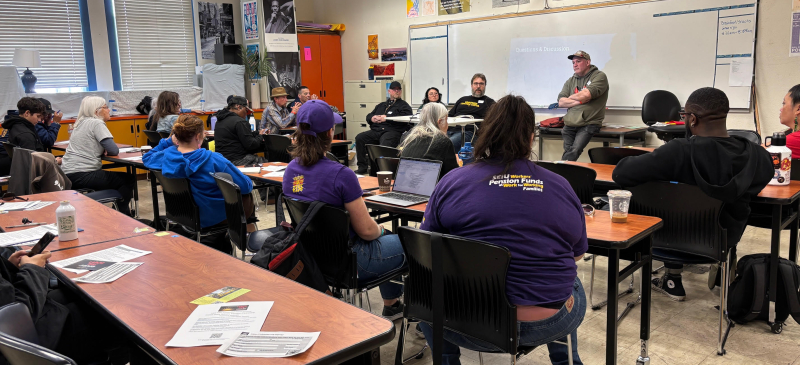
What’s the secret of winning a strong contract? Hint: You won’t find it at the negotiations table!
In our “Winning a Strong Contract” workshop series, we talk about how we can build power away from the table to win our demands in bargaining.
Labor Notes Organizer Lisa Xu joins pod co-hosts Danielle Smith and Natascha Elena Ulhmann for an overview of the workshop, including concepts like the campaign mountain and campaign power spiral.
“Winning a Strong Contract Parts I & II” will be running the next two Mondays (July 7 and July 14th), and you can sign up at labornotes.org/events.
by Natascha Elena Uhlmann
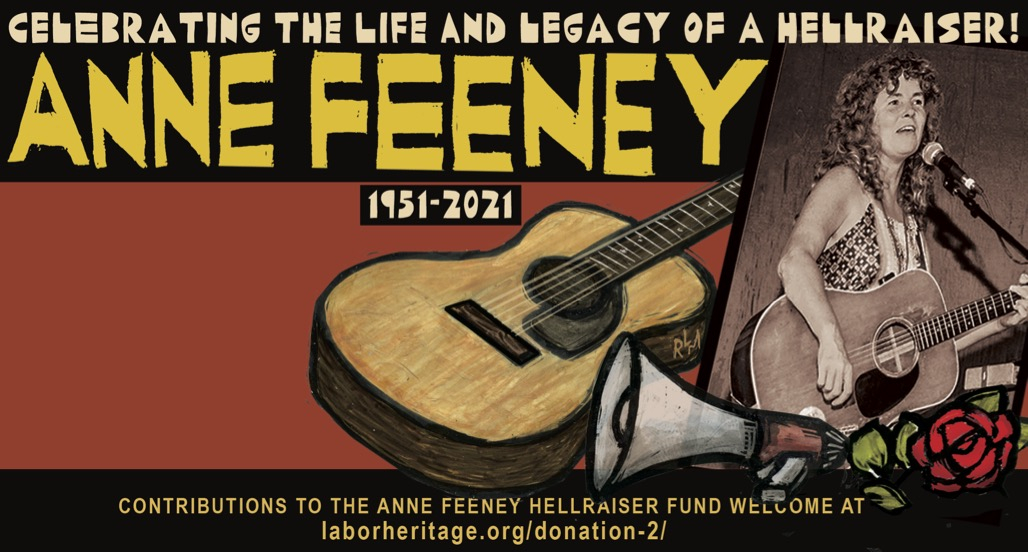
Friends and family of legendary folk musician and “hellraiser” Anne Feeney have come together to announce a new round of grants for artists “on the frontlines of the fight against fascism.”
The Anne Feeney Hellraiser Memorial Fund will provide three grants of up to $1,000 for emerging artists of any discipline who create art in support of social movements for justice.
Economic Policy Institute president Heidi Shierholz denounces passage of GOP budget bill:
The Republican budget will gut Medicaid, slash food aid for families, and shutter rural hospitals—just to give tax breaks that will go overwhelmingly to the wealthy. It is a staggering upward redistribution of income.
The bill also turbocharges an authoritarian-style immigration regime—funding internment camps, mass surveillance, and waves of deportations that will kill millions of jobs.
North America’s Building Trades Unions (NABTU) President Sean McGarvey issued the following statement on the Senate Republican Proposed Budget Bill:
If enacted, this stands to be the biggest job-killing bill in the history of this country. Simply put, it is the equivalent of terminating more than 1,000 Keystone XL pipeline projects.
In some cases, it worsens the already harmful trajectory of the House-passed language, threatening an estimated 1.75 million construction jobs and over 3 billion work hours, which translates to $148 billion in lost annual wages and benefits.
Visit labornotes.org/events for updates. Nobody will be turned away from a Labor Notes event, virtual or in-person, for lack of funds—if the registration fee is a barrier, email us.
We will cover the basics of building a Contract Action Team (CAT), putting together an escalating campaign (potentially culminating in a strike), and dynamics between the bargaining committee, CAT, and the membership.
When: Mondays, July 7 & 14 Time: 7 p.m. – 8:30 p.m. ET / 4 p.m. – 5:30 p.m. PT Where: This is an online workshop and will be held via Zoom.
Prerequisites for this workshop: We strongly encourage workshop participants to also first attend our upcoming “Secrets of a Successful Organizer” workshop series in June.
This workshop will teach skills to analyze power in the present moment to strategically build the workers movement we need. We’ll be joined by labor educator Stephanie Luce.
This is an advanced workshop for those organizers who are already part of a union or other worker organizations.
When: Wednesday, July 16 Time: 7:30 p.m. to 9:00 p.m. Eastern (4:30 p.m. to 6:00 p.m. Pacific) Where: This is an online workshop and will be held via Zoom.
Stewards are the backbone of the union! Learn how to build a strong stewards structure that helps workers use their power in the workplace to effectively fight the boss.
When: Wednesday, July 23 Time: 7:30 p.m. to 9:00 p.m. Eastern (4:30 p.m. to 6:00 p.m. Pacific) Where: This is an online workshop and will be held via Zoom.
Secrets of a Successful Organizer is Labor Notes’ core organizing training, in three sessions full of lively participatory exercises. We welcome first-timers and repeat attendees looking to sharpen their skills.
When: Mondays, September 8, 15 and 22 Time: 7:30 p.m. to 9:30 p.m. Eastern / 4:30 p.m. to 6:30 p.m. Pacific Cost: $15 for the whole series. Includes access to all three sessions.
Join labor activists from around North Carolina—and the whole region—to strategize, share skills, and learn how to organize to win.
Whether you’re new to unions or are an experienced union activist, there’s something there for you. We encourage local unions to send a group of members.
Date: September 20 Time: 10 am – 5 pm Location: Jordan High School, 6806 Garrett Rd., Durham, NC
Bringing together union members, labor activists, and local officers, a Labor Notes Troublemakers School is a space for building solidarity, and sharing successes, strategy, and inspiration.
It’s a real shot in the arm for newbies and seasoned activists alike.
When: 9:30 a.m. – 4 p.m. on Saturday, October 4, 2025 Where: Steamfitters Local 601 3300 S 103rd Street Milwaukee, WI 53227
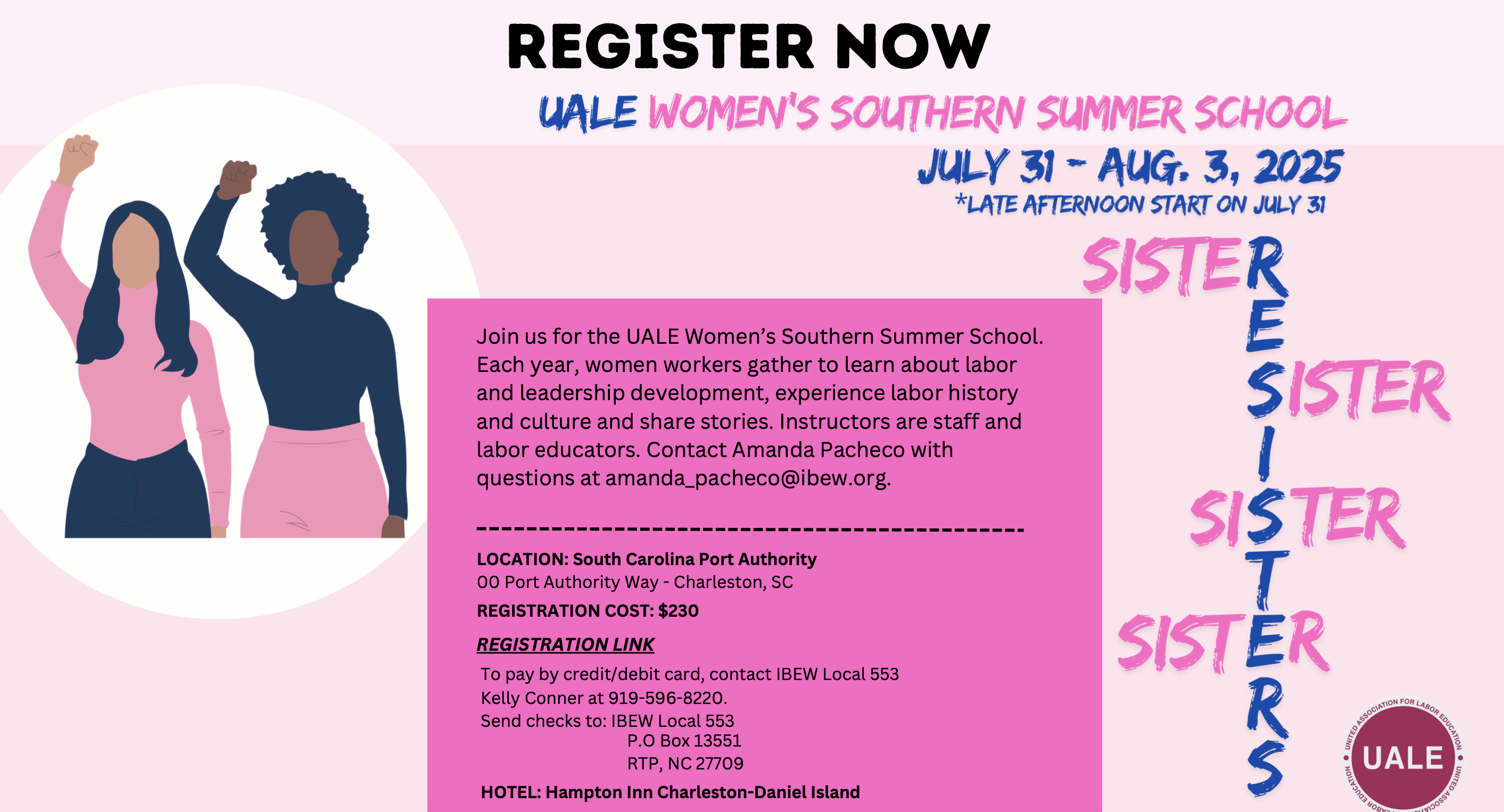
At the Southern Summer School, women workers come together to learn about labor and leadership development, experience labor history and culture, and share stories.
Write for Labor Notes. When you discover a good tactic, share the news! Thousands of readers in other workplaces can put the information to use. Email [email protected].
Visit the Labor Notes Store for books, knit caps, hoodies, T-shirts and more! Check it out atlabornotes.org/store.
In a world of climate crisis, student debt, and endless consumption, there’s a quiet revolution available to young people: walk more, buy less. It sounds simple—because it is—but the impact can be profound.
Most college students and recent grads don’t need to be reminded about environmental collapse. You’ve grown up amid wildfires, extreme weather, and warnings about rising seas. But while corporations and billionaires pump out pollution and plastic, you’re often told that the burden to fix things falls on your shoulders. You recycle. You switch off lights. You carry a tote bag. Still, it doesn’t feel like enough.
That’s because systemic change is slow and hard. But two actions—walking and not shopping—have the power to disrupt entire systems of waste and exploitation.
Walking Is a Radical Act
In car-dominated societies like the U.S., walking is often dismissed as inconvenient or inefficient. But for those who can safely walk, it is an act of environmental resistance. Cars consume fossil fuels, require destructive mining for materials, and spew emissions into the air. Even electric vehicles rely on rare earth metals, large batteries, and energy grids that still burn coal and gas.
Every mile you walk instead of drive avoids carbon pollution. Every pair of shoes worn out instead of tires is a win. Walking also builds local awareness. You notice what’s happening on your streets—who’s struggling, who’s thriving, which spaces are neglected, and where nature is still hanging on. You become part of your community rather than just passing through it.
Walking saves money, improves health, and takes power away from oil companies and car-dependent infrastructure. That’s not just healthy—it’s revolutionary.
Buying Less: Anti-Consumerism as Climate Action
You’ve probably heard the phrase “vote with your wallet.” But what if not spending is the more powerful vote?
Our entire economy is built around constant consumption. Fast fashion, tech upgrades, cheap furniture, endless online shopping—this isn’t just bad for your bank account. It’s bad for the planet. Every product you buy took raw materials, labor (often exploited), and energy to produce, ship, and store. The less we consume, the less destruction we support.
Here’s the thing: corporations want you to feel like you’re missing out if you don’t buy the newest thing. Social media and marketing are built to trigger that FOMO. But refusing to participate—living simply, creatively, and consciously—is one of the boldest stands you can take.
You don’t have to live like a monk. But delaying gratification, fixing what you already own, swapping clothes with friends, using the library, and just sitting with your discomfort instead of numbing it with shopping—these are environmental acts. They’re also acts of freedom.
Why This Matters for Students and Grads
As a young person, you’re probably juggling rent, school loans, gig jobs, and anxiety about the future. You may feel powerless. But walking and cutting back on shopping are low-cost, high-impact moves. They don’t require wealth. They don’t require perfection. They’re daily choices that build awareness and build community.
By walking and refusing overconsumption, you model an alternative future—one not built on endless growth, but on balance, care, and intentional living.
These small acts won’t fix everything. But they will help you live in closer alignment with your values. And they send a clear message: We’re not buying the lies anymore.
Final Thought
Caring for the environment isn’t about being perfect. It’s about shifting culture. It’s about resisting a system that treats the Earth—and our lives—as disposable.
So walk when you can. Buy less than you think you need. Look around. Notice what matters. And know that in these small acts, you’re part of something bigger.
Your steps count. Your refusal counts. Your care counts.
Higher Education Inquirer is committed to radical truth-telling and student advocacy in an era of climate chaos and corporate capture.
HEPI’s Director, Nick Hillman, spent Friday at a conference organised by SKOPE (the Centre for Skills, Knowledge, and Organisational Performance), part of the University of Oxford’s Department of Education. It was overseen by James Robson, Professor of Tertiary Education Systems, and featured the Minister for Skills, Baroness (Jacqui) Smith, among many others.
In his opening address, Professor Robson articulated the growing consensus that, when it comes to post-school education, the time has come:
to replace competition with coordination;
to allow place-based approaches to flourish; and
to unlock new opportunities for the benefit of students and employers.
In her remarks, Jacqui Smith agreed, arguing for an end to ‘town / gown’ splits. The Minister emphasised she thinks higher education must reach out to other parts of the education sector: while she recognises the majority of future skills needs will be at a higher level, she wants to bring down the ‘artificial’ barriers between FE and HE in a ‘coordinated’ and ‘facilitated’ way.
Some people in the audience interpreted this as meaning universities’ only hope of more money is to do the Government’s bidding and, either way, the higher education sector clearly needs to get ready for a more directive approach from a more active state. The basic idea seems to be to have everyone work together to raise productivity, level up the regions outside London and deliver more social mobility.
It may sound lovely but these issues are as old as houses and, whenever I think of them, I think of those paragraphs from the Robbins committee – which was designed ‘to review the pattern of full-time higher education’ – that wrestle with freedom versus direction. The Robbins report struggled with the right level of co-ordination and, while much of what it said reflected Lionel Robbins’s liberal views, it also envisaged a role for oversight and direction:
Will it be possible to secure the advantages of co-ordination while preserving the advantages of liberty? The question is of critical importance. Freedom of institutions as well as individual freedom is an essential constituent of a free society and the tradition of academic freedom in this country has deep roots in the whole history of our people. We are convinced also that such freedom is a necessary condition of the highest efficiency and the proper progress of academic institutions, and that encroachments upon their liberty, in the supposed interests of greater efficiency, would in fact diminish their efficiency and stultify their development. …
We believe that a system that aims at the maximum of independence compatible with the necessary degree of public control is good in itself, as reflecting the ultimate values of a free society. We believe that a multiplicity of centres of initiative safeguards spontaneity and variety, and therefore provides the surest guarantee of intellectual progress and moral responsibility. We do not regard such freedom as a privilege but rather as a necessary condition for the proper discharge of the higher academic functions as we conceive them. …
The difficulties are greatest when it is a question whether institutions of higher education should have the ultimate right to determine their own size. … if funds are available, refusal to co-operate in national policies or to meet national emergencies is an unsympathetic attitude, and it would be easy to think of reasons why it should be overruled. … If, when all the reasons for change have been explained, the institution still prefers not to co-operate it is better that it should be allowed to follow its own path. This being so, it must not complain if various benefits going to co-operating institutions do not come its way. … [My emphasis]
it is unlikely that separate consideration by independent institutions of their own affairs in their own circumstances will always result in a pattern that is comprehensive and appropriate in relation to the needs of society and the demands of the national economy. There is no guarantee of the emergence of any coherent policy. And this being so, it is not reasonable to expect that the Government, which is the source of finance, should be content with an absence of co-ordination or should be without influence thereon. …
It all goes to show, yet again, that there is no such thing as a new education policy question.
There are a number of tests we should perhaps apply to the let’s-coordinate-everything-to-elevate-skills approach that is likely to form the core of the forthcoming post-16 strategy / white paper that is due ‘soon’ – very soon if some of those attending the conference are to be believed and not at all soon if others there are to be believed.
First, if we can’t even build a high-speed speed trainline on budget and on time, why are we so confident we can easily build an integrated skills and education system (and without a material increase in spending)? It is surely right to at least ask whether public authorities really do know so much about the future economy’s needs that individuals should cede control over who should study what and where. Clearly, Skills England could be important here, but it is an untested beast. (I note in passing that the Smiths, Jacqui and Phil [Chair of Skills England], are getting back together to do a webinar this week.)
Secondly, the broken model that tends to be held up in contrast to the coming smooth one is a market in which there is lots of wasteful competition, excessive homogeneity and a lack of focus on the country’s needs. But the idea that the only alternative to a coordinated system is a pure and chaotic market is bunkum. We’ve not had a pure market in higher education and I’ve never met anyone who wants one. Neither the political centre nor the Far-byn (or is it Cor-age?) axis want one. Perhaps we are letting ourselves be blinded by the idea that there are only two options: a pure red-in-tooth-and-claw market, which is a caricature of what we have, and a cuddly coordinated system, which will be harder to deliver than we pretend.
Thirdly, where is the space for education for education’s sake? As one member of the audience pointed out at the SKOPE conference, current discussions are so focused on ‘skills’ and the economy that education is sometimes becoming lost. Yet FE and HE collaboration is difficult at a practical and day-to-day level. Kath Mitchell, the Vice-Chancellor of Derby University, pointed out the challenges of running an FE college and a university together – for example pointing out that Buxton and Leek College is (absurdly) barred from receiving FE capital funding because it counts as part of the University of Derby.
Fourthly, we should question the assumption underlying current critiques that our universities are much too homogeneous. They do have some things in common, though one might just as well point out that all education institutions that share a legally-protected title controlled by strict criteria, such as ‘university’, are always going to have some things in common. But I’ve visited pretty much every UK university, and many of them multiple times, and I would urge anyone who thinks they’re all the same to do something similar. Just compare the two universities I know best (as I’m on their boards), Manchester and Buckingham: the former is a research-intensive institution with a turnover of £1.4 billion, 12,000 staff and 47,000 students while the other is a teaching-intensive place (‘the home of two-year degrees’) with a turnover of £50 million, 500 staff and 3,500 students as well as the only private medical school in the UK. Or compare the LSE and UCA (the University of the Creative Arts). Or Falmouth University and Newcastle University. These things are not the same.
Finally / fifthly, as Andy Westwood pointed out in his remarks at the SKOPE conference, devolution is ‘non-existent’ in large parts of the country. So what does ‘a coordinated place-based approach’ really mean there? It’s one thing if you’re in Greater Manchester; it’s quite another if you’re in a rural area far from the nearest town or city, college or university. Moreover, while it is true that the old Higher Education Funding Council for England (HEFCE) had a regional aspect to its work which we could well copy today, it was a big funder as well as a regulator and it had a substantial regional presence.