
China’s censorship goes global — from secret police stations to video games
2025 is off to a repressive start, from secret police stations in New York to persecution in Russia, Kenya, and more.



The letter from Democrats — signed by U.S. Sens. Elizabeth Warren, Richard Blumenthal and Ron Wyden, among others — follows an October report from Politico about talks in the Trump administration that centered on a partial sale of the government’s student loans.
According to Politico, senior officials in the U.S. departments of Education and Treasury have recently discussed selling high-performing student loan debt to the private sector.
The administration has also broached the possibility with finance executives, among them potential buyers of the loans, and is considering bringing in consultants or banks to review the portfolio, the news outlet reported.
In addition to calling for the Trump administration to cease any talks, the lawmakers requested detailed information on any potential plan and the names of those who have participated in any discussions. The Education and Treasury departments did not respond to requests for comment by publication time on Tuesday.
The Education Department’s Federal Student Aid office oversees the loan portfolio and contracts out servicing to private entities. Student loan receivables represent one of the largest assets on the nation’s balance sheet.
A 1998 law allows the government to sell student loan assets — so long as it is done at no cost to the government — which could be why no such sale has taken place to date. The Sunday letter said the first Trump administration mulled the possibility but never pursued it, pointing to Wall Street Journal reporting that the agency hired the consultancy McKinsey & Co. at the time to review the portfolio..
The Democratic lawmakers and others have argued the no-cost provision means the government could not sell the loans for less than what it would collect if it kept them on the public balance sheet.
In 2024, FSA estimated the net value of the government’s student loan portfolio at about $1.1 trillion. However, a 2025 analysis from the Project on Predatory Student Lending argues this figure “is almost certainly wrong,” based on data and assumptions that “have proven wildly off-base.”
That figure represents the government’s own valuation of the loan portfolio. In the case of a sale, the relevant figure would be the price a private sector buyer would be willing to pay.
The student lending project said the government has several advantages as a lender over private companies, including unlimited time to collect, the ability to withhold federal payments such as tax refunds to offset loan defaults, and immunity from legal liability for loan servicing failures. All of that means student loans are likely worth more to the government than to the private sector, according to PPSL.
Along with a potential loss to taxpayers, the Democratic lawmakers warned of the possible impact to student borrowers from transferring loan assets.
“By selling parts of the federal student loan portfolio, the Trump Administration may seek to unlawfully strip borrowers of their legally guaranteed protections,” they wrote.
The lawmakers pointed to protections such as income-driven repayment, public service loan forgiveness, disability and death discharges, and debt relief for those determined to have been defrauded by predatory colleges.
“Private lenders typically do not guarantee these kinds of borrower rights,” they wrote. “Profits would likely come at the expense of the borrower via fewer protections and less generous benefits. However, the federal government cannot simply eliminate its legal obligations to borrowers.”
PPSL argued in its analysis that removing provisions for borrowers could make the loan portfolio more valuable to private buyers, but those loan provisions in contracts with the federal government represent property protected by the Fifth Amendment.
“Any law stripping repayment rights or other favorable terms from student loan contracts would potentially trigger an obligation to compensate student loan borrowers for the loss of those terms,” the organization said.

The US Department of Housing and Urban Development has quietly announced one of the most drastic federal rollbacks in homelessness policy in decades: a massive cut to permanent housing under the Continuum of Care (CoC) program, with more than half of its 2026 funding diverted to transitional housing and compliance-based services. HUD’s own internal estimates warn that up to 170,000 people could lose housing as a result of the shift. For millions of Americans, especially those on the margins, this is not a policy adjustment; it is the beginning of a humanitarian disaster.
To understand how we arrived here, it is not enough to point at the Trump administration, the ideological crusade against “Housing First,” or the White House Faith Office now shaping federal grantmaking. One must also examine the educated neoliberals who built and normalized the system that made this possible.
HUD’s policy change overturns decades of federal commitment to permanent supportive housing, an evidence-backed model that dramatically reduces chronic homelessness. The new Notice of Funding Opportunity caps permanent housing at just 30 percent of CoC dollars, down from 87 percent in prior years, while the remainder is funneled toward transitional housing, work or service requirements, mandatory treatment, and faith-based compliance programs. The total funding for 2026 is roughly $3.9 billion across 7,000 grants. That amount, spread across hundreds of thousands of people experiencing homelessness, is barely sufficient to provide minimal assistance, let alone stable housing or the comprehensive services this population needs. One-third of existing programs will run out of funds before the new awards are issued in May, leaving vulnerable individuals exposed to eviction during the harshest months of winter. Ann Oliva, CEO of the National Alliance to End Homelessness and a former HUD official, described the rollout as deeply irresponsible, warning that the administration is setting communities up for failure.
For decades, U.S. policy has been shaped not just by conservatives but also by a sprawling class of highly educated managers: MBAs, MPPs, JDs, think-tank fellows, foundation executives, nonprofit administrators, and “innovation” consultants. They came from America’s elite universities, fluent in market logic, managerialism, and austerity politics. They preached efficiency, accountability, metrics, and self-sufficiency. Many also personally accumulated wealth, often owning multiple homes, benefiting from investment income, and exploiting loopholes to minimize or avoid taxes. Meanwhile, the programs they manage shrink support for the poor and vulnerable.
Through their influence, housing became a program, not a public good. Public housing construction largely disappeared, replaced by a grant-driven, nonprofit marketplace controlled by elite professionals. Even the funding allocated for CoC programs, though nominally in the billions, is deliberately minimal. This scarcity forces competition, instability, and suffering among poor people. Nonprofit executives, most of whom depend on federal contracts and foundation dollars, rarely challenge the economic and political structures that produce homelessness. Accountability rhetoric replaced structural change, reframing homelessness as an issue of individual behavior rather than a systemic failure. The academy normalized the idea that poor people should suffer, teaching a generation of managers to prioritize markets, metrics, and “innovation” over human need. This bipartisan, university-trained professional class laid the foundation for the HUD cuts now threatening hundreds of thousands of lives.
HUD argues that the new model “restores accountability” and reduces the purported waste of Housing First, but decades of research contradict that claim. Permanent supportive housing reduces chronic homelessness, lowers emergency and policing costs, stabilizes people with disabilities, and is cheaper than institutionalization or shelters. Transitional housing with mandatory compliance, on the other hand, repeatedly pushes people back to the streets, disproportionately harms people with disabilities, increases mortality, inflates administrative costs, and creates churn rather than stability. The policy is not a mistake; it reflects the calculated priorities of an elite managerial class whose worldview demands austerity for the poor while allowing them to flourish materially.
The response in Washington has been striking. Forty-two Senate Democrats warned HUD that the shift violates the McKinney-Vento Act, undermines local decision-making, and rejects decades of federally funded research. Even twenty House Republicans urged careful implementation to avoid destabilizing services for seniors and disabled people. Yet decades of neoliberal policymaking—funded and legitimized by universities, foundations, and think tanks—have already created a system in which poverty and suffering are baked into federal policy. This latest HUD action simply codifies that worldview.
The crisis unfolding now is not just the product of Trump’s ideological war on Housing First. It is the logical endpoint of decades of privatization, the erosion of public housing, elite consensus around austerity, credentialed managerialism, the nonprofit-industrial complex, the foundation-university revolving door, and the belief—deeply embedded in higher education—that markets and metrics should govern everything. Many of these policymakers and nonprofit executives own multiple homes, refuse to pay taxes, and structure federal policy to ensure the poor remain dependent, unstable, and suffering. The people most directly harmed are those with the least political power: disabled people, elderly tenants, veterans, people with serious mental illness, women fleeing violence, and families trying to survive an economy that no longer works for them. Behind them stands a class of educated neoliberals who built the systems that made this outcome possible, often congratulating themselves for “innovation” while allowing misery to proliferate. This is not failure. This is design.
Sources:
Politico, “HUD to Cut Permanent Housing Funding for Homeless Programs,” 2025.
National Alliance to End Homelessness, internal HUD funding documents, 2025.
Ann Oliva, National Alliance to End Homelessness, statements to POLITICO, 2025.
McKinney-Vento Homeless Assistance Act, 1987.
HUD Notice of Funding Opportunity, 2026 Continuum of Care Program.
Executive Order: “Ending Crime and Disorder on America’s Streets,” White House, 2025.

Higher ed is no longer inching towards change; it’s being forced to confront it. Demographic shifts, economic pressures and the rise of AI have exposed the cracks in legacy systems. The old playbook isn’t just outdated—it’s a liability. Institutions that cling to it risk irrelevance.
InsightsEDU 2026, happening February 17-19, 2026 at the Westin Fort Lauderdale, arrives with clear purpose: help higher ed leaders move faster, think bigger and build adaptive strategies that meet the moment.
This year’s theme, The Future Unbound, is a call to action. It invites leaders to challenge assumptions, dismantle silos and make bold decisions that drive real transformation.
In service of that mission, we’ve curated a speaker lineup and session program built around reinvention, student-centered innovation and the levers of growth that will define the next era.
Here’s your first look at the voices and ideas shaping InsightsEDU 2026.
The Great Reinvention
A candid fireside conversation with university presidents who are leading from the front. Expect bold perspectives on what higher ed must dismantle, redesign and accelerate to stay relevant in a rapidly shifting landscape.
Opening Session: The Modern Learner Intel
Get exclusive first-look access to EducationDynamics’ 2026 research on today’s Modern Learners—what they value, how they make decisions and why flexibility, career outcomes and undeniable ROI now drive every enrollment decision.
The AI-Powered Marketer: Evolving Your Approach for the ChatGPT Era
EducationDynamics’ Vice President of Marketing reveals how AI is rewriting the rules of search, content and digital engagement—and what marketers must do now to stay ahead. Learn how to unify search, social and storytelling into a single, high-performing strategy that meets today’s learners on their terms and moves them from first click to enrollment.
Aligning for Impact: Credentialing That Connects Campuses, Students & Employers
See how one institution built stackable, employer-aligned credentials that meet workforce demand and create clear career pathways, plus practical strategies any campus can use to deepen employer partnerships and market high-value programs.
AI for All Learners: Integrating AI Across Career Pathways
Learn how institutions are integrating AI across disciplines through accessible, scalable curriculum design. Attendees will leave with a sample syllabus, implementation roadmap and lessons learned from bringing AI education to diverse learners, including high-barrier communities.
Leading After Rapid Transformation: Culture, Clarity, and “What’s Next” in Higher Ed Marketing
Leaders from University of Cincinnati Online reflect on how to move forward after organizational transformation, discussing how they rebuilt culture, aligned teams and kept momentum amid ongoing change. Expect honest insights on sustaining creativity, clarity and trust in a world where transformation never stops.
Unifying Your Enrollment: Building a Cohesive Strategy for the Modern Learner
This session brings together university leaders and EducationDynamics enrollment experts to unpack how to break down silos and build a unified enrollment strategy that strengthens your brand, improves outcomes and meets the diverse needs of today’s Modern Learner.
InsightsEDU 2026 brings together changemakers from across the sector—each session designed to spark new thinking, foster connection and fuel collective reinvention. Explore the full, evolving agenda here.
From enrollment innovators to digital trailblazers, this year’s speakers are united by one goal: help institutions evolve faster than the market around them. Here’s a preview of who’s taking the stage.
President of Enrollment Management Services at EducationDynamics
With over 30 years of experience in the higher education space, Greg brings valuable expertise in enrollment management and performance marketing. As President of Enrollment Management Services at EducationDynamics, he leads a comprehensive team offering agency marketing, enrollment services, strategic consulting, and research, all tailored to the higher ed sector. His leadership and career position him as a visionary strategist, equipped to offer insightful commentary on the higher education landscape and enrollment solutions. Join his session to learn more about how to better serve the Modern Learner and implement strategies that drive institutional success.
Session: Opening Session,The Modern Learner Intel

Associate Vice President of Enrollment at Indiana Wesleyan University
With more than twenty years in higher education enrollment, Amanda serves as the Associate Vice President of Enrollment at Indiana Wesleyan University, where she leads strategic initiatives and a high-performing team supporting IWU’s National & Global programs.
At InsightsEDU, Amanda joins EducationDynamics’ Vice President of Enrollment Management Consulting to unpack three years of competitive research—revealing what secret shopping uncovered about competitor strategies, the depth and quality of student nurturing across the market and how IWU leveraged those insights to strengthen enrollment outcomes.
Session: Mystery Shopping 2.0

Client Partner Lead at Snapchat
As Client Partner Lead at Snapchat, Alex helps higher ed institutions and nonprofits modernize their marketing through full-funnel strategies built for Gen Z and Millennial audiences. With experience spanning Snapchat, Reddit, Facebook and Google, he brings a deep understanding of how today’s learners discover, evaluate, and choose their next step.
At InsightsEDU 2026, Alex will break down why traditional enrollment marketing no longer works—and what it takes to earn trust in a world where Gen Z is curating their own narratives. Joined by EducationDynamics’ Senior Social Media Strategist, Jennifer Ravey, he’ll explore how to design a content ecosystem that creates belonging, builds confidence and inspires advocacy from first touch to final decision..
Session: From Awareness to Advocacy: Designing a Full-Funnel Strategy for Gen Z Engagement

Head of Education Partnerships at Reddit
As Head of Education Partnerships at Reddit, Chris leads the charge in building high-impact collaborations with higher ed institutions and agencies. At InsightsEDU 2026, he’ll share how Reddit’s unique communities—and the behaviors driving them—are reshaping the way universities reach and influence the Modern Learner.
Drawing on his experience helping scale advertising businesses at LinkedIn, Pinterest and Quora, Chris brings a sharp understanding of the digital landscape and what truly resonates with today’s audiences. Attendees can expect actionable insights on how institutions can meet prospective students where they are and stay relevant in an era of rapid change.
Session: From Keywords to Conversations: Winning Student Mindshare in the Age of AI Search
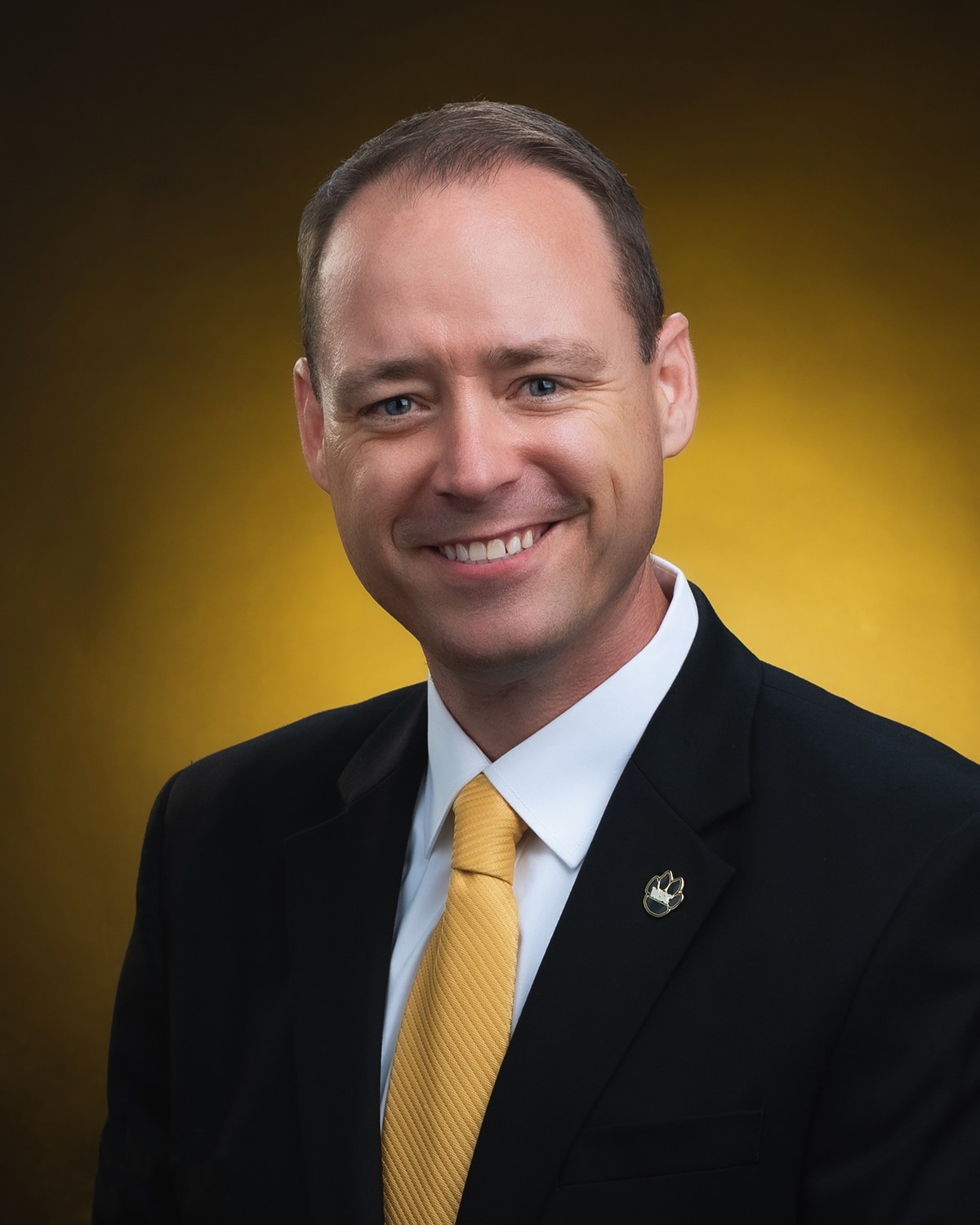
VP of Enrollment at Wayne State College
With more than a decade of experience leading undergraduate, transfer, graduate, and financial aid teams, Kevin brings a deep understanding of how to build enrollment pipelines that serve diverse learner groups.
At InsightsEDU, he’ll unpack what it takes to break down the silos separating traditional, graduate and adult learner strategies and how institutions can create one unified approach that works for all students.
Session: Unifying Your Enrollment: Building a Cohesive Strategy for the Modern Learner

Senior Director of Analytics and Business Intelligence at EducationDynamics
Prepare to unlock insights with Katie Tomlinson. As the Senior Director of Analytics and Business Intelligence, Katie expertly manages data and reporting, uncovering key trends to support EducationDynamics in delivering data-driven solutions for the higher ed community. Learn from her as she discusses findings from EducationDynamics’ latest report, where attendees will gain a deeper understanding of the evolving learning environment and the significant factors that influence Modern Learners’ educational choices.
Session: Opening Session, The Modern Learner Intel
The voices shaping InsightsEDU continue to grow. Check out the full speaker lineup and new additions on our Speakers page.
Higher ed doesn’t need just another conference. It needs transformation.
InsightsEDU 2026 is where bold leaders confront what’s broken, challenge what’s outdated and build what’s next. If you’re ready to lead the future of higher education, this is your moment.
Join us in Fort Lauderdale and help rewrite the playbook for what comes next.

Last year, FIRE launched the Free Speech Dispatch, a regular series covering new and continuing censorship trends and challenges around the world. Our goal is to help readers better understand the global context of free expression. Want to make sure you don’t miss an update? Sign up for our newsletter.
In August, I released Authoritarians in the Academy, my book about the relationship between higher education, authoritarian regimes, and the censorship that internationalization has introduced into colleges and universities. And this month, an investigation released by The Guardian provided a perfect example of how this influence and censorship play out, in this case in the UK.
Earlier this year, Sheffield Hallam University told professor Laura Murphy, whose work the university had previously touted, to abandon her research into Uyghurs and rights abuses in China. The ban ultimately lasted for eight months until the school reversed course and issued an apology in October after Murphy threatened legal action. The Guardian reports that “the instruction for Murphy to halt her research came six months after the university decided to abandon a planned report on the risk of Uyghur forced labour in the critical minerals supply chain.”
2025 is off to a repressive start, from secret police stations in New York to persecution in Russia, Kenya, and more.
There are multiple alleged reasons for the university’s decision to disavow research critical of the CCP, but they all boil down to fear of legal or financial retaliation from the same government at the center of academics’ investigations. Murphy suggested that Sheffield Hallam was “explicitly trading my academic freedom for access to the Chinese student market.” And this is a real challenge among university administrations today: fear that vindictive governments will punish noncompliant universities by cutting off their access to lucrative international student tuition.
Another likely reason was a warning from Sheffield Hallam’s insurance provider that it would no longer cover work produced by the university’s Helena Kennedy Centre for International Justice after a defamation suit from a company named in its research. The HKC has raised the ire of Chinese government officials before, leading to a block of Sheffield Hallam’s websites behind the Great Firewall. Regarding the ill will between CCP officials and the HKC, a university administrator wrote that “attempting to retain the business in China and publication of the [HKC] research are now untenable bedfellows” and complained of the negative effects on recruitment in the country, which looks to have suffered.
Most disturbing was a visit Chinese state security officials conducted in 2024 to the university’s Beijing office, where they questioned employees about the HKC’s research and the “message to cease the research activity was made clear.” An administrator said that “immediately, relations improved” when the university informed officials the research into human rights abuses would be dropped.
The university’s apology and reversal may not spell the end of the story. A South Yorkshire Police spokesperson suggested that, because of potential engagement with security officials in China, Sheffield Hallam may face investigation under the National Security Act related to a provision on “assisting a foreign intelligence service.”
One of the most common misconceptions about free expression today is that nations with better speech protections are immune from the censorship in less free countries. Case in point: New Yorkers hoping to attend the IndieChina Film Festival, set to begin on Nov. 8, could not do so because of repression in China.
Organizer Zhu Rikun said relentless pressure necessitated the cancellation of the event, with film directors in and outside China telling him en masse that they could not attend or requesting their films not be shown. Human Rights Watch also reports that Chinese artist Chiang Seeta warned that “nearly all participating directors in China faced intimidation” and even those abroad “reported that their relatives and friends in China were receiving threatening calls from police.”
Zhu, whose parents and friends in China are reportedly facing harassment as well, thought it would “be better” after moving to the U.S. “It turns out I was wrong,” he said.
Late last month, 72 nations including France, Qatar, and China signed a treaty purportedly intended to fight “cybercrime,” but that leaves the door open for authoritarian nations to use it to enlist other nations — free and unfree — in their campaign to punish political expression on the internet. As I explained last year as the proposal went to the General Assembly, among other problems, the treaty fails to sufficiently define a “serious” crime taking place on computer networks other than that it’s punishable by a four-year prison sentence or more.
You might see the immediate problem here: Many nations, including some who ultimately signed on to the treaty, regularly punish online expression with long prison terms. A single TikTok video or an X post that offends or insults government officials, monarchs, or religious bodies can land people around the world in prison — sometimes for decades.
Despite earlier statements of support from a representative for the United States on the Ad Hoc Committee on Cybercrime, the U.S. ultimately did not sign the treaty and “is unlikely to sign or ratify unless and until we see implementation of meaningful human rights and other legal protections by the convention’s signatories.”
NHL teams have decided to entirely abandon Pride warm up jerseys from their programming out of fear of retaliation against their Russian players.
In response to controversial protests against China, a Democratic Party of Korea lawmaker is pushing for legislation to punish those who “defame or insult” countries and their residents or ethnic groups. The bill would punish false information with fines and prison terms up to five years, and “insulting” speech with up to a year.
That effort garnered support this month when President Lee Jae Myung said that “hate speech targeting specific groups is being spread indiscriminately, and false and manipulated information is flooding” social media. He called it “criminal behavior” beyond the bounds of free expression.
In response to protests over President Samia Suluhu Hassan’s reelection, Tanzanian authorities issued a disturbing warning to the country: text messages or online posts could have serious consequences. The mass text sent to Tanzanian residents warned, “Avoid sharing images or videos that cause distress or degrade someone’s dignity. Doing so is a criminal offense and, if found, strict legal action will be taken.”
Hundreds have indeed been charged with treason, including one woman whose offense was recommending that protesters buy gas masks for protection at demonstrations.
In 2022, journalist and women’s rights activist Masih Alinejad was the target of an Iran-coordinated assassination plot that culminated in a hit man arriving outside her New York home with an AK-47. Late last month, two men were sentenced for their involvement in the attempt. The men, Rafat Amirov and Polad Omarov, were handed 25 years each in a Manhattan federal court. Regarding the verdict, Alinejad said: “I love justice.”
Some parting good news: Boualem Sansal, an 81-year-old French-Algerian novelist who is suffering from cancer, has been granted a presidential pardon after serving one year of a five year sentence. Sansal was arrested late last year and convicted of undermining national unity and insulting public institutions. His humanitarian pardon from Algerian president Abdelmadjid Tebboune comes after months of advocacy from European leaders.

Trust in colleges and universities is slipping. Public narratives about higher education are being shaped without institutional input. At the same time, search behaviors that marketing teams have spent years refining are being rapidly overtaken by artificial intelligence and that shift is fundamentally altering how visibility is earned and maintained. If institutions do not begin treating public relations as a strategic imperative they risk being left out of the conversations that define relevance.
The urgency becomes clearer when we look at the data. According to our 2026 Landscape of Higher Education Report, 74% of Americans in 2010 believed college was “very important” to success. By 2025, that number has dropped to just 35%, as shown in Gallup’s latest trend data. Meanwhile, the percentage of people saying college is “not too important” has increased fivefold. These are not isolated shifts in public opinion. They are broad signals that confidence in higher education is diminishing and with it, the sector’s influence in shaping the future workforce and civic landscape. The reality that this is not business as usual, but what comes next, is becoming harder for leadership teams to ignore.
Despite this, many institutions continue to rely on messaging frameworks and digital strategies that were designed for a web environment that no longer exists.
Search behavior is evolving at a pace that is difficult to match and artificial intelligence is now redefining what visibility looks like. EducationDynamics’ Q3 2025 data shows that nearly 43% of all Google searches end without a click. In other words, users are getting their answers directly from AI-generated summaries, often without ever reaching an institution’s website.
That change does not diminish the importance of websites or blog content, but it does alter how they function. Pages that were once primary destinations are now source material feeding large language models and search algorithms. The value of that content is not in clicks alone, but in its ability to influence what AI tools surface in response to user questions.
The AI Visibility Pyramid featured in our 2026 Landscape of Higher Education Report illustrates how visibility is earned in this new environment. At its foundation is owned content, which includes blogs, faculty profiles, explainer articles and program pages. These assets contribute essential signals that shape how AI systems understand and rank institutional authority. However, they are not sufficient on their own. They must be elevated and validated through external sources to carry meaningful weight in this ecosystem.
Owned content becomes most effective when it is distributed and linked through credible channels. Media coverage, thought leadership placements and backlinks from high-authority outlets all play a critical role in reinforcing an institution’s visibility and shaping its reputation in the broader information landscape. What matters most is not just what institutions say about themselves, but where and how those messages are repeated, cited and trusted.
For leaders building their broader growth roadmap, the dynamics of AI, trust and visibility align directly with the strategies outlined in The 2026 Growth Strategy Higher Ed Needs Right Now and in the 2026 Higher Education Digital Marketing Trends and Predictions.
The transformational work happening within higher education is substantial, but it is often not reaching the audiences who need to see it most. Whether it is a first-generation student securing a high-impact internship, a research partnership influencing policy or faculty-led innovation with industry implications, these stories are powerful proof points of institutional value. Yet too often, they remain confined within internal channels or are overlooked altogether.
Public relations plays an essential role in ensuring this work does not go unseen. Visibility must be actively cultivated, not assumed. Trust is built not only through consistent messaging, but through third-party validation that reinforces an institution’s credibility and relevance. As AI becomes the first layer of search for many users, the presence of credible, external proof will determine whether institutions are even included in the digital conversation.
The absence of that visibility has consequences. When institutions are not showing up in external media, not being cited in trusted sources and not contributing to narratives beyond their own platforms, they become harder to discover and easier to overlook. That decline in visibility often coincides with declines in public trust, prospective student interest and donor engagement. Reversing those trends begins with being present and recognized in the places that matter most.
For many colleges and universities, that also means grounding PR strategy in data from resources like the EducationDynamics’ Marketing and Enrollment Management Benchmarks, which tracks how visibility, demand and student behavior are shifting across the sector.
In many institutions, public relations remains anchored to a traditional calendar of announcements tied to internal milestones. Press releases about new buildings, faculty honors, strategic plans and major gifts continue to dominate the output. While these updates have their place, they rarely break through the broader noise or shift the public narrative in a meaningful way. The same structural constraints that can keep marketing from leading, as we describe in Marketing Can’t Lead If Shackled by Structure, often limit what PR is allowed to be.
Today, public relations must function as a core strategic asset, not a service center. Its value lies in its ability to translate institutional mission and outcomes into public narratives that are credible, compelling and consistent with the institution’s brand. These stories should not be reactive, nor should they be generic. They should be aligned with the brand pillars that define what the institution stands for and where it is headed.
Institutions that claim leadership in areas like social mobility, research innovation or workforce readiness must make those claims evident through the stories they place and the voices they elevate. It is not enough to state the promise. It must be demonstrated through ongoing, credible engagement that reflects those themes in national and regional conversations.
This is where owned content and earned media intersect. Blogs, faculty profiles and campus features continue to matter, but they must be intentionally positioned and supported through media outreach and content distribution that expand their reach.
According to Muck Rack’s 2025 Generative Pulse report, more than 95% of the sources cited by generative AI tools are unpaid. Of those, 27% are journalistic, with the most frequently cited outlets including Reuters, NPR, the Associated Press, The New York Times and Bloomberg. These platforms are not pulling directly from institutional press centers. They are reflecting content that has been validated, shared and linked widely across trusted networks.
For institutions that want to shape public perception, these are the environments where visibility must be earned. That means placing stories where they will be seen, cited and shared. It also means ensuring that those stories reflect the strategic priorities and differentiators that define the institution’s place in a competitive market.
Leaders do not have to guess where to begin. EducationDynamics’ market research solutions and consulting services are built to help institutions translate insight into narrative strategy, then connect that strategy to measurable revenue and reputation outcomes.
Public relations is no longer optional. It is an infrastructure investment in how institutions are discovered, described and believed. It builds the signals that matter most to both human audiences and machine-driven systems. It is not enough to have a good story. It must be findable, credible and aligned with the identity the institution wants to project.
For presidents, CMOs and enrollment leaders, treating PR as infrastructure starts with a few concrete moves:
These steps move PR from a communications activity to a strategic system that shapes how your institution is discovered and believed.
The question is no longer whether an institution is doing meaningful work. It is whether that work is being seen, cited and valued in the right places. Institutions that fail to show up in earned media, in search results and in national conversations are not simply underexposed. They are at risk of becoming irrelevant, not because they have failed to deliver, but because they have failed to be discovered.
The stakes of that visibility gap increase during times of disruption. The same is true for the sector’s own story. EducationDynamics’ In the News presence and Insights hub illustrate how consistent, strategic visibility can reinforce a clear point of view and a challenger mindset in the market.
This is not a short-term communications problem. It is a long-term visibility challenge. For colleges and universities that want to remain vital to the communities they serve, public relations may be one of the most urgent and strategic tools available right now. When PR is aligned with full-funnel marketing services, enrollment strategy and market intelligence, it becomes a force multiplier for both revenue and reputation.
Discover how we help institutions proactively shape their narrative in an AI-driven world. Contact the PR experts at EducationDynamics for a personalized discussion.
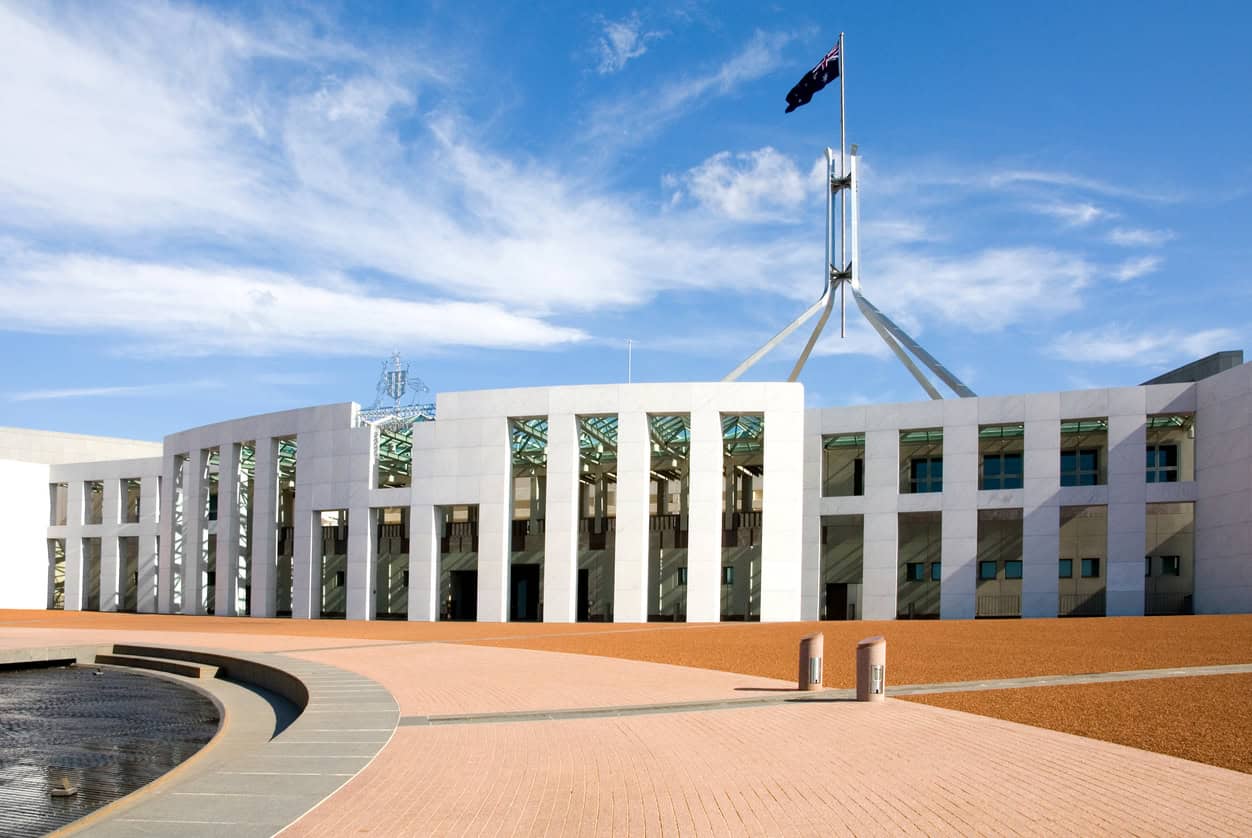
The Bill, which contains a suite of integrity-focused reforms that will impact Australia’s international and higher education sectors, is progressing through parliament.
With that, stakeholders have been weighing in. Here are some of the key points raised in submissions, focusing on education agents, TEQSA powers, and consultation concerns.
Changes for education agents
The Bill is set to tighten oversight of education agents by broadening the legal definition of who qualifies as an agent and introducing new transparency requirements around commissions and payments.
Universities Australia urged the government to adopt a definition of education agent that “captures only those receiving commission for the direct recruitment of students on behalf of Australian institutions”, arguing this would provide greater certainty to universities and ensure compliance requirements remain proportionate.
The International Education Association of Australia (IEAA) also raised concerns that the proposed definition remains overly broad. In its submission, the association warned that, without clearer definitions and published guidelines, existing arrangements – such as subcontracted marketing services or partnerships with education businesses – could inadvertently fall within the scope of education agent, increasing compliance burdens and legal risks.
For these reasons, IEAA reiterated its earlier recommendation that the definition be adapted from the National Code 2018, or that an exemption schedule be developed covering government agencies, TNE partners, and contracted marketing firms.
TEQSA-related changes and powers
Elsewhere, the legislation also sets out that education providers will require authorisation from the Tertiary Education Quality and Standards Agency (TEQSA) – Australia’s national higher education regulator – to deliver Australian degrees offshore.
The Bill will also give TEQSA clearer authority to monitor, and, if necessary, restrict or revoke offshore higher-education delivery, backed by new reporting obligations requiring providers to notify TEQSA of key changes to offshore operations and submit annual reports on all offshore courses, with specific details yet to be defined.
Julian Hill, the federal government’s assistant minister for international education, recently defended this part of the Bill saying: “All that this part of the Bill is doing is making sure that TEQSA, as the regulator, has a line of sight to what providers are doing offshore – that’s all.
“Right now, TEQSA, as the regulator, simply doesn’t have the data-flow to know reliably which providers are delivering in which markets… There’s no more power; there’s no more red tape; it’s simply saying: ‘You need to get authorisation.’
“It’s straightforward. Everyone who is currently delivering automatically gets authorised. But then they just have to tell the regulator, so that they can run their normal risk-based regulation.”
In its submission, IEAA said it supports the changes, providing they “do not penalise existing Australian education providers’ partnership arrangements/contracts with their offshore partners”.
However, IEAA suggests a “phased implementation timeline that allows for some providers who are mid-way through contract signing with offshore partners to not be unnecessarily caught up, delayed or burdened by this new measure suddenly being enforced”.
IEAA also argued that the Bill’s nine-month decision period for TEQSA – which could be stretched to 18 months if extended – is too long, warning that such delays would hinder providers’ ability to respond to opportunities and innovate. A three- to six-month timeframe would be more appropriate, it said, noting that long approval windows could deter offshore partners already navigating lengthy timelines for establishing new TNE agreements.
Requiring notifications for every change in course offerings would impose a significant – and unnecessary – administrative burden without delivering meaningful regulatory benefit
Go8
The Group of Eight also raised TEQSA’s new requirements in their submission, writing: “There is no material difference between courses offered by Monash University onshore in Australia and those at Monash Malaysia. Requiring notifications for every change in course offerings would impose a significant – and unnecessary – administrative burden without delivering meaningful regulatory benefit.”
Go8 said that without further clarity on reporting requirements, it is “difficult to determine whether this aligns with the intended light-touch approach” that the government has signalled.
“For self-accrediting universities, reporting obligations should be kept to an absolute minimum and clearly linked to risk mitigation, ensuring compliance does not create unnecessary administrative burden. Importantly, reports should not request information that TEQSA can access through existing systems,” said Go8 in its submission.
Sector consultation
A lack of consultation was a major point of contention during last year’s debate on the previous iteration of the Bill, and several submissions argue that this continues to be a concern.
English Australia acknowledged the “extensive engagement” undertaken by Hill, as well as ongoing consultation by the Department of Education – and noted that several improvements had been made since the 2024 version, including the removal of proposed enrolment caps.
However, the ELICOS peak body added that “the vast majority of feedback” provided during the inquiry has been ignored and that the limited consultation that characterised the earlier Bill has “equally marked the drafting of the current version”.
English Australia urged the government to pause the Bill to allow time for a collaborative and robust consultation with the sector peak bodies, and also to allow time for economic modelling on the cumulative impact of its provisions on the international education sector and the wider economy.
Independent Tertiary Education Council Australia (ITECA) takes a similar stance, describing engagement on matters within this Bill as “challenging”.
“ITECA has been unequivocal in lending support to measures that will genuinely enhance integrity objectives,” wrote ITECA CEO Felix Pirie in its submission.
“As you will appreciate, ITECA cannot lend such support in the absence of collaborative and open dialogue, especially when the sector is ambushed by the tabling of legislation in the parliament. Improved integrity must be delivered through improved integrity and transparency in government processes, decision-making and collaborative engagement with the sector.
Pirie and his team are recommending that should the reforms pass, they be subject to review by an external reviewer within two years of commencement of those provisions.
All submissions can be viewed at this link.
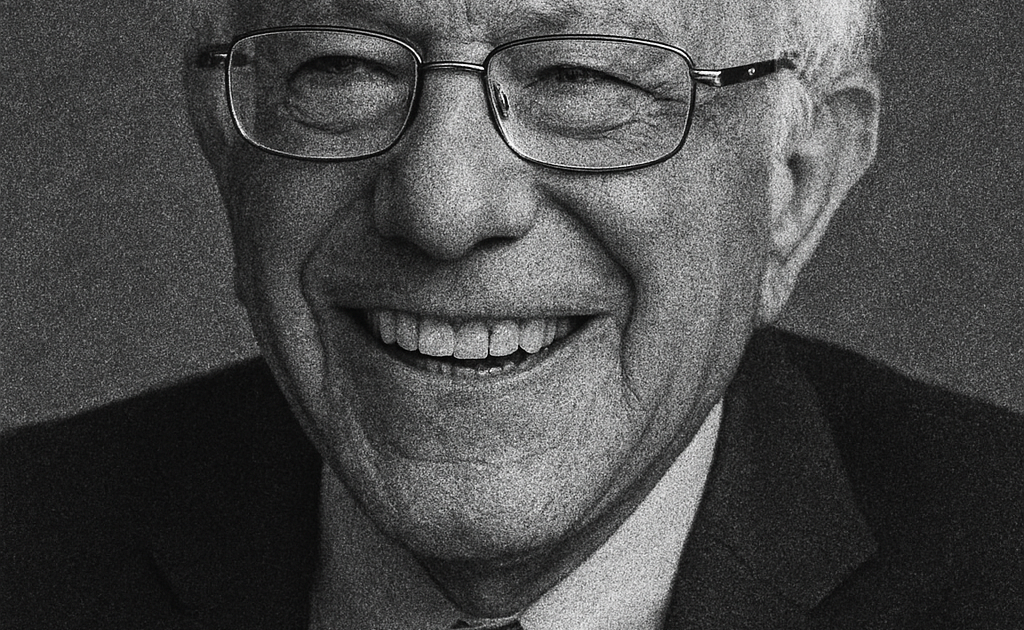
For Americans under 35, the term “democratic socialism” triggers neither fear nor Cold War reflexes. It represents something far simpler: a demand for a functioning society. Younger generations have grown up in a world where basic pillars of American life—higher education, medicine, economic mobility, and even life expectancy—have deteriorated while inequality has soared. Democratic socialism, in their view, is not a fringe ideology but a practical response to systems that have ceased to serve the common good.
Nowhere is this clearer than in higher education. Millennials and Gen Z entered adulthood as universities became corporate enterprises, expanding administrative layers, pushing adjunct labor to the brink, and relying on debt-financed tuition increases to keep the machine running. Public investment collapsed, predatory for-profit chains proliferated, and nonprofit universities acted like hedge funds with classrooms attached. Students saw institutions with billion-dollar endowments operate as landlords and asset managers, all while passing costs onto working families. When Bernie Sanders called for tuition-free public college, young people did not hear utopianism—they heard a plan grounded in global reality, a model that exists in Germany, Sweden, Finland, and other social democracies that treat education as a public good rather than a revenue stream.
Healthcare tells an even harsher story. Americans under 35 watched their parents and grandparents navigate a system more focused on billing codes than care, one where an ambulance ride costs a week’s wages and a bout of illness can mean bankruptcy. They experienced the rise of corporatized university medical centers, private equity–owned emergency rooms, and insurance bureaucracies that ration access more cruelly than any state. They saw life-saving drugs priced like luxury goods and mental health services pushed out of reach. Compare this to nations with universal healthcare: longer life expectancy, lower infant mortality, and far less medical debt. Again, Sanders’ Medicare for All resonated not because of ideology but because young people recognized it as a plausible path toward the kind of humane medical system described by scholars like Harriet Washington, Elisabeth Rosenthal, and Mahmud Mamdani, who all critique the structural violence embedded in systems of unequal care.
Life expectancy itself has become a generational indictment. For the first time in modern U.S. history, it has fallen, driven by overdose deaths, suicide, preventable illness, and worsening inequities. Younger Americans know that friends and peers have died far earlier than their counterparts abroad. They see that countries with strong public services—childcare, unemployment insurance, housing supports, universal healthcare—live longer, healthier lives. They also see how austerity and privatization have hollowed out public health infrastructure in the United States, leaving communities vulnerable to crises large and small. The message is clear: societies that invest in people live longer; societies that treat health as a commodity do not.
Quality of Life (QOL) ties all of this together. People under 35 face rent burdens unimaginable to previous generations, debts that prevent them from forming families, stagnant wages, and a labor market defined by precarity. They face the erosion of public space, public transit, libraries, and social supports—what Mamdani would describe as the slow unraveling of the civic realm under neoliberalism. When they look abroad, they see countries with social democratic frameworks offering guaranteed parental leave, subsidized childcare, free or nearly free college, universal healthcare, and robust worker protections. These are not distant fantasies; they are functioning models that produce higher happiness levels, stronger social trust, and more stable democracies.
Older generations often accuse young people of radicalism, but the reality is the reverse. Millennials and Gen Z are pragmatic. They have lived through the failures of unfettered capitalism: historic inequality, monopolistic industries, soaring costs of living, and a political class unresponsive to their material conditions. They have read Sanders’ critiques of oligarchy and Mamdani’s analyses of state power and structural violence, and they see themselves reflected in those diagnoses. Democratic socialism appeals because it is rooted in material improvements to daily life rather than in abstract political theory. It promises a society where income does not determine survival, where education does not require lifelong debt, where parents can afford to raise children, and where basic health is not a luxury good.
People under 35 are not afraid of democratic socialism because they have already seen what the absence of a social democratic framework produces. They are not seeking revolution for its own sake. They are seeking a livable future. And increasingly, they view democratic socialism not as a radical break but as the only realistic path toward rebuilding public institutions, revitalizing democracy, and ensuring that future generations inherit a country worth living in.
Sources
Sanders, Bernie. Our Revolution: A Future to Believe In.
Sanders, Bernie. Where We Go from Here: Two Years in the Resistance.
Mamdani, Mahmood. Define and Rule: Native as Political Identity.
Mamdani, Mahmood. Neither Settler nor Native: The Making and Unmaking of Permanent Minorities.
Washington, Harriet. Medical Apartheid.
Rosenthal, Elisabeth. An American Sickness.
Skloot, Rebecca. The Immortal Life of Henrietta Lacks.
Baldwin, Davarian. In the Shadow of the Ivory Tower.
Bousquet, Marc. How the University Works.
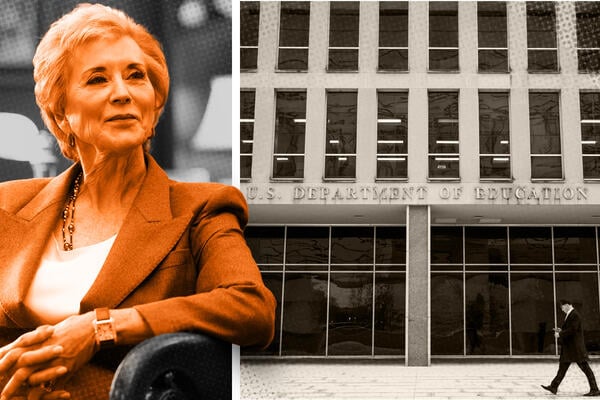
McMahon has said the recent government shutdown proved that the Education Department isn’t necessary.
Photo illustration by Justin Morrison/Inside Higher Ed | Anna Moneymaker/Getty Images | Pete Kiehart for The Washington Post via Getty Images
The Education Department is planning to move TRIO and numerous other higher education programs to the Labor Department as part of a broader effort to dismantle the agency and “streamline its bureaucracy.”
Instead of moving whole offices, the department detailed a plan Tuesday to transfer certain programs and responsibilities to other agencies. All in all, the department signed six agreements with four agencies, relocating a wide swath of programs.
For instance, the Labor Department is set to take over most of ED’s higher education programs, which include grants that support student success, historically Black colleges and universities, and other minority-serving institutions. Meanwhile, the State Department will handle Fulbright-Hays grants as well as those administered by the International and Foreign Language Education office. Indian Education and programs for tribal colleges are moving to the Interior Department.
Several of the offices that have overseen these grant programs were gutted in recent rounds of layoffs, but any staff members who are still managing them will move to the other agencies. ED also has sought to defund some of the grants, deeming them unconstitutional, so it’s not clear what is moving to the other agencies.
The agreements were signed Sept. 30—the day before the government shut down. ED officials expect the transition to take some time.
No programs, however, have been moved from the Office for Civil Rights, the Office of Federal Student Aid or the Office of Special Education and Rehabilitation Services. The department is still “exploring the best plan” for those offices, a senior department official said in a press call Tuesday afternoon.
“These partnerships really mark a major step forward in improving management of select programs and leveraging these partner agencies’ administrative expertise, their experience working with relevant stakeholders and streamlines the bureaucracy that has accumulated here at ED over the decades,” the senior department official said. “We are confident that this will lead to better services for grantees, for schools, for families across the country.”
Education Secretary Linda McMahon hinted at the sweeping announcement in a social media post Tuesday morning. The secretary posted an ominous video of a ticking clock followed by President Ronald Reagan urging Congress to dissolve the Department of Education. The video ended with a flickering screen that read “The Final Mission,” an echo of her first letter to Education Department staff in which she outlined how she would put herself out of a job.
President Donald Trump directed McMahon in March to close down her department “to the maximum extent appropriate and permitted by law.”
Liz Huston, a White House spokesperson, applauded the announcement describing it as a “bold, decisive action to return education where it belongs—at the state and local level.”
“The Trump Administration is fully committed to doing what’s best for American students, which is why it’s critical to shrink this bloated federal education bureaucracy while still ensuring efficient delivery of funds and essential programs,” she said in a statement.
These moves are the most significant steps McMahon has taken beyond the layoffs to comply with the president’s directive.
Congress has pressed McMahon multiple times to acknowledge that neither she nor the president can fully shut the department down without lawmakers’ approval. But when addressing these concerns, McMahon has made a point to note that shutting the department and its programs down entirely is different than dismantling bureaucracy and co-managing operations with other cabinet-level departments.
The department official echoed this Tuesday when talking with reporters, saying that policy and statutory oversight of the programs will still rest with employees at the Department of Ed. But execution of processes, particularly as it pertains to grants, will be managed by other agencies.
“Education has broad authority under several statutes to contract with other federal agencies to procure services, and the department has had that authority since its inception,” the official said. “We at the Department of Ed have engaged with other partner agencies over 200 times through [inter-agency agreements] to procure various services of other partner agencies over the years—even the Biden administration did it.”
The department has already moved Career, Technical and Adult Education to the Department of Labor. McMahon has said that effort was essentially a test run to see how other agencies could handle the department’s responsibilities. Democrats in Congress have decried the plan to move CTE to Labor as illegal.
Many of the department’s offices have already experienced dramatic disruptions this year, as McMahon used two reductions in force to cut the head count of her staff by more than 50 percent. The latest mass layoff, which took place during the government shutdown, has since been enjoined by a federal court. President Trump also agreed to return affected employees to “employment status” administration when he signed a stopgap bill to temporarily end the 43-day shutdown.
But it remains unclear whether those staff members have returned or will ever return to work. Multiple sources told Inside Higher Ed that the language of the bill may allow Trump to leave employees on paid administrative leave until the bill is no longer effective on Jan. 30 and then re-administer the pink slips.
Prior to Tuesday’s announcement, many higher education experts as well as current and former ED employees were hesitant to declare the department dead. Some said as long as the department and its functions remain codified, it will still be alive. But one former staff member put it this way: “If you take the major organs out of a human, do you still have a human or do you have a corpse?”
Amy Laitinen, senior director of the higher education program at New America, a left-leaning think tank, said moving the offices to other federal agencies would not save tax dollars.
“It fractures and weakens oversight of those dollars, it’s duplicative and it’s wasteful,” she said. “How are you tracking student outcomes to ensure taxpayer dollars are well spent when all of the entities responsible are scattered to the wind? For example, separating the agency in charge of financial aid policy (OPE) from the entity responsible for financial aid implementation (FSA) makes no sense.”

In higher education today, generating buzz around new program launches is often viewed as the key to growth and market relevance. While there’s nothing wrong with investing in new programs when it makes sense, institutions tend to do so at the expense of existing offerings — including those that built their reputation. Yet legacy programs, when strategically audited and repositioned, can become some of the strongest assets in an institution’s portfolio.
The challenge is that these programs often don’t receive the same level of attention or investment as new launches. Over time, many become overshadowed — not necessarily because they’ve lost relevance, but because the institution’s focus has shifted. Without consistent evaluation and modernization, the programs may begin to stagnate — enrollments flatten, marketing efforts diminish — while they continue to drain resources and faculty energy.
At the same time, legacy programs often hold unique advantages that newer offerings lack: established reputations, loyal alumni networks, and faculty with deep expertise. When they’re reexamined and repositioned through a strategic lens — leveraging internal data, market insight, and refreshed messaging — legacy programs can drive renewed growth in an increasingly competitive marketplace.
A deliberate, data-informed audit of an institution’s programs can be the first step toward revitalizing those that are underperforming. A well-designed audit doesn’t just identify weaknesses — it also can uncover opportunities for renewal and growth.
A program life cycle audit assesses the current health of existing programs and tracks their performance over time. Key metrics in an audit might include:
This process helps institutions identify whether their legacy programs are declining, stable, or experiencing renewed interest. These insights enable academic leadership teams to direct resources toward the programs that are most likely to drive growth — or sunset programs that no longer advance the institution’s goals.
Audits shouldn’t rely solely on internal data. Comparing a program’s performance results with market demand data — such as regional job growth projections and competitors’ offerings — can clarify what the program’s challenges are and whether they stem from internal execution or broader shifts in the field.
Analyzing a program’s market fit is just as important as evaluating its internal performance. It can help institutions decide which legacy programs need retooling, which ones are suitable for scale, and which ones should be phased out.
A program’s market fit analysis doesn’t have to be overly complex. It can begin with three fundamental questions:
Evaluating these three dimensions helps determine whether a program needs a full-blown relaunch or a more subtle refresh. The goal isn’t to reinvent for the sake of reinvention. It’s to make sure that each offering continues to serve students while also supporting the institution’s objectives.
When a legacy program still holds value but needs renewed visibility, a structured relaunch can help ensure its continued relevance. Effective relaunches align academic updates, marketing strategy, and admissions communication so that all teams are working toward the same goal: positioning the program for growth.
A comprehensive relaunch checklist can help guide this process. Elements to consider include:
Refreshing a program’s branding and positioning is a crucial step. Students’ needs evolve, so the program’s story should evolve too. Simple adjustments — such as updating program names for clarity, refining messaging to align with search trends, or highlighting regional workforce connections — can make legacy programs more discoverable and relevant.
Faculty also play a vital role in rebranding. Leveraging their expertise lends authenticity and authority to program relaunches. Featuring their research and industry partnerships in marketing materials reinforces the program’s real-world impact and signals that it’s grounded in experience, not just theory.
Archer Education partners with dozens of institutions to help them launch new programs and revitalize existing ones to amplify their visibility and drive real growth. In a competitive market, data-driven program strategies enable greater institutional alignment and better market fit.
Contact our team today and let us help you rejuvenate your degree portfolio.
