Author: admin

  • Moral resources for Americans who know we’ve been betrayed (William Barber & Jonathan Wilson-Hartgrove)

    Moral resources for Americans who know we’ve been betrayed (William Barber & Jonathan Wilson-Hartgrove)

    Civil Rights Movement and Wayside Theatre photographs, Student Nonviolent Coordinating Committee (SNCC).

    On America’s 249th anniversary of declaring freedom from tyranny, a would-be king will celebrate Independence Day by signing a budget bill that Americans oppose 2 to 1.

    This Big Ugly Bill that was passed by Republicans in Congress this week will make the largest cuts to healthcare and nutrition assistance in our nation’s history to pay for tax cuts for people who do not need them and an assault on our communities by masked men who are disappearing our neighbors to concentration camps. The dystopian scene is enough to make any true believer in liberty and equality question whether they can celebrate Independence Day at all. But it would be a betrayal of our moral inheritance to not remember the true champions of American freedom on this day. Indeed, to forget them would mean losing the moral resources we need to revive American democracy.

    As bad as things are, we cannot forget that others faced worse with less resources than we have. We are not the first Americans to face a power-drunk minority in public office, determined to hold onto power at any cost. This was the everyday reality of Black Americans in the Mississippi Delta for nearly a century after the Klan and white conservatives carried out the Mississippi Plan in the 1870s, erasing the gains of Reconstruction and enshrining white supremacy in law.

    When Ms. Fannie Lou Hamer decided to join the freedom movement in Sunflower County, Mississippi, she knew two things: the majority of people in Sunflower County despised the policies of Senator James O. Eastland and Eastland’s party had the votes to get whatever they wanted written into law. The day she dared attempt to register to vote, Ms. Hamer lost her home. When she attended a training to learn how to build a movement that could vote, she was thrown into the Winona Jail and nearly beaten to death. Still, Ms. Hamer did not bow.

    Instead, she leaned into the gospel blues tradition that had grown out of the Delta, spreading the good news that God is on the side of those who do not look away from this world’s troubles but trust that a force more powerful than tyrants is on the side of the oppressed and can make a way out of no way to redeem the soul of America. “This little light of mine, I’m gonna let it shine,” she sang, and a generation of college student volunteers came to sing with her during Freedom Summer. Their mission was to register voters and teach the promises of democracy to Mississippi’s Black children in Freedom Schools.

    On July 4, 1964, Ms. Hamer hosted a picnic for Black and white volunteers who’d dedicated their summer to nonviolently facing down fascism on American soil. They celebrated the promise that all are created equal even as they faced death for living as if it were true. Those same young people who were at Hamer’s July 4th picnic went on to launch the Mississippi Freedom Democratic Party and take their challenge all the way to the Democratic National Convention in Atlantic City that August. “I question America,” Ms. Hamer said in her testimony that aired on the national news during coverage of the convention. “Is this America, the land of the free and the home of the brave where we have to sleep with our telephones off of the hooks because our lives be threatened daily because we want to live as decent human beings, in America?”

    Hamer and the MFDP didn’t win the seats they demanded at the 1964 convention, but Atlantic City would be the last convention to seat an all-white delegation from Mississippi. Just a year later, as part of the War on Poverty, Congress passed the Medicare and Medicaid Act, expanding access to healthcare to elderly and low-income Americans – an expansion that Trump is rolling back half a century later in an immoral betrayal of the very people he promised to champion in his fake populist appeal to poor and working people.

    There’s nothing un-American about questioning a fascism that defies the will of the people to terrorize American communities and assert total control. It has been the moral responsibility of moral leaders from Frederick Douglass, who asked, “what to the slave is the 4th of July?” to those who are asking today how Americans are supposed to celebrate when their elected leaders sell them out to billionaires and send masked men to assault their communities. Ms. Hamer is a vivid reminder of the moral wisdom that grows out of the Mississippi Delta. It teaches us that those who question America when we allow fascists to rule are not un-American. They are, in fact, the people who have helped America become more of what she claims to be.

    So this 4th of July, may we all gather with Fannie Lou Hamer and the moral fusion family closest to us – both the living and the dead – to recommit ourselves to a government of the people, by the people, and for the people. Yes, America’s fascists have the power today. They will throw a party at our House and desecrate the memory of so many who’ve worked to push us toward a more perfect union. But they will not own our Independence Day. As long as we remember the moral tradition that allowed Fannie Lou Hamer to host a July 4th picnic while she battled the fascism of Jim Crow, we have access to the moral resources we need to reconstruct American democracy today.

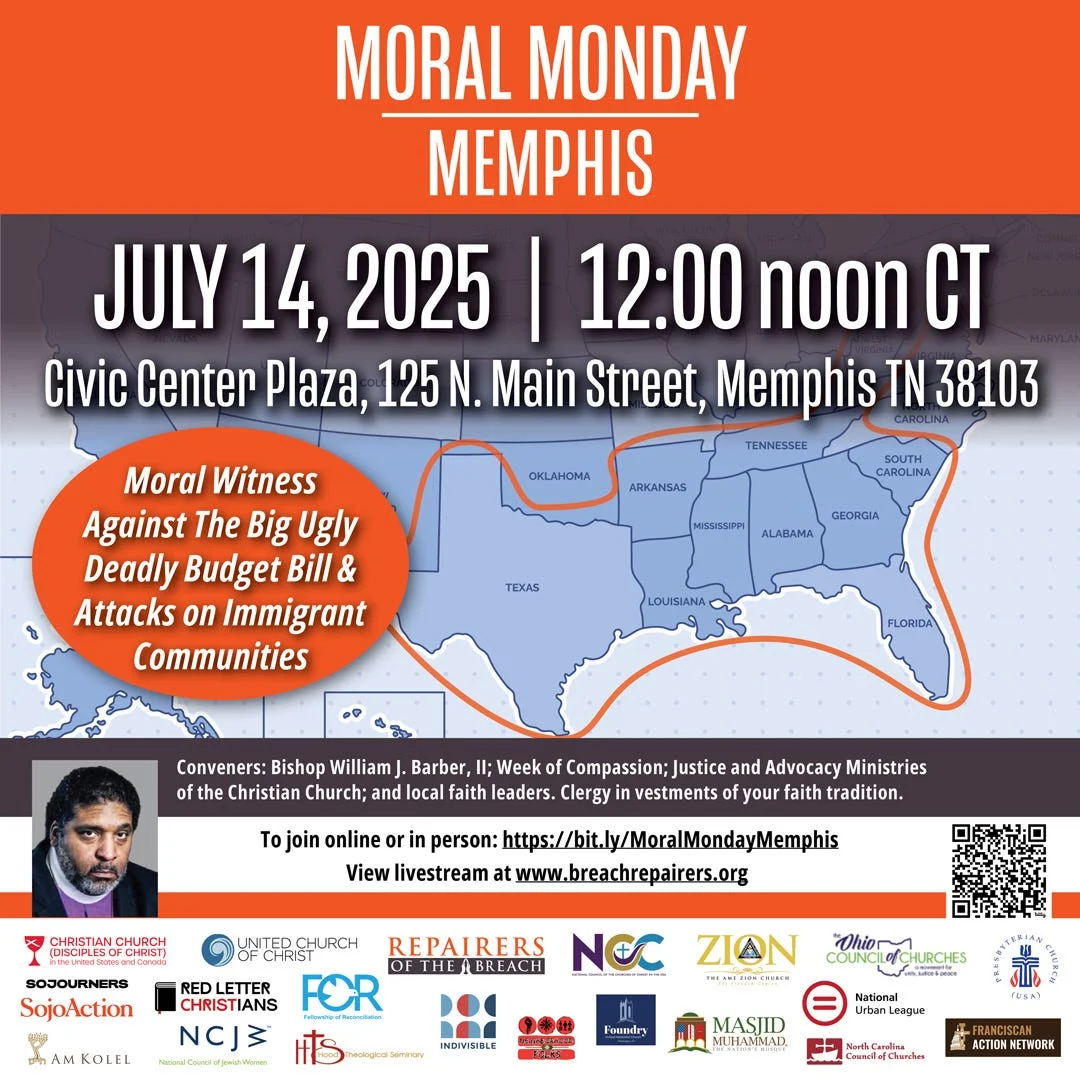
    This is why today, as all American’s celebrate our nation’s declaration of liberty and equality, we are announcing that the Moral Monday campaign we’ve been organizing in Washington, DC, to challenge the policy violence of this Big Ugly Bill is going to the Delta July 14th for Moral Monday in Memphis. As we rally moral witnesses in the city of Graceland and the Delta blues – the place where Dr. King insisted in 1968 that the movement “begins and ends” – delegations of moral leaders and directly impacted people will visit Congressional offices across the South to tell the stories of the people who will be harmed by the Big, Ugly, and Deadly bill that Donald Trump is signing today.

    Yes, this bill will kill. But we are determined to organize a resurrection of people from every race, religion, and region of this country who know that, when we come together in the power of our best moral traditions, we can reconstruct American democracy and become the nation we’ve never yet been.

    Today’s neo-fascists have passed their Big Ugly Bill, but they have also sparked a new Freedom Summer. We will organize those this bill harms. We will mobilize a new coalition of Americans who see beyond the narrow divisions of left and right. We will lean into the wisdom of Ms. Hamer and Delta’s freedom struggle, and we will build a moral fusion movement to save America from this madness.

    Source link

  • Branch campuses and the mirage of demand

    Branch campuses and the mirage of demand

    by Kyuseok Kim

    As US universities confront declining domestic enrolments, political instability, and intensified scrutiny over their financial and ideological foundations, a growing number are once again looking outward. International branch campuses (IBCs), once celebrated as symbols of academic globalism and later scrutinized as costly misadventures, seem to be returning to the strategic conversation, not only as diversification mechanisms but also as protective pivots in an era of unpredictability.

    Georgetown University’s decision to extend its Qatar campus for another decade and the Illinois Institute of Technology’s plan to launch a new campus in Mumbai are recent examples. Behind such moves lies a quiet but growing calculus: that global presence may serve as both brand amplifier and institutional hedge, especially in the face of resurging nationalism, culture wars, and regulatory constraints at home.

    South Korea’s Incheon Global Campus (IGC), a government-backed transnational education hub, is now preparing to welcome two additional foreign universities and one of them is American. But as the IGC experiment has already entered its second decade, its mixed results offer not a template but a cautionary tale. For any U.S. institution considering overseas expansion, IGC reminds us that expectations of seamless demand, regional magnetism, and reputational uplift often collide with complex realities.

    The pitfall of assuming “If you build it, they will come”

    At the heart of many US institutions’ international ventures lies a persistent assumption: that placing an American university within geographic proximity to large student markets will organically generate demand. IGC was envisioned as a Northeast Asian education magnet, ideally situated to recruit from China, Vietnam, Indonesia, and beyond. The notion was that Korea’s infrastructure, safety, and proximity, combined with US academic credentials, would make IGC highly attractive.

    But the numbers tell a different story. As of 2024, IGC’s five institutions, SUNY Korea (Home of Stony Brook University, Fashion Institute of Technology), George Mason University Korea (GMUK), University of Utah Asia Campus (UAC), Ghent University Global Campus (GUGC), enrol about 4,300 students, far short of the original 10,000 target. Among them, only 400 are international students, accounting for 9%. And of those, just around 20 are from China, the very country that was expected to be a key source of enrolments.

    This dearth is not for lack of infrastructure or academic rigor. Rather, it illustrates the limitations of relying on passive geographic logic. In an age where students and parents are increasingly sophisticated consumers of education, recruitment requires far more than proximity or even prestige. It demands clarity of value, strong brand presence, affordability, cultural alignment, and a persuasive post-graduation pathway.

    English-medium instruction as a double-edged sword

    US institutions often assume that English-medium instruction (EMI) automatically confers competitive advantage in Asia. At IGC, all programs are delivered entirely in English, and faculty are predominantly international; 188 of the 304 faculty members across the five campuses are foreign nationals. On paper, this aligns with global academic norms and affirms a commitment to international standards.

    However, EMI can paradoxically limit access. While affluent Korean students may see EMI as an elite advantage, students from Vietnam, China, and Indonesia often seek local cultural immersion, language acquisition, and regional relevance. For many Chinese students in particular, one of the draws of studying in Korea is precisely to learn Korean and gain access to Korean labour markets. EMI-only models thus alienate both local integration seekers and English-language learners.

    Moreover, when EMI is not paired with robust academic support services, such as English-language tutoring, multilingual advising, or transitional curriculum tracks, it can undermine retention and student success. IGC’s high leave-of-absence rate (26% of total enrolment) may in part reflect this challenge. The EMI strategy, while noble in intent, must therefore be contextualised. In transnational campuses, language policy is not just a delivery decision, it is a recruitment strategy.

    Misplaced confidence in institutional brand recognition

    American universities often overestimate their brand power abroad. SUNY Korea, anchored by Stony Brook University, and GMUK both represent reputable public institutions in the US academic ecosystem. Yet in East Asia, brand equity does not always travel well. Many students and parents in China, Southeast Asia, and even Korea struggle to distinguish among US institutions unless they are among the globally top-ranked or highly visible.

    In contrast, joint-venture universities such as NYU Shanghai or Duke Kunshan benefit from stronger recognition, thanks in part to the halo effect of globally prestigious parent institutions and active marketing within China. These institutions also benefit from location-based credibility; being within China, their offerings align more naturally with Chinese career and immigration aspirations.

    Geopolitical frictions and the fragility of demand

    US institutions frequently see international branch campuses as safe havens from domestic politics. Yet international expansion brings its own geopolitical risks. IGC’s failure to attract Chinese students cannot be separated from the lingering effects of the 2017 THAAD (Terminal High Altitude Area Defense) dispute – a regional conflict that emerged when South Korea agreed to deploy a US missile defense system on its soil. China strongly opposed it, viewing the system as a threat to its own strategic interests. In response, China imposed strong sanctions on South Korea, which led to the challenges in  educational diplomacy between two countries. Nor can it be divorced from the broader geopolitics of US-China relations, which makes Chinese families wary of American degrees, especially those delivered from politically allied countries like Korea.

    There is also the perception gap between a degree “from a U.S. university” and a degree “earned in Korea.” Even when academic standards and credentials are identical, students and employers may view transnational degrees as second-tier or less prestigious. For example, in Korea, IGC campuses are often viewed as a second choice in the stratified higher education structure locally. The reputational buffer that a US degree once offered is increasingly interrogated, especially in environments where political affiliations, social conditions, and post-graduation options matter more than branding. In this sense, branch campuses are not outside the storm; they are situated in a different part of it.

    A US-oriented reality check within the local contexts

    For US universities, the decision to open a branch campus abroad is no longer a question of academic vision alone; it is a financial and reputational calculation. The domestic context is sobering: declining birth rates are shrinking the college-aged population, public trust in higher education is waning, and federal support for research and student aid is increasingly politicised. Internationalisation is no longer just an opportunity; it is increasingly seen as a survival strategy.

    But survival strategies must be strategic, not reactionary. IGC’s challenges illustrate what happens when institutions pursue global expansion without first understanding the local education marketplace. Without granular market research, locally embedded partnerships, and nuanced branding strategies, even well-intentioned ventures become “white elephants”, costly and underutilized. A forthcoming US institution entering IGC would have an opportunity to learn from these lessons and chart a different path. But it must begin with humility and cross-cultural understanding.

    This concern is heightened by structural reforms driven by demographic decline and the growing uncertainly embedded in Korea’s higher education system. As competition for enrolment intensifies, some struggling institutions see IGC’s local recruitment as a threat, even calling it a “brain drain within Korean territory,” since most IGC students are Korean. While IGC claims it draws students who would have studied abroad, offering a net economic benefit, that argument may fall flat for universities fighting to stay afloat.

    Conclusion: toward a more grounded globalism

    The story of Incheon Global Campus is not one of failure, but rather a valuable case study. It reflects a potential disconnection between institutional ambition and market behaviour; between the idea of internationalisation and its on-the-ground execution. It reminds us of that proximity to students is not the same as access, and that transnational education requires more than exporting curricula across borders, it demands building relevance across cultures.

    For US universities hoping to extend their reach, the time for romantic notions of global campuses has passed. What is needed now is realism. That means conducting rigorous market analysis. It means understanding the competitive landscape; not just in Seoul or Shanghai, but in second-tier cities where price sensitivity and post-graduation pathways determine enrolment decisions. It means creating flexible programs that can respond to local aspirations and global uncertainties. It means designing campuses that feel anchored, not transplanted.

    The myth that a US branch campus in South Korea will become a magnet for students across Asia, particularly from China, has not materialised. With only a handful of Chinese students across IGC’s entire enrolment, it is clear that assumptions must be rethought. Transnational education remains a worthy goal. But if the next generation of branch campuses is to thrive, especially in East Asia, it must be forged not in the image of prestige, but in the crucible of strategy. It must be attentive, adaptive, and above all, aware.

    Kyuseok Kim (KS) is the inaugural Center Director of IES Abroad Seoul, where he leads strategic, academic, and operational initiatives while building partnerships with local institutions. He brings extensive experience in student recruitment, international relations, and business development, with prior roles at UWAY, M Square Media, SUNY Korea, and Sungkyunkwan University. KS is a Fulbright Scholar and a doctoral candidate in Educational Administration and Higher Education at Korea University. He holds an MBA from Sungkyunkwan University and a BA in English Language Education from Korea University. As a scholar-practitioner, he contributes regularly to both international and South Korean publications on global education topics. [email protected]  www.linkedin.com/in/ks-kim-intled

    Author: SRHE News Blog

    An international learned society, concerned with supporting research and researchers into Higher Education

    Source link

  • 10 (and counting…) Google goodies for your classroom

    10 (and counting…) Google goodies for your classroom

    Key points:

    Google enthusiasts, unite.

    During an ISTELive 25 session, Dr. Wanda Terral, chief of technology for Tennessee’s Lakeland School System, took attendees through a growing list of Google tools, along with some non-Google resources, to boost classroom creativity, productivity, and collaboration.

    Here are just 10 of the resources Terral covered–explore the full list for more ideas and resources to increase your Google knowledge.

  • A decade connecting young people to the world they live in

    A decade connecting young people to the world they live in

    To understand the chaos that is the world today it helps to look back a decade.

    This past year, world representatives met at COP29 to fight climate change in a place led by an authoritarian regime dependent on fossil fuels. The Israeli government under Prime Minister Benjamin Netanyahu has been massacring Palestinians in Gaza. The United States bombed Iran in an attempt to eliminate its nuclear capability. And U.S. President Donald Trump and an increasing number of European leaders have closed their doors to immigrants and refugees.

    In great contrast, when News Decoder launched 10 years ago, 196 nations signed onto the landmark agreement known as the Paris Accords, ushering in the hope that together we could cool down the planet. The administration of then-U.S. President Barack Obama signed a historic agreement with Iran, in which Iran would get rid of 97% of its supply of enriched uranium. A million refugees flooded into Europe from conflicts in Syria and elsewhere.

    In the years in between, the world locked down during the Covid-19 pandemic, Great Britain exited the European Union, the #MeToo movement erupted across the world, nations across the globe began legalizing same sex marriage, Russia invaded Ukraine, Trump got elected, tossed out and re-elected and we began ceding everything to artificial intelligence.

    Can you imagine coming of age in that world?

    Decoding world events

    When Nelson Graves founded News Decoder to help young people “decode” the world through news, it seemed that we lived in an age of optimism. Now young people feel helpless and disconnected. In April 2024, the World Economic Forum reported that young people worldwide are increasingly unhappy and this trend would have real consequences for the future.

    “We live in a world where teenagers grapple with a sense of crisis before adulthood; a time when young people, historically beacons of optimism, report lower happiness than their elders,” the report said.

    But even back in 2015, Nelson knew things would change. He’d spent years as a foreign correspondent covering world events. 

    “Anyone with a sense of history and someone with experience in following current events — especially a foreign correspondent — would have known that the world is most likely to change when you’re least expecting it,” he said. “Nothing is immutable — except the truism that the political pendulum is always swinging.”

    The roots of Brexit, the Make America Great Again movement in the United States and antipathy towards immigrants were already deep in 2015, even if they were largely underground and out of sight, he said. 

    A decade later, News Decoder’s mission of connecting young people to the world around them seems more relevant than ever.

    For 10 years, the high school students News Decoder has worked with have explored — through articles, podcasts, videos and photo essays and in live, cross-border dialogues — how problems in their communities connect to things happening elsewhere in the world. In 2016, for instance, a student studying abroad in China worked with News Decoder to explore how growing consumerism was leading to mountains of trash and created an army of people who mined that trash building up around them.

    That same year in an online roundtable, News Decoder brought together students from the Greens Farms Academy in the United States with students from Kings Academy in Jordan, Aristotle University in Greece and School Year Abroad in France to discuss the ongoing war in Syria and the worldwide crisis of Syrian refugees.

    Kindling curiosity

    One of the Greens Farms Academy students who participated, Samyukt Kumar, further explored the topic in an article News Decoder published that year. Looking back, he now tells, the practical experience it gave him was valuable.

    “Less for the substance but more for the practical experience,” he said. “My views on these topics evolved significantly as I received greater education and real-world exposure. But I still reap the benefits from gaining more confidence in my writing, learning to embrace the editing process and engaging my curiosity about the world.”

    In 2017, a News Decoder student at Haverford College in the United States explored the problem of migrants flooding into her home country of Italy. She came to this conclusion:

    “The roots of the problem lie outside of Italy, which nonetheless bears a heavy burden as the first EU destination for thousands of Africans crossing the Mediterranean,” she wrote. “A solution to the migration crisis depends not only on Italy’s good will — now being stretched to the limits — but also on the willingness of the rest of Europe and the international community to tackle the armed conflicts, poverty and human rights abuses that stir so many Africans to attempt the perilous Mediterranean crossing.”

    Fast forward to 2025. News Decoder worked with high school students in the British Section at the Lycée International Saint-Germain-en-Laye outside of Paris to take what they learned about the United Nations Sustainable Development Goals and find and tell narrative stories through podcasts. They explored such things as the problem of poverty in resource-rich areas of Africa and the connection between actions of multinational corporations and climate change.

    Crossing borders

    In Switzerland, News Decoder worked with students at Realgymnasium Rämibühl Zürich on a series of articles that explored gender inequity in sports, the connection between social media and the decline of democracy, how a local community is affected when it hosts a world conference and the connection between the quality of life in a country and the people’s willingness to pay for that through high prices and high taxes.

    And in monthly “Decoder Dialogues” News Decoder put together students from countries such as the United States, Colombia, France, India, Belgium and Rwanda in online roundtables to discuss such topics as the future of journalism, climate action, censorship, leadership and artificial intelligence.

    Through the exploration of a problem in the world, by seeking out experts who can put it into context and by seeking out different perspectives from other places, students make sense out of chaos. They begin to see that there are people out there thinking about these problems in different ways and seeking solutions to them.

    Ultimately, the message News Decoder wants students to take away is that you don’t need to run from complicated problems. You don’t need to disengage from the news and the events happening around you. By delving more into a topic or issue or controversy, you can begin to understand it and see the path forward.

    At News Decoder, we believe people should be able to listen to each other and exchange viewpoints to work through problems across differences and borders. Back in 2015, Graves posed this challenge: How to tap into the intellectual energy of the generation that will soon assume leadership in business, government, academia and social enterprise? 

    For the past 10 years we have worked to empower young people by giving them the information they need, connecting them to the world around them and providing them a forum for expression. For a decade we have helped them find coherence out of the chaos around them — and we intend to continue doing that for the next 10 years. 

    One thing we know: 10 years from now the world will be a lot different from what it is now. 

    “While no one has a perfect crystal ball, you can be sure that nothing remains unchanged for long,” Graves said. “Yesterday’s mortal enemy can become a fast friend — think of U.S. relations with Vietnam since the 1950s. Lesson: Always expect change, even if you can’t anticipate the precise contours, and don’t project linearly into the future. As ever, keep an open mind and beware confirmation bias.”

    That’s the message News Decoder tries to instill in the young people we work with. After all, a decade from now, they will be the ones making that change happen. 

    Source link

  • The AI balancing act: universities, innovation and the art of not losing the plot

    The AI balancing act: universities, innovation and the art of not losing the plot

    • By Professor Alejandro Armellini, Dean of Education and Digital Innovation at the University of Portsmouth.

    Universities want to be at the cutting edge of knowledge creation, but many are grappling with a paradox: how to harness the potential of AI while minimising its pitfalls. Done well, generative AI can help institutions run more efficiently, enhance teaching quality and support students in new and exciting ways. Done poorly, it can generate misinformation, introduce bias and make students (and staff) over-reliant on technology they do not fully understand. The challenge is not whether to use AI but how to make it work for human-driven, high-quality education.

    Across the sector, institutions are already putting AI to work in ways that go far beyond administrative efficiencies. At many universities, AI-driven analytics are helping identify students at risk of disengagement before they drop out. By analysing attendance, engagement and performance data, tutors can intervene earlier, offering personalised support before problems escalate. Others have deployed AI-powered feedback systems that provide students with instant formative feedback on their writing. The impact? Students who actually improve before their assignments are due, rather than after they’ve been graded.

    Concerns about the accuracy, transparency and provenance of AI tools have been well documented. Many of them operate as ‘black boxes’, making it difficult to verify outputs or attribute sources. These challenges run counter to academic norms of evidence, citation and rigour. AI tools continue to occupy a liminal space: they promise and deliver a lot, but are not yet fully trusted. AI can get things spectacularly wrong. AI-powered recruitment tools have been found to be biased against women and minority candidates, reinforcing rather than challenging existing inequalities. AI-driven assessment tools have been criticised for amplifying bias, grading students unfairly or making errors that, when left unchallenged, can have serious consequences for academic progression.

    With new applications emerging almost daily, it’s becoming harder to assess their quality, reliability and appropriateness for academic use. Some institutions rush headlong into AI adoption without considering long-term implications, while others hesitate, paralysed by the sheer number of options, risks and potential costs. Indeed, a major barrier to AI adoption at all levels in higher education is fear: fear of the unknown, fear of losing control, fear of job displacement, fear of fostering metacognitive laziness. AI challenges long-held beliefs about authorship, expertise and what constitutes meaningful engagement with learning. Its use can blur the boundaries between legitimate assistance and academic misconduct. Students express concerns about being evaluated by algorithms rather than humans. These fears are not unfounded, but they must be met with institutional transparency, clear communication, ethical guidelines and a commitment to keeping AI as an enabler, not a replacement, for human judgment and interaction. Universities are learning too.

    No discussion on AI in universities would be complete without addressing the notion of ‘future-proofing’. The very idea that we can somehow freeze a moving target is, at best, naive and, at worst, an exercise in expensive futility. Universities drafting AI policies today will likely find them obsolete before the ink has dried. Many have explicitly reversed earlier AI policies. That said, having an AI policy is not without merit: it signals an institutional commitment to ethical AI use, academic integrity and responsible governance. The trick is to focus on agile, principle-based approaches that can adapt as AI continues to develop. Over-regulation risks stifling innovation, while under-regulation may lead to confusion or misuse. A good AI policy should be less about prediction and more about preparation: equipping staff and students with the skills and capabilities to navigate an AI-rich world, while creating a culture that embraces change. Large-scale curriculum and pedagogic redesign is inevitable.

    Where does all this leave us? Universities must approach AI with a mix of enthusiasm and caution, ensuring that innovation does not come at the expense of academic integrity or quality. Investing in AI fluency (not just ‘literacy’) for staff and students is essential, as is institutional clarity on responsible AI use. Universities should focus on how AI can support (not replace) the fundamental principles of good teaching and learning. They must remain committed to the simple but powerful principle of teaching well, consistently well: every student, every session, every time.

    AI is a tool – powerful, perhaps partly flawed, but full of potential. It is the pocket calculator of the 1970s. How universities wield it will determine whether it leads to genuine transformation or a series of expensive (and reputationally risky) missteps. The challenge, then, is to stay in control, keep the focus on successful learning experiences in their multiple manifestations, and never let AI run the show alone. After all, no algorithm has yet mastered the art of handling a seminar full of students who haven’t done the reading.

    Source link

  • How Labour’s 10-year health plan for England joins up with higher education and research

    How Labour’s 10-year health plan for England joins up with higher education and research

    The government wants to reinvent the NHS (in England) through three radical shifts – hospital to community, analogue to digital, and sickness to prevention.

    Whether like the chief executive of the NHS you believe Labour’s 10-year health plan for England is about creating “energy and enthusiasm”, whether like the secretary of state you believe this is about building a NHS which is about “the future and a fairer Britain,” or whether across its 168 pages you find the government’s default to techno-optimism, AI will solve everything, one more dataset will fix public services, approach to governance to be somewhere between naive and unduly optimistic, it is clear that the NHS is expected to change and do so quickly.

    This is a plan that is as much about the reorganisation of the economy as it is about health. It is about how health services can get people into work, it is a guide to economic growth through innovation in life sciences, it is a lament for the skills needed and the skills not yet thought about for the future of the NHS.

    Elsewhere on the site, Jim Dickinson looks at the (lack of) implications for students as group with health needs – here we look at the implications for education, universities, and the wider knowledge economy.

    Workforce modelling

    One of the premises of the plan is that the 2023 Conservative long-term workforce plan was a mistake. The NHS clearly cannot go on as it currently is, and to facilitate this transformation a “very different kind of workforce strategy” is needed:

    Until 2023, [the NHS] had never published a long-term workforce plan. The one it did publish did little more than extrapolate from past trends into the future: concluding there was no alternative than continuation of our current care model, supported by an inexorable growth in headcount, mostly working in acute settings.

    A new workforce place is being put together, to appear “later this year” and taking a “decidedly different approach”:

    Instead of asking ‘how many staff do we need to maintain our current care model over the next 10 years?’, it will ask ‘given our reform plan, what workforce do we need, what should they do, where should they be deployed and what skills should they have?’

    The bottom line is that, therefore, “there will be fewer staff in the NHS in 2035 than projected by the 2023 workforce plan” – but these staff will have better conditions, better training, and “more exciting roles”.

    So one immediate question for universities in England is what this reduced staffing target means for recruitment onto medical, nursing and allied health degrees. Places have been expanding, and under previous plans were set to expand at growing rates in the coming years, including a doubling of medical school places by 2035. There were questions about how optimistic some of the objectives were – the National Audit Office last year criticised NHS England for not having assessed the feasibility of expanding places, in light of issues like attrition rates and the need to invest in clinical placement infrastructure.

    We won’t get a clear answer of what Labour is proposing until the new workforce plan emerges – especially as there is an accompanying aspiration in today’s plan to reduce the NHS’ dependence on international recruitment. But there are some clear directions of travel. Creating more apprenticeships gets a mention – though of course not at level 7 – but the key theme is a tight link between growing medical student numbers and widening participation:

    Expansion of medical school places will be targeted at medical schools with a proven track record of widening participation… The admissions process to medical school will be improved with better information, signposting and support for applicants, and more systematic use of contextual admissions.

    This is accompanied by endorsement of the Sutton Trust’s recent research into access disparities. And in one of those “holding universities to account” measures that everyone is so keen on, part of reinforcing this link will be done via work with the Department for Education to “publish data on the relevant background of university entrants, starting with medicine.” If you are thinking that we already did that – yes we did. The UK-wide HESA widening participation performance indicator was last published in 2022 – each regulator now has their own version (for example this from the Office for Students) which doesn’t quite do the same thing.

    Education and students

    Of course, creating more pathways into working in the NHS is one mechanism to grow its workforce. The other is to unblock current pathways that prevent people from getting into and getting on with their chosen careers in health.

    For example, there is a (somewhat tepid) commitment on student support: the plan commits to “explore options” on improving the financial support on offer to medical students from the lowest socioeconomic backgrounds.

    For nursing students, the offer is slimmer still – a focus on the “financial obstacles to learning”, including faster reimbursement of placement expenses, and tackling the time lag between completing a course and being able to start work. This latter measure will involve working with higher education institutions to revise the current approach to course completion confirmation, and is billed for September 2026. The Royal College of Nursing has suggested that these “modest” changes go nowhere near far enough.

    Nursing and midwifery attrition also comes under scrutiny – the government spots that reducing the rate of non-continuation by a percentage point would result in the equivalent of 300 more nurses and midwives joining the NHS each year. But rather than looking deeper at why this is a growing issue, the buck is handed over to education providers to “urgently address attrition rates.”

    Elsewhere the interventions into education provision are more substantial. There’s an already ongoing review of medical training for NHS staff, due to report imminently. On top of this, the plan sets out how the next three years will see an “overhaul” of education and training curricula, to “future-proof” the workforce. There’s lots of talk about faster changes to course content as and when needed, to reflect changes in how the NHS will operate. This comes with a warning:

    Where existing providers are unable to move at the right pace, we may look to different institutions to ensure that the education market is responsive to employer needs.

    Clinical placement tariffs for undergraduate and postgraduate medicine will be reformed – the plan suggests the tariff system currently “provides limited ability to target funding at training where it is most needed to modernise delivery,” and wants to do more in community settings and make better use of simulation. There will also be expansion of clinical educator capacity, though this will be “targeted” (which is often code for limited).

    And course lengths could fall – the plan promises to “work with higher education institutions and the professional regulators as they review course length in light of technological developments and a transition to lifelong rather than static training.” While this does not explicitly suggest shorter medical and nursing programmes – and a consequent growth in provision aimed at professionals – the preference is pretty obvious.

    On that last point every member of NHS staff will get their own “personalised career coaching and development plan” which will come alongside the development of “advanced practice models” for nurses (and all the other professional roles in the NHS: radiographers, pharmacists, and the like).

    Data and (wider) employment

    The plan stretches much wider than simply making commitments on training though and, as the plan makes clear, if the answer isn’t always going to be more money there has to be more efficiency.

    There’s a fascinating set of commitments linking health and work – one of those things that feel clunky and obvious until you note that “getting the long-term sick back into work” has just been a soundbite with punitive vibes until now.

    Of course, everything has a slightly cringeworthy name – so NHS Accelerators will support local NHS services to have an “impact on people’s work status”, something that may grow into specific and measurable outcomes linking to economic inactivity and unemployment and link in other local government partners. And health support in the traditional sense will link with wider holistic support (as set out in the Pathways to Work green paper) for people with disabilities.

    There’s also a set of commitments on understanding and supporting the mental health needs of young people – although the focus is on schools and colleges, there is an expectation that universities will play a part in a forthcoming National Youth Strategy (due from the Department of Culture, Media, and Sport “this summer”) which will cover support for “mental health, wellbeing, and the ability to develop positive social connections.”

    All these joined up services will need joined up data, so happy news, too, for those looking for wrap-around support in transitions between educational phases – there will be a single unique identifier for young people: the NHS number. And for fans of learner analytics, a similar approach (with a sprinkling of genomics) will “tell [the NHS] the likelihood of a person developing a condition before it occurs, support early detection of disease, and enable personalised prevention and treatment”.

    For some time, universities and other trusted partners have benefited from access to deidentified NHS healthcare administrative data via ADRUK – which has been used for everything from developing new medicine to understanding health policy. This will be joined by a new commercially-focused Health Data Research Service (HDRS) backed by the Wellcome Trust. This is not a new announcement, but the slant here is that it will support the private sector – and as such there will be efforts to “make sure the NHS receives a fair deal for providing access”, which could include a mix of access charges and equity stakes in new developments.

    Research, research, research

    In effect, the government’s proposals set out how improving the conditions, configurations, and coordination of the NHS workforce, and the information provided to them and their partners, can improve healthcare. The next challenge then is targeting the right kinds of information in the right places, and this depends on the quality of research the NHS can access, make use of, and produce.

    The health of the nation does not begin and end at the hospital door. As The King’s Fund points out, “we can’t duck the reality that we are an international outlier with stagnating life expectancy and with millions living many years of life in poor health.” The point of this plan is not only about making health services better but about narrowing health inequalities and using life sciences research to grow the economy.

    The plan talks about making up for a “lost decade” of life sciences research. In doing so, it cites an IPPR report (the author is now DHSC’s lead strategy advisor) which demonstrates that the global research spend on life sciences in the UK has reduced and that this has had an impact on life sciences GVA. Following this line of thought suggests that if the UK had maintained levels of investment the economy would have got bigger, people’s lives would have been better and because of the link between poverty and ill health, the NHS would be under less pressure.

    The issue with this citation is that the figures used are from 2011–16 and some of the remedies, like association to Horizon Europe, are things the UK has done. Though the plan makes clear that “the era of the NHS’ answer always being ‘more money, never reform’ is over,” it is in fact the case that the government has ploughed record levels of public money into R&D without fundamental reform to the research ecosystem. The premise that economic growth can be spurred by research and leads to better health outcomes is correct – but it isn’t necessary to reference research carried out in 2019 to make the case.

    This isn’t merely an annoyance – it speaks to a wider challenge within the plan which oscillates widely between the optimism that “all hospitals will be fully AI-enabled” within the next ten years (80 per cent of hospitals were still using pagers in 2023 despite their ban in 2019), and the obviously sensible commitment to establish Health Innovation Zones which will bring health partners within a devolved framework to experiment in service innovation.

    The fundamental challenge facing innovation within health is the diffusion of priorities. There are both a lot of things the NHS and life science researchers might focus their time on, and a lot of layers of bureaucracies that inhibit research. The plan attempts to organise research priorities around five “big bets” (read missions but not quite missions). These include the use of health data, the use of AI (again), personalised health, wearables, and the use of robots. One of the mechanisms for aligning resources will be:

    a new bidding process for new Global Institutes. Supported by NIHR funding, these institutes will be expected to marshal the assets of a place – industry, universities, the NHS – to drive genuine global leadership on research and translation.

    It’s very industrial strategy – the government is setting out big ideas with some incentives, and hoping the public and private sector follows.

    There are some more structural changes to research aside from the political rhetoric. Significantly, there is a proposal to change the funding approaches of the Medical Research Council and National Institute for Health and Care Research to pivot funding toward “prevention, detection and treatment of longterm conditions”. The hope is this approach will drive private investment. Again, like the industrial strategy, the rationale is that the state can be an enabling force for growing the economy.

    Ten years’ time

    The ten year plan, if it is to mean anything, has to be focused on delivering a different kind of health service. The fundamental shift is about moving toward personalised community orientated care. The concern is that the plan is light on delivery, which would tally with reports that a ninth chapter on delivery is missing all together.

    The NHS is stuck in a forever cycle of reform, failing to reform, entering crises, and then being bailed out from crises. The mechanisms to break the cycle includes changes to the workforce, new skills provision, using data differently, and reorientating life sciences research toward prevention and economic growth.

    The higher education sector, research institutes, and companies working in research are not only central to the new vision of a NHS but with the amount of investment placed on their capacity to bring change they are no less than the midwives of it. The government’s biggest bet is that it can grow the economy, improve people’s lives, and in doing so reduce pressure on public services. Its biggest risk is that it believes it can do this without fundamental reform to higher education or research as well.


    Source link

  • One year on from the election, Labour is losing the student vote

    One year on from the election, Labour is losing the student vote

    A year ago, Sir Keir Starmer secured the largest election victory in the UK since 1997.

    Labour won 411 seats and a 174-seat majority – and while Labour’s vote share across many constituencies dropped compared to national predictions, the UK was washed with red seats.

    Yet as we reflect on Labour’s time in government to date, it’s fair to say the journey has not been smooth.

    Starmer has already made several significant U-turns and has announced policy changes that haven’t landed well with voters – increases to national insurance contributions, reducing winter fuel payments and the “tractor tax”, to name a few.

    As public trust in the government continues to decline and disapproval rates rise, we are continuing to see a swing of support over to Reform UK – including in constituencies with large student populations.

    PLMR recently commissioned Electoral Calculus to conduct a new multi-level regression and post-stratification (MRP) poll to understand voting intentions and the current political attitudes of the public.

    Conducted in June 2025 with a sample size of 5,400 individuals, the results show a significant change in student voting patterns and beg the question – is Labour losing the student vote?

    Voting intentions

    If a General Election was called tomorrow, our data currently places Reform UK with 31 per cent of the vote share ahead of Labour with 22 per cent and the Conservatives trailing with 19 per cent. Reform UK is predicted to win an outright majority, securing 377 seats and a majority of 104.

    If a General Election was therefore called tomorrow, Nigel Farage would become the Prime Minister of the United Kingdom.

    The data also shows changes in constituency MPs, including for ministers with responsibility for higher education like the Secretary of State for Education, Bridget Phillipson MP, according to the projections.

    While the sector is not unaccustomed to experiencing regular and quick changes in political governance – with six university ministers being in post in the last five years alone – the data does point to wider challenges for HE and the student vote.

    Reform the system

    Last year, the Higher Education Policy Institute (HEPI) published a piece about whether students made a difference at the 2024 General Election – identifying the top twenty student constituencies and Labour’s vote share in these seats.

    We have analysed our polling to understand how these constituencies would fare in an election if it were called tomorrow – the results from which show the changing state of voting intentions in these areas.

    Of the twenty constituencies, over one-third (35 per cent) are predicted to move away from being Labour-held to either Reform or Green. This aligns with the national picture – voters are showing an ever-growing frustration with the current government and are therefore evolving their political affiliation.

    When we look specifically at the data for 18-24-year-olds – acknowledging the experiences of those beyond this age group who are currently studying in UK higher education – we continue to see this pattern of voting behaviour.

    For example, when asked who they would vote for if a General Election was called tomorrow, 24 per cent of 18-24-year-olds who indicated a likelihood to vote noted their intention to vote for Labour – with 23 per cent claiming they would vote for Reform UK and 21 per cent for the Green Party.

    The Conservatives followed with 13 per cent, the Liberal Democrats with 10 per cent and Scottish National Party and Plaid Cymru with 1 per cent each.

    Interestingly, when we then consider the likelihood of voting among 18-24-year-olds we see further frustration with the current political system.

    For example, under half (41 per cent) of 18-24-year-olds responded that they would “definitely” vote in a General Election if it were called tomorrow, followed by 11 per cent who would be “very likely” to vote.

    Yet 21 per cent responded that they would “definitely not” or are “unlikely” to vote, and 16 per cent were unsure. That reveals an almost even split in the likelihood of voting among 18-24-year-olds. For a traditionally politically mobile population, this raises concerns about young people’s faith and willingness to engage with an election.

    Participants were then asked about the most important issues that will influence how they vote at the next General Election, with the top three issues for 18-24-year-olds being the cost of living and the economy (57 per cent), the National Health Service (NHS) waiting times, staffing and funding (45 per cent), and immigration and border control (25 per cent).

    While these generally align with trends in all other age groups,

    18-24-year-olds express greater concern for wider issues than other age cohorts. For example, 23 per cent of individuals in this age group reported being concerned about housing affordability and home ownership, 22 per cent about trust in politicians and government integrity, and 19 per cent about climate change and the environment.

    While some in other age cohorts reported concerns in these areas, the proportion is highest among 18-24-year-olds.


    So what does all of this tell us?

    It’s clear that Labour isn’t sustaining the support it built up during the General Election campaign last year, despite securing such an historic electoral victory, and this is true especially in student-heavy constituencies – with many already indicating their interest in seeing an electoral change.

    As economic challenges continue to create barriers within HE, with many institutions closing courses, implementing redundancy programmes and depending on international fees due to limited increases to domestic fees in line with inflation, government must be proactive in its engagement with the sector to recognise how challenges to the student experience can impact voter intention.

    With a growing national swing towards Reform UK, Labour must become aware of the challenges facing student voters if it wants to change the projected course of action and secure a second term in office.

    With lots of work to do ahead of 2029 – and only a year into this Parliament – student interests need to rise up the political agenda.

    Source link

  • Helping professional services get confident with data

    Helping professional services get confident with data

    “I don’t do data.”

    It’s a phrase heard all too often across professional services in UK higher education.

    Despite the sector’s growing reliance on data to inform strategic decisions, evaluate performance, and improve services, a significant skills gap remains—particularly among non-specialist staff.

    Critical skills

    Universities increasingly regard data as a critical asset. But while institutional expectations are rising, many professional services teams feel underprepared to meet what is now expected of them. The ability to interpret, contextualise, and communicate insights from data is now an essential part of most roles. And yet, for many professionals, data remains confusing, intimidating, or simply outside their perceived remit.

    This gap isn’t just about technical skills—it’s about confidence, culture, and collaboration. Professional services staff are often expected to make sense of complex datasets without the training or tools to do so effectively. Everyone is expected to engage with data daily, but few are properly equipped to do so. The result? Missed opportunities, reliance on specialist teams, and a growing divide between “data people” and everyone else.

    That divide threatens more than just productivity. In an era of AI and self-service analytics, the risk is that subject matter expertise gets lost or overridden by automated insights or misunderstood metrics. True value comes not just from accessing data, but from interpreting it through a lens of organisational understanding and professional experience. So how can we bridge the gap between those who do and those who don’t do data?

    The options

    Often the answer seems to be recruiting external data specialists – usually at considerable expense. While this brings in the needed expertise it also creates silos rather than building capability across teams. This approach not only strains budgets—with specialist salaries commanding premium rates in today’s competitive market—but also creates dependency on individuals who may lack contextual understanding of higher education. There is also a problem of longevity. When these specialists eventually leave, they take their knowledge with them, leaving institutions vulnerable.

    By contrast, institutions that invest in developing data confidence across existing staff leverage their team’s deep sector knowledge while creating more sustainable, resilient capabilities. The return on investment becomes clear: upskilling current staff who understand institutional nuances creates more value than repeatedly recruiting external experts who require months to grasp the complexities of university operations.

    Meanwhile, higher education faces an ever-expanding regulatory and statutory data burden. From HESA returns and TEF submissions to access and participation plans and REF preparations, the volume and complexity of mandatory reporting continues to grow. Each new requirement brings not just additional work but increased scrutiny and consequences for inaccuracy or misinterpretation. This regulatory landscape demands that universities distribute data capabilities widely rather than concentrating them in specialist teams who come close to breaking point during reporting seasons.

    When professional services staff across the institution can confidently engage with data, universities can respond more nimbly to regulatory changes, identify compliance risks earlier, and transform what might otherwise be box-ticking exercises into meaningful insights that drive institutional improvement.

    Data confident

    Recognising this challenge, UHR and Strive Higher have developed the Developing Confident Data Partners programme—a practical, supportive course designed specifically for HR and People professionals in higher education. Drawing on insights from UHR’s 6,000+ members, the programme addresses the real barriers to data confidence and equips participants with the skills and language to contribute meaningfully to data-informed conversations.

    By bridging the gap between subject matter expertise and data literacy, this initiative empowers professionals to engage more fully with the data-driven culture of their institutions. As one participant put it:

    The programme boosted my confidence and has taken away some of the mystery that some pure data experts can often create. I know what to do now before I ask for data, and what to say when I do want some.

    In a sector where informed decision-making is critical, the data skills gap in professional services can no longer be ignored. The Confident Data Partners programme is one step toward a more inclusive, capable, and collaborative data culture across UK higher education.

    The journey is just beginning. The opportunities in a data-driven world are endless, but success hinges on individuals understanding how to use data to inform strategy, planning and continuous improvement, and being able to communicate and collaborate with their peers.

    This initiative has been a learning experience for us both. It’s shown how, when data aligns with real-world needs, the results are transformative. Because when data meets purpose – that’s where the magic happens.

    Source link

  • Podcast: International, student leaders, metascience

    Podcast: International, student leaders, metascience

    This week on the podcast we examine the latest attacks on international student recruitment as Policy Exchange calls for new restrictions and a £1,000 levy on international fees.

    Are universities really “selling immigration not education,” and what would raising English language requirements to advanced level mean for the sector?

    Plus we discuss what incoming student leaders are promising in their manifestos – from subsidised laundry to lecture materials uploaded in advance – and ask whether the new metascience unit can deliver on its promise of a more efficient and transparent research funding system.

    With Duncan Ivison, President and Vice Chancellor at the University of Manchester, Vicki Stott, Chief Executive at the Quality Assurance Agency for Higher Education, Debbie McVitty, Editor at Wonkhe and presented by Jim Dickinson, Associate Editor at Wonkhe.


    The attack lines on international students are built on shaky foundations – but won’t go away that easily

    Should students’ unions reach for the stars?

    Metascience comes of age

    Source link

  • Higher education postcard: Norwich University of the Arts

    Higher education postcard: Norwich University of the Arts

    From the Bolton Chronicle, 7 June 1845:

    [t]he following is the Report of the progress and state of this Institution made to Government, and just submitted to Parliament – The School of Design at Somerset-house was established at the commencement of the year 1837, by and under the superintendence of the Board of Trade, for the improvement of ornamental art, with regard especially to the staple manufactures of this country. The number of applicants for admission every month exceeds, by about fifty, that which the limited space in Somerset-house will accommodate.

    In connection with the head school at Somerset-house, schools have been formed in many of the principal manufacturing districts, namely, in Spitalfields, Coventry, Birmingham, Manchester, Sheffield, Nottingham, York, Newcastle and Glasgow; and applications are at present under consideration for the establishment of others in the boroughs of Southward and Lambeth, in Norwich, in the Staffordshire Potteries, and in Dublin…

    And it is to Norwich that we go.

    The idea of a school of design had been floated in Norwich for some time. The chief magistrate, Henry Bellenden Ker, had written to the mayor in November 1841 – the letter was published with an editorial in the Norwich Mercury on 6 November – setting out the expectations on the town, were it to be granted a government school of design. Essentially, they would have to find about £150 per year, supplemented by the government funding for the salary of the head of the school.

    The Norwich Mercury was very much in favour:

    In 1842 the town council agreed to a grant of £75 towards the costs, the remainder to be made via subscriptions. And it seems that the subscriptions must have been forthcoming, for on 21 January 1846 the Norwich School of Design was formally opened with much hoo-ha and admiring of the artistic collections that it had. In addition to the pieces granted by the government, the council provided some works from its own collection. And the school was up and running!

    By 1880 it was known as the Schools of Art and Science. It seems that this was by central government action: the schools of design were originally creations of the Board of Trade, and the Victorians recognised that science was just as important as creativity in that regard. (Even if this truth is one that our governments have forgotten today.)

    In 1899 the Technical Instruction Act empowered local authorities to control and fund technical education, and by the following year suggestions were being made that the School of Art and Sciences might fall within the scope of this act. Certainly the council was active in this area, a technical education committee having been established and an organiser and inspector of technical education appointed. By 1891 a new technical institute was being built in Norwich – the one shown on the card. The School of Art and Design was incorporated into this new Institute from 1901, as was, in 1913, the Norfolk and Norwich School of Cookery.

    The technical institute became the Norwich Technical College in 1930, and then in 1938 the Technical College and School of Art, Norwich. It feels almost like the artists and designers were not entirely integrated into the college!

    And in 1964 there was a separation. The college by then had a new building, and it seems that the technical subjects went to this new building on the Ipswich Road (still used by City College Norwich to this day), while the renamed Norwich School of Art stayed put. This also led to the School of Art moving into degree level education: from 1965 it offered the Diploma in Art and Design, validated by the National Council for Diplomas in Art and Design. And when in 1975 the National Council for Diplomas in Art and Design was incorporated into the Council for National Academic Awards, the school started offering bachelor’s degree courses.

    In 1974 responsibility for the School of Art had shifted from Norwich City Council to Norfolk County Council. And this fact became significant in 1989 when the School was merged with the Great Yarmouth College of Art, and the Norfolk Institute of Art and Design (NIAD) was created. This became an associate college of Anglia Polytechnic University (APU, as it then was), with APU validating NIAD’s degrees. These included postgraduate taught degrees from 1993, and research students from 1995.

    In 1994 the institute was incorporated as a higher education corporation – this is the legal form for most universities created from 1992 onwards – and renamed as the Norwich School of Art and Design. In 2007 it gained taught degree awarding powers and again assumed a new name, this time as the Norwich University College of the Arts. And finally in 2013, after the size threshold for university status had been reduced from 4,000 students to 1,000, it gained university status, becoming the Norwich University of the Arts.

    Alumni of the university include Keith Chapman, who created both Bob the Builder and Paw Patrol; and Neil Innes, of the Bonzo Dog Doo-Dah Band and Monty Python.

    The card itself is unsent, but looks to me to date from the first decade of the twentieth century. There’s a jigsaw here, for your delight and delectation.

    Source link