Author: admin

  • Speech is not a crime — even if it complicates ICE’s job

    Speech is not a crime — even if it complicates ICE’s job

    While I was driving down I-95 yesterday, a notification popped up on Google Maps: “Police ahead.” I eased my foot off the gas. Sure enough, a minute later I passed a cruiser parked in the median, radar aimed at oncoming traffic. I paid it forward by tapping “Still there” on Maps.

    Did I commit a crime? Did Google?

    No. Google simply provided a tool for sharing publicly observable information. I used it, just like millions of drivers do every day. That’s speech, and the First Amendment protects it. 

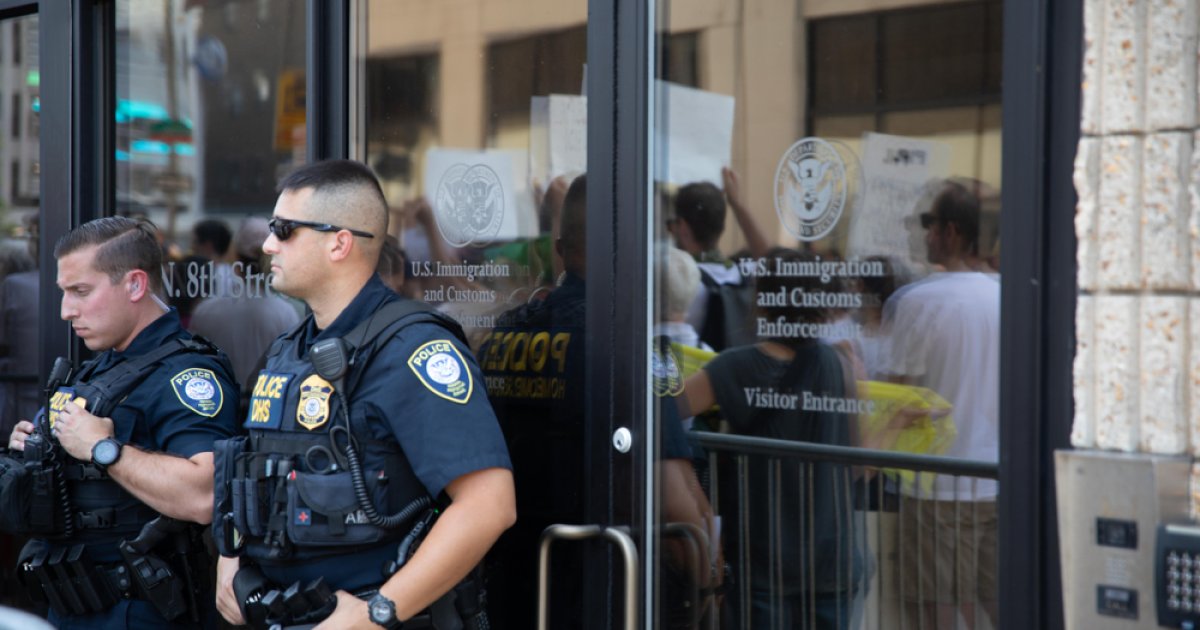
    None of that changes if you swap out highway patrol for Immigration and Customs Enforcement (ICE). But the Trump administration sees it differently.

    A new iPhone app called ICEBlock lets users report sightings of ICE activity and receive alerts about the agency’s presence within a 5-mile radius. The app’s website says:

    ICE has faced criticism for alleged civil rights abuses and failures to adhere to constitutional principles and due process, making it crucial for communities to stay informed about its operations. 

    The app also warns users not to use it “for the purposes of inciting violence or interfering with law enforcement.”

    After CNN reported on ICEBlock Monday, Trump administration officials claimed the app put ICE agents in danger and threatened to prosecute not only the app’s developer, but also … CNN. Border czar Tom Homan called on the Department of Justice to investigate whether the network had “crossed that line of impeding federal law enforcement officers.” 

    The next day, Secretary of Homeland Security Kristi Noem said her agency was “working with the Department of Justice” to see if they could prosecute CNN for its coverage of the app. President Trump went further, adding CNN “may be prosecuted also for having given false reports on the attack in Iran.” He made similar threats to sue The New York Times over its coverage.

    At the risk of stating the obvious, CNN’s routine reporting on ICEBlock is constitutionally protected. Even if the app itself were illegal, which it’s not, the press still has a right to report on it as a matter of public interest.

    Consider the extensive reporting on the notorious “open-air drug market” in Philadelphia’s Kensington neighborhood. That journalism isn’t illegal just because it might tip off someone about where to get fentanyl.

    By the administration’s logic, not just CNN, but anyone who speaks publicly about ICEBlock has committed a crime. Right-leaning outlets have covered the app, too. Prosecuting them for raising public awareness of the app would be just as unconstitutional. Ironically, the administration’s censorial threats are almost certainly doing more to amplify the app than CNN’s initial report did. The president’s team should look up the Streisand effect.

    This episode is just the latest example of the administration trying to stretch the meaning of “obstruction” to cover nearly any speech that might complicate immigration enforcement. Back in February, Homan asked the Department of Justice to investigate Congresswoman Alexandria Ocasio-Cortez for “impeding our law enforcement efforts” by releasing a webinar and flyer that reminded people of their constitutional rights when interacting with ICE. 

    Informing the public that they don’t have to consent to warrantless searches might make ICE’s job more difficult, but that doesn’t strip the speech of constitutional protection. It’s as absurd as claiming a police officer interferes with the district attorney’s job by telling a suspect he has the right to remain silent. 

    As FIRE explained at the time, the First Amendment protects a significant amount of expression, including “providing information about the presence of law enforcement officers.”

    Of course, there are narrow and carefully defined exceptions to the First Amendment. True threats aren’t protected. Nor is incitement. But speech qualifies as incitement only if the speaker intends to provoke immediate unlawful action and their speech is likely to provoke it. That’s a very high bar. Simply noting the presence of law enforcement in a particular location or talking about an app that facilitates that speech doesn’t come close. 

    It’s possible to imagine scenarios where speech might cross that line. If a hostile crowd gathered near ICE agents and someone with a megaphone called on them to attack, that would likely qualify as incitement. But that’s not what we’re dealing with here. 

    There are also circumstances in which helping someone evade law enforcement is a crime. You can’t lawfully harbor a fugitive or physically interfere with officers performing their duties. And the Supreme Court has held the First Amendment does not protect speech “used as an integral part of conduct in violation of a valid criminal statute.” Consider a lookout who warns accomplices during a robbery that police are approaching. That person is intentionally working with specific individuals to carry out a specific unlawful act. The speech isn’t general or political. It’s instrumental to the commission of the crime and is not protected.

    What is protected under the First Amendment is sharing publicly observable information about what government agents are doing in public — or providing the means to do so with a tool like ICEBlock — especially when that speech is tied to political activism. A federal appeals court recently upheld that principle in a case involving a man standing on a sidewalk with a sign that read “Cops Ahead.” The court found his sign, an analog version of the police alerts on Google Maps and Waze, was protected by the First Amendment. 

    It’s absolutely critical to maintain precise, narrow standards that prevent the government from expanding its power to regulate speech and suppress dissent. When officials blur the line between obstructing justice and merely speaking about public law enforcement activity, they put core First Amendment freedoms at risk.

    But let’s step back and remember the administration is not only claiming ICEBlock is illegal, but also suggesting that reporting on it is a criminal offense. Just as baseless is the president’s threat to prosecute and/or sue CNN and The New York Times over their coverage of the bombing of Iran. After the U.S. military struck Iran’s nuclear sites, both outlets reported on a preliminary assessment from the Defense Intelligence Agency (DIA) that contradicted Trump’s claim that the sites were “completely and totally obliterated.” 

    Reporting the government’s own findings about a major military action is not a crime — it’s protected by the First Amendment as well as vital to an informed citizenry. Again, this isn’t a close call.

    In New York Times v. United States, the Supreme Court rejected the government’s attempt to block the press from publishing the Pentagon Papers — a classified history of U.S. involvement in Vietnam — despite the government’s claims that it would harm national security. 

    Trump’s issue with CNN and The New York Times isn’t even about national security. He’s upset that the DIA report undercut his narrative. But if he thinks the report is wrong, his problem is with his own intelligence agency, not the outlets who accurately reported on its assessment. (Notably, both CNN and The New York Times made clear the report was preliminary, the analysis ongoing, and that the administration disputed its conclusions.)

    FIRE has gotten flak over the past few months for focusing so much on President Trump. Believe me, we wish we didn’t have to. 

    But when the most powerful official in the country repeatedly shows contempt for the First Amendment, it’s our job as a free speech organization to call that out. Presidents wield enormous power to stifle dissent. Their rhetoric and actions influence how other government officials interpret the bounds of the First Amendment, and they shape public attitudes about the enduring value of free expression.  

    This isn’t about partisanship. We unequivocally opposed the Biden administration’s efforts to suppress speech and consistently push back against censorship from the left, too. And much of our work doesn’t relate to partisan flashpoints that dominate the news. Every day, we’re defending ordinary Americans facing censorship from state legislaturesuniversitiescity councilsschool boards, and other government actors.

    As FIRE’s Executive Vice President Nico Perrino said yesterday, “The biggest threat to free speech is political power,” and at this moment, the right side of the aisle controls both political branches of the federal government. 

    That balance will shift, as it always does. But FIRE’s mission of holding those in power to the First Amendment will not.

    Source link

  • FIRE amicus brief: First Amendment bars using schoolkid standards to silence parents’ speech

    FIRE amicus brief: First Amendment bars using schoolkid standards to silence parents’ speech

    Does the First Amendment protect passive, nondisruptive political speech of adults in a public forum? Under longstanding precedent and common sense, the answer is yes, of course it does. Yet a federal district court in New Hampshire ratified a viewpoint-based removal of parents from a high school soccer game. So FIRE filed an amicus brief in the appeal from that decision, explaining how the court went astray.

    In September 2024, as a form of silent protest against allowing a transgender athlete to play on the opposing girls’ soccer team against Bow High School, parents Kyle Fellers and Andy Foote donned pink “XX” wristbands during halftime. After about 10 minutes, school officials approached, along with a police officer, and demanded that the two parents remove the wristbands or leave the game.

    Worse, when the parents invoked their First Amendment rights, the officials threatened to arrest them for trespassing despite having no evidence that the wristbands, as opposed to the school officials’ conduct, was causing any disruption of the soccer match. Nor is there any evidence the transgender athlete saw the wristbands.

    So when a federal district court rejected the parents’ constitutional challenge to their treatment, it made two key mistakes.

    First, it held censoring their message was not viewpoint discrimination — even though the record shows Bow High School officials explicitly cited what they perceived as the protest’s “exclusionary” views while allowing “inclusive” messaging. That is, they objected to the wristbands’ gender identity messaging because they found it offensive, while at the same permitting other displays, including those celebrating LGBT causes.

    That is textbook viewpoint discrimination, and is simply unconstitutional in any kind of forum, full stop. As the Supreme Court ruled in the 2001 case Good News Club v. Milford Central School, “When a restriction is viewpoint discriminatory, we need not decide whether it is unreason­able in light of the purposes served by the forum.” 

    Second, the court imported precedent applicable only to K–12 students in school into its forum analysis, and misapplied it to the speech of adults. Although it acknowledged this is not a student speech case, the court looked to Tinker v. Des Moines Independent Community School District, which affords school officials some authority to regulate student speech that substantially causes disruption or invades the rights of others. But Tinker has no role in analyzing adult speech in a public forum.

    The district court compounded that error by developing a test based on its reading of the First Circuit decision in L.M. v. Town of Middleborough to justify censorship of the parents’ passive protest as demeaning towards a visiting student. But L.M. involved student speech — not adult speech — and used reasoning that doesn’t apply here. 

    Even if Tinker did apply (it doesn’t), L.M. relied solely on its “substantial disruption” standard to hold demeaning statements might eventually lower test scores and cause “symptoms of a sick school,” while disclaiming reliance on “rights of others” under Tinker. Despite that, the district court centered its L.M.-based analysis on how the protest here might invade the visiting athlete’s rights, not that it would disrupt school functions. 

    Had other students or adults actually engaged in what both the school district and district court feared may occur — essentially, discriminatory harassment — school administrators are already empowered under Davis v. Monroe County Board of Education to counteract conduct that is “so severe, pervasive, and objectively offensive … that the victim-students are effectively denied equal access to an institution’s resources and opportunities.” 

    All told, as FIRE explained to the First Circuit, it is unwise to further dilute First Amendment protections by applying L.M. to adult speech. By sanctioning Bow High’s viewpoint discrimination against passive political protest and bastardizing student speech principles to silence adults, the district court’s decision would give administrators expansive authority over protected adult expression. That unwarranted and dangerous outcome is why the First Circuit should reverse on appeal, to protect First Amend­ment rights against erosion and abuse.

    Source link

  • A Call for Revolutionary Hope in American Higher Education

    A Call for Revolutionary Hope in American Higher Education

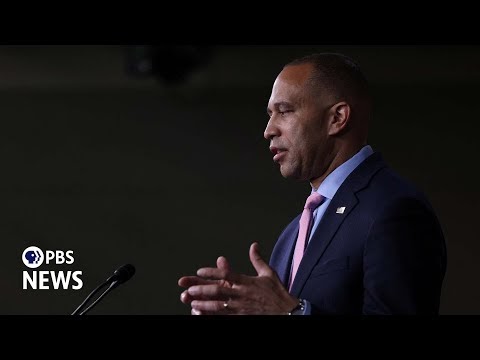
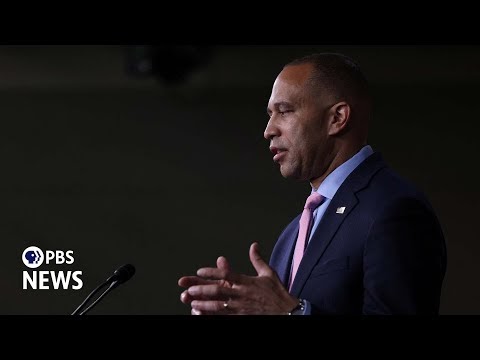
    In a fiery and prophetic address, the House Minority Leader Hakeem Jeffries invoked the memory of America’s original struggle for freedom, branding the tyranny of King George III in the years before the American Revolution as “Project 1775.” With bold clarity, he drew a straight line from that era of oppression to today’s rising authoritarianism—what he identified as “Donald Trump’s Project 2025” and the accompanying Trump Spending Bill. But rather than ending in despair, his speech was a call to courage and hope: just as Project 1775 gave birth to the Revolution of 1776, we are called to give birth to a new movement—Project 2026, a revolutionary vision of democracy, justice, and renewal.

    His message resonates beyond politics—it speaks deeply to the state of American higher education, which now stands at a crossroads. Under siege from authoritarian impulses, stripped of funding, and commodified by corporate greed, our colleges and universities reflect a nation in spiritual crisis. But as the Minority Leader reminded us, this moment is also one of great opportunity.

    “For God has not given us a spirit of fear, but of power and of love and of a sound mind.” (2 Timothy 1:7)

    Project 2026 is not merely a reaction to tyranny—it is a faith-driven declaration of agency. It is a call to restore education as a public good, not a private racket. It is a rejection of robocolleges, shadowy online program managers, and predatory lenders that have turned learning into a means of lifelong debt. And it is a stand against those who weaponize ignorance and rewrite history for their own gain.

    We are reminded in the New Testament that resistance is righteous, and that reform must be rooted in love, justice, and truth.

    “And you will know the truth, and the truth will set you free.” (John 8:32)

    This truth must guide the next phase of the American experiment—a truth that recognizes students not as consumers but as citizens; that sees teachers not as disposable labor but as bearers of light; and that understands education as liberation, not subjugation.

    Project 2026 can become our modern Sermon on the Mount, a blueprint for building a nation where colleges nurture both critical thinking and spiritual compassion, where public funding is a covenant—not a weapon—and where we “do justice, love mercy, and walk humbly with our God” (Micah 6:8).

    For decades, institutions of higher learning have drifted toward elitism, exclusion, and exploitation. Many have served as tools of empire, not vessels of enlightenment. Project 2026 offers a rebirth—a Great Awakening that opens the doors of education wide to the poor, the marginalized, and the weary. It speaks to the tired adjunct, the indebted graduate, the first-generation student, and the worker seeking dignity.

    “Blessed are those who hunger and thirst for righteousness, for they will be filled.” (Matthew 5:6)

    This is the moment to stand together. Project 2026 must not be left to chance or left in the hands of the powerful alone. It is a grassroots revolution of the mind and spirit—a multiracial, multigenerational, moral movement that calls upon students, faculty, parents, and communities to say: No more.

    No more austerity cloaked as fiscal responsibility.

    No more censorship masquerading as patriotism.

    No more debt for a degree that leads to precarious work and empty promises.

    Instead, let us build an education system worthy of democracy—a system animated by the values that once inspired a ragtag group of rebels in 1776. Let us be the generation that reclaims education as the soul of the Republic.

    “Do not conform to the pattern of this world, but be transformed by the renewing of your mind.” (Romans 12:2)

    The struggle ahead will not be easy. But neither was 1776. And yet from that fire emerged a new nation. With faith and fierce love, Project 2026 can become a new declaration—not just of independence, but of interdependence. A declaration of solidarity with the forgotten, the silenced, and the struggling.

    Let the tyrants tremble. Let the profiteers beware.

    A revolution is stirring in our hearts.

    And as Scripture reminds us:

    “If God is for us, who can be against us?” (Romans 8:31)


    Sources:

    • The Holy Bible, New Testament

    • House Minority Leader remarks, July 3, 2025

    • Trump-aligned Project 2025 blueprint (Heritage Foundation)

    • Trump Budget and Spending Bill (2025)

    • The Higher Education Inquirer archives on privatization, debt peonage, and adjunct labor in U.S. higher education

    Source link

  • House Minority Leader Jeffries giving marathon speech criticizing GOP tax cut bill (PBS News Hour)

    House Minority Leader Jeffries giving marathon speech criticizing GOP tax cut bill (PBS News Hour)

    US House Minority Leader Hakeem Jeffries (D-NY) gives a marathon speech, calling out the destructive path that House Republicans are going down. This is a Bill that undermines the United States of America and its national security.  It is also a threat to democracy.  Folks should listen to every minute of this historical speech. 

    Source link

  • Can a podcast cross borders?

    Can a podcast cross borders?

    “To me the essential ingredient is that two persons or two teams from different countries collaborate, right?” Ricci said. “So who’s doing the podcast itself makes it really a cross-border operation.”

    A podcast becomes cross-border, he said, when you bring different perspectives from different countries together in one story. There are two ways to make that story compelling to both the audiences and to Europe as a whole.

    The first way, he said, is to have a strong story that articulates across borders and is relevant for two countries. It can be a very specific story that relates to feelings and notions interesting to anyone. The second way is to start from a general topic and then find a story within that topic. 

    “I’d really love that all podcasts speak to every audience we aim to target,” Ricci said. “I think it’s the biggest challenge to make sure that every podcast finds its audience in every national context.”

    At WePod, the team divided the production process into stages. 

    First there was a pre-editorial stage where they brainstormed ideas. Then came a pre-production phase, where within the topic they reflected more concretely about the characters of each podcast. 

    “How do the different episodes talk to each other?” Ricci said. 

    Provide room for perspectives.

    That was followed by the production phase. That involved going on the ground, setting up interviews and working on scripts and language transcriptions. 

    Finally, in the post-production phase everything textual became a finished podcast, ready to be promoted and distributed. 

    Caminero said that every podcast WePod did was produced in at least two languages, the first in the native language of the podcast producer and in English for a cross-border audience. “Obviously, this creates specific challenges because not all versions can be identical,” Caminero said. “You need to make room for adaptations.”

    Ricci said that it was important in a big production like WePod, with people from different nationalities, to give people room to express themselves. “I think it takes time just to sit around the table, understand each other,” Ricci said. 

    This becomes important when you have deadlines and deliverables. “You’re pretty much kind of freaking out to meet everything, every deliverable you have to meet, every deadline,” Ricci said. If you try to impose a top down approach, it won’t work.

    “So, I think it just takes a lot of talking before action,” Ricci said. 


    Questions to consider:

    1. What does it mean to be cross-border?

    2. How can a story that is interesting in one country have resonance in another?

    3. Can you think of a topic important to your region that would also be important to people elsewhere?


    Source link

  • Kashana Cauley’s Fictional Rebellion Echoes a Real-Life Debt Hero

    Kashana Cauley’s Fictional Rebellion Echoes a Real-Life Debt Hero

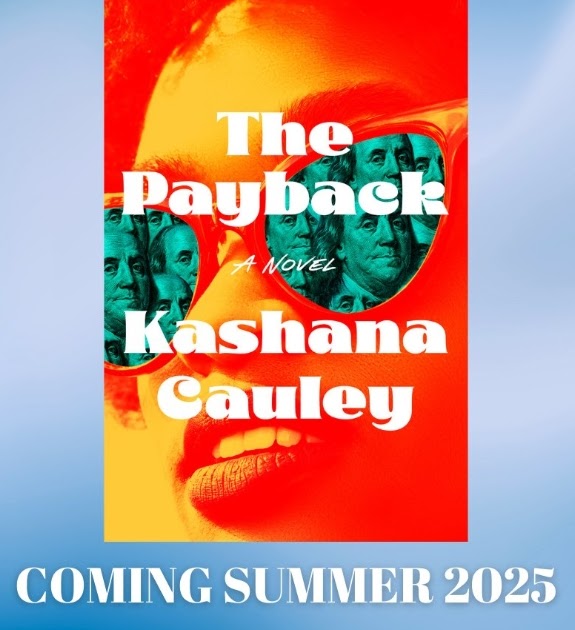
    Kashana Cauley’s second novel, The Payback (out July 15, 2025), might read like a brilliantly absurd heist movie—but its critique of debt peonage, surveillance capitalism, and broken educational promises is dead serious. With its hilarious yet harrowing depiction of three underemployed retail workers taking on the student loan-industrial complex, The Payback arrives not just as a much-anticipated literary event, but as a cultural reckoning.

    The protagonist, Jada Williams, is relentlessly hounded by the “Debt Police”—a dystopian twist that, while fictional, feels terrifyingly close to home for America’s 44 million student debtors. But instead of accepting a life of financial bondage, Jada and her mall coworkers hatch a plan to erase their student debt and strike back against the system that sold them a future in exchange for permanent servitude.

    This wild caper—praised by Publishers Weekly, Bustle, The Boston Globe, and others for its intelligence and audacity—may be fiction, but it echoes the real-life story of one bold man who did exactly what Jada dreams of doing.

    The Legend of Papas Fritas

    In the mid-2000s, a Chilean man known only by his pseudonym, Papas Fritas (French Fries), pulled off one of the most radical and symbolic acts of debt resistance in modern history. A former art student at Chile’s prestigious Universidad del Mar—a private for-profit institution later shut down for corruption and fraud—Papas Fritas discovered that the university had falsified financial documents to secure millions in profits while leaving students in mountains of debt.

    His response? He infiltrated the school’s administrative offices, extracted records documenting approximately $500 million in student loans, and burned them. Literally. With no backup copies.

    He then turned the ashes into an art installation called “La Morada del Diablo” (The Devil’s Dwelling), displayed it publicly, and became an instant folk hero. For many Chileans, who had taken to the streets in the early 2010s protesting an exploitative and privatized higher education system, Papas Fritas was more than a trickster—he was a vigilante philosopher, an artist of revolt.

    His act raised questions that still haunt us: What is the moral value of debt acquired through deception? Should the victims of predatory institutions be forced to pay for their own exploitation?

    Fiction Meets Resistance

    In The Payback, Cauley’s characters don’t just want debt relief—they want retribution. And like Papas Fritas, they understand that justice in an unjust system may require transgression, even sabotage. Cauley, a former Daily Show writer and incisive New York Times columnist, doesn’t shy away from this. Her prose is electric with rage, joy, absurdity, and clarity.

    She also knows exactly what she’s doing. Jada’s plan to eliminate debt isn’t merely about numbers—it’s about dignity, possibility, and reclaiming a future that was sold for interest. Cauley’s fiction, like Papas Fritas’s fire, is not just a spectacle—it’s a warning, and a dare.

    In an America where student debt totals over $1.7 trillion, where debt servicers act like bounty hunters, and where the promise of higher education has become a trapdoor, The Payback delivers catharsis—and inspiration.

    Hollywood, take note: this story demands a screen adaptation. But more importantly, policymakers, debt collectors, and university administrators should take heed. The people are reading. And they’re getting ideas.

    Preorder The Payback

    Signed editions are available through Black-owned LA bookstores Reparations Club, Malik Books, and Octavia’s Bookshelf. National preorder links are now live. Read it before the Debt Police knock on your door.

    Because as both Cauley and Papas Fritas remind us: sometimes, the only moral debt is the one you refuse to pay.

    Source link

  • Lawmakers Confront Columbia President About Old Messages

    Lawmakers Confront Columbia President About Old Messages

    Claire Shipman, acting president of Columbia University, apologized Wednesday for writing messages in 2023 and 2024 that House Republicans say “appear to downplay and even mock the pervasive culture of antisemitism on Columbia’s campus,” Jewish Insider reported

    “The things I said in a moment of frustration and stress were wrong. They do not reflect how I feel,” Shipman wrote in a private email the outlet obtained Wednesday. Shipman said she was addressing “some trusted groups of friends and colleagues, with whom I’ve talked regularly over the last few months.” 

    The apology comes one day after the House Committee on Education and Workforce sent Shipman a letter asking her to explain the intent of internal messages she wrote about antisemitism on the Manhattan campus following the start of Israel’s war in Gaza and the Oct. 7, 2023, Hamas attack. During the time frame in question, Shipman, who became acting president in March, was co-chair of the university’s Board of Trustees. 

    In its letter, the committee, which has subpoenaed numerous documents related to antisemitism at Columbia, cited a message Shipman wrote to now-resigned president Minouche Shafik on Oct. 20, 2023, that said, “People are really frustrated and scared about antisemitism on our campus and they feel somehow betrayed by it. Which is not necessarily a rational feeling but it’s deep and it is quite threatening.” The committee told Shipman her statement was “perplexing, considering the violence and harassment against Jewish and Israeli students already occurring on Columbia’s campus at the time.” 

    The committee, which has already compelled Columbia and numerous other universities to testify about their responses to campus antisemitism, also cited in its letter several messages from Shipman that convey alleged “distrust and dislike” for Shoshana Shendelman, a Jewish member of the university’s board who has been outspoken about perceived inadequacies of Columbia’s antisemitism response. “I just don’t think she should be on the board,” Shipman said in a January 2024 message. In April 2024, Shipman wrote that she was “so, so tired” of Shendelman. 

    In addition to ongoing scrutiny from Republican members of Congress, the Trump administration has attacked Columbia for months, accusing the university of not protecting Jewish students sufficiently and cutting off more than $400 million in federal funds. Although Columbia agreed to the administration’s demands, including overhauling disciplinary processes, Trump hasn’t yet restored the university’s funding. Instead, the Education Department reported Columbia to its accreditor, which has since issued a warning to the university.

    Source link

  • USF Ditches Search Firm That Helped U of Florida Pick Ono

    USF Ditches Search Firm That Helped U of Florida Pick Ono

    Bryan Bedder/Stringer/Getty Images

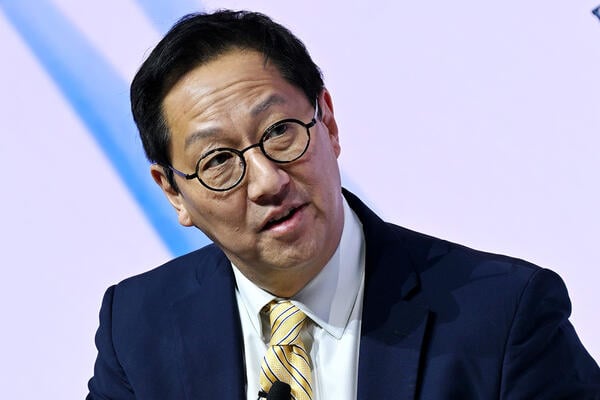
    The University of South Florida has dropped SP&A Executive Search as the firm leading its presidential search, The Tampa Bay Times reported Tuesday. The move comes after the Florida Board of Governors rejected the candidate that SP&A had helped the University of Florida pick for its top job: former University of Michigan president Santa Ono, whom the UF board unanimously approved.

    Ono’s rejection came after conservatives mounted a campaign opposing him, citing his past support of diversity, equity and inclusion and his alleged failure to protect Jewish students.

    After that failed hire, Rick Scott, a Republican U.S. senator representing Florida, blamed SP&A, telling Jewish Insider that the firm didn’t sufficiently vet Ono.

    SP&A describes itself on its website as a “boutique woman- and minority-owned executive search firm.” Scott Yenor—a Boise State University political science professor who resigned from the University of West Florida’s Board of Trustees in April after implying that only straight white men should be in political leadership—highlighted that description in an essay he co-wrote, titled “How did a leftist almost become president of the University of Florida?”

    “We can only speculate about how the deck was stacked,” Yenor and Steven DeRose, a UF alum and business executive, wrote. “SP&A colluded with campus stakeholders, especially faculty, when they were retained. Together, they developed the criteria necessary to hire a Santa Ono.”

    They also pointed out that SP&A was leading the USF search. SP&A didn’t respond to Inside Higher Ed’s requests for comment Wednesday.

    USF didn’t provide an interview or answer written questions. In a June 20 statement, USF trustee and presidential search committee chair Mike Griffin said the university was now using the international firm Korn Ferry.

    “We value the expertise of our initial search consultant and thank them for their engagement,” Griffin wrote.

    Source link

  • A Re-Engagement Strategy for Administrators (opinion)

    A Re-Engagement Strategy for Administrators (opinion)

    In American higher education, teaching is our business, research our currency and service our obligation. It has always perplexed me that the pursuit of higher education administration has traditionally compelled individuals to move away from a continued practice of two of these core faculty functions. The path of a faculty administrator is typically marked by a shift away from teaching and research, an evolution that makes returning to the faculty for some almost an impossibility, after years of being disconnected from the disciplinary practices that propelled their trajectory through the faculty ranks to secure an administrative role in the first place.

    At Kennesaw State University, we are exploring a new approach to academic leadership that reverses this traditional model of administrative disconnect. Starting this past academic year, every senior academic administrator serving on the provost’s leadership team (including all deans) joined me (serving as provost) in a commitment to teaching or researching annually, with the goal of helping us better understand and serve our university community. For some, the move to formally carve out approximately 10 percent of their time for either teaching or research validates ongoing teaching and research practices, while for others, it provides administrative latitude to reignite their passion for teaching and/or research.

    KSU’s president, Kathy Stewart Schwaig, co-taught an honors course with me this past spring, leading this strategy by example. President Schwaig, who holds a Ph.D. in information systems and whose leadership trajectory has evolved through faculty ranks across two Georgia institutions, takes this philosophical commitment to staying connected to the business of higher education even a step further, as she is currently enrolled as a graduate student at Dallas Theological Seminary pursuing a master’s in biblical and theological studies.

    As Kennesaw State, a Carnegie-designated R-2 institution that serves a population of more than 47,800 students, some could see this strategy as a pragmatic way of extending the capacities of the senior academic administrators to serve the institution’s growing needs in research and teaching. At a time when the capacities of faculty colleagues are being optimized to serve one of the nation’s largest and fastest-growing public institutions, the members of the senior academic administrative team are committing to optimize their own collective capacities to serve the mission of the university.

    The consequences will be more than just pragmatic, however. The annual commitment to serve as a higher education practitioner in addition to a higher education administrator could help us pursue administrative approaches that are rooted in a pragmatic understanding of both the shifting needs of industry and the changing needs of students entering higher education today. And it can also help build goodwill among faculty colleagues, who sometimes feel university administrators fail to fully comprehend the growing challenges of the classroom and pressures of research productivity.

    Serving as provost, I have found my annual commitment to teaching an opportunity to inform administrative priorities. In fall 2020, when we struggled to comprehend how best to reopen and calibrate to the safety needs of the COVID pandemic, I was scheduled to teach a senior seminar course in the Department of Dance, while I served as dean of the College of the Arts at KSU. For a moment, I thought I should excuse myself from the added responsibilities of teaching a course at a time when my administrative capacities were being tested in rather unconventional ways. Better judgment prevailed, however, as I realized that out of every year that I continued to teach in my higher education career, this would be the semester when being in the classroom and experiencing the challenge alongside my faculty colleagues was most critical.

    I would be lying if I said the experience was transformative. The challenges of lecturing with a face mask to socially distant students, split into two groups and separated by technology and physical space, was an experience that most faculty would likely agree was frustrating. But serving as dean and being in the classroom all semester allowed me to skip past several steps to serve the needs of my faculty colleagues with an understanding and empathy that was experientially relevant.

    I am hoping that the impact of KSU’s administrative re-engagement strategy will be similarly impactful, ensuring that all senior academic administrators reignite their capacities to contribute to the teaching and research mission of the university. The idea seems to have been embraced at the outset by most; its sustainability, however, will require a continued institutional commitment and individual prioritization. While the true outcomes are yet to be empirically assessed, my hope is that this move will convert administrative faculty into faculty administrators, building their capacities to more effectively serve the growth of our institution with relevant, ongoing experiences in teaching and research.

    Ivan Pulinkala is the provost and executive vice president for academic affairs at Kennesaw State University.

    Source link

  • Drops in International Student Tuition Could Pose Credit Risk

    Drops in International Student Tuition Could Pose Credit Risk

    Photo illustration by Justin Morrison/Inside Higher Ed | skynesher/E+/Getty Images

    Colleges and universities with a high percentage of international students face a credit risk as the federal government continues to target international students, according to a new report from Moody’s Ratings.

    Those most at risk include the 11 percent of American institutions where international students make up more than 20 percent of the student body, the ratings agency said, as well as institutions that are already struggling financially. (In total, 6 percent of students at U.S. institutions come from other countries.)

    “The reduction in international students presents a credit risk for universities heavily reliant on this demographic because of potential declines in tuition income, as international students typically pay full tuition fees,” the report states. “Additionally, with declining numbers of high school students over the next several years in the U.S. leading to fewer domestic students, universities intending to fill the gap with more international students may fall short.”

    The report follows the Trump administration’s months-long attack on immigrants and international students specifically, which began with the sudden removal of thousands of students from the Student Exchange and Visitor Information System, putting their legal status at risk. Since then, the administration has implemented a travel ban that includes 12 countries, prohibiting students from those countries from studying in the United States, and has targeted international students at Harvard University specifically, attempting to end the university’s ability to host international students. The State Department has also increased scrutiny into student visa applicants’ social media presences.

    It’s unclear as of yet how those factors will impact international enrollment in the fall. According to a recent report by the Institute of International Education, an approximately equal number of colleges and universities said they expected their international enrollment in the 2025–26 academic year to increase (32 percent), decrease (35 percent) and stay the same (32 percent) from this year’s numbers. But the percentage who expect a decrease was much higher than last year, when only 17 percent of institutions thought they might lose international students.

    The hit to the sector may not be as significant as it would be in countries like the United Kingdom and Australia, where about 25 percent of all students are international, Moody’s reported. Still, if the U.S. lost 15 percent of its international student population, a substantial number of colleges could experience at least moderate financial repercussions, according to one projection.

    About one in five colleges’ and universities’ EBIDA (earnings before interest, depreciation and amortization) margins would shrink by 0.5 to two percentage points, according to the ratings agency’s calculations.

    “For entities that already are under fiscal stress and have low EBIDA margins (the median EBIDA for private nonprofit colleges and universities was 11.7 percent in fiscal 2024 and 10.7 percent for publics), a change of one or two percentage points could push them into negative territory, especially if they are heavily discounting domestic tuition or losing enrollment because of demographic shifts,” according to the report. “Also, many small private schools may need to contend with federal changes to student loan and aid programs, further depressing domestic enrollment prospects and stressing budgets, especially for those with low liquidity.”

    The report stresses that this model does not account for any steps the institutions might take to mitigate those losses—especially at wealthier institutions. (Fifty-four percent of institutions with at least 15 percent international students are highly selective, while 25 percent are nonselective.)

    “Institutions that are highly selective, or those with considerable reserves, may better absorb the impacts by adjusting operations or increasing domestic enrollment,” it states. “Some elite institutions are less reliant on tuition, deriving income from endowments, fundraising or research, thereby mitigating the financial impact.”

    Source link