Author: admin

  • Co-creation of research agendas could strengthen policy research engagement

    Co-creation of research agendas could strengthen policy research engagement

    The University Policy Engagement Network (UPEN) recently announced that it had been successful in a UKRI bid to develop and expand UK policy to research infrastructure, facilitating connections and engagement between public and civil servants on one hand, and research organisations on the other.

    This call is a recent manifestation of a perennial and important interest in evidence-informed policymaking, and policy and research engagement. Policy engagement is also part of an increased focus on engagement with and impact of research, driven by the Research Excellence Framework.

    We recently published a journal article exploring what researchers and policymakers need to know and understand when engaging with each other, based on interviews with 11 experts working with higher education regulators, other major sectoral bodies, and higher education institutions who had extensive expertise across the UK higher education sector.

    University-based researchers and policymakers respond to different incentives in ways that are not always conducive to engagement. Interviewees described a wide range of influences on policy, including many types of research, much of which is produced outside the university sector. For some types of research, such as rapid research, researchers at higher education institutions were seen as being at a disadvantage. To address these considerations, our interviewees suggested that research co-creation – involving policymakers earlier in the process to develop research ideas and design projects – could promote engagement with policy.

    Engagement from the start

    In a typical research process, university-based researchers develop, conduct, and publish their research with a high degree of independence from the stakeholders of their research. Once the research is completed, researchers disseminate their findings, hoping to reach external stakeholders, including policymakers. In contrast, co-created research brings research stakeholders into the research process at the beginning and maintains stakeholder influence and co-creation throughout.

    When asked how researchers can increase engagement with policy, one participant said: :

    Co-designing projects with people involved in policy from the outset rather than, you know, what I often see, which is ‘we’ve done this stuff and now, who can we send it to?’ So, getting people involved from the outset and the running of it through advice.

    Because policy priorities shift and because research often takes a long time to complete, co-creation is not a perfect solution for policy research engagement. But co-creation may increase the likelihood that research findings are relevant to and usable for the specific needs of policymakers. Another benefit of co-creation is that, by taking part in the research process, policymakers are more likely to feel invested in the research and inclined to use its findings.

    Co-creation of research with policymakers requires access to and some form of relationship with relevant policymakers. While some researchers have easier access to policymakers than others, there are structures in place to facilitate the networking required to build relevant relationships, including through academic fellowship with the UK Parliament. Researchers can sometimes connect more easily to ministers and policymakers via intermediary organisations such as mission groups, representative bodies, think tanks, and professional organisations.

    Designing successful co-creation

    In a policy-research co-creation model, one of the questions that is worth asking is what is co-created: is research co-created, policy co-created, or both? For example, one participant in our study viewed researcher engagement with policymakers as policy-co-creation, rather than as research co-creation. Researchers can ask themselves: “What policy am I well-positioned to co-create based on my research?” as well as “How can my research benefit from co-creation with its stakeholders?”

    Our article highlights that one of the more frequent pathways for researchers based at universities to engage with policy is through conducting commissioned research. Commissioned research is often aligned with policy needs and facilitates co-creation. Yet independence, rigour, and criticality – markers of quality research – still need to be ensured even as part of co-created and commissioned research.

    Commissioned research was not the only type of research discussed by our participants that led to policy engagement. Interviewees provided examples of researchers with an established and rigorous body of work that answered policy-relevant questions which were successful in shaping policy. Sometimes, a body of research developed over time and over multiple studies is better suited for policy engagement. Sometimes this takes the form of a systematic review designed to bring a large body of research literature to bear on a current policy problem.

    This raises an important consideration for mechanisms that incentivise engagement: how does incentivising engagement affect the multiple priorities that researchers based at higher education institutions need to meet? The danger here is that, as more policy engagement is incentivised, researchers at higher education institutions might prioritise forms and qualities of research which lend themselves to engagement over those which higher education is uniquely placed to offer.

    As current efforts to expand UK-wide policy to research infrastructure develop, it is important to consider the multiple complexities associated with policy research engagement. In our view, for policy and research engagement to be meaningful, policy to research infrastructure needs to support high quality research, targeted engagement, and have a clear sense of what each of these means in practice.
    Source link

  • Inside Adelaide uni’s digital experience – Campus Review

    Inside Adelaide uni’s digital experience – Campus Review

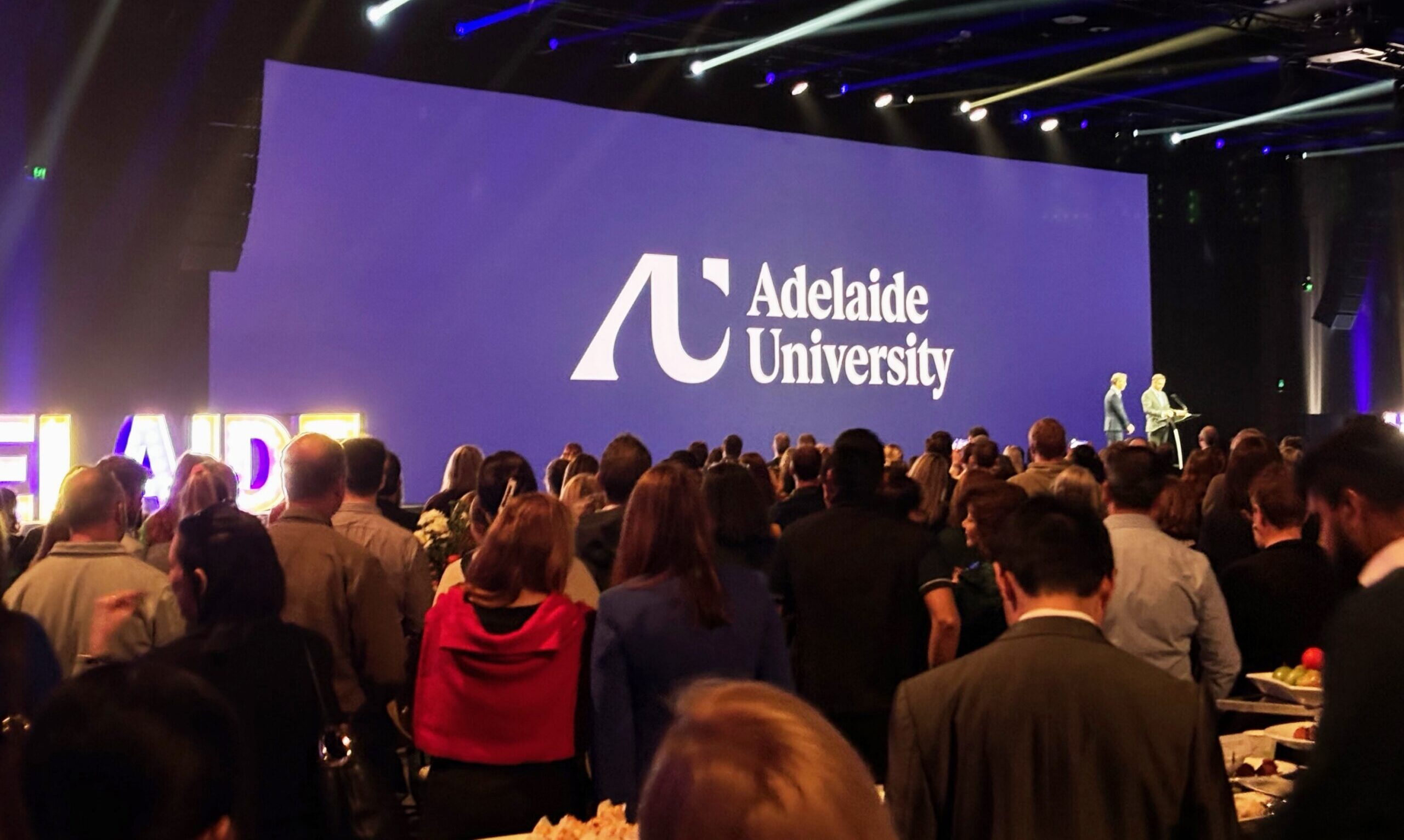
    Digital platforms are a key part of a positive student experience and will be a major focus for the new Adelaide University (AU), its digital project lead told an audience of academics on Thursday.

    Please login below to view content or subscribe now.

    Membership Login

    Source link

  • WSU wins impact rankings for fourth year – Campus Review

    WSU wins impact rankings for fourth year – Campus Review

    Western Sydney University (WSU) has ranked first in the measure of delivering community impact out of over 2000 universities globally in the Times Higher Education Impact Rankings released Wednesday.

    Please login below to view content or subscribe now.

    Membership Login

    Source link

  • NYU’s student success team talks AI – Campus Review

    NYU’s student success team talks AI – Campus Review

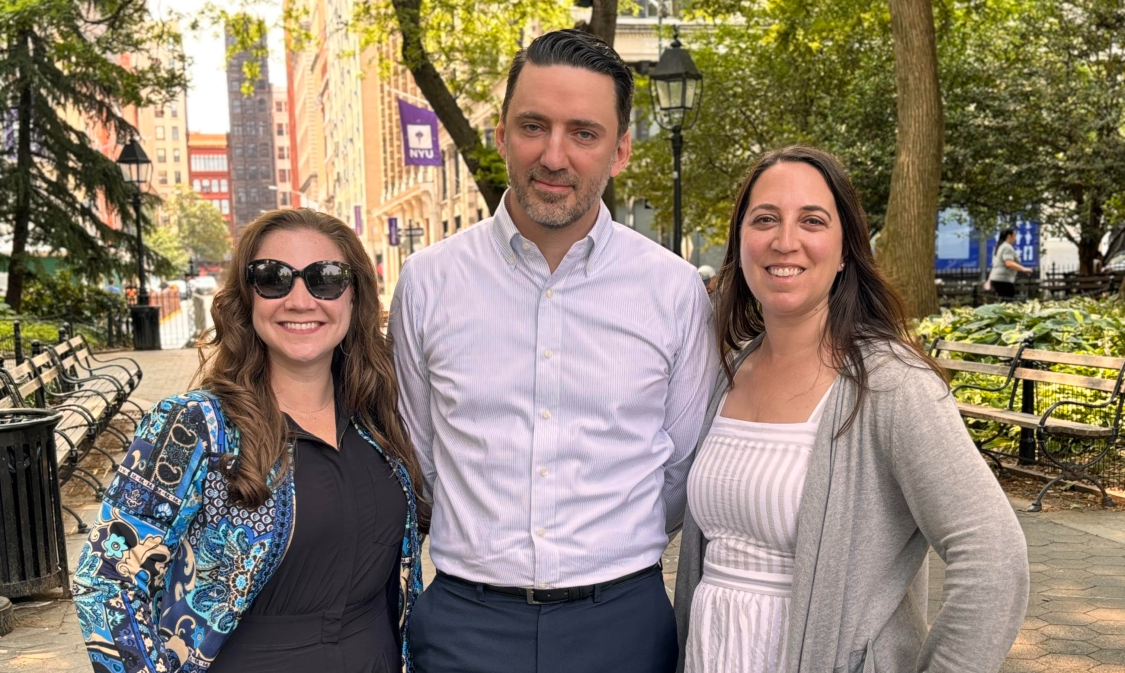
    John Burdick, Marni Passer Vassallo and Holly Halmo lead the New York University student success team.

    Please login below to view content or subscribe now.

    Membership Login

    Source link

  • Causes and consequences of access disparities by ethnicity

    Causes and consequences of access disparities by ethnicity

    If you haven’t looked recently at the stats on the different rates of HE participation by ethnicity, you may find them quite striking.

    Today, young people from ethnic minority backgrounds are progressing to university in record numbers.

    According to the most recent figures from DfE, the proportion of school pupils in England of white ethnicity who progress to HE by age 19 (41.8 per cent) is comfortably exceeded by the corresponding proportions of school pupils of Asian (68.4 per cent), Black (62.4 per cent) and mixed (51.8 per cent) ethnicity.

    White school pupils now also have the lowest progression rate to more selective high tariff universities. Statistics concerning the intersection of ethnicity and socioeconomic background are even more striking – Black school pupils who are also free school meals (FSM) eligible, for example, have a higher HE participation rate (51.3 per cent) than white pupils who are not FSM eligible (45.1 per cent).

    Can these gaps be explained?

    Whilst as a sector we (quite rightly) focus more on the gap in degree-level attainment by ethnicity (where white students typically outperform those from ethnic minority backgrounds), it is still worth considering why gaps in HE access by ethnicity are so large and what the longer term ramifications of these gaps may be. I recently published a piece of academic research which sought to understand the drivers of HE participation gaps by ethnicity.

    This is a much less straightforward task than trying to understand the drivers of disparities in HE participation by socioeconomic background or gender. A number of statistical modelling exercises, using England’s rich administrative datasets, have shown that gaps in HE participation by FSM eligibility and gender tend to almost vanish once average differences in school attainment are controlled for statistically. Of course, this does not excuse such disparities, but it does help us to better understand why they exist.

    However, when it comes to the link between ethnicity, school attainment and the likelihood of going to university, the relationship here seems to be far from straightforward. For example, Black school pupils in England get slightly lower grades, on average, in their GCSE exams than their white counterparts. Yet at the same time Black pupils are (quite comfortably) more likely to end up progressing to university. At first glance therefore, these statistics appear somewhat counter-intuitive.

    In an analysis of linked National Pupil Database (NPD) and HESA data, I discovered that to better understand overall disparities in HE access by ethnicity, we need to investigate how these disparities vary at different points along the overall school attainment spectrum.

    This can be done using a really straightforward method. First, take an entire cohort of all state school pupils in England (I used the one who took their GCSE exams in 2015) and divide them up into five attainment quintiles based on their grades in their best 8 GCSE subjects. Then, within each of these attainment sub-populations, investigate how HE participation varies by ethnicity.

    For higher attainers, the results were largely unremarkable. But for those with slightly below average attainment, the results were truly staggering.

    The participation gulf for those with lower school attainment

    Young people from ethnic minority backgrounds with high attainment are more likely to end up at university than their high-attaining white British counterparts, but only slightly so. For example, 81.2 per cent of those pupils who were both white British and in the highest quintile of attainment ended up at university, compared to 83.3 per cent of high attainers of Black Caribbean ethnicity and 87.7 per cent of high-attainers of Pakistani ethnicity. So far, so “meh”.

    But consider what happens at the second lowest quintile of attainers. This time, only 9.7 per cent of all white British students in this attainment bracket end up at university. At this same level of attainment, the HE progression rate for those of Pakistani ethnicity is 38.4 per cent, while the rate for those of Black African ethnicity is 52.1 per cent.

    You can take a look at all the percentages here in Table 4 of my paper if you’re really keen, but I can sum it up for you quite simply. While young people from ethnic minority backgrounds with high school attainment are slightly more likely to go to university than high attainers from white British backgrounds, lower attainers from ethnic minority backgrounds are considerably more likely to end up at university than their lower attaining white British counterparts.

    And when I say considerably, I mean considerably.

    Implications

    The upshot of all this is quite simple. Rightly or wrongly, once you get below a certain level of attainment, young people of white British ethnicity just don’t seem interested in going to university anymore. On the other hand, lower attainers from ethnic minority backgrounds are still quite keen to participate in HE, even though their level of attainment might mean that they may face a somewhat constrained choice of different institutions and courses.

    This leads us then to another question – why are young people from ethnic minority backgrounds (especially those with lower attainment) – so much keener to go to university? One somewhat unhelpful answer to this question was offered in the controversial Commission on Race and Ethnic Disparities report which was commissioned by the previous Conservative government. In the view of the commissioners, many people in ethnic minority communities have “an exaggerated respect for the academic route as the only path to success and economic safety on the part of ethnic minorities”. This perspective of course conveniently ignores another explanation which is well grounded in the sociological literature, which is that within ethnic minority communities, becoming as well-qualified as possible is seen as a necessary strategy to adopt in order to counteract the effects of racial discrimination in the labour market.

    Those of white ethnicity, in contrast, may enjoy more latitude to follow alternative pathways with the confidence that they are likely to fall on their feet in the end whatever happens.

    Aesop’s fables

    One thing we know for sure is that, for those with slightly lower school attainment, white and ethnic minority students seem to be making different choices on average at age 18. How might this all pan out in the longer term? Or, to put it another way, how do graduates with lower school attainment fare in the jobs market, compared to non-graduates with lower school attainment?

    When I look at analyses of the LEO earnings data for answers to this question, what I see reminds me of that familiar tale of the race between the tortoise and the hare. School leavers with lower attainment (defined here as not having at least 5 A*-C grades at GCSE) who do not go to university are the hares who dash out of the traps fairly quickly, typically earning wages (albeit fairly low ones) between the ages of 18-21. They have typically enjoyed slightly higher total earnings by age 30 than those lower attainers who went to university, who tend to enjoy only a fairly limited graduate earnings premium at first.

    But the graduate tortoises tend to plod their way to greater career earnings in the end, since graduates are much more likely to enjoy wage increases through midlife, whilst the non-graduate hares take an earnings siesta.

    Of course, most analysis of LEO so far concerns cohorts of people born in the mid to late 1980s. Without a crystal ball, young people today with lower school attainment can’t really be sure whether going to university (from a career and earnings perspective) will be a smart move or not. Either decision could be justified.

    Going to university has always tended to pay off (on average) so far, even as naysayers have continued to argue that the jobs market is becoming too saturated with graduates. On the other hand, continued (and very much welcome) increases in the salaries of less-educated workers (brought about in part by successive real-terms increases to the National Living Wage) may serve to both reduce the size of the graduate earnings premium for lower attainers whilst also increasing the opportunity cost (though foregone earnings) of attending university.

    Only the longitudinal studies of the future will confirm whether young people today with lower school attainment will turn out to be better off in the jobs market by going to university or not.

    However, if the fortunes of lower attaining graduates turn out to be different on average to the fortunes of lower attaining non-graduates, we can be pretty confident that disparities in fortunes by ethnicity will follow.

    Source link

  • How To Write A Media Pitch Examples

    How To Write A Media Pitch Examples

    How to Write a Media Pitch

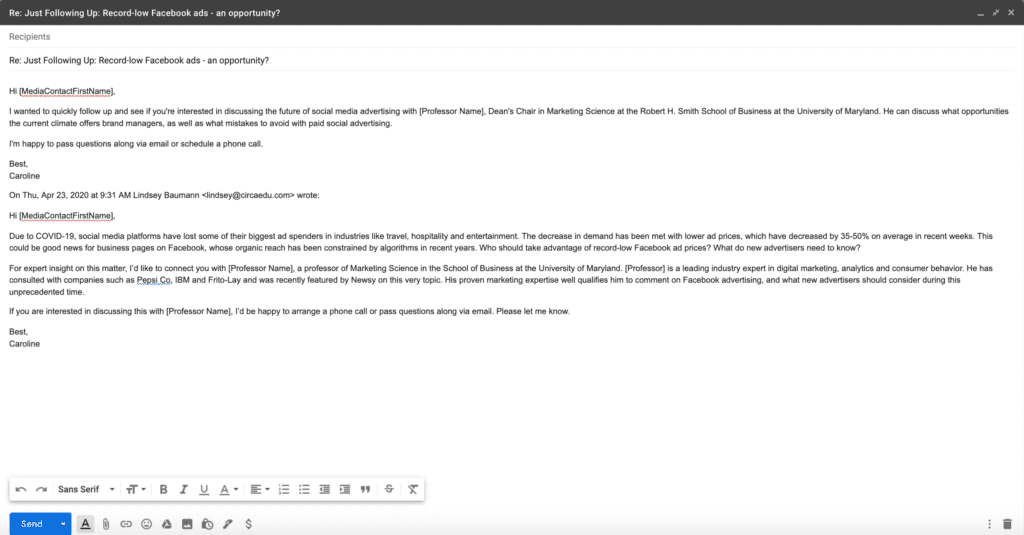
    Pitching compelling storylines and sources are the crux of any public relations strategy. In the higher education digital marketing space, we at Archer Education leverage the expertise of professors from our partner institutions to help increase the school’s visibility, student enrollment, thought leadership, and brand awareness. 

    Professors make excellent sources for stories through unmatched expertise and experience in their respective fields, but without the correct messaging and communication strategy, this opportunity could be missed. 

    In this article, we’ll go over how to write a media pitch in higher education and review the most common types of media pitches.

    What Is a Media Pitch?

    Media pitches in higher education are strategic communications sent to journalists, editors, or media outlets to promote faculty expertise, research, or institutional initiatives. These pitches typically highlight faculty insights on current events, groundbreaking studies, or thought leadership in their field.

    These pitches are particularly key to faculty promotion because they enhance visibility, establish credibility, and position faculty as subject matter experts. Media coverage can lead to invitations for speaking engagements, collaborative research opportunities, and increased citations — all of which contribute to professional advancement for the faculty member and enhanced institutional reputation.

    How to Create Your Media Pitch 

    Before we dive into best practices, tips, and examples of PR pitching, let’s go over some of the basics of how to structure a media pitch. Creating a set standard for yourself and your team will not only streamline the process and allow you to be as efficient as possible, but it will also ensure consistency amongst your team and allow for smooth training programs.

    Select the Right Type of Journalism Lead

    Before you even start writing a pitch, you want to make sure you find a lead that will entice whoever you are reaching out to. The lead is the angle into your story that makes everything relevant. You can look for two types of leads that are applicable throughout journalism:

    1. A news peg is a trending story or topic in the news that relates to what you’re pitching. For example, leveraging a political debate or a new medical study that was just released. This allows you to hook the reader with a relevant and widespread story.
    2. A time peg represents an upcoming date or event. For example, anniversaries of days like 9/11 or Hurricane Katrina, days or weeks dedicated to specific causes like “Health IT Week” or “Mental Health Awareness Day,” or even months like “Breast Cancer Awareness Month.”

    These types of dates and events can be easily leveraged for PR purposes as media outlets will often shape content around significant or relevant time pegs. In order to keep track and take advantage of these dates, it’s helpful to create and consistently update an internal editorial calendar with your team.

    Develop Your Pitch Structure

    Below is the basic outline/structure you should consider when writing a media pitch: 

    • As mentioned above, start with the lead. This should be the first thing the reporter or editor reads. An enticing lead that is relevant to their beat will ensure they continue through your pitch.
    • The second part is your call-to-action. This is the action you want your audience to take. Whether it is writing a product review, publishing a piece of content, or conducting an interview, it’s important to make your intention here as clear as possible.
    • Next comes your value proposition. This is a key piece of the puzzle as it will be the meat of the pitch; this is where you can showcase the value of what you are offering and why they should be interested in it. It is essential in differentiating yourself from the hundreds of other pitches they receive.
    • The last piece of the pitch is your conclusion. This is a straightforward recap that includes a  recap of the call-to-action and a thank you. 

    Use the Right Subject Line for Your Pitch Email

    Subject lines are the first and sometimes only thing that a media contact will see — often determining whether they will even bother to open your email or not. Ensuring that your subject line is clear, concise, and enticing is critical. According to Omeda, subject lines with 20 characters or fewer achieve the highest open rates, averaging 29.9%. Open rates decline to 17.3% for subject lines between 20 and 124 characters. 

    Interestingly, subject lines exceeding 174 characters see a slight recovery in open rates, averaging around 23%. However, due to potential display issues and the risk of being cut off, it’s generally recommended to keep subject lines concise. Prioritizing brevity ensures better visibility across various devices and enhances the likelihood of engagement.

    While creating a subject line that produces an “open” should always be the goal, you should make sure to avoid using “click-bait” phrasing as a tactic to draw in the recipient, as this is considered unprofessional. The last thing you want to do is mislead your audience or appear spammy.

    How to Pitch the Media: Communication Strategies

    Now that you understand the basics on how to write and structure a media pitch, let’s cover some media pitching strategies that can lead to greater success. 

    Use Timely Stories and Research               

    Don’t deprive yourself of using relevant news pegs or research as your hook for your pitch. It’s no secret that the media lives off of news pegs, trending topics, and new research to tell their stories. To increase the chances of someone showing interest in your pitch, it’s important to make their job as easy as possible. It’s a good idea to spell out the story for them so that your source or story fits in seamlessly with trending news topics and their target audience’s interests.

    Reporters and editors receive hundreds of pitches every day, so providing them with a story that their readers will be interested in and offering sources to help supplement that story will make them more compelled to move forward with the conversation. 

    Along these same lines, always try to include hyperlinks to any research or statistics that you reference in your pitch. You don’t want them to shy away from expressing interest or continuing the conversation simply because they don’t have time to do the legwork to track down the sources themselves.

    Know the Reporter’s Beat 

    You can have the best pitch in the world, but if it doesn’t align with the reporter’s beat (the types of stories they cover), then it will provide no use or value to them. In fact, it will only blatantly show that you are sending out mass email distributions and aren’t doing the appropriate research and legwork before pitching them. While it’s not always realistic or feasible, personalize pitches whenever possible and mention any related articles that they recently wrote.

    Keep it Concise and Know Your Story

    As previously mentioned, media contacts receive hundreds of pitches a day. If you’re lucky enough to get yours opened, the worst thing that someone with very little time can be confronted with is an unnecessarily long pitch. Find out how to say everything that you need to say in a paragraph or less (with rare exceptions). The more specific and focused you can be, the better. It’s also crucial to understand and communicate the story you’re trying to tell and how it aligns with the larger media trends yet provides a unique angle to the storyline. 

    Follow Up Is Key to Media Pitching

    Following up on initial email pitches is one of the most crucial elements of the pitching process. This is where most of your interest and responses will come from, so ensure that you schedule reminders to follow up. 

    Generally, it’s appropriate to wait about one week until you send follow-ups out; this will ensure that the media contact has sufficient time to get through their emails and respond if they are planning to. If the story is incredibly time-sensitive, you can follow-up a bit sooner. Similarly, if it is not a time-sensitive story at all, then waiting a little longer than a week can be a good strategy.  Just be sure to include your original pitch at the bottom of your follow-up email to help jog the recipient’s memory and provide more context. 

    Media Pitch Examples

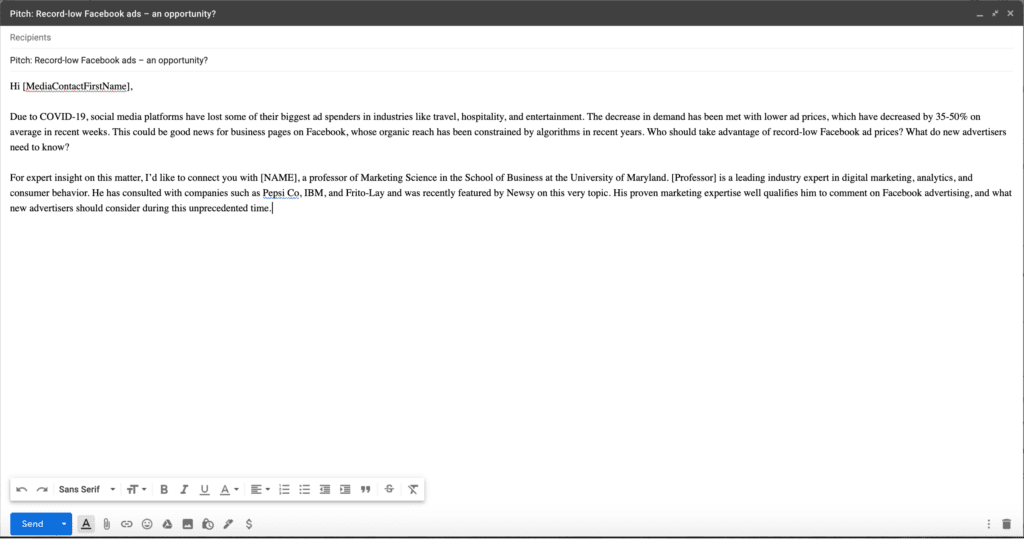
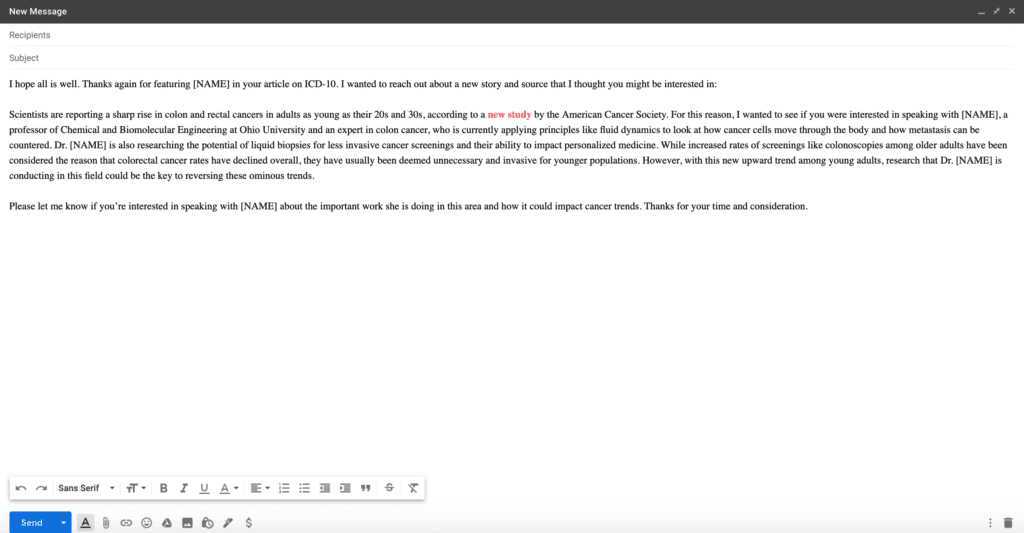
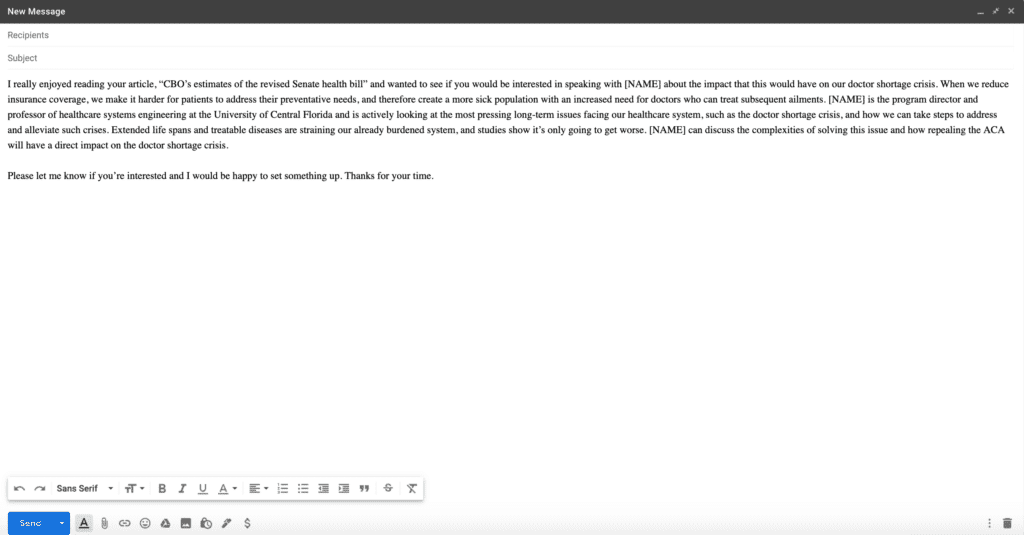
    Now that you have the information that you need to be successful with your pitch writing, here are some real-life examples of media pitches and pitch letters that our team sent to the media. 

    1. Cold Pitch

    A cold pitch is an unsolicited email or message sent to a journalist or media outlet with whom there is no prior relationship. It typically introduces a faculty member’s expertise or research in hopes of securing media coverage.

    2. Pitch for Established Contact/Relationship

    This type of pitch is sent to a journalist or media contact with whom a relationship already exists. It builds on past interactions, making it more likely to be well received and result in coverage.

    3. Personalized Pitch

    A personalized pitch is tailored specifically to a journalist’s interests, past work, or the needs of their publication. It demonstrates a clear understanding of their audience and increases the chances of engagement.

    4. Follow-Up Pitch

    A follow-up pitch is sent after an initial pitch to reinforce interest, provide additional details, or remind the recipient about the story idea. It’s essential for maintaining momentum and increasing response rates.

    How to Write Media Pitches That Consistently Convert

    In today’s media landscape, consistent PR exposure is essential for faculty members looking to establish themselves as thought leaders and elevate their institution’s brand. At Archer Education, we specialize in crafting strategic media pitches that align with timely news cycles, ensuring professors and researchers receive the visibility they deserve. Whether through cold outreach, leveraging existing media relationships, or personalized pitches, we help faculty secure media placements that enhance their credibility, attract prospective students, and showcase their expertise to a broader audience.

    Our experience in higher education marketing allows us to effectively position faculty members in conversations that matter, increasing opportunities for interviews, guest articles, and thought leadership features. Don’t let valuable media opportunities go untapped — connect with us today to develop a custom PR strategy that amplifies your faculty’s impact and strengthens your institution’s reputation.

    Source link

  • WVU cracks down on dangerous idea: free books

    WVU cracks down on dangerous idea: free books

    Passing out copies of a book on a college campus should not prompt a formal investigation. But that’s exactly what happened to freshman Eliyahu Itkowitz at West Virginia University. His experience illustrates how easily students and staff can weaponize a university’s investigative process to silence views they dislike. 

    In December 2024, Itkowitz was handing out copies on campus of Alan Dershowitz’s book, “The Ten Big Anti-Israel Lies: And How to Refute Them with Truth.” But after he gave one to a Muslim dining hall employee, she reported him to campus police and the university’s Division of Diversity, Equity, and Inclusion. His crime? Giving her an “anti-Muslim book.” The employee also requested that Itkowitz be banned from the dining hall. (The employee’s request to ban Itkowitz was not granted, probably because handing out books is not misconduct.) 

    The employee said she recognized Itkowitz from the Muslim Student Association’s social media posts in October, warning students to stay away from Itkowitz after he expressed disagreement with the anti-Israel slogans MSA members had painted on protest signs.

    The next time Itkowitz visited the dining hall, that employee falsely claimed to her manager that Itkowitz had been banned for anti-Muslim speech. The employee then called campus police while her manager told Itkowitz he had to leave. Itkowitz objected and started recording the encounter, before eventually sitting down to eat with his friends. 

    In her reports to police and DDEI, the employee claimed that Itkowitz engaged in “racially inappropriate” speech, calling her “anti-Jewish” and telling her to “do [her] fucking job.” Itkowitz denies making any of these comments, none of the witnesses present heard any of the alleged comments or saw Itkowitz interact with the employee at all, and the video footage of the encounter does not support the employee’s claims. 

    The employee added that he had also called her a “terrorist” months earlier. He denies this too.

    Nevertheless, WVU issued a no-contact order prohibiting any interaction between the two and launched an investigation into Itkowitz for religious discrimination and harassment. After completing that investigation, WVU eventually dropped the case against Itkowitz last month. 

    But the investigation never should have happened in the first place. 

    Even if the university found that every single one of the dining hall employee’s allegations were 100% true — and there are good reasons to doubt her account of events — the alleged conduct falls well short of the legal standard for discriminatory harassment. Quite simply, even if the allegations are true, the conduct would nevertheless be protected by the First Amendment.   

    As we explained in a letter to WVU sent today, even if a school changes course later, launching an investigation and slapping students with a no-contact order based on protected expression is guaranteed to chill speech by making students think twice before speaking up in the future. Instead, universities that receive such complaints should first conduct internal reviews, and if they confirm the allegations concern wholly protected expression, close the matter without notifying the speaker — thereby avoiding a chilling effect — while offering support to the complainant. 

    Otherwise, WVU is allowing students and staff with ideological disagreements to use its complaint process as a cudgel to silence opponents. Itkowitz’s case was not the first. In fall 2023, WVU launched a 10-month investigation into a student for counterprotesting at pro-Palestinian demonstrations based on a complaint from the Muslim Students Association that similarly alleged wholly protected speech. 

    Universities must not allow weaponization of DEI investigations to inhibit the free exchange of ideas.

    A university campus that investigates students every time someone is offended cannot function as a home for rational dialogue and debate. Administrators must accept that students will sometimes be offended when confronted with views different from their own. At the very least, handing out books on a university campus should never be cause for investigation. 

    Source link

  • With help of FIRE, University of Washington professor returns to classroom after bread knife incident

    With help of FIRE, University of Washington professor returns to classroom after bread knife incident

    In Soviet-era Romania, police falsely accused engineer Aurel Bulgac and his wife of espionage and imprisoned him for six months. Seeking refuge in America, Bulgac channeled his passion for physics into a professorship at the University of Washington in Seattle, where he taught without incident for more than 30 years. 

    That would change in the fall of 2023 when Bulgac used a hypothetical involving a small bread knife to encourage students to take the subject seriously. Through a surreal disciplinary process he describes as more nightmarish than Cold War repression, UW banned him from campus and hid evidence to get him to confess to a crime he didn’t commit. Fortunately, Bulgac reached out to FIRE’s Faculty Legal Defense Fund, which set him up with legal representation to vindicate his rights and restore him to the classroom.

    Teaching physics on the cutting edge

    In October 2023, during office hours with two students, Bulgac referred to a Japanese yakuza ritual where members cut off a portion of their little finger as an act of atonement or display of loyalty, called “yubitsume”. To drive home his point about taking physics more seriously, Bulgac took out a small bread knife, placed it on his desk, and asked students if they were confident enough in their answers to physics questions to voluntarily cut off their own pinky fingers if they were wrong.

    It was an intense hypothetical, to be sure, but the two students took it as nothing more than colorful hyperbole. They remained in Bulgac’s office, continued in class, and earned good grades.

    One student later told an advisor about the incident, making clear he never felt threatened. Even after the advisor encouraged the student to file a complaint with campus safety, the student declined. The story should have ended here. 

    But administrators were already demanding their pound of flesh. Instead of dismissing the situation as the student wished, UW banned Bulgac from campus, framing the decision as a “form of protection” for Bulgac. The university failed to provide a clear timeline or indication of when Bulgac could return to in-person teaching. And the university never actually told him whether a formal complaint about the situation existed, making it difficult to defend himself. 

    Though Bulgac certainly didn’t expect university administrators to behave like Soviet-era apparatchiks, he knew his rights and fought back with FIRE’s help.

    For nearly a year, Bulgac could not offer in-person office hours, attend scientific seminars, interact with his peers in the department, or work effectively on his Department of Energy research grants. With no end in sight to the university’s investigation, Bulgac was in procedural limbo. So he contacted FIRE’s Faculty Legal Defense Fund, which provides legal representation for public university faculty facing administrative discipline. FLDF immediately put him in touch with FLDF attorney Michael Brown of Seattle’s Gordon Tilden Thomas & Cordell LLP. 

    With Brown on Bulgac’s side, the pair got to work.

    Bread knife of Damocles

    The university never actually told Bulgac whether a complaint about the incident even existed, making it difficult to defend himself. Brown had to file open records requests to get any information from the university about the specific allegations. Finally, in early 2024, UW offered to reinstate Bulgac, but only if he took multiple training courses on communication, attended at least 10 coaching sessions with a university-approved instructor, and apologized to the students. Cutting deeper, UW conceded there was no threat—yet still sought sanctions.

    Brown countered by explaining why Bulgac’s speech was protected by academic freedom. UW itself defines academic freedom as “the freedom to discuss all relevant matters in teaching, to explore all avenues of scholarship, research, and creative expression, and to speak or write without institutional discipline.” He also pointed out the university’s hypocrisy in violating its pledge that “faculty members are free to express ideas and teach as they see fit, based on their mastery of their subjects and their own scholarship.”

    Bulgac’s rhetorical question did not approach the line of being an unprotected, punishable true threat, or a “serious expression” of an intent to commit unlawful violence, and academic freedom gives faculty breathing room to determine how best to approach their own pedagogy.

    In September 2024, the university finally restored Bulgac to the classroom — no apologies or training required.

    “This disciplinary process should have ended with Bulgac’s explanation and the student’s confirmation that he did not feel threatened,” said Brown. “Bulgac’s hypothetical fell well within the zone of academic freedom afforded professors to teach as they see fit, without fear of reprisal from the university administration. As the courts have made clear, that freedom is critical to the proper functioning of universities as places for open and robust sharing of ideas. We were very pleased to work with FIRE to secure a resolution that brought this episode to a close without further damage to Bulgac’s ability to continue to do the important work he has been doing at UW since 1993.”

    Though Bulgac certainly didn’t expect university administrators to behave like Soviet-era apparatchiks, he knew his rights and fought back with FIRE’s help. If you are a faculty member facing punishment for your expression or teaching, contact FIRE

    Source link

  • House Passes Reconciliation Bill With “No Tax on Overtime” Proposal – CUPA-HR

    House Passes Reconciliation Bill With “No Tax on Overtime” Proposal – CUPA-HR

    by CUPA-HR | June 17, 2025

    On May 22, the U.S. House of Representatives passed H.R. 1, titled the “One Big Beautiful Bill Act.” Notably, the reconciliation “megabill” includes a provision to implement President Trump’s campaign pledge on “no tax on overtime,” among various legislative priorities for Republicans.

    The “No Tax on Overtime” Proposal

    The overtime proposal creates a temporary above-the-line deduction from gross income for overtime pay required under the Fair labor Standards Act (FLSA). The bill does not set a cap on the amount of overtime pay that can be deducted, but it limits the application of the provision to employees who earn less than $160,000 per year, and it does not extend the deduction to independent contractors. If signed into law, the deduction will be available for tax years 2025 through 2028, and employers would be required to report overtime compensation on workers’ W-2 forms during this time.

    The proposed deduction only applies to workers’ federal income taxes and overtime pay as required by the FLSA, raising some compliance concerns for employers in states with different overtime pay requirements than those required under the FLSA and for employers whose overtime pay requirements are set by a collective bargaining agreement (CBA) with overtime pay that differs from the FLSA requirements. These employers will likely need to track both the FLSA-mandated overtime hours and pay to ensure workers’ W-2s are accurate and in compliance with the law while also ensuring they are tracking the overtime hours and pay in a manner that also complies with the more stringent state or CBA obligations.

    While CBA requirements vary case-by-case, there are five states with overtime pay requirements under their state wage and hour laws that differ from the requirements under the FLSA:

    • Alaska requires 1.5 times workers’ regular rate of pay for hours worked beyond 8 in a day or 40 in a workweek;
    • California requires 1.5 times an employee’s regular rate of pay for hours worked more than 8 in a day, 40 in a workweek, or the first 8 hours on a seventh consecutive day of work in a workweek. The state also requires double an employee’s regular rate of pay for any hours worked over 12 in a day or for all hours worked over 8 on a seventh consecutive day of work in a workweek;
    • Colorado requires overtime pay after 12 hours worked in a day or 40 hours in a workweek;
    • Nevada requires overtime pay for any hours worked beyond 8 in a day if the employee earns less than 1.5 times the state minimum wage; and
    • Oregon has industry-specific daily overtime rules that apply to hospitals, canneries and manufacturers.

    Looking Ahead

    The reconciliation bill is still early in the legislative process. For now, the “no tax on overtime” provision is only included in the House version of the bill. The Senate is currently drafting its version of the reconciliation bill, and they may choose to alter the no tax on overtime proposal — possibly including language of the Overtime Wages Tax Relief Act that was introduced earlier this year by Senator Roger Marshall (R-KS). CUPA-HR will continue to monitor for further developments on this issue.


    Source link