Author: admin

  • Don’t Fall for Trump’s Trade School Trojan Horse (opinion)

    Don’t Fall for Trump’s Trade School Trojan Horse (opinion)

    In one of his all-too-frequent rants on Truth Social last month, President Trump posted, “I am considering taking Three Billion Dollars of Grant Money away from a very antisemitic Harvard, and giving it to TRADE SCHOOLS all across our land.” It’s a transparent and cynical ploy: pit one segment of the education community against another—rich Harvard versus poor “trade schools”—and watch the divisions take hold. But make no mistake: This strategy only works if institutions, elite or otherwise, fall for the bait.

    We’re not sure what the president means by “trade schools” but suspect he’s referring to the nation’s 1,000-plus community and technical colleges— institutions that educate about a third of all U.S. undergraduates. We’ve both spent our careers making the case for greater investment in these colleges, including through the Project on Workforce, the cross-Harvard initiative we helped found six years ago to forge better pathways between education and good jobs.

    (And for the record: Trump’s accusation that Harvard is “very antisemitic” rings hollow coming from the man who hosted a Holocaust-denying white nationalist at Mar-a-Lago. It’s certainly unrecognizable to us—two Jews who, between us, have spent more than 40 years as Harvard students, staff and faculty.)

    If Trump actually cared about funding “trade schools,” he would start by telling congressional leaders to strip the provision in his so-called Big Beautiful Bill that raises the credit-hour threshold for Pell Grant eligibility. Community colleges serve the bulk of low-income students, and most of them have to work while in school. This proposed change proffered by the House, which was not included in the Senate version of the reconciliation bill, could cut off aid for 400,000 students a year and force many to drop out.

    But the threat isn’t just in proposed legislation: Community colleges are already the targets of Trump’s politically motivated grant cancellations. For example, just last month, his administration revoked awards from six Tech Hubs, created by bipartisan legislation to boost innovation, job creation and national security. These included projects in Alabama, where a community college would expand biotech training; in Idaho, where a community college planned to train aerospace workers; and in Vermont, where a community college was preparing a new semiconductor workforce.

    And the cuts don’t stop there. If the president was really serious about supporting the U.S. skilled technical workforce, he would expand, not gut, programs like the National Science Foundation’s Advanced Technological Education initiative, which has provided $1.5 billion to more than 500 community and technical colleges to develop cutting-edge training in fields like advanced manufacturing and robotics. Instead, his budget proposes cutting NSF by 55 percent, including deep reductions to education and workforce programs. The president’s budget also proposes eliminating all Perkins Act funding for community colleges (approximately $400 million), limiting the funding to middle and high schools and thereby cutting off a key source of federal support for technical training beyond secondary school.

    If by “trade schools” Trump means education for trades jobs, his hostility toward immigrants undermines the very students he claims to support. Eight percent of community college students are not U.S. citizens, with much higher shares on some campuses. They are just as vital to America’s future as the researchers in Harvard’s labs. In 2024, immigrants made up more than 30 percent of construction trades workers and 20 percent of U.S. manufacturing workers. Closing America’s doors won’t just harm colleges: It will weaken our ability to build, make and compete.

    Last week, we joined more than 12,000 Harvard alumni in signing an amicus brief to pledge our commitment to defend not only Harvard but the broader higher education enterprise from the Trump administration’s bullying attacks. Over the past month, we also spoke with community college leaders from around the country whose work we profiled in our 2023 book, America’s Hidden Economic Engines. Without exception, these leaders expressed deep concern, understanding that if Harvard, with all of its resources, could be forced to bend to the will of a tyrannical government, what chance would less resourced institutions have to defend academic freedom and maintain independence from governmental intrusion?

    If elite universities and community and technical colleges stand together, we can defend not just education, but democracy itself. Challenging as it will be for Harvard to weather this unprecedented assault on its independence, and that of higher education, it has no choice but to stand firm. Unlike many more vulnerable victims of Trump’s bullying—immigrants, civil servants, USAID grantees, the trans community—Harvard has the resources to fight back. Ultimately its rights, along with the rights of others targeted, will likely be vindicated by the courts. But in the interim, a lot of needless damage will be done to the lives of affected people and institutions. Most Americans may not speak often of such abstractions as academic freedom, due process and the fate of democracy. But they know a bully when they see one.


    Rachel Lipson, a co-founder of the Harvard Project on Workforce, was a senior adviser on workforce at the CHIPS Program Office at the U.S. Department of Commerce. She recently returned to Harvard Kennedy School as a research fellow.

    Robert Schwartz is a professor of practice emeritus at Harvard Graduate School of Education. Before joining the Harvard faculty in 1996, he had a long career in education and government.

    Source link

  • How should higher education respond to calls to be relevant?

    How should higher education respond to calls to be relevant?

    In their examination of ten trends that will shape the future of the campus university, Edward Peck, Ben McCarthy and Jenny Shaw set out a compelling account of the factors that will shape English higher education. As a result of these factors, they argue that, in the future, ‘Academic awards will focus as much on the development of employment and generic skills as the acquisition and retention of specific knowledge’. Given that it is co-authored by a long-standing vice chancellor, who will shortly take on the role of the Chair of the higher education regulator, this can be read as an urgent call for higher education to be clear about how it produces graduates who will make important contributions to society.

    While I agree that higher education needs to be open to discussing the value of its education for graduates and society, I do not think a convincing case can be made by focusing on the distinction between generic skills and specific knowledge. Instead, my argument is that higher education needs to develop a much better account of how the knowledge that students engage with through their degrees prepares them to make important contributions to society. There are four elements to this. 

    First, the development of generic skills and the acquisition of specific knowledge are not alternative educational objectives for degree programmes. Rather, they are different elements of a rich educational environment. More fundamentally, the educational power of higher education does not lie in either of these options. What is educationally powerful about higher education is the way in which it offers students access to structured bodies of knowledge. Seeing these bodies of knowledge from the inside gives students and graduates the opportunity to view themselves and the world differently. It is the structure of these bodies of knowledge that allows students and graduates to develop ways of engaging with the world that make use of this knowledge and related skills in a diverse range of contexts. Generic skills and specific knowledge are generated as part of this engagement with structured bodies of knowledge, but they are not where the educational treasure of higher education lies. Indeed, our seven-year international longitudinal study of those who studied degrees in Chemistry and in Chemical Engineering found that those who focused on specific knowledge rather than the ways of engaging with the world they gained from their degrees tended to benefit less from their education. 

    Second, showing that higher education is about gaining access to structured bodies of knowledge explains why it requires programmatic study over the three or four years of a degree. If it were simply about generic skills or specific knowledge, then there would be no need for the systematic and sustained engagement that we currently demand of students. Presenting higher education as about generic skills or specific knowledge risks it appearing very obvious that demanding several years of sustained study is an unnecessary and expensive luxury. It is only by showing the importance of students’ gaining access of bodies of knowledge that we can explain why alternative forms of higher education that are already boxing higher education in, such as micro-credentials, are not up to the job of supporting students to see these bodies of knowledge from the inside and engaging with the world from the perspective of this knowledge.

    Third, understanding the importance of the structured nature of this knowledge helps to highlight the importance of producing graduates from a rich diversity of disciplinary, interdisciplinary and professional subjects, who engage with the world in different ways. Addressing the challenges facing the world will require drawing on the diversity of these perspectives which cannot be gained through being taught generic skills or unconnected stores of specific knowledge.

    Fourth, ensuring that higher education maintains its focus on structured bodies of knowledge is key to challenging educational inequalities. Otherwise, it is entirely predictable that the education offered by ‘elite’ institutions will remain focused on structured bodies of knowledge while ‘mass’ higher education shifts to focus on generic skills. Given that those with the greatest resources are most likely to access elite higher education, the poor will be left with an education that leaves them rooted in the contexts in which they have developed their generic skills whereas the privileged will benefit from the ways in which structured bodies of knowledge support them to move between contexts.

    The great higher education advocate David Watson urged universities and academics to ‘guard your treasure’. The treasure of higher education is the collective structured bodies of knowledge that we are stewards of for society. Our role is to support society and students to understand the power of this knowledge and what it can do in the world. In response to the important questions raised by Edward Peck, Ben McCarthy and Jenny Shaw, we need to develop much more compelling accounts of how access to these structured bodies of knowledge provides an education that is qualitatively different from an education focused on developing generic skills and specific knowledge. We need to show how this qualitative difference is crucial in offering a relevant education that has the potential to change students and society.  If we fail to do this, then we are in great danger of throwing away our greatest treasure.

    Source link

  • Why I Stopped Starting Class with Content—and What Happened Instead – Faculty Focus

    Why I Stopped Starting Class with Content—and What Happened Instead – Faculty Focus

    Source link

  • University governance needs more imagination

    University governance needs more imagination

    University governance is not broken – but it does need to change.

    There are places where governance is not working very well. There are places where it is working exceptionally well. And in most cases the governance system works in the same way it always has but with a different and deeper set of issues.

    It may be that the resilience of “business as usual” is not a sign of stability – but a sign of a wider dysfunction.

    University governance is built with committees, a senate (usually), and a council. Information can flow up and down the chain with no more urgency than a stream trickling down a hill. The idea of a university being a deliberate (or slow) decision maker is not a design fault – but the entire purpose of the system.

    The challenge is that the moment we are working in is highly unpredictable. This means that the slowness inherent in the governance of universities is a barrier to making timely decisions. In turn, the lack of speed kills. If universities cannot make decisions quickly then they will be forever fighting yesterday’s battles as even bigger challenges come over the horizon.

    It is true that university governance can be slow. It is also the case that governance is no more than the collective will of people, accepted practice, navigating within a system which is continually changing because of the people and practices within it.

    It is not that governance is fundamentally broken – but that in places, it has not caught up with the world we are in or the issues we are dealing with. The institutional governance memory has largely been about growth, and now it is about changing shape, and in some cases contraction.

    And it is struggling to catch up for three main reasons. Intra-organisational dynamics, regulatory pressure, and a lack of experience and guidance in responding to this particular crisis.

    People

    The relationship between the vice chancellor and the chair of council is a critical one and one that can make or break the quality of governance. Usually, not a policy is passed, a major programme commenced, or in the most detail orientated a contract signed, without the permission of one of these two people.

    That critical relationship cannot be to act, consciously or otherwise, as gatekeepers – and instead needs to work to sharpen the focus of the wider discussion and decision making on the art of the possible in responding to the greatest aspirations and the most sizable threats.

    Sometimes the funnel of chair and vice chancellor contracts the necessary information, context and ambition rather than flipping the funnel around to allow a wider and richer understanding of the specific problem and the potential answers to it.

    A trend across the sector is that the strain placed on organisations is placing significant pressure on this relationship. Sometimes this pressure is forcing the chair and vice chancellor ever closer together and making them engage like never before. On the other hand, this pressure can spill into real disagreements and arguments.

    Neither excessive closeness nor distance is helpful for good decision making. One allows governance by relationship above process which can lead to decisions being too narrow or having considered too few sides. The distance makes issues fraught and honest conversations difficult.

    The role of the registrar has never been more crucial in this dynamic. They are the third leg of the stool that can facilitate private conversation but crucially, particularly now, can turn debates into issues that can be fed into the university governance system with a structure and purpose that reaches beyond the vice chancellor and chair in isolation. The registrar, or equivalent, is too often perceived as clerking or secretariat – rather than a function and role that can influence culture.

    The idea isn’t that governance should be conflict free, but that systems are robust enough to turn conflict into decision. In times like these strongly held disagreement is inevitable, sometimes it is even good as it shows things are being deeply felt, but governance cannot function where personal relationships dominate a governance system. The future is one which – as you might expect us to say – ever more deeply engages the registrar as the translator of discussion into decision.

    Regulators and regulation

    Governments and regulators have not been helpful in enabling the evolution needed in university governance. On the one hand, there is a reflexive defence to non-intervention because universities are autonomous institutions. And to be fair, when regulators and governments do something universities do not like it is also a defence they reach for. Autonomy is true at an institutional level but regulators seek to impede institutional autonomy all of the time through sector wide regulation.

    Taking Covid as an example, the Office for Students introduced a range of temporary market stabilisation measures which covered, amongst a range of other matters, “matters that may affect or distort decision making by prospective or current students in respect of their choice of higher education provider or course.” It isn’t enormously helpful that the regulatory environment can sometimes feel like either no intervention or extreme intervention.

    The space that is interesting is what does regulatory stewardship look like – neither the laissez faire of institutional failure nor the clunking foot of, well, boots on the ground.

    The overriding temptation is to introduce more regulation in a period where the sector is struggling. The logic is that universities are exposed to greater risk and the way to protect students from risk is to build boundaries around what universities can and cannot do.

    The problem is that universities do not have the resources to cope with any more regulatory burden. In fact, owing to the financial pressures they are under, universities have less resources than ever to deal with new regulatory burdens. This isn’t about the bonfire of the redtape, or a chainsaw as some world leaders prefer, but it is about an informed debate about how to sharpen the focus of an enormous regulatory burden.

    Introducing new regulation increases the chances that universities will fall foul of new regulations but that hardly seems like the point. There should be as much energy in reducing red-tape as there is in creating it in order to give universities the space to breathe. The sector is having to reduce its size and it can’t function with a regulatory burden designed for a time when it was much bigger.

    The effect of this would also be to free up the regulators time to focus on a narrower range of issues. The obvious rebuke is which things should any regulator spend less time on. The question, though helpful, misses the wider point that regulatory burden is created as much by approach as by the areas regulators choose to spend their time on. OfS Chief Executive Susan Lapworth made the case back in 2022:

    Your autonomy shouldn’t be a theoretical idea that you mobilise defensively to ward off regulation. It should be a living, active practice that you use to make your own decisions with confidence. So I’m encouraging you to think about whether the idea of self-directed autonomy might be a useful way to think about how you respond to regulation.

    Three years on, it’s fair to say that governing bodies often do not feel like they have sufficient insight into what the regulator believes to be the appropriate exercise of that autonomy. For example, it would be enormously useful for the OfS to provide an annual summary of the key issues they are dealing with – a bit like the OIA’s annual report on trends and outcomes.

    Reducing regulation, revealing potholes, and more clearly differentiating between issues of governance and those of leadership will help. It is also important to be clear that at times the sector has been caught in a trap of doing the same activity and expecting different results.

    Partners

    Even in the most extreme circumstances the sector now finds itself in radical discussions couched in terms of partnerships with the people that the sector has always worked with. It might be that some of the answers to the current crisis are not within the sector.

    There is an opportunity to explore partnerships with different kinds of public and private organisations. Traditionally, in universities, these have grown up within schools and faculties as research or teaching partnerships. It’s less frequent that senior leaders and their governing bodies seek out partnerships of mutual convenience to address a challenge.

    Now would seem to be the time to look at whether there may be partnerships with private providers on pre-degree teaching, PBSAs on addressing housing shortages, local authorities on a place-based marketing campaign, the local chambers of commerce on brokering land assets, and so on.

    Again, the challenge in realising this work is a governing one. Universities just have less muscle memory of trying to building these kinds of strategic partnerships – more imaginative partnerships require a different set of approaches.

    The first is absolute clarity from governing bodies regarding the problems they are trying to solve – and the discipline to stay within those core priorities. It is not enough to say that the problem is cash shortage caused by recruitment challenges. The deeper question is which qualifications are recruited to, the types of programmes on offer, and how clearly the link between income and programmes can be defined. Only then is it possible to look at which partners might be worth working with.

    The other challenge is that the regulatory environment is not always amenable to partnership. There is the issue of CMA compliance, where providers are reluctant to enter sensible conversations for fear of falling foul of regulations. A simple guide on the framework for who universities can work with in what circumstances would go far. Clearly, the current situation where the CMA is obligated to maintain the rules of a market which isn’t functioning properly is far from ideal.

    Breaking not broken

    People, regulation, and new partners are the three ingredients to move the university governance cycle on. It is easy to say universities need outside direction and internal commitment to meet the moment we’re in – but harder to pull off in practice.

    What universities have in their favour is that they have structures and processes that have been tried and tested. Now is the moment to adapt them.

    Source link

  • Higher education governance needs the conflict between academic and business imperatives to be successful

    Higher education governance needs the conflict between academic and business imperatives to be successful

    The sector’s financial challenges have shone a spotlight on governance effectiveness in higher education in England.

    When the incoming government tasked the Office for Students (OfS) with directing more of its energy towards financial sustainability in the summer of 2024, it was only a matter of months before director of regulation Philippa Pickford put forward the view that the sector needed “a conversation” about governance, specifically about how robustly boards had tested some of the financial projections they had been prepared to sign off.

    That signal of concern about governance has clearly manifested in the corridors of the Department for Education (DfE), if these words from the Secretary of State to the Commons Education Committee in May are anything to go by:

    The government is clear that there needs to be a focus on and improvement in providers’ governance. Planning and strategy development within higher education providers, including financial planning, should be supported by the highest standards of governance to ensure realistic planning, robust challenge and the development of sustainable business models.

    The sector has not been unresponsive to these cues – Advance HE in partnership with the wider sector is (taking the conversation metaphor literally) curating a “big conversation” about governance and the Committee of University Chairs (CUC) has pledged to review the higher education code of governance – which for a large number of institutions acts as a reference document for compliance with OfS’ conditions of registration on governance.

    The implicit underpinning premise from OfS and DfE is fairly stark: the government is disavowing any responsibility it might have to come up with a financial settlement that would shore up higher education finances while retaining the current delivery model; nor is it especially keen to have to deal with institutional bailouts arising from institutional inability to manage the changed funding landscape. The strong signal is that it is up to higher education institutions to work out how to survive in this environment – and if boards are not up to the task of finding the answers then it’s the boards that need reforming.

    Business acumen

    I read this communication as part of a discursive stand off between government and the sector in which the lines between the role of government and role of individual institutions in securing the future of higher education is contested. Within that context, the validity of the implied criticism – that boards are insufficiently businesslike and strategic – needs to be interrogated.

    There was a fascinating piece on The Critic last week by University of Buckingham academic Terence Kealey bemoaning the rise of the managerialist board. In Kealey’s analysis, when the balance of power in governance tilted towards the Senate – the governing body of academics – the institution thrived, as evidenced by strong performance in NSS and a financial surplus. But when the Council flexed its muscles, the university faltered, dropping in the league tables and spending more than it brought in.

    Kealey’s core argument – that academics are best placed to steward the core higher education mission of excellent teaching and research – picks up a longer standing critique of higher education governance that perceives organisational strategic objectives as articulated by institutional boards and executive teams as frequently in opposition to the academic endeavour, being far too concerned with financial efficiency, performance management, reputation/league tables, and capturing market share. Echoes of aspects of this critique appear in the recent Council for the Defence of British Universities’ proposed code of ethical university governance, which urges boards to adhere to high standards of transparent, principled, and public-spirited conduct.

    At the other end of the spectrum, the criticism of higher education governance – including sometimes from governors themselves – is that boards are insufficiently businesslike, fail to articulate long-term strategic objectives that will secure the institution’s sustainability, and have limited entrepreneurial spirit that would allow the institution to adapt to adverse headwinds. A more moderate version of this criticism argues that it is very difficult to convene the diverse skillset that could allow for effective board oversight of the wide range of activities that higher education institutions do.

    Thinking about activities like academic and knowledge exchange partnerships, the creation of new campuses or the erection of new buildings, or civic and international engagement, all of these have the the academic endeavour at their core but are mostly about deploying the knowledge and reputational assets of the institution to generate additional value – and they each carry complicated associated legal and regulatory compliance expectations and reputational risk. It’s not clear that developing those strategies and managing those risks and expectations coheres well with academic professional practice – though some academics will obviously have a keen interest and want to develop knowledge in these areas.

    The worst of both

    There has always been an expectation that higher education institutions need to be simultaneously academically excellent and sufficiently business savvy to make sure the institution remains financially stable. Both academic and institutional governance can fail – the latter often more spectacularly and with greater reputational impact – but the impact of academic governance failure is arguably greater overall both on the long term health of the institution and on the lives of the staff and students affected.

    So you could argue that it’s odd and/or problematic that the sector has witnessed the erosion of the power of senates and academic boards as part of a wider set of trends towards a more executive style of higher education leadership, the rise of metrics, league tables and more managerial approaches to institutional performance, the intensification of regulatory expectations, and the steady withdrawal of direct public funding from the sector. It’s telling that under the current regulatory regime in England institutional boards have had to master new expectations of oversight of academic quality, on the presumption that all institutional accountability should sit in one place, rather than being distributed – suggesting that quality is now seen as part of the wider business imperative rather than a counterweight to it.

    But simply pivoting the balance of power back to senates and the academic community doesn’t necessarily address the problem. It’s possible, I suppose, to imagine a relatively benign or at least predictable funding and regulatory environment in which some of the pressing strategic questions about institutional size and shape, partnerships, or external engagement are answered or moot, and in which knowledge stewardship, academic excellence, and (one would hope) student learning experience are the primary purpose of higher education governance.

    But even if that environment was plausible – I’m not sure it has ever existed – it doesn’t really address the more existential contemporary questions that governments and the public seem to be putting to higher education: how does the country see, and experience the value of all this knowledge stewardship and academic excellence? To realise that value and make it visible in more than an ad hoc way – to be institutionally accountable for the systematic manifestation of public value from academic knowledge – requires knowledge and professional practice beyond individual teaching and research excellence. And, more prosaically but equally importantly, buildings, infrastructure, and systems that create the environment for effective knowledge stewardship. Without a functioning institution there can be no knowledge stewardship.

    There’s a reason, in other words, even if you strip out all the neoliberal value propositions from higher education governance, why higher education institutions need a “business” arm and associated governance structures. And that’s before you confront the actual reality of the current situation where the funding and regulatory environment is neither benign nor predictable – and the need for effective external relationship-building and systematic collaboration is greater than it has been in decades.

    On the other hand, some of the business decisions that are made to secure financial sustainability or long term institutional success put the academic imperative at risk. Rapid growth in student numbers, redundancy programmes, departmental or services cuts or new strategic partnerships can compromise quality, as we have seen in a number of recent cases. There may be mitigations or the impact may be worth the reward, but there can be no meaningful strategic decision without being able to weigh up both.

    Yet where we have ended up, I fear, is in the worst of both worlds – institutional boards that are neither sufficiently academically robust to have a grip of academic excellence nor sufficiently strategic and entrepreneurial to ensure institutions are able to thrive in the current higher education landscape. This is no shade to the immense talent and knowledge of the individuals who take up roles as higher education governors – it is a structural critique.

    Creative tension

    Where I end up is with the question – if there is really an inbuilt tension between the academic and business imperatives of higher education institutions, what would it look like for that tension to be a productive one in higher education governance rather than a source of toxicity?

    I suspect – though I’ve not (yet) asked – many vice chancellors and their executive teams would argue that in their individual experience and team skillset they manifest both academic and business imperatives – that in fact, it is their job to reconcile these two aspects of institutional leadership in their daily practice, decisions, and communications.

    Yet if that reconciliation of two competing imperatives is the job of leadership, arguably it’s not going all that well. While this experience is by no means universal, it’s clear that at times both academic and professional staff can feel sidelined and disempowered in the tug of war for day to day resource – but also at a deeper level for a recognition of their purpose and contribution to the higher education endeavour. Each can feel subordinated to the other in the institutional hierarchy – yet while there are outliers on both sides I’d put money on the majority of individuals on both sides accepting and embracing the value and contribution of the other. Yet at the same time the real tensions and contradictions that manifest in the pursuit of the two parallel imperatives are deeply felt by staff yet not always acknowledged by leadership.

    What if the job of leadership and boards of governors was not to seek to reconcile academic and business imperatives, but to actively manage the conflicts that arise at times? Where strategic questions arise related to either opportunities or risks, boards need to understand the perspective of both “sides” before being able to judge whether the executive team’s decisions are appropriate. And for institutional staff (and students, to the extent they have a role in institutional governance) there needs to be confidence that the governors have the skills and understanding of the value and importance of both imperatives and the relationship between them – so that there is the trust that decisions have been made in the most effective and transparent way possible.

    There might even be a case for institutions to convene internal business strategy boards as part of the governance structure as a counterweight to academic boards – actively empowering both equally as sites of knowledge, expertise and influence – and potentially reducing the strategic burden on institutional boards through creating a more transparent and maybe even more democratic or at least representative forum for internal governance of strategic business development.

    It seems likely that the next academic year will see the higher education sector in England move on from “conversations” about governance into something more systematically developmental, whether that’s via the mechanism of the CUC’s review of the Higher Education Code of Governance, or a policy agenda from one of the sector bodies. This is one of those areas where the sector can help itself with government by taking a lead on reform.

    Yet there’s a risk that the financial pressures on the sector lead to too close a focus on the strategic business imperatives and not enough on the academic excellence imperative. Institutions need both to be successful, and boards and executive teams – as well as any reviewing organisation – need to give deep consideration to how those can – even if not always peacefully – coexist.

    Source link

  • Bill Shorten calls out ‘ivory tower’ unis – Campus Review

    Bill Shorten calls out ‘ivory tower’ unis – Campus Review

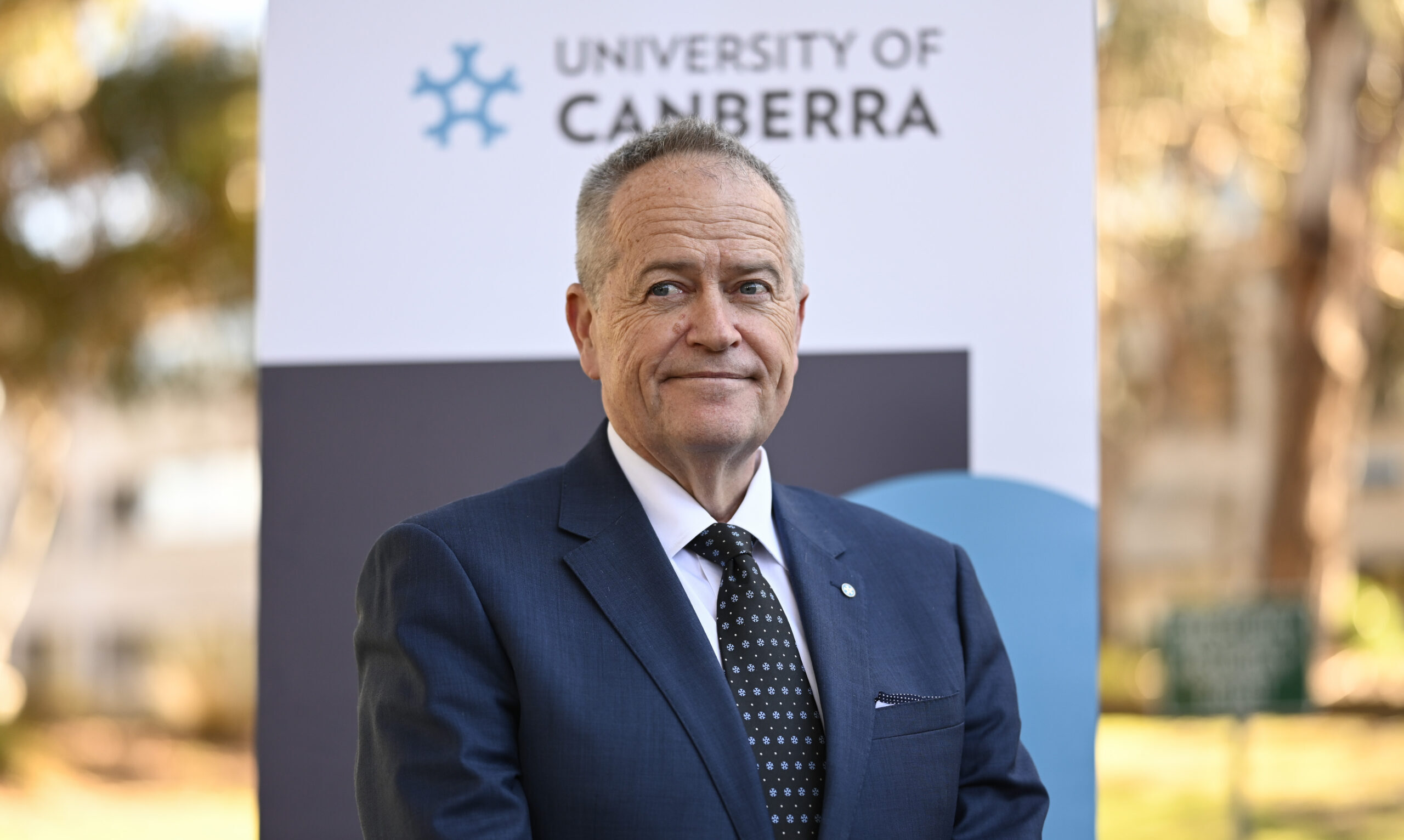
    New University of Canberra (UC) vice-chancellor Bill Shorten has scolded the higher education sector for not keeping up with students’ demands in a piece he penned for The Australian on Thursday.

    Please login below to view content or subscribe now.

    Membership Login

    Source link

  • New vice-chancellor of Adelaide revealed – Campus Review

    New vice-chancellor of Adelaide revealed – Campus Review

    Professor Nicola Phillips has been revealed as the vice-chancellor of the new Adelaide University ahead of its opening next year.

    Please login below to view content or subscribe now.

    Membership Login

    Source link

  • Griffith to pay $8m back to 6,000 staff – Campus Review

    Griffith to pay $8m back to 6,000 staff – Campus Review

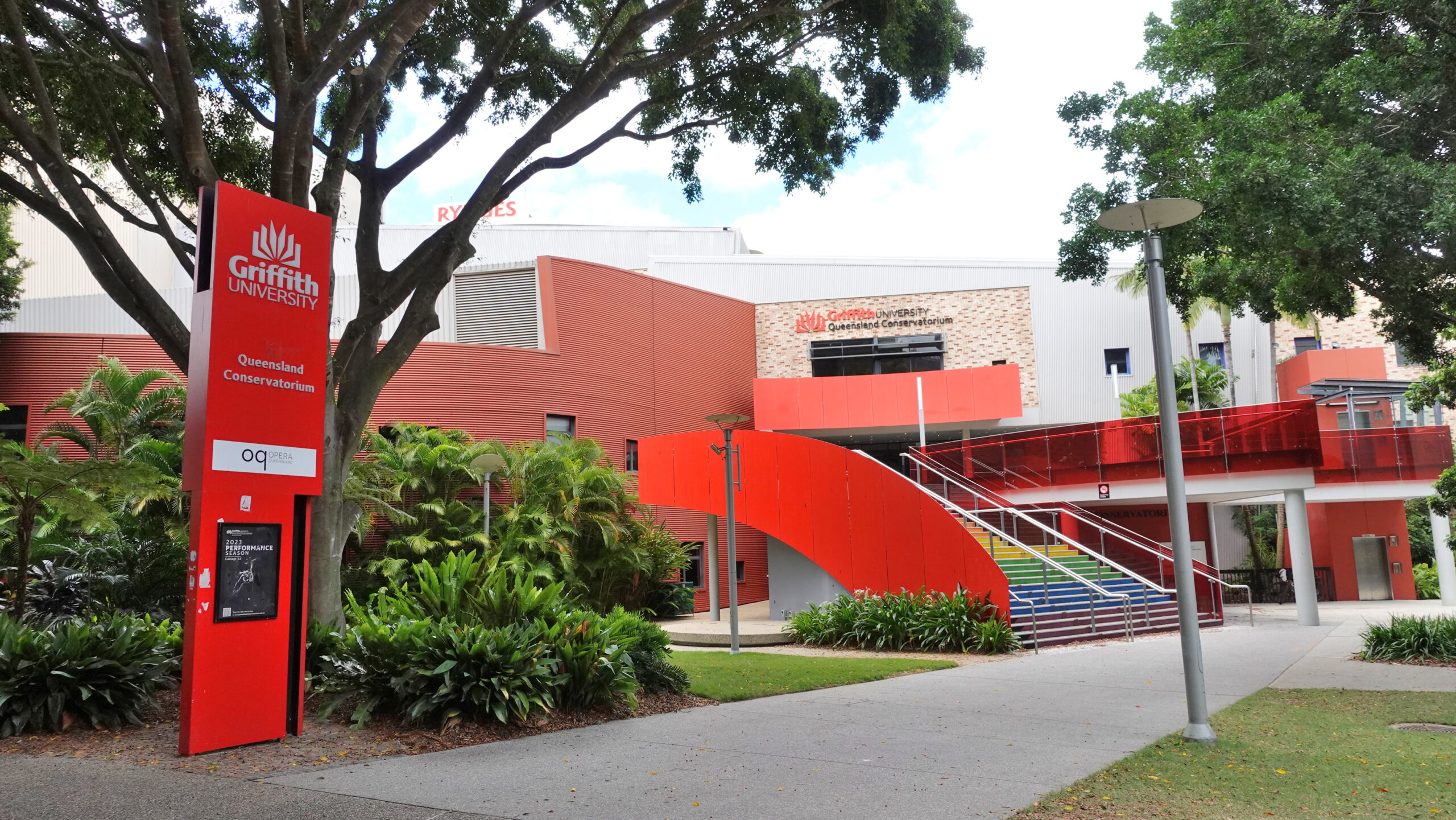
    Nearly six thousand current and former staff at Griffith University have been underpaid more than $6m over the past decade and will receive more than $8m in back-pay.

    Please login below to view content or subscribe now.

    Membership Login

    Source link

  • 4 Creative Ways to Engage Kids in STEM Over the Summer – The 74

    4 Creative Ways to Engage Kids in STEM Over the Summer – The 74


    Get stories like this delivered straight to your inbox. Sign up for The 74 Newsletter

    The Trump administration is reshaping the pursuit of science through federal cuts to research grants and the Department of Education. This will have real consequences for students interested in science, technology, engineering and mathematics, or STEM learning.

    One of those consequences is the elimination of learning opportunities such as robotics camps and access to advanced math courses for K-12 students.

    As a result, families and caregivers are more essential than ever in supporting children’s learning.

    Based on my research, I offer four ways to support children’s summer learning in ways that feel playful and engaging but still foster their interest, confidence and skills in STEM.

    1. Find a problem

    Look for “problems” in or around your home to engineer a solution for. Engineering a solution could include brainstorming ideas, drawing a sketch, creating a prototype or a first draft, testing and improving the prototype and communicating about the invention.

    For example, one family in our research created an upside-down soap dispenser for the following problem: “the way it’s designed” − specifically, the straw − “it doesn’t even reach the bottom of the container. So there’s a lot of soap sitting at the bottom.”

    To identify a problem and engage in the engineering design process, families are encouraged to use common materials. The materials may include cardboard boxes, cotton balls, construction paper, pine cones and rocks.

    Our research found that when children engage in engineering in the home environment with caregivers, parents and siblings, they communicate about and apply science and math concepts that are often “hidden” in their actions.

    For instance, when building a paper roller coaster for a marble, children think about how the height will affect the speed of the marble. In math, this relates to the relationship between two variables, or the idea that one thing, such as height, impacts another, the speed. In science, they are applying concepts of kinetic energy and potential energy. The higher the starting point, the more potential energy is converted into kinetic energy, which makes the marble move faster.

    In addition, children are learning what it means to be an engineer through their actions and experience. Families and caregivers play a role in supporting their creative thinking and willingness to work through challenging problems.

    2. Spark curiosity

    Open up a space for exploration around STEM concepts driven by their interests.

    Currently, my research with STEM professionals who were homeschooled talk about the power of learning sparked by curiosity.

    One participant stated, “At one time, I got really into ladybugs, well Asian Beatles I guess. It was when we had like hundreds in our house. I was like, what is happening? So, I wanted to figure out like why they were there, and then the difference between ladybugs and Asian beetles because people kept saying, these aren’t actually ladybugs.”

    Researchers label this serendipitous science engagement, or even spontaneous math moments. The moments lead to deep engagement and learning of STEM concepts. This may also be a chance to learn things with your child.

    3. Facilitate thinking

    In my research, being uncertain about STEM concepts may lead to children exploring and considering different ideas. One concept in particular − playful uncertainties − is when parents and caregivers know the answer to a child’s uncertainties but act as if they do not know.

    For example, suppose your child asks, “How can we measure the distance between St. Louis, Missouri, and Nashville, Tennessee, on this map?” You might respond, “I don’t know. What do you think?” This gives children the chance to share their ideas before a parent or caregiver guides them toward a response.

    4. Bring STEM to life

    Turn ordinary moments into curious conversations.

    “This recipe is for four people, but we have 11 people coming to dinner. What should we do?”

    In a recent interview, one participant described how much they learned from listening in on financial conversations, seeing how decisions got made about money, and watching how bills were handled. They were developing financial literacy and math skills.

    As they noted, “By the time I got to high school, I had a very good basis on what I’m doing and how to do it and function as a person in society.”

    Globally, individuals lack financial literacy, which can lead to negative outcomes in the future when it comes to topics such as retirement planning and debt.

    Why is this important?

    Research shows that talking with friends and family about STEM concepts supports how children see themselves as learners and their later success in STEM fields, even if they do not pursue a career in STEM.

    My research also shows how family STEM participation gives children opportunities to explore STEM ideas in ways that go beyond what they typically experience in school.

    In my view, these kinds of STEM experiences don’t compete with what children learn in school − they strengthen and support it.

    This article is republished from The Conversation under a Creative Commons license. Read the original article.


    Get stories like these delivered straight to your inbox. Sign up for The 74 Newsletter

    Source link

  • Help us tell the story of how the Trump administration is changing higher education

    Help us tell the story of how the Trump administration is changing higher education

    Since January, President Donald Trump has taken countless steps to transform the nation’s colleges and universities. His administration has cut scientific and medical research, ended efforts to promote diversity equity and inclusion (DEI), introduced newly aggressive policies on loan repayment, revoked visas for international students, and more. While Trump’s battles with Harvard and Columbia have received the most attention, the administration’s actions have had consequences far beyond those two universities.  

    We want to know how the Trump administration is affecting higher education and life on your campus. What, if any, changes are you seeing at your college or university because of federal policy shifts? In what ways do you see higher education changing?

    If you prefer, you can also email us directly at [email protected]. Contact editor Lawrie Mifflin at [email protected] or 212-678-4078. Contact editor Caroline Preston at 212-870-8965, via Signal at CarolineP.83 or on email at [email protected].

    This story about higher education was produced by The Hechinger Report, a nonprofit, independent news organization focused on inequality and innovation in education. Sign up for our newsletters.

    The Hechinger Report provides in-depth, fact-based, unbiased reporting on education that is free to all readers. But that doesn't mean it's free to produce. Our work keeps educators and the public informed about pressing issues at schools and on campuses throughout the country. We tell the whole story, even when the details are inconvenient. Help us keep doing that.

    Join us today.


    Source link