Author: admin

  • The Society for Research into Higher Education in 1975

    The Society for Research into Higher Education in 1975

    by Rob Cuthbert

    Only yesterday

    I’ve been walking these streets so long: in the SRHE Blog a series of posts is chronicling, decade by decade, the progress of SRHE since its foundation 60 years ago in 1965. As always, our memories are supported by some music of the times, however bad it might have been[1].

    Is this the real life?

    Some parts of the world, like some parts of higher education, were drawing breath after momentous years. The oil crisis of 1973-74 sent economic shocks around the world. In 1975 the Vietnam war finally ended, and the USA also saw the conviction of President Richard Nixon’s most senior staff John MitchellBob Haldeman and John Ehrlichman, found guilty of the Watergate cover-up. Those were the days when the Washington Post nailed its colours to the mast rather than not choosing sides, and in the days when the judicial system and the fourth estate could still expose and unseat corrupt behaviour at the highest levels. Washington Post editor Katharine Graham supported her journalists Woodward and Bernstein against huge establishment pressure, as Tammy Wynette sangStand by your man. How times change.

    Higher education in the UK had seen a flurry of new universities in the 1960s: Aston, Brunel, Bath, Bradford, City, Dundee, Heriot-Watt, Loughborough, Salford, Stirling, Surrey, the New University of Ulster, and perhaps most significant of all, the Open University. All the new UK universities were created before 1970; there were no more in the period to 1975, but the late 60s and early 1970s saw the even more significant creation of the polytechnics, following the influential 1966 White Paper A Plan for Polytechnics and Other Colleges. The Times Higher Education Supplement, established in 1971 under editor Brian Macarthur, had immediately become the definitive trade paper for HE with an outstanding journalistic team including Peter (now Lord) Hennessy, David Hencke and (now Sir) Peter Scott (an SRHE Fellow), later to become the THES editor and then VC at Kingston. THES coverage of the polytechnic expansion in the 1970s was dominated by North East London Polytechnic (NELP, now the University of East London), with its management team of George Brosan and Eric Robinson. They were using a blueprint created in their tenure at Enfield College, and fully developed in Robinson’s influential book, The New Polytechnics – the People’s Universities. NELP became “a byword for innovation”, as Tyrrell Burgess’s obituary of George Brosan said, developing an astonishing 80 new undergraduate programmes validated by the Council for National Academic Awards, created like SRHE in 1965. Burgess himself had been central to NELP’s radical school for independent study and founded the journal, Higher Education Review, working with its long-time editor John Pratt (an SRHE Fellow), later the definitive chronicler of The Polytechnic Experiment. In Sheffield one of the best of the polytechnic directors, the Reverend Canon Dr George Tolley, was overseeing the expansion of Sheffield Polytechnic as it merged with two colleges of education to become Sheffield City Polytechnic.

    As in so many parts of the world the HE system was increasingly diverse and rapidly expanding. In Australia nine universities had been established between 1964 and 1975: Deakin, Flinders, Griffith, James Cook, La Trobe, Macquarie, Murdoch, Newcastle, and Wollongong. The Australian government had taken on full responsibility for HE funding as Breen (Monash) explained, and had even abolished university fees in 1974, which Mangan’s (Queensland) later review regarded as not necessarily a good thing. How times change.

    In the USA the University of California model established under president Clark Kerr in the 1960s dominated strategic thinking about HE. Berkeley’s Martin Trow had already written The British Academics with AH Halsey (Oxford) and was about to become the Director of the Centre for Studies of Higher Education at Berkeley, where his elite-mass-universal model of how HE systems developed would hold sway for decades.

    In the UK two new laws, the Sex Discrimination Act 1975 and the Equal Pay Act 1970, came into force on 29 December, aiming to end unequal pay of men and women in the workplace. In the USA the Higher Education Act 1972 with its Title IX had been a hugely influential piece of legislation which prohibited sex discrimination in educational institutions receiving federal aid. How times change. Steve Harley’s 1975 lyrics would work now with President Trump: You’ve done it all, you’ve broken every code.

    You ain’t seen nothing yet

    Some things began in 1975 which would become significant later. In HE, institutions that had mostly been around for years or even centuries but started in a new form included Buckinghamshire College of Higher Education (later Buckinghamshire New University), Nene College of Higher Education (University of Northampton), Bath Spa University College, Roehampton, and Dublin City University. Control of Glasgow College of Technology (Glasgow Caledonian University) transferred from Glasgow Corporation to the newly formed Strathclyde Regional Council. Nigeria had its own flurry of new universities in Calabar, Jos, Maiduguri and Port Harcourt.

    Everyone knew that “you’re gonna need a bigger higher education system” as the blockbuster hit Jaws was released. 1975 was the year when Ernő Rubik applied for a patent for his invention the Magic Cube, Microsoft was founded as a partnership between Bill Gates and Paul Allen, and Margaret Thatcher defeated Edward Heath to become leader of the Conservative Party. Bruce Springsteen was already ‘The Boss’ when Liz Truss was Born to run on 26 July; she would later briefly become a THES journalist and briefly Shadow Minister for Higher Education, before ultimately the job briefly as boss. 1970s terrorism saw a bomb explode in the Paris offices of Springer publishers: the March 6 Group (connected to the Red Army Faction) demanded amnesty for the Baader-Meinhof Group.

    Higher education approaching a period of consolidation

    Guy Neave, then perhaps the leading continental European academic in research into HE, later characterised 1975-1985 as a period of consolidation. In the UK the government was planning for (reduced) expansion and Labour HE minister Reg Prentice was still quoting the 1963 Robbins Report in Parliament: “The planning figure of 640,000 full-time and sandwich course students in Great Britain in 1981 which I announced in November is estimated to make courses of higher education available for all those who are qualified by ability and attainment to pursue them and who wish to do so. It allows for the number of home students under 21 entering higher education in Great Britain, expressed as a proportion of the population aged 18, to rise from 14% in 1973 to 17% in 1981. … the reductions in forecast higher education expenditure in the recent Public Expenditure White Paper are almost entirely attributable to the lower estimate of prospective student demand.” Government projections of student numbers were always wrong, as Maurice Kogan (Brunel) might have helped to explain – I thought by now you’d realise. 1975 was the year when Kogan, a former senior civil servant in the Department of Education and Science, published his hugely influential Educational Policy-making: A Study of Interest Groups and Parliament.

    In the US the Carnegie Commission on Higher Education, founded ten years earlier under Clark Kerr, was in full pomp and published Demand and Supply in United States Higher Education. Two giants of sociology, Seymour Martin Lipset and David Riesman, wrote essays on ‘Education and Politics at Harvard’. How times change.

    Research into higher education

    Academics were much in evidence in novels; 1975 saw Malcolm Bradbury’s The History Man, David Lodge’s Changing Places, and Colin Dexter‘s first Inspector Morse novel Last Bus to Woodstock, and higher education was becoming established as a field of study. Dressel and Mayhew’s 1974 US-focused book reviewed by Kellams (Virginia) in the Journal of Higher Education, and published by the then-ubiquitous HE publishers Jossey-Bass in San Francisco saw ‘the emergence of a profession’. Nevertheless much research into HE was still appearing in mainstream education rather than HE journals, even in the USA. Tinto (Columbia) reported his synthesis of research on ‘dropout’ (as it was called then) in HE in the Review of Educational Research, and DI Chambers wrote about a major debate in China about higher education policy in an article in Comparative Education.

    Michael Shattock’s history of the SRHE in its earlier years pulled no punches about the limited achievements and reach of the Society:

    “By 1973, when the university system was in crisis with the collapse of the quinquennial funding system, it was clear that the Society was significantly failing to meet the ambitious targets it had started out with: it held annual conferences but attendance at 100 to 120 ensured that any surplus was low. It had successfully launched the valuable Research into Higher Education Abstracts but its … monographs, … while influential among specialists did not command a wide readership. The Society appeared to be at a crossroads as to its future: so far it had succeeded in expanding its membership, both corporate and individual, but this could easily be reversed if it failed to generate sufficient activity to retain it. Early in 1973 the Governing Council agreed to hold a special meeting … and commissioned a paper from Leo Evans, one of its members, and Harriet Greenaway, the Society’s Administrator … The “Discussion Paper on the Objectives of  the Society” … quoted the aims set out in the Articles of Association “to promote and encourage research in higher education and related fields” and argued that the Society’s objectives needed to be broadened.  … The implied thrust of the paper was that the Society had become too narrow in its research interests and that it should be more willing to address issues related to the development of the higher education system.”

    In the end the objectives were expanded to include concern for the development of the HE sector, but the Society’s direction was not wholly settled, according to Shattock. Moreover: “Both in 1973-74 and 1974-75 there was great concern about the Society’s continued financial viability, and in 1976 the Society moved its premises out of London to the University of Surrey where it was offered favourable terms.” (Someone Saved My Life Tonight). In 1976 Lewis Elton of Surrey, one of SRHE’s founders, would become Chair of the Society when the incumbent Roy Niblett suffered ill health. It was the same year that the principal inspiration for the foundation of SRHE (as Shattock put it), Nicholas Malleson, died at only 52. SRHE’s finances were soon back on an even keel but It would be more than 25 years before they achieved long-term stability.

    Rob Cuthbert is editor of SRHE News and the SRHE Blog, Emeritus Professor of Higher Education Management, University of the West of England and Joint Managing Partner, Practical Academics. Email [email protected]. Twitter/X @RobCuthbert.


    [1] The top selling single of 1975 was Bye Bye Baby by the Bay City Rollers, and the Eurovision Song Contest was won by Ding-a-Dong. The album charts were dominated by greatest hit albums from Elton John, Tom Jones, The Stylistics, Perry Como, Engelbert Humperdinck and Jim Reeves. I rest my case. As always, there were some exceptions.

    Author: SRHE News Blog

    An international learned society, concerned with supporting research and researchers into Higher Education

    Source link

  • NIH Staff Lambaste Agency Head for Censorship of Science

    NIH Staff Lambaste Agency Head for Censorship of Science

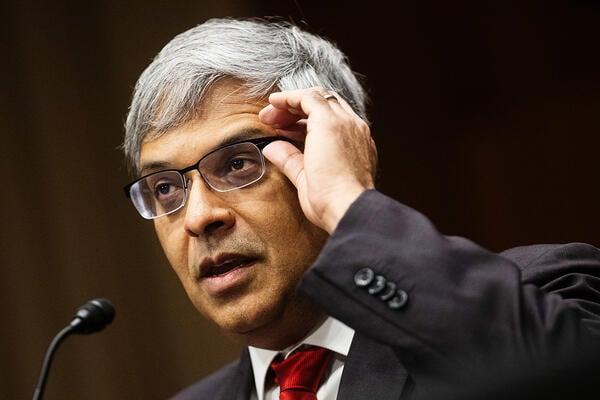
    Jim Watson/AFP/Getty Images

    Hundreds of staff at the National Institutes of Health are publicly condemning the agency’s actions in recent months, including firing thousands of workers and canceling research grants for projects that don’t align with the Trump administration’s ideologies. 

    In a letter sent Monday morning to Jay Bhattacharya, the Trump-appointed NIH director who gained notoriety for his criticism of the NIH’s handling of the COVID-19 pandemic, more than 300 employees from across the agency called on him to deliver on his promise to embrace dissent, which he has called “the very essence of science.”

    “We are compelled to speak up when our leadership prioritizes political momentum over human safety and faithful stewardship of public resources,” states the letter, titled the Bethesda Declaration (Bethesda, Md., is the location of the NIH’s main campus) and modeled after Bhattacharya’s own Great Barrington Declaration, which condemned the NIH in 2020 for ignoring his calls to mostly cease pandemic-related precautions.

    “This censorship is incompatible with academic freedom, which should not be applied selectively based on political ideology.”

    In addition to accusing Bhattacharya of politicizing research, the letter published Monday also criticized the agency for “undermining” peer review, unilaterally capping indirect costs and firing NIH staff. 

    Bhattacharya is scheduled to appear before the Senate appropriations subcommittee today to discuss Trump’s proposal to cut $18 billion or about 40 percent from the NIH’s budget.

    Source link

  • Colleges Support Student Financial Literacy Education

    Colleges Support Student Financial Literacy Education

    Students often consider the return on investment of their degree when deciding whether and where to enroll in college, but not every student receives financial education from their institution on how to turn a college education into a life-sustaining career. A 2022 survey by Inside Higher Ed found that 67 percent of students are not sure if their college or university offers personal financial education; an additional 9 percent said no programs or classes are offered regarding financial literacy.

    To rectify that, colleges and universities are implementing programs that promote students’ money management skills, increase their awareness of financial planning and help them understand the debts they may acquire while in school.

    What’s the need: Student debt has skyrocketed over the past 20 years, with 42.7 million student borrowers holding nearly $1.7 trillion in federal loans. The average student who takes out loans to attend a public university borrows $31,960 to attain a bachelor’s degree, and over half of graduates use federal loans at some point. Loan debt can limit students’ earnings after college and hinder their socioeconomic advancement.

    Even while students are in college, financial challenges can impact their persistence and outcomes. A 2024 survey by Trellis Research found that 71 percent of students experienced financial trouble while enrolled, and nearly half said their current financial situation made it difficult to concentrate on schoolwork.

    A lack of financial education can also exacerbate equity concerns. An April 2025 report from Education Northwest found that only 25 percent of students were able to answer three financial questions correctly, with students from low-income families and those younger than 21 even less likely to answer correctly. Similarly, Black, American Indian or Alaska Native, Hispanic or Latino, and Native Hawaiian or Pacific Islander students were less likely to answer financial literacy questions correctly.

    Inside Higher Ed highlights six institutions that have introduced innovative programs to combat financial illiteracy.

    1. Florida State University: Unconquered by Debt

    Housed within the university’s Gus. A Stavros Center for Advancement of Free Enterprise and Economic Education, FSU’s Unconquered by Debt program enhances student financial literacy to ensure graduates leave with the ability to advance their socioeconomic standing.

    The program walks students through crucial areas of financial planning including selecting a career, establishing healthy spending habits, investing, managing credit, ensuring assets and planning for retirement.

    Students can attend workshops on campus and enjoy free food and drinks while they learn more about money management and how to plan for their futures beyond college.

    The center recently hired an assistant director as part of a program expansion funded by the Office of the Provost.

    1. University of Miami: Money Management

    In 2019, the University of Miami created the Money Management Program to help build students’ short- and long-term financial well-being. The program has proven so successful in increasing student persistence that it has also received external grant funding, a university spokesperson said.

    Through workshops called Money Talks, the program addresses budgeting, credit and credit cards, loans, and debt repayment, as well as saving and investing. Students can also participate in half-day personal finance workshops on Saturdays throughout the academic year. The university hires peer coaches to provide confidential one-on-one coaching, to help prepare students for future careers in the finance world as well as bridge knowledge gaps for those who may need support.

    During the 2022–23 academic year, the university hosted over 240 Money Management events for more than 2,500 attendees, according to the spokesperson.

    1. East Carolina University: Financial Wellness Hub

    The Financial Wellness Hub at East Carolina University offers regular workshops on how to mitigate financial challenges while enrolled and helps students understand credit reports, debt management and student loan repayment strategies. The Hub caters services to various seasonal holidays, hosting a “Falling in Love With Credit” workshop for Valentine’s Day and “Spooky Credit Scores” for Halloween, as well as a budgeting workshop for gift giving during the winter holiday season.

    The Hub relies on relationship building and partnerships across the university to generate an audience for programs, director Kevin Sutton told Inside Higher Ed. Services are also available to alumni and staff, who in turn can better advise students or elect to contribute financially to the program’s budget.

    1. Penn State: Sokolov-Miller Family Financial and Life Skills Center

    Penn State established a center dedicated to managing financial wellness in college and beyond, which offers one-on-one coaching and workshops. In addition, the center provides students with access to a course on Canvas called MoneyCounts, which gives them a self-paced opportunity to engage in 28 modules on financial wellness.

    Other resources include live webinars, offered on the first and third Tuesday of each month at noon, which are recorded for those who can’t make it synchronously, and a free bookshelf stocked with financial wellness books— topics range from simple money skills to insurance—that is supported by Barnes & Noble.

    1. Babson College: The Babson Financial Literacy Project

    In addition to supporting current students, the BFLP is a nonprofit organization the ensures all community members can receive quality financial education. The program was developed by faculty at Babson and coaches lead online and in-person workshops, as well as train staff to deliver content on their own.

    Between its launch in fall 2018 and March of this year, the program has supported 418 workshops with 17,189 participants, according to the program webpage.

    In addition, participants can engage with various student organizations on campus to learn more about the world of finance, including the Babson Finance Association, Babson Scholars of Finance and Women in Finance.

    1. Western Washington University: Financial Wellness Badges

    At WWU, students can engage with the Merriman Financial Literacy program through workshops, online courses delivered via iGrad, peer mentorship and digital badging.

    Students can earn badges in such areas as financial mindfulness, investment, savings and credit, as well as budgeting and spending.

    To earn the financial mindfulness starter badge, for example, students must complete a financial wellness checkup and a money meditation on iGrad, then write a financial wellness journal entry. Each badge has three levels, from foundations to expert, building on students’ knowledge and signaling deep understanding of the topic.

    If your student success program has a unique feature or twist, we’d like to know about it. Click here to submit.

    Source link

  • Preserving the Federal Data Trump Is Trying to Purge

    Preserving the Federal Data Trump Is Trying to Purge

    Within days of taking office, the Trump administration began purging federal demographic data—on a wide range of topics, including public health, education and climate—from government websites to comply with the president’s bans on “gender ideology” and diversity, equity and inclusion initiatives.

    Over the past five months, more than 3,000 taxpayer-funded data sets—many congressionally mandated—collected by federal agencies including the Centers for Disease Control and Prevention, the National Center for Education Statistics, and the Census Bureau, have been caught in the cross fire.

    One of the first data sets to disappear was the White House Council on Environmental Quality’s Climate and Economic Justice Screening Tool, an interactive map of U.S. Census tracts “marginalized by underinvestment and overburdened by pollution,” according to a description written under a previous administration.

    It’s the type of detailed, comprehensive data academics rely on to write theses, dissertations, articles and books that often help to inform public policy. And without access to it and reams of other data sets, researchers in the United States and beyond won’t have the information they need to identify social, economic and technological trends and forge potential solutions.

    “Removing this data is removing a big piece of knowledge from humanity,” said Cathy Richards, a civic science fellow and data inclusion specialist at the Open Environmental Data Project, which aims to strengthen the role of data in environmental and climate governance. “A lot of science is about innovating on what people did before. New scientists work with data they may have never seen before, but they’re using the knowledge that came before them to create something better. I don’t think we fully understand the impact [that] deleting 50 years of knowledge will have on science in the future.”

    That’s why she and scores of other concerned academic librarians, researchers and data whizzes are collaborating—many of them as unpaid volunteers—to preserve as much of that data as they can on nongovernment websites. Some of the groups involved include OEDP, the Data Rescue Project, Safeguarding Research and Culture, the Internet Archive, the End of Term Archive, and the Data.gov Archive, which is run by the Harvard Law School Library.

    For Richards at OEDP, data-preservation efforts started right after Trump won the election in November.

    She and her colleagues remembered how Trump, a climate change denier, had removed some—mostly environmental—data in 2017, and they wanted to get a head start on preserving any data that could become a target during his second term. OEDP, which launched in 2020 in response to the first Trump administration’s environmental policies, which prioritized fossil fuel extraction, compiled a list of about 200 potentially vulnerable federal data sets researchers said would be critical to continuing their work. They spent the last two months of 2024 and the first weeks of 2025 collecting and downloading as many data sets as they could ahead of Trump’s Jan. 20 inauguration, which they then transferred to stable, independent and publicly accessible webpages.

    “That took time,” Richards said, noting that not every data set and its accompanying metadata was easy to replicate. “Each varied significantly. Some required scraping. In one case I had to manually download 400 files, clicking each one every few minutes.”

    While they made a lot of headway, OEDP’s small team wasn’t able to preserve all of the data sets on their list by late January. And once Trump took office, the research community’s fears that the president would start scrubbing federal data were quickly realized.

    “Data started to go down very quickly,” at a much larger scale compared to 2017, Richards said, with anything that mentioned race, gender or the LGBTQ+ community, among other keywords, becoming a target. “We started getting emails from people saying these websites were no longer working, panicking because they needed it to finish their thesis.”

    As of this month, OEDP has completed archiving about 100 data sets, including the CDC’s Pregnancy Mortality Surveillance System, the Census Bureau’s American Community Survey, and the White House’s Climate and Economic Justice Screening Tool. As it works to complete dozens more, it’s also in communication with the other data-preservation efforts to make sure the work isn’t duplicated and that researchers and the general public can maintain access to as much data as possible.

    ‘Disrupted Trust’

    Prior to Trump’s inauguration, 307,851 data sets were available on Data.gov. One month later, the number had dipped to 304,621. In addition to data-rescue efforts, the winnowing prompted outcry from the research community.

    “As scientists who rely on these data to understand the causes and consequences of population change for individuals and communities, but also as taxpayers who have supported the collection, dissemination, and storage of these data, we are deeply concerned,” read a joint statement that the Population Association of America and the Association of Population Centers published in early February. “Removing data indiscriminately, even temporarily, from secure portals maintained by federal agencies undermines trust in the nation’s statistical and scientific research agencies and puts the integrity of these data at risk.”

    Federal judges have since ordered the government to restore many of the deleted data sets—as of Sunday, Data.gov said there are 311,609 data sets available—and the Trump administration has complied, albeit reluctantly. For instance, the CDC’s Social Vulnerability Index, which since 2007 has tracked communities that may need support before, during or after natural disasters, came back online in February. But it now has a warning label from the Trump administration, which claims that the information does “not reflect biological reality” and the government therefore “rejects it.”

    Richards, of OEDP, remains skeptical about the return of some of the data, speculating that the government may alter it to better fit its ideological narratives before restoring it. Thus, capturing the data before it gets taken down in the first place is “important for us to have that baseline proof that this is how things were on Jan. 18 and 19,” she said.

    Lynda Kellum, a longtime academic data librarian who is helping to run the Data Rescue Project—which has already finished archiving some 1,000 federal data sets with the help of hundreds of volunteers—said she’s also “a little bit pessimistic” about the future of data collection. That’s not only because the Trump administration has fired thousands of federal workers who carry out that data collection, canceled billions in research contracts and removed reams of public data; it’s also because the Department of Government Efficiency has accessed protected personal data contained within some of those data sets.

    “How do we actually talk to people about what’s protected and what those protections are for the data the government is collecting? DOGE has disrupted that trust,” she said. “For example, someone sent us a message asking us why they should participate in the American Community Survey when they weren’t sure what was going to happen with their (confidential, legally protected) data … There are still those protections in place, but there’s skepticism about whether those protections will hold because of what has happened in the past five months.”

    Some legal protections are already eroding. On Friday, the U.S. Supreme Court sided with the Trump administration in determining that DOGE should have—for now—access to information collected by the Social Security Administration, including Social Security numbers, medical and mental health records, and family court information. (The case is now headed to a federal appeals court in Virginia that will decide on its merits.)

    Henrik Schönemann, a digital history and humanities expert at Humboldt University of Berlin, who helps run the Safeguarding History and Culture initiative, which has also archived high volumes of federal data since January, said efforts to rescue federal data collections are vital to the global research community. “Even if the United States falls out of it, we are still here and we still need this data,” he said. And if and when this political moment passes, “hopefully having this data can help [the United States] rebuild.”

    While Schönemann thinks it’s an “illusion” that independent federal data-preservation efforts can effectively counter the United States’ slide into autocracy, he believes it’s better than nothing.

    “It’s building communities and showing people they can do something about it,” he said. “And maybe this empowerment could lead them to feeling empowered in other areas and give people hope.”

    Source link

  • Redefining Academic Success: Why Career Progression Must Look Beyond Research

    Redefining Academic Success: Why Career Progression Must Look Beyond Research

    • By Professor Isabel Lucas, Pro-Vice Chancellor for Education at the Liverpool School of Tropical Medicine and outgoing Chair of the national Heads of Educational Development Group (HEDG).

    In higher education, prestige and promotion have long hinged on research output. But with growing numbers of academics focused on teaching, educational leadership and knowledge exchange, the old metrics no longer fit. A report by the European Association for Universities places academic career reform at the heart of its 2030 vision, highlighting the need to recognise impact beyond traditional research publications. This shift is not only about fairness – it’s about organisational effectiveness and employee wellbeing.

    Research has long dominated academic prestige, promotions, and funding. Sterling et al. (2023) argue that current academic career frameworks are weighted heavily toward research, often sidelining innovative teaching and educational leadership. Yet, as the higher education sector evolves, so too must our understanding of what counts as impactful academic work.

    The reality is already shifting. Data from HESA (2022) shows a 10% rise in teaching-only contracts between 2015 and 2022, balanced by a 9% decrease in research-related roles. This suggests a growing academic population for whom the current research-heavy promotion pathways simply don’t apply. However, ‘teaching-only’ staff (a problematic term as it is inevitably not only teaching) often find themselves ineligible – or unrecognised – within traditional academic progression systems. The lack of progression routes for these high-quality staff capable of transforming the education and student experience at a strategic level risks undermining job satisfaction and retention.

    What’s more, staff on Professional Service contracts, including roles like educational developers and academic skills support tutors, are engaged in academic work without the benefits or recognition of an academic title. HESA’s own definitions blur the lines: academic function is tied to the contract, not necessarily the work performed. This disconnect creates a situation where talented, impactful educators are ‘othered’ – excluded from meaningful recognition and progression.

    Key findings from sector analysis undertaken in 2024 via the Heads of Educational Development Group (HEDG) showed some alarming disparities among middle managers with institutional responsibility for learning and teaching:

    • Career Blockages:
      • 100% of academic contract holders in the study had access to promotion to Reader/Professor.
      • Only 39% of Professional Service contract holders had similar access—even when doing the same academic work as peers on academic contracts.
    • Misalignment of Identity and Contract:
      • Staff whose professional identity did not match their contract type (e.g. self-identifying as academic but on a Professional Service contract) reported significantly lower satisfaction and empowerment scores.
    • Promotion Criteria Gaps:
      • Respondents noted they could meet academic promotion criteria, but were ineligible due to contract type.
      • Job satisfaction scores were lowest where staff reported that promotion routes existed but were inaccessible due to the nature of their role.

    So, how can HE evolve its career structures beyond research? Establishing clear, visible academic promotion routes to Reader/Professor that recognise leadership in education, curriculum innovation, and pedagogic research would be a good starting point. Making sure promotion frameworks include non-research excellence – impact on student learning, institutional strategy, and sector-wide education initiatives – would be even more inclusive. Neither of these things should pose a significant operational or cost challenge to universities and would reap significant rewards in staff retention and satisfaction.

    Institutions that fail to adapt risk not just losing talent, but falling behind in impact, innovation, and reputation. It’s time to value all forms of academic excellence. The future of higher education, now more than ever, depends on it.

    Source link

  • It’s the little moments that power social mobility

    It’s the little moments that power social mobility

    Anyone who has gone into higher education from a “non-traditional” background knows that widening participation is a double-edged sword. It is there to promote social mobility – but for individual students this journey, once taken, tends to be irreversible.

    In return for out-earning your family of origin, you are likely to endure a long period of feeling like an outsider. Whether it’s your accent, the words you use, the house you lived in, what you eat, the school you went to, or where (and indeed, if) you go on holiday, there are thousands of ways that you can feel different – and lesser. For some students, this feeling of being an imposter is further compounded by differences in culture, religion and ethnicity. As time goes on you can either continue standing out like a sore thumb or you can start to assimilate and, in doing so, lose little pieces of yourself forever.

    This is the story I heard many times over while carrying out research for a report published today. A Different World explores socioeconomic disadvantage in the transition to university and first year experience. In a partnership between Unite Students, University of Leeds and Manchester Metropolitan University, students took part in interviews, focus groups and co-creation, with most of them contributing directly to the report’s 33 recommendations.

    If this many recommendations seems excessive (even though they are helpfully grouped into six themes) it’s because most of them are about small but meaningful actions. I’ve spent the best part of 25 years advocating for a more inclusive higher education sector, but it’s only since working in student accommodation that I’ve come to see the value of these day-to-day moments as a force for change.

    University visits for schools are good, tutoring projects even better, and the return of grants would be lovely – but wherever the student experience is built on middle-class norms we will continue to see lower enrolment, continuation, completion, attainment and graduate outcomes among students from a different background.

    The change that is needed – and attainable – involves small, local actions in addition to system-level change.

    In their own words

    A Different World enables students to tell their own stories in their own words, which brings a richness of nuance to the topic and reveals opportunities for change.

    For example, there are many ways to cope with alienation, but opportunities to meet others from similar backgrounds really helps. As well as other students, this could also include staff members, and not just academic staff. Student accommodation maintenance teams made a difference for one student, and outside of this research I’ve heard many stories of students whose experience has been transformed by housekeepers or the reception team. Do we recognise and encourage this enough? Students were also reassured by services specifically aimed at them. We British don’t like to talk about social class, but maybe it would be helpful if we did.

    Students also shared the challenges of working and balancing a budget, and financial matters certainly did limit opportunities for socialising and extra-curriculars. However, they talked at least as much about their budgeting skills and ability to find the best bargains, skills usually learned from family. They were so impressive in this respect that they would have been helpful peer coaches for students in financial difficulty.

    A less obvious impact of socioeconomic background is gaps in fundamental knowledge about higher education. If you are the first person in your family to go to university, and especially if your school or college isn’t geared up to preparing you for it, there will be a lot you don’t know, including “unknown unknowns”, which put you at a disadvantage. For some students, unspoken assumptions tripped them up several times in the first year leading to missed opportunities and academic disadvantage.

    A different world

    The good news is that there’s a lot that can be done that would benefit students from disadvantaged backgrounds, and much of it would benefit a wider range of students too. You are probably doing some of these already, or in pockets within the organisation.

    All academics, and especially personal tutors, could explain expectations, terms and how to interact with them. For example, what are “office hours”, how do students get a meeting with you, and what are they allowed to talk about in those meetings? Module leaders could include ice-breakers at the start of every module, which also helps to promote belonging. Campus services staff could be encouraged and trained to develop more meaningful relationships with students, within appropriate boundaries. You could employ more students, especially those on a low income, and encourage your partners and suppliers to do the same. You could work with student-led societies to develop more inclusive practices and clearer communication. Maybe offer targeted bursaries for extra-curricular activities, via a clear and efficient process. For further inspiration I’d recommend reading the case studies from Manchester Metropolitan University and the University of Leeds that are included in the report.

    Widening access has been a success story over the last three decades – but if we’re serious about delivering social mobility as a sector, and as a society, individual students will benefit from better awareness and support while they are undertaking that difficult journey.

    Source link

  • Good Night and Good Luck

    Good Night and Good Luck

    Two nights ago, a timely reprise of Good Night, and Good Luck—a play adapted from the 2005 film—was released online for the public to see. In any other moment, it might be viewed as a well-produced historical reflection. But in the context of Donald Trump’s second term in office, the play hits with renewed urgency, serving as both cautionary tale and call to action.

    Originally centered on broadcast journalist Edward R. Murrow’s confrontation with Senator Joseph McCarthy during the Red Scare, the story has now taken on fresh resonance. The lines between past and present blur as today’s media, academics, and citizens face rising pressures that bear a troubling resemblance to the paranoia and suppression of the 1950s.

    Journalism in the Crosshairs—Then and Now

    Murrow’s fight was against lies, fear, and demagoguery. So too is the current struggle. But unlike the centralized media of Murrow’s era, today’s information ecosystem is splintered, algorithmically manipulated, and awash in disinformation. What hasn’t changed is the threat posed by leaders who thrive on division, target the press, and dismantle democratic norms.

    Trump’s return to power has already brought promises of retribution. Journalists are again labeled “enemies of the people.” Government critics face surveillance and smear campaigns. The line between public service and propaganda is growing thinner by the day.

    Universities Under Siege

    Higher education is once more a battlefield for truth. In Trump’s second term, the attack on academic freedom is no longer abstract. Several states have already defunded DEI programs, imposed ideological restrictions on curricula, and punished faculty for publicly criticizing the administration.

    Like the loyalty oaths of McCarthy’s time, today’s political litmus tests threaten tenure, chill speech, and strip universities of their role as safe havens for independent thought. Student journalists are documenting this unraveling in real time—often with limited institutional support and growing personal risk.

    A Digital Murrow Moment?

    The online version of Good Night, and Good Luck two days ago is more than an artistic statement; it’s a cultural intervention. The timing—early in Trump’s second term—is a deliberate challenge to journalists, educators, and citizens to recall their responsibilities. The message is clear: silence enables authoritarianism, and truth requires courage.

    But the stakes are higher now. The 1950s did not contend with AI-generated misinformation, billionaire-backed disinformation machines, or governors turning public colleges into ideological laboratories. This is a different kind of war—but the tools of resistance remain: reporting, documenting, teaching, organizing.

    As we confront the rising tide of fear and repression, we might remember the words of Cassius in Julius Caesar:

    “The fault, dear Brutus, is not in our stars,

    But in ourselves, that we are underlings.”

    The revival of Good Night, and Good Luck reminds us that we’ve been here before. And it asks: will we meet the moment again?

    Edward R. Murrow once warned that a free press is only as strong as the people willing to defend it. In this reprise, it is not just the journalists who must rise to the challenge—but educators, students, artists, and anyone committed to keeping truth alive.

    We urge readers to watch the movie online (the play is unavailable at this point). Let it stir your memory—and your conscience. Then speak out, before the lights go dim again.

    Good night, and good luck.

    Source link

  • What SHAPE graduates do | Wonkhe

    What SHAPE graduates do | Wonkhe

    As debates continue about the value of degrees, and the role of universities in society and the future economy, understanding graduate outcomes is more important than ever.

    Yet much of the current discussion – and policymaking – is shaped by narrow metrics, which over-focus on graduate earnings.

    This approach overlooks many of the ways graduates contribute to society and distorts our understanding of the value of different subjects.

    The right SHAPE

    The British Academy represents SHAPE disciplines; social sciences, humanities and arts for people and the economy. SHAPE graduates develop crucial skills like critical thinking, creativity and problem solving. These skills help them contribute to tackling many of today’s most pressing challenges, from climate change to the ethical deployment of AI.

    However, we wanted to know more. How do they use these skills? What do SHAPE graduates do after university? How can we best measure the full breadth of their contribution to the UK economy and society? And do we have the data to address these questions comprehensively?

    To help provide answers, the British Academy has launched a new data-rich policy resource, Understanding SHAPE Graduates, which illustrates exactly how SHAPE graduates contribute to the UK economy and society. The toolkit consists of an interactive data dashboard, a series of key findings drawn from the data, and a policy briefing contextualising the measurement of graduate outcomes.

    SHAPE graduates and the economy

    The toolkit offers several myth-busting insights into SHAPE graduate activity, some of which we will outline here. Importantly, it challenges the narrative that SHAPE graduates have weak labour market prospects, showing that their employment rates are strong: 87 per cent of SHAPE graduates were in work in 2023, compared to 79 per cent of non-graduates with level 3 qualifications and 88 per cent of STEM graduates.

    SHAPE graduates also earn significantly more than non-graduates, with an average real hourly wage of £21 in 2023 – £5 higher than the average for those with at least two A levels or equivalent. And you can increasingly find them working in the UK’s fastest growing sectors; between 2010 and 2022, the top three sectors by GVA growth – manufacturing; transport and communication; and professional, scientific and technical services – saw growing numbers of SHAPE graduates. These sectors are outlined in the Government’s Industrial Strategy green paper, and SHAPE graduates comprised 52.8 per cent of the graduate workforce in all of them combined in 2023, up from 45.8 per cent in 1997.

    They are also well represented in the UK’s most productive regions. In 2023, SHAPE first-degree graduates accounted for 71 per cent per cent of the graduate workforce in London, 64 per cent in the North West and 58 per cent in the South East of England – the three regions with the highest GDP levels that year.

    What the data doesn’t show

    While the Academy’s policy toolkit marks a step forward, it also highlights the limitations of current graduate data. For example, while broad categories like SHAPE and STEM are useful, they can mask significant variations between disciplines.

    The toolkit uses the Labour Force Survey (LFS) and the Longitudinal Education Outcomes (LEO) dataset. Most significantly, both LEO and LFS focus primarily on earnings and employment. This narrow lens misses non-financial aspects of graduate impact – such as contributions to public life, wellbeing, culture, and civic engagement – which are especially important in understanding the SHAPE disciplines.

    Limitations in longitudinal graduate data also present specific challenges. Response rates to the LFS have declined in recent years, affecting its robustness, particularly for smaller cohorts like doctoral graduates. And the LEO dataset, which offers rich England-only data by tracking individuals from education into the labour market, has its own knowledge gaps. For example, LEO does not distinguish between full-time and part-time work, making it harder to interpret earnings data, especially for female graduates who are more likely to work part-time due to caregiving responsibilities. LEO also struggles to fully capture self-employed graduates, including freelancers in the creative industries and other sectors, due to its reliance on PAYE data.

    Looking ahead, the HESA Graduate Outcomes Survey (which replaced the Destination of Leavers from Higher Education (DLHE) survey in 2018) offers promise. Over time, it will offer increasingly longitudinal insights to help us deepen our understanding, and it is encouraging to see that HESA is already exploring non-financial measures of graduate activity. We plan to incorporate these into future work.

    Starting the conversation

    The Understanding SHAPE Graduates toolkit shows that SHAPE graduates are vital to the UK economy. As we approach the government’s Comprehensive Spending Review and await the publication of its refreshed Industrial Strategy, we must remember that the UK’s future success depends on drawing talent from across all disciplines.

    We want to continue exploring how we capture non-financial outcomes, to reflect the full value of a university education.

    At the British Academy, we will continue to champion the diverse and vital contributions that SHAPE graduates make across society and the economy. We look forward to working with the sector to develop better data, better metrics, and better understanding.

    You can see and use the data here.

    Source link

  • Universities should be architects of economic and social transformation

    Universities should be architects of economic and social transformation

    Britain’s universities stand at a critical juncture.

    The traditional funding model faces unprecedented pressure as costs spiral and resources dwindle, while successive government policy reversals on international students and graduate visas have created a destabilising environment.

    These converging forces threaten the very foundations of our higher education system.

    Simultaneously, Education Secretary Bridget Phillipson is challenging universities to deliver more with less – driving economic growth and enhancing student outcomes amidst severe financial constraints. The message is unambiguous – transformation is no longer optional.

    The uncomfortable reality is that with public funding constraints tightening and international income streams becoming increasingly unpredictable, universities can no longer sustain outdated operational models.

    To survive and thrive in this challenging landscape, institutions must fundamentally reimagine their approach – aligning their educational offerings with national priorities and market needs, adopting innovative commercial service models, and leveraging emerging technologies at scale.

    Pioneering a new paradigm

    Aston University’s recent report, Pathways to Success, provides a compelling blueprint for institutional evolution in response to these pressures. By transforming into a more agile, resilient, and globally connected institution, Aston has prioritised both student success and tangible socio-economic impact.

    This strategic pivot beyond traditional funding sources toward a partnership-driven approach has already generated over £1 billion for the regional and national economy, with ambitious plans to double this impact by 2030.

    Today’s most effective universities function as anchor institutions within vibrant innovation ecosystems. The Birmingham Innovation Precinct exemplifies this approach, seamlessly integrating innovative research, commercial ventures, and community development.

    Aston has expanded this concept with its “city within a city” model — a dynamic urban environment featuring public spaces, start-up accelerators, business incubators, community maker spaces, and comprehensive residential, health and recreational facilities.

    This integrated ecosystem drives placemaking and productivity through collaborative place-based innovation.

    Across Britain’s post-industrial cities, such innovation districts are becoming powerful engines of regional economic renewal. Aston’s focus on talent retention has resulted in approximately 70 per cent of graduates remaining in the West Midlands, providing essential high-level skills to local industries for the long run.

    This retention significantly enhances economic resilience, while the university’s three-year support scheme after graduation ensures sustained impact through graduate success.

    The university has constructed a comprehensive innovation ecosystem that accelerates research commercialisation, featuring the Aston Knowledge Transfer Partnership Unit, Aston Business Hub, Enterprise Hub, and Aston University Ventures, as well as a portfolio of partnered accelerators such as SPARK The Midlands Accelerator.

    Collaborative efforts with other institutions through the Midlands Innovation consortium and its investment arm Midlands Mindforge, alongside large-scale research commercialisation projects funded by Research England and Innovate UK, further amplify this impact.

    The results speak for themselves – KTP projects are projected to generate £266 million in pre-tax profit for partner companies and create 541 new jobs within three years, with participating companies achieving an average 1,107% return on investment.

    The quadruple helix: A new framework for innovation

    Forward-thinking institutions are increasingly adopting the “quadruple helix” model — an innovation framework that integrates academia, industry, government, and society.

    This approach has transformed our stakeholder engagement, focusing efforts on health technology, net zero initiatives, digital and engineering technologies, and biological sciences — areas aligned with national priorities and offering substantial employment opportunities.

    We demonstrate leadership in sustainability, on track to achieve net-zero carbon emissions by 2028, becoming the first university in the region to achieve this milestone, supported by a £35.5 million investment through the UK Public Sector Decarbonisation Scheme.

    We have also secured funding to establish the first national Transdisciplinary Research Hub and Doctoral Training Centre, enabling and supporting decarbonisation projects across vast networks of businesses and healthcare providers throughout the West Midlands.

    Those who fear that commercialisation threatens academic independence misinterpret this model. Robust governance frameworks protect intellectual integrity while facilitating meaningful partnerships that enhance rather than compromise research excellence through measurable impact.

    However, widespread adoption of this approach faces significant obstacles, particularly outdated performance metrics that continue to prioritise publication counts and academic citations over student outcomes and real-world impact.

    The forthcoming sector reforms must address these antiquated incentive structures if Britain is to maintain global economic competitiveness.

    Building a sustainable innovation pipeline

    The project-based funding model that dominates British research support creates chronic uncertainty, undermining long-term planning and investment.

    What we urgently need are strategic, decade-long commitments that provide the stability necessary for substantial infrastructure development and deep industry collaboration.

    The government’s forthcoming 10-year R&D budget must prioritise strengthening university-business collaboration. Only through such sustained investment can Britain cultivate the robust innovation pipeline essential for economic revitalisation.

    Universities must simultaneously align their educational offerings with evolving market needs for advanced skills.

    While the government’s focus on skill levels 1-5 is important, it remains insufficient. High-value sectors — artificial intelligence, advanced digital technologies, advanced manufacturing, and medical technology — require sophisticated capabilities that can only be effectively developed at scale through university-industry collaboration.

    University-led programmes, co-designed with industry partners, can deliver intensive training in these critical domains through more agile, flexible, digitally enabled learning approaches.

    The corporate challenge

    We must confront an uncomfortable truth: the firewall between industry and education is rapidly vanishing. Global technology giants, such as Google, Amazon, Microsoft, IBM, and Siemens, are already among the world’s largest training providers.

    Before long, they will either embed their programmes inside universities or create rival institutions that funnel graduates directly into high-value jobs. Students will inevitably gravitate toward whichever pathway offers the strongest prospects for employability and rapid career progression.

    The response must be proactive rather than defensive. Universities should forge strategic partnerships with businesses, policymakers, and private education providers to develop flexible, omni-channel learning models that integrate traditional campus experiences with industry-embedded learning opportunities, supported by sophisticated digital delivery platforms.

    For centuries, British universities have been intellectual powerhouses shaping minds and advancing knowledge. But the future of our higher education system now depends on a fundamental mindset shift.

    Institutions must become more commercially astute and globally connected, while remaining deeply rooted in their communities where their civic mission finds its most powerful expression.

    We must embrace industry and community like never before. That means forging strategic partnerships, embracing commercial imperatives, and converting research and skills into measurable socio-economic benefits.

    We can no longer rely solely on our storied academic traditions. If British universities are to thrive in the twenty-first century, they must transform and become active architects of economic and social transformation — or risk fading into obsolescence as relics of a bygone age.

    Source link

  • 700 US Marines in California ordered to assist in Los Angeles during protests (ABC News)

    700 US Marines in California ordered to assist in Los Angeles during protests (ABC News)


    Seven-hundred Marines in California have been ordered to assist in Los Angeles and they’re expected to arrive over the next 24 hours, a U.S. official confirmed. The Marines are from the 2nd Battalion, 7th Marines at Twentynine Palms, California, whom U.S. Northern Command had said Sunday were on a “prepared to deploy status” if the Defense Department needed them.

    Source link