Seven-hundred Marines in California have been ordered to assist in Los Angeles and they’re expected to arrive over the next 24 hours, a U.S. official confirmed. The Marines are from the 2nd Battalion, 7th Marines at Twentynine Palms, California, whom U.S. Northern Command had said Sunday were on a “prepared to deploy status” if the Defense Department needed them.
Attorney Amir Makled joins “NewsNation Now” to discuss a report from The Guardian that the University of Michigan paid $800,000 to a private security firm to have undercover investigators surveil pro-Palestinian campus groups. Makled called the alleged conduct “really disturbing.”
A shocking video from Newark Airport shows an Indian student in handcuffs, pinned to the ground by U.S. authorities before being deported. The clip, shared by Indian-American entrepreneur Kunal Jain, has sparked outrage online. Jain described the young man as crying and being treated like a criminal, despite arriving with valid documents. He urged the Indian Embassy to intervene. Jain also claimed that similar incidents are now occurring frequently—3 to 4 deportations daily—often due to students being unable to explain their purpose in the U.S. properly at immigration.
On June 6, a federal judge for the U.S. District Court for the Northern District of California approved a settlement in House v. NCAA, which will allow higher education institutions to share revenue with student-athletes directly.
The settlement creates a 10-year revenue-sharing model that will allow the athletic departments of the higher education institutions in the Power Five conferences (the ACC, Big 12, Big Ten, Pac-12, and SEC) and any other Division I institutions that opt in to distribute approximately $20.5 million in name, image, and likeness (NIL) revenue during the 2025-2026 season. The revenue-sharing cap will increase annually and be calculated as 22.5% of the Power Five schools’ average athletic revenue. The settlement also includes an enforcement arm to penalize institutions that exceed the $20.5 million cap, which will be overseen by a new regulatory body, the College Sports Commission. Institutions can start to share revenue beginning on July 1, 2025.
Additionally, the settlement requires the NCAA and Power Five conferences to pay approximately $2.8 billion in damages to Division I athletes who were barred from signing NIL deals. This covers athletes dating back to 2016. It also replaces scholarship limits with roster limits.
The settlement does not change college athletes’ ability to enter into NIL contracts with third parties, but under the settlement, all outside NIL deals valued at greater than $600 will have to go through a clearinghouse for approval. The clearinghouse will determine if the revenue is for a valid business purpose and if it reflects fair market value.
Prior to this settlement, college athletes could only earn NIL revenue through partnerships with outside parties, such as companies or donor groups. The original case, House v. NCAA, was brought by two former college athletes in June 2020. They challenged the NCAA’s then-policy that prohibited athletes from earning NIL compensation. The case was consolidated with Carter v. NCAA and Hubbard v. NCAA, two similar cases. None of the cases ever made it to trial. Instead, in an effort to avoid higher damages, the NCAA and Power Five conferences agreed to a settlement in May 2024, and the court granted preliminary approval in October 2024.
As NCAA President Charlie Baker explained in a letter, the settlement “opens a pathway to begin stabilizing college sports. This new framework that enables schools to provide direct financial benefits to student-athletes and establishes clear and specific rules to regulate third-party NIL agreements marks a huge step forward for college sports.”
CUPA-HR will keep members apprised of updates related to this settlement and the future of student-athletics.
Morning everyone. The days are getting long, so that means it’s getting close to the time when I need to wrap up this blog for the (northern hemisphere) summer. And that, in turn, means book report time, where I round up everything I’ve read on higher education for the past six months.
(If you’re looking for non-higher education recommendations: Terry David Martin’s The Affirmative Action Empire: Nations and Nationalism in the Soviet Union 1923-1939 will re-wire your thinking about what the early Stalinism actually looked like, and Ashoka Mody’s India is Broken will probably do the same for post-Independence India. Can’t give you much on the fiction side because most of what I have read is pretty meh, but if you’re into the detective genre, I can recommend Inspector Imanishi Investigates by Seicho Matsumoto. Not quite as good as his earlier Tokyo Express – which is the most brilliant novel-length thriller based on train timetables ever written – but still pretty good.)
Let’s start with institutional histories, of which I read two: A European University: The University of Helsinki 1640-2010 and A History of Temple University Japan: An Experiment in International Education. The first is an absolute doorstopper (over 800 pages – down from about 1500 in the original Finnish) but from a scholarly perspective it is genuinely top-notch. Because fundamentally it is not just a history of the university, but an intellectual history of the country as a whole. In that sense, it recalls my favourite book of last year Université de Montréal: une historie urbaine et internationale, but also to some extent Martin Friedland’s history of the University of Toronto. The Temple Japan was also pretty interesting. Branch campuses don’t often get their own histories, and this one is a doozy: a roller-coaster story which shows exactly how hard it is to lay down roots in a country where you don’t really speak the language, where government is mostly hostile, and your partners – even where they are legitimate (which not all of Temple’s were) – don’t always have similar goals in mind. Great stuff.
Searching for Utopia: Universities and Their Histories by Hanna Holborn Grey is a good short book with a misleading title. It’s not actually about the histories of the American university, but a history of the ideas that animate them and how these ideas echo across a century or more, animated for the most part by the words of Robert Hutchins (U Chicago) and Clark Kerr (U California).
I was in Japan for a bit back in March, and so decided to pick up Shigeru Nakayama’s Science, Technology and Society in Postwar Japan. It’s at least 25 years out of date but it is a pretty interesting read as a kind of pre-history of the modern Japanese scientific enterprise and helpful to understand why university science is such a small part of the overall equation. I also read Grant Black’s Education Reform Policy at a Japanese Super Global University, a book about Tsukubu U, from Routledge. It reads like a Master’s thesis and is mostly pretty banal, but it does have just enough interesting nuggets about how top-tier institutions in Japan are re-imagining their offerings in the early twenty-first century to make it worth a skim at least.
Two books I read focusing specifically on American university finances were Let Colleges Fail: The Power of Creative Destruction in Higher Educationby Richard K. Vedder and Joshua Travis Brown’s Capitalizing on College: How Higher Education Went from Mission-Driven to Margin-Obsessed. You can skip the Vedder book; over his career he has written a lot of useful stuff about college cost structures but now in his 80s this (apparently) farewell book contains far too much “colleges are woke so fuck ‘em” for my taste. Capitalizing on College is a lot more interesting, containing as it does eight case studies of religious colleges and how the various financial strategies they have adopted to stave off financial decline have worked out. The answer – mostly pretty badly except for the one who traded God for Mammon – might not sound riveting or surprising, but the routes that each institution takes towards the bottom of the canyon are varied and collectively tell a pretty interesting story, all of which come down to “nobody really wants to pay for higher education”. Thought-provoking even if it is 50-100 pages longer than it needed to be and is too casual with use of the term “neoliberal”.
Sticking with the theme of books with lots of institutional case studies, I also polished off two books that are heavy on case studies: Inside College Mergers: Stories From the Front Lines (Mark La Brance, editor) and Strategic Mergers in Higher Education by Ricardo Azziz, Guilbert Henschke, Lloyd Jacobs and Sonita Jacobs. The former is seven first-person accounts of mergers, some of which worked and some of which didn’t (which is great because failure cases are always underexplored in the literature), while the latter is a more analytical look at university mergers over time. The latter is arguably the more significant book both because of its attempts at theory-building (its typology of mergers is particularly helpful, I think) and because in many ways its checklists of how to run a merger right are actually applicable to all universities at all times! Its inclusion of European and Canadian experiences are commendable, even if they get some of the details wrong and is awkwardly-placed in a book which is fundamentally America-focused. Two thumbs up anyway.
Tenure Tracks in European Universities, (free download at the link) is a collection of essays edited by Elias Pekkola and Taru Siekkinen. Following the introduction of global rankings, there was a widespread desire to copy this North American invention partly in order to incentivize greater productivity, but also to make researcher careers more attractive to international scholars (broadly speaking, the old European systems were nicer to early career academics and much harder on mid-career academics than the North American system). Generally speaking, tenure never replaced the old hierarchy but rather now sits uneasily beside it, but the specific manner in which reform was implemented differed from place to place, and this book is a very helpful overview.
Two books on UK higher education to look out for. The first was The Secret Lecturer by…well, it’s a secret (the idea is a play on a series of articles and books in the Guardian called The Secret Footballer, in which a professional talked a lot about what goes on behind the scenes on a professional soccer team…the footballer was never named but most people think it was Dave Kitson). It was interesting in many ways, showing what day-to-day life in a UK university looks like, and it is in many ways very disappointing. It’s a bit blighted by the lecturer’s insistence on centering his own views about the relationship between universities and the arms trade, but that’s a minor quibble: I sure would like a Canadian equivalent. The second was Higher Imagination: A Future for Universities by British/Australian policy wonk Ant Bagshaw, which was…intriguing. Some bits of it will probably enrage a lot of faculty – in particular the bits about being relentlessly focused on programs as “products”, but the bits stressing that one of the key outputs of universities should be “joy” are pretty original (and, IMHO, true, even if it would be madness for any institution to say stuff like this out loud).
Education, Skills and Technical Change: Implications for Future US GDP Growth is a book I should have read when it came out a few years ago. It’s a series of quite technical economic papers from some of the biggest names in US economics, not about higher education itself, for the most part, but mostly about returns to skills. Of the two which are more specifically about institutional production functions, the one by Caroline Hoxby is interesting, the other one, about the rise in college costs, is garbage (as the article’s discussant in the book, Sandy Baum, ably points out). It’s one of those books where you don’t necessarily need to buy all the results, or believe that the results hold outside the United States, but you do just sort of stand slack-jawed in wonder at how many different ways they have to analyze a problem thanks to a system of economic and institutional data collection which doesn’t suck the way Canada’s does.
The Promise of Higher Education: Essays in Honour of 70 Years of the International Association of Universities: (also availableas a free download here) is a boatload of short ideas on the idea of higher education written on the occasion of the International Association of Universities. Most of the individual articles are forgettable – the way to best experience this book is as a kind of mood music in favour of higher education’s greatest kumbaya themes. But a couple are superb: in particular Simon Marginson and Lili Yang’s dissection of Chinese versus Western conceptions of institutional autonomy, as well as Pedro Teixera and Manja Klemencic’s article on the Civic Role of universities (also of interest is Daniel Levy’s screed against management-led institutional activism, which might be the politest and most substantive critique of institutional DEI approaches ever written).
The Learning-Centered University, whose author Steven Mintz I interviewed back here, is a book that was somewhat let down by poor editing. The subject is interesting and Mintz is well-informed on the subject, but while the material is good, it’s presented in a somewhat disorganized fashion, which undermines the point a bit. Knowledge Towns: Colleges and Universities as Talent Magnets, by David Staley and Dominic Endicottis…almost interesting. That is to say: it has an interesting thesis about how cities can use educational institutions to re-define themselves, especially in periods of demographic change, but it is marred by some wishful thinking about the flexibility of institutional forms and a bunch of wishful thinking about things like “micro-colleges”. Finally, there was Polarized by Degrees: How the Diploma Divide and the Culture War Transformed American Politics by Matt Grossman and David Hopkins, which is probably of more interest to political scientists studying voting patterns than it is to educationists trying to work out how to de-polarize the sector in the current environment of wild right-wing vandalism.
On the subject of science more generally, I read Science of Scienceby Alexander Krauss (open access version available here), which is an interesting approach to the subject without being anywhere near as revolutionary as the author claims. His central insight, though – that the history of science is to a very large extent a history of methodologies and the measurement tools that permit new methodologies to sprout – is pretty interesting and I am looking forward to the companion volume coming out later this year called The Motor of Scientific Discovery. In the history of science category, I also picked up Scientific Babel: the Language of Science from the Fall of Latin to the Rise of English by Michael Gordin which is about how over the course of two centuries English won out over German, French, Russian and a plethora of constructed languages like Volapuk, Esperanto and Ido (many of which, to my surprise, were actually constructed with the specific intention of being languages for the transmission of sciences) to become the lingua franca of sciences. It’s terrific and I heartily endorse it.
I think that’s it. Hope you get some good reading this summer and if you find anything you think I need to read, drop me a line!
As higher education navigates rapid change, the Meltwater Summit, held in New York City in May, was a gathering of creative minds, brand leaders and technology experts. The Summit made one thing clear: compelling storytelling, intentional branding and the thoughtful use of artificial intelligence are interconnected forces that shape lasting reputations. Institutions that invest in purposeful content and strategic technology integration are best positioned to lead with both credibility and measurable impact, connecting brand reputation and revenue growth as part of a unified strategy.
Meltwater is a leading platform in media intelligence, powering reputation management, press monitoring and social listening. At EducationDynamics, we use Meltwater to uncover trends, track brand perception and guide strategies across channels for our partners.
This year, I had the opportunity to attend the Meltwater Summit—a two-day event designed for marketing and communications professionals focusing on how data and creativity shape brand strategy. In my role as Senior Social & Visual Strategist at EducationDynamics, I was especially tuned into the evolving role of social media.
The conversations throughout the Summit reaffirmed the importance of developing content strategies that are cohesive, intentional and fully aligned with broader brand goals. Explore the key takeaways we gathered from the event and how they can benefit higher education marketers.
Reese Witherspoon set the tone with a powerful opening session, delivering honest reflection on the nature of creativity. Creativity is constantly flowing but rarely on a set schedule. The challenge isn’t finding ideas—it is cultivating the environment and carving out dedicated time for them to flourish. The solution? Clear, consistent and intentional communication. Whether you’re bridging teams or brainstorming with collaborators, creating space for dialogue is what truly transforms good ideas into great ones.
What we learned about the creative process is clear: creativity is not merely a component but a foundational pillar of your university’s reputation. When internal teams collaborate, align and ideate together, they build a cohesive and authentic brand that shapes how your institution is seen from the outside.
Moreover, it is important to recognize that your organic social efforts, website content, press releases and all other communications are not isolated channels. They form an interconnected ecosystem. Each piece of content plays a role within a broader narrative of your institution’s reputation. Thinking holistically about how every element comes together and ensures that your university’s story is consistent and impactful at every touchpoint.
For university marketing leaders and content managers, content should do more than fill space—it should move the needle. Every asset should align with your broader strategy, reinforce your institution’s brand and serve at least one of the following purposes:
Educate: Share timely, valuable information your audience can trust.
Engage: Spark genuine conversation and connection.
Encourage: Motivate your audience to act, advocate, or explore further.
Today’s Modern Learners seek content that not only informs but also resonates with their experiences and aspirations. Whether showcasing everyday moments or navigating a crisis, having a clear plan—and a designated point of contact—ensures your team can respond with timely, thoughtful responses.
As you develop your content, ask yourself: Does this content deepen connection, build school pride or inform? Does it strengthen our institution’s reputation? If it does not accomplish any of this, you are just creating noise.
Success in today’s digital landscape demands intentionality. It is not just about telling stories—it is about using every piece of content strategically to shape perception, deepen engagement and build a brand that endures.
To build a brand that endures, every content piece should be seen as an opportunity to reinforce your institution’s voice and values. Strategic content creation, especially through organic social, plays a vital role in shaping how your audience connects with and trusts your brand.
When aligned intentionally, organic social media is a powerful channel that strengthens brand affinity while complementing awareness and digital marketing efforts across multiple channels. Creative content marketing, particularly in video, continues to grow in importance as a relevant medium for establishing reputation. Today’s audiences prefer content that feels authentic and emotionally resonant. To capture that depth, institutions should plan how content will be used across multiple channels. For example, to get the most out of every filming session, aim to capture:
A core message or question
Authentic behind-the-scenes footage
Action shots
Introductory context
Relatable soundbites
These assets do more than fill channels. They bring your strategy to life across multiple touchpoints in a format that is both attention-grabbing and engaging. When your content reflects lived experiences and community voices, it fosters trust and connection. In today’s crowded digital space, trust is a vital currency that drives reputation and results.
No conference in 2025 is complete without discussions of AI. Throughout the Summit, AI was highlighted as a powerful ally, particularly when leveraged within the content creation process. One key tactic shared was the “sandwich approach,” a straightforward framework for combining human creativity with AI support:
Draft with Intent: Outline your core message and ideas based on your expertise.
Expand with AI: Use AI tools to generate variations, improve clarity or explore new angles.
Refine with Purpose: Edit and polish AI-enhanced content to match your brand voice and audience.
Strong results also depend on clear, detailed prompts. Providing AI with context like tone, audience and format helps produce relevant output. Beyond content creation, AI can streamline workflows, freeing marketers to focus on strategy and adding creative touches.
At EducationDynamics, we view AI as a collaborative tool that boosts efficiency and creativity. It serves as a jump-off point, not the final destination, supporting the work driven by our team’s vision.
Meltwater reinforced that when AI is thoughtfully integrated into the creative process, it does not replace your unique insight. Instead, it amplifies it, freeing your team to focus on the meaningful and strategic work that shapes your institution’s brand.
If one message stood out at this year’s Meltwater Summit, it was that creativity and strategic content creation are essential to building a compelling strong and enduring reputation.
The institutions best positioned to thrive are those that engage their audiences intentionally, invest in the right technologies and meet the Modern Learner where they are.
Purposeful creation begins with understanding your community, amplifying their voices and delivering value through every interaction. As a higher education marketing agency, we empower institutions to transform attention into enrollment and inspire students to become advocates.
Your institution already has the foundation: vision, community and purpose. With the right tools and the right partner, you can turn that foundation into measurable growth that aligns with your goals. If you are ready to grow with intention and engage on a deeper level, EducationDynamics is here to support you.
In an era where higher education faces unprecedented challenges and opportunities, the recent Meltwater Summit offered crucial insights for leaders navigating a rapidly changing landscape. This gathering of creative minds, brand leaders and technology experts explored the critical intersection of compelling storytelling, branding and the power of artificial intelligence. Explore strategic takeaways poised to reshape how institutions connect with prospective students, build brand equity and harness AI to drive creative processes.
Creativity Flows with You
Reese Witherspoon set the tone with an honest reflection on the nature of creativity: it’s constantly flowing but rarely on a set schedule. The challenge isn’t finding ideas—it’s cultivating the environment and carving out dedicated time for them to flourish. The solution? Clear, consistent and intentional communication. Whether you’re bridging teams or brainstorming with collaborators, creating space for dialogue is what truly transforms good ideas into great ones. At EducationDynamics, we aren’t just completing tasks; we are constantly collaborating with each of our partners to ensure we produce the best content possible. Our solutions span creative services, brand strategy, awareness marketing and more—turning inspiration into action and strategy into results.
AI: A Teammate, Not a Replacement
AI emerged as a powerful ally throughout Meltwater Summit sessions, particularly when leveraged for the content creation process. One standout tactic shared was the “sandwich approach” to content creation, a straightforward framework for combining human creativity with AI support:
Draft with Intent: Begin by outlining your core message or ideas. This first layer is where your expertise and objectives take shape, setting the foundation for compelling content.
Expand with AI: Use AI tools to build upon your draft—generating copy variations, enhancing clarity or exploring new angles you may not have considered.
Refine with Purpose: Continue to refine and rework AI-enhanced content through your own lens. Strengthen the structure, sharpen the voice and align it with your audience and brand tone. Great content takes more than one pass; it’s built through deliberate iteration.
The takeaway was clear—AI isn’t here to replace your creativity. It should be used to to amplify it. When used intentionally, it becomes a partner in the process, helping ideas take shape faster than before.
At EducationDynamics, we embrace AI as a collaborative tool that helps streamline ideation and improve efficiency. It should be a jump-off point, not a final destination, supporting the creative process without replacing the human insight that drives it.
Prompt Writing with AI
AI can be an amazing content marketing tool, especially when used to generate fresh ideas, streamline workflows, and tailor messaging for specific audiences. In order to achieve these goals using AI, effective prompt writing is also a critical asset.
While a typical Google search might consist of just a few words, an effective AI prompt can span hundreds. The more detail you provide, the better your results will be. Don’t hesitate to ask AI to evaluate or improve your original prompt; collaboration is your asset when using AI. Treat an AI assistant as a teammate. Work with it, and understand it is there to work the foundation, not complete it.
Important Tip: Protect your data. Avoid sharing sensitive information with public AI tools, and use secure, private systems that align with your institution’s compliance and governance policies.
Smarter Workflows with AI
AI isn’t just for writing. It can streamline your entire workflow. From summarizing analytics and setting alerts for media mentions to helping coordinate across teams, AI is becoming an indispensable partner in day-to-day operations.
The takeaway: AI won’t take your job—but it might take over the tasks that are holding you back from your best work.
Content That Captures and Connects
Creative content marketing has the power to elevate your institution’s voice and drive meaningful engagement across platforms. Today’s most effective content does more than inform; it creates an emotional connection. That means capturing content that feels real, engaging and multi-layered. Even one filming session can yield a wealth of valuable content. In each filming session, aim to produce the following:
A core message or question
Authentic behind-the-scenes footage
At EducationDynamics, our creative services span the full content spectrum—including Organic Social strategies designed to help institutions tell their stories in ways that resonate and inspire, reaching students right at their fingertips.
Strategic Content Planning
For university marketing leaders and content marketing managers alike, every piece of content should align with your larger content calendar and overarching brand goals. Don’t post just to fill the gap. Each piece should serve one (or more) of three purposes:
Educate: Deliver useful and relevant information.
Engage: Spark genuine conversation and connection.
Encourage: Motivate your audience to act, advocate, or explore further
In higher education, for example, students crave content that both informs and resonates emotionally. Whether highlighting everyday moments or preparing for crisis communication, a plan—and a designated point of contact—ensures you can respond quickly and effectively.
Always ask: How does this content deepen connections, build school pride or inform? You’re not just telling a story—you’re shaping your institution’s impact.
Build With Intention
From AI integration to authentic content creation, one message echoed throughout this year’s Meltwater Summit: success in today’s digital world means being intentional.
The institutions that thrive are the ones building with purpose, thoughtfully engaging audiences and effectively leveraging technology. They listen, adapt and invest in strategies that meet the Modern Learner where they are, contributing to overall brand health and engagement.
Purposeful creation begins with understanding your community, amplifying their voices and delivering value through every interaction. As a higher education marketing agency, we empower institutions to transform attention into enrollment and inspire students to become advocates.
Your institution has the foundation: vision, community and purpose. With the right tools and the right partner, you can turn that foundation into measurable growth that aligns with your goals. If you are ready to grow with intention and engage on a deeper level, EducationDynamics is here to support you.
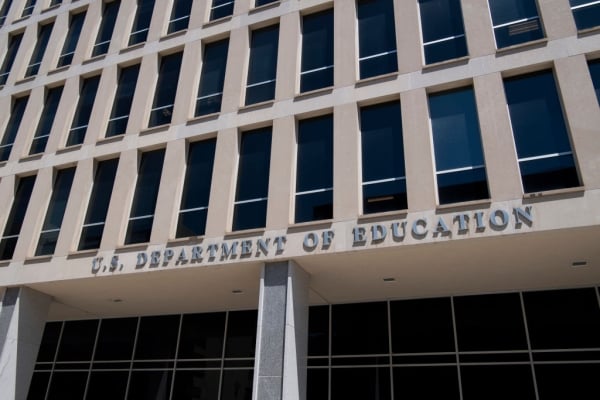
The Trump administration asked the Supreme Court on Friday to allow it to move forward with its plan to lay off nearly half of the Education Department’s employees and dismantle the agency, USA Today reported.
In late May,a federal district court ruled that the reduction in force made it impossible for the executive branch to carry out congressionally mandated programs and services. An appeals court affirmed that ruling June 4.
President Trump and his Department of Justice, however, disagree with both rulings, and they hope the 6-to-3 conservative majority on the Supreme Court will, too.
“The Constitution vests the Executive Branch, not district courts, with the authority to make judgments about how many employees are needed to carry out an agency’s statutory functions, and whom they should be,” Solicitor General John Sauer wrote in the emergency appeal to the Supreme Court.
States, school districts and teachers’ unions involved in the case have until June 13 to respond to Trump’s appeal, the Supreme Court stated.
More colleges and universities are investing in support service offerings to increase student retention and graduation outcomes, but these interventions and offices come at a cost—one that is often subsidized by students.
A recently published analysis from Studocu of data from the Integrated Postsecondary Education Data System finds that among four-year colleges and universities, most spent nearly $2,933 on academic supports and $4,828 on student services during the 2022–23 academic year. Across all institutions, the average expense per full-time equivalent student was $3,334 for student services and $4,198 for academic supports.
The group analyzed over 1,000 degree-granting institutions across the U.S. that enroll at least 101 undergraduates. Institutions ranged from large, primarily online institutions to small liberal arts colleges. Community colleges and technical colleges were not included in the study.
Academic support offerings were categorized as classroom-focused interventions, including tutoring centers, writing labs, academic advising and technology-enhanced learning tools. Student services included mental health counseling, career services, housing assistance and extracurricular programs, according to Studocu.
The biggest spenders on academic supports were, not surprisingly, wealthy Ivy League institutions. Yale University spent the most on academic supports ($1.8 billion) in the 2023 fiscal year, followed by the University of Pennsylvania ($1.1 billion) and Harvard University ($1 billion), each of which has an undergraduate population of less than 10,000.
Per student, Yale invested $225,000, Harvard spent $132,000 and Penn spent $105,707 on academic interventions.
Next in line were two public institutions: the University of Washington at Seattle, which spent $844 million for 30,000 undergraduates, or $28,133 per student, and the University of California, San Diego, which spent $844 million for 32,800 undergraduates, or roughly $25,732 per student.
Looking at student services, some of the institutions that spent the most were those with substantial online student bodies, including Grand Canyon University ($504 million), Southern New Hampshire University ($435 million), Liberty University ($289 million) and Arizona State University ($243 million).
But Yale spent the most per capita, investing $53,000 per student in nonacademic programs, followed by the California Institute of Technology and the U.S. Naval Academy, which spent $41,000 and $36,000 per student, respectively.
The analysis also revealed a positive correlation between dollars spent per student and graduation rates, which researchers said suggest well-funded support services provide meaningful benefits, particularly for students who might otherwise be at risk. However, the data does not capture the privileges of socioeconomic advantage that may supplement on-campus offerings, nor the likelihood of students to graduate regardless of support offerings due to selective admissions processes.
Students foot the bill: The high level of investment in student supports contrasts with the revenue the average student produces. The average public college received about $8,720 net revenue in tuition and fees per full-time-equivalent student in 2021, and the average private nonprofit received $23,900, according to the National Center for Education Statistics.
A growing number of colleges and universities are embedding student service fees into tuition costs to fund support offerings, particularly health and wellness resources.
James Madison University, which spends around $1,620 per student on support services and $3,220 on academic resources, charges $5,662 in student fees, among the highest in the nation, according to a Sportico analysis. Nearly half ($2,362) of that fee goes directly to athletics funding, Sportico reported.
Harvard charges $3,676 annually for student services as part of the cost of attendance, a fraction of its total spend per student ($163,000). The Massachusetts Institute of Technology bills students $420 annually for student clubs and organization funding, as well as fitness activities—about 2 percent of the total dollars invested in student supports. Caltech charges $2,586 in fees, while the Naval Academy does not charge tuition.
The University of Pennsylvania lists $8,032 in fees in its estimated costs of attendance, but it’s unclear which expenses students are paying for with those fees.
Yale does not differentiate student fees in tuition prices, grouping lab, library and gymnasium costs into a student’s tuition package. Similarly, UCSD and UW do not have additional fees associated with the cost of attendance.
This is the latest of a series of contract cuts for the Institute of Education Sciences.
Caroline Brehman/CQ-Roll Call Inc./Getty Images
The Trump administration terminated a key contract to train college officials on how to report data to the Integrated Postsecondary Education Data System, a move that could further hamper the Education Department’s data infrastructure.
Used to track trends in higher education enrollment, completion, financial aid usage and other institutional characteristics, IPEDS survey data has long been critical to higher education research. But in order to access and utilize the data, institutions need to know how to properly complete the survey and researchers need to know how to navigate the database.
That’s where the Association of Institutional Research and its IPEDS training programs came in—or at least they used to.
In a social media post Thursday, AIR’s executive director, Christine Keller, announced that the organization’s subcontract with IPEDS and the National Center for Education Statistics would not be renewed for the upcoming academic year. This means that updated self-paced courses and video tutorials on how to report and use data, as well as in-person workshops on topics like how to set data-informed benchmarks and improvement plans for an institution, will no longer be available.
“When you’ve done meaningful work with committed partners for more than two decades, it’s difficult to acknowledge that it’s coming to an end,” Keller wrote. “While this chapter is closing, AIR’s commitment to supporting data-informed decision-making remains strong. We are actively exploring ways to continue offering select IPEDS training under the AIR brand to meet the needs of our community.”
But while AIR intends to continue similar training models, Keller was sure to clarify that any future coaching will come at a cost. Past resources were subsidized by the contract and therefore available for free.
The end of this subcontract will not, however, terminate other components of the IPEDS contract managed through RTI International—such as aiding in data collection, maintaining the IPEDS website and managing the help desk. (This paragraph has been corrected to reflect that RTI International contract for IPEDS.)
An Education Department spokesperson wrote in an email that the decision reflected its commitment to supporting “useful and relevant research” while “respecting the American taxpayer’s wallet.”
“Multiple federal contractors were collecting 50 percent or more in overhead costs, which is neither sustainable nor reasonable,” the spokesperson said. “We believe in the value of training users to make best use of federally funded databases. Thus, we are in [the] process of reexamining how that training might be more efficiently and effectively delivered in the future.”
College staff members and policy experts who focus on using institutional data to improve student outcomes, however, say the discontinuation of free AIR training programs will be devastating.
Henry Zheng, vice provost for institutional effectiveness and planning at Carnegie Mellon University, wrote on LinkedIn that this abrupt ending was “sobering” and that he is “pray[ing] that this program will continue on another day.”
Wesley Whistle, a project director on student success and affordability at New America, a left-leaning think tank, also took to LinkedIn to comment on the news, saying, “These trainings are vital for institutional researchers as they fulfill their reporting obligations.”
And this is not the first blow for IPEDS and NCES under the Trump administration. In February, Elon Musk’s Department of Government Efficiency announced that it had canceled nearly $900 million in contracts across the statistics center and its larger parent agency, the Institute of Education Sciences.
At the time, a DOGE official said 89 IES contracts were canceled, while other organizations put the total at closer to 170. (Previous Inside Higher Ed reporting has shown that the data being published by DOGE regarding the scope and effect of its cuts is likely inaccurate.)
Additionally, the department fired more than 80 percent of IES’s 120 employees. The Education Department said in recent budget documents that it is planning to reimagine “a more efficient, effective, and useful IES to improve support for evidence-based accountability, data-driven decision making, and education research for use in the classroom.”
Collectively, IPEDS, NCES and IES serve as the Education Department’s research and development arm, funding research on how to improve equity in education access and outcomes in the future as well as providing data on how students in K–12 and college fare in programs. So to discontinue the services that bolstered college staff members’ professional development could hurt their ability to report congressionally mandated statistics accurately, higher ed experts say.
In the end, some fear that losing the training could lead to less data-informed decision-making.
“We need to collect data both at the national level and at the institutional level. Without measuring the problem, we risk pretending it doesn’t exist,” wrote James Orlick, director of grant writing and innovation for inclusive excellence at the University of Louisville. “The belief that ‘if you don’t measure it, it isn’t a problem’ reinforces inaction and won’t solve the systemic issues we face.”