Author: admin

  • Judge blocks Trump’s international enrolment ban

    Judge blocks Trump’s international enrolment ban

    The temporary restraining order (TRO) was issued by federal judge Allison Burroughs on June 5, just one day after President Trump’s signing of a proclamation to suspend the issuing of US visas to international students entering Harvard for an initial six months.   

    During the Massachusetts hearing, Burroughs said Trump’s directive would cause “immediate and irreparable injury” to America’s oldest institution, temporarily blocking it “until there is opportunity to hear from all parties”. 

    The judge also extended a 23 May restraining order which prevents DHS’s attempt to strip Harvard of its ability to enrol international students, until June 20 or when a preliminary injunction is issued, with a hearing set for June 16. 

    The June 4 proclamation came in addition to, and aims to circumvent, DHS secretary Kristi Noem’s revocation of Harvard’s SEVP certification, which was also blocked by the courts.  

    Wednesday’s directive – which incorrectly refers to SEVP as the “Student and Exchange Visa Program” – attempts to bar all new international students, scholars and exchange visitors from pursuing any course of study at the university, for a period of six months. 

    With the stroke of a pen, the DHS Secretary and the President have sought to erase a quarter of Harvard’s student body

    Harvard University

    This time, the government framed the ban as a matter of national security, accusing Harvard of collaborating with China. It has repeatedly criticised the institution for failing to root out antisemitism on campus and failing to hand over information on international students.  

    For its part, hours before judge Burroughs’ ruling, Harvard amended a previous lawsuit, alleging both the June 4 proclamation and the DHS revocation were “part of a concerted and escalating campaign of retaliation by the government” in clear retribution for Harvard’s exercising its First Amendment rights to free speech.  

    “With the stroke of a pen, the DHS Secretary and the President have sought to erase a quarter of Harvard’s student body,” it reads, in what the complaint calls a “government vendetta against Harvard”.  

    Last year, Harvard hosted 6,793 international students, totalling over 27% of the entire student body, though Trump has mistakenly called the figure 31%.

    Meanwhile, on June 5, Harvard’s President Garber sent a letter to the Harvard community, informing students that “contingency plans” were being drawn up to allow students to continue their studies during the summer and the upcoming academic year.

    Reaffirming the “outstanding contributions” of international students, Garber vowed to “celebrate them, support them, and defend their interests as we continue to assert our Constitutional rights”.  

    Source link

  • Why Teachers Can’t Afford to Wait on the Sidelines

    Why Teachers Can’t Afford to Wait on the Sidelines

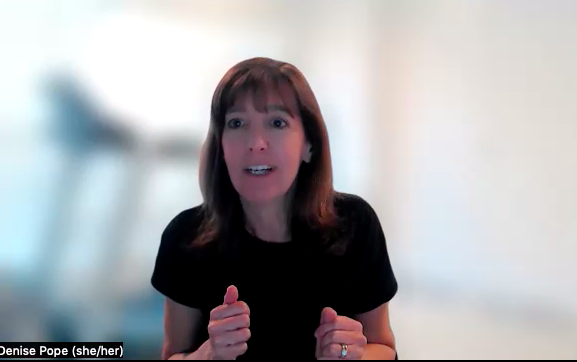
    Tired of talking about AI? That’s too bad. The technology remains the most impactful force in education. The challenge becomes avoiding all the Claptrap. Thankfully, that’s where Denise Pope, Co-Founder of Challenge Success at the Stanford Graduate School of Education, comes in.

    I had the chance to explore the current AI state-of-play from her perspective. One striking disparity I haven’t heard talked about: While AI usage among students has skyrocketed—from 25% to 60% at the middle school level and 45% to 75% at the high school level over just two school years—only 32% of teachers report using AI for academic purposes.

    This gap has created what Denise describes as an educational “La La Land,” where students are experimenting with AI tools while many schools lack clear policies or guidance. The absence of structured approaches is breeding anxiety among both educators and students, who are left wondering when and how AI should appropriately be used in academic settings.

    Click through to hear how Denise believes this issue can be addressed:

    Kevin Hogan
    Latest posts by Kevin Hogan (see all)

    Source link

  • Virginia enacts ban on school cellphone use, limits on social media

    Virginia enacts ban on school cellphone use, limits on social media

    This audio is auto-generated. Please let us know if you have feedback.

    Dive Brief:

    • Virginia Gov. Glenn Youngkin recently signed legislation banning cellphone use during school hours for all students. The law makes Virginia the 21st state to ban or limit cellphones in schools, according to a legislation tracker by Ballotpedia. 
    • Starting January 2026, children in Virginia under the age of 16 will also only be allowed to use social media for an hour per day under another law signed by Youngkin in early May. That law, SB 854, mandates that social media companies verify a minor’s age and enforce a time limit of one hour per day for children and young teens.
    • In Florida, a similar — albeit stricter — law passed in 2024 that bans social media use for children under 14 years old hit a roadblock in court. On Tuesday, a federal judge temporarily barred parts of HB 3 from being enforced while the case moves forward, saying that the law’s restrictions are “likely facially unconstitutional.”

    Dive Insight:

    Pushes for bans or limits on cellphone and social media use among children are growing as lawmakers and some advocates note the harmful effects of technology on young people’s mental health and wellbeing.

    In 2024, then-U.S. Surgeon General Vivek Murthy called for social media platforms to display warning labels similar to messages that accompany alcohol and cigarettes. Murthy said at the time that social media is an “important contributor” to the nation’s worsening teen mental health crisis.

    Teens themselves are also increasingly aware of the harmful impacts social media can have on their mental health. A recent Pew Research Center survey of U.S. teens found that 48% said social media has a mostly negative impact on their peers — up 16 percentage points from 2022.

    Laws enforcing cellphone bans in schools have also largely gained bipartisan support in both liberal and conservative-leaning states.

    Upon signing Virginia’s K-12 cellphone ban, Youngkin said in a May 30 statement that “students will learn more and be healthier and safer” under this new legislation. “School should be a place of learning and human interaction — free from the distractions and classroom disruptions of cell-phone and social media use.”

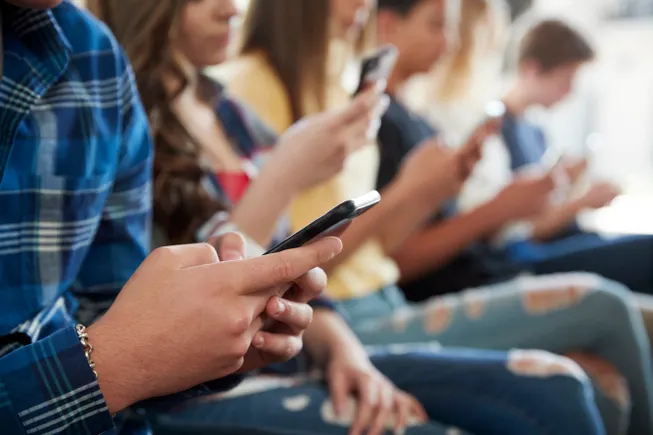
    Research from Common Sense Media finds that 1 in 4 children had their own cellphone by the age of 8 in 2024. A separate study from 2023 also revealed that 97% of teens use their phones to some extent during the school day, and that students were most likely to turn to social media, YouTube or gaming when doing so.

    However, data privacy and cybersecurity concerns are rising alongside states’ efforts to enforce broader social media bans outside of school.

    In the Florida case, Computer & Communications Industry Association and NetChoice v. James Uthmeier, challenging the state’s 2024 social media ban for children, the plaintiffs have alleged the law violates the First Amendment and puts Floridians’ online security at risk. The recent order from Chief U.S. District Judge Mark Walker temporarily prevents the law from requiring those in Florida to provide identification to access social media apps, said NetChoice in a Tuesday statement. 

    “HB 3 violates the First Amendment by forcing all Floridians to hand over their personal data just to access lawful, protected speech online,” NetChoice said of Walker’s order. “It requires websites to collect their users’ sensitive documentation, creating a cybersecurity risk by making private data more vulnerable to hackers and predators.”

    Source link

  • the view from NAFSA 2025

    the view from NAFSA 2025

    As 8,000 delegates gathered in San Diego for the opening plenary of NAFSA 2025, the sector was hit with the news that the Trump administration was halting the scheduling of student visa interviews as it prepared to expand its social media vetting of prospective students.  

    Then, on day two of the conference – as friends and colleagues filtered out of the convention centre to drinks receptions across the city – they were rocked by more bad news. This time, that the State Department would “aggressively revoke” visas for Chinese students and enhance scrutiny of future visa applicants.

    The unexpected, inflammatory announcements alarmed delegates and immediately set the agenda for discussions across the four-day event.  

    Concern circulated about the characteristically broad scope and vague language of the announcements – which colleagues have come to expect from the administration. But while all of this could have quite reasonably created panic and confusion, in fact, there was an air of focus and unity.  

    For Brett Blacker, Duolingo’s managing director for Australia and New Zealand, the conference acted “a bit like a group therapy session”. Colleagues from across the globe were simply grateful to be together to process the rapidly changing policy environment and devise strategies for the future.  

    And while the deliberately disorientating barrage of attacks from the Trump administration demand that stakeholders are continuously adapting and reacting, attendees were also urged to take the long view. 

    “When the roots are deep, there is no reason to fear the wind,” said NAFSA CEO Fanta Aw, telling colleagues to pursue partnerships “not for prestige, but for shared progress”. 

    Aw extended a special welcome to NAFSA’s international participants – comprising 45% of attendees – whose very presence she said amounted to “an act of hope”.  

    While xenophobia disguised as nationalism and the politicisation of international students is by no means limited to the US, many of the conference’s most fruitful discussions came from cross-border comparisons.  

    Rather than remain despondent, NAFSA delegates have taken to LinkedIn with realism and pragmatism, laced with just a little bit of hope

    These were most stark when examining student mobility in the ‘big four’ study destinations, with several sessions highlighting the relative attractiveness of the UK amid visa challenges in Canada and Australia, not to mention extreme volatility in the US.  

    Elsewhere, discussions highlighted the rise of the ‘Asian decade’ and the increasing pull of destinations such as Ireland and Germany, with a sense of the sector at a tipping point as the dominance of traditional destinations and models is increasingly questioned.  

    This sense of unity continued as colleagues were united over the frustrating lack of detail about the latest policies from the White House. As the conference continued, attendees received no clarity from government about the length of the visa interview freeze, despite the initial cable indicating it would only last several days.  

    Ten days later, students remain unable to book visa appointments, and the administration has stayed similarly silent on the scope or character of its “aggressive” Chinese visa revocations. It’s a maddening state of affairs, stemming from an increasingly unpredictable administration that seems unable to see that peevish, retaliatory policies made in the spur of the moment are having real-world effects on institutions and students alike.

    Sadly, the onslaught shows no sligns of slowing down. Since the close of NAFSA 2025, the Trump administration has barred prospective international students in 19 countries from studying in the US. 

    And it has also attempted, once again, to strip students around the world of the right to study at America’s oldest institution, signing a proclamation to suspend Harvard’s international enrolments, which has since been temporarily blocked by a federal court.  

    As uncertainty prevails across much of the sector, emotions are understandably high. But rather than remain despondent, NAFSA delegates have taken to LinkedIn with realism and pragmatism, laced with just a little bit of hope.

    As attendees heard from Intead’s Ben Waxman in the final session of the final day in the furthest away room: ““Now is not the time to get angry, now is the time to get focussed”. 

    Source link

  • Americans worry about AI in politics — but they’re more worried about government censorship

    Americans worry about AI in politics — but they’re more worried about government censorship

    As artificial intelligence technologies make their way into political ads and campaigning, Americans are expressing growing concern. But they’re not just worried about deepfakes and deceptive content’s impact on elections —  they also fear how the government might use the fight against misinformation to restrict free speech.

    In a recently released FIRE poll of registered American voters, conducted by Morning Consult, one concern stood out: government regulation itself. Nearly half of respondents (45%) said they are “extremely” or “very” concerned that government regulation of election-related AI content could be abused to suppress criticism of elected officials. That’s a powerful signal that while Americans see the risks posed by AI, they don’t trust government regulators to police political expression fairly.

    When asked to choose between protecting free speech in politics or stopping deceptive content, a plurality (47%) said protecting free speech in politics is more important, even if that means allowing some deceptive content. Just 37% prioritized stopping deceptive content, even at the expense of limiting speech that would otherwise be protected by the First Amendment. These sentiments are held across the political spectrum, but are stronger among Independents and Republicans, than among Democrats.

    This isn’t just a preference — it’s a principled stand in favor of the core freedoms the First Amendment exists to protect. Political speech lies at the heart of those freedoms, and Americans clearly recognize that any government attempts to police what can or can’t be said pose a far greater threat to democracy than free speech itself.

    Regulation threatens participation

    The chilling effects are already measurable. About 28% of voters said they’d be less likely to share content on social media if the government began regulating AI-generated or AI-altered content. (That’s right: All content, not just AI-generated or AI-altered content.) That may not sound dramatic at first glance, but that’s more than the average voter turnout during the last midterm primaries. As our political culture is increasingly shaped online, discouraging speech — even unintentionally — can have real consequences for public discourse.

    These findings suggest a troubling trajectory: Government regulations justified in the name of protecting the public from AI could end up silencing the public instead. 

    While some polls show that a similar percentage of voters (41%) say it’s important to protect people from misinformation, that concern cannot be used to justify censorship. About 39% said that preserving freedom of speech should be the government’s top priority when crafting AI laws. Only 12% said that view doesn’t describe them at all. In other words, most Americans believe that protecting speech isn’t just one goal among many — it’s the central concern.

    And they’re right to think so. The First Amendment doesn’t permit the government to restrict speech simply because it believes the public might be misled. The solution to bad speech is more speech, not less.

    These results should serve as a warning to policymakers: The public views efforts to regulate AI in political campaigns as a risk to free expression. FIRE has been actively engaged in legislative advocacy to safeguard First Amendment rights, including vague and overbroad bans or disclosure requirements imposed on AI content. 

    If voters already believe regulation will be abused — and are already pulling back from political expression using AI — that’s not just a theoretical harm. It’s a chilling effect in action.

    Instead of rushing to regulate, elected officials should reaffirm their commitment to protecting political speech, no matter the medium. The technology may be new, but the principle is not: In a free society, the government doesn’t get to decide which ideas are too dangerous to be heard.


    The poll was conducted May 13-15, 2025, among a sample of registered voters in the US. A total of 2,005 interviews were conducted online across the US for a margin of error of plus or minus 2 percentage points. Frequency counts may not sum to 2,005 due to weighting and rounding. Topline results are available here.

    Source link

  • The war in Gaza is a test for humanity

    The war in Gaza is a test for humanity

    “There will be no electricity, no food, no water, no fuel,” Gallant said. “Everything is closed. We are fighting human animals and we are acting accordingly.”

    President Isaac Herzog said militants and civilians in Gaza would be treated alike. “It’s an entire nation out there that is responsible,” Herzog said. “This rhetoric about civilians not aware, not involved — it’s absolutely not true … and we will fight until we break their backbone.”

    Netanyahu has been equally explicit, comparing Hamas to “Amalek”, a tribe in the Bible which the Israelites were told to eradicate. He blames Hamas for all civilian casualties.

    Other ministers have urged Gaza’s total destruction — one proposed dropping a nuclear bomb — and expulsion of its people, as in the 1948 “Nakba” when several hundred thousand Palestinians were ethnically cleansed as part of Israel’s independence war.

    International justice

    Whether Israel’s Gaza onslaught amounts to genocide, war crimes or crimes against humanity, or very possibly all three, is for international courts to decide.

    What matters now is stopping the killing in a ruined land that has lost its schools, homes, hospitals, roads, power and water plants, farms, places of worship and historical heritage. That is a moral issue for all of us, and most pertinently for Israel and its Western allies, principally the United States, which supplies most of the weapons used against Gaza.

    U.S. complicity is beyond doubt. Many European and other countries, by their silence in face of the carnage, or their failure to take action, are also to blame.

    Leaders in some of these nations are only now chiding Israel more strongly. Spain’s prime minister has called it a genocidal state. There is talk in European and other capitals of sanctions targeting Israeli leaders, a ban on arms shipments or trade penalties.

    But no measures likely to push Netanyahu to alter course have been adopted. His eyes are fixed on the United States, the only nation that could swiftly halt the Gaza debacle — by halting or suspending the $3.8 billion it gives Israel each year in mostly military aid, along with extra arms shipments worth billions of dollars since the current war began.

    Quantifying the horror

    Cold statistics mask the individual suffering of Gazans, but tell part of the story.

    More than 54,000 people, including more than 16,000 children, have been killed since the war began, according to Gaza Health Ministry figures considered reliable by the United Nations, or 2.5% of the population — equivalent to 8.5 million Americans.

    This number does not count many thousands whose bodies may still lie under the rubble, or who died weakened by hunger, preventable diseases and failing health care. It includes more than 1,400 health workers and more than 200 journalists and media workers.

    United Nations officials say more than 90% of homes have been destroyed or damaged, along with 94% of Gaza’s 36 hospitals, with only some still struggling to function. Gaza has the world’s highest number of child amputees per capita.

    According to Hans Laerke, spokesman for the U.N. Office for the Coordination of Humanitarian Affairs, Gaza is also the only territory in the world where “100% of the population is threatened with famine” despite Israel’s denial of any humanitarian blockade.

    Abetting a genocide

    The horrors endured by Palestinians have been documented by local journalists (Israel has banned all international reporters from Gaza), U.N. officials, Palestinian and foreign doctors and aid workers, as well as locally shot videos and photos.

    Foreign physicians with long experience of many countries ravaged by war say conditions they witnessed in Gaza are worse than anything they have ever encountered.

    “I have worked in conflict zones from Afghanistan to Ukraine,” said U.S. paediatrician Seema Jilani, after an assignment in the southern city of Rafah for the International Rescue Committee. “But nothing could have prepared me for a Gaza emergency room.”

    No one can plausibly claim “we did not know” what was, and is, going on.

    Yet world powers have largely stood by as massacres unfold in Gaza. They have kept equally silent as Israel batters parts of Lebanon at will despite a ceasefire with Hezbollah militants agreed in November. Israel has also grabbed more land in Syria and bombed hundreds of targets there since Bashar al-Assad’s regime fell in December.

    A diplomatic debacle

    U.S. President Donald Trump, like President Joe Biden before him, has backed Israel to the hilt. Not even images of emaciated children in Gaza have prompted a change of heart.

    Trump’s own contempt for international law and his plan for the removal of Gazans to allow for a fantasy reconstruction on the toxic ruins of their land has only emboldened far-right Israeli leaders with ambitions to “purify”, annex and resettle Gaza, and to do likewise in the West Bank, where half a million Israeli settlers already live.

    Israel’s actions, under permissive Western eyes, are shredding a longstanding international consensus on a two-state solution to the Israeli-Palestinian conflict – an idea incompatible with an ever-expanding Israeli grip on the West Bank and Gaza.

    After French President Emmanuel Macron called for recognition of a Palestinian state, Defence Minister Israel Katz responded with brutal clarity.

    “They will recognise a Palestinian state on paper — and we will build the Jewish-Israeli state on the ground,” he said in the West Bank on May 29 at one of 22 new settlements just approved by the Israeli government.

    Can peace be given a chance?

    Western outrage at Russia’s invasion of Ukraine has no echo when it comes to Israel which for decades has defied U.N. resolutions and violated international law.

    The fate of Gaza may prove a final blow to the rules of international conduct and treatment of civilians agreed after the Second World War — a system already frayed by the Cold War and more recently the illegal U.S.-British invasion of Iraq in 2003.

    Crushing the Palestinian people will not make Israel any safer in the long run. Only a true peace settlement on a basis of mutual respect and equality can do that.

    If Western nations ever get around to imposing sanctions on Israel and its leaders, they should do so to promote the Jewish state’s real interests which they claim to have at heart — as a stepping stone to such a peace between human beings.

    The German-born Jewish-American philosopher and political scientist Hannah Arendt foretold the consequences for a society unable to perceive others as human.

    “The death of human empathy is one of the earliest and most telling signs of a culture about to fall into barbarism,” she wrote.


    Questions to consider:

    1. Is it justified, or wise, for a state to take revenge on its enemies?

    2. Do people everywhere have the right to resist occupation?

    3. How should we react when a possible genocide is taking place?



    Source link

  • How we designed a space where our students connect, collaborate, and flourish

    How we designed a space where our students connect, collaborate, and flourish

    Key points:

    Our charter school, Westbrook Academy, has been serving middle and high school students in the South Los Angeles area for the past six years and stands as a beacon of opportunity for our community. With a student body comprising nearly 99 percent Black and Latinx individuals hailing from historically under-resourced communities, we confront the realities of poverty and the accompanying insecurities head-on.

    Despite the odds, our 400 students consistently demonstrate remarkable resilience and a profound capacity for excellence. Our institution is supported by generous donors and funding sources. Operated and managed by the education nonprofit LA Promise Fund, which provides students with academic and enrichment opportunities that support our mission to spark passion, empower leadership, and prepare them for their chosen college and career paths.

    At one point, our high school students were learning in a church because we didn’t have a traditional classroom set-up. We also lacked the equipment that a traditional high school might have. This changed when we moved into our forever home in South Gate, where an on-campus Empowerment Center serves as a modern, welcoming “student hub.”

    Designed and outfitted by MiEN and Meteor Education, the Empowerment Center is where kids go to hang out, collaborate, and/or participate in school club activities. The hub is also set up with two wellness rooms where students can go to debrief and disconnect from a long day or just the stresses of being a student. It’s there for the students’ use.

    Here are the steps we took to create a space that consistently makes jaws drop and impresses parents who never thought their children would have access to such a warm, welcoming communal space on campus:

    • Add some flexibility into the process. Our original goal was to open the Empowerment Center’s doors in time for the 2023-24 school year, but getting it done the right way would require a bit more time. Our partners were willing to listen to us in terms of what we wanted to create, but within the realistic timelines. That was really cool.
    • Acknowledge the financial limitations. We largely relied on fundraising for this project and knew that some things just weren’t going to be realistic. To other schools in similar situations, I’d recommend staying flexible enough to hit the timelines and get all of the bases covered while keeping student needs in mind. We can have all the bells and whistles, but at the end of the day, if the car runs, the car runs. We know we can always add a new paint job later.
    • Get the right partners onboard early. As we went through the steps of designing the Empowerment Center, we learned a lot about architecture, planning, and construction. Through it all, having the right partners in its corner helped the school achieve its goals within budget and on time. It was really great to have our design and furniture partners sharing their best practices and other insights with us. We knew what we wanted to do, and a lot of the ideas came from our families and students. We just needed them to show us how we could get those ideas as close to reality as possible.
    • Make it personal. Special features we wanted in our Empowerment Center included a huge, interactive flatscreen TV that students, teachers, and guest speakers use to interact and work together. There’s also a large selection of donated books, the latest technology tools, and artwork that was personally selected by an art curation team. They were able to secure artists from the LA community to create and share visuals that our students are really familiar with. For example, some of the artwork spotlights female empowerment (i.e., with photos of authors like Octavia Butler) and the importance of acknowledging indigenous people. Everything in the hub is meant to spark curiosity. 
    • Brace yourself for some jaw-dropping moments. At our ribbon-cutting ceremony last year, our parents’ jaws were on the floor. They just never thought these resources would be available to their kids. A lot of them grew with us being in the church and a co-located space, and then we asked them to trust us to deliver on our promise, and now we’re able to show that as the reward for supporting us. We feel really proud that our parents were just over the moon about it.

    Hitting it out of the park

    Reflecting on the process we put in place to get our modern student hub designed, built, and open for business, I can say that the end result is an engaging, collaborative space that can be used for hanging out, structured learning, or a little of both. I think we really hit the ball out of the park with this innovative space.

    Student, teacher, and family feedback on the Empowerment Center has been extremely positive. Everyone loves it, and students are always excited to come and spend time in the modern, comfortable space that’s equipped with the technology and tools they need to be able to learn and engage.

    Latest posts by eSchool Media Contributors (see all)

    Source link

  • Teacher stress levels have surpassed pandemic-era highs

    Teacher stress levels have surpassed pandemic-era highs

    Key points:

    America’s K-12 educators are more stressed than ever, with many considering leaving the profession altogether, according to new survey data from Prodigy Education.

    The Teacher Stress Survey, which polled more than 800 K-12 educators across the U.S., found that nearly half of teachers (45 percent) view the 2024-25 school year as the most stressful of their careers. The surveyed educators were also three times more likely to say that the 2024-25 school year has been the hardest compared to 2020, when they had to teach during the height of the COVID-19 pandemic.

    Student behavior challenges (58 percent), low compensation (44 percent), and administrative demands (28 percent) are driving teacher burnout and turnover at alarming rates. Public school teachers were more likely to report stress from unrealistic workloads, large class sizes, school safety concerns, and student behavior issues than their private school counterparts.

    “The fact that stress levels for so many teachers have exceeded those of the pandemic era should be a wake-up call,” said Dr. Josh Prieur, director of education enablement at Prodigy Education and former assistant principal in the U.S. public school system. “Teachers need tangible, meaningful, and sustained support … every week of the year.”

    Additional key findings include:

    • The vast majority of teachers (95 percent) are experiencing some level of stress, with more than two-thirds (68 percent) reporting moderate to very high stress. K-5 teachers were the most likely to feel extremely/very stressed (33 percent). Sixty-three percent of teachers report that their current stress levels are higher than when they first started teaching. 
    • Nearly one in 10 teachers surveyed (9 percent) are planning to leave the profession this year, while nearly one in four (23 percent) are actively thinking about it. One-third of teachers do not expect to be teaching three years from now, likely because nearly half (48 percent) of teachers don’t feel appreciated for the work that they do.
    • Teachers are finding ways to prioritize their well-being, but time limits and job pressures often get in the way. Seventy-eight percent of teachers say they actively make time for self-care, but nearly half (43 percent) feel guilty for spending time on self-care and 78 percent have skipped self-care due to work demands. Implementing school-provided self-care perks and mandatory self-care breaks would appeal to teachers, with 85 percent and 76 percent taking advantage of each benefit, respectively.
    • Top solutions that would reduce teachers’ stress include a higher salary (59 percent), a four-day school week (33 percent), stronger classroom discipline policies (32 percent), and smaller class sizes (25 percent). Public school teachers were more likely to prefer a shorter week, while private school educators opted for higher pay. 

    “Teacher Appreciation Week should serve as the starting point for building systems that show we value teachers’ time, talent, and well-being,” said Dr. Prieur. “Districts can do this by investing in tools that reduce the burden on teachers, prioritizing time for self-care and implementing policies that reinforce teachers’ value as an ongoing commitment to bettering the profession.”

    This press release originally appeared online.

    Laura Ascione
    Latest posts by Laura Ascione (see all)

    Source link

  • Lead Generators Still Lurking for Bodies

    Lead Generators Still Lurking for Bodies

    Predatory lead generators are still lurking the internet, looking for their next victims.  These ads continue to sell subprime online degrees from robocolleges like Purdue Global, Colorado Tech, Berkley College, Full Sail, Walden University, and Liberty University Online.  After you provide your name and number, they’ll be calling you up.  But these programs may be of questionable value. Some may lead to a lifetime of debt.  Buyer beware.  

    This ad and lead generator is originating from TriAd Media Solutions of Nutley, New Jersey.  

    Down the rabbit hole…

    Source link

  • Trump administration appeals pause on Education Department cuts to SCOTUS

    Trump administration appeals pause on Education Department cuts to SCOTUS

    This audio is auto-generated. Please let us know if you have feedback.

    UPDATE: June 6, 2025: The U.S. Department of Justice asked the U.S. Supreme Court on Friday for an immediate pause on a court order that the U.S. Department of Education reinstate nearly 1,400 employees fired during a mass workforce reduction in March. The Justice Department’s appeal calls the lower court’s order an “unlawful remedy” and says the injunction “causes irreparable harm to the Executive Branch.”

    Dive Brief:

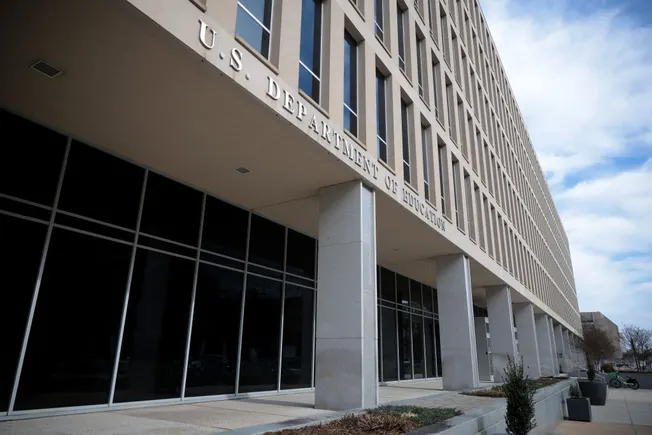
    • A federal appeals court on Wednesday rejected the Trump administration’s motion for a stay in a lawsuit challenging the dismantling of the U.S. Department of Education, effectively halting — at least temporarily — efforts to reduce the agency’s workforce and transfer some education responsibilities to other federal departments.
    • The administration had argued it could still carry out the statutory requirements of the Education Department, even with a workforce cut in half. But the 1st U.S. Circuit Court of Appeals disagreed, saying it saw “no basis” that a lower court erred in concluding that task seemed “impossible.”
    • The ruling was the latest in a series of legal developments concerning Trump administration reforms at the Education Department. Trump, U.S. Education Secretary Linda McMahon and many Republican lawmakers are attempting to eliminate what they say is federal overreach and inefficiencies in education.


    Dive Insight:

    The lawsuit at the center of the ruling was filed in March by 20 Democratic-leaning states and the District of Columbia. They sued the Education Department, Trump and McMahon two days after the agency announced mass workforce reductions. That challenge was combined with a similar lawsuit from public school districts in Massachusetts and education labor unions. 

    A federal district judge last month issued a preliminary injunction halting the workforce reductions temporarily. That ruling also prohibited the Education Department from transferring management of the federal student loans portfolio and special education management and oversight to other federal agencies. 

    In Wednesday’s decision denying a motion for a stay, the three-judge panel said the Education Department has not shown “that the public’s interest lies in permitting a major federal department to be unlawfully disabled from performing its statutorily assigned functions.” 

    The Trump administration also argued that it is being forced to return staff whose services are no longer needed. The 1st Circuit, however, said its reading of the preliminary injunction shows no specific number or deadline for returning employees who were part of the reduction in force.

    “We do not see how complying with those aspects of the injunction imposes a burden on the government, no less one that is ‘extraordinary,’” the court said.

    Source link