Author: admin

  • Trump Proposes $161M Cut to Tribal Colleges’ Funding

    Trump Proposes $161M Cut to Tribal Colleges’ Funding

    The Trump administration is asking Congress to cut funds for tribal colleges and universities by nearly 90 percent, according to the Department of the Interior’s proposed budget released Monday.

    Tribal college advocates told ProPublica, which first reported on the cuts, that tribal colleges could have to shutter if Congress approves the plan, leaving thousands of students without the support they need to complete a degree program. And reports from ProPublica show that it will only further devastate institutions that were already underfunded.

    “The numbers that are being proposed would close the tribal colleges,” Ahniwake Rose, president and CEO of the American Indian Higher Education Consortium, told ProPublica. “They would not be able to sustain.”

    The budget request calls for about $860 million to operate Indian Education Programs, which includes two federally controlled tribal colleges—Haskell Indian Nations University and Southwestern Indian Polytechnic Institute. Of that $860 million, about $22 million would go toward postsecondary programs. That’s about a $161 million cut compared to fiscal year 2024.

    Tribal colleges argue that their funding is protected by treaties and contend that the institutions up for discussion are critical providers in some of the country’s poorest areas.

    “It doesn’t make sense for them to [approve the cuts[ when they’re relying on us to train the workforce,” Dawn Frank, president of Oglala Lakota College in South Dakota, told ProPublica. “We’re really relying on our senators and representatives to live up to their treaty and trust obligation.”

    Source link

  • Judge Restores AmeriCorps Funding in 24 States, D.C.

    Judge Restores AmeriCorps Funding in 24 States, D.C.

    A federal judge ordered the Trump administration to restore funding to AmeriCorps programs in 24 states and Washington, D.C., following a lawsuit that challenged the April cuts to the program, The Hill reported Thursday.

    The judge, Obama appointee Deborah Boardman, ruled that the states were likely to succeed in their argument that the agency’s funding could not legally be cut without a notice-and-comment period. The ruling did not reinstate any of the agency’s staff.

    AmeriCorps volunteers and grants support at least 100 college-access organizations across the U.S., many of which had to lay off their AmeriCorps members in the wake of the cuts.

    It’s the latest court order blocking the administration’s crusade to reduce the size of the federal government; recently, judges reversed layoffs at the Department of Education and ruled that a lawsuit challenging funding cuts at the National Institutes of Health could move forward.

    Source link

  • Trump Proclamations Escalate International Student Attacks

    Trump Proclamations Escalate International Student Attacks

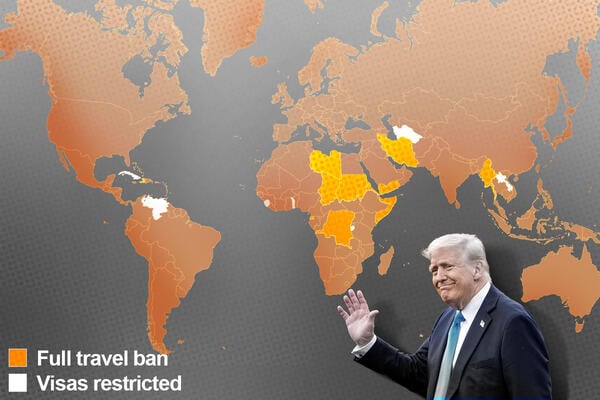
    President Trump issued two directives targeting international students just hours apart on Wednesday night. One is a ban on entering the U.S. for citizens from 12 countries and heightened visa restrictions for those from another seven. The other bans all international students, researchers and other “exchange visitors” from Harvard University.

    The orders represent another escalation of the Trump administration’s simultaneous, and sometimes overlapping, campaigns to both punish Harvard and curtail the number of foreign students studying in the U.S.

    Chris Glass, a professor of higher education at Boston College and a member of the college’s Center for International Education, said the combination of the travel ban and the Harvard order are part of the administration’s “flood the zone” strategy for its higher education agenda. He added that the timing of the dual orders, following on the heels of a “seemingly indefinite” pause on student visa interviews and a promise to “aggressively revoke” Chinese students’ visas, seems intended to cause the most chaos possible.

    “The timing couldn’t be worse … this is when 70 percent of international students are getting or renewing their visas,” he said. “It injects catastrophic uncertainty, and the uncertainty is the strategy from my perspective.”

    On Thursday evening, Harvard filed a legal challenge to the proclamation targeting the university and asked a judge to issue a temporary restraining order against the administration. Judge Allison Burroughs from the District of Massachusetts quickly granted that request and extended the current restraining order issued last month. She set a hearing for June 16.

    2017 Again

    The last time Trump instituted a travel ban, in his first term, it threw colleges into chaos and left students and researchers stranded for months in the middle of winter break, sending colleges scrambling to find ways to bring them back. Higher ed has been bracing for a repeat of that travel ban since Trump was elected in November; many institutions told their international students to return to campus before the inauguration to avoid the same fate.

    The new ban is not as drastic as many predicted; when the White House initially proposed another travel ban in March, officials rolled out a list of 43 potential target countries. But it is more expansive than the 2017 ban—it affects 19 countries instead of eight—and, combined with the administration’s barrage of attacks on international students over the past three months, could be even more damaging to international enrollment.

    The full ban applies to Afghanistan, Chad, Republic of the Congo, Eritrea, Equatorial Guinea, Haiti, Iran, Libya, Myanmar, Somalia, Sudan and Yemen—largely Middle Eastern and African countries with substantial Muslim populations. Trump also restricted visas from Burundi, Cuba, Laos, Sierra Leone, Togo, Turkmenistan and Venezuela.

    The travel ban doesn’t immediately affect students currently in the U.S. or who have already been approved for visas. But with many admitted international students still languishing in a visa process that the State Department halted two weeks ago, it will likely prevent thousands of students from attending in the fall and upend institutions’ projected enrollments.

    The countries on the list send a relatively small number of students to U.S. colleges. Of the affected countries, Iran has by far the most students studying in the U.S. It is the 15th most common origin country for international students, with 12,430 studying at American colleges and universities as of fall 2024, according to the latest report from the Institute for International Education.

    Still, the order is likely to compound the uncertainty and fear that has grown among international student populations, leading to signs of a large decline in student visa applications. Glass’s research, along with more recent reports, shows a double-digit decline in student visas from March 2024 to this March alone; the latest moves could double that, he said.

    “[The] COVID [pandemic] was a disruption of 15 percent,” he said. “This looks like it could be more significant than COVID, if the pause is extended and the uncertainty continues.”

    In his proclamation announcing the travel ban, Trump wrote that the targeted countries had “deficient” vetting and screening processes for visa applicants, or had “taken advantage of the United States in their exploitation of our visa system and their historic failure to accept back their removable nationals.”

    Sarah Spreitzer, vice president and chief of staff for government relations at the American Council on Education, said the rationale outlined in the travel ban—that students pose a unique national security threat and have been overstaying their visas—doesn’t align with reality.

    “If this is for national security concerns, our students are some of the most vetted visas out there,” she said. “And I don’t know if our students actually overstay their visas very often.”

    Fanta Aw, the president of NAFSA, an association of international educators, echoed Spreitzer and said that international students are already “among the most tracked individuals entering the United States.”

    “Actions such as halting student visa issuance and implementing nationality-based travel bans do not enhance national security,” she wrote in an email. “Instead, they weaken it—undermining our economy, diminishing our global competitiveness and eroding our country’s ability to effectively engage with the global population.”

    The 2017 travel ban was amended twice after being challenged in the courts and eventually exempted nonimmigrant visas, including student and exchange visas. Spreitzer said the administration’s outsize focus on student visa holders over the last few months makes that outcome less likely, but only time—and the courts—will tell.

    Havoc at Harvard

    The travel ban came on the heels of another White House proclamation Wednesday night, this one banning foreign students and scholars from attending Harvard.

    Trump restricted visa applicants from entering the country “solely or principally to participate in a course of study at Harvard University or in an exchange visitor program hosted by Harvard,” claiming that allowing foreign students on campus would be “detrimental to the interests of the United States because, in my judgment, Harvard’s conduct has rendered it an unsuitable destination for foreign students and researchers.”

    A Harvard spokesperson wrote that the proclamation is “another illegal retaliatory step taken by the administration in violation of Harvard’s first amendment rights” and that the university “will continue to protect its international students.”

    The proclamation is the latest jab in a weeks-long fight over international students on Harvard’s campus. Last month the Trump administration attempted to revoke Harvard’s Student Exchange and Visitor Program certification, which would have banned the university from enrolling international students altogether, affecting not just visa applicants but also foreign students and researchers currently on campus. Harvard challenged the effort in court, and a judge swiftly granted the university an injunction; on Monday, the Trump administration lost its appeal to overturn that decision.

    Harvard amended that lawsuit to include a challenge to the newest proclamation, calling it “an unlawful evasion of the Court’s order.”

    “When the Court enjoined the Secretary [of State’s] efforts to revoke Harvard’s certifications and force its students to transfer or depart the country, the President sought to achieve the same result by refusing to allow Harvard students to enter in the first place,” the amended suit reads.

    Unlike the SEVP decertification attempt, Trump’s executive proclamation doesn’t immediately affect international students currently enrolled at Harvard, only those who have yet to secure visas—though it does instruct the State Department to determine whether current students “should have their visas revoked.”

    The proclamation runs through a gamut of justifications for its international student ban. Trump cites data on increasing campus crime rates in the interest of student safety, alleges discrimination in the admissions process that he claims foreign students exacerbate and points to academic partnerships and financial contributions from countries like China that he says endanger U.S. national security interests.

    Notably, Trump also says Harvard has failed to cooperate with the administration’s demands for student misconduct records; the university has provided data on “only three students,” which Trump wrote was evidence that “it either is not fully reporting its disciplinary records for foreign students or is not seriously policing its foreign students.”

    Glass said the move is almost certainly an attempt to work around the court injunction using executive powers rather than the visa bureaucracy. And making the issue about constitutional authority in the national security realm—rather than whether the proper SEVP decertification process was followed—could change the legal calculus in court.

    “That’s what’s going to set a precedent for generations,” Glass said. “Will the precedent of autonomy and academic freedom at Harvard win in the courts? Or will the precedent of national security powers for the government win the day?”

    (This story has been updated to correct the list of banned countries to include Republic of the Congo.)

    Source link

  • If memory is the residue of thought, what are we learning from AI?

    If memory is the residue of thought, what are we learning from AI?

    • This is an edited version of a speech given by Josh Freeman, HEPI Policy Manager, to the Cardiff University Biochemical Society Sponsored Seminar Series on AI.

    I want to start with a thought experiment – one that will be on familiar ground for many of us. A lecturer sets an assignment and receives two student essays which are very similar in argument, structure, originality and so on. The difference is that one student used AI and the other didn’t.

    The student who used AI used it, as more than half of students (51%) do, to save time. They knew what they wanted to say, wrote a bullet-pointed list, fed this into ChatGPT and asked it to generate an essay ‘in the style of a 2nd year Biosciences student’ – which is what we know that students are doing. Perhaps they added some finishing touches, like a bit of their own language.

    The second student wrote their essay the old-fashioned way – they wrote a plan, then turned that into a draft, redrafted it, tweaked it and manually wrote their references.

    The question is: Which essay should we value more? They are functionally the same essay – surely we should value them equally?

    I don’t mean which essay should get the higher mark, or whether the student who used AI was cheating. Let’s assume for the moment that what they did was within the rules for this particular course. What I mean is, which essay better shows the fulfilment of the core purposes of a university – instilling intellectual curiosity, critical thinking, personal development in our students?

    I think most of us would instinctively say that something has been lost for the student who used AI. We don’t value students as content creators. We don’t see the value in the essay for its own sake – after all, many of us have seen hundreds or thousands of similar essays in our time in academia. What we value is the process that got the student to that point. There is something fundamental about the writing process, that in the act of writing, you are forced to confront your own thoughts, express them, sit with them. You have to consider how far you really agree with them, or if there is something missing. Though the student who used AI produced the same end result, they didn’t have that same cognitive experience.

    AI is, for the first time, divorcing the output from much of the cognitive process required to get that output. Before AI, if a student submitted an essay, you could be relatively confident – barring the use of essay mills or plagiarism – that they had thought deeply, or at least substantially, about the output they submitted. The content was a good proxy for the process. But with AI, it’s remarkably easy to generate the content without engaging in the process.

    I was a teacher previously, and the mantra we were told again and again was ‘Memory is the residue of thought.’ (With credit to Daniel Willingham.) We remember what we think about. When you have to sit with an essay, or a difficult academic text, it fosters more learning because your brain is working harder. If you can fast-track the essay or just read a summary of the important bits of the text, you skip the work, but you also skip the learning.

    This is a problem for all kinds of reasons, some of which I’ll go into. But in another way, it may also be a good thing. For a long time, the focus has been on the content that students produce, as the best marker for a students’ skills and knowledge. But I hope that AI will force us to think deeply about what process we want students to go through.

    In the time I have left, I want to touch on a few issues raised by our recent survey, showing that the vast majority of students use generative AI, including to help with their assessments.

    The first is that the rabbit is out of the hat. Almost all students are using AI, for a rich variety of purposes, and almost certainly whether or not we tell them they can. That will be obvious to anyone who has received a coursework submission in the last 18 months, but it is so key that it is worth emphasising. Barring the withdrawal of large language models like ChatGPT from the internet (unlikely) or the mass socialisation of our students away from GenAI use (also unlikely, but less so), AI is here to stay.

    The second is that the system of academic assessment developed over decades or more is suddenly and catastrophically not fit for purpose. Again, this will be known to many but I am not sure the sector has fully grappled with the implications of it. All assessments had some level of insecurity, insofar as essay mills and contract cheating existed, but we have always felt these methods were used by relatively few students; we were also able to pass national legislation to crack down on these methods.

    AI is different for two reasons. The first is ease of use – the barriers of seeking out an essay mill and coughing up the money are gone (though it remains true that the most powerful AI models still have a cost). The second is how students reckon with the moral implications. It is clear to almost everyone, I think, that using an essay mill is breaking the rules, so students would usually only use these when they are truly desperate. But AI is different. We saw in the report that there great uncertainty when it comes to using AI – lots of disagreement about what is acceptable or not. When it’s cloudy in this way, it’s easier to justify to yourself that what you’re doing is okay. Most people won’t overtly ‘cheat’ but they might push on hazy boundaries if they can tell a story about why it is acceptable to do so.

    So all of our assessments need to be reviewed. I recently read an essay from UCL Law School, talking about how they will be using 50-100% ‘secure’ assessment, meaning in-person written or oral exams. This is a good start, though it may not even be enough if 50% of your assessments are ‘hackable’ by students with little or no subject knowledge or with no grasp of the skills you are meant to be teaching them. And I am not convinced that ‘secure’ exams are always such. If essay questions are predictable, you can easily use AI to generate some mock essays for you and memorise them, for example.

    This is also why the claims that AI will generate huge efficiency gains for the sector are misplaced, at least in the short term. In the coming years, AI will put huge strain on the sector. Essentially, we are asking all of our staff to be experts in AI tools, even as the tools themselves constantly update. For example, AI tools hallucinate a lot less than they used to and they also produce fake references much less often – and there are now specific tools designed to produce accurate references (such as ChatGPT’s Deep Research or Perplexity.AI). It is an open question as to whether this radical redrawing of assessment is a reasonable ask of the sector at a time when budgets are tight and cuts to staffing are widespread – up to 10,000 jobs lost by the end of the academic year, by some estimates.

    The third issue returns to the thought experiment I presented you with at the start. We will now be forced to think deeply about what skills we want our students to have in an age where AI tools are widely accessible, and then again about how we give our students those skills.

    Think again of those two essays, one of which used AI and one didn’t. There is an argument in favour of the AI-assisted essay if you particularly value teaching AI skills and you think getting AI to help with essays is one way to enhance those skills. But like developing AI-proof assessments, this is a moving target. Some people will remember the obsession with ‘prompt engineering’ in the early days of GenAI – carefully crafting prompts to manufacture very specific answers from chatbots, only for them to update and all that work becoming entirely useless? By virtue of being natural language models, they are frequently very intuitive to use and will only become more so. So it is not at all clear that even the best AI courses available now will be very useful a few years into students’ long and varied careers.

    The same problem applies to courses designed to teach students the limits of AI – such as bias, the use of data without permission, hallucinations, environmental degradation and other challenges which we are hearing lots about. Small innovations could mean, for example, that the environmental cost of AI falls dramatically. There is already some research saying a typical ChatGPT prompt may now use no more energy than a Google search. In a few years’ time, we may be dealing with a very different set of problems and students’ knowledge will be out of date.

    I can’t pretend HEPI has all the answers – though we do have many, and we require all of our publications to include policy solutions, which you are welcome to investigate yourselves on our website. But my view is that the skills students will receive from a university education – critical thinking, problem solving, working as a team, effective communication, resilience – are as critical as ever. In particular, we will probably need to hone in on those skills that AI cannot easily replicate – soft skills of motivating others or building trust, emotional intelligence, critical thinking, which will endure in importance even as AI automates other tasks.

    But the methods we use will need to change. We hear a lot from academics about the enormous administrative burden academics face, for example. In my view, the best case is that AI automates the boring bits of all our jobs – paperwork, producing lesson materials, generating data – and freeing us up to do what matters, which is producing innovative research and spending more time with students. That will make sure AI enhances, rather than threatens, the enormous benefits our degrees impart to students in the coming years.

    Source link

  • New Jersey has the lowest rates of inclusion for students in special education in the country

    New Jersey has the lowest rates of inclusion for students in special education in the country

    New Jersey students with disabilities are the least likely in the nation to spend their days surrounded by peers without disabilities. 

    One underlying reason: a sprawling network of separate schools that allows districts to outsource educating them.

    New Jersey has more than a hundred private schools, plus eight county-run districts specifically for students with disabilities. 

    Districts spend hundreds of millions of dollars placing students in private schools rather than investing in their own staffing and programs — placements that cost New Jersey taxpayers $784 million in 2024, not including transportation. That’s up from about $725 million the year before. This can create a self-perpetuating cycle that increases reliance on separate schools and, experts say, may violate students’ federal right to spend as much time as possible learning alongside students without disabilities.

    In many cases, parents say school administrators are too quick to send children out of district and pressure families to agree to those settings. Other times, parents choose to send their child to a separate school, sometimes feeling that they have no choice after repeatedly failing to get their kids the help they need in their local school.

    “Whatever it is that their kids need within the district, they’re not getting,” said special education parent and advocate Amanda Villamar, who works with families throughout New Jersey. “The question becomes: Why are these services in private schools and not necessarily integrated into our public school system?” 

    Related: A lot goes on in classrooms from kindergarten to high school. Keep up with our free weekly newsletter on K-12 education.

    In all, about 30,000 students with disabilities in New Jersey — or 13 percent— attend separate private or public schools, according to The Hechinger Report’s analysis of federal data. That’s the highest percentage in the country. Nationwide, 4 percent attend separate schools. 

    New Jersey’s history of failing to include children with disabilities in public school classrooms dates back to the 1910s. That’s when the state began promoting separate schools for students with disabilities as a more humane alternative to barring them from schools altogether. 

    Nationwide, only 1 in 5 students with disabilities were enrolled in the public school system in the 1970s, when Congress passed the Individuals with Disabilities in Education Act or IDEA. The law enshrines integration by saying students with disabilities have a right to learn alongside students without disabilities to the “maximum extent” possible and that they should be placed in the “least restrictive environment.” 

    Across the nation, parents and children fought state laws excluding students with disabilities from public schools — with fights in Washington D.C. and Pennsylvania fueling the passage of IDEA. It wasn’t until 1992 that New Jersey repealed its statutes allowing public schools to exclude “untrainable” children with disabilities. By then, separate schools were an integral part of the state’s highly decentralized education system, which today comprises roughly 600 districts. 

    New Jersey Department of Education officials said the state is committed to ensuring students with disabilities are in the most appropriate school setting based on individual needs, and that includes out-of-district programs. 

    “New Jersey is uniquely positioned in this regard, with a longstanding infrastructure of out-of-district options and many small local public school districts,” department spokesman Michael Yaple said in an email. “These and other factors have contributed to the state’s historical reliance on a wide array of specialized programs designed to offer diverse, individualized educational options for students with disabilities.”

    The rate at which New Jersey school districts place students in separate schools has declined over the past two decades. In the same period, however, more parents chose to send their children to private schools, sometimes because they felt they had no other viable options. 

    Related: Young kids with and without disabilities can learn side by side. One state has instead kept them apart for years

    Some parents say there are significant trade-offs when their child leaves their district school.

    Ellen Woodcock’s son, a fifth grader, attends a county-run school for students with disabilities where she says teachers understand his autism much better than they did in her home district.* Despite her son’s fascination with geography, however, teachers spend little time on science or social studies. The school has no library, and the day ends an hour earlier than his district elementary school. School staff focus on teaching social skills, but he’s lost the chance to model the behavior of peers without disabilities. 

    “I feel like he’s not being challenged, like he’s kind of pigeonholed,” Woodcock said. “We just felt like we didn’t have a choice.”

    Her son spent kindergarten through second grade learning in general education classrooms at his local neighborhood school in Haddonfield, New Jersey, and she was happy with the social and academic progress he was making. In third grade, however, things changed. The school shifted him into a separate classroom for significant parts of the day. Woodcock said school staff seemed unable, or unwilling, to address how his autism affected his learning and provide the right support to account for it. She felt he was unwanted.

    In the middle of fourth grade, she said she reluctantly transferred him to a specialized school where he spent his day with other students with autism.

    “It was almost out of desperation,” Woodcock said. “It was like, let’s get him out of the school district, because we feel like they can’t support him. It was a fight all the time to get him what he needed.”

    Haddonfield district officials said privacy laws prevent them from commenting on individual students but noted that the percentage of students with disabilities who spend almost all of their time in general education classrooms is significantly higher than the state’s average. About 69 percent of Haddonfield students with disabilities spend at least 80 percent of the school day in general education classrooms, compared with 45 percent statewide, according to state Education Department data

    “We are proud of our inclusive practices and the strong sense of belonging we strive to create for all students,” district officials said in a statement. “The least restrictive environment can look different for each student.”

    In Haddonfield, 19 percent of parents with students with disabilities choose to enroll their children in private schools, compared with 7 percent statewide.

    Woodcock decided to move her son back to the district next year, where he’ll start sixth grade at the local middle school. She understands that her son may need to be pulled out of class to learn a subject like math in a special education resource room — but she believes he can, and should, learn in general education classrooms as well. 

    Related: Special education and Trump: What parents and schools need to know

    Under IDEA, students with disabilities should be placed in separate schools or classes only if their disability makes it too difficult for them to learn in a regular classroom, even with extra help and support. A team made up of a child’s parents, teachers, school district officials and, when appropriate, the child, decide on a placement together and must review it each year. 

    The federal Department of Education says those teams have to make this decision based on an individual child’s needs — not solely because of the kind of disability, how significant the child’s needs are or whether the school has the money or the staff. In New Jersey, however, some parents say schools too often determine placement on a child’s diagnosis alone.

    Observers, including special education advocates and attorneys, say school districts and leaders of separate schools tend to argue it would be too difficult for all of New Jersey’s hundreds of public school districts to provide services for all types of disabilities. That’s fueled a reliance on private and county-run separate schools, many of which have classrooms or programs focused on a specific disability, such as autism or dyslexia, with specially trained teachers.  

    Districts sometimes launch specific special education programs — applied behavioral analysis classrooms for students with autism, for example — only to abandon them after challenges paying for them or finding qualified staff, said Paul Barger, a special education lawyer in Irvington, New Jersey.

    “Instead of continuing to develop their own programs in the districts, they went ahead and just said they’re placing out into state-approved private school programs,” Barger said.

    Returning some students with disabilities to in-district schools would require more money. Lawmakers in New Jersey are debating the governor’s proposal to boost funding for special education services in public schools by $400 million for the next school year. Advocates say that’s an opportunity to build stronger special education systems in public schools. The governor also proposed flat funding of $420 million for private school tuition payments for students with disabilities.

    Related: OPINION: Students with disabilities should not lose their rights when they are placed in private settings by public school systems

    Some parents, unhappy with the services they see in public districts, prefer private schools: A growing number pay for their children to attend. That’s despite the fact that those parents who choose private schools lose federal protections, including the rights to raise formal complaints. 

    ASAH, the group representing New Jersey private schools for students with disabilities, which enroll more than 10,000 students, points out the lack of special education services in public districts. It tells parents that poorly trained paraprofessionals in public schools can be stigmatizing, and placing students in self-contained classrooms doesn’t make students feel valued or included. The group, formerly known as the Association of Schools and Agencies for the Handicapped, argues private schools may not be more costly to the state than public schools once pensions are factored in.

    Students with disabilities have the right to options like private schools, the association’s executive director John Mulholland said in an interview. 

    “It really is an individualized determination, and merely just being a part of your home district isn’t always a least restrictive environment,” he said. 

    Unlike for public schools, the federal government doesn’t collect data from private schools about how often their students interact with peers without disabilities. According to the association’s recent study of 5,300 students served by ASAH schools, 262 students planned to leave their private schools in the 2022-23 school year to return to their home district. That report suggests such a move was less likely for children with autism and multiple disabilities.

    Mulholland said private schools may offer some interaction with students without disabilities through community service or sporting events. His association’s analyses have found that students who start at a private school earlier are more likely to return to their public school district. 

    “If students come to us younger, they can get the intensive support they need or return to their school districts — many of our members pride themselves on that turnaround,” Mulholland said.

    Nicole Lannutti, of Washington Township in Gloucester County, said her daughter Sophia, who is non-verbal and has multiple disabilities, attended a private preschool for one year at a cost to the district of roughly $90,000. (New Jersey requires school districts to provide preschool for students with disabilities.) 

    Lannutti pushed to get Sophia into the public school system for a second year of preschool and then elementary school, where she said her daughter thrived in a school that prioritized inclusion. But that changed in middle school, where her mom says she’s had to push to have her daughter included even in lunch, recess and extracurricular activities. Washington Township school district did not respond to requests for comment. 

    Lannutti said her local public school is still the most appropriate setting for her child, who will enter seventh grade in the fall and has made friends by participating in the school play. The school agrees, and said as much in her education plan. Lannutti said private schools play an important role, but public schools should work harder to serve more students and fulfill their civil right to an education. “When it comes to my kid, it’s not that she should go because this district can’t handle it,” Lannutti said. “They should learn how to do it.” 

    *Correction: This story has been updated to correct Ellen Woodcock’s son’s current grade level.

    Contact investigative reporter Marina Villeneuve at 212-678-3430 or [email protected] or on Signal at mvilleneuve.78

    Contact senior investigative reporter Meredith Kolodner at 212-870-1063 or [email protected] or on Signal at merkolodner.04

    This story about special education and inclusion was produced by The Hechinger Report, a nonprofit, independent news organization focused on inequality and innovation in education. Sign up for the Hechinger newsletter.

    The Hechinger Report provides in-depth, fact-based, unbiased reporting on education that is free to all readers. But that doesn’t mean it’s free to produce. Our work keeps educators and the public informed about pressing issues at schools and on campuses throughout the country. We tell the whole story, even when the details are inconvenient. Help us keep doing that.

    Join us today.

    Source link

  • Reviving Engagement in the Spanish Classroom: A Musical Challenge with ChatGPT – Faculty Focus

    Reviving Engagement in the Spanish Classroom: A Musical Challenge with ChatGPT – Faculty Focus

    Source link

  • No more in-state tuition for undocumented students in Texas

    No more in-state tuition for undocumented students in Texas

    This audio is auto-generated. Please let us know if you have feedback.

    Dive Brief:

    • A federal judge on Wednesday signed off on a joint motion from the U.S. Department of Justice and Texas to strike down the state’s 24-year-old law offering in-state tuition rates to undocumented students.
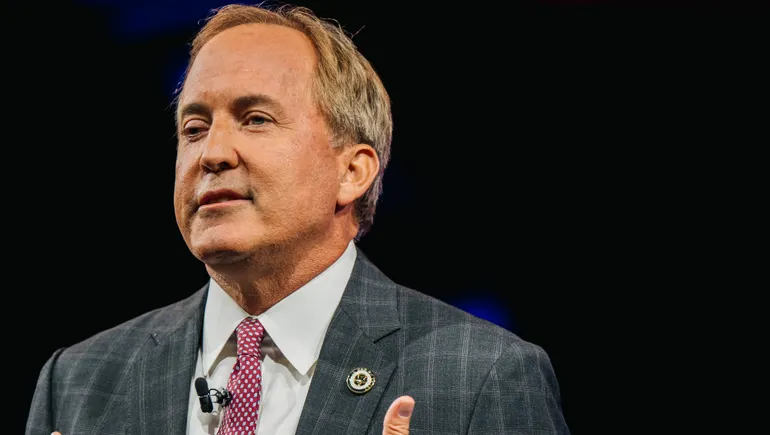
    • Texas Attorney General Ken Paxton called the law a “discriminatory and un-American provision” in a statement and claimed victory for the court order holding it to be unconstitutional.
    • The change, effective immediately, will likely affect tens of thousands of Texas students. One report estimated that 59,000 undocumented students in the U.S. attended Texas colleges in 2021. 

    Dive Insight:

    More than two decades ago, the Texas Legislature passed a bipartisan bill removing immigration status as an eligibility factor for in-state tuition. If an undocumented student attended a Texas high school, graduated or received a GED and met “the minimum residency, academic, and registration criteria,” they could enroll at a public state college at the in-state rate.

    Then-Gov. Rick Perry signed the bill into law, making Texas the first state with such a policy.

    Since then, 24 states and Washington, D.C., have enacted policies that allow undocumented students to attend at least some public colleges at in-state rates. Florida’s law is set to be revoked effective July 1.

    DOJ sued Texas over its policy on Wednesday, with U.S. Attorney General Pam Bondi arguing that it illegally offered undocumented students benefits not provided to all U.S. citizens.

    “The Justice Department will relentlessly fight to vindicate federal law and ensure that U.S. citizens are not treated like second-class citizens anywhere in the country,” she said in a statement.

    Texas voiced support for DOJ’s lawsuit soon after it was filed. But in the short time prior to U.S. District Judge Reed O’Connor’s sign-off, student advocates questioned the legal standing of DOJ’s allegations.

    “To suggest that undocumented students are receiving benefits denied to citizens is false and misleading,” Monica Andrade, director of state policy and legal strategy at The Presidents’ Alliance on Higher Education and Immigration, said in a Wednesday statement.

    “In fact, any U.S. citizen who meets the same criteria — such as attending and graduating from a Texas high school — qualifies for in-state tuition. These requirements apply regardless of immigration status,” she said.

    Gaby Pacheco, president and CEO of the undocumented youth advocacy group TheDream.US, called the lawsuit “harmful and self-defeating for the future of Texas.” 

    Average in-state costs for Texas public colleges are below the national average, $8,195 versus $9,750 in 2022-23, respectively, according to the Education Data Initiative

    But for out-of-state students, tuition is significantly higher. At the University of Texas-Austin, for example, out-of-state students paid $48,712 in 2024-2025, compared to $13,576 for state residents.

    Prior to Bondi’s lawsuit, the Texas Legislature this session had considered a bill to repeal in-state tuition eligibility for undocumented students. The proposal, which did not advance, would have also required such students who had already received in-state tuition to pay the difference within 30 days of being notified or risk having their diplomas withheld. 

    Source link

  • Podcast: Efficiency, EDI, speed | Wonkhe

    Podcast: Efficiency, EDI, speed | Wonkhe

    This week on the podcast we examine Universities UK’s efficiency and transformation taskforce report. What do shared back-office services, federation models and subject cold spots tell us about the sector’s financial pressures?

    Plus we discuss Research England’s new EDI action plan, and explore whether the UK’s rapid three-year degree model is harming student wellbeing and learning outcomes.

    With Rille Raaper, Associate Professor in Sociology of Higher Education at Durham University, Jess Lister, Director (Education) at Public First, Mack Marshall, Community and Policy Officer at Wonkhe SUs, and presented by Jim Dickinson, Associate Editor at Wonkhe.

    Our drop-out and pace miracle is harming students’ health and learning

    Universities UK’s new era of collaboration

    Fixing the potholes in postgraduate funding

    The spending review is a critical moment for UK science and innovation

    There are better politics, big ideas, and future trade-offs in Research England’s new EDI action plan

    Source link

  • Higher education postcard: University of Cambridge, the Senate House

    Higher education postcard: University of Cambridge, the Senate House

    Greetings from Cambridge!

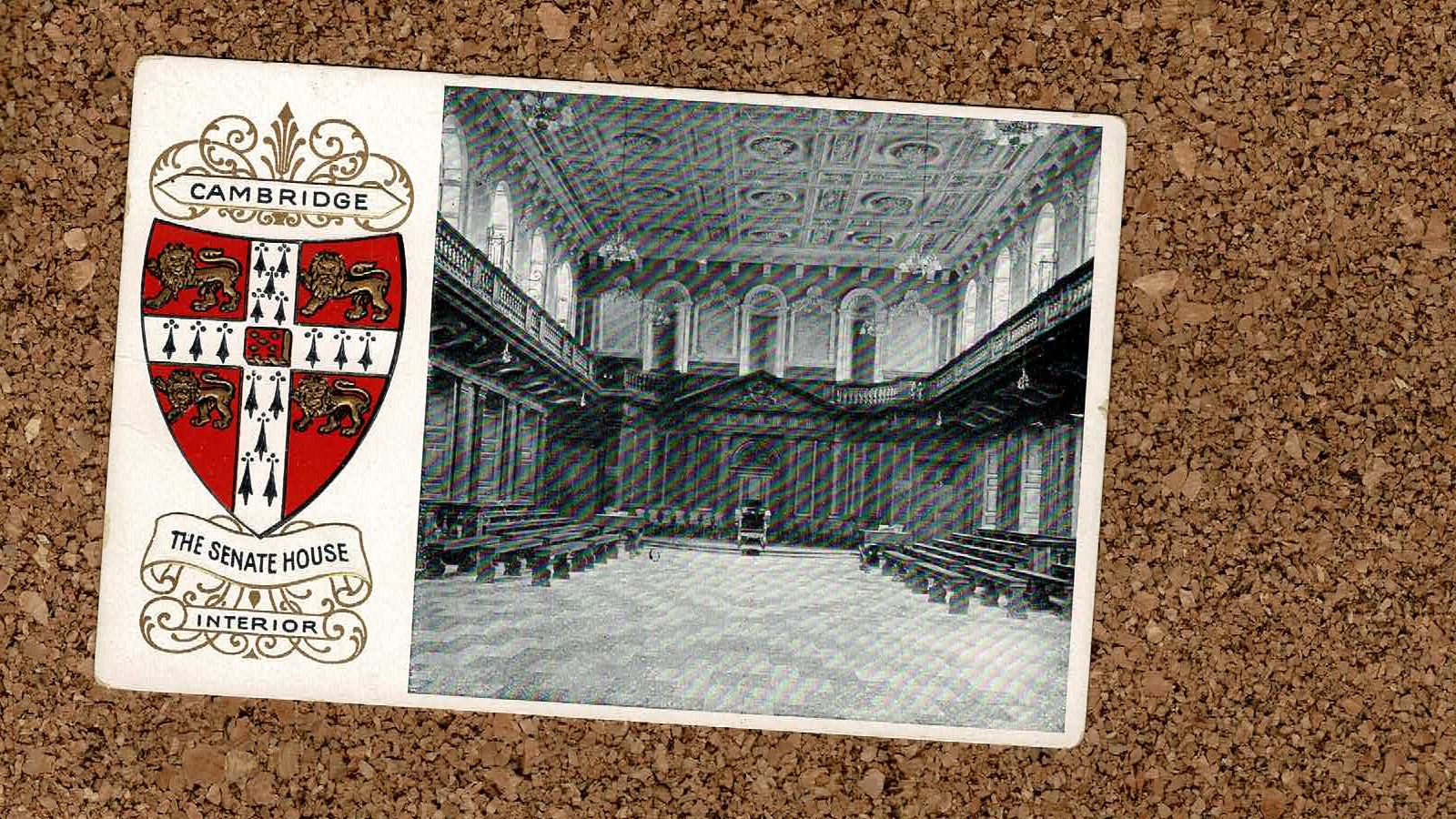
    Today’s card shows the Senate House at the University of Cambridge. Building started in 1722, the Senate House opened in 1730, and it was completed in 1768 (yes, that is the right order of events). It was designed by the Jameses Gibbs and Burroughs (the latter being master of Gonville and Caius); woodwork by James Essex the Elder; and ceiling plaster by Artari and Bagutti.

    As the name suggests, it was built as a meeting place for the university’s senate. And until 1926, the senate was a very big deal at Cambridge, being the governing body, in charge of everything. And since its members comprised everybody who held a Cambridge MA, it was a quite a thing to get a decision made. (I’ve blogged previously on the Microcosmographia academica, which is concerned with the politics of getting things agreed within the University of Cambridge senate).

    In 1926 things took a turn for the senate – its governance functions were given to the Regent House. Senate is now mostly responsible for electing the university’s chancellor and for electing the High Steward, who oversees senate procedure.

    There’s currently an election on for the University of Cambridge chancellor, which is all very exciting. For certain values of exciting. There’s ten candidates, including a big ticket HE name (Lord John Browne, he of the Browne review); big political names (former MP and cabinet minister Lord Chris Smith; Brexit campaigner Gina Miller); and the ubiquitous Sandi Toksvig. Voting takes place in person at the Senate House for two days in July; or online for about a week in July.

    When it’s not being used for cancellarial (it’s a real word, honest) elections – which is most of the time, in fact – Senate House is also used for graduation ceremonies at Cambridge. I’ve written before about one aspect of these; safe to say that there’s lots of other local peculiarities. At Cambridge, for example, each graduation is a separate decision of the governing body, so a special meeting of the Regent House (and before then, of the senate) is held for each ceremony. I suspect this may be where be get the notion of the degree congregation, which language I’ve heard used at other universities.

    There’s also an order of precedence for the colleges at graduation, established in the Statues and Ordinances. It is: King’s College, Trinity College, St John’s College, Peterhouse, Clare College, Pembroke College, Gonville and Caius College, Trinity Hall, Corpus Christi College, Queens’ College, St Catharine’s College, Jesus College, Christ’s College, Magdalene College, Emmanuel College, Sidney Sussex College, Downing College, Girton College, Newnham College, Selwyn College, Fitzwilliam College, Churchill College, Murray Edwards College, Darwin College, Wolfson College, Clare Hall, Robinson College, Lucy Cavendish College, St Edmund’s College, Hughes Hall, and Homerton College. And this isn’t strictly the order in which the colleges were established or admitted as colleges. If anyone knows why, please let me know!

    Senate House has seen its share of high jinks. Most notable, perhaps, is the 1958 incident where students contrived to place an Austin Seven on its roof. Here’s the Liverpool Daily Post, reporting with an admirable straight face on plans for its retrieval.

    Eagle eyed readers may remember that this stunt was followed by a similar, suspending an Austin from the Bridge of Sighs.

    Here, as always, is a jigsaw of the card – hope you enjoy it.

    Source link

  • What to Expect as the Senate Tackles Reconciliation

    What to Expect as the Senate Tackles Reconciliation

    The clock is ticking for Senate Republicans as they rush to approve a sweeping bill that cuts spending and taxes and pays for some of President Donald Trump’s top agenda items by the Fourth of July.

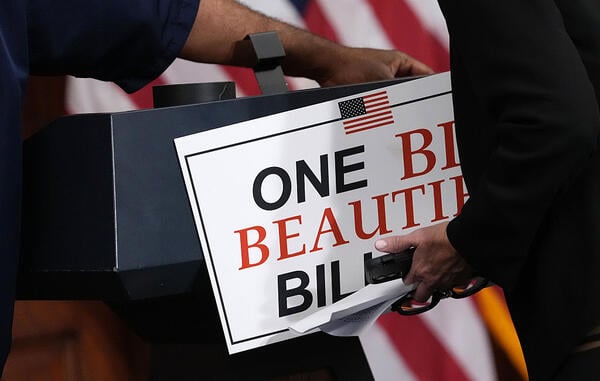
    If passed, the complex piece of legislation—known as the One Big Beautiful Bill Act—could entirely reshape the student loan system, increase endowment taxes, force colleges to repay their students’ unpaid loans and significantly cut Medicaid, among other changes.

    The House passed the measure late last month, putting the ball in the Senate’s proverbial court. But key senators have since said little about the higher ed provisions in the bill, so it’s unclear what lawmakers in the upper chamber will prioritize. Higher ed experts predict risk-sharing, or the plan to require colleges to pay a penalty for unpaid loans, likely won’t survive. Other issues, like whether to change the eligibility criteria for the Pell Grant, are more uncertain. But any changes to the House bill will come at a cost, as saving one program likely will mean deeper cuts to another.

    Over all, lawmakers will face a difficult balancing act to get the legislation through the Senate without endangering a second passage in the House, where bill advanced by the skin of its teeth. And Trump has called the bill the single most important piece of legislation in his second term, suggesting that failure is not an option.

    “The One, Big, Beautiful Bill will implement President Trump’s Make America Great Again agenda by delivering the largest tax cut in American history, the largest border security investment in history, and the largest deficit reduction in nearly 30 years,” Press Secretary Karoline Leavitt said in a statement last month. “The Senate should pass this critical legislation as soon as possible to usher in America’s Golden Age.”

    The Congressional Budget Office has estimated the bill would add $2.4 trillion to the deficit over a decade.

    What’s Next

    The Senate Health, Education, Labor and Pensions Committee hasn’t yet released its version of a reconciliation bill, though a draft is expected soon since congressional leaders are hoping to get a vote on the legislation by June 16, sources familiar with the Hill say. Lawmakers are using the reconciliation process, so they only need 51 votes in the Senate to pass the bill. But if the Senate version is at all different from the House’s, the House will have to vote again before the legislation can reach the president’s desk.

    When a bill does drop, it will likely skip the traditional committee markup, so the legislation can reach the Senate floor for a vote faster. But that fast tracking will limit the time for college leaders and others to review and weigh in on the bill.

    Policy analysts say Senate and House Republicans will likely have to make some compromises in order to move the bill forward. Some Senate Republicans may stand firm and advocate for changes on certain provisions, but the question is which ones will earn priority and which ones will fall by the wayside. For instance, can moderate Republicans save both the Pell Grant and Medicare? Or will they have to choose between the two?

    In many cases, what spending cuts and program changes survive is going to depend on “how the tug-of-war between the House and Senate plays out,” said Preston Cooper, a senior fellow at the American Enterprise Institute, a right-leaning think tank.

    All of this, however, could be thrown for a loop if former Trump adviser Elon Musk holds any influence. The billionaire tech mogul who previously led Trump’s Department of Government Efficiency has launched an all-out feud with the president over social media, calling the bill a “disgusting abomination” and saying, “shame on those who voted for it.”

    At Odds Over Accountability

    If the reconciliation bill does move forward, policy experts expect the Senate to propose a very different version than the House. And Michelle Dimino, director of education at Third Way, a left-leaning think tank, said she’s looking to the Lowering Education Costs and Debt Act, a bill introduced by Louisiana senator Bill Cassidy in 2023, for an outline of what it may include. (Cassidy is the chair of the Senate education committee.)

    “Senate and House Republicans have not always been aligned in their approach to higher ed reform,” she said. And “unsurprisingly, each chamber tends to favor legislation that originated internally.”

    One of the most notable differences Dimino and others anticipate between the House and Senate is how each tries to hold colleges accountable for students’ financial outcomes.

    House Republicans want to use risk-sharing, a strategy that would require colleges and universities to pay a fee each year based on the amount of loans their graduates (or those who left without a degree) have failed to repay. But the formula for calculating that fee is complicated, and colleges have a lot of questions about how it works and whether it’s fair. The Congressional Budget Office estimated that these risk-sharing payments would total $1.3 billion by 2034 and then continue to increase annually.

    Meanwhile, the Lowering Education Costs Act calls for a plan similar to the gainful-employment rule—a metric that ties colleges’ financial aid eligibility to their students’ earnings and debt levels. The idea was first introduced by President Obama, scrapped by President Trump in his first term and then expanded by President Biden.

    Under gainful employment, colleges would have to show their graduates make more than someone with a high school diploma and that their loan payments will be affordable. If a college ever falls below those thresholds, it could lose access to all federal student aid. The Senate plan would likely apply to all colleges, whereas the current gainful-employment rule only applies to for-profit colleges and nondegree programs.

    Higher education lobbyists are generally more supportive of the Senate’s anticipated proposal. But they note that while it’s a much lesser evil than risk-sharing, concerns remain, especially about how it would affect institutions.

    “When the data is not available … we are operating off concepts and ideas,” said Emmanual Guillory, senior director of government relations at the American Council on Education. “So it begs the question: What is the intended outcome and is this proposal the solution?”

    Other Key Issues to Watch

    What is less certain, policy experts noted, is whether the Senate will sign off on the House’s plans to consolidate student loan repayment plans, cap loans, increase endowment taxes and change who is eligible for the Pell Grant. For example, while the House proposed waiving borrowers’ interest if their monthly income-based payment isn’t enough to cover what’s owed and forgiving remaining debt after 30 years of payments, Cassidy’s legislation would create a more traditional plan where students accrue interest but all is forgiven after 20 or 25 years of payments.

    And though the House plan would eliminate subsidized loans, end the Grad PLUS loan program and limit Parent PLUS, experts predict that the Senate will likely end both Grad and Parent PLUS and put more aggressive limits on how much students can borrow over all.

    But other aspects like Pell Grant eligibility were not discussed in Cassidy’s 2023 bill at all. So while the House would expand the Pell Grant to short-term workforce programs and limit access for the full-time Pell program, it’s unclear what, if anything, the Senate would propose. At a recent hearing, some senators appeared reticent to make deep cuts to the Pell program, though lawmakers have generally supported the concept of workforce Pell.

    Over all, it’s hard to know exactly where the Senate will fall on most issues, Guillory said, especially because unlike during most sessions, it seems the House has the upper hand.

    “I think the Senate would like to propose a very different bill that would require a lot of back-and-forth compromise, but they are feeling more and more pressure from the House to make fewer changes in order to get the bill passed quicker and to meet that July 4 deadline,” he said.

    Source link