Author: admin

  • Reducing Barriers to STEM Majors With Precalc Course

    Reducing Barriers to STEM Majors With Precalc Course

    Math courses are often a barrier for students seeking to pursue a college credential, and for some, a lack of math curriculum during high school can make a STEM career seem out of reach.

    A new course at Wentworth Institute of Technology in Boston serves as a stepping-stone for students who may not have had access to precalculus or calculus courses but are still interested in calculus-based learning. The university hopes the program will boost student enrollment and eliminate barriers to access for disadvantaged students.

    What’s the need: The conversation about offering precalculus at Wentworth began in 2019, after university leaders saw that some students, despite having the same GPAs and high school transcripts as their peers, were less mathematically prepared, said Deirdre Donovan, Wentworth’s director of first-year math and interim associate dean of the School of Computing and Data Science.

    At that time, Wentworth did not offer a math placement course, so all enrolled students launched at the calculus level.

    Only four in 10 high school graduates have completed precalculus coursework, according to 2022 data. That number has grown from 36 percent in 2009, but the statistic reveals gaps in availability of the coursework for some high school students.

    Wentworth, like many colleges and universities, requires students to have already completed calculus coursework to enroll in specific major programs, which is “a barrier that can prevent otherwise qualified students from pursuing engineering and computing degrees,” Donovan said.

    To complete calculus by the end of high school, students had to complete Algebra I in eighth grade, and not every student was ready, aware of or offered that course at their school, Donovan said.

    Some high schools also push students to complete AP Statistics in lieu of calculus, and Donovan said this shift “can actually close more doors at STEM schools than it might open, because those AP credits can’t replace the calculus-based statistics required for engineering degrees.”

    Campus leaders at Wentworth opted to review policies that were barring students from participating in STEM programs, starting with creating a math placement process and then developing a precalculus course.

    How it works: In 2024, Wentworth removed precalculus as an admissions requirement for students, paving the way for the college to admit about 10 percent more students who might have previously received a conditional acceptance, Donovan said.

    New students without calculus credit are now enrolled in a four-credit, first-semester course called Foundations of Calculus that helps them get up to speed. The investment in additional content hours is an indication of the university’s commitment to opportunities for students who may not have been able to enroll and succeed previously, Donovan said.

    In addition to two hours of lectures each week, students also participate in two hours of labs that focus on engineering problem-solving skills, using real-world problems that are tied directly to a student’s major.

    The course is also supported by embedded peer tutors who can address student questions, clarify confusing content and facilitate study groups outside of class time.

    It was important to Donovan and her faculty team not to work from a deficit-minded perspective about students’ knowledge gaps. Language regarding the course and its content hours was specifically crafted to help students feel like they’re being guided onto an on-ramp, not held back or punished for not having precalculus experience.

    The results: After the first semester, staff have seen promising results, Donovan said. “We are pinching ourselves that it went exactly how we had hoped it would go.”

    In fall 2024, about 200 students participated in precalculus either because they lacked the course in high school or their placement exam results indicated it would benefit them.

    Approximately 75 percent of precalc students passed their course in the first term, on par with national averages. When they attempted calculus in their second semester, students had similar passing rates to their peers who completed calculus in the first term.

    University faculty and staff were encouraged to see that engineering programs received 20 percent more applications this year, signaling an increased level of interest in rigorous programs, Donovan said.

    Fall-to-spring retention rates were slightly lower for precalc students, but that could be due to other factors, including students re-evaluating their chosen major or deciding whether they want to be at a STEM-focused institution.

    The course has also expanded enrollment opportunities for students who otherwise might not have considered Wentworth. Overall applications were up 25 percent year over year this past application cycle, and deposits were up 30 percent, Donovan said.

    What’s next: Student feedback from the first term has indicated a need for an additional credit hour of in-person, interactive lab work, which will be implemented this fall. The hour, which the university is calling a companion class, will function similarly to a first-year seminar, teaching students study skills and metacognition, as well as connecting back math concepts.

    None of the downstream courses such as physics have undergone a curriculum change, requiring students to get up to speed in their first term to be successful over all in college. Students who complete precalc also may need to take summer classes to ensure they graduate in four years, but the university is looking to offer affordable online courses to accommodate learners, Donovan said.

    Do you have an academic intervention that might help others improve student success? Tell us about it.

    Source link

  • Future of STEM Workforce in Jeopardy Amid NSF Overhaul

    Future of STEM Workforce in Jeopardy Amid NSF Overhaul

    Erik Jacobsen, an associate professor of mathematics education at Indiana University, was nearing the end of a years-long project designed to address teacher biases with the goal of helping more students excel in math and pursue STEM careers. But that all stopped several weeks ago, when the National Science Foundation notified him that it had terminated the grant because it was “not in alignment with current agency priorities.”

    Jacobsen’s grant, which was funding multiple graduate students and a postdoc, who are all now in limbo, is far from the only STEM education–focused grant the NSF recently canceled.

    Of the approximately 1,500 grants the agency recently terminated, at least 750 came from the NSF’s education directorate, according to Grant Watch, an independent website that tracks terminated NSF grants. And that’s not the only shake-up happening at the NSF, which Congress created in 1950 to “promote the progress of science; advance the national health, prosperity and welfare; and secure the national defense.” The Trump administration has also laid off staff and proposed slashing the agency’s budget.

    Additionally, NSF announced new priorities that include not funding projects aimed at recruiting more Americans from underrepresented backgrounds to the STEM workforce—a key focus for the agency historically.

    The Trump administration says all these changes are part of its plan to reform the NSF, correct an alleged “scientific slowdown,” build a “a robust domestic STEM workforce” and “rapidly accelerate its investment in critical and advanced technologies such as artificial intelligence, quantum computing and biotechnology.” The NSF sends billions to colleges and universities to support STEM education and nonmedical scientific research.

    Researchers and policy experts are worried that the major cuts to STEM education programs will jeopardize the long-term future of the STEM workforce and leave the nation with a deficit of scientists and other skilled workers who are capable of carrying out Trump’s vision of winning “the technological race with our geopolitical adversaries.”

    “There may be enough scientists to do the projects that are left. But for how long? They’re eventually going to retire and there won’t be this robust pipeline,” Jacobsen said. “There’s so many kids in our country that learn math and science every day. And the reason they learn it as well as they do is because of NSF’s historic investment in education.”

    ‘Nearsighted’ Changes

    Since Trump started his second term in January, the NSF has upended its operations and spurred chaos and uncertainty within the research community. In February, the agency fired 10 percent of its staff—many who help university researchers navigate the grant application and funding process—though a federal judge later ordered the NSF to reinstate some of those employees.

    “Their absence means that even if the budget is sufficient to fund new projects, distributing that money fairly and appropriately is going to be delayed if not made impossible,” Suzanne Ortega, president of the Council of Graduate Schools, said. While those and other changes are already “having immediate effects on graduate students, postdocs and early-career scientists,” she said there will also be “major downstream consequences” that won’t come home to roost for at least five years.

    According to the Bureau of Labor Statistics, employment in STEM occupations is expected to grow 10.4 percent between 2023 and 2033, more than double the projections for non-STEM careers. But decimating the NSF’s education directorate—which funds many projects focused on researching how to improve STEM education outcomes starting in K-12—will make it harder to cultivate the robust STEM workforce Trump says he wants, Ortega said.

    “This kind of research tells us how we can develop curricula that makes the pathway from a Ph.D. program into industry more seamless. Or how we can create mentoring networks or other kinds of connections that foster more rapid degree completion,” she said. “To forget that education research itself is vital to improving the system that our research enterprise depends on is very nearsighted.”

    Adding to the challenges is the Trump administration’s crackdown on international student visa holders—who make up a sizable portion of STEM graduate students—which could make strengthening the STEM career pipeline increasingly difficult, said Holden Thorp, editor in chief of the Science family of journals.

    “We desperately need more effort to produce scientists who are U.S. citizens,” he said. “Regardless of whether those programs are devoted to marginalized groups or anyone else, there’s people we need to encourage to go into science. Even if you don’t accept the reason why some of these programs were set up. It’s a disastrous economic strategy to get rid of programs—especially when they were in midstream—that would be growing the supply of scientists in the American workforce.”

    As these changes keep coming, the NSF remains without permanent leadership. Sethuraman Panchanathan—the Trump appointee who had run the agency since 2020—resigned in late April, stating that he’d done all he could “to advance the critical mission of the agency.”

    Earlier this month, the NSF announced a plan to cap indirect cost rates—which fund laboratory space and other research supports that can be used for multiple projects—for universities at 15 percent. At the same time, Trump’s budget bill proposed cutting the NSF’s 2026 budget by 55 percent, which includes cutting $3.5 billion from the agency’s general education and research budget, $1.1 billion from the Broadening Participation programs and $93 million for agency operations and awards management.

    A coalition of former NSF directors and National Science Board chairs blasted the proposal, saying it “would thwart scientific progress, decimate the research workforce and take a decade or more to recover” and “fast-track China’s plans for technological dominance.”

    Although Congress will have to approve Trump’s budget proposal later this year for it to become law, the NSF is already preparing for a future with less funding.

    According to Science, NSF has eliminated 37 divisions across its eight directorates and is also creating a new oversight body of unknown membership that will have the final say in reviewing a proposal to ensure it doesn’t violate the agency’s new anti-DEI priorities. Additionally, the NSF announced earlier this month that it plans to cut more than half of its senior administrations and slash the number of “rotators”—academic scientists who serve two- to four-year terms to help the NSF choose which research to fund—as part of its cost-saving strategies.

    That has big implications for NSF-funded initiatives like the Advanced Technological Education (ATE), which is a congressionally mandated effort led by community colleges designed to improve and expand educational programs for technicians to work in high-tech STEM fields that drive the U.S. economy.

    “ATE is heavily influenced by rotators from community colleges,” said Ellen Hause, associate vice president for academic and student affairs at American Association of Community Colleges. “With the rotators on the chopping block, we would lose some of this expertise not only in STEM technician education, but in the community college space, which is a unique piece of the STEM workforce and STEM education.”

    Many of the future community college students who may want to participate in a program like ATE in the coming years are just now getting exposure to STEM fields in their K-12 classrooms. And projects like Jacobsen’s (the math education researcher at IU) were supposed to help more of those students get comfortable with the academic material required to pursue such careers. But canceling his and other STEM education research grants midstream is already undermining decades of federal investment in STEM education, he and others said.

    “We’d already done most of the work and spent most of the money,” he said. “By not having the final amount, we can’t complete our work, which means the public doesn’t get the benefit of the knowledge we would have learned. We still don’t know if the tool we were developing works. And now we’ll never know. It’s just wasting that investment.”

    Source link

  • Highlights From 2025 Commencement Speeches

    Highlights From 2025 Commencement Speeches

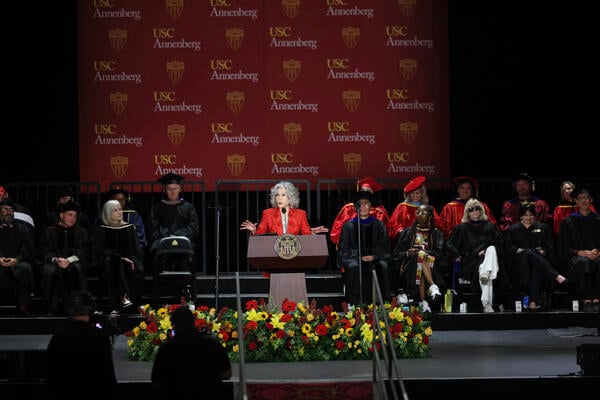
    Commencement this year comes at a time of uncertainty for graduates, who find themselves entering a polarized country steeped in political and economic tumult. It’s a scenario many graduation speakers confronted head-on; actress Jane Fonda told the Class of 2025 that “the world has never faced anything like the challenges we face today.”

    Much like 2024, this year’s commencement season has been marked by controversy, including at least two instances where student speakers were penalized for talking about the war in Gaza. Graduates also protested right-wing commencement speakers, including President Donald Trump himself, who spoke at the University of Alabama—which doesn’t traditionally invite guest speakers to commencement—and at the U.S. Military Academy at West Point, where his hourlong, meandering speech went viral.

    But for many graduates, commencement went on as expected, with speakers doling out advice about how to survive—and even thrive—in these difficult times. Here’s what they had to say.

    On the Current Political Climate

    “Ignorance works for power. First, make the truth seekers live in fear. Sue the journalists and their companies for nothing, then send masked agents to abduct a college student who wrote an editorial in her college paper defending Palestinian rights and send her to a prison in Louisiana, charged with nothing. Then, move to destroy the law firms that stand up for the rights of others. With that done, power can rewrite history with grotesque false narratives. They can make criminals heroes and heroes criminals. Power can change the definition of the words we use to describe reality. ‘Diversity’ is now described as illegal. ‘Equity’ is to be shunned. ‘Inclusion’ is a dirty word. This is an old playbook, my friends. There’s nothing new in this. George Orwell, who we met on the street in London, 1949, he warned us about what he called ‘newspeak.’ He understood that ignorance works for power. But then it is ignorance, isn’t it, that you have repudiated every single day here at Wake Forest University? … Can the truth win? My friends, nothing else does.”

    —Scott Pelley, veteran CBS reporter, May 19 at Wake Forest University

    “I could never have imagined 55 years [after I graduated college] that a young woman would write her truth in your paper and find herself kidnapped and arrested for speaking her truth, somehow. And be put in jail. I could not have imagined that, 55 years later. But let me tell you that all of America salutes your president and Tufts University for supporting that student, Ms. Öztürk. It’s so important, and there’s the point when you think about Rümeysa. She said something recently. She said, ‘I still believe in this country and the right to free speech and to due process.’ … And so I can tell you when you say, ‘Oh, we’re going down the tubes.’ No, we are not. I believe in this country. As Rümeysa said, ‘We believe in the people.’ In you. This country will be OK.”

    —Freeman Hrabowski III, education advocate and former president of the University of Maryland Baltimore County, May 18 at Tufts University

    On Persistence

    Maggie Rogers, pictured here in 2024, spoke at her alma mater, NYU, this month.

    “My career arrived overnight. It’s this Cinderella story of a video—maybe you’ve seen it, maybe it was force-fed to you. If you haven’t seen it, I play a song for Pharrell Williams, he really likes it, his reaction goes on YouTube—ta-da, I’m famous. What people saw in that video was this moment of alignment; they saw a past life or the universe or whatever you want to call it come along and hold my hand to the flame. But no one saw all the hard work or all the times I almost quit. They never heard the songs that didn’t work or the shows that were just bad … I don’t know any artist that hasn’t considered quitting. But you didn’t get here because you wanted to do something easy; you got here because you wanted to do something great.”

    —Maggie Rogers, singer-songwriter, May 16 at New York University’s Tisch School of the Arts

    “There’s a saying from one of America’s most practical minds, Benjamin Franklin, that I’ve used almost every day of my life: ‘Little strokes fell great oaks.’ It’s simple, it’s old, it’s absolutely true … I did run for governor in 1994 and lost, and one of the reasons I lost, I think, is I didn’t show my heart. I had five-point plans to cure every ailment in the state, but I didn’t really connect at a human level with people.

    “So, in 1998, when I ran again, I vowed to campaign differently. For example, I went to visit 260 schools in a matter of a year. Back then, my views on education were considered pretty radical, so in essence I went into the lion’s den over and over and over again, trying to dehorn myself, I guess, with people that were skeptical of the ideas that I was advocating. I listened and learned, I shared my passion, I told stories of the challenges that teachers had. And I believe I became governor in 1998 because I was doggedly determined to show my heart. It’s easy to look at the world and believe that success happens overnight. We live in a world of immediate gratification, don’t we? Social media, movies, headlines often highlight the moments of triumph without showing the years of work, sacrifice and persistence that came before.”

    —Jeb Bush, former governor of Florida, May 6 at Nova Southeastern University

    On the Value of Community

    “Don’t let anxiety or depression or hopelessness cause you to isolate. On the contrary, grow yourself a deep, solid community of people who share your values, have each other’s backs, check up on each other regularly, and be intentional about this. You know, in these uncertain times, we need to strengthen our ties to community, to our colleagues, our friends and family, because, more and more, we’re going to need this support for safety, for love, for help, for fun—let’s not forget fun—and for survival. You may not be aware of this, but since the 1980s, there’s been a concerted effort to promote individualism. You know, ‘I’m here for me and mine.’ And this shift to individualism is no accident; it’s being driven by people who want us disempowered. The myth of the rugged individual who needs no one is just that: It’s a myth created by stories through culture, told through culture, and the kinds of things that you all are going to be doing. So graduate students working with words and images—do the reverse. Encourage community versus individualism.”

    —Jane Fonda, actress and activist, May 16 at the University of Southern California Annenberg School for Communication and Journalism

    On Overcoming a Negative Mindset

    Henry Winkler, an older man with white hair, smiles at the camera. He is wearing a white button-up shirt and a brown jacket.

    Henry Winkler, pictured here in 2024, gave the commencement address at Georgetown University.

    Harmony Gerber/Getty Images

    “I was a negative thinker. I wanted to beat the system. ‘I can’t, I won’t, I’ll never, oh, she won’t go out with me.’ So, I tried to find the answer to negative thinking. I found Gurdjieff. He’s an Armenian philosopher who wrote a gigantic book. But he doesn’t want you to finish the book unless you understand him—so I didn’t. ’Cause I didn’t know what the hell he was talking about. And I found a disciple of his, Ouspensky—also a big book. I got one sentence. OK, so, you’re walking to your dream. Never let your dream out of your brain. And when you decide what it is you want to do, just know it without a doubt, know it without ambivalence. So you’re walking to your dream, and you have your dream in your brain, and all of a sudden a negative thought comes in. Your shoulders drop, your head drops and then that negative thought, it blooms into a thesis of negativity. A negative thought comes into your mind—you say out loud, you say out loud, ‘I am sorry, I have no time for you now.’

    “Yes, people will look at you very strangely, but it doesn’t matter, because it becomes your habit. A negative thought comes into your mind, you move it out, you move a positive in. For me, it is a Bundt cake with melty chocolate chips—no icing—and all of a sudden your shoulders fly back, your head flies up and you continue your dream. And then you get to stand here and talk to you.”

    —Henry Winkler, actor, May 17 at Georgetown University

    “[I was] sitting in a doctor’s office, facing one of the most difficult decisions I’ve ever had: continue living my life in pain, or consider having my leg amputated. In that moment, something clicked. I stopped letting the reality of my present circumstances dictate the potential of my future. I stopped coming from a place of victim mentality and realizing that everything happens for a reason and something bigger was going on. That shift in perspective gave me the courage to move forward, to make the decision to have my leg amputated and hope of a better future.

    “Since then, I’ve come to realize something. Experiencing pain doesn’t disqualify you from discovering your purpose. It prepares you for it. The reality is, every single person here has lost something at some point, a dream, a loved one, a friend. You see, the promise in [James 1:2–3] wasn’t that trials would go away; it was that endurance would grow. That’s what trials do. They forge something in us that comfort never could. They teach us to keep going when nothing makes sense to believe, when hope feels distant, to see ourselves, not by what we’ve lost, but by who we’re becoming. That’s the hidden gift in pain, because it’s the journey, not the destination that shapes us the most. So if you’re in the middle of something broken, don’t run from it. Embrace it. Life is hard, but the journey is worth it.”

    —Jarryd Wallace, four-time Paralympian, May 9 at the University of Georgia

    On the Importance of HBCUs

    Jasmine Crocket, a Black woman with long black hair, is seen here wearing thick black glasses and a bright yellow-green suit.

    Rep. Jasmine Crockett spoke at the Southern University of New Orleans, an HBCU in Louisiana.

    “I will start by saying your existence as a graduate of this HBCU alone is and will be seen as a resistance. Let me break it down this way: They never wanted us to be educated. This isn’t false. It is absolutely a fact. I know y’all know the history, but there is something special in this moment in time to be allowed to tell the story in the midst of the many haters and agitators being elevated to the highest positions of power and trying to use an old-school eraser—emphasis on old-school. You know, the old pink one? They want to use that old-school eraser to erase us. They have no idea that this big pink eraser can’t erase what was written in blood. Blood that was shed by the many who bled so that brighter days like this could come.

    “Much like the creation of this school, nothing in this life will be given to you. You will always walk into spaces due to your meritocracy. And even the spaces they seek to disallow you from, just know that they fear your greatness. You see, in 1956, Act 28 of the Louisiana Legislature established SUNO, but only after local African American leaders in the ’40s pushed for public college for Black students during segregation. Turn to your neighbor and say, ‘SUNO wasn’t created out of generosity.’ [graduates repeat] ‘It was created out of segregation.’ [graduates repeat] You see, they sought to build barriers. But SUNO built beginnings.”

    —Jasmine Crockett, U.S. representative from Texas’s 30th congressional district, May 10 at Southern University at New Orleans

    On Finding Who You Are in College

    “So, you might wonder why I’m speaking here instead of at the business school. Well, it’s because the business school got Snoop Dogg. Hard to compete with Snoop. Even though I did later go to business school, I could not have navigated the business world the way I did without the liberal arts education I earned right here. USC is where I discovered what I liked and what I didn’t. I did not, for example, like writing. That’s ironic for the CEO of a publishing company, I know. Eventually I came around.

    “Physics, though, that hooked me right away … Physics instilled something in me that was more valuable than equations and theories. It gave me confidence. It became second nature to think, ‘I don’t know how to solve this problem, but I do know that I will figure out how to solve it.’ And that, Trojans, is what your USC education is giving you. More than a degree, more than a line on a résumé. It’s equipped you with a way of thinking. You now know how to distinguish between fact and fiction, how to analyze and approach problems, how to craft arguments, and how to lead. And whether you know it or not, whether you study law or literature, physics, philosophy, political science or the lab-based kind of science, and whether it took you, like me, an extra year to finish quantum mechanics—that’s a true story—you now have the confidence to navigate the unknowns of life.”

    —Roger Lynch, CEO of Condé Nast, May 16 at the University of Southern California Dornsife College of Letters, Arts and Sciences

    “The artist de Kooning said, ‘The problem with being poor is that it takes up all your time.’ I came here as a scholarship kid, first-gen, loaded up with Pell Grants, work-study, which is actually quite isolating. I never went on a spring break. I never studied abroad. I never had an unpaid internship. I needed all my time to be billable. I was privileged to look like a rich girl, a city girl, a girl who had ridden in a yellow taxi and should rush Tabard. But no, I had, in fact, never ridden in a yellow taxi and should be a Tri Delt. I found a rusted 10-speed bike in the basement of a frat house, tuned it up, rode it around for three years, and left it unlocked on 40th and Irving the day I graduated. Why was I in the basement of a frat house? You know why.

    “The point is, I didn’t come to Penn to pursue a career in the arts. I came here to use the best tool for class migration that’s ever existed: higher education. And that was it. It was a low bar: be employable, hopefully well-paid. When people ask me when I knew I wanted to be an actor, my answer is, when I got paid for it. Was I passionate about it? Sure. Did it bring me self-esteem and joy? It did. But I was practical, pragmatic. But during my time here, I began to think differently. I was in control of my life, and I was working hard to build the confidence, the life skills, the connections and the grit to believe success at anything I devoted myself to was possible.”

    —Elizabeth Banks, actress, May 19 at the University of Pennsylvania

    Source link

  • Judge Keeps Block on Harvard International Student Ban

    Judge Keeps Block on Harvard International Student Ban

    The Trump administration still won’t be able to prevent Harvard University from enrolling international students after a federal judge decided Thursday to keep a temporary restraining order in place.

    The hearing before Judge Allison Burroughs in Massachusetts District Court came a week after the Department of Homeland Security revoked Harvard’s ability to enroll international students and required those currently at the university to transfer. Harvard quickly sued to block that decision, and Burroughs granted a temporary restraining order May 23. 

    Harvard argued in the lawsuit that the administration violated the First Amendment and the university’s due process rights with the abrupt revocation. In an apparent effort to address Harvard’s concerns, the administration said ahead of the hearing that it would go through a more formal administrative process to decertify Harvard from the Student and Exchange Visitor Program. According to the notice filed in court Thursday morning, Harvard has 30 days to respond to the claims that it failed to comply with certain reporting requirements and to maintain a campus free from discrimination as well as “practices with foreign entities raising national security concerns.”

    But while that process continues, Burroughs wants to maintain the status quo for Harvard, which means that international students can remain at the university. She plans to eventually issue a preliminary injunction, the next step after a temporary restraining order.

    Burroughs said an order would give “some protection to international students who might be anxious about coming here or anxious about remaining here once they are here,” The Boston Globe reported.

    The government lawyers argued in the hearing that an order wasn’t necessary because of the new notice. But Harvard’s lawyer Ian Heath Gershengorn countered that “we want to make sure there are no shenanigans” while Harvard challenges the Trump administration’s action.

    And despite Burroughs’s quick restraining order, current and prospective international students at Harvard have faced disruptions.

    Maureen Martin, director of immigration services in the Harvard International Office, wrote in a court filing that students scheduled to travel to the United States in the fall found out by the morning of May 23 that their visa applications were denied. (The administration revoked Harvard’s certification May 22.)

    “I am personally aware of at least ten international students or scholars whose visa applications were refused for ‘administrative processing’ immediately following the Revocation Notice,” Martin wrote, adding that none of the visa applications that were refused or revoked following the revocation have been approved or reinstated. 

    For example, when a visiting research scholar at the Harvard School of Dental Medicine tried to obtain a J-1 visa at the U.S. embassy in Prague on May 23, her visa application was rejected.

    “The officer gave the scholar a slip that stated she had ‘been found ineligible for a nonimmigrant visa based on section 221(g) of the U.S. Immigration and Nationality Act (INA).’ The slip said, ‘In your case the following is required,’ and the consular officer checked the box marked ‘Other’ and handwrote, ‘SEVP Revocation / Harvard,’” Martin wrote.

    Martin wrote that the Trump administration has caused “significant emotional distress” for current international students and raised a number of questions for either incoming or prospective students who are trying to assess their options. At least one student deferred admission for a year for visa-related reasons.

    Source link

  • Trump Targets Chinese Students, a Harsh Blow to Higher Ed

    Trump Targets Chinese Students, a Harsh Blow to Higher Ed

    Secretary of State Marco Rubio announced on Wednesday night that the Trump administration will “aggressively revoke” Chinese college students’ visas and heighten scrutiny of visa applicants from China. The new policy specifically targets “those with connections to the Chinese Communist Party or studying in critical fields.”

    It’s the administration’s latest move in what has been a sudden resurgence in its attacks on international students, which it seemed to suspend in April after legal efforts led to the restoration of the legal status of thousands of students.

    The news sent shock waves through higher education and could lead to a major reduction in foreign students at American universities, especially public research institutions. China contributes the largest number of international students to the U.S., with nearly 280,000 enrolled in 2023–24, according to data from the Institute of International Education—about a quarter of the total international student population in the country. 

    That share, however, has been shrinking since the COVID-19 pandemic; last year, India overtook China as the No. 1 source country of international students. But Chinese students are far more likely to enroll in undergraduate programs and pay more in tuition. They also make up a significant slice of STEM researchers: 16 percent of all U.S. graduate students in STEM fields and 2 percent of undergraduates are Chinese nationals, according to a 2020 report from the Center for Security and Emerging Technology at Georgetown University.

    It’s not clear whether the visa revocations would be accompanied by legal status terminations in the Student Exchange and Visitor Information System or prompt deportation proceedings, as they did for thousands of international students in March and April. Those steps would be the purview of the Department of Homeland Security.

    The targeting of students in “critical fields” in particular could devastate STEM programs and research labs at smaller universities across the country, where Chinese international students are heavily represented. Rubio did not clarify what fields could be considered critical, potentially setting the stage for a sweeping focus on areas where GOP lawmakers have raised concerns about sensitive national security research being shared with the Chinese government.

    A spokesperson for the State Department did not respond to a list of questions, including requests to clarify the scope of the new policy’s target and the timeline for visa revocations, in time for publication. At a press conference yesterday, department spokesperson Tammy Bruce declined to “get into the details” of how the new visa scrutiny would be applied or what “critical fields” the department was referring to, because it “might give up our hand and make certain things less effective.”

    “When we think of critical fields, we think of national security, the nature of how we keep America safe and secure and more prosperous,” she said. “It is important to keep a broad base, because that could mean many things.”

    The new policy’s focus on students with ties to the Chinese Communist Party has also raised concerns about academic freedom and free speech violations. Jonathan Friedman, managing director of U.S. free expression at PEN America, said the new policy targeting Chinese students would “hold student visas hostage to an ideological litmus test and disrupt the open exchange of ideas across cultures and borders.”

    “‘Aggressively revoking’ visas based on political ideology is a gross violation of basic free expression principles that anchor the academy,” he wrote to Inside Higher Ed.

    William Brustein, a retired longtime international student administrator, said the vague nature of Rubio’s directive could enable a sweeping dragnet that catches the majority of Chinese students—especially since association with the ruling Communist Party is difficult to avoid in China.

    “How will they know who’s a member? Maybe they’ll say if you were in a Chinese-sponsored youth group as a child, that could prevent you,” Brustein said. “Right now that policy is so vague that it could cover all Chinese students who want to study in the U.S.”

    Revocation Resurgence

    The administration briefly retreated from its persecution of international students late last month, after targeting pro-Palestine student protesters and expanding its scope to terminate the legal residency of thousands of students at institutions across the country. But a spate of successful court challenges halted the campaign in April, spurring the Trump administration restore more than 5,000 students’ SEVIS statuses.

    A lull followed the restoration as students, advisers and lawyers waited for the administration’s next move. It came two weeks ago, when the Department of Homeland Security released a new Immigration and Customs Enforcement policy granting the agency more leeway to revoke students’ SEVIS status with little justification.

    The Trump administration’s new strategy seems to target specific international student populations. So far, those have been recent graduates on Optional Practical Training visa extensions, students at Harvard University and potentially other institutions in their crosshairs, and now students from China, who Rubio claims are more likely to be national security threats.

    The State Department has also begun to tighten visa restrictions for applicants and incoming students. On Tuesday, Rubio announced a pause on all new student and exchange visa interviews while the administration implements an intensive new social media screening policy. The latest announcement on China also said the State Department would review application criteria to “enhance scrutiny of all future visa applications” from China and Hong Kong.

    Marjorie Hass, president of the Council of Independent Colleges, said there’s already a process for vetting international students, and that the administration’s new policy seems more aimed at scoring political points and justifying deportations than enhancing national security.

    “Institutions have their own admissions standards and the embassies do vet students who come into the country,” she said. “It’s not currently the Wild West.”

    Brustein said that if international students from China weren’t already moving away from American colleges en masse due to this spring’s targeting of foreign students, the latest move is sure to discourage future applicants.

    “We’re shooting ourselves in the foot,” he said. “Even if some of these decisions are reversed, we’re undoing the progress we’ve made over so many years in being this welcoming environment for the best and brightest in the world.”

    “That harm I don’t think can be undone.”

    A Blow for Research Universities

    Brustein has led international student offices at West Virginia University, the University of Illinois at Urbana-Champaign and Ohio State University, where he said there were “thousands” of Chinese students who often paid three times as much as their domestic peers.

    He said the colleges likely to be hit hardest by a major reduction in current and future Chinese students are public ones, especially regional institutions in areas with shifting demographics and declining college-going rates.

    “There are regional public universities and flagships across the Midwest, in the South, that have a large contingent of Chinese students who are coming particularly for STEM education,” Brustein said. “It’s those ones that survive on a thin revenue stream who are going to suffer the most.”

    He added that a sizable reduction in Chinese international students would likely hit scientific research hardest.

    “Many Chinese students get degrees in computer science, engineering, and go on to go to grad school or do an OPT,” he said. “They stay in the country, work in our labs, contribute significantly to innovation in this country, not China. To lose that is going to be a very big blow to our capacity for innovation.”

    Hass said that Chinese students have been both a financial lifeline and a source of cross-cultural exchange between the two countries for more than a decade. She said the benefits for higher education and for American diplomacy have been overwhelmingly positive, and a large-scale rollback of that relationship would be destructive for both.

    “This is a place where the balance of trade is very much in favor of the U.S.,” she said. “It’s mystifying why we would be undermining that.”

    She added that for many colleges, international students—and the volume of full-paying Chinese students in particular—help institutions improve access for local students.

    “Colleges will miss out on a lot of revenue,” she said. “That means the burden has to be borne by domestic students.”

    Source link

  • UK International Education Strategy – how it began and what should come next

    UK International Education Strategy – how it began and what should come next

    • By Ruth Arnold, Executive Director of External Affairs, Study Group and cofounder of the #WeAreInternational campaign

    This weekend, an American president stood on the tarmac by Air Force One and took questions from reporters. One picked on his current legal confrontation with one of the world’s most famous universities and one older than the United States itself, Harvard.

    ‘Part of the problem with Harvard,’ he said, ‘is they are almost 31% of foreigners coming to Harvard… it’s too much, because we have Americans that want to go there. No foreign government contributes money to Harvard. We do.’ Harvard’s single sentence response on X was clear, ‘Without its international students, Harvard is not Harvard.’ Within a day, the State Department had paused all US student visa appointments globally – affected students around the world immediately began rethinking their options.

    Here in Britain, politics around international students has less of the overt drama of the US. Yet even as the Immigration White Paper stepped back at the eleventh hour from the most extreme measures to curtail the Graduate Visa, a link between efforts to reduce immigration statistics and to use student levers to do so is now explicit. British universities’ pride in reaching the government’s own target of 600,000 overseas students is no longer simply applauded as a success for regional economies, research capacity and soft power, but also seen as a contributor to political risk. And if we think political narratives in the US won’t travel across the Atlantic, we’ve not understood the world we now live in.

    ‘The Overseas Student Question’ – taking a long view of UK international education strategy

    A few months ago, a friend gave me a book found in an Oxfam shop. Published in 1981 by the Overseas Student Trust, The Overseas Student Question: Studies for a Policy promised a fresh look at a growing debate – what were the costs and benefits of welcoming international students, the implications for foreign policy, the importance for ‘developing countries’ of study abroad? And what were the requirements of students themselves?

    First, though, I wanted to understand who was behind this book. The Overseas Student Trust was founded in 1961 as an educational charity by a group of leading transnational companies, many of whom sponsored international students to come to the UK – Barclays, BP, ICI, Shell and Blue Circle amongst them. There had also been a companion report, Freedom to Study, and an earlier National Union of Students (NUS) survey called International Community?. I noted the ominous question mark in the title and a link to the founding of the UK Council for Overseas Student Affairs. The author and editor was Lord Carr of Hadley – a Conservative politician, pro-European former Home Secretary and such an able reformer that when Margaret Thatcher became Prime Minister and didn’t offer him a role as Foreign Secretary, she chose not to offer him an alternative to avoid having such a capable opponent in her ranks.

    Lord Carr began with a recognition of policy failure and a need to do better: ‘The overseas student question has generated more heat than light in the recent past and therefore nothing but good can come from a long, cool look at its various aspects.’ Then as now, nobody was clear where in government international student policy should sit. For 30 years it had been led by overseas departments of state, and delegated to the British Council they funded. Yet the policies which actually impacted students were found ‘in the Department of Education and Science in respect of tuition fees, and the Home Office as regards immigration and employment’.

    There was also a shortage of reliable data to inform decisions, and it was nearly impossible to calculate their political or even trading benefits. These were ‘so far off in time that the link between cause and effect can scarcely be recognised, and the case for overseas students is thus the victim, because unfortunately in politics the short-term tends to preempt the long-term, and the urgent usurps the place of the important.’

    So Lord Carr pulled in the heavyweights of his day to make a case for the value of international education to government. In addition to the Department of Trade and CBI, the Chairmen of more than forty of Britain’s largest exporters and firms with interests abroad wrote letters to make plain the importance to their future success of ‘the foreign national who has had some of his education in Britain’. Leading industrialists argued for ‘as large a population of international students as possible in the years ahead.’

    Yet Lord Carr recognised a need for balance between national priorities and the preservation of institutional autonomy in the process of selection and admissions, and he had doubts about the ability of government to make such decisions alone. ‘These are not matters to be laid solely at government’s door. Industry and the educational world should be involved, both in the thinking and the implementation.’

    The Labour beginnings of international cross-subsidy

    The International Student Question was written at a point of inflection. In 1963, the Robbins Committee on Higher Education described subsidies to international students as a form of foreign aid, estimated to be £9 million for 20,000 students. In 1966 it was a Labour government that first announced a differential fee, £250 compared to £70 for home students, and in 1969 Shirley Williams argued for a more restrictive policy on international students.

    All this led to a change in dynamic from self-interested charity to overt trade. So Lord Carr made a new plea for ‘careful thought about how we provide for overseas students once they have arrived in this country,’ noting that students were ‘no longer subsidised objects of charity’ but have become the purchasers of services at £5000 per year. He quoted the Chairman of ICI – ‘caring pays because overseas students will expect value for money.’

    This is not to say international education had lost all ideals. Carr, a post-War Private Secretary to Anthony Eden, saw a greater prize – ‘The British experience must be seen in the wider context of the international mobility of students which is one of the foundation stones of a peaceful, stable and interdependent world.’

    International Education Strategies Globally

    Which brings us back to our own times, where questions of peace and interdependence through international mobility still matter.

    The UK refresh of the International Education Strategy is now overdue, and it will no doubt focus heavily on national priorities, on growth and innovation, inward and outbound mobility, global partnerships, transnational provision and terminology beloved of the FCDO, ‘soft power’. And yet hard forces are at play. It isn’t just a question of global trade and avoiding conflict – we now live in a multipolar era in which former colonies and adversaries are the burgeoning economic powers of the future. Our government does not act in isolation or have the ability to control the choices made by sponsors, families and students a world away. While international education strategy is written in Whitehall, the forces that drive it in actuality are global.

    Home thoughts from abroad

    A few years ago, I gave evidence to a parliamentary committee considering the local economic impact of international students with the then mayor of South Yorkshire and now a Labour government minister, Dan Jarvis. It wasn’t difficult for Dan to say what an influx of cash meant to a region like ours or the importance of cross-subsidy to research collaboration with industry. On his doorstep was a major new research campus on the formerly derelict waste ground of Orgreave. Inspiration had come from a Vietnamese PhD student on placement in a struggling local manufacturing firm. Her insights addressed live problems and the company won multiple orders against global competition, securing jobs. South Yorkshire wanted more of this.

    But what of that student’s home country? If we want our international education policies to reflect our own times rather than the age of Empire, we need take an interest in her side of the story too. Today, Vietnam is transformed from the war-torn nation that the student and her family had left behind. In common with much of ASEAN, it is now going through its own efforts to lift manufacturing capacity and transform its economy through research, education and high-value tech manufacturing. It’s got more in common with post-industrial S Yorkshire than many realise.

    Today’s Vietnamese students travel to traditional study destinations, but global education is changing. Vietnam is keen to emulate the successes of Malaysia and Singapore as a major Asian education hub. The aim is for partnerships and an education system that will lift more of its young population and so transform its prospects. We might take our own lessons from that.

    International education is increasingly seen as a key driver of global development. China and India, the two great source countries for traditional study destinations, are actively building their own domestic capacity. China invests 4% of its GDP in its universities, leading to a significant increase in research output, global rankings, and international collaborations, and it is now actively seeking to attract students and scholars from overseas, including through full and partial funding for undergraduate and postgraduate studies. Meanwhile, India’s growing reputation as a global education hub, coupled with initiatives like the ‘Study in India’ programme, is boosting its appeal. Fifteen foreign universities are opening campuses in India this year, including the Universities of Southampton and Liverpool.

    The so-called Big Four study destinations – the UK, America, Canada and Australia are now increasingly seen as the Big Ten and counting. Korea, Japan, Malaysia and Thailand are seeing the possibilities to lift their own institutions and economies by persuading talent and investment to stay closer to home. The Middle East is pursuing similar aims. For many students, the lure of the West and its freedoms continues, but it is no longer the only aspirational option, whatever those countries’ International Education Strategies say.

    In search of a double win

    One of the great challenges across the world is youth unemployment and underemployment, including among graduates. As nations all compete to move up the value chain and labour markets navigate headwinds of trade restrictions and AI disruption, old certainties about returns on higher education are taking a hit.

    International Education Strategies need to find a sweet spot, and the UK government is aiming for just that. One that meets both national and international needs and desires, which lifts local communities and sustains universities, while equipping intrepid young people across the world with the degrees and cultural agility that comes from living and working overseas, fluent in what is still the dominant language of global commerce and much innovation.

    The challenge for the International Education Strategy and its authors is to speak to more than their own ministers and domestic audiences. We should learn from the US. The news of an immediate threat to revoke international student visas at Harvard made its way around the world within hours. Universities in Hong Kong, China and Malaysia offered unconditional offers to ‘Harvard refugees’, a term worried international students had themselves used on social media. The UK has form here too. Negative rhetoric and the loss of post-study work led to a calamitous fall in international students and a brutal loss of trust. We don’t want to go back to that.

    What we need now is something better. A strategy which acknowledges both sides of an equation, what is right for the home nation, but also improves the lives and opportunities of students from around the world. Lord Carr was right. At a time of global change and complexity, knowledge and those who seek and add to it cannot be contained behind borders. The next British International Education Strategy should honour and do right by all who contribute to global education, our students and our academics. It should enable our universities to play a full part in both the success of their own communities and of the world. This is not a matter of funding alone, but of education and identity. Let’s hope it succeeds. After all, higher education is not an island; we are international.

    Source link

  • How to Significantly Improve Student Engagement and Retained Learning in Higher Education – Faculty Focus

    How to Significantly Improve Student Engagement and Retained Learning in Higher Education – Faculty Focus

    Source link

  • Higher education postcard: University of the Balearic Islands

    Higher education postcard: University of the Balearic Islands

    Oh this year we’re off to sunny Spain! (If you’re old enough, you’ll know.) But we’re not taking the Costa Brava plane, instead we’re off to Mallorca.

    In 1483 King Ferdinand of Aragon (yes, that one; half of the double-act Ferdinand and Isabella) authorised the establishment of the Estudi General Lul-Lià in Palma, on the island of Mallorca. This was a college named in honour of Ramon Llull.

    Ramon Llull, philosopher and theologian, who lived from 1232 to 1316, and was a native Mallorcan. The entry for him in the Stanford Encyclopaedia of Philosophy – it’s linked at the start of this paragraph – merits a read. Even if you don’t grasp the philosophical bits, the history and biography is quite something. I like him for three reasons. First, he was a unifier: trying to bring together philosophy, theology and mysticism into one body of knowledge and practice. Second, he wrote in languages that people could read: he was the first philosopher, for example, to write in vernacular Catalan. And finally, he believed that it would be possible to convert people to Christianity from Islam and Judaism by means of rational argument. As they say in the south of the USA, bless his heart.

    Anyway, back to the main strand. The college acquired its first owned premises in 1561, and by 1673 it was granted a Papal Bull by Pope Clement X, recognising it as the Royal and Pontifical Literary University of Mallorca. It drafted statutes in 1692 which were approved by King Carlos II of Spain in 1697: the Pontifical, Royal, and Lulian Literary University of Majorca was on the map!

    The university moved hither and thither in Palma over the next couple of centuries until, in 1835, it was disestablished. I can’t give chapter and verse as to why this was, but as at that time Spain was engulfed in a monumental civil war, contesting the succession to the throne and the nature of the monarchy (absolute or constitutional), I suspect it had to do with notions of bringing the former Aragon (which included the Balearic islands) back into line. But, this may be absolutely wrong – and if anyone who knows Spanish history can tell the story here, that would be great!

    And so from 1835 students in the Balearic Islands had to go to mainland Spain to undertake higher study: there was no university.

    Until in 1949 the University of Barcelona established what we would now call a branch campus in Mallorca, offering programmes in philosophy and philology at a reconstituted Estudi General Lul-Lià. In 1972 two further faculties were added: sciences, sponsored by the Autonomous University of Barcelona, and arts, sponsored by the University of Barcelona. A faculty of law was subsequently added and, in 1978, the branch campus became the University of Palma.

    The university continued to expand, with campuses on Ibiza and Menorca, and in 1985 it became the University of the Balearic Islands.

    Here’s a jigsaw of the card – it’s a tough one this week. The card itself shows, in the main, the rather splendid basilica of Santa María de Mallorca. But if you look about halfway up the left had side of the card, there’s a white building just to the left of the left-most of the cathedral’s four towers. And just behind that you can see roofs, one of which is the roof of the Estudi General, which is now a cultural centre.

    This week’s card was requested by, and is in honour of, Susannah Marsden, who is a big fan of Mallorca. As always, if there’s a university you’d like me to feature, let me know in the comments!

    Source link

  • Our drop-out and pace miracle is harming students’ health and learning

    Our drop-out and pace miracle is harming students’ health and learning

    One of the most alarming things about the Department for Education (DfE) commissioned National review of higher education student suicide deaths is the apparant role of academic pressure.

    Well over a third of the serious incidents reviewed made explicit reference to academic problems or pressures – often tied to exams or exam results.

    Other pressures included anxiety about falling behind, upcoming deadlines, perceived pressure to perform, and involvement in “support to study” procedures.

    And just under a third of those reviewed had submitted requests for mitigating circumstances – often citing personal reasons, mental health issues, or anxiety about academic performance.

    The review concluded that students struggling academically should be recognised as at-risk and provided with enhanced, compassionate support – and noted the need for greater awareness at critical points in the academic calendar, particularly around exam times, given that March and May saw peaks in suicide and self-harm incidents.

    Basically, academic pressure was not a sole cause but a consistent co-factor – frequently present and potentially exacerbating existing vulnerabilities. The report calls for better early detection, more proactive outreach, and a systemic rethink of how institutions respond to academic distress before it becomes a crisis.

    But what if the system, and its associated rhythms and traditions, is itself causing the problems?

    See the mess and trouble in your brain

    In our recent polling on health, academic culture emerged as a significant but often overlooked determinant, with students describing patterns of overwork, presenteeism, and what we’ve heard called a “meritocracy of difficulty” in some countries – one that rewards suffering over learning outcomes.

    My department seems to pride itself on how much we struggle,” wrote one student, while another observed that “lecturers brag about how little sleep they get, as if that’s something to aspire to.” In some departments in some providers, unhealthy work patterns are normalised and even celebrated.

    Assessment strategies featured prominently in student concerns about academic pressure. “Having five deadlines in the same week isn’t challenging me intellectually – it’s just testing my ability to function without sleep” and “I’ve had to skip meals to finish assignments that seem designed to break us rather than teach us” are two of the comments that got the highlighter treatment.

    Some spoke of the way in which assessment approaches particularly disadvantage students with health conditions:

    When everything depends on one exam, my anxiety disorder means I can’t demonstrate what I actually know.

    The glorification of struggle appears deeply embedded in some disciplines. “There’s this unspoken belief that if you’re not miserable, you’re not doing it right,” noted one respondent. Another observed:

    …completing work while physically ill is treated as a badge of honor rather than a sign that something’s wrong with the system.

    Students also highlighted the disconnect between health messaging and academic expectations – “The university sends emails about wellbeing while setting impossible workloads” and “We’re told to practice self-care but penalised if we prioritise health over deadlines.”

    Many articulated a vision for healthier academic cultures – with comments like “Learning should be challenging but not damaging,” and “I want to be pushed intellectually without being pushed to burnout.” As one student noted:

    The university keeps trying to teach us resilience when what we really need is a system that doesn’t require being superhuman just to graduate.

    Students called for workload mapping across programmes to identify assessment bottlenecks and unreasonable clustering, alongside assessment strategies that offer more flexibility and multiple ways to demonstrate learning.

    They advocated for mandatory staff training on setting healthy work boundaries and avoiding “struggle” glorification, as well as health and wellbeing impact assessments for all new curriculum and assessment designs.

    Their asks included “reasonable adjustments by design” policies ensuring assessments are accessible by default, clear policies distinguishing between challenging academic content and unnecessary stress, and the revision of attendance policies to discourage presenteeism during illness.

    One comment pushed for student workload panels with the authority to flag unsustainable academic demands. As the respondent put it: “If workload is such an issue for UCU, why isn’t an issue for the SU”?

    You feel lazy but stop the fantasies and bubble butts

    Even when we were in the EU, the UK for some reason always declined to take part in Eurostudent – a long-running cross-national research project that collects and compares data on the social and economic conditions of higher education students in Europe.

    But we can do some contemporary comparisons.

    First we can look at the World Health Organisation’s Well-Being index (WHO-5), which invites respondents to consider whether, over the past two weeks:

    • They have felt cheerful and in good spirit
    • They have felt calm and relaxed
    • They have felt active and vigorous
    • They woke up feeling fresh and rested
    • Their daily life has been filled with things that interest me

    Cibyl’s Mental Health Research is the largest UK study of university students and recent graduates’ mental health – and if we consider its results via the Eurostudent comparison, we are at the upper end of low well-being.

    We can also look at students’ general perceptions of their own health – a big part of which will be their mental health:

    The question asked in Eurostudent is the one we asked in our recent health polling. If we sort by the percentage of students responding positively, we don’t fare well – and the temptation would be to assume that if we can act to improve students’ health, we might ease academic pressures.

    Students are diverse, of course. Here’s what our scores look like by disability:

    The mind drifts to improvements to the NHS, increased awareness, cheaper and more nutritious food or easier access to sports facilities. But as we know, causation is not correlation. What if, rather than good health being a solution to academic pressure, that pressure is a cause of the bad health?

    In this detailed Eurostudent 2024 analysis, higher study demands – specifically long hours spent on coursework, preparation, and class attendance – were directly associated with lower wellbeing scores.

    The findings are grounded in a Study Demands-Resources (SD-R) framework, which distinguishes between stress-inducing demands (like excessive workload or time pressure) and supportive resources (such as peer contact or teacher guidance).

    In multivariate regression analyses, students who reported the highest time spent studying were consistently more likely to report poor well-being, defined by WHO-5 scores of ≤50. The trend held even after controlling for social and financial variables.

    Students studying more than 40 hours per week consistently reported lower wellbeing scores, while those studying 30-40 hours show optimal outcomes. Interestingly, students studying under 20 hours also experienced reduced wellbeing, likely reflecting disengagement or underlying difficulties rather than lighter workloads being beneficial.

    Commuting time created additional strain, with wellbeing decreasing progressively as travel time increases – students commuting over 60 minutes each way showed notably lower scores than those with shorter journeys.

    The relationship between paid work and wellbeing followed a pattern where moderate employment (1-20 hours weekly) actually enhanced student well-being, possibly through increased financial security or beneficial structure. But working more than 20 hours weekly eroded those benefits and became detrimental to mental health.

    Childcare responsibilities initially appeared to correlate with slightly higher wellbeing, but the effect disappeared when support systems were factored in – suggesting external support rather than the caring role itself influenced outcomes.

    Excessive academic pressure drained cognitive and emotional reserves. Without adequate recovery, connection, or flexibility, students began to internalise stress, which eroded their self-efficacy and increased the risk of burnout, depression, and anxiety. As students fall behind, the pressure compounds – creating a feedback loop of academic struggle and psychological deterioration.

    Running from the debt in the battle of cyber heads

    Intertestingly, age played a crucial role – older students tended to report higher levels of well-being compared to younger students. This was attributed to more effective coping strategies such as increased support-seeking and greater use of engagement strategies, while younger students are more likely to use avoidance strategies.

    EUROSTUDENT’s model explicitly included age as a socio-demographic factor that shaped a student’s “contextual conditions” – such as their academic and personal study environments – which in turn influenced study demands, access to resources, and ultimately mental health outcomes.

    Its multivariate analysis supported the idea that age has a statistically significant impact on wellbeing, even when controlling for other factors such as financial stress and social isolation. All of which puts two key stats into sharp focus.

    Our undergraduates are pretty young – In Europe only Belgium, Greece and the Netherlands beat us on percentage of 18/19 year olds enrolled, and here’s the mean age of undergraduates on entry across the whole OECD. We’re in the middle of the pack on 22:

    But here’s the distribution for the average age on graduation from a Bachelor’s, which suggests we have the youngest undergraduate graduates in Europe:

    If you then bear in mind that our non-completition rates are lower, it’s hard to avoid coming to the conclusion that at least part of the problem we see with wellbeing and mental health is structural – and that taking steps to cause students to both enrol later, and complete slower, would help.

    Keep you feeling impressed

    In recent years, plenty of other countries have been attempting to speed up their students’ completion – partly because those countries are keen to get often older students out into the labour market.

    But it does mean that the research that has gone into why students take so long in some countries to accrue the 180 credits for a Bachelor’s can be interrogated for signs of those systems’ ability to accommodate and relieve pressure.

    A decade ago, the HEDOCE (Higher Education Dropout and Completion in Europe) project was a large-scale comparative study examining dropout and completion rates across 35 European countries – providing insight into the policies that European countries and higher education institutions employed to explicitly address study success, how these policies were being monitored and whether they were effective.

    It combined a literature review of academic and policy documents with three rounds of surveys among selected national experts from each country, eight in-depth country case studies (Czech Republic, England, France, Germany, Italy, the Netherlands, Norway and Poland), institutional case studies within those countries including interviews with policy-makers, institutional leaders, academic staff and students, and statistical analysis of available completion, retention and time-to-degree data.

    It found Denmark providing student funding in a way that explicitly acknowledged that the theoretical three-year timeline may not reflect educational reality. The Netherlands went further, offering students a full decade after first enrolment to complete their degree for loan-to-grant conversion, a policy that helped reduce average time-to-degree from 6.5 to 5.8 years while improving completion rates.

    It’s notable that the populists’ proposal of a study-time penalty to reduce the time further late last year in NL brought swift condemnation from the two national students’ unions – with concerns that forcing the same pace would result in unequal outcomes, worries that students’ high employment-during-studies rates were incompatible with a faster pace for some, and a major concern that the tens of thousands of students attempting less than 30 credits in a semester to fit in a “Board semester” – running the country’s impressive array of student associations – would be under major threat.

    In the HEDOCE report, researchers talk about “pressure reduction” – when students know they have more than three years available, “each individual semester failure is less catastrophic” and systems can “focus on mastery rather than speed.” Students facing temporary setbacks – health issues, family circumstances, financial pressures – were able to reduce their course load temporarily and extend overall duration rather than dropping out entirely.

    Students became “less likely to drop out entirely when facing academic difficulties” and “more likely to persist through temporary setbacks.”

    The Norwegian experience illustrates. Despite – or perhaps because of – allowing extended completion periods, at the time Norway was maintaining completion rates of 71.5 per cent at bachelor level and 67 per cent at master’s level. Students could “explore additional courses and find their optimal path without penalty,” with the well-functioning labour market reducing urgency to complete quickly as “employment opportunities exist even without completion.”

    Extended duration systems acknowledged the reality of student employment. The study found that students working more than 20-25 hours per week in Estonia and Norway showed higher dropout risk – but the systems accommodated it rather than penalising it.

    These systems also enabled what the report termed “assessment flexibility and academic readiness.” Students were able to gauge their preparation for examinations, retake failed modules without catastrophic consequences, and accumulate credits over multiple attempts rather than facing binary pass-fail decisions with immediate ejection consequences.

    Germany’s continuous assessment systems exemplified the approach – allowing students to “gauge their readiness” for progression rather than facing predetermined examination schedules regardless of preparation level. Ditto the Netherlands’ Binding Study Advice system – where students received intensive counselling and multiple opportunities for course correction, with the safety net of extended completion timeframes preventing premature dropout due to temporary academic difficulties.

    It’s also worth noting that countries prioritising completion over speed consistently showed better outcomes. Many European systems were:

    …explicitly designed to prioritise completion over speed, viewing extended duration as preferable to dropout.

    That challenges fundamental assumptions about educational efficiency. If the goal is maximising human capital development and minimising wasted educational investment, then systems that achieve 80 per cent completion over four to five years may be superior to those achieving 60 per cent completion over three years.

    As such, the evidence suggested that policymakers face a genuine trade-off between completion speed and completion rates. Systems optimised for rapid completion – three years maximum, immediate financial penalties for delays – may have achieved faster average graduation times but at the cost of overall completion rates.

    So what are we to make of the UK’s stats – where we seem to manage to combine a lower study hours-per-ECTS credit with lower drop-out rates than average and faster enrolment-to-graduation times?

    Every day we live a miracle

    Rather than extending duration to reduce pressure, the report argued that the UK system maintained “a fairly tight admissions system” combined with:

    …a widespread and embedded expectation that completion is possible in three years except for exceptional circumstances.

    Students and families “do not expect to study for longer than the normal time period,” creating social and cultural momentum toward timely completion, and England’s 2012 funding reforms – shifting to £9,000 annual tuition fees with income-contingent loans – created what the researchers describe as putting “students in the driver’s seat.”

    It seems to suggest that the market-driven approach and a desire to avoid extra debt was generating different behavioural incentives than the extended-support models elsewhere.

    Higher education institutions became “dependent on students and study success for their funding,” creating institutional incentives for retention without requiring extended timeframes. It also noted that in England, the HEFCE Student Premium provided targeted funding for institutions enrolling students “with a higher risk of dropout,” but that that operated within the three-year framework rather than extending it.

    Most significantly, it identified the English approach as creating what might be termed “compressed intensity” rather than “extended accommodation” – noting that “institutions and students are not funded for more than three plus one years (except for longer courses),” creating hard financial boundaries that concentrate educational effort.

    Everyone else in Europe might be scratching their head – England in particular seems to challenge the general finding that extended duration typically improves completion rates.

    It suggests an alternative model – intensive, time-bounded education with high support levels and clear completion expectations may achieve similar or superior outcomes to extended-duration systems. But at what cost?

    You don’t need an upgrade anymore

    The pressures identified in the HEDOCE report have intensified since its publication a decade ago. England’s “tight admissions system” referenced in the research is considerably less tight now as we continue to widen access, yet the temporal constraints remain unchanged. That creates a fundamental mismatch between institutional capacity to support diverse student needs and the rigid three-year framework within which everyone expects them to operate.

    The student premium funding available today is nothing like as helpful as it was a decade ago, EUROSTUDENT’s model is as vivid as any on the interactions between student financial support, and any regular reader of Wonkhe will know how far that has fallen in comparison to costs on all sorts of measures. Here’s how we look on average student incomes:

    And here’s how we look when we adjust for comparative spending power:

    Maybe our comparative wellbeing data looks worse precisely because we’ve created a system that prioritises throughput over student experience. Our high percentage of students living away from home, combined with annual rental contracts and significant financial commitments, makes dropping out extraordinarily difficult even when it might be the healthiest option. Students facing mental health crises may persist not because they’re thriving, but because the economic and social costs of withdrawal are so prohibitive.

    Our student maintenance systems don’t really allow enrolling into less than 60 credits a year even if a student wanted or needed to – and the regulatory pressures in the UK, especially England, to reduce dropout rates has created incentives to push students through.

    Rather than addressing the underlying causes of student distress, institutions focus on retention metrics that may keep struggling students enrolled but not necessarily supported. A “retention at all costs” mentality may well contribute to the compressed intensity that characterises the system.

    No more nap, your turn is coming up

    The temporal aspects are especially telling. Even if you set aside the manifest unfairness of a system whose most popular assessment accommodation for disabled students is “extra time”, it causes chaos – and deep opposition when things like self-certification is clawed back at the altar of “academic standards” that seem to be about pace rather than attainment.

    Then the high costs of student support services coping with the race mean that early intervention – the kind identified as crucial in the suicide review – often come too late or prove inadequate. When institutions are financially incentivised to maintain high completion rates within tight timeframes, the investment required for genuine wellbeing support becomes a secondary consideration.

    When Denmark had a run at speeding students up, this study found that the majority of students were led by an explorative educational interest that contradicted the reform’s demand that all students complete their education at the same pace. It also found a need to consider wider social interest and engagement among students:

    Rather than focusing exclusively on their own success, the students in the survey were often motivated by the social aspects of the study environment, and in many cases, the study environment appeared crucial for the students’ motivation and their completion times.

    In one telling quote, a first-year student in Computer Science saw the reforms as a risk to students’ voluntary engagement:

    One of the places where I think the Study Progress Reform will shoot itself in the foot is that there will no longer be someone who has the time to be a student instructor, because you have to complete your study in half the time. There is nobody who dares to sacrifice their own studies in order to teach others about what they learned last year.

    Another explained how she might take advantage of the new rules on transferring ECTS credits to gain more time for her bachelor project:

    I have perhaps become a bit rebellious in relation to the new regulations because I would like to enjoy this study… I would like to have more time to go into greater depth. I cannot plan what will happen in ten years, and I cannot see how the job market will look, but at the same time, I just simply need to look forward. … I have decided what I will write about in my bachelor [project], and I could actually use some of those credits from Tibetology, which I studied before.

    A third thought the reform had made her reconsider her own propensity to risk:

    It has always been important for me to have a period of study abroad, and it was an essential objective to learn and speak a decent level of Spanish. But then I found out the other day that the study abroad agreement that the Ethnology Department has in Spain requires that you take an exam in Spanish. And you have to take a language test before you go down there. … I think that now, all of a sudden, there is a lot at stake.

    The paper concludes that an acceleration of time has taken place in late capitalist societies, with movement becoming an objective in itself – institutions and practices are marked by the “shrinking of the present”, a decreasing time period during which expectations based on past experience reliably match the future.

    Can’t you see the link?

    But there’s another dimension to the story that complicates any simple narrative about slowing down or extending duration. The evidence from international skills assessments suggests that our efficient degree production system isn’t actually producing the learning outcomes we might expect.

    The Mincer equation – the fundamental formula in labour economics that models the relationship between earnings, years of schooling, and work experience – has traditionally suggested that each additional year of education participation yields measurable increases in both skills and earning potential. So what does the UK’s speed mean for learning and earning?

    The 2023 PIAAC (Programme for the International Assessment of Adult Competencies) results reveal that UK graduates, particularly those from England, perform relatively poorly compared to graduates in many other OECD countries across literacy, numeracy, and adaptive problem-solving assessments.

    The scale of the underperformance is stark. Adults in Finland with only upper secondary education scored higher in literacy than tertiary-educated adults in 19 out of 31 participating countries and economies, including England. While England has seen a 13 percentage point increase in the proportion of tertiary-educated adults between 2012 and 2023, average skills proficiency has not increased correspondingly. The PIAAC data show no significant gains in literacy or numeracy among our growing graduate population.

    In other words, we’re “producing” graduates faster and more efficiently than most other systems, but they’re demonstrating lower levels of the foundational competencies that their qualifications should represent. UK tertiary-educated adults scored around 280 points in numeracy compared to over 300 in Japan and Finland. In problem-solving in technology-rich environments, only about 37 per cent of UK tertiary-educated adults reached the top performance tiers, compared to over 50 per cent in countries like the Netherlands and Norway.

    That suggests that our model of “compressed intensity” may be producing credentials rather than capabilities. The three-year norm, rigid subject specialisation, grade inflation and high completion expectations all appear to prioritise the award of qualifications over the mastery of skills.

    The implications are profound. If degrees are not effectively developing human capital – the literacy, numeracy, and problem-solving capabilities that employers, society and students themselves expect – then the entire economic justification for higher education expansion with its considerable personal investment comes into question.

    Countries with extended-duration systems may achieve better learning outcomes precisely because they allow time for deeper engagement with material, multiple attempts at mastery, and the kind of reflective learning that develops transferable skills.

    The pressure-reduction mechanisms identified in HEDOCE – the ability to retake modules, explore additional courses, and gauge readiness for progression – may be essential not just for wellbeing, but for genuine learning and subsequent economic activity too.

    Pressure rocks you like a hurricane

    The irony is that students are desperate to slow down. A growing “slow living” movement represents a cultural shift from “hustle culture” to prioritising rest and mental health, driven by widespread burnout and exhaustion.

    Books like Emma Gannon’s “A Year of Nothing” and Jenny Odell’s “How to Do Nothing” advocate for intentional rest and resistance to productivity-obsessed capitalism, particularly resonating with those who’ve experienced chronic burnout from economic instability and social pressure to constantly achieve.

    Easing off won’t be straightforward. Financial pressures in providers seem to be reducing the optionality of slow(er) credit accrual, as more modules become “core modules” and our rigid system of year-groups gets more, rather than less, entrenched.

    Big decisions need to be taken soon re the Lifelong Learning Entitlement. I’ve written before about the way in which universally setting the full-time student maintenance threshold at 60 credits a year is both unreasonable and discriminatory – but even if that was eased off at, say, 45 credits, students will be acutely aware that every extra semester means more cost.

    In an ideal world, we’d kill off fees altogether – but even without free education, the case for linking fees to module credit is seriously undermined by the evidence. Why on earth should a disabled student whose DSA has taken all year to come through be expected to pay for another year’s participation while they attempt to catch up?

    There’s very little that’s fair about a system where some providers’ students need more support to succeed, but don’t get it because they’re sharing support subsidy with more that need it. Especially when much of that support is needlessly aimed at an artificial time pressure coupled with a low drop-out pressure.

    Take the pill to feel the thrill and touch it all

    With central government support in DfE budgets under pressure, there’s no chance of student premium funding stepping in to deliver the top-ups required any more.

    So link maintenance debt to time in study if we have to – but retain (and rebuild) a progressive repayment system that extracts a fair(er) contribution from those that didn’t need the support (interest on loans), all while severing the link between modular student debt and modular institutional income.

    Put another way, if student A needs to take 2 years to get to 180, student B takes 3 years, and student C takes 5 years, if we must have notional (tuition) student debt, they of course should all graduate with the same amount.

    Other options are available, and all have trade-offs. But whatever we do, we mustn’t go into the next decade assuming that the system we have created is some sort of miracle, or somehow advantageous in comparison to our international peers.

    Our traditions, pace, structures and incentives have all created a dangerous combination of pace and pressure that is damaging students’ real educational attainment and their health. It’s causing harm, and it needs to change.


    Source link

  • Podcast: Governance, apprenticeships, trends | Wonkhe

    Podcast: Governance, apprenticeships, trends | Wonkhe

    This week on the podcast we examine the OfS penalty imposed on Leeds Trinity over subcontractual partnerships oversight. What does the £115,000 fine and a new proposed code of “ethical” governance tell us about decision-making at the top?

    Plus we discuss the government’s decision to axe level 7 apprenticeships from levy funding, and explore incoming OfS chair Edward Peck’s ten trends shaping the future of campus universities.

    With Alex Stanley, Vice President for Higher Education at the National Union of Students, Pam Macpherson Barrett, Head of Policy and Regulation at the University of Leeds, David Kernohan, Associate Editor at Wonkhe and presented by Mark Leach, Editor-in-Chief at Wonkhe.

    Read more

    Poor quality teaching and student outcomes. But where?

    The new OfS chair identifies ten trends

    A code of ethical university governance is overdue

    Should governance reform be horizontal or vertical?


    Source link