Author: admin

  • Many States Picked Diploma Pathways Over HS Exit Exams. Did Students Benefit? – The 74

    Many States Picked Diploma Pathways Over HS Exit Exams. Did Students Benefit? – The 74


    Get stories like this delivered straight to your inbox. Sign up for The 74 Newsletter

    This story was originally published by Chalkbeat. Sign up for their newsletters at ckbe.at/newsletters

    When 18-year-old Edgar Brito thinks about what he’ll do in the future, mechanical engineering is high on the list.

    The senior at Washington state’s Toppenish High School first considered the career after he joined a STEM group in middle school. In a ninth grade class, he researched the earning potential for a STEM degree (“so much more money”) and the demand for mechanical engineers (“exploding”).

    So Brito took some engineering classes at his high school, became president of his state’s Technology Student Association, and is starting at the University of Washington this fall on a pre-science track.

    Brito’s experience is what state education leaders hoped for when they replaced the high school exit exam with multiple pathways to graduation. When he graduates in June, Brito will have completed several diploma pathways, including ones aimed at preparing for college and building career skills.

    But his experience isn’t necessarily typical. He has friends who have no idea what pathway they’re on — or if they’re on one at all. The requirements could be clearer and advisers could spend more time talking about them with students, he said.

    “Making sure that we know exactly what our pathway is and what it means to be on a pathway would have definitely helped out a lot more students,” Brito said.

    Five years after Washington rolled out its pathways, they appear to have helped more students who aren’t college-bound to graduate, which was part of the goal. But the system has also created new issues and replicated some old ones.

    For the Class of 2023 — the most recent year with available data — around 1 in 5 seniors didn’t have a pathway. That meant they weren’t on track to graduate within four years and at risk of dropping out. Some students relied on pandemic-era waivers that don’t exist anymore. That’s similar to the share of students who didn’t graduate on time in 2019, the final year of the exit exam.

    Asian and white students are much more likely to complete one of the math and English pathways, considered the college-prep route, while Native students, English learners, and students with disabilities are more likely to have no graduation pathway.

    “The implementation of graduation pathways has reinforced that the student groups who are the furthest from educational justice are completing the requirement at lower rates,” state education officials wrote in a 2023 report.

    Across the state, students don’t have equal access to the pathways. Many schools, especially smaller and rural ones, struggle to offer more than a handful of career and technical education classes. Some career pathways train students for low-paying jobs with little opportunity for advancement. Some students get funneled to the military pathway, despite having no aspirations to serve, because the aptitude test is easier to pass. Many teens, like Brito’s friends, find the pathways confusing.

    Washington is not alone. Nearly half of states offer multiple diploma options or graduation pathways. And some, like Indiana, have already taken a second pass at their pathways. Many have struggled to address the same big questions, including what exactly high school is for, and what students should need to do to earn a diploma.

    Now the state board of education is poised to overhaul its graduation requirements again.

    Piling on more ways for students to graduate is not the answer, said Brian Jeffries, the policy director at the Partnership for Learning, an education foundation affiliated with the Washington Roundtable, which is made up of executives from across the state.

    “Let’s better prepare our students to meet the pathways, [rather] than keep creating a smorgasbord or a cafeteria of options, which too often turn into trapdoors,” said Jeffries, who sits on the state task force that’s looking at graduation requirements. Until disadvantaged kids have access to better instruction and more support, he said, “we’re going to keep spinning this wheel.”

    The path to 100 high school graduation pathways

    Back in the early 2000s, many states raised the bar to graduate from high school with the hope it would get more kids to college. As a result, by 2012, half of all states required an exit exam, including Washington state.

    But as student debt soared and some questioned the value of higher education, schools abandoned that college-for-all mentality. Critics of exit exams argued that they blocked too many disadvantaged students from graduating.

    In Washington state’s final year of the exit exam, around 1 in 10 high school seniors didn’t pass the English language arts portion, and 1 in 5 didn’t pass the math test, the Seattle Times reported. The law that nixed the exit exam had broad support from the Washington teachers union, state education officials, and parents. Lawmakers passed it unanimously.

    Just six states require an exit exam now, with New York and Massachusetts dropping their tests this school year.

    But absent an exit exam, states haven’t really reached a consensus on what students should have to do to prove they’re ready to graduate.

    Nationwide, there are now more than 100 ways to graduate from high school, according to a recent report from the Education Strategy Group, a K-12 consulting firm. The myriad options provide flexibility, but “also contribute to the lack of clarity about what it means to earn a diploma,” the report found.

    When the nation’s main K-12 education law, the Every Student Succeeds Act, passed 10 years ago, it tasked schools with getting students ready for college and career. But many states and schools are still trying to figure out how to do the career part well.

    “Part of the challenge, frankly, is that schools are going through a bit of a post-high-stakes-test-based accountability identity crisis,” said Shaun Dougherty, a professor of education and policy at Boston College.

    Michael Petrilli, the president of the Thomas B. Fordham Institute, a conservative think tank, says that’s partly because for all the talk about changing high schools, graduation policies are still fairly restrictive. One reason Washington is revisiting its policies now is because some educators worry the state’s 24-credit requirement fills up students’ schedules, leaving little time for apprenticeships and other hands-on learning.

    Many kids are still “sleepwalking through six or seven class periods a day, mostly through college-prep courses,” Petrilli said, with “maybe a few career-tech electives on the side.”

    “We haven’t really unleashed high schools to do things very differently,” Petrilli said. “If we actually think that career tech is valuable, if we think that college-for-all was a mistake, then we need to be willing to act on it.”

    Diploma pathways can bolster teens’ interest in school

    What’s happening in the Toppenish School District illustrates the potential of the pathways model.

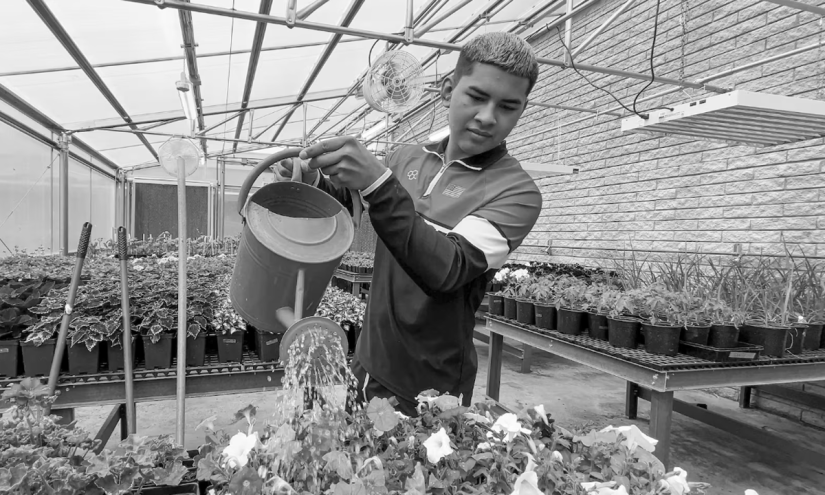
    The district, which serves around 3,700 students in south-central Washington, is able to offer a wide range of career and technical courses, including in growing industries, like health care and agriculture. The career-oriented pathway has helped increase some students’ interest in school.

    “It is very hands-on, and so it’s definitely more engaging,” said Monica Saldivar, Toppenish’s director of career and technical education. The old one-size-fits-all approach had “a negative impact for our students with diverse learning needs, academic challenges, and also language barriers.”

    Just before the state overhauled its graduation requirements, over 81% of Toppenish students graduated within four years. Now over 89% do.

    The improvements have been especially pronounced for English learners and Native students, many of whom live on the Yakama Nation. Since the state introduced pathways, Native student graduation rates have risen from 67% to 88%.

    Since pathways launched, the district has added several career-technical education courses, including advanced welding and classes that prepare students to work as medical transcriptionists or home health care aides. That can require some careful career counseling with students, as those jobs are in high demand but don’t pay well unless students get additional training or schooling and move up the career ladder.

    Still, the expanded offerings have helped some students tailor their post-high school plans.

    Frances Tilley, a Toppenish senior who’s headed to Gonzaga University in the fall, will graduate in June after completing both college-prep and career-oriented pathways.

    The 18-year-old took two of the new sports medicine classes and liked learning about what to do if you have a concussion. (Don’t try to stay awake. “We learned that’s not true,” Tilley said.)

    She followed that up with another health care class that touched on different disciplines. She gravitated toward psychology and now plans to get a master’s in counseling and become a mental health worker.

    Pathways can also help schools expose students to career options earlier.

    Three years ago, Toppenish started offering middle schoolers two-week labs to test drive careers such as marketing, nursing, or culinary arts. By the end of eighth grade, they’ve learned about 10 different careers. Now school counselors use students’ interests to help plot their high school schedules.

    Kaylee Celestino, 16, had long considered becoming a teacher. The Toppenish sophomore often gets “education” as an answer when she takes career quizzes. But the career-exploration labs also piqued her interest in science, and now she could also envision becoming a pediatric nurse. So her course schedule reflects that with advanced biology and college-level chemistry.

    “I just want to help people out,” she said, “like my teachers have helped out me.”

    Staffing, standards, data gaps make pathways challenging

    Staffing career and technical classes is one of the biggest hurdles to doing pathways well.

    Washington makes it easier than other states for professionals to put their work experience toward a teaching license. But many schools still struggle to attract and retain teachers for attractive fields like health services and welding when the private sector beckons.

    “These are lucrative fields,” said Dougherty, who has researched career education programs in several states, including Washington. “It’s hard to convince people to give up that salary to become full-time educators.”

    That creates extra work for schools. Saldivar, for example, meets regularly with regional employers to learn about their workforce needs. That helps inform whether Toppenish should drop or add certain classes, and which teachers to recruit. Saldivar is constantly networking and following up on “so and so may know someone” tips.

    Figuring out how to hold all students to a high standard when they are meeting different criteria to graduate is a challenge, too. Some worry Washington’s pathways are too flexible.

    The state rolled out a new pathway this year that allows students to graduate by completing a project, work-related experience, or community service. Lawmakers wanted to give students a way to show what they know besides taking a class or a test. But students don’t have to work with a teacher at their school, and if they choose to work with an outside mentor, there’s no clear rules for how they should be vetted.

    “Where are they finding these people?” said Jeffries of the Partnership for Learning. “Is their opinion an expert opinion that we could trust, or is this based on vibes?”

    Experts say it’s also important for students to understand what their likely earnings and other outcomes will be depending on which career pathway they follow.

    “We should not be talking about CTE in a very generic way,” said Dan Goldhaber, a professor at the University of Washington who has researched career and technical education teacher preparation in the state. “What the concentration is matters.”

    But Washington state doesn’t yet know how students’ outcomes may vary depending on which career and technical education concentration they chose, Katie Hannig, a spokesperson for Washington’s state education agency, wrote in an email. This is a common problem nationwide.

    The state also doesn’t yet know whether the pathway, or pathways, students completed were connected to their post-high school plan, which they must create to graduate. That hasn’t assuaged concerns that students are completing pathways disconnected from their college and career goals.

    The state expects to get that data in the future, Hannig wrote. Analyzing how diploma pathways affect graduation trends and postsecondary outcomes could help schools target resources and support.

    “Any new policy is a work in progress, but the fundamental core value of this policy is preparing students for their next step after high school graduation,” Hannig wrote. “Washington is proud to be one of those states that have established and continue to refine those pathways.”

    For now, districts like Toppenish are scrambling to coordinate weekly college presentations, field trips to work sites, and military recruiter visits — “a little of everything,” Saldivar said — to hedge their bets.

    Kalyn Belsha is a senior national education reporter based in Chicago. Contact her at [email protected].

    Chalkbeat is a nonprofit news site covering educational change in public schools.


    Get stories like these delivered straight to your inbox. Sign up for The 74 Newsletter

    Source link

  • Smart or Risky? Using AI in College Applications

    Smart or Risky? Using AI in College Applications

    Is your child cheating if they’re turning to AI for help with college applications? The answer isn’t clear-cut. When used thoughtfully, AI can save time, help with organization, and spark creativity. But if misused, it can easily backfire and risk your child’s college dreams.

    Kevin Krebs

    Founder & Managing Director, HelloCollege

    Most people are familiar with ChatGPT, but there are a host of tools to support the admissions process, including platforms to explore colleges aligned with specific interests (AdmitYogi), keep application tasks organized (Trello), and find scholarships based on career aspirations (BigFuture).

    The biggest risk? Relying on AI to write application essays. These essays are your student’s opportunity to demonstrate something about their values, perspective, and character — things that grades and test scores can’t capture.

    Bottom line — don’t ask a machine to write a human story.

    Originality is key, and no matter how advanced generative AI gets, it will never capture the quiet pride of walking away from a captain position on the robotics team to pursue a true passion for journalism — or the growth that came from navigating the space between your Indian heritage and Western traditions.

    Most colleges are aware of AI-generated writing and have started using tools like GPTZero and Turnitin to spot it, so over-relying on technology is a good way to have an application flagged or even disqualified. Bottom line — don’t ask a machine to write a human story.

    Instead, it’s best to use AI at the beginning and end of the process for idea generation, as a sounding board or for minor edits — never for writing full paragraphs, sentences, or even phrases. Your child might try prompts like: “Generate a list of questions to help me explore my values,” “Scan my essay for places where I could add more specific details,” or “Is it clear how I grew as a person from this experience?”

    While there’s no replacement for the human touch of an expert, AI tools can help students refine their ideas and polish their writing.

    AI can be a powerful tool in college admissions, but only when the student stays firmly in the driver’s seat. The best applications come from creativity, originality, and personal perspective — things no algorithm can replicate.


    To learn more, visit sayhellocollege.com


    Source link

  • University of Memphis Global — an Online Path to a Better Future

    University of Memphis Global — an Online Path to a Better Future

    global-online-uofm-college-degree

    I’ll be the first in my family to earn a college degree, and that’s something I hold very close to my heart.

    My family and I moved to the United States in 2014. We chose Memphis as our second home to start fresh and build a better future. 

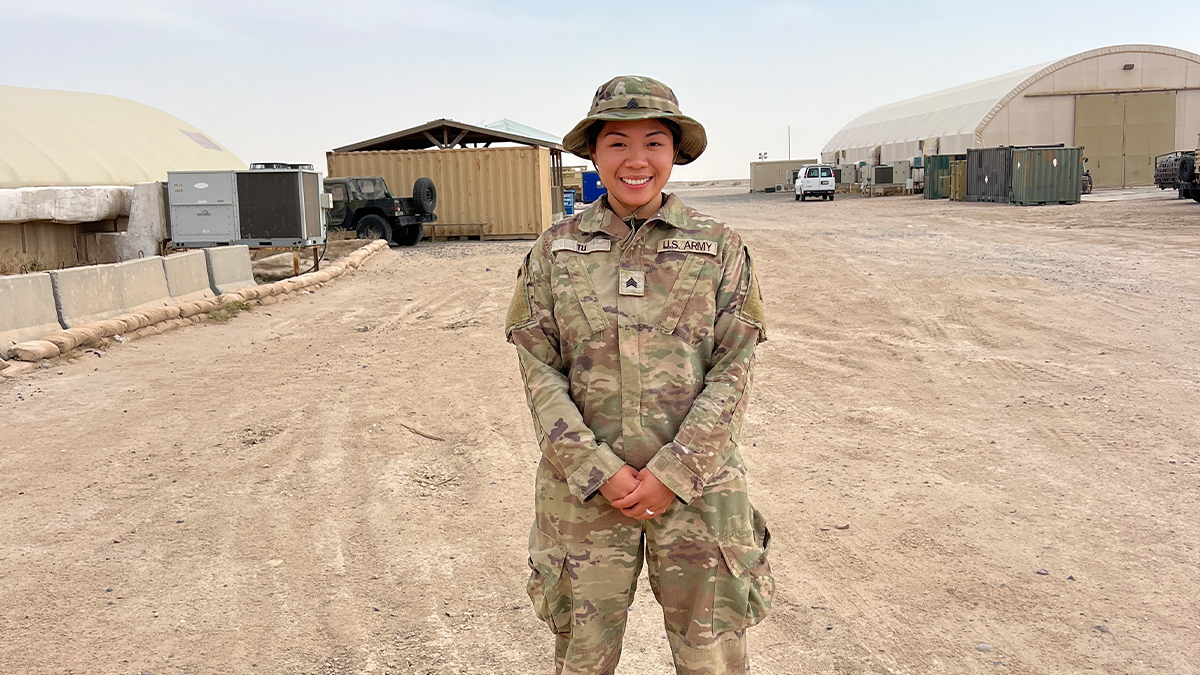
    When I graduated high school in 2020, I decided to join the Army Reserve so I could work full-time to help support my family financially. Along the way, my parents always reminded me of the importance of a college degree. Honestly, I struggled with the decision between choosing work over school.

    That changed when I discovered the University of Memphis Global (UofM Global) where I could earn my degree 100% online from an accredited, nationally recognized Carnegie R1 university. The flexibility of the program made it possible to balance work, life, and education. Once I enrolled, I knew I made the right choice.

    As an online student, I stayed involved with campus life through career fairs and joining student organizations like the Society of Human Resource Management. I wanted to get the most out of my college experience and connect with people who shared my passion for HR.

    Last November, I deployed to Kuwait, with a month left of fall semester. Thanks to the support and structure of UofM Global, I was able to finish strong, even making the Dean’s List. I’m taking four classes while serving on active duty, and I’m proud to say I’ll be graduating in May.

    Being able to serve my country, support my family, and earn my degree means the world to me. I feel ready to take on whatever comes next.


    To learn more, visit memphis.edu/uofmglobal/


    Source link

  • ASU Online: Where Success Is Accessible and Innovation Is Standard

    ASU Online: Where Success Is Accessible and Innovation Is Standard

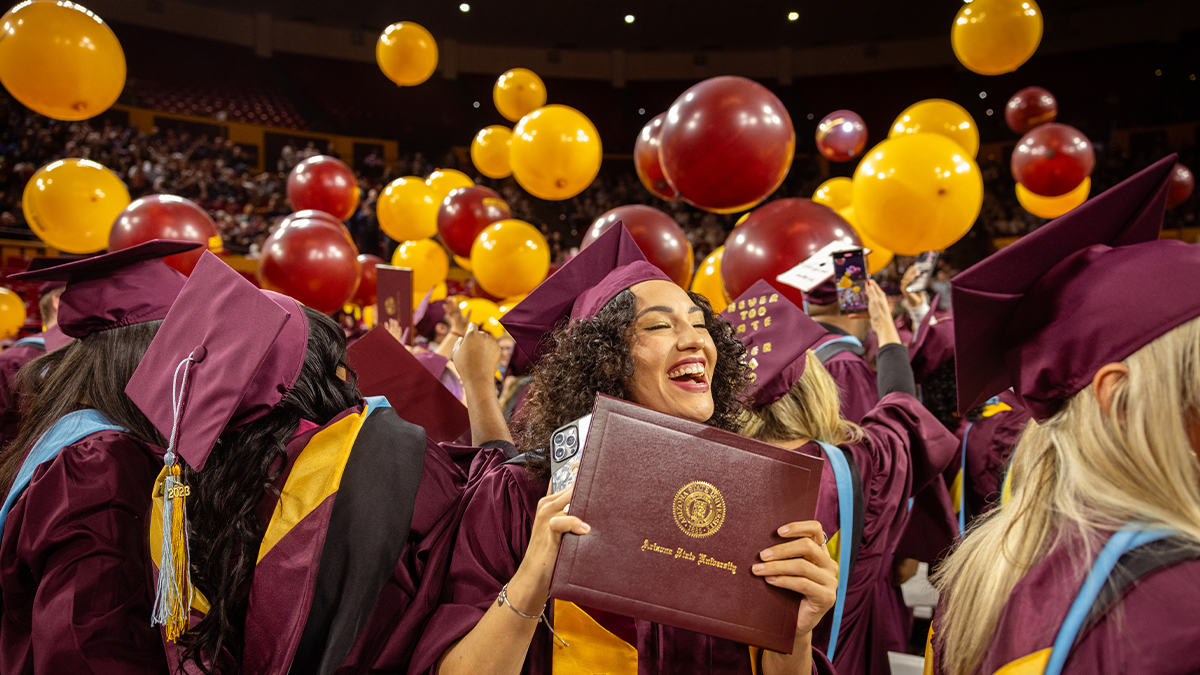
    What is your passion? What sparks your curiosity and brings you joy? Whatever it is, Arizona State University (ASU) will help you find it, study it, master it, and turn it into a rewarding career, regardless of your previous educational journey.

    Casey Evans

    Chief Operating Officer, EdPlus at ASU

    For more than 15 years, ASU has offered high-quality programs online taught by the same world-renowned faculty that teach on-campus students, using the same rigorous curriculum. ASU offers more than 300 degree programs online, with over 100,000 graduates now working across nearly every industry, helping to strengthen the university’s reputation for educational excellence and career readiness. ASU graduates are highly recruitable, with ASU ranking No. 2 in the United States among public universities for the employability of its graduates, ahead of UCLA, the University of Michigan, and Purdue University.

    ASU Online combines the exceptional resources and academic excellence of the nation’s most innovative university with a rigorous, world-class online learning experience. Students are supported every step of the way, ensuring they gain the skills and knowledge they need to thrive in their career, no matter where they are in the world.

    “ASU’s rigorous coursework and knowledgeable instructors have been instrumental in preparing me for my career, equipping me with the skills to excel in my field,” said Evelyn M., ’24 BS in speech and hearing science.


    To learn more, visit asuonline.asu.edu


    Source link

  • Taking Intermittent Quizzes Reduces Achievement Gaps & Enhances Online Learning – The 74

    Taking Intermittent Quizzes Reduces Achievement Gaps & Enhances Online Learning – The 74

    Inserting brief quiz questions into an online lecture can boost learning and may reduce racial achievement gaps, even when students are tuning in remotely in a distracting environment.

    That’s a main finding of our recent research published in Communications Psychology. With co-authors Dahwi Ahn, Hymnjyot Gill and Karl Szpunar, we present evidence that adding mini-quizzes into an online lecture in science, technology, engineering or mathematics – collectively known as STEM – can boost learning, especially for Black students.

    In our study, we included over 700 students from two large public universities and five two-year community colleges across the U.S. and Canada. All the students watched a 20-minute video lecture on a STEM topic. Each lecture was divided into four 5-minute segments, and following each segment, the students either answered four brief quiz questions or viewed four slides reviewing the content they’d just seen.

    This procedure was designed to mimic two kinds of instructions: those in which students must answer in-lecture questions and those in which the instructor regularly goes over recently covered content in class.

    All students were tested on the lecture content both at the end of the lecture and a day later.

    When Black students in our study watched a lecture without intermittent quizzes, they underperformed Asian, white and Latino students by about 17%. This achievement gap was reduced to a statistically nonsignificant 3% when students answered intermittent quiz questions. We believe this is because the intermittent quizzes help students stay engaged with the lecture.

    To simulate the real-world environments that students face during online classes, we manipulated distractions by having some participants watch just the lecture; the rest watched the lecture with either distracting memes on the side or with TikTok videos playing next to it.

    Surprisingly, the TikTok videos enhanced learning for students who received review slides. They performed about 8% better on the end-of-day tests than those who were not shown any memes or videos, and similar to the students who answered intermittent quiz questions. Our data further showed that this unexpected finding occurred because the TikTok videos encouraged participants to keep watching the lecture.

    For educators interested in using these tactics, it is important to know that the intermittent quizzing intervention only works if students must answer the questions. This is different from asking questions in a class and waiting for a volunteer to answer. As many teachers know, most students never answer questions in class. If students’ minds are wandering, the requirement of answering questions at regular intervals brings students’ attention back to the lecture.

    This intervention is also different from just giving students breaks during which they engage in other activities, such as doodling, answering brain teaser questions or playing a video game.

    Why it matters

    Online education has grown dramatically since the pandemic. Between 2004 and 2016, the percentage of college students enrolling in fully online degrees rose from 5% to 10%. But by 2022, that number nearly tripled to 27%.

    Relative to in-person classes, online classes are often associated with lower student engagement and higher failure and withdrawal rates.

    Research also finds that the racial achievement gaps documented in regular classroom learning are magnified in remote settings, likely due to unequal access to technology.

    Our study therefore offers a scalable, cost-effective way for schools to increase the effectiveness of online education for all students.

    What’s next?

    We are now exploring how to further refine this intervention through experimental work among both university and community college students.

    As opposed to observational studies, in which researchers track student behaviors and are subject to confounding and extraneous influences, our randomized-controlled study allows us to ascertain the effectiveness of the in-class intervention.

    Our ongoing research examines the optimal timing and frequency of in-lecture quizzes. We want to ensure that very frequent quizzes will not hinder student engagement or learning.

    The results of this study may help provide guidance to educators for optimal implementation of in-lecture quizzes.

    The Research Brief is a short take on interesting academic work.

    This article is republished from The Conversation under a Creative Commons license. Read the original article.

    Source link

  • We (still) can’t be neutral.

    We (still) can’t be neutral.

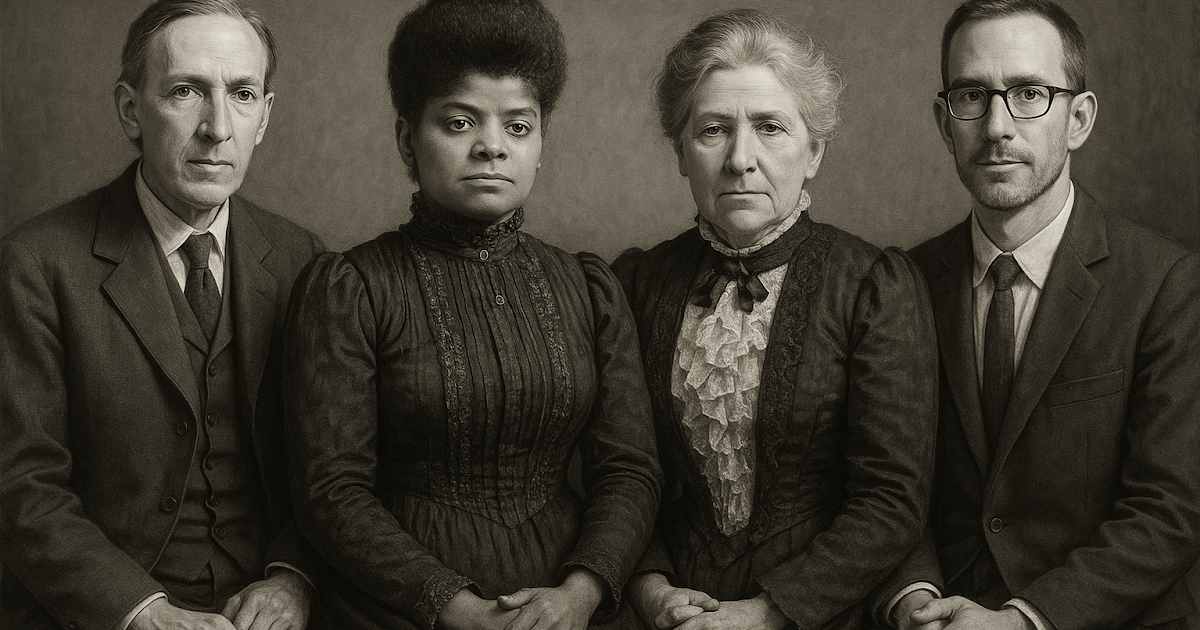
    The Higher Education Inquirer cannot be neutral, not in times like these. These times, 2025 and beyond, demand that working-class folks, including journalists, expose the truth as we perceive it, just as other media outlets present the truth through the lens of those in power: the neoliberal elites and the Trumpian elites. We cannot pretend we do not see the climate chaos ahead or the next man-made economic crisis. And we cannot believe we are as important or as courageous as the muckrakers of the 20th century, women and men like Ida B. Wells, Ida Tarbell, and Upton Sinclair. But we do hope we have made a difference, ever so slight.  We believe our readers can do the same. #NoKings

    Source link

  • Lawmakers and judge push back on Education Department’s gutting, citing inefficiency

    Lawmakers and judge push back on Education Department’s gutting, citing inefficiency

    This audio is auto-generated. Please let us know if you have feedback.

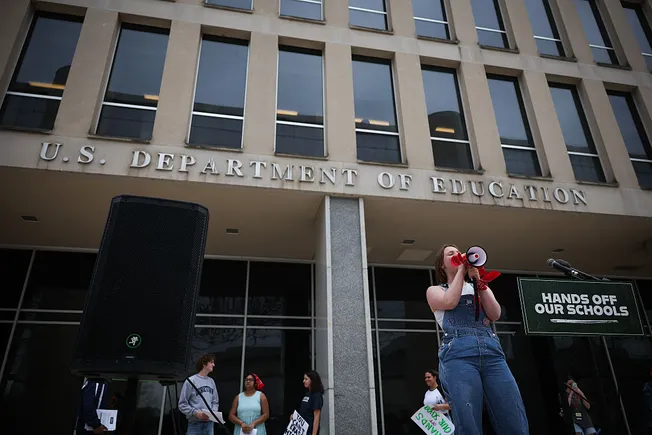
    The Trump administration’s decision to gut federal programs administered by the U.S. Department of Education and lay off half of the agency’s staff in an attempt to increase its efficiency has been met with resistance from lawmakers and, most recently, a federal judge whose court order brought efforts to close the department to an abrupt halt. 

    In an update required by a May 22 court order, the Education Department posted on its website that it has notified its employees of the court-ordered reversal of the reduction in force that left the agency with only about 2,183 out of 4,133 employees. The department on May 27 acknowledged its being compelled by the order in State of New York v. McMahon “to restore the Department to the status quo such that it is able to carry out its statutory functions.” 

    U.S. District Judge Myong Joun, in temporarily reversing the reduction in force, said gutting the department would lead to “irreparable harm that will result from financial uncertainty and delay, impeded access to vital knowledge on which students and educators rely, and loss of essential services for America’s most vulnerable student populations.” 

    “This court cannot be asked to cover its eyes while the Department’s employees are continuously fired and units are transferred out until the Department becomes a shell of itself,” Joun said in his decision.

    The Education Department appealed Joun’s ruling the same day it was issued. The agency did not respond to K-12 Dive’s request for comment. 

    Delays in distributing grant funds

    The decision came on the heels of a May 16 letter sent by Democratic lawmakers to U.S. Education Secretary Linda McMahon. They claimed the Education Department was delayed in distributing grant funding for the 2025-26 school year. The delay gives states and districts less time to allocate funds meant to help students experiencing homelessness and other underserved students the grants are meant to help, they said.

    “States and school districts are best able to plan to most effectively use federal funds with advance knowledge of expected funding, as Congress intends by providing funds on a forward-funded basis,” said Sen. Patty Murray of Washington, Sen. Tammy Baldwin of Wisconsin, and Rep. Rosa DeLauro of Connecticut in the letter. 

    Murray is vice chair of the Senate Committee on Appropriations, of which Baldwin is also a member. DeLauro is ranking member of the House Appropriations Committee. 

    “We believe you need to immediately change course and work in partnership with states and school districts to help them effectively use federal funds,” the lawmakers wrote in their reprimand of the department’s delay.

    By the lawmakers’ count, the department took three times as long under this administration to distribute Title I-A grants than under the Biden administration. Whereas the former administration took two weeks to distribute the funds after the appropriate law was signed in 2024, the current administration took more than 50 days after the enactment of the 2025 appropriations law to distribute Title I-A funds. The program provides $18.4 billion by formula to more than 80% of the nation’s school districts. 

    The department also delayed applications for the Rural Education Achievement Program, which funds more than 6,000 rural school districts. It opened applications to REAP’s Small, Rural Schools Assistance program nearly two months later than the Biden administration, and gave districts half the time to apply — just 30 days compared to 60 in FY 2024.  

    AASA, The School Superintendents Association, said it was aware of this delay. “We understand this release date is significantly later than usual coupled with a shortened application window, so it is important to ensure all eligible districts are aware of this change,” the association said in a May 7 post, prior to the application’s release on May 14. The deadline for program applications is June 13. 

    These delays in funding distribution and last week’s letter from Democrats come as the department bumped funding for charter schools by $60 million this month. 

    Source link

  • IHEC Blog a project by David Comp: This CBC News ‘How to destroy Harvard University

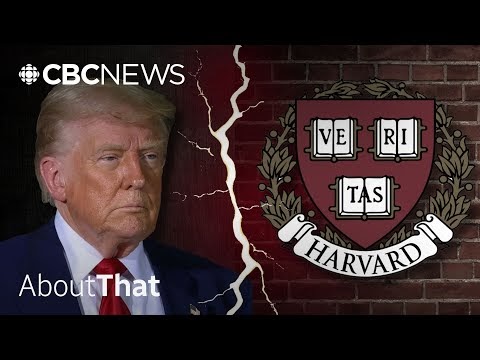
    IHEC Blog a project by David Comp: This CBC News ‘How to destroy Harvard University

    Since February 2007, International Higher Education Consulting Blog has provided timely news and informational pieces, predominately from a U.S. perspective, that are of interest to both the international education and public diplomacy communities. From time to time, International Higher Education Consulting Blog will post thought provoking pieces to challenge readers and to encourage comment and professional dialogue.

    Source link

  • Eastern Michigan University to cut ties with Chinese colleges amid lawmaker push

    Eastern Michigan University to cut ties with Chinese colleges amid lawmaker push

    This audio is auto-generated. Please let us know if you have feedback.

    Dive Brief: 

    • Eastern Michigan University is ending engineering teaching partnerships with two Chinese universities after a pair of prominent Republican lawmakers raised national security concerns. 
    • The university announced Wednesday it is terminating its partnership with Guangxi University and Beibu Gulf University. Eastern Michigan President James Smith said the university is working with Beibu Gulf to ensure affected students can complete their studies elsewhere. The Guangxi partnership did not enroll any students.
    • The move comes as Republican lawmakers increasingly raise research theft concerns about colleges’ partnerships with Chinese universities. The Trump administration is also moving to “aggressively revoke” the visas of international students from China, U.S. Secretary of State Marco Rubio said this week. 

    Dive Insight: 

    In February, two high-profile lawmakers from Michigan Rep. Tim Walberg, the chair of the House’s education committee, and Rep. John Moolenaar, the chair of the House Select Committee on the Chinese Communist Partycalled on Eastern Michigan and two other universities in their state to end their partnerships with Chinese colleges. 

    “The university’s [People’s Republic of China] collaborations jeopardize the integrity of U.S. research, risk the exploitation of sensitive technologies, and undermine taxpayer investments intended to strengthen America’s technological and defense capabilities,” the letter stated

    Shortly afterward, Oakland University said it would end its partnerships with three Chinese universities. The University of Detroit Mercy, the third institution that received a letter in February, is likewise ending its teaching partnerships with Chinese universities. 

    University of Detroit Mercy President Donald Taylor said in a Friday statement that the institution is working to ensure students can finish their studies. He also noted that the partnerships have not included any research or technology transfer. 

    “They are solely for undergraduate teaching programs only with course content that is available publicly,” Taylor said.

    In Eastern Michigan’s Wednesday announcement, Smith stressed that both partnerships had been exclusively focused on teaching and did not involve research or the transfer of technology. He added that the programs did not encompass cybersecurity teaching. 

    “The course content for all offered classes is widely available in the public domain,” Smith said. 

    In October, Moolenaar also urged the University of Michigan to end its two-decade partnership with Shanghai Jiao Tong University on a joint institute. Moolenaar alleged the partnership had helped the Chinese government advance their defense technologies, from rocket fuel research to improving imaging to detect flaws in military equipment. 

    The University of Michigan announced in January it would end academic collaboration with Shanghai Jiao Tong and ensure students enrolled in the joint institute’s programs would be able to complete their degrees. 

    Last year, the Georgia Institute of Technology also announced it would pull out of a partnership that established an overseas campus in China, while the University of California, Berkeley recently severed ties with Tsinghua University following a House report raising concerns with colleges’ partnerships with Chinese institutions. 

    The Trump administration recently opened an investigation into UC Berkeley over its partnership with Tsinghua University, alleging that it failed to properly report its foreign gifts and contracts. 

    Earlier this month, two House committees set their sights on Harvard University’s ties with China, arguing that some of its partnerships “raise serious national security and ethnical concerns.” Lawmakers demanded the Ivy League institution hand over internal documents related to its partnerships with China and certain other countries by June 2. 

    The Trump administration is also planning a crackdown on international students from China, citing national security concerns. Rubio said Wednesday that the federal government will revoke visas from Chinese students “with connections to the Chinese Communist Party or studying in critical fields,” though he didn’t specify what those disciplines would be.

    Source link