This morning I joined Amy Goodman on Democracy Now to talk about the bill that House Republican leadership worked through the night to push toward a vote on the floor.
The more Americans learn about what’s in this bill, the more outrage there will be that House members are willing to vote for cuts that will devastate communities so their billionaire donors can have a massive tax break. (That’s why they’re meeting to talk about the details in the middle of the night.)
We must sharpen our language to make clear what’s at stake in this one big, ugly, and death-dealing bill.
And we must prepare ourselves for moral action.
We are glad to announce that Indivisible, the national organization behind “No Kings Day” on June 14th, has joined our Moral Monday partners to mobilize a mass action on June 2 outside of the US Capitol. We invite you to register here if you can join us for Moral Monday on June 2.
To learn more, plan to join me and Indivisible co-founder Ezra Levin for a Substack Live on Tuesday, May 27, at 12pm ET.
I’m also looking forward to a conversation here on Substack next week with Robert Reich. We will be live Wednesday, May 28, at 5:30pm ET/2:30pm PT.
To join live conversations with us on Our Moral Moment, you just need to download the Substack app, subscribe for free, and turn out notifications. You’ll get a notice on your phone that we are going live.
Reaching today’s college and university students, most of whom belong to Generation Z, requires more than a digital presence. It requires cultural fluency, authenticity, and a deep understanding of how this generation engages with the world.
Gen Zs, typically identified as those born between 1997 and 2012, are the first true digital natives. They’ve grown up with smartphones, social media, and streaming content, not as novelties, but as fixtures of daily life. According to Pew Research, nearly 95% of teens have access to a smartphone, and more than half report being online almost constantly. These habits carry into their post-secondary years, where connectivity is an expectation, not a luxury.
But modern college and university-age students aren’t always just online. They’re also highly discerning. They value transparency, social impact, and personalization. They’re quick to recognize inauthentic messaging and even quicker to disengage from it. For colleges and universities, this creates both a challenge and an opportunity: traditional, one-dimensional advertising methods, such as flyers or general announcements, may not cut it anymore, but the right strategy can foster a lasting connection and institutional trust.
This blog post offers a comprehensive guide to understanding and effectively advertising to college students against this backdrop. From leveraging digital platforms to embracing values-driven storytelling, we’ll explore the strategies that resonate with Gen Z and how institutions can adapt to meet them with relevance and respect.
Let’s begin by exploring why this age group deserves special attention.
Why Marketing to College Students (18–24) Matters
Let’s start with a simple truth: the 18–24-year-old demographic is one of the most important audiences for higher education marketers today.
Why? Because this isn’t just the age when students choose a school. It’s when they start forming lasting opinions about the institutions they trust. The connections you build now can influence enrollment, but they also shape alumni engagement, word-of-mouth referrals, and long-term brand loyalty.
Here’s the part that matters: Gen Z is different.
They’re not just digitally connected, they’re digitally fluent. According to a study, young adults between 18 and 24 now spend an average of four hours per day online, much of it on platforms like TikTok, YouTube, and Instagram.
That means your message is competing with algorithmically curated, visually captivating, and instantly engaging content. If your campaign doesn’t speak their language, it likely won’t even register.
And here’s where it gets even more interesting: Gen Z is highly influenced by their peers. One study found that 44% of Gen Zers make purchasing or participation decisions based on influencer recommendations, not traditional ads.
What does that mean for your institution? If students don’t see your message reflected in the voices and platforms they already trust, you’re missing out. Not just on visibility, but on credibility.
We’ve already seen this in action. Consider how Lancaster University in the UK leveraged TikTok to promote its online open days. By collaborating with student ambassadors to create a series of in-feed ads, the campaign achieved over 10 million impressions and more than 90,000 clicks, significantly boosting engagement and interest in their programs.
Advertising to college students is not just about being seen. It’s about being relevant, responsive, and real. When you create campaigns that feel native to their world, not imposed on it, you don’t just attract attention. You build trust.
Where and How to Reach Students in 2025
Reaching college students today is as much about being present as it is about being present in the right places. To effectively connect with this digitally native audience, a multi-channel approach that blends online platforms with on-campus touchpoints is essential.
Where can I advertise to college students? Effective channels include social media platforms (Instagram, TikTok, YouTube, Snapchat), on-campus signage, email and SMS campaigns, and peer networks such as student clubs and organizations. Let’s explore the most impactful channels:
1. Social Media Platforms
Social media is the heartbeat of student communication. Platforms like TikTok, Instagram, Snapchat, and YouTube are where students spend a significant portion of their time. TikTok has become a vital recruiting tool, with two-thirds of teenagers using the platform, making it essential for colleges to have a presence there. Paid advertising and organic content (stories, reels, challenges) on these platforms can yield high engagement.
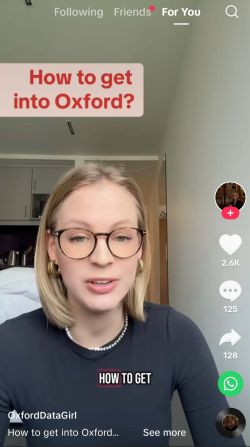
Example: Oxford University (UK) shared a series of TikTok videos featuring current students offering advice to incoming first-year “freshers,” creating authentic, peer-to-peer content that resonated strongly with its student audience.
When students are researching colleges or looking up information, they often turn to search engines and video platforms. Running targeted search ads ensures your college’s offerings appear when students are actively seeking information. On YouTube, short, engaging pre-roll ads can capture attention. Just remember to keep them concise and relevant.
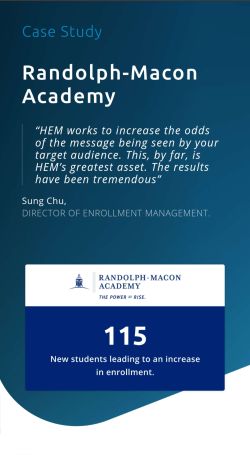
Example: Randolph-Macon Academy (R-MA) launched an aggressive Google Search ad campaign targeting families seeking strong academics during the COVID-19 pandemic. The effort paid off, R-MA saw tremendous results, enrolling 115 new students from May to August 2020 (boosting overall enrollment) and even doubling their summer school enrollment despite the disruption.
Don’t underestimate the power of physical presence when advertising at colleges. Traditional channels like campus bulletin boards, posters in dorms or the student union, campus newspaper ads, and flyers still have value, especially for promoting campus events.
Modern twists on these include digital signage (screens around campus displaying announcements) and QR codes on posters that students can scan for more info or to RSVP. Being visible where students live and study helps keep your message top-of-mind.
4. Email and Text Alerts: Direct and Personal Communication
Email remains a staple for official communication, and when crafted well, it can be an effective tool for reaching students. Concise, visually appealing newsletters about upcoming opportunities can capture attention.
Additionally, SMS/text message alerts are highly effective for timely announcements, as most students will see a text immediately. Always ensure you have permission to text students and use this channel sparingly to avoid overcommunication.
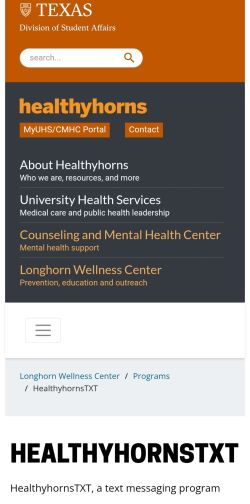
Example: The University of Texas at Austin runs a program called HealthyhornsTXT through its wellness center, sending students 2–3 text messages per week with health tips, stress-management advice, notices of campus wellness events, and motivational reminders. The messages are written in a friendly, encouraging tone by health educators (e.g., nudging students to take a stretch break or stay hydrated in the Texas heat) and often include interactive elements like a monthly giveaway to sustain engagement.
5. Student Organizations and Influencers: Leveraging Peer Networks
Peer influence is powerful. Partnering with student organizations, clubs, or Greek life groups can amplify your message. Engaging student ambassadors or micro-influencers, students with a following in specific niches, can promote your message authentically among their peers.
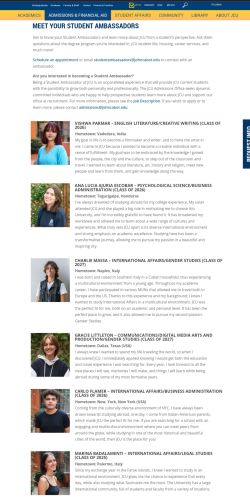
Example: John Cabot University (JCU) in Rome, Italy has a robust student ambassador program: current students are heavily involved in orientation, campus tours, event planning, and peer mentoring, serving as friendly points of contact for prospects. JCU’s website even features profiles and contact info for each ambassador, portraying an approachable, relatable face to prospective students.
By integrating these channels, your advertising efforts can effectively surround students in multiple contexts: online, in class, around campus, and on their phones. The key is to maintain cohesive messaging across platforms, ensuring that whether a student sees a flyer in the cafeteria or a story on Instagram, the campaign feels unified and relevant.
Current Trends in Digital and Social Media Marketing
To reach today’s college students effectively, your digital marketing must evolve as quickly as their online habits. Trends shift fast; what worked last semester might be outdated today. Here are the top strategies driving real engagement right now:
1. Short-Form Video & Challenges
TikTok and Instagram Reels continue to dominate student attention. Quick, relatable videos, like day-in-the-life clips or student-led challenges, are easy to share and resonate with Gen Z’s short attention span. Schools that lean into this format are seeing higher reach and better engagement.
2. Authentic Influencer Content
Students trust peers over polished promotions. That’s why institutions are turning to student ambassadors for social takeovers, Q&As, or vlog-style content. These collaborations feel more like honest advice than advertising, and they build credibility.
3. Interactive & User-Generated Campaigns
Interactive content invites students to participate rather than just consume. Polls, quizzes, and contests on social media are very effective. For example, using Instagram Stories to let students vote on a homecoming theme engages them in decision-making.
User-generated content campaigns are also trending. A classic approach is to encourage students to post with a specific hashtag (perhaps showcasing school spirit or their favourite study spot) and then reshare those posts. These social media campaign examples for students turn your audience into content creators, which increases engagement and provides authentic material to repost on official channels.
4. Personalized, Geotargeted Ads
Digital tools now allow you to tailor messages by interest, location, or academic background. For example, promoting a coding event to computer science majors or a concert to students living on campus ensures your outreach hits the right audience at the right time.
5. Ephemeral & Live Content
Instagram Stories, Snapchat updates, and livestreams offer real-time, behind-the-scenes access to campus life. Their temporary nature creates urgency, while the live format allows two-way interaction that deepens student connection.
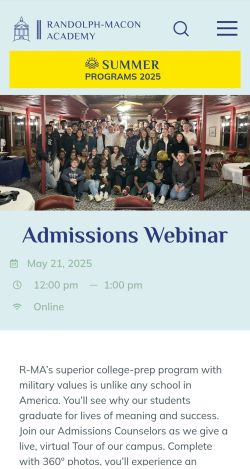
Example: Randolph-Macon Academy (RMA) hosts live virtual campus tour webinars to reach prospective families who cannot visit in person. RMA’s admissions team leads a live-streamed 360° campus tour followed by an in-depth Q&A presentation. This event is promoted through the school’s website and communications, allowing attendees worldwide to experience the campus in real time and ask questions, effectively extending the open-house experience beyond geographic limits.
Gen Z students care about social impact. Campaigns that highlight sustainability efforts, diversity, or local community involvement often outperform generic promotions, so long as the message is genuine. Authenticity matters.
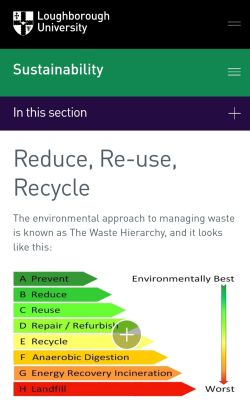
Example: Loughborough University (UK) provides a strong example with its “War on Waste” campaign – a bespoke sustainability initiative aimed at reducing waste and increasing recycling across campus buildings. Branded messaging around “Reduce, Re-use, Recycle” and visual prompts appeared throughout Loughborough’s facilities, encouraging students to adopt greener habits as part of campus life.
Staying on top of these trends ensures your message feels relevant, not recycled. Institutions that tap into these behaviours, without straying from their core identity, tend to gain more trust, attention, and traction from the student audience.
On-Campus Advertising Strategies That Still Work
While digital platforms dominate student attention, on-campus advertising still holds power, especially when promoting local events or building community awareness. The key is in making it modern, visible, and relevant. Here are five effective ways to do it:
1. Posters & Digital Billboards
Traditional posters still work, but now they come with upgrades. Many campuses feature rotating digital billboards in high-traffic spots like cafeterias or libraries. These can display videos, animations, and even repurposed TikToks. For printed posters, bold visuals and a QR code make it easy for students to scan and act instantly.
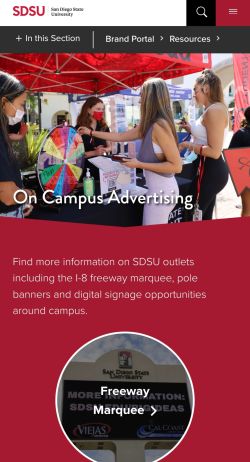
Example: San Diego State University (SDSU) employs a range of on-campus media to reach students: from digital signage screens in student centers to pole banners along walkways, and even a large marquee visible from a nearby freeway, all broadcasting campus events and messages
By strategically placing dynamic content in high-traffic areas, SDSU ensures students are constantly aware of upcoming activities and campus news.
Setting up a table in the student center or quad is a direct way to interact with students. Staff it with friendly student volunteers or staff, and have a clear call-to-action: whether it’s to promote a new program, a survey, or an event. Freebies (swag like T-shirts, stickers, snacks) are a timeless tactic; students love free stuff, and a branded item keeps your college or event in mind later. This face-to-face engagement can complement your online ads for colleges by giving a personal touch.
3. Campus Media Channels
Student-run newspapers, newsletters, and radio stations offer trusted, student-authored spaces to advertise. Sponsoring a segment or placing a well-designed ad in a campus magazine ensures your message lands where students are already tuned in.
4. Residence & Academic Buildings
Bring advertising into the spaces students frequent daily. Many residence halls allow posting on community boards or digital displays in lobbies. Similarly, academic buildings often have screens or boards for department-related notices; work with different departments to promote relevant opportunities (like a speaker event hosted by the business school should be advertised in the business building). Tailoring your message to the location can increase its relevance
5. Guerrilla Campaigns
Some of the most memorable campaign examples for students have been unconventional. Think flash mobs, chalk art on sidewalks, or pop-up experiences. A college could organize a quick flash mob dance in the dining hall to draw attention to an upcoming cultural festival, for example. Or use sidewalk chalk to create a path of clues leading to a secret prize location as part of a scavenger hunt campaign.
These fun stunts naturally get students talking (and posting on social media) because they break the monotony of campus life. Just be sure to get any necessary permissions from campus authorities beforehand.
When done right, on-campus efforts amplify your digital campaigns. If, for instance, a student sees a poster in the dorm, gets a text reminder, and then spots a student-led story on Instagram, it all clicks. That kind of message reinforcement is what turns curiosity into action.
How to Advertise Events to College Students
Promoting student events, whether it’s a club meeting or a major campus concert, requires clear, timely outreach across multiple channels. The goal isn’t just awareness; it’s attendance.
A pertinent question for education administrators then is: How can I market to 18 – 24-year-olds effectively? Utilize mobile-first, interactive, and values-aligned content. Focus on authenticity, relevance, and peer-driven engagement. Short-form video and tailored messaging yield the highest response.
Here’s how to get students to show up and spread the word.
1. Use a Multi-Channel Strategy
Start with a Facebook or event page, then promote it on Instagram, TikTok, Twitter, and email. Post countdown teasers, behind-the-scenes clips, and physical flyers across campus at least 1–2 weeks in advance. Repetition across platforms helps the message stick.
2. Lead with a Strong Hook
What makes the event worth attending? Free food? A headline performer? Networking opportunities? Whatever it is, make that the focal point on posters, email subject lines, and social captions. Students need a clear reason to care.
3. Tap Into Peer Networks
Encourage club members and student leaders to promote the event on their socials. Authentic, peer-shared content builds trust. Add a campaign hashtag and invite early adopters to post excitement-building previews like setup photos or teaser videos.
4. Leverage Campus Infrastructure
Ask professors to announce the event in relevant classes. Use the school’s app, email newsletter, events calendar, and even push notifications if available. A well-placed promo video from a student government leader can go a long way.
5. Simplify Signups
Use one-click links, QR codes on posters, and RSVP buttons that send reminders. Don’t make students dig for info; friction lowers turnout. Keep access to details and registration as effortless as possible.
On the day of the event, keep the buzz going. Add a selfie booth or branded hashtag display to encourage attendees to share their experience. When others see the fun they missed, they’ll be more inclined to show up next time. The right event marketing doesn’t just boost attendance, it builds momentum.
Creative Campaign Ideas to Spark Student Engagement in 2025
The best campaigns tap into real student life, encourage participation, and reflect your campus culture. Here are five proven and adaptable campaign ideas to consider:
1. ‘Day in the Life’ Video Series
Feature different students taking over your social channels, athletes, international students, first-years, to show authentic campus life. Promote each one in advance, save them to highlights, and repurpose the content for YouTube or digital signage. It’s both engaging and a valuable tool for prospective students.
2. Hashtag Challenge
Launch a branded hashtag (e.g., #MyCampusStory or #[Mascot]Pride) and invite students to post around a fun theme like favourite study spots or campus traditions. Offer prizes, reshare standout entries, and build a content library that feels both organic and community-driven.
3. Scavenger Hunt Campaign
Blend physical and digital by hiding QR codes or clues across campus during orientation or homecoming. Ask students to share their progress on social media using your hashtag. Offer swag for completion and a grand prize for added excitement, great for both visibility and participation.
4. Student Spotlight Series
Celebrate students with weekly features, short videos, or graphics showcasing their achievements, hobbies, or contributions to campus life. Share these across platforms to boost morale internally and show prospective students the real impact of your community.
In a nutshell, what’s the best way to promote events to college students? Use a multi-channel approach, emphasize the event’s value, and simplify registration. Build excitement through social proof, timely reminders, and on-site digital engagement strategies.
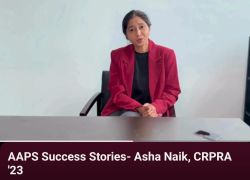
Example: The Academy of Applied Pharmaceutical Sciences (AAPS) in Toronto leverages student voices on social media by regularly sharing student and alumni success stories. This allows prospective students to envision themselves achieving similar goals, essentially seeing “people like me” thriving at the school.
Host timely, student-friendly events like a “Puppy Zone” during finals or a “Throwback Thursday” music party in the quad. Pair each with a livestream and pre-event polls or trivia to boost anticipation and extend reach to virtual audiences.
Keep it student-led, authentic, and relevant. Bring students into the planning process, they know what’s trending and what will spark interest. These ideas promote as well as create memorable experiences that students want to share.
Best Practices for Student Advertising
To ensure your marketing is both effective and respectful, consider these key principles:
Prioritize authenticity: Use real student voices and visuals. Avoid overpromising or overly polished messaging.
Optimize for mobile: Assume your content will be viewed on smartphones. Use vertical video, fast-loading pages, and concise layouts.
Maintain consistency: Align visual identity and messaging across platforms to reinforce recognition.
Respect timing: Be mindful of academic calendars and daily student rhythms. Avoid campaign launches during exam periods.
Gather feedback: Use polls or post-event surveys to measure effectiveness and refine future campaigns.
Adhere to campus policies: Ensure you comply with posting rules, privacy regulations, and student consent protocols.
Do you want to master the nuances of marketing to college students?
Contact Higher Education Marketing for more information.
Twitter: Reaching college students today requires more than visibility; it demands relevance. Learn how modern higher ed marketing leverages short-form video, student influencers, and personalized campaigns to make a lasting impact.
Facebook: Higher education advertising is evolving. Discover how to engage Gen Z through integrated campaigns that reflect their values, prioritize authenticity, and foster connection, both online and on campus.
LinkedIn: From social media to digital signage, today’s institutions are reimagining how to connect with students. Explore the most effective strategies for student-centred marketing in 2025.
Frequently Asked Questions
Question: Where can I advertise to college students?
Answer: Effective channels include social media platforms (Instagram, TikTok, YouTube, Snapchat), on-campus signage, email and SMS campaigns, and peer networks such as student clubs and organizations.
Question: How can I market to 18 – 24-year-olds effectively?
Answer: Utilize mobile-first, interactive, and values-aligned content. Focus on authenticity, relevance, and peer-driven engagement. Short-form video and tailored messaging yield the highest response.
Question: What’s the best way to promote events to college students?
Answer: Use a multi-channel approach, emphasize the event’s value, and simplify registration. Build excitement through social proof, timely reminders, and on-site digital engagement strategies.
For HR professionals in higher education, workforce planning has evolved into a strategic discipline. Filling positions is no longer enough — leaders must anticipate talent needs, support professional growth and align development opportunities with institutional goals. A well-designed needs assessment gives HR teams the insight to take action with confidence and create lasting impact.
In the CUPA-HR webinar, Survey Says! Using HR Data and AI to Maximize Analysis of Needs, presenters from Harvard University’s Center for Workplace Development shared how their team designed and executed a large-scale, data-informed, AI-supported needs assessment. The goal? To better understand learning needs and create targeted strategies for professional growth across a decentralized institution.
Here are the key takeaways from their process.
Start With a Strategic Why
Before sending a single survey question, clarify what you’re hoping to learn — and why it matters.
At Harvard, the team began their needs assessment with a clear objective to understand learning and development needs across various employee groups as part of a larger workforce strategy. This meant designing a survey aimed at uncovering more than surface-level training needs, asking instead: What do our employees really need to grow and thrive in their roles?
Their advice to other HR teams is to anchor your assessment in your institution’s strategic goals and organizational context. Let that “why” guide your survey design from the start.
Design a Survey That Reflects Your Workforce
A successful needs assessment is tailored to the specific population it serves rather than one-size-fits-all.
Harvard’s workforce includes individual contributors, supervisors and executives across many schools and units. Their team created targeted questions for each group and pre-populated some responses using data from their HRIS system to reduce survey fatigue and improve accuracy.
Make sure your questions are relevant to different audience segments, and use the data you already have to streamline the experience for respondents.
Boost Participation Through Targeted Communications
Even the best survey won’t produce results without strong participation. Driving engagement was one of the biggest challenges for Harvard, as it is for many institutions. Their team addressed this by securing leadership support, crafting targeted communications and clearly communicating the value of the survey to employees.
To boost response rates on your own campus, consider using champions across departments, timing your outreach thoughtfully and explaining how the data will be used to benefit staff.
Use AI Thoughtfully to Analyze Large Data Sets
If your survey includes open-ended responses, you’ll likely end up with more data than you can quickly process — especially if your institution is large. This is where AI can help.
Harvard’s team used a combination of AI tools to analyze thousands of comments and identify themes. But they stressed that the human element remained critical. They invested time in crafting the right prompts, testing outputs and verifying results before presenting them to stakeholders.
Their approach to AI offers an important lesson: AI can accelerate analysis and bring fresh insights, but it’s not a shortcut. You need to build a process that includes human judgment, data verification and transparency.
Integrate HR Data for Deeper Insights
One of the most impactful decisions the Harvard team made was linking survey responses to existing HR data. This allowed them to connect learning needs to specific job roles, departments and demographics — enabling more targeted follow-up and planning.
By incorporating HRIS data, they were also able to personalize survey questions and reduce respondent burden. That integration enhanced both the quality of their data and their ability to act on it.
If you’re planning a survey, consider how existing HRIS data can be used to sharpen your questions and deepen your analysis.
Turn Results Into Action
The final — and perhaps most critical — step is using what you’ve learned.
At the time of the webinar, the Harvard team was in what they described as the “where are we now” stage and had begun implementing some of the recommendations from their survey analysis. They emphasized the importance of translating results into practical strategies that support learning and development, talent mobility and organizational effectiveness.
To do the same on your campus, be sure to:
Share key findings transparently with stakeholders.
Identify priority areas for development or investment.
Use insights to shape programming, leadership development or change management strategies.
Embrace Experimentation and Continuous Learning
The Harvard team acknowledged that this process wasn’t perfect — and that was okay. They embraced experimentation, learned from trial and error, and remained open to improving their approach as they went.
Their experience is a reminder that innovation in higher ed HR — especially when integrating AI — is a journey. Don’t be afraid to pilot new tools and adjust your process.
Watch the Webinar Recording
Interested in learning more about Harvard’s process? The full webinar recording and slide deck are available here.
This post is a modified version of an article that originally appeared on the Cengage EMEA “Unstoppable Minds Blog.”
As Mental Health Awareness Month comes to a close, we’re highlighting insights from someone who’s been in students’ shoes. While studying psychology at Queen Mary University of London and serving as a Cengage EMEA Student Ambassador, Roya Mohamed shared three simple but powerful tips to help students take care of their mental health.
I remember my first year at university. All of the new friends I made, the exciting modules I took, the societies I joined, my first time living away from home, learning how to cook and how to save money. It was such an exciting time full of adventure and new beginnings. I learned so much about myself and the world of adulthood. However, I also remember the all-nighters, the breakdowns, the tears, the times I almost gave up, the sacrifices I made and the feelings of loneliness and exhaustion I had. Being a student is not easy — I would know — and the increasing academic and societal pressures cause a strain on our precious mental health. Being thrown into the deep end during my first year caused my mental health to plummet and I fell into a deep depression where I had to go to therapy. It was a bleak time in my life and for a while I didn’t know how to get out of the negative cycle I was in. But I did — hooray! There were a couple of changes I made to my daily routine that notably improved my wellbeing and stopped me from ever going back to that period of darkness. Follow these steps to start taking control of your mental health and wellbeing:
Scheduling
Not having a daily schedule can leave students feeling overwhelmed and unprepared. This can cause feelings of stress which can contribute to poor mental health. Planning time for revision, relaxation, hobbies, friends, family and sleep really helped to create a routine in my life and to avoid the anxiety I used to have about completing everything on my to-do list. However, it will take time to adapt and follow a routine. But having a structure to your life will make you feel less worried and we all know that worrying does us no good.
Positive self-talk
This is a psychological strategy that you can use to increase your self-esteem, confidence, self-love and positivity. How do you do it? The clue is in the name! This technique involves talking positively to yourself, praising your achievements no matter how big or small they are and motivating yourself with words of affirmation. Being kind to oneself is a crucial step to maintaining good mental health. For example, when I received a grade that I wasn’t happy with, I would say to myself, “Roya, that was a very difficult exam and you still scored above the class average, you should be really proud of yourself!” At first it felt weird doing this, but you begin to internalize the thoughts and quickly realize how good it makes you feel!
Sleep
We all know that students have a tricky relationship with sleep. It is recommended that university students sleep for 7-9 hours a night. This can prevent you from feeling fatigued, sleepy, having low concentration levels and becoming irritable. However, we commonly see students pulling “all-nighters” where they sleep very little — or not at all — in order to complete an academic task. I don’t recommend this at all. When it comes to revising, all-nighters are practically useless. This is because our sleep cycle at night consists of four cycles, each lasting 90 minutes. In each stage of the cycle, our body and brain rejuvenate in different ways. One area that is affected is our memory of that day. If you don’t go through the four cycles, then the hours of revision won’t be “consolidated” into your memory — moved from short term to long term memory. This causes stress and regularly losing sleep can contribute to poor mental well-being. Once I began to sleep enough, I really saw how it improved my life.
These are just some of the changes I began to make which took my mental health out of the darkness I was in and back to the bright old me!
Roya Mohamed was a former Cengage Student Ambassador studying psychology at Queen Mary University of London.
Roya shared three meaningful student mental health tips that can help improve overall well-being. If you think these tips might be impactful for your students, share this article and also check out “5 Ways I’m Building Connections With My College Peers” by Pranav Harwadekar, a junior at Texas A&M University.
A week does not pass without my hearing about the apparently sorry state of the current crop of students. They are lazy, disengaged, clueless and so on. It is the dusty trope that the old do not appreciate the young.
In a trip through the literature and news of the past, you will find Generation X described as underachieving, angry, psychologically damaged slackers who were indifferent to learning, brazenly rude, entitled, unprofessionalwhiners. Millennials were called “Generation Whine” and described as self-centered, unmotivated, disrespectful, depressed, anxious, disloyal, entitled cynics who were so overindulged and protected by their parents that they were incapable of working without constant hand holding.
If this all sounds familiar, it should. Professors now bemoan the current crop of Gen Z students who will not read, cannot handle stress, procrastinate, lack basic academic skills, refuse to engage in class, are psychologically needy and are more interested in preparation for a career than appreciating knowledge.
Meanwhile, every generation is described as being both skilled in and ruined by new technology. Boomers complained that Generation X could not write a proper formal letter and that Millennials expected email communication. Generation X now complains about Generation Z not attending to their email communication and lacking proper email etiquette. It is an ongoing cycle.
Much of the educational discourse seems to assume that each new generation of students differs from the last to such a degree that many accommodations will need to be made. Every generation is indeed affected by the events of their time. The educational disruption of the COVID-19 pandemic likely widened the already existing achievement gaps among different groups of Generation Z learners. However, learning is learning. Decades of research across multiple fields of psychology have shaped our understanding of the human mind and how we best learn. Teaching is hard work, and we make teaching harder when we remain fixated on stereotypes, tech temptations and societal trends.
Let’s refocus on what our trade is—learning. From my experience as a professor of more than 20 years specializing in educational psychology, and as a researcher and department chair, I offer these principles:
Engage in your discipline. Maintain your expertise over time and share the developments of your field. If you are bored with your discipline, it will show. And if your knowledge is out of date and students find out, you lose all credibility. As a professor, few things are as awkward as when a student shares incorrect information they learned in another course and you must contradict it with up-to-date, accurate information.
Figure out what type of teaching suits you and then master that type. If you are a lecturer, then study what makes someone the best lecturer. If you use PowerPoints, study best practices in their design. If you embrace group work, explore what types of assignments and student groupings are most effective. What pedagogy you use is less important than doing that pedagogy well. By all means, learn new techniques. But new does not always mean better, and not all techniques are going to fit with your content and style. I will be the first to admit that I am not the most dynamic speaker. I am, however, good at reading the room, pacing the delivery of knowledge and explaining ideas in many different ways. Lean into your strengths.
Create opportunities for multiple types of learning. Humans learn best by engaging different areas of their brain: their auditory and visual systems, their logic and expressive capabilities, and their abilities to apply and build personal connections to new knowledge. Research shows that students do not have unitary learning styles: However, everyone learns better when they engage multiple processing modes. You do not need to do everything all at once. But across your design of homework, class time and assessment, remember: Variety is key. My own action research in my measurement and statistics course bears this out. Concerted effort to allow students to use analytic, practical and creative means to express their knowledge resulted in a productive experience in a class that many students dreaded.
Do not let new technology pass you by. What is new in instructional technology now may become the norm tomorrow. Try new things and stay knowledgeable, but also consider how and why you would use the technology to improve teaching or other aspects of your course. For example, clickers did not work well for me, but many professors make great use of them. A useful strategy is to turn to your students and ask them how they would improve one of your assignments by integrating new technology. Guides such as the one here are available to help you make these decisions.
Express a genuine interest in your students. You are not their friend, but you can be courteous and friendly. It is good manners, after all. Be a human being. As students gather before class begins, you might consider asking how the semester is going. Perhaps reference an event that has taken place on campus. Do not be afraid to mention your own experiences if they are directly relevant to the course. There is continuing lore related to my courses that if you find a way to include cats while also demonstrating the content and skills of the course you will receive extra credit (true). Do not be afraid to be real.
Fulfilling these principles in your teaching career is not easy. It takes time, energy and a lifelong commitment to self-improvement—the same traits we wish for in our students. If you find that you are unwilling to strive to meet these principles, and then find the students are not living up to expectations, know that it is not them: It’s you.
Erin Morris Miller is an associate professor of psychology at Bridgewater College.
The University of California National Center for Free Speech and Civic Engagement launched in 2017, at a time when students were shouting down conservative speakers on campus, raising questions about what role the First Amendment did—and should—play in higher education.
Just eight years later, things have only gotten more complicated—first in the aftermath of an explosive protest movement against Israel’s war in Gaza and then in the wake of the Trump administration’s censorship across all areas of academe.
Amid the chaos, the center and its fellows—researchers from a breadth of disciplines who work on projects related to open expression and civic engagement—continue to educate universities about the First Amendment and investigate the day’s most pressing free speech issues.
Its executive director, Michelle Deutchman, who worked as an attorney for the Anti-Defamation League for 14 years before joining the center, stopped by the Inside Higher Ed office in Washington, D.C., last week to discuss the federal government’s attacks on free expression in higher education. The interview has been edited for length and clarity.
1.What are your biggest concerns with regard to the Trump administration and free speech and open expression in higher ed right now?
Well, sadly, there’s kind of a long list. I think, from my vantage point, one of the greatest concerns is seeing students, and particularly international students, being, basically, taken away on what appears to be the basis of viewpoints and opinions that they might have shared, either in the form of protest or, in one case, an op-ed. That really flies in the face of exactly what the First Amendment is supposed to protect against, especially in a public institution, which is that it’s supposed to be a restraint on government. In fact, what we’re seeing right now is the government stepping over the line of what is permitted, and that is definitely creating, I think, a chilling effect, not just for international students, but for students across the board, whether they’re protesting or not.
I also think that the specter of investigations on campuses—this list of 60 campuses [being investigated for alleged antisemitism], this idea that if you’re on a campus that’s potentially going to be under investigation—might impact what you say in class, outside of class, how you teach, everything that’s fundamental to the academy.
2.What are some of the most common questions you’re getting about what is going on?
Deutchman has led UC’s National Center for Free Speech and Civic Engagement for eight years.
Laurel Hungerford
I don’t get as many questions as you would think, because I don’t give legal advice, and right now, what a lot of people want is legal advice. But I think one of the things that I’m struggling with is, how do you talk about open expression and dialogue in a moment when it’s largely being suppressed on campuses? One of the questions that people have been asking is what to say to students about the risk factors in terms of being very vocal with your opinions, and how should administrators address that—both wanting to, of course, encourage them to use their voices, but also wanting to be transparent about what the risks might be.
There’s just a lot of other, bigger questions that are just about, what does this mean in general for higher education? Is this like an existential moment? What about the coercive use of money? A lot of questions of: Can the government do that? And I think it’s a really challenging situation where the answer is: Not sure that they should be doing it, but they are. So, how do we handle that sort of in-between space while we wait for the law to catch up to what’s going on on the ground?
3.There’s been a lot of emphasis on civic dialogue education as one antidote to tensions around political speech on campus. Do you feel like this moment is sort of setting those efforts back at all?
I don’t want to say they’re setting them back. I worry a little that they might be getting set aside. And that’s a concern that I’ve had, really, since after Oct. 7, where we saw so much time and energy go into the basics about the First Amendment and about time, place and manner, and about whether or not to use law enforcement, that there became a big focus on the enforcement regulations as opposed to sort of education. I think now, so much energy is being put into how to defend higher education against this assault that I worry that efforts that focus on how we teach not just students but all members of higher education communities to engage with one another and listen to one another and build the muscle of civic dialogue—I worry that there isn’t enough bandwidth to pay attention to that, and setting it aside, I think, is to the detriment of everyone at this moment.
4. How is Trump’s cutting of grants his administration deems related to diversity, equity and/or inclusion connected to the government’s other attacks on speech?
I think that the cutting of those kinds of grants is just another attempt at government censorship of speech. Expression and speech are the cornerstones of the creation and transmission of knowledge. So, I think that it you’re stopping grants about certain topics, topics that are either being researched or topics that are being taught, that is something that falls sort of in the viewpoint discrimination area and really runs afoul of the Constitution. We’ve certainly seen some successes in court cases and injunctions, but I think part of the problem is the gap between when an executive order is signed and when an injunction happens, the chilling effect that happens across the university, and this idea that I don’t know that you can unring certain bells.
5. Though many are calling the Trump administration’s attacks unprecedented in many ways, there have been other moments in history when free speech on college campuses has been under assault. What do those moments teach us about what is happening today?
I wish I could tell you that I am a historian, but I’m a lawyer, so I don’t necessarily have that historical perspective. Certainly, I think people say that this is the greatest threat to academic freedom and to the autonomy of the university since McCarthyism. It’s hard to know how, then, to take that information and do something with it, right? I mean, the hopeful take is: Well, we made it through that, even though it was a dark time.
I mean, look, I’m a [University of California, Berkeley] Cal Bear. UC had people do loyalty oaths; it was not a good moment, and look where we are now. I think that is sort of the optimistic hope.
I think the less optimistic [perspective] is that, in some ways, what we’re experiencing is much more far-reaching, and we will just have to wait and see what happens.
In January I wrote a piece asking whether America’s research universities would make it to their 100th birthday, marking their birth with the creation of the National Science Foundation in 1950—its 75th birthday was May 10. The article built on concerns that our research universities are in a precarious state, with their resources stretched thin supporting their dual missions of education and research. At the end I added a new concern: with the beginning of the Trump administration would these institutions survive the year?
In only the first 100-odd days, the precipitous cancellation of grants and freezing of research support and now the proposed slashing of the budgets of the NSF and the National Institutes of Health and dramatic increase in the tax on university endowments have made my worst fears real. Are we really trying to end the partnership that has led to the greatest period of innovation in history?
With the creation of the NSF, the government and universities established a research partnership to feed the American economy and national defense and to train the R&D labor force. The partnership was supported by funding from both sides, coupled with an unrelenting commitment to research excellence and impact. By any measure it has been wildly successful, generating new knowledge, inventions and cures and educating generations to lead our economy and society.
In 2022 alone, the 174 Carnegie R-1—very research intensive—universities filed more than 20,000 patent applications and were granted nearly 6,000. But perhaps to understand why sustaining this partnership is vital to our future we only need to recall that the mRNA vaccines that spelled the end of the COVID-19 pandemic were built on research supported over decades by the NIH.
The scale of the partnership is apparent in the data: In 2022, university research spending totaled $97.8 billion, with $54.1 billion coming from the federal government. What has not been widely acknowledged is that universities contributed $24.5 billion of this total in the form of self-supported research and cost sharing, especially supporting the misunderstood indirect costs of research. Many of these expenses are not so “indirect,” as they support specialized spaces, facilities and instruments—you cannot do research in a parking lot.
Universities invested 45 cents for each federal research dollar received— this is the financing of the partnership. It seems like a bargain for the government to contribute only 0.2 percent of GDP (or less than 1 percent of the federal budget) to fuel innovation and the labor force of the world’s largest economy. Federal support of university research has grown only 44 percent since 2010. This compares to China’s threefold growth in investment in its universities.
The Chinese investment highlights the increasing competition for research talent, and we risk falling behind. Other countries are emulating us, building research universities and trying to attract the stream of talent that has come to the U.S. to learn, work and live. Our chilling climate for immigrants is making it much easier to lure this talent abroad.
American universities have done what they can to stay in front, with their own support of research growing twice as fast as federal funding, up from 30 cents to a federal dollar in 2010. It will be difficult for universities to continue to grow this investment. Following the pandemic, inflation has taken its toll. Now the funding cuts already imposed, and the enormous ones in the administration’s proposed budget, will shift billions in research costs to universities—costs they cannot afford. The proposed 15 percent cap on indirect costs alone—spread across all federal support—could cost the R-1 universities more than $10 billion, doubling their support relative to the federal government.
The result will be catastrophic, with universities retreating from research, essentially destroying in a few months the innovation ecosystem built over three-quarters of a century. The long-term impact will be devastating for all Americans, as measured in undiscovered inventions and cures, the global competition for ideas and people, and the country’s future economic prosperity.
Our innovation ecosystem will be hamstrung by the loss of a generation or more of research talent, who are either not trained or who go elsewhere. Already our talent pipeline is being constricted by cutting in half the number of NSF fellowships awarded to the most promising scientists and engineers. Reports also are mounting of scientists moving to countries where they are warmly welcomed with substantial government support. Is this our national strategy to strengthen America’s knowledge-based economy?
We are on the verge of an innovation winter that will last decades when we can ill afford it as we respond to demands to improve health care, compete for global dominance in AI and other critical technologies, and create a secure and peaceful world. Universities do face important challenges, such as expanding access, educating more Americans to be informed and thoughtful citizens, and giving them the skills to thrive in an AI-driven world. Universities can meet these challenges if they are supported.
We must avoid the innovation winter by continuing the partnership so our research universities remain the beacons for innovation and education that they have been for three-quarters of a century. This is the only way to keep America at the forefront, not at the back of the pack.
This choice is what is at stake for all of us.
Robert A. Brown is president emeritus of Boston University.
The Trump administration has ended $60 million in federal grant funding for Harvard University amid an ongoing fight with the private institution over concerns about alleged campus antisemitism.
The Department of Health and Human Services announced the move late Monday night.
“HHS is taking decisive action to uphold civil rights in higher education,” the agency posted on social media. “Due to Harvard University’s continued failure to address anti-Semitic harassment and race discrimination, HHS is terminating multiple multi-year grant awards—totaling approximately $60 million over their full duration. In the Trump Administration, discrimination will not be tolerated on campus. Federal funds must support institutions that protect all students.”
HHS also linked to a report from The Daily Caller, a right-wing website, which noted that the $60 million in grants came from funding via the Centers for Disease Control and Prevention.
A CDC official, according to The Daily Caller, told the university that funding an institution that the Trump administration perceives as discriminatory would be inconsistent with the CDC’s mission. The CDC official concluded that “no corrective action is possible here.”
Harvard did not respond to a request for comment from Inside Higher Ed.
The latest move comes as the Trump administration has already pulled other grants and federal contracts and frozen more than $2.7 billion in federal funding—about a third of Harvard’s federal funds.
Harvard is also facing several investigations from the Trump administration.
The university has been locked in conflict with the federal government for months since it spurned Trump’s demands to overhaul governance, hiring, admissions and more, which prompted retaliation in the form of a funding freeze. Harvard sued the Trump administration last month, arguing that it sought to “impose unprecedented and improper control over the university.”
The image of the suffering artist is a cliché that faculty and staff who work with students in the performing and visual arts are trying to dispel. They believe that creative inspiration doesn’t have to come at the expense of health and well-being.
“You definitely have to be able to connect on some level to that artistry. But that doesn’t mean necessarily that you have to suffer mental health issues to be able to access this,” said Frank M. Diaz, professor in the Indiana University Jacobs School of Music.
A growing awareness of young people’s mental health and the challenges depression and anxiety pose to student retention and college completion has inspired services for students of underrepresented minority backgrounds, student athletes and other populations on campuses.
More performing arts programs have also begun embracing education on emotional and physical well-being to equip students to succeed in college and beyond.
Under pressure: Performing arts students, like many college attendees, face academic pressures—as well as financial responsibilities to pay for college—that can put them under immense stress. A 2024 survey by Inside Higher Ed and Generation Lab found that just under half of respondents indicated their top stressor while enrolled was balancing academics with personal, family or financial responsibilities.
Performers also juggle rehearsals, whether individual training or as part of an ensemble, that can require several hours of work outside of regularly scheduled classes. Musicians are often in practice rooms for hours each day, causing them to deprioritize their well-being.
“Some of them practice for six hours,” Diaz said. “That does not include their academic courses, their music courses, their ensembles that they’re in, their lessons and their studio classes. While you pile all that on, it’s a lot.”
Young people in general are more open to talking about mental health compared to previous generations, but performing arts students often feel cultural pressures to maintain certain appearances.
“There’s a lot of stigma around the arts and mental health,” Diaz said. “Music students—we also have ballet here—don’t like to admit that they have issues. It’s seen as a weakness, so it’s been traditionally not talked about in our field.”
Additionally, the performing arts can put pressure on students’ physical health if they’re not trained or properly supported. A research study of music schools in Switzerland and the U.K. found music students had lower levels of physical and psychological health compared to the general population.
This unique combination of factors has pushed some colleges and universities to invest in specialized resources dedicated to students studying music.
Institutional change: Members of the National Association of Schools of Music, the accrediting body for most music programs, are required to provide music students with information about physical and mental health. Most institutions meet this requirement through a dedicated webpage where students can browse campus and external services. If you ask James Brody, director of the Musicians’ Wellness Program (MWP) at the University of Colorado, Boulder, College of Music, that’s just the tip of the iceberg.
Brody and his colleagues have been engaging in this work informally for over a decade. In 2020 the university rolled out an embedded counseling program, which provided the College of Music with a dedicated mental health clinician, Matthew Tomatz, to lead outreach and deliver services to music students. Tomatz, a former musician himself, receives referrals from faculty and staff to meet with students and provides regular group therapy for student musicians to engage with peers and talk about their struggles.
MWP was officially established in 2021, providing physical and social wellness education to learners across CU Boulder’s school of music to prevent and recover from injuries for long-term thriving.
Approximately 160 students participate in MWP offerings each year, and more than 130 music students accessed counseling and psychiatric services in the 2022–23 academic year, according to a university press release.
The Office of Wellness and Arts Health Initiative (OWAHI) at the Jacobs School of Music was established in 2023 as a way to increase student access to supports. The school is home to 1,600 students, making it one of the largest music schools in the U.S. The size can make music students more isolated from the larger campus community of Indiana University, because “everything [within the music school] is in one place and our students never go out and venture into this Big Ten campus that we have,” Diaz said.
Instead of making students seek out resources, the school centralized offerings into the OWAHI, creating a one-stop shop for a variety of support services that are student-centered and student-led.
Social wellness: One of the undertones of performing arts programs is competition; students fought hard to win a spot at an accredited music program, which can create feelings of rivalry and isolation from their peers.
Jacobs School of Music students enjoy a holiday party thrown by the Office of Wellness and Arts Health Initiatives in partnership with the Jacobs School’s Health and Wellness Committee.
Wendi Chitwood/Indiana University
To combat this narrative, Diaz created events centered on relationships. “Our data basically indicates that people are seeking community. They don’t know how to find it; they don’t know how to build good relationships. They know they want them. So, to me, that’s the basis of everything we do.”
OWAHI offers drop-in office hours for students to get snacks, talk with their peers and engage in destressing activities, including mindfulness training, massage, games and yoga. In addition, the office partners with the School of Social Work to provide student-led wellness coaching, which both connects learners with peers and gives social work students needed supervised practicum hours.
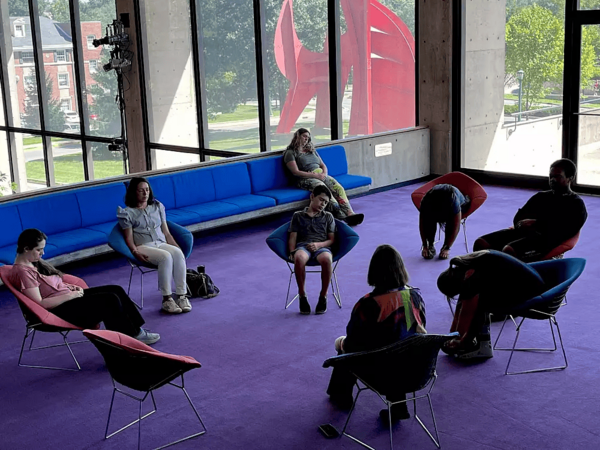
Jacobs students participate in a meditation session provided by the Office of Wellness and Arts Health Initiatives.
Jacobs School of Music/Indiana University
OWAHI offered about 70 coaching sessions in 2023–24 and an estimated 300 sessions during this academic year, which Diaz attributes to increased engagement on campus, student-led marketing and positive partnerships. Students who participate in services are also demographically representative of the school’s population, and Diaz has been pleased to see high participation rates among male students (41 percent of participants), given perceived barriers to engagement in mental health supports for men.
At New York Film Academy in Los Angeles, acting professor Victor Verhaeghe noted that his students tended to arrive with fewer socio-emotional skills, making it harder for them to engage. Verhaeghe has started using class time to lead meditation and shared affirmations, allowing students to become more vulnerable and connected to each other, as well as create self-love.
“I say, ‘Let’s start with sharing who you are; let’s open up to discussion,’” Verhaeghe said. “Some people are not ready to share, but I’ll share my story … It’s all about rewiring, it’s about changing the programming. As an artist, vulnerability is essential. You have to be able to tap into that.”
Physical wellness: Injuries among college students often come from late-night recklessness, sports, accidents or overwork. Less common is the physical strain improper musical technique can have on musicians.
“People don’t understand that musicians get injured, and the injury rate is high—as high as 80 percent of college students,” Brody of CU Boulder said.
Brody offers one-on-one consultations and lessons with students to help them recover from injury, misuse, anxiety or physical tension, helping them connect music and the body to ensure they can continue playing for many years. “I am continually amazed at how anatomically illiterate most musicians are,” he said.
Professor James Brody, director of the Musicians Wellness Program, instructs a student musician on clarinet.
University of Colorado, Boulder
He’s passionate about physical wellness education for musicians, and admits he sometimes has to pull back from overloading students with anatomy lessons.
“Some people say, ‘No pain, no gain,’” Brody added. “I say, ‘No pain, no pain.’ It really shouldn’t hurt.”
CU Boulder music students can also receive free hearing tests, a common practice for music schools to ward against noise-induced hearing loss.
The University of North Carolina at Greensboro offers two elective courses within the school of music that connect physical health to performance, encouraging students to move strategically and reduce tension.
In the future, Brody would love to see donor support for more resources to support musician well-being, including specially designed hearing protection and vocal health support from a laryngologist.
Occupational wellness: College students in general are anxious about their careers—71 percent of students say they feel at least somewhat stressed thinking about life after college—but the performing arts has always been an especially challenging field. Recent data from the Bureau of Labor Statistics found that only about 20 percent of students with a fine arts degree actually work in arts, design, entertainment or media occupations.
“Every single student is terrified right upon getting out because of the complete unpredictable nature of this business,” Verhaeghe said.
Brody noted student musicians’ anxiety levels are high regarding their future plans, particularly due to a shrinking number of symphony orchestras and full-time opportunities. “Still, folks line up to do it,” he said. “We don’t have any lack of talent and motivation.”
In class, Verhaeghe talks about the challenging elements of being an actor, from not having work to playing demanding roles with long hours. “I think it’s important that we talk about the next phase,” he said. “I believe this is a calling to do this work, and not everybody’s called … if you really want to have a craft, then you will invest.”
Performing arts students also often live with the tension of trying to balance passion and work. Many people consider art to be a healing or soothing experience, allowing them to engage in mindfulness or relaxation. “The evidence is pretty clear that musicians and artists in general are the exception to the, ‘I do art and I feel good’ thing, like, we don’t experience that because it’s vocational,” Diaz said.
There’s one exception to this work, Diaz noted: when art becomes a service. At IU, students can participate in performances at senior centers through the Senior Outreach Program.
“Instead of going as ‘I’m going to perform this awesome thing with you,’ [it’s] ‘I’m going to connect with you, I’m going to go learn your name and learn what you like and perform for you at these senior community centers,’” Diaz said.
Faculty members agreed there’s a need to encourage students not to burn out or overexert themselves for the sake of their art, because it’s not sustainable in the long term and reduces their career potential.
“The culture is gradually changing because it has to,” Brody said. “If it doesn’t, it’s like feeding people into a wood chipper.”
***HEPI and the UPP Foundation will host a free webinar on 4 June at 1pm on service learning, how universities can integrate community service with academic studies. Register for your place here.***
This HEPI blog was authored by Isabelle Bristow, Managing Director UK and Europe at Studiosity. Studiosity is AI-for-Learning, not corrections – to scale student success, empower educators, and improve retention with a proven 4.4x ROI, while ensuring integrity and reducing institutional risk.
During September 2020, Studiosity launched the Professor Tracey Bretag Prize for Academic Integrity – an annual commitment to those who are advancing the understanding and implementation of academic integrity in the higher education sector, in honour of Tracey’s work as a researcher in the field of educational integrity.
Tracey was one of the world’s leading experts on academic integrity, founding the International Journal for Educational Integrity and serving as Editor-in-Chief of the Handbook of Academic Integrity. She spoke widely and publicly on the importance of universities taking a strong stand on educating their students about academic integrity and enforcing the rules with vigour and strong sanctions.
Tracey also came to work alongside the team at Studiosity, providing advice, guidance, and sharing her research at events. When asked for her permission to create an annual Academic Integrity award named in her honour, this was Tracey’s response:
I am so deeply honoured by your suggestion that I am almost speechless. Thank you so much for coming up with such a fabulous idea, and especially for putting it in my name. … Thank you again for this incredible recognition of my very small contribution to the field of academic integrity. As I work hard every day to try to demonstrate the type of bravery I’ve always advocated, this certainly gives me a great deal of comfort.
Tracey prematurely passed away on 7 October 2020. In February 2021, she was honoured posthumously with a Career Achievement Award from the Australian Awards for University Teaching.
Entrants over time – a five-year overview
Looking at the Award’s previous entries, we can see a clear shift in how institutions approach educational integrity:
from a more broad-based education about what constitutes misconduct in 2020;
towards more specialised training of large student groups;
to a significant pivot in 2023 towards integrity projects that address the challenge of AI – specifically led by assessment redesign and the use of whole-institution frameworks.
Another change over time is certainly who and where integrity nominations are coming from – there are more dedicated institutional units for managing educational integrity now in 2025 than we saw in 2020-2021.
Tracey earned a great deal of respect globally for her evidence-based, systemic, and students-first approaches to educational integrity. It is fitting that these approaches are gaining interest and momentum in higher education at this moment. We look forward to seeing another year of evidence-based nominations, and thank our Academic Advisory Board for their time and energy once again in judging.
Feeling inspired?
As senior leadership look for ways to ethically embed generative AI within their institutions, academic integrity – the original owner of the AI acronym – is paramount. And so for this year’s prize submissions, the expectation is that the 2025 shortlist will acknowledge gen-AI as part of the challenge, show evidence of impact, and help answer the question: How can the sector keep educational integrity, humanity, and learning at the heart of the student experience?
Last year, the University of Greenwich won the UK prize for their initiative ‘Integrity Matters: Nurturing a culture of integrity through situational learning and play’. Staff there designed an interactive e-learning module (available to all education institutions under licence) designed to raise awareness of academic integrity. You can learn more here.
Sharon Perera, Head of Academic and Digital Sills who led the initiative said:
We are thrilled to have been awarded the Tracey Bretag prize for advancing best practice and the impact of academic integrity in higher education. Thank you Studiosity for championing this in the sector.
At the University of Greenwich our goal is to raise awareness of the academic conventions in research and writing and to create a culture of integrity. We are doing this through our student communities – by sharing best practice and learning about the challenges we face in the GenAI era.
Academic integrity is at greater risk than ever in the age we live in, and we need to work together to celebrate integrity and authenticity.
While sharing your initiative is for the good of the sector and a personal recognition of your tireless efforts to protect and nurture academic integrity – the prize also comprises a financial reward! You can enter this year’s prize here – nominations close 30 May. Evidence might be at the level of policy, implementation, measured student or staff participation, and/or other evidence of behaviour.