Author: admin

  • A Primer on Commercialization Postdocs (opinion)

    A Primer on Commercialization Postdocs (opinion)

    When you finish a Ph.D., it often feels like you’re standing at a professional fork in the road: stay in academia or go into industry. But what if the real opportunity lies not on either of those well-worn paths, but at their intersection?

    That’s where commercialization postdoctoral programs come in—an option many early-career researchers don’t know exists but for which you may be ideally suited.

    These programs provide the tools to turn your research into real-world impact. They explore how discoveries made in the lab can become products, services or systems that solve real problems. And they teach you how to think like an entrepreneur, even if you don’t plan to start your own company, which many postdocs find helps them become more competitive for faculty and industry roles.

    If you’re curious about how your work could make a broader impact or simply what technology transfer, commercialization or innovation looks like from inside the university, this is your invitation to learn more.

    What Are Commercialization Postdocs?

    At a basic level, commercialization postdoc programs support Ph.D.s learning how to move research from discovery to application. These programs fall into two general categories:

    1. Technology transfer fellowships train you to manage intellectual property (IP), evaluate market potential and support licensing processes.
    2. Entrepreneurial and IP commercialization fellowships let you work hands-on with university-owned (or your own) innovations to develop them for real-world use.

    Both paths expand your skill set well beyond most traditional academic training and do so in a way that positions you to lead innovation in any field or sector.

    Why This Training Matters

    Here’s a truth we don’t talk about enough—Ph.D.s are already practicing innovation.

    You’re trained to identify gaps, solve problems and produce new knowledge. Commercialization programs help you understand how to apply those same skills in ways that create value beyond the lab or scholarly community.

    Even if you don’t see yourself launching a start-up, learning to assess market needs, build relationships across disciplines and effectively communicate your research vision and unique value proposition can open doors to new kinds of funding, partnerships and diverse career prospects.

    From Mindset to Practice: A Case Study in Entrepreneurial Thinking

    In spring 2024, Virginia Tech worked with Archer Career to develop a program focused on helping postdocs adopt an entrepreneurial mindset. Through online modules and a full-day, in-person workshop, 19 postdocs from across multiple disciplines engaged in activities including:

    • Crafting elevator pitches
    • Identifying the innovative aspects of their research
    • Mapping and mobilizing their personal and professional networks

    Those that attended the program said they felt it filled a gap in their knowledge and appreciated hearing from current Ph.D. entrepreneurs and connecting with peers. They also realized they weren’t alone in their questions about research commercialization and start-up company creation, and that there was space for conversations about innovation that didn’t require giving up their scholarly identities. This event also demonstrated the need for more discussions about the value of an entrepreneurial mindset among academics.

    Where Commercialization Postdoc Programs Live

    While commercialization postdoc programs are still emerging, there’s a growing list of opportunities across the U.S. that support Ph.D.s building critical technology transfer and entrepreneurial skills.

    Technology Transfer-Focused Programs

    Entrepreneurial and Start-up–Oriented Programs

    • Innovation Commercialization Fellows Program—Carnegie Mellon University: Current graduate and Ph.D. students, postdocs and research assistants at Carnegie Mellon apply to work on a start-up based on university research with a faculty member.
    • ASPIRE to Innovate Postdoctoral Fellowship Program—Vanderbilt University: Current Ph.D. students studying biomedical sciences and postdocs affiliated with Vanderbilt School of Medicine apply to receive mentorship, training and networking opportunities to learn how to launch a company and to commercialize technologies discovered at Vanderbilt.
    • Postdoctoral Entrepreneurship Program—University of Washington: This program gives strong preference to UW postdoctoral researchers or graduating Ph.D. students. It funds “commercially focused individuals” to work in UW labs on translational experiments to identify and obtain funding and to develop a business model.
    • Presidential Postdoctoral Innovation Fellowship Program—Virginia Tech: This fellowship provides up to two years of support for Ph.D.s working to commercialize Virginia Tech intellectual property alongside a faculty mentor at the university.
    • Ignite Fellow for New Ventures Program—Cornell University: The program aims to build new businesses, “grow entrepreneur scientists and engineers,” and “enrich Cornell’s venture ecosystem.” The program is open to graduating Ph.D.s or master’s students working with a faculty inventor to commercialize technology developed on a Cornell campus.
    • Activate Fellowship: This program provides two years of support, including “funding, technical resources, and unparalleled support from a network of scientists, engineers, investors, commercial partners, and fellow entrepreneurs.” The program accepts applications in the fall of each year, with the fellowship beginning in early summer the following year. Prospective fellows can apply to work in their local ecosystem or in hubs located across the U.S.:
    • Runway Startup Postdoc Program—Cornell Tech: “Part business school, part research institution, and part startup incubator,” Runway is focused on digital technologies, and Startup Postdocs are provided with training, mentorship and other resources to support their growth as entrepreneurs. Startup Postdocs arrive with ideas that require time and specialized guidance to develop. The program accepts candidates from anywhere around the world.

    Each of these programs offers something slightly different, but they share a common goal—to empower researchers to think beyond the bench and take an active role in translating ideas into action. The Activate Fellows and Runway program at Cornell Tech are especially unique, as they allow a Ph.D. to bring their own ideas with them. The Runway program, which to date has trained 55 postdocs, has also been featured in The Journal of Technology Transfer.

    One advantage of participating in a commercialization-focused postdoc program is the access to resources that support your growth. Many programs are embedded in innovation ecosystems, such as tech transfer offices, legal support, start-up incubators and translational research centers. Some even offer seed funding or business mentorship to help you move a technology forward.

    What’s Next? A Call to Action

    If you’re a postdoc or advising one, you don’t need to have a ready-to-pitch product to benefit from this kind of training. You just need to be curious.

    Ask yourself:

    • What problems does my research help solve?
    • Who beyond my field might care about this work?
    • What skills could help me turn this into something people can use?
    • What resources are available to me to learn more about commercializing research and entrepreneurship?

    Whether you want to start a company, work at the intersection of science and policy, or simply make your research more impactful, commercialization training can help you get there.

    We also need to do more, collectively, to bring visibility to commercialization programs available to Ph.D.s. This includes:

    Most importantly, we need to keep reminding ourselves and our colleagues that commercialization and entrepreneurship isn’t a detour: It’s a destination that many Ph.D.s are uniquely equipped to reach.

    Final Thoughts

    You don’t need to have a CEO title in your sights to benefit from entrepreneurial thinking. At its core, commercialization is about connecting your work to the world, and that’s something every researcher and scholar should know how to do. Whether through a fellowship, a campus workshop or self-guided exploration, now is a great time to start learning how your research can make a difference in the world.

    And who knows? You might just discover that innovation is your next career frontier.

    Chris Smith is Virginia Tech’s postdoctoral affairs program administrator. He serves on the National Postdoctoral Association’s Board of Directors and is a member of the Graduate Career Consortium—an organization providing a national voice for graduate-level career and professional development leaders.

    Tomer Joshua serves as associate director of the Runway Startup and Spinouts programs at Cornell Tech and the Jacobs Technion–Cornell Institute, where he supports deep tech and digital start-ups.

    Source link

  • Chat Bot Passes College Engineering Class With Minimal Effort

    Chat Bot Passes College Engineering Class With Minimal Effort

    Since the release of ChatGPT in 2022, instructors have worried about how students might circumvent learning by utilizing the chat bot to complete homework and other assignments. Over the years, the large language model has enabled AI to expand its database and its ability to answer more complex questions, but can it replace a student’s efforts entirely?

    Graduate students at the University of Illinois at Urbana-Champaign’s college of engineering integrated a large language model into an undergraduate aerospace engineering course to evaluate its performance compared to the average student’s work.

    The researchers, Gokul Puthumanaillam and Melkior Ornik, found that ChatGPT earned a passing grade in the course without much prompt engineering, but the chat bot didn’t demonstrate understanding or comprehension of high-level concepts. Their work illustrating its capabilities and limitations was published on the open-access platform arXiv, operated by Cornell Tech.

    The background: LLMs can tackle a variety of tasks, including creative writing and technical analysis, prompting concerns over students’ academic integrity in higher education.

    A significant number of students admit to using generative artificial intelligence to complete their course assignments (and professors admit to using generative AI to give feedback, create course materials and grade academic work). According to a 2024 survey from Wiley, most students say it’s become easier to cheat, thanks to AI.

    Researchers sought to understand how a student investing minimal effort would perform in a course by offloading work to ChatGPT.

    The evaluated class, Aerospace Control Systems, which was offered in fall 2024, is a required junior-level course for aerospace engineering students. During the term, students submit approximately 115 deliverables, including homework problems, two midterm exams and three programming projects.

    “The course structure emphasizes progressive complexity in both theoretical understanding and practical application,” the research authors wrote in their paper.

    They copied and pasted questions or uploaded screenshots of questions into a free version of the chat bot without additional guidance, mimicking a student who is investing minimal time in their coursework.

    The results: At the end of the term, ChatGPT achieved a B grade (82.2 percent), slightly below the class average of 85 percent. But it didn’t excel at all assignment types.

    On practice problems, the LLM earned a 90.4 percent average (compared to the class average of 91.4 percent), performing the best on multiple-choice questions. ChatGPT received a higher exam average (89.7 percent) compared to the class (84.8 percent), but it faltered much more on the written sections than on the autograded components.

    ChatGPT demonstrated its worst performance in programming projects. While it had sound mathematical reasoning to theoretical questions, the model’s explanation was rigid and template-like, not adapting to the specific nuances of the problem, researchers wrote. It also created inefficient or overly complex solutions to programming, lacking “the optimization and robustness of considerations that characterize high-quality student submissions,” according to the article.

    The findings demonstrate that AI is capable of passing a rigorous undergraduate course, but that LLM systems can only accomplish pattern recognition rather than deep understanding. The results also indicated to researchers that well-designed coursework can evaluate students’ capabilities in engineering.

    So what? Based on their findings, researchers recommend faculty members integrate project work and open-ended design challenges to evaluate students’ understanding and technical capabilities, particularly in synthesizing information and making practical judgements.

    In the same vein, they suggested that faculty should design questions that evaluate human expertise by requiring students to explain their rationale or justify their response, rather than just arrive at the correct answer.

    ChatGPT was also unable to grasp system integration, robustness and optimization over basic implementation, so focusing on these requirements would provide better evaluation metrics.

    Researchers also noted that because ChatGPT is capable of answering practice problems, instruction should focus less on routine technical work and more on higher-level engineering concepts and problem-solving skills. “The challenge ahead lies not in preventing AI use, but in developing educational approaches that leverage these tools while continuing to cultivate genuine engineering expertise,” researchers wrote.

    Source link

  • What’s in House Republicans’ Risk-Sharing Plan?

    What’s in House Republicans’ Risk-Sharing Plan?

    Under a new accountability measure recently proposed as part of a larger House budget bill, colleges would have to pay millions of dollars each year to reimburse the government for their students’ unpaid loans.

    The plan builds on an idea—known as risk-sharing—that lawmakers and policy analysts have been toying with since at least 2015. As the federal student loan portfolio grew, the goal was to require colleges to have some skin in the game and incentivize them to improve student outcomes.

    And while the concept has gained some bipartisan support in theory, higher education institutions have repeatedly argued that it is difficult to create a fair accountability system when many of the variables involved are out of an institution’s control and depend on the decisions of individual students and borrowers.

    So far, the higher ed lobby has successfully defeated proposed risk-sharing plans such as the one included in a Republican bill from the last Congress, known as the College Cost Reduction Act. But now, an almost identical proposal is back and at the heart of House Republicans’ plan to cut at least $330 billion from higher education programs over the next 10 years. The overall legislation, which aims to cut $1.5 trillion from the budget, could receive a vote on the House floor this week, though some lawmakers have threatened to block the measure amid concerns that it doesn’t include deeper cuts. Even if the bill fails, it serves as a marker of what House Republicans hope to accomplish moving forward.

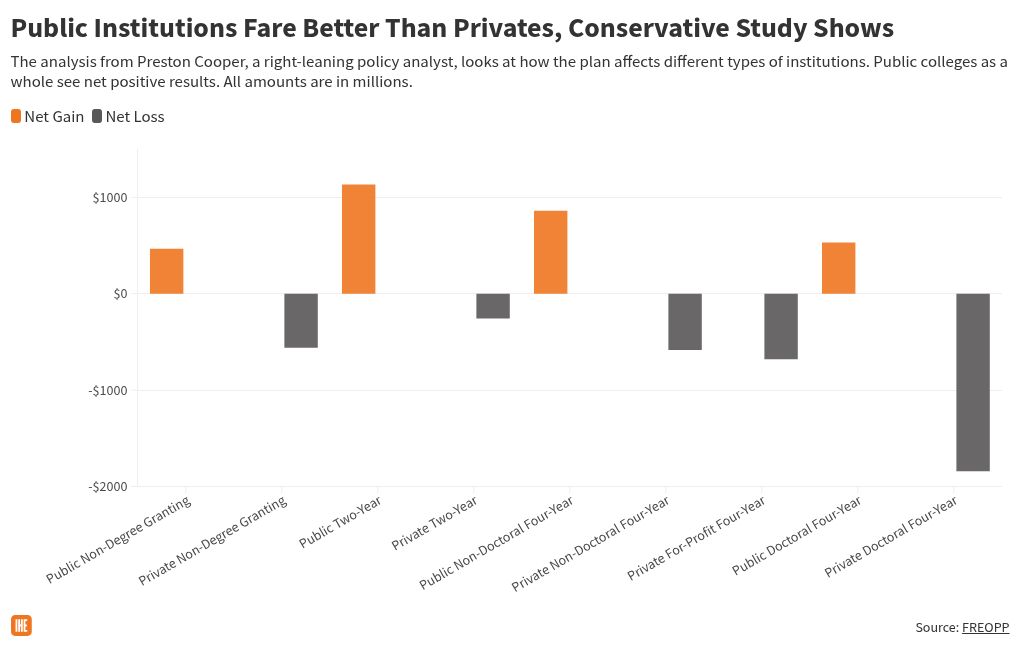
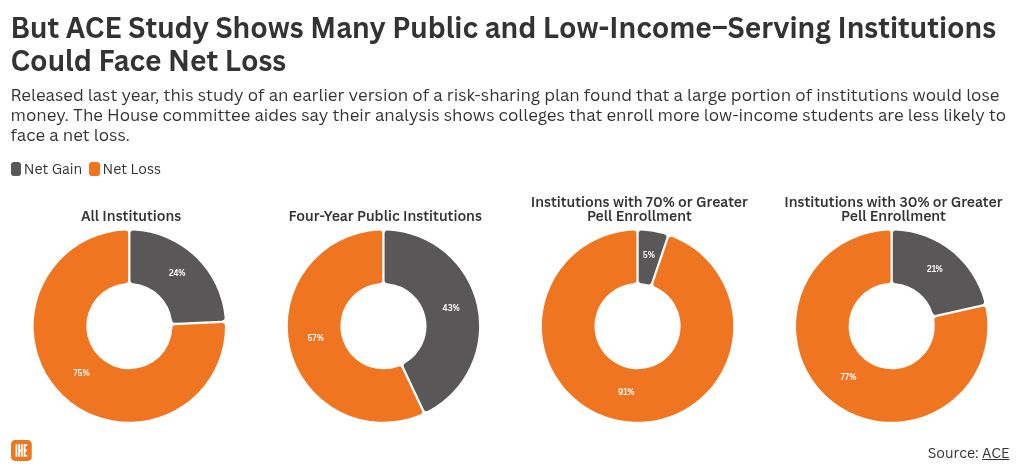
    Many higher education policy experts warn that practically speaking, the latest risk-sharing plan relies on a complicated formula that’s essentially a black box. Released in late April, the proposal has not been tested enough to know its ramifications, they say, and the limited data available is inconclusive. Some analyses released by conservative groups say the program will be a financial boost for efficient public institutions and penalize bloated private ones. But one study conducted by a lobbying group suggests that public regional and minority-serving institutions that serve high populations of low-income students will get hit the hardest.

    “Fundamentally it’s an astonishing level of federal overreach to essentially lump in all institutions of higher education together—public, private, for-profit—and run a convoluted formula to determine winners and losers at the federal level and then redistribute funding,” said Craig Lindwarm, senior vice president of government affairs for the Association of Public and Land-grant Universities.

    Democratic politicians also argue that the purpose of the legislation is not truly to hold colleges accountable for student outcomes like graduation rates and income levels, but to crack down on what the government considers overly liberal institutions and fund President Donald Trump’s priorities.

    Even some conservative supporters acknowledge that it’s difficult to know the full scope of the bill’s potential impact this early. But they say risk-sharing is a necessary tool to penalize colleges that provide a poor return on investment and ensure the production of a well-prepared, financially stable workforce. They also suggest that the incentives such as additional grant funding to institutions that keep costs low and graduation rates high will offset the penalty for most public institutions.

    “With any policy change, we’re not going to be able to predict in advance 100 percent of how this is going to affect everyone, everywhere, all the time. But I don’t think that should be an excuse to not make policy changes,” said Preston Cooper, a senior fellow at the conservative think tank the American Enterprise Institute. “I still think the data we have gives us a general idea of which sorts of institutions would be affected and the magnitudes of the penalties involved.”

    So How Does It Work?

    The proposed risk-sharing plan would kick in for new loans starting in July 2027, said an aide for Republicans on the House Education and the Workforce Committee. That means colleges wouldn’t be penalized for disruptions to the student loan system that occurred during the pandemic or efforts during the Biden and Trump administrations to overhaul repayment.

    If we don’t even understand how this works, why the heck are we passing it? I mean, it’s a concept, but I don’t think it’s the concept that people think it is.”

    Jason Delisle, nonresident senior fellow at the Urban Institute

    And because borrowers don’t have to start paying back their loans until six months after they graduate or stop out, institutions likely won’t have to pay a penalty until 2029 or 2030 at the earliest, the aide added.

    But from then on, institutional payments would be calculated annually—major by major—for each new cohort of borrowers and would continue until they’ve paid off their loans. The amount per cohort could change from year to year, depending on factors such as borrower behavior, postgraduation earnings and college costs. But it’s expected to grow as more and more cohorts are added to the lump sum.

    Under the bill, the amount per cohort would be calculated using a three-part formula, which is largely unchanged from what Republicans proposed last Congress in the CCRA.

    The first step is to determine a college’s risk-sharing liability, which is how much each institution owes the government. To do that, the formula looks at the difference between how much students were supposed to repay during a given year and how much they actually did. The calculation takes into account the value of any missed or partial payments as well as any interest that the government waived or principal contributions it matched, the committee aide said. It does not, however, include debt waived through programs like Public Service Loan Forgiveness, which was a concern for institutions.

    This is the part of the formula that raises the most questions for institutions, as the mechanics of exactly how the risk-sharing liability is calculated are not clearly outlined in the legislation or in a CCRA database published by the education committee Republicans in 2024. And even if it were, much of the data needed to run the formula is not publicly accessible.

    “How the formula works is the million-dollar question, and something that we’ve been trying to work on for a year and a half,” one policy expert said. “It’s very complicated and relies on metrics that aren’t publicly available.”

    House committee aides counter that colleges have access to student borrower data via the National Student Loan Data System, which can be used to predict future risk-sharing payments. They also point to a recent Dear Colleague letter reminding colleges of their responsibility to monitor borrower payments.

    But even then, higher ed lobbyists say, it’s not clear who will be responsible for calculating the liability. If any part of that responsibility falls to campus financial aid administrators, higher ed groups say the plan will increase the administrative burden on colleges.

    “If I were a lobbyist, I would just say to all of my members, go to your congressman and say, ‘We don’t know what this does,’” said Jason Delisle, a policy analyst who has worked at think tanks across the political spectrum but is now based at Urban Institute where he’s a nonresident senior fellow. “If we don’t even understand how this works, why the heck are we passing it? I mean, it’s a concept, but I don’t think it’s the concept that people think it is.”

    Incentives to Lower Costs

    Once that risk-sharing liability is known, the next step in the formula is to figure out how much of that liability fee a college will have to pay. That’s done using what the legislation calls an earning-price ratio, which compares students’ earnings to the federal poverty line and college cost. A higher EPR means a lower final payment. For example, if an institution’s EPR is 0.3, or 30 percent, then it has to pay 70 percent of the original liability.

    To further offset the risk-sharing penalty, colleges can also qualify for a new pot of funding proposed in the bill called the PROMISE Grant, which is the third step of the formula. How much a college would get in PROMISE funding depends on the total value of Pell Grants received and the graduation rate of Pell-eligible students. This grant is funded by other colleges’ risk-sharing payments.

    Rep. Tim Walberg, a Michigan Republican and chair of the House Education and Workforce Committee, is leading the effort to cut billions from higher education programs.

    Bill Clark/CQ-Roll Call Inc. via Getty Images

    So, according to data from the House committee, the State Technical College of Missouri should get $3,230,130.50 in PROMISE grants. But the community college would have to pay $9,688, bringing its net gain down to $3,220,442.50. Washington University in St. Louis, however, would receive no PROMISE Grant funding and lose about $3.5 million. (The House Committee data only lists the final risk-sharing payment—not original liability values or EPRs.)

    In theory, this data demonstrates how the EPR and the PROMISE Grant are supposed to support colleges that serve low-income students, but many higher ed lobbyists are worried the program will actually do the opposite. That’s largely because colleges can only receive a PROMISE Grant if they agree to lock in tuition rates for each new freshman class. If they can keep tuition costs low, then their EPR scores will only be strong. Some lobbyists say that neither is a feasible option for public colleges and minority-serving institutions, which rely heavily on funding from the state.

    “It’s not a coincidence that some of our schools that would get hit the hardest are in states that invest very little in public higher education. Some of our schools in Pennsylvania and Arizona, for example, would fare extremely poorly, and it’s by and large because tuition levels are such a determinative component as it relates to the penalty assessment,” said MacGregor Obergfell, director of governmental affairs at APLU. “To think of what traditional conservative orthodoxy is, it seems pretty unusual that a conservative position is using the federal government to punish state institutions for decisions made by their states.”

    Reward or Penalty?

    Some higher ed groups also noted that much of the formula either depends on or fails to acknowledge factors outside of a college’s control. Much of this has to do with unpredictable borrower behavior, but there are other factors at play, too; for example, when calculating discounts with the EPR, the formula doesn’t account for differences in the cost of living from college to college.

    “Institutions in higher-cost areas are at more of a disadvantage than other institutions,” said Karen McCarthy, vice president of public policy and federal relations for the National Association of Student Financial Aid Administrators. “They have to charge higher prices to reflect higher costs of labor, maintaining facilities and all those types of things.”

    The burden of risk-sharing payments may be so high that colleges elect to opt out of the federal student loans program entirely, she added: “Ultimately it would have an impact on lower-income students who have a need both for a Pell Grant and a direct loan to help them meet their cost of attendance.”

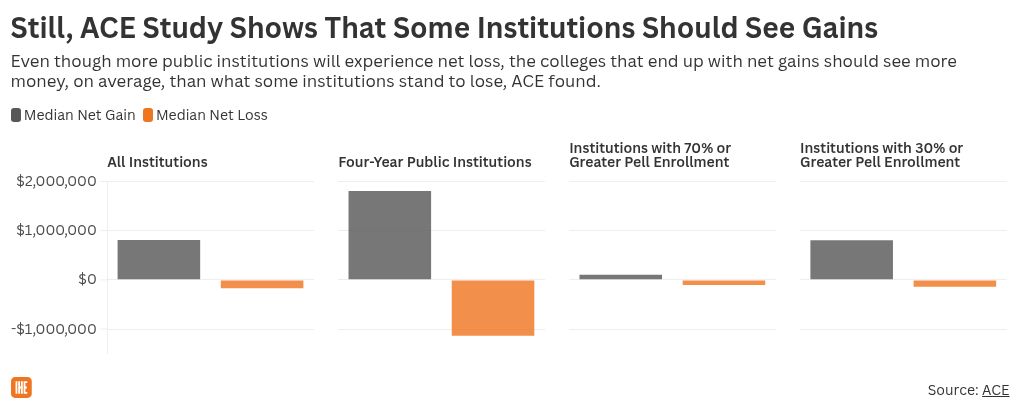
    Of colleges that enrolled 70 percent or more low-income, Pell-eligible students, 96 percent would have to pay a risk-sharing penalty and 91 percent would lose money over all when PROMISE Grant is factored in, according to the American Council on Education’s analysis of the House data.

    The committee countered that finding with its own analysis of the data, sent to Inside Higher Ed, showing how colleges that enroll the highest share of low-income students should see about $99 more per student, while those that enroll the lowest share would lose about $66 per student.

    The ACE analysis as well as the committee’s data are among the few studies that show the estimated impact of the previously proposed risk-sharing plan. None have been updated yet to reflect the latest iteration.

    Another analysis from Cooper, the AEI fellow, estimated that public institutions as a whole should get more money under the plan, but private nonprofits are expected to face a substantial penalty.

    Although critics point to how the plan would affect individual institutions, particularly small, underresourced schools, proponents argue that the focus should be on the impact to higher education over all, and that colleges can lower their costs to see a payoff.

    “Because the net gains are significantly larger, the sector as a whole sees a net gain even though more institutions have net losses,” Cooper said. “So, the upside for institutions here is that there are significant rewards available to those which can improve their outcomes.”

    At the end of the day, it’s all about how you choose to look at the data.

    “I would just like to see [the formula of risk-sharing] play out for a couple of hypothetical colleges based on data that has some bearing on reality,” said Delisle from Urban Institute. “And that’s a hard thing to come by right now.”

    Source link

  • Defense Department Caps Universities’ Indirect Cost Rates

    Defense Department Caps Universities’ Indirect Cost Rates

    The Department of Defense is planning to cap indirect cost reimbursement rates for higher education institutions at 15 percent, according to a May 14 memo signed by Secretary of Defense Pete Hegseth. 

    “The Department of Defense (DoD) is the steward of the most critical budget in the Federal Government—the budget that defends our Nation, equips our warfighters, and secures our future. That stewardship demands discipline. It demands accountability. And it demands that we say no to waste,” wrote Hegseth.

    The memo directs the DOD to develop the new policy within 21 days, marking the fourth federal agency—including the National Institutes of Health, the Department of Energy and the National Science Foundation—that has enacted a plan to cap indirect cost rates at 15 percent. For decades, universities have negotiated with the federal government to calculate bespoke indirect cost reimbursement rates to pay for research costs that support multiple grant-funded projects, such as facilities maintenance, specialized equipment and administrative personnel. (The paragraph has been updated.)

    Universities and their trade associations have already sued the NIH, DOE and NSF over these plans, arguing that capping indirect costs would hurt research production and compromise global competitiveness, all while violating multiple aspects of the Administrative Procedure Act, including bypassing congressional authority required to alter indirect cost rates. So far, federal judges have blocked indirect cost caps from taking effect at the NIH and DOE. The NSF agreed to pause the cap until June 13 in order to proceed to summary judgment, which is a way to resolve the case quickly without a full trial.

    Matt Owens, president of COGR, which represents research institutions, condemned the DOD’s newly announced plan. 

    “DOD research performed by universities is a force multiplier and has helped to make the U.S. military the most effective in the world. From GPS, stealth technology, advanced body armor, to precision guided missiles and night vision technology, university-based DOD research makes our military stronger,” Owens said in a statement. “A cut to DOD indirect cost reimbursements is a cut to national security. Less funding for research means less security for our nation.”

    Hegseth’s memo claimed that capping the Defense Department’s indirect cost rate for universities would “save up to $900 [million] per year on a go-forward basis,” while also claiming that the department’s “objective is not only to save money, but to repurpose those funds—toward applied innovation, operational capability, and strategic deterrence.” The NIH has also made similarly incompatible assertions. It touted on social media its indirect rate cap plan’s potential to save taxpayers more than $4 billion, while a lawyer for the NIH told a federal judge that the cut was simply a reallocation of funds. 

    The Defense Department’s plans “will not stop at new grants,” Hegseth wrote, adding that “meaningful savings can also be achieved by revisiting the terms of existing awards to institutions of higher education.” The memo directed the under secretary of defense for research and engineering to do the following within 30 days:

    • Initiate a departmentwide effort to renegotiate indirect cost rates on existing financial assistance awards to institutions of higher education. “Wherever cooperative, bilateral modification is possible, it shall be pursued.”
    • “Where bilateral agreement is not achieved, identify and recommend lawful paths to terminate and reissue the award under revised terms.”
    • “Complete renegotiations or terminations for all contracts by 180 days from the date of this memorandum.”

    Source link

  • University Finance and Managing the Margins of Error

    University Finance and Managing the Margins of Error

    • By Huw Morris, Honorary Professor of Tertiary Education at the Institute of Education, UCL’s Faculty of Education and Society, and Richard Watermeyer, Professor of Education at the School of Education, University of Bristol.
    • Over the weekend, HEPI blogged on the possible consequences for universities and students of a new UK / EU agreement – see here.

    The financial challenges currently facing UK universities, as revealed by last week’s report from the Office for Students, have focused attention among university leaders, government policy makers and media commentators, as well as higher education staff and students, on four things:

    What has received less attention are variations between universities in the number of students recruited in general and international students in particular, as influenced by perceptions of institutional quality, and the wider incomes and costs of this provision. It is these things which impact on institutional margins, their surpluses and losses, and determine their longer-term financial sustainability. Most importantly, there are very big differences between universities when assessed by these measures. With a HM Treasury Spending Review and a Department for Education Higher Education White Paper expected imminently, it is these wider institutional economics and financial management issues which are the focus of this article.

    Higher Education Statistics (HESA) data reveals a very mixed pattern of financial activity and performance among the 302 higher education institutions that filed accounts for 2022/23, the last year for which full records are available. Income from all sources, including tuition fees, research funds, government grants, endowments and other miscellaneous sources for these organisations, has ranged from £84,000 at the Caspian School of Academics to £2.5 billion at the University of Cambridge. Despite such wide variance, 88 institutions are responsible for over 80% of the income; within this group, the 24 members of the UK’s Russell Group of research-intensive universities account for the lion’s share (47.3% despite attracting only 25.8% of total student numbers). This mismatch between volume and income is explained by the financial margins of course provision.

    The costs universities incur are similar. Salaries for academic, professional services and support staff vary, but national pay bargaining and pension arrangements mean that the differences are not great. Meanwhile, the costs of campus buildings per square metre and the unit costs of equipment are similar. So, while there are significant differences in the number of staff, size of university estate and scale of expenditure on equipment, most institutional leaders are alert to the key metrics that help to marshal these aggregate costs. The big difference in costs is in supporting research activity, with the Transparent Approach to Costing (TRAC) data revealing £4.6 billion a year of unfunded activity. This is a measure of the research activity undertaken by university academic staff, which is not supported by research funds and appears to be undertaken within hours nominally allocated to other things, such as teaching and administration. It is this and related figures that the Minister of State for Skills is referring to when she challenges universities to be more transparent with the information they provide on their use of public money.

    At a UK level, information on this activity is not hard to find. Table C.1.2. of the OECD’s Education at a Glance reveals that the UK has a higher level of expenditure on research and development per HE student than the US, despite very much lower levels of Gross Domestic Product per capita. The proportion of unfunded research activity varies considerably between institutions and is lowest among Russell Group universities and highest among institutions that are seeking to increase activity from a lower base.

    What is understood by most university leaders, but less commonly by policymakers and the media, is the vital role of operating margins in determining whether a university is financially sustainable. The role of margins is best illustrated by comparing two fictional universities.

    University A is a large research-led institution that offers a wide range of courses to home and overseas students. In 2021/22, in keeping with the average Russell Group university, one third of its students were recruited from overseas and its position in the Chinese Academic World Ranking of Universities (AWRU) – and to a lesser extent the QS and THE World rankings – enabled the university to charge fees of £80,000 for its MBA programme, £60,000 per year for its Medicine degree to overseas students, and £20,000 per year for its doctoral programme. These high fees and the large volume of students applying for a limited number of places generated sufficient margins (gross surplus) to subsidise the costs of the less remunerative courses for home students in subject disciplines such as English Literature where the full-time undergraduate degree fee is £9,535 per year. This was important because the cost of these courses with the higher charging courses for international students was typically twice the £9,535 per full-time student income earned from UK students, not least because of the costs of the providing time and resources for staff research in these disciplines where there was no grant income to support this activity. These funds also provided the financial resources to underpin some of the research work of academic staff and their professional services colleagues.

    The picture is less rosy at University B, a large former polytechnic, with a much lower ranking in international league tables and which is consequently less competitive in attracting Chinese international students. Instead, University B is dependent on recruiting first-generation international students; students typically from less wealthy families, unable to afford the premium fees charged at University A. At University B, the fee for an MBA is £20,000, although this is often discounted and then diluted by recruitment agency fees. The high sticker price and subsequent use of discounting is used because the advertised fee is a marker of quality and the discount fee is used to draw the student in by adjusting the amount to what they can afford and flattering them into believing the university wants them for their talents. University B does not have a Medical school and so a comparator fee is not available, but the fee for an international student on a science and technology degree is £18,000. When diluted by agents’ fees and discounted prices, this fee may drop below the costs of provision. Finally, the PhD course fees of £5,000 per year only cover half the running costs in order to attract students who will help to boost external assessments of the research undertaken by this university.

    Figure 1. Course prices and costs compared

    The net effect of the combination of different course prices and costs at University A and University B is that the former is making significant gross surpluses and the latter is making significant gross losses. It is important to note that this pattern of surpluses and losses is also evident in the financial performance of other university services, including, for instance, franchise courses in the UK and overseas, student accommodation, conference facilities, catering and other services. This is because the prices charged by institutions with less auspicious reputations and league table positions are lower than those of their competitors, but the costs are similar.

    There are also issues associated with capital requirements (the need for funding to pay for the renewal and replacement of buildings and other assets) and risk exposure (the extent to which future activity is certain and predictable). The number of young British people wanting to study at UK universities has historically been predictable, and while there has been competition between universities, this competition has rarely led to institutional failure. Institutions may have got smaller, closed courses, and on occasion merged, but they have not been forced into insolvency. Such relative assurance may wane in future as risks rise and the need to renew and replace buildings and other capital assets grows.

    We might, for instance, reasonably anticipate increased risk associated with international student recruitment where geopolitical and concomitant financial volatility impact the inward migration of students into UK universities. While we have already witnessed the inhibitory effects of visa rule changes, we can reasonably expect exchange rate fluctuations and changes to the proclivity of overseas governments to fund students studying in the UK to further increase these risks. In the medium term, a requirement to maintain a high ranking in international university league tables, as corresponding justification for high fee charges, compels sizable financial investment in buildings, equipment, and staff to maintain the research performance.

    Assessment of university performance in the AWRU, QS and THE World University rankings is dependent on research performance measured by citations and, in the case of the QS and THE specifically, the reputation of the institution in the eyes of senior leaders in other universities and the opinions of employers. These ratings are influenced by past rankings and impressions of campus quality. In the long term, maintaining these league table positions is likely to become more demanding for three reasons.

    • First, the drive by governments in many other countries to create their own ‘world-class’ universities leads to an increase in the costs of competing and a consequent decline in margins.
    • Second, the growing prominence of philanthropy and alumni giving looks set to make up an increasing proportion of the funding of highly ranked institutions, though this is less of a feature in UK higher education. In the USA, for example, higher education endowment is around $800 billion and is growing by 150% per year. Endowments now account for 50% of the income of Harvard University and a very sizeable proportion of the income of other Ivy League and American research-led institutions. Of course, whether this remains the case in the face of challenges from President Trump’s new administration remains to be seen.
    • Finally, in the longer term (10 to 30 years), it seems reasonable to predict that developing countries in the Global South will develop their own higher education provision, and the number of young people travelling overseas to study will reduce, as is being encouraged by the China-Africa 100 University plan and similar initiatives.  

    The lessons of this analysis for institutional leaders and their governing bodies and councils are that they should broaden their focus to consider the operating margins on all their activities, (that is, teaching, research, accommodation, conferences, room and equipment hire) as well as the investment requirements to maintain this performance in the medium to long term. Without engaging in these types of analysis, the risks of cashflow problems will grow and the longer-term sustainability of these institutions will be jeopardised.

    The lesson for governments is that they should look at the real costs of different courses and focus the funding that is made available through student loans and grants on those activities which will provide the greatest sustainable private and public benefit in the long run. This means aligning the funding with future needs, as defined by assessments in the NHS Workforce plan and the analyses by Skills England, Local Skills Improvement Plans and the UK shortage occupation list and, where this is not the case, subject areas where it seems probable that the student loans will be repaid. If institutions wish to fund programmes that fall outside these lists, then they can subsidise these courses with surpluses made from other activities. The issues outlined above also mean that the pressures facing institutions are different, and it is probably beyond the capability of the Department for Education and the Office for Students to oversee the transitions that will be needed in many of the 452 higher education institutions in the UK. To handle these changes will require additional leadership, management and governance resource and ideally greater local and regional stewardship for most institutions.

    Source link

  • Steps Toward Creating a More Accessible and Inclusive College Classroom – Faculty Focus

    Steps Toward Creating a More Accessible and Inclusive College Classroom – Faculty Focus

    Source link

  • Steps Toward Creating a More Accessible and Inclusive College Classroom – Faculty Focus

    Steps Toward Creating a More Accessible and Inclusive College Classroom – Faculty Focus

    Source link

  • La Trobe is following in Arizona State uni’s footsteps – Episode 168 – Campus Review

    La Trobe is following in Arizona State uni’s footsteps – Episode 168 – Campus Review

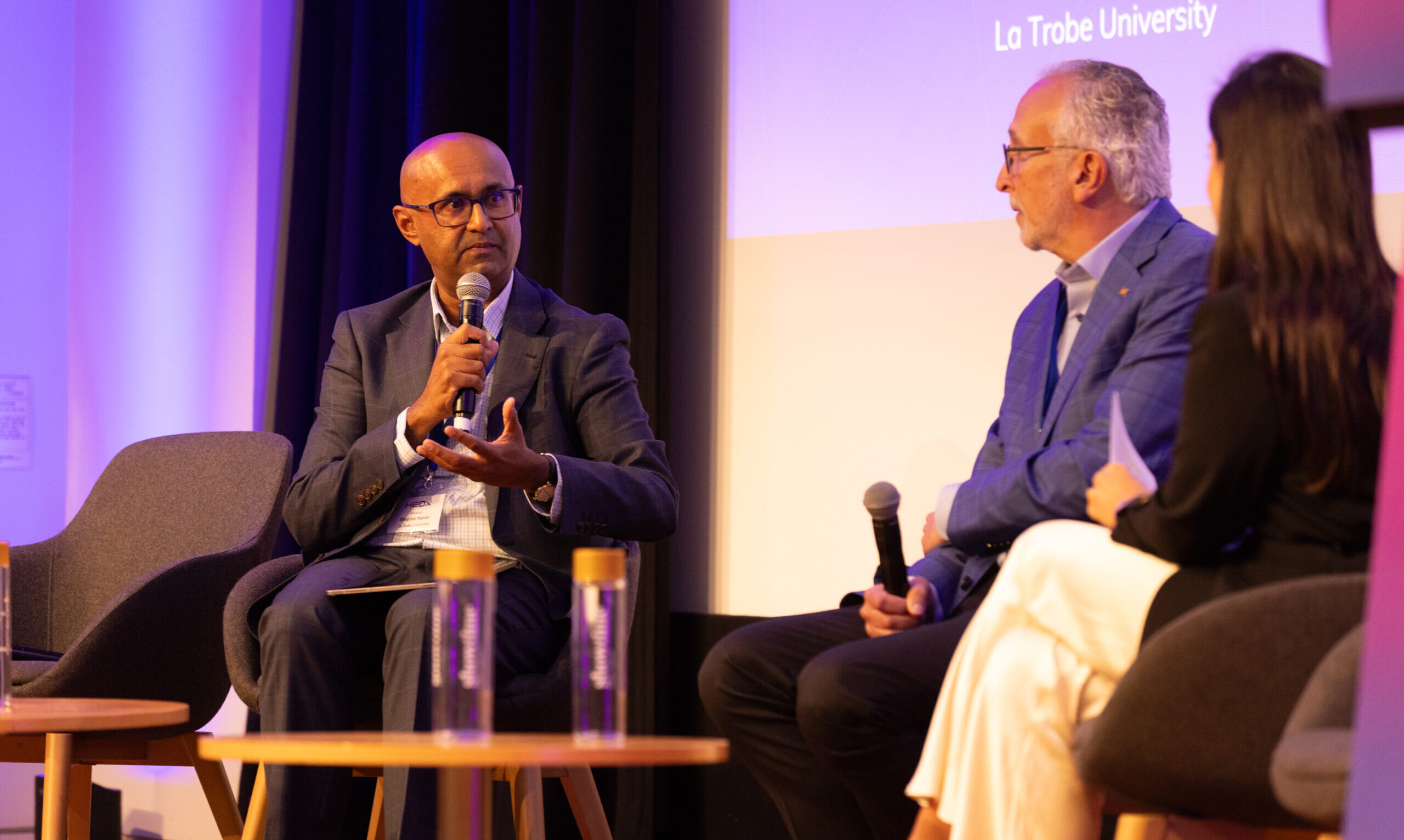
    Chief information officer of Arizona State University Lev Gonick outlines the part technology has played in the 20-year of transformation of his university.

    Please login below to view content or subscribe now.

    Membership Login

    Source link

  • International education in Australia needs an urgent rethink – Campus Review

    International education in Australia needs an urgent rethink – Campus Review

    The federal government’s recent decision to again raise the international student visa application fee to $2,000 has reignited concerns about the country’s approach to international education.

    Please login below to view content or subscribe now.

    Membership Login

    Source link

  • University of Tasmania continues cuts to Arts, Humanities – Campus Review

    University of Tasmania continues cuts to Arts, Humanities – Campus Review

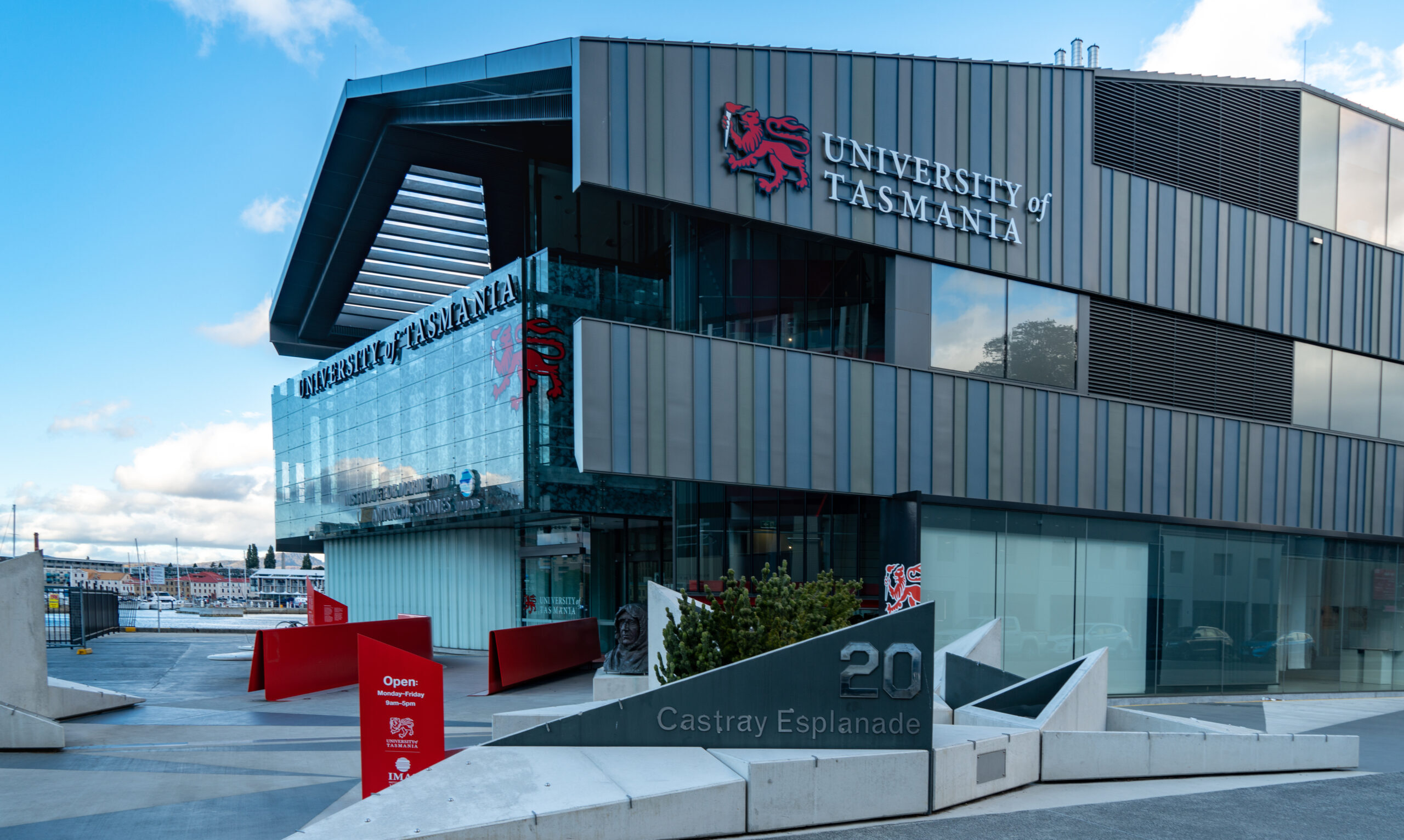
    The University of Tasmania (UTAS) is set to cut 13 full-time staff as it proposes a massive shake-up of its humanities, social sciences, creative arts, and media schools amid declining student enrolments.

    Please login below to view content or subscribe now.

    Membership Login

    Source link