Author: admin

  • HESA’s AI Observatory: What’s new in higher education (May 16, 2025)

    HESA’s AI Observatory: What’s new in higher education (May 16, 2025)

    Highlight from a Canadian PSI

    New AI Research Assistant available in library search

    April 25th, 2025. University of Manitoba. 

    UManitoba recently announced the launch of their new AI Research Assistant (beta), a GenAI tool to help with library searches and to help gather initial insights on research topics. Functions include providing summarized responses to research questions, recommending relevant publications from the libraries’ collections, and suggesting additional question prompts to expand the research topic.

    AI Policy

    Encadrement de l’IA en enseignement supérieur: des syndicats d’enseignants déplorent la lenteur de Québec à agir

    Dion-Viens, Daphnée. Le Journal de Montréal. April 24th, 2025.  

    “Québec a annoncé l’automne dernier la création d’une instance de concertation sur l’intelligence artificielle en enseignement supérieur, dont les travaux ont débuté en octobre. Le bilan des travaux devait être présenté en avril, mais cet échéancier a été repoussé à la fin de l’été. Un cadre de référence pour l’intégration de l’IA dans les cégeps et les universités devrait être présenté à la rentrée. La Fédération nationale des enseignantes et enseignants du Québec (FNEEQ-CSN) déplore ce report. Le temps presse puisque plusieurs établissements attendent ces lignes directrices pour agir. »

    Universities have a chance to lead in shaping AI’s future

    Kaya-Kasikci, S. et al. University World News. April 23th, 2025.

    The authors of a recent academic analysis of national AI policies share their thoughts about how the diverse AI policy approaches and perspectives around the world might impact the future of post-secondary education.   

    Transformation of Education

    Are You Ready for the AI University?

    Latham, S. The Chronicle of Higher Education. April 8th. 2025. 

    “What’s happening in higher education today has a name: creative destruction. The economist Joseph Schumpeter coined the term in 1942 to describe how innovation can transform industries. That typically happens when an industry has both a dysfunctional cost structure and a declining value proposition. Both are true of higher education.“

    AI is unable to outpace higher education

    Lumina Foundation. April 29th, 2025. 

    “Leaders from academia, economic development, and industry discuss how universities and colleges are advancing research and equipping students with the skills to lead in an AI-powered future. From addressing social inequities to preparing cities for the economy of the future, the conversation highlights the transformative potential of AI when nurtured within higher education, and the tradeoffs that must be made in an education system wired for the past.“

    Gen Z says AI has made their college degrees irrelevant

    Torres, R. April 29th, 2025. Higher Ed Dive.

    “The ongoing push to deemphasize college degree requirements in job postings has led half of Gen Z job seekers to view their degrees as a waste of time and money”, according to a recent Indeed report that surveyed 772 US adulted workers and job seekers with an associate’s degree or higher.

    Workforce readiness

    Labor Market Disruption and Policy Readiness in the AI Era

    McGrath, E. and Burris, M. The Century Foundation. April 29th, 2025.

    Policy recommendations to prepare current and future workforce for AI.

    Teaching and Learning

    Here is how experiential learning can save colleges from AI

    McKeen, S. University Business. April 30th, 2025.

    “If knowledge is now universally accessible, what remains of higher education’s value? (…) The traditional college lecture is obsolete. Why should students pay thousands in tuition to sit in a lecture hall when AI can summarize complex theories in seconds? The world no longer rewards passive knowledge absorption. Employers want graduates who can think critically, collaborate effectively, and apply knowledge in complex, unpredictable environments. Experiential learning isn’t just an educational trend— it’s a survival strategy.“

    Is AI Enhancing Education or Replacing It?

    Shirky, C. The Chronicle of Higher Education. April 29th, 2025.

    “The fact that AI might help students learn is no guarantee it will help them learn. […] The teacher can advance learning only by influencing the student to learn.Faced with generative AI in our classrooms, the obvious response for us is to influence students to adopt the helpful uses of AI while persuading them to avoid the harmful ones. Our problem is that we don’t know how to do that.“

    Teaching Writing in the Age of AI

    Mintz, S. Inside Higher Ed. May 2nd, 2025. 

    « As artificial intelligence becomes increasingly capable of generating polished, grammatically correct text that meets academic standards, educators face a critical challenge: How can we teach students to write authentically and effectively? » This author talks about the challenges of teaching writing in the AI era, and provide tips on how to move beyond these challenges.

    3 Laws for Curriculum Design in an AI Age

    Chaudhuri, A. and Trainor, J. Inside Higher Ed. April 30th, 2025.

    The authors share « a framework for thinking about how to address AI technology in the curriculum at all levels, from the individual classroom to degree-level road maps, from general education through graduate courses. »

    When GenAI resets the assessment baseline

    Jones, C. Times Higher Education. April 29th, 2025. 

    A visiting lecturer at Regent’s University London, Kingston University and more shares how he reassessed his assignment to mitigate students using AI to do all the work for them. His initial plan was to have ChatGPT create a « baseline » output against which he could mark his students assignments, but he was surprised to realize that the ouptut was better than most undergraduate students would have delivered. He had to review his approach, and shares his strategy in this article.

    Research

    AI Summary ‘trashed author’s work’ and took weeks to be corrected

    Ross, J. Times Higher Education. April 24th, 2025.

    AI research summaries ‘exaggerate findings’, study warns

    Ross, J. Times Higher Education. April 16th, 2025.

    « Dutch and British researchers have found that AI summaries of scientific papers are much more likely than the original authors or expert reviewers to ‘overgeneralise’ he results. (…) AI summaries – purportedly designed to help spread scientific knowledge by rephrasing it in ‘easily understandable language’ – tend to ignore ‘uncertainties, limitations and nuances’ in the research by ‘omitting qualifiers’ and ‘oversimplifying’ the text. Read the academic paper here

    AI Literacy

    Using peer networks to integrate AI literacy into liberal arts

    McMurtrie, B. The Chronicle of Higher Education. April 24th, 2025.

    Read how an associate professor of anthropology at the University of Texas at San Antonio is teaching students about effective AI use.

    Urgent Need for AI Literacy

    Schroeder, R. April 30th, 2025. Inside Higher Ed. 

    « As we approach May, alarm bells are ringing for all colleges and universities to ensure that AI literacy programs have been completed by learners who plan to enter the job market this year and in the future. »

    Source link

  • Unibuddy launches AI tool to boost student engagement

    Unibuddy launches AI tool to boost student engagement

    Unibuddy, a higher education peer-to-peer engagement platform, has officially launched Assistant – an AI tool designed to support large-scale, authentic student-led conversations.

    Following a successful beta phase, the tool is now fully live with 30 institutions worldwide and delivering impressive results: tripling student engagement, cutting staff workload significantly, and maintaining over 95% accuracy.

    As universities face increasing pressure from tighter budgets and rising student expectations, Unibuddy said its Assistant tool offers a powerful solution to scale meaningful engagement efficiently, combining the speed of AI with the authenticity of real student voices.

    • 65,000 unique students have used Assistant
    • 100,000+ student questions answered automatically without requiring manual intervention
    • 125% increase in students having conversations
    • 60% increase in lead capture
    • five hours saved per day for university staff

    “Today’s students demand instant, authentic and trustworthy communication,” said Diego Fanara, CEO at Unibuddy. “Unibuddy Assistant is the first and only solution that fuses the speed of AI with the credibility of peer-to-peer guidance – giving institutions a scalable way to meet expectations without sacrificing quality or trust.”

    Unibuddy has partnered with more than 600 institutions globally and has supported over 3,000,000 prospective students through the platform. As part of this extensive network, it regularly conducts surveys to uncover fresh insights. Although chatbots are now common in higher education, survey findings highlight key limitations in their effectiveness:

    • 84% of students said that university responses were too slow (Unibuddy Survey, 2025)
    • 79% of students said it was important that universities balance AI automation (for speed) and human interaction (for depth) while supporting them as they navigate the decision-making process (Unibuddy Survey, 2025)
    • 51% of students say they wouldn’t trust a chatbot to answer questions about the student experience (Unibuddy Survey, 2024)
    • 78% say talking to a current student is helpful — making them 3.5x more likely to trust a peer than a bot (Unibuddy Survey, 2025)
    • Only 14% of students felt engaged by the universities they applied to (Unibuddy Survey, 2025)

    Unibuddy says these finding have shaped its offering: using AI to handle routine questions and highlight valuable information, while smoothly handing off to peer or staff conversations when a personal, human connection is needed.

    Buckinghamshire New University used Unibuddy Assistant to transform early-stage engagement – generating 800,000 impressions, 30,000 clickthroughs, and 10,000+ student conversations in just six months. The university saved over 2,000 staff hours and saw 3,000 referrals to students or staff. 

    Today’s students demand instant, authentic and trustworthy communication
    Diego Fanara, Unibuddy

    Meanwhile the University of South Florida Muma College of Business reported over 30 staff hours saved per month, with a 59% click-to-conversation rate and over a third of chats in Assistant resulting in referrals to student ambassador conversations. 

    And the University of East Anglia deployed Assistant across more than 100 web pages, as part of the full Unibuddy product suites deployment of peer-to-peer chat, with student-led content contributing to a 62% offer-to-student conversion rate compared with 34% of those who didn’t engage with Unibuddy. 

    Source link

  • FIRE and Cosmos Institute launch $1 million grant program for AI that advances truth-seeking

    FIRE and Cosmos Institute launch $1 million grant program for AI that advances truth-seeking

    AUSTIN, Texas, May 16, 2025 — The Foundation for Individual Rights and Expression (FIRE) and the Cosmos Institute today announced the Truth-Seeking AI Grants Program, a new $1 million initiative to fund open-source projects that build freedom into the foundations of AI, rather than censorship or control.

    Truth-seeking AI: Why it matters

    Truth-seeking AI is artificial intelligence built to expand the marketplace of ideas and sharpen human inquiry — not replace it.

    AI already drafts our sentences, sorts our inbox, and cues our next song. But the technology is advancing rapidly. Soon, it could determine which ideas ever reach our minds — or form within them. Two futures lie ahead, and the stakes couldn’t be higher.

    In one, AI becomes a shadow censor. Hidden ranking rules throttle dissent, liability fears chill speech, and flattering prompts dull judgment until people stop asking “why.” That is algorithmic tyranny.

    In the other, AI works as a partner in truth-seeking: it surfaces counter-arguments, flags open questions, and prompts us to check the evidence and our biases. Errors are chipped away, knowledge grows, and our freedom — and habit — to question not only survives but thrives. 

    To ensure we build AI tools and platforms for freedom, not control, Cosmos and FIRE are putting $1 million in grants on the table to ensure the future of AI is free.

    “AI guides a fifth of our waking hours. The builders of these systems now hold the future of free thought and expression in their hands. We’re giving them the capital, computing resources, and community they need to seize that opportunity,” said Brendan McCord, founder and chair of Cosmos Institute.

    “The First Amendment restrains governments, but the principles of free speech must also be translated into code. We’re challenging builders to do exactly that and prioritize freedom over control,” said Greg Lukianoff, president and CEO of FIRE.

    “AI can already steer our thoughts. The future is AI that expands them, not controls them,” added Philipp Koralus, founding director, Oxford HAI Lab and Senior Research Fellow at Cosmos Institute.

    To read more about why we need to bake principles of free thought and expression into AI code, check out Brendan McCord, Greg Lukianoff, and Philipp Koralus’s piece at Reason

    How it works

    • Grant pool: $1 million (cash + compute); compute credits are from Prime Intellect, a platform for open, decentralized AI development
    • Typical award: $1k – $10k fast grants; larger amounts considered for standout ideas
    • Rolling review: decisions in ~3 weeks; applications open May 16 at CosmosGrants.org/truth
    • Sprint timeline: 90 days to ship a working prototype
    • Community: access to a vetted network of builders, mentors, and advisors at the AI and philosophy frontier
    • Showcase: Top projects funded by Nov 1, 2025 will be invited to demo at the Austin AI x Free Speech Symposium in December 2025; selection is competitive and at the program’s discretion

    What we’re funding

    • Marketplace of Ideas — projects that preserve viewpoint diversity and open debate.
    • Promoting Inquiry — systems that actively provoke new questions, surfacing counter-arguments and open issues that require more study.
    • Bold New Concepts — any approach that pushes AI toward the role of truth-seeking partner.

    Illustrative projects:

    We’re focused on prototypes that translate philosophy to code — embedding truth-seeking principles like Mill’s Trident and Socratic inquiry directly into open-source software.

    Possible projects could include:

    • AI challenger that pokes holes in your assumptions and coaches you forward
    • An open debate arena where swappable models argue under a live crowd score
    • A tamper-proof logbook that records every answer on a public ledger.

    About the Foundation for Individual Rights and Expression (FIRE)

    The Foundation for Individual Rights and Expression (FIRE) is a nonpartisan, nonprofit organization dedicated to defending and sustaining the individual rights of all Americans to free speech and free thought — the most essential qualities of liberty. FIRE educates Americans about the importance of these inalienable rights, promotes a culture of respect for them, and provides the means to preserve them. Learn more at www.thefire.org.

    About Cosmos Institute

    Cosmos Institute is a 501(c)(3) academy for philosopher-builders — technologists who unite deep reflection with practical engineering. Through research, fellowships, grants, and education, Cosmos advances human flourishing by translating philosophy to code across three pillars: truth-seeking, decentralization, and human autonomy. The Institute supported the creation of the new Human-Centered AI Lab at the University of Oxford, the first lab dedicated to embedding flourishing principles in open-source AI. Learn more at www.cosmos-institute.org.

    Media Contact
    Karl de Vries, Director of Media Relations, FIRE
    [email protected] | +1 215-717-3473

    Source link

  • How educators can use Gen AI to promote inclusion and widen access

    How educators can use Gen AI to promote inclusion and widen access

    by Eleni Meletiadou

    Introduction

    Higher education faces a pivotal moment as Generative AI becomes increasingly embedded within academic practice. While AI technologies offer the potential to personalize learning, streamline processes, and expand access, they also risk exacerbating existing inequalities if not intentionally aligned with inclusive values. Building on our QAA-funded project outputs, this blog outlines a strategic framework for deploying AI to foster inclusion, equity, and ethical responsibility in higher education.

    The digital divide and GenAI

    Extensive research shows that students from marginalized backgrounds often face barriers in accessing digital tools, digital literacy training, and peer networks essential for technological confidence. GenAI exacerbates this divide, demanding not only infrastructure (devices, subscriptions, internet access) but also critical AI literacy. According to previous research, students with higher AI competence outperform peers academically, deepening outcome disparities.

    However, the challenge is not merely technological; it is social and structural. WP (Widening Participation) students often remain outside informal digital learning communities where GenAI tools are introduced and shared. Without intervention, GenAI risks becoming a “hidden curriculum” advantage for already-privileged groups.

    A framework for inclusive GenAI adoption

    Our QAA-funded “Framework for Educators” proposes five interrelated principles to guide ethical, inclusive AI integration:

    • Understanding and Awareness Foundational AI literacy must be prioritized. Awareness campaigns showcasing real-world inclusive uses of AI (eg Otter.ai for students with hearing impairments) and tiered learning tracks from beginner to advanced levels ensure all students can access, understand, and critically engage with GenAI tools.
    • Inclusive Collaboration GenAI should be used to foster diverse collaboration, not reinforce existing hierarchies. Tools like Miro and DeepL can support multilingual and neurodiverse team interactions, while AI-powered task management (eg Notion AI) ensures equitable participation. Embedding AI-driven teamwork protocols into coursework can normalize inclusive digital collaboration.
    • Skill Development Higher-order cognitive skills must remain at the heart of AI use. Assignments that require evaluating AI outputs for bias, simulating ethical dilemmas, and creatively applying AI for social good nurture critical thinking, problem-solving, and ethical awareness.
    • Access to Resources Infrastructure equity is critical. Universities must provide free or subsidized access to key AI tools (eg Grammarly, ReadSpeaker), establish Digital Accessibility Centers, and proactively support economically disadvantaged students.
    • Ethical Responsibility Critical AI literacy must include an ethical dimension. Courses on AI ethics, student-led policy drafting workshops, and institutional AI Ethics Committees empower students to engage responsibly with AI technologies.

    Implementation strategies

    To operationalize the framework, a phased implementation plan is recommended:

    • Phase 1: Needs assessment and foundational AI workshops (0–3 months).
    • Phase 2: Pilot inclusive collaboration models and adaptive learning environments (3–9 months).
    • Phase 3: Scale successful practices, establish Ethics and Accessibility Hubs (9–24 months).

    Key success metrics include increased AI literacy rates, participation from underrepresented groups, enhanced group project equity, and demonstrated critical thinking skill growth.

    Discussion: opportunities and risks

    Without inclusive design, GenAI could deepen educational inequalities, as recent research warns. Students without access to GenAI resources or social capital will be disadvantaged both academically and professionally. Furthermore, impersonal AI-driven learning environments may weaken students’ sense of belonging, exacerbating mental health challenges.

    Conversely, intentional GenAI integration offers powerful opportunities. AI can personalize support for students with diverse learning needs, extend access to remote or rural learners, and reduce administrative burdens on staff – freeing them to focus on high-impact, relational work such as mentoring.

    Conclusion

    The future of inclusive higher education depends on whether GenAI is adopted with a clear commitment to equity and social justice. As our QAA project outputs demonstrate, the challenge is not merely technological but ethical and pedagogical. Institutions must move beyond access alone, embedding critical AI literacy, equitable resource distribution, community-building, and ethical responsibility into every stage of AI adoption.

    Generative AI will not close the digital divide on its own. It is our pedagogical choices, strategic designs, and values-driven implementations that will determine whether the AI-driven university of the future is one of exclusion – or transformation.

    This blog is based on the recent outputs from our QAA-funded project entitled: “Using AI to promote education for sustainable development and widen access to digital skills”

    Dr Eleni Meletiadou is an Associate Professor (Teaching) at London Metropolitan University  specialising in Equity, Diversity, and Inclusion (EDI), AI, inclusive digital pedagogy, and multilingual education. She leads the Education for Social Justice and Sustainable Learning and Development (RILEAS) and the Gender Equity, Diversity, and Inclusion (GEDI) Research Groups. Dr Meletiadou’s work, recognised with the British Academy of Management Education Practice Award (2023), focuses on transforming higher education curricula to promote equitable access, sustainability, and wellbeing. With over 15 years of international experience across 35 countries, she has led numerous projects in inclusive assessment and AI-enhanced learning. She is a Principal Fellow of the Higher Education Academy and serves on several editorial boards. Her research interests include organisational change, intercultural communication, gender equity, and Education for Sustainable Development (ESD). She actively contributes to global efforts in making education more inclusive and future-ready. LinkedIn: https://www.linkedin.com/in/dr-eleni-meletiadou/

    Author: SRHE News Blog

    An international learned society, concerned with supporting research and researchers into Higher Education

    Source link

  • Empowering school staff with emergency response protocols

    Empowering school staff with emergency response protocols

    Key points:

    Safety response protocols are foundational to creating a culture of safety in schools. District leaders should adopt and implement response protocols that cover all types of emergencies. Schools should have building-level response protocols and protocols for incidents when first responders are needed. These practices are critical to keeping the community safe during emergencies.

    When staff members are empowered to participate in emergency planning and response, their sense of safety is improved. Unfortunately, many staff members do not feel safe at school.

    Thirty percent of K-12 staff think about their physical safety when at work every day, and 74 percent of K-12 staff said they do not feel supported by their employer to handle emergency situations at work.

    Staff disempowerment is a “central problem” when it comes to district emergency planning, said Dr. Gabriella Durán Blakey, superintendent of Albuquerque Public Schools: “What does safety mean for educators to really be able to feel safe in their classroom, to impact student achievement, the well-being of students? And how does that anxiety play with how the students feel in the classroom?”

    School leaders should implement response protocols that empower staff to understand and participate in emergency response using a two-tiered system of emergency response:

    • A building-level emergency planning and response team should develop an Emergency Operations Plan, which includes an emergency response protocol
    • Administrators should adopt protocols to follow when they need first responders to intervene

    For guidance on crafting emergency response protocols and plans, click here.

    Laura Ascione
    Latest posts by Laura Ascione (see all)

    Source link

  • Euro visions: Social responsibility in St Gallen

    Euro visions: Social responsibility in St Gallen

    How very Swiss.

    In most European cities you can always find stories about sixties student protests – but in 1968 in St Gallen in northeastern Switzerland, instead of conflict, five students from Switzerland, Austria, Germany, the Netherlands and Norway wanted to find a way to generate some dialogue towards inter-generational consensus on the future.

    They founded the Hochschule St.Gallen für Wirtschafts (St.Gallen University of Applied Sciences) International Students’ Committee to facilitate an exchange between business representatives, researchers and students.

    Today over 50 years on the St. Gallen Symposium is one of the world’s leading conferences for intergenerational dialogue, bringing together global leaders, academics, and young voices to discuss critical challenges shaping the future.

    And naturally, it’s all organised by a team of 30 students taking time out from their studies.

    This afternoon I’ve taken a train out from the bustle of Basel to visit the university that has produced more billionaires than any other European university. In 1898, the St. Gallen Cantonal Parliament founded a trade and commerce academy, and classes began for its initial roll of 8 students 1899 – making what went to become HSG and now the University of St Gallen one of the world’s first business schools.

    Now taking in Economics, Law, Social Sciences, International Affairs and Computer Science, its campus is deliciously brutalist – and for some reason is plonked right in the middle of a residential area on Rosenberg Hill, which if nothing else offers some stunning panoramic views of the city and the Alpstein mountains. Behind the crumbling concrete, though, there’s also a whole bunch of interesting things in its “student experience” worth taking a look at.

    The DNA of the HSG

    The university has always been interdisciplinary ever since it was a Business School, with its “Contextual Studies programme” aimed at creating responsible decision-makers who are equipped with critical skills and the cultural and ethical awareness necessary to make a positive impact in their communities and the future of society.

    Worth 45 ECTS credits (of the bachelors 180), it has eight focus areas – media, culture, history, society, responsibility, creativity, law, and technology – as well as a proper introduction to academic writing and a foreign language component that allows students to choose among 10 different languages at a variety of levels.

    It all culminates in a “portfolio seminar”, an integrative exercise where students link two contextual courses from the same focus area with their core studies through an interdisciplinary research question.

    You’ll see that includes elements that scaffold becoming a student at St Gallen – but there’s more to that process. As we’ve seen right across Europe, all new students are divided into groups and accompanied and supported by two students from higher semesters (“tutors”) who share their personal experiences, answer all questions and provide new students with valuable tips throughout the year.

    In the first week, all new students also take part in an interdisciplinary case study (“Fallstudie”) which builds confidence in networked thinking, teamwork, and critical self-reflection – as well as promoting responsibility, cooperation and belonging while building subject-specific and methodological skills, allowing students to practice essential academic success factors in a supportive environment.

    There’s also 60 oversubscribed spots to become an academic development coach for other students, and a mentoring programme that brings together students with-mid-career professionals – offering alumni a chance to give something back.

    In other words, there’s no hidden curriculum here – students are deliberately given the cheat codes.

    Tentpole events

    That all gets students used to seeing other students leading and getting involved. START Summit 2025 is Europe’s largest event dedicated to early-stage startups, attracting over 7,000 attendees including founders, investors, speakers and (aspiring) entrepreneurs, with students engaged in networking, workshops and pitch competitions.

    oikos is a leading sustainability project run by 100 student volunteers managing nine projects, including quality education, health, and social innovation. And HSG Talents is its student run careers festival, featuring the usual stalls as well as company insights, interviews, workshops, and case studies – as well as offshoot projects like company dinners, Mix, Shake, Associate, a a scavenger hunt through the streets of the city to selected restaurants, and a networking event where students create chocolates, sushi, burgers, or tapas and establish meaningful connections.

    Meanwhile St.Gallen Strategy Days is a two-day geopolitical simulation where students and young professionals step into the roles of ministers, CEOs, generals, and activists to tackle a complex global crisis like Middle East conflicts, energy shocks, and shifting alliances, making high-stakes decisions that shape simulated outcomes. And its Children’s University introduces children in the region to socially relevant topics beyond their regular school curriculum.

    Oh, and Get Connected brings together LGBTQIA+ students and professionals, facilitating the intergenerational exchange of experience; SHSG Summer School is a two-week coding bootcamp organized by the SU; Assessment Guide connects experienced students with first-year students, offering practical support for both academic and social integration and guidance on academic writing, exam preparation, and choosing a major; and the SU’s appeal advisory service offers up support from students studying in advanced semesters in law programmes.

    Use your initiatives

    The SU has five so-called “initiatives” – as well as campus media, the Skriptekommission is a student-run non-profit organisation that has been printing scripts and books on behalf of lecturers and selling them to students at fair prices since 1968; Bereich G is the gastronomic initiative that makes the best cappuccinos on campus; and Ressort International facilitates International Student Exchange, especially important since Switzerland was booted out of Erasmus plus a decade or so ago.

    Where in the UK we often see professional staff in universities tussling with (slightly lower paid) professional staff in SUs over who should get the budget to do things for students, this really is a university that appears to want its students to run things, and learn from doing so.

    Probably the best example of that is the fifth “initiative” – the one for student infrastructure. Prior to 2020, various student-run facilities existed (like ad-hoc club rooms or small coworking corners), but they were not centrally managed – so in mid-2020, a newly elected SU leadership team lobbied the university to address the growing demand for student spaces and the desire to get students involved in managing the spaces more professionally. The university’s head of estates sits on its board.

    Its team of students looks after a relaxation room for powernaps, a set of music rooms, a student-run co-working space in the heart of the city, a student-run cultural event facility in the city, a student-run centre for entrepreneurship next to the city’s railway station, and theOFFICE.

    Historically, student societies and projects were scattered in whatever rooms the university could spare, if at all – so the project’s board found a corner of campus, went begging for sponsors and created a clever cluster of temporary office spaces dedicated to associations on campus, and it means they now have a proper “home base” to work from.

    And naturally, so that students can find the time and get recognition for their learning, those running those projects, along with the 140 societies and faculty associations, can accrue up to 14 campus credits (ECTS) towards their final degree.

    Be there or be SQUARE

    A lot of what goes on takes place in the stunning SQUARE – a modular “open grid” structure of stacked glass cubes, promoting transparency, flexibility, and collaboration. Spanning approximately 7,000 square meters, SQUARE offers adaptable spaces for society events, group work, presentations and university events, including rooftop terraces and unique areas like a Japanese-style tea room.

    In the last decade St Gallen saw its fair share of scandals – a postgraduate program was found to be 1.1m francs in debt, there was a professor accused by the Financial Markets Authority of serious failings on one of his boards, another who produced studies that primarily benefited the company where he worked as a consultant, and even one who was remanded in custody for possible fraud in the Audi emissions scandal.

    There was also the rector accused of doctoring share prices, a national plagiarism scandal, and a professor who managed to siphon off 100,000 francs in unauthorized expenses.

    That all led to the creation of a comprehensive HSG Ethics Code and an independent Whistleblowing Office in 2022 – a clear, integrated framework for accountability and ethical conduct across both staff and students that covers everything from academic integrity and workplace conduct to reporting mechanisms and supervisory responsibilities, anti-discrimination requirements, research supervision ethics, and sustainability commitments.

    It’s all backed by universal induction for staff and students, formal regulations and an independent oversight office to prevent the recurrence of past scandals – as well as a dedicated Ombuds Office which aims to promote trust between university members and to solve conflicts in an informal (and very Swiss) way.

    So what might we learn in the UK? It may well be that an already wealthy country is much more likely than others to have its premier Business School top of the tree when it comes to billionaire production.

    But add all that up, and you see how its vision of “impact that has practical relevance” comes to life via real, extensive and tangible opportunities for co-creation across the campus.

    The left of Switzerland’s politics regularly accuses St Gallen of promoting capitalist ideologies and prioritising corporate interests over social equity. But at least it attempts to make sure they get real experience of social responsibility in the process.

    Source link

  • Is social media turning our hearts to stone?

    Is social media turning our hearts to stone?

    As global digital participation grows, our ability to connect emotionally may be shifting. Social media has connected people across continents, but it also reshapes how we perceive and respond to others’ emotions, especially among youth. 

    Empathy is the ability to understand and share another’s feelings, helping to build connections and support. It’s about stepping into someone else’s shoes, listening and making them feel understood.

    While platforms like Instagram, TikTok and X offer tools for global connection, they may also be changing the way we experience empathy.

    Social media’s strength lies in its speed and reach. Instant sharing allows users to engage with people from different backgrounds, participate in global conversations and discover social causes. But it also comes with downsides. 

    “People aren’t doing research for themselves,” says Marc Scott, the diversity, equity and community coordinator at the Tatnall School, the private high school that I attend in the U.S. state of Delaware. “They see one thing and take it for fact.”

    Communicating in a two-dimensional world

    That kind of surface-level engagement can harm emotional understanding. The lack of facial expressions, body language and tone — key elements of in-person conversation — makes it harder to gauge emotion online. This often leads to misunderstandings, or worse, emotional detachment.

    In a world where users often post only curated highlights, online personas may appear more polished than real life. “Someone can have a large following,” Scott said. “But that’s just one person. They don’t represent the whole group.” 

    Tijen Pyle teaches advanced placement psychology at the Tatnall School. He pointed out how social media can amplify global polarization. 

    “When you’re in a group with similar ideas, you tend to feel stronger about those opinions,” he said. “Social media algorithms cater your content to your interests and you only see what you agree with.” 

    This selective exposure limits empathy by reducing understanding of differing perspectives. The disconnect can reinforce stereotypes and limit meaningful emotional connection.

    Over exposure to media

    Compounding the problem is “compassion fatigue” — when constant exposure to suffering online dulls our emotional response. Videos of crisis after crisis can overwhelm users, turning tragedy into background noise in an endless scroll.

    A widely cited study published in the journal Psychiatric Science in 2013 examined the effects of exposure to media related to the 9/11 attacks and the Iraq War. The study led by Roxanne Cohen Silver, found that vicariously experienced events, such as watching graphic media images, can lead to collective trauma.

    Yet not all emotional connection is lost. Online spaces have also created powerful support systems — from mental health communities to social justice movements. These spaces offer users a chance to share personal stories, uplift one another and build solidarity across borders. “It depends on how you use it,” Scott said.

    Many experts agree that digital empathy must be cultivated intentionally. According to a 2025 Pew Research Center study, nearly half of U.S. teens believe that social media platforms have a mostly negative effect on people their age, a significant increase from 32% in 2022. This growing concern underscores the complex nature of online interactions, where the potential for connection coexists with the risk of unkindness and emotional detachment. ​

    So how do we preserve empathy in a digital world? It starts with awareness. Engaging critically with content, seeking out diverse viewpoints and taking breaks from the algorithm can help. “Social media can expand your perspectives — but it can also trap you in a single mindset,” Scott said. 

    I initially started thinking about this topic when I was having the same conversations with different people and feeling a sense of ignorance. It wasn’t that they didn’t care — it was like they didn’t know how to care. 

    The way they responded to serious topics felt cold or disconnected, almost like they were watching a video instead of talking to a real person. 

    That made me wonder: has social media changed the way we understand and react to emotions?

    Ultimately, social media isn’t inherently good or bad for empathy. It’s a tool. And like any tool, its impact depends on how we use it. If we use it thoughtfully, we can ensure empathy continues to grow, even in a world dominated by screens.


    Questions to consider:

    1. What is empathy and why is it important?

    2. How can too much time spent on social media dull our emotional response?

    2. How do you know if you have spent too much time on social media? 


    Source link

  • Harvard University devotes $250M to sustain research hit by federal cuts

    Harvard University devotes $250M to sustain research hit by federal cuts

    This audio is auto-generated. Please let us know if you have feedback.

    Dive Brief:

    • Harvard University will put $250 million of its own funds toward research affected by the ongoing wave of federal cuts, according to a Wednesday announcement
    • Since last week, Harvard has received “a large number of grant terminations from the federal government,” President Alan Garber and Provost John Manning said in a campuswide message. The funding disruptions are halting “lifesaving research and, in some cases, losing years of important work,” they said.
    • Harvard is taking the same tack as Northwestern and Johns Hopkins universities, which announced in April they would use institutional dollars to cover the cost of ongoing research hit by cuts.

    Dive Insight:

    Northwestern and Johns Hopkins began self-funding some of their own research after hundreds of millions of their federal funding had been lost or frozen due to the Trump administration.

    Since Trump retook office, several federal agencies have abruptly changed their funding policies, cutting off billions in grants and contracts with little to no warning. The National Institutes of Health alone slashed $1.8 billion in a little over a month, according to findings published in JAMA last week. 

    Harvard is now similarly self-funding affected research. But the federal government’s attacks against it outpace those directed at many of its peers. 

    Last month, the Trump administration canceled over $2.2 billion in federal funds to Harvard after the Ivy League institution publicly rebuked its ultimatums, arguing they overstepped the federal government’s authority. Among the demands, the administration sought a third-party audit of the viewpoints of university employees and students and wanted Harvard to selectively curtain the power of certain employees based on their activism. 

    The university is now bracing for even more cuts and mounting a legal battle against the Trump administration to regain its federal funding. 

    The university intends to fight the government’s “unlawful freeze and termination” of many of its grants and is doing what it can in the interim, Garber and Manning said Wednesday.

    “Although we cannot absorb the entire cost of the suspended or canceled federal funds, we will mobilize financial resources to support critical research activity for a transitional period as we continue to work with our researchers to identify alternative funding sources,” they said.

    They added that the university will advocate for “the productive partnership between the federal government and research universities” that has existed for over eight decades.

    Over 50 higher ed organizations, led by the American Council on Education, made a similar plea in a joint statement Wednesday.

    “The entire country benefits when policymakers and higher education leaders respect a common understanding of the vital role colleges and universities play in advancing the social, cultural, and economic well-being of the United States,” the organizations said.

    They argued that the release of research funds should not be contingent on which students colleges enroll, what programs they offer or how they oversee their instructors. The signatories also include the American Association of Colleges and Universities and the New England Commission of Higher Education, Harvard’s accreditor.

    Prior to its announcement Wednesday, Harvard had already implemented a hiring freeze for the spring semester. And dozens of faculty members have pledged 10% of their salaries to shore up against the “severe financial damage” the university faces as it takes the Trump administration to court.

    Garber recently made a similar pledge. He will take a voluntary 25% pay cut beginning in July, a university spokesperson said Thursday. 

    Harvard has not yet publicly disclosed the new president’s salary. But his predecessors have made north of $1 million annually, meaning his voluntary pay cut in fiscal 2026 would likely net the university six-figure savings.

    Garber, a longstanding Harvard employee, has taken a pay reduction during turbulent financial times before. As provost, Garber took a 25% cut in 2020 in response to the pandemic, as did the university’s then-president and executive vice president.

    Source link

  • Head Start turns 60: Alumni reflect on lifelong impact of early learning

    Head Start turns 60: Alumni reflect on lifelong impact of early learning

    In the six decades of Head Start’s existence, it has served nearly 40 million children and their families. But supporters and alumni are quick to point out that the program for children from low-income families provides more than preschool opportunities. 

    “It is more than child care and early learning, it’s a lifeline for children and families in our communities who face the steepest hills to climb to achieve success in school and in life,” said Yasmina Vinci, executive director for the National Head Start Association, during a call last month with hundreds of supporters and advocates. The association represents program leaders, children and families. 

    Head Start serves children from various backgrounds

    In the mid to late 1960s when Head Start began, about 75% of the children served were not White, which is similar to these demographics from fiscal year 2023.

    “If we want to build a healthier, freer and more fair America, we have to start by giving every child a real shot, regardless of circumstances at birth, a head start in life, and that’s why programs like Head Start matter,” Vinci said.

    The call was held to rally opposition to an anticipated request from the Trump administration to eliminate Head Start in the fiscal year 2026 budget request. However, despite those reports, the program was not dropped in the top-line FY 2026 budget proposal released May 2. A more detailed budget proposal is expected within the next month.

    The Trump administration has been cutting spending across federal agencies to reduce what it considers waste and to give states more fiscal authority. Some Republicans in Congress and other critics have called Head Start unsafe and ineffective at boosting children’s academic performance.

    But NHSA and other Head Start supporters point to research and anecdotal stories demonstrating positive academic, social and economic returns from the long-time program

    When President Lyndon B. Johnson announced the launch of Project Head Start on May 18, 1965, he said rather than it being a federal effort, the program was a “neighborhood effort.”

    Head Start funded enrollment grew over past 60 years

    In recent years, the COVID-19 pandemic contributed to dips in funded enrollment.

    Today, Head Start serves nearly 800,000 infants, toddlers and preschool children a year. More than 17,000 Head Start centers operate nationwide. A companion Early Head Start program provides prenatal services.

    As the 60th anniversary approached, K-12 Dive spoke with three women who spent their preschool years in Head Start programs in the 1970s. They reminisced about supportive teachers, tasty meals and favorite songs. They also shared how that educational foundation impacted their life journeys, including how they still hold connections to the program.

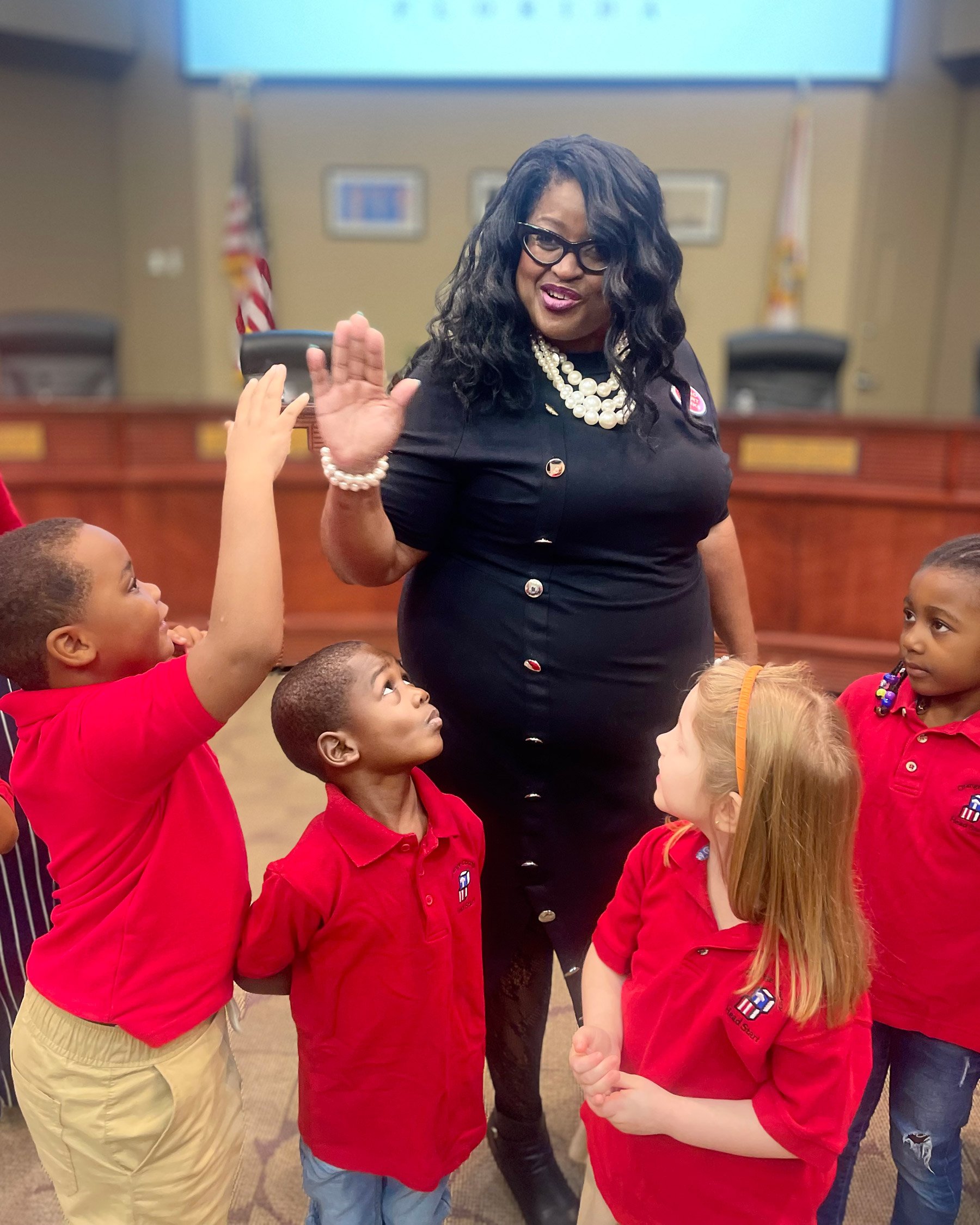
    Sonya Hill has vivid memories of attending Head Start as a preschooler in the 1970s in Orlando, Fla. Now director of the same program, she’s pictured greeting children after speaking to Orlando government officials about the services on Oct. 8, 2024.

    Sonya Hill

    Sonya Hill

    Sonya Hill’s connection to Head Start has been a full-circle experience — from her participation as a child living in Orlando, Florida, in the 1970s to her role today as director of the area’s same Orange County Head Start program. 

    Hill, 52, has vivid memories of her own Head Start experience. One of her favorite activities was when all the children held onto the ends of a colorful parachute. They would shake it and run under it. Another special moment came when her father, who worked in a bakery, visited her class for a special event featuring community helpers — and brought doughnuts for all the students. 

    Her favorite teacher, she said, was Shirley Brown. 

    Years later, right after graduating from South Carolina State University with a degree in social work in 1994, Hill was waiting to be interviewed for a job at a Head Start program. Somehow she hadn’t made the connection that this was the same program she had attended as a child. And then Brown walked around the corner.

    “I hugged her so hard. It was the same feeling of hugging her when I was in her Head Start classroom, and I couldn’t believe it,” Hill said. 

    Hill got the job, and for the past 30 years, she has worked in various roles there, eventually being named director in 2016.

    As leader of the program, she travels to the Florida state capital and to Washington, D.C, to advocate for Head Start services, telling lawmakers about former students who have gone on to college and careers.

    “I’m just thinking this is a program that has impacted so many people across the United States, but I know firsthand that Head Start works,” Hill said.

    She credits her childhood Head Start experience with helping her become the first in her family to graduate college and also to earn a master’s degree.

    Her family — which she notes extends today from her grandmother to children of her nieces and nephews — is “extremely proud” of her, Hill says, and she doesn’t take that lightly. “I know I have a lot of responsibility to my family, to my community,” Hill said. “Head Start truly gave me my foundation, and that’s why I’ve stayed here, because I owe so much to the program, and I get to see firsthand how it’s changed lives.”

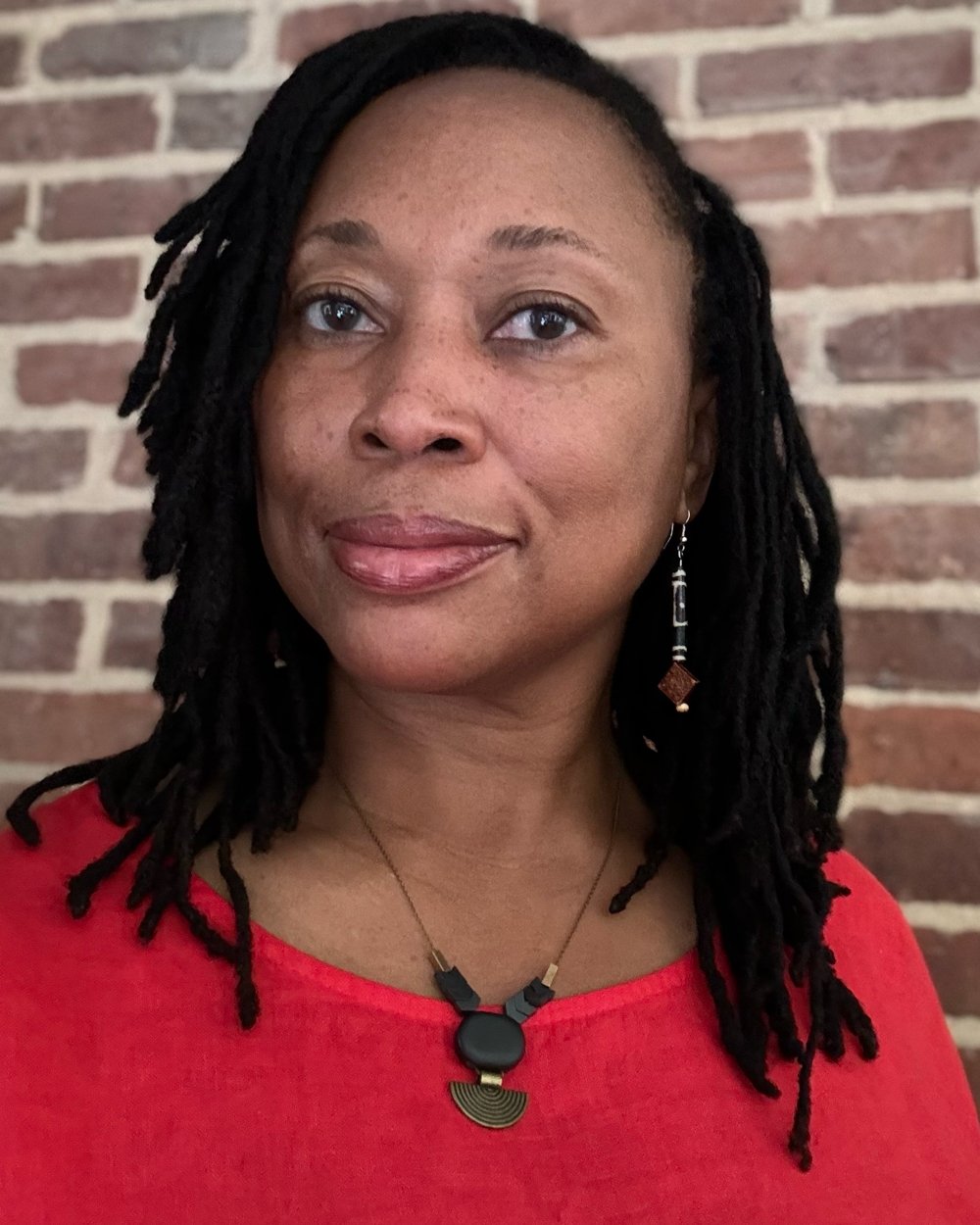
    Toscha Blalock remembers enjoying the routines in the Head Start program she attended in the 1970s in western Pennsylvania. She is currently the chief learning and evaluation officer at Trust for Learning.

    Toscha Blalock

    Toscha Blalock

    As a young child growing up in the small town of Monessen, Pennsylvania, Toscha Blalock’s home life was fun and welcoming, but hectic. She lived with nine relatives, including her mother, Gloria Anderson, who had Blalock when she was a teenager. As the youngest, Blalock remembers the adults and her cousins caring for her by braiding her hair and playing games with her. Even at a young age, her family labeled her “the smart one.”

    But the family struggled financially, she said. Her mother, who had negative experiences as a student during desegregation efforts, sought out the area’s Head Start program for her daughter, determined that she would have a better education.

    As a Head Start student in the 1970s, Blalock loved reading books. She also enjoyed the school day routines of learning, meal time and napping. By the time Blalock was ready for kindergarten, she was reading above her age level. In 1st grade, when she wasn’t included in the highest level reading group, Blalock’s mother spoke to school administrators, and the young student moved to the higher level group.

    “There were a lot of experiences like that in the school. There was a challenging racial dynamic in the town, and I think that spilled into how children were treated,” said Blalock, 53.

    In high school, Blalock was one of only two Black students in her 89-student graduating class enrolled in college prep classes. 

    Source link