A majority of Victorian universities posted operating losses in 2024 but continued to boost the salaries of their vice-chancellors, annual reports reveal.
Please login below to view content or subscribe now.
Membership Login

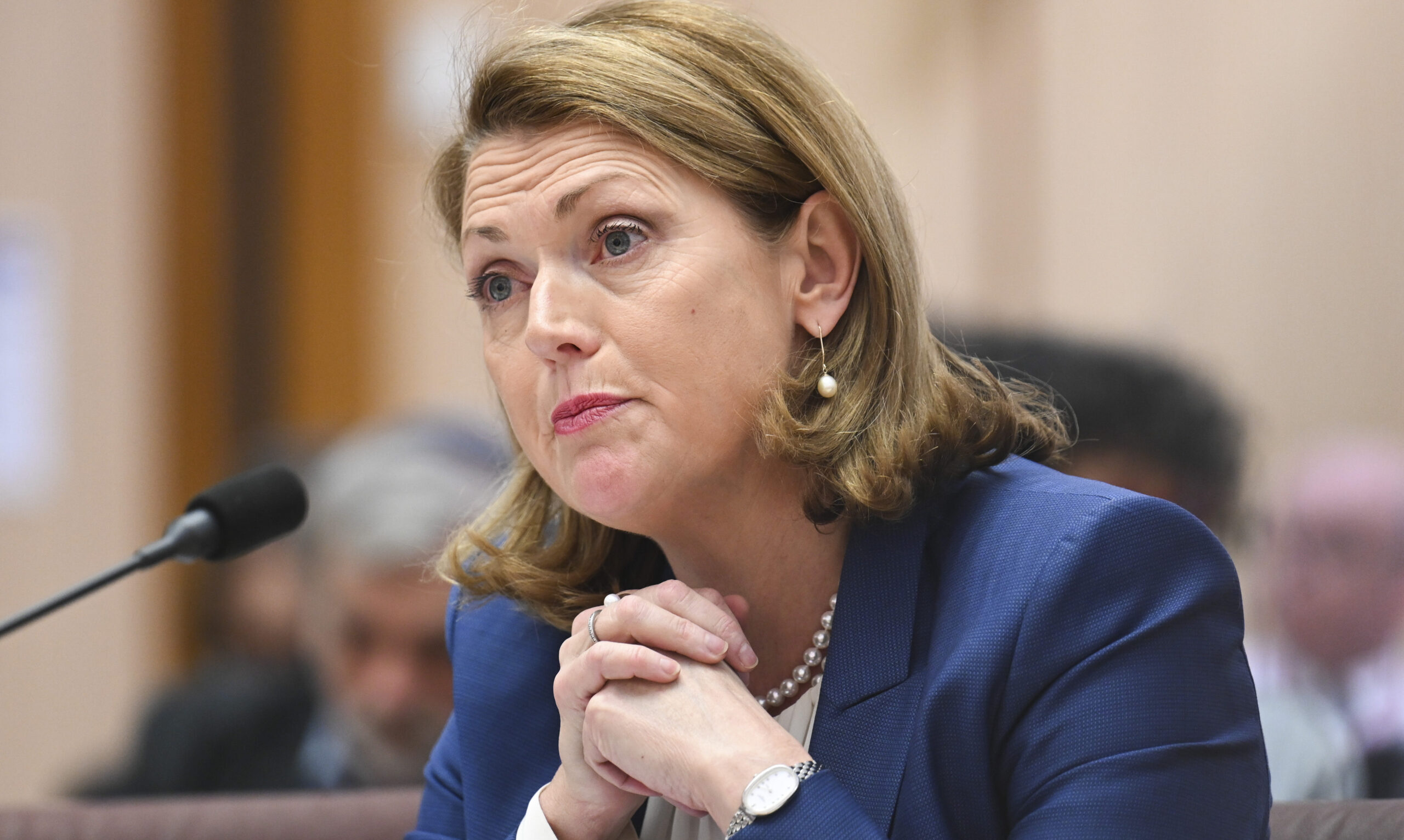
A majority of Victorian universities posted operating losses in 2024 but continued to boost the salaries of their vice-chancellors, annual reports reveal.
Please login below to view content or subscribe now.

The University of Sydney’s (USyd) new artificial intelligence (AI) learning and assessment policy is commonsense for both teachers and students, head of the uni’s AI group has said.
Please login below to view content or subscribe now.

Prime Minister Anthony Albanese has announced a new role overseeing international education with the appointment of Julian Hill as International Education Assistant Minister. Mr Hill will retain his previous Customs and Multicultural Affairs Assistant Minister role.
Please login below to view content or subscribe now.

UKRI has a massive job.
As the National Audit Office’s (NAO) new report sets out in 2023–24 UKRI assessed close to 29,000 grant funding applications and spent £6bn on innovation grants. It featured in 105 policy papers across 13 ministerial departments in the last three years alone, and it has been seven years since the Department for Science, Innovation and Technology (DSIT) formally set out UKRI’s role and objectives.
The scale of UKRI’s work is so massive that according to its own estimates
[…] were it to receive a 2% budget increase each year for the following three financial years, its existing legal, statutory and political commitments would take up around 98% of its budget in 2025-26, 84% in 2026–27, and 74% in 2027–28. When also including investments that it considers critical, such as continuing to fund similar numbers of new doctoral students and similar levels of new curiosity-driven research, this would then take up around 103%, 101%, and 99% of its future budget, respectively, in those years
The obvious question here is if UKRI has so much to do, if it is then compelled to do even more, how can it possibly change as government introduces new priorities. Whether it is moonshots, levelling up, supporting the industrial strategy, fuelling government missions, working with devolved authorities, or whatever comes next, UKRI’s funding is so committed it has little bandwidth to put its massive resources behind emerging government strategies.
However, this assumes that UKRI has a clear idea of what it’s supposed to do in the first place.
Roughly, UKRI has a corporate strategy which then informs its funding calls which institutions then bid for and through post award work UKRI then assures that the thing it set out to do is being done in some way. The NAO found that how government communicates its priorities to UKRI is a bewildering mix of things:
ad hoc and routine meetings; board meetings; formal letters; key UK government strategies and mission statements; and spending review budgets. These are not consolidated or ranked, meaning that the government does not currently have an overall picture of what it is asking UKRI to do.
It is therefore not surprising that in UKRI’s own strategy none of its formal objectives are “specific, measurable or time-bound, making it difficult to understand what outcome UKRI is seeking to achieve.”
To the outside observer it would seem odd that UKRI doesn’t have a single ministerial letter with a single set of priorities which it can then pursue at the expense of everything else. Instead, in reading the NAO report it seems that UKRI has become the everything box where the entire hopes of a government are pinned, whether UKRI has the resources to achieve them or not.
It’s easy to see how the research funding ecosystem becomes so complex. UKRI is an important part but it sits alongside the likes of ARIA, charitable organisations, national institutes, venture capital, businesses, and others. The bluntest assessment is that if the government is unable to specify a single set of aims for UKRI, UKRI then cannot measure outcomes as clearly as it would like – and even if it could there is little spare budget to pivot its work. The report makes clear that there is ongoing “prioritisation” to address this confusion – but this work will not conclude until after the spending review, by which point key decisions will already have been made.
It’s not that UKRI is failing – by any reasonable assessment it is powering a world-leading research ecosystem, even with some deep cultural challenges – it’s that as NAO point out it is given a lot to do without all the tools to do it, and even when it can measure its work government priorities are liable to change anyway. The one thing that good research and innovation policy needs is time. The one thing every government has is little time to get anything done.
It is even harder to assess whether its measurable things are good value on their own terms. NAO is interested in ensuring the public gets value for money in the things it funds. One of the challenges in assessing whether what UKRI does is good value for money is that outcomes from research and innovation funding are diffuse, happen on a long-time scale, and may even fail but in doing so moves the research ecosystem toward something that works in some hard to measure and adjacent way.
Although not directly captured within the NAO report, assessing value for money within research and innovation also depends on which level it is assessed. For example, there may be investments in breakthrough science which return little direct economic benefits but expand the knowledge of a field in a way they one day might. There may be investments that achieve immediate economic benefits but have few long term economic benefits as new technologies become available.
It is clear that UKRI would benefit from fewer directions and fewer priorities which would allow it to use its resources more efficiently and in turn measure its impact more easily. The problem is that government policy overtakes bureaucratic needs which in turn encourages policy churn.
In lieu of being able to change the nature of politics part of the solution must lie in changing how UKRI works. The organisation is aware of this, and realises it needs a capacity which goes beyond adjusting the direction of its existing activities – rather, one that “incentivises applicants to put forward ideas that align with government objectives which can be quicker and more efficient than setting up new programmes.”
The fundamental problem for policy makers is that they have collectively turned to UKRI with an enormous list of asks without the resources to achieve them. UKRI either needs clearer direction or more resources, or both, what it does not need is more asks without clear priorities.

This post was co-authored with Julie Bryant, Vice President for Student Success at RNL. Julie oversees the RNL Satisfaction-Priorities Surveys used by colleges and universities nationwide. She provides service to educators by assisting them in determining relationships between perceptions of importance and satisfaction of students, special populations, campus personnel, and the parents of currently enrolled students. Julie identifies ways these data can inform retention planning and be shared with the campus community. She also oversees the annual national reporting and trend analysis of these data.
Collaborating with 21 institutions as part of our second annual National Alumni Survey was a privilege. Nearly 51,000 alumni participated, and from their direct feedback, we learned more about what inspires their volunteer activity, what is likely to motivate future engagement, generational trends, and how student debt impacts charitable giving.
We also invited alumni to share more about their satisfaction with and current connection to their respective alma maters. Survey responses confirm what feels intuitive: Alumni with a favorable student experience are more likely to feel connected to and give back to their alma maters.
Alumni who report feeling “very satisfied” with their student experience and the education they received are up to 40x more likely to have donated to their alma mater in the past year than their “neutral” counterparts, and up to 80x more likely than those who report feeling “not very” or “not at all” satisfied with their student experience and the education they received.
Of the eight insights highlighted in this year’s report, this strong correlation between student satisfaction and alumni giving feels important for advancement teams to share with colleagues across departments, campus stakeholders, and executive leadership.
Alumni satisfaction and connection are shaped long before graduation. The interaction students have with faculty, staff, advisors, coaches, and the administration sets the groundwork for satisfaction, affinity, and a philanthropic relationship post-graduation. Therefore, the responsibility of improved alumni engagement, participation, and giving can’t rest solely on the shoulders of the advancement division. It’s a team sport (or should be).
This research study underscores the importance of influencing student satisfaction while students are enrolled in order to build strong, long-term alumni engagement. Through RNL’s Student Satisfaction Inventory (SSI), we measure student satisfaction and priorities, showing how satisfied students are as well as what issues are important to them. This is actionable data that colleges and universities can use today to inform and shape improved student programming and outreach.
The results from the SSI clearly identify institutional strengths (areas of high importance and high satisfaction) that can be celebrated with current students, alumni, and as part of the recruitment process. Institutional challenges are also clearly noted. Challenges are areas that are still very important to current students, but where they may be more dissatisfied. Identifying these areas provides direction to campus leadership, as they prioritize areas for improvement to show students their feedback matters and that the institution is working on their behalf. By gathering and acting on student satisfaction data, colleges and universities can show that they value students and help set the stage for ongoing engagement.
Through our RNL research, we have found that items related to campus climate and how students feel about being on campus are among the strongest indicators of overall student satisfaction and ultimately student retention. When institutional leadership works to change the experience or the perception students have around areas such as “it’s an enjoyable experience to be a student on this campus,” “the institution cares about me as an individual,” “I feel a sense of belonging here,” and “tuition paid is a worthwhile investment,” they can begin to see an impact on the long-term relationships ideally established between the student (future alum) and their alma mater.

Good friend and strategic advisor on this project Howard Heevner is a fan of disrupting—leaning into new ways of genuinely connecting with students and alumni alike. He challenges fellow practitioners and leaders to:
If you haven’t done so recently, engaging students and alumni through a survey project is an important first step. Do you have budget dollars left to spend this spring? Looking for fresh feedback and useful qualitative data from the audiences you serve to help inform planning for the new fiscal and academic year ahead? If you’d like to learn more about RNL’s survey instruments, please reach to Julie Bryant (Student Satisfaction Inventory) and Sarah Kleeberger (Alumni Survey).

It should come as little surprise – given the scale and complexity of the challenge – that the government sees investing in research and innovation (R&I), and the accompanying promise of new technologies and ideas, as key to achieving its complex policy goals of growing the economy, transitioning to clean power, and modernising the NHS.
After all, history shows that state backing of R&I to overcome a range of problems – particularly in times of crisis – is hardly a novel idea. If the rapid technological advances witnessed in the 1940s to support the war effort are receding further into the past, then memories of the mass Covid-19 vaccine rollout at least remain fresh.
With this in mind, the government’s commitment “to promote innovation and harness the full potential of the UK’s science base” through “protecting record funding for research and development” is merely the latest example of those in power acknowledging the vast capacity of R&I to transform society.
This tradition at least partly explains the strong international reputation the UK has accumulated over the years in the field of R&I, with UK Research and Innovation (UKRI) – the country’s largest single public funder of R&I – at the forefront.
In 2023–24, UKRI assessed 28,866 applications for competitive grant funding, ultimately spending £6 billion on R&I grants. Its recently approved projects have included funding for very early-stage research in microbial fuel cells and hydrogen purification, and the development of bone stem cell and biomaterial technology to reduce infection rates and the cost of hip repairs.
In short, UKRI plays a critical role in the country’s R&I ecosystem, supporting cutting-edge work that feeds not only into the government’s environmental and health policy ambitions, but in other areas too.
And by looking at the effectiveness of UKRI’s grant support, the National Audit Office (NAO) has identified some lessons for government that can serve a very useful, and much broader, purpose when it comes to tackling the major challenges facing the country.
First is the importance of taking a planned and coordinated approach to R&I, which involves using good quality information on funding and knowing how to build a base to innovate in each research area. Government departments should be aware of other organisations with related objectives, determine whether they are also putting funds or resources into trying to innovate in that area, and identify potential linkages with their own workstreams.
This “portfolio” approach to innovation is a key component in well-managed risk taking, which brings us to our second lesson: the need to establish a clear and effective risk appetite, and put in place the organisational cultures and processes that can support bold decision-making. Innovation – the act or process of doing something that has not been done before – goes hand-in-hand with risk. Embracing it requires the knowledge and the confidence in accepting that things may not turn out quite as intended, or may even fail together.
The head of the NAO said as much in his recent address in Parliament, where he called on the government to unlock the vast opportunities for boosting productivity and strengthening resilience in the public sector by adopting a fast-learning approach when investing in innovation: in other words, learning quickly what works and what does not, so that failed projects can be promptly scrapped in favour of redirecting energy and resources to more promising ideas.
Ultimately, a coherent, comprehensive and clearly communicated risk appetite can help organisations reap substantial rewards, more than offsetting the disappointment of unsuccessful ventures.
Third is the caveat that while a clear plan, coordination and risk appetite can lead to successes, the full benefits of innovation cannot be realised without effective monitoring and evaluation. As well as evaluating programmes on a macro level, organisations should regularly draw together learning by theme (such as in a specific research area), with the support of strong data systems. Doing so can ensure that they effectively capture cumulative learning and develop a well-rounded understanding of which innovations are working well, which ones are not, and why.
Arguably the most important lesson of all, however, is remembering that these insights cut across the whole of government and need not be strictly applied to the domain of R&I. The projects funded by UKRI may be operating on the frontier of scientific and technological research, but this does not mean that what we learn about their approaches to innovation cannot be applied to other government contexts.
If government is to achieve its long-term policy goals, it must do more to identify the public spaces where innovation is lacking, and take measures to reverse this trend. This includes breaking down the barriers that are preventing some organisations from adopting the right culture to allow innovation to flourish. It would do well to start with taking on board some of the lessons learned from UKRI’s approach.

FIRE’s Student Press Freedom Initiative is thrilled to announce that freelance investigative journalist Sammy Sussman will keynote our third annual Free Press Workshop on June 14! The workshop brings college journalists together to learn about the First Amendment, media law, and using the law as a tool in reporting.
Sussman is based in New York and has written for a variety of publications. He serves as the lead reporter on “Behind the Badge,” an investigative collaboration with MuckRock dedicated to publishing police misconduct files from departments throughout New York State. He has previously written for New York magazine, VAN Magazine, and New York Focus. Sussman covers policing and prison abuses as well as sexual misconduct. He has experience doing extensive public records reporting both domestically and abroad.
This free workshop will bring together student journalists from across the country to learn how to assert their right to press freedom.
Sussman began as a student journalist at the University of Michigan, where he founded and directed The Michigan Daily’s investigative section, Focal Point. While at the Daily, Sussman used public records to break stories numerous stories about sexual harassment allegations and the university’s use of non-disclosure agreements to silence former employees.
Sussman’s experience leveraging the law to build an impressive portfolio, first as a student and now as a professional reporter, makes him well-suited to speak to student journalists getting ready to embark on their own careers.
We still have a handful of spots available for student journalists who want to hear from Sussman, meet fellow journalists from other schools, and learn about using the law in their newsrooms. Make sure you register here. This conference is free for accepted students and includes meals and a $350 travel stipend. Additional travel scholarships are available by application.
Our team is excited to hear what Sussman has to say to the next generation of journalists, and we look forward to welcoming students from across the country to Philadelphia this summer!

by CUPA-HR | May 13, 2025
On April 30, Representatives Stephanie Bice (R-OK-5) and Chrissy Houlahan (D-PA-6) introduced the More Paid Leave for More Americans Act, the result of more than two years of work by the House Paid Family Leave Working Group, which Bice and Houlahan co-chair. The package consists of two parts: the Paid Family Leave Public-Private Partnerships Act and the Interstate Paid Leave Action Network (I-PLAN) Act.
The Legislation
The first bill of the package — the Interstate Paid Leave Action Network (I-PLAN) Act — would create a national framework “to provide support and incentives for the development and adoption of an interstate agreement that facilitates streamlined benefit delivery, reduced administrative burden, and coordination and harmonization of State paid family and medical leave programs.” It is intended to help resolve the confusion and inconsistencies across the state programs, in particular for the distribution of benefits to workers who work across state lines. The network will also work to identify best practices from existing state paid leave programs, help states harmonize their policies and resolve conflicts with other states’ programs, and help employees access their benefits.
The second bill — the Paid Family Leave Public-Private Partnerships Act — would establish a three-year pilot program in which the Department of Labor would provide competitive grants to states that establish paid family leave programs that meet certain criteria. To qualify, states would be required to partner with private entities via Public-Private Partnerships (PPP) and participate in I-PLAN. The state programs would be required to offer at least six weeks of paid leave for the birth or adoption of a new child and provide a wage replacement rate between 50% and 67% depending on the income of the individual. Individuals at or below the poverty line for a family of four must receive 67% of their wages, while individuals earning more than double the poverty line for a family of four must receive 50% of their wages. The maximum benefit a worker can receive is 150% of a state’s average weekly wage.
Looking Ahead
Bice and Houlahan are optimistic about the package’s prospects, as both bills do maintain bipartisan support and President Trump has indicated an interest in pursuing a federal paid leave program. That said, it is uncertain if and when the House and Senate labor committees would take up these bills for a markup, which is the first step in getting the bill to a floor vote. CUPA-HR will continue to keep members apprised of updates related to this bill and other paid leave proposals that emerge from Congress.

by CUPA-HR | May 13, 2025
Each month, CUPA-HR General Counsel Ira Shepard provides an overview of several labor and employment law cases and regulatory actions with implications for the higher ed workplace. Here’s the latest from Ira.
On May 2, 2025, a federal district court judge in D.C. denied a request from civil rights groups for an injunction precluding the Trump administration’s executive orders aimed at curtailing DEI initiatives and cutting protections for transgender people. The judge denied the plaintiffs’ attempt to curtail three Trump administration executive orders, concluding that the plaintiffs would not ultimately succeed (National Urban League v. Trump (D.D.C. 1:25-cv-00471, Prelim. Inj. denied, 5/2/25)).
Separately, on April 14, 2025, a federal district court judge in Illinois issued a nationwide preliminary injunction, following his temporary restraining order of late March 2025, barring the U.S. Department of Labor from enforcing those parts of President Trump’s executive order that target diversity, equity and inclusion initiatives (Chicago Women in Trades v. Trump (2025 BL 125862, N.D. Ill. No. 1.25-cv-02005, 4/14/25)). This injunction is subject to appeal and possible modification by the U.S. Court of Appeals.
The March 2025 temporary restraining order also barred enforcement of the executive order provision requiring grant recipients, like the plaintiff, from having to certify that they do not operate programs that advance DEI. The judge noted that part of the executive order could chill speech even beyond federally funded programs but few grant recipients are likely to sue the federal government. Learn more.
At least a dozen lawsuits have been filed asking federal judges to block the Department of Homeland Security’s attempts to cancel F-1 status without proper hearing and cause. One Dartmouth doctoral student from China won an emergency order restoring his F-1 student status. According to the American Immigration Lawyers Association, more than 4,700 foreign students have had their records terminated by U.S. Immigration and Customs Enforcement (ICE) without any hearings or other due process. Lawsuits have been filed in New York, California, Michigan, Pennsylvania, New Hampshire and Washington state contesting the termination of student records. The lawsuits are asking the courts to block DHS from terminating student records and targeting the students for removal.
On April 4, CUPA-HR co-signed a letter with the American Council on Education and 14 other higher education associations seeking clarity on international student visa issues.
More than 2,700 of the Department of Labor’s over 14,000 employees have accepted the department’s offer to receive pay and benefits through September if they voluntarily resign. The offer advised that there would be mandatory layoffs and job eliminations in the future. Commentators concluded that the staff resignations will decrease the DOL’s ability to perform on-site audits and enforcement of many worker protection laws that the department has the responsibility to enforce.
This exodus follows the Trump administration’s attempt to terminate many DOL probationary employees who were later reinstated by a court order following a challenge to the probationary terminations.
The Trump administration issued an executive order on April 23, 2025, to secretaries of education, commerce, and labor to conduct a full-scale review of federal apprenticeship programs to identify areas for realignment and address training for in-demand skills. The goal is to have the three agencies develop a plan to train 1 million new apprentices in skilled trades and emerging industries, including artificial intelligence.
The executive order gives the three agencies 90 days to submit a report to the Office of Management and Budget. The report should include policy reforms and programs that could be retracted and consolidated between agencies. The order asks the agencies to identify ineffective programs and states that each “each identified program should be accompanied by a proposal to reform the program, redirect its funding, or eliminate it.”
Federal agencies prosecuting discrimination bias cases are barred from using the disparate impact theory of unintentional discrimination under a new Trump administration executive order signed April 23, 2025. The order specifically directs the EEOC and DOJ to review their pending cases and investigations that rely on this legal theory and take appropriate action within 45 days (that is, drop or revise the case).
The U.S. Supreme Court recognized the disparate impact legal theory as appropriate enforcement of the Civil Rights Act of 1964, in its 1971 landmark decision in Griggs v. Duke Power. Notwithstanding the Trump executive order, private individuals can still bring private claims of discrimination under Title VII using the disparate impact theory, until the Griggs case is reversed or modified.
Because of the unprecedented and fast-changing pronouncements of the new presidential administration and the intervening court challenges, the developments contained in this blog post are subject to change. Before acting on the legal issues discussed here, please consult your college or university counsel and, as always, act with caution.

by Karen Gravett
How does higher education feel, to work or to study in? How do affects circulate through the places, spaces, bodies and the structures and pedagogies of institutions? And why might thinking about feelings and affect be useful for educators? This blog draws on recent research that seeks to explore how affect theory can be helpful to understand and enhance our work in higher education. Attuning to affect, I suggest, has implications for both how we understand power relations in education, as well as for finding ways to foster more creative and meaningful pedagogies.
What is affect theory?
Interest in affect, and ideas from affect theory/studies, are gaining momentum across the evolving field of higher education studies. Within the social sciences, the ‘affective turn’ has been influenced by work from Clough (2007), Massumi (2015), Seigworth and Pedwell (2023), Ahmed (2010), and many others. No longer confined to binary ideas of emotion/reason, body/mind, scholars have begun to think about emotion and affect as interwoven with education in complex ways. What we mean by emotions and affect can be understood differently, but for many scholars, affect specifically refers to sensory experiences (Zembylas, 2021), forces that are felt bodily. Affects circulate and evolve within and in between ordinary encounters, and in mobile ways.
Affect in the classroom
Thinking with affect can help us understand the classroom as a space in which learning is not divorced from the body but viscerally experienced and felt. This helps us to see learning and teaching as always situated and informed by the moment in which it occurs and as we experience it. Feelings do not simply happen within individuals and then move outward (Ahmed, 2010). This shift in thought enables us to consider ourselves in relation to others (both human and non-human), to consider how learning and teaching feels, as well as the ‘structures of feeling’ (Williams, 1961) that circulate within institutions. Thinking with affect helps us to think about the micro-incidents of co-presence, its frictions, and the ‘inconvenient’ (Berlant, 2022) work being present requires of us to engage with others. Education requires affective work of us; it requires us to change, evolve, and adapt constantly to others. This work is exposing; discomforting. In engaging with one another, and being affected and receptive to one another, we are made aware of our own interdependence.
Affective institutions
Thinking about affect, then, enables us to understand how institutions are permeated by, and also create, ‘affective atmospheres’ (Anderson, 2009), or ‘structures of feeling’ (Williams, 1961). In his work, Williams uses the idea of ‘structures of feeling’ to study the affective quality of life, in order that we might understand ‘the most delicate and least tangible parts of our activity’ (Williams, 1961, 48). Affective atmospheres, including competition, collegiality, anxiety, inclusion and exclusion are created through pedagogies, policies and practices. For example, the affective atmospheres of self-improvement and self-promotion may permeate neoliberal higher education institutions. Cultures of neoliberalism and precarity require academics to adopt certain affective and embodied practices, such as being competitive, self-motivated or resilient. And yet, affect may be able to disrupt these conditions: affective experiences such as humility, collegiality and joy offer opportunities for resistance and can also be found flourishing within institutional cultures and practices.
Affective craft
In the classroom, there may also be ways in which teachers are able to reshape affective relations. This might mean that certain relations could be given space to flourish, and other hierarchies of difference might be, at least momentarily, constrained.Different pedagogical approaches contribute to different feelings in classroom spaces and to different connections. For example, Stewart describes the changing affective atmosphere of the classroom when she employs storytelling and uses questioning approaches to enable dialogue: ‘something subtle but powerful had shifted…The room had become a scene we were in together as bodies and actors’ (Stewart, 2020: 31). For Airton, these kind of affirmative pedagogic approaches work as ‘affective craft’ and might include providing open spaces for students to lead and shape the learning encounter. In my research with Simon Lygo-Baker, we examine different ways in which teachers can experiment with affective craft. These include through teaching in spaces beyond the classroom, using art and objects for generating discussion, engaging storying and the sharing of vulnerabilities, as well as through using Play-Doh modelling to disrupt hierarchies and foster collaboration. These are just some ordinary, everyday ideas, and are ideas we also explore further in our new book: Reconceptualising Teaching in Higher Education: Connected Practice for Changing Times, to be published in 2026 by Routledge.
We believe that teaching is about presence, connection, an ‘encounter’, and that affect theory can be a helpful way to understand and enhance the connections we make, as well as the institutions in which we work and learn. As Dernikos and colleagues explain: ‘scholars are now theorizing what these affective swells can do. And what is surprising is that this does not call for grand movements, nor for great reforms, but depends on the subversive power of the very small’ (Dernikos et al, 2020: 16).
Dr Karen Gravett is Associate Professor of Higher Education, and Associate Head (Research) at the University of Surrey, UK, where her research focuses on the theory-practice of higher education. She is a member of the Society for Research in Higher Education Governing Council, a member of the editorial boards for Teaching in Higher Education and Learning, Media and Technology, and Associate Editor for Sociology. She is a Principal Fellow of the Higher Education Academy. She is also an Honorary Associate Professor for the Centre for Assessment and Digital Learning at Deakin University. Karen’s latest books are: Gravett, K (2025) Critical Practice in Higher Education, and Gravett, K (2023) Relational Pedagogies: Connections and Mattering in Higher Education.

