Author: admin

  • Measuring What Matters: A Faculty Development System That Improves Teaching Quality – Faculty Focus

    Measuring What Matters: A Faculty Development System That Improves Teaching Quality – Faculty Focus

    Source link

  • Measuring What Matters: A Faculty Development System That Improves Teaching Quality – Faculty Focus

    Measuring What Matters: A Faculty Development System That Improves Teaching Quality – Faculty Focus

    Source link

  • The one where they still don’t have any friends

    The one where they still don’t have any friends

    As I’ve been doomscrolling on TikTok this term, my feed seems to have been dominated by university related videos.

    Either the algorithm thinks I’m a fresher or that I’m a HE policy wonk (it’s probably the latter).

    The videos that keep appearing are either fun trends from universities and students’ unions, or something a bit more worrying. There’s been an influx of students posting that they haven’t found any friends yet and are fearing that they will drop out.

    These videos include text like “day 2 at uni no friends,” “walked 10 miles alone just to not be alone in my room,” “being at uni for a month having made no friends and haven’t been out once” and “freshers please hmu my flatmates don’t leave their rooms.”

    A few weeks ago, one addition to my feed was:

    I genuinely think I’m having the worst experience ever…I wanted to go to the freshers fayre and had no one to go with.

    And it’s not just TikTok – a quick scroll of a few online threads about university (not the most sophisticated social listening, but go with me) speak of students feeling lonely, not knowing how to make friends with responses telling them to stick it out until Christmas and the original author saying “being here just feels so wrong.”

    Over the past few years there’s been a shift towards more inclusive and accessible induction activities, more realistic expectation setting, renaming freshers to welcome and a more non-drinking socials, so it begs the question – what is stopping students from making friends?

    Back to the drawing board

    What’s striking about these TikToks and Reddit threads is that they’re essentially public cries for help – and they get thousands of likes and hundreds of responses.

    The public tries to alleviate some of their anxieties in the comments – “you do make friends, give it time, 2 days is not enough to build connections,” “go to stuff on your own” and “join societies, your friends don’t have to be ur flat mates.” Solid but not groundbreaking advice.

    You hope that students take this advice and run with it – but it’s not the advice that’s particularly interesting, it’s the method of communication. Students are reaching out to the void asking for either help or some validation that they’re not feeling this alone.

    It says something about student confidence levels to engage in social activities, however accessible they are designed. It poses an opportunity to integrate social activities into pedagogy and into the classroom, if they’re less confident in engaging in the extra-curricular. It also reminds us that horizontal communication (student-student) seems to be more effective.

    I’m a people person

    This summer I spent the best part of 12 weeks of training student leaders across the country. In the first exercise I ask officers to draw out each others’ student journey. After presenting back I asked them all:

    …when things were going well for you during your student experience, what was it that made it good?

    After the third or fourth training session I got pretty good at predicting what they would say and 90 per cent of the time the answer was “friends.”

    It was friendships that made the difference – those that were there to support them when things were tough or made the good times even better. It wasn’t the lecture content or that field trip or academic support – although many had ideas on how to make these things better – it was people.

    This year’s student leaders are not naive. They’d go into detail about the different barriers to engagement, for many it’s about increased costs, time poverty (often spent working), increases in commuting but also homesickness and a lack of confidence to engage.

    These are new phenomena but often their biggest reflection was they wished staff understood the realities of the pressures on students, even if they couldn’t adapt their offer.

    They wouldn’t always see the university as having a responsibility to present opportunities for students to make friends – but when presented with B3 data, their access and participation plan and their university’s strategy that said something on belonging, they changed their tune.

    What students say

    But these student leader reflections only tell part of the story. To really understand the scale and texture of student loneliness, you need to read what students are posting when they think university staff aren’t watching.

    We’ve spent some time trawling through Reddit and The Student Room – and the posts are miserable. Not dramatic-devastating, but quietly, persistently crushing in their ordinariness. Student after student describing identical patterns of isolation, often in eerily similar language.

    When halls don’t help

    We design halls around the assumption that proximity creates friendship. Stick students in the same building, give them a shared kitchen, and community will naturally emerge. Except it doesn’t.

    One student writes:

    …my flatmates don’t use the kitchen at all, except for the fridge and the oven occasionally… i’m just terribly lonely and in the past two weeks i haven’t had a single conversation with any of my flatmates.

    Another echoes:

    Who do you eat with? No one. With who do you socialise? No one. My flatmates… eat in their rooms and never hang out in the kitchen.

    The pattern repeats across dozens of posts. En-suite rooms plus food delivery apps equals what students call “dead kitchens” – empty communal spaces that mock the idea of community. One thread about this phenomenon attracted hundreds of responses, with students confirming that the only things living in their kitchens are unopened spice racks.

    The emotional toll is immediate. A first-year Australian student (though the experience mirrors UK students exactly) wrote:

    I am in my first year of uni and basically know no one here and have not made any friends so far. I feel awkward and don’t know what to do in between classes so I usually end up sitting in the library by myself and studying. I’m at the point where I’m even too nervous to go and get food by myself despite being on campus for 8 hours, so I am not eating.

    Students are going hungry because eating alone feels too exposing.

    The commuter trap

    If halls students struggle, commuters face something worse – they’re missing the infrastructure entirely. One student explains:

    It’s isolating because you’re missing out on the little spontaneous moments like going to your friends place at 12am to just talk… I commuted for a year and it made me depressed.

    Another captured the structural impossibility:

    I just feel so left out… i wasn’t able to move out like i wished… i feel im missing out on being with my friends and being able to have the uni experience.

    A 19-year-old architecture student who commutes shared a particularly harrowing story about being excluded from their course group:

    When we all met in person, most of them excluded a few of us. I ended up in a smaller friend group, but I was always the one left out. I wasn’t ‘interesting’ enough, and being a commuter meant I couldn’t stay late or go out spontaneously.

    They added:

    I feel like a failure. I hate that this is upsetting my parents too—I know they’re proud of me, and I really want to make them happy. But I’m just so drained.

    The sense of failure is echoed by another commuter who chose to live at home:

    I decided to live at home during first year since I stayed in my home town but I’ve really struggled to make friends. I joined some sport societies but there were v few 1st years there and the other people already sort of have friends (those in older years) so it’s hard to get integrated in a group. I really don’t know my course mates very well due to everything being mostly online this year so it’s just been hard to meet people and click with them. I guess not being in halls has prevented me from meeting people… I just don’t really know what to do and I’m feeling quite lonely and like a failure for not having friend. Just sort of ruins your mood.

    The practical barriers compound. As one student put it:

    Commuting to uni can be lonely… there aren’t many social spaces, only study spaces… lectures end and ninety-five per cent leave in two minutes.

    No lockers, no warm spaces to linger, no time between the last train home and the evening social. HE has built an offer that excludes by timetable.

    Class, culture and not fitting the script

    Identity matters in ways universities don’t always acknowledge. A student from a deprived area wrote:

    i’m from a deprived area… there’s a lot of drug/drink culture at my uni… sometimes I feel like a weirdo for it.

    Another added:

    The majority of people who attend university are wild and very cliquey… It’s a very lonely experience unless you are into partying.

    For international students, the cultural friction is sharper:

    I moved to england 3 months ago… it’s just starting to hit me that i really am alone… my flatmates… need to drink and party like they need oxygen… lonely isn’t the word to describe how i feel.

    These aren’t just about personal preference – they’re about economic and cultural scripts that determine who feels they belong and who doesn’t.

    “Join societies” doesn’t always work

    The default advice. Can’t make friends? Join a society. And for some students, it works. But scroll through enough posts and you’ll see why it fails for many others.

    One student writes:

    Societies… aren’t what I expected… it feels so awkward… they’re already in groups.

    A third year adds:

    I’m a third year, still have no friends… the societies i tried were cliquey… seeing people with their groups on campus or on instagram stories… it’s so shit.

    The cost barrier is real too. While one student counsels:

    My advice is don’t do anything you don’t wanna do to try and make friends… be you and do what you want to do.

    Another counters the practical reality – joining multiple societies to increase your odds gets expensive fast when you don’t yet know if you’ll click with anyone.

    The timing trap

    Multiple students describe a narrow window for friendship formation, after which groups solidify and become hard to penetrate. A first-year, just a month in, writes:

    Hi everyone I feel so lonely I have been here nealy 4 weeks but havent found people who I click with it feels like I’m so different to everyone else here… everyone has already made their friends circle and I have no friends.

    The summer break breaks weak ties:

    Lonely as a third year… I struggle a lot with friendships… in first year I made some friends… after summer no one talked to me or reached out.

    And by third year, it can feel like starting over without any scaffolding:

    im a third year, still have no friends… the societies i tried were cliquey… seeing people with their groups on campus or on instagram stories… it’s so shit.

    One student captured the arbitrary nature of it:

    A huge part of it is also luck… I happened to be in a flat with really nice people… other flats had antisocial or downright horrible people.

    The mental health spiral

    Loneliness and mental health loop into each other. One student writes:

    I’m struggling with depression… my flatmates don’t talk to each other… everyone has got their own groups… I just feel like an Outsider.

    Another describes the avoidance cycle:

    I haven’t been able to make friends… I live in halls… never went to lectures due to paranoia, anxiety and depression… haven’t gone to society events because I haven’t got anyone to go with.

    A first-year in London shared:

    I have no idea when this happened but clearly I missed the memo lol. I am lagging in my studies, sometime I feel so down and anxious that I spend the entire day in the dark in bed because I have no motivation to attend lectures. I want to go out and club like other first years but I don’t really have anyone to go with.

    A 21-year-old woman in her second year described the visibility of her isolation:

    I’m 21 (female) and have no friends (I know how pathetic that sounds). I’m in my second year at uni and it’s so miserable having to attend lectures and seminars alone, it feels like it must be really obvious to other people how alone I am and it’s embarrassing. I have tried hard to connect with others but I have terrible social anxiety, making it pretty difficult, and the people I have spoken with/met online always seem to get bored with me very quickly.

    A student battling severe anxiety captured the intersection of mental health and neurodivergence:

    I’m lonely, have social anxiety, might have autism, low mood, low confidence & self esteem, no motivation for careers, seeing people live their best lives while I’m at my lowest, and I’m not sure why I’m carrying on anymore, it feels pointless. I feel like I’m invisible, on the sidelines, I don’t even feel like I belong here.

    For neurodivergent students, the executive function required to keep trying when effort isn’t reciprocated becomes an additional barrier. Students explicitly describe what researchers call “avoidance loops” – missing events because they have no one to go with, which means they can’t meet anyone, which means they keep missing events. The spiral tightens.

    The loneliness of having “friends”

    Perhaps most insidious is a different kind of loneliness – the kind where you technically have friends but still feel fundamentally alone. A student described this six months into university:

    I settled into uni well, I made a nice group of friends that I’m living with next year. It’s just 6 months in I’ve realised I’m not really that happy? I feel like I’m not really that similar to my two best friends here – and not in a good way. I just don’t really know what to do because it’s not like I can just drop them and make new friends? I feel like I just rushed into getting close with people so I wouldn’t be alone but I feel lonely anyway because I don’t feel like they really get me?

    This reflects something universities rarely measure – not just whether students have friends, but whether those friendships meet their actual needs. When students settle for proximity over genuine connection because the window for making friends feels so narrow, they end up locked into relationships that don’t sustain them.

    What’s also striking is how students describe the everyday humiliations of trying and failing:

    I even had free cinema tickets at one point and couldn’t even find anyone to go to the cinema with me for free lol. It’s making me feel really bad about myself and Im starting to feel as if there’s something wrong with me.

    Another:

    I came to uni thinking I would find people I could vibe with and chill with… I know I’m partially to blame because I’m also a naturally quiet and shy person but I feel like everyone has found their groups and it’s only November still the first term of uni and I’m just on my own… when I try to talk to people it feels like I’m begging it and not authentic.

    A second-year wrote:

    I have hundreds of acquaintances, but non of those i can call ‘friends’. When im not in uni, i spend the majority of my time alone, do things alone, go shopping alone, go to the cinema alone – all this to try and make me feel better, but just confirms my suspicions of being depressed, lonely and without any friends. I ******* hate it!

    And perhaps most painful – the contrast between the public and private self:

    I could literally cry bc I am so bored and lonely. Completely friendless… I just feel so emotionally alone and non existent when I am in university. Outside of university with my family it is positive attitudes and happy happy. But I don’t want to put up a facade that everything is peaches and cream when in uni because it is not.

    One student who failed their first year explained:

    I flopped, and I flopped bad. I failed 3 modules… The reason I flopped was…and I hate to openly say this but I was in a stage of manic depression; I’d lost all my friends from back home and I didn’t get on with my flatmates. They found me weird and geeky (which I am) I was very lonely throughout most of uni, had no friends… I flopped my exams because I had no motivation at life.

    What all of this adds up to

    Strip away the platitudes and a pattern emerges – in a mass system, students aren’t failing at friendship, the system is failing at social architecture.

    En-suite accommodation means students rarely bump into each other, food delivery apps mean kitchens stay empty, and mismatched timetables mean flatmates never overlap. Mass lectures that empty immediately don’t build connections, and when only one or two academics know a student’s name, academic spaces aren’t doing the social work we assume they are.

    Commuters can’t access evening socials due to travel costs and last trains, and they have nowhere to linger between classes with no warm spaces and no lockers. The default social offer remains alcohol-focused, excluding non-drinkers, international students unfamiliar with UK drinking culture, students from lower-income backgrounds, and those with anxiety or neurodivergence who find the format inaccessible.

    Friendships form early and groups solidify fast – often within the first few weeks. Students arriving late or missing that window describe groups as impenetrable by November, summer breaks dissolve weak ties, and third years start again without halls to facilitate contact. And even when students make friends, they often describe them as superficial, settling for proximity because the window for genuine connection felt too narrow.

    It’s a bit risky

    Over the summer with student leaders, a follow up activity that Jim and I deployed involved some student leaders coming up with a risk register for the student experience and then some mitigations. Some of their interventions about loneliness (modelled without funding or capacity constraints) are insightful and offer some food for thought:

    • More dedicated space for students to “exist” including communal lounges, lockers, microwaves and study space
    • Accessibility guides to rooms and spaces, pictures of what activities, seminar rooms and office hours might look like to set expectations and build confidence
    • Opportunities to chat, talk to other students and build connection built into the curriculum – through seminar activities, assessment or group projects
    • Comprehensive peer mentoring and buddy schemes that support students through their first few weeks
    • Longer processes of induction
    • Deliberately generating groupwork and discussion in the first teaching episodes of a module

    Some of this isn’t new and might be things that already take place on various campuses. But it’s becoming clear that without curated and designated interventions on student loneliness from student unions and their universities, one of the core parts of the student experience risks becoming a luxury good for a select few.

    And as money gets tighter and different parts of the student experience get shaved off, that might look like the social event the department runs with free pizza disappears or it could be bigger class sizes – either way the ability to form connections gets harder. Connection, belonging and mattering don’t always require vast funds, but they do reap huge rewards.

    Each cut makes forming friendships harder. Connection and belonging don’t always require huge budgets, but they do require intention. Notably, few interventions that remain focus specifically on helping students meet each other, despite this cutting across multiple institutional KPIs.

    If accommodation kitchens are dead, they can be made alive through regular subsidised socials and RA-hosted drop-ins. Commuters need staffed spaces with lockers and microwaves, clustered timetables, travel bursaries, and social calendars starting at 12:15 not 19:15. Social contact needs embedding in teaching through discussion, assessed group work, and academics knowing students’ names.

    The societies model needs fixing – month-one free trials to reduce experimentation costs, incentivising daytime and sober formats, normalising Week 5 sign-ups as much as Week 1, running “come alone” events. Addressing class and cultural barriers can be done through multiple entry points that don’t require drinking culture or cultural capital. Neurodivergent students need clear guides and structured formats. International students need mixed-group activities with staff introductions in weeks 2 and 6, not just induction.

    Funding this infrastructure properly isn’t expensive – and anyway, pizza socials and welcome events aren’t frivolous extras, they’re the scaffolding for measured outcomes. Engineer repeated face-to-face contact and friendships follow.

    There’s something else worth paying attention to, and it’s hiding in plain sight across Europe. In most countries we’ve visited on our Study Tours, universities allocate every new student to small groups of 5-15 with trained student mentors before they arrive. It’s universal, not optional or targeted at “at risk” groups. These second or third-year mentors guide groups through first term – campus tours, city exploration, and crucially, turning up to things together.

    When UK students explain why they didn’t engage in extracurricular activities, one answer dominates: “I had nobody to go with.” Universal mentoring solves this by design. Research shows these schemes improve retention, belonging and mental health, particularly for first-generation and international students. Aalto University credits their tutoring system for creating “the world’s best student experience.”

    UK universities run scattered peer mentoring – something for international students, maybe medical school family groups – but lack scale and universality. European universities assume all students need this and design accordingly. These schemes are student-led and union-coordinated, with training and modest payment or academic credit for mentors. Improved retention alone pays for the programme many times over.

    Whose job?

    Some will get this far and ask why universities should be responsible for students making friends. Surely that’s not what academics signed up for – shouldn’t institutions focus on teaching and research rather than playing social coordinator?

    The problem is that Maslow’s hierarchy doesn’t work the way we’d like it to. Students who are lonely, anxious, and socially isolated aren’t engaging with the academic self-actualisation at the top of Maslow’s pyramid – they’re stuck further down, and no amount of excellent lecture content will shift them up.

    The student who posted about being too anxious to get food after eight hours on campus isn’t thinking about their essay – they’re hungry and scared. The one spending entire days in bed in the dark isn’t going to benefit from better seminar slides.

    Universities can either acknowledge that belonging and connection are prerequisites for academic success, or they can keep measuring poor outcomes and wondering why interventions aimed at the top of Maslow’s pyramid aren’t working.

    And given that students are now paying the full cost of their education through a lifetime of additional tax framed as debt, universities can’t simply say “that’s not our problem” when the system they’ve designed produces loneliness at scale.

    Students seem remarkably willing to accept this as a collective responsibility – they generally don’t complain about resources spent on mental health support or on helping others succeed, even when they don’t use those services themselves.

    What breaks that tolerance is visible unfairness and institutional indifference. If universities want to retain that goodwill and actually deliver on the outcomes they’re being measured against, designing for friendship isn’t mission creep – it’s the foundation that makes everything else possible.


    Source link

  • Efforts to build belonging may get the problem the wrong way around

    Efforts to build belonging may get the problem the wrong way around

    Back in January 2024, John Blake, the now-departing Office for Students’ Director for Fair Access and Participation, was talking about the future of access and participation plans.

    Alongside announcing additional groups of students who might be at risk – service children, young carers, prisoners, commuter students, parents, and Jewish students – noted that “sense of belonging” had appeared in lots of evidence reviews as relevant to many of the risks.

    I’d urge providers to think hard about practical, enduringly impactful work they might do around that idea as part of new APPs.

    Now that all the approved APPs are in, I’ve had a look at what providers are actually proposing.

    I’ve reviewed approved access and participation plans from across the sector in England, extracting every mention of belonging as a strategic priority, every identification of belonging deficits as a risk, and every intervention designed to address them.

    The result is a picture of how the sector understands and responds to belonging challenges. The pattern I’ve found is so consistent across provider types, mission groups, and geographical locations that it ought to amount to a sector-wide consensus about how to “do” belonging.

    The problem is that that consensus appears to be fundamentally at odds with what research tells us about how belonging actually works.

    The deficit model at scale

    Nearly every university identifies that specific disadvantaged groups – Black students, mature students, care-experienced students, disabled students, commuter students, students from IMD Quintile 1 – report lower belonging scores than their peers.

    They then design targeted interventions to address this deficit – peer mentoring schemes for Black students, mature student networks and “mingles”, care-experienced student buddy schemes, disability-specific student groups, commuter-specific transition support.

    The interventions are pretty homogeneous. Birkbeck is running “sustained programmes of Black Unity Events” to “provide a space for Black students to authentically be themselves, form connections and friendships”. Leeds Arts has created “My/Your/Our Space” – a “safer space and community relevant to background” specifically for students of minoritised ethnicities. Northampton has developed a “Black Excellence Programme” designed “to empower Black undergraduate students early on in their transition to level 4 courses with the confidence, sense of belonging and mattering to become resilient leaders and role models”.

    Greenwich has implemented the “Living Black at University Project to support BAME students develop a sense of belonging and community outside of the classroom”. Liverpool John Moores is “developing a Black students peer network via JMSU, focusing on creating a black student community”.

    It’s not just ethnicity. For mature students, East Anglia will “continue specific co-created sense of belonging opportunities for groups of students to meet socially” through a mature student network. Leeds is expanding a “middle ground network pilot” – “co-creating spaces (virtual, physical) for mature and ‘younger mature’ students to help develop a greater sense of belonging”. Bristol is implementing “enhanced mature student community building through mingles, student advocate-led events, and an extended mature student welcome and transition programme”.

    The pattern is almost identical across every characteristic. Care-experienced students get targeted belonging interventions at York (“Achieve HE program aims for increased sense of belonging socially and academically”), Durham (“dedicated mature learners coordinator” aims for “increased sense of belonging”), and Portsmouth (specialist support for “enhanced sense of belonging”). Disabled students get belonging-focused societies and groups. Commuter students get special spaces. And so on.

    Nearly every institution frames belonging as something that specific groups lack, and that requires special intervention to remedy. The language is consistent – students from disadvantaged backgrounds “may struggle to feel they fit in”, “can lack a sense of belonging at university”, “feel disconnected from their academics/tutors and/or fellow students”, and “feel isolated or unsupported from the moment they arrived at University”.

    The Wisconsin problem

    I’ve talked about this before here, but about a decade ago, there was a problem at the University of Wisconsin-Madison. Across a collection of STEM courses, there was a significant achievement gap between marginalised groups (all religious minorities and non-White students) and privileged students.

    Psychology professor Markus Brauer had an idea based on his previous research on social norms messaging – communicating to people that most of their peers hold certain pro-social attitudes or engage in certain pro-social behaviours.

    He started by trying out posters, then showed two groups of students videos. One saw an off-the-shelf explanation of bias and micro-aggressions. The other saw lots of students describing the day-to-day benefits of diversity – a “social norms” video revealing that 87 per cent of students actively supported diversity and inclusion.

    The latter video had a strong, significant, positive effect on inclusive climate scores for students from marginalised backgrounds. They reported that their peers behaved more inclusively and treated them with more respect.

    But by the end of the semester, the achievement gap was completely eliminated. Not through remedial support for struggling students, not through special programmes for disadvantaged groups, but through changing what everyone believed about what everyone else valued.

    The Wisconsin intervention didn’t create a “Black Student Success Program”, didn’t offer “enhanced support for marginalised students”, and didn’t build “safe spaces” for specific groups or train “allies” to support disadvantaged students. It told all students the truth about what their peers already valued – and behaviour changed dramatically.

    The research found that while most students genuinely valued diversity, they incorrectly believed their peers didn’t share these values, and the misperception created a false social norm that discouraged inclusive behaviour.

    Students who might naturally reach out across cultural boundaries held back, thinking they’d be the odd ones out. When you correct that misperception – when you say “actually, 87 per cent of your peers actively support diversity” – you transform intervention from an exceptional act requiring special training into standard behaviour.

    But most elements of the dominant APP approach do the opposite:

    • Wisconsin said: “Most students already value diversity – here’s proof”. UK universities say: “We need to create spaces where Black students can feel they belong”
    • Wisconsin said: “Inclusive behaviour is normal here”. UK universities say: “We’ll train mature students how to access support networks”
    • Wisconsin said: “Let’s change what everyone thinks everyone else believes”. UK universities say: “Let’s give disadvantaged groups the resources they lack”

    The Wisconsin research explicitly warns against the dominant approach. As the researchers note:

    “…empowering marginalised groups through special initiatives can paradoxically highlight their ‘different’ status, reinforcing the hierarchies we’re trying to dismantle.

    Power and perception

    To understand why the targeted approach fails, we need to examine how power operates in university settings. Brauer’s research identifies several key dynamics.

    Power shapes perception – those with social power tend to stereotype less powerful groups while seeing their own group as diverse individuals. Power also affects behaviour – powerful individuals act more freely, take bigger risks, and break social rules more often. In seminars, confident students dominate discussions while others remain silent – not because they lack ideas, but because power dynamics constrain their behaviour.

    Most importantly, power creates attribution biases. When powerful people succeed, we attribute it to their personal qualities. When less powerful people fail, we blame their circumstances. This creates self-fulfilling prophecies that reinforce existing hierarchies.

    The dynamics explain why traditional EDI initiatives often fail. Telling powerful groups they’re biased can actually reinforce stereotyping by making them defensive. Meanwhile, “empowering” marginalised groups through special initiatives paradoxically highlights their “different” status, reinforcing the hierarchies we’re trying to dismantle.

    For Brauer, the students don’t lack belonging. The institution lacks inclusive structures that make belonging feel normal. There’s a profound difference between “you need help fitting in because you’re different” and “this is how we all do things here – welcome to the crew.”

    Ticking the boxes

    So why are universities doing this? Partly because OfS asked them to think about belonging, partly because APP spend has to be “on” the disadvantaged groups, and partly because “we’re doing a thing” makes sense in a compliance environment.

    It’s easily documented, measurable by group, defensible to regulators, and demonstrably “doing something”. The Wisconsin approach would be much harder to report in an APP. How do you document “we told everyone that most students already value diversity”? Which “target group” got the “intervention”? What’s the “spend per head”? How do you prove that changing perceived social norms reduced the achievement gap when you didn’t target any specific demographic?

    As such, the APP architecture itself pushes providers toward deficit-model interventions. You can’t write “we’re going to make peer support universal and student-led because that’s just how induction works here”, because that doesn’t read as an access and participation intervention.

    You can’t write “we’re going to survey students and publicize that 78 per cent actively welcome international students”. That doesn’t look like you’re spending money on disadvantaged groups, or map onto the OfS risk register.

    The result is targeted compliance theatre that the evidence suggests will entrench the hierarchies it claims to dismantle.

    To be fair, universities are also responding to a genuine perception that students from disadvantaged backgrounds need additional support to succeed. And they’re not wrong about the support needs – they may be wrong about the delivery mechanism.

    When continuation, completion, and attainment gaps persist for Black students, care-experienced students, and students from deprived areas, the institutional instinct is to create support structures for those specific groups – it feels like the responsible, caring response. But in practice, they are initiatives that are characteristic first, student second. You need special help because you’re different.

    What would actually work

    What would an alternative approach entail? The research suggests five key departures from current practice.

    First is normalising rather than targeting. Instead of creating programmes that make intervention seem exceptional, universities would need to reveal what’s already normal. The Wisconsin approach costs almost nothing – a video, an email, some posters showing that 87 per cent of students actively support diversity. But it requires actually surveying students to discover (they probably would) that most already hold pro-social attitudes, then making that visible. “We surveyed 2,000 students here – 78 per cent actively welcome international students” changes the perceived norm without targeting anyone.

    Universal design rather than special fixes also matters. This means asking different questions. Not “what enhanced personal tutoring do disadvantaged groups need?” but “what if the default tutorial system worked properly for everyone?” Not “what mature student networks should we create?” but “what if study groups and peer support were structured to include all ages and backgrounds by default?” Not “what transition support do care-experienced students need?” but “what if induction assumed zero prior knowledge and no family support for everyone?”

    This wouldn’t mean removing targeted financial support or specialist services (hardship funds, mental health provision, disability services). Those remain separate. It’s about ensuring the basic architecture of belonging – induction, peer support, community-building – works for everyone by default rather than requiring special programmes for specific groups.

    Student leadership of essential functions matters too. European models show students running welcome week, managing housing cooperatives, delivering careers support, organizing social activities – not as add-ons but as how the institution functions. Belonging becomes structural rather than programmatic.

    The challenge there is that UK universities have spent decades professionalizing student engagement – student experience teams, transition coordinators, wellbeing advisors, residence life programmes, delivered by professionals, for students, rather than by students, for each other. Reversing this requires actually giving functions back to students, with appropriate support structures and (dare we say) compensation for significant roles.

    But most important is working on the advantaged. If you want Black students to feel they belong, the Wisconsin research suggests you work with white students to change what they believe about what their peers value. The achievement gap closed partly because white students changed their behaviour.

    If you want mature students to feel integrated, you create structures where all students work together on meaningful projects, where collaboration across demographics is normal and expected. If you want care-experienced students to feel they matter, you create environments where all students contribute to running their community, where everyone assumes they’ll both need help and provide it to others.

    Little of this appears in approved APPs, which at best read as well-meaning, and at worst like victim blaming. Whether alternatives could appear in a future APP iteration – whether the architecture of the APP process would even recognise these as access and participation interventions – is an open question.

    What happens now

    The challenge both for OfS and for universities is significant. Every APP currently includes detailed commitments to targeted belonging interventions, complete with evaluation frameworks and expected outcomes. Universities have staff, allocated budgets, designed programmes, and set objectives based on the deficit model approach. Rowing back isn’t straightforward.

    But the evidence is increasingly clear that the approach, however well-intentioned, is unlikely to work – and may indeed backfire. More fundamentally, the sector needs to grapple with some uncomfortable questions. If most UK students already hold pro-social and pro-diversity attitudes (and research suggests they probably do), why don’t they act on them? What structural barriers prevent students from forming friendships and study groups across demographic boundaries?

    John Blake asked for “practical, enduringly impactful work” around belonging. What universities have delivered is well-intentioned, carefully designed, and probably counterproductive.

    The good news is that what actually works – changing social norms, creating universal structures, enabling student leadership – is arguably easier and cheaper than what the sector is intending. The bad news is that it requires the sector to admit it’s been thinking about the problem the wrong way around.

    Source link

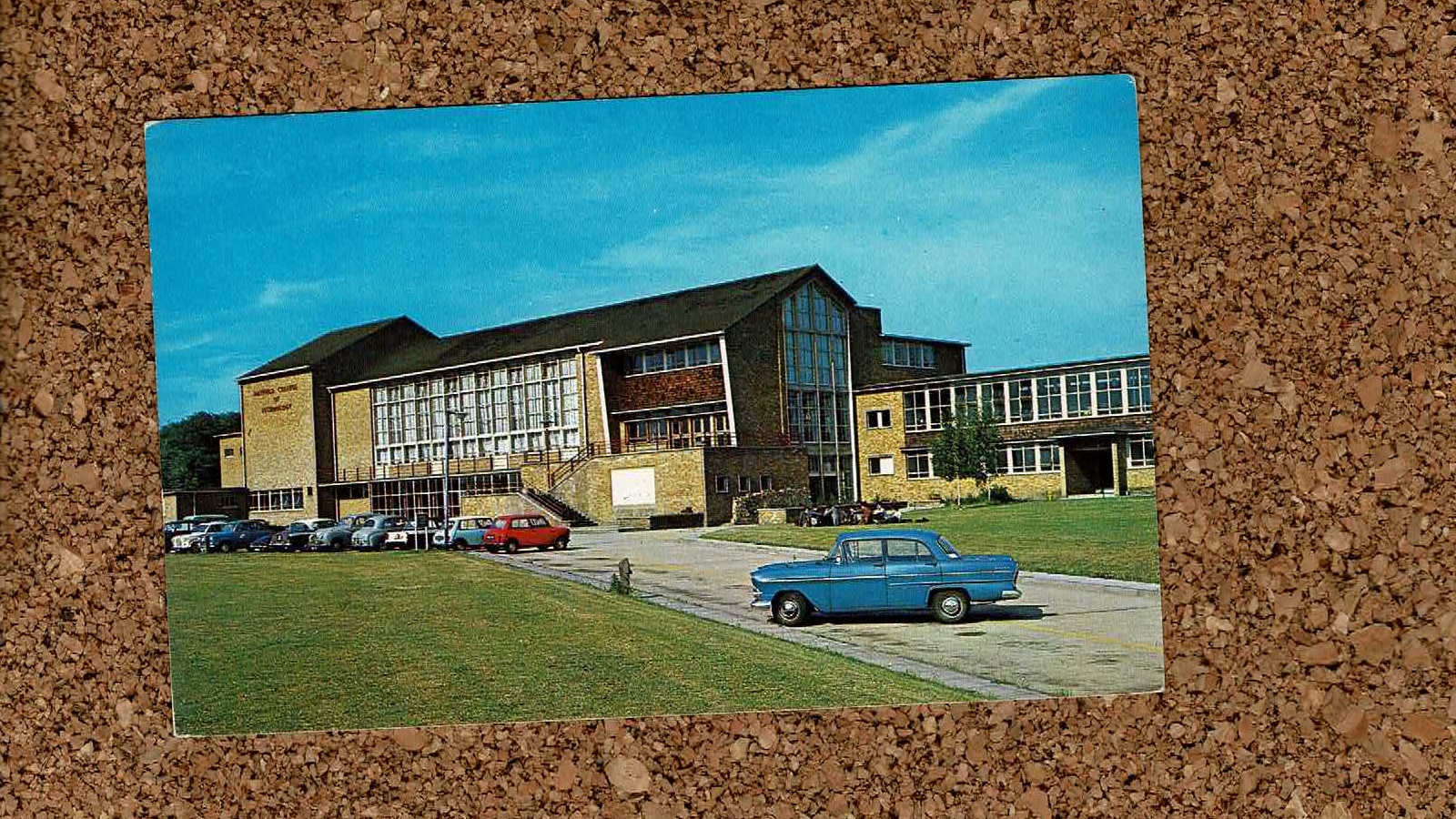
  • Higher education postcard: the University of Hertfordshire

    Higher education postcard: the University of Hertfordshire

    Greetings from Hatfield!

    This week’s blog come full of post-war scientific and technological optimism. We begin in 1944: Alan Butler, chairman of the de Havilland Aircraft Company, offered 90 acres to the Hertfordshire County Council for a technical college. De Havilland was based in Hatfield, and was one of the big names in aeronautical engineering and manufacture. (The world’s first commercial jet airliner – the de Havilland Comet – first flew in 1949. If you’d like to lament the apparent loss of Britain’s expertise and ambition, you may do so here.)

    The county council accepted, and in 1949 Dr Chapman, erstwhile principal of Stafford Technical College, was appointed as the first principal of the Hatfield Technical College.

    The image below and the snippet are both taken from The Sphere of 2 April 1949 and show that planning and construction were proceeding apace, and that modern, flexible, college accommodation was being built.

    In 1952 the college opened. Formally, by the Duke of Edinburgh in December; practically, I imagine it was September for new students. And in that first year over 1,700 students enrolled. The vast majority were part-time or evening students; a small number – 55 – were full-time or on sandwich courses.

    In 1956 the college offered a short course in computing – the first at the college – on “the application of computers to automation”. (The first transistorised computer had been developed at the University of Manchester only three years previously, so this was good advanced stuff.)

    By the end of the decade students could not only gain technical qualifications but also degrees, via the University of London’s external system. The first such students graduated with BSc(Eng) degrees in 1958.

    The 1960s saw much change and development. The college was renamed as the Hatfield College of Technology in 1960, following the government’s review of technical education. The colleges of technology were a counterpart to the colleges of advanced technology – like Aston, Bath and Brunel – which became universities in 1966. A digital computer was bought in 1962, costing more than £29,000 – almost £550k in today’s money.

    By 1965 the Council for National Academic Awards (CNAA) had been established, and thirteen programmes at Hatfield College of Technology were recognised as honours degree courses. The college was well-placed to become Hatfield Polytechnic in 1969.

    A campus was added in 1967, at Bayfordbury; in 1970 an observatory was built here. Also in 1070, a computer centre was opened, which was, apparently, the best equipped facility in public sector education in the country. It housed a DEC PDP-10, which is just the sort of mainframe that you see in 1970s futuristic sci-fi. And the polytechnic paid £256,500 for it, which is about £3.5 million today: this was a poly that knew how to invest.

    Two local colleges of education were incorporated, in line with then policy to merge local authority provision – these were the Balls Park and Wall Hall teacher training colleges.

    By 1988 the poly was one of those accredited by the CNAA, which gave it much more direct responsibility for the curriculum, quality and standards of its own degrees. This wasn’t universally done: only 21 polytechnics were so designated. It was also one of only eight polytechnics accredited for research degrees.

    When polytechnics became universities in 1992, Hatfield Polytechnic became the University of Hertfordshire. The Hertfordshire College of Health Care and Nursing Studies and the Barnet College of Nursing and Midwifery were incorporated into the university in 1993.

    Here are a couple of factoids about the university:

    The university runs a bus company – UnoBus – which originally served to shuttle students between campuses but grew and now operates public bus services across Hertfordshire and some surrounding countries. This is a very different to the sort of companies which normally emerge from universities!

    The university also hosted what is thought to be the longest exposure photograph ever. Artist Regina Valkenborgh was studying for a master’s degree at the university and installed a rudimentary pinhole camera – a beer can with photographic paper inside – on the observatory dome. Eight years later the can was retrieved. You can read more about the story here; and see the extraordinary image here.

    And finally, as is now customary, here’s a jigsaw of the card. This was posted on 7 August 1957 to an address in Salies-de-Béarn, near Biarritz, France. And, very exotically and excitingly, is written in French. I don’t speak much French at all, but it looks like the sender was an exchange student staying with a family in Hatfield.

    Source link

  • Spanberger urges UVA to pause presidential search until she takes office

    Spanberger urges UVA to pause presidential search until she takes office

    This audio is auto-generated. Please let us know if you have feedback.

    Dive Brief:

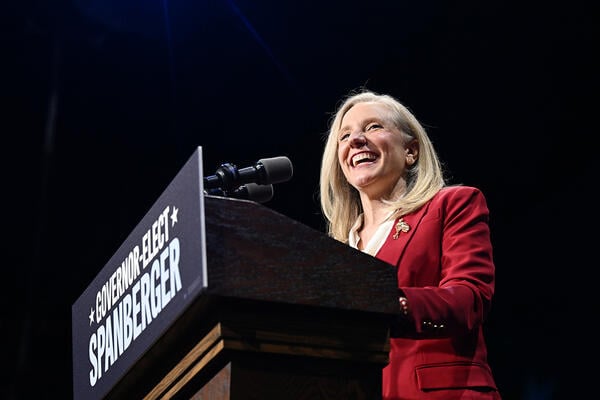
    • Virginia Gov.-elect Abigail Spanberger is calling on the University of Virginia’s governing board to hold off on naming a new president or selecting finalists for the role until she takes office in January.
    • Over the past six months, UVA’s Board of Visitors has “severely undermined the public’s and the University community’s confidence” in its ability to act transparently and in the best interests of the state flagship, Spanberger said in a Wednesday letter to board leaders.
    • Spanberger, a Democrat and an alumna of UVA, said five appointees to the board “failed to achieve confirmation” by the Virginia Assembly as law requires. That raises concerns about the legitimacy of any decisions made by the current board, as it isn’t “fully constituted,” she argued.

    Dive Insight:

    UVA’s governing board has been in a state of flux since June. Outgoing Gov. Glenn Youngkin, a Republican, is in the midst of a fight with Virginia’s Democrat-controlled Senate committee over his selections for several public college boards, including UVA.

    The committee rejected eight of Youngkin’s appointments in June, but the governor instructed them to begin serving anyway. In July, a judge ruled that those eight board appointees for UVA, George Mason University and Virginia Military Institute could not serve on those boards. An appeal from outgoing Virginia Attorney General Jason Miyares is before the Virginia Supreme Court.

    Democratic lawmakers similarly rejected another round of Youngkin appointees in August, bringing the total number of board seats under contention at Virginia public colleges to nearly two dozen.

    At UVA, five appointees are in legal limbo. 

    Because of this, “the Board is not fully constituted and its composition is now in violation of statutory requirements in crucial respects, further calling into question the legitimacy of the Board and its actions,” Spanberger said in her letter.

    UVA’s board currently has 12 voting members, well above the five it requires for a quorum. The university did not immediately respond to questions Thursday. 

    The governor-elect advised the board to pause its presidential search until it is “at full complement and in statutory compliance, adding that would entail her appointing new members and the General Assembly approving them.  

    In turn, Spanberger pledged to make her appointments to the UVA board “quickly upon my swearing in.”

    UVA formed a special committee in July to select a new president following the abrupt departure of its former leader, Jim Ryan, less than a month earlier. 

    Ryan, who originally planned to leave the role at the end of the 2025-26 academic year, stepped down early amid reports of a pressure campaign orchestrated against him by the U.S. Department of Justice. The DOJ had been probing UVA’s diversity, equity and inclusion efforts, which expanded following the deadly 2017 Unite the Right rally on the university’s campus and Ryan’s inauguration as president a year later.

    In his resignation announcement, Ryan said he wouldn’t challenge the Trump administration out of concern that attempting to keep his job would cost UVA research funding and student aid, as well as put international students at risk.

    UVA said in November that in-person interviews for Ryan’s replacement would take place late this month.

    Spanberger in her letter Wednesday criticized Ryan’s ouster as “a result of federal overreach” and noted that it went unchallenged by UVA’s board members.

    That lack of response, she argued, among other actions taken by the board over the last six months, has resulted in a “loss of confidence” in the governing body. She cited no confidence votes from both the UVA faculty senate and the university student council in July and August, respectively.

    In October, UVA struck a deal with the DOJ to formally close the agency’s investigations over its DEI work by 2028. In return, the university agreed to several changes, including adopting the DOJ’s contentious anti-DEI guidance and making quarterly compliance reports.

    Because the deal doesn’t include a financial penalty, it did not require a formal vote from the board, the university said in an FAQ.

    Leaders of Virginia’s Democratic-controlled Senate have called for a legal audit of the agreement, questioned its constitutionality and labeled it “a fundamental breach of the governance relationship” between the university and the state.

    Last month, the Trump administration also offered the research university a separate deal — preferential access to federal research funding in exchange for enacting several wide-ranging and unprecedented conditions. UVA ultimately declined the compact, as did six other colleges to which the administration initially offered it.

    Source link

  • Texas A&M Requires Approval for Courses That “Advocate” Certain Ideologies

    Texas A&M Requires Approval for Courses That “Advocate” Certain Ideologies

    Courses that “advocate race or gender ideology, sexual orientation, or gender identity” now require presidential approval at Texas A&M system campuses, the system Board of Regents decided Thursday.

    Faculty members and external advocacy groups say the new rules violate academic freedom, and for many professors, questions remain about how the policies will be implemented and enforced. Approved in a unanimous vote after a lengthy public comment period, the policy changes fit a pattern of censorship at Texas A&M that escalated after a video of a student challenging an instructor about a lesson on gender identity went viral, leading to the instructor’s firing and the resignation of then-president Mark Welsh.

    Dan Braaten, an associate professor of political science at Texas A&M San Antonio and president of the campus American Association of University Professors chapter, said he was shocked “at the egregiousness” of the policies, but not surprised by them.

    “Faculty are extremely worried,” Braaten said. “They’re wondering, can they teach the classes they’re scheduled to teach in the spring? Who’s going to be looking at their syllabi? … Is the president of each A&M university going to have to approve every syllabus? Are there penalties for any of this? It’s just a complete … serious violation of academic freedom.”

    The board approved the new rules as revisions to existing system policies. A policy on “Civil Rights Protections and Compliance” will be amended to state that “no system academic course will advocate race or gender ideology, sexual orientation, or gender identity unless the course is approved by the member CEO.” It will also define “gender ideology” as “a concept of self-assessed gender identity replacing, and disconnected from, the biological category of sex.”

    Similarly, “race ideology” is defined as “a concept that attempts to shame a particular race or ethnicity, accuse them of being oppressors in a racial hierarchy or conspiracy, ascribe to them less value as contributors to society and public discourse because of their race or ethnicity, or assign them intrinsic guilt based on the actions of their presumed ancestors or relatives in other areas of the world. This also includes course content that promotes activism on issues related to race or ethnicity, rather than academic instruction.”

    Teaching Versus Advocacy

    A previous version of the revision proposed that no system academic course will “teach” race or gender ideology, but the verb was changed to “advocate” before the policies were presented formally to the full board. It’s unclear how the system will differentiate between advocacy and regular instruction on these topics. Representatives for the board on Wednesday declined to comment on the policies ahead of the board vote. They did not respond to Inside Higher Ed’s questions after the policies were approved.

    A second policy on “Academic Freedom, Responsibility and Tenure” previously stated that “each faculty member is entitled to full freedom in the classroom in discussing the subject that the faculty member teaches, but a faculty member should not introduce a controversial matter that has no relation to the classroom subject.” The approved amendment adds that faculty members may not “teach material that is inconsistent with the approved syllabus for the course.”

    In a partially redacted Nov. 10 email obtained by Inside Higher Ed, a Texas A&M faculty leader said that administrators at several universities were already discussing implementation plans ahead of the board vote. An administrator also told the faculty leader that the changes to the policy would not likely lead to a formal syllabus-approval process and instead are intended to keep course content aligned with learning outcomes.

    The board received 142 written comments ahead of Thursday’s vote, and eight faculty members spoke out against the policy changes during the meeting’s public comment period. Several of them also called for Melissa McCoul, the professor fired in September, to be reinstated.

    “This is not university-level education, it is cruelty and political indoctrination in wolf’s clothing,” said Leonard Bright, a professor of government and public service and president of the Texas A&M College Station AAUP chapter. “I would need to tell my students that ‘What you came here to learn, I’m unable to tell you, because I’m restricted to tell you that information, even though such knowledge is available at every major university in this world.’”

    Sonia Hernandez, a liberal arts professor who teaches about Latin American history, shared a past example that highlighted the pitfalls of the new policies.

    “I had a student once who took issue with my discussion of the importance of military history. He was against war and felt strongly about war’s damaging effects on society, yet it was full academic freedom—not cherry-picking of topics, not advocacy, not ideology—that allowed me to share research on the intersections of war and identity with my class,” Hernandez said.

    Two faculty members—finance professor Adam Kolasinski and biomedical engineering professor John Criscione—spoke in favor of the policy changes.

    “I don’t think somebody should be able to say that Germans born two generations after the Holocaust somehow bear guilt for the Holocaust, because that’s really what’s being prohibited here,” Kolasinski said. “My colleagues seem to think that the policy says something it doesn’t.” Kolasinski also suggested the board change the language back from “advocate” to “teach.”

    AAUP president Todd Wolfson urged the board to reject the proposed policy changes in a statement Tuesday. So did Brian Evans, president of the Texas Conference of the AAUP, which includes faculty at Texas A&M campuses.

    “By considering these policy changes, the Texas A&M University System Board of Regents is telling faculty, ‘Shut up and teach—and we’ll tell you what to teach,’” Evans said in the statement. “This language and the censorship it imposes will cause irreparable harm to the reputation of the university, and impede faculty and students from their main mission on campus: to teach, learn, think critically, and create and share new knowledge.”

    In a Monday statement, FIRE officials wrote, “Hiring professors with PhDs is meaningless if administrators are the ones deciding what gets taught … Faculty would need permission to teach students about not just modern controversies, but also civil rights, the Civil War, or even ancient Greek comedies. This is not just bad policy. It invites unlawful censorship, chills academic freedom, and undermines the core purpose of a university. Faculty will start asking not ‘Is this accurate?’ but ‘Will this get me in trouble?’ That’s not education, it’s risk management.”

    AI-Driven Course Review

    Also on Thursday, the board discussed a detailed, systemwide review of all courses using an artificial intelligence–driven process. The system has already piloted the review process at its Tarleton State University campus, where most of the courses that were flagged are housed in the College of Education, which includes the sociology and psychology departments, the Nov. 10 email from a faculty leader stated. Board members said they intend to complete the course review regularly, as often as once per semester.

    “The Texas A&M system is stepping up first, setting the model that others will follow,” Regent Sam Torn said about the course review at Thursday’s meeting.

    The system will also use EthicsPoint, an online system that will allow students to report inaccurate, misleading or inappropriate course content that diverges from the course descriptions. System staff will be alerted when a student submits an EthicsPoint complaint, and if the complaint is determined to be valid, it will be passed along to the relevant university.

    Source link

  • Education Department resumes operations after prolonged shutdown

    Education Department resumes operations after prolonged shutdown

    Federal education staff are returning to work after a weeks-long federal government shutdown that halted many U.S. Department of Education activities ended Wednesday. However, the agreed-upon plan to open the government is only temporary.

    The continuing resolution signed into law Wednesday funds federal education programs at fiscal year 2025 levels. This temporary spending plan expires Jan. 30, unless Congress agrees to a more permanent budget before that deadline.

    The deal nullifies the reduction-in-force notices sent to 465 agency employees on Oct. 10. The Education Department is also prohibited from issuing additional RIFs through the end of January and must provide back pay to all employees who did not receive compensation during the shutdown. 

    In a statement to K-12 Dive on Thursday, the Education Department said that it “brought back staff that were impacted by the Schumer Shutdown,” in a reference to Senate Minority Leader Chuck Schumer, D-N.Y.

    In Senate floor remarks Nov. 10, Schumer said, “The last 41 days have exposed the depths of Donald Trump’s cruelty. He shut the government down longer than any president in American history and took innocent kids, veterans, and federal workers as political hostages, all because he refuses to do anything — anything — to fix the healthcare crisis and instead keeps pushing policies that will cut people’s coverage even more.”

    The statement from the Education Department added that the “Department will follow all applicable laws” and that all employees coming off furlough are back to active duty.

    However, the American Federation of Government Employees Local 252, which represents more than 2,700 U.S. Department of Education employees, said the return to work for agency staffers has been “rocky.”

    Rachel Gittleman, president of AFGE 252, said in a statement Thursday afternoon that employees have not received official notices from the Education Department’s human resources office to return to work. Rather, they are relying on text messages from supervisors or colleagues. Gittleman added that many employees named in the October firings are locked out of their computers and do not have access to agency email. 

    “This disorganization and chaos only further demoralizes the hardworking public servants at the Education Department that have faced threats, harassment, illegal firings — and 44 days without paychecks,” Gittleman said.

    Shutdown impacts

    The shutdown — the longest in U.S. history — began Oct. 1 after Congress reached an impasse on spending for FY 2026. While day-to-day K-12 and higher education operations stayed mostly unaffected, the federal shutdown put a pause on Office for Civil Rights investigations, new grant-making activities and technical assistance support.

    Still, some disruptions trickled down to early childhood programs and K-12 school systems.

    The National Association of Federally Impacted Schools, in a Nov. 7 statement, warned that delays in Impact Aid payments, which help school systems that are located in areas with non-taxable federal property, were “destabilizing school districts across the country.”

    NAFIS Executive Director Cherise Imai said that funding delays were not only inconvenient, they were “dismantling student support systems and threatening the stability of entire communities.”

    The association said a survey of 90 federally impacted school districts found that more than one-third were feeling budget pressures, with many cutting programs, freezing hiring and drawing on reserves to stay open. 

    Early in the shutdown, it was expected that athletics and extracurricular activities at Department of Defense Education Activity schools would be paused, but those events were later deemed excepted activities during the lapse in appropriations. 

    Although the federal government has reopened, uncertainty remains. According to a Nov. 10 posting by Tara Thomas, senior government affairs manager at AASA, The School Superintendents Association, “the agreement does not provide superintendents with any additional certainty regarding education funding for the 26-27 school year.” 

    Staffing levels at the Education Department remain quite lean as well due to layoffs, buyouts and attrition that occurred prior to the shutdown. According to a court filing from Nov. 12, the total number of Education Department employees is 2,536, down from 4,133 when Trump was inaugurated Jan. 20. 

    In early childhood education, the shutdown caused nearly 10,000 children to temporarily lose access to federally supported Head Start centers after funding lapsed, according to the National Head Start Association. 

    Head Start provides early childhood education services for children from low-income families. NHSA said the shutdown caused thousands of parents to lose child care services and cut access to healthy meals at the same time federal benefits for the Supplemental Nutrition Assistance Program expired Nov. 1.


    Source link

  • George Mason demands pro-Palestinian student group remove video from social media, but public universities can’t do that

    George Mason demands pro-Palestinian student group remove video from social media, but public universities can’t do that

    Late last month, the student chapter of Students for Justice in Palestine at George Mason University posted a video on a social media account that criticized U.S. foreign policy and Israel. The video (now removed), which apparently stylistically mimicked a Hamas video, included phrases such as “genocidal Zionist State,” “the belly of the beast,” and “from the river to the sea.” It also specifically addressed conditions in Gaza and GMU’s alleged oppression of pro-Palestinian protestors. 

    Regardless of one’s views on Israel and Gaza, all of this is protected speech. But rather than protecting student political discourse, GMU demanded the SJP chapter take down the video explicitly because its language ran afoul of the International Holocaust Remembrance Alliance’s vague definition of antisemitism, which has been incorporated into GMU’s anti-discrimination policy. The school warned that failure to comply could result in disciplinary action.  

    Student groups at public universities have the First Amendment right to post videos expressing their views on international conflicts, even if some members of the campus community are offended by the viewpoints expressed. We’ve seen no evidence the video constituted incitement, true threats, intimidation, or student-on-student harassment — narrow categories of speech unprotected by the First Amendment.

    When campus administrators invoke the IHRA definition and its examples to investigate, discipline, or silence political expression, the distinction between conduct and speech becomes meaningless.

    This is not the first — nor will it be the last — instance of universities relying on vague, overbroad anti-harassment definitions to censor speech some members of the campus community find offensive. In fact, overbroad anti-harassment policies remain the most common form of speech codes on college campuses. But it does point to the clear and growing threat the use of the IHRA definition poses to campus discourse about the Israel-Palestine conflict. It’s a danger about which FIRE has warned of since 2016, a danger we’ve seen in application, and one that the IHRA definition’s supporters routinely brush aside. As more and more states adopt IHRA for the purpose of enforcing anti-discrimination law, we’re likely to see increasingly more instances of campus censorship in the future.

    IHRA defines antisemitism as:

    a certain perception of Jews, which may be expressed as hatred toward Jews. Rhetorical and physical manifestations of antisemitism are directed toward Jewish or non-Jewish individuals and/or their property, toward Jewish community institutions and religious facilities.

    The document also provides a list of examples of antisemitism that include, among others:

    • Applying double standards by requiring of [Israel] a behavior not expected or demanded of any other democratic nation.
    • Drawing comparisons of contemporary Israeli policy to that of the Nazis.

    Language that does this (and that does not also fall into a specific category of unprotected speech) may offend some or many people. It nevertheless constitutes core political speech. Supporters of the use of the IHRA definition on campus insist that the definition does not restrict free speech, but rather helps identify antisemitic intent or motive when determining whether a student has created a hostile environment in violation of anti-discrimination laws. But this attempted distinction collapses in practice. 

    When “intent” is inferred from political expression — as it has at GMU and other campuses across the country — speech itself becomes evidence of a violation. Under this framework, students and faculty learn that certain viewpoints about Israel are per se suspect, and both institutional censorship and self-censorship follow. Despite its defenders’ claims, when campus administrators invoke the IHRA definition and its examples to investigate, discipline, or silence political expression, the distinction between conduct and speech becomes meaningless.

    Analysis: Harvard’s settlement adopting IHRA anti-Semitism definition a prescription to chill campus speech

    Harvard agreed to settle two lawsuits brought against it by Jewish students that alleged the university ignored “severe and pervasive antisemitism on campus.”


    Read More

    The problem is compounded by the Trump administration’s Title VI enforcement. Its unlawful defund-first, negotiate-second approach places universities’ federal funding — sometimes hundreds of millions or even billions of dollars — at the mercy of the administration’s Joint Antisemitism Task Force. That threat alone is enough to force campus administrators to make a choice: censor student speech critical of Israel, or risk losing access to federal funding. All too often, as we have seen repeatedly, institutions choose access to money over standing up for student rights.

    Instead of relying on IHRA’s vague definition for anti-discrimination purposes, FIRE has long supported efforts to constitutionally and effectively address antisemitic discrimination on college campuses by passing legislation to: 

    • Prohibit harassment based on religion.
    • Confirm that Title VI prohibits discrimination based on ethnic stereotypes.
    • Codify the Supreme Court’s definition of discriminatory harassment. 

    These options would better address antisemitic harassment and would do so without suppressing free speech.

    Source link

  • Spanberger Calls on UVA to Pause President Search

    Spanberger Calls on UVA to Pause President Search

    Virginia governor-elect Abigail Spanberger has called on the University of Virginia to pause its presidential search until she takes office in January and appoints new members to the Board of Visitors.

    In a Wednesday letter to board leaders, Spanberger wrote that she was “deeply concerned” about recent developments at the state flagship, citing “the departure of President Jim Ryan as a result of federal overreach.” Ryan stepped down amid federal investigations into diversity, equity and inclusion practices at UVA. The board later reached an agreement with the U.S. Department of Justice to pause those investigations.

    Spanberger argued that the government’s interference “went unchallenged by the Board” and has “severely undermined” public confidence in its ability to “govern productively, transparently, and in the best interests of the University.”

    Spanberger also pointed to recent votes of no confidence in the board by both the UVA Faculty Senate and the Student Council. Given those concerns and the hobbled state of the board, which is missing multiple members after state Democrats blocked Republican governor Glenn Youngkin’s appointments, Spanberger called for a pause until her own picks are confirmed by the General Assembly.

    “The benefits of selecting a new president with a full, duly-constituted Board are clear,” the governor-elect wrote in her letter to board leaders. They include making the search process and decision credible and “removing any concern that the Board’s actions are illegitimate due to a lack of authority,” she wrote.

    So far, UVA has been noncommittal in its public response.

    “University leaders and the Board of Visitors are reviewing the letter and are ready to engage with the Governor-elect and to work alongside her and her team to advance the best interests of UVA and the Commonwealth,” spokesperson Brian Coy wrote to Inside Higher Ed by email.

    Spanberger is the latest state Democrat to clash with the UVA Board of Visitors, which is stocked with GOP donors and political figures. While politics have long been at play on Virginia’s boards, Youngkin’s appointments have represented a dramatic rightward shift, prompting pushback as Democrats have blocked recent nominations.

    (A legal battle over the state of those appointments is currently playing out; the Virginia Supreme Court heard oral arguments in the case last month but has yet to issue a decision.)

    Democrats have turned up the temperature on UVA in recent months, demanding answers about the agreement with DOJ and Ryan’s resignation and accused the board of giving in to “extortionate tactics.” Now, following an election that saw Democrats take the governor’s office and broaden their majority in the General Assembly, Spanberger will likely have political capital to reshape higher education at the state level as she sees fit—barring intervention from the federal government.

    Spanberger, the first woman elected governor of Virginia, is a UVA alumna.

    The governor-elect’s call to pause UVA’s presidential search prompted immediate pushback from the Jefferson Council, a conservative alumni group that has won influence with Youngkin, who appointed the group’s co-founder Bert Ellis to the board before removing him for his combative behavior.

    The organization argued in a statement that in 2022 a Democratic-appointed board “quietly extended” Ryan’s contract through 2028—even though it did not expire until 2025—without “Governor Youngkin having an opportunity to appoint one Board member.” They wrote that “the Board’s action was clearly intended to ensure Ryan’s tenure” beyond Youngkin’s term. (Governors in Virginia may not serve consecutive terms.)

    The group also defended the search committee and process.

    “In contrast, the current UVA presidential search committee, the most extensive and diverse in University history, was lawfully formed by the Board and has been operating since July 2025, working diligently through meetings and interviews. To suddenly ask the BOV to wait to choose a president is a bold act of political legerdemain representing a total historical double-standard,” the Jefferson Council wrote.

    However, faculty members have a different view of the search committee.

    In an Aug. 10 letter, the UVA chapter of the American Association of University Professors accused the board of shortchanging faculty by limiting their seats on the presidential search committee. The group wrote that the committee “is dominated by current and former members of the [Board of Visitors] and administrators,” with faculty members composing less than a quarter of the committee. Additionally, they noted that none of those members “were selected by the faculty.”

    Spanberger’s insistence that UVA pause its presidential search bears similarities to ways other governors have sought to influence leadership decisions before they took office, such as Jeff Landry in Louisiana. Shortly after his election in late 2023, the Republican governor called on the University of Louisiana system to hold off on hiring Rick Gallot, a former Democratic state lawmaker, as its next president.

    Landry said he wanted to make sure their visions for the system aligned. Ultimately, despite the pause, Gallot was hired as system president after meeting with Landry before he took office.

    Source link