Miami –Achieve Miami, a nonprofit dedicated to equalizing educational opportunities for students throughout Miami-Dade County, has received $2.4 million from multiple philanthropic organizations and leaders, including a leadership gift of $2 million from Kenneth C. Griffin, founder and CEO of Citadel and founder of Griffin Catalyst. The funding, awarded over the past year, will further expand Achieve Miami’s transformative programs, reaching thousands of K-12 students through initiatives including Achieve Scholars, which prepares high schoolers for college success; Achieve Summer, a dynamic program combating learning loss through hands-on academics and enrichment; and the Teacher Accelerator Program (TAP), a groundbreaking effort to address Miami-Dade’s urgent teacher shortage.
Kenneth C. Griffin’s $2 million leadership gift is specifically focused on supporting TAP in creating a pipeline of talent for the teaching profession through recruiting, preparing, and mentoring aspiring educators, including those who had not previously considered a career in education. This gift builds on Griffin’s $3.5 million gift to TAP in 2022, further strengthening Achieve Miami’s efforts to recruit and train qualified educators to teach in public, private and charter schools across Miami-Dade and close learning gaps in the city’s schools. Griffin has a longstanding commitment to improving education and has contributed more than $900 million to providing greater access to a high-quality education and pathways to success for students in Florida and across the country.
Additional grants include:
$200,000 from the Bezos Family Foundation, which is a director’s gift supporting early and adolescent learning through grants and programs that advance the science of learning.
$100,000 from the Panera Bread Foundation, as part of its national initiative to support nonprofits that provide educational access to underserved youth.
$65,000 from Morgan Stanley, in support of Achieve Miami’s financial literacy and career readiness programs, which equip students in the organization’s Achieve Scholars program with essential money management skills for financial independence and future success. As part of its commitment, a team of Morgan Stanley employees guide students through financial literacy sessions across ten Miami-Dade County public schools, providing essential lessons on topics like budgeting, investing, entrepreneurship, savings, and credit.
$50,000 from City National Bank of Florida, as part of its long-term partnership with Achieve Miami in support of the Achieve Scholars program. City National Bank is planning financial literacy programming for students over the summer.
“Every student deserves access to resources, mentors, and opportunities that can set them up for success,” said Leslie Miller Saiontz, Founder of Achieve Miami. “These generous grants, led by Ken Griffin, will enable us to expand our reach, empower more educators, and bridge opportunity gaps that are prevalent in Miami. By investing in students and teachers, we are building a stronger future for our community.”
“Each of us has a story of how a teacher has changed our lives,” said Ken Griffin in February 2023 alongside his initial gift to Achieve Miami. “I care deeply about bringing more high-quality educators into Miami classrooms to help ensure the children of Miami will continue to enjoy the impact of life-changing teachers.”
Despite being one of the fastest-growing states with the nation’s fourth-largest economy, Florida ranks #21 in per capita education funding. Achieve Miami’s initiatives aim to eliminate educational disparities by equipping students with the tools and support needed for success with a variety of diverse enrichment programs such as Achieve Scholars, Achieve Saturdays, and Achieve Music.
Achieve Miami’s impact to-date includes support for over 10,000 Miami-Dade County students, college and career readiness programming for Achieve Scholars across ten high school sites, providing internet access to over 106,000 homes through Miami Connected, and the recruitment and training of nearly 200 new teachers through the Teacher Accelerator Program (TAP) since the initiative’s launch in 2023.
ABOUT ACHIEVE MIAMI
Achieve Miami is a nonprofit organization that is dedicated to fostering a transformational education ecosystem in Miami. Since its founding in 2015, the organization has supported over 10,000 K-12 students, bolstered programming for 60+ local schools, and engaged thousands of volunteers. Together with partners from the public and private sector, Achieve Miami designs and manages programs that bring together members from various parts of the community to extend learning opportunities for students, teachers, and community leaders. Learn more at www.achievemiami.org.
ABOUT THE TEACHER ACCELERATOR PROGRAM
Teacher Accelerator Program (TAP) is a non-profit organization creating a pipeline of talent for the teaching profession through recruiting, preparing, and mentoring aspiring educators. TAP’s comprehensive and streamlined program equips college students and career changers with the skills, knowledge, and certification necessary to excel in the classroom. TAP addresses the nationwide teacher shortage crisis by providing a built-in path to teaching, inspiring a new generation of educators.
TAP participants take a one-semester course, followed by a six-week paid summer internship, earn a certificate to teach, and begin instructing in a Miami-Dade County public, private, or charter school classroom. TAP is an initiative of Achieve Miami, supported by Teach for America Miami-Dade, and is offered by the University of Miami, Florida International University and Miami-Dade College. Learn more at www.teacheraccelerator.org.
eSchool Media staff cover education technology in all its aspects–from legislation and litigation, to best practices, to lessons learned and new products. First published in March of 1998 as a monthly print and digital newspaper, eSchool Media provides the news and information necessary to help K-20 decision-makers successfully use technology and innovation to transform schools and colleges and achieve their educational goals.
The University of Florida is already one of the nation’s premier public universities. But it has the potential to be the very best. That belief—in UF’s momentum, its mission and its future—is what led me to pursue the extraordinary opportunity of the UF presidency.
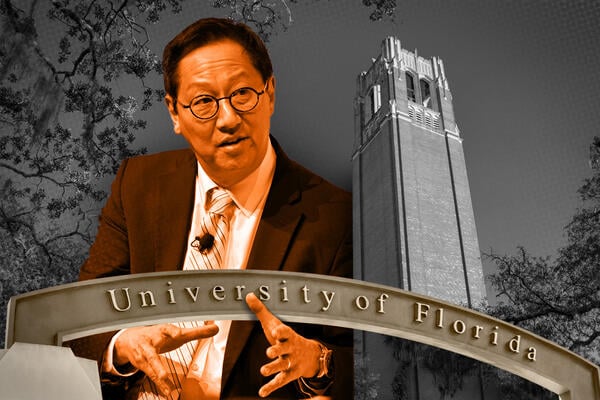
Santa J. Ono was recently recommended as the sole finalist for the University of Florida presidency.
University of Florida
Over the past several weeks, I’ve had the chance to spend meaningful time with the university’s leadership. I believe deeply in their vision: ambitious, anchored in a culture of excellence and laser-focused on student success. The passion I’ve seen for this institution—including during my visit to campus earlier this week to meet its students, faculty and administrators—is infectious, and the alignment between the Board of Trustees, the Board of Governors, the governor and the Legislature is rare in higher education. This alignment signals seriousness of purpose, and it tells me that Florida is building something truly exceptional. I’m excited to be part of that.
I believe in Florida’s vision for higher education. I understand its priorities, and I support them. I will execute this vision with clarity, consistency and integrity. I put my name forward for this position because I agree with the state leadership’s vision and values for public higher education. My alignment is rooted in principles—like the renewed emphasis on merit, the strengthening of civics and foundational learning, and the belief that our universities should prepare students not just for careers, but for informed citizenship in a free society.
Public universities have a responsibility to remain grounded in academic excellence, intellectual diversity and student achievement. That means rejecting ideological capture, upholding the rule of law and creating a culture where rigorous thinking and open dialogue flourish. I share that commitment.
Like many, I supported what I believed to be the original intent of DEI — ensuring equal opportunity and fairness for every student. That’s something on which most everyone agrees. But over time, I saw how DEI became something else—more about ideology, division and bureaucracy, not student success. That’s why, as president of the University of Michigan, I made the decision to eliminate centralized DEI offices and redirect resources toward academic support and merit-based achievement. It wasn’t universally popular, but it was necessary. I stood by it—and I’ll bring that same clarity of purpose to UF.
The future of higher education depends on a clear mission, a culture of merit and accountability, and a deep commitment to preparing students to thrive in the real world. That means strengthening partnerships with businesses, supporting agriculture and innovation, and ensuring each student—regardless of background—has the opportunity to reach their full potential.
I also understand the challenges of leadership in today’s academic environment. During my tenure leading other public universities, I declined to politicize the institutions or publicly oppose national political figures. I did this because I believe universities must serve as platforms for learning, not partisanship or ideological activism.
Combating antisemitism has been a priority throughout my career. I’ve worked closely with Jewish students, faculty and community leaders to ensure that campuses are places of respect, safety and inclusion for all. I know that the University of Florida has been a national leader in this regard —setting a gold standard in standing firmly against antisemitism and hate. That standard will not change under my leadership. I will continue to ensure that UF is a place where Jewish students feel fully supported, and where all forms of hatred and discrimination are confronted clearly and without hesitation.
Finally, peaceful protest has a place in campus life. But the University of Florida is not a place for disruption, intimidation or lawlessness. If I am approved, UF will remain a campus where all students are safe, where differing views can be heard and where the rule of law is respected.
This is an exciting moment for Florida and for the University of Florida. I’m honored to be a part of it. And I’m ready to get to work.
Santa J. Ono has been recommended as the sole finalist to be the 14th president of the University of Florida. He formerly served as the president of the University of Michigan.
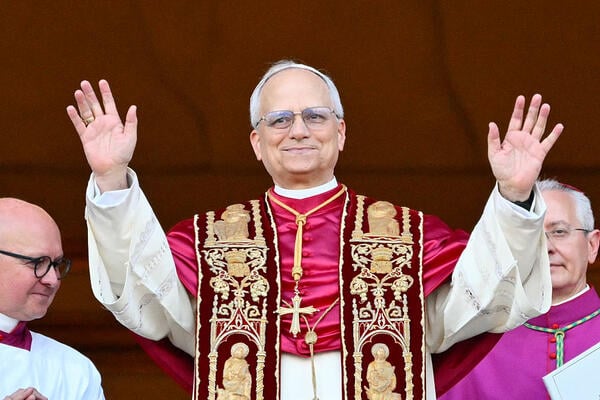
The Vatican announced the selection of a new pope to lead the Catholic Church on Thursday, the first to come from the United States and the first to hold a bachelor’s degree from a U.S. university.
Pope Leo XIV, then Robert Prevost, graduated from Villanova University in 1977.
Pope Leo XIV, born Robert Prevost, is a Chicago native who graduated from Villanova University in Philadelphia in 1977 with a bachelor of science in mathematics. In September of that year, he joined the Order of St. Augustine. He took his solemn vows in August 1981 and earned a master of divinity from the Catholic Theological Union in Chicago in 1982.
Villanova president Peter M. Donohue said in a statement that the university celebrates the election of Pope Leo XIV.
“I cannot help but reflect on what his Augustinian papacy will mean to our university community and our world,” Donohue said. “Known for his humility, gentle spirit, prudence and warmth, Pope Leo XIV’s leadership offers an opportunity to reaffirm our commitment to our educational mission.”
For most of his career, Prevost served in Peru, holding roles as a parish pastor, diocesan official, seminar teacher and administrator before becoming bishop of Chiclayo in 2015. In 2023, Pope Francis appointed Prevost prefect of the Dicastery for Bishops, which increased his visibility and influence in the church, putting him on the path to the papacy.
In addition to being the first pope from the U.S., Leo is also the first dual-citizen pope, holding citizenship in Peru. He’s also the first Augustinian friar to be elected pontiff, reflecting Villanova’s Augustinian Catholic roots.
The last pope to take the name Leo also has ties to American higher education. Pope Leo XIII (1878–1903) gave his formal approval for the founding of the Catholic University of America in Washington, D.C., on April 10, 1887, and the university recognizes this date as Founders Day.
Less than a year after former president Ben Sasse resigned abruptly, the University of Florida has gone in the opposite direction for its next presidential pick, announcing Santa Ono as the sole finalist.
Ono, who stepped down from the University of Michigan presidency last week after less than three years on the job, brings a wealth of academic and research experience: He also served in the top jobs at the University of Cincinnati and the University of British Columbia.
Sasse, a Republican U.S. senator from Nebraska when he was hired in late 2022, previously served as president of Midland University, a small institution in his home state. Despite a lack of experience overseeing a massive research enterprise like UF, Sasse fit a profile in demand in Florida, where GOP lawmakers have ascended to presidencies at multiple universities. But his time at UF was short-lived; after less than 18 months on the job, he stepped down amid a spending scandal. At the time, he cited his wife’s deteriorating health as his reason for leaving.
Ideology has regularly trumped experience in recent Florida presidential hires. Multiple former lawmakers, all Republicans, are at the helm of various state institutions. They include former lieutenant governor Jeanette Nuñez at Florida International University, Adam Hasner at Florida Atlantic University and Richard Corcoran at New College of Florida, among others.
Considering those recent hiring trends, Ono is an outlier—a traditional higher ed candidate in a state where Republican governor Ron DeSantis and the Florida Board of Governors, most of whom he appoints, have taken active roles in presidential searches.
And while many faculty members have celebrated the selection of a candidate with strong research and leadership credentials, some conservative figures are pushing back on Ono.
Now a public battle appears to be brewing over who will lead the University of Florida.
Opposition Emerges
When UF announced Ono as the sole finalist for its presidency on Sunday, many observers were shocked that he was leaving his plum job at Michigan so soon. In October, Ono signed an eight-year contract extension with a $1.3 million base salary to keep him at Michigan long term. (Though UF’s compensation package has not yet been released, Ono could earn as much as $3 million a year, according to a salary range set by trustees.)
But almost seven months later, Ono resigned when his candidacy at UF was announced.
Given the trend of DeSantis’s involvement in presidential searches across the state, it seems unlikely Ono would have emerged without the governor’s blessing. But other conservative figures have publicly objected to Ono’s candidacy over concerns about diversity, equity and inclusion programs at Michigan, which has been scrutinized for its significant spending on such efforts.
Chris Rufo, a trustee at New College of Florida who has championed anti-DEI efforts nationwide, strongly opposed the pick and called for UF to reverse course on the hire. Rufo has been a regular critic of DEI at UM.
“The finalist for the University of Florida presidency is a left-wing administrator who recently declared his support for ‘DEI 2.0’ and claimed that ‘the climate crisis is the existential challenge of our time.’ Florida deserves better than a standard-issue college president,” Rufo wrote on X.
Congressman Byron Donalds, who represents Florida’s 19th Congressional District and is the expected front-runner to replace DeSantis as governor at the end of his term, has also voiced concerns: “Florida cannot afford to inject wokeness into our flagship university. This selection must be blocked and the search committee must start over,” Donalds wrote in a social media post.
Though he said he was “not involved” with the search and had not talked to Ono, he emphasized that he has faith in UF’s trustees—most of whom he appointed—guiding the pick. He added that the expectations for higher education in Florida were clear, noting the state’s opposition to DEI and what he called a rejection of “woke indoctrination” at state institutions.
“I don’t think that a candidate would have been selected who is not going to abide by those expectations, and I think that you will likely see that will be very clear in this instance. I will let the process play out, but we have put a real serious stake in the ground on this,” DeSantis said.
The governor boasted that Florida “led the efforts” to take down diversity initiatives, which he said the Trump administration has since followed on a national level.
DeSantis also noted that Ono eliminated the University of Michigan’s DEI office in recent months.
“I don’t think that anyone would want to come to the University of Florida if your goal was to pursue a woke agenda. You’re going to run into a brick wall here in the state of Florida,” DeSantis said.
If the governor disapproved, he could blow up the search, as he did last month when UF’s College of Liberal Arts and Sciences tried to hire a new dean. In that case, DeSantis ordered the search restarted after his office took issue with DEI statements from candidates. Allowing UF’s hiring effort to proceed seems to suggest at least tacit approval from DeSantis.
Some members of the Florida Board of Governors have also thrown their support behind Ono, pushing back on criticism. Their support is critical, considering that board has the power to upend presidential searches, which it has done in past searches, such as at FAU in 2023.
Florida Board of Governors member Alan Levine has taken to social media to urge fellow conservatives, including Rufo, to give Ono a chance and hear him out through the process.
“Chris, let’s give @SantaJOno a chance to tell his whole story,” Levine wrote in response to Rufo. “He eliminated the DEI office at Michigan. He faced threats and vandalism for standing up to the pro-palestinian/anti-israel/anti-US movement on campus. There seems to be more to Dr. Ono’s actions, and we need to let him tell his story. No candidate is without things they need to explain. I’m open to giving him the chance to do that, particularly given his total body of work.”
The University of Florida declined to comment on critiques of the candidate.
Ono Explains
As Ono exits Michigan, he leaves several controversies in his wake.
The outgoing president has faced criticism for his handling of pro-Palestinian protests in the aftermath of the Oct. 7, 2023, attacks by Hamas on Israel and the brutal retaliatory offensive by the Israeli military. Several former employees alleged they were fired for engaging in pro-Palestinian protests, prompting a lawsuit against the university, Ono and others, filed earlier this month.
Michigan has also navigated a series of athletic scandals during Ono’s tenure. Most recently, a former Michigan football coach was accused of hacking the digital accounts of more than 2,000 NCAA athletes and downloading “personal, intimate digital photographs and videos,” according to the U.S. Department of Justice. Matt Weiss, an assistant at UM from 2021 through early 2023, was charged with 14 counts of unauthorized access to computers and 10 counts of aggravated identity theft in March. The incident also prompted multiple lawsuits against the university.
But in an op-ed shared exclusively with Inside Higher Ed, Ono made no mention of the lawsuits and avoided most other controversies. Instead, he focused on the potential at the University of Florida, emphasizing his belief “in Florida’s vision for higher education” and UF’s leadership.
“The passion I’ve seen for this institution—including during my visit to campus earlier this week to meet its students, faculty and administrators—is infectious, and the alignment between the Board of Trustees, the Board of Governors, the governor and the Legislature is rare in higher education. This alignment signals seriousness of purpose, and it tells me that Florida is building something truly exceptional. I’m excited to be part of that,” Ono wrote in the op-ed Thursday.
Ono echoed themes championed by both DeSantis and Rufo as he argued that universities must reject “ideological capture” and renew “emphasis on merit.” He also sought to distance himself from DEI efforts.
“Like many, I supported what I believed to be the original intent of DEI—ensuring equal opportunity and fairness for every student. That’s something on which most everyone agrees,” he wrote. “But over time, I saw how DEI became something else—more about ideology, division and bureaucracy, not student success. That’s why, as president of the University of Michigan, I made the decision to eliminate centralized DEI offices and redirect resources toward academic support and merit-based achievement. It wasn’t universally popular, but it was necessary.”
Ono added that he would bring “that same clarity of purpose to UF.”
Professor Pete Kosek was a leading voice for the faculty at Sterling College — a small, private Christian college in central Kansas — when negotiating changes to the college’s employee handbook. Ken Troyer, another Sterling professor, spoke out as well, including statements to the media about concerns he had with Sterling administrators’ communication with faculty and about a vote of no confidence in the college’s president.
For these exercises of basic faculty expressive rights, Sterling has now punished them both for exhibiting “behavior that is fundamentally inconsistent” with Sterling’s mission. But it’s these punishments that are “fundamentally inconsistent” with Sterling’s promises that its faculty enjoy “free expression, on and off campus.”
FIRE wrote to Sterling on April 3, 2025, articulating our concerns. Its administration ignored us, so today we’re writing to the college again as well as its board of trustees, urging them to reverse the punishments of Kosek and Troyer.
College clashes with faculty over revisions to the employee handbook
In 2023, Sterling faculty received a new version of Sterling’s employee handbook. Faculty voiced concerns about whether faculty were obligated to sign the handbook’s acknowledgement, which appeared to require that faculty affirm Sterling’s institutional stance on marriage, life, gender identity, and human sexuality. For example, a provision in the handbook stated: “[m]arriage is designed to be the lifelong uniting of one man and one woman in a single, biblical, covenant union as delineated by Scripture.”
Concerned that this may adversely impact faculty who were divorced, Kosek led a group of faculty members in negotiating changes to the handbook. Over the course of a year, he went back and forth with Sterling administrators about making sure the handbook could be modified so that it didn’t single out divorced faculty for adverse action.
On Aug. 21, 2024, Kosek emailed a large group of faculty members informing them he believed he and anyone else would be fired if they did not sign the handbook acknowledgement. Kosek also told the administration that while he would abide by the terms of the handbook, he disagreed with how the administration went about communicating with faculty and instituting the new handbook. Two days later, the administration clarified that while faculty were expected to abide by the terms of the handbook, they would not be terminated for not signing it. Kosek subsequently clarified this to the rest of the faculty. The situation seemed resolved, right? Wrong.
Months later, on Feb. 25 of this year, administrators summoned Kosek to a meeting and gave him a disciplinary warning. They told him that it was because he allegedly misrepresented the college when he told other faculty that he believed he and others would be fired over not signing the handbook’s acknowledgement. Sterling provided Kosek no real opportunity to defend himself from the charge.
Troyer, meanwhile, received a nearly identical disciplinary warning on the same day as Kosek, purportedly because of his comments to the media criticizing Sterling’s poor communication with faculty. (This poor communication was a major reason why a group of faculty supported a no-confidence vote in Sterling’s leadership.) Troyer had also discussed the inclusion of non-Christian students at the college, and how that inclusion related to Sterling’s Christian mission.
Similar to Kosek, Troyer had no real opportunity to defend himself. He was just expected to take the disciplinary warning and keep his mouth shut.
If Sterling’s mission required absolute and unquestioning obedience to the administration, this might be understandable. But these punishments cannot be squared with the policies actually laid out in Sterling’s faculty handbook. That handbook does not demand unthinking fealty, but imposes on “students, faculty members, administrators and trustees” the obligation “to foster and defend intellectual honesty, freedom of inquiry and instruction, and free expression on and off campus.” As if anticipating the exact scenario facing both Kosek and Troyer, Sterling adds in the handbook, “administrators should respect the right of faculty members to criticize and seek revision of institutional regulations.”
FIRE’s first letter explained why the college could not square its punishment of Kosek with Sterling’s written commitments. Under First Amendment jurisprudence and at most private colleges (like Sterling) faculty members retain the right to comment on matters of public concern — and one of those concerns is how the college is being run. Indeed, faculty members are often among the most important voices regarding how colleges and universities operate since they witness firsthand the impacts of institutional policies.
Sterling blew FIRE off. So now we’re taking this up the chain and writing to the Board of Trustees as well as the college. When a private institution like Sterling makes promises in its handbooks to faculty, it must keep those promises. To violate them with impunity is to undermine trust and credibility.
Colorado just dodged a constitutional bullet. Not a legislative win so much as a near-miss.
The Kelly Loving Act, named after a trans person killed in the Club Q mass shooting in Colorado Springs in 2022, started out as a sweeping and constitutionally suspect bill aimed at protecting transgender individuals from discrimination, but trampling the First Amendment in the process.
The bill would have classified misgendering and deadnaming in certain contexts as unlawful under the Colorado Anti-Discrimination Act. Its most controversial provision said that if a parent doesn’t use their child’s preferred pronouns, that must be considered “coercive control” in any custody dispute. This would have negatively impacted a parent’s case for custody of their child, regardless of any other context.
The original bill would have also required parents, journalists, business owners, and educators to use people’s chosen names and pronouns in every piece of public-facing content, from news articles to school newsletters.
But the Constitution protects the right to call others by any name or pronoun under the sun, even if it causes hurt or offense. Forcing people to use particular language, even with the intention of inclusivity, is compelled speech, and the First Amendment generally forbids it.
The test of a free society is not how well it protects popular speech, but how well it protects speech that others find uncomfortable or even offensive.
This important principle also protects the rights of people in states whose government officials would seek to require that people be deadnamed and misgendered, or prohibit other expression in support of trans or queer causes. The First Amendment blocks that kind of speech restriction as well.
Of course, any speech, including declining to use a child’s preferred pronouns, can be part of a broader pattern of abuse that would be appropriate to consider in decisions about the custody of children. The problem was that the bill automatically counted this speech as a legal mark against parents, regardless of any further context. This served to effectively force all parents to adopt the state’s preferred speech, lest they one day face a custody battle and risk losing their children because of it.
Another concern was that the Kelly Loving Act included “pre-publication requests” for publishers to use preferred names and pronouns, signaling that the law may be used against journalists simply for quoting a legal name in a criminal proceeding or publishing information already in the public domain that contradicts someone’s preferences or identity. This raised serious concerns that the law could chill legitimate journalistic expression and infringe on press freedoms protected by the First Amendment.
Thankfully, its sponsors stripped all three provisions — misgendering, deadnaming, custody — out before the state senate approved the bill this week.
Colorado’s lawmakers did the right thing by cutting these provisions. But we should still reflect on what happened because while the final bill is harmless, the impulse behind it is not.
There are those in America who believe the state should address speech they oppose by compelling citizens to use approved words, or forbidding them from using disapproved words. This goes beyond political correctness to coercive control, to use a familiar term.
The right is no stranger to this kind of behavior either. Florida’s Stop WOKE Act, which aims to control what can or cannot be said about race and gender in classrooms and workplaces under the guise of anti-discrimination law, is no better. After FIRE filed a lawsuit challenging the law, a federal court halted enforcement of key parts of it.
If you think it’s dangerous for Florida’s legislators to have the power to police speech in public school classrooms, then you should find it equally outrageous for Colorado legislators to try to mandate what pronouns parents can use with their own children in their own homes or journalists can use when reporting stories.
When a state starts dictating which words are acceptable in public discourse and private discussion, it jumps headlong into the culture wars, telling everyone to fall in line or face the consequences.
Sadly, this is nothing new. Milton, Locke, and Voltaire all warned against the dangers of governments trying to manage thought. In Areopagitica, Milton argued for the liberty to know and argue freely “above all liberties.” In our wisdom, we Americans took note and enshrined this liberty in our First Amendment, understanding it is the one that protects the rest.
In A Letter Concerning Toleration, Locke eloquently wrote “the care of souls is not committed to the civil magistrate, any more than to other men.” In other words, the state has no business telling you what to think or say any more than your fellow citizens.
That is not how a free society operates, and that is why in West Virginia v. Barnette, the Supreme Court famously struck down a rule requiring students to salute the flag. In the words of Justice Robert H. Jackson, “If there is any fixed star in our constitutional constellation, it is that no official, high or petty, can prescribe what shall be orthodox in politics, nationalism, religion, or other matters of opinion.”
Thankfully, we live in a country where the government doesn’t get to tell you what you have to say or what you must believe. The test of a free society is not how well it protects popular speech, but how well it protects speech that others find uncomfortable or even offensive.
The revisions to this bill should be counted as a victory for the good people of Colorado. But we should also be concerned this was such a close shave in the first place because it indicates a dangerous impulse lurking in our culture. If people want to lead on inclusion, they must do so by persuasion, not coercion.
May is Mental Health Awareness Month, a time to elevate conversations around mental wellbeing and reduce the stigma that surrounds it. In recognition, we’re sharing stories directly from students who are navigating the pressures and facing the challenges of higher ed life today.
One of those students is Ruby Adamowicz, a sophomore at Isenberg School of Management, University of Massachusetts, Amherst. Here’s Ruby’s perspective, in her own words.
The right direction
I’m nearing the end of my sophomore year of college, and I can still confidently say that I have absolutely no idea where I’ll end up after graduation. I see my peers landing internship offers and studying abroad — even my own roommate has a full-time job offer set for her once she graduates.
Now, I’m not saying that I’m coasting through college. Trust me, I have put in the work. But I’ve also realized that success does not look the same for everyone. We’re all moving through life at our own pace. I always remind myself that some people find themselves as undergrads, some as post-grads and many are simply still trying to figure out who they are, which is normal and okay.
This brings me to the question that’s almost always in every student’s head: “Am I headed in the right direction?”
Second-guessing first-year decisions
For me, I have always struggled with finding my passion and figuring out what jobs align with my major. It’s like a mental battle. I’m constantly asking myself: “Am I doing this because I genuinely love it, or is it just what makes the most sense?”
I consider myself extremely fortunate that I was a freshman while both of my sisters were seniors at the same school. In all honesty, they were the ones who encouraged me to major in marketing. In my high school mind, following in their footsteps was what made the most sense. I figured I would know what classes to take, how to find an internship and have some overall guidance during my first year. And it seemed like the smart choice. Business is so broad and allows you to be creative. But, two years in, I still second-guess whether this is my “passion.”
Figuring things out – one day at a time
There are days when I feel inspired and even motivated to work on social media projects and brainstorm my entrepreneurial ideas. Other days, I feel like I’m going through the motions — just checking off my tasks for the day. Sometimes, I’m inspired to plan out my goals, update my resume and have a strong sense of where I want to be post-grad. There are also times when I feel like I’m stuck, almost like a fish out of water. And that’s okay. I’ve learned that “figuring it out” doesn’t mean that your life will fall into place that same day. It means taking small steps, such as talking to your professors, stepping out of your comfort zone, joining clubs, being social and challenging yourself.
Follow your own path
What I’ve come to learn during my time at college is that nobody has it all figured out — even your classmate who has 500+ connections on LinkedIn and is posting about their summer internship.
We’re all experiencing college for the first time and trying to figure out what to do to be happy. There are ups and downs, but you can take it one day at a time. If you’re reading this and are feeling lost, confused, behind or even stuck, I’m here to remind you that it is so normal. It’s a feeling that comes from comparing yourself to people who are on a different path than you. As the saying goes, “Comparison is the thief of joy.”
What now
Honestly, this is a great question that I try to answer each day.
Life is not one straight line. It’s everyone’s first time living, trying to navigate what the world has to offer. But the more you show up and put yourself out there, you’ll find what life has for you. College is not a race to be employed. It’s a chance to figure out what makes you feel happy.
Apply for the internship you feel underqualified for, make friends with new people and take advantage of all the opportunities possible.
So, I will leave you with this. If you’re feeling lost and keep asking yourself, “Am I doing enough?” — you are not alone.
Take it one day at a time.
Written by Ruby Adamowicz, sophomore marketing major at the University of Massachusetts, Amherst and Cengage Student Ambassador
Do you see some students struggling with their mental health? Let them know they’re not alone. Share this article and explore additional articles about student mental wellbeing.
“It was nearly impossible to get anyone on camera for this story [on Trump’s attacks on lawyers and law firms], because of the fear now running through our system of justice.” — Scott Pelle, “60 Minutes” (May 4)
That observation prompted my colleague, Angel Eduardo, to caution that we are now in “uncharted and horrifying territory” — a territory governed by coerced compliance. Against that backdrop comes the latest installment of Executive Watch, authored by Professor Timothy Zick.
In the weeks and months ahead, more FAN posts will appear discussing yet other First Amendment issues related to the Trump administration, its executive orders, and related matters. If this seems excessive, it is because (as Zick and I discuss in a forthcoming scholarly article) the suppressive actions taken by this administration are unprecedented in both their breadth and depth.
Vigilance in the service of freedom is no vice, and apathy in response to despotism is no virtue.
Related
Professor Zick’s post is set out below followed by a few news items, including two new federal district court rulings involving First Amendment challenges to anti-DEI executive orders and a NYU Law School item about punishing protestors. — rklc
During his first term as president, Donald Trump signaled that he was not committed to pluralism and expressive liberty when it came to matters like patriotism, public protest, and other forms of dissent. During his second term, Trump has issued multiple executive orders that attempt to impose official orthodoxies or understandings regarding race, gender, patriotism, and other subjects.
My previous post explained how Trump has used executive orders to instigate a whole-of-government assault on free speech, and how that campaign has affected nearly every corner of American life. This post focuses on how Trump has used executive orders to try to purge concepts and ideas from public and private realms and to dictate what is orthodox when it comes to matters Americans sharply disagree on.
Many of Trump’s orders are not only viewpoint discriminatory; their expressly stated purpose is to eradicate certain ideas or ideologies and replace them with officially approved alternatives. Although they seek to impose official ideologies by striking disfavored ideas or concepts, many of the Orders utterly fail to define key concepts, including “diversity, equity, and inclusion (DEI),” “discriminatory equity ideology,” “radical gender ideology,” and “hateful ideology.”
As I explained in my previous installment, such glaring vagueness has a real chilling effect. Faced with losses of many billions in funding or revenue, or with ruinously expensive investigations or prosecutions, many have decided to capitulate or over-comply, scrubbing any potentially offending terms and concepts from trainings, lectures, websites, and other fora.
In 1943, the Supreme Court decided West Virginia State Board of Education v. Barnette, which invalidated a state law mandating that students salute the flag and recite the Pledge of Allegiance at the beginning of each school day. In an iconic and justly famous opinion, Justice Robert H. Jackson wrote:
If there is any fixed star in our constitutional constellation, it is that no official, high or petty, can prescribe what shall be orthodox in politics, nationalism, religion, or other matters of opinion or force citizens to confess by word or act their faith therein.
Trump’s use of executive orders to impose or coerce adoption of official orthodoxies or views is contrary to a foundational First Amendment principle: The government cannot dictate to Americans what ideas they can support or promote or what they believe.
President Trump’s orthodoxies
Presidents have historically used executive orders to change policies and priorities regarding a wide range of matters, from the scope of anti-discrimination laws, to matters relating to service in the military, to the protection of religious or other liberties. For example, a president might instruct executive agencies to adopt specific legal or policy positions on enforcement of anti-discrimination laws or the protection of Second Amendment rights. And, of course, presidents can engage in their own speech about these and other matters, including through executive orders.
Trump has utilized executive orders for some of these purposes, though in novel ways (and for far more trivial ones, such as dictating what kind of straw can be used in federal buildings). But many of his orders do not merely change enforcement policies or call for agencies to regulate the actions of those who are subject to agency jurisdiction. The First Amendment “tell” in the orders is that they direct agencies to root out and censor the “promotion” of disfavored ideas or concepts.
Many of the president’s executive orders reflect his own personal frustrations and grievances, including the promotion of ideas he believes should never have been expressed, and that the federal government should now use its vast powers to suppress. Thus, a central purpose of the orders is to purge disfavored ideas and concepts from schools, companies, libraries, museums, foundations, and scientific research.
The following examples illustrate these points:
Race
An executive order describes DEI programs as “radical” and “wasteful.” It instructs agencies to coordinate the termination of “all discriminatory programs, including illegal DEI and diversity, equity, inclusion, and accessibility (DEIA) mandates, policies, programs, preferences, and activities in the federal government, under whatever name they appear.” Further, Trump ordered all federal agencies and commissions to provide the director of the Office of Management and Budget with lists of “[f]ederal contractors who have providedDEI training or DEI training materials to agency or department employees” and “[f]ederal grantees who received Federal funding to provide or advance DEI, DEIA, or ‘environmental justice’ programs, services, or activities since Jan. 20, 2021.”
Here as elsewhere, and absent any definitional guidelines, a second order also targets DEI. It requires an office within the Department of Labor to “immediately cease . . . [p]romotingdiversity.” What’s more, the president orders federal agencies to “[e]xcise references to DEI and DEIA principles, under whatever name they may appear, from Federal acquisition, contracting, grants, and financial assistance procedures.”
“Radical DEI,” an executive order proclaims, must be replaced by “individual dignity, hard work, and excellence,” which are identified as “fundamental to American greatness.”
Promoting, advocating, or even mentioning “DEI” is also forbidden in the private sector. The president orders agencies to root out DEI and in its place “advance in the private sector the policy of individual initiative, excellence, and hard work.” To that end, the president orders agencies to identify the “most egregious and discriminatory DEI practitioners” within their jurisdictions and to propose investigations of private sector companies to investigate their use of “DEI.”
“Basing Federal policy on truth,” the order proclaims, “is critical to scientific inquiry, public safety, morale, and trust in government itself.” The order criticizes understandings of sex or gender that go beyond biology for “[i]nvalidating the true and biological category of ‘woman.’”
The president rejected “the false claim that males can identify as and thus become women and vice versa” and proclaimed the administration’s intent not to “regard this false claim as true.”
Trump decreed that “every agency and all Federal employees acting in an official capacity on behalf of their agency shall use the term ‘sex’ and not ‘gender’ in all applicable Federal policies and documents.”
The order required agency heads to “implement changes to require that government-issued identification documents, including passports, visas, and Global Entry cards, accurately reflect the holder’s sex,” as defined in the order. Further, it requires that “[a]gencies shall remove all statements, policies, regulations, forms, communications, or other internal and external messages that promote or otherwise inculcate gender ideology.”
In a guidance document sent to all agencies, the acting director of the Office of Personnel Management instructed agency heads to review any programs that “promoteor inculcategender ideology,” place on immediate leave any employees whose job descriptions involve “inculcatingor promotinggender ideology,” remove “all outward facing media . . . that inculcate or promotegender ideology,” disable any email features that “prompt users for their pronouns,” cancel trainings and end “resource groups” that “inculcate or promotegender ideology,” and ensure that any agency forms use “sex” instead of “gender” and list only “male” or “female” as options.
In another order relating to gender, the president characterizes service in the Armed Forces by transgender individuals as a form of “radical gender ideology” that harms the military. The order declares that “adoption of a gender identity inconsistent with an individual’s sex conflicts with a soldier’s commitment to an honorable, truthful, and disciplined lifestyle, even in one’s personal life.” Further, it declares that “a man’s assertion that he is a woman, and his requirement that others honor this falsehood, is not consistent with the humility and selflessness required of a service member.” The Order directs the Secretary of Defense to end all pronoun use in the U.S. Armed Forces and take steps to ban transgender individuals from entering or remaining in service.
Official views about gender and gender identity are reflected in other executive orders. For example, an order concerning federal funding for K-12 schools tasks multiple agencies with recommending ways to “rescind Federal funds, to the maximum extent consistent with applicable law” that “directly or indirectly support or subsidize the instruction, advancement, or promotion of gender ideology or discriminatory equity ideology.” Regarding federal funding, the order states “Federal funds shall not be used to promote gender ideology. Each agency shall assess grant conditions and grantee preferences and ensure grant funds do not promote gender ideology.”
Patriotism
The executive order “Ending Radical Indoctrination in K-12 Schooling” conditions federal funding on the adoption by K-12 schools of “patriotic” curricula and threatens to withhold funding from any schools that teach that the United States is “fundamentally racist, sexist or otherwise discriminatory.”
The order defines “patriotic education” to mean “a presentation of the history of America” that is “inspiring” and “ennobling,” that emphasizes “how the United States has admirably grown closer to its noble principles, and that embraces “the concept that celebration of America’s greatness and history is proper.”
Trump’s personal conceptions of patriotism are also reflected in executive orders pertaining to immigration and deportation. One order provides that resident aliens who express “hatred for America,” “bear hostile attitudes toward [American] citizens, culture, government, institutions, or founding principles,” or “espouse hateful ideology” will be subject to deportation — a threat the administration has now made good on by deporting international students who have engaged in pro-Palestine protests and expression. The order instructs the Secretary of State and other agencies to “recommend any additional measures to be taken that promote a unified American identity and attachment to the Constitution, laws, and founding principles of the United States.”
American history
In an executive order titled “Restoring Truth and Sanity to American History,” Trump declares, “It is the policy of my administration to restore Federal sites dedicated to history, including parks and museums, to solemn and uplifting public monuments that remind Americans of our extraordinary heritage, consistent progress toward becoming a more perfect Union, and unmatched record of advancing liberty, prosperity, and human flourishing.” Without even a hint of irony, the order then states, “Museums in our Nation’s capital should be places where individuals go to learn — not to be subjected to ideologicalindoctrination or divisivenarratives that distort our shared history.”
The “Truth and Sanity” order tasks the vice president and other administration officials with “seeking to remove improper ideology from such properties.” An accompanying “Fact Sheet” boasts that the president has ordered officials “to work to eliminate improper, divisive, or anti-American ideology from the Smithsonian and its museums, education and research centers, and the National Zoo.” Further, Trump vows to remove “divisiveideology” he claims the prior administration adopted — apparently by imposing an ideology that portrays American history only in the most positive light.
Declaring (and leveraging) official ‘Truths’
As the highlighted language above shows, Trump’s executive orders could not be more transparent about their intent: to declare official “truth” and “falsity” regarding race, gender, and other matters and to punish the “promotion,” advocacy, or even references to competing ideas or ideologies. The orders call on agencies to ban or punish the “promotion” of “diversity” and “radical gender ideology,” instruction that is not “patriotic,” and speech that communicates “hostile attitudes” toward American culture or institutions. The orders declare the “truth” of biological sex and forbid the “promotion” of any other conception, while also banning pronouns and the word “gender” in federal programs. The Trump administration seeks to remove so-called “anti-American ideology” from museums.
As I explained in my previous installment, the effect of the administration’s purported “truth-declaring” on expression has been nothing short of extraordinary. Executive agencies have responded, sometimes with absurd results — including removing exhibits about Jackie Robinson, cancelling celebrations of prominent black or female figures, removing books by black authors from libraries, and scrubbing information about the “Enola Gay” from the Department of Defense website.
Similar effects have occurred outside the government. Corporations, universities, and other federal funding recipients have likewise reacted to the president’s orders by removing disfavored words or concepts from websites and other public-facing documents. Universities have cancelled presentations based on concerns that the content of lectures will run afoul of the orders, broadcast stations have been warned that their licenses may be revoked based on DEI policies, and nonprofits have been instructed to remove potentially offending words and phrases from their grant documents.
The effort to punish expression the administration dislikes or disagrees with extends beyond the areas discussed. For example, a Trump executive order targets a former official who served in his first administration for publicly declaring that the 2020 presidential election was not affected by election fraud — a position contrary to Trump’s own oft-repeated (and oft-debunked) “stolen” election narrative.
The administration has defended the orders by claiming that they merely announce new policies and target unlawfully discriminatory actions by funding grantees and others. Some even purport to preserve protection for speech that promotes or advocates what the orders define as “unlawful employment or contracting practices.” But these claims are belied by the orders themselves, which again repeatedly declare “truth” and “falsity” regarding ideas, ban “promotion” or “advocacy” of forbidden ideologies, and purport to dictate which ideas are and are not “anti-American.”
Despite their questionable validity, the orders have been exceptionally successful in terms of censoring and controlling speech. One of the principal reasons for this success is that the orders are generally vague or unclear about what is allowed and forbidden. Thus, although the concept of DEI is critical to determining whether a grantee is entitled to federal funds, none of the executive orders to date have bothered to provide any official and meaningful definition of the concept. Nor is it clear what to them constitutes “hateful ideology,” “anti-American ideology,” “unpatriotic” instruction, or other forbidden expression. To further illustrate the point, the Trump administration has been clear that it views gender as solely a biological concept; however, it has not been clear about what might constitute “radical gender ideology” or what actions will be treated as “promoting” it.
By design, such ambiguity fosters ideological suppression. As Clint Smith observed in an Atlantic article concerning the administration’s insistence that museums not display “divisive” or “anti-American ideology”:
What does it mean for something to be improper if the administration’s understanding of what is acceptable excludes anything that might make white Americans feel bad? Is the statue of Thomas Jefferson surrounded by bricks inscribed with the names of people he enslaved improper? Is a slave cabin that once sat on the grounds of a plantation in South Carolina improper? Are the shackles that were once locked around the feet of enslaved children improper? Is Harriet Tubman’s silk shawl improper? Is Nat Turner’s Bible improper? Is Emmett Till’s casket improper? Are the photographs of men and women who were lynched as white audiences looked on improper?
This kind of vagueness and uncertainty stifles legitimate speech activity. Faced with ambiguity backed by agency enforcement, many grantees will err on the side of avoiding or excising what government officials might view as “false” ideas, forbidden “promotion,” or disfavored language.
The administration has used the pronouncement of its purported “truths” and forbidden “promotion” as leverage — to threaten investigations, agency actions, and funding denials. Thus, the orders state that any grantee who engages in forbidden DEI or promotes “gender ideology” is subject to an Equal Employment Opportunity Commission investigation and substantial funding loss. Charges of engaging in DEI and promoting “radical gender ideology” have provided a pretextual basis for governmental investigations and sanctions against law firms, universities, corporations, broadcasters, and others. For the administration, the lack of clear standards allows it to declare that grantees and others are in default, hence triggering lengthy and invasive investigations. To avoid the sanctions, some targeted entities and individuals have simply folded. The administration has similarly relied on vague definitions or standards regarding so-called “anti-Semitism” to intimidate and coerce universities into “settling” unproven claims.
The undemocratic benefits of vagueness
Thus far, the administration’s lack of clarity has worked in its favor. Given the ambiguity, it can be difficult to demonstrate that the government’s funding decisions are based on disagreement with viewpoints as opposed to responses to what it considers discriminatory practices or shifting policy positions.
Trump’s reliance on vague directives and implicit threats requires that courts treat “jawboning” and other informal means of coercion as just as problematic as more direct forms of suppression. The Supreme Court held in a recent decision that New York officials could not coerce financial institutions to cease dealings with the National Rifle Association. Likewise, the Trump administration is allowed to seek to persuade funding grantees and the Nation that its conceptions of race, gender, patriotism, and history are “true.” But it cannot coerce grantees to accept those “truths” through sanction or suppression of speech.
However this issue is resolved in courts, we should be aware that much of the damage has already been done. As Justice Jackson explained in Barnette, coercing individuals and institutions to accept official orthodoxies “invades the sphere of intellect and spirit which it is the purpose of the First Amendment to our Constitution to reserve from all official control.” More ominously, Jackson warned, allowing officials to dictate what is “true” or “false” in the field of contested ideas leads only to “the unanimity of the graveyard.”
Elections have consequences . . . but imposing orthodoxies cannot be one of them
Governments are entitled to communicate their views about race, gender, patriotism, and other subjects. Further, no one has a legal or constitutional right to federal funding. However, if the government is going to make federal funding available, it cannot deny or remove it based on a grantee’s promotion or advocacy of disfavored ideas or concepts. It cannot punish instructors for teaching or discussing DEI, scientists for conducting research focused on “diverse” or “disadvantaged” patient populations, or museums for communicating “divisive” viewpoints about American culture and history.
One of the key tenets of our First Amendment freedoms is that sometimes minority rights must trump majoritarian will. This is especially true when certain viewpoints are protected while others are prosecuted. By that measure, compelled orthodoxy is an affront to those free speech principles that distinguish our Madisonian democracy from other regimes that give lip service, if that, to such worthy principles.
Court denies First Amendment challenge in anti-DEI case
Plaintiffs are three nonprofit organizations that incorporate DEI into their work. They also contract with and receive funding from several federal agencies. Concerned that President Trump’s executive orders will prevent them from fulfilling their organizational missions, Plaintiffs sued to enjoin a host of agencies and officials from enforcing the orders. They moved for a preliminary injunction over a week later, arguing that eight provisions of the orders are unconstitutional under the First or Fifth Amendment — or both. More specifically, Plaintiffs contend that the challenged provisions are impermissibly vague, chill protected speech, and amount to unlawful viewpoint discrimination.
But Plaintiffs have not shown that they are likely to succeed on any of those claims, so the extraordinary relief of a preliminary injunction is unwarranted. For half the challenged provisions, Plaintiffs fail to establish a prerequisite to success on the merits: standing. Presidential directives to subordinates that inflict no concrete harm on private parties — or at least not on these parties — do not present a justiciable case or controversy. And for the remaining provisions, Plaintiffs’ constitutional claims falter for various reasons. Two throughlines explain most of them. The government need not subsidize the exercise of constitutional rights to avoid infringing them, and the Constitution does not provide a right to violate federal antidiscrimination law. And those pressure points are even harder to overcome for Plaintiffs, who bring facial rather than as-applied challenges.
Preliminary injunction remains in force in challenge to anti-DEI order
This Court remains of the view that Plaintiffs have shown a strong likelihood of success on the merits of their facial free speech and vagueness claims, as this Court previously explained. . . . The Challenged Provisions forbid government contractors and grantees from engaging in “equity-related” work and from “promoting DEI” in ways the administration may consider to violate antidiscrimination laws; they demand that the “private sector” “end . . . DEI” and threaten “strategic enforcement” to effectuate the “end[ing]” of “DEI”; and they threaten contractors and grantees with enforcement actions with the explicit purpose of ‘deter[ring]’ such ‘programs or principles.’ . . . This Court remains deeply troubled that the Challenged Provisions, which constitute content-based, viewpoint-discriminatory restrictions on speech (in addition to conduct), have the inherent and ineluctable effect of silencing speech that has long been, and remains, protected by the First Amendment. And they do so through impermissibly vague directives that exacerbate the speech-chilling aspects of the Challenged Provisions.
Historically, the metaphor used to describe the effect of laws that restrict speech is “chill.” The more apt metaphor here is “extinguish.” Part of the explicit purpose and effect of the Challenged Provisions is to stifle debate — to silence selected viewpoints, selected discourse — on matters of public concern. They forbid government contractors and grantees from engaging in discourse — including speech such as teaching, conferences, writing, speaking, etc. — if that discourse is “related” to “equity.” And they direct the “private sector” to “end” diversity, to “end” equity, and to “end” inclusion. See J21 Order § 4(b) (directing agencies to “encourage the private sector to end . . . DEI”). “End” is not a mere “chill.” “Deter[rence]” is not a side-effect of the Challenged Provisions; their explicit goal is to “deter” not only “programs” but “principles” — i.e. ideas, concepts, values. After all, the opposite of inclusion is exclusion; the opposite of equity is inequity; and, at least in some forms, the opposite of diversity is segregation.
The government has apparently concluded, and takes the position, that particular employment practices, for example related to hiring or promotion, constitute discrimination in ways that violate Title VI or Title VII. But the Challenged Provisions do far, far more than announce a change in enforcement priorities within the bounds of existing law. For as vague as the Challenged Provisions are about some matters, see ECF No. 44 at 36-44, 53-55, there can be no serious question that the direct and necessary impact of those provisions — and purposeful, to the extent that matters — is to extinguish discourse throughout civil society on what makes our society diverse, the different perspectives we each bring to bear based our respective upbringing, family history, community, economic circumstances, race, national origin, gender, ability, sexual orientation, or the like. These executive directives seek to extinguish discourse about our shared history. They seek to extinguish discourse about how to strive toward greater inclusivity, or even what that means, or whether that is a worthy goal.
[ . . . ]
Upon consideration of the motion to vacate the preliminary injunction, ECF No. 77, and the response and reply thereto, and after oral argument on April 10, 2025, and for the reasons provided above, it is ORDERED that the motion is DENIED.
NYU Law School saga — right to take exams and lawfully protest reinstated
Pro-Palestine law students at New York University have secured a major victory against the university administration’s attempts to silence protests. On May 4, the NYU administration confirmed that 31 law students who had been barred from campus and prohibited from sitting for final exams, unless they sign away their right to protest, are now permitted to take their exams.
“This type of public pressure, the backlash that [the administration] got from not allowing students to sit for exams, was not something that they expected,” said one of the affected NYU law students, who spoke to Peoples Dispatch about this latest decision.
The NYU administration had sent a message out to 31 law students, barring them from campus including to take exams, unless they signed a “Use of Space Agreement” which included the language “you may not participate in any protest activity or disruptive activity on Law School property.” The law students who received the message are accused of participating in peaceful sit-in protests on March 4 and April 29, at NYU’s library and outside the office of the dean of the law school.
These student activists have pointed out that this is a form of protest permitted by the school’s own outlined policies. NYU’s Guidance and Expectations on Student Conduct explicitly states that “peacefully protesting on University property” is a type of “permitted” protest.
Tinker-type case distributed for conference nine times
The case is L.M. v. Town of Middleborough. The issue raised in the case is whether school officials may presume substantial disruption or a violation of the rights of others from a student’s silent, passive, and untargeted ideological speech simply because that speech relates to matters of personal identity, even when the speech responds to the school’s opposing views, actions, or policies.
The case has been on the docket since early October of last year. Since then it has been distributed for conference eight times between Dec. 6, 2024 and May 2, 2025. Eighteen states have filed an amicus brief in support of the petitioner.
2024-2025 SCOTUS term: Free expression and related cases
Cases decided
Villarreal v. Alaniz(Petition granted. Judgment vacated and case remanded for further consideration in light of Gonzalez v. Trevino, 602 U. S. ___ (2024) (per curiam))
Murphy v. Schmitt (“The petition for a writ of certiorari is granted. The judgment is vacated, and the case is remanded to the United States Court of Appeals for the Eighth Circuit for further consideration in light of Gonzalez v. Trevino, 602 U. S. ___ (2024) (per curiam).”)
TikTok Inc. and ByteDance Ltd v. Garland(9-0: The challenged provisions of the Protecting Americans from Foreign Adversary Controlled Applications Act do not violate petitioners’ First Amendment rights.)
Review granted
Pending petitions
Petitions denied
Emergency Applications
Yost v. Ohio Attorney General (Kavanaugh, J., “IT IS ORDERED that the March 14, 2025 order of the United States District Court for the Southern District of Ohio, case No. 2:24-cv-1401, is hereby stayed pending further order of the undersigned or of the Court. It is further ordered that a response to the application be filed on or before Wednesday, April 16, 2025, by 5 p.m. (EDT).”)
Free speech related
Mahmoud v. Taylor (argued April 22 / free exercise case: issue: Whether public schools burden parents’ religious exercise when they compel elementary school children to participate in instruction on gender and sexuality against their parents’ religious convictions and without notice or opportunity to opt out.)
Thompson v. United States (decided: 3-21-25/ 9-0 w special concurrences by Alito and Jackson) (interpretation of 18 U. S. C. §1014 re: “false statements”)
This article is part of First Amendment News, an editorially independent publication edited by Ronald K. L. Collins and hosted by FIRE as part of our mission to educate the public about First Amendment issues. The opinions expressed are those of the article’s author(s) and may not reflect the opinions of FIRE or Mr. Collins.
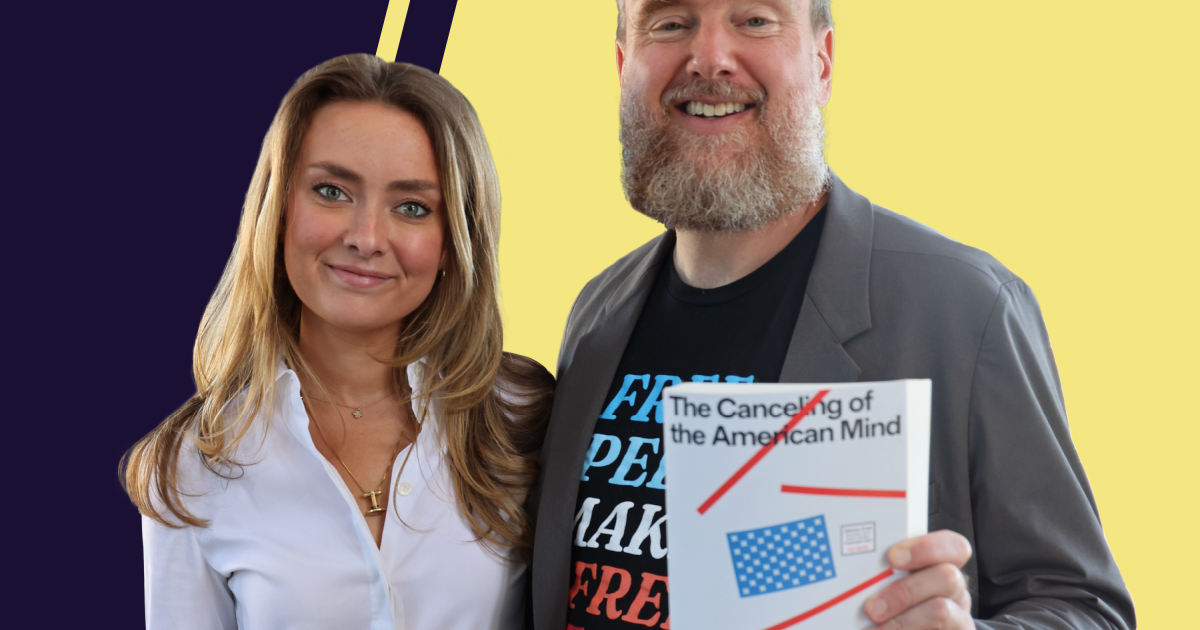
The co-authors of “The Canceling of the American Mind”
discuss its new paperback release and where cancel culture stands a
year and a half after the book’s original publication.
Enjoy listening to the podcast? Donate to FIRE today and
get exclusive content like member webinars, special episodes, and
more. If you became a FIRE Member
through a donation to FIRE at thefire.org and would like access to
Substack’s paid subscriber podcast feed, please email [email protected].
Overall, after stiff warnings this time last year about the risks of system-wide provider deficits if projected student number growth failed to materialise, OfS says that many providers are taking steps to manage their finances, by reducing costs and downgrading recruitment growth projections. It remains unlikely, says OfS, that a large provider will become insolvent in the coming financial year.
But 43 per cent of providers are forecasting a deficit for the current financial year 2024–25, and there is an overall decline in overall surplus and liquidity – albeit with the expectation of growth in the years ahead. While larger teaching-intensive and medium sized providers were more likely to report a deficit, there is also quite a lot of variation between providers in different groups – meaning that institution type is not a reliable guide to financial circumstances.
Recruitment woes
Student recruitment is the most material driver of financial pressure, specifically, a home and international student market that appears insufficient to fill the number of places institutions aspire to offer. The broad trend of institutions forecasting student number growth in hopes of offsetting rising costs – including national insurance and pension contributions – makes it unlikely that all will achieve their ambitions. There’s evidence that the sector has scaled back its expectations, with aggregate forecast growth until 2027–28 lower than previous forecasts. But OfS warns that the aggregate estimate of an increase of 26 per cent in UK entrants and 19.5 per cent in non-UK entrants between 2023–24 and 2027–28 remains too optimistic.
Questioned further on this phenomenon, OfS Director of Regulation Philippa Pickford noted that there is significant variation in forecasts between different providers, and that given the wider volatility in student recruitment it can be really quite difficult to project future numbers. The important thing, she stressed, is that providers plan for a range of possible scenarios, and have a mitigation plan in place if projections are not achieved. She added that OfS is considering whether it might give more information to providers upfront about the range of scenarios it expects to see evidence of having been considered.
Storing up trouble
While the focus of the financial sustainability is always going to be on the institutional failure scenario, arguably an equally significant concern is the accumulation of underlying structural weaknesses caused by year-on-year financial pressures. OfS identifies risks around deferral of estates maintenance, suspension of planned physical or digital infrastructure investments, and a significant increase in subcontractual (franchising) arrangements that require robust governance.
All this is manifesting in some low-key emergency finance measures such as relying on lending to support operating cashflow where there is low liquidity at points in the year, selling assets, renegotiation of terms of covenants with lenders, or seeking injections of cash from donors, benefactors or principal shareholders. Generally, and understandably, the finance lending terms available to the sector are much more limited than they have been in the past and the cost of borrowing has risen. The general increases in uncertainty are manifest in the increased work auditors are doing to be able to confirm that institutions remain a “going concern.” Such measures can address short-term financial challenges but in most cases they are not a viable long term strategy for sustainability.
OfS reiterates the message that providers are obligated to be financially sustainable while delivering a high quality student learning experience and following through on all commitments made to students – but it’s clear that frontline services are in the frame for cuts and/or that there is a limit to the ability to reduce day-to-day spending or close courses even when they are loss-making if there is likely to be an impact on institutional mission and reputation. Discussions between OfS and directors of finance point to a range of wider challenges around increased need for student support, the difficulty of recruiting and retaining staff, the increasing costs of conducting research, and shifts in the student accommodation rental market. Some even pointed to the cost of investment in AI-detection software.
The future is murky
The bigger picture points to long term (albeit unpredictable) shifts in the underlying financial model for HE. Philippa Pickford’s view is that institutions may need to shift from taking a short-term view of financial risks to a longer-term horizon, and will need to grapple with what a sustainable long term future for the institution looks like if the market looks different from what they have been used to. Deferral of capital investment, for example, may keep things going for a year or two but it can’t be put off indefinitely. There’s a hint in the report that some institutions may need to invest in greater skills, expertise and capacity to understand and navigate this complicated financial territory – and OfS is taking an increased interest in multi-year trends in financial performance, estates data and capital investment horizons in its discussions with providers.
The situation remains, however, that OfS is primarily empowered to monitor, discuss, convene and, if necessary, issue directives relating to student protection. Activity of this nature has ramped up considerably in the past year, but financial sustainability remains, at base, individual providers’ responsibility – and system-level intervention on things like changing patterns of provision, or management of the wider impact of institutional insolvency, nobody in particular’s. Government is, of course, aware of the problem but has not yet given a steer on whether its upcoming HE reform measures, expected to be published in the summer after the spending review, will grasp the nettle in delivering the support for transformation the sector hopes to see.
OfS has now said that it is talking to government to put forward the view that there should be a special administration regime for higher education. This signals that while the immediate risks of institutional closure or “disorderly market exit” are low, the pressures on a small number of institutions remain considerable. On the assumption of little or very modest changes in the funding model in the upcoming spending review, and ongoing competitive pressures, there will almost inevitably be losers.