Author: admin

  • What are professors of practice, and why are universities hiring more of them? – Campus Review

    What are professors of practice, and why are universities hiring more of them? – Campus Review

    Workforce

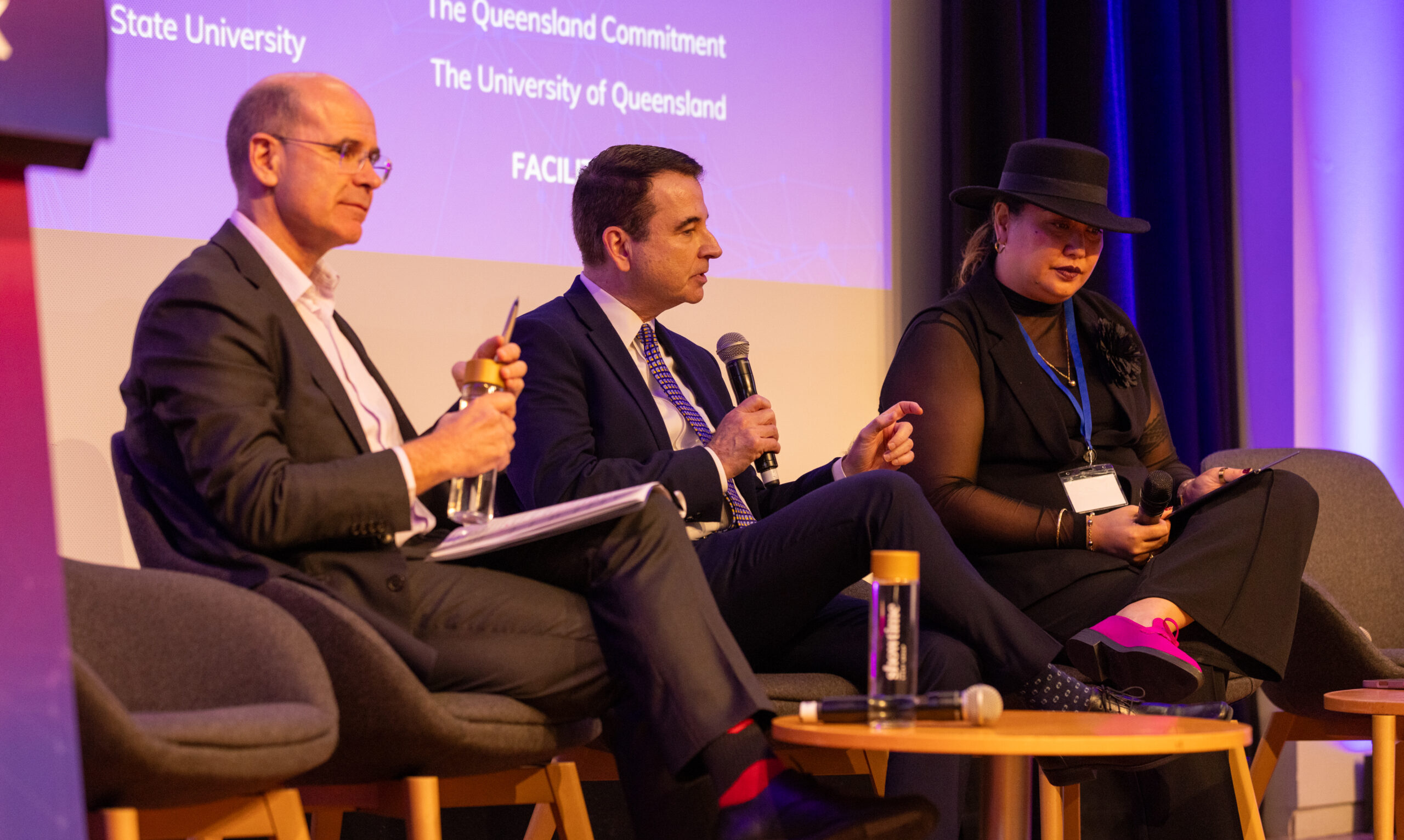
    Stuart Orr explains how the Professor of Practice role is changing in the higher education sector

    Professors of Practice have featured in Australian universities for nearly three decades, drawing on models developed earlier in Europe, the UK and the US.

    Please login below to view content or subscribe now.

    Membership Login

    Source link

  • Tim Renick and George Williams – Episode 166 – Campus Review

    Tim Renick and George Williams – Episode 166 – Campus Review

    Tim Renick from Georgia State University and George Williams from Western Sydney University are two pioneering leaders and champions of student success on the global stage.

    Please login below to view content or subscribe now.

    Membership Login

    Source link

  • The Trump Administration’s War on Children – The 74

    The Trump Administration’s War on Children – The 74

    ProPublica is a Pulitzer Prize-winning investigative newsroom. Sign up for The Big Story newsletter to receive stories like this one in your inbox.

    The clear-cutting across the federal government under President Donald Trump has been dramatic, with mass terminations, the suspension of decades-old programs and the neutering of entire agencies. But this spectacle has obscured a series of moves by the administration that could profoundly harm some of the most vulnerable people in the U.S.: children.

    Consider: The staff of a program that helps millions of poor families keep the electricity on, in part so that babies don’t die from extreme heat or cold, have all been fired. The federal office that oversees the enforcement of child support payments has been hollowed out. Head Start preschools, which teach toddlers their ABCs and feed them healthy meals, will likely be forced to shut down en masse, some as soon as May 1. And funding for investigating child sexual abuse and internet crimes against children; responding to reports of missing children; and preventing youth violence has been withdrawn indefinitely.

    The administration has laid off thousands of workers from coast to coast who had supervised education, child care, child support and child protective services systems, and it has blocked or delayed billions of dollars in funding for things like school meals and school safety.

    These stark reductions have been centered in little-known children’s services offices housed within behemoth agencies such as the Department of Health and Human Services and the Department of Justice, offices with names like the Children’s Bureau, the Office of Family Assistance and the Office of Juvenile Justice and Delinquency Prevention. In part because of their obscurity, the slashing has gone relatively overlooked.

    “Everyone’s been talking about what the Trump administration and DOGE have been doing, but no one seems to be talking about how, in a lot of ways, it’s been an assault on kids,” said Bruce Lesley, president of advocacy group First Focus on Children. He added that “the one cabinet agency that they’re fully decimating is the kid one,” referring to Trump’s goal of shuttering the Department of Education. Already, some 2,000 staffers there have lost or left their jobs.

    The impact of these cuts will be felt far beyond Washington, rippling out to thousands of state and local agencies serving children nationwide.

    The Department of Education, for instance, has rescinded as much as $3 billionin pandemic-recovery funding for schools, which would have been used for everything from tutoring services for Maryland students who’ve fallen behind to making the air safer to breathe and the water safer to drink for students in Flint, Michigan. The Department of Agriculture, meanwhile, has canceled $660 million in promised grants to farm-to-school programs, which had been providing fresh meat and produce to school cafeterias while supporting small farmers.

    At the Department of Health and Human Services, Robert F. Kennedy Jr., the agency’s secretary, has dismissed all of the staff that had distributed $1.7 billion annually in Social Services Block Grant money, which many states have long depended on to be able to run their child welfare, foster care and adoption systems, including birth family visitation, caseworker training and more. The grants also fund day care, counseling and disability services for kids. (It is unclear whether anyone remains at HHS who would know how to get all of that funding out the door or whether it will now be administered by White House appointees.)

    Head Start will be especially affected in the wake of Kennedy’s mass firings of Office of Head Start regional staff and news that the president’s draft budget proposes eliminating funding for the program altogether. That would leave one million working-class parents who rely on Head Start not only for pre-K education but also for child care, particularly in rural areas, with nowhere to send their kids during the day.

    Some local Head Start programs are already having to close their doors, and many program directors are encountering impediments to spending their current budgets. When they seek reimbursement after paying their teachers or purchasing school supplies, they’re being directed to a new “Defend the Spend” DOGE website asking them to “justify” each item, even though the spending has already been appropriated by Congress and audited by nonpartisan civil servants.

    Next on the chopping block, it appears, is Medicaid, which serves children in greater numbers than any other age group. If Republicans in Congress go through with the cuts they’ve been discussing, and Trump signs those cuts into law, kids from lower- and middle-class families across the U.S. will lose access to health care at their schools, in foster care, for their disabilities or for cancer treatment.

    The Trump administration has touted the president’s record of “protecting America’s children,” asserting in a recent post that Trump will “never stop fighting for their right to a healthy, productive upbringing.” The statement listed five examples of that commitment. Four were related to transgender issues (including making it U.S. government policy that there are only two sexes and keeping trans athletes out of women’s sports); the other was a ban on COVID-19 vaccine mandates at schools that receive federal funding.

    The White House, and multiple agencies, declined to respond to most of ProPublica’s questions. Madi Biedermann, a Department of Education spokesperson, addressed the elimination of pandemic recovery funding, saying that “COVID is over”; that the Biden administration established an “irresponsible precedent” by extending the deadline to spend these funds (and exceeding their original purpose); and that the department will consider extensions if individual projects show a clear connection between COVID and student learning.

    An HHS spokesperson, in response to ProPublica’s questions about cuts to children’s programs across that agency, sent a short statement saying that the department, guided by Trump, is restructuring with a focus on cutting wasteful bureaucracy. The offices serving children, the statement said, will be merged into a newly established “Administration for Healthy America.”

    Programs that serve kids havehistorically fared the worst when those in power are looking for ways to cut the budget. That’s in part because kids can’t vote, and they typically don’t belong to political organizations. International aid groups, another constituency devastated by Trump’s policy agenda, also can’t say that they represent many U.S. voters.

    This dynamic may be part of why cuts on the health side of the Department of Health and Human Services — layoffs of doctors, medical researchers and the like — have received more political and press attention than those on the human services side, where the Administration for Children and Families is located. That’s where you can find the Office of Child Support Services, the Office of Head Start, the Office of Child Care (which promotes minimum health and safety standards for child care programs nationally and helps states reduce the cost of child care for families), the Office of Family Assistance (which helps states administer direct aid to lower-income parents and kids), the Children’s Bureau (which oversees child protective services, foster care and adoption) and the Family and Youth Services Bureau (which aids runaway and homeless teens, among others).

    All told, these programs have seen their staffs cut from roughly 2,400 employees as of January to 1,500 now, according to a shared Google document that is being regularly updated by former HHS officials. (Neither the White House nor agency leadership have released the exact numbers of cuts.)

    Those losses have been most acutely felt in the agency’s regional offices, five out of 10 of which — covering over 20 states — have been closed by the Trump administration. They were dissolved this month without notice to their own employees or to the local providers they worked with. It was these outposts that had monitored Head Start programs to make sure that they had fences around their playgrounds, gates at the top of their stairs and enough staffing to keep an eye on even the most energetic little ones. It was also the regional staff who had helped state child support programs modernize their computer systems and navigate federal law. That allowed them, among other things, to be able to “pass through” more money to families instead of depositing it in state coffers to reimburse themselves for costs.

    And it was the regional staff who’d had the relationships with tribal officials that allowed them to routinely work together to address child support, child care and child welfare challenges faced by Native families. Together, they had worked to overcome sometimes deep distrust of the federal government among tribal leaders, who may now have no one to ask for help with their children’s programs other than political appointees in D.C.

    In the wake of the regional office cuts, local child services program directors have no idea who in the federal government to call when they have urgent concerns, many told ProPublica. “No one knows anything,” said one state child support director, asking not to be named in order to speak candidly about the administration’s actions. “We have no idea who will be auditing us.”

    “We’re trying to be reassuring to our families,” the official said, “but if the national system goes down, so does ours.”

    That national system includes the complex web of databases and technical support maintained and provided by the Office of Child Support Services at HHS, which helps states locate parents who owe child support in order to withhold part of their paychecks or otherwise obtain the money they owe, which is then sent to the parent who has custody of the child. Without this federal data and assistance, child support orders would have little way of being enforced across state lines.

    For that reason, the Trump administration is making a risky gamble by slashing staffing at the federal child support office, said Vicki Turetsky, who headed that office under the Obama administration. She worries that the layoffs create a danger of system outages that would cause child support payments to be missed or delayed. (“That’s a family’s rent,” she said.) The instability is compounded, she said, by DOGE’s recent unexplained move to access a highly confidential national child support database.

    But even if the worst doesn’t come to pass, there will still be concrete consequences for the delivery of child support to families, Turetsky said. The staff members who’ve been pushed out include those who’d helped manage complicated, outdated IT systems; without updates, these programs might over- or undershoot the amount of child support that a parent owes, misdirect the money or fail to give notice to the dad or mom about a change in the case.

    When Liz Ryan departed as administrator of the Department of Justice’s juvenile division in January, its website was flush with opportunities for state and local law enforcement as well as nonprofits to apply for federal funding for a myriad of initiatives that help children. There were funds for local police task forces that investigate child exploitation on the internet; for programs where abused children are interviewed by police and mental health professionals; and for court-appointed advocates for victimized kids. Grants were also available for mentoring programs like Big Brothers Big Sisters and the Boys & Girls Clubs of America.

    But the Trump administration removed those grant applications, which total over $400 million in a typical year. And Ryan said there still hasn’t been any communication, including in what used to be regular emails with grant recipients, many of whom she remains in touch with, about whether this congressionally approved money even still exists or whether some of it might eventually be made available again.

    A spokesperson for the Office of Justice Programs within the DOJ said the agency is reviewing programs, policies and materials and “taking action as appropriate” in accordance with Trump’s executive orders and guidance. When that review has been completed, local agencies and programs seeking grants will be notified.

    Multiple nonprofits serving exploited children declined to speak on the record to ProPublica, fearing that doing so might undermine what chance they still had of getting potential grants.

    “Look at what happened to the law firms,” one official said, adding that time is running out to fund his program’s services for victims of child abuse for the upcoming fiscal year.

    “I never anticipated that programs and services and opportunities for young people wouldn’t be funded at all by the federal government,” Ryan said, adding that local children’s organizations likely can’t go to states, whose budgets are already underwater, to make up the funding gap. “When you look at this alongside what they’re doing at HHS and the Department of Education and to Medicaid, it’s undercutting every single effort that we have to serve kids.”


    Source link

  • Sector ambivalent after Labor’s landslide election victory

    Sector ambivalent after Labor’s landslide election victory

    • Anthony Albanese has secured a second term for the ruling Labor party, beating out the Coalition to win Australia’s federal election.
    • His win has attracted mixed views from key stakeholders, with some welcoming Albanese’s return and others warning that the sector may have no more trump cards to play.
    • It follows pledges from both Labor and the Coalition to increase the price of student visas.

    The Labor party stormed its way to victory after a battle against the Peter Dutton-led Coalition, with both sides making controversial election promises to vastly increase student visa fee fees as immigration continues to dominate political discourse in Australia.

    The international education sector is still catching its breath as it takes in the result after months of hostile rhetoric from both parties – with each having promised crushing de facto caps on overseas students as tensions rise over Australia’s housing crisis and growing anger about mass immigration.

    But early reactions from sector leaders indicate mixed feelings over Albanese’s second term.

    Chief executive officer of the International Education Association of Australia (IEAA) Phil Honeywood said the result was “hopefully the best outcome” for the sector. He pointed out that the Labor government “has at least proactively proactively consulted” with stakeholders before announcing major policy changes – no matter how unwelcome they are.

    Now that Labor has been returned with a large majority, the hope is that it will be electorally confident enough to not target international students as the cause of the rent crisis
    Phil Honeywood, IEAA

    In contrast, he noted, the Coalition did not speak to any key stakeholders before unveiling its “draconian policy framework for our sector” – hardline proposals including a cap on new international student arrivals at a scant 240,000 per year and steep visa fee hikes.

    “Now that Labor has been returned with a large majority, the hope is that it will be electorally confident enough to not target international students as the cause of the rent crisis,” he remarked.

    On the other hand, Lexis English managing director Ian Pratt predicted that Labor’s election win would “give little comfort to an under-siege international education sector”.

    “An emboldened education minister Jason Clare is likely to take advantage of a newly compliant Senate to re-introduce the deeply flawed ESOS Amendment Bill – the  ‘capping legislation’ rejected in the previous term,” he said. 

    And he warned that with Labour expected to increase its majority, “industry peak bodies will have few levers to pull”. 

    “Initial focus will be on promoting small, sensible reforms, and likely to involve a push for a lower-fee ‘short-term’ student visa, catering for ELICOS and study abroad enrolments that do not generally contribute to net overseas migration figures,” he predicted.

    “There is also likely to be a push for a more transparent visa assessment process and a sensible approach to capping. Whether the returning government will feel any need to engage more positively with the sector remains to be seen.”

    The Labor party has repeatedly made attacks on the international education sector in recent months, first moving to cap new international student numbers to 270,000 under the thwarted ESOS Bill and then proposing a new Ministerial Direction tying individual caps to specific institutions after the Coalition blocked ESOS in a dramatic Senate battle.

    The party drew criticism from the sector last week after it made a last-minute pledge to increase student visa fees to AUD$2,000, up from the current AUD$1,600, drawing ire from some stakeholders for making the promise after early voting had already commenced.

    This is a developing story. Please check back for updates over the coming days…

    Source link

  • University of Michigan President Dr. Santa Ono to Exit After Brief Tenure

    University of Michigan President Dr. Santa Ono to Exit After Brief Tenure

    Dr. Santa J. OnoUniversity of Michigan President Dr. Santa J. Ono has announced his departure after a remarkably brief three-year tenure, accepting the sole finalist position for the presidency at the University of Florida.

    In a statement released Sunday, Ono confirmed he plans to transition to his new role this summer, pending approval from Florida’s Board of Governors.

    “This decision was not made lightly, given the deep bond Wendy and I have formed with this extraordinary community,” Ono said in his announcement to the Michigan community.

    Ono’s short-lived presidency began in October 2022 when he was appointed to replace Dr. Mark Schlissel, who was terminated after an investigation revealed an inappropriate relationship with a subordinate. The leadership transition occurred during a turbulent period for the university, which was simultaneously managing litigation related to the Dr. Robert Anderson sexual abuse scandal and implementing reforms to its sexual misconduct policies.

    Before joining Michigan, Ono served as president at the University of British Columbia and the University of Cincinnati, establishing himself as an experienced higher education administrator before taking the helm at Michigan. In 2015, Diverse profiled Ono.

    His brief tenure at Michigan saw several notable developments, including the unveiling of Campus Plan 2050, a comprehensive blueprint for the Ann Arbor campus’s future development; progress on the University of Michigan Center for Innovation in Detroit; and the expansion of the Go Blue Guarantee, which now offers free tuition to families earning $125,000 or less.

    However, Ono’s administration has faced significant criticism for reducing investments in Diversity, Equity and Inclusion initiatives, including the controversial closure of the Office of DEI. Pro-Palestinian student activists have also criticized the administration’s handling of campus protests, claiming the university has restricted free expression and employed excessive measures to limit demonstrations.

    In his farewell message, Ono highlighted the establishment of the Institute for Civil Discourse as one of his accomplishments, describing it as an initiative aimed at strengthening “debate and dialogue across diverse ideologies and political perspectives.”

    “These accomplishments are a testament to the collaborative spirit, creativity, and dedication of our entire university community,” Ono said. “They reflect a deep commitment to ensuring that Michigan’s best days are still ahead.”

    The University of Michigan Board of Regents has not yet announced plans for identifying Ono’s successor or appointing an interim president.

    The University of Florida cited Ono’s “proven record of academic excellence, innovation and collaborative leadership at world-class institutions” in their announcement. If approved, Ono will replace former UF President Dr. Ben Sasse, who stepped down in July 2024.

    Source link

  • Supreme Court Must Not Undermine Public Education in Religious Charter Case – The 74

    Supreme Court Must Not Undermine Public Education in Religious Charter Case – The 74


    Get stories like this delivered straight to your inbox. Sign up for The 74 Newsletter

    Last week, the Supreme Court held oral arguments in a case that could undermine public education across America. The question the court is looking to answer is whether a religious institution may run a publicly funded charter school — a move that would threaten not only the separation of church and state, but the right of every student to access free, high-quality learning.

    In 2023, Oklahoma’s Statewide Virtual Charter School Board approved St. Isidore of Seville Catholic Virtual School, an action that would make it the nation’s first-ever religious charter school. It would be governed by Catholic religious doctrine in its syllabus, operations and employment practices. It would use taxpayer dollars to pay for religious instruction. And it could turn away students and staff if their faith or identity conflict with Catholic beliefs. 

    Here’s the issue: Charter schools were created to be public schools. They are open to all students, from every background, tradition and faith community. They are publicly funded and tuition-free. And they are secular. 

    That’s not an arbitrary distinction – it’s a constitutional one, grounded in the law and embedded in charter schools’ very design. The First Amendment’s Establishment Clause bars the government from promoting or endorsing any religion through public spaces or institutions. This foundational rule has ensured that students of all backgrounds can access public schools. It does not stifle religious expression — the Constitution fully protects this freedom, and religious education is available in other venues. Personally, I was, in fact, educated at Jesuit Catholic schools for my entire academic career. 

    Parochial education has long been an accepted and important part of the education ecosystem, serving a variety of students and often filling an important need. Religiously affiliated schools have a long history of educating and caring for children who are new to this country and underserved, and supporting families who are overlooked. But promoting the exclusive teachings of a specific religion with public funds in a public school violates a clear constitutional principle. 

    The issue isn’t only a legal matter; it’s about the character of public education itself. Muddying the boundary between public and religious institutions would undercut a fundamental commitment made by the nation’s public charter schools: that they are accessible to every student. It would undermine legal protections that keep public services available to the public. 

    Rather than creating more opportunities for America’s students, it would constrict opportunities for a high-quality education, especially in states that are hostile toward charters or alternative public school models. Legislative bodies could seek to eliminate funding for all unique school types if the court decision forced them to fund religious schools operating with public dollars. This would curtail or dismantle strong independent schools, 30-year-old public charter schools and schools with unique programs designed for special populations.

    As executive director of the DC Charter School Alliance, and a long-time public charter school advocate, I’ve seen the importance of public charter schools firsthand. Here in the District of Columbia, charter schools serve nearly half of the public school students in the city. Outstanding educators from all walks of life teach a wide range of subjects with enthusiasm and expertise to prepare young people for success. Our students bring to the classroom an incredible range of experiences, including faith traditions. And every student, family and faculty member is welcome. D.C.’s charter schools reflect a core American value: the promise of a high-quality public education for all. 

    The justices of the Supreme Court face a clear and critical choice: They can bolster that promise, or they can tear it down. If the court allows a religious school to operate with public funds, there is no doubt that it will open the floodgates to other proposals across the country. Taxpayers could be forced to foot the bill for countless new and converted schools, draining resources from an already financially strapped education system. True public charter schools — the ones committed to high standards, positive results and opportunity for all — could bear the cost. And the students who rely on them could suffer. 

    Public education is one of America’s most vital institutions. It offers all children, no matter their background or beliefs, access to free, high-quality learning. Charter schools play an essential role in making that promise real. But allowing a religious school to operate with public funds turns public education into something much more restrictive, dismantling its very foundation.

    The court must reaffirm this indisputable truth: Public schools should remain public — and open to all. 


    Get stories like these delivered straight to your inbox. Sign up for The 74 Newsletter

    Source link

  • Legacy and Purpose: Congresswoman Jasmine Crockett Calls Tougaloo Graduates to Action

    Legacy and Purpose: Congresswoman Jasmine Crockett Calls Tougaloo Graduates to Action

    –JACKSON, Mississippi

    Texas Congresswoman Jasmine CrockettIn a powerful address that wove together civil rights history with present-day challenges, U.S. Representative Jasmine Crockett (D-Texas) delivered an impassioned commencement speech at Tougaloo College’s graduation ceremony on Sunday, urging graduates to embrace their purpose in continuing the fight for progress.

    Standing on the historic grounds of the private Mississippi HBCU—once a sanctuary and launch pad for the Civil Rights Movement—the Congresswoman reflected on the paradoxical nature of the moment: that in 2025, her very presence as a speaker remained controversial.

    “As I stand here in this safe space, still only one of the few places that an institution can invite me to speak… to think about the fact that people have to be fearful of having a sitting member of Congress come and address their graduates tells us that we still got a lot of work to do,” she told the graduates.

    Drawing parallels between past and present struggles, she reminded the audience that Tougaloo was one of a few places in Mississippi where Dr. Martin Luther King Jr. could speak during the Civil Rights Movement. Now, decades later, she noted the irony of similar limitations placed on Black voices in positions of power.

    “The president of the United States having a temper tantrum that strips funding because I’m Black and I’m proud should not be something that we are dealing with in 2025,” she stated, her voice rising with conviction.

    The Congresswoman, who acknowledged working multiple jobs during her own college years, spoke candidly about personal struggles and the fatigue that comes with fighting systemic barriers. Invoking the refrain from the gospel song “I Don’t Feel No Ways Tired,” she encouraged graduates to persevere despite exhaustion.

    “I just can’t give up now. I’ve come too far from where I started from,” she recited, asking graduates to reflect on their own journeys through college—the multiple jobs, the stepping away and stepping back in—all while excelling despite the challenges.

    Her message anchored in both acknowledgment of weariness and the necessity of continued struggle, themes particularly relevant at an institution with Tougaloo’s civil rights legacy. The college was home to the “Tougaloo Nine,” students who organized sit-ins at segregated libraries, and alumni like Anne Moody and Memphis Norman, who participated in the historic Woolworth’s lunch counter sit-in in 1963.

    “Sitting in these very classrooms is just as much of a protest as Anne and Memphis pulling up to Woolworths in 1963,” she said, emphasizing how education remains an act of resistance.

    The Congresswoman warned graduates about attempts to erase this history, not just from textbooks but through policies targeting diversity initiatives and institutions serving Black communities. “Jim Crow never died,” she declared. “He just lied in wait.”

    She shared personal experiences of being labeled “ghetto” and “unqualified” despite her impressive credentials—modern versions of racial epithets—connecting these attacks to historical patterns of undermining Black achievement and institutions.

    Looking to the future, she issued a direct challenge to the graduates.

    “If you are waiting on somebody to come and save you, they are not coming,” she warned. “You are the person that you’ve been waiting on.”

    Reminding them that every significant social justice movement has been led by young people, she noted that she is now older than Medgar Evers, Dr. Martin Luther King Jr., and Malcolm X were when they were assassinated.

    “Your moment is not in the future. Your moment is now,” she urged. “This country is relying on each and every one of you to walk into your purpose and to walk in greatness with your head held high.”

    The Congresswoman’s speech resonated deeply with the graduates and assembled families at Tougaloo, an institution that has persisted in its educational mission despite historical and ongoing challenges.

    “She was dynamic and passionate,” said Rose Lucas, whose niece was among the more than 120 undergraduates to receive their diploma. “At a time when so many of our politicians are afraid to speak out against the injustices in Washington, I am encouraged by the Congresswoman’s passion and commitment.” 

    As Crockett concluded with a call to action, she left the new alumni with a poignant message about belonging. 

    “There are people that are going to tell you that there is not a table in which there is a seat for you, but I am here to remind you of Montgomery and those folding chairs.”

    Source link

  • HHS Condemns Gender-Affirming Care in Report That Finds ‘Sparse’ Evidence of Harm – The 74

    HHS Condemns Gender-Affirming Care in Report That Finds ‘Sparse’ Evidence of Harm – The 74


    Get stories like this delivered straight to your inbox. Sign up for The 74 Newsletter

    This story was originally reported by Orion Rummler of The 19th. Meet Orion and read more of his reporting on gender, politics and policy.

    On Thursday, the Department of Health and Human Services (HHS) published a 400-page analysis of research on gender-affirming care for transgender youth, as directed by President Donald Trump. The agency used the release of the report to declare that available science does not support providing gender-affirming care to trans youth. LGBTQ+ advocacy groups worry the report will be used to further restrict gender-affirming care and to change medical guidelines in ways that harm trans youth.

    The president mandated the report in an executive order condemning the medical treatment — without evidence — as a form of mutilation, amid a broader push by the administration to exclude trans people from public life. Trump’s order asked the health agency to review the “best practices for promoting the health of children who assert gender dysphoria,” while pressuring youth clinics to halt treatment or lose federal funding.

    Now, the HHS has produced that report. The agency combed through research on the outcomes of puberty blockers, hormone replacement therapy, social transition, psychotherapy, and the rare cases of surgeries on adolescents and young adults diagnosed with gender dysphoria. 

    Gender dysphoria, the reason that most trans people undergo gender-affirming care, is a strong and persistent distress felt when one’s body is out of sync with their gender identity. Without treatment, gender dysphoria can lead to severe negative impacts in day-to-day life. 

    The agency states in its executive summary of the report that the document is not meant to provide clinical practice guidelines or issue legislative or policy recommendations. However, the report does imply that health care providers should refuse to offer gender-affirming care to adolescents and young adults on the basis that such care comes with the potential for risk — despite little evidence for that risk actually being found in the report. 

    “The evidence for benefit of pediatric medical transition is very uncertain, while the evidence for harm is less uncertain,” the executive summary states. “When medical interventions pose unnecessary, disproportionate risks of harm, healthcare providers should refuse to offer them even when they are preferred, requested, or demanded by patients.”

    In its research review, the HHS determined that evidence measuring the effects of gender-affirming care on psychological outcomes, quality of life, regret and long-term health is of “very low” quality. This conclusion ignores decades of research, as well as a recent survey of more than 90,000 transgender people in the United States that found an overwhelming majority report more life satisfaction after having transitioned. Access to gender-affirming care has been linked to lower odds of suicidality and depression in trans youth, while gender-affirming surgeries have been found to lower psychological distress for adults.

    Even when analyzing research that the administration deemed low-bias, the HHS found “sparse” to no evidence of harm from gender-affirming care. What’s more, the report frequently found evidence demonstrating the benefits of gender-affirming care — though it ultimately downplays those findings as not significant. 

    Available research on puberty blockers found high satisfaction ratings and low rates of regret. A systematic review of hormone replacement therapy described improved gender dysphoria and body satisfaction. Another found that hormone treatment leads to improved mental health. Two before-and-after studies reported reduced treatment needs or lower levels of suicidality and self-harm after hormone treatment. When measuring safety outcomes of hormone treatment, side effects did not have a major impact on treatment and complications were limited. 

    Despite these findings, the Department of Health and Human Services advertised the report in a Thursday news release as one that “highlights a growing body of evidence pointing to significant risks” of gender-affirming care. At the White House briefing room Thursday, deputy chief of staff for policy Stephen Miller touted the new report and attributed the idea of being transgender as part of a “cancerous communist woke culture” that is “destroying this country.” 

    There are side effects to many of the medications that transgender people — and cisgender people — take to receive gender-affirming care, as is the case with most medical treatments. These side effects, like the risk of decreased bone density when taking puberty blockers, are closely monitored and treated by doctors and communicated to patients.

    LGBTQ+ advocacy organizations denounced the report as a political attack on transgender youth. Multiple groups said that the report’s endorsement of psychotherapy as a “noninvasive alternative” to puberty blockers and hormone treatment amounts to an endorsement of conversion therapy — a practice wherein mental health professionals try to change a youth’s sexual orientation or gender identity.

    “It is already clear that this report is a willful distortion of the evidence intended to stoke fear about a field of safe and effective medicine that has existed for decades, in order to justify dangerous practices which amount to conversion therapy,” said Sinead Murano Kinney, health policy analyst at Advocates for Trans Equality. 

    The Human Rights Campaign, the country’s largest LGBTQ+ rights organization, accused the HHS of producing a report that is attempting to lay the groundwork to replace medical care for trans and nonbinary people with conversion therapy. 

    “Trans people are who we are. We’re born this way. And we deserve to live our best lives and have a fair shot and equal opportunity at living a good life,” said Jay Brown, chief of staff at the Human Rights Campaign. “This report … lays the groundwork to push parents and doctors aside and allow politicians to subject our kids to the debunked practice of conversion therapy.” 

    No authors or contributors are named in the report or in its executive summary. The agency says these names are being initially withheld to “maintain the integrity of this process,” and states that chapters of the document were subject to peer review.


    Get stories like these delivered straight to your inbox. Sign up for The 74 Newsletter

    Source link

  • Trump’s FY26 budget plan slashes Education Department programs

    Trump’s FY26 budget plan slashes Education Department programs

    This audio is auto-generated. Please let us know if you have feedback.

    President Donald Trump on Friday proposed wide-ranging cuts to federal higher education spending in his fiscal 2026 budget request, calling to eliminate some grant programs altogether and for states to take over others like Federal Work-Study. 

    The budget request offers a broad look at Trump’s priorities, which include shaving 15.3% off the U.S. Department of Education’s budget, a move in line with his broader plan to shutter the agency. Across the federal government, Trump’s request would eliminate some $163 billion in nondefense domestic spending, including the dramatic cuts to education programs.

    U.S. Education Secretary Linda McMahon said in a statement Friday that the budget reflects “funding levels for an agency that is responsibly winding down, shifting some responsibilities to the states, and thoughtfully preparing a plan to delegate other critical functions to more appropriate entities.” 

    Presidential budget proposals are akin to executive wishlists and are never enacted as introduced. And Trump’s budget request for the 2026 fiscal year, which begins Oct. 1, faces key obstacles before it could be approved. Even though Republicans control both the House and Senate, at least one GOP lawmaker has already objected to some of Trump’s proposed cuts.

    But other party leaders signaled a willingness to embrace Trump’s proposals. 

    The American people sent Republicans to Washington to lower costs and rein in wasteful government spending,” Tim Walberg, chair of the House Committee on Education and Workforce, said in a Friday statement. “The budget proposal President Trump released today not only gives us a blueprint but shows us it is possible to deliver on this promise.” 

    Student aid takes a blow

    The budget takes aim at Federal Work-Study, which provides part-time jobs to students who need help paying for college. Under the program, the federal government covers up to 75% of students’ wages. 

    Trump’s proposal calls for a $980 million reduction in funding for the program, which was appropriated $1.2 billion in fiscal year 2024. 

    In his budget plan, the president called for Federal Work-Study to be run by the states and the colleges “that financially benefit from it.” 

    Reform of this poorly targeted program should redistribute remaining funding to institutions that serve the most low-income students and provide a wage subsidy to gain career-oriented opportunities to improve long-term employment outcomes of students,” it says. 

    Trump’s proposal would also eliminate funding for Supplemental Educational Opportunity Grants, which assist undergraduate students who have “exceptional financial need.” The program was allocated $910 million in fiscal 2024 — all of which would be cut under Trump’s budget. 

    The budget document accuses the grants of contributing “to rising college costs” that colleges have used to pay for a “radical leftist ideology.” Colleges that receive these grants pass the money onto students, and the institutions must contribute 25% of their own money for those awards. 

    Two other programs are on the chopping block: TRIO, which provides support for middle school through college students from disadvantaged backgrounds, and Gear Up, which helps low-income students prepare for postsecondary education. Trump’s budget called these programs a “relic of the past when financial incentives were needed to motivate” colleges to increase access to low-income students. 

    Today, the pendulum has swung and access to college is not the obstacle it was for students of limited means,” the budget document claims, saying higher education institutions should use their own resources to recruit students. 

    Together, the programs received nearly $1.6 billion in fiscal 2024, all of which would be cut under Trump’s plan. 

    The budget documents released Friday did not address funding for Pell Grants, the largest student aid program.

    Source link

  • Harvard faculty group pledges 10% of salary to help university fight Trump

    Harvard faculty group pledges 10% of salary to help university fight Trump

    This audio is auto-generated. Please let us know if you have feedback.

     Dive Brief:

    • Dozens of faculty members at Harvard University have signed on to contribute 10% of their salaries, for up to a year, to the institution’s legal fight against the Trump administration
    • As of Friday afternoon, 88 senior faculty had signed the agreement, according to organizers. Of those, 43 have done so publicly.
    • The faculty pledge came just before President Donald Trump said his administration will pull Harvard’s tax-exempt status, adding “It’s what they deserve!” in a Friday social media post.

    Dive Insight:

    This week’s developments are only the latest in the ongoing battle between Harvard and Trump.

    In the president’s numerous attacks on higher education, Harvard in particular has borne intense scrutiny from the Trump administration. That aggression escalated significantly in mid-April when the Ivy League institution rebuked demands from federal agencies to interfere in academic matters, becoming the first well-known college to respond so forcefully.

    Since then, the administration has slashed Harvard’s federal funding by almost $2.3 billion, threatened billions of dollars more, opened Title VI investigations into it and its law review, and threatened its ability to enroll international students.

    Harvard is now suing the Trump administration over what it calls the government’s efforts to withhold federal funding “as leverage to gain control of academic decisionmaking.”

    Though Harvard is one of the best-resourced institutions in the country, the legal battle is likely to be arduous and expensive. This week’s faculty salary pledge described the university as facing “severe financial damage for its defense of academic freedom.” 

    That damage could come in the form of an unprecedented tax bill.

    In previous social media posts, Trump said Harvard “is a JOKE, teaches Hate and Stupidity, and should no longer receive Federal Funds” and should “be Taxed as a Political Entity.”

    Trump, as president, does not have unilateral legal authority to pull Harvard’s tax exemption, a status bestowed by the Internal Revenue Service. And neither the president nor employees of the executive office can legally direct the IRS to audit or investigate an institution. Federal law requires IRS employees who receive such directions to report them to the agency’s oversight office.

    Despite this, CNN reported in April that the IRS was making arrangements to revoke Harvard’s status, just after Trump posted on the matter.

    Such a change would significantly escalate Trump’s financial battle against Harvard that prompted the faculty pledge. The 11 faculty members leading the salary pledge said they intend for the signatories to hold a vote.

    “If the majority agrees that the university is making a good faith effort to use its own resources in support of staff, student, and academic programs, faculty will proceed with their donation,” their letter said.

    The pledge also acknowledged that not all faculty at Harvard are in a position to pledge 10% — or any — of their income and said the salary contribution plan is “only one of the various ways in which we can express solidarity around the university.”

    “We also know that many faculty are making important contributions to the Harvard community during this difficult time in other ways, by helping students and staff directly,” it said. 

    Source link