Author: admin

  • Education research takes another hit in latest DOGE attack

    Education research takes another hit in latest DOGE attack

    Education research has a big target on its back.

    Of the more than 1,000 National Science Foundation grants killed last month by Elon Musk’s Department of Government Efficiency, some 40 percent were inside its education division. These grants to further STEM education research accounted for a little more than half of the $616 million NSF committed for projects canceled by DOGE, according to Dan Garisto, a freelance journalist reporting for Nature, a peer-reviewed scientific journal that also covers science news.

    The STEM education division gives grants to researchers at universities and other organizations who study how to improve the teaching of math and science, with the goal of expanding the number of future scientists who will fuel the U.S. economy. Many of the studies are focused on boosting the participation of women or Black and Hispanic students. The division had a roughly $1.2 billion budget out of NSF’s total annual budget of $9 billion

    Related: Our free weekly newsletter alerts you to what research says about schools and classrooms.

    Neither the NSF nor the Trump administration has provided a list of the canceled grants. Garisto told me that he obtained a list from an informal group of NSF employees who cobbled it together themselves. That list was subsequently posted on Grant Watch, a new project to track the Trump administration’s termination of grants at scientific research agencies. Garisto has been working with outside researchers at Grant Watch and elsewhere to document the research dollars that are affected and analyze the list for patterns. 

    “For NSF, we see that the STEM education directorate has been absolutely pummeled,” Noam Ross, a computational disease ecologist and one of the Grant Watch researchers, posted on Bluesky

    Terminated grants fall heavily upon STEM Education 

    Graphic by Dan Garisto, a freelance journalist working for Nature

    The steep cuts to NSF education research follow massive blows in February and March at the Department of Education, where almost 90 research and data collection projects were canceled along with the elimination of Regional Education Laboratories and the firing of almost 90 percent of the employees in the research and data division, known as the Institute of Education Sciences.

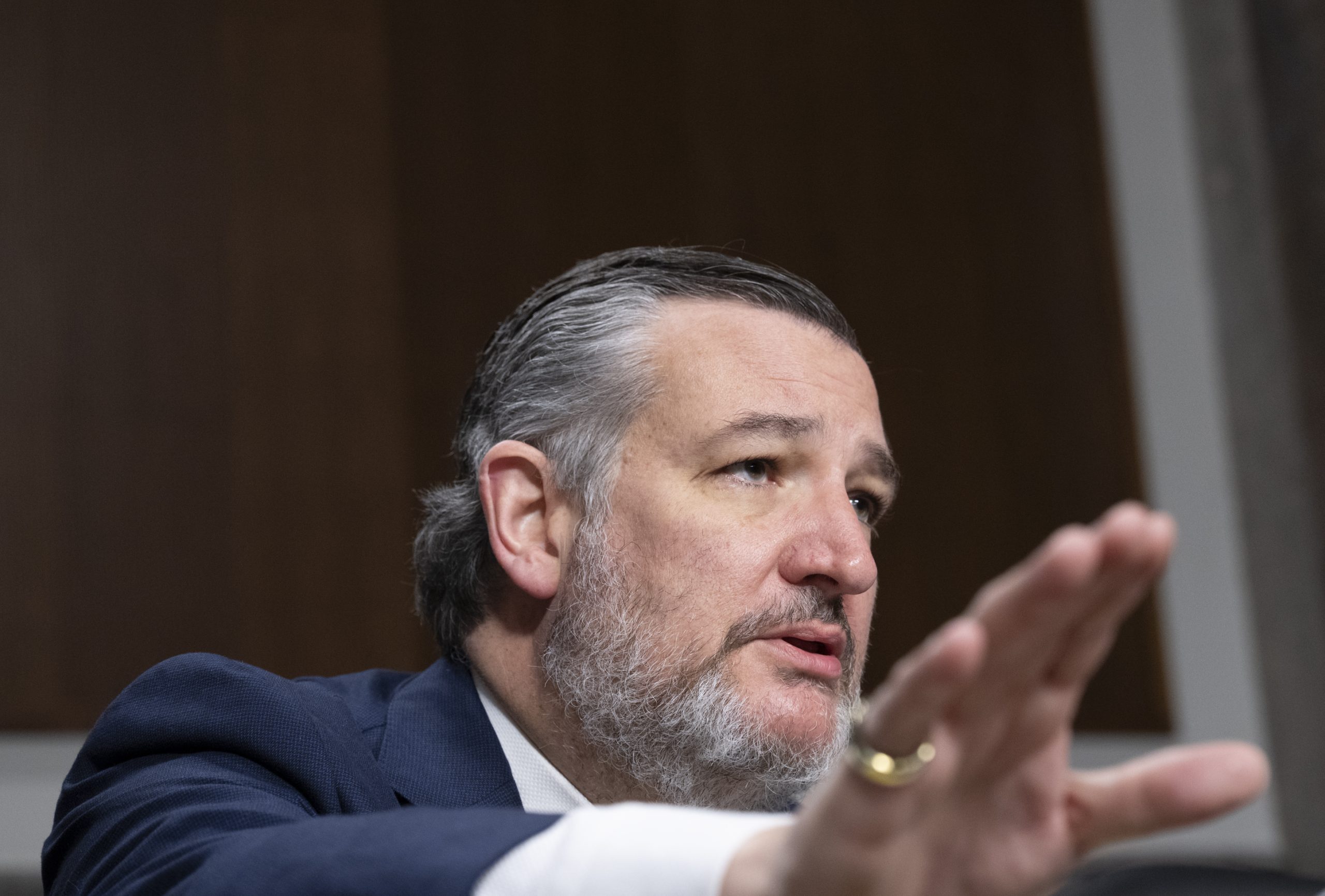
    Many, but not all, of the canceled research projects at NSF were also in a database of 3,400 research grants compiled by Sen. Ted Cruz, a Texas Republican. Cruz characterized them as “questionable projects that promoted Diversity, Equity, and Inclusion (DEI) or advanced neo-Marxist class warfare propaganda.”  

    Ross at Grant Watch analyzed the titles and abstracts or summaries of the terminated projects and discovered that “Black” was the most frequent word among them. Other common words were “climate,” “student,” “network,” “justice,” “identity,” “teacher,” and “undergraduate.”

    Frequent words in the titles and summaries of terminated NSF research projects

    Word cloud of the most frequent terms from the titles and abstracts of terminated grants, with word size proportional to frequency. Purple is the most frequent, followed by orange and green. Source: Noam Ross, Grant Watch

    At least two of the terminated research studies focused on improving artificial intelligence education, which President Donald Trump promised to promote in an April 23 executive order,“Advancing Artificial Intelligence Education for American Youth.” 

    “There is something especially offensive about this EO from April 23 about the need for AI education… Given the termination of my grant on exactly this topic on April 26,” said Danaé Metaxa in a post on Bluesky that has since been deleted. Metaxa, an assistant professor of computer and information science at the University of Pennsylvania, was developing a curriculum on how to teach AI digital literacy skills by having students build and audit generative AI models. 

    Related: Chaos and confusion as the statistics arm of the Education Department is reduced to a skeletal staff of 3

    Another canceled grant involved college students creating educational content about AI for social media to see if that content would improve AI literacy and the ability to detect misinformation. The lead researcher, Casey Fiesler, an associate professor of information science at the University of Colorado Boulder, was almost midway through her two-year grant of less than $270,000. “There is not a DEI aspect of this work,” said Fiesler. “My best guess is that the reason it was flagged was the word ‘misinformation.’”

    Confusion surrounded the cuts. Bob Russell, a former NSF project officer who retired in 2024, said some NSF project officers were initially unaware that the grants they oversee had been canceled. Instead, university officials who oversee research were told, and those officials notified researchers at their institutions. Researchers then contacted their project officers. One researcher told me that the termination notice states that researchers may not appeal the decision, an administrative process that is ordinarily available to researchers who feel that NSF has made an unfair or incorrect decision. 

    Related: DOGE’s death blow to education studies

    Some of the affected researchers were attending the annual meeting of the American Educational Research Association in Denver on April 26 when more than 600 grants were cut. Some scholars found out by text that their studies had been terminated. Normally festive evening receptions were grim. “It was like a wake,” said one researcher. 

    The Trump administration wants to slash NSF’s budget and headcount in half, according to Russell. Many researchers expect more cuts ahead.

    Contact staff writer Jill Barshay at 212-678-3595, jillbarshay.35 on Signal, or [email protected].

    This story about NSF education research cuts was written by Jill Barshay and produced by The Hechinger Report, a nonprofit, independent news organization focused on inequality and innovation in education. Sign up for Proof Points and other Hechinger newsletters.

    The Hechinger Report provides in-depth, fact-based, unbiased reporting on education that is free to all readers. But that doesn’t mean it’s free to produce. Our work keeps educators and the public informed about pressing issues at schools and on campuses throughout the country. We tell the whole story, even when the details are inconvenient. Help us keep doing that.

    Join us today.

    Source link

  • Arizona Autism Charter School Founder Tapped as DOE Special Education Chief – The 74

    Arizona Autism Charter School Founder Tapped as DOE Special Education Chief – The 74

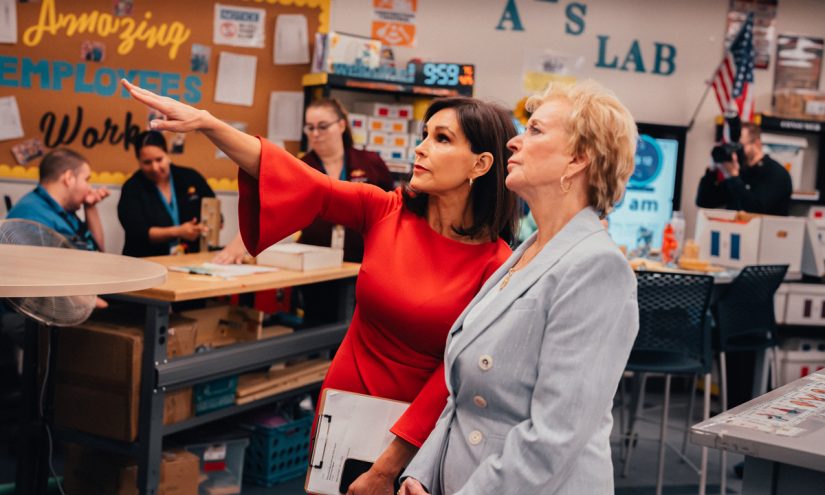
    The founder and executive director of a network of Arizona charter schools serving autistic children has been named the U.S. Education Department’s deputy assistant secretary for special education and rehabilitative services. Education Secretary Linda McMahon made the announcement while touring the Arizona Autism Charter Schools’ Phoenix location.

    Diana Diaz-Harrison, whose son is autistic, said that in her new job she hopes to continue her efforts to help others launch autism charter schools throughout the country. Her schools, she said in remarks captured on video by AZ Central, are a testament to what happens “when parents like me are empowered to create solutions.”

    “My vision is to expand school choice for special needs families — whether through charter schools, private options, voucher programs, or other parent-empowered models,” she said in a statement to The 74. .

    The five-school network uses a controversial intervention that attempts to train children to appear and behave like their neurotypical peers. Created by the researcher behind LGBTQ conversion therapy, applied behavior analysis, or ABA, is widely depicted as the gold standard despite scant independent evidence of its effectiveness and mounting research documenting its harms. 

    Diaz-Harrison opened the network’s first school in 2014 as a free, public alternative to private schools for autistic children, which are popular in Arizona but typically charge tens of thousands of dollars a year in tuition. Her Arizona charter schools are a 501(c)3 nonprofit financed by state and federal per-pupil funds. ABA is specifically endorsed by Arizona education officials as a strategy to use with autistic students.

    In the time since those charters opened, ABA has grown to be a national, multi-billion-dollar industry, with for-profit companies tapping public and private insurance to pay for as much as 40 hours a week of one-on-one therapy. The intervention uses repeated, rapid-fire commands that bring rewards and punishments to change a child’s behavior and communication style.

    A 74 investigation last year showed that most data supporting ABA’s effectiveness is drawn from research conducted by industry practitioners. Independent analyses, including a years-long U.S. Department of Defense review, found little evidence the intervention works. Former patients who underwent the therapy as children reported severe, lasting mental health effects, including PTSD.

    Diaz-Harrison told The 74 the therapy is both valuable and sought-after. “For the autism community, specifically, many families seek schools that integrate positive behavioral strategies,” she says. “The evidence supporting behavioral therapy is extensive and well-established. It has been endorsed by the U.S. surgeon general and the American Academy of Pediatrics as an effective, research-backed approach for individuals with autism.”

    During her visit, McMahon told students and staff she was eager to tell President Donald Trump about the schools. “He doesn’t believe any child, whether they have neuro-difficulties or any other problems, should be trapped in a school and not have the facilities that they need,” she said. 

    Since Trump’s second inauguration, he has issued numerous orders that have alarmed disability advocates and the autistic community. Though both edicts contradict longstanding federal laws, in March he ordered the closure of the Education Department and said responsibility for special education will be transferred to the U.S. Department of Health and Human Services.

    About half of the Education Department’s staff has been fired, including most of the people responsible for investigating what had been a backlog of some 6,000 disability discrimination complaints. Though it’s unclear whether Trump and McMahon may legally disregard special education funding laws and allow states to spend federal dollars as they see fit, both have said they favor giving local officials as much decision-making power as possible.

    Meanwhile, HHS Secretary Robert F. Kennedy Jr. has stoked fear in the autistic community by announcing a new effort to tie autism to vaccines or other “environmental toxins” — a hypothesis discredited by dozens of studies. The man he appointed to head the study has been cited for practicing medicine without a license and prescribing dangerous drugs to autistic children. 

    Last week, the new head of the National Institutes of Health announced that an unprecedented compilation of medical, pharmaceutical and insurance records would be used to create an autism “disease registry” — a kind of list historically used to sterilize, institutionalize and even “euthanize” autistic people. HHS later walked back the statement, saying the database under construction would have privacy guardrails.

    Among other responsibilities, the offices Diaz-Harrison will head identify strategies for improving instruction for children with disabilities and ensure that as they grow up, they are able to be as independent as possible. The disability community has raised concerns that the administration is retreating from these goals.   

    Advocates have said they fear the changes pave the way for a return to the practice of separating students with disabilities in dedicated special ed classrooms rather than having them attend class with typically developing peers. The Individuals with Disabilities in Education Act guarantees special education students the right to instruction in the “least restrictive environment” possible.          

    Families’ preferences vary widely, with some parents of autistic children refusing any form of behavior therapy, while others want their kids in settings with children who share their needs. Many insist on grade-level instruction in general education classrooms 

    Diaz-Harrison has a master’s degree in education and worked as a bilingual teacher in California early in her career. From the late 1990s until she began supporting her son full time, she worked as a public relations strategist and a reporter and anchor for the Spanish-language broadcast network Univision. 

    In 2014, frustrated with her son’s school options, she organized a group of parents and ABA providers who applied for permission to open what was then a single K-5 school serving 90 children. The network now has about 1,000 students in all grades and features an online program. 

    At the end of the 2023-24 academic year, 9% of the network’s students scored proficient or highly proficient on Arizona’s annual reading exam, while 4% passed the math assessments.      

    In December 2022, the network won a $1 million Yass Prize, an award created by Jeff and Janine Yass. The billionaire investors have a long track record of donating to Republican political candidates and organizations that support school choice. 

    One of the award’s creators, Jeanne Allen, is CEO of the Center for Education Reform. The center nominated Diaz-Harrison for the federal role. 

    Yass award winners were featured at the 2023 meeting of the American Legislative Exchange Council, or ALEC, a conservative forum where state lawmakers are given model bills on education and other policies to introduce in their respective statehouses. 

    Diaz-Harrison has partnered with a Florida autism school to create a national charter school accelerator program to help people start schools like hers throughout the country. She told The 74 the effort has so far supported teams of hopeful school founders from Louisiana, Texas, Florida, Alabama and Nevada. 

    Parents of young autistic children and autistic adults often disagree about ABA. Told by their pediatrician or the person who diagnosed their child as autistic that they have a narrow window in which to intervene, families fight to get the therapy. Adults who have experienced it, however, report lasting trauma and have lobbied for research — much of it now at risk of being defunded by Kennedy — into more effective and humane alternatives.


    Get stories like these delivered straight to your inbox. Sign up for The 74 Newsletter

    Source link

  • Department of Education Relaxes Accreditation Change Rules, Raising Quality Concerns

    Department of Education Relaxes Accreditation Change Rules, Raising Quality Concerns


    The U.S. Department of Education announced Thursday it will eliminate the rigorous review process previously required for colleges and universities seeking to change accreditors, a move critics warn could undermine educational quality standards.

    The announcement, which implements parts of President Trump’s Executive Order on “Reforming Accreditation to Strengthen Higher Education,” simultaneously lifts a moratorium on reviewing applications for new accrediting bodies.

    In a statement, Education Secretary Linda McMahon framed the policy change as promoting competition.

    “We must foster a competitive marketplace both amongst accreditors and colleges and universities in order to lower college costs and refocus postsecondary education on improving academic and workforce outcomes for students and families.” she said.

    However, higher education policy experts expressed concerns that the streamlined process could enable institutions to evade accountability by shopping for less stringent accreditors.

    The Department’s new Dear Colleague Letter revokes guidance issued by the Biden administration in 2022 that had established a pre-clearance process for institutional accreditor changes. The new guidance explicitly allows institutions to change accreditors for reasons including finding one that “better aligns with a religious mission,” accommodating shifts in academic programs, complying with state law requirements, or avoiding accreditors that impose “discriminatory Diversity, Equity, and Inclusion (DEI) practices and principles.”

    Education advocates worry the policy shift prioritizes institutional freedom over student protections.

    “When we make it easier for colleges to switch accreditors without thorough vetting, we risk creating a race to the bottom where standards are compromised,” said one higher education researcher. “The students who will suffer most are often those from historically underrepresented groups who depend on accreditation as an assurance of quality.”

    The Department characterized its previous approach as overreaching, stating in the new guidance.

    “It is not the Department’s prerogative to infer any other meanings from the basic requirements or contrive a multi-step investigation. This guidance re-establishes a simple process that will remove unnecessary requirements and barriers to institutional innovation.”

    The policy change also rescinds the October 2024 pause on reviewing applications for new accrediting agencies. At least one prospective accreditor that had its application temporarily paused has now been notified that its review will proceed.

    Critics contend that enabling more accreditors with potentially varying standards could fragment the higher education quality assurance landscape in ways that confuse students and employers.

    “The fundamental question is whether reducing oversight will actually improve educational outcomes or simply make it easier for underperforming institutions to avoid consequences,” said a public university president, who asked to remain anonymous, for fear of retaliation. “History suggests the latter is more likely.”

    The Department has not announced specific metrics to evaluate whether the policy changes lead to improved outcomes for students or institutions.

    Source link

  • Brendan Carr’s Bizarro World FCC

    Brendan Carr’s Bizarro World FCC

    This essay was originally published by The Dispatch on April 30, 2025.


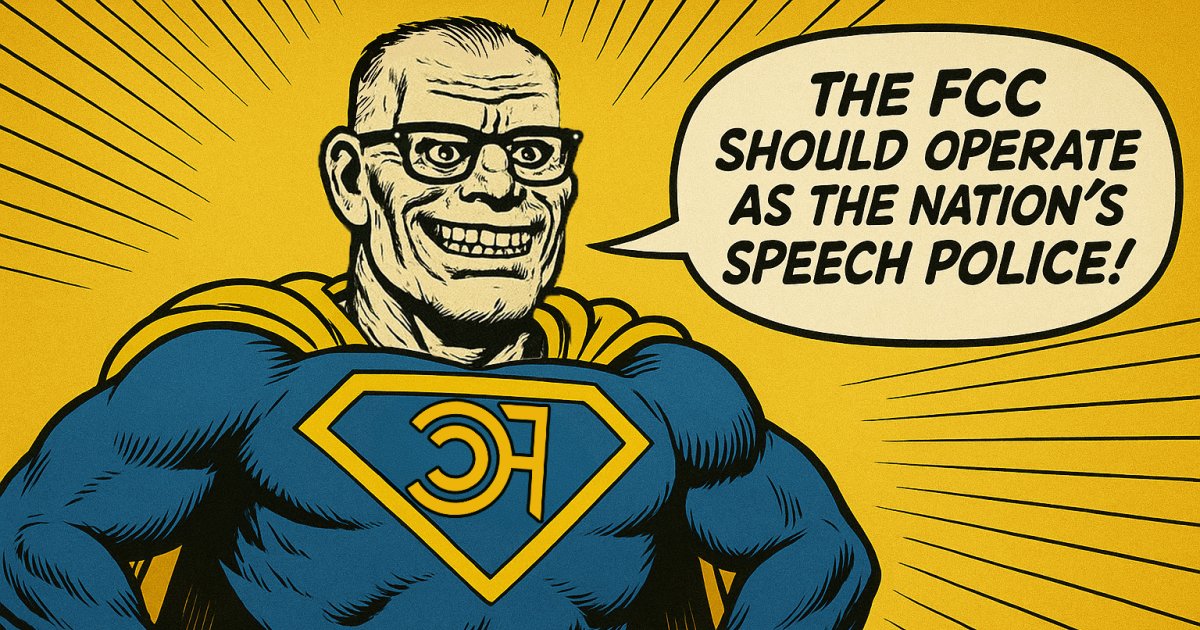
    Fans of the old Superman comics no doubt remember Bizarro World, the cuboid planet where everything is backward. Denizens of this parallel world are distorted replicas of their Earth-based counterparts, and they live by a Bizarro Code which dictates that being good or doing the right thing is a crime.

    Apparently, the phenomenon is not confined to fiction. Ever since Donald Trump’s Inauguration Day appointment of Brendan Carr to chair the Federal Communications Commission, the agency that licenses broadcast stations has become a Bizarro World version of its former incarnation. And there is some reason to suspect Carr himself has somehow been replaced by his Bizarro doppelganger.

    Carr, who has been an FCC commissioner since 2017, used to say things that reflected an understanding that the government’s authority to regulate the media is sharply constrained by the First Amendment. When Democratic congressmen tried to exert political pressure on broadcasters over their coverage of COVID-19 and the 2020 election, for example, Carr called it “a chilling transgression of the free speech rights that every media outlet in this country enjoys,” adding in no uncertain terms, “a newsroom’s decision about what stories to cover and how to frame them should be beyond the reach of any government official.” Or when members of Congress urged the FCC to reject a Miami radio station transfer based on the political viewpoints of the proposed new owner, he rebuffed this effort “to inject partisan politics into our licensing process,” correctly calling it “a deeply troubling transgression of free speech and the FCC’s status as an independent agency.” 

    Since the November election, “Bizarro Brendan” has taken over in earnest, aggressively asserting the kind of government power over speech and the press that normie Brendan professed to abhor.

    Less than a year ago, Carr proclaimed the United States does not need “the FCC to operate as the nation’s speech police,” adding, “if there ever were a time for a federal agency to show restraint when it comes to the regulation of political speech and to ensure that it is operating within the statutorily defined bounds of its authority, now would be that time.” Back then, Carr wore an American flag lapel pin, suggesting a commitment to the Constitution he swore to uphold. He’s since traded that for a Donald Trump lapel pin that looks like a prize fished out of a cereal box, and it suggests an allegiance to . . . something else. 

    Commissioner, regulate thyself: The incoming FCC chair is threatening to censor views he doesn’t like

    News

    President-elect Donald Trump announced he would appoint FCC Commissioner Brendan Carr to chair the agency, calling him a “warrior for Free Speech.”


    Read More

    Since the November election, “Bizarro Brendan” has taken over in earnest, aggressively asserting the kind of government power over speech and the press that normie Brendan professed to abhor. In interviews, social media posts, and by his official acts, Carr has said that the broadcast networks (except Fox) should be investigated for “news distortion,” that media mergers should be held up because of network news decisions, that public broadcasters should be investigated for their private sponsorships (but really for their editorial policies), and that Big Tech companies should be brought to heel because of their moderation practices. This last example is even more bizarro than the others since the FCC lacks jurisdiction over social media and computer companies, and because it came from the same guy who not long ago insisted “the American people want more freedom on the Internet — not freewheeling micromanagement by government bureaucrats.” 

    Right before President Trump was inaugurated for his second term, the FCC took the kind of action the old Brendan would have applauded. Or so his former rhetoric might suggest. The commission’s enforcement bureau dismissed an effort to deny license renewal to the Fox Philadelphia affiliate for its news reporting on the 2020 presidential election; a complaint seeking to penalize WCBS for the way “60 Minutes” edited its Kamala Harris interview; another seeking sanctions against an ABC station because a newsman fact-checked Donald Trump during the presidential debate;  and a complaint alleging NBC violated the FCC’s “equal opportunities” rule when Kamala Harris appeared on Saturday Night Live shortly before the November election (even though the network provided candidate Trump equal time). Outgoing Chairwoman Jessica Rosenworcel said at the time the dismissals were necessary because the FCC “should not be the president’s speech police” and cannot act as “journalism’s censor-in-chief,” which sounded a lot like Carr before he was body-snatched.

    But Bizarro Brendan was fully in charge by the inauguration, and one of his first official acts as chairman was to reinstate the investigations of CBS, ABC, and NBC (but, curiously, not the proceeding against Fox). He doubled down on CBS, seeking public comments on whether the network should be punished for “news distortion” and holding up FCC approval of a proposed merger between Skydance Media and Paramount Global (which includes transfer of 28 owned and operated CBS stations) while the complaint is being reviewed. And this pressure is being exerted on CBS in support of a private lawsuit then-President-elect Trump filed against CBS in Texas frivolously alleging the Harris interview on “60 Minutes” was consumer fraud.

    The news distortion policy has proven to be too useful a tool for bludgeoning the media in a politicized FCC.

    Since then, Carr has worked out a weird call-and-response routine, where he will post on social media his latest beef with particular networks, which then — miraculously — become the subject of complaints. On April 16, for example, Carr hinted in a social media post that NBC committed “news distortion” over its coverage of Kilmar Abrego Garcia — the man the Trump administration mistakenly deported to El Salvador but refuses to return to the U.S. — for, among other things, referring to him as a “Maryland man.” Less than a week later, the Center for American Rights, the partisan group behind the “60 Minutes” complaint, filed a news distortion complaint against not just NBC, but ABC and CBS as well. Carr’s post on X was cited as a principal source for the complaint.

    Carr well knows that such complaints are an abuse of process and a violation of the First Amendment. The FCC’s authority to rule on “news distortion” has always been extremely limited because the agency recognized from the beginning that it cannot act as the “national arbiter of the truth” and that doing so would involve the Commission deeply and improperly in the journalistic functions of broadcasters.”  The news distortion policy is a leftover corollary of the long-defunct Fairness Doctrine under which the FCC purported to evaluate news coverage of controversial issues to ensure “balance.” The agency ended that policy nearly 40 years ago during the Reagan administration under a principled FCC chairman, Mark Fowler, who foresaw that such regulatory authority could not be reconciled with the First Amendment and inevitably would be misused as a political weapon. Since then, the “news distortion” policy has been a dead rule walking, just waiting to be overturned in the right case.

    It is highly doubtful the current FCC will terminate the moribund policy on its own, even though it has opened a proceeding to delete outdated and unconstitutional rules. The news distortion policy has proven to be too useful a tool for bludgeoning the media in a politicized FCC.

    Indeed, the only way this administration makes sense is to understand it as operating under the Bizarro Code. On Day 1, the president issued an executive order purporting to bar any federal officer from conduct that would unconstitutionally abridge free speech, yet Carr’s FCC has been actively involved in threatening media companies — including those beyond its jurisdiction — and reinstituting bogus investigations of broadcast news judgments. Another executive order prohibited weaponizing federal agencies against political opponents, yet that has been Brendan Carr’s primary occupation since becoming FCC chair.

    In the Bizarro FCC, it makes no difference that, just last year, the Supreme Court held the First Amendment does not permit government officials to threaten legal sanctions in order to alter the speech of a private business; that the government cannot interfere with editorial judgments, including the private moderation decisions of social media companies; and that federal agencies like the FCC cannot override statutory commands, such as the Communications Act prohibition against any “regulation or condition” that interferes with freedom of speech. That’s because under the Bizarro Code, doing the wrong thing is the point.

    Source link

  • The Power of SAM Paths

    The Power of SAM Paths

    Reading Time: 3 minutes

    As a computing professor with over 20 years of experience, I’m always searching for ways to continuously engage and motivate my students in the ever-changing educational landscape. In recent years, I’ve found that my students have a wide range of computer skill levels. I am continuously striving to ensure everyone has a positive experience. Incorporating SAM Paths in my courses has allowed me to provide both a positive and personalized learning experience for each of my students.

    What is a SAM Path?

    SAM Path is an adaptive learning assignment that consists of sequential combinations of exams and trainings. The three possible combinations are as follows:

    • Pre-Exam > Training > Post-Exam
    • Training > Exam
    • Exam > Training

    Each SAM Path is customizable. An instructor can select which tasks they would like to include. There are a variety of scheduling options that allow them to tailor the SAM Path to their specific needs. These include setting time limits, randomizing questions, modifying exam scenarios and allowing multiple attempts of an exam.

    How to Use SAM Path

    There is no right or wrong way to use a SAM Path. You can add SAM Paths to a traditional computing course at an interval that is appropriate for your course (weekly, by unit or by module). In a non-computing course, such as data analytics, you can implement SAM Paths that meet your needs. For example, create a SAM Path with Excel tasks that students will be required to use for a data analytics exercise.

    I will take this time to share how I’ve been using SAM Path. The sequential combination I prefer is Pre-Exam > Training > Post-Exam. The scheduling options I use are as follows:

    • A student can make one attempt on the Pre-Exam, which consists of 25 tasks.
    • A training is then automatically populated. This contains tasks the student answered incorrectly in the Pre-Exam. This way, they only focus on learning those specific tasks.
    • A Post-Exam is then automatically populated, which contains tasks the student learned how to properly complete in the training. Multiple attempts of the Post-Exam are permitted.
    • A student’s grade for the SAM Path is a combination of their Pre-Exam score and Post-Exam score.

    SAM Path benefits for students

    Students in my courses appreciate the personalized nature of SAM Paths. It allows them to work through each SAM Path at their own pace and current computer application skill-level. If a student is well-versed in a particular Office application, it allows them to complete the SAM Path quicker. It only requires them to complete training on tasks that they didn’t know how to properly complete, since they already demonstrated their knowledge in the Pre-Exam.

    The Pre-Exam also provides students with a benchmark to understand what their current skill-level is with a specific Office application. Many are surprised and humbled that they’re not as well-versed in an application that they originally thought they were. This results in students becoming more engaged with the material.

    Students also appreciate that they’re provided with an opportunity to learn how to complete incorrect tasks without penalty. They’re given a chance to demonstrate that they’ve achieved that skill. From an instructor perspective, I can also run a report on the Pre-Exam scores to gauge what the current skill-level of my class is, so that I can make appropriate adjustments to my lesson plan. If there was a certain task that students struggled with, I can ensure I reinforce that learning in my lesson.

    SAM Path best practices

    I have used SAM Paths in my courses for several years. It’s important to ensure students understand each component of the SAM path and the scheduling options that you’ve selected. An effective way that I have done this is by adding the following components to my course:

    • A video showing students how to access and complete each component of the SAM Path.
    • A SAM Path that does not count towards the students’ grade, so they can practice working through each component without penalty.
    • Instructions in the scheduling options window that reminds students of the number of attempts that I’ve selected for that component of the SAM Path. These instructions pop up on the screen as a friendly reminder for students.

    SAM Paths have been a welcome assignment type in my educational toolkit which has resulted in motivating and engaging my students. If you are a new or experienced SAM user, I would encourage you to consider adding SAM Paths to your courses. You won’t be disappointed!

    Written by Eva Turczyniak, Professor, Pilon School of Business at Sheridan College

    Explore more SAM content for your computing course and check out our SAM Paths flyer for additional information on this feature.

    Source link

  • Lean, Global, and Tuition-Free: The University of the People Model

    Lean, Global, and Tuition-Free: The University of the People Model

    One of the most consistent problems in higher education, one that bedevils systems around the globe, is that of cost containment. Costs in higher education grow inexorably, both due to the Baumol effect, that is, services in labor intensive industries like education tend to have costs that grow faster than inflation. And the Bowen Effect, which states that because quality and education is unmeasurable and expenditures are often mistaken for quality, there’s a permanent ratchet effect on university costs limited only by the amount of resources a university can amass. Education’s expensive and getting ever more so.

    But what if I told you there was a university out there that had the cost problem licked? It’s a university based in the United States and accredited by the very respected Western Association of Schools and Colleges. It delivers education the world over with 150,000 students in more than 200 countries and territories. And it educates all these students tuition free, for a grand total of about $150 US per year per student. Sound miraculous? Well, it is in a way, and it’s not easily replicable, but it is real and it’s worth learning from. It’s called the University of the People, an online institution founded in 2009 and based in California. 

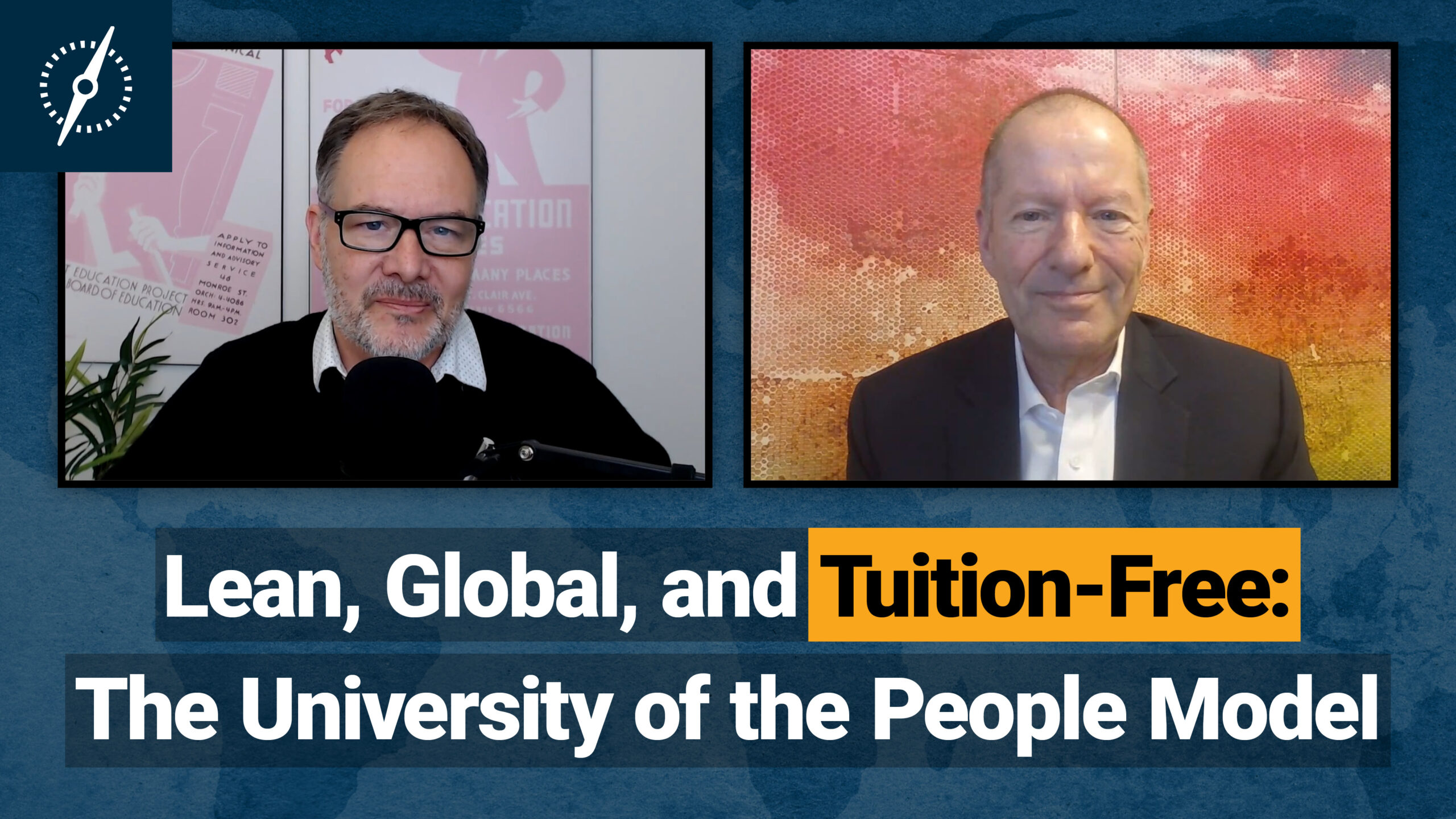
    Today, my guest is the University of the People’s Founder and President Shai Reshef. He’s received global recognition for his work at University of the People. He’s an Ashoka fellow. He’s one of Fast Company’s Most Creative in Business, named the Top Global Thinker by Foreign Policy Magazine, and most impressively, he was winner of the 2023 Yidan Prize for Educational Development, which is probably the highest form of global recognition in the field of education.

    In our chat today, Shai and I cover the basic economics of running a mega online university. We answer the questions: how do you serve students across 20 plus time zones? How does a university without government support stay tuition free? And most importantly, how — even if most of your staff are volunteer — are you able to manage things like academic governance and quality assurance on a shoestring?

    And as I said, not everything Shai is going to tell us today is going to be transferrable to other institutions, but his message should have at least some resonance and the University of the People’s experiences can lead to change elsewhere.

    But enough for me. Let’s listen to Shai.


    The World of Higher Education Podcast
    Episode 3.29 | Lean, Global, and Tuition-Free: The University of the People Model

    Transcript

    Alex Usher (AU): Shai, let’s start with the basics. For listeners who might not be familiar—what is the University of the People? Who does it serve? And how does that make it different from a traditional university?

    Shai Reshef (SR): The University of the People is the first nonprofit, tuition-free, accredited American online university. Our mission is to open the gates of higher education to anyone in the world who is qualified but has no other way to access it—either because it’s too expensive, like in the U.S., or because they live in countries where there aren’t enough universities. Africa would be a great example.

    We also serve people who are deprived of access for political or cultural reasons—refugees, women in Afghanistan, or anyone else who, for personal reasons, can’t attend a traditional university. We use the internet to bring higher education to them.

    AU: How big is the institution? How many students do you have? Where are they from? And what’s the breadth of programming that you offer?

    SR: We started in 2009. As of now, we have 153,000 students from 209 countries—so, pretty much from almost every country in the world.

    Our students are typically people who did go to high school but didn’t attend university afterward. Many of them started working and later realized they needed a degree to advance their careers. Our student body tends to be older; they’re not your typical 18-year-olds. They come to us because they want a better future.

    That’s why we only offer degrees that are likely to help them find jobs. At the undergraduate level, we offer degrees in business administration, computer science, and health science. At the graduate level, we offer programs in education, information technology, and business—specifically, the MBA.

    AU: That’s huge. This must cost an awful lot of money. You’re not a public university in the sense of being government funded, and you’re not charging tuition. So how does it work? What does it cost, and how do you make ends meet?

    SR: Well, first of all, we are nonprofit. So, we’re not making money—maybe a small surplus, but not profit. And we are tuition-free. That means students can study for free, but when they get to the exams, we ask them to pay $140 USD per exam.

    Now, for some students—especially those from developing countries—even that amount is too much. So we provide scholarships where we can. About half of our students pay the exam fees, and the other half receive scholarships.

    We’re able to stay sustainable and tuition-free because we run a very lean operation. We rely heavily on technology. We offer only a few degree programs, all of which are directly relevant to the job market. We also operate in many parts of the world where we can deliver quality education at lower costs.

    We don’t have buildings—since we’re fully online—and importantly, we lean heavily on volunteers. I’m a volunteer. The deans are volunteers. Our professors and faculty are volunteers too. In fact, we have over 40,000 volunteers supporting the university.

    AU: But surely $140 per exam on its own isn’t enough to run the institution, right? You must have other sources of income, I imagine?

    SR: Our budget—running a university with 153,000 students—is about $20 million USD. Two-thirds of that comes from student fees. The remaining one-third comes from donations. These include contributions from wealthy individuals and foundations such as the Gates Foundation, the Ford Foundation, and the Ulet Foundation. We also receive some government support—for example, from the German government.

    So, about $7 million comes from donations, and $13–14 million comes from student fees. But again, we operate on just a fraction of the budget that any other university of our size would require.

    AU: I’m just looking at the numbers—$20 million to teach 150,000 students. That’s about $120 or $130 per student. That’s very, very low. And one of the ways you manage that, I understand, is through your use of volunteers. How do you get people to teach for free?

    SR: It’s a good question. In my previous life, before I started the University of the People, I launched and ran the first online university in Europe. So I had a good understanding of how an online university should operate.

    When I decided to start the University of the People and make it tuition-free, the main difference—among several—was to rely on volunteers rather than paid faculty and staff. At the time, I wasn’t sure how well that would work.

    I announced the university in January 2009 at a conference in Munich. The next day, The New York Times ran a full-page article about it. And the day after that, I already had hundreds of professors writing to me saying, “We love this idea. We want to help.”

    So people come to us. I’m not out there recruiting them—they come because I’m not the only one who believes higher education should be a basic right, and that money shouldn’t be a barrier. I came with the idea of tuition-free higher education, and a lot of people believe in that mission. They want to be part of it and help.

    AU: What kind of support services are you able to offer students? I mean, student services, academic support—how can you do that within a tuition-free model? Are there still some things you’re able to provide?

    SR: Oh, we’re able to do a lot. First of all, all of our courses are written in advance by subject matter experts. They go through a peer review process, just like any other academic program. Once finalized, they’re taught in our online classes.

    When students sign up, they’re placed in a class of 20 to 30 students—each time with peers from 20 to 30 different countries. Every course runs for eight weeks. On the first day of the week, students receive their lecture notes, reading assignments, homework, and discussion question.

    The core of our pedagogy is peer discussion—students engage in week-long discussions around the topic of the week. Every class has a professor who reads and moderates the discussion daily.

    Each student also has a program advisor who follows them from the moment they enroll until they graduate. So there is a lot of support. If a student stops showing up to class, they’ll typically get an email asking where they are.

    Even though our professors are volunteers, they commit 10 to 15 hours per week, per course, to support students with everything they need. So it’s a full-service university.

    The difference between us and a traditional university is that we don’t offer the “nice-to-haves.” We don’t have a football team, a gym, or psychological services—which are important, but we simply can’t afford them. But everything core to the academic experience is there—and delivered with high quality.

    AU: Shai, I want to ask—one of the things you must have to navigate when you’ve got students from all over the world and you’re operating in so many jurisdictions is accreditation. That seems like something that’s very bureaucratic and time-consuming. So how do you handle that? Do you do any jurisdiction shopping? Where are your degrees accredited, and is that part of the reason people pursue them?

    SR: Originally, in 2014, we were accredited by DEAC, which is a national accreditation agency in the U.S. And just a couple of weeks ago, we were accredited by WASC—the Western Association of Schools and Colleges—which is one of the six regional accrediting bodies in the U.S.

    That puts us in the same group as Stanford, Berkeley, UCLA. Some might argue they need to work a little harder to meet our standards—but in any case, we’re now in the same accreditation category.

    Now, even though our students come from around the world, many of them admire American education. That’s a big part of why they choose us. In a few countries, we’re not locally recognized because we’re fully online. But still, thousands of students study with us because they value the American degree, and because local employers recognize and appreciate the quality of our education.

    Was it easy to get accredited? No, it was hard. It took a lot of work. We had to prove that what we offer is equivalent, in terms of outcomes, to what traditional universities offer. That includes how we admit students, how we support them, and how we assess their learning outcomes.

    In the end, we did everything required to meet those expectations—and we succeeded. That’s why we were granted accreditation.

    AU: It just occurred to me, as I was thinking about this, that maybe this is your secret sauce. These are the kinds of things that cost millions of dollars at many universities. And if you’re able to do it without complex quality assurance structures, academic senates, registrar’s offices, and all those kinds of things—if you’re able to do it with the leanest version of those—isn’t that something other institutions could learn from?

    SR: Yes, they can learn. But do they want to learn? That’s a different question.

    One of the challenges we pose to other universities is this: when you’re charging $30,000 to $50,000 a year, and then here comes a university charging just $1,400 a year—if students pay in full and study full time—that’s a huge contrast. And when traditional institutions see that, they often just turn around and say, “No way,” because they don’t believe it’s real.

    The truth is, our advantage comes from the fact that we built a new institution from scratch. That allowed us to decide what to do—and what not to do.

    Let me give you an example. At a university our size, the admissions office alone might have thousands of people reading student résumés, essays, checking social media, verifying every detail—thoroughly evaluating each application.

    We do it differently. We say: if you have a high school diploma, come and take two courses. If you pass, you’ve shown us you meet our standards. You get credit for those courses and become a degree-seeking student. If you can’t pass, you can’t continue.

    Now, not only is that a better system in my view—because it tests students based on how they actually perform, not how well someone coached them on an application—but it also saves a ton of money. We don’t need a large admissions operation. Just come in and prove yourself.

    It’s a different way of operating—and a much more efficient one. And I think that’s our real secret. It’s not really a secret—but it works.

    AU: You’ve scaled up incredibly quickly—15 years to reach 150,000 students, and to be embedded in, I guess, just about every country in the world. What were the biggest hurdles in that scaling process? Were there moments where you stumbled and thought, “Wow, I’m not sure we can grow this quickly?” Or was it pretty smooth?

    SR: Well, if you ask me, I’d actually answer a different question: Why aren’t we even bigger than we are?

    Because the truth is, we’re online—there are no physical seat limits. Nobody has to stand at the back of the lecture hall. So, in theory, we could double our student body. Why haven’t we?

    The main challenge is that most people in the world haven’t heard of us. Even when I travel and someone asks what I do, and I say, “University of the People,” I’m surprised if they’ve heard of it. Most people haven’t—and especially not the ones who need us most, like refugees or people in remote or underserved regions.

    The second challenge is that even when people do find us, we don’t have enough resources to support everyone. For example, we have 4,300 Afghan women currently hiding and studying with us inside Afghanistan—but we received 20,000 applications from there. So yes, it’s incredible that we can serve over 4,000 women, but we simply can’t accommodate all who apply.

    To go back to your original question about the difficulties we’ve encountered—yes, there are some. For instance, there are countries that still don’t recognize online education. In those places, we’re just waiting for governments to become more open to 21st-century technologies and new models of learning.

    So that’s been one of our biggest challenges: growing awareness and overcoming regulatory barriers.

    AU: In lots of traditional universities, success is measured through things like research output, income, or rankings. How do you measure success at the University of the People?

    SR: Well, the first thing we look at is how many people we’ve given the opportunity to pursue higher education—people who had no other alternatives. That’s a key measure for us.

    I was once interviewed by a student journalist from an Ivy League school, and he said, “You’re setting up competition for my institution.” And I told him, “Anyone who wants to go to your institution should absolutely do so. But we’re here for those who don’t have that option.”

    So one measure of our success is how many doors we open. Another is how many of our students actually graduate—and what they go on to do. We have graduates working at Amazon, Google, Apple, IBM, the World Bank—that’s another sign of success.

    Ultimately, we measure ourselves by whether we’ve helped people build a better life. Are they better off while studying with us? That’s what matters to us.

    We don’t participate in rankings competitions. We don’t try to be the most expensive institution—though in some parts of the sector, it seems the more expensive you are, the better you’re perceived to be. That’s a strange way to measure quality, but it’s common in higher ed.

    We’re proud to be different. We’re changing the model of higher education to make it accessible, affordable, and high-quality.

    AU: A few days ago in The New York Times, there was an article by the Russian writer Masha Gessen. They were talking about the attacks on higher education in the United States and mentioned that the ideal model right now might be the University of the People in Poland—a communist-era, tuition-free university. As I was preparing for this interview, I thought, “Wait a minute, that sounds a lot like your University of the People.” I’m curious what you think about that argument. Given all the challenges in U.S. higher education—even before Trump—are approaches like yours part of the solution?

    SR: I actually read that very article. Believe it or not, we just sent them an email today saying the same thing—basically, “It sounds like you’re talking about the University of the People.” I assume they don’t know about us—otherwise, they probably would have mentioned us directly.

    I truly believe we are the future. Every person should have the right to higher education. Universities should open their gates far wider than they do now. The more people who are educated, the stronger the country: people have better futures, the economy improves, and society benefits from individuals who are well-rounded and capable of critical thinking. That’s what the world needs.

    The American system has created some of the best universities in the world—there’s no question about that. I’m not against those institutions. What I’m against is the lack of opportunity for everyone else. And I think what we’ve demonstrated is that higher education can be accessible and affordable for all.

    That’s part of why we’ve grown so quickly—we want to show that this model works, that it’s sustainable, and that others can follow it, in the U.S. and around the world. The challenges facing higher education aren’t unique to one country; they’re global. And anyone can look at what we’ve done and replicate it—or ask us to help them replicate it. We’d be happy to help.

    AU: So, you’ve been around for just over 15 years. If I ask you to look ahead—what does the University of the People look like in 2040? Will you be twice as big? Even bigger than that? Will you offer different kinds of degrees? How do you see the next decade and a half playing out?

    SR: You know, in 2010, following the earthquake in Haiti, we announced that we would take in 250 Haitian students and teach them for free. What I didn’t realize at the time was that, after the earthquake, many of them were living in tents, without electricity or internet.

    Still, two months later, the first group of 15 or 16 students began studying. I went to Haiti to welcome them, and I met many students while I was there. One of them asked me what the future of University of the People looked like. I gave them the same answer I’d give today:

    We’ll keep growing to serve more and more students—until one day we wake up and realize that all the students in the world who need access to higher education are being served. And then, maybe, we’ll go back to sleep and wake up with another dream.

    Until then, we have a long way to go. So yes, we’ll continue to grow, we’ll continue to serve more people, and hopefully, others will replicate what we’re doing. We don’t need to educate the entire world—just help show that it’s possible.

    AU: Shai, thank you so much for being with us today.

    SR: Thank you very much for this interview. It was fascinating—thank you.

    AU: And it just remains for me to thank our excellent producers—Tiffany MacLennan, Sam Pufek—and you, our viewers, listeners, and readers, for joining us. If you have any questions about this podcast or suggestions for future episodes, please don’t hesitate to get in touch at [email protected]. Quick request from us: head over to our YouTube page and subscribe to the Higher Education Strategy Associates channel so you never miss an episode of The World of Higher Education.

    Join us next week—my guest will be John Stackhouse. He’s the Senior Vice President at RBC and former Editor-in-Chief of The Globe and Mail. He’ll be joining me to talk about a new post-secondary education initiative that RBC is undertaking, in partnership with the Business + Higher Education Roundtable and us here at Higher Education Strategy Associates. I’ll be asking in particular about the future of Canadian higher education and how better links can be forged between universities and the private sector. See you then.

    *This podcast transcript was generated using an AI transcription service with limited editing. Please forgive any errors made through this service. Please note, the views and opinions expressed in each episode are those of the individual contributors, and do not necessarily reflect those of the podcast host and team, or our sponsors.

    This episode is sponsored by KnowMeQ. ArchieCPL is the first AI-enabled tool that massively streamlines credit for prior learning evaluation. Toronto based KnowMeQ makes ethical AI tools that boost and bottom line, achieving new efficiencies in higher ed and workforce upskilling. 

    Source link

  • The silencing of America’s voice leaves journalists abandoned

    The silencing of America’s voice leaves journalists abandoned

    On 28 March, several journalists in South Asia opened their inboxes and found messages that changed their lives. Reporting assignments were cancelled. Email access revoked. For many, it marked the end of years of work with Voice of America — without explanation, without notice.

    Nazir Ahmad is a journalist. For 11 years, Ahmad worked for Voice of America as a multimedia journalist. He documented protests, crackdowns and mass detentions. That morning, his email account was suspended. His press card was no longer valid.

    “It ended without warning,” he said. “No notice, no call. Just a message that my services were no longer needed. I had been filing reports even a week before this.”

    Nazir Ahmad is not his real name. We changed it for this article to protect his identity. And we offered anonymity to all the journalists we interviewed for this story because their reporting for Voice of America has put them in danger. 

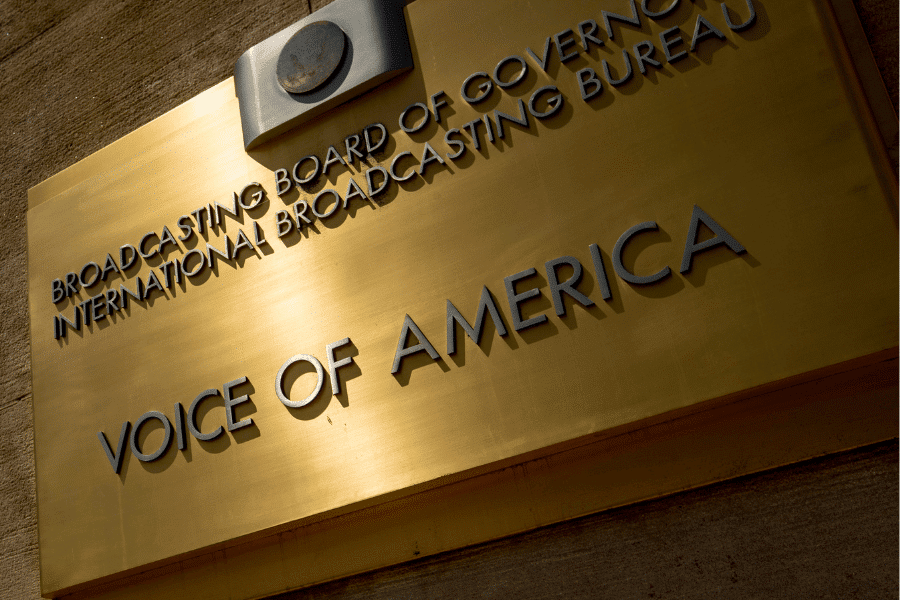
    Ahmad is one of several South Asian journalists who lost their jobs after the Trump administration signed an executive order to downsize multiple U.S. government agencies, including the U.S. Agency for Global Media, which oversees Voice of America.

    On 22 April, a federal district judge in Washington, D.C. ruled that the administration illegally required Voice of America to cease operations and ordered it be temporarily restored until the lawsuits challenging the closure have run their course. How this will affect Ahmad and the other reporters who were dismissed remains to be seen. 

    Shutting down a news network

    The Trump Administration’s decision to end Voice of America affected journalists across Asia who have been covering sensitive political developments for years.

    “I covered the Delhi riots, Punjab farmers’ protests, and the elections,” said another Voice of America journalist. “These were not easy stories. I often worked without backup and sometimes without formal protection. Now, I’m being told to stop working.”

    Trump’s executive order resulted in mass administrative leave across Voice of America’s global network. Michael Abramowitz, Voice of America’s director, confirmed that nearly all 1,300 journalists and staff were placed on leave.

    The White House said the order was intended to reduce government spending and eliminate what it called “radical propaganda.” It accused outlets like Voice of America of political bias, despite decades of bipartisan support for the agency.

    For many South Asian journalists, the move came at a personal and professional cost. Several freelancers and stringers in India, Pakistan, Nepal, Bangladesh and Sri Lanka had worked with Voice of America for over a decade. 

    Telling important stories to the world

    Besides reporting on protests, these reporters covered elections, environmental disasters and rights violations in hard-to-reach areas.

    “I reported from Punjab’s border villages during the height of the farmers’ protests,” said yet another journalist who worked with Voice of America since 2014. “I was there when the police fired tear gas. I was there when elderly protesters braved the winter cold. And now I’m unemployed.”

    These journalists say they received no formal termination letters, only a message from editors citing administrative leave and funding suspensions. They have not been told when or if their jobs will resume.

    “There was a clear line in the message: stop all reporting,” said a Voice of America contributor from New Delhi. “I depend on this income to support my family. I’ve been sending stories every week for eight years.”

    Voice of America was established in 1942 during World War II to counter Nazi propaganda. It has since expanded to reach 360 million people weekly in nearly 50 languages. In South Asia, it provided a platform for independent voices, especially in regions where domestic media faced political pressure or censorship.

    Press coverage where the press is muzzled

    Experts say the funding freeze, if ultimately allowed by the courts, could silence important coverage from conflict zones. In regions like Kashmir, where local journalists already face surveillance and restrictions, international media partnerships like Voice of America provided both visibility and a layer of protection.

    “Working with VOA allowed us to tell local stories without fear of censorship,” says a journalist based in Srinagar. “Now that channel is gone.”

    The impact also extends beyond journalists. Translators, video editors and fixers who worked with Voice of America in the region say their contracts have been halted.

    “I’ve been working as a video editor for their South Asia bureau for six years,” said a technician based in Lahore, Pakistan. “We’ve stopped getting assignments. I haven’t been paid for last month’s work.”

    Some journalists say they are now exploring alternate work, but few opportunities exist for those with years of specialized international reporting experience.

    “I’m being told to apply to local newspapers, but they don’t have the budget or the editorial independence,” said a journalist from Kathmandu. “It feels like I’m starting over after 12 years.”

    Stories the domestic press hesitates to cover

    The Executive Order also affected coverage of religious freedom, caste violence and press crackdowns in India. Journalists who regularly filed in-depth features say important stories are now going untold.

    “I was working on a long story about attacks on Christian communities,” said a reporter based in Tamil Nadu. “It’s not something mainstream outlets want to cover. Voice of America gave me space to explore that. Now it’s shelved.”

    The global press watchdog Reporters Without Borders has described the shutdown as a serious setback for journalism, warning that it could encourage political interference in media operations across the world.

    Stephen Capus, head of Radio Free Europe/Radio Liberty, which also lost funding, said the move would leave millions without access to independent reporting.

    In South Asia, journalists say this is about more than losing a paycheck. For them, it’s the breakdown of a reporting network that allowed them to cover sensitive stories in challenging environments.

    “We weren’t just sending news reports,” says a journalist who covered the Indian government’s 2019 decision to revoke Kashmir’s autonomy. “We were capturing what was happening when few others could. And now someone in Washington has pulled the plug.”

    With no clarity on whether the shutdown is permanent, most contributors are in limbo. Some are looking for freelance work. Others are applying for short-term grants. But many say the abrupt stop has left them disoriented.

    “I always thought if I stopped reporting, it would be because of risks here,” one journalist said. “I didn’t expect to be cut off by a government halfway across the world.”


    Questions to consider:

    • What is the Voice of America?

    • Why has the U.S. government long funded foreign journalists outside the United States?

    • Do you think governments should pay journalists to cover events and other stories? Why?


    Source link

  • Senate education panel postpones vote on polarizing antisemitism definition

    Senate education panel postpones vote on polarizing antisemitism definition

    This audio is auto-generated. Please let us know if you have feedback.

    The Senate’s education committee on Wednesday postponed a vote on a bill that would require the U.S. Department of Education to use a definition of antisemitism that critics say would undermine free speech and preclude criticism against Israel. 

    After two hours of contentious debate, Sen. Bill Cassidy, the Republican chair of the Health, Education, Labor and Pensions Committee, said the panel would defer the vote on the bill for another day. 

    The bill, called the Antisemitism Awareness Act, would require the Education Department to use the International Holocaust Remembrance Alliance’s definition of antisemitism when investigating Title VI discrimination and harassment on college campuses. Title VI of the Civil Rights Act prohibits discrimination based on race, color or national origin at federally funded institutions.

    Sens. Jacky Rosen, a Democrat from Nevada, and Tim Scott, a Republican from South Carolina, introduced the bill in February, contending it would help the Education Department determine when antisemitism crosses the line from protected speech into harassment. A bipartisan group of lawmakers introduced a companion bill in the House that same month. 

    During President Donald Trump’s first term, he signed an executive order directing the Education Department and other federal agencies to consider IHRA’s definition in Title VI investigations. The bill would codify that element of the executive order into law for the Education Department. 

    The Anti-Defamation League, a strong supporter of the IHRA’s definition on antisemitism, has advocated for its adoption at the executive level.

    However, the definition includes several examples that opponents of the bill worry could chill free speech. They include comparing “contemporary Israeli policy to that of the Nazis” and “claiming that the existence of a State of Israel is a racist endeavor.” 

    ‘You can’t regulate speech’

    Sen. Bernie Sanders, the committee’s ranking member, condemned antisemitism and other forms of discrimination but said lawmakers must defend the First Amendment and the right to peacefully protest. 

    “I worry very much that the Antisemitism Awareness Act that we are considering today is unconstitutional and will move us far along in the authoritarian direction that the Trump administration is taking us,” said Sanders, an independent from Vermont who is Jewish.

    Sen. Rand Paul, a Republican from Kentucky, voiced similar concerns. He argued that the examples included in the definition would undermine free speech rights and told Scott he would support the bill if they were removed. 

    During the hearing, supporters of the bill pointed to language that says nothing in the Antisemitism Awareness Act should be used “to diminish or infringe upon any right protected under the First Amendment.” 

    Scott also contended that the bill would instead be used to assess whether conduct — not speech — was antisemitic. 

    “It’s the conduct that follows the speech that creates the harassment, not the speech itself,” Scott said.

    However, Paul rejected that argument, contending that the examples in IHRA’s definition of antisemitism describe speech rather than conduct. 

    “You can’t regulate speech,” Paul said. “Every one of the 11 examples is about speech.”

    The committee narrowly approved several amendments to the bill, including one from Sanders that says “no person shall be considered antisemitic for using their rights of free speech or protest” to oppose Israel’s wartime actions in Gaza. Another one of Sanders’ amendments that passed would protect students rights’ to carry out demonstrations that adhere to campus protest policies.

    The panel also passed an amendment from Sen. Edward Markey, a Democrat from Massachusetts, stating that the federal government undermines First Amendment rights of immigrant college students and employees when it revokes their visas, detains them or deports them due to their free speech. 

    Source link

  • Class of 2025 may face tight competition for fewer jobs

    Class of 2025 may face tight competition for fewer jobs

    This audio is auto-generated. Please let us know if you have feedback.

    Dive Brief:

    • Three-quarters of graduating college students responding to a recent survey said they are ready to show up for work prepared and on time. Of the more than 2,800 college seniors responding, however, 56% expressed pessimism about starting their careers in the current economy, according to Handshake’s “Class of 2025 State of the Graduate” report. 
    • More than a quarter of computer science majors said they’re “very pessimistic,” while the sentiment may be declining slightly among physical sciences, business and health field majors, Handshake reported.
    • Graduating seniors are also more concerned about how generative AI tools will affect their careers, an increase to 62% this year from 44% in 2023. Computer science majors are the most likely to be “very concerned,” possibly due to the speculation around how AI will impact entry-level programming roles, the Gen Z career platform noted.

    Dive Insight:

    It’s certainly not news that graduating seniors are entering a vastly different work environment than preceding generations: They applied to college in the early years of the pandemic, witnessed waves of layoffs and job market shifts and experienced the rapid rise of generative AI.

    Now, they face tight competition for fewer entry-level jobs, with Handshake reporting that job postings on its site have decreased by 15%, while applications per job have increased by 30%.

    As early career hires, college grads will likely have to make fundamental adjustments after they’re hired. For instance, although 66% of graduating seniors feel fully ready to communicate through email or messaging at work, slightly less (59%) are fully prepared to communicate in person, the Handshake survey found.

    The survey highlighted other insecurities as well: Only 35% of graduating seniors said they feel fully prepared to participate effectively in meetings, and 44% said they’ll need guidance on giving feedback to managers and leaders.

    HR professionals can help, experts recently told HR Dive. One way is to ensure early career hires are properly onboarded, they said.

    This means not rushing through the process, but instead giving new hires a 12- to 18-month comprehensive and structured experience that can include shadowing workers before doing the job on their own and being taught how to develop soft and hard skills, the experts explained.

    HR can also create and manage cohorts of newcomers as they join an organization and undergo training, according to research in the Journal of General Management. Nurturing these connections and supporting these hires helps them better fit in and improves retention, the researchers said.

    Graduating seniors do bring critical skills to the workplace, however; 98% say they’re familiar with generative AI tools, such as ChatGPT, compared to 61% two years ago, Handshake found.

    Also, while college seniors are concerned about how generative AI tools will affect their career, they are enthusiastic about upskilling, learning technology company D2L reported last year.

    In a survey of 3,000 full- and part-time U.S. employees, younger workers were more likely to say they plan to take multiple professional development courses during the next year, D2L said.

    There’s also positive news for employers favoring in-person work. According to the Handshake survey, that’s what 81% of seniors say they’d prefer for their first job after graduation.

    Source link

  • Senate Committee Postpones Vote on Antisemitism Awareness Act

    Senate Committee Postpones Vote on Antisemitism Awareness Act

    A vote on the Antisemitism Awareness Act—a bill that would codify the International Holocaust Remembrance Alliance’s controversial definition of antisemitism—was postponed Wednesday following a testy two-hour debate in the Senate Health, Education, Labor and Pensions Committee, Jewish Insider reported.

    The committee’s Republican chairman, Sen. Bill Cassidy of Louisiana, called off the planned vote after the Democratic minority won enough Republican support to pass several amendments aimed at more clearly distinguishing what qualifies as discriminatory speech and protecting the First Amendment rights of pro-Palestinian protesters.

    For instance, some of the proposed amendments included clarifying that it is not antisemitic to oppose the “devastation of Gaza,” or to criticize Israeli prime minister Benjamin Netanyahu, as well as preventing the revocation of visas based on “protected conduct under the First Amendment.” Lawmakers also sought to ensure students and faculty members could protest as long as they don’t incite violence.

    Cassidy opposed the amendments, saying they were “problematic” and could jeopardize GOP support for the bill on the Senate floor.

    “So that it’s clear for the people that are watching, supporting these amendments is an effort to kill this bill, which protects Jewish students from antisemitic acts,” he said during the meeting. “The bill [already] includes protections for free speech. So let’s not be naïve as to what’s taking place here.” 

    But Democrats and Republican Rand Paul of Kentucky said the amendments were necessary to ensure that while objecting to bigotry and discrimination, this bill also upheld the constitutional right to peaceful protest. (Sen. Susan Collins, a Maine Republican, also supported some of the amendments.)

    “I worry very much that the Antisemitism Awareness Act that we are considering today is unconstitutional and will move us far along in the authoritarian direction that the Trump administration is taking us,” Sen. Bernie Sanders, a Vermont Independent and ranking member of the committee, said in his opening remarks.

    Paul also objected the current bill’s language, particularly the examples of antisemitic speech it includes.

    “The problem is if you look at the IHRA’s examples of speech, they are going to be limiting on campuses everything on that list … protected by the First Amendment,” Paul said. “The First Amendment isn’t about protecting good speech; it protects even the most despicable and vile speech.” 

    The bill was already expected to face a tight vote given that the committee consists of 12 Republicans and 11 Democrats. So if two Republicans voted in opposition to the act, it wouldn’t move forward.

    Furthermore, multiple Republican members of the committee were not present for the full hearing due to other commitments. Cassidy said there was not enough time for all Republicans to return to the committee room for a vote before the meeting ended, so he postponed the vote. A vote on the Protecting Students on Campus Act, which would require colleges to notify students of how to file discrimination complaints, was also delayed.

    Source link