This audio is auto-generated. Please let us know if you have feedback.
The Senate’s education committee on Wednesday postponed a vote on a bill that would require the U.S. Department of Education to use a definition of antisemitism that critics say would undermine free speech and preclude criticism against Israel.
After two hours of contentious debate, Sen. Bill Cassidy, the Republican chair of the Health, Education, Labor and Pensions Committee, said the panel would defer the vote on the bill for another day.
The bill, called the Antisemitism Awareness Act,would require the Education Department to use the International Holocaust Remembrance Alliance’s definition of antisemitism when investigating Title VIdiscrimination and harassment on college campuses.Title VI of the Civil Rights Actprohibits discrimination based on race, color or national origin at federally funded institutions.
Sens. Jacky Rosen, a Democrat from Nevada, and Tim Scott, a Republican from South Carolina, introduced the bill in February, contending it would help the Education Department determine when antisemitism crosses the line from protected speech into harassment. A bipartisan group of lawmakers introduced a companion bill in the House that same month.
During President Donald Trump’s first term, he signed an executive order directing the Education Department and other federal agencies to consider IHRA’s definition in Title VI investigations. The bill would codify that element of the executive order into law for the Education Department.
However, the definition includes several examples that opponents of the bill worry could chill free speech. They include comparing “contemporary Israeli policy to that of the Nazis” and “claiming that the existence of a State of Israel is a racist endeavor.”
‘You can’t regulate speech’
Sen. Bernie Sanders, the committee’s ranking member, condemned antisemitism and other forms of discrimination but said lawmakers must defend the First Amendment and the right to peacefully protest.
“I worry very much that the Antisemitism Awareness Act that we are considering today is unconstitutional and will move us far along in the authoritarian direction that the Trump administration is taking us,” said Sanders, an independent from Vermont who is Jewish.
Sen. Rand Paul, a Republican from Kentucky, voiced similar concerns. He argued that the examples included in the definition would undermine free speech rights and told Scott he would support the bill if they were removed.
During the hearing, supporters of the bill pointed to language that says nothing in the Antisemitism Awareness Act should be used “to diminish or infringe upon any right protected under the First Amendment.”
Scott also contended that the bill would instead be used to assess whether conduct — not speech — was antisemitic.
“It’s the conduct that follows the speech that creates the harassment, not the speech itself,” Scott said.
However, Paul rejected that argument, contending that the examples in IHRA’s definition of antisemitism describe speech rather than conduct.
“You can’t regulate speech,” Paul said. “Every one of the 11 examples is about speech.”
The committee narrowly approved several amendments to the bill,including one from Sanders that says “no person shall be considered antisemitic for using their rights of free speech or protest” to oppose Israel’s wartime actions in Gaza.Another one of Sanders’ amendments that passed would protect students rights’ to carry out demonstrations that adhere to campus protest policies.
The panel also passed an amendment from Sen. Edward Markey, a Democrat from Massachusetts,stating that the federal government undermines First Amendment rights of immigrant college students and employees when it revokes their visas, detains them or deports them due to their free speech.
Jewish and civil rights groups raise alarm
The bill hasn’t just drawn criticism from lawmakers. The American Civil Liberties Union urged the Senate’seducation committeeearlier this month to oppose the bill, arguing that it would chill the free speech of college students by equating criticism of the Israeli government with antisemitism.
Several Jewish organizations, including the pro-Israel advocacy nonprofit J Street, have also opposed the bill. In an open letter to the Senate, the ten groups argued that the Trump administration would use the definition to “weaponize antisemitism as a pretext for undermining civil rights, deporting political dissidents, and attacking the fundamental pillars of our democracy.”
Last month, the lead author of IHRA’s definition of antisemitism said in an interview with NPR that his work is being distorted to clamp down on criticism against Israel.
This audio is auto-generated. Please let us know if you have feedback.
Dive Brief:
Three-quarters of graduating college students responding to a recent survey said they are ready to show up for work prepared and on time. Of the more than 2,800 college seniors responding, however, 56% expressed pessimism about starting their careers in the current economy, according to Handshake’s “Class of 2025 State of the Graduate” report.
More than a quarter of computer science majors said they’re “very pessimistic,” while the sentiment may be declining slightly among physical sciences, business and health field majors, Handshake reported.
Graduating seniors are also more concerned about how generative AI tools will affect their careers, an increase to 62% this year from 44% in 2023. Computer science majors are the most likely to be “very concerned,” possibly due to the speculation around how AI will impact entry-level programming roles, the Gen Z career platform noted.
Dive Insight:
It’s certainly not news that graduating seniors are entering a vastly different work environment than preceding generations: They applied to college in the early years of the pandemic, witnessed waves of layoffs and job market shifts and experienced the rapid rise of generative AI.
Now, they face tight competition for fewer entry-level jobs, with Handshake reporting that job postings on its site have decreased by 15%, while applications per job have increased by 30%.
As early career hires, college grads will likely have to make fundamental adjustments after they’re hired. For instance, although 66% of graduating seniors feel fully ready to communicate through email or messaging at work, slightly less (59%) are fully prepared to communicate in person, the Handshake survey found.
The survey highlighted other insecurities as well: Only 35% of graduating seniors said they feel fully prepared to participate effectively in meetings, and 44% said they’ll need guidance on giving feedback to managers and leaders.
HR professionals can help, experts recently told HR Dive. One way is to ensure early career hires are properly onboarded, they said.
This means not rushing through the process, but instead giving new hires a 12- to 18-month comprehensive and structured experience that can include shadowing workers before doing the job on their own and being taught how to develop soft and hard skills, the experts explained.
HR can also create and manage cohorts of newcomers as they join an organization and undergo training, according to research in the Journal of General Management. Nurturing these connections and supporting these hires helps them better fit in and improves retention, the researchers said.
Graduating seniors do bring critical skills to the workplace, however; 98% say they’re familiar with generative AI tools, such as ChatGPT, compared to 61% two years ago, Handshake found.
Also, while college seniors are concerned about how generative AI tools will affect their career, they are enthusiastic about upskilling, learning technology company D2L reported last year.
In a survey of 3,000 full- and part-time U.S. employees, younger workers were more likely to say they plan to take multiple professional development courses during the next year, D2L said.
There’s also positive news for employers favoring in-person work. According to the Handshake survey, that’s what 81% of seniors say they’d prefer for their first job after graduation.
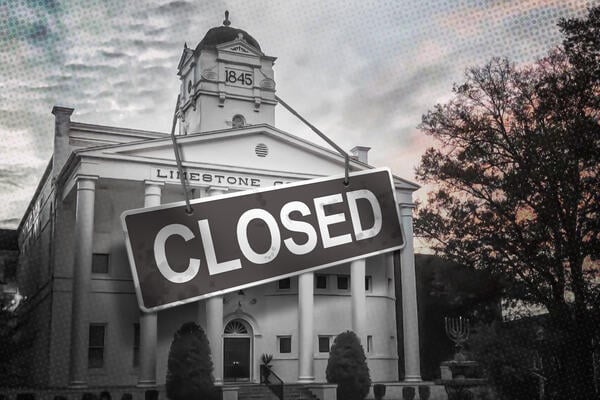
Limestone University survived the Civil War and the Great Depression, but protracted financial struggles have proven harder to overcome: After nearly 180 years, Limestone will cease operations next week.
Officials announced the closure Tuesday night.
“Words cannot fully express the sorrow we feel in having to share this news,” Limestone president Nathan Copeland said in a statement. “Our students, alumni, faculty, staff, and supporters fought tirelessly to save this historic institution. While the outcome is not what we hoped for, we are forever grateful for the passion, loyalty, and prayers of our Saints family.”
The move follows a tumultuous period for the university. After years of financial challenges, the Board of Trustees was set to decide last week on whether to shift to online-only operations or close altogether. At the last minute it decided to hold off on the decision because a “possible funding source” had emerged.
Limestone was seeking a $6 million infusion to help facilitate the shift to a fully online model. Though the university was able to secure $2.1 million in pledged commitments from almost 200 donors, according to the closure announcement, it ultimately fell well short of the goal, prompting the board to close the private institution in South Carolina.
The closure comes on the heels of significant enrollment and financial losses. The university enrolled 3,214 students in fall 2014, according to federal data; Limestone recently noted enrollment at around 1,600.
It has also operated for years with substantial budget deficits. The latest audit for the university noted “significant doubt” about Limestone’s ability to remain open, given that it had “suffered recurring significant negative changes in net assets and cash flows from operations” and had “a net deficiency in [unrestricted] net assets.”
Limestone’s board also borrowed heavily from the university’s meager endowment in recent years.
In 2023, the South Carolina attorney general agreed to lift restrictions on Limestone’s endowment to allow the board to increase spending from those funds. As a result, the endowment collapsed in value, falling from $31.5 million at the beginning of fiscal year 2022 to $12.6 million at the end of FY23. Auditors noted that “all endowment funds are underwater” as of last June.
Auditors also expressed skepticism that Limestone would be able to pay off mounting debts.
The university had more than $30 million in outstanding debt in the last fiscal year, including $27.2 million owed to the U.S. Department of Agriculture. Limestone’s latest audit shows the university listed its buildings and land as collateral for both the U.S. Department of Agriculture and another bank loan.
Auditors also found that Limestone’s “internal controls over financial reporting are informal and lack formal documentation,” and that the university’s accounting department was understaffed.
Despite the abrupt nature of the closure, Limestone officials wrote in Tuesday’s announcement that the university “will proceed with an orderly wind-down process” and help students transfer to other institutions and support faculty and staff with more information to come on those efforts.
Limestone will hold its final commencement on Saturday.
“Our Limestone spirit will endure through the lives of our students and alumni who carry it forward into the world,” Limestone board chair Randall Richardson said in the closure announcement. “Though our doors may close, the impact of Limestone University will live on.”
The closure announcement comes less than a week after St. Andrews University, a private institution in North Carolina, made a similar decision to cease operations due to fiscal issues.
To help folks think through what we should be considering regarding the impact on education of generative AI tools like large language models, I want to try a thought experiment.
Imagine if, in November 2022, OpenAI introduced ChatGPT to the world by letting the monster out of the lab for a six-week stroll, long enough to demonstrate its capacities—plausible automated text generation on any subject you can think of—and its shortfalls—making stuff up—and then coaxing the monster back inside before the villagers came after it with their pitchforks.
Periodically, as new models were developed that showed sufficient shifts in capabilities, the AI companies (OpenAI having been joined by others), would release public demonstrations, audited and certified by independent expert observers who would release reports testifying to the current state of generative AI technology.
What would be different? What could be different?
First, to extend the fantasy part of the thought experiment, we have to assume we would actually do stuff to prepare for the eventual full release of the technology, rather than assuming we could stick our heads in the sand until the actual day of its arrival.
So, imagine you were told, “In three years there will be a device that can create a product/output that will pass muster when graded against your assignment criteria.” What would you do?
A first impulse might be to “proof” the assignment, to make it so the homework machine could not actually complete it. You would discover fairly quickly that while there are certainly adjustments that can be made to make the work less vulnerable to the machine, given the nature of the student artifacts that we believe are a good way to assess learning—aka writing—it is very difficult to make an invulnerable assignment.
Or maybe you engaged in a strategic retreat, working out how students can do work in the absence of the machine, perhaps by making everything in class, or adopting some tool (or tools) that track the students’ work.
Maybe you were convinced these tools are the future and your job was to figure out how they can be productively integrated into every aspect of your and your students’ work.
Or maybe, being of a certain age and station in life, you saw the writing on the wall and decided it was time to exit stage left.
Given this time to prepare, let’s now imagine that the generative AI kraken is finally unleashed not in November 2022, but November 2024, meaning at this moment it’s been present for a little under six months, not two and a half years.
What would be different, as compared to today?
In my view, if you took any of the above routes, and these seem to be the most common choice, the answer is: not much.
The reason not much would be different is because each of those approaches—including the decision to skedaddle—accepts that the pre–generative AI status quo was something we should be trying to preserve. Either we’re here to guard against the encroachment of the technology on the status quo, or, in the case of the full embrace, to employ this technology as a tool in maintaining the status quo.
My hope is that today, given our two and a half years of experience, we recognize that because of the presence of this technology it is, in fact, impossible to preserve the pre–generative AI status quo. At the same time, we have more than info information to question whether or not there is significant utility for this technology when it comes to student learning.
This recognition was easier to come by for folks like me who were troubled by the status quo already. I’ve been ready to make some radical changes for years (see Why They Can’t Write: Killing the Five-Paragraph Essay and Other Necessities), but I very much understood the caution of those who found continuing value in a status quo that seemed to be mostly stable.
I don’t think anyone can believe that the status quo is still stable, but this doesn’t mean we should be hopeless. The experiences of the last two and a half years make it clear that some measure of rethinking and reconceiving is necessary. I go back to Marc Watkins’s formulation: “AI is unavoidable, not inevitable.”
But its unavoidability does not mean we should run wholeheartedly into its embrace. The technology is entirely unproven, and the implications of what is important about the experiences of learning are still being mapped out. The status quo being shaken does not mean that all aspects upon which that status quo was built have been rendered null.
One thing that is clear to me, something that is central to the message of More Than Words: How to Think About Writing in the Age of AI: Our energies must be focused on creating experiences of learning in order to give students work worth doing.
This requires us to step back and ask ourselves what we actually value when it comes to learning in our disciplines. There are two key questions which can help us:
What do I want students to know?
What do I want students to be able to do?
For me, for writing, these things are covered by the writer’s practice (the skills, knowledge, attitudes and habits of mind of writers). The root of a writer’s practice is not particularly affected by large language models. A good practice must work in the absence of the tool. Millions of people have developed sound, flexible writing practices in the absence of this technology. We should understand what those practices are before we abandon them to the nonthinking, nonfeeling, unable-to-communicate-with-intention automated syntax generator.
When the tool is added, it must be purposeful and mindful. When the goal of the experience is to develop one’s practice—where the experience and process matter more than the outcome—my belief is that large language models have very limited, if any, utility.
We may have occasion to need an automatic syntax generator, but probably not when the goal is learning to write.
We have another summer in front of us to think through and get at the root of this challenge. You might find it useful to join with a community of other practitioners as part of the Perusall Engage Book Event, featuring More Than Words, now open for registration.
I’ll be part of the community exploring those questions about what students should know and be able to do.
Federal immigration officials targeted student visa holders by running their names through a federal database of criminal histories, according to court testimony given by Department of Homeland Security officials on Tuesday and reported by Politico.
As part of the Student Criminal Alien Initiative, as officials dubbed the effort, 20 ICE agents and several federal contractors ran the names of 1.3 million potential student visa holders through the database, searching for those that were both still enrolled in programs and had had some brush with the criminal justice system. Many of those students had only minor criminal infractions on their record like traffic violations, and they often had never been charged. ICE used that information to terminate students’ SEVIS records.
Officials testified that ICE ultimately flagged around 6,400 Student Exchange and Visitor Information System records for termination and used the data to revoke more than 3,000 student visas—far more than the 1,800 that Inside Higher Ed tracked over the past month.
The officials’ testimony came in a hearing for one of many lawsuits filed by international students and immigration attorneys challenging the sudden and unexplained visa terminations; dozens of the cases have been successful so far. Last week the agency restored international students’ visas amid the flurry of court losses and said it would release an updated policy in the near future.
On Monday, the Trump administration released a draft of that policy, which vastly expands the prior one and makes visa revocation legal grounds for a student’s legal residency to be terminated as well.
Over half of graduating seniors feel pessimistic about entering the workforce, due in part to a competitive job market and poor outlook on the economy, according to a recent survey by Handshake.
In this episode of Voices of Student Success, host Ashley Mowreader spoke with Christine Cruzvergara to discuss Handshake’s latest survey of college seniors and how they’re feeling about entering the workforce. Later, Cruzvergara shares how higher education institutions can respond to these new challenges by pulling from existing literature regarding preventive health measures.
An edited version of the podcast appears below.
Inside Higher Ed: This is not the most fun episode, because the job market is bad right now. We are preparing a group of students to enter the workforce—or go to grad school—in a few weeks, and it is a tricky situation for them.
Handshake just released a survey, which said that 56 percent of graduating seniors feel at least somewhat pessimistic about starting their careers. How do we launch students into the workforce, given today’s context and circumstance? This is a really tough environment, and students are entering a world that is a little different than the one that they thought they might be getting. What kind of conversations are you all having or considering when we’re supporting students in this time?
Christine Cruzvergara: That is a good place to start. It’s definitely a tough market. As you said, seniors are feeling pessimistic as they think about how to get their foot in the door.
Christine Cruzvergara, chief education officer
I think it’s important to also step back and remember, though, that these go in cycles. This is not that different than the graduates who graduated into the 2008, 2009 recession, right? They also felt like, “Oh my gosh, what I went into school expecting is definitely not what I’m graduating with. And now I need to pivot. Now I need to think differently.”
So every so often we have cycles like this where, unfortunately, some of the graduating class experiences this downturn, and they have to figure out, how am I going to get creative? And I think this class in particular is doing just that. They’re trying to adapt quickly. They’re trying to pivot. They’re trying to be more flexible in the ways that they think about their careers and how they might want to get started. And I think they’re, quite frankly, not being precious about what they consider a dream job or their first job. They’re just being more practical about all of that. And I think that’s really smart.
Q: [Having a dream job] is something that Handshake surveyed students on. And I don’t know if that’s a question that you all have used in prior surveys, but this idea of a dream job has been changing for young people. Can you speak a little bit about that data and sort of the trends that you’re seeing?
A: Personally, I’m not a fan of the term “dream job.” I think for a lot of folks, it feels like too much pressure to have this so-called ideal job that exists out there that you’re always gunning for. The reality is, we did have 57 percent of the Class of 2025 who had a dream job in mind when they entered college, however they personally define dream job. Fewer than half of them have that same goal now. And I think that really speaks honestly to the grit and the resilience of this graduating class.
I like to see it from a glass-half-full perspective, in that these students have said they are exploring other industries, they have changed or added a minor to ensure that they’re even more competitive in the market. They are considering other ways that they can use the skills that they have gathered, and how to think about that in ways that they can still contribute to society. And I think that’s really fantastic, because the reality is, with the advance of technology and how quickly things are changing these days, these students are going to need to invent and reinvent themselves over and over again over the entire course of their career. And they’re essentially getting a crash course in how to do that and how to do that well, right from the get-go.
Q: That’s something we see commonly in today’s workforce. I kind of coined the phrase, “not your granddad’s career,” where you don’t start at the factory and work your way up and then maybe you’re a vice president by the time you retire. We see a lot more lateral changes today. We see more young people who might start in one field and then transition into another.
We talk a lot in higher ed about jobs of the future, and these ideas that there are going to be new industry needs and new professions and new roles for students to take on. The idea of higher education preparing students for that is great. And like you mentioned, this is a new environment for students, if we want to frame it as the silver lining for them to identify, “OK, what are those things that I really do like doing, even if it’s not my dream job, even if it’s not the career that I thought I was going to have on the way out?”
I wonder if you can speak to that dynamic of how higher ed is actually preparing students for this kind of weird uncertainty.
A: I think this is actually where a lot of our career center partners really come into play. They are at the ready to work with students to help them see, “these are the amazing skills that you’ve gained while you’ve been in college, whether that’s through your courses or through extracurriculars or through your internships. And this is how you can market that. This is how you can reinvent what your identity is or your narrative or where you want to go.”
These are professionals that know what’s happening in the job market. They know from employers what they are looking for, and they stand ready to essentially help a student make those connections and connect the dots about their own experiences.
So often, when I talk to a student, they have all the ingredients to make themselves a really wonderful candidate. What they lack is the understanding of how to put it all together. They don’t know how to talk about it. They don’t know how to translate some of those skills into language that employers want to hear. That’s exactly what our schools can be doing right now to help support students through this challenging and competitive time.
I think the other piece, and I know that many of my partners in higher ed would probably agree with this, students love to shoot off a ton of résumés. You’ve probably heard this, they’re applying to, like, hundreds of jobs, and then they complain that they’re not hearing back. And then they also complain in the very next breath how competitive everything is. We see through our data that that is true. The Class of 2025, as of this past March, has already submitted 21 percent more job applications in Handshake than the previous class. There is more competition.
But the reality is, if you are not tailoring your application, and you’re not spending time networking and actually getting to know people, your application kind of is going into a big black hole, and it’s very hard to get traction. And then it becomes this spiral, because as a student, you start to feel hopeless—“I sent out all these things. I’m not hearing back. Maybe I’m not good enough”—and you start to feel dejected when the reality is you can actually be a little bit more tailored. You can be a little bit more specific, and your institution, your career centers, can help you to actually narrow in on that. I’m not saying to only apply for like five jobs or 10 jobs. You can certainly apply to more than that, but the intentionality around what you apply to is really important.
Q: I saw that trends are up for young people graduating from college, applying for internships or nontraditional roles instead of going straight into the workforce. Graduate school applications are up, law school applications are up several hundred percent [at some institutions] year over year. We’re seeing more students pivoting or thinking of different ways that they can spend their time after graduation than just getting a job. I wonder if you can speak to that idea of students taking maybe a pause or looking at a different direction before entering the workforce, given how tough this job market has been?
A: I think any time you see a downturn like this, you tend to see an increase in grad school, for sure. That’s how the market just generally works. You do tend to see people get a little bit more creative about how they use their time. Do they take a gap year? Do they do volunteer work? Do they try and do X, Y and Z?
I think what’s important in this part of the conversation is a lot of students don’t have the luxury of being able to do that. I think if you do happen to have the safety net or the privilege to be able to take some time to do just an internship, or to do volunteer work, or to take a gap year, by all means, do that. Just make sure that you’re really documenting your learning, you’re documenting the experience and you’re thinking intentionally about how you’re going to narrate that period of time in your life.
I would say it is not surprising to me to hear that some graduating seniors are applying to internships. They want anything that will pay them. And if these are paid internships, it is worth it to go get that experience, because you could almost treat it like a mini on-the-job job interview, right? You can prove yourself. You can build relationships, and hopefully, if there is an opening afterward, they will want to offer it to you, because they now have experienced your work ethic and your work product. And I think that is smart. In the absence of full-time jobs that you are able to get or interested in, you should go to the next-best option, and you should consider those opportunities. But that does, of course, make things a little bit more competitive for some of the folks that are juniors or sophomores that are going out for those same opportunities. And that’s part of the challenge right now.
Q: We’re seeing job sectors, specifically in technology and federal hiring roles, [that] are down year over year, which, anybody who’s been reading the news is probably not surprised by that trend. But we still see that students are interested in tech jobs, and they are still interested in working for the federal government or for their state governments. I wonder if you have any insights into how we can continue to motivate students to have these kinds of jobs that they are working towards but maybe not able to land their first role right this second?
A: I think what’s really important to help students wrap their heads around is that your first job is not your last job. Your first job is literally just your first job. You can go do a number of different things, and you can gain lots of skills. Quite frankly, what’s really helpful, often, is you can gain perspective in the way another sector or another industry area tackles a similar problem, and with that, that actually becomes an amazing stepping-stone later, when you’re getting your second job or your third job, in which case, by then, the market may have changed again. Now those opportunities may be more plentiful, and so you can take that and apply it in a different way.
I think that it is important to just step back and help them see the long term. It doesn’t mean if you have to pivot from a sector that you wanted to go into, which doesn’t have as many opportunities right now, that you’re never going to be able to do that; it just means that you might take a slightly different route to get there. You’ll get there a little bit later, but now you have greater perspective.
Q: Do you think that’s messaging employers can be giving to students as well? I think sometimes, as a student, your major feels like the most important thing, or your internship feels like the most important thing. But like you mentioned, having multiple sectors of experience is valuable, and it gives you really great perspective. Who else needs to be joining that conversation for students to be able to say, “Oh, OK, that makes sense?”
A: One hundred percent, employers need to be saying this. I think lots of schools, definitely lots of career centers, have been saying it for a while. I feel like sometimes that is the equivalent to like your parents telling you [something], and you’re like, “Yeah, OK, cool, cool, cool. I’m not sure if I’m gonna really listen to that or pay attention to that.” But if you have a cool friend or somebody else tell you the same thing, all of a sudden, “Yeah, I should totally listen. I think that’s such a valuable insight.” So I think employers play that role in this conversation.
I do think media also plays a role in that conversation. I think a lot of articles that are written about college to career, about the workforce, about early talent pipeline, often centers around [the academic] major. And I think that that does perpetuate a belief or a thinking amongst students, amongst their parents, that the major is the end-all, be-all, is so, so important, and if you make a mistake around that decision, you’re never going to be able to get a job. And that’s just false. We need to be better about how we share those narratives and talk about the reality that more than 50 percent of the general workforce does something that is not directly related to their major. They might use skills and knowledge from those majors, but it’s not directly related to those majors.
So I think employers and the media in particular are two entities that I would say should be part of this conversation and can play a very, very important role in shaping people’s thinking.
Q: Those darn journalists.
You mentioned your career center can feel like Mom or Dad, where they’re a trusted source, but maybe they’re not the first one you turn to about market information. Handshake’s most recent survey pointed to that as well, where students said [their career center] was a trusted source of job market information, but they’re more likely to turn to social media, to online job boards or to career fairs and employer events. Do you think this ties back to this idea of making career services more visible, or do we need to make sure that our career services are better equipped with timely, relevant information, like a job board or social media might be?
A: It’s both. I think on one hand, there’s definitely a visibility issue. I think on too many campuses, career services is still seen as a peripheral service, that if you happen to wander into it, cool, they’ll help you, you’re going to be in good shape. But for more than 50 percent of students, they don’t wander in, and so they never end up getting that particular support. Visibility is a really important component, and I think schools and administrators can actually do a lot to really help with that, just in thinking through, how do you embed career services, whether that’s the events, the programs, an appointment, a required internship? How do you embed that into the curriculum or into the student experience, even if it’s not in the curriculum? How do you do that in a way that makes it feel as if this is just part of what it means to go to school here, that part of going to school is learning these things and preparing myself for afterward? So that’s one piece of it, the visibility.
I do think the second component, though, really varies depending on school and depending on the career center. I have some career center partners that we work with who are so on top of the data, they know exactly who the employers are that want to hire their students. They know exactly what skills those employers want. They’re serving as a really tight feedback loop to their academic partners, to their deans, and sharing that information. And then I’ve got other partners who, quite frankly, are one- or two-person shops and don’t have the bandwidth to be able to try and keep up with some of that, and there’s no way they would be able to meet with every single student on their campus.
I think the third bucket is actually just the reality of how the new generation consumes information. Let’s just be honest, every generation has consumed information slightly differently than the generation before, and Gen Z is very tied to social media. They’re tied to short tidbits of information, and that is how they like to consume information. Part of it is, don’t fight it, use it, and I think that’s exactly what we try and create on our platform is an opportunity and a way for students to learn from other students, and for students to be able to learn from both career centers and employers, but in, like, the bite-sized way that they are used to consuming in traditional social media.
Q: Embedding career services into the student experience is so critical, and we know there’s so much research out there that says that a student who engages with their career center early and often is more likely to have better outcomes. But there’s also, on the other end, if a student leaves higher education without a job, the career center can still be a resource and can still be there to support them in finding that next step, or maybe their second step. I wonder if you can just speak to the value of career services, not only as a student experience, but as that alumni experience as well.
A: For many, many schools, they will continue to support alumni for life, and if not for life, sometimes for five years, 10 years out. That can be a valuable source to go to when you’re thinking about a pivot, or, as you said, just thinking about your second or third job and what it means to now market yourself with a little bit more experience, or how to make that pivot.
I think our career center partners are really exceptional at trying to make sure that they provide not only advice and information, but that they can help you discern based on your past experiences. “OK, now you know a little more because you’ve had this first job, what you like, what you don’t like, what type of environment you can thrive in or not thrive in. Let’s take that and then let’s make sense of it and look at it against both the job market and the labor market and what’s available, so that you’re making, ideally, hopefully, a better choice in your second job or your third job.”
And then I think it’s also important, but a lot of the things that students do find value in and that they find as a trusted source—you mentioned career fairs and events, for example—the sheer majority of those are provided by the career center, and I don’t think students realize that. I think it’s also drawing that connection because they are being supported by the career center. They just maybe didn’t go into the literal career center, but they went to an event that was hosted by the career center, they went to a program that was hosted by the career center, and they got a lot out of it. And I think that’s OK, too. It’s not about the career center getting credit. It’s about the career center facilitating all the ways that a student can feel ultimately supported, and that’s true for alums as well.
Q: There’s a high likelihood that some students do not land their dream job after graduation because of whatever it might be—the sector is having a hard time hiring, the economy is not great, whatever. Sometimes that leads to people doubting the value of higher education, or thinking that college didn’t prepare that student well enough, or that they didn’t need that degree to get a job after college, or things like that. I want to set you up on a little soapbox here about why it’s still valuable for students to go to college, or how higher education does play a role in preparing students for their future, even if that first six months or that first year might be a really, really difficult environment.
A: I appreciate that. I am a huge believer that higher education is still one of the best ways that a student can change their social mobility. I think for so many students, what is really core and really key is that no one can ever take your knowledge or your education away from you once you have that. Once you’ve learned that, once you’ve consumed that, that’s yours. It’s yours to keep. It’s yours to do with. It’s yours to apply. And I think that’s really powerful, because we don’t know exactly what the future is going to hold. We don’t know exactly what types of jobs are going to exist 10, 15, 20 years from now, and we need to be able to stay adaptable and agile and resilient, and that is actually what schools teach you to do. They don’t just teach you about a content area. They teach you about how to think about the content area. They teach you about how to communicate about that, how to synthesize information, how to hear different perspectives. All of those are traits that are more needed now in our society than ever before.
So even if your first job, or even your second job, is not exactly what you want to do, it’s up to you to take what you’ve learned and to start to figure out, how are you going to apply that in a way that can start to change your career trajectory moving forward? There’s nothing better than an education that’s going to position you for that.
I will just say, lastly, we have a huge population of students, first generation, many of whom don’t come from families or communities that know other people or have connections, and going to a college or university is literally that stepping-stone to starting to meet and expand your network. It’s really hard to do that without sometimes having that experience. I think there’s also real, true value in the ability to build that network through your university or college that also isn’t often talked about or sometimes is only talked about with the most elite institutions. But this is actually still true for a public flagship, for a regional public, you’re still gaining exposure to more people, and to have that affinity that is shared that allows you to jump-start your ability to create that network.
Get more content like this directly to your inbox. Subscribe here.
Inside Higher Ed’s fourth annual Survey of Campus Chief Technology/Information Officers, conducted with Hanover Research, is out now. The survey gathered insights from 108 college and university chief technology and information officers at two- and four-year institutions across the U.S. about the following issues:
CTOs as strategic partners
IT infrastructure and investments
Artificial intelligence adoption and governance
Cybersecurity readiness and challenges
Sustainability and environmental impact of technology
Staff recruitment and retention challenges
Digital transformation priorities and barriers
Emerging technologies beyond AI
Digital learning
Data and student success
On Wednesday, June 18, at 2 p.m. Eastern, Inside Higher Ed will present a webcast with campus technology leaders who will share their perspectives on the findings. Register for that discussion here.
Read our initial reporting on the survey—on uneven student access to generative AI tools and how institutions are struggling to respond to the rise of AI amid other fundamental challenges—here and here. Download the full survey here. And check out these key findings:
While many CTOs (59 percent) do have a seat at the executive leadership table at their institution, only about half (53 percent) feel their knowledge is fully leveraged to inform strategic decisions involving technology.
Legacy infrastructure is hampering innovation, say 60 percent of CTOs, with implications for student success: Most rate their learning management systems highly (91 percent), but just a third (33 percent) believe their investments in student success technology have been highly effective.
Despite the buzz about AI, only a third of CTOs (34 percent) report that investing in generative AI is a high or essential priority for their institution, with even fewer prioritizing investment in AI agents (28 percent) or predictive AI (24 percent).
While most CTOs report effective collaboration channels between IT and academic affairs on AI policy (66 percent), only one in three (35 percent) believe their institution is handling the rise of AI adeptly. Just 11 percent indicate their institution has a comprehensive AI strategy.
Cybersecurity remains a concern, with only 31 percent of CTOs feeling very or extremely confident in their institution’s ability to prevent cyberattacks. The most common security measures taken include multifactor authentication (90 percent) and required cybersecurity training for staff (86 percent). But just a fraction (26 percent) report required cybersecurity training for students, who are important players in this space.
Technology staffing remains a significant challenge, with 70 percent of CTOs struggling to hire new technology employees and 37 percent facing retention issues. The primary factor is a usual suspect for higher education: competition from better-paying opportunities outside the sector.
Student success is driving digital transformation priorities, with 68 percent of CTOs saying leveraging data for student success is a high or essential priority, followed by teaching and learning (59 percent). The top barriers to digital transformation in 2025 are insufficient IT personnel, inadequate financial investment and data-quality issues.
Environmental sustainability is largely overlooked in technology planning, with 60 percent of CTOs reporting that their institution has no sustainability goals related to technology use, and 69 percent saying senior leaders don’t consider environmental impact in technology decisions.
A majority of institutions represented (61 percent) have not partnered with online program managers and aren’t considering it. At the same time, 59 percent of CTOs express confidence in the quality of their institution’s online and hybrid offerings in general, and half (49 percent) somewhat or strongly agree that student demand for online and/or hybrid course options has increased substantially in the last year.
While most CTOs believe their institution effectively uses data to support student success (60 percent), and nearly as many report a data function structure that supports analytics needs (52 percent), just 11 percent report having unified data models, which can reduce data siloes and improve data governance
This independent editorial project was made possible with support from Softdocs, Grammarly, Jenzabar and T-Mobile for Education.
European governments have sought to bolster their universities’ efforts to recruit international researchers, amid signs that an expected exodus in U.S.-based scholars is beginning.
On April 23, Norway’s education ministry announced the creation of a $9.6 million initiative, designed by the Research Council of Norway, to “make it easier to recruit experienced researchers from other countries.”
While the program will be open to researchers worldwide, the ministry said, research and higher education minister Sigrun Aasland suggested in a statement that the recruitment of U.S.-based scholars was of particular interest.
“Academic freedom is under pressure in the U.S., and it is an unpredictable position for many researchers in what has been the world’s leading knowledge nation for many decades,” Aasland said. “We have had close dialogue with the Norwegian knowledge communities and my Nordic colleagues about developments.
“It has been important for me to find good measures that we can put in place quickly, and therefore I have tasked the Research Council with prioritizing schemes that we can implement within a short time.”
The first call for proposals will open in May, Research Council chief executive Mari Sundli Tveit stated, with “climate, health, energy and artificial intelligence” among the fields of interest.
Last week, the French ministry of higher education and research launched the Choose France for Science platform, operated by the French National Research Agency. The platform will enable universities and research institutes to submit “projects for hosting international researchers ready to come and settle in Europe” and apply for state co-funding.
Research projects on themes including health, climate and artificial intelligence may receive state funding of “up to 50 percent of the total amount of the project,” the ministry said.
“Around the world, science and research are facing unprecedented threats. In the face of these challenges, France must uphold its position by reaching out to researchers and offering them refuge,” Education Minister Élisabeth Borne said.
The initiative follows efforts from individual French universities to recruit from the U.S.: The University of Toulouse hopes to attract scholars working in the fields of “living organisms and health, climate change [or] transport and energy,” while Paris-Saclay University intends to “launch Ph.D. contracts and fund stays of various durations for American researchers.”
Aix-Marseille University plans to host around 15 American academics through a Safe Place for Science program, announcing last week that almost 300 had applied. “The majority are ‘experienced’ profiles from various universities/institutions of origin: Johns Hopkins, University of Pennsylvania, Columbia, Yale, Stanford,” the university said.
In Spain, meanwhile, Science Minister Diana Morant announced the third round of the ATRAE international recruitment program, with a budget of $153 million, which will run from 2025 to 2027.
The plan, designed to “attract leading scientists to Spain in areas of research with a high social impact, such as climate change, AI and space technologies,” offers scholars an average of $1.13 million to conduct research at a Spanish institution. Successful applicants currently based in the U.S., meanwhile, will receive an additional $226,000 per project.
“We are not only a better country for science, for those researchers who currently reside in our country, but we are also a better country for elite researchers who seek out the productive scientific ecosystem we have in Spain,” Morant said.
The report based its findings on voluntary online surveys of at least 1,200 students across a variety of countries and more than 1,000 employers in the U.S., U.K., Brazil, France, India, Indonesia, Mexico, Saudi Arabia, Thailand and Turkey. The surveys were fielded between December 2024 and January 2025. Coursera offers a variety of microcredentials on its course-sharing platform.
The survey found that most employers, 96 percent, felt microcredentials help a candidate’s application, and 85 percent were more likely to hire a job candidate with a microcredential compared to one without. Meanwhile, 90 percent of employers were willing to offer higher starting salaries to candidates with recognized, credit-bearing microcredentials. Most employers believed microcredentials have various advantages, including employers saving on first-year training costs and hires coming in with higher proficiency in vital industry skills. Eighty-seven percent of employers hired at least one employee with a microcredential in the past year.
Learners surveyed had overwhelmingly positive feelings toward microcredentials, as well. Ninety-four percent of students felt microcredentials build essential career skills. The same percentage wanted to see microcredentials embedded in degree programs, up from 55 percent in 2023. The report says students are twice as likely to enroll in a program that includes a microcredential and 2.4 times more likely to enroll if it’s a microcredential for credit.
The report also found that entry-level employees with microcredentials felt the programs benefited their careers. Among surveyed entry-level workers with microcredentials, 28 percent reported receiving a pay raise and 21 percent received a promotion after earning a microcredential. Seventy percent felt like their productivity increased after earning a microcredential and 83 percent said microcredentials gave them confidence to adapt to new job responsibilities.
“Employer demand for skills-based hiring requires educators to prioritize skills-based learning,” Francesca Lockhart, professor and cybersecurity clinic program lead at the University of Texas at Austin, said in a blog post about the report from Coursera. “We must adapt our curricula to prepare students for a job market where desired qualifications are shifting too quickly for traditional education to keep pace.”
A vote on the Antisemitism Awareness Act—a bill that would codify the International Holocaust Remembrance Alliance’s controversial definition of antisemitism—was postponed Wednesday following a testy two-hour debate in the Senate Health, Education, Labor and Pensions Committee, Jewish Insider reported.
The committee’s Republican chairman, Sen. Bill Cassidy of Louisiana, called off the planned vote after the Democratic minority won enough Republican support to pass several amendments aimed at more clearly distinguishing what qualifies as discriminatory speech and protecting the First Amendment rights of pro-Palestinian protesters.
For instance, some of the proposed amendments included clarifying that it is not antisemitic to oppose the “devastation of Gaza,” or to criticize Israeli prime minister Benjamin Netanyahu, as well as preventing the revocation of visas based on “protected conduct under the First Amendment.” Lawmakers also sought to ensure students and faculty members could protest as long as they don’t incite violence.
Cassidy opposed the amendments, saying they were “problematic” and could jeopardize GOP support for the bill on the Senate floor.
“So that it’s clear for the people that are watching, supporting these amendments is an effort to kill this bill, which protects Jewish students from antisemitic acts,” he said during the meeting. “The bill [already] includes protections for free speech. So let’s not be naïve as to what’s taking place here.”
But Democrats and Republican Rand Paul of Kentucky said the amendments were necessary to ensure that while objecting to bigotry and discrimination, this bill also upheld the constitutional right to peaceful protest. (Sen. Susan Collins, a Maine Republican, also supported some of the amendments.)
“I worry very much that the Antisemitism Awareness Act that we are considering today is unconstitutional and will move us far along in the authoritarian direction that the Trump administration is taking us,” Sen. Bernie Sanders, a Vermont Independent and ranking member of the committee, said in his opening remarks.
Paul also objected the current bill’s language, particularly the examples of antisemitic speech it includes.
“The problem is if you look at the IHRA’s examples of speech, they are going to be limiting on campuses everything on that list … protected by the First Amendment,” Paul said. “The First Amendment isn’t about protecting good speech; it protects even the most despicable and vile speech.”
The bill was already expected to face a tight vote given that the committee consists of 12 Republicans and 11 Democrats. So if two Republicans voted in opposition to the act, it wouldn’t move forward.
Furthermore, multiple Republican members of the committee were not present for the full hearing due to other commitments. Cassidy said there was not enough time for all Republicans to return to the committee room for a vote before the meeting ended, so he postponed the vote. A vote on the Protecting Students on Campus Act, which would require colleges to notify students of how to file discrimination complaints, was also delayed.