Author: admin

  • Addressing Nursing Student Shortages with Precollege Support

    Addressing Nursing Student Shortages with Precollege Support

    The U.S. is expected to experience a shortage of nurses by 2030, which will only grow as older generations age and health-care needs increase, according to the American Association of Colleges of Nursing.

    One of the contributing factors to this shortfall is a disconnect between the number of students enrolling in nursing school and the projected demand for nursing services. Another is high levels of work-related stress, leading to burnout.

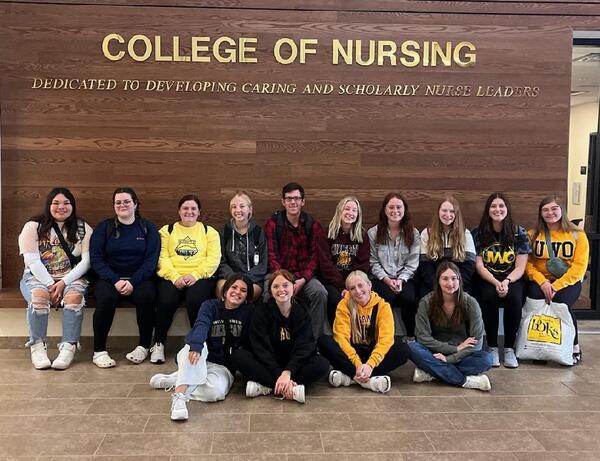
    In August 2023, the University of Wisconsin–Oshkosh launched the Pre-Nursing Pathway, a weeklong intensive precollege program that helps students prepare for the academic rigor of the nursing program and connects them with resources. In the pathway, students engage in peer interactions, mentorship and additional time with faculty and staff, allowing them to build emotional resiliency and a network of support.

    What’s the need: Staff at UW-Oshkosh noticed a decrease in qualified applicants to the nursing program and an overall decline in the matriculation of pre-nursing students, said Jessica Spanbauer, director of the center for academic resources.

    Students had large gaps in their foundational science and math concepts as well as a lack of time management and organizational skills, which could be tied in part to remote instruction due to the COVID-19 pandemic, Spanbauer said.

    The university decided to implement a pre-nursing program, in part to boost enrollment of students, but also to ensure students who do attend are successful on their career journey.

    How it works: The program is organized by the Center for Academic Resources and the College of Nursing, but is supported by admissions, the Undergraduate Advising Resource Center, the counseling center, the biology and chemistry departments, residence life, and recreation and wellness.

    Both admitted and deposited students are eligible to apply to the program, with special priority given to first-generation students.

    Selected program participants move onto campus a week before classes start for an intensive orientation experience. All students live in one wing of a residence hall together, mentored by two current nursing students, building a sense of community and peer support.

    During their week on campus, students participate in biology and chemistry labs led by professors; attend workshop presentations by advisers, counselors and academic support staff; and explore campus, familiarizing themselves with support resources. The goal is to proactively address knowledge gaps among students early on, enhancing their success and preparing them for the future demands of their profession.

    “By focusing on crucial and relevant concepts, we could ensure that students are well-equipped to excel in their nursing education,” Spanbauer said. “We could help build students’ confidence and encourage students to actively engage in shaping their academic trajectory.”

    Program participants are also offered tours of local hospitals, a Q&A session with nursing students and recent alumni, professional development workshops, and support from financial aid, dining, residence life and the Office of Accessibility.

    “We were fortunate that we had colleagues ready to enhance collaboration across units to further promote a student-focused supportive learning environment where students can thrive,” said Seon Yoon Chung, dean of the college of nursing.

    The impact: The program launched in August 2023 with 15 participants. Ninety percent of those students retained to fall 2024, and they earned an average GPA of 3.1. Eighty percent of the fall 2023 cohort are still in the pre-nursing major or accepted into the nursing program.

    An additional 12 students participated in August 2024 (100 percent of whom retained to spring 2025), and the staff hope to double participation rates this upcoming fall, Spanbauer said.

    Staff collect qualitative data about participants by using surveys and focus groups, as well as insights from faculty and other staff. In the future, longitudinal career-progression data and alumni surveys will help assess the program’s long-term impact, Spanbauer said.

    Campus leaders are also considering ways to enhance recruitment efforts and increase capacity for students through various resources, online modules and flexible scheduling to accommodate more interested students.

    Do you have an academic intervention that might help others improve student success? Tell us about it.

    This article has been updated to correct attribution of a quote to Seon Yoon Chung.

    Source link

  • Urgent Need for AI Literacy

    Urgent Need for AI Literacy

    The rapid advent of AI capabilities, coupled with the developing economic pressures worldwide, have led to a surge in employers seeking to reduce operating expenses through widespread use of generative and agentic AI to augment, and in some cases, replace, humans in their workforce. This follows last year’s warning from the World Economic Forum that said, “AI skills are becoming more important than job experience.”

    The World Economic Forum report goes on to cite the 2024 Work Trend Index Annual Report, which draws on a survey of 31,000 people across 31 countries, hiring trends from LinkedIn, Microsoft 365 productivity data and research with Fortune 500 companies: “Over the past eight years, hiring for technical AI roles was up 323%, and businesses are now turning to non-technical talent with the skills to apply generative AI tools like ChatGPT and Copilot. Two-thirds of business leaders surveyed say they wouldn’t hire a candidate without AI skills. Nearly three-quarters said they would rather hire a less experienced candidate with AI skills than a more experienced candidate without them.”

    Writing in The Chronicle of Higher Education, Beth McMurtrie defines AI literacy: “The term AI literacy can feel squishy. But the definitions circulating among campus working groups, disciplinary associations, and other organizations share several key components. To be AI literate, they agree, you must understand how generative AI works, be able to use it effectively, know how to evaluate its output, and understand its weaknesses and dangers. For AI skeptics, that last point is crucial. Too many workshops stop short, they say, focusing only on how to use AI tools.”

    In a survey conducted last November, Educause reported only 37 percent of institutions were supporting needed AI abilities by “upskilling or reskilling” faculty or staff, and just 1 percent reported hiring new AI staff. A larger percentage of faculty and staff were addressing related academic integrity and assessment issues. The Educause AI Landscape Study reported,

    “Respondents from smaller institutions are remarkably similar to respondents from larger institutions in their personal use of AI tools, their motivations for institutional use of AI, and their expectations and optimism about the future of AI.

    “Respondents from small and larger institutions differ notably, however, in the resources, capabilities, and practices they’re able to marshal for AI adoption.”

    These responses from as recently as the end of last semester show that the majority of institutions are lagging behind in preparing themselves and their graduates and certificate completers for the rapid changes that are expected to take place in workplaces around the world over the coming months. Yet, as reported in Government Technology, new laws creating frameworks in California and the European Union are leading the way in ensuring learners are well prepared for the emerging workplace:

    “Under California’s new law, AI literacy education must include understanding how AI systems are developed and trained, their potential impacts on privacy and security, and the social and ethical implications of AI use. The EU goes further, requiring companies that produce AI products to train applicable staff to have the ‘skills, knowledge and understanding that allow providers, deployers and affected persons … to make an informed deployment of AI systems, as well as to gain awareness about the opportunities and risks of AI and possible harm it can cause.’ Both frameworks emphasize that AI literacy isn’t just technical knowledge but about developing critical thinking skills to evaluate AI’s appropriate use in different contexts.”

    The American Library Association has taken a leading role in developing a draft document, “AI Competencies for Academic Library Workers,” that is currently under review based upon recommendations made by constituencies in recent weeks. The document includes two sections: “dispositions (tendencies to act or think in a particular way) and competencies (skills, knowledge, behaviors, and abilities). Dispositions are presented as a single list. Competencies are organized into four categories: Knowledge & Understanding; Analysis & Evaluation; Use & Application; and Ethical Considerations.”

    In a project backed by a $1 million grant from Google, Government Technology reports that the City University of New York is supporting 75 faculty members to develop teaching methods that support best practices in utilizing AI in higher education. The report goes on to say,

    “Such initiatives are spreading rapidly across higher education. The University of Florida aims to integrate AI into every undergraduate major and graduate program. Barnard College has created a ‘pyramid’ approach that gradually builds students’ AI literacy from basic understanding to advanced applications. At Colby College, a private liberal arts college in Maine, students are beefing up their literacy with the use of a custom portal that lets them test and compare different chatbots. Around 100 universities and community colleges have launched AI credentials, according to research from the Center for Security and Emerging Technology, with degree conferrals in AI-related fields increasing 120 percent since 2011.”

    These initiatives are exemplars of a variety of approaches that institutions might consider to respond to the urgent need to prepare learners for the workplace that is so rapidly emerging. Yet, now, as we move into the final weeks of the spring semester, it still appears that many, if not most, of the institutions of higher learning are failing their students. We are failing to fully prepare those students to enter the workforce where, as the World Economic Forum says, two-thirds of business leaders surveyed say they wouldn’t hire a candidate without AI skills and nearly three-quarters said they would rather hire a less experienced candidate with AI skills than a more experienced candidate without them.

    What is your institution doing to meet this urgent need? Who is leading a universitywide initiative to meet this need? Will your spring graduates and certificate completers be able to compete with others who have credentials that include knowledge and competencies in AI?

    Source link

  • Johns Hopkins Taps Endowment Earnings for Research Funding

    Johns Hopkins Taps Endowment Earnings for Research Funding

    Johns Hopkins University is turning to earnings on its $13.2 billion endowment to preserve research and protect researchers, trainees and staff amid drastic cuts to federal funding, The Baltimore Banner reported Monday.

    Since President Donald Trump started his second term in January, federal agencies have terminated or stalled billions in research grants to colleges and universities in a move scientists and higher education advocates warn will decimate university budgets, slow scientific innovation and hurt local economies. Johns Hopkins estimates that it has so far lost 100 federal grants, while others remain under review by the Trump administration to ensure they align with the federal goal of rooting out diversity, equity and inclusion, among other things. As a result, the university said it’s approaching $1 billion in federal funding losses so far this year.

    While Trump and his allies have suggested universities can use their endowments to fund research, officials at Johns Hopkins—which received more funding from the National Institutes of Health in 2024 than any other university—said Monday that’s not so easy.

    “It’s a common misconception that universities can simply ‘use the endowment’ in moments like this,” university officials said in a statement. “The reality is that most of our endowment is made up of legally restricted funds designated by donors for specific purposes. The principal of the endowment must legally be preserved in perpetuity—to support Johns Hopkins’ mission now and for future generations—and cannot be drawn down like a reserve fund.

    “That said, we are using flexible resources—some of which are tied to endowment earnings—to help sustain critical research in this moment of uncertainty.”

    Johns Hopkins hasn’t disclosed how much total earnings it plans to take from its endowment to help faculty and students continue their research, according to a news release.

    But in the plan released Monday, it said individuals will receive up to $100,000 for delayed grants or $150,000 for terminated grants during a 12-month period. The university will also offer a year of support to Ph.D. students completing their dissertations and postdoctoral fellows who had been expecting support from federal grants that were terminated, as well as expand a program that offers editorial support for grant proposals and journal articles and another that enables undergraduates to work with faculty mentors on original research or projects.

    Source link

  • Harvard Law Review Accused of Race-Based Discrimination

    Harvard Law Review Accused of Race-Based Discrimination

    In the latest salvo in the war between the Trump administration and Harvard University, the U.S. Departments of Education and Health and Human Services launched Title VI investigations into Harvard and the Harvard Law Review for alleged race-based discrimination at the 138-year-old student-run publication.

    “Harvard Law Review’s article selection process appears to pick winners and losers on the basis of race, employing a spoils system in which the race of the legal scholar is as, if not more, important than the merit of the submission,” said Acting Assistant Secretary for Civil Rights Craig Trainor in a statement. “Title VI’s demands are clear: recipients of federal financial assistance may not discriminate on the basis of race, color, or national origin … The Trump Administration will not allow Harvard, or any other recipients of federal funds, to trample on anyone’s civil rights.”

    The statement alleged that the editor of the Harvard Law Review wrote that it was “concerning” that the vast majority of people seeking to respond to an article about police reform “are white men.” It also accused another editor of suggesting that a submission receive “expedited review because the author was a minority.”

    Education Secretary Linda McMahon reposted a tweet from the Free Beacon that purports to show additional evidence of race-based decision-making at the Law Review.

    “We will not allow recipients of federal funding to discriminate on the basis of race,” McMahon wrote.

    Members of the Harvard Law Review have not publicly commented on the allegations. But an HLS spokesperson told Axios, “Harvard Law School is committed to ensuring that the programs and activities it oversees are in compliance with all applicable laws and to investigating any credibly alleged violations.” 

    Source link

  • Indiana Budget Bill Contains Sweeping Higher Ed Changes

    Indiana Budget Bill Contains Sweeping Higher Ed Changes

    Indiana state lawmakers have sent their governor a state budget bill that goes beyond setting funding levels. If Republican governor Mike Braun signs it into law, House Enrolled Act 1001 will require faculty at public colleges and universities to post their syllabi online and undergo “productivity” reviews.

    The bill would also—among other things—prohibit faculty emeriti from voting in faculty governance organizations, place low-enrolled degree programs at risk of elimination by the Indiana Commission for Higher Education and end alumni elections for three Indiana University Board of Trustees seats by filling them with gubernatorial appointees. In addition, it has a provision that would let Braun remove the currently elected board members before their terms expire.

    “I think overreach doesn’t begin to describe the actions of the Legislature,” said Russ Skiba, a professor emeritus of education at IU Bloomington. “This is really a sweeping takeover of higher education in Indiana.”

    The Republican-controlled Indiana General Assembly passed the legislation—which runs more than 200 pages—less than two days after revealing it Wednesday, April 23. The state House approved it around 12:45 a.m. Friday, followed by the Senate’s agreement at about 1:20 a.m.

    “I know a lot of legislators … simply didn’t have enough time to fully read it,” Skiba said. “There was no opportunity whatsoever for any sort of public input.”

    Matt Pierce, a Democratic Indiana House member who’s a senior lecturer at IU Bloomington, said the conference committee report revealing the budget bill wasn’t even released until Wednesday evening.

    “As people began to kind of go through it, they discovered all these higher education provisions that had never been discussed anywhere,” Pierce said. To have “provisions of this magnitude” pass in the budget bill “with no hearing or public input, that was pretty shocking,” he said.

    The budget bill’s higher education provisions echo those passed, or at least proposed, in other red states. But Indiana’s General Assembly continues to be in the vanguard among even GOP-controlled legislatures in its fervor for regulating public higher education. Last year, state lawmakers passed, and the former governor signed, a law threatening the jobs of nontenured and tenured faculty who don’t sufficiently foster “intellectual diversity,” as defined by campus boards of trustees.

    These bills follow pro-Palestine protests at IU Bloomington and tensions between faculty and university president Pamela Whitten. And with a further reduction of tenure protections looming in the new bill, a tenured professor at IU Bloomington says he’s under investigation for allegedly violating a policy the university wrote to uphold last year’s intellectual diversity law.

    Ben Robinson, an associate professor of Germanic studies and a prominent pro-Palestine campus protester, told Inside Higher Ed that an anonymous student filed a complaint against him in October. The unnamed student, according to a copy of the complaint Robinson provided, wrote that Robinson “talks negatively about the state of Israel and describes the war in untrue and unfair ways” and has discussed being arrested at a pro-Palestine rally “on numerous occasions.” The student also complained that Robinson had spoken “against Indiana University on several occasions” and used class time to say the university was restricting free speech.

    This complaint was filed in IU’s bias incident reporting system, which wouldn’t have involved potential discipline, Robinson said, but university administrators appeared to refile it as an intellectual diversity–related complaint under the policy passed after the General Assembly’s intellectual diversity law. He said he thinks administrators “want to overcomply on particularly this ideological issue, because that’s what they’re being told they have to enforce” by the federal government.

    “How can a professor know what’s going to be called bias?” Robinson said. He also said IU Bloomington is “a campus in which the witch hunts are alive and well, and I, along with many others, have been an open target of them.”

    IU spokesperson Mark Bode, in response to Inside Higher Ed’s requests for an interview and written questions about Robinson’s situation, wrote in an email simply that “IU does not comment on personnel matters.”

    Accusations of IU Involvement

    Multiple critics have accused IU leaders of backing one or more of the 11th-hour budget bill’s higher education changes. When asked about this, Bode provided a written statement that didn’t say whether IU was specifically involved.

    “Throughout the session, Indiana University engaged with state lawmakers to shape meaningful conversations about the university’s commitments to making higher education accessible to Hoosiers and driving the state’s economy through life-changing research and innovation,” the statement said. IU “will be working over the coming weeks to understand the full impact of state legislation and ensure compliance.”

    Before the bill passed, Pierce said, he texted an IU lobbyist asking the university’s position on it. The lobbyist replied that the institution didn’t have a position because it was still carefully reviewing the legislation, Pierce said.

    “And right then and there I knew that IU was behind it,” Pierce said. He also questioned how lawmakers would have the “pretty esoteric” knowledge that emeritus faculty serve in some faculty governance organizations.

    “You now have a convergence of the Republican attacks on higher education and the actual administration of Indiana University, and that’s a pretty shocking development,” he said.

    The IU Board of Trustees currently has six gubernatorial appointees—including a student with a two-year term—plus three members elected by alumni. If Braun signs the budget bill, he and future governors will be able to appoint all nine members, the student member’s term will drop to one year and there will be no more alumni-elected members.

    Braun has expressed support for this change, according to the Indiana Capital Chronicle.

    “I think it’s being done because the current process [has] not maybe yielded the proper results on the entirety of how you want that important part of our state to be run—from curriculum to cost to the whole way one of our flagship universities has been operating,” Braun said, according to the Capital Chronicle. “I want to get a board there that is going to be a little more rounded, that’s going to produce better results.”

    Vivian Winston, one of the elected board members, who previously announced she’s not seeking re-election, said she voted against IU president Whitten’s contract extension and the university’s post-encampment protest restrictions. But she said she doesn’t know whether her votes were related to the board change part of the legislation—which, like the other higher ed provisions in the bill, caught her “unaware.”

    “I found out through the media,” Winston said of the changes in the bill.

    Rodric Bray, a Republican and Indiana’s Senate president pro tem, provided Inside Higher Ed a rationale for the part of the bill ending alumni elections.

    “A very small fraction of the IU alumni have been participating in the election for the alumni seats on the IU Board of Trustees,” Bray said in an emailed statement. “Of the approximately 790,000 alumni around the world, only about 2.5% of alumni voted in the most recent election for trustee. Because the number is so small, it is not a fair representation.”

    But some opponents of the provision don’t see it that way. Skiba, the IU Bloomington emeritus faculty member, said, “This is clearly payback for opposition of policies favored by the president of the university and the Legislature.” He said the change would “take those voices of opposition off the Board of Trustees and essentially give complete control of the Board of Trustees over to the governor.”

    Over all, Skiba said, “this Legislature is following the Trump lead—wishing to put an airtight lid on free expression. And if you’re wishing to do that, universities are an obvious place to start.”

    Source link

  • Mellon Foundation Gives Humanities Councils Emergency Funds

    Mellon Foundation Gives Humanities Councils Emergency Funds

    The Mellon Foundation is giving $15 million in emergency funding to state humanities councils after the National Endowment for the Humanities eliminated $65 million in support for the councils, amid sweeping cuts to its grants and workforce, the foundation announced Tuesday.

    These councils, established by Congress in 1971, are nonprofits that support educational programming for the public, such as literacy initiatives, lectures, book fairs and cultural programs. The support will go toward all 56 state and jurisdictional humanities councils across the country in hopes of staving off possible deep cuts and closures. The foundation plans to allocate $2.8 million to challenge grants of up to $50,000 for each council, to be matched by other funders. And each council will received $200,000 in immediate operational support, The New York Times reported.

    Elizabeth Alexander, president of the Mellon Foundation, said in the announcement that while the emergency funds can’t cover the full extent of cuts, it’s a show of support.

    “At stake are both the operational integrity of organizations like museums, libraries, historical societies in every single state, as well as the mechanisms to participate in the cultural dynamism and exchange that is a fundamental part of American civic life,” Alexander said.

    Phoebe Stein, president of the Federation of State Humanities Councils, called the foundation funding a “lifeline.”

    “Mellon’s support allows us to not only preserve this vital network—it helps ensure that everyday Americans can thrive through lifelong learning, connection, and understanding of one another,” she said in the announcement.

    Source link

  • Student Loan Overhaul Clears House Committee

    Student Loan Overhaul Clears House Committee

    Over strong objections from Democrats, House Republicans on the Education and the Workforce Committee advanced legislation Tuesday that would make dramatic changes to the federal student aid system.

    For a full Inside Higher Ed analysis of what provisions are included in the reconciliation bill, read here.

    The sweeping 103-page bill, known as the Student Success and Taxpayer Savings Plan, passed on a party-line vote after more than five hours of debate. The legislation would cap the amount of federal loans a student can take out, cut off the Pell Grant for students who attend less than half time, consolidate income-driven repayment plans and introduce a risk-sharing program where colleges are partially responsible for unpaid student loans. The bill, which would also reverse multiple Biden-era student borrower protection regulations, could save more than $330 billion in federal funding over 10 years, committee Republicans say.

    It’s just one section of a larger budget bill that lawmakers are planning to use to fund some of President Donald Trump’s top priorities, like lofty tax cuts for the wealthy and a major crackdown on immigration. But House Republicans said the changes were more than just a means to fund his MAGA agenda.

    “If there is any consensus when it comes to student loans, it’s that the current system is effectively broken and littered with incentives that push tuition prices upward,” Rep. Tim Walberg, a Michigan Republican and committee chair, said in his opening statement. Higher education is “on a fiscally unsustainable path, so we must deliver on the promise of economic mobility to our students and families. Taken together, the provisions in this package will do just that.”

    Democrats on the committee argued the legislation is nothing more than a means to fund tax cuts for the wealthy that will force low-income and racial minority students to take on more debt and penalize the community colleges, regional universities and minority-serving institutions that educate those students. All in all, the bill will put the cost of a college degree out of reach for many, they said.

    “I appreciate that my colleagues acknowledge that the cost of college is too high, and that Congress should reform the system. But the committee print before us today … seriously misses the mark of making college more affordable,” said Rep. Bobby Scott, a Virginia Democrat and ranking member on the committee. “Put bluntly, this Republican proposal will limit how much money middle- and low-income students can borrow from the federal government.”

    Scott and other Democrats proposed 33 amendments—all of which Republicans voted down. They ranged from requests to prove the bill wouldn’t disproportionately affect certain institutions and increase costs for students to defending the Pell eligibility of part-time students and some consumer-protection regulations. Democrats also proposed replacing the income-driven repayment plan in the legislation with a more generous Biden-era alternative and striking the bill entirely. Other amendments touched on other issues unrelated to this section of the legislation, such as proposed cuts to Medicaid and the Department of Government Efficiency’s access to sensitive data.

    Republicans countered that Democrats’ allegations that the bill would make college less affordable were, as Rep. Burgess Owens of Utah said, “nothing further from the truth.” The proposed changes to the federal aid system will lead to better loan terms and repayment options that are also fair to taxpayers and avoid wasteful spending, they argued.

    The bill will now head to the House Budget Committee, where it will be folded into a complex omnibus bill before it is sent to the floor for a full House vote.

    But even if it clears the House, the legislation still has a long way to go. The House and the Senate have differing ideas about how much federal spending they wish to cut and what programs they are willing to slash. The Senate is aiming to make at least $1 billion in education cuts, which is less than 1 percent of the House committee’s $330 billion reduction.

    This reconciliation bill only needs a simple majority vote, or 51 yeas, to pass the upper chamber, but that will require almost all Republicans in the Senate to agree, which experts don’t think is a foregone conclusion.

    Risk Sharing

    One of the more contentious proposals in the bill is the risk-sharing provision, which would require colleges to repay the government a portion of students’ unpaid loans.

    Republicans on the committee described the risk-sharing proposal as critical, adding that it would penalize colleges for forcing their students into unmanageable debt and would incentivize them to lower their cost of attendance.

    “The best way for us to do that is not to loan [students] more money, but to reduce the cost so that they don’t need the loans,” said Rep. Randy Fine of Florida, who has been active in higher ed in the Sunshine State. “That’s what this bill does over and over and over again.”

    But Democrats said it is misleading to say the bill and provisions like risk-sharing would reduce costs and increase graduation rates, arguing it would actually incentivize colleges to accept fewer low-income students and increase tuition or cut critical student-support programs in order to foot the bill of new penalties.

    Rep. Alma Adams, a Democrat of North Carolina, called risk-sharing “a dire threat” especially to historically Black colleges and universities, which would have to pay an average of $1.7 million per year to account for the debt of their graduates.

    The students at these institutions “started behind but are determined to get ahead,” Adams said, adding that they don’t default because they are failing; they default because they are “carrying the burden of generations of inequity.”

    “This bill will tell colleges to take only the best students and leave the rest behind,” she added.

    Multiple student advocacy and higher education groups opposed risk-sharing and other proposals in letters to the committee and fact sheets.

    Third Way, a left-of-center think tank, noted in a memo Monday that the concept of risk-sharing “has a lot of intuitive appeal,” but the proposal “misses the mark for meaningful accountability.” Other provisions like loan limits and changes to the Pell Grant program will also “drive students into the private loan market,” the memo added.

    And the Association of Public and Land-grant Universities told the committee that, if passed, risk-sharing would amount to a “staggering level of federal overreach” that penalizes colleges and universities for “decisions beyond their control.”

    “The gravity of these changes would have a far reaching impact to current and future students,” APLU wrote. “There is a better way.”

    If Republicans “truly believed” the bill would not raise the cost of college and the burden of debt for students, then they would have no problem passing proposed amendments that certify its impact on students and institutions, said Adams, the North Carolina Democrat.

    “Let’s be clear about what this really means: This bill punishes students for being poor. It punishes students for needing to work. It punishes students for living in the real world,” she said. It transforms financial aid “from a bridge into a barricade.”

    Source link

  • Renters’ Rights Bill – The Devil’s in the Detail

    Renters’ Rights Bill – The Devil’s in the Detail

    • By Martin Blakey, the former Chief Executive of the student housing charity Unipol and a member of the British Property Federation’s Student Accommodation Committee.

    HEPI has maintained, as one would expect, a serious interest in student housing and the impact this Bill will have on students. The last update was given on 3 February 2025, and since then, there have been significant developments. On that basis, this update covers three areas:

    1. Work has finally commenced on how purpose-built student accommodation (PBSA) will transition from the current assured student tenancy regime into common law tenancies, as those tenancies are largely outside the provisions of the Act;
    2. The Renters’ Rights Bill (RRB) is now at the Lords Committee Stage, and on 22 April 2025, around half the day was taken up discussing student-related housing, giving a clear indication of the Government’s thinking on the outcome of the Bill and student housing; and
    3. The Government-approved Unipol/ANUK National Code has undergone significant revision and is now out for public consultation before its final text is agreed.

    Purpose-Built Student Accommodation (PBSA)

    Long overdue work is now taking place by the Ministry of Housing, Communities and Local Government (MHCLG) to establish the mechanism whereby PBSA providers will become ‘specified’ under the Housing Act (1988). This will put them outside the remit of much of the Renters’ Rights legislation.

    As part of the earlier discussions on this with the British Property Federation (and their Student Accommodation Committee), MHCLG had previously advised that existing tenancies would automatically become common law tenancies. However, on 1 April, Unipol was informed that there were problems with this and that Assured Shorthold Tenancies (ASTs) existing before the implementation of the Act will now transition to be assured tenancies that will fall under the remit of the Act.

    This may seem a rather nerdy legal change with little impact, but it would be a mistake to conclude that.

    The timescale of the Bill has self-evidently slipped from the initial aim of obtaining Royal Assent by Easter 2025, and the Government is racing to ensure that it passes through all its parliamentary stages by the summer recess on July 22, 2025. Some aspects of the Act will be subject to further detailed consultation, but the main tenure reforms will be implemented quickly. This rush to get the Bill through its parliamentary stages may explain the evident ‘make do and mend’ approach to the transition of PBSA tenancies. This rush certainly explains the Government’s unwillingness to accept any non-Government amendments in both the Commons and the Lords.

    Because PBSA tenancies will now transition into assured tenancies, the timing of implementation is important because it will determine the extent to which the PBSA market will be disrupted by this change of position. It is reasonable to conclude that tenure changes are likely to occur around December 2025 or January 2026. Since most students living in PBSA will have already signed contracts for the 2025–26 academic year, around 402,000 students are expected to be affected, based on the Unipol/NUS Accommodation Cost Survey 2021. Only bed spaces provided directly by universities will fall outside of these transitional arrangements.

    So, what are those arrangements?

    Previous AST tenants, as they become assured tenants, will:

    • Be able to pay rent monthly, and longer payment periods will be unenforceable. It is not yet clear whether rent already paid in advance will have to be refunded.
    • Be able to give two months’ notice and then leave their contracts.
    • Be able to remain in their property because the fixed-term nature of their previous contract has been abolished.

    So how will PBSA providers be able to guarantee room availability for the start of 2026-27?

    For those students living in houses in multiple occupation (HMOs), MHCLG say that providers will be able to give notice under the new repossession ground 4a for students. This will allow repossession to take place between June and September, thus ensuring those rooms are available for new student tenants. But here, the new system is not clear because, as Baroness Taylor Parliamentary Under-Secretary of State, Ministry of Housing, Communities and Local Government said in the Lords on 22 April 2025:

    The core aim of the Bill is to enhance the security of tenants in the private rented sector, including students. The prior notice requirement in ground 4A is key to this. If tenants are liable to be evicted through no fault of their own simply because of their student status, they must be informed of this reduced security before entering into a tenancy.

    And in the case of PBSA tenants, this notice will not have been given. MHCLG say that legislative changes will be made to allow for such a notice to be given within 28 days of the implementation of the Act but, so far, there is no sign of how that will be achieved, nor was it referenced in the Lords Committee debate.

    But ground 4a only applies to HMOs (roughly defined as a dwelling housing three or more students). PBSA has very few two-bed flats, but it does have 78,000 studio flats that will fall outside of ground 4a. In these cases, students can stay as long as they wish, provided they give two months’ notice of when they want to leave.

    Many of those involved at the coal-face in student accommodation will know that each year there are many requests (particularly from international postgraduates who make up the majority of the market for studios) to extend their contracts from September to just before Christmas (the reasons are various, ranging from over-running dissertation time to wanting to attend the pre-Christmas degree ceremonies). These students have to be moved on in order to make way for incoming new students – now they will be able to stay.  So, in the case of studios, PBSA suppliers will not be able to guarantee room availability to incoming students until the outgoing students have served notice (and they may ‘forget’ to do this anyway).

    If PBSA studio tenants decide to stay on for a further year (as some do as they move from masters to research degrees), then their transitional assured tenancy status will stay with them until they choose to leave.

    This added flexibility may sound great for current students, but it is very bad news for the cost and availability of accommodation for future students, particularly those looking for housing in 2026-27.

    For PBSA providers, this transitional phase is an administrative and legal nightmare; they

    • will have to re-tool their rent collection systems;
    • change their legal documentation;
    • serve specified notice to gain repossession;
    • deal with student tenants who can come and go as they wish; and
    • absorb the possibility of additional voids if students choose to leave their accommodation mid-year

    And there are other implications:

    • Students remaining in their accommodation when they are no longer students will cause many providers to be in breach of their planning permissions, which stipulate student-only occupation;
    • The Act does not allow landlords to discriminate against tenants who may have children, but it is generally accepted that PBSA studios are not a suitable environment to house children (and housing children may place the landlord in breach of any licensing conditions imposed by the local authority).

    Politicians may say ‘So what?’; this is only a transitional phase. But it is important to remember that in private sector housing, the tenant pays for everything, and so these added (and unnecessary) costs are likely to be reflected in future supply uncertainty and higher rent levels.

    Furthermore, this ‘transitional phase’ goes directly against what the Government said was going to happen when Matthew Pennycook, the Minister for Housing and Planning, said to parliament (on 19 December 2024):

    The Bill will exempt Purpose Built Student Accommodation (PBSA) from the assured tenancy system if the landlord is signed up to a government approved code of management practice.

    No mention of a disastrous ‘transitional phase’. The shifting goalposts approach of MHCLG has significantly eroded trust among housing providers in the Government’s ability to manage the transition of PBSA to common law tenancies without further problems emerging.

    Does it have to be like this?

    Well no. Firstly, the Government could seek to mitigate the effect of the transitional phase by having a time-limited new repossession ground (say 4b) which would allow repossession for students living in PBSA studios in line with existing Ground 4a. That would, at least, maintain the academic cycle on the availability of accommodation – but perhaps they are in too much of a rush to get the Bill approved to consider this.

    Secondly, the Government could seek to mitigate how many students were affected by these transitional arrangements by using powers the Secretary of State already has (under Section 8 of the Rent Act 1977 and paragraph 8 of Schedule 1 to the Housing Act 1988) to give specified status now to PBSA providers, ahead of the RRA implementation. Using those existing powers the wording in an SI could be:

    The following bodies of persons (whether unincorporated or bodies corporate) are hereby specified as bodies for the purposes of paragraph 8 of Schedule 1 to the Housing Act 1988, that is to say –

    any person managing or having control of purpose-built student accommodation if the accommodation let or to be let is registered with a code of practice which has been approved by the appropriate national authority under powers conferred by section 233 of the Housing Act 2004.

    This would mean that as soon as that Statutory Instrument was approved (and that could be done by the end of May 2025), tenancies issued after that would then be common law tenancies and this would drastically reduce the number of tenancies in any transitional stage.

    In the Lords, Baroness Taylor said the reason that Ministers were seeking additional powers to create specified status (in clause 34 of the Bill) instead of using powers they already had was:

    Although there is an existing power in the Housing Act 1988 to exempt PBSA landlords, it would have required government to frequently update secondary legislation with a list of landlords, causing a duplication of work between code administrators and officials and a lag in the link between code membership and exemption status.

    Even if this were true (there is no reason why the list of ‘landlords’ needs to be individually specified), this supposed ‘duplication of work’ over the transitional period would require a great deal less work to be done than that being caused by the Government’s currently disruptive and onerous proposals.

    Why has this ‘transition problem’ appeared now? 

    It may be unkind to conclude that after three year’s discussion with Unipol (who run the relevant Government-approved Code and the BPF) that real work by MHCLG has only just started on their own proposal and there are issues to be resolved. Even following the Minister’s statement that new powers will be granted under Clause 34 of the Housing Act, where are those new powers? There is, as yet, no evidence of any drafting of the new Statutory Instrument/s now that those are apparently needed.

    This ‘dog’s dinner’ rushed approach to the PBSA transition period has still to play out fully, and more detailed work is still required to achieve implementation.

    The Lords Committee Stage

    There was considerable discussion about students on 22 April 2025 in the Lords and it is worth highlighting some of the points made because they provide a clear indication of how the Government is thinking about student housing. As Baroness Taylor said in this debate:

    The Government made a clear manifesto commitment to transform the experience of private renting by levelling the playing field decisively between landlords and tenants…One of the reasons the Government do not want to reintroduce fixed terms or anything like them is that they add complexity into the system. Having a simple, single system of periodic tenancies will make it easier for both parties to better understand their rights and responsibilities.

    All the discussion on this Bill has been polarised into a landlord v tenant framework. This approach does not work well in addressing issues within student housing, where a third educational aspect is also relevant: the availability of good-quality housing at the right time of year, allowing students to undertake their studies in the most productive way.

    Security of tenure (the central pillar of the Bill) has only limited value to a very small minority of students and this has been recognised by what might be called ‘intermediary sector bodies’ such as UUK, CUBO, ASRA and Unipol – none of which easily fall into the Bill’s landlord v tenant framework.

    Lord Willetts, in proposing what would have been a useful amendment, eloquently summed up what has happened to student housing during discussions on the Bill:

     I understand the arguments that the Minister makes about the need for tenants to have security and be able to put down roots in the long term, but so many of her arguments for this legislation do not apply to students who are seeking reliable accommodation for an academic year. The model that she proposes is clearly not in their interests.

    The Government have clearly accepted that there is a need for some special arrangements for student lets…The Government have made some concessions to recognise the student market. There is already one exemption from the legislation, which is for purpose-built student accommodation.

    There is now a second category that has been added, and that is ground 4A, which is essentially for HMOs with three bedrooms or more in the private rented sector.

    But that leaves a third group for whom the Government are not currently providing any exemption. These are students in smaller accommodation, maybe one or two-bedroom properties, for whom none of the special exemptions are going to apply. It is therefore very odd that, in the Government’s model to tackle this problem, you could have three university students who are friends and are in three totally different rental regimes because of the structure of the exemptions which the Government are trying to offer.

    Lord Willetts’ analysis reflects how, initially, the previous Government Bill failed to take much account of the housing needs of students and how pressure from the sector had caused some of those special needs to be recognised and accounted for in a rather grudging and piecemeal fashion.

    In rejecting the amendment (which was supported by Lords from all the major parties), Baroness Taylor, on behalf of the Government said:

    We have thought very carefully about the design of ground 4A. Limiting it to HMOs captures the bulk of typical students—that is, groups living in a house share. Meanwhile, students who need more security of tenure, such as single parents living with their children, postgraduate couples living together who have put down roots in an area, or families containing students, will be protected.

    The core principle of the Bill is that tenants should have more security in their homes, and we think it is right that these groups should not be exposed to potential eviction using ground 4A. Self-contained one-bedroom and two-bedroom homes are also easier to let to non-students than student HMOs are, so, if a landlord cannot gain possession in line with the academic year and the tenants leave in the middle of the next one, the landlord is highly likely to be able to let the property out to non-student tenants…

    What this says indirectly is that the Government accepts that between 25% and 32% (estimates vary) of off-street student housing could be lost by being occupied by non-students, as landlords let properties when they become vacant rather than fitting into the academic cycle. This loss of 138,000 beds (taking the lower estimate) will hit different University towns and cities differently, depending on their housing stock and is likely to take place over the next few years. As an earlier HEPI blog said back in June 2024,

    The concern in student housing was not only about overall supply but the specific reduction of student housing supply because, if students were no different to any other tenant group and could come and go as they pleased, then why would landlords rent to students and incur void periods, when they could rent to other rental groups without having empty rooms in the context of rising overall demand for renting?

    There has been no suggestion of how this lost stock could be replaced – certainly not by newly developed higher cost PBSA bed spaces which has seen net growth of only around 48,000 beds over the last three years and few of these would have been affordable and appropriate for students looking to share with a friend or partner in a lower rental bracket.

    In reality, the Government has not really accepted the sector view that students are a special group and should be catered for separately. The calls for a specialist student tenancy regime have been firmly rejected. As Baroness Taylor made clear:

    It would not be either right or fair for students to have less flexibility than other tenants just because of their educational status.

    As my HEPI blog said back in October 2024:

    It could be that the big gainers from this tenure reform are longer-term family renters and professional renters and that the poorest and most vulnerable in society together with student renters could become ‘collateral damage’. These reforms are well-intentioned by those who campaigned for them, but that does not mean all tenants will be winners from these changes.

    The discussion in the Lords has now confirmed that this collateral damage for students is part of the design within the Bill. Landlords renting non-HMO properties can be reassured about their rent by simply switching their lettings to non-students – tough luck on the students, as their housing supply contracts.

    The revised Unipol/ANUK National Code

    My previous blog on 3 February 2025 outlined possible changes to the private providers’ Code and those have now been worked up into a revised Code. Briefly, these changes are:

    • The continued protection of deposits using a Government-approved deposit protection scheme;
    • Improving the flexibility for students either leaving their institution of study or not gaining a place to study, giving them the right to leave their agreement with a notice period of 4 weeks;
    • That in the event of the death of a tenant, any guarantor agreement would not be proceeded with or enforced;
    • The Code now references the Building Safety Act, the Fire Safety Act and tighter guidance on how to respond to damp and mould; and
    • In handling complaints, timescales have been tightened, and Code Members have been given a clearer pathway to ensure they respond promptly to students complaining.

    Only one significant addition has been made to the revised Code and that follows the Education Minister, Janet Daly MP clarifying the positon of students withdrawing for medical reasons from their studies and the proposed four week notice period has been extended to cover ‘if the occupant has been absent from their course for more than 60 days due to illness and has agreed with their higher education (HE) provider to suspend their studies.

    These proposals are subject to both a sector and public consultation period which is taking place across 9th April – 22nd May 2025. Details can be found online here and those interested are encouraged to respond.

    The changes to the Code are designed to protect and improve students’ rights in renting PBSA but, because of the uncertainty caused by the ‘transitional arrangements’ for PBSA providers, they are going into a sector that is now increasingly hostile to the Government’s approach to them and the additional administrative and legal burdens connected with assured tenancy status that have suddenly appeared. It could well be that some responses to these Code changes will be affected by a ‘feel-bad’ factor and may be opposed by some Members.

    Just two observations on the consultation. Firstly, the Code has been drafted so that the additional flexibility given to tenants to give notice on their agreement is restricted to common law tenancies, so these will not apply to transitional assured tenancies (so no ‘double-whammy’) and secondly, it is important for the PBSA sector to look beyond the immediate transitional mess and concentrate on the longer term purpose of the Code which has been a force for good, not just for student housing rights and standards, but for the sector itself, giving the student market a set of recognised value-based rules that is rarely seen in private sector renting. This demonstrates real recognition from the Code’s Members (since the Code’s inception in 2004) that students and the role of housing in education are special and need a bespoke regulatory framework.

    Conclusion

    As reflected throughout HEPI’s work, this blog approaches the issue of student housing as an educational issue and seeks to provide evidence-based observations on the student housing sector. It also seeks to offer some practical suggestions so that the possible cost and chaos in the transitional phase of the Act can be mitigated, particularly for PBSA providers.

    There are still discussions to be held with MHCLG and practical issues to be resolved on how future Statutory Instruments and specified status is to be achieved. So far, although the Government say they are in ‘listening mode’ they seem not to have heard terribly well and the way in which students have been ‘accommodated’ within the Bill has been both secretive and unpredictable. It would be good if a more open relationship on future proposals could be established.

    Finally, this is the first mention of the Department for Education in this blog because they appear to have had no discernible influence or input into a Bill that will both disrupt the student housing market and see some significant reduction in supply. Going back to 24 October, Education Minister Janet Daby MP stressed that the Department for Education was:

    ‘Working with the Ministry of Housing, Communities and Local Government to promote the importance of a strategic approach to meeting student housing needs to providers and local authorities.

    Going forward, it would be good to see some, or any, evidence of that.

    Source link

  • The Silent Crisis: Bullying Among Nurse Educators in Higher Education – Faculty Focus

    The Silent Crisis: Bullying Among Nurse Educators in Higher Education – Faculty Focus

    Source link

  • Labor hikes visa application fee to $2000, Dutton’s is $2500+ – Campus Review

    Labor hikes visa application fee to $2000, Dutton’s is $2500+ – Campus Review

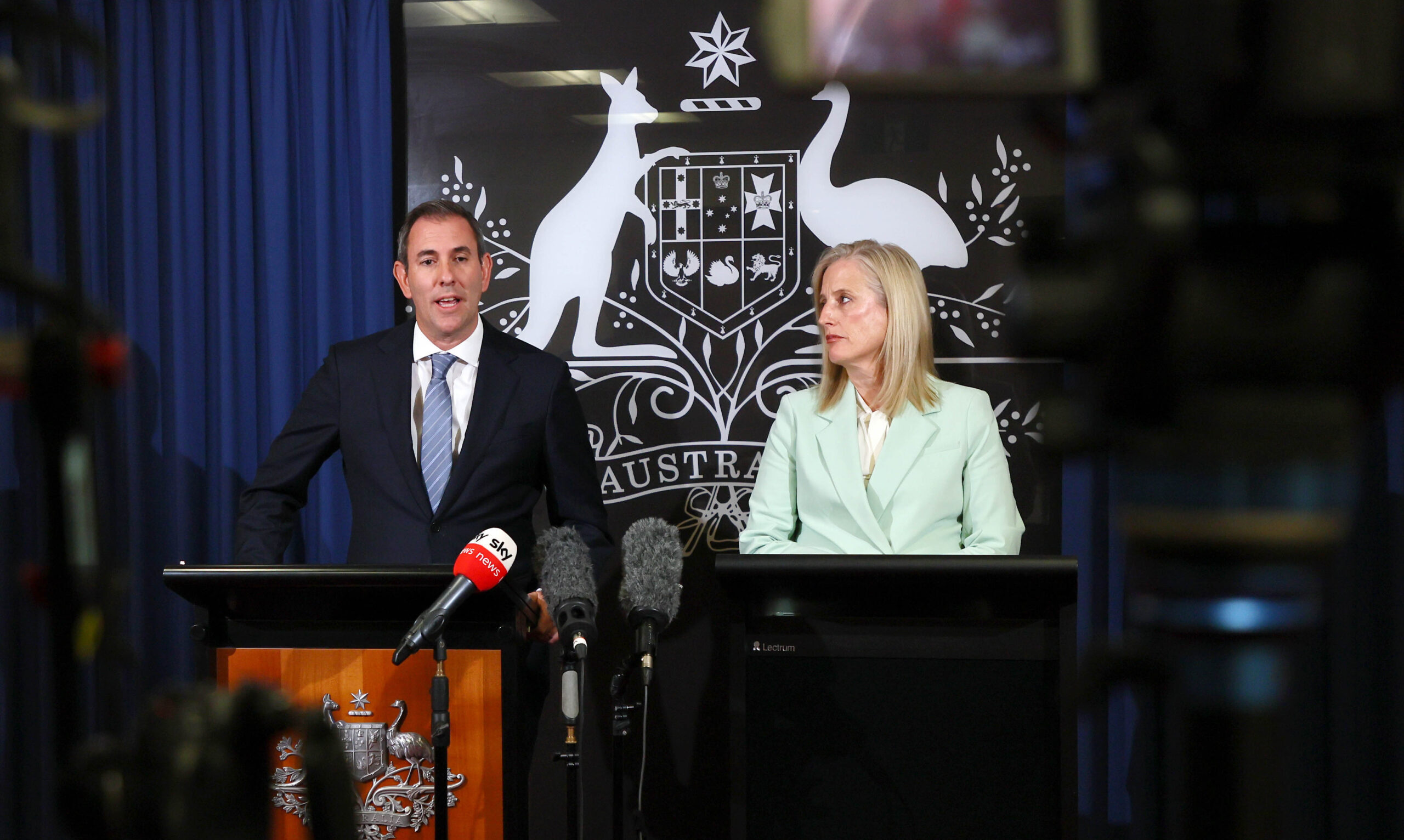
    Labor will cut back on outside consultants and hike visa fees for foreign students to cover the extra cost of spending in the March budget.

    Please login below to view content or subscribe now.

    Membership Login

    Source link