Author: admin

  • Landmark New Mexico Education Equity Case Heads Back to Court Next Week – The 74

    Landmark New Mexico Education Equity Case Heads Back to Court Next Week – The 74


    Get stories like this delivered straight to your inbox. Sign up for The 74 Newsletter

    The parties in the long-running Yazzie-Martinez lawsuit over educational equity in New Mexico will meet in court next week to discuss a motion alleging the state has not complied with previous court orders, along with the plaintiffs’ request for a “remedial plan.”

    The case, originally filed in 2014, led to a finding in 2018 by the late First Judicial District Court Judge Sarah Singleton, who found that the state was not providing equitable educational opportunities to Native students, English language learners, low-income students and students with disabilities. She ordered the state to take steps to address the needs of these at-risk students and ensure schools have the resources to provide them with the education they deserve.

    Attorneys representing Louise Martinez and Wilhelmina Yazzie filed a joint motion of non-compliance in September 2024, arguing that the state has not made significant progress in addressing the needs of at-risk students. Specifically, in their motion, plaintiffs point to ongoing poor student performance; high turnover within the New Mexico Public Education Department; high teacher vacancy rates; and a lack of targeted funding for at-risk students.

    Since Singleton’s decision, the state has increased funding for public education, but students are still being overlooked, Melissa Candelaria, education director for the NM Center on Law and Poverty, which represents the plaintiffs, told Source NM.

    The motion hearing is scheduled for 9 a.m. Tuesday, April 29.

    “We believe the court’s ruling should have been a wakeup call,” Candelaria said. “Our students can’t afford more bureaucratic churn and empty promises from PED. And we believe, the plaintiffs believe, the court must step in to enforce a real community-driven plan that reflects the urgency and the gravity to improve the overall state education system.”

    Candelaria noted that the joint motion was not opposed by New Mexico Attorney General Raúl Torrez, who represents the state in the case. Court documents state that Torrez “agrees” that there has been “insufficient compliance.” However, private counsel for the PED did oppose the motion, particularly the plaintiff’s proposed remedial plan.

    PED had not responded to a request from Source NM for comment prior to publication.

    That plan, as detailed in court documents, includes nine components or goals, including: establishing a multicultural and multilingual educational framework; building an education workforce; increasing access to technology; developing methods of accountability; and strengthening the capacity of the PED.

    “There’s no longer a debate that a statewide education plan is necessary. Now, the decision is who leads that development,” Candelaria said.

    Candelaria also told Source the plaintiffs propose the Legislative Education Study Committee take the lead in developing the remedial plan because the department’s staff have knowledge and expertise in the area of education and have access to data. The department also has a director and permanent staff, as opposed to the PED, which has had multiple cabinet secretaries lead the department in the nearly seven years since Singleton’s decision, she noted.

    “Without a plan, the efforts by the Legislature will still be piecemeal and scattershot and it’s not going to result in what we want to see in a transformed education system that’s equitable and that builds on the strengths and provides for the needs of the four student groups in the case,” Candelaria said.

    The PED opposes the motion on this point, according to court documents, and argues the education department should take the lead in developing the plan. The department also says more time is needed to create and then implement the plan. Plaintiffs suggest that the five-year plan should be developed within six months of this month’s hearing.

    Wilhelmina Yazzie, one of the original plaintiffs, told Source she feels “very optimistic” ahead of the motion hearing and that she hopes the judge agrees a plan is necessary. She added that the inequities in public education were emphasized during the COVID-19 pandemic.

    “Especially our tribal communities who are really deeply impacted by that, and they still continue to suffer to the present time right now and just by the state not taking the action that we need them to take,” Yazzie said.

    Yazzie’s son, Xavier Nez, 22, was in third grade when the lawsuit started. He is now in his third year studying at the University of New Mexico. Candelaria pointed out that since the 2018 court decision, multiple classes of students have made their way through the state’s educational system and failed to receive a comprehensive education. Yazzie’s youngest child, Kimimila Black Moon, is currently in third grade but attends private school.

    “She’s not in the public school because I still haven’t seen changes,” she said.

    Yazzie told Source that another goal of hers is to get out into communities throughout the state and speak with families because many parents are still unaware of the lawsuit and “they’re the ones that firsthand know what their children need, what they’re lacking, how they’re doing in school.”

    Source New Mexico is part of States Newsroom, a nonprofit news network supported by grants and a coalition of donors as a 501c(3) public charity. Source New Mexico maintains editorial independence. Contact Editor Julia Goldberg for questions: [email protected].


    Get stories like these delivered straight to your inbox. Sign up for The 74 Newsletter

    Source link

  • Lawyers in New Jersey School Segregation Case Want Appellate Court to Weigh in – The 74

    Lawyers in New Jersey School Segregation Case Want Appellate Court to Weigh in – The 74


    Get stories like this delivered straight to your inbox. Sign up for The 74 Newsletter

    Attorneys representing a group of New Jersey parents and activist groups are asking a state appellate court to weigh in on a case that could reshape the state’s public education system.

    At the center of the fight is whether New Jersey schools are unconstitutionally segregated by race and socioeconomic status. A lower court judge in October 2023 acknowledged the state’s public schools are segregated by race and that the state must act, but also found that the plaintiffs had failed to prove the entire system is segregated across all its districts.

    The parents’ attorneys filed a motion last week with the state’s appellate division asking it to hear the case.

    “It is imperative that no more students be deprived of these rights by the trial court’s avoidance of the straightforward conclusion compelled by the facts and the law in this case — that the state defendants, who are legally obligated to take action to desegregate public schools regardless of the reasons for that segregation, have acted unconstitutionally by failing to do so,” the attorneys wrote in the filing.

    Gov. Phil Murphy and the state Department of Education have until April 28 to respond to the plaintiffs’ new filing. A spokesman for the Murphy administration declined to comment.

    News of the new filing was first reported by Chalkbeat Newark.

    The case dates to 2018, when the Latino Action Network, the NAACP New Jersey State Conference, and several other families and groups sued the state alleging New Jersey failed to address de facto segregation in public schools. The plaintiffs cited data showing that nearly half of all Black and Latino students in New Jersey attend schools that are more than 90% non-white, in districts that are often just blocks from predominantly white districts.

    In New Jersey, students typically attend schools in the municipality where they live. Plaintiffs argued that long-standing housing policies that led to segregated residential neighborhoods led to segregated schools also. New Jersey is the seventh-most segregated state for Black and Latino students, the plaintiffs say.

    In October 2023, after Superior Court Judge Robert Lougy issued his ruling that acknowledged racial segregation in New Jersey schools but said it was not widespread, both sides entered mediation talks in hopes it would resolve more quickly than continued litigation.

    Attorneys for the parties said in February that it’s unlikely continuing the talks would “be constructive.”

    The plaintiffs’ attorneys say the lower court’s October ruling should be reversed. They want a judge to review what they say are six errors in the 2023 order, like the fact that Lougy did not identify a disputed fact.

    “Rather than reach the only logical conclusion that followed — that the state defendants violated plaintiffs’ constitutional rights — the trial court left the question of liability for another day,” the filing reads.

    If the appellate court denies the motion, the case would return to the trial court, or could be appealed to the state Supreme Court.

    New Jersey Monitor is part of States Newsroom, a nonprofit news network supported by grants and a coalition of donors as a 501c(3) public charity. New Jersey Monitor maintains editorial independence. Contact Editor Terrence T. McDonald for questions: [email protected].


    Get stories like these delivered straight to your inbox. Sign up for The 74 Newsletter
    Source link

  • Trump Versus Academia, April 25, 2025 (Bryan Alexander)

    Trump Versus Academia, April 25, 2025 (Bryan Alexander)

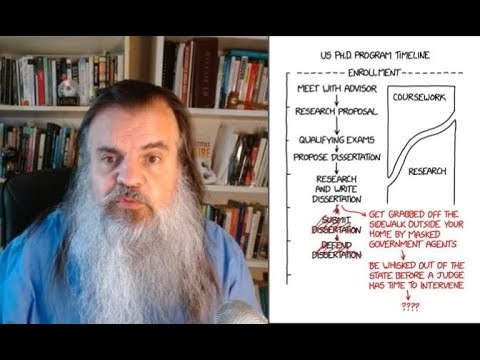
    Here’s my latest Trump and academia vlog report. If you’re new to this series, these videos are where I summarize what the Trump administration has been doing to higher education, and how colleges and universities have responded. Here are the latest developments since the last video, as of today, April 25, 2025. 

    Previous episodes here:

    Source link

  • Historic Black Church Eliminates Student Debt for SAU Seniors

    Historic Black Church Eliminates Student Debt for SAU Seniors

    Rev. Dr. Howard-John Wesley, Senior Pastor of Alfred Street Baptist Church.Alfred Street Baptist Church of Alexandria, Virginia, a prominent Black congregation located just outside Washington D.C., has donated $132,469 to Saint Augustine’s University (SAU) to eliminate the outstanding debt of 11 graduating seniors, enabling them to receive their diplomas debt-free at the May 3rd commencement ceremony.

    The timely donation comes as SAU faces a litany of challenges, including an appeal to hold on to its accreditation.

    The 222-year-old church, one of the nation’s oldest and largest predominantly African American congregations with approximately 13,000 members, has a long history of supporting historically Black colleges and universities (HBCUs). Church officials estimate about 60% of Alfred Street’s members are HBCU graduates themselves.

    “This act of grace by Alfred Street Baptist Church is nothing short of transformative for our students and our institution,” said SAU Interim President Dr. Marcus H. Burgess. “We are immensely grateful for this demonstration of faith and partnership.”

    The donation comes at a critical time when many small private colleges and HBCUs face financial challenges. The university had initially informed the entire graduating class that students with unpaid tuition balances could not participate in the commencement ceremony. While more than half of SAU’s graduating class managed to settle their balances independently, 11 students still needed assistance.

    “This is what ministry looks like,” said Rev. Dr. Howard-John Wesley, Senior Pastor of Alfred Street Baptist Church. “We believe in investing in students, in HBCUs, and in a future where financial hardship should never be a barrier to graduation.”

    This isn’t the first time Alfred Street Baptist Church has stepped up to support HBCU students. In 2019, the church raised $150,000 in a single weekend to pay off account balances for 34 graduating seniors at Howard University while also contributing $50,000 to assist Bennett College.

    The connection between SAU and Alfred Street was nurtured by SAU alumni Gilbert and Carolyn Knowles, who are members of the church.

    “When my wife and I discovered that our church, Alfred Street, approved the donation and the amount they would give to SAU, we cried tears of joy out of love for our church and our alma mater,” said Gilbert Knowles, a 1976 graduate.

    For students like SGA President Tillia Leary, a graduating senior from The Bahamas majoring in accounting, the donation has been life changing. “This incredible act of kindness lifted a major burden and affirmed my belief in the power of community and faith,” said Leary, who plans to attend Ball State University for her master’s degree.

    The timing of this gift coincides with SAU’s efforts to overcome recent challenges and chart a course forward. Representatives from Alfred Street Baptist Church will attend SAU’s commencement ceremony to celebrate with the students whose burdens they’ve helped lift.

    While this donation covers 11 seniors’ debt, many other SAU students still face financial hurdles totaling approximately $230,000. The university is calling on others moved by the church’s act of philanthropy, to contribute to their student relief funds or scholarship programs.

    Source link

  • DOD continues to shield bad actor schools that prey upon military servicemembers

    DOD continues to shield bad actor schools that prey upon military servicemembers

    For more than seven years, we have been waiting to obtain information
    from the US Department of Defense (DOD) about schools that prey upon servicemembers using DOD Tuition Assistance to further their college aspirations. And we have done it at our peril, repeatedly taking flak from people in DC.  

    As the Higher Education Inquirer reported earlier,
    DOD and these schools have had questionable relationships with these
    schools going back to the 1980s, with the for-profit college takeover of CCME, the Council of College and Military Educators.  

    Those who follow the higher education business know the names of the bad actors, some that are still in business (like the University of Phoenix and Colorado Tech) and some that have closed (like ITT Tech and the Art Institutes). Others have morphed into arms of state universities (Kaplan University becoming Purdue University Global and Ashford University becoming University of Arizona Global). 

    Accountability was supposed to happen during the Obama administration (with Executive Order 13607) but those rules were not fully implemented. Under the first Trump administration, these safeguards were largely ignored, and bad actor schools faced no penalties.  

    Some of these scandals were reported in the
    media, and have been forgotten.

    On April 1, 2025 we were again supposed to receive information about these bad actor schools, and the DOD officials who were complicit.  It didn’t happen. That FOIA (22-1203) which was initiated in July 2022 is now scheduled for a reply on July 3, 2025, three years from the original submission. 

    Previous FOIAs from 2019 also came up with no information.  And requests for information in 2017 from DOD officials were met with harassment from other parties. 

    The only thing we can be grateful for is that DOD continues to communicate with us. 


    Related links:

    Trump’s DOD Failed to Protect Servicemembers from Bad Actor Colleges, But We Demand More Evidence 

    DoD review: 0% of schools following TA rules (Military Times, 2018)

    Schools are struggling to meet TA rules, but DoD isn’t punishing them. Here’s why. (Military Times, 2019)

    Source link

  • Amazon Doc Probes Student Surveillance Harms – The 74

    Amazon Doc Probes Student Surveillance Harms – The 74

    School (in)Security is our biweekly briefing on the latest school safety news, vetted by Mark KeierleberSubscribe here.

    It all began when school officials mistook a blurry image of a Mike and Ike candy for pills. 

    Pennsylvania teenager Blake Robbins found himself at the center of a digital surveillance controversy that gave rise to student privacy debates amid schools’ growing reliance on ed tech. 

    Spy High, a four-part documentary series streaming now on Amazon Prime, puts the focus on a lawsuit filed in 2010 after Robbins’ affluent Pennsylvania school district accused him of dealing drugs — a conclusion officials reached after they surreptitiously snapped a photo of him at home with the chewy candy in hand. 

    Blake Robbins, then a high school student in Pennsylvania’s affluent Lower Merion School District, speaks to the press about his 2010 lawsuit alleging covert digital surveillance by educators. (Unrealistic Ideas)

    The moment had been captured on the webcam of his school-issued laptop — one of some 66,000 covert student images collected by the district, including one of Robbins asleep in his bed. 

    I caught up with Spy High Director Jody McVeigh-Schultz to discuss why the 15-year-old case offers cautionary lessons about student surveillance gone awry and how it informs contemporary student privacy debates. 

    How student surveillance plays out today: Meet the gatekeepers of students’ private lives. | The 74


    In the news

    Courts block DEI directive: Three federal courts ordered temporary halts on Thursday to Trump’s efforts to cancel student diversity initiatives — and demands for states to pledge allegiance to the administration’s interpretation of civil rights laws. | The 74

    President Donald Trump signed an executive order Wednesday that called for school discipline models “rooted in American values and traditional virtues,” taking aim at Obama- and Biden-era efforts to reduce racial disparities in suspensions and expulsions. | Politico

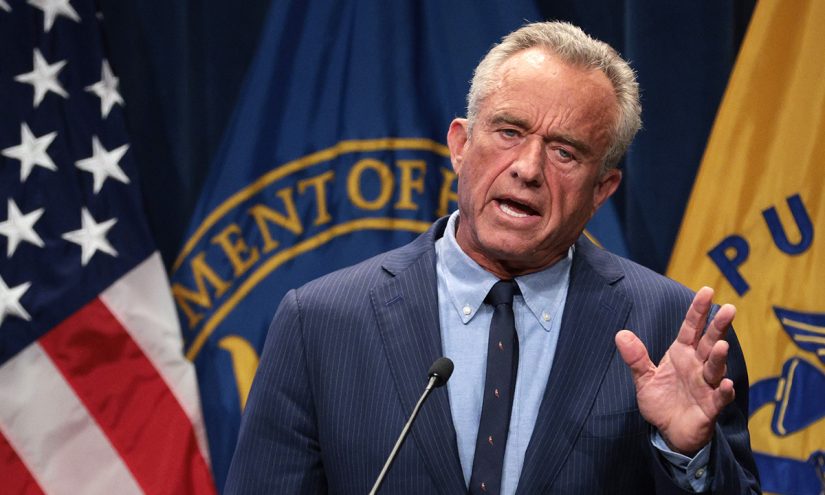
    U.S. Secretary of Health and Human Services Robert F. Kennedy Jr. speaks about a new autism study during a news conference on April 16, 2025. (Getty Images)

    ‘The history there is deeply, deeply disturbed’: Disability-rights advocates have decried plans at the National Institutes of Health to compile Amerians’ private medical records in a “disease registry” to track children and other people with autism. | The 74

    • Health and Human Services Secretary Robert F. Kennedy Jr., faced criticism for recent comments that many kids “were fully functional and regressed because of some environmental exposure into autism when they’re 2 years old.” | ABC News

    A new lawsuit filed by students at military-run schools accuses the Defense Department of harming their learning opportunities by banning books related to “gender ideology” or “divisive equity ideology,” including texts that refer to slavery and sexual harassment prevention. | Military Times

    Sign-up for the School (in)Security newsletter.

    Get the most critical news and information about students’ rights, safety and well-being delivered straight to your inbox.

    California lawmakers are demanding answers after Department of Homeland Security agents visited two Los Angeles elementary schools and asked to speak with five students who the federal agency said “arrived unaccompanied at the border.” | LAist

    ‘We all deserve reparations’: White House aide Stephen Miller said in an interview last week the country “used to have a functioning public school system” until it was destroyed by “open borders.” | The New Republic

    The Justice Department seized thousands of photos and videos in an investigation of a former University of Michigan assistant football coach who was indicted on allegations he hacked into student athletes’ private accounts to steal intimate images. | CBS Sports

    A 48-year-old mother was arrested and accused of bringing a gun to her daughter’s Indiana elementary school and threatening the girl’s teacher over a classroom assignment about flags. While discussing flags, the teacher reportedly referred to a rainbow flag in the classroom with the words “be kind.” | NBC News

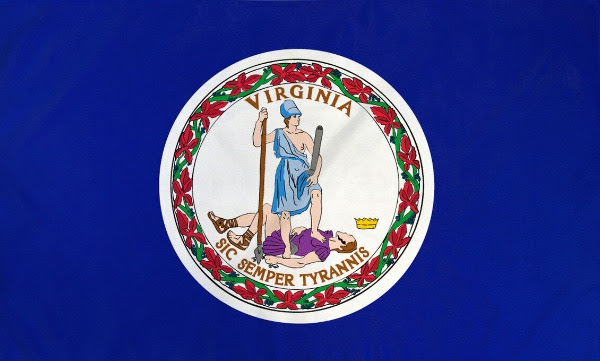
    Banning ‘frontal nudity’: A Texas school district has removed lessons on Virginia history from an online learning platform for elementary school students because the commonwealth’s flag depicts the Roman goddess Virtus with an exposed breast. | Axios

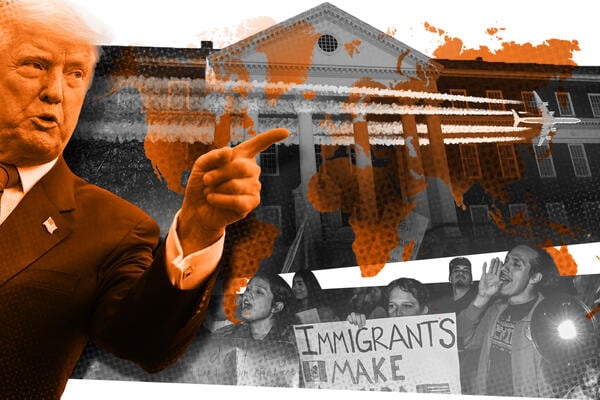
    The Supreme Court will hear oral arguments next month to weigh Trump’s executive order eliminating birthright citizenship, bringing into question a 127-year-old court precedent. | NPR

    A class-action lawsuit accuses tech giant Google of amassing “thousands of data points that span a child’s life” without the consent of students or their parents. | Bloomberg Law

    A Florida teacher is out of a job after she called a student by their preferred name, allegedly violating a 2023 Florida law that requires schools to receive parental permission to refer to students by anything other than their legal names. | Click Orlando

    The vice president of the Buffalo, New York, chapter of Bikers Against Child Abuse was arrested and accused of sex crimes against children. | WIVB


    ICYMI @The74

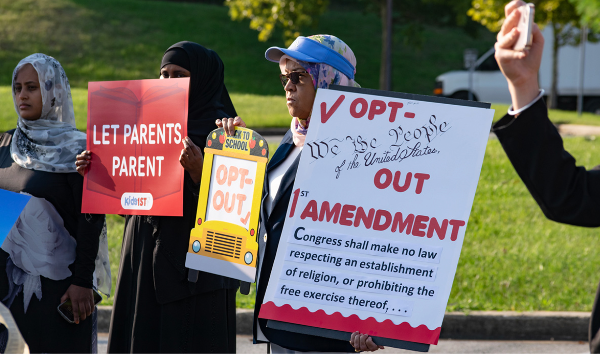
    Supreme Court Shows Support for Parents Who Want Opt-Outs from LGBTQ Storybooks

    ‘There Goes My Son’s Help:’ Wave of Washington Head Starts Shut Down as Chaos Engulfs Federal Program

    State Officials Sue Trump Administration for Halting COVID School Aid

    Protecting Children Online Takes Technology, Human Oversight and Accountability


    Emotional Support

    Don’t even think about touching Matilda’s cactus.


    Get stories like these delivered straight to your inbox. Sign up for The 74 Newsletter
    Source link

  • Higher Ed Wins a SEVIS Battle, Not the Visa War

    Higher Ed Wins a SEVIS Battle, Not the Visa War

    International students, colleges and advocates caught a break Friday after weeks of confusion and disruptions. After thousands of students had learned their Student and Exchange Visitor Program (SEVIS) status was revoked, they were relieved to hear that Immigrations and Customs Enforcement was restoring students’ statuses nationwide.

    “I was in class when the news broke, and there was a sense of relief,” said Chris. R Glass, a professor at Boston University’s Center for International Higher Education. “But it’s not the kind of relief that things are getting better, just that they’re not getting worse.”

    The Trump administration’s reversal was a key win in dozens of lawsuits across the country that argued that eliminating thousands of students’ SEVIS records without notice was unconstitutional. But threats against international students still loom large, experts say. The most pressing question: will this happen again?

    In its notice to a federal judge, the administration did not say that it was finished eliminating students’ SEVIS records, just that “ICE will not modify [a] record solely based on the NCIC [National Crime Information Center] finding that resulted in the recent SEVIS record termination,” according to the court filing. And ICE is working a policy framework for terminating SEVIS records.

    Reactivating students’ records doesn’t erase questions about the genesis of “this unlawful policy,” said Miriam Feldblum, co-founder, president and CEO of the Presidents’ Alliance on Higher Education and Immigration. “We need to understand why it happened and what is the policy structure.”

    The Presidents’ Alliance filed a lawsuit Thursday night, challenging the SEVIS record terminations, arguing that students “were stripped of valid status without warning, individualized explanation, and an opportunity to respond,” and that the government’s actions harmed member institutions’ ability to attract, retain and serve international students. The Presidents’ Alliance asks the court to enjoin DHS from future terminations affecting students at member institutions.

    “We are gratified to see this change of directions to restore records,” Feldblum said. “That does not erase the need for national, systemic litigation.”

    The Trump administration’s decision to reinstate student visas also does not negate the legal grounds for cases to continue, said Elora Mukherjee, Director of the Columbia Law School Immigrant Rights Center. Federal courts have the power to enjoin the executive branch on an issue that’s capable of repetition to stop the harm from occurring in the future, which in this case would be another sweeping removal of students’ legal standings, she added.

    The Presidents’ Alliance hopes to learn more about the administration’s intentions, policy structure and plans through its lawsuit, Feldblum said.

    Advocates for international students emphasized that while students may have regained legal standing to study and work in the U.S., the change in their status can have greater effects on their immigration status.

    The federal government said it would restore terminated SEVIS records, but some students had their visas revoked, said Fanta Aw, CEO and executive director of NAFSA, the association of international educators. Students will have to visit an embassy to receive their visa, facing long wait-times, and there’s no guarantee that they’ll be able to regain it.

    For those who didn’t lose their visas, terminations can have serious implications for students’ continuity of time in the U.S., Aw said. The stated reason for SEVIS termination and notation in their records can similarly have negative long-term consequences, Feldblum said.

    On campuses, administrators and students are still confused about what comes next, but there’s a clear feeling of relief, Feldblum and Aw said.

    As of Friday, Inside Higher Ed identified over 1,840 students and recent graduates from more than 280 colleges and universities who have reported SEVIS record shifts.

    Most institutions didn’t receive notification when students’ records changed initially, and they’re not getting notice when they’re reauthorized, Aw said. Just like with revocations, staff are checking SEVIS regularly to see if there’s been a status change.

    A few colleges—including Harvard University, Rice University, Stanford University, Tufts University, the University of Nebraska-Lincoln and the University of California, Berkeley—reported that some of their impacted students have had visas or SEVIS statuses restored. Some students still have terminated records.

    The slow restoration is possibly tied to the tedious nature of the work, Aw said, as federal workers have to manually restore each student’s status.

    NAFSA is starting to track visa restorations and will report numbers on Monday, Aw said, including the number of restorations and institution type.

    The Presidents’ Alliance will be in touch with member institutions to provide updated guidance on how to proceed, Feldblum said.

    This reversal doesn’t eliminate the harm the policy caused, experts noted. Students who left the country based on communication from the Trump administration or their own colleges and universities will possibly face challenges returning. Others were told to stop attending class, working or conducting research. With restored SEVIS records, students will be able to resume those activities, but it doesn’t fix everything.

    Over the past month, international students have experienced high levels of anxiety and stress and a lack of psychological safety, which can impact their personal well-being and retention in higher education.

    “You can’t get that time back, that lack of sleep back, that anxiety back,” Aw said. “Trust is broken for students that this is a system that is fair and consistent and transparent. I don’t have to tell you how hard it is to rebuild that.”

    Tonight, at least, some students can get a good night’s sleep, Aw said.

    Source link

  • Federal agency reportedly texts survey to professors asking if they’re Jewish or Israeli

    Federal agency reportedly texts survey to professors asking if they’re Jewish or Israeli

    This audio is auto-generated. Please let us know if you have feedback.

    Dive Brief:

    • Faculty members of Columbia University and Columbia-affiliated Barnard College received text messages from the U.S. Equal Employment Opportunity Commission asking them to complete a survey inquiring about whether they are Jewish or Israeli, multiple news outlets reported April 23.
    • According to a screenshot of a message posted by CNN, EEOC said responses to the survey would be kept confidential “to the extent allowed by law.” The screenshot said EEOC was conducting an inquiry into Barnard College and that, should the agency find that the college violated laws enforced by EEOC, some of the information of respondents may be disclosed.
    • In an email to HR Dive, EEOC declined to confirm that it had sent the messages. Columbia, in a separate email, declined to confirm that employees had received messages from EEOC.

    Dive Insight:

    Federal officials have scrutinized Columbia following a series of on-campus protests in 2024. In August of that year, Rep. Virginia Foxx, R-N.C., and former chairwoman of the House Committee on Education and the Workforce, issued several subpoenas to Columbia leaders as part of an investigation into antisemitism at the university and whether the protests had created a hostile environment in violation of the 1964 Civil Rights Act.

    Last month, EEOC Acting Chair Andrea Lucas issued a statement in which she pledged to hold universities and colleges accountable for workplace antisemitism. Lucas’ statement did not name any specific institutions, but it did cite “disruptive and violent protests in violation of campus policies” as an example of severe or pervasive antisemitic conduct that could violate Title VII of the Civil Rights Act.

    “Under the guise of promoting free speech, many universities have actually become a haven for antisemitic conduct, often in violation of the universities’ own time, place, and manner policies, as well as civil rights law,” Lucas said in the March 5 statement.

    EEOC did not confirm whether messages sent to Columbia and Barnard faculty were part of an ongoing investigation into either institution. “Per federal law, we cannot comment on investigations, nor can we confirm or deny the existence of an investigation,” the agency said.

    Similarly, Columbia declined to comment on a pending investigation, but a university official said Columbia had told staff that it gave “affected employees notice that the University was required to provide certain information in compliance with a subpoena. The University did not provide the information voluntarily.”

    Columbia did not respond to a request for comment on whether it had advised staff not to respond to EEOC’s messages.

    News of the inquiry drew criticism from one of EEOC’s administrative judges, Karen Ortiz, who sent an all-staff email directed to EEOC Acting Chair Andrea Lucas.

    Ortiz wrote that Lucas should consider resigning; in an interview with HR Dive, she said the email was in response to news of the text messages and other recent agency actions, including its decision to abandon gender-identity discrimination litigation and halting some claims processing. She said the survey arguably was not within Lucas’ authority to send and could be understood as an attempt to intimidate Columbia and Barnard.

    “It’s a complete overreach,” Ortiz said of the survey.

    Source link

  • White House declares goal to reach 1M new apprentices per year

    White House declares goal to reach 1M new apprentices per year

    This audio is auto-generated. Please let us know if you have feedback.

    President Donald Trump directed the secretaries of Labor, Education and Commerce to submit a plan within 120 days to “reach and surpass 1 million new active apprentices,” according to an executive order signed April 23.

    The fact sheet castigated previous administrations’ investments in higher education, stating that many currently funded programs — including the Workforce Investment and Opportunity Act, signed into law in 2014 — do not have the incentives necessary “to meet workforce training needs.”

    The requested plan must identify:

    • Avenues to expand registered apprenticeships to new industries,
    • Ways to scale apprenticeships across the country, and
    • Ways to improve connections between the education system and apprenticeship programs.

    The fact sheet suggests that the intention of the administration is to reach this 1 million goal each year.

    The order also calls upon the departments of Labor, Commerce and Education to “improve transparency on the performance outcomes of workforce development programs” as well as any credentials that might be supported with federal dollars.

    “This decisive action is yet another example of President Trump keeping his promise to American workers, empowering them to fill good-paying, in-demand jobs that will secure our economic comeback,” Lori Chavez-DeRemer, DOL secretary, said in a statement.

    The White House called out a shortage of construction and durable goods workers that is projected to persist and grow. The fact sheet also flags AI as a focal point for development.

    “As the potential of American AI increases, and as America reshores manufacturing and makes Made in America a mark of international envy, America will need more skilled tradesman [sic] than we’re prepared to train,” the fact sheet said.

    Various reports, including one prepared for the DOL Chief Evaluation Office, have shown how registered apprenticeships can help workers access living wages, particularly workers in construction. That report defined a living wage as “the earnings required to pay for minimum basic needs, including food, housing, transportation, clothing, and other essentials.”

    During Trump’s first administration, the DOL published an apprenticeship rule that enabled employers to create their own versions of registered apprenticeship programs, called Industry-Recognized Apprenticeship Programs. These programs were vetted and approved by third parties, including industry groups. The Biden DOL rescinded the Trump rule in September 2022.

    Source link

  • How it Could Impact Schools Nationwide – The 74

    How it Could Impact Schools Nationwide – The 74


    Get stories like this delivered straight to your inbox. Sign up for The 74 Newsletter

    This story was originally reported by Nadra Nittle of The 19th.

    “A direct assault on the Texas public education system.”

    That’s how social justice groups like the Texas Freedom Network are describing the passage of a bill that would create a $1 billion school voucher program in the state. The Texas House passed Senate Bill 2 early Thursday, with support from Gov. Greg Abbott, who has championed school vouchers. These taxpayer-funded subsidies divert money away from public schools, allowing families to use them to cover their children’s tuition at private or religious schools.

    “This is part of a coordinated strategy to dismantle public education statewide and nationally, since Donald Trump literally called Republicans and told them that they had to vote yes on this voucher scheme,” said Emily Witt, spokesperson for the Texas Freedom Network, a grassroots organization of religious and community leaders. “Republicans have done a very coordinated job of framing this as something that it’s not. It’s certainly not ‘choice.’ It’s going to really devastate a lot of public schools and rural communities here in Texas.”

    The voucher bill’s passage has been characterized as a win for both Abbott and Trump. Abbott tried unsuccessfully to get voucher legislation passed in 2023. Trump, in January, issued an executive order directing the education secretary to explore ways to route federal funding to states and families interested in school choice initiatives, which give students the option to attend their preferred public, private, charter or religious school. Critics of vouchers, a controversial way to facilitate school choice, worry that they take away valuable resources from public schools. They also argue that private schools may exclude students with disabilities or who are LGBTQ+ or have LGBTQ+ parents. Students from low-income or rural areas may also struggle to access private school, as may those from certain ethnic groups or religious backgrounds. The voucher program does not guarantee students admission to private schools.

    The approval of a voucher program in the nation’s second most populous state could create a ripple effect across the United States, where the voucher movement has gained momentum in recent years in places like Arizona, Arkansas, Florida and Wisconsin — often with the help of billionaire backers. The Texas bill next goes to the state Senate, where lawmakers in each chamber are expected to work out the disparities in their voucher plans such as how much money participants should get and which participants should be prioritized.

    “It is absurd for Gov. Abbott and his pro-voucher allies to claim that a diversion of $1 billion in tax funds to private schools over the next budget cycle will not hurt our underfunded public schools, where the vast majority of our students will remain,” Ovidia Molina, president of education labor organization the Texas State Teachers Association, said in a statement. “That voucher drain will increase to $3 billion by 2028 and more than $4 billion by 2030 if this voucher bill becomes law, the Legislative Budget Board projects.”

    Texas Gov. Greg Abbott sits before President Donald Trump arrives to speak at an education event and executive order signing in the East Room of the White House in Washington, Thursday, March 20, 2025. (Ben Curtis/AP Photo)

    In Texas, most students attend public schools, with an estimated 6 percent enrolled in private schools. Rural communities overwhelmingly attend public schools because of the dearth of private schools in such areas. Accordingly, voters in the country have typically opposed school vouchers, perceived as vehicles to help families in cities send their kids to private school. Even with the school voucher program, experts do not expect private schools to be inundated with new students from public schools.

    “Most kids are still going to have to be served by public schools,” Witt said. “We do know that in other states where vouchers have passed, that most of the kids using those vouchers already were in private schools.”

    While vouchers have been promoted as a way to help low-income families choose a quality education for their children, the subsidies often aren’t large enough to cover the tuition and fees associated with a private school education. The school voucher program the Texas House just approved is generous, as it will give families who qualify up to about $10,000 per child. The average K-12 private school tuition in Texas is over $11,000, with tuition for schools that specialize in special education topping $19,000 and elite institutions reaching as high as $40,000. Parents would need to make up the difference for tuition costs that vouchers don’t cover, a move critics of the subsidies say is out of reach for disadvantaged families.

    “So it’s still going to benefit mostly wealthy families,” Witt said. “Let’s say that it does cover the cost of tuition. It’s not going to cover extracurriculars. It’s not going to cover transportation. Private schools are not required to offer free transportation to and from school like public schools are, and they also don’t have to accept every child.”

    Religious institutions, she said, could turn away students who don’t belong to the faith affiliated with the school. A private school could accept a student with a disability only to discharge them later if the school doesn’t have the resources to educate that child or is no longer interested in doing so.

    “They could essentially reject a child that they feel just doesn’t meet the culture of their school,” Witt continued. “That could be because a child comes from a low-income family. It could be because they’re not White. It could be because they’re LGBTQ or their parents are LGBTQ or not married.”

    Private schools also don’t have to use standardized tests, like the State of Texas Assessments of Academic Readiness (STAAR), used in public schools to track student progress. The GOP-run Texas House, she said, rejected an amendment that would have required private schools to use standardized testing to measure student outcomes just as public schools do.

    “I don’t know how we’ll see if this program works and how it benefits kids, especially kids with disabilities,” she said.

    House Republicans tabled 44 amendments to the legislation, including one that would have led to a referendum on school vouchers in November, effectively blocking voters from deciding the issue.

    The bill is an additional blow as public schools slash programs and raise class sizes under a budget crunch, Molina said in her statement.

    “Texas already spends more than $5,000 less per student than the national average, ranking Texas 46th among the states and the District of Columbia,” she said. “The school finance bill also approved by the House will not come close to ending the state’s financial neglect of public education. The House’s $395 increase in the basic allotment, which hasn’t been increased in six years, will provide only a third of what is needed to cover districts’ losses from inflation alone.”

    Supporters of the voucher program may not be happy with it a year from now, Witt predicts. In 2022, Arizona passed its universal school voucher program. It covers expenses related to private school tuition, homeschooling and related academic needs, but now the program faces a backlash as the costs associated with it have led to questions about oversight and funding for public schools.

    “Republicans have sold people a lie,” Witt said. “They’ve said repeatedly that it won’t harm public schools, and there’s just no way that it won’t. And I do think that’s their goal. I genuinely think that their goal is to eliminate public education, and this is the first step there. A year from now, people are going to see that the neighborhood schools in their communities are shuttering or having to cut resources for students, and they’re going to be really upset. And I think that there’s going to be hell to pay at the ballot box.”


    Get stories like these delivered straight to your inbox. Sign up for The 74 Newsletter
    Source link