Author: admin

  • A Microcourse for Sophomore Student Success

    A Microcourse for Sophomore Student Success

    Starting college can be a daunting transition for many students, with some moving cities or states and integrating into a new world of learning. That’s why most colleges invest significant time and energy to ensure first-year students have a successful start, connecting them to peers, support resources and faculty invested in their personal and academic growth.

    But the support often lags during the transition to sophomore year. Retention is a key factor in timely degree completion; students who leave college after the first year are much less likely to ever finish their program.

    That’s why DePaul University in Chicago piloted a new intervention this summer to bridge the transition from first-year to sophomore status. Through short online modules, students improved their time management, money management and career skills, preparing them to tackle the new academic year.

    What’s the need: As a university, DePaul has focused on improving second-year retention, said Jaclyn Jensen, professor of management and associate dean for undergraduate programs in the Driehaus College of Business at DePaul.

    Jensen was approached by a DePaul alumna, Pam Schilling, co-founder of the ed-tech company Archer Career, who was looking to apply for the Illinois Innovation Voucher program. The program provides funding for small or medium-size businesses that partner with higher education institutions in the state.

    Archer Career offers online, self-paced microlearning courses to support students and early-career professionals in achieving their career goals. Topics range from job search skills, such as networking or how to develop a LinkedIn profile, to personal skills, including identifying goals and career exploration.

    “This opportunity to seek funding was also the catalyst between leveraging our focus on retention in business students and that connected really seamlessly with her platform,” Jensen explained.

    How it works: The Rising Sophomore Success Program is structured as a collection of 10-minute modules, which include video and interactive activities. To select relevant course topics for RSSP participants, DePaul leaders used historical data on why students left the university, as well as demographic information to identify common pain points in the student experience.

    For example, DePaul has a large share of commuter students, so building students’ time management and executive functioning skills was important to enable them to juggle their various responsibilities.

    Students applied to be admitted to the program and completed the course during the summer after their first year.

    “From a student standpoint, we thought, ‘OK, we have this time when you’re not overwhelmed by taking multiple classes and you might actually have some time to carve out in meaningful ways to invest in your own success,’” Jensen said.

    Students were also supported by a peer mentor, an upper-level undergraduate in the business school, who facilitated weekly check-ins, talked through challenges and encouraged them in their learning.

    In addition, each student was paired with a professional mentor, either someone already in their support network or a graduate who could provide career advice.

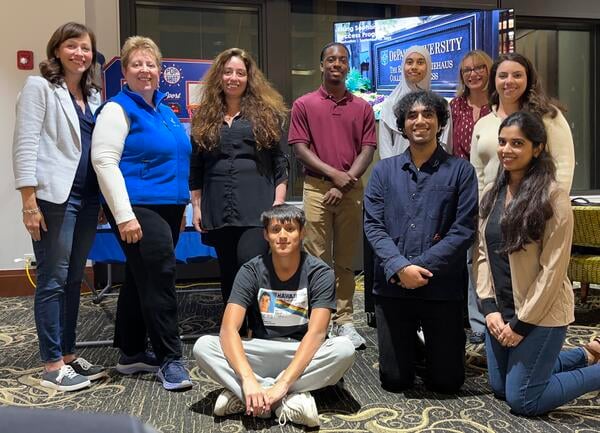
    For the pilot cohort, DePaul recruited 10 rising sophomores in the Driehaus College of Business, which included three incoming transfer students. The participants were celebrated with a kickoff event in the spring and a graduation ceremony during the fall after completing their Archer Career courses.

    What’s next: Following a successful pilot, DePaul and Archer Career were awarded a voucher from the state to integrate agentic artificial intelligence into the platform. It also provides funding for Archer Career and for DePaul personnel, including the peer mentor, an intern and a faculty researcher.

    The AI will offer personalized nudges and encouragement to students as they navigate the platform, similar to the way a coach might. Previously, a student intern hired to work on user design drafted messages for the peer mentor to send to students. Now, the university will automate the messages using AI.

    The nudges “will still rely on the behavioral data of students who are engaging in the platform, but it won’t be a member of the team manually sending those messages out at a particular time, but leveraging technology to help us do things like that,” Jensen explained.

    The goal is to scale the program to maximize impact and increase the number of students who can participate, Jensen said. DePaul plans to launch a more robust pilot of 50 student participants in summer 2026.

    If your student success program has a unique feature or twist, we’d like to know about it. Click here to submit.

    This article has been updated to clarify Jaclyn Jensen’s title.
    Source link

  • Advocates Defend In-State Tuition for Undocumented Students

    Advocates Defend In-State Tuition for Undocumented Students

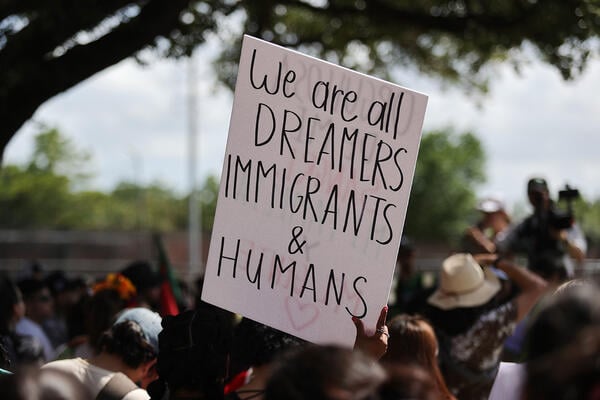
    Immigrant students and their advocates are working to reopen federal lawsuits that ended in-state tuition benefits for undocumented students in two states and another state where the same outcome seems imminent. Advocates say the judges ruled in favor of the government without a public hearing and the affected students weren’t given the opportunity to defend the policies.

    Since the summer, the U.S. Department of Justice challenged in-state tuition policies in Illinois, Kentucky, Minnesota, Oklahoma and Texas, claiming state laws extending in-state tuition prices to undocumented students breach federal law.

    In Texas and Oklahoma, attorneys general quickly sided with the DOJ and judges swiftly ruled to end in-state tuition benefits for undocumented students. As a result, tuition tripled for some undocumented students this fall, forcing them to make difficult choices about whether they could afford to stay enrolled.

    Kentucky’s undocumented students could soon face the same dilemma. The Kentucky Council on Postsecondary Education agreed to end in-state tuition benefits for local undocumented students in a settlement filed in September, but a judge has yet to make a ruling. Meanwhile, legal battles in Minnesota and Illinois are ongoing as these states defend their policies.

    Since these lawsuits first emerged, civil rights groups and students have sought to intervene or become parties to them. They’re hoping to reopen the quickly closed cases to have their say in court.

    A Latino civil rights organization, the Mexican American Legal Defense and Educational Fund, was the first to file a motion to intervene on behalf of undocumented students in Texas in June. A month later, the American Civil Liberties Union of Texas, the Texas Civil Rights Project, Democracy Forward and the National Immigration Law Center followed suit. They filed their own emergency motions to intervene on behalf of the activist group La Unión del Pueblo Entero, the Austin Community College District’s Board of Trustees and Oscar Silva, a student at the University of North Texas.

    MALDEF filed a similar motion on behalf of a group of undocumented students in Kentucky in August. And last week, the organization moved to intervene for students in Oklahoma, as well.

    Thomas A. Saenz, MALDEF president and general counsel, said undocumented students in Kentucky, Oklahoma and Texas “were promised regular tuition, and as a result of that promise, made the decision to attend public higher education institutions in those states,” but “that promise was stripped away wrongfully” and without public input.

    He stressed that, except for in extreme circumstances, such as cases involving national security, federal courts are meant to do their work in the public eye. But the Texas and Oklahoma laws got the ax without a public hearing. He also argued state lawmakers who dislike these policies can seek to repeal them, like any other state law, but there’s “no basis for legally challenging them.”

    “They’re not allowed to close the public out, do things behind closed doors,” Saenz said. “We ought to expect our courts to conduct their work in public. And that did not happen in Texas. It did not happen in Oklahoma.”

    A Bumpy Road

    Despite students and advocates’ efforts, the motions to intervene have hit a legal setback.

    In Texas, U.S. District Judge Reed O’Connor denied both MALDEF’s and the other groups’ motions to intervene. O’Connor, a George W. Bush appointee, said in court filings he agreed with the federal government and Texas that the motions were “legally futile” because federal law “pre-empts” the challenged Texas law. All of the groups seeking to intervene appealed the decision to the U.S. Court of Appeals for the Fifth Circuit.

    Saenz pushed back on the judge’s reasoning, saying O’Connor agreed with Texas and the DOJ’s conclusion “without any argument” or a public hearing where he could have heard a defense of the Texas Dream Act, the 24-year-old law that offered in-state tuition to undocumented students.

    “No administration of either party in nearly a quarter century has ever challenged the Texas Dream Act, so his conclusion of futility is simply ludicrous,” Saenz said.

    The law was never “presented,” according to Saenz. “That’s the way the courts are supposed to work. You’re supposed to have [an] argument presented in an adversarial manner. He simply signed off on a concocted agreement” between the Texas and U.S. attorneys general, he said.

    A group of higher ed institutions and organizations have rallied behind MALDEF and other advocacy groups. The Presidents’ Alliance on Higher Education and Immigration filed a 43-page amicus brief with the Fifth Circuit last week, defending interveners in Texas. Thirty-seven colleges, universities, higher education and immigrant rights organizations also signed on to the amicus brief, including the American Association of Colleges and Universities and the Association of Catholic Colleges and Universities.

    The district court decision “violates democratic principles by denying all interested parties their right to be heard,” the amicus brief read.

    Whether or not intervention efforts succeed, the stakes of these overturned state laws are too high not to try everything possible, said Miriam Feldblum, president and CEO of the Presidents’ Alliance.

    “This is about workforce development and supporting our domestic—including immigrant—talent pipeline that colleges and universities train, educate, nurture, and that go on to fuel the workforces … in communities and states,” she said.

    She also described intervening as a matter of “fairness.”

    “This is not about special treatment of undocumented students,” Feldblum said. “The tuition-equity challenges are targeting students who have grown up in the U.S., who have graduated from local high schools to pursue postsecondary education. This is what we want them to do. This is why we’re investing in their education.”

    Despite the roadblock, Saenz said he’s still confident motions to intervene will ultimately triumph.

    “I’m very hopeful, because it’s the law,” he said. “Intervention is legally required to be granted in all of these cases. And when we get to the merits of whether the tuition-equity laws are pre-empted or not, the law is absolutely on our side.”

    Source link

  • Our mission –  if we choose to accept it…

    Our mission –  if we choose to accept it…

     This blog was kindly authored by Andy Westwood, Professor of Public Policy, Government and Business at the University of Manchester. It is the sixth blog in HEPI’s series responding to the post-16 education and skills white paper. You can find the other blog’s in the series here, here, here, here and here.

    Now we’ve had time to consider the post-16 white paper, we can think seriously about implementation and what’s needed to deliver its vision. Both in the governmental architecture that will oversee and drive it, and in the universities and colleges charged with its delivery. We know the overall vision is broad – the Departments for Education; Science, Innovation & Technology; and Work & Pensions have signed the strategy, but Business, the Treasury and the Home Office also retain interests in its success. As Philip Augar notes in the Financial Times, it’s right to prioritise such a ‘system-wide approach’. Labour will be hoping these proposals, alongside their industrial strategy, endure for the longer term and support both economic growth and improved living standards. But as Augar and Theresa May know, this cannot be guaranteed.

    Overall, it’s a radical shift from the last decade in three specific ways – first bringing them all together into a coherent whole; second for a single system to be more planned and coordinated than market driven; and third, to intervene, shape and direct both institutions and provision within it.

    Trailed in the PM’s conference speech in Liverpool, the white paper offers an expansive tertiary vision – with both R&D and welfare alongside teaching and learning. But ‘tertiary’ isn’t the term the Government prefers, and it doesn’t feature in the document nor in the speeches and statements that have launched it.

    Nevertheless, the shift from markets and competition to specialisation, collaboration and direction is quite a departure from the reforms of 2010 and 2017. Not just scaling back competition between different institutions, but also the central assumption in the 2017 Higher Education and Research Act that new providers would be the ‘rising tide lifting all boats’ or that ‘market exit’ and institutional failure would be necessary parts. In place comes the Industrial Strategy and missions, deliberately driving the broader system, including both teaching and learning and research.

    But how do we get from here to there? The white paper relies on a host of actors – colleges, universities, employers, individual learners – responding positively. It also requires dramatically improved coordination across government – not just across Whitehall but also between the agencies where much work will take place, including the Office for Students, UKRI, Mayoral Authorities and Skills England.

    It is ambitious because this new vision is grafted onto existing infrastructure as well as to systems, incentives and behaviours. In particular, the OfS now has enhanced roles and powers, index-linked tuition fees, the access agenda, and the LLE. UKRI remains largely intact, but is also charged with directing more of its funding towards new government priorities.  For all the complaints and problems, institutions have become used to these systems and cultures. For some, there may be enough to carry on as they are –  managing risk and maximising income with current models, rather than adapting their existing strategies.

    But the government wants to see change, setting priorities across both the economy and public services. There will be legislation –  necessary to index fees but also to consolidate extra powers and levers across the whole post-16 system so that government can drive priorities more deeply and quickly. If specialisation and innovation aren’t happening quickly and skills aren’t being driven into the most important firms and sectors, then they can be ramped up. In neither economic nor political terms can the government afford to hang around.

    But driving the system in particular directions requires a practical understanding of places, economies, firms and people that a more market-led system does not. This has to be created (or recreated), and the white paper relies on a mixture of recommendations – enhancing the powers and capacity of OfS and UKRI and also creating Skills England, the Industrial Strategy Council and the Labour Market Advisory Board.

    As crucial to the reconfiguring of the broader architecture will be the priorities and institutional strategies of colleges and universities. Innovation, specialisation and growth cannot all be mandated from above. Successful industrial strategy and economic growth will also depend on strong institutions working strategically and creatively together with firms, sectors and in clusters. It will be these day-to-day relationships and actions that determine the ultimate success of the white paper’s vision.

    This will be an important issue for existing colleges and universities, but also as new institutional forms emerge – ‘super’ or collaborating universities, new specialists and all when expected to come together in particular regions and places. 

    A lot depends on a reconfigured OfS, grafting these new powers onto existing remits and also building new capacity to drive change in FE, including at Levels 4 and 5 and through new Technical Excellence Colleges. Much will involve rediscovering the techniques and networks that HEFCE deployed. Often, this included sector expertise and the appointment of Derby Vice Chancellor Kathryn Mitchell to lead a review of ‘cold spots’ is a promising step.

    It will be hard work and will involve building new capacity, incentives and insights, as well as rewiring governance, funding and regulation. But it will also require institutions to committo building new capacity and to develop strategies that can translate new objectives into practice. While many have planning and policy capacity, too much is tied up in compliance. So if we are building a system that, in the words of Michael Heseltine is ‘intervening before breakfast, lunch, tea and dinner’ – then we’d better make sure there is institutional appetite and capacity with which to do so. 

    The stakes are high. This isn’t just a new technical vision for delivering skills or knowledge to meet the needs of employers. Markets and competition have not helped us break out of the economic doom loop endured since the financial crisis. In turn, this has damaged the fabric of society as well as the life chances of too many people and places within it. Both colleges and universities will play a critical role in turning all of this around, but they will need the capacity and incentives to think and act differently. The white paper offers a new mission, but its success and longevity will depend on whether they decide they want to sign up.

    Source link

  • Student protection is needed in all higher-level learning

    Student protection is needed in all higher-level learning

    With the government’s white paper having a clear policy ambition and focus on higher technical (level 4 and 5) courses, and a pledge to simplify the regulatory framework for higher-level study, gaps in regulatory oversight are still exposing an increasing number of students to risk.

    The Office of the Independent Adjudicator has today published public interest case summaries, where we have named the two providers concerned, in order to highlight the impact of differing regulatory systems leaving gaps for individual students.

    The recent closure of Applied Business Academy (ABA), as detailed in my previous Wonkhe article, shows an ongoing vulnerability where students cannot seek an independent review of their awarding organisation’s actions. This is the case if they are studying for HE qualifications awarded by an Ofqual-regulated awarding organisations as these, unlike universities, are not required to be OIA members.

    While Ofqual regulates the quality and standards of qualifications, it does not oversee student protection, welfare or institutional accountability in the same way the OfS does for registered providers, even where the provider is only validating courses.

    In our experience this regulatory fragmentation leaves students vulnerable. All HE students should be afforded the same protection and recourse as well as the ability to complain about both their delivery and awarding organisation whoever their awarding body is.

    Highlighting the consequences

    In the case of ABA, when the Department for Education instructed the Student Loans Company to suspend tuition fee payments to ABA there were over 2,000 students enrolled on the Diploma in Education and Training (DET) awarded by City and Guilds or the Organisation for Tourism and Hospitality Management.  ABA also ran courses through partnerships with two universities which were not subject to any regulatory concern.

    Since ABA was registered with the OfS, all eligible students could access public student loan funding including those on the DET course. However, when ABA collapsed their route for complaint and level of redress and support was unclear and very different. The DET students lacked the institutional safety net of an OfS-regulated validator. Despite receiving positive feedback and assurance from ABA during their studies, students were told at the time of the closure that there was insufficient evidence to meet qualification requirements, leaving them with no qualification and a debt they would have to repay.

    By contrast, those on courses validated by or franchised from the University of Buckingham or Leeds Trinity University were offered a range of protections and mitigations including, various supported transfer options to localised provision with matched timetabling, transferring to the universities or identified alternative providers. They also benefitted from reimbursements for travel costs to alternative premises or were provided with free transport. Students could also access a record of achievement to support other transfer or exit, webinars and dedicated phone lines with individualised welfare support and guidance sessions. The OIA, to date, has received no complaints from students on these courses.

    Equal funding, unequal accountability?

    We have also today published a case summary about Brit College which was OfS-registered and only ran courses which were awarded by Ofqual-regulated awarding organisations, prior to its existing higher education courses being de-designated.

    Although it has not closed, it has stated on its website that where the OIA has awarded compensation or refunds, “Brit College is currently unable to meet these awards due to financial constraints” and has yet to pay our recommended compensation to any impacted student.

    The students we have received complaints from had completed all the work that had been set, and they had not been given any indication by the college during their studies that the work was not sufficient or was not at the required standard. Nine months after completing the course the college told students that they would need to undertake substantial further work. As Brit College remains open but has refused to pay compensation, it has been formally found in non-compliance with our recommendations.

    In both cases, since the awarding organisations are not within OIA membership we are unable to review any complaints from students about their acts and/or omissions in the time prior to de-designation, as we would if their courses were awarded by universities.

    When the system fails

    The fall out is not just administrative; it is deeply personal. Students are often shocked and distressed to be denied compensation, especially when we have found in their favour. They often feel confused about the lack of protection available to them and, having chosen to study at an OfS-registered provider, feel they have been misled.

    This is compounded when they hear about students at the same provider studying for different qualifications where expectations of the validators are student focused. The qualifications studied via Ofqual-regulated awarding organisations are often gateways to teaching or a technical profession. When a provider fails and there is no one to turn to, they not only lose their tuition fees and time spent studying, but also their career trajectory, and often they cannot afford to take out further loans to start again.

    In the words of one student impacted:

    I completed the DET course as required, maintaining 100% attendance, submitting all coursework and observations on time, and consistently communicating with ABA. In addition to the course fees, I spent money on travel to attend the course, further increasing the financial burden. Despite fulfilling all my responsibilities, I’ve been left without a qualification and have been unable to get a resolution for nearly two years…

    What makes this even more distressing is that I have already started repaying the loan to Student Finance from my personal income – for a course that did not result in a qualification. This feels incredibly unfair and adds to the emotional and financial pressure I am under. I am paying for something I did not receive through no fault of my own.

    Fixing the fault lines

    This is not an isolated incident – it’s a symptom of a sector under strain. With the government’s targets directly referring to higher technical qualifications, backed by the development of the Lifelong Learning Entitlement to give “equal access to student finance for higher level study,” it should now take action to ensure equal access to student protection.

    Without this, students on higher technical and other level 4/5 courses will continue to have less access to individual remedies and redress than their counterparts studying for an award from a university.

    We note that back in 2020 the DfE expected “all awarding bodies and providers which own an approved Higher Technical Qualification to join the [OIA] scheme” – yet five years on this expectation remains unmet. We have since worked with Ofqual who have confirmed that awarding organisations being in membership of the OIA Scheme is compatible with Ofqual regulation (this was also a recommendation in our recent joint report with SUMS on managing the impact of higher education provider closure).

    Without OIA membership, students unable to complain to the OIA about their awarding organisations will not have access to independent remedies and redress, unlike those studying for university-awarded qualifications.

    Most importantly, in our experience, this is not made clear to, or understood by, students when they embark on their higher education journey.

    We reiterate that this is a student protection gap that urgently needs resolving for students who deserve that same protection. All students – regardless of their awarding organisation – should have access to the same safeguards and redress. That means all awarding organisations in receipt of public money joining the OIA scheme and making student protection, and the obligation to put things right for students, a non-negotiable part of higher education policy.

    Source link

  • New HEPI and University of London Report: Rethinking Placement: Increasing Clinical Placement Efficacy for a Sustainable NHS Future

    New HEPI and University of London Report: Rethinking Placement: Increasing Clinical Placement Efficacy for a Sustainable NHS Future

    Author:
    Professor Amanda Broderick and Robert Waterson

    Published:

    The NHS faces a growing clinical placement crisis that threatens the future of its workforce. A new HEPI and University of London report calls for bold, system-wide reform to ensure students get the real-world experience they need to deliver safe, high-quality care.

    HEPI and the University of London’s new report, Rethinking Placement: Increasing Clinical Placement Efficacy for a Sustainable NHS Future, which has been published with the support of the Council for Deans of Health, warns that the NHS cannot meet its ambitious workforce goals without bold reform of how students gain real-world experience. Co-authored by Professor Amanda Broderick and Robert Waterson of the University of East London, the report calls for a shift from simply creating more placements to delivering better ones—equitable, flexible, digitally enabled and aligned with the future of healthcare.

    Drawing on innovation across London and beyond, the authors propose practical steps including simulation-based learning, new supervision frameworks and community-based models that can expand capacity without compromising quality. With over 106,000 vacancies across secondary care, the report urges policymakers, universities and NHS providers to act now to secure a sustainable, skilled and compassionate workforce for the next decade and beyond.

    You can read the press release and access the full report here.

    Source link

  • Where the Ed Dept. Stands After Longest Government Shutdown

    Where the Ed Dept. Stands After Longest Government Shutdown

    The House of Representatives passed a legislative package late Wednesday evening in a 222-209 vote, putting Congress one step closer to ending the federal government’s longest shutdown in history.

    Now, the legislation, which first passed the Senate late Sunday night, heads to the White House. There, President Donald Trump is expected to sign it into law.

    One policy expert told Inside Higher Ed that he expects to see little operational change for institutions as the government reopens. But he and others will be paying close attention to whether the Trump administration follows through on one of the bill’s key compromises: reversing the most recent round of federal layoffs.

    LEAD IN

    PITHY STATEMENT FROM SPEAKER JOHNSON OR WHITE HOUSE

    Part of the package would fund the Department of Veterans Affairs, military construction, the Department of Agriculture, the Supplemental Nutrition Assistance Program and Congress through the end of the fiscal year. But it only appropriates funding for the Department of Education and most other agencies until Jan. 30, using what is known as a continuing resolution. For the most part, the CR gives agencies access to the same levels of federal funding as the last fiscal year.

    Jon Fansmith, senior vice president for government relations at the American Council on Education, said because some of the Education Department’s staff continued working throughout October and into November, not much will change for colleges and universities.

    “Financial aid was being disbursed, student loans were being serviced, all those things. So there probably won’t be an immediate significant shift,” he said. “It will, of course, be important for [grant] programs who have not been able to contact program officers with concerns or questions to have staff now available to them again. But that’s probably the biggest thing.”

    Fansmith also noted that some education benefits for military service members, which in many cases have been disrupted and backlogged due to staffing shortages, will take some time to get back up to speed.

    The 4 Parts of the Stopgap Bill

    “There are veterans who have housing benefits and education benefits and all sorts of assistance that they’re using to fund their educations that have just not been coming through over the last six weeks,” he said. “And even when they turn the government back on … that backlog has only grown in the interim. So it’s not going to be an immediate resolution.”

    Senate Democrats also negotiated with Republicans to reverse Trump’s latest round of layoffs in the stopgap bill. Theoretically, the legislation should reinstate more than 460 Department of Education employees within five days of it being enacted.

    It mandates that any employee who was subject to a reduction in force during the shutdown “shall have that notice rescinded and be returned to employment status.” (The majority of those employees were tasked with overseeing federal grant programs for both K–12 and higher education.)

    But Rachel Gittleman, president of the Education Department’s union, argues the language in the bill doesn’t do enough to protect public servants. She worries that saying staffers must be “returned to employment status” could allow Education Secretary Linda McMahon to place union members on administrative leave and not actually put them back to work.

    “The Trump administration has shown us repeatedly that they want to illegally dismantle our congressionally created federal agency,” she said. As such, “We have no confidence that the U.S. Education Department will follow the terms of the continuing resolution or allow the employees named in October firings to return—or even keep their jobs past January.”

    Fansmith is also skeptical department employees will return to their jobs.

    “[The administration hasn’t] shown much willingness to follow what the law requires. So I would absolutely assume we should expect to see efforts to further reduce staffing,” he said. “They’re not hiding the fact they’re trying to do it, and they don’t have a lot of compunction about the methods they use to do so.”

    A department spokesperson, however, told Inside Higher Ed that all employees—both those who were furloughed and those laid off during the shutdown—will return to work, as they remain employees of the department.

    The department also pointed to a ruling from the federal district court in Northern California that blocked the reduction in force in late October, saying that under that order, all employees who received a RIF notice during the shutdown remain employees of the federal government.

    Inside Higher Ed reached out to multiple Republican and Democratic lawmakers in both the House and the Senate to ask about the concerns Gittleman and Fansmith raised. None responded prior to publication.

    Source link

  • How Healthcare Professionals Can Thrive in a Digital Era

    How Healthcare Professionals Can Thrive in a Digital Era

    Dr. Adam Goodcoff | Photos courtesy of MedFluencers

    Influencer and emergency medicine physician Dr. Adam Goodcoff shares insights on embracing AI and evolving career pathways to help healthcare professionals stay adaptable and future-ready.


    As someone who has successfully merged clinical practice with digital innovation, how do you believe emerging healthcare professionals can best position themselves to thrive in this evolving landscape?

    I think the best thing someone who’s coming up or even someone actively practicing now could do is keep an open mind and have a hunger for new skills and knowledge. Look at the way machine learning has come into our lives in the last two or three years. If you had asked a clinician three years ago if they found AI helpful, I don’t think they could even tell you where AI was in the mix. Today, there are tools like the ambient AI scribes and various platforms that are now making their way into healthcare. We need to have hunger and interest in the discovery of these new tools and consider how we could integrate them into our day-to-day workflow. I think having an open mind is the best way to do that. 

    What key skills or mindsets do you think are essential for those entering healthcare today?

    I think the mindset is really one of growth and opportunity. We’re entering a really interesting era, as I mentioned, with AI and medicine and tech enabling the workforce for healthcare providers. Even five years ago, it was an analog specialty. I mean, we were interacting with computers and using some dictation software, but nothing really advanced. In that short time span, we’ve accelerated that so much already. 

    What I would say to the learners and those coming into this career is to be hungry and be open to change. Medicine is well known for being slow to change and slow to adopt, and there are reasons for that; there’s safety and security in the way that we’ve done things. However, now at a time when innovation is so rapid, I think it’s important to consider the ways we might be able to integrate that into our workflow.

    Can you share some examples of how social media and digital platforms have created new career pathways within healthcare that might not have existed a decade ago? 

    I think the beauty around social media in healthcare is that we’ve now created an opportunity to educate our peers and patients in a direct-to-consumer space in a way that is faster and more direct than ever before. It’s really democratized health education. I think it’s an exciting time where real value can be brought and exchanged on social platforms.

    Healthcare workforce shortages are a pressing concern. How can innovative career models like those involving digital health communication help address these gaps while also enhancing patient care? 

    I’d be a bit biased answering this, but I think social media brings visibility to healthcare careers and brings some of the fun and discovery back into a career in healthcare. We have physicians and folks of all degrees really showing what life can be like in various career pathways. I found a lot of success in my own content by creating ways for learners to engage and test their skills and to feel rewarded in a friendly learning environment, where there was no pressure to formally study. That’s what we see at MedFluencers: These physicians and healthcare professionals are excited about reaching the next generation of learners, driving the adoption of new technologies and therapies faster, and getting that information in the right hands.

    Looking forward, what trends or opportunities do you foresee that healthcare students should be preparing for to maximize their impact and career satisfaction?

    I think healthcare careers are changing. From a technology side, there’s tremendous enablement, but also the way that the healthcare system works is constantly evolving. There are certainly things about the system that are broken, but there are things that are being fixed, and I think that goes back to my concept of keeping an open mind and being fluid or open to change around the way that a career looks. When I was in high school and thinking about being a physician, it’s different today than it was then. In an equal amount of time, it will be radically different again. We’re at such a quick evolutionary pace here.

     I’d invest in your own learning, especially understanding a bit more about machine learning and AI. I think it’s become a part of all of our lives, and there are so many folks who just quickly label it AI and write it off. What is the AI doing? Why is it different than traditional search? What are we doing differently with these tools?

    Source link

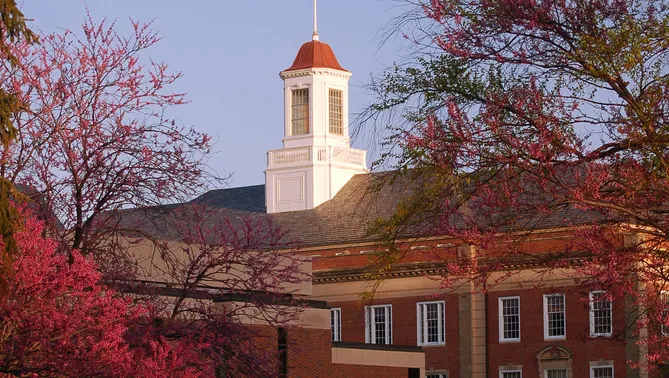
  • University of Nebraska-Lincoln leader reduces program cuts from 6 to 4

    University of Nebraska-Lincoln leader reduces program cuts from 6 to 4

    This audio is auto-generated. Please let us know if you have feedback.

    Dive Brief:

    • University of Nebraska-Lincoln’s chancellor on Monday unveiled a final budget recommendation that would cut four academic programs at the university, two fewer than he originally proposed in September.
    • However, Chancellor Rodney Bennett’s new plan would eliminate two programs that a university committee voted to recommend keeping. His proposal also comes amid concerns raised by faculty over program evaluation metrics and the budget reduction process.
    • The program cuts would trim $6.7 million from UNL’s budget, mainly through doing away with roughly four dozen full-time equivalent jobs. Bennett’s proposal also calls for merging four academic departments into two new schools and reducing budgets at four UNL colleges.

    Dive Insight:

    Ultimately, Bennett proposed axing UNL’s departments of Earth and atmospheric sciences; educational administration; statistics; and textiles, merchandising and fashion design — all as part of an effort to save $27.5 million annually to address a structural deficit. 

    He spared two programs that he recommended cutting earlier: landscape architecture, and community and regional planning. The University of Nebraska System’s regents plan to consider Bennett’s final recommendations at their December meeting. 

    Bennett’s initial proposal — and how he arrived at his recommended cuts — drew opposition from affected faculty and other stakeholders.

    Based on hearings and nearly 3,000 filed comments, UNL’s Academic Planning Committee — made up of faculty, staff, administrators and students — voted in October to oppose closing four of the programs in Bennett’s original plan. 

    Two of those programs — statistics, and Earth and atmospheric sciences — are nonetheless on the chopping block in Bennett’s final plan. 

    The committee didn’t oppose Bennett’s plans to cut the educational administration and textiles programs, or to merge UNL’s departments of entomology and plant pathology into one interdisciplinary school and the departments of agricultural economics and agricultural leadership, education and communication into another.

    However, the committee called on Bennett and UNL leaders to extend the timeline for making existential decisions about any of the programs. 

    “We strongly recommend to the Chancellor, the President, and the Board of Regents that the approval of any budget cuts be delayed allowing time for units to identify creative alternative solutions that reduce or prevent the need for these cuts,” the committee said in an Oct. 24 memo. But Bennett and UNL leaders appear undeterred and are sticking with their original timelines. 

    The committee also pointed to concerns raised by UNL stakeholders about the metrics and data that officials used to decide on programs. 

    Faculty members have said that the data was incomplete and sometimes incorrect and that the administration wasn’t transparent with them about how programs were being statistically evaluated. They also contended that the programs’ full value to the university and state weren’t taken into account. 

    UNL officials reviewed the programs “in accordance with performance metrics that align with UNL standards and external accountability frameworks,” Bennett said in a public message Monday. “The metrics were also shaped through extensive consultation in the spring with academic deans, college leadership teams, department executive officers and the APC.”

    Still, some faculty continued to slam the metrics for a lack of transparency. 

    “What are these new performance expectations, and where do we find them?” Sarah Zuckerman, an educational administration professor at UNL and head of its American Association of University Professors chapter, said in a Tuesday blog post titled “No Real Metrics, Only Vibes.” UNL’s AAUP chapter has actively opposed the cuts. 

    Zuckerman added, “This feels like not only have administrators changed the rules of the game while it is still being played, but they didn’t bother to tell us.”

    UNL’s faculty senate plans to consider a no confidence vote for Bennett on Nov. 18 over his handling of the budget cuts.

    Source link

  • ACT and Texas Instruments Collaborate to Enhance Student Success in Mathematics

    ACT and Texas Instruments Collaborate to Enhance Student Success in Mathematics

    Iowa City, Iowa and Dallas, Texas (November 12, 2025) – ACT, a leader in college and career readiness assessment, and Texas Instruments Education Technology (TI), a division of the global semiconductor company, today announced a comprehensive partnership aimed at empowering students to achieve their best performance on the ACT mathematics test.

    This initiative brings together two education leaders to provide innovative resources and tools that maximize student potential. The partnership will start by providing:

    • A new dedicated online resource center featuring co-branded instructional videos demonstrating optimal use of TI calculators during the ACT mathematics test.
    • Additional study materials featuring TI calculators to help students build upon and apply their mathematical knowledge while maximizing their time on the ACT test.
    • Professional development programs for teachers focused on effective calculator-based testing strategies.

    “This partnership represents our commitment to providing students with the tools and resources they need to demonstrate their mathematical knowledge effectively,” said Andrew Taylor, Senior Vice President of Educational Solutions and International, ACT, “By working with Texas Instruments, we’re ensuring students have access to familiar, powerful technology tools during this important assessment.”

    “Texas Instruments is proud to partner with ACT to support student success,” said Laura Chambers, President at Texas Instruments Education Technology. “Our calculator technology, combined with targeted instructional resources, will help students showcase their true mathematical abilities during the ACT test.” 

    The new resources are available now to students and educators on the ACT website www.act.org under ACT Math Calculator Tips.

    About ACT

    ACT is transforming college and career readiness pathways so that everyone can discover and fulfill their potential. Grounded in more than 65 years of research, ACT’s learning resources, assessments, research, and work-ready credentials are trusted by students, job seekers, educators, schools, government agencies, and employers in the U.S. and around the world to help people achieve their education and career goals at every stage of life. Visit us at https://www.act.org/.  

    About Texas Instruments

    Texas Instruments Education Technology (TI) — the gold standard for excellence in math — provides exam-approved graphing calculators and interactive STEM technology. TI calculators and accessories drive student understanding and engagement without adding to online distractions. We are committed to empowering teachers, inspiring students and supporting real learning in classrooms everywhere. For more information, visit education.ti.com.

    Texas Instruments Incorporated (Nasdaq: TXN) is a global semiconductor company that designs, manufactures and sells analog and embedded processing chips for markets such as industrial, automotive, personal electronics, enterprise systems and communications equipment. At our core, we have a passion to create a better world by making electronics more affordable through semiconductors. This passion is alive today as each generation of innovation builds upon the last to make our technology more reliable, more affordable and lower power, making it possible for semiconductors to go into electronics everywhere. Learn more at TI.com.

    eSchool News Staff
    Latest posts by eSchool News Staff (see all)

    Source link

  • Texas State’s ‘value neutral instruction’ walks a fine (and risky) line

    Texas State’s ‘value neutral instruction’ walks a fine (and risky) line

    Over the past year, many Texas politicians and university leaders have pursued hamfisted and unconstitutional higher education reforms that too often violate the expressive rights of students and faculty. 

    We recently explained how some government officials misread the law and used online outrage to chill controversial speech and punish a Texas A&M professor for protected expression. Other recent highlights from Texas include a campus speech law prohibiting expressive activities after 10:00 p.m. and a systemwide ban on drag shows at Texas A&M schools. In both cases, FIRE filed suit and won preliminary victories ensuring students can continue exercising their expressive rights.

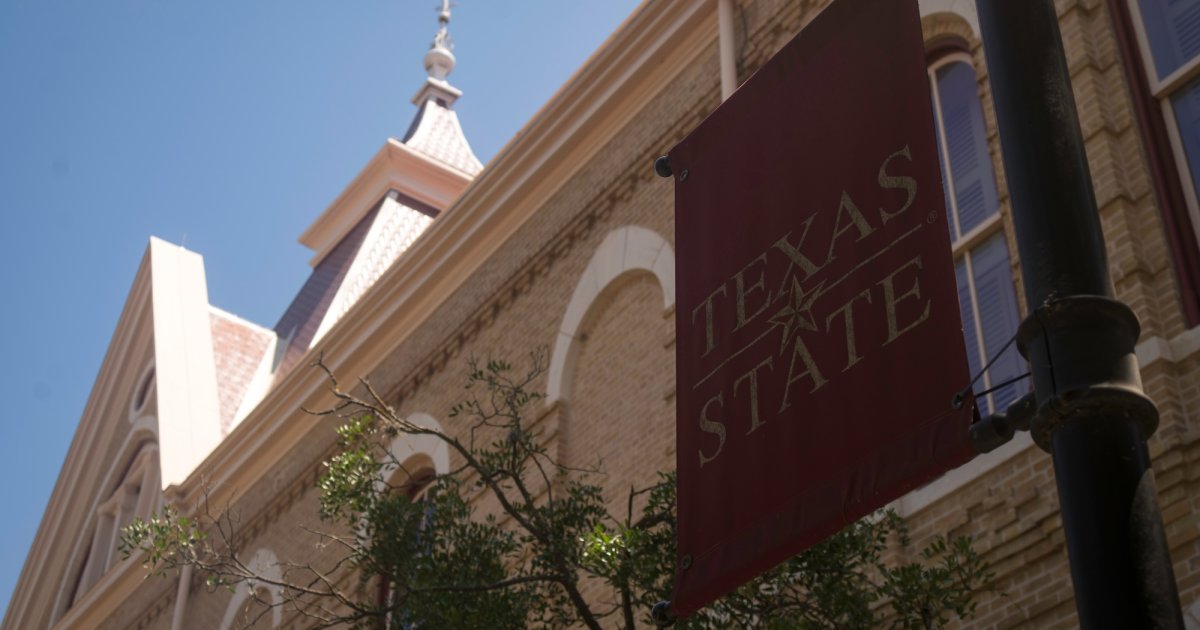
    Recently, FIRE learned that Texas State University is taking its own stab at institutional reform. It is conducting a “curricular review” built around a guide titled “Value Neutral Instruction and the Curriculum,” which encourages faculty to frame their teaching around inquiry and intellectual exploration, rather than beginning from predetermined conclusions.

    This is a sound pedagogical goal. Professors should present competing arguments and perspectives to students, teach them to evaluate the evidence and think critically, and arrive at their own conclusions. And the guidance does much more than most to protect the core of academic freedom and stay within constitutional bounds. However, like many other efforts at curricular reform, it nevertheless risks chilling protected expression and infringing upon academic freedom. The Devil, as they say, is in the details.

    The good

    Much of the guidance is framed as best practices, not mandatory policy. That matters because academic freedom requires giving faculty broad latitude to direct classroom discussion and design syllabi as they see fit. The guidance also focuses more on teaching style than class content, which limits the scope of the risks discussed below.

    It also promises that faculty may “share their own scholarly perspective when relevant,” and that academic freedom includes the right to “pursue truth without political constraints” and reach “controversial scholarly conclusions.” Those provisions are essential because faculty at public colleges have the First Amendment right to teach pedagogically relevant material. And unlike many reform efforts that offer vague nods to academic freedom, this language specifies what faculty can actually do — pursue truth, reach controversial conclusions, and share their views in class.

    Regarding course content, the guidance makes clear that faculty may “cover any topic, including obvious moral wrongs,” and when it comes to “contested questions . . . neutral instruction does not avoid these topics” (more on that later). This is a far cry from the many bills we’ve opposed that identify certain “divisive concepts” and restrict the freedom to discuss them in class. Here again, constitutional considerations demand nothing less. The Supreme Court has explained that the First Amendment “does not tolerate laws that cast a pall of orthodoxy over the classroom.”

    VICTORY: Federal court halts Texas’ ‘no First Amendment after dark’ campus speech ban

    A federal judge issued a preliminary injunction blocking the University of Texas from enforcing a law that bans virtually all free speech on public university campuses after dark


    Read More

    The guidance also protects the right of students to come to their own conclusions, stating that they should not be graded on viewpoint-based criteria, such as “whether [they] agree with [a] particular ideology.” Along the same lines, the guidance warns against class learning objectives that assume students will leave with particular viewpoints, highlighting some examples that it claims are “frequently flagged”: 

    • “Students will value diversity”
    • “Students will demonstrate commitment to social justice”
    • “Students will recognize their privilege”
    • “Students will develop empathy for marginalized groups”
    • “Students will embrace antiracist identity”

    If this type of learning objective is common, as the guidance claims, that’s a real problem for students’ freedom to come to their own well-reasoned conclusions. Such learning outcomes stray from education and veer into indoctrination.

    The guidance instead suggests that students should leave any class with the ability to:

    1. Remember: Retrieve relevant knowledge. 

    2. Understand: Construct meaning from material. 

    3. Apply: Use procedures in given situations. 

    4. Analyze: Break material into parts and determine relationships. 

    5. Evaluate: Make judgments based on criteria. 

    6. Create: Put elements together to form coherent whole.

    In sum: Students should learn the material, understand the material, and be able to apply the material to reach their own well-reasoned conclusions. These are high-level learning objectives, and setting them is well within the purview of university decision-makers.

    The risks

    While the language highlighted above may be unobjectionable, or even desirable on its face, it’s important to remember the context in which it comes: a review of the entire curriculum. This review might fairly aim to target courses with ideologically prescriptive learning outcomes, but it could also be a leverage point for strictly applying the guidelines and targeting disfavored ideas. We have warned schools that curricular reviews targeting certain ideas can violate the First Amendment by creating a chilling effect. 

    And right off the bat, the guidance dips its toe in these waters by advising faculty to avoid using particular words or phrases in course titles and descriptions. For example, the guidance cautions against using the following words in course titles: “Dismantling, Decolonizing, Interrogating, Challenging, Centering, Combating, Liberation, Resistance, Activism, Justice-Oriented, Transformative, Anti-[Group], and Pro-[Political Position].”

    Although public university leaders may give some direction to educational style and goals, the guidance’s focus on particular words suggests a level of pedagogical micromanagement that will chill expression and undermine faculty autonomy.

    If this process results in Texas State censoring professors or banning ideas from the classroom, we urge faculty to reach out to FIRE.

    And its core framing language — “value-neutral instruction” — is itself fraught. Texas State positions this principle as a defining feature of its curriculum going forward, but public university faculty members have a First Amendment right to share their non-neutral views on relevant material. Though despite this framing concern, the guidance explicitly protects that right.

    The guidance also says professors should consider whether a class reading list “represent[s] intellectual pluralism.” But as ever with this type of direction, the question is: how much pluralism is enough?

    The key with these provisions will be how they’re applied, particularly within the context of the curricular review. Are they merely best practices that serve as high-level pedagogical guidance from the university? Or are they policies that will be strictly enforced to target disfavored ideas and micromanage classroom discussion?

    Similarly, although the guidance tells faculty that they should not “avoid [controversial] topics,” it adds that “neutral instruction . . . approaches them differently.” Suggested best practices include avoiding straw-man arguments, focusing on the logical structures of different arguments, modeling intellectual humility, and prioritizing process over outcome. In general, this is legitimate pedagogical guidance. But again, professors must retain wide latitude to apply them in different ways that fit particular classroom environments and pedagogical imperatives. And these standards must never serve as a pretext to punish professors for expressing or defending controversial but relevant ideas.

    In this fraught moment for higher education, we must remember that not every attempt at institutional reform is created equal. Some are good-faith attempts to redirect educational approaches and goals. Others attempt to police ideas and micromanage discussion. In Texas State’s case, there’s both reason for caution and room for optimism. We’ll soon see whether university leaders are serious about academic freedom when the rubber meets the road. 

    If this process results in Texas State censoring professors or banning ideas from the classroom, we urge faculty to reach out to FIRE. Faculty can submit a case online or reach out to us via our 24-hour Faculty Legal Defense Fund hotline at 254-500-FLDF (3533).

    Source link