If institutions won’t stand up to the Trump administration, then it’s up to academic workers, students, communities, and citizens to stand up for them. Because we have the strongest levers of power over our local institutions.
While international students have become the first target on campuses, it’s important to remember that a portion of faculty (and in particular contingent faculty who are more precarious), administration, and campus service workers are also vulnerable to ICE. The consequences of these actions could have far-reaching effects. Due process of the law is not for specific groups. We all have it or no one has it.
This absolutely is an attempt to silence dissent in the country, especially on college campuses.
This absolutely is authoritarianism.
This absolutely is in line with the current attacks on higher education which were laid out in Project 2025. And in line with the crackdown on student protests before Trump took office.
And what’s worse is that many of our institutions are refusing to stand up for students.
Thankfully, unions are already responding.
We have to rise to this moment or higher education will never be the same.
We interviewed students currently studying creative arts subjects at a Russell Group university to hear more about their experiences of social class inclusivity. Speaking to ten undergraduate and eight postgraduate students studying a range of creative fields including music, drama and film, we found that working-class students find it difficult to attend class, are disadvantaged in terms of accessing the cultural resources needed to succeed on their course, and feel excluded from social life on campus.
Economic disadvantage presents a considerable barrier to students completing arts subjects at university. To be inclusive, university staff may have to adjust teaching and learning. We would like to make the case for those working in higher education to consider what classed assumptions are made about students in our institutions and accordingly reassess our expectations of those studying the creative arts.
Many of the disadvantages or challenges that working-class students face are connected to wider structural inequalities that are deeply entrenched in our society. At the same time, there are still meaningful interventions that staff can make to support working-class students. We suggest four ways in which university staff can make their practice more inclusive to working-class students.
Discuss working-class stories as present and live
Universities are middle-class spaces. In creative arts subjects, students often make work referring to their class identity. This can be at odds in institutions where middle-class experience is the “norm”.
Class diversity must be present within teaching. More working-class mentorship and role models would help students to feel like they belonged at university – including visiting working-class creatives. Our participants also advocated for contemporary working-class experience in the curriculum, in academic texts, and in the artworks discussed.
Staff must maintain a supportive and safe space when discussing issues pertaining to social class. Staff should also recognise that not everyone wants to talk about their background or experience. Additionally, staff must be aware of social class-based stereotyping that might exist in other students’ creative work, and be prepared to intervene when necessary if (often unintended) prejudices around work, class, accent, or lifestyle emerge.
Adapt teaching to the multiple demands on working-class students’ time
More and more students are undertaking part-time work alongside their studies. It is difficult to devise our curricula for only those students who can commit all their time to studying, when significant numbers are balancing their studies with multiple part-time, temporary and precarious jobs, or with care responsibilities.
Working-class and carer students may be commuting considerable distances to engage with their studies. This is creating a two-tier system of engagement, and many of the students we interviewed felt that teaching and learning on their courses was not flexible enough to support their participation. The same issues are present when students try to engage in extracurricular and cultural activities.
Working-class students asked for more online resources and access to course materials immediately at the start of modules, alongside concerns over early starts and late finishes and travel costs. They wanted permission to speak to staff about part-time work without feeling like they were “doing something wrong” or not taking their studies seriously. The normalisation of working alongside studying is something that staff may have to accept and work with, rather than try to push against.
Early intervention is important
The early stages of the student’s degree are a key time when social class difference and disadvantage is felt, with high levels of anxiety around finance and budgeting in comparison to more affluent peers.
Working-class students asked for the university to provide information to support their transition into economic independence. Examples include advice on budgeting, lists of free resources, inexpensive alternatives and free access to cultural resources.
Peer support plays a huge role in the transition to higher education. Working-class peer support groups and mentorship are as significant interventions to help.
Adjust assumptions and reassess expectations
University staff can make a difference to the experience of working-class students through simple adjustments of the assumptions we make.
Interviewees believed staff made assumptions about what creative arts students should know, or the kind of experiences they should have had prior to university. These assumptions corresponded with a more middle-class experience, for example knowledge of university life, or access to (and the ability to afford) cultural resources or engagement with extra-curricular activities. Participants were particularly frustrated by assumptions from staff that students could afford to pay for learning resources not available in the library.
Extra work is also needed to ensure that working-class or other marginalised students feel comfortable and entitled to ask for help from staff.
Because many students now must work alongside studying, students may have less time to complete their work outside of class. Stronger steers on the amount of time to complete activities and prioritisation of reading, and the removal of blame for those struggling to balance time constraints of working whilst studying can all be effective.
Working-class creatives
Class inclusivity means students feel like they belong on their course, alongside having the financial security to take the time and space to study.
This is particularly important in the creative arts because the more time and space students have to engage with their course or with extracurricular activities like arts societies, the more working-class stories will be represented in the creative work they make. Creative arts subjects must better support working-class students to engage fully with their studies – and not to be disadvantaged by financial pressure, lack of resource, or through feeling like they don’t belong on their course.
President Donald Trump took aim at college accreditors in an executive order signed Wednesday that targets two accrediting agencies for investigation and suggests others could lose federal recognition altogether.
The order was one of seven issued Wednesday as Trump nears the end of his first 100 days. Others directed the Education Department to enforce the law requiring colleges to disclose some foreign gifts and contracts, aimed to support historically Black colleges and universities, and outlined several policy changes for K-12 schools. With the accreditation order and the others, Trump and White House officials argued they were refocusing the education system on meritocracy.
Education Secretary Linda McMahon, who was in the Oval Office for the signing, opened her follow-up statement by praising the accreditation order and saying it would “bring long-overdue change” and “create a competitive marketplace.”
“America’s higher education accreditation system is broken,” she wrote. “Instead of pushing schools to adopt a divisive DEI ideology, accreditors should be focused on helping schools improve graduation rates and graduates’ performance in the labor market.”
Some of the immediate public reactions from higher ed groups criticized the accreditation order, describing it as yet another attempt to put more power in the hands of the president and threaten academic freedom.
The Council of Higher Education Accreditation said Trump’s directive would “affect the value and independence of accreditation,” while the American Association of University Professors said it would “remov[e] educational decision making from educators and reshap[e] higher education to fit an authoritarian political agenda.”
Overhauling Accreditation
Rumored for weeks, the accreditation order was perhaps the most anticipated one of those signed Wednesday, and it will likely have widespread ramifications as Trump seeks to scrutinize and reform the system.
Historically, accreditors have operated under the radar with little public attention, but in recent years conservatives have focused on the agencies and their role in holding colleges accountable. (The accreditors do hold a lot of power, because universities must be accredited by a federally recognized agency in order to access federal student aid.)
During his presidential campaign, Trump himself called accreditation reform his “secret weapon” and accused accreditors of failing “to ensure that schools are not ripping off students and taxpayers.”
The order calls for McMahon to suspend or terminate an accreditor’s federal recognition in order to hold it accountable if it violates federal civil rights law, according to a White House fact sheet. The executive order specifically says that requiring institutions “to engage in unlawful discrimination in accreditation-related activity under the guise of ‘diversity, equity, and inclusion’ initiatives” would be considered a violation of the law.
The order also singles out the American Bar Association, which accredits law schools, and the Liaison Committee on Medical Education, which accredits medical schools, and directs cabinet secretaries to investigate them. (The American Bar Association suspended DEI standards for its members in February, as did some other accreditors.)
Beyond that, McMahon is tasked to “realign accreditation with student-focused principles.” That could include recognizing new accreditors, prioritizing intellectual diversity among faculty and requiring “high-quality, high-value academic programs,” though the fact sheet doesn’t say how that would be measured.
White House staff secretary Will Scharf said during the event that accreditors have relied on “woke ideology” instead of merit and performance to accredit universities. He didn’t provide evidence for his claims, but the fact sheet cites the national six-year undergraduate graduation rate, which is at 64 percent, as one example of how accreditors have “failed to ensure quality.”
“The basic idea is to force accreditation to be focused on the merit and the actual results that these universities are providing, as opposed to how woke these universities have gotten,” Scharf said.
The Trump administration also wants to streamline the process to recognize accreditors and for institutions to change agencies. Some states that have required their public colleges to change accreditors have claimed that the Biden administration made the process too cumbersome.
Scharf said the order charges the Education Department “to really look holistically at this accreditation mess and hopefully make it much better.”
Trump didn’t say much about the order or what actions he hopes to see McMahon take next.
Enforcement of Foreign Gifts
The president is not the first government official this year who has sought to limit foreign influence on American colleges and universities.
The House recently passed a bill, known as the DETERRENT ACT, which would amend Section 117 of the Higher Education Act to lower the threshold for what foreign gifts must be reported from $250,000 to $50,000. It also would require the disclosure of all gifts from countries of “concern,” like China and Russia, regardless of amount. The legislation advanced to the Senate in late March following a 241–169 vote.
Rep. Tim Walberg, a Michigan Republican and chair of the committee that introduced the bill, praised Trump’s action Wednesday, saying it “underscores” a Republican commitment to “promoting transparency.”
“Foreign entities, like the Chinese Communist Party, anonymously funnel billions of dollars into America’s higher education institutions—exploiting these ties to steal research, indoctrinate students, and transform our schools into beachheads in a new age of information warfare,” Walberg wrote in a statement shortly after Trump’s order was signed. “I am glad the Trump administration understands the grave importance of this threat, and I look forward to working with President Trump to protect our students and safeguard the integrity of America’s higher education system.”
Colleges’ compliance with Section 117 has been a key issue for Republicans over the years. House lawmakers repeatedly criticized the Biden administration’s efforts to enforce the law, but former education secretary Miguel Cardona defended his agency’s actions. They also tried to pass the DETERRENT Act last session, but it was blocked by Democrats in the Senate.
The executive order is broader than the DETERRENT Act and does little to distinguish itself aside from directing McMahon to work with the attorney general and heads of other departments where appropriate and to reverse or rescind any of Biden’s actions that “permit higher education institutions to maintain improper secrecy.”
More Support for HBCUs
Another order creates within the White House an initiative focused on historically Black colleges and universities and revokes a Biden executive order titled “White House Initiative on Advancing Educational Equity, Excellence, and Economic Opportunity Through Historically Black Colleges and Universities.”
During his first term, Trump moved an HBCU initiative at the Education Department to the White House as a largely symbolic gesture to show his support for Black colleges. That initiative continued under Joe Biden, though it was returned to the Education Department. Biden also created initiatives focused on Hispanic-serving institutions and tribal colleges. Trump ended those newly created initiatives during his first week in office.
The executive order also established the President’s Board of Advisors on HBCUs at the Education Department, which appears to already exist. The panel last met in January, according to a Federal Register notice.
Scharf said the order would ensure that HBCUs are “able to do their job as effectively and as efficiently as possible.”
We know that the use of generative AI in research is now ubiquitous. But universities have limited understanding of who is using large language models in their research, how they are doing so, and what opportunities and risks this throws up.
The University of Edinburgh hosts the UK’s first, and largest, group of AI expertise – so naturally, we wanted to find out how AI is being used. We asked our three colleges to check in on how their researchers were using generative AI, to inform what support we provide, and how.
Using AI in research
The most widespread use, as we would expect, was to support communication: editing, summarising and translating texts or multimedia. AI is helping many of our researchers to correct language, improve clarity and succinctness, and transpose text to new mediums including visualisations.
Our researchers are increasingly using generative AI for retrieval: identifying, sourcing and classifying data of different kinds. This may involve using large language models to identify and compile datasets, bibliographies, or to carry out preliminary evidence syntheses or literature reviews.
Many are also using AI to conduct data analysis for research. Often this involves developing protocols to analyse large data sets. It can also involve more open searches, with large language models detecting new correlations between variables, and using machine learning to refine their own protocols. AI can also test complex models or simulations (digital twins), or produce synthetic data. And it can produce new models or hypotheses for testing.
AI is of course evolving fast, and we are seeing the emergence of more niche and discipline-specific tools. For example, self taught reasoning models (STaRs) can generate rationales that can be fine-tuned to answer a range of research questions. Or retrieval augmented generation (RAG) can enable large language models to access external data that enhances the breadth and accuracy of their outputs.
Across these types of use, AI can improve communication and significantly save time. But it also poses significant risks, which our researchers were generally alert to. These involve well-known problems with accuracy, bias and confabulation – especially where researchers use AI to identify new (rather than test existing) patterns, to extrapolate, or to underpin decision-making. There are also clear risks around sharing of intellectual property with large language models. And not least, researchers need to clearly attribute the use of AI in their research outputs.
The regulatory environment is also complex. While the UK does not as yet have formal AI legislation, many UK and international funders have adopted guidelines and rules. For example, the European Union has a new AI Act, and EU funded projects need to comply with European Commission guidelines on AI.
Supporting responsible AI
Our survey has given us a steer on how best to support and manage the use of AI in research – leading us to double down on four areas that require particular support:
Training. Not surprisingly the use of generative AI is far more prevalent among early career researchers. This raises issues around training, supervision and oversight. Our early career researchers need mentoring and peer support. But more senior researchers don’t necessarily have the capacity to keep pace with the rapid evolution of AI applications.
This suggests the need for flexible training opportunities. We have rolled out a range of courses, including three new basic AI courses to get researchers started in the responsible use of AI in research, and online courses on ethics of AI.
We are also ensuring our researchers can share peer support. We have set up an AI Adoption Hub, and are developing communities of practice in key areas of AI research – notably research in AI and Health which is one of the most active areas of AI research. A similar initiative is being developed for AI and Sustainability.
Data safety. Our researchers are rightly concerned about feeding their data into large language models, given complex challenges around copyright and attribution. For this reason, the university has established its own interface with the main open source large language models including ChatGPT – the Edinburgh Language Model (ELM). ELM provides safer access to large language model, operating under a “zero data retention” agreement so that data is not retained by Open AI. We are encouraging our researchers to develop their own application programming interfaces (APIs), which allow them to provide more specific instructions to enhance their results.
Ethics. AI in research throws up a range of challenges around ethics and integrity. Our major project on responsible AI, BRAID, and ethics training by the Institute for Academic Development, provide expertise on how we adapt and apply our ethics processes to address the challenges. We also provide an AI Impact Assessment tool to help researchers work through the potential ethical and safety risks in using AI.
Research culture. The use of AI is ushering in a major shift in how we conduct research, raising fundamental questions about research integrity. When used well, generative AI can make researchers more productive and effective, freeing time to focus on those aspects of research that require critical thinking and creativity. But they also create incentives to take short cuts that can compromise the rigour, accuracy and quality of research. For this reason, we need a laser focus on quality over quantity.
Groundbreaking research is not done quickly, and the most successful researchers do not churn out large volumes of papers – the key is to take time to produce robust, rigorous and innovative research. This is a message that will be strongly built into our renewed 2026 Research Cultures Action Plan.
AI is helping our researchers drive important advances that will benefit society and the environment. It is imperative that we tap the opportunities of AI, while avoiding some of the often imperceptible risks in its mis-use. To this end, we have decided to make AI a core part of our Research and Innovation Strategy – ensuring we have the right training, safety and ethical standards, and research culture to harness the opportunities of this exciting technology in an enabling and responsible way.
The Graduate Employees’ Organization union says pro-Palestine activists were targeted.
Nicholas Klein/iStock/Getty Images
Police raided five homes connected to University of Michigan pro-Palestinian activists on Wednesday, according to the university’s graduate student union. A spokesperson for the state’s attorney general told Inside Higher Ed the investigation is into “multi-jurisdictional acts of vandalism” but didn’t provide many more details.
Danny Wimmer, press secretary for Michigan attorney general Dana Nessel, a Democrat, said the search warrants were part of an attorney general investigation “against multiple individuals in multiple jurisdictions including Ann Arbor, Canton and Ypsilanti.”
Wimmer said many agencies were involved Wednesday, including local, state and federal authorities, but he didn’t name specific ones and didn’t say whether personal items had been confiscated. He said the searches weren’t related to campus protest activity.
In a post on X, the attorney general’s office said the alleged vandalism was “against multiple homes, organizations, and businesses in multiple counties.”
Lavinia Dunagan, a Ph.D. student who is a co-chair of the union’s communications committee, said at least seven people were detained but none arrested. All are students, save for one employee of Michigan Medicine, she said. She declined to name them, saying she didn’t know all of their identities and citing safety concerns for those who were targeted.
Brian Taylor, a university spokesperson, deferred questions to the attorney general’s office.
Dunagan said those detained were taken into officers’ cars and not allowed to leave until they provided information and allowed cheek swabs. She said the FBI, Michigan State Police and local police were involved.
The union—the Graduate Employees’ Organization, or GEO—said in a news release that “officers detained and questioned two activists, including a member of GEO, and confiscated their electronic devices” in Ann Arbor, home of Michigan’s flagship campus. GEO also said four people were “detained and released” in Ypsilanti, and one home was “raided” in Canton.
“The officers also confiscated personal belongings from multiple residences and at least two cars,” GEO said, adding that “at this time, all activists are safe.”
Wimmer did say U.S. Immigration and Customs Enforcement wasn’t involved, and that the attorney general’s office believes all subjects of the search warrants are U.S. citizens. The union also said in its release, “We are not aware of any visa holders being affected by these raids.”
The state chapter of the Council on American-Islamic Relations said in a news release that homes of “students and former students at the University of Michigan–Ann Arbor who were involved in pro-Palestinian activism were raided.” The organization said, “Property damage at residences took place, and individuals were handcuffed without charges during the aggressive raids.”
The organization said it had staff “on location at one of the raided residences” and it “continues to offer legal assistance to those impacted and is actively monitoring the situation for potential civil rights violations.”
Dunagan said, “We are just really concerned about potentially future repression of political activity.”
FIRE today filed a “friend of the court” brief in support of the American Association of University Professors and the American Federation of Teachers in their lawsuit against the Department of Justice and other federal agencies. FIRE argues that the Trump administration’s actions against Columbia University are unlawful and unconstitutional attacks on freedom of expression, freedom of association, and academic freedom. The brief’s summary of argument follows.
The federal government characterizes its abrupt revocation of $400 million in federal grants to Columbia University — and the government’s threat to revoke billions more if its demands are not met — as necessary to address anti-Semitism on campus in the wake of pro-Palestinian protests that sometimes veered into unlawful activity. Addressing discrimination is a worthy end. But it cannot justify the government’s flatly unconstitutional means here. While Columbia’s response to campus misconduct may raise questions about the university’s obligations under federal anti-discrimination law, there is no question about the government’s failure to meet its obligations under the First Amendment. The administration’s coercion is a blatant end-run around statutory safeguards and a flagrant attempt to jawbone the university into surrendering its institutional autonomy to federal officials. For the sake of Columbia’s students, faculty, and our free society, this government intimidation cannot stand unanswered.
The same federal statute that governs institutional responses to allegations of anti-Semitism — Title VI — requires funding recipients like Columbia to receive notice, a hearing, and an opportunity to come into compliance voluntarily before the government can terminate funding. These provisions protect students, faculty, and institutions from precisely the kind of repressive, capricious government overreach that now harms Plaintiffs. Yet despite its professed interest in addressing campus anti-Semitism, the administration chose to ignore entirely the lawful statutory means by which it may do so. Instead, it has instituted rule by fiat: arbitrarily declaring Columbia subject to punishment, cancelling hundreds of millions of dollars in grants and threatening worse to come, and leaving Columbia faculty and students at the mercy of unchecked federal authority under the specter of a hostile takeover.
This is unlawful. Just last year, the Supreme Court reaffirmed that the government cannot jawbone private actors into punishing speech that the First Amendment protects from state intrusion. Nat’l Rifle Ass’n of Am. v. Vullo, 2024). But jawboning is exactly what the administration is doing to Columbia — except here, the government’s bullying is so extreme it might more accurately be called extortion. Wielding the threat of crippling financial consequences like a mobster gripping a baseball bat, the government forced Columbia to adopt a restrictive speech code that punishes disfavored or dissenting viewpoints. Not only would it be unconstitutional at a public university, the speech code also violates Columbia’s free speech promises and its right as a private entity to set its own rules regarding speech. The government further forced Columbia to surrender control of an entire academic department and to relinquish its right to make independent decisions about discipline and admissions — all of which violate longstanding precepts of academic freedom, institutional independence, and university self-governance.
These demands are unconstitutional. Again, just last year, the Supreme Court reemphasized the limits the Constitution places on the government in its interactions with private institutions. “On the spectrum of dangers to free expression,” the Court wrote, “there are few greater than allowing the government to change the speech of private actors in order to achieve its own conception of speech nirvana.” (Moody v. NetChoice, LLC, 2024). As Defendants trample constitutional barriers in seeking to effectively outlaw certain political views on campus, this grave danger that the Court identified is fully realized.
The government’s gambit is not permissible simply because federal funding is involved. The Supreme Court long ago established that “even in the provision of subsidies, the Government may not ‘ai[m] at the suppression of dangerous ideas’” — and that the First Amendment demands judicial intervention if funding is “‘manipulated’ to have a ‘coercive effect.’” (Nat’l Endowment for the Arts v. Finley, 1998) (quoting Regan v. Tax’n With Representation of Wash., 1983). Few things could be more manipulative or coercive than revoking grants in an explicit attempt to override the expressive and associational rights of a private institution of higher education, its students, and its faculty.
This case illustrates the grave threat to core First Amendment freedoms posed by expansive — and here, extralegal and unbounded — conceptions of governmental power to address discrimination. For more than a quarter century, amicus FIRE has advocated against overly broad and impossibly vague campus speech codes promulgated under federal anti-discrimination law. To that end, FIRE successfully led the charge against the Obama administration’s attempt to pressure institutions to adopt a federal definition of “sexual harassment” — advanced as a national “blueprint” — that subjected wide swaths of protected speech to investigation and punishment. And yet as misguided as that initiative was, those pressure tactics pale in comparison to the scope and intensity of the unlawful shakedown Defendants mount here.
The government’s aggression against Columbia is alarming not just because it is unlawful and unconstitutional, but because its plain aim is “suppression of free speech and creative inquiry in one of the vital centers for the Nation’s intellectual life, its college and university campuses.” Rosenberger v. Rector & Visitors of the Univ. of Va., 1995). While Columbia was the first institution targeted by the administration, it has not been the last — the list of colleges facing coercive funding cuts and chilling demands is growing.
Addressing anti-Semitism does not and cannot require violating the First Amendment. Left unchecked, the administration will continue to deploy its distorted conception of federal anti-discrimination law as a battering ram against institutional autonomy and to seize for itself power to control permissible speech and instruction on our campuses. The stakes are high: “Teachers and students must always remain free to inquire, to study and to evaluate, to gain new maturity and understanding; otherwise our civilization will stagnate and die.” Sweezy v. New Hampshire, 1957). This Court must act now to protect freedom of expression, academic freedom, and our institutions of higher education from a hostile federal takeover.
This audio is auto-generated. Please let us know if you have feedback.
Dive Brief:
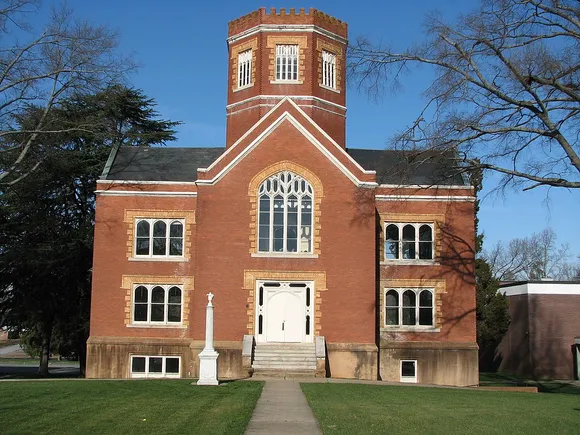
Limestone University may have the “financial lifeline” it needs to avoid shutting down and maintain its in-person courses and operations, its board of trustees said Tuesday. The announcement did not disclose details on the funding source.
The private Christian institution, in South Carolina, signaled last week it could be forced to close or turn to online-only operations without an immediate cash injection. The board said it has tabled those discussions for now and plans to reconvene no later than April 29.
However, the 179-year-old university will proceed as though it will be online-only after the semester ends, Limestone President Nathan Copeland said in a statement. “I regret the uncertainty of the situation, but we must be exceptionally cautious,” he added.
Dive Insight:
In a statement, board Chair Randall Richardson was frank about just how deep Limestone’s financial troubles run.
“Last week, we were at the brink of a possible closure or transition to online-only classes,” Richardson said. “Now, we are pausing that discussion so we can wait on more information about a potential financial lifeline.”
Officials offered no details on the financing, saying only that “a possible funding source has surfaced” that could mitigate the university’s current crisis. A university spokesperson declined Wednesday to share more information about the funding source.
Previously, officials said the university would need a $6 million emergency fund to stave off closure and keep its physical campus and activities running.
In the university’s announcement Tuesday, it said the proposed cash infusion would “stabilize operations and give the university the opportunity to pursue long-term solutions that preserve its on-campus identity.”
Richardson said the board was “cautiously optimistic about the future of Limestone,” but added a hedge: “We want to emphasize, this is just a possibility at the current time.”
Limestone attributed its financial woes in part to falling enrollment. Between 2018 and 2023, its fall headcount dropped 27% to 1,782 students, per federal data. The university said Tuesday that enrollment now stands at about 1,600 students.
High costs have also added pressure. The university has faced persistent budget deficits — $9.2 million in fiscal 2024, following an $11.4 million gap in 2023, according to its latest financials.
Limestone has tapped its endowment to fund its operations amid the financial strain. Between fiscal years 2023 and 2024, Limestone’s net assets declined by more than $12 million, to $61 million, as the university ramped spending from its endowment.
In its latest financial statement, the university’s auditors issued a “going concern” warning, indicating they found “substantial doubt” about Limestone’s ability to continue operating over the next year.
For now, Limestone’s uncertain fate remains a predicament for officials, employees and students alike as they try to plan for upcoming semesters — a challenge which the university’s leaders acknowledged.
“We will update everyone as soon as we know more,” Richardson said. “Please be patient and continue to pray for a viable solution to save this historic university.”
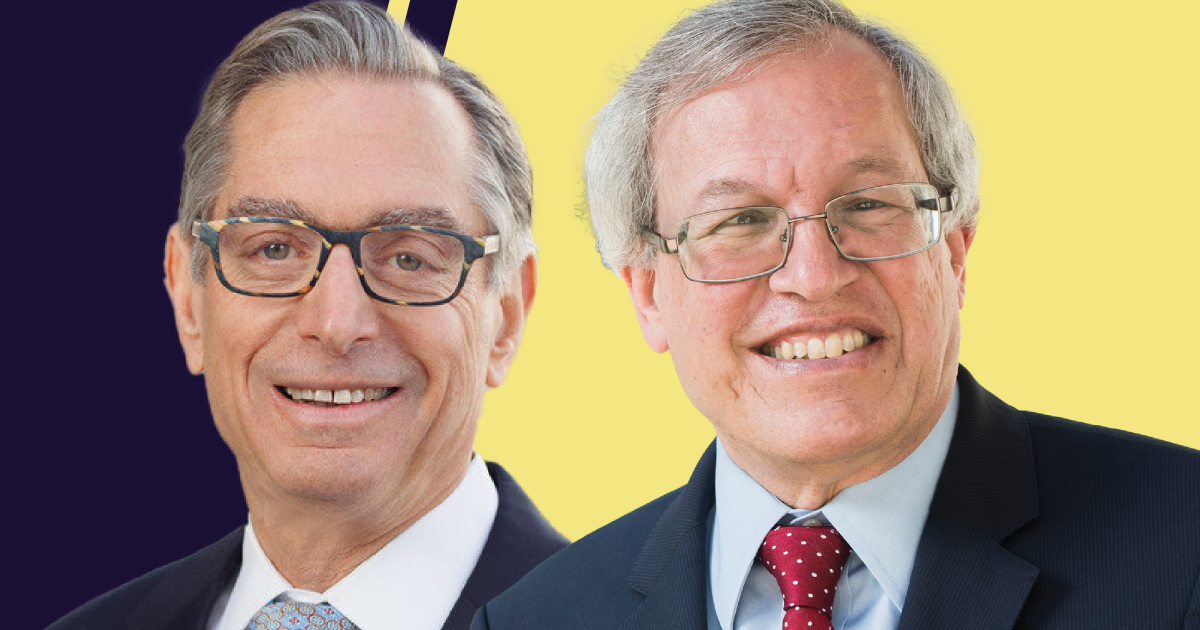
Our guests today signed onto a statement by a group of 18 law
professors who opposed the Trump administration’s funding threats
at Columbia on free speech and academic freedom grounds. Since
then, Northwestern, Cornell, Princeton, Harvard, and…
“Look, I get it. It doesn’t matter who he is at a private dinner with a comedian. It matters who he is on the world stage. I’m just taking it as a positive that this person exists.” – Bill Maher, recounting his dinner with President Trump, HBO
“I knew I couldn’t change his views, but we need to talk to the other side — even if it has invaded and annexed other countries and committed unspeakable crimes against humanity.” – Larry David, “My Dinner with Adolf,” The New York Times
By and large, I have long appreciated Bill Maher’s “Real Time” comic stings. Just the sort of thing that social comedy should do. In 2002, we shared a stage as recipients of a Hugh Hefner First Amendment Award. It was an honor, even though I found him rather full of himself.
That said, after watching my fill of Rachel Maddow and others, I take escapist pleasure in watching Bill slay any variety of righteous types with his comic axe. That is, until I watched the April 11 episode of “Real Time,” the one where he joked about his dinner at the White House with President Trump.
While Maher did note Trump’s attacks on him, and his counter-attacks on Trump, he did so in a way that made Trump seem like little more than a nice guy with different views. Maher normalized the man who time and again has attacked First Amendment values with authoritarian abandon — the very values Maher champions.
Ah, Bill’s dinner with Donald was so delightfully memorable: Donald was “gracious and measured.” And catch this: he’s no “crazy person,” said Maher, though he “plays a crazy person on TV.” Moreover, he’s “much more self-aware than he lets on.” He’s “just not as fucked up as I thought [he] was.”
Oh, the private Donald was so tolerant, so engaging, so rational, and so open to hearing the other side. Ya just got to get to know the guy, break bread with him, warts and all. Hell (and that’s the word), in person he is actually “measured,” even if he presents a real threat to constitutional democracy and a clear and present danger to almost every value of First Amendment law.
The folks at “Fox And Friends” loved the Maher/Trump “Kumbaya” moment, though they did not buy Maher’s private/public distinction regarding Trump’s personality. Hardly. For them, what Maher portrayed was the real Trump: “What Bill Maher saw was what the American public as a whole has come to see. . . He’s not pretending to be something he isn’t. And that’s what stood out.”
All of it made me want to puke!
“You know,” I said to my wife Susan, “I wonder what he’d say if he met Hitler and found him to be ‘gracious.’”
Cut to Tuesday morning: It’s early, and Susan says, “You gotta read this Larry David piece in the Times. It’s titled ‘My Dinner With Adolf.’ It tracks what Maher said about Trump while mocking Maher every inch of the way.”
Ok, match on!
Just as sometimes one must “fight fire with fire,” so too sometimes one must fight “comedy with comedy.” Enter Larry David. Here’s how his satiric response to Maher’s dinner with Trump opens:
Imagine my surprise when in the spring of 1939 a letter arrived at my house inviting me to dinner at the Old Chancellery with the world’s most reviled man, Adolf Hitler. I had been a vocal critic of his on the radio from the beginning, pretty much predicting everything he was going to do on the road to dictatorship. No one I knew encouraged me to go. “He’s Hitler. He’s a monster.” But eventually I concluded that hate gets us nowhere. I knew I couldn’t change his views, but we need to talk to the other side — even if it has invaded and annexed other countries and committed unspeakable crimes against humanity.
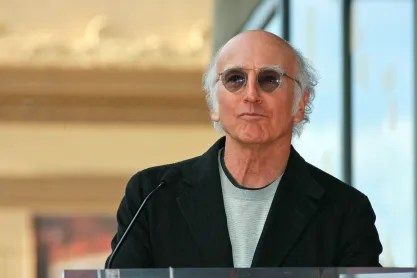
Larry David at the induction ceremony for Mary Steenburgen into the Hollywood Walk of Fame (Shutterstock.com)
And here’s how David ends his deliciously jeering counter to Maher:
Two hours later, the dinner was over, and the Führer escorted me to the door. “I am so glad to have met you. I hope I’m no longer the monster you thought I was.” “I must say, mein Führer, I’m so thankful I came. Although we disagree on many issues, it doesn’t mean that we have to hate each other.” And with that, I gave him a Nazi salute and walked out into the night.
Note to Bill: You gotta curb your enthusiasm for your “gracious” and “measured” friend. Tyranny isn’t funny, it’s evil!
Hold on! Maher got worse when Banon arrived:
Awful as his naïve Trump dinner fiasco was, I was nonetheless eager to hear Maher’s interview with Steve Bannon thereafter. When he wasn’t joking around, the good news was that Bill asked tough questions. The bad news was that, save for an opening exchange about Trump’s third-term aspirations, Maher really didn’t press Bannon every time he responded with an evasive answer. He just let it sit there and moved on to another tough question followed by more evasive answers . . . followed by “bro bonding.”
Really Bill! What the fuck happened to your strong sting, bro? You were more like a soft butterfly.
Remember:
‘60 Minutes’ producer quits over journalistic independence
Bill Owens
CBS News entered a new period of turmoil on Tuesday after the executive producer of “60 Minutes,” Bill Owens, said that he would resign from the long-running Sunday news program, citing encroachments on his journalistic independence.
In an extraordinary declaration, Mr. Owens — only the third person to run the program in its 57-year history — told his staff in a memo that “over the past months, it has become clear that I would not be allowed to run the show as I have always run it, to make independent decisions based on what was right for ‘60 Minutes,’ right for the audience.”
“So, having defended this show — and what we stand for — from every angle, over time with everything I could, I am stepping aside so the show can move forward,” he wrote in the memo, which was obtained by The New York Times.
‘60 Minutes’ has faced mounting pressure in recent months from both President Trump, who sued CBS for $10 billion and has accused the program of “unlawful and illegal behavior,” and its own corporate ownership at Paramount, the parent company of CBS News.
Paramount’s controlling shareholder, Shari Redstone, is eager to secure the Trump administration’s approval for a multibillion-dollar sale of her company to Skydance, a company run by the son of the tech billionaire Larry Ellison.”
Comments offered to FAN by Floyd Abrams and Ira Glasser
“It is deeply troubling that Bill Owens, whose leadership of ‘60 Minutes’ as its executive producer has been repeatedly honored through the years, has been obliged to resign because of pressure from the Trump Administration and ABC’s new corporate owner. It is a blow to independent journalism and a great loss to the American public.” — Floyd Abrams
“Unless the Supreme Court radically changes First Amendment law, Trump’s suit has no legal merit. If Paramount isn’t interested in defending CBS’ right to criticize public officials, it ought to sell CBS to someone who is, and stick to the entertainment business. What Edward R. Murrow and Walter Cronkite constructed, Shari Redstone [executive chairwoman of Paramount Global] is tearing down.” — Ira Glasser
Related
Coming Next Wednesday
Zick’s Resources Compilation of Executive Actions Affecting First Amendment Rights
Coming as soon as next Wednesday, Professor Stephen Solomon and his colleagues over at First Amendment Watch will launch Professor Timothy Zick’s invaluable Resources pages, replete with a comprehensive, topical, and hyperlinked set of references to virtually all of the Trump executive orders and related actions affecting free expression. This user-friendly and topic-specific resources page provides the most detailed and yet across-the-board account of what has happened within the last 100 days of this Administration in matters concerning the First Amendment.
Jury rules against Palin in defamation against The New York Times
The New York Times did not libel former Alaska Gov. Sarah Palin in a 2017 editorial that contained an error she claimed had damaged her reputation, a jury concluded Tuesday. Former Alaska Gov. Sarah Palin campaigned for the state’s U.S. House seat in 2022 with the support of President Trump. She did not win.
The jury deliberated a little over two hours before reaching its verdict. A judge and a different jury had reached the same conclusion about Palin’s defamation claims in 2022, but her lawsuit was revived by an appeals court.
Palin was subdued as she left the courthouse and made her way to a waiting car, telling reporters: “I get to go home to a beautiful family of five kids and grandkids and a beautiful property and get on with life. And that’s nice.”
FIRE fires back in Trump pollster fraud suit
“This lawsuit is, as the Bard put it, a tale ‘full of sound and fury, signifying nothing.’”
This case is built entirely on a tissue of shopworn campaign rhetoric and fever-dream conspiracy theories, yet even accepting Plaintiffs’ wild factual assertions as true, the Complaint lacks any plausible legal theory on which to grant relief. The allegations of “fraudulent news” are an affront to basic First Amendment law, and Plaintiffs continue to butcher elementary concepts like duty, reliance, causation, and damages under Iowa law. The Court should dismiss the Amended Complaint.
Arguments
Plaintiffs’ Claim That Election Polls and the News Coverage They Generate Can Be Labelled “Fraud” Unprotected by the First Amendment is Utterly Baseless.
There is No General First Amendment Exception for False Speech.
Election Polling is Not Commercial Speech and is Fully Protected Election News Coverage.
No Case Law Supports Plaintiffs’ Theory of Liability.
Plaintiffs’ Claims are Facially Deficient Under Iowa Law
Plaintiffs Fail to Plead a Cognizable ICFA Claim.
Plaintiffs Fail to Plead a Fraudulent Misrepresentation Claim.
Plaintiffs Fail to Plead a Negligent Misrepresentation Claim.
Piercing the Corporate Veil.
Conclusion
This lawsuit is, as the Bard put it, a tale “full of sound and fury, signifying nothing.” William Shakespeare, Macbeth, Act 5, Scene 5. Once you get past the groundless assertions, campaign-style hyperbole, and overheated conspiracy theories, there is nothing left. No legal basis whatsoever supports the claims, and Plaintiffs’ opposition to the motions to dismiss reveals both shocking unfamiliarity with basic concepts of First Amendment law and a disregard of the pleading requirements for fraud or misrepresentation under Iowa law. As one court summed it up in another of President Trump’s attacks on free speech: “This case should never have been brought. Its inadequacy as a legal claim was evident from the start. No reasonable lawyer would have filed it. Intended for a political purpose, none of the counts of the amended complaint stated a cognizable legal claim.” Trump v. Clinton, 653 F.Supp.3d at 1207. The Court should dismiss this case with prejudice.
Attorneys for Defendants J. Ann Selzer, and Selzer & Company: Robert Corn-Revere, Conor T. Fitzpatrick, Greg H. Greubel, and Matthew A. McGuire
School district ordered to pay attorney fees to censored parent
Bret Nolan (Federalist Society)
A federal judge has ordered that the Sheridan County (WY) School District must pay attorneys’ fees following a lawsuit with Harry Pollak, a parent censored during a 2022 school board meeting
Following a lengthy legal dispute, the United States District Court for the District of Wyoming has awarded attorneys’ fees totaling $156,000 to the litigation team representing Harry Pollak of Sheridan County. Mr. Pollak was represented by Institute for Free Speech Senior Attorney Brett Nolan and local counsel Seth Johnson.
Mr. Pollak initially filed suit against the Sheridan County School District in March 2022 after he was cut off from speaking from speaking critically about the superintendent at a school board meeting. The board cited a policy against discussing “personnel matters” as the reason for censoring him, and it called the police to escort him out of the building.
Last fall, the district court ruled in favor of Mr. Pollak, declaring that the school board violated his First Amendment rights and awarded him nominal damages of $17.91 (a symbolic amount referring to the year the First Amendment was ratified). The court also permanently enjoined the board from enforcing its policy to prevent speakers like Mr. Pollak who want to criticize school staff by name.
[ . . . ]
To read the full fees order, Pollak v. Wilson, et al., click here.
Mchangama and Marami on deportation and dissent
The Trump administration is invoking a clause of the Immigration and Nationality Act of 1952 that allows the Secretary of State broad discretion to deport anyone he believes “would have potentially serious adverse foreign policy consequences for the United States.” As such, a recently released memo detailing the government’s case against the most prominent of the activists, Mahmoud Khalil, refrains from charging him with any crime. On Friday, a Louisiana immigration judge upheld the Government’s decision to deport Khalil. Constitutional scholars debate whether and to what extent the First Amendment protects noncitizens in such cases, and the Supreme Court may eventually weigh in.
But the question is not only constitutional — it is foundational. Is deporting foreigners for expressing disfavored views compatible with a robust commitment to a culture of free speech?
As it turns out, history has a lot to tell us about states that exclude foreigners with controversial opinions and those that welcome non-native dissenters.
[ . . . ]
From Zenger to Hitchens, from Abrams to Arendt, it has often been immigrants who tested the boundaries of the First Amendment — and in doing so, helped define its meaning. To now deport people for unpopular opinions is not merely a constitutional gray zone. It is a betrayal of the very idea that truth and progress emerge from argument, not conformity.
Silencing foreign voices won’t make America safer. It will make it smaller and less resilient. A confident, free nation doesn’t banish speech — it engages it.
The odd couple: Franks and Corn-Revere in dialogue (and debate) at Brooklyn Law School event
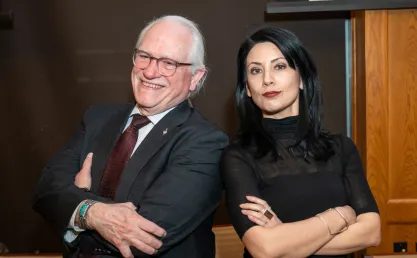
FIRE Chief Counsel Robert Corn-Revere (left) and Professor Mary Anne Franks
Dr. Mary Anne Franks — Eugene L. and Barbara A. Bernard Professor in Intellectual Property, Technology, and Civil Rights Law, George Washington Law School; President and Legislative & Tech Policy Director, Cyber Civil Rights Initiative
Robert Corn-Revere — Chief Counsel, Foundation for Individual Rights and Expression (FIRE)
Moderators
William Araiza, Stanley A. August Professor of Law, Brooklyn Law School
2024-2025 SCOTUS term: Free expression and related cases
Cases decided
Villarreal v. Alaniz(Petition granted. Judgment vacated and case remanded for further consideration in light of Gonzalez v. Trevino, 602 U. S. ___ (2024) (per curiam))
Murphy v. Schmitt (“The petition for a writ of certiorari is granted. The judgment is vacated, and the case is remanded to the United States Court of Appeals for the Eighth Circuit for further consideration in light of Gonzalez v. Trevino, 602 U. S. ___ (2024) (per curiam).”)
TikTok Inc. and ByteDance Ltd v. Garland (9-0: The challenged provisions of the Protecting Americans from Foreign Adversary Controlled Applications Act do not violate petitioners’ First Amendment rights.)
Review granted
Pending petitions
Petitions denied
Emergency Applications
Yost v. Ohio Attorney General (Kavanaugh, J., “IT IS ORDERED that the March 14, 2025 order of the United States District Court for the Southern District of Ohio, case No. 2:24-cv-1401, is hereby stayed pending further order of the undersigned or of the Court. It is further ordered that a response to the application be filed on or before Wednesday, April 16, 2025, by 5 p.m. (EDT).”)
Free speech related
Mahmoud v. Taylor (Free exercise case — Issue: Whether public schools burden parents’ religious exercise when they compel elementary school children to participate in instruction on gender and sexuality against their parents’ religious convictions and without notice or opportunity to opt out.)
Thompson v. United States (Decided: 3-21-25/ 9-0 w special concurrences by Alito and Jackson) (Interpretation of 18 U. S. C. §1014 re “false statements”)
This article is part of First Amendment News, an editorially independent publication edited by Ronald K. L. Collins and hosted by FIRE as part of our mission to educate the public about First Amendment issues. The opinions expressed are those of the article’s author(s) and may not reflect the opinions of FIRE or Mr. Collins.
To stand out amidst competition, private schools must ensure their online presence is strong enough to attract prospective students and parents. While traditional marketing methods such as word-of-mouth and print advertising still hold value, digital visibility has become crucial to school enrollment. Are you wondering how to market a private school to maximize visibility? Leveraging SEO effectively is the key to being discovered by your target audience online.
Search engine optimization (SEO) is pivotal in increasing online visibility, helping private schools rank higher on search engine results pages (SERPs) and ensuring they remain top-of-mind for potential applicants. However, using SEO for private school marketing has unique challenges, requiring a strategic and well-rounded approach. Keep reading to understand your unique SEO needs as a private educational institution and how to maximize your school’s SEO performance.
Struggling with enrollment?
Our expert digital marketing services can help you attract and enroll more students!
The Unique Challenges of Private School SEO
Private schools face a distinct set of Search engine optimization challenges that require tailored solutions – can you relate to any of these?
Competition: Private institutions must differentiate themselves from public schools, charter schools, and other private institutions in their region.
Broad Search Results: prospective students and parents may not be searching for a specific school name but rather for general terms such as “best private schools near me” or “top elementary schools in [city].” If a school’s website is not optimized for these search queries, it may struggle to appear in search results.
Balancing local and national SEO efforts: While private schools typically serve a local audience, some institutions attract students from other regions or even internationally. This means that their SEO strategy must account for both location-based searches and broader queries related to curriculum, extracurricular offerings, and student outcomes.
Keeping up with seasonal search trends: as interest in enrollment spikes at certain times of the year, requiring a dynamic and proactive approach to content updates and digital marketing efforts.
How can you create a strategy that offsets these unique challenges? Let’s explore the importance of SEO and how you can implement it effectively.
The Importance of SEO for Private School Marketing
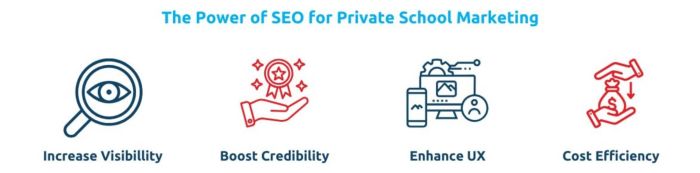
SEO is crucial for private education marketing because it directly impacts discoverability. Parents and students rely on search engines to research potential educational opportunities, and a well-optimized website ensures that a school is easily found.
A strong SEO strategy also helps build credibility and trust, as higher search rankings are often associated with authority and reliability. Moreover, SEO provides a cost-effective marketing strategy compared to traditional advertising, offering long-term benefits without the recurring costs of paid campaigns.
Beyond visibility, SEO enhances the user experience. A well-structured website that loads quickly, is easy to navigate, and contains high-quality content will rank better and engage visitors more effectively. This engagement translates to longer time spent on the site, higher conversion rates, and ultimately, more inquiries from prospective students and parents.
Best Practices for Optimizing SEO for Private Schools
The first step to reinventing your private school marketing plan is to assess your digital presence and set realistic goals. Understanding where your school stands in search rankings, what competitors are doing, and which areas need improvement will guide your SEO strategy effectively.
Start by analyzing website traffic using tools like Google Analytics, identifying which pages attract the most visitors, and pinpointing gaps where SEO enhancements can improve visibility. Additionally, schools should develop a content strategy that aligns with parent concerns, frequently asked questions and key search trends. By taking these preparatory steps, private schools can ensure their SEO efforts are targeted, strategic, and effective. Now, let’s explore some specific strategies!
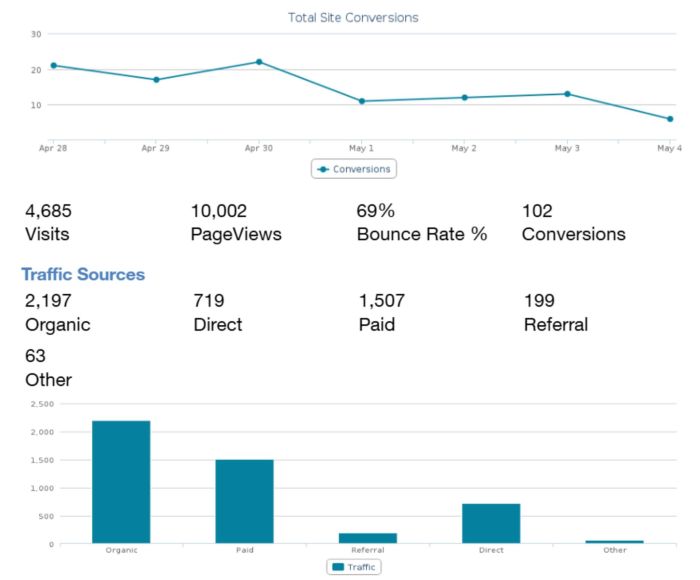
Example: What metrics should you evaluate before reinventing your private school SEO strategy? Take a look at the image below for some ideas. Using a tool like Google Analytics, determine how many total visits your site gets to understand your reach. Your page views will provide insight into site user engagement and what content is most popular.
Source: HEM
The bounce rate refers to the proportion of visitors who leave after viewing just one page. A high bounce rate (over 40%) can indicate a need for more relevant or compelling content. Finally, discovering which source of traffic gets you the most visits is valuable information when it comes to allocating funds. An SEO audit from a professional team is a great starting point if you’re looking for a preliminary view of your private school’s existing site performance.
1. Conduct Thorough Keyword Research
The foundation of any successful SEO strategy is understanding what prospective families are searching for. Private schools should conduct in-depth keyword research to identify high-value search terms related to education, admissions, and academic programs. Tools such as Google Keyword Planner, Ahrefs, and SEMrush can provide insights into relevant keywords and search volume.
Schools should target both short-tail and long-tail keywords. For example, while “private school in Toronto” is a valuable keyword, more specific terms like “Montessori private school in Toronto with small class sizes” can help attract highly relevant traffic. Additionally, considering intent-based keywords such as “affordable private schools near me” or “best private schools with financial aid options” can attract parents who are actively researching enrollment options.
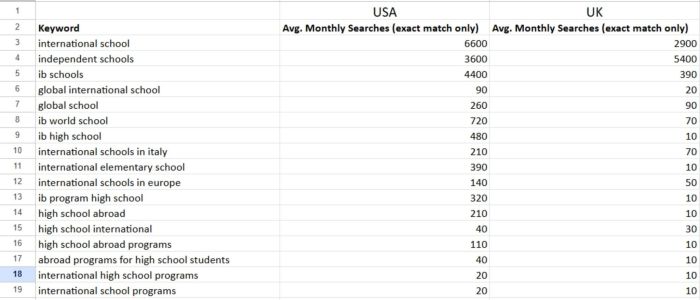
Example: This is what keyword research could look like. In the list below, you’ll see examples of both short and long-tail keywords. You’ll want to use a combination of keywords with a high search volume to reach a broader audience (like “international school” with 6600 searches) and longer, more detailed keywords to reach a specific audience (like abroad programs for international students with 40 searches).
Source: HEM
2. Optimize On-Page SEO Elements
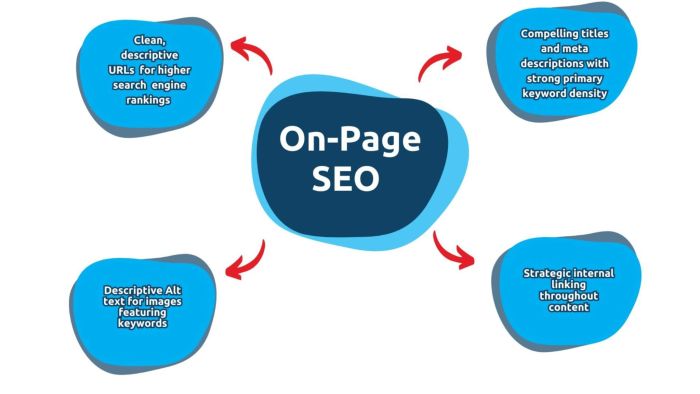
Once the right keywords have been identified, they should be strategically incorporated into website elements such as:
Title Tags and Meta Descriptions: These should include primary keywords while also being compelling enough to encourage clicks.
Header Tags (H1, H2, H3): Properly structured headers enhance readability and improve SEO rankings.
URL Structure: Clean and descriptive URLs (e.g., “yourschool.edu/admissions-process”) make it easier for search engines to understand page content.
Alt Text for Images: Adding descriptive alt text to images improves accessibility and helps search engines index visual content. Try to include keywords
Internal Linking: Strategically linking to other pages within the website helps distribute page authority and improves navigation, making it easier for users and search engines to explore content.
Source: HEM
3. Create High-Quality, Engaging Content
Content marketing is an essential component of SEO. Private schools should focus on producing valuable, informative, and engaging content that answers common questions and concerns of prospective families. This includes:
Blog posts on topics like “How to Choose the Right Private School for Your Child.”
Parent testimonials and student success stories.
Virtual campus tours and video interviews with faculty.
FAQs addressing tuition, admissions, and extracurricular activities.
In-depth guides on topics such as “How to Apply for Financial Aid at a Private School” or “What to Expect in Your Child’s First Year of Private School.”
Publishing fresh, relevant content regularly helps keep the website dynamic and signals to search engines that the site is actively maintained.
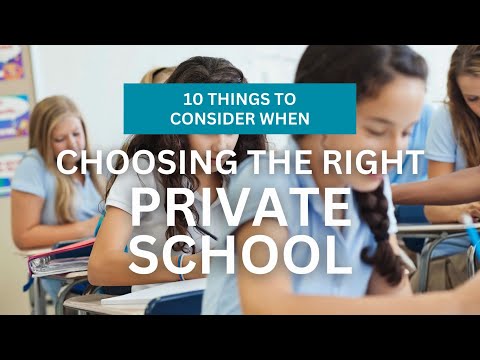
Example: This SEO- friendly video content covers a topic that many private school prospects are searching for. Don’t underestimate the value of optimizing your video content! With YouTube being the preferred video content platform as of 2024, Google is no longer the only online space where SEO matters.
Source: CTS College of Business & Computer Science
4. Implement a Local SEO Strategy
Since most private schools serve specific geographic areas, local SEO is critical. Schools should ensure their name, address, and phone number (NAP) are consistent across all online directories, including Google Business Profile, Yelp, and local education listings. Encouraging satisfied parents to leave positive reviews on Google can boost local search rankings.
Optimizing for location-based keywords, such as “best private middle school in Los Angeles,” helps schools appear in “near me” searches. Embedding a Google Map on the website’s contact page further improves local SEO. Schools should also engage in community outreach efforts that can generate local press mentions and backlinks, further strengthening their local search presence.
5. Enhance Website Performance and User Experience
Search engines prioritize websites that offer a seamless user experience. Private schools should ensure their websites are:
Fast-loading: Page speed impacts rankings, so schools should optimize images, leverage browser caching, and minimize code.
Mobile-friendly: With many parents researching schools via mobile devices, responsive design is essential.
Secure: HTTPS encryption builds trust and improves rankings.
Structured with Clear Calls-to-Action (CTAs): Encouraging prospective students and parents to schedule a visit, request information, or apply online enhances conversions.
A well-structured site with intuitive navigation reduces bounce rates and encourages visitors to explore more pages.
6. Build a Strong Backlink Profile
Backlinks, links from other reputable websites to a school’s site, signal authority to search engines. Schools can earn high-quality backlinks by:
Partnering with local businesses and educational organizations.
Contributing guest posts to education-related blogs.
Issuing press releases about notable achievements or events.
Getting listed in school directories, alumni association pages, and educational forums.
Additionally, ensuring the school is listed on authoritative education directories and accreditation bodies’ websites can further boost credibility.
7. Leverage Social Media for SEO
While social media does not directly impact search rankings, it enhances brand visibility and drives traffic to a school’s website. Are you wondering how to market your private school with social media? Maintain active profiles on platforms like Facebook, Instagram, and LinkedIn, regularly sharing engaging content and linking back to key web pages. Encouraging faculty, alumni, and students to share content can increase organic reach and generate social signals that indirectly benefit SEO.
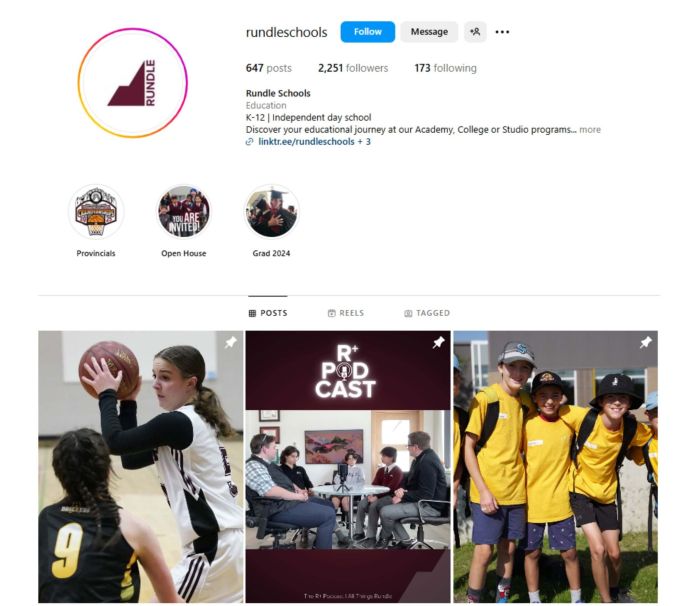
Example: Rundle Schools does a great job of optimizing its Instagram page to drive organic traffic to its site. Consider using a tool like Linktree to make it easy for prospects to find your site and other important profiles. Rundle Schools is committed to a multi-channel SEO content strategy as you can see in the centre post where they promote their podcast.
Source: Rundle Schools | Instagram
Get Support to Elevate Your Private Schools SEO Strategy
At Higher Education Marketing (HEM), we understand the unique challenges private schools face in improving their online visibility. From keyword research and content marketing to local SEO optimization and paid advertising, our team of education marketing experts tailors strategies to the specific needs of private schools.
At HEM, we’ve helped countless private schools boost their online visibility, attract more prospective families, and exceed their enrollment goals through proven results-driven SEO strategies. Ready to elevate your school’s digital presence? Let’s craft an SEO strategy that sets you apart, connect with HEM today!
Struggling with enrollment?
Our expert digital marketing services can help you attract and enroll more students!
Frequently Asked Questions
Question: How to market a private school?
Answer:Leveraging SEO effectively is the key to being discovered by your target audience online. Search engine optimization (SEO) is pivotal in increasing online visibility, helping private schools rank higher on search engine results pages (SERPs), and ensuring they remain top-of-mind for potential applicants.
Question: How to market your private school with social media?
Answer: Maintain active profiles on platforms like Facebook, Instagram, and LinkedIn, regularly sharing engaging content and linking back to key web pages. Encouraging faculty, alumni, and students to share content can increase organic reach and generate social signals that indirectly benefit SEO.