Author: admin

  • ‘I hate freedom of opinion’ meme leads to sentencing in German court

    ‘I hate freedom of opinion’ meme leads to sentencing in German court

    Last year, FIRE launched the Free Speech Dispatch, a regular series covering new and continuing censorship trends and challenges around the world. Our goal is to help readers better understand the global context of free expression. Want to make sure you don’t miss an update? Sign up for our newsletter

    Guilty finding for German editor’s doctored “I hate freedom of opinion” image 

    Germany’s speech policing can’t stay out of the spotlight for long, apparently. This month, David Bendels, editor-in-chief for the Alternative for Germany (AfD)-affiliated Deutschland Kurier, received a seven-month suspended sentence for “abuse, slander or defamation against persons in political life.” 

    The offense? Bendels had edited and posted a photo of Interior Minister Nancy Faeser so that a sign she held said, “I hate freedom of opinion.” (Just think of how many different versions you saw of the Michelle Obama sign meme here in the U.S.) A Bavarian district court found Bendels guilty under a provision giving advanced protections to political figures against speech. Bendels’ sentencing has provoked criticism outside of his political circle, with figures like former Green Party leader Ricarda Lang questioning the “proportionality” of the ruling.

    Political speech under fire, from Thailand to Zimbabwe to Russia 

    • American academic Paul Chambers, a Naresuan University lecturer, has lost his visa and is facing trial after the Royal Thai Army accused him of violating Thailand’s oppressive lese-majeste laws. The laws, which ban insults to the country’s monarchy, regularly result in long prison sentences for government critics.
    • Hamas militants tortured a Palestinian man to death after he participated in anti-Hamas protests.
    • A St. Petersburg military court sentenced 67-year-old Soviet-era dissident Alexander Skobov to 16 years in prison for participating in the Free Russia Forum and making a social media post in support of Ukraine.
    • Indian comedian Kunal Kamra is experiencing a wave of retaliation after joking about state leader Eknath Shinde at a comedy club. Kamra is facing multiple criminal charges, including defamation, as well as death threats. But he isn’t backing down — his response on X included a “step-by-step guide” on “How to Kill an Artist.”
    • Zimbabwe police have detained journalist Blessed Mhlanga for weeks on charges of “transmitting information that incites violence or causes damage to property.” He had interviewed a veteran and political figure who called for the resignation of President Emmerson Mnangagwa.
    • Israeli military temporarily blindfolded, handcuffed, and detained filmmaker Hamdan Ballal, best known for the Oscar-winning documentary “No Other Land,”  while he was receiving medical care after settlers attacked him during Ramadan near his home in the West Bank.
    • Burkina Faso’s military junta is accused of forcibly conscripting journalists who criticized severe press freedom violations in the country.
    • Nigeria’s Borno State arrested a 19-year-old for his viral social media post criticizing public schools in the region and intend to charge him with “ridiculing and bringing down the personality of” the governor.
    • Lawyers representing dissenting voices aren’t free from consequences, either. An Iranian court sentenced a dozen lawyers who provided legal services to clients from the country’s 2022 protest movement to three years in prison on “propaganda” charges. 

    Turkey targets journalists amid protests

    Protesters gather in Istanbul after the detention of the city’s Mayor Ekrem Imamoglu.

    Last month, Turkish police banned protests in Istanbul and arrested the city’s Mayor Ekrem Imamoglu, a popular rival of President Recep Tayyip Erdogan. The crackdown has extended to the press, too. Authorities arrested BBC correspondent Mark Lowen and deported him for “being a threat to public order,” arrested AFP photographer Yasin Akgül for “taking part in an illegal gathering,” and charged Swedish journalist Kaj Joakim Medin for allegedly “being a member of a terrorist organization” and “insulting” Erdogan. 

    The latest in tech and censorship:

    • Late last month, a massive earthquake struck Myanmar, causing thousands of deaths and injuries. But the country’s military junta nevertheless continued severe restrictions on reporting and internet access, hampering recovery efforts.
    • The Kenyan high court in Nairobi ruled that a lawsuit alleging Meta’s content moderation practices fueled violence in Ethiopia can go forward.
    • Meta says it’s facing “substantial” fines because it “pushed back on requests from the Turkish government to restrict content that is clearly in the public interest” in the aftermath of Mayor Imamoglu’s arrest.
    • Turkish authorities also demanded the social media platform X block hundreds of accounts within the country, to which X partially complied but has since challenged some of the orders “to defend the expression of our users.”
    • X is also challenging the use of a provision of India’s Information Technology Act to issue content takedown orders.
    • India’s Supreme Court, in response to Wikimedia Foundation’s appeal against an order from the Delhi High Court, pushed back against that court’s demand that Wikipedia take down a page detailing Asian News International’s lawsuit against the Foundation.
    • The Investigatory Powers Tribunal issued a ruling opposing the UK government’s attempt to keep secret Apple’s appeal against orders that it offer a backdoor in its encrypted cloud service for users around the world.
    • European Union authorities are reportedly planning to announce penalties including “a fine and demands for product changes” against X for alleged violations under the Digital Services Act.

    Pakistan’s blasphemers still under attack

    Late last month, a Pakistan court sentenced five men to death for posting “blasphemous” content online, a common charge and penalty in Pakistan. But that’s not all. A Pakistani YouTuber is also facing blasphemy charges (not his first) for naming a perfume “295” — a reference to the blasphemy law in the country’s penal code.

    Let’s check back in across the pond…

    Lately, it seems not a day goes by without the UK’s free speech issues hitting the headlines. This month is no different. Here’s the latest:

    • As I’ve written about in recent editions of the Dispatch, the UK has been flirting with enforcement of blasphemy laws in the country. That risk has advanced with the charge of “intent to cause against the religious institution of Islam, harassment, alarm or distress” filed against a man who burned a Quran outside the Turkish consulate in London. The alleged target in the case — the “religious institution of Islam” — is notable.
    • On the other hand, the UK’s Advertising Standards Authority chose not to act on hundreds of complaints filed over an allegedly anti-Christian KFC ad that “depicts a man being baptised in a lake of gravy before transforming into a human-sized chicken nugget.”(Last year, the ASA did act against a comedy tour ad that could cause “serious offence” to Christians.)
    • A lower court in Poole found anti-abortion activist Livia Tossici-Bolt guilty on two charges of breaching a public spaces protection order for standing outside an abortion clinic with a sign that read “Here to talk, if you want.” The court gave her a conditional discharge and ordered her to pay £20,000 (about $27,000) in legal costs.
    • Over 30 police officers arrested six activists from Youth Demand at a Quaker meeting house in London “on suspicion of conspiracy to cause a public nuisance.” One member said the group was “so incensed” by the raid “that they didn’t even offer officers a cup of tea.”
    • Hertfordshire police are conducting a “rapid and thorough review” after the arrest and 11-hour detainment of  a couple on various charges, including harassment and malicious communications because they voiced complaints about their daughter’s school on WhatsApp.
    • The aforementioned arrests are just a drop in the pond — data obtained by The Times found that UK police are detaining around 12,000 people annually for “sending messages that cause ‘annoyance’, ‘inconvenience’ or ‘anxiety’ to others via the internet, telephone or mail.”

    China’s critics targeted in Hong Kong — and Canada 

    Chinese dissident artists Badiucao

    Chinese dissident artist and human rights activist Badiucao holding his Lennon Wall flag that he designed in support of Hong Kong’s pro-democracy movement, October 5, 2019.

    Milan digital gallery Art Innovation is facing criticism for its response to an artist it featured in a short video broadcast on billboards during a recent art fair in Hong Kong. In it, artist, CCP critic, and frequent target of censorship Badiucao mouthed the words, “You must take part in revolution,” a Mao Zedong quote and the title of his new graphic novel

    When he announced that he planned to publish a statement about his effort to skirt Hong Kong’s censorship laws, Art Innovation warned him there would “definitely” be legal action if material “against the Chinese government is published.” And in a social media post, the gallery said Badiucao was not upfront about the “nature of the work” so they “can consider it a crime.”

    And that’s not all the news out of Hong Kong. In recent weeks, a 57-year-old man was sentenced to a year in prison for “seditious” social media posts including some calling the Chinese government a “terrorist state” and an “evil axis power.” Police also took in for questioning the parents of U.S.-based democracy activist Frances Hui, who is wanted in Hong Kong on national security charges.

    Hong Kong’s campaign to target its activists is causing a stir elsewhere, too — in Canadian elections. Canadian member of parliament and Liberal Party candidate Paul Chiang stepped down from the April 28 election days after a video of comments he made earlier this year surfaced. In it, Chiang encouraged people to bring Conservative party candidate Joe Tay, who is wanted by Hong Kong authorities, to Toronto’s Chinese consulate to collect a bounty for him.

    P.S. If you enjoyed this newsletter, you may be interested in my book, “Authoritarians in the Academy: How the Internationalization of Higher Education and Borderless Censorship Threaten Free Speech.” It comes out Aug. 19 and is now available for pre-order!
    Source link

  • Davidson College – Edu Alliance Journal

    Davidson College – Edu Alliance Journal

    April 21, 2025, by Dean Hoke:  With this profile of Davidson College, I complete the tenth and final entry in my series exploring small colleges across the United States. This journey has deepened my appreciation for the distinct contributions and lasting impact of these diverse institutions. Collectively, these colleges have further strengthened my belief in the diversity, resilience, and enduring importance of American higher education — and reaffirmed the vital role that small colleges continue to play in communities across the country.

    Background

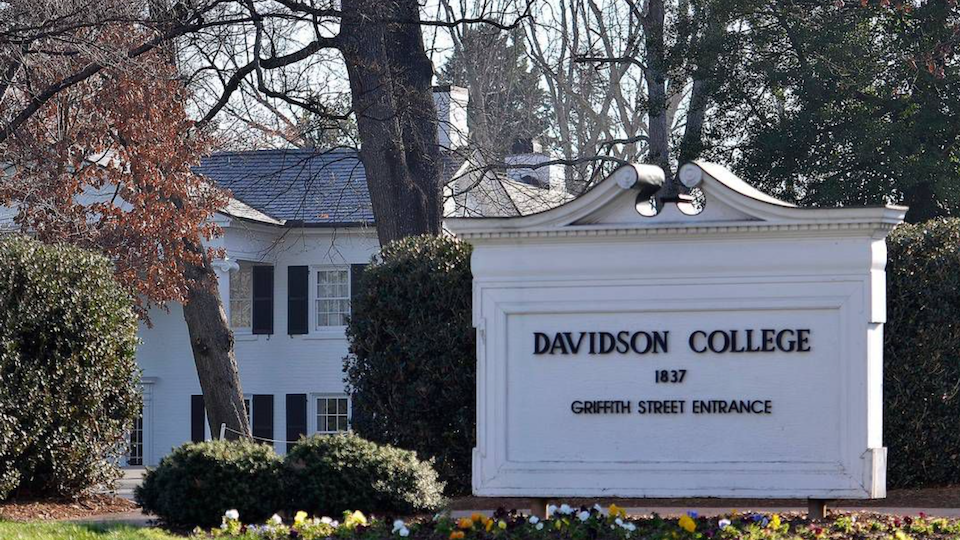
    Founded in 1837 by Presbyterian leaders, Davidson College is a private liberal arts college located in Davidson, North Carolina, just north of Charlotte. Named after Revolutionary War hero General William Lee Davidson, the college embraces a strong tradition of academic excellence and service. Although it maintains historical ties to the Presbyterian Church (USA), Davidson welcomes students of all faiths and backgrounds. A hallmark of Davidson’s culture is its student-run Honor Code, fostering a climate of trust and integrity. With about 2,000 undergraduates, Davidson remains committed to developing “humane instincts and disciplined, creative minds” through a personalized liberal arts education steeped in tradition, yet responsive to the challenges of a changing world.

    Curricula

    Davidson College offers a broad and rigorous liberal arts education, exclusively focused on undergraduate learning. Students choose from 37 majors and 39 minors, ranging from traditional fields like English, History, and Biology to interdisciplinary studies like Data Science and Environmental Studies. Through the Center for Interdisciplinary Studies, students can even create personalized majors. All students must complete a comprehensive general education program, emphasizing writing, critical thinking, and exposure to diverse disciplines.

     Davidson has an 8:1 student-faculty ratio, which promotes mentorship and in-depth discussion. Faculty, all holding terminal degrees, foster an environment that encourages original research and creative work. Davidson emphasizes experiential learning, with over 70% of students studying abroad and many engaging in faculty-mentored research or community-based projects.  Signature programs include the Center for Civic Engagement and Humanities Seminars. The college’s academic culture, shaped by its Honor Code, blends classic liberal arts education with forward-looking innovation, producing graduates who are both intellectually agile and socially responsible.

    Strengths

    • Academic Achievements: Davidson students and alumni excel in prestigious awards. The college has produced 23 Rhodes Scholars (one of the highest totals per capita for an undergraduate institution) and is a top producer of Fulbright Scholars​. Students are also competitive for Goldwater, Watson, and Marshall scholarships, reflecting the quality of preparation.
    • Employment and graduate school placement rates: In the class of 2024, 92% were employed or enrolled in postgraduate education 6 months after graduation. This has been consistent for a number of years.
    • Selective Admissions: Admission to Davidson is highly competitive (“most selective” according to Princeton Review and U.S. News). For the Class of 2027 entering fall 2023, Davidson’s acceptance rate was ~14.5% (1,068 accepted out of 7,363 applicants) ​and has a yield rate of nearly 50%​. Davidson practices need-blind admissions for U.S. students and meets 100% of demonstrated financial need.
    • Notable Faculty and Resources: Davidson’s faculty are dedicated teachers and active scholars. Small class sizes and an emphasis on undergraduate research allow students to work closely with faculty on original research or creative works. The college has modern facilities for science and art. Davidson’s NCAA Division I athletics (unusual for a school of its size) also provides school spirit and national visibility, particularly the men’s basketball program.
    • Financial Strength and Aid: Davidson’s financial position is robust, with an endowment of approximately $1.3 billion as of 2023​. This substantial endowment (which has more than doubled in the past decade) underwrites the college’s Davidson Trust, a landmark financial aid program.

    Weaknesses

    • High Cost and Financial Accessibility:
      The high sticker price of attending Davidson—now over $80,000 annually and rising—remains a barrier for many middle-income families. Students without demonstrated financial need receive little or no merit aid, limiting socioeconomic diversity compared to peer institutions with larger endowments.
    • Student Diversity Challenges:
      Davidson College has made significant efforts to diversify its student body, but challenges remain. Black and Hispanic/Latino enrollment continues to lag behind national averages for selective liberal arts colleges. Although Davidson has invested in scholarships, outreach programs, and DEI initiatives, progress has been gradual. Some students and alumni express concern that the pace of change has not fully kept up with the college’s aspirations for a more inclusive campus community.
    • Faculty Retention Challenges Among Early-Career and Diverse Faculty:
      While Davidson College enjoys strong overall faculty stability, recent strategic plan updates and DEI committee reports acknowledge challenges in retaining early-career and underrepresented faculty members. Factors such as limited research resources, heavier service burdens for faculty of color, and opportunities at larger institutions have contributed to higher attrition rates within these groups.

    Economic Impact

    According to the Davidson College Economic Impact Report 2023, produced by Appleseed Inc. (an economic consulting firm specializing in higher education and nonprofit sectors), Davidson College generates nearly $500 million annually for the North Carolina economy, including $430 million for the Charlotte metro region. The college supports approximately 2,300 jobs statewide and contributes around $22 million in annual state tax revenue. Student and visitor spending adds another $18 million annually to local businesses. Beyond economics, Davidson students contribute over 73,000 hours of community service each year, benefiting local schools, nonprofits, and civic organizations. The town-gown relationship is exemplary, with Davidson serving as a cultural, social, and educational hub for the region. Davidson’s strategic proximity to Charlotte opens further opportunities for collaboration, internships, and regional engagement, ensuring that its impact extends well beyond its picturesque campus.

    Enrollment Trends

    According to the Davidson College FactFile, enrollment has remained steady with a gender balance and a national/international student body.

    The college student body represents all states and 57 nations. The domestic student of color population is 28%, and  53% of the students are women.

    Degrees Awarded by Major

    In the 2023–24 academic year, Davidson College conferred degrees to 504 graduates, of whom 108 had double majors.

    Alumni

    Davidson College’s alumni impact spans politics, literature, sports, and public service:

    • Dean Rusk (1931): U.S. Secretary of State under Presidents Kennedy and Johnson; Davidson’s international studies program honors his legacy.
    • Tony Snow (1977): Former White House Press Secretary and noted journalist; exemplified public communication skills rooted in his Davidson education.
    • Patricia Cornwell (1979:) Best-Selling crime novelist whose forensic thrillers have sold over 100 million copies worldwide.
    • Elizabeth Kiss (1983): Global educational leader and Warden of Rhodes House at Oxford University; a trailblazer in ethics and leadership education.
    • Anthony Foxx (1993): U.S. Secretary of Transportation and former Mayor of Charlotte; actively supports Davidson’s civic engagement initiatives.
    • Stephen Curry (2010, completed 2022): NBA MVP and four-time champion; his legendary NCAA tournament run put Davidson basketball on the national map, and he returned to complete his sociology degree.

    Endowment and Financial Standing

    Davidson’s endowment has grown significantly, reaching approximately $1.375 billion in 2023. This growth supports its generous need-blind, no-loan financial aid policies and academic initiatives.

    The college’s financial management has earned high marks. The 2023 Forbes Financial Grades give Davison a 3.9 GPA and an A letter grade.

    Return on Investment (ROI)

    According to Georgetown University’s Center on Education and the Workforce, Davidson’s 40-year ROI for bachelor’s degrees is $2,689,000—well above the national average of $1,744,000 for private institutions. This places Davidson in the top 75 private college institutions.

    Why is Davidson Important?

    • Davidson College embodies the best traditions of academic rigor, ethical leadership, and service.
    Founded in 1837, Davidson forged a powerful model of liberal arts education rooted in critical thinking, moral inquiry, and civic responsibility. The college’s honor code—one of the earliest in the South—still defines campus culture today, emphasizing personal integrity and a community of trust.

    • Davidson’s regional and national influence extends far beyond its campus.
    The college plays a growing role in the economic and civic life of the Charlotte metro area, leveraging partnerships that connect students to real-world opportunities in business, public service, and innovation. Nationally, Davidson alumni have made transformative contributions in government, global affairs, literature, education, and athletics, demonstrating that small colleges can have broad and lasting societal impact.

    • Davidson remains a vital force for leadership, diversity, and opportunity.
    Initiatives like the Davidson Trust, which eliminates student loans from financial aid packages, alongside robust global learning and community engagement programs, show Davidson’s commitment to access and excellence. The college continuously prepares students not only for professional success but for principled leadership in a rapidly changing world.

    Summary

    Davidson College remains one of America’s premier liberal arts institutions, blending historic tradition with forward-looking innovation. The college exemplifies the transformative power of the liberal arts, producing leaders of conscience and influence. It has long combined academic excellence with ethical leadership and a global perspective, demonstrating that a small college can have a profound national and international impact. Davidson’s commitment to trust, service, and innovation ensures that it continues to shape lives and society for the better.


    Dean Hoke is Managing Partner of Edu Alliance Group, a higher education consultancy, and a Senior Fellow with the Sagamore Institute. He formerly served as President/CEO of the American Association of University Administrators (AAUA). With decades of experience in higher education leadership, consulting, and institutional strategy, he brings a wealth of knowledge on small colleges’ challenges and opportunities. Dean, along with Kent Barnds, is a co-host for the podcast series Small College America. 

    Source link

  • Funding for online education library ERIC is slated to end this week

    Funding for online education library ERIC is slated to end this week

    When you’re looking for research on four-day school weeks or how to teach fractions, or trying to locate an historical document, such as the landmark Coleman Report of 1966, you might begin with Google. But the reason that high-quality research results pop up from your Google search is because something called ERIC exists behind the scenes. 

    ERIC stands for Education Resources Information Center and it is a curated online public library of 2.1 million educational documents that is funded and managed by the U.S. Education Department. The collection dates back to the 1960s and used to be circulated to libraries through microfiche. Today it’s an open access website where anyone can search, read online or download material. Neither a library card nor login credentials are needed. It is used by an estimated 14 million people a year. (I am one of them.) If you’re familiar with MedLine or PubMed for health care studies, this is the equivalent for the field of education. 

    This critical online library catalog is supposed to continue operating under a five-year contract that runs through 2028. Initially, ERIC was spared from the department’s mass contract cancellations in February. But according to Erin Pollard Young, the sole Education Department employee who managed ERIC until her job was eliminated in March, the Department of Government Efficiency or DOGE has since refused to approve disbursement of money that has already been authorized by Congress for the upcoming year. 

    Related: Our free weekly newsletter alerts you to what research says about schools and classrooms.

    ERIC is scheduled to run out of money on April 23.  After that date, no new documents can be added.  “The contract, from my understanding, would die,” Pollard Young said in an interview. 

    “After 60 years of gathering hard to find education literature and sharing it broadly, the website could stop being updated,” Pollard Young posted on LinkedIn. “Yes, the data are backed up in so many places, and the website will likely remain up for a while. But without constant curation and updating, so much information will be lost.”

    Parents, teachers, researchers and education policymakers are all affected. “Defunding ERIC would limit public access to critical education research, hindering evidence-based practices and informed policy decisions vital for the advancement of American education,” emailed Gladys Cruz, a superintendent of a school district called Questar III BOCES outside of Albany, New York, and a past president of the AASA, The School Superintendents Association. 

    Proposal to halve the cost

    Pollard Young said that before she left the Education Department, she was frantically working to comply with a DOGE demand to slash ERIC’s annual budget by half, from $5.5 million to $2.25 million. The cuts were painful. She would have to cut 45 percent of the journals added to the database each year. The public help desk would be eliminated. And Pollard Young had agreed to personally take on the extra task of directly communicating with 1,500 publishers, something that had been handled by AEM Education Services, a vendor that collects, analyzes and manages data for the government. 

    These proposed cuts did not satisfy DOGE. Pollard Young said she received an email reply in all caps, “THIS IS NOT APPROVED,” with a request for more information. Pollard Young submitted the additional information but never received a response. She lost access to her work email about a week later on March 11, the day that Pollard Young and more than 1,300 other Education Department employees lost their jobs in a mass firing

    Related: Chaos and confusion as the statistics arm of the Education Department is reduced to a skeletal staff of 3

    Pollard Young was the only Education Department employee who was involved with ERIC on a daily basis. She oversaw a team of 30 contractors at AEM Education Services, which did most of the work. Adding documents to the digital library involves many steps, from determining their importance to cataloging and indexing them. It is the metadata, or descriptive tags, that AEM inserts behind the scenes that allows documents on ERIC to be discoverable and rise to the top on Google searches. But the public can also search directly on the ERIC website. 

    “Fun fact,” Paige Kowalski, executive vice president of the Data Quality Campaign, an organization that advocates for data-driven decision making in schools, posted on LinkedIn. “Over the 20 years that DQC has been around we’ve had some poorly designed websites with atrocious search functions. I often couldn’t find resources I wrote! But could always find them on ERIC. Huge resource.”

    The bulk of the collection consists of academic journal articles. Many are full text PDFs that would otherwise be inaccessible behind paywalls. ERIC also contains books, federal, state and local government reports and doctoral dissertations. 

    Gray literature

    One of its gems is the large amount of “gray literature,” which Pollard Young described as unpublished studies from private research organizations and school district reports that are not cataloged in EBSCO, a private database of academic documents. That’s another reason that Google and AI cannot simply replace this curated ERIC collection. “In education so much research is produced outside of journals,” said Pollard Young. “Big, important RCTs [randomized controlled trials] are in white papers,” or special reports. 

    In response to specific questions about the future of ERIC, the Education Department responded more broadly about the need to restructure the Institute of Education Sciences (IES), where ERIC is managed. “Despite spending hundreds of millions in taxpayer funds annually, IES has failed to effectively fulfill its mandate to identify best practices and new approaches that improve educational outcomes and close achievement gaps for students,” said Madi Biedermann, deputy assistant secretary for communications, in an emailed statement. “The Department is actively evaluating how to restructure IES with input from existing leadership and expert stakeholders so that the Institute provides states with more useful data to improve student outcomes while maintaining rigorous scientific integrity and cost effectiveness.”

    It is still possible that DOGE will approve the reduced budget proposal this week before the money runs out. But there will be no one at the Education Department to oversee it or communicate with publishers. “Best case scenario, ERIC operates at half of its budget,” Pollard Young posted on LinkedIn. 

    Related: DOGE’s death blow to education studies

    Like other Education Department employees who were fired in March, Pollard Young is on administrative leave until June. But she said she is willing to risk potential retaliation from the administration and speak on the record about the threat to ERIC, which she had managed for more than a dozen years.

    “I am aware of what some of the consequences are,” said Pollard Young. “But to me, it is important for the field to know that I am doing everything in my power to save ERIC and also for the country to understand what is happening. As I’m talking to people across the country, it is clear that they don’t fully understand what is happening in D.C. Hopefully we can put some pressure on it so we can keep the funding or bring it back.”

    Contact staff writer Jill Barshay at 212-678-3595, jillbarshay.35 on Signal, or [email protected].

    This story about ERIC was written by Jill Barshay and produced by The Hechinger Report, a nonprofit, independent news organization focused on inequality and innovation in education. Sign up for Proof Points and other Hechinger newsletters.

    The Hechinger Report provides in-depth, fact-based, unbiased reporting on education that is free to all readers. But that doesn’t mean it’s free to produce. Our work keeps educators and the public informed about pressing issues at schools and on campuses throughout the country. We tell the whole story, even when the details are inconvenient. Help us keep doing that.

    Join us today.

    Source link

  • Can we keep live music venues from dying out?

    Can we keep live music venues from dying out?

    What is happening to the local music scene?

    I remember my parents telling me when I was a child that one of the best ways to spend a Saturday night as an adult was to visit a local bar and watch live bands with friends. However, as I grew older, I found it increasingly difficult to find such venues.

    With the music industry generating billions in global revenue — from Taylor Swift’s stadium tours to Coldplay’s international sellouts — one might expect local scenes to benefit.

    Instead, small venues from Pennsylvania to rural Ireland are shuttering at alarming rates. Vibrant shows, diverse crowds and strong community support for musicians should be the norm. Yet, in recent years, the opposite has happened. Attendance at small venues has plummeted and emerging artists are finding fewer opportunities to perform publicly.

    While the COVID-19 pandemic accelerated this decline, the trend had already been in motion for years. Fewer people are as interested in local music these days. But why?

    One major factor is the rise of social media. With music accessible at our fingertips, listeners no longer rely on their local scene to discover new artists. Instead of attending live performances, they can explore endless music from home.

    Digitized music

    Bassist and lead singer of the band Heaven’s Gate, 21-year-old Mike Danocwzi, offers insight on the matter. “People have forgotten what it’s like to have to leave their home to experience a song,” Danocwzi said. “Instead, they get too lost in their feed to even appreciate the vibes.”

    Having played guitar alongside Danocwzi at several shows, I can’t help but agree. Turnout is often disappointing and those who do attend seem more focused on their phones — texting, scrolling or recording — than on the performance itself. 

    A study by the Pew Research Center found that 99% of Americans and Canadians over 18 have a cell phone with social media. The Deloitte Center for Technology and Communications reported that 86% of Gen Z listeners discover new music through social media rather than live shows.

    Economic factors have also played a role. The rising cost of living has left many young adults with less disposable income for entertainment. This, combined with the skyrocketing cost of college — nearly triple what it was in the 1990s — has created a growing divide between artists and audiences.

    Another issue is the commercialization of the modern music industry. The so-called “middle class” of musicians is disappearing, mirroring the growing wealth gap in society. There is an ever-widening divide between mega-stars and independent artists.

    People flock to the big stars.

    Superstars like Drake, Taylor Swift and Metallica dominate the industry, leaving little room for smaller musicians to thrive. Music is no longer about unity through sound but rather unity through the artist — a shift that has changed how people engage with the industry.

    Virginia musician and local staple Jerry Reynolds believes this change has altered the very definition of being an artist. “These new stars don’t understand what made the industry fucking great,” Reynolds said. “I remember starting in bars not so I could make fucking money, just so I could fucking play in my damn community.”

    Reynolds, who chose to stay in the local circuit rather than chase stardom, argues that music should be about the song, not commercial success. He believes today’s artists have lost sight of what truly matters.

    The decline of guitar-driven music is another factor. Before social media, being a skilled guitarist was one of the coolest things a person could do, often launching musicians to stardom. Legends like Eddie Van Halen, Jimi Hendrix and Eric Clapton became icons through sheer talent and showmanship.

    Now, however, technical skill alone is no longer enough. The internet has accelerated the exchange of musical ideas to such an extent that virtuoso guitarists are no longer a rarity. As a result, the spectacle of live performance has lost some of its magic.

    Local venues struggle across the globe.

    This isn’t just a local issue. Around the world, small music venues and local cultural hubs are in decline. A 2023 Guardian article reported that the UK lost over 120 grassroots music venues in a single year — roughly 15% of its total. In Ireland, the closure of rural pubs — many of which double as performance spaces — is becoming a social crisis. These establishments often serve as the heart of small communities, acting as gathering places for conversation, connection and live music.

    Similar stories have emerged in Australia, Canada and parts of Europe, where independent venues are battling rising rents, insurance costs and shrinking audiences. The Music Venue Trust in the UK warns that without intervention, the cultural backbone of the live music scene could collapse entirely.

    At the same time, the stadium concert economy is booming. Taylor Swift’s Eras Tour grossed over $1 billion globally. Coldplay has sold out massive stadiums with capacities of over 70,000, with average ticket prices reaching several hundred dollars. The contrast is stark: while the biggest names in music break records, many local artists struggle to draw a crowd or even cover travel costs for a performance.

    What does this mean for the future of local music? And more importantly, can anything be done to reverse this trend?

    The short answer is simple: support your local scene. Look up small venues, ask about upcoming shows and show up for independent artists. Better yet, start a band or organize a local event.

    This isn’t just a problem in your neighborhood — it’s a global cultural shift. But change can start small. 

    The biggest obstacle facing live music is our own reluctance to step outside the comfort of our homes. If more people make the effort to rediscover the excitement of live performances, the local music scene could experience a revival. And with that resurgence, small artists may once again find a home within their communities.


    Questions to consider:

    1. Why are many small music venues struggling?

    2. What is one reason younger people are not going to clubs to see live music?

    3. What was the last live music you saw? How was it different from streaming the music?


    Source link

  • College grads say they are confident about jobs but cautious about economy

    College grads say they are confident about jobs but cautious about economy

    This audio is auto-generated. Please let us know if you have feedback.

    As the current job market continues to shift, 2025 college graduates express both optimism and concern about their job prospects, according to Monster’s annual State of the Graduate Report.

    Most graduates (83%) said they were confident about landing a role soon after graduation, although 37% said the job hunt could take 4-6 months.

    “The job market is rapidly shifting, and today’s graduates are entering it with both confidence and conviction,” Scott Blumsack, CMO of CareerBuilder + Monster, said in the report.

    “The message is clear: today’s graduates are ambitious, intentional, and values-driven,” Blumsack said. “Employers who adapt to these priorities by offering flexibility, purpose, and pathways to growth will be best positioned to attract and retain the next generation of top talent.”

    In a poll of 1,000 new and upcoming college graduates, 75% said they’re worried their job prospects will be affected by the economy, up from 69% in 2024.

    In addition, 48% of graduates said they assume they won’t be able to find a job at the workplace they prefer, as compared with 52% in 2024.

    Due to current market conditions, 42% of graduates who don’t already have a full-time job said they’re now looking at more companies and industries, an increase from 34% in 2024.

    Graduates pointed to several red flags that would prevent them from applying for a job at a company, including a salary freeze, recent layoffs, lower than average earnings during the past year, a mandate for daily in-office work and fully remote work.

    At the same time, graduates reported mixed thoughts about the economy and how it may impact their starting salary. About 37% expect their starting salary to be higher as a result of the economy, while 27% expect their starting salary to be lower.

    Job security also appears to be a major priority, with 80% reporting concerns about job security in the current market, as compared with 77% in 2024. About 64% said it’ll be more difficult to find a job due to artificial intelligence filling roles previously held by humans, up from 62% in 2024.

    In December 2024, hiring, job openings and turnover decreased, with hiring reaching its lowest point in five years, according to a BambooHR report. Hiring declined across all industries, both in the U.S. and worldwide, the report found.

    For now, the labor market has cooled off, which could be good news for hiring managers, leading economists told HR Dive. Although top talent may be somewhat easier to find and retain, an aging workforce and changes to immigration will likely challenge recruiters throughout 2025, they said.

    Source link

  • States have the tools to improve literacy — now they need to use them

    States have the tools to improve literacy — now they need to use them

    This audio is auto-generated. Please let us know if you have feedback.

    Bob Wise is a former governor of West Virginia and former member of the U.S. House of Representatives. Javaid Siddiqi is president and CEO of the Hunt Institute and a former Virginia secretary of education.

    Believe it or not, there is a clear path forward for literacy in the United States.

    A headshot of a person.

    Bob Wise

    Permission granted by The Hunt Institute


    We wouldn’t blame you to think otherwise given the grim outlook from the media, the federal government, and this year’s alarming results from The Nation’s Report Card. (In case you missed it — more than half of 4th and 8th graders are reading below proficiency. These are real children with futures at stake.)

    While the National Assessment of Educational Progress and other national measuring sticks sit on the chopping block with this presidential administration, the distressing trends emphasized by this year’s results spell disaster should we continue with current practices.

    But here’s a fresh perspective: Most states have already forged the tools to turn poor literacy performance into meaningful progress.

    In this polarized landscape, state policy and education leaders should take heart that education is a nonpartisan issue for much of the public. As a recent Hunt Institute survey showed, 89% of parents and voters across parties favor implementing evidence-based literacy programs in classrooms to improve student reading levels.

    According to 2024 data, 40 states and the District of Columbia have adopted major policy measures requiring these practices be incorporated at every stage of literacy education. The fact that so many red and blue states have recently adopted significant — and similar — legislative literacy initiatives shows widespread support.

    Passing laws is only part of the solution; effectively implementing them is now the major challenge.

    4th grade reading and math NAEP scores 2000-2024

    States are adopting major education literacy policy measures to improve student reading levels.

    That being said, education leaders must implement necessary pedagogy and maintain the necessary data to track improvement over the upcoming critical years.

    The most effective NAEP response from state education leaders would be to launch an intentional period of implementation of what is enacted into law. We’re seeing this in some states, but others, like Delaware and Iowa, have room for further action.

    A headshot of a person

    Javaid Siddiqi

    Permission granted by The Hunt Institute


    For state policymakers, the most meaningful implementation actions include:

    Signaling commitment through legislative oversight

    Legislators can drive improvement by exercising their traditional oversight role — holding hearings, reviewing implementation data, and identifying barriers. Education and finance committees should assess progress, address funding needs, and push for cross-agency collaboration. Few things prompt action from an agency like an invitation to testify at an oversight hearing.

    Ensuring statewide early literacy screening

    States should implement comprehensive early literacy screening strategies for pre-K through 3rd grade. Most states already require some form of screening to identify potential reading strengths and weaknesses. Tailoring instruction to each child’s individual needs and strengths is the critical first step in developing a personalized learning plan.

    Elevating teacher preparation

    Investing in the support, oversight, and improvement of teacher preparation programs is essential — how educators teach reading directly impacts student outcomes. Most states have mandated the removal of outdated curricula in favor of evidence-based practices rooted in the science of reading. 

    Through initiatives like The Hunt Institute’s Path Forward, states like Alabama are working to enhance teacher literacy training in partnership with educator preparation programs. While some institutions have made significant progress, many still need to align with best practices.

    Supporting district leadership

    Encourage and support school district leadership to adopt the necessary changes in policy and practice in every school and classroom. From tiny Buttonwillow in California to Birmingham Public Schools in Alabama, central office buy-in determines whether teaching practices evolve and reading performance improves.

    Significant change does not come on the cheap. States and districts must be prepared to provide funding for the necessary training for reading coaches, other forms of professional development, and relevant curriculum. Spend now to build strong readers, or pay more later in remediation.

    Source link

  • USF Reimagines Academic Supports for Student Success

    USF Reimagines Academic Supports for Student Success

    Colleges and universities are home to an array of resources to help students thrive and succeed, but many students don’t know about them. Just over half (56 percent) of college students say they’re aware of tutoring and academic supports on campus, compared to 94 percent of college employees who say their campus offers the resources.

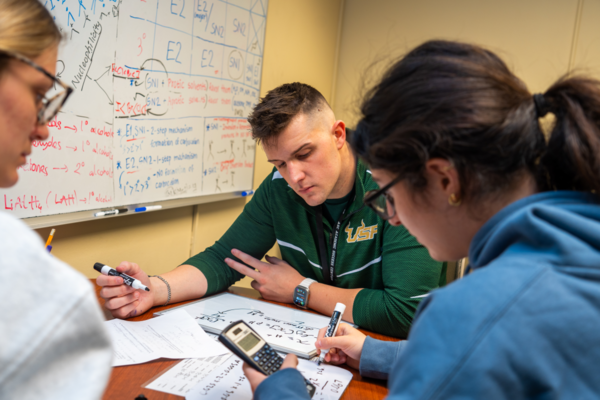
    At the University of South Florida, the Academic Success Center is a central office in the library that houses tutoring, the writing lab, peer mentoring and supplemental instruction, among other academic support offerings for undergraduates.

    Zoraya Betancourt became director of the center in 2020 during a challenging time, she said—in part because the center had to reintroduce itself to incoming students who had never been on campus and those who had their college experience disrupted by COVID-19.

    National data shows that students at large public institutions are spending less time studying outside of class now compared to during the 2018–19 academic year, and they are less likely to participate in a study group with their peers.

    “For me, it was like, OK, we are going to have to be very different. We can’t go back to who we were,” Betancourt said.

    Spurred by student data and feedback, Betancourt and her team led a remodel of the center to be more responsive to student needs and meet them where they are.

    Data-based decisions: To start, Betancourt partnered with Steve Johnson, a data scientist on the university’s Predictive Analytics Research for Student Success team, to build a dashboard of student data.

    “For many years the only data we had was how many students come and use the services how many times,” as well as some student identification data, Betancourt said. “I always thought we need more than that—we need to know more than that.”

    Now, Betancourt has access to student majors, colleges and the types of services they utilize to identify high-demand subjects and create responsive learning support schedules. The dashboard also connects the way services are tied to student retention and outcome goals.

    In addition to automating some work, the dashboard allows staff to engage students more directly. Each week, the system generates a report of new visitors to the center, which staff use to reach out and personally welcome students to the center and its services.

    A care-centered model: One trend that became clear in student interactions was the prevalence of stress in the student experience, Betancourt said. “Our tutors are coming to us and saying, ‘I have a student … and I don’t know how to help them.’”

    In response, the office adopted a care model for referrals that quickly connects support staff with other departments, reducing opportunities for students to fall through the cracks.

    “Within this referral system, we can go in and see if a student who is using our services says, ‘I really need to change my major and I don’t know what to do, I’m really stressing out over it,’” Betancourt said. “We’re able to go into the system and refer them directly to an adviser.”

    Larry Billue Jr. serves as the Academic Success Center point person for care management, guiding students to counseling support, financial aid, basic needs support and academic advisers or just sitting with the student to discuss how they’re feeling.

    Increased peer engagement: Another new feature of the ACS was supplemental instruction. While the academic intervention has been around for decades, it was new to the university and created opportunities for increased collaboration between staff and faculty to promote academic success, as well as create jobs for student employees.

    “That became more evident because we were hearing from students, ‘I need more than just tutoring. I like working with my peers,’” Betancourt said.

    At USF, supplemental instruction is called PASS, short for peer-assisted study sessions. The ACS is tracking student participation in PASS to gauge use.

    Students can also sign up to receive remote tutoring in select courses through the PORTAL (peer online resources for tutoring and learning), to supplement in-person opportunities when the office may be closed.

    The impact: Over the past year, the center has seen a 75 percent year-over-year increase in student use.

    Having a care team member on board has also been successful; Billue Jr. can physically walk a student across campus to the relevant office and make introductions as needed.

    “It’s been well received by students; they take him up on the offer and they’ll walk with him,” Betancourt said.

    The center has also expanded training for academic peer mentors to address not only study strategies and effective learning practices, but also how to make referrals to other offices.

    The biggest lesson Betancourt has learned: There are a range of opportunities to engage students and connect with them, understanding those opportunities just requires a deeper look at what students need.

    “We serve to engage students on campus, to engage students with each other, to engage students with faculty and with staff, and it’s looking at that a little bit closer to improve our services and how we can build on that,” Betancourt said.

    Do you have an academic intervention that might help others improve student success? Tell us about it.

    Source link

  • Half of Colleges Don’t Grant Students Access to Gen AI Tools

    Half of Colleges Don’t Grant Students Access to Gen AI Tools

    Transformative. Disruptive. Game-changing. That’s how many experts continue to refer, without hyperbole, to generative AI’s impact on higher education. Yet more than two years after generative AI went mainstream, half of chief technology officers report that their college or university isn’t granting students institutional access to generative AI tools, which are often gratis and more sophisticated and secure than what’s otherwise available to students. That’s according to Inside Higher Ed’s forthcoming annual Survey of Campus Chief Technology/Information Officers with Hanover Research.

    There remains some significant—and important—skepticism in academe about generative AI’s potential for pedagogical (and societal) good. But with a growing number of institutions launching key AI initiatives underpinned by student access to generative AI tools, and increasing student and employer expectations around AI literacy, student generative AI access has mounting implications for digital equity and workforce readiness. And according to Inside Higher Ed’s survey, cost is the No. 1 barrier to granting access, ahead of lack of need and even ethical concerns.

    Ravi Pendse, who reviewed the findings for Inside Higher Ed and serves as vice president for information technology and chief information officer at the University of Michigan, a leader in granting students access to generative AI tools, wasn’t surprised by the results. But he noted that AI prompting costs, typically measured in units called tokens, have fallen sharply over time. Generative AI models, including open-source large language models, have proliferated over the same period, meaning that institutions have increasing—and increasingly less expensive—options for providing students access to tools.

    ‘Paralyzed’ by Costs

    “Sometimes we get paralyzed by, ‘I don’t have resources, or there’s no way I can do this,’ and that’s where people need to just lean in,” Pendse said. “I want to implore all leaders and colleagues to step up and focus on what’s possible, and let human creativity get us there.”

    According to the survey—which asked 108 CTOs at two- and four-year colleges, public and private nonprofit, much more about AI, digital transformation, online learning and other key topics—institutional approaches to student generative AI access vary. (The full survey findings will be released next month.)

    Some 27 percent of CTOs said their college or university offers students generative AI access through an institutionwide license, with CTOs at public nonprofit institutions especially likely to say this. Another 13 percent of all CTOs reported student access to generative AI tools is limited to specific programs or departments, with this subgroup made up entirely of private nonprofit CTOs. And 5 percent of the sample reported that students at their institution have access to a custom-built generative AI tool.

    Among community college CTOs specifically (n=22), 36 percent said that students have access to generative AI tools, all through an institutionwide license.

    Roughly half of institutions represented do not offer student access to generative AI tools. Some 36 percent of CTOs reported that their college doesn’t offer access but is considering doing so, while 15 percent said that their institution doesn’t offer access and is not considering it.

    Of those CTOs who reported some kind of student access to generative AI and answered a corresponding question about how they pay for it (n=45), half said associated costs are covered by their central IT budget; most of these are public institution CTOs. Another quarter said there are no associated costs. Most of the rest of this group indicated that funding comes from individual departments. Almost no one said costs are passed on to students, such as through fees.

    Among CTOs from institutions that don’t provide student access who responded to a corresponding question about why not (n=51), the top-cited barrier from a list of possibilities was costs. Ethical concerns, such as those around potential misuse and academic integrity, factored in, as well, followed by concerns about data privacy and/or security. Fewer said there is no need or insufficient technical expertise to manage implementation.

    “I very, very strongly feel that every student that graduates from any institution of higher education must have at least one core course in AI, or significant exposure to these tools. And if we’re not doing that, I believe that we are doing a disservice to our students,” Pendse said. “As a nation we need to be prepared, which means we as educators have a responsibility. We need to step up and not get bogged down by cost, because there are always solutions available. Michigan welcomes the opportunity to partner with any institution out there and provide them guidance, all our lessons learned.”

    The Case for Institutional Access

    But do students really need their institutions to provide access to generative AI tools, given that rapid advances in AI technology also have led to fewer limitations on free, individual-level access to products such as ChatGPT, which many students have and can continue to use on their own?

    Experts such as Sidney Fernandes, vice president and CIO of the University of South Florida, which offers all students, faculty and staff access to Microsoft Copilot, say yes. One reason: privacy and security concerns. USF users of Copilot Chat use the tool in a secure, encrypted environment to maintain data privacy. And the data users share within USF’s Copilot enterprise functions—which support workflows and innovation—also remains within the institution and is not used to train AI models.

    There’s no guarantee, of course, that students with secure, institutional generative AI accounts will use only them. But at USF and beyond, account rollouts are typically accompanied by basic training efforts—another plus for AI literacy and engagement.

    “When we offer guidance on how to use the profiles, we’ve said, ‘If you’re using the commercially available chat bots, those are the equivalent of being on social media. Anything you post there could be used for whatever reason, so be very careful,” Fernandes told Inside Higher Ed.

    In Inside Higher Ed’s survey, CTOs who reported student access to generative AI tools by some means were no more likely than the group over all to feel highly confident in their institution’s cybersecurity practices—although CTOs as a group may have reason to worry about students and cybersecurity generally: Just 26 percent reported their institution requires student training in cybersecurity.

    Colleges can also grant students access to tools that are much more powerful than freely available and otherwise prompt-limited chat bots, as well as tools that are more integrated into other university platforms and resources. Michigan, for instance, offers students access to an AI assistant and another conversational AI tool, plus a separate tool that can be trained on a custom dataset. Access to a more advanced and flexible tool kit for those who require full control over their AI environments and models is available by request.

    Responsive AI and the Role of Big Tech

    Another reason for institutions to lead on student access to generative AI tools is cultural responsiveness, as AI tools reflect the data they’re trained on, and human biases often are baked into that data. Muhsinah Morris, director of Metaverse programs at Morehouse College, which has various culturally responsive AI initiatives—such as those involving AI tutors that look like professors—said it “makes a lot of sense to not put your eggs in one basket and say that basket is going to be the one that you carry … But at the end of the day, it’s all about student wellness, 24-7, personalized support, making sure that students feel seen and heard in this landscape and developing skills in real time that are going to make them better.”

    The stakes of generative AI in education, for digital equity and beyond, also implicate big tech companies whose generative AI models and bottom lines benefit from the knowledge flowing from colleges and universities. Big tech could therefore be doing much more to partner on free generative AI access with colleges and universities, and not just on the “2.0” and “3.0” models, Morris said.

    “They have a responsibility to also pour back into the world,” she added. “They are not off the hook. As a matter of fact, I’m calling them to the carpet.”

    Jenay Robert, senior researcher at Educause, noted that the organization’s 2025 AI Landscape Study: Into the Digital AI Divide found that more institutions are licensing AI tools than creating their own, across a variety of capabilities. She said digital equity is “certainly one of the biggest concerns when it comes to students’ access to generative AI tools.” Some 83 percent of respondents in that study said they were concerned about widening the digital divide as an AI-related risk. Yet most respondents were also optimistic about AI improving access to and accessibility of educational materials.

    Of course, Robert added, “AI tools won’t contribute to any of these improvements if students can’t access the tools.” Respondents to the Educause landscape study from larger institutions were more likely those from smaller ones to report that their AI-related strategic planning includes increasing access to AI tools.

    Inside Higher Ed’s survey also reveals a link between institution size and access, with student access to generative AI tools through an institutionwide license, especially, increasing with student population. But just 11 percent of CTOs reported that their institution has a comprehensive AI strategy.

    Still, Robert cautioned that “access is only part of the equation here. If we want to avoid widening the digital equity divide, we also have to help students learn how to use the tools they have access to.”

    In a telling data point from Educause’s 2025 Students and Technology Report, more than half of students reported that most or all of their instructors prohibit the use of generative AI.

    Arizona State University, like Michigan, collaborated early on with OpenAI, but it has multiple vendor partners and grants student access to generative AI tools through an institutionwide license, through certain programs and custom-built tools. ASU closely follows generative AI consumption in a way that allows it to meet varied needs across the university in a cost-effective manner, as “the cost of one [generative AI] model versus another can vary dramatically,” said Kyle Bowen, deputy CIO.

    “A large percentage of students make use of a moderate level of capability, but some students and faculty make use of more advanced capability,” he said. “So everybody having everything may not make sense. It may not be very cost-sustainable. Part of what we have to look at is what we would describe as consumption-based modeling—meaning we are putting in place the things that people need and will consume, not trying to speculate what the future will look like.”

    That’s what even institutions with established student access are “wrestling with,” Bowen continued. “How do we provide that universal level of AI capability today while recognizing that that will evolve and change, and we have to be ready to have technology for the future, as well, right?”

    Source link

  • Northwestern to Fund Research After Federal Freeze

    Northwestern to Fund Research After Federal Freeze

    Northwestern University is stepping in to fund ongoing research projects after the private institution received stop-work orders on nearly 100 federal grants, CBS News Chicago reported.

    The move comes after the Trump administration froze $790 million in federal research funding at Northwestern, which is one of multiple institutions across the U.S. hit by similar setbacks. Others include Harvard University, which had $2.2 billion frozen after it rejected changes demanded by the Trump administration in response to alleged antisemitism and harassment; Cornell University (more than $1 billion); Columbia University ($650 million); Brown University ($510 million); Princeton University ($210 million); and the University of Pennsylvania ($175 million).

    Northwestern, like others on the list, had a pro-Palestinian encampment protest on campus last spring, which prompted Congress to bring its president in for a hearing on antisemitism in May.

    Northwestern president Michael Schill and Board of Trustees chair Peter Barris told the university community in an email obtained by CBS News Chicago that the university still had not received formal notice that federal research funding had been pulled, but the university has received stop-work orders. They noted the university will continue funding on projects that received stop-work orders as well as other research threatened by the Trump administration.

    “The work we do is essential to our community, to the nation and to the world. Enabling this vital research to continue is among our most important priorities, and supporting our researchers in this moment is a responsibility we take seriously,” Schill and Barris wrote in the Thursday email.

    Northwestern is among the nation’s wealthiest universities, with an endowment recently valued at $14.2 billion. However, financial experts have cautioned against leveraging endowments to plug budget holes, prompting some wealthy institutions targeted by the administration to issue bonds or take out private loans.

    Source link