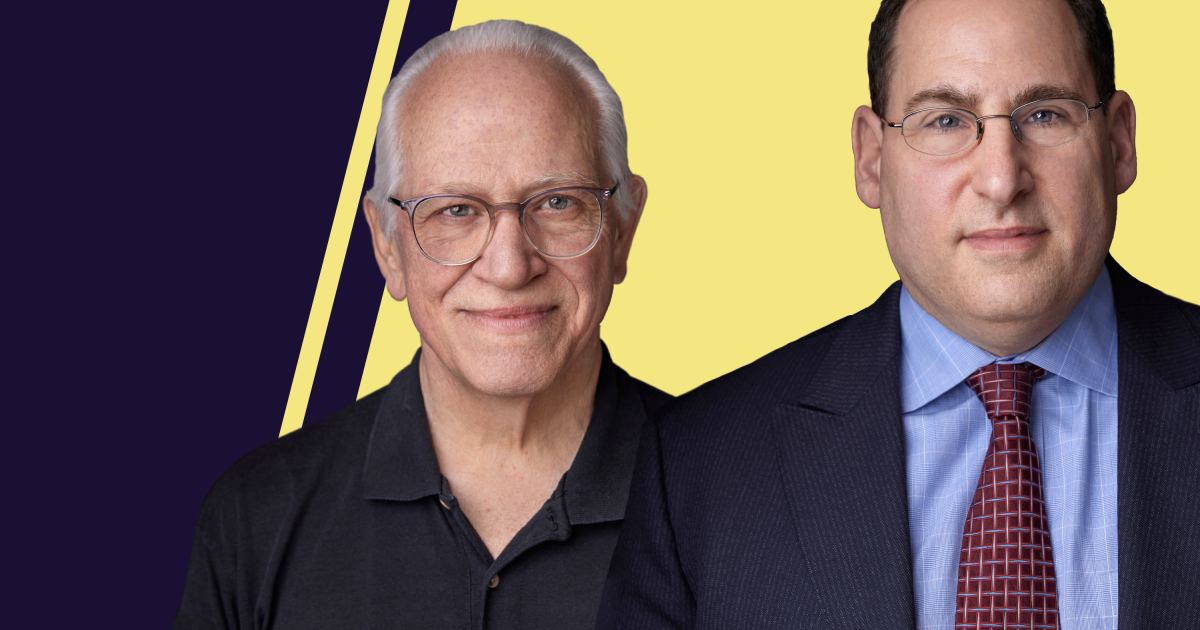
I never intended to become a poster boy for cancel culture. Nor do I intend to let those four months of Georgetown farce define my life or career. But I’m using this chance to expose the institutional rot in academia and trace it to the illiberal winds blowing across America.
Those words are from Ilya Shapiro’s latest book, about which more will be said in a moment. But a few “set up” words first.
Today, Ilya Shapiro is a senior fellow and director of constitutional studies at the Manhattan Institute. Previously he was executive director and senior lecturer at the Georgetown Center for the Constitution, and before that a vice president of the Cato Institute and director of Cato’s Robert A. Levy Center for Constitutional Studies. And as before, Shapiro continues to file briefs in the U.S. Supreme Court.
But his today comes against the backdrop of a quarrelsome yesterday involving a ‘cancel culture’ dispute at Georgetown Law School where he was slated to work with Professor Randy Barnett and others at the School’s Center for the Constitution. But things started to go south after Shapiro wrote that “we’ll get lesser black woman” instead of Biden’s pick of Judge Sri Srinivasan. He later apologized. Following a four-month law school investigation, Shapiro was reinstated, only thereafter to resign on June 6, 2022:
After full consideration of the report of the Office of Institutional Diversity, Equity, and Affirmative Action (“IDEAA Report”), and upon consultation with counsel, family, and trusted advisers, it has become apparent that my remaining at Georgetown has become untenable. Although I celebrated my “technical victory” in the Wall Street Journal, further analysis shows that you’ve made it impossible for me to fulfill the duties of my appointed post.
[ . . . ]
I cannot again subject my family to the public attacks on my character and livelihood that you and IDEAA have now made foreseeable, indeed inevitable. As a result of the hostile work environment that you and they have created, I have no choice but to resign.
Ilya Shapiro resigns from Georgetown following reinstatement after 122-day investigation of tweets
News
After a more than four-month investigation that led to his reinstatement last week, Ilya Shapiro resigned today from Georgetown University Law Center.
In the midst of the controversy, FIRE’s Greg Lukianoff and Adam Goldstein wrote:
Shapiro’s targeting marks the 10th attempt to get a professor sanctioned for ideological reasons at Georgetown University since 2015. Five attempts have been successful, with sanctions involving investigation, resignation, suspension and termination. . . . Higher education’s credibility rests on the public belief that it is a place where all sides of every argument are subject to robust debate, disputation and discussion. If it becomes clear that these discussions are impossible on campuses, the reputation of higher education — and the shared world of facts it was intended to create — will suffer.
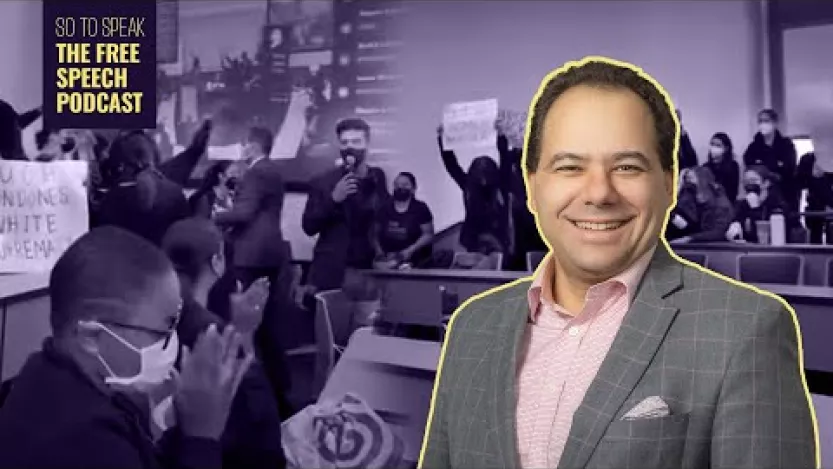
And now on to Shapiro’s new book. It is titled “Lawless: The Miseducation of America’s Elites” and it’s already getting ample notice from publications ranging from The Volokh Conspiracy to the Hugh Hewitt show, including a recent podcast exchange with Nico Perrino on “So to Speak”:
The publisher’s summary:
In the past, Columbia Law School produced leaders like Franklin Delano Roosevelt and Ruth Bader Ginsburg. Now it produces window-smashing activists.
When protestors at Columbia broke into a building and created illegal encampments, the student-led Columbia Law Review demanded that finals be canceled because of “distress.”
Law schools used to teach students how to think critically, advance logical arguments, and respect opponents. Now those students cannot tolerate disagreement and reject the validity of the law itself. Rioting Ivy Leaguers are the same people who will soon:
- Be America’s judges, DAs, and prosecutors
- File and fight constitutional lawsuits
- Advise Fortune 500 companies
- Hire other left-wing diversity candidates to staff law firms and government offices
- Run for higher office with an agenda of only enforcing laws that suit left-wing whims
In Lawless, Ilya Shapiro explains how we got here and what we can do about it. The problem is bigger than radical students and biased faculty — it’s institutional weakness. Shapiro met the mob firsthand when he posted a controversial tweet that led to calls for his firing from Georgetown Law. A four-month investigation eventually cleared him on a technicality but declared that if he offended anyone in the future, he’d create a “hostile educational environment” and be subject to the inquisition again. Unable to do the job he was hired for, he resigned.
This cannot continue. In Lawless, Shapiro reveals how the illiberal takeover of legal education is transforming our country. Unless we stop it now, the consequences will be with us for decades.
A few selected quotes:
- Is there anything we can do to stop or reverse . . . ill liberal tendencies? Should we — those of us who care about universities’ traditional truth-seeking mission and law schools’ commitment to the American constitutional order — just throw up our hands, gird our loins, and regroup to fight elsewhere? Surely we need to develop novel responses to heterodox challenges, ones that involve culture, legislation, and institution building.
- The real issue here is taking exclusionary action — real discrimination, not a mere assertion that someone’s position on Israel (or anything) is ‘harmful’ or denies someone’s right to exist.
- More than a 100 institutions have endorsed a version of the Report of the Committee on Freedom of Expression at the University of Chicago (known as the Chicago Statement), which is the gold standard. The problem is that, as I experienced personally, so many of these speech-and-expression policies aren’t worth the paper (or pixels) they’re written on, falling by the wayside when seeming to conflict with the demands of DEI.
- Cancellation victims, and others who make national news are the tip of the iceberg. As we see from survey results, self-censorship pervades academia, detracting from any intellectual mission, to say the least. Knowledge is never developed, and many old-school professors leave academia entirely — such as the famed First Amendment scholar Eugene Volokh’s move from the UCLA school of law to the Hoover Institution and the early retirement of five right-of-center law professors from the University of San Diego (which used to be a bastion of originalism). Universities are at best failing to resist these illiberal forces and at worst encouraging them.
Shapiro’s four main recommendations in “Lawless”:
- Abolish DEI bureaucracies
- End mandatory diversity training
- Stop political coercion
- End identity-based preferences.
Related
Forthcoming book on ideology, science, and free speech
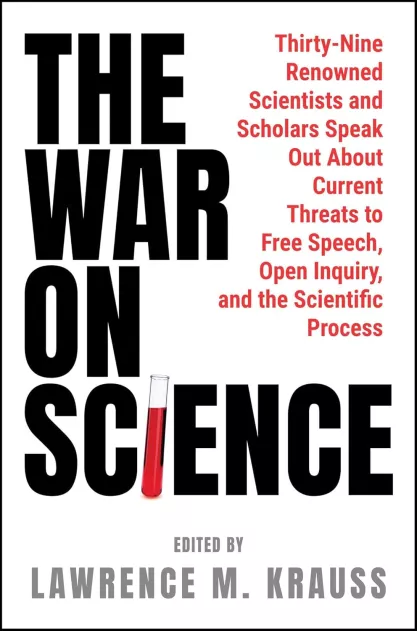
An unparalleled group of prominent scholars from wide-ranging disciplines detail ongoing efforts to impose ideological restrictions on science and scholarship throughout western society.
From assaults on merit-based hiring to the policing of language and replacing well-established, disciplinary scholarship by ideological mantras, current science and scholarship is under threat throughout western institutions.
As this group of prominent scholars ranging across many different disciplines and political leanings detail, the very future of free inquiry and scientific progress is at risk. Many who have spoken up against this threat have lost their positions, and a climate of fear has arisen that strikes at the heart of modern education and research. Banding together to finally speak out, this brave and unprecedented group of scholars issues a clarion call for change.
“Higher education isn’t what it used to be. Cancel Culture and DEI have caused many to keep their mouths shut. Not so the authors of this book. This collection of essays tells of threats to open inquiry, free speech, and the scientific process itself. A much-needed book.” — Sabine Hossenfelder, Physicist and Author of Existential Physics: A Scientist’s Guide to Life’s Biggest Questions
Campus speech conflicts continue
Campus free speech podcasts
In recent weeks, the Academic Freedom Podcast has released two new episodes focusing on campus free speech issues.
First up was a conversation with Timothy Zick, the John Marshall Professor of Government and Citizenship at William & Mary Law School. He is the author most recently of Managed Dissent: The Law of Public Protests. The episode focuses on the law surrounding public protests on and off college campuses.
Next was a conversation with Jennifer Ruth and Michael Berube about their recent book, It’s Not Free Speech: Race, Democracy, and the Future of Academic Freedom. They are both long-serving leaders in the American Association of University Professors, and the book develops a provocative proposal for patrolling the acceptable boundaries of extramural speech by university faculty.
More to come.
White House Associated Press controversy
The White House barred a credentialed Associated Press reporter and photographer from boarding the presidential airplane Friday for a weekend trip with Donald Trump, saying the news agency’s stance on how to refer to the Gulf of Mexico was to blame for the exclusion. It represented a significant escalation by the White House in a four-day dispute with the AP over access to the presidency.
The administration has blocked the AP from covering a handful of events at the White House this week, including a news conference with India’s leader and several times in the Oval Office. It’s all because the news outlet has not followed Trump’s lead in renaming the body of water, which lies partially outside U.S. territory, to the “Gulf of America.”
Volokh weighs in on AP exclusion controversy
[1.] The Administration has no First Amendment obligation to provide any press conferences or interviews. The question, though, is whether, once it starts doing that, it may exclude the press based on its viewpoint, or on its supposedly unfair coverage, or on its use of terms that are seen as expressing a viewpoint.
[2.] It seems pretty clear that government officials can choose — including in viewpoint-based ways — whom they will sit down with for interviews. The President may choose to give interviews to journalists whose views he likes, and to refuse to speak with those whose views he dislikes. Indeed, a government official may even order employees not to talk to certain reporters, without thereby violating the reporters’ rights. Baltimore Sun v. Ehrlich (4th Cir. 2006).
[ . . . ]
[3.] It also seems pretty clear that government officials, even in large press conferences, can choose to ignore questions that express views they dislike, or to ignore questioners who have expressed those views. . .
[4.] This having been said, there are precedents (Sherrill, TGP, and John K. Maciver Inst. for Public Policy v. Evers (7th Cir. 2021)) that recognize a right not to be excluded based on viewpoint from large press conferences that are generally open to a wide range of reporters. Those precedents treat those press conferences more or less like “limited public fora” or “nonpublic fora” — government property where the government may impose viewpoint-neutral restrictions but not viewpoint-based ones.
[ . . . ]
[5.] But what about in-between events, which are open only to a small set of reporters? Air Force One apparently has 13 press seats, and I take it the Oval Office is likewise limited.
[ . . . ]
[6.] So I think that for Air Force One and Oval Office appearances, the best I can say is that the First Amendment analysis is unsettled.
FIRE weighs in on AP exclusion controversy
As one federal court proclaimed, “Neither the courts nor any other branch of the government can be allowed to affect the content or tenor of the news by choreographing which news organizations have access to relevant information.”
And because denying press access involves the potential deprivation of First Amendment rights, any decision about who’s in or out must also satisfy due process. That means the government must establish clear, impartial criteria and procedures, and reporters must receive notice of why they were denied access and have a fair opportunity to challenge that decision.
The AP — a major news agency that produces and distributes reports to thousands of newspapers, radio stations, and TV broadcasters around the world — has had long-standing access to the White House. It is now losing that access because its exercise of editorial discretion doesn’t align with the administration’s preferred messaging.
That’s viewpoint discrimination, and it’s unconstitutional.
This isn’t the first time the White House has sent a journalist packing for reporting critically, asking tough questions, or failing to toe the government line. During Trump’s first term, the White House suspended CNN reporter Jim Acosta’s press pass after he interrogated the president about his views on immigration. After the network sued, a federal court ordered the administration to restore Acosta’s pass.
Related
Sean ‘Diddy’ Combs sues NBC
Sean “Diddy” Combs is suing NBC Universal over a documentary that he says falsely accuses him of being a serial murderer who had sex with underage girls as he awaits trial on federal sex trafficking charges.
The lawsuit filed Wednesday in New York state court says the documentary, “Diddy: Making of a Bad Boy,” included statements that NBC Universal either knew were false or published with reckless disregard for the truth in order to defame the founder of Bad Boy Records.
“Indeed, the entire premise of the Documentary assumes that Mr. Combs has committed numerous heinous crimes, including serial murder, rape of minors, and sex trafficking of minors, and attempts to crudely psychologize him,” the complaint reads. “It maliciously and baselessly jumps to the conclusion that Mr. Combs is a ‘monster’ and ‘an embodiment of Lucifer’ with ‘a lot of similarities’ to Jeffrey Epstein.”
Executive Watch
- Ross A. Lincoln, “3 Former FCC Bosses Condemn New Chairman’s Attacks on Press: ‘If We Lose the First Amendment We’ve Lost Everything’,” The Wrap (Feb. 18)
- Sarah McLaughlin, “60 Minutes and Vice President Vance put Europe’s worrying speech restrictions into the spotlight: Vance warns Europe against censorship as President Trump pursues critics here at home,” FIRE (Feb. 18)
- Jennifer L. Richter, Douglas I. Brandon, Steven A. Rowings, Virginia Hiner Antypas, Joseph S. Calascione, and Sharanya Sriram, “President Trump’s Executive Order Takes Aim at Social Media, Broadcasters,” Akin (Feb. 18)
- Rex Huppke, “Trump bans AP and words he doesn’t like. ‘Free speech’ was never about First Amendment,” USA Today (Feb. 16)
- Steff Danielle Thomas, “Trump defends Vance’s stance on censorship overseas: ‘Europe has to be careful’,” The Hill (Feb. 15)
- “Republican senator defends VP Vance’s free speech comments,” Fox News (Feb. 15)
- Leah Sarnoff, Mark Crudele, Aaron Katersky, and Kiara Alfonseca, “Transgender references removed from Stonewall National Monument website,” ABC News (Feb. 14)
- Nick Paton Walsh, “Vance uses half-truths to lecture a European audience well aware of the threat of authoritarian rule,” CNN World (Feb. 14)
- David Bauder, “White House says it has the right to punish AP reporters over Gulf naming dispute,” Free Speech Center (Feb. 13)
- Trevor Timm, “Legendary First Amendment lawyer urges press to fight Trump’s attacks,” Freedom of the Press Foundation (Feb. 12)
- Jacob Mchangama, “Trump’s Free Speech Shell Game: Bold Promises, Troubling Actions,” The Bedrock Principle (Feb. 10)
- Kate Ruane, “When it Comes to Free Speech, the Trump Administration Should Follow Its Own Order,” Center for Democracy & Technology (Feb. 10)
- Darlene Superville and Joshua Goodman, “Trump Order Imposes Sanctions on ICC Over Investigations of Israel,” Associated Press/First Amendment Watch (Feb.7)
- “Trump on Surveillance, Protest, and Free Speech,” ACLU (2025)
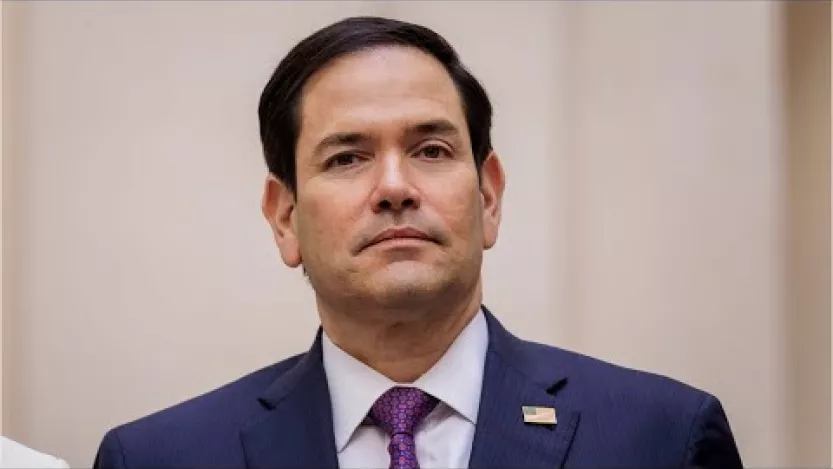
Secretary Rubio on free speech and the Holocaust
More in the news
- “Bakery owner sues New Hampshire city, claiming First Amendment violations,” NewsNation (Feb. 18)
- Debra J. Saunders, “How SNL Proved Left Not 1st Amendment’s Champion,” Newsmax (Feb. 18)
- John Coleman, “Wave of state-level AI bills raise First Amendment problems,” FIRE (Feb. 13)
- Laurie Kellman, “The Relationship Between the White House and Its Press Corps Can Be Contentious,” Associated Press/First Amendment Watch (Feb. 13)
- John Coleman, “FIRE opposes Virginia’s proposed regulation of candidate deepfakes,” FIRE (Feb. 13)
- “Can the SEC Permanently Silence Critics? (Powell, et al. v. SEC),” Institute for Free Speech (Feb. 13)
2024-2025 SCOTUS term: Free expression and related cases
Cases decided
- Villarreal v. Alaniz (Petition granted. Judgment vacated and case remanded for further consideration in light of Gonzalez v. Trevino, 602 U. S. ___ (2024) (per curiam))
- Murphy v. Schmitt (“The petition for a writ of certiorari is granted. The judgment is vacated, and the case is remanded to the United States Court of Appeals for the Eighth Circuit for further consideration in light of Gonzalez v. Trevino, 602 U. S. ___ (2024) (per curiam).”)
- TikTok Inc. and ByteDance Ltd v. Garland (The challenged provisions of the Protecting Americans from Foreign Adversary Controlled Applications Act do not violate petitioners’ First Amendment rights.)
Review granted
Pending petitions
Petitions denied
Last scheduled FAN
FAN 457: “Timothy Zick’s ‘Executive Watch’: Introduction”
This article is part of First Amendment News, an editorially independent publication edited by Ronald K. L. Collins and hosted by FIRE as part of our mission to educate the public about First Amendment issues. The opinions expressed are those of the article’s author(s) and may not reflect the opinions of FIRE or Mr. Collins.