Author: admin

  • What to Know About Trump’s Funding Threats to Colleges

    What to Know About Trump’s Funding Threats to Colleges

    Over the course of just 13 weeks, President Donald Trump has made it clear that he’ll use billions of dollars in federal grants and contracts, primarily for research, as a lever to force colleges and universities to bow to his agenda and increase the representation of conservative ideology on their campuses.

    The cuts don’t follow any typical investigative process and sometimes lack clear explanations or legal justifications. And such an aggressive ad hoc strategy is one that that many higher education lawyers, policy analysts and administrators say could reshape postsecondary education for years to come.

    “It’s certainly unprecedented and deeply disturbing,” said John King Jr., former secretary of education under President Obama and current chancellor of the State University of New York system. Trump’s actions “really threaten the long-standing partnership between the federal government and higher education in the pursuit of both innovation and economic mobility.”

    Trump and his advisers have signaled their intent to crack down on “woke” higher education but haven’t said how they will do so. Instead, a cadre of conservative policy analysts plotted how to leverage other agencies and sources of funding, beyond access to the $130 billion distributed annually in federal student loans and Pell Grants.

    “At the beginning it felt like I was the only one fighting,” Chris Rufo, an influential anti-DEI advocate and a member of the Board of Trustees at New College of Florida, said on The Daily, a New York Times podcast last week. “Now, fast-forward five years, [and] some of the ideas that I had cobbled together have suddenly become reality, they’ve become policy, they affect billions of dollars in the flow of funds.”

    But efforts to send colleges and universities into “an existential terror,” as Rufo put it, have required the Trump administration to move at a dizzying pace and leverage multiple mechanisms that most higher education lawyers, policy analysts and officials say are incredibly novel.

    To catch up, here are four things you should know about Trump’s funding threats to colleges and universities.

    Broad Scope of Attack

    A large part of what makes the Trump administration’s current push to crack down on colleges and align their actions with his agenda so unprecedented, experts say, is its sheer magnitude, from the amount of money at risk to the number of investigations involving various agencies.

    The Education Department has historically taken the lead on holding colleges accountable, leveraging institutions’ eligibility for student aid programs to force compliance. But this time around, it’s an all-hands-on-deck effort with a magazine of federal programs used as ammunition.

    At least four departments beyond Education—Justice, Defense, Energy and Health and Human Services—have also been involved, cutting off scientific research grants, which are typically considered immune from political attacks.

    James Nussbaum, who leads the higher education practice at the Indiana law firm Church Church Hittle + Antrim, said that as Trump took office he often warned clients to be aware of any contracts they held with the Department of Education. But some of the cuts caught even him by surprise.

    “People had their focus on one ball in the air and hadn’t seen that these others might be affected,” he said.

    To review federal funding for colleges that it believes have violated students’ civil rights, the Trump administration launched a federal antisemitism task force that spanned several agencies and has led some of the most public actions against colleges so far.

    The group launched reviews of Columbia and Harvard Universities, demanded sweeping changes and froze $400 million and $2.2 billion in grants and contracts, respectively. The funds at risk support a wide range of research at the universities, including on cancer, tuberculosis and the effects of environmental pollution on health. Faculty have warned of dire consequences if the freezes continue.

    In addition to Columbia and Harvard, Northwestern, Cornell, Brown and Princeton Universities have had some of their federal funds frozen, though it’s not clear why or who made that decision and under what legal authority. (The Wall Street Journal reported that White House staff were behind the Cornell funding freeze.)

    The Trump administration also froze $175 million at the University of Pennsylvania to penalize administrators for allowing a transgender athlete to swim on the women’s team three years ago.

    What the Trump administration is doing enters a “whole new territory,” Princeton president Christopher Eisgruber said in a recent interview with The New York Times.

    Starting with the freeze at Columbia, “the government was using its tremendous power over research dollars to try to control what a private university was doing in terms of matters that are generally considered part of academic freedom,” Eisgruber added. “There’s a very fundamental threat here right now … to America’s research universities that anybody who cares about the strength of this country, our economy, our prosperity, our security, our health should be worried about.”

    Colleges also face other threats from the federal government. The Department of Education has launched or actively pursued at least 97 investigations concerning alleged antisemitism and DEI programs, which could imperil those institutions’ access to federal financial aid. And the National Institutes of Health and the Department of Energy moved to cap reimbursements for costs indirectly related to research, which, if enacted, could cost colleges billions.

    Bypassing Standard Processes

    Adding to the difficulty for colleges, the Trump administration is largely ignoring regulatory standards and procedures when it cuts funding.

    For instance, cabinet members have broadly used the term “investigation” to describe the ways they are cracking down on colleges. But in most cases, the review process has lasted only a few days and resulted in little to no evidence of the alleged violation. Often, universities have been presented with a list of ultimatums or policy changes they must make in order to avoid a funding freeze or restore their funds.

    The stop-work orders that have been issued so far have been “arbitrary” and “often unsupported,” said King of SUNY. If there is rationale, it often “seems disingenuous.”

    And some universities have yet to receive a formal notification about a funding freeze. For example, Brown officials have not received any official word of a rumored $510 million cut.

    “We have nothing to actually substantiate what’s being reported,” Brian Clark, Brown’s vice president for news, told Inside Higher Ed in an email.

    For civil rights investigations, investigations typically begin when the Education Department notifies an institution of the allegations made in thorough detail, experts explained. Then, the Office for Civil Rights conducts an in-depth investigation that includes talking to students, faculty and staff and gathering documents or data regarding the allegations. That process allows colleges to voluntarily resolve the investigation and negotiate a settlement with the department. The resulting agreement usually outlines various changes that colleges must make to comply with federal law. Some conservative critics have said those settlements or resolution agreements were “toothless.”

    If the parties cannot agree or a college refuses to comply with the federal law, the department could sue a college. But that’s rare, and the Education Department has never pulled a college’s federal funding over civil rights violations—a move that’s considered a nuclear option.

    Brendan Cantwell, a higher education professor at Michigan State University, noted that despite the quick turnaround, the administration’s investigations do, at times, parallel the motivations of traditional reviews. But what makes this approach so unprecedented and unlawful, in his mind, Cantwell said, is its “unmeasured” and “blanketed” nature.

    “So while there are precedents and similar examples in the past, beyond very superficial similarities, the similarities fall apart,” he said.

    Breaking Contract Law

    The means by which Trump is terminating grants and contracts is also novel, a lawyer who specializes in government contracts told Inside Higher Ed.

    Generally, the only people who have authority to take contract-based actions on behalf of the United States are contracting officers or agreements officers, said Jayna Marie Rust, a partner at Thompson Coburn LLP. But under the Trump administration, it’s often unclear if this is the case, especially with the Department of Government Efficiency reviewing contracts and grants and touting decisions to cancel millions in agreements.

    Rust said she has not seen any of the direct communications between government agencies and universities regarding contract/grant termination that are due to the identity of the institution and therefore can’t say if the notifications come from contracting or agreements officers. But notifications coming from others is something she has seen in other terminations that schools are receiving.

    “But to the extent these communications are not coming from the agreements officers or contracting officers, that is unusual,” Rust said.

    And much like the procedure for investigating and addressing policy violations, the government is supposed to ensure due process before excluding schools from receiving federal funds, which is effectively what the terminations have done. The Trump administration has seemingly bypassed those steps. (Several faculty groups and associations have sued to restore the canceled funding.)

    Even when the administration has completed a process to determine whether an entity can be excluded from receiving federal funds, contracting and agreements officers also often conduct a risk analysis to see if the benefit of letting that entity complete a contract or grant outweighs the benefit of cutting ties (which could result in losing the benefit of work that’s already completed), Rust said. It appears that the Trump administration also hasn’t gone through that review.

    More Than Money at Stake

    As a result of the sweeping scope of Trump’s attacks and the lack of precedent, the risks for colleges and universities are more than financial, higher ed experts say.

    Yes, losing billions of dollars in federal funding is a problem, and not one that elite institutions’ endowments can solve. But more than that, what’s at risk is the core mission and ethos of American higher education, King said.

    “From the technology inside of your phone to the treatment you may receive at your doctor—all of that can be traced back to research conducted at America’s higher ed institutions. And it’s under threat,” he said.

    And though the dollar amounts of funding pulled from smaller private liberal arts institutions and state universities may be “more modest,” they’re still significant, he added. “For those researchers, it’s heartbreaking, and it will ultimately harm economic development and national security.”

    The full impact of these funding freezes is not yet clear. But until the courts weigh in, colleges are stuck between a rock and a hard place, said Nussbaum, of Church Church Hittle + Antrim.

    “Schools are trying to make that decision of how can we make decisions consistent with our mission and values in a way that’s not going to get us called out?” Nussbaum said. “I think we’ll have a little bit more certainty on where the means and bounds of the discretion of the executive agency is in the funding. But I think in the meantime, a lot of schools are trying to wait out that clock.”

    Source link

  • Welcome, WINNERS, to Prosperity U (opinion/satire)

    Welcome, WINNERS, to Prosperity U (opinion/satire)

    Dear Excepted Student,

    Congratulations on your admission to Prosperity University’s class of 2026. We’re going to get you in and out of here faster and more efficiently than any of those LOSER Colleges that look like total DUMPS. You’re going to love it here. We’ve got the Best campus, the most beautiful Campus, the likes of which you’ve never seen. People are saying it’s the most Luxurious educational facility in the history of education, maybe ever.

    Our professors? Top-notch people, very Smart people. Some of the smartest people in the world, actually. They know things other professors don’t know. They teach things other universities are afraid to teach, believe me. And guess what? Our provost is None other than Neon Mush! That’s right, the greatest BUSINESS GENIUS OF OUR TIME is running our academic operations. He’s going to send our education to Mars, LITERALLY to Mars!!!

    And let me tell you, we don’t do this Ridiculous “tenure” thing here. No way. That’s for crooked lazy professors. At Prosperity U, you perform or you’re fired! Simple as that. “Academic freedom”? Just another excuse for Woke Liberal Indoctrination!!!! OUR PROFESSORS TEACH WHAT WE TELL THEM TO TEACH and it’s beautiful, believe me.

    The curriculum at Prosperity is unlike anything you’ve ever seen before. We don’t waste time with the Boring stuff, failing subjects like “science” or “medicine” or “math.” No one reads anymore, so you don’t even Need to buy books. Useless BS. We teach our students to make money. You want art? We do the Art of the Deal. WINNING!

    And let me tell you, you know, some very good people have been so discriminated against in this country. Very Good people. It’s terrible, just Terrible!! We just pick the best students, and if they happen to be the wealthy good-looking ones with great hair from the best Richest families with very big hands, which they Usually are, then that’s just how it is. That’s just how Winning works.

    We don’t have any failing students here. Zero. If you’re not WINNING, you’re not trying. Everyone at the U of P is a winner. That I can tell you. If students don’t fit in with our values? They’re fired! We don’t need whiners. You either get with the Program or you’re out, folks. We have no tolerance for losers or troublemakers.

    Let me tell you about our athletics program—it’s huge, just TREMENDOUS. We only play AMERICAN sports here, none of that soccer nonsense from shithole countries. Our football team? Undefeated. We’re winning bigly. Other schools are Terrified to play us, believe me. Nobody kneels during our national anthem, that I can Guarantee you. And we don’t have any of these women’s sports taking resources away from real sports. Title IX? Neon Mush is taking care of that. Our cheerleaders are the most Beautiful women you’ve ever seen, the most beautiful. Many people say they could be models. They love me. They’ll let you do anything to them!

    The tuition? It’s not Cheap, folks. Quality costs Money. But it’s worth every penny, every single penny. And when you graduate—which everyone does, because we fire them if they don’t show up, or sometimes, even if they do—we have a 100% graduation rate, huge crowds, biggest crowds you’ve ever seen, it’s amazing—you’ll be so successful. SO SUCCESSFUL! You’ll be tired of success.

    The other universities? Total Disasters. Sad! They’re Jealous of us, very jealous. But that’s OK. We’re making education great again, and they can’t stand it. The American people have lost faith in these liberal indoctrination camps they call “universities.” At Prosperity University, we teach Real skills for real Americans who want to stop this country from becoming a BUNCH of losers. NO SAFE SPACES HERE! No trigger warnings. We’re not afraid to pull triggers!

    Believe me, folks. Believe me.

    Sincerely,

    THE PRESIDENT

    Prosperity University

    Rachel Toor is a professor of creative writing at Eastern Washington University in Spokane and a contributing editor at Inside Higher Ed.

    Source link

  • Mentoring in an Era of Uncertainty for Higher Education

    Mentoring in an Era of Uncertainty for Higher Education

    More than half of college students believe professors should take on a mentoring role to support their career development, according to a 2024 Inside Higher Ed survey. And a 2023 report from the American Council on Education showed that informal and formal mentoring can broaden pathways to graduate education for students, particularly those from historically marginalized backgrounds.

    But few faculty members receive formal training on how to be an effective mentor while also balancing teaching, research and publishing responsibilities. That’s only getting more difficult as faculty navigate a changing—and increasingly uncertain—higher education landscape marked by intensifying political scrutiny, ever-shrinking budgets, increased workloads and fewer academic job prospects for their students.

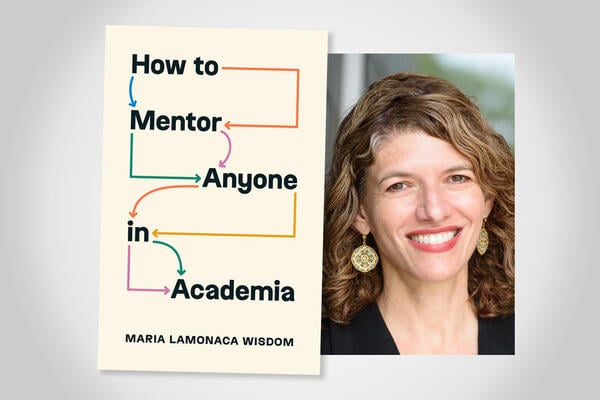
    “The conditions for mentoring continue to deteriorate,” said Maria Wisdom, assistant vice provost for faculty advancement at Duke University. “At the same time, there’s never been a greater need for truly impactful mentoring, and I think there has never been a moment at which it’s clear that we need to learn to support people without having all the answers.”

    After a decade working as an English professor at Columbia College, Wisdom turned her focus to coaching early and midcareer faculty across disciplines. She also leads mentoring workshops for faculty looking to improve their mentorship of junior researchers, scholars and colleagues.

    Last month, she published How to Mentor Anyone in Academia (Princeton University Press), a practical guide aimed at demystifying what it means to be a mentor. Inside Higher Ed spoke with Wisdom about some of the advice she lays out in the book and how it may help mentors—and mentees—navigate the higher education sector’s uncertain future.

    This interview has been edited for length and clarity.

    Q: How did your experiences as a mentee and mentor shape your approach to mentoring?

    A: Looking back, the mentorship I received was only OK. Every now and then it was really helpful. But I can also think of multiple instances in my professional trajectory where things could have gone differently and better if I would have had more effective mentoring.

    Many years later, after I had left the professoriate, I was working at Duke—first as a graduate adviser and then as a certified coach, working first with grad students and then with faculty. It was through that professional training—which was a very different kind of training than what I received in my graduate education—that I was able to understand what it means to be a professional helper and how many different roles we can occupy when we’re professional helpers. And all of those roles overlap in some way with mentoring.

    That awareness helped me realize that the majority of faculty mentors just don’t have the time or bandwidth or resources to be thoughtful about those role distinctions and what it means to actually mentor somebody in a certain context at a certain time.

    Q: In the book you write about three different approaches to mentoring: mentoring with a heart, a backbone and like a coach. Can you describe the difference between those approaches and how mentors can employ all three?

    A: They’re all connected and they’re all important.

    All effective leaders need to have both backbone—which means firmness, rigor and consistency—and heart, which is empathy, understanding and kindness. A good leader balances these two things out at the same time, and rarely is a leader a natural in both areas.

    Maybe they aren’t good at giving feedback, don’t establish clear expectations at the outset of the relationship or don’t have a system of regular check-ins with their mentee. Those are all elements of backbone. Or maybe they’re not putting enough heart into it. They may set clear expectations and give regular feedback, but they’re kind of insensitive to the needs of the mentee, or they’re just not very empathetic, and so I think you need to have both.

    And that’s where coaching comes in. Coaching is a structured conversation, one in which you need to be fully present and empathetic. So that’s how I see coaching, marrying both aspects of backbone and heart.

    Q: What are some of the common misconceptions about what it takes to be an effective academic mentor? What does it take to be an effective mentor?

    A: There’s this prevailing assumption among many academics that mentoring is just something you naturally figure out how to do as you go along. Faculty either mentor the way they’ve been mentored, or they mentor in opposition to an ineffective way they were mentored. I also see too much of what I call mentor impostor syndrome in the academy, which is this faulty assumption that you can only mentor people in the same discipline as you or who follow the same career path as you.

    We tend to underestimate the power all of us have to be helpful to each other’s professional growth in ways that have nothing to do with disciplinary expertise. Those are things like active listening, cultivating empathy, basic coaching skills and doing more listening and active questioning than talking at somebody.

    We need to stop assuming that mentoring is something you’re born with and instead think of it as a set of skills, competencies and even an entire worldview that can help you be helpful to anyone. It’s not about pouring knowledge into an empty vessel. It’s about being a facilitator and creating the space to ask provocative questions that are going to help somebody remember just how talented and resourceful they are.

    Q: How does effective mentoring benefit students and higher education more broadly?

    A: Good mentorship is upending, to some extent, all these hierarchies we have in higher education, where professors are the fountain of all knowledge, holding all the power, and graduate students are more like apprentices or vessels to be filled with that knowledge. It’s charging mentees with a much greater responsibility for their own learning, growth and development.

    That may seem like a big burden to place on the shoulders of a mentee. But if a grad student learns during their degree program how to be reflective about their own professional needs, how to ask for help in a respectful and effective manner, and how to set clear goals and work toward them in small steps, they’re going to be set up for success for the rest of their career.

    Q: The higher education landscape is changing, with faculty jobs and funding becoming more scarce. How do these realities make mentoring more challenging?

    A: Often, people aren’t taking on mentoring roles because they simply feel like they don’t have enough time. Meetings are rushed, or maybe the mentor is distracted while mentees are in their office. And that’s just a microcosm of a larger deterioration of relationships across our society.

    Nobody in higher ed has the answers about what’s going to happen three months from now, let alone three years from now. But that doesn’t mean we just give up and stop supporting my junior faculty or my graduate students. We need to think about how we can help them learn and grow even in the midst of this type of environment. And that’s the kind of mentoring that my book is trying to encourage people to adopt.

    Q: How can mentors help students navigate the changing academic job market?

    A: In academia, we still tend to assume that not only are there academic jobs to be had, but that people will stay in the same career their entire 30- to 40-year career. For plenty of senior faculty, that has been their life experience, but we can’t assume anymore. Mentors aren’t doing their students any favors by preparing them for these linear, stable, nearly nonexistent career paths. Mentors need to think about how they can support people in being nimble and adaptable in the face of unpredictable change.

    We need to make our students comfortable with trying new things, taking risks, being proactive and building relationships. These are all things that will help them to weather change. Every now and then I’ll hear about a faculty member or adviser who didn’t want their student doing an internship because it had nothing to do with their dissertation and [would] make it take longer to finish the program; they see it as a distraction. But for some of those students, internships were the most valuable thing they did in graduate school, because it led directly to their first nonacademic job after graduation.

    Q: How can mentors support themselves and each other in trying to improve mentoring?

    A: Improving mentoring can’t just happen by improving one relationship at a time. We need to think about how to build cultures that support excellent, effective mentoring. Too often, mentoring is still practiced in isolation and faculty are shy to talk publicly about their mentoring experiences. That’s kind of silly, because I think you could have many faculty members in a single program all dealing with the same mentoring challenges. But because they never sit down to compare notes, they don’t even realize it.

    I talk in the book about the importance of chairs and associate deans normalizing conversations about faculty mentoring. Faculty members should ask themselves when the last time faculty, graduate student mentoring or new faculty mentoring was on the agenda over the past year.

    These conversations are rarely happening. There’s a need for mentoring mentors. And very often, they are your peers or somebody you consider a professional mentor. There’s a lot of strength in learning to build these informal networks of support.

    Mentor burnout is also a big problem. If you’re trying to mentor somebody and you’re showing up with dark circles under your eyes at every meeting, your mentee is going to assume that’s necessary for success in the academy. Faculty need to model wellness and self-care, not just in mentoring, but in just about every area of their lives.

    Q: Does your book offer any advice for mentees?

    A: Yes. This book actually grew out of a course that I taught for graduate students, which addressed how to get the most out of mentoring relationships.

    Most graduate students haven’t had the opportunity or the luxury to sit and think about what a good mentor is or how they’ll advocate to get better mentoring. At the end of every chapter, I have a little section called takeaways for mentees, including one section on how to accept and use feedback. There’s also another on how to build an informal mentoring network if you’re not getting enough from your formal mentors.

    I wrote this book for mentees as well as mentors.

    Source link

  • How Colleges Can Increase Transfer Student Success

    How Colleges Can Increase Transfer Student Success

    Upward transfer from a community college to a four-year bachelor’s degree–granting institution is a complicated process that leaves many students behind—particularly those from historically underrepresented backgrounds.

    Last month, the Community College Research Center at Columbia University’s Teachers College and the Aspen Institute College Excellence Program published the second edition of the Transfer Playbook, a guidebook for colleges and universities seeking to eliminate barriers to transfer and increase the number of students who start at a community college and complete a bachelor’s degree.

    The report details how colleges and universities can implement three evidence-based strategies that improve transfer and includes examples of institutions that are successful in this work.

    By the numbers: Previous surveys have shown that a majority (80 percent) of community college students aspire to a bachelor’s degree, but only 16 percent earn a bachelor’s degree within six years of starting college.

    Transfer rates are even lower for some student groups, including those from low-income backgrounds, adult learners and Black and Hispanic students, according to the report.

    With the cost of higher education climbing, many students consider community college an affordable route to a postsecondary credential. However, little progress has been made over the past decade in increasing transfer rates from two-year to four-year institutions, according to the report’s authors.

    “Transfer and bachelor’s attainment rates for students who start in community colleges have remained virtually unchanged since we started tracking transfer in 2015,” they write.

    The playbook identifies colleges and universities that have achieved better outcomes for various groups using some of the recommended practices. None of the institutions or partnerships exhibited all the practices. “However, we hypothesize that by combining the exemplars’ efforts into a comprehensive, idealized framework, higher education leaders and practitioners can adapt it to meet their students’ needs and achieve strong outcomes for all—and at scale,” the report says.

    Put into practice: Researchers identified a few consistent themes that set innovative institutions apart, which include:

    • Leveraging proximity. Research shows students are more likely to enroll in college based on proximity, so creating local pathways between community colleges and four-year universities can support students who want to stay in the region.
    • Providing empathy in high-stakes decisions. Missteps in course, major or transfer destination selection can have financial and opportunity costs for a student, which can impede their attainment or push them to stop out entirely. Effective colleges offer personalized support through staff or create tools that provide guidance in a timely manner.
    • Establishing universal systems and initiatives. Some programs provide strong outcomes for historically underrepresented groups but are not large enough to reach students at scale. Exemplars instead use these programs as pilots to test effective measures and then scale them.
    • Achieving support from leaders. Grassroots efforts can help move the needle, but recognition, elevation and investment by senior leadership allow work to scale in sustained ways, regardless of staffing turnover.

    According to the report, the most effective strategies for creating sustainable transfer student success at scale are:

    • Prioritizing transfer at the executive level. A key driver in systemwide change was community college and four-year presidents who understand the central role of transfer student success in their respective institutional missions and business goals. This top-down approach allows for allocation of resources, division mobilization and partnerships across colleges, which often benefit the local community and workforce. This also allows for end-to-end redesign of the transfer student experience, and establishment of systems and processes.
    • Aligning programs and pathways. Colleges that create and regularly update term-by-term, four-year maps for each degree program can promote learning and ensure students are making significant progress toward a bachelor’s degree, such as completing college-level math and English and major-related courses. These maps should also prioritize accessibility and flexibility, understanding that student needs and priorities may shift and the way they complete courses may change. Some students may need exploratory curricula to help them identify their educational and career goals, so embedding this instruction early is also paramount.
    • Tailoring advising and nonacademic supports. “Research indicates that about half of the community college students nationally who intend to transfer do not access transfer services,” the report says. Instead, institutions should put in place inevitable advising, engaging transfer students before, during and after their transition to a university. Advisers should receive professional development and training that centers the student experience and equips them to engage with individual students and their respective circumstances. Once students land at their four-year institution, creating systems and supports that uplift the transfer experience and inspire feelings of belonging is also critical.

    Researchers call out a variety of campuses for their work, including George Mason University and Northern Virginia Community College’s ADVANCE program, Tallahassee State College’s transfer pathway work, and Arizona Western College and North Arizona University’s strategy to increase bachelor’s attainment in their two-county region.

    Seeking stories from campus leaders, faculty members and staff for our Student Success focus. Share here.

    Source link

  • DHS Threatens Harvard With Loss of International Students

    DHS Threatens Harvard With Loss of International Students

    The Department of Homeland Security canceled $2.7 million in grants going to Harvard University Wednesday night and threatened to terminate its Student and Visitor Exchange Program certification, which would bar the private Massachusetts institution from enrolling international students.

    DHS’s threats came shortly after Harvard rebuffed the Trump’s administration’s demands to overhaul governance, admissions, hiring processes and more amid allegations of antisemitism and harassment tied to pro-Palestinian protests last spring. Although the Trump administration has opened a civil rights investigation into antisemitism at Harvard, that inquiry remains in process.

    Even so, the federal government has already moved to punish the university.

    The Trump administration froze $2.2 billion in research grants after Harvard rejected its initial demands, and the Internal Revenue Service is reportedly taking aim at its tax-exempt status. Now SEVP certification appears to be in the Trump administration’s crosshairs as well.

    “Harvard bending the knee to antisemitism—driven by its spineless leadership—fuels a cesspool of extremist riots and threatens our national security,” Department of Homeland Security Secretary Kristi Noem said in a Thursday statement. “With anti-American, pro-Hamas ideology poisoning its campus and classrooms, Harvard’s position as a top institution of higher learning is a distant memory. America demands more from universities entrusted with taxpayer dollars.”

    DHS demanded the university provide “detailed records on Harvard’s foreign student visa holders’ illegal and violent activities by April 30” or lose SEVP certification. The demand comes as the federal government has revoked visas for international students across the U.S., in some cases for political speech. (Inside Higher Ed has tracked more than 1,450 visa revocations.)

    Harvard spokesperson Jason Newton emphasized the need for due process in federal actions.

    “Harvard values the rule of law and expects all members of our community to comply with University policies and applicable legal standards,” Newton wrote. “If federal action is taken against a member of our community, we expect it will be based on clear evidence, follow established legal procedures, and respect the constitutional rights afforded to all individuals.”

    Source link

  • Judge Blocks Energy Dept. Plan to Cap Indirect Cost Rates

    Judge Blocks Energy Dept. Plan to Cap Indirect Cost Rates

    A federal judge temporarily blocked the U.S. Department of Energy’s plan to cap universities’ indirect research cost reimbursement rates, pending a hearing in the ongoing lawsuit filed by several higher education associations and universities.

    Judge Allison D. Burroughs of the U.S. District Court for Massachusetts wrote in the brief Wednesday order that the plaintiffs had shown that, without a temporary restraining order, “they will sustain immediate and irreparable injury before there is an opportunity to hear from all parties.”

    Plaintiffs include the Association of American Universities, the American Council on Education, the Association of Public and Land-grant Universities and nine individual universities, including Brown, Cornell and Princeton Universities and the Universities of Michigan, Illinois and Rochester. They sued the DOE and department secretary Chris Wright on Monday, three days after the DOE announced its plan.

    Department spokespeople didn’t return Inside Higher Ed’s requests for comment Thursday afternoon.

    DOE’s plan is to cap the reimbursement rates at 15 percent. Energy grant recipients at colleges and universities currently have an average 30 percent indirect cost rate. The Trump administration has alleged that indirect costs are wasteful spending, although they are extensively audited.

    The DOE sends more than $2.5 billion a year to over 300 colleges and universities. Part of that money covers costs indirectly related to research that may support multiple grant-funded projects, including specialized nuclear-rated facilities, computer systems and administrative support costs.

    The department’s plan is nearly identical to a plan the National Institutes of Health announced in February, which a judge also blocked.

    Source link

  • Southwest Wisconsin Tech Wins Aspen Prize

    Southwest Wisconsin Tech Wins Aspen Prize

    The Aspen Institute announced Thursday that Southwest Wisconsin Technical College has won this year’s Aspen Prize for Community College Excellence, an honor bestowed on high-achieving community colleges that have made strides in their academic outcomes.

    The Aspen Institute commended the college for its high completion rates and wage outcomes. Southwest Wisconsin Tech’s 54 percent graduation rate exceeds the national average for community colleges by nearly 20 percentage points. The college also set a goal to reach 70 percent through various strategies, including creating career-aligned success plans for every student. Additionally, five years after graduation, alumni of Southwest Wisconsin Tech earn almost $14,000 more than new hires in the region on average.

    “Southwest Wisconsin Technical College inspires the field with how they connect every program to a good-paying job that regional employers need to fill,” Aspen Prize co-chair Tim O’Shaughnessy, CEO of Graham Holdings Company, said in a news release. “Their emphasis on work-based learning and hands-on training in every program shows how an engaging, high-quality education can change lives while strengthening a regional economy.”

    The college won $700,000 as a part of the prize. Two other institutions were recognized as finalists with distinction—San Jacinto College in Texas and South Puget Sound Community College in Washington State—for their transfer and workforce practices. Wallace State Community College–Hanceville in Alabama also earned Aspen’s Rising Star award for meaningful improvements in its student outcomes. These institutions will each receive $100,000.

    Source link

  • International School of Paphos acquired by Globeducate

    International School of Paphos acquired by Globeducate

    Globeducate has officially welcomed the International School of Paphos (ISOP) into its global network.

    With more than 65 bilingual and international schools and online programs across 11 countries, Globeducate serves over 40,000 students worldwide, delivering globally recognised curricula including the National Curriculum for England and the International Baccalaureate.

    Established in 1987 by Theodoros Aristodemo, ISOP – the first private English school in Paphos – recently became the latest addition to Globeducate’s presence in Cyprus, which already includes PASCAL International Education and the Education Group Olympion.

    We are delighted to welcome the International School of Paphos to Globeducate
    Luca Uva, Globeducate

    “We are delighted to welcome the International School of Paphos to Globeducate, further strengthening our presence in Cyprus and our commitment to investment in education on the island,” said Luca Uva, CEO of Globeducate.

    “We are excited to collaborate with the school’s leadership and community to build on its strong foundations. Globeducate is committed to providing students with an outstanding education through a diverse range of national and international curricula, and we look forward to supporting the school in offering even greater opportunities within our global network.”

    The school’s enriched curriculum, based on the National Curriculum for England, incorporates a strong focus on Greek language and cultural studies, providing students with a well-rounded and globally relevant education.

    Along with its diverse student cohort and staff from over 40 nationalities, the school is fostering global awareness and cross-cultural practices through various partnerships with cultural and educational institutions such as the British Council, Goethe-Institut, Confucius Institute, French Institute, and several embassies.

    Students are encouraged to lead and innovate outside of the classroom through initiatives like the Mediterranean Model United Nations (MEDIMUN), the Duke of Edinburgh’s International Award, the European Parliament Ambassador School Programme, and ECO School activities.

    The school promotes a holistic educational philosophy that combines academic excellence with the cultivation of emotional intelligence, social skills, and self-confidence, while fostering respect and empathy.

    Theodoros Aristodemou, the founder and chairman of the International School of Paphos, said that joining the Globeducate network of schools is undoubtedly a milestone in the school’s journey, which will expand its horizons through this collaboration.

    “We are very proud of what we have achieved over the years, creating a model school at a time when the necessary infrastructure did not even exist in Paphos,” he said.

    “Surely this would not have been possible without the excellent cooperation of our dedicated staff and leadership team, the longstanding support of our parents and students, as well as the smooth supervision of the board of directors.

    “Our decision to collaborate with such an established and esteemed education group like Globeducate was made after careful planning, with the aim of better serving the long-term interests of our community, staff, students, and families.”

    Aristi Andriotis, managing director of the International School of Paphos, commented: “As part of the Globeducate family, we will gain access to a wealth of resources, expertise, and support to enhance teaching practices and enrich our students’ learning experiences. Globeducate’s mission, closely aligned with our own, is to prepare each student to become a global citizen who can shape the future.

    “While joining Globeducate offers exciting opportunities, our school’s values and traditions will remain unchanged,” added Andriotis.

    Source link

  • Bank holiday reading: Government control of US universities

    Bank holiday reading: Government control of US universities

    • Gill Evans is Emeritus Professor of Medieval Theology and Intellectual History at the University of Cambridge.

    In early March 2025, the Trump administration sent letters to 60 US universities warning them that they faced ‘potential enforcement actions’ for what it described as ‘failure to protect Jewish students on campus’ during the widespread pro-Palestinian protests on campuses during the last year. This Government direction not only permitted terms to be set on which continuing funding was to be conditional for a specific higher education provider, but also allowed those terms to encroach on the academic freedom of an institution to choose what to teach and how. This ‘Project 2025’  also allowed the President to require a significant proportion of funding to go to the provision of ‘business’ courses

    There were wider consequences of these Government directions. The resulting limitation of funding for research quickly prompted hints of restricted publication of results and encouraged US academics to seek employment in Canada, the UK and Europe.

    Though it was joined in its active resistance by Yale and Princeton, Harvard became a test case. It objected to the Government demand that it immediately agree:

    to implement the Trump administration’s demands to overhaul the University’s governance and leadership, academic programs, admissions system, hiring process, and discipline system—with the promise of more demands to come

     and thus ‘overtly seek to impose on Harvard University political views and policy preferences advanced by the Trump administration and commit the University to punishing disfavored speech’. [1] The US Education Department speedily responded, announcing on 14 April that it was freezing about $2.3bn of Harvard’s funding. On 15 April, Trump threatened to remove Harvard’s tax-exempt status,

    US universities are divided into the ‘private’ and ‘public’ on the basis of their funding and therefore differ in the extent to which they are at risk of loss of funding in attacks on their academic freedom. The ‘private’ Ivy League universities enjoy substantial endowments, making them less dependent on their supplementary Government funding than their ‘public’ counterparts.

    The Office for Students funds and regulates higher education in England. MEDR, the Welsh Commission for Tertiary Education and Research, funds and regulates higher education in Wales, taking these responsibilities over from the former Higher Education Funding Council for Wales. The counterpart body for Scotland is the Scottish Funding Council. This depends on the Scottish Government for the funding it disburses to providers.

    English higher education providers enjoy an institutional autonomy, strengthened by the fact that Government funding for English higher education was greatly reduced with the progressive ending of a ‘block grant’ under the Higher Education Act of 2004 and the raising of tuition fees in 2012. That was replaced by much higher student tuition fees under the Higher Education and Research Act of 2017.

    Under the same legislation the autonomy of higher education providers in England is protected, with express reference to their right to design their own courses, choose their students and appoint their academic staff.  This extends to higher education at tertiary education levels 4 and 5 as well as to ‘degree-level’ 6 and postgraduate degrees at levels 7 and 8.

    This legislative permission does not allow a free-for-all. ‘University’ is a ‘sensitive term’ in English law, as are ‘higher’ and ‘accreditation’ when used of education. New providers may grant their own degrees and call themselves ‘universities’ only if they have powers to do so. In the case of new providers that requires Registration by the Office for Students (OfS). The OfS is subject only to ‘guidance on strategic priorities from the Department for Education’, though its activity is open to expressions of Parliamentary concern. For example, on 2 April 2025, the House of Commons debated ‘the impact of university finances on jobs in higher education’. It was suggested that ‘the funding model, which depends on international students paying higher fees, has harmed universities since Brexit’, but it was recognised that only public funding and such broad policy preferences lay with the Government.

    The accreditation of qualifications in the UK is the responsibility of a number of agencies, some of which are professional and some are public bodies. In the USA ‘relying on private, independent accrediting agencies has been the most important tool for preventing the centralized political control of higher education in the United States’.  The authority of the Trump directive over these seemed clear at first.

    What protects the institutional autonomy of US Universities? The nearest US counterpart to the Office for Students is the Higher Learning Commission, an independent agency founded in 1895. It accredits institutions granting degrees. The University of Michigan, for example seeks renewal of its accreditation from the Higher Learning Commission every ten years. Its ‘evaluations’ are conducted by reviewers from other institutions not the HLC itself.

    The award of ‘University title’ and degree-awarding powers is not restricted in the US as it is in England.  For example they may derive from a Charter establishing the institution. Its own Charter granted the Trustees of Columbia University degree-awarding powers and powers to create such:

    ordinances and by-laws which to them shall seem expedient for carrying into effect the designs of their institution; Provided always, That such ordinances or by-laws shall not make the religious tenets of any person a condition of admission to any privilege or office in the said college, nor be inconsistent with the constitution and laws of this state, nor with the constitution and laws of the United States.

    Private US universities

    The privately funded Ivy League Universities were set up with a degree of constitutional independence. Each had a State-based beginning. Harvard was established as a College by the General Court of Massachusetts Bay Colony in 1636 with funding of £400. Its stated purpose was to ensure that the Puritans should be provided with educated ministers, by advancing ‘learning’ to meet the needs of ‘posterity’ and to avoid leaving churches with ‘an illiterate ministry’. Princeton, founded in 1746 by the Presbyterian Synod as the College of New Jersey, had its name changed to Princeton University in 1896. Its present charter dates from 1748. It too has Trustees.  In an age when it could be expected that those arriving from England would be practising members of the Church of England, it was insistent about religious freedom:

    Petitioners have also expressed their earnest Desire that those of every Religious Denomination may have free and Equal Liberty and Advantage in the Said College any different Sentiments in Religion notwithstanding.

    Columbia, too, began as a College. It was granted a Royal Charter in 1754, making its governors a ‘body corporate’. In 1912, the corporate name was changed to ‘Columbia University’. A series of amendments followed,  with an Act of the people of the State of New York in 1810 clarifying the position. Its Trustees were to form ‘a body politic and corporate’ ‘in the City of New York’, with ‘continual succession for ever’ and a common seal. The powers of its Trustees as governors were set out in detail, separating them decisively from the ‘professors’ and ‘tutors ‘. The Trustees were to:

    have full power and authority to direct and prescribe the course of study, and the discipline to be observed in the said college, and also to select by ballot or otherwise, a president of the said college, who shall hold his office during good behavior,

    but no ‘professor, tutor, or other assistant officer’ was to be a Trustee.   There was to be an executive body, consisting of eleven of the Trustees, constituting ‘a quorum for the despatch of all [routine] business’.  

    Its Statutes include a ‘Code of Academic Freedom and Tenure’:

    Academic freedom implies that all officers of instruction are entitled to freedom in the classroom in discussing their subjects; that they are entitled to freedom in research and in the publication of its results; and that they may not be penalized by the University for expressions of opinion or associations in their private or civic capacity; but they should bear in mind the special obligations arising from their position in the academic community.

    In March 2025, seeking to force the University of Columbia to comply with his instructions, the President of the USA withdrew $400m of federal funding.  Nine specific ’reforms’ had been called for in this case, including a change of Departmental Head and modifications to its provision of Middle Eastern, South Asian and African Studies. A Senior Vice-Provost was to review the educational programmes.

    The University published a statement of its own view that certain ‘protests in academic buildings, and other places necessary for the conduct of University activities, are generally not acceptable under the Rules of University Conduct’ because of the likelihood of disrupting academic activities’.  Yet Columbia acceded to the Trump administration’s demands, including an agreement to expand ‘intellectual diversity’ as ‘defined by the Trump administration’.

    Princeton spoke of resistance when the ‘Trump administration suspended dozens of grants to the University from several agencies, including the Department of Energy, NASA, and the Department of Defense’, pending ‘an investigation into antisemitism on campus’. Yale too declared its resistance in a letter signed by 900 of its Faculty, protesting at ‘unlawful demands that threaten academic freedom and university self-governance’. On March 31, Cornell published an op-ed by its President in the New York Times, describing the point which had been made in the interests of freedom of speech when the University held a Panel conversation exploring ‘pathways to peace’ for Israel and Palestine.

    On 24 March, the American Association of University Professors and Democracy Forward explained the decision to litigate. On 11 April 202,5 Harvard began its own litigation about ‘the Trump administration’s unlawful and unprecedented misuse of federal funding and civil rights enforcement authority to undermine academic freedom and free speech on a university campus’. It complained that on March 31 ‘an investigation of Harvard University’ had been announced and on April 3 this had been followed by an order to ‘adopt a list of vague yet sweeping programmatic and structural changes to university management, operations, and curriculum’ as a condition of the University continuing to be the ‘recipient’ of $9 billion ‘federal taxpayer dollars’.

    Harvard argued that the Government had failed to take the required preliminary steps under Title VI of the Civil Rights Act. These requirements, it pointed out, existed because ‘Congress recognized that allowing federal agencies to hold funding hostage, or to cancel it cavalierly, would give them dangerously broad power in a system in which institutions depend so heavily upon federal funding’.  It pointed out that the Trump administration had:

    frozen over $1 billion in funding for Cornell University and $790 million for Northwestern University, with an even more shocking lack of process, not even purporting to issue communications providing notice under Title VI or any other legal authority.

    Public US universities

    US public universities are subject to national Government control as recipients of Government funding. State legislation about them is also significant. The University of North Carolina was established by legislation in 1789, becoming America’s first public university. Its many schools and offshoots were brought together by the North Carolina General Assembly in 1972.  The Constitution of the State of Texas states that its legislature shall ‘establish, organise and provide for the maintenance, support, and direction of a University of the first class’ with a new ‘undergraduate curriculum’ and also ‘establish a more demanding standard for leadership of academic departments and research centres’. As a public research university, the University of Texas at Austin (founded 1883) now describes itself as ‘the flagship institution of the University of Texas System’.

    Conclusion

    A wise US university makes provision to respond to both Government and State supervision. Michigan has a Vice President for Government Relations, acting ‘as the university’s bridge between local, state, and federal governments’. Its ‘State Relations team is committed to building and nurturing strong relationships with state government officials and agencies’, seeking ‘to secure funding, influence policy, and represent the university’s interests in state-level discussions.  It also has a Federal Relations team ‘dedicated to fostering and maintaining collaborative relationships between the university and federal government entities including the U.S. Congress’. It too has been subject to Donald Trump’s demands and has stopped the successful diversity, equity and inclusion (DEI) program it has run since 2016,  and closed the office it had set up to deal with it.

    It remains to be seen how far the present President of the USA will succeed in enlarging Government control of the nation’s institutions of higher education by linking direction of academic activity with their funding. Former President Barack Obama did not hesitate to express his support for Harvard, calling Trump’s action ‘unlawful and ham-handed‘.


    [1] Harvard Faculty Chapter, and American Association of University Professors v. United States Department of Justice, filed 11 April, 2025.

    Source link

  • Taking Grades (Stress) Out of Learning – Faculty Focus

    Taking Grades (Stress) Out of Learning – Faculty Focus

    Source link