Author: admin
-

Head Start zeroed out in Trump’s preliminary budget plan
This audio is auto-generated. Please let us know if you have feedback.Dive Brief:
- Head Start would be eliminated under a draft fiscal 2026 budget that the Trump administration is preparing to send to Congress, according to a preliminary budget planning document acquired by K-12 Dive’s sister publication Healthcare Dive.
- The program is among other initiatives targeted for termination that support low-income families and children — including the Low Income Home Energy Assistance Program and the Community Services Block Grant — under the preliminary budget document for the U.S. Department of Health and Human Services.
- Even if sent to Congress as currently drafted, however, the proposals have a long road to travel before gaining congressional approval and being finalized. Still, advocates and policymakers are raising alarms, with one advocacy group — The Child Care for Every Family Network — calling the potential elimination of Head Start an “absolute disaster for families and [the] economy.”
Dive Insight:
The budget cuts would be in line with the Trump administration’s efforts to dramatically reduce the size of the federal government. For FY 2024, Congress funded Head Start at about $12.2 billion, the Community Services Block Grant at around $758 million, and LIHEAP at $4 billion.
HHS did not respond to a request for comment Thursday.
Some Republicans in Congress and conservative organizations have criticized Head Start in the past as unsafe and ineffective at increasing children’s academic performances. Project 2025 — a blueprint for the current Republican administration issued during the presidential campaign by the Heritage Foundation, a conservative think tank — recommended zeroing out the program.
But the National Head Start Association, an advocacy organization that represents program leaders, families and children, points to research showing positive academic, social and economic returns on investment from Head Start.
The program, which celebrates its 60th anniversary next month, serves nearly 800,000 infants, toddlers and preschool children from families with low incomes. More than 17,000 Head Start centers operate nationwide. A companion Early Head Start program provides prenatal services.
The proposal to terminate Head Start “reflects a disinvestment in our future,” said Yasmina Vinci, executive director of NHSA, said in a Thursday statement. “Eliminating funding for Head Start would be catastrophic. It would be a direct attack on our nation’s most at-risk children, their well-being, and their families.”
The Head Start system is already under fiscal strain, advocates say. Mass layoffs at HHS on April 1 led to the closing of five Office of Head Start regional offices: Boston, New York, Chicago, San Francisco and Seattle. Those offices are to be consolidated into the five remaining offices in Philadelphia, Atlanta, Dallas, Kansas City and Denver. The regional offices provide guidance on federal policy, training and technical assistance to Head Start providers.
However, in an April 3 announcement to Head Start grant recipients, Laurie Todd-Smith, HHS deputy assistant secretary for early childhood development, said the closures would not impact “critical services.”
Sen. Patty Murray, D-Wash., vice chair of the Senate Appropriations Committee, said in a Wednesday statement that data shows the Trump administration issued nearly $1 billion less in federal grants to Head Start centers nationwide to date this year compared to the same period last year — a 37% decrease.
“So far this year, Trump has slow-walked $1 billion in funding from going out the door to Head Start programs, and we are beginning to see the devastating consequences: centers closing, kids kicked out of the classroom, teachers losing their jobs, and entire communities losing out,” Murray said.
President Donald Trump is expected to release his proposed FY 2026 budget later this month or early next month, according to news reports. Congress will then debate the recommended allocations before sending appropriations bills to the president for signature. The federal fiscal year starts Oct. 1.
Sydney Halleman, editor for Healthcare Dive, contributed to this story.
-
Two Killed and Seven, Including Suspect, Injured in FSU Shooting
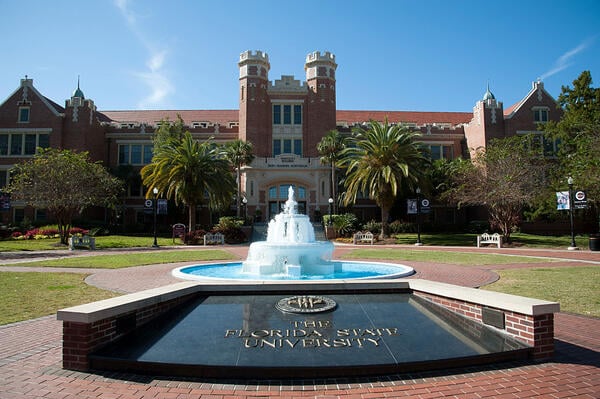
One suspect has been taken into custody after a shooting that left two victims dead and six injured at Florida State University’s student union on Thursday, law enforcement officials said in a press briefing.
The suspect, who was identified as Phoenix Ikner, a 20-year-old FSU student and the son of a school resource deputy with the Leon County Sheriff’s Department, has also been hospitalized. He was shot by police after he “did not comply with commands,” according to Tallahassee Police Department chief Lawrence E. Revell.
The two deceased victims were not students, Revell said, but he couldn’t share any other information about the victims’ identities.
FSU president Richard McCullough called this a “tragic day for Florida State University” at the briefing.
“We’re working to support the victims, the families and everyone affected,” he said.
FSU students and employees received an emergency notification at 12:02 p.m. to shelter in place due to an active shooter near the campus’s student union. According to Revell, FSU campus police arrived on the scene “almost immediately” after the shooting began just before noon. Other local law enforcement agencies, including the Federal Bureau of Investigation’s Jacksonville field office and its Tallahassee suboffice, were involved in the response to the shooting. The Tallahassee police will lead the investigation.
Over three hours later, police notified the campus that they had “neutralized the threat” but asked the public to continue avoiding the student union and the surrounding area. Students were advised to remain indoors except to walk to their dorms or the designated reunification point.
Revell said the handgun Ikner used was his mother’s former service weapon. The suspect also had a shotgun with him, Revell said, but it was unclear if he had used it. Revell said the police did not yet know of any motive for the shooting and that Ikner had invoked his right not to speak with police.
At the press briefing, McCullough said he had just returned from visiting the victims in the hospital.
“Right now our top priority is safety and well-being for all the people on our campus,” he said.
One FSU junior, McKenzie Heeter, told NBC that the assailant shot at her with what she thought was a rifle as she was exiting the student union with her lunch just before noon, but he missed. He then returned to his car and retrieved a handgun and shot another individual, at which point Heeter began running away from the student union and back to her apartment.
“It was just me and like three other people that noticed at first, but we were walking in the opposite direction away from the union, so we started running. I just told everybody that I could see, stay away from campus,” she told NBC.
Another group of about 40 individuals avoided the shooter by locking themselves in a bowling alley in the student union’s basement, The Tallahassee Democrat reported.
Classes at FSU are canceled through Friday, and athletic events are canceled through the end of the weekend.
-
Limestone University needs $6M to avoid shutdown or going online-only
This audio is auto-generated. Please let us know if you have feedback.Dive Brief:
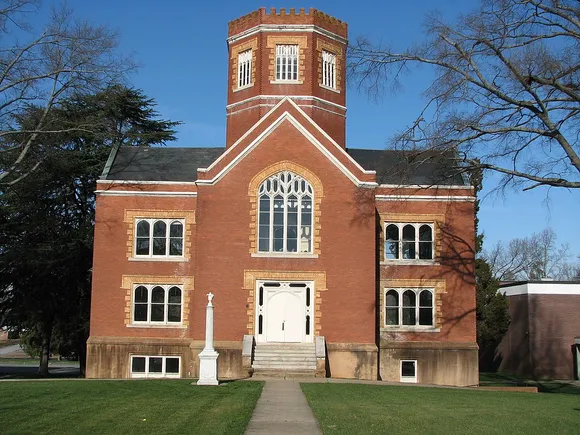
- Limestone University, in South Carolina, may move to online-only classes or shut down entirely in the near future as it wrestles with a financial crisis, the 179-year-old institution announced Wednesday.
- To avoid closing or going exclusively online, the private nonprofit’s board of trustees said it would need an “immediate” infusion of $6 million in emergency funding, though it didn’t indicate where it might find the funds.
- Limestone attributed its financial woes to enrollment declines, rising costs and “long-standing structural pressures facing small, private institutions.”
Dive Insight:
Describing the current crisis as a “turning point,” Limestone’s announcement Wednesday listed multiple possible paths forward, and in doing so the university threw general uncertainty over its future.
“While full closure remains a risk, the institution is considering a scenario that would discontinue all in-person academic operations and all other activities, including athletics, in Gaffney,” the university said. “The fully online model would effectively end the traditional college campus experience.”
Limestone’s board is set to meet April 22 to discuss next steps.
Many of the Christian university’s travails stem from a drop-off in students. Between 2018 and 2023, fall enrollment plummeted 27% to 1,782 students.
Under financial pressure, Limestone has been leaning heavily on its endowment, the university’s financials show. In 2023, with approval from the state attorney general, the university suspended a policy of spending no more than 5% of the endowment’s total value. Between fiscal years 2023 and 2024, Limestone’s net assets fell by more than $12 million, to $61 million.
With cash and investments dwindling, and amid persistent budget deficits — to the tune of $9.2 million in fiscal 2024, following an $11.4 million gap in 2023 — the university’s auditors warned that it may not be able to continue operating as a “going concern.”
Limestone currently offers online courses in addition to in-person classes, but it trumpets what it said is $150 million economic impact on South Carolina’s Cherokee County from its campus. That sum would be imperiled with a move to online-only operations.
“This potential shift to online-only instruction threatens not only the campus experience, but local jobs and the cultural presence Limestone has provided for nearly two centuries,” the institution said.
The $6 million emergency fund — which the university’s trustees proposed without detailing — would “stabilize operations and give the university the opportunity to pursue long-term solutions that preserve its on-campus identity,” Limestone said.
“Limestone remains committed to our students and we will work directly with current students to help them identify the best path to successfully complete their educational journey,” board Chair Randall Richardson said in a statement.
Other colleges in recent years have likewise sought emergency cash funding infusions to stay afloat in troubled times.
For example, Northland College, a private nonprofit in Wisconsin, last year announced a multimillion-dollar Hail Mary fundraising campaign. Without $12 million, the college said last spring, it would be forced to close.
Northland wound up falling well short of that goal, but pursued a turnaround on what it called “transformative” gifts and an initiative to pare back its programs. Despite those efforts, the college announced in February that it will close at the end of the current academic year.
Other similarly situated colleges, including Hampshire College, have had better luck after an existential fundraising blitz. After falling into financial distress, Hampshire launched a $60 million fundraising campaign that kept it afloat and helped it revamp its programs and operations.
-

Despite layoffs, NAEP to continue as planned in 2026
Despite massive layoffs that left the U.S. Department of Education with a skeleton crew in charge of administering and analyzing the Nation’s Report Card, the agency said on Thursday the assessment will continue as planned next year.
“The Department will ensure that NAEP [the National Assessment of Educational Progress] continues to provide invaluable data on learning across the U.S,” said U.S. Secretary of Education Linda McMahon in a statement on Thursday. “The 2026 NAEP assessments in reading and math are on track for administration in January 2026.”
In addition to assessing math and reading in 4th and 8th grades in January 2026, a letter sent to states Thursday shows U.S. history and civics will be administered for 8th graders as planned prior to the March layoffs.
NCES is preparing for the 2025-26 cycle now and will administer the assessments between Jan. 26 and March 20, 2026, according to the letter. Math and reading results for the nation, states, and districts participating in the Trial Urban District Assessment, which tracks academic progress in urban districts, will be released in early 2027.
National results for civics and U.S. history are expected to be released later in 2027. District and state-level data for those assessments will not be released.
Melissa McGrath, chief of staff for the Council of Chief State School Officers, said in a statement that NAEP “offers an important measure of student achievement and we are pleased that it will be administered in reading and math in 2026.”
The department’s update on testing in all subject areas — including optional ones — partially addresses concerns that have been stewing for over a month among education and testing experts that cuts to the agency would sacrifice the integrity of the Nation’s Report Card.
Former employees of the National Center for Education Statistics, which oversees the Nation’s Report Card, had worried that the mass layoffs would result in a “barebones” assessment that produced lower-quality data.
The Education Department has maintained that most of NAEP’s work was done through contracts, which it said remain in place.
“Despite spending hundreds of millions in taxpayer funds annually, IES has failed to effectively fulfill its mandate to identify best practices and new approaches that improve educational outcomes and close achievement gaps for students,” Madi Biedermann, the department’s deputy assistant secretary for communications, told sister publication Higher Ed Dive in March. Biederman said the Institute of Education Sciences is going to be restructured “to improve student outcomes while maintaining rigorous scientific integrity and cost effectiveness.”
In her statement Thursday, McMahon said NAEP is “a critical tool for parents, educators, and experts to assess our students’ preparedness and advise on necessary interventions.”
McMahon said that while the “final mission” — to close the department to the maximum extent possible as ordered by President Donald Trump in a March executive order — continues, she is still “committed to providing states with the tools and best practices to advance the educational achievement of our nation’s students.”
Modernizations of the assessment, which have been in the works for years, will also continue, the Thursday letter to states said — including pilot assessments in mathematics and reading in grades 4, 8, and 12 to help the assessment transition to updated mathematics and reading frameworks.
It is still unclear whether plans for other innovations such as remote, device-agnostic and adaptive administrations of the exam will still roll out.
In 2022, NCES Commissioner Peggy Carr — who was put on administrative leave as part of March’s layoffs — told K-12 Dive that assessments were set to become device agnostic in 2026, meaning students were going to be able to eventually test on any device. The Education Department had also planned to pull out most of its field administration staff, relying instead on school staff to administer assessments where possible, Carr said.
-
Federal judge freezes Energy Department’s 15% cap on indirect costs
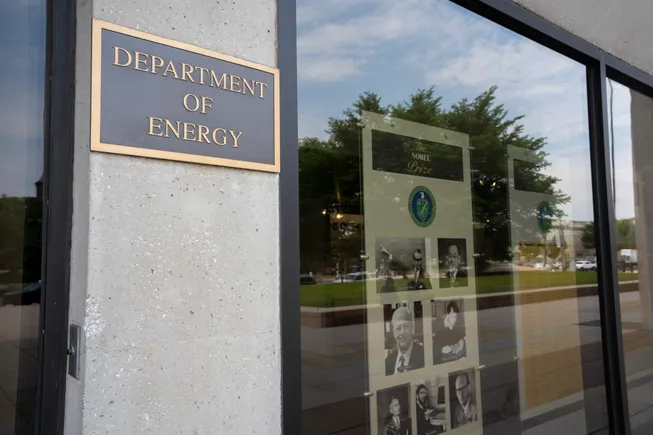
This audio is auto-generated. Please let us know if you have feedback.A federal judge Wednesday temporarily blocked the U.S. Department of Energy from implementing a 15% cap on grant funding for indirect costs. The ruling came just days after a dozen higher education associations and colleges sued the department, calling the new policy an overstep of authority and a threat to U.S. research and advancement.
In the ruling Wednesday, U.S. District Judge Allison Burroughs said the plaintiffs — including higher ed groups like the American Council on Education and threatened colleges like the University of Michigan and Brown University — had successfully demonstrated that they would “sustain immediate and irreparable injury” if the policy were allowed to proceed in tandem with the lawsuit.
Burroughs’ temporary restraining order bars the Energy Department — until further court order — from terminating grants, either under the challenged policy or “based on a grantee’s refusal to accept an indirect cost rate less than their negotiated rate.” The judge is also requiring the department to submit biweekly reports confirming that the federal funds are being distributed during the pause.
When announcing the funding cap last Friday, the Energy Department said the move would save $405 million annually and reduce what it called inefficient spending. Indirect research costs typically include overhead expenses such as facilities and administrative support staff.
The department said the change would affect over 300 colleges and that it would terminate grants to any institutions that failed to comply.
But the plaintiffs said the policy’s rapid implementation would give institutions no choice but to scale back funding and lay off staff.
Their lawsuit, filed in U.S. District Court in Massachusetts, called the Energy Department’s policy “a virtual carbon copy” of one announced in February by the National Institutes of Health. A federal judge permanently blocked NIH’s plan to cap indirect cost funding at 15% earlier this month, a decision the agency quickly appealed. The NIH plan would cost research universities billions in annual funding.
“DOE’s action is unlawful for most of the same reasons and, indeed, it is especially egregious because DOE has not even attempted to address many of the flaws the district court found with NIH’s unlawful policy,” the plaintiff’s lawsuit said.
The next hearing in the case is set for April 28 before the same court.
-
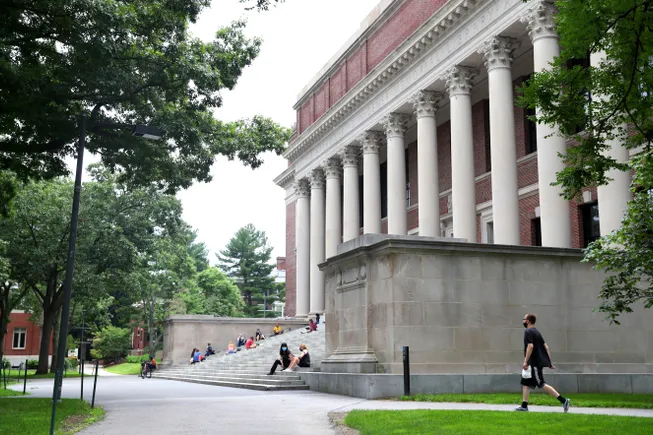
Will Harvard lose its ability to enroll foreign students?
This audio is auto-generated. Please let us know if you have feedback.Dive Brief:
- The U.S. Department of Homeland Security on Wednesday threatened to pull Harvard University’s ability to enroll foreign students if the Ivy League institution does not comply with an extensive record request by April 30. The agency also canceled $2.7 million in grants to the university.
- Earlier in the week, President Donald Trump reupped his calls for Harvard to lose its tax-exempt status and all federal funding. This all comes just days after the Trump administration’s antisemitism task force announced it was freezing over $2.2 billion in multi-year grants and contracts to Harvard.
- The federal onslaught follows Harvard’s refusal to comply with a list of unprecedented demands from the Trump administration, which university leadership called an overstep of authority — an assessment with which free speech and higher education experts have agreed.
Dive Insight:
The federal Joint Task Force to Combat Anti-Semitism first turned its attention on Harvard last month. The task force announced a review into $9 billion of the university’s federal funding and claimed that Harvard has not done enough to protect Jewish students from harassment. However, it did not publicly cite specific incidents or allegations, and some free speech experts and Israeli academics argue the administration is weaponizing antisemitism concerns.
Days after announcing the review, federal officials delivered Harvard a laundry list of ultimatums, including changes to academic programming and “meaningful governance reforms.” If the university complied, it had a chance — but no guarantee — to continue receiving federal funding, the task force said.
In response, Harvard became the first well-known institution to rebuke the Trump administration’s demands. Alan Garber, president of Harvard, said the task force’s desired oversight oversteps its authority and infringes on the university’s constitutional rights.
“No government — regardless of which party is in power — should dictate what private universities can teach, whom they can admit and hire, and which areas of study and inquiry they can pursue,” he said in a Monday statement.
Upon Garber’s defiance, the task force froze billions of the university’s federal funding and made further demands, including that it “audit the student body, faculty, staff, and leadership for viewpoint diversity.”
On Wednesday, Homeland Security Secretary Kristi Noem said Harvard was “bending the knee to antisemitism” under “its spineless leadership.”
The department is now demanding that the university hand over “detailed records on Harvard’s foreign student visa holders’ illegal and violent activities” by the end of the month or immediately lose its Student and Exchange Visitor Program certification.
International students studying the U.S. cannot attend a college that is not SEVP approved.
The program has gained national attention in recent weeks as waves of foreign students studying in the U.S. have had their visas revoked, often without warning or explanation. DHS is facing several lawsuits over its actions.
In 2024-25, 6,793 international students attended Harvard, making up 27.2% of the university’s enrollment, according to institutional data.
“If Harvard cannot verify it is in full compliance with its reporting requirements, the university will lose the privilege of enrolling foreign students,” DHS said in a statement.
Following Harvard’s condemnation of federal interference attempts, Trump ratcheted up his criticism of the university online.
“Harvard can no longer be considered even a decent place of learning, and should not be considered on any list of the World’s Great Universities or Colleges,” he said in a Wednesday social media post. “Harvard is a JOKE, teaches Hate and Stupidity, and should no longer receive Federal Funds. Thank you for your attention to this matter!”
In a separate post, he said that Harvard should “be Taxed as a Political Entity.”
The Internal Revenue Service is reportedly making arrangements to revoke Harvard’s tax-exempt status, according to CNN.
It’s not clear that the Trump administration would have gone easier on Harvard had it complied.
Columbia University, another Ivy League institution, agreed to a similar round of task force demands following the cancellation of $400 million in federal contracts and grants. The task force praised the university’s compliance but has yet to publicly reinstate its funding. The Trump administration also reportedly began pursuing a consent decree against Columbia, which would give the federal courts increased oversight of the institution.
Columbia has since followed Harvard’s lead. In a Monday statement, its newly-appointed acting president said the university “would reject heavy-handed orchestration from the government that could potentially damage our institution and undermine useful reforms that serve the best interests of our students and community.”
-

SMART Technologies Launches AI Assist in Lumio to Save Teachers Time
Lumio by SMART Technologies, a cloud-based learning platform that enhances engagement on student devices, recently announced a new feature for its Spark plan. This new offering integrates AI Assist, an advanced tool designed to save teachers time and elevate student engagement through AI-generated quiz-based activities and assessments.
Designing effective quizzes takes time—especially when crafting well-balanced multiple-choice questions with plausible wrong answers to encourage critical thinking. AI Assist streamlines this process, generating high-quality quiz questions at defined levels in seconds so teachers can focus on engaging their students rather than spending time on quiz creation.
More News from eSchool News

Almost 3 in 5 K-12 educators (55 percent) have positive perceptions about GenAI, despite concerns and perceived risks in its adoption, according to updated data from Cengage Group’s “AI in Education” research series.

Our school has built up its course offerings without having to add headcount. Along the way, we’ve also gained a reputation for having a wide selection of general and advanced courses for our growing student body.

When it comes to visual creativity, AI tools let students design posters, presentations, and digital artwork effortlessly. Students can turn their ideas into professional-quality visuals, sparking creativity and innovation.

Ensuring that girls feel supported and empowered in STEM from an early age can lead to more balanced workplaces, economic growth, and groundbreaking discoveries.

In my work with middle school students, I’ve seen how critical that period of development is to students’ future success. One area of focus in a middle schooler’s development is vocabulary acquisition.

For students, the mid-year stretch is a chance to assess their learning, refine their decision-making skills, and build momentum for the opportunities ahead.

Middle school marks the transition from late childhood to early adolescence. Developmental psychologist Erik Erikson describes the transition as a shift from the Industry vs. Inferiority stage into the Identity vs. Role Confusion stage.

Art has a unique power in the ESL classroom–a magic that bridges cultures, ignites imagination, and breathes life into language. For English Language Learners (ELLs), it’s more than an expressive outlet.

In the year 2025, no one should have to be convinced that protecting data privacy matters. For education institutions, it’s really that simple of a priority–and that complicated.
Want to share a great resource? Let us know at [email protected].
-
The future of IT education: beyond lectures and into the real world
Technology is evolving faster than ever. AI is reshaping entire industries, cybersecurity threats grow more sophisticated by the day, and software engineering is no longer just about coding – it’s about solving real-world problems through innovation.
That’s why IT education must go beyond code and empower students to create real-world solutions that drive change.
For too long, many universities have relied on large lecture halls, theoretical coursework, and outdated curricula that struggle to keep pace with technological developments and industry needs. Meanwhile, employers are looking for graduates who think critically, adapt quickly, work hands-on and integrate the latest technology into reshaped businesses.
The Rise of hands-on IT education: active learning on real-world challenges with expert mentorship
Gen Z grew up with digital technology. They don’t just want to hear about AI, cybersecurity, and software engineering in a lecture – they want to learn actively, create, test, and innovate with it. The most forward-thinking IT programs today focus on:
- Active learning and mentorship: Personalised learning in small classes, direct interaction with industry professionals, and collaborative problem-solving are replacing traditional, passive learning models.
- Industry partnerships: Universities that integrate real-world projects, internships, and company partnerships help students gain experience that translates directly into job opportunities.
- Agile learning environments: Rapid technological change requires adaptable curricula that evolve alongside industry advancements, rather than relying on fixed, multi-year course structures.
- Innovation hubs and labs: The best IT programs provide students with access to the newest technologies, collaborative spaces, and the freedom to experiment, fail, and innovate.
The innovation imperative in IT education
Innovation isn’t just about new technology – it’s about curiosity and social networks. The world’s biggest breakthroughs come from those who know how to challenge the status quo, think creatively, leverage insights from other disciplines and turn own ideas into reality. Yet, many traditional IT programs still focus on passive learning, where students memorize theories instead of actively tackling and solving problems.
Gen Z grew up with digital technology. They don’t just want to hear about AI, cybersecurity, and software engineering in a lecture – they want to learn actively, create, test, and innovate with it
Tomorrow’s tech leaders need more than just knowledge – they need environments where they can experiment, fail, and iterate. That’s why forward-thinking universities are integrating IT meetups, startup incubators, and transdisciplinary collaboration into their ecosystem. Students don’t just work on assignments; they tackle real-world challenges alongside industry mentors.
These shifts are essential. The coming generation of IT professionals won’t just apply technology; they’ll redefine it.
The future of IT education: where innovation meets industry
The next wave of IT education also needs to prepare students to lead in a constantly changing field. This means more interdisciplinary programs where AI, cybersecurity, and software engineering overlap. It means moving beyond tests and grades to portfolios of real-world projects. By partnering with industry leaders, educational institutions ensure a relevant curriculum, aligned with real-world needs.
Universities that embrace this hands-on, innovation-driven approach will lead the way and shape the next generation of digital leaders.
A new kind of IT university
At the Munich University of Digital Technologies (MUDT), we are building an institution that embodies this future – where small classes, hands-on industry projects, and innovation-driven learning come together to create an unparalleled educational experience. Our students won’t just graduate with a degree; they’ll graduate with experience, connections, and the ability to turn ideas into impact.
The next era of IT education is here. The question is: Are you ready for it?
About the author: Univ. Prof. Prof.h.c. Dipl.-Ing. Dietmar Wiegand is the Rector of the Munich University of Digital Technologies (MUDT), where he leads the university’s strategic initiatives in advancing digital education. With extensive experience in engineering and management of IT projects, Prof. Wiegand has a strong academic and professional background, having led numerous research and development projects and academic initiatives. His expertise in fostering innovation and sustainability is central to MUDT’s mission to prepare the next generation of digital leaders in an evolving technological landscape.

-

Three Florida unis harnessing the Hispanic population boom
As the face of education continues to undergo a rapid evolution, some institutions in the United States are pioneering innovative approaches to meet the diverse needs of their learners. What sets these institutions apart is their strong ties to established universities in Latin America and Spain, with international accreditations and faculty from around the world.
These institutions are not only providing world-class education but also addressing unique market needs through distinctive programs and methodologies. This is happening in a big way in Florida – and it’s time to pay attention.
The Hispanic power in Florida: business, economy, entrepreneurship, and education
According to the Florida State Hispanic Chamber of Commerce, there are over 604,000 Hispanic-owned businesses in Florida that contribute USD $90 billion to the state’s economy each year. Florida has been ranked the number one US state for entrepreneurship. Combine that with the fact that Florida is the gateway to Latin America and the Caribbean, and you’ve got yourself a state with a promising entrepreneurial spirit.
Here are the universities that are leading the charge. They’re doing all the right things and it’s time to closely observe
Miami-Dade County alone is home to over 1,200 multinational companies to have set up their Latin American headquarters in the area. Some 30% of all businesses in the county are run by people of Hispanic descent. This is a massive industry that’s growing at a rapid pace and demands highly educated professionals who can keep up with it all. This is a dynamic, entrepreneurial and young Hispanic community.
So, what are Florida’s institutions doing differently? They are agile, forward-thinking, and constantly evolving – meeting the needs of Hispanic students in Florida and beyond who want to study at their own pace and in a way that fits their lives.
Here are the universities that are leading the charge. They’re doing all the right things and it’s time to closely observe.
1. MIU City University: affordable, flexible, and global
MIU City University has been around since 2019. Founded by Grupo ProEduca and UNIR in Spain, MIU City University offers online and hybrid programs that cater to busy professionals.
With programs in cybersecurity, computer science, digital marketing, business intelligence, educational innovation, and others, MIU City University offers affordable certificates and degrees with a proven online model recognised by global rankings. Its global reach with students from over 90 countries makes it the perfect institution for those who want to connect with a worldwide network of professionals.
What sets MIU City University apart is its focus on practicality. Students are learning the exact skills that today’s employers are looking for, whether it’s in business, tech, or marketing. And with remote work on the rise, these programs make it easier than ever to combine work, study, and life.
2. CUC University: flexible programs for remote workers who need to study
CUC University, founded in 2021 by Universidad de la Costa in Colombia, is another institution breaking the mould. They offer online programs designed for students who are working alongside their studies. CUC has designed its courses to be flexible so students can study on their own time with faculty from around the world.
A good example of its offering are programs in international business administration, marketing, mass media communication, media technology, and entrepreneurship. These programs are designed for working professionals who need to level up. With over 53 years of academic excellence, CUC is the perfect mix of legacy and innovation.
Its partnerships with private and public organisations help students connect with the right people who are looking for professionals ready to compete in the global marketplace or start their own venture.
3. Panamerican University: a global business experience
And then there is Panamerican University, founded in 2022 by Panamerican Business School from Guatemala, already flexing its global muscle. With 25 years of experience and partnerships with over 700 companies across 20 countries, 800 faculty from over the world, it’s offering programs designed to today’s economy.
It offers programs in business administration, digital marketing, and international and sustainable business, among others. Its students can obtain global certificates in dynamic and multicultural cities like Dubai, Stockholm, Singapore, Madrid, Tokio, and Miami.
And let’s not forget it’s got over 350,000 alumni who are spread out all over the world, which connects its students with an international network of professionals.
Why these universities are changing the game
These institutions have identified gaps and the needs of the non-traditional Hispanic students in Florida; working professionals who are trying to balance career and family, people who need a degree, professional development, continuous learning, and upskilling to keep up in a rapidly changing world.
They’ve filled those gaps with flexible and practical offers. They’re serving a growing Hispanic student population – both domestic and those from their international biosphere – a segment that is hungry for opportunities to grow. They are partnering with companies, international organisations, governments, providing real-world skills, a worldwide network, and the flexibility to study from anywhere.
I am impressed by these innovative institutions and their rapid pace of growth. I have just shown three examples, but there are more institutions doing great things that have been here for a while. Some of them are opening new campuses and branches, with in-person, online and hybrid models: Ana G. Méndez University- Puerto Rico, Nexus University; Universidad Mayor Chile, Westfield Business School; Prisma Education Group Colombia, Broward International University; San Ignacio University; USIL Peru, Albizu University; Puerto Rico, GAIA University, Guatemala, to name just a few.
These institutions offer flexibility, affordability, global exposure, and a focus on practical skills for today’s workforce. They’re not just educating students; they’re connecting them to a global ecosystem of professionals, alumni, and companies that are ready to hire.
It’s time to pay attention to what these universities are doing. They’re a novel example that education can be tailored to the needs of the students and the world they’re entering. The future of higher education is here, and it’s fast, flexible, and ready to break all the rules. And it’s so exciting that this is happening here in the Sunshine State.