Author: admin

  • States try to tackle child care shortages — by lowering standards

    States try to tackle child care shortages — by lowering standards

    When this year’s legislative session launched in Idaho, early childhood experts and advocates were hopeful that the state, which has a shortage of child care, would invest more in early learning programs. Instead, lawmakers proposed what may be the most extreme effort yet to deregulate child care in America: The bill called for eliminating state required staff-to-child ratios altogether, instead allowing child care providers to set their own.

    While the effort was met with fierce opposition in the state, it represents a trend gaining momentum in the country. Rather than investing in the struggling child care industry, more than a dozen states have proposed lowering the minimum age to work with children, easing education and training requirements, and raising group sizes and ratios. (Read my December story on this growing deregulation movement. I investigated such efforts in states including Kansas and Iowa.)

    The deregulation measures come at a time when many early childhood programs face federal funding and staffing cuts. Head Start programs were hit by a federal funding freeze and struggled to draw down payments even after the Trump administration announced Head Start was exempt from the freeze. Then, earlier this month, the Trump administration closed five of the Administration for Children and Families’ (ACF) regional offices and placed staff from those offices on leave, threatening support for Head Start, which is overseen by ACF, as well as programs that receive federal child care subsidies. Last week, USA Today reported that President Donald Trump is considering a budget proposal that would eliminate funding for Head Start altogether.

    At the state level, Idaho lawmakers are not the only ones to propose child care deregulation legislation this year. Minnesota lawmakers also issued similar proposals, including increasing family child care capacity limits and relaxing ratios in rural areas. Another bill in the state proposes lowering the age requirement of assistant teachers from 18 to 16. In Kansas, where a lawmaker proposed hiring 14-year-olds to help in child care classrooms in 2023, a new bill aims to reduce training requirements. An Indiana measure would loosen staff-to-child ratios based on the ratios set in neighboring states, and one in North Carolina would increase maximum group sizes for young children. And in Florida, lawmakers have called for an abbreviated inspection plan for some child care programs.

    While deregulation is more common in red states, there have also been some recent efforts to invest in early learning programs that transcend the red-blue divide. In Georgia, Gov. Brian Kemp proposed an additional $14 million aimed at reducing preschool class sizes and $5.5 million to address issues with the state’s child care subsidy program for lower-income families. Indiana Gov. Mike Braun called for more spending to eliminate the state’s waitlist for child care subsidies. And South Carolina Gov. Henry McMaster proposed $20 million to continue a program that provides wage supplements to child care workers.

    In Idaho, the deregulation legislation was eventually amended to loosen the state-mandated ratios — without eliminating them altogether. It also forbids municipalities from setting more stringent child care regulations than the state, something that was allowed in the past and allowed cities to set a “higher standard” for programs, said Martin Balben, director of strategic initiatives for the Idaho Association for the Education of Young Children.

    “I think municipalities are still kind of reeling with how to confront that reality,” he said. “It remains to be seen how [they] are going to handle their lack of local control in this area moving forward.”

    Experts say while deregulation is nothing new, the recent momentum is troubling. “We absolutely want to make sure that states are not rolling back their health and safety measures,” said Diane Girouard, state policy senior analyst at Child Care Aware of America. “We want to make sure that they’re not compromising children. … There are no quick fixes.”

    Contact staff writer Jackie Mader at 212-678-3562 or [email protected].

    This story about child care services was produced by The Hechinger Report, a nonprofit, independent news organization focused on inequality and innovation in education. Sign up for the Hechinger newsletter.

    The Hechinger Report provides in-depth, fact-based, unbiased reporting on education that is free to all readers. But that doesn’t mean it’s free to produce. Our work keeps educators and the public informed about pressing issues at schools and on campuses throughout the country. We tell the whole story, even when the details are inconvenient. Help us keep doing that.

    Join us today.

    Source link

  • Inclusivity beyond the buzzwords | Wonkhe

    Inclusivity beyond the buzzwords | Wonkhe

    Universities highlight language support programs as proof of their commitment to inclusivity, yet these offerings are often expensive, overly prescriptive, optional, and poorly integrated.

    Pre-sessional provision comes with hefty price tags, making language support a privilege rather than a right. Students who cannot afford them are either excluded from higher education or forced to struggle in degree programs where linguistic preparedness is assumed rather than supported.

    I once supported a postgraduate student from East Asia who was excelling in her subject knowledge but consistently received vague feedback like “lack of critical engagement” on her assignments.

    She was deeply confused – she had addressed all the questions and provided detailed analysis. In our one-to-one tutorials, it became clear that the issue was not her understanding of the topic, but that she hadn’t been explicitly taught what criticality looks like linguistically in UK academic culture.

    No one had ever shown her how to signal argument structure or contrast ideas subtly in writing. Despite her intelligence and effort, she was left to decode these expectations on her own, and it affected both her grades and her confidence.

    What does it say about our commitment to inclusion when students are expected to navigate invisible academic norms alone?

    Supplementary or fundamental?

    To make matters worse, in-sessional provision, where available, is often treated as an afterthought rather than an integrated resource, leaving students struggling to meet academic demands or seeking help on their own time while managing intensive timetables, packed with lectures, assignments, and deadlines.

    This approach positions language support as a supplementary service rather than a fundamental component of academic success, reinforcing the notion that multilingual students must “catch up” instead of valuing their linguistic abilities as assets.

    In one programme I supported, attendance at in-sessional sessions was minimal at first – not because students didn’t need them, but because they didn’t know they existed. There was limited to zero visibility of these educational initiatives, and many students were unaware of how language development related to academic success.

    It wasn’t until we launched a more systematic approach to promotion – class presentations, VLE announcements, email campaigns, ads on campus screens, fliers, and peer recommendations – that attendance noticeably increased. Word of mouth became our most effective tool, which was both encouraging and telling. If in-sessional provision only gains traction through backdoor advocacy, how inclusive is that, really?

    Shortcomings, however, appear to extend far beyond language provision. Pedagogical practices in many institutions remain stubbornly monolingual, built on the assumption that a single teaching model can work for all students, regardless of their linguistic and cultural backgrounds.

    This one-size-fits-all approach, which assumes uniformity in learning needs and styles, disregards the diverse ways students engage with knowledge. Standardised teaching methods leave little room for flexibility, forcing students to conform rather than allowing for adaptability and meaningful engagement.

    Conformity or critical thinking?

    Nowhere is this more evident than in assessment. Universities continue to rely on rigid, English-centric evaluation methods including essays, presentations, and exams graded against standardised linguistic norms, disadvantaging multilingual students rather than valuing their perspectives.

    If inclusivity truly mattered, assessments would prioritise critical thinking, originality, and academic engagement over strict linguistic conformity. Instead, institutions uphold traditional models that often disadvantage students from diverse linguistic backgrounds. For example, I once co-marked a brilliant essay that presented a nuanced critique of policy frameworks. It was downgraded – not for weak argumentation – but for not aligning with “expected” academic language norms.

    Despite offering original insights and drawing on a range of interdisciplinary sources, the essay was penalised for its occasional non-standard syntax and limited use of discipline-specific vocabulary. Rather than recognising the intellectual rigour of the argument, the feedback focused almost exclusively on surface-level language issues. How does that reflect the critical thinking we claim to value?

    While universities struggle to create truly inclusive academic environments, the burden of making the system work falls on EAP practitioners and frontline educators, who are expected to foster inclusivity despite being overstretched, underpaid, and under-resourced. Many receive either little or no formal training in multilingual pedagogies, yet they are tasked with ensuring student success within a rigid system that resists adaptation. From personal experience, I can say that navigating this contradiction is emotionally and professionally draining.

    I’ve sat in staff meetings where the pressing need to be inclusive was discussed, only to return to classrooms with no budget for updated materials, no time allocation to work on such updates, and no training on how to implement the very principles being endorsed.

    At times, I’ve been expected to “embed inclusive practice” without any clear guidance on what that actually means in context, leaving me to interpret and apply vague directives on my own. This disconnect creates a sense of frustration and helplessness – wanting to support students meaningfully but lacking the structural backing to do so effectively.

    The disconnect is glaring – universities promote inclusivity in their policies while shifting the responsibility of implementation onto educators who lack the necessary resources, training, and structural support to make meaningful change. Institutions seek improvement without providing the means to achieve it.

    On top of this, accreditation bodies, which should act as enforcers of inclusivity, are complicit in this shortcoming. While they promote the idea of inclusivity as a core value, their competency frameworks remain vague and unenforceable, allowing institutions to check superficial boxes rather than implement meaningful change – without ever being truly held accountable.

    Instead of pushing institutions toward equitable assessment strategies, embedded language support, and multilingual pedagogies, accreditation bodies enable them to maintain the status quo while advertising themselves as champions of inclusion.

    Integrating EAP

    If universities and accrediting bodies are serious about inclusivity, they must dismantle their one-size-fits-all approach and invest in flexible, student-centered models. EAP should not be an expensive privilege but an embedded, fully integrated component of degree programs.

    Language support must be available without financial barriers and tailored to students’ actual needs rather than forced into a standardised mold that ignores their diverse experiences. Institutions must move beyond the outdated view that multilingualism is a problem to be fixed and instead embrace it as an academic strength that enhances learning for all students.

    For example, multilingual writing workshops, co-delivered by faculty and language specialists, have shown success in small-scale pilots. Why not scale them? Similarly, peer mentoring across language backgrounds fosters both inclusion and academic development. These are not costly solutions, but they do require intention and planning.

    Assessment practices must undergo reform. Universities should move beyond evaluating students solely through rigid linguistic norms and instead adopt translingual, context-sensitive assessments that measure intellectual engagement, not just English proficiency.

    Traditional assessment models often privilege students who are already proficient in standardised academic English, disregarding the depth of thought, creativity, and critical analysis that can be expressed through diverse linguistic resources.

    If higher education truly values critical thinking and originality, its assessment models must reflect that rather than simply rewarding those who conform to narrow linguistic standards. Practical steps might include offering multilingual glossaries during assessments, encouraging multimodal submissions (like presentations or podcasts), and designing rubrics that focus on analytical rigour rather than grammatical precision. These shifts do not dilute standards—they redefine them to reflect actual learning.

    Beyond reforming teaching and assessment, universities must stop offloading the responsibility for inclusivity onto individual educators. Institutions must invest in faculty development, providing structured training in multilingual pedagogies and equitable assessment models.

    Educators should not be expected to figure out inclusivity on their own – institutions must offer policies with clear, actionable steps that guide them in creating learning environments that serve all students, rather than relying on vague inclusivity statements that sound aspirational but achieve little. This might include mandatory training modules for new staff, collaborative spaces where educators can share inclusive teaching strategies, and formal incentives for inclusive curriculum design.

    At the same time, accreditation bodies must reimagine competency frameworks and accreditation schemes to ensure that inclusivity is not just encouraged but required. These frameworks should move beyond broad, generic statements and introduce enforceable, transparent standards that hold institutions accountable.

    Accreditation should no longer be granted based on superficial inclusivity measures but tied to real, measurable efforts in integrating multilingual pedagogies, equitable assessment strategies, and accessible language support. Regulatory bodies must stop allowing universities to simply claim inclusivity and start demanding that they prove it.

    The future of inclusive higher education hinges on institutions and accrediting bodies being willing to rethink not just their policies but their entire approach to teaching, assessment, and faculty support. Without structural change, inclusivity will remain more of a promise than a practice – a feel-good slogan that limits accountability while leaving students to navigate an inequitable system.

    And for those of us who teach, support, and listen to these students every day, that’s not just a policy failure – it’s a deeply personal one. So, the question remains: are universities truly committed to inclusivity, or are they merely preserving the status quo under the illusion of progress? If it’s the latter, then higher education is not meeting the needs of the very students it claims to support. It’s not enough to say the right things – it’s time to do the right things.


    Source link

  • Rethinking our approach to maths anxiety

    Rethinking our approach to maths anxiety

    As higher education professionals, we encounter a wide spectrum of emotional responses to mathematics and statistics.

    This could vary from mild apprehension to teary outbursts, and often, it can also lead to complete avoidance of the subjects, despite their value in achieving success both in university and after.

    Behaviours such as procrastination can hinder student learning, and as such, it is imperative that students are taught to challenge these feelings.

    An analogy that we have used is fear of spiders – we may be likely to avoid places that house spiders, and in the same way, students may procrastinate or completely avoid maths-related tasks due to their “discomfort”.

    Additionally, cultural attitudes, gender, and past educational experiences can all influence how someone responds to mathematics.

    The term “maths anxiety” is commonly used to describe any negative emotion related to mathematics. However, when viewing it from a psychological viewpoint, we argue that there needs to be a distinction made between clinical anxiety and general apprehension.

    Most of us would feel worried if we were taking an exam that included mathematics or statistics – it is normal to feel some level of worry about being tested, and we can learn to manage this.

    Clinical anxiety, on the other hand, is more extreme, and significantly impairs the ability to manage daily tasks – it requires psychological support. By conflating these experiences, we run the risk of over-medicalising a typical reaction to potentially challenging material, and we might miss opportunities to provide appropriate support, or to help students to self-regulate their emotions.

    Various approaches have proven successful in our practices for dealing with worries.

    What works

    We’ve found that opening up the conversation about anxiety early on – creating a safe space where students can explore what it is, when it shows up, and how it affects them. With each new group, we try to start this discussion as soon as possible, framing it in broad terms to keep it inclusive and non-threatening. Students often respond well when asked to think about situations that make them feel nervous – things like sitting an exam, taking a driving test, or speaking in public.

    From there, we invite them to notice the physical and emotional effects anxiety has on them. Common responses include sweating, shortness of breath, feeling jittery or nauseous, difficulty concentrating, or an urge to get away. These are usually sensations they’ve experienced before, even if they haven’t named them. When we approach it this way – shared, grounded in real life, and without judgement—it tends to normalise the conversation. We’re always conscious of the potential for some students to feel overwhelmed by the topic, so we stay attuned and pause when needed, signposting to further support if things get too heavy.

    Asking students what they already do when they feel anxious helps too. Giving everyone a chance to reflect and share helps surface the small strategies – breathing deeply, taking a walk, positive self-talk – that they may not realise they’re using. It affirms that they do have tools, and that managing nerves is something within their control.

    Simply asking students how they feel about using maths or statistics in their studies can also help. More often than not, a few will admit to feeling nervous – or even anxious – which opens the door to normalising those feelings. From there, we can connect the strategies they already use in other situations to the challenges they face with maths, helping them build a toolkit they can draw on when the pressure mounts.

    Some strategies that students find helpful include mindful breathing, visualising a calming place, or even splashing cold water on the face to reset. Others involve filtering out negative messages that chip away at confidence, re-framing self-talk to be specific and encouraging – like swapping “I can’t do maths” for “I’ve learned before, I can learn again” – and, crucially, building skills and confidence through steady learning and practice.

    There may, however, be cases where a student’s anxiety is not assuaged by employing these techniques, and a level of clinical anxiety may be suspected, requiring further support from counsellors or other professionals. In these cases, ensuring the students are guided, even taken, to access the relevant support services is key. This may lead to requests for reasonable adjustments as well as prescribed treatments, thus enabling the student to face the challenge and hopefully emerge successfully on the other side.

    Prizes for all

    Of course, these are all interventions that are useful for students who are struggling with worries about maths – but there are also things we can do to support all of our students. Some students will be struggling quietly; some will have other learning differences that might impact on their ability to learn maths, such as ADHD.

    One approach we might consider is Universal Design for Learning, where we make learning accessible for all our diverse students, regardless of the specific issues that they might experience, or whether they tell us about those issues. Giving students choice in how they complete their assessments, allowing them access to resources or notes (open book) during test situations, and not imposing tight timescales on assessments can be one way to support students to achieve their best. Taking this approach also removes some of the administrative work involved in working out reasonable adjustments!

    Sometimes there are professional requirements that mean that such adjustments are not possible (for example, calculating doses in nursing where achieving 100% is a requirement), but often it can be helpful to consider what we are assessing. Do we need to assess a student’s ability to solve a maths problem from memory and under time pressure, or do we want to know that they can solve a problem they may encounter in a typical graduate role when they might be able to search how to approach it?

    Authentic assessment can be a useful tool for making maths learning and assessment less scary and more accessible.

    Differentiating between a regular level of apprehension and clinical anxiety will help us to be better placed to implement strategies to support students and staff in succeeding on their mathematical or statistical journey. This can begin at the curriculum design and development stage, extending beyond our work with individual students.

    Supportive relationships between learning development tutors, students and teaching staff enable us to implement tailored strategies for minimising maths anxiety. By working together, we can reframe maths learning to be seen as an opportunity for growth, and not something to fear.

    Source link

  • IRS Plans to Revoke Harvard’s Tax-Exempt Status

    IRS Plans to Revoke Harvard’s Tax-Exempt Status

    The Internal Revenue Service is reportedly planning to rescind Harvard University’s tax-exempt status amid its showdown with the Trump administration over academic freedom, CNN reported.

    Citing two anonymous sources, CNN reported that a decision is likely coming soon. If Harvard’s tax-exempt status is revoked, the move would appear to be at the behest of President Donald Trump, who has railed against the private university in posts on his own Truth Social platform.

    “Perhaps Harvard should lose its Tax Exempt Status and be Taxed as a Political Entity if it keeps pushing political, ideological, and terrorist inspired/supporting ‘Sickness?’ Remember, Tax Exempt Status is totally contingent on acting in the PUBLIC INTEREST!” Trump wrote Tuesday.

    In a Wednesday post, the president said that Harvard should “no longer receive Federal Funds” because it “is a JOKE [that] teaches Hate and Stupidity.”

    Harvard is currently in a standoff with the Trump administration, which has demanded a series of wide-reaching changes it says are needed to address alleged antisemitism on campus related to pro-Palestinian protests. Those demands include reforms in admissions, hiring practices, student disciplinary processes and a facultywide plagiarism review, among other changes.

    Harvard, however, rejected Trump’s demands on Monday, calling them an affront to institutional autonomy.

    The Trump administration promptly retaliated, freezing $2.2 billion in federal grant funding and $60 million in contracts.

    Neither the IRS nor Harvard respond to requests for comment from Inside Higher Ed.

    Source link

  • Institute of Education Sciences cuts imperil high-quality research, lawsuits allege

    Institute of Education Sciences cuts imperil high-quality research, lawsuits allege

    This audio is auto-generated. Please let us know if you have feedback.

    Dive Brief:

    • “Dramatic, unreasoned, and unlawful actions” taken by the Trump administration to significantly downsize the U.S. Department of Education’s Institute of Education Sciences are making it impossible to carry out education research, according to a lawsuit filed Tuesday by the American Educational Research Association and the Society for Research on Educational Effectiveness.
    • The funding and staffing cuts made to IES will hamper the institute’s ability to conduct impartial, high-quality research and share those findings with educators, researchers and policymakers, according to the federal lawsuit, which was filed in Maryland district court.
    • With this legal challenge, the pushback against the Trump administration’s actions to reduce the size of the federal government continues to grow. Another lawsuit disputing IES shrinkage was filed by the Association for Education Finance and Policy and the Institute for Higher Education Policy on April 4 in federal court in Washington, D.C.

    Dive Insight:

    Both lawsuits say the the Trump administration’s actions are preventing IES from carrying out its statutory duties. They ask that U.S. Education Secretary Linda McMahon and the Education Department end their efforts to eliminate IES and restore its contracts, staff and other resources.

    The Education Department did not respond to request for comment on Wednesday. 

    The challenge by AERA and SREE, which are represented in the lawsuit by Democracy Forward, a national legal organization, calls the February cancellation of $881 million in education research grants and the March 11 termination of 90% of IES staff “arbitrary” and “capricious” and a violation of the Administrative Procedure Act. 

    Only about 20 staff remain at IES, and only three people are still employed at the National Center for Education Statistics, which is one of four centers within IES, according to the AERA-SREE lawsuit.

    NCES and its predecessor organizations have focused on data collection and analysis for more than 150 years. NCES’ demise will make it “impossible to track progress, assess learning, identify gaps affecting students, and set priorities for attention over time and across the country,” including for student proficiency trends from the National Assessment of Educational Progress, also known as the Nation’s Report Card, the complaint said.

    The AEFP-IHEP lawsuit adds that Congress has not repealed the Education Sciences Reform Act or eliminated statutory mandates that require IES to collect and analyze data, support research on specific topics, and provide access to research and data to the public. The organizations are represented in the lawsuit by Public Citizen Litigation Group, a nonprofit consumer advocacy organization.

    Michal Kurlaender, president of AEFP, said in an April 4 statement that many of its members have “faced serious challenges to their research and work” because of the IES funding and staffing cuts.

    “We want to do all that we can to protect essential data and research infrastructure,” Kurlaender said. “This is fundamental to our mission of promoting research and partnerships that can inform education policy and improve education outcomes.”

    Source link

  • What Do Universities Use CRM Systems For?

    What Do Universities Use CRM Systems For?

    Reading Time: 7 minutes

    Customer Relationship Management (CRM) systems have become essential tools in higher education, transforming how universities interact with prospective students, current students, alumni, and other stakeholders. Whether you’re trying to track your enrollment funnel, streamline your recruitment process, or boost retention, CRM systems offer many unique marketing benefits for your institution. 

    You may have already encountered discussions about CRM platforms, but understanding their full potential in an educational context is key to optimizing your institution’s outreach, recruitment, and engagement efforts. Keep reading to learn more about higher education CRM systems, the unique marketing benefits they offer, and how you can get started.

    Struggling with enrollment?

    Our expert digital marketing services can help you attract and enroll more students!

    Understanding Higher Education CRM

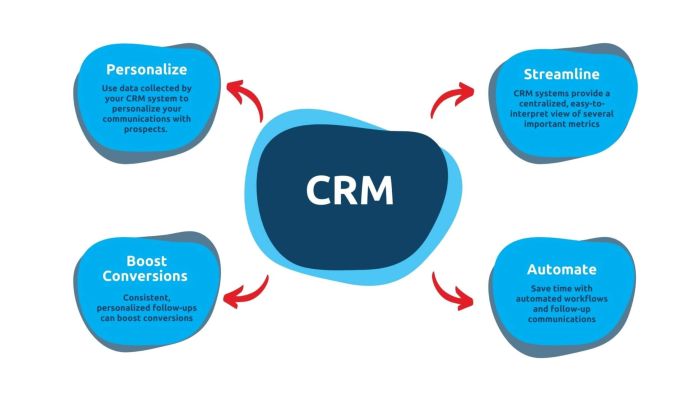
    What is a CRM in higher education? It’s a powerful software solution that helps universities manage relationships at every stage of the student lifecycle. Traditionally associated with sales and customer service in corporate settings, CRM technology has evolved to meet the specific needs of educational institutions. In higher education, a CRM can track interactions with prospective students, automate communication, and analyze data to improve engagement and conversion rates.

    Unlike a standard student information system (SIS), which focuses on administrative tasks like enrollment and grades, a CRM is designed for relationship-building. It allows universities to personalize outreach, streamline marketing efforts, and nurture students from the moment they express interest until they become engaged alumni. By integrating CRM technology into your institution’s marketing strategy, you can enhance recruitment efforts, improve retention rates, and foster long-term alumni engagement.

    HEM Image 2HEM Image 2

    Source: HEM

    Are you wondering how your university can unlock the benefits of a CRM? Reach out to learn about our tailored digital marketing solutions.

    The Benefits of CRM Systems for Universities

    What are universities using CRM for? Well, to be successful as an educational institution, building and maintaining positive relationships with prospective students is necessary. CRMs help schools manage those relationships at various stages of the enrollment funnel and offer valuable marketing benefits. 

    One of the most significant advantages of implementing a CRM in higher education marketing is the ability to centralize and manage vast amounts of student data efficiently. Rather than relying on disparate spreadsheets, email threads, and manual tracking, a CRM consolidates all interactions into a single platform, ensuring every team member has up-to-date information.

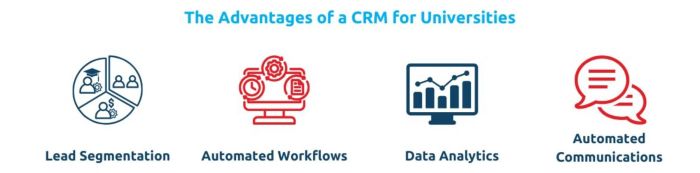
    A well-implemented CRM system helps streamline the recruitment process by automating lead nurturing. When prospective students submit inquiries through your website, attend a virtual event, or download a brochure, a CRM can trigger personalized email sequences, follow-up reminders, and targeted content recommendations based on their interests. This level of automation ensures that no lead is left unattended, allowing admissions teams to focus on high-value interactions.

    Beyond recruitment, CRM systems are crucial in improving student engagement and retention particularly when data from a Student Information System is integrated. Universities can use CRM and SIS analytics to monitor student behaviour, such as class attendance, engagement with academic advisors, or extracurricular activities. If a student begins to disengage, automated alerts can prompt intervention from faculty or student services, helping to improve retention rates and overall student satisfaction.

    Another key area where CRMs add value is in alumni relations and fundraising. By tracking alumni career paths, donation history, and event participation, universities can segment their alumni base and tailor communications accordingly. For instance, an alumni relations team can identify graduates likely to contribute to fundraising campaigns based on past engagement, ensuring that outreach efforts are strategic and effective.

    HEM Image 3HEM Image 3

    Source: HEM

    Implementing a CRM System in Your University

    Integrating a CRM into your university’s operations requires careful planning and execution. The first step is selecting a CRM that aligns with your institution’s needs. Some CRMs, like Salesforce Education Cloud, HubSpot, or Slate, are specifically designed for higher education, offering features tailored to student recruitment, engagement, and alumni relations.

    Prioritize Data Integration 

    Data integration is another challenge that universities must address. Many institutions already have multiple systems for student records, financial aid, and course management. Ensuring that the CRM integrates seamlessly with these existing platforms prevents data silos and a smooth flow of information across departments. This might require working closely with IT teams or investing in middleware solutions to facilitate integration.

    Measure Results and Plan Accordingly 

    Once a CRM is chosen, establishing clear goals and key performance indicators (KPIs) is crucial. Universities should determine what they want to achieve with their CRM, whether it’s increasing application rates, improving response times for inquiries, or boosting alumni donations. Setting measurable objectives ensures that the CRM is used strategically.

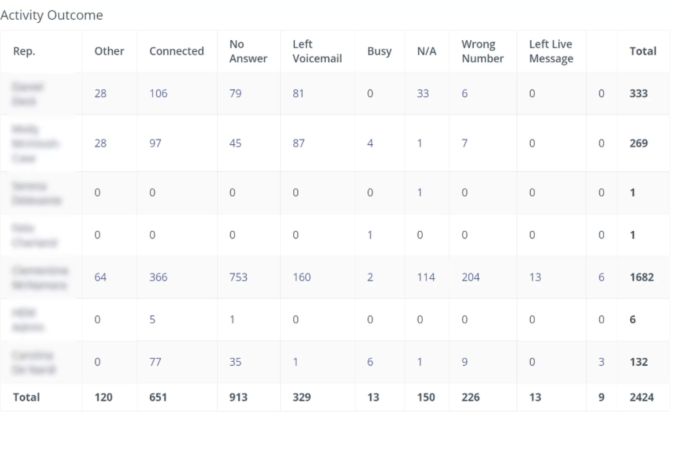
    Example: A great way to measure the success of your marketing efforts using a CRM is to track the outcomes of your communications as pictured below. This data is extremely valuable as now, you know how many prospects you were able to reach, how they responded to your communications, and whether you need to obtain more accurate contact information. This is just one of the metrics you can track using our Mautic CRM system.

    HEM Image 4HEM Image 4

    Source: HEM | Mautic

    Get Your Whole Team Involved 

    Staff training is another essential component of successful CRM implementation. A CRM is only as effective as the people using it, so ensuring that admissions teams, marketing departments, and student services personnel are comfortable navigating the system is paramount. Conducting regular training sessions, creating user guides, and designating CRM champions within each department can help drive adoption and maximize efficiency.

    Focus on Personalization

    To fully leverage the potential of a CRM, universities should also focus on personalization. With the data collected through a CRM, institutions can tailor communications to different student segments. For instance, a prospective student interested in business programs should receive targeted content about faculty research, alumni success stories, and upcoming application deadlines for the business school rather than generic university-wide messaging. Personalized engagement fosters stronger connections and increases the likelihood of conversion.

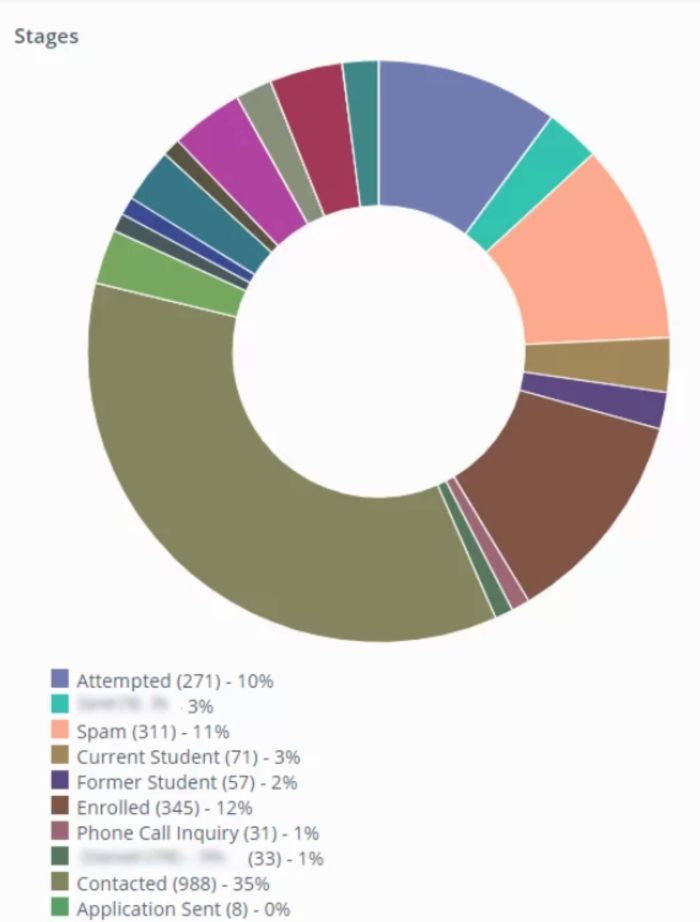
    Example: How do you personalize your university marketing efforts? A great place to start if you’re still learning about your ideal prospect is tailoring marketing communications for the stage of the enrollment funnel they’re in. Through segmentation, a CRM system like Mautic can divide your contacts into groups based on their current relationship with your institution. This approach ensures you reach each lead at the right time with the right message.

    HEM Image 5HEM Image 5

    Source: HEM | Mautic

    Automate for Efficiency

    Another best practice for CRM implementation is utilizing automation for efficiency. Many CRM platforms offer workflow automation features that simplify tasks such as sending event reminders, scheduling advisor meetings, and managing follow-ups. Automating repetitive processes reduces the administrative burden on staff, allowing them to focus on more strategic initiatives.

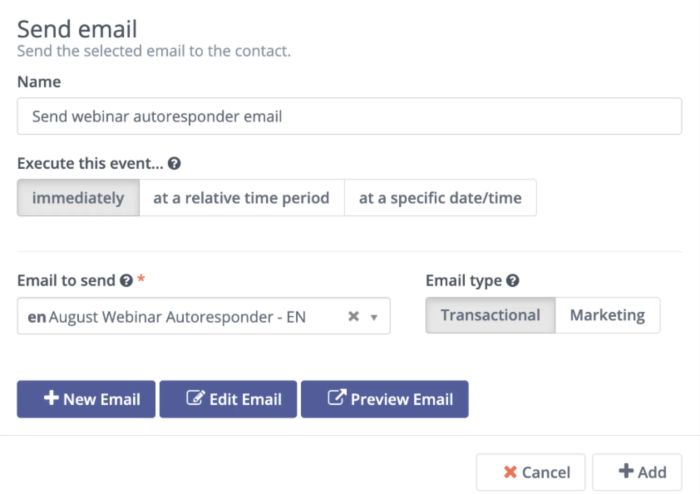
    Example: A CRM system will enable you to craft automated email and SMMs to increase efficiency and ensure timely, carefully worded responses every time. Here, you can see how Mautic allows you to personalize your messages, time them, and tailor them to the purpose of your communication – to promote your university or to collect specific admission information.

    HEM Image 6HEM Image 6

    Source: HEM | Mautic

    The Future of CRMs in Higher Education

    As technology continues to evolve, the role of CRMs in higher education will only expand. The rise of artificial intelligence and predictive analytics is already enhancing CRM capabilities, allowing universities to forecast enrollment trends, identify at-risk students before they drop out, and personalize outreach on a deeper level. Chatbots and AI-driven communication tools integrated into CRMs improve response times, ensuring prospective students receive instant answers to their inquiries.

    Moreover, the shift towards hybrid and online education models has made digital engagement more critical. Universities that effectively utilize their CRM systems can provide seamless virtual experiences, track online learning engagement, and maintain meaningful connections with students regardless of physical location.

    Choose a CRM Built for Higher Education

    Unique needs call for unique solutions. A CRM for universities offers specialized features such as student lifecycle tracking, automated admissions workflows, alumni engagement tools, and seamless integration with existing student information systems, ensuring a more efficient and personalized approach to student recruitment, retention, and engagement.

    One example of a CRM tailored specifically for higher education is Mautic by HEM. Developed from the Mautic open-source platform, Mautic by HEM offers a powerful combination of CRM and marketing automation designed to help universities streamline their lead management, supercharge their marketing efforts, and improve follow-up processes. 

    With tools for segmentation, automated workflows, email marketing, and analytics, Mautic by HEM enables institutions to track prospective students throughout the enrollment journey while optimizing team productivity. By leveraging this CRM, universities can enhance engagement, improve efficiency, and gain deep insights into recruitment and admissions efforts.

    For university marketers and administrators looking to stay competitive, embracing CRM is an absolute must. With the right approach, a CRM can transform how your institution engages with students, streamline processes, and ultimately achieve enrollment and retention goals.

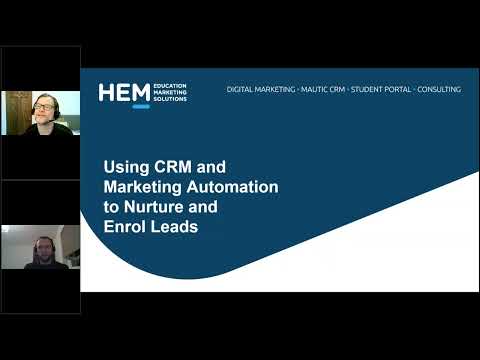
    Example: For a complete view of how our CRM system can help you to reinvent your marketing strategy. In one of our previous webinars, we explored how Mautic can help you boost enrollment through effective relationship management.

    YouTube videoYouTube video

    Source: HEM | YouTube

    Struggling with enrollment?

    Our expert digital marketing services can help you attract and enroll more students!

    Frequently Asked Questions

    Question: What is a CRM in higher education?

    Answer: It’s a powerful software solution that helps universities manage relationships at every stage of the student lifecycle.

    Question: What are universities using CRM for?

    Answer: Well, to be successful as an educational institution, building and maintaining positive relationships with prospective students is necessary. CRMs help schools manage those relationships at various stages of the enrollment funnel and offer valuable marketing benefits.

    Source link

  • Harvard’s resistance to Trump is a model for US universities

    Harvard’s resistance to Trump is a model for US universities

    This article was originally published on April 15, 2025, at UnHerd and is republished here with permission.


    They say that where Harvard goes, others follow. For the first time in a while, supporters of free expression on American campuses should hope that’s true.

    Late last week, the Ivy League university received a letter from the federal government demanding changes to its governance, leadership structure, hiring practices, and admissions processes, as well as a “discontinuation of DEI” and reform of “programs with egregious records of antisemitism or other bias.” If it failed to carry out these changes, Harvard would risk losing its government investment. In other words, “Nice school you’ve got there. It’d be a shame if something happened to it.”

    Thankfully, Harvard pushed back. Yesterday the university’s president Alan Garber published a response, firmly committing to the preservation of academic freedom and institutional independence on campus. The government’s mandates, Garber wrote, “[threaten] our values as a private institution devoted to the pursuit, production, and dissemination of knowledge. No government — regardless of which party is in power — should dictate what private universities can teach, whom they can admit and hire, and which areas of study and inquiry they can pursue.”

    In retaliation, the Trump administration moved to freeze $2.2 billion in funds to the university. That’s a high price to pay, but the costs of giving in would be far greater. For one thing, that sum is a drop in the bucket of Harvard’s $50 billion endowment. More importantly, if a school with such resources and influence doesn’t fight back against government strong-arming, it will send a chill down the spine of every other university in the Trump administration’s crosshairs.

    Columbia, for example, recently caved to similar pressures. But in the wake of Harvard’s pushback, the New York university published a statement rejecting “heavy-handed orchestration from the government that could potentially damage our institution” and “any agreement in which the government dictates what we teach, research, or who we hire.”

    This is a welcome development. How many other institutions, facing millions in contract cancellations, will stand up for themselves now that Harvard has set an example? There is good reason to push back against the excesses of DEI on campus, much of which amounts to bureaucratic ideological gatekeeping and a chilling of dissent. Combatting discrimination is also a worthy goal — but not by way of overly broad definitions of antisemitism which prohibit criticizing the state of Israel and wind up restricting campus speech.

    Among other issues, the government’s provisions ignore the existing process for adjudicating alleged violations of Title VI of the Civil Rights Act — the federal law banning discrimination on the basis of race, color, and national origin in federally funded programs or activities. Under these demands, Harvard’s hiring and admissions processes would be forced to employ government-approved “ideological diversity” litmus tests that would rival, if not supersede, the DEI mandates many in this administration pledged to oppose.

    What’s more, the provisions are fundamentally at odds with the university’s First Amendment rights. If Harvard were to acquiesce, any free speech or academic freedom on campus would exist only according to the administration’s preferences. That is no way to facilitate the free exchange of ideas, which is at the core of any university’s mission.

    The principle is clear: the government cannot condition a school’s federal funding on giving up First Amendment rights. When the Obama and Biden administrations demanded universities restrict student free speech and due process rights under Title IX — the law prohibiting sex discrimination in federally funded educational programs or activities — this was clearly unlawful. The same argument applies now.

    There is no doubt that higher education needs serious reform. But the solution to censorious and discriminatory policies isn’t more censorious and discriminatory policies. It certainly shouldn’t involve allowing the federal government to hold US universities hostage to its own preferences. For better or worse, other universities have long followed in Harvard’s steps. Anyone invested in the future of American higher education should hope that this fightback inspires a further wave of copycats.

    Source link

  • April 17, 2025 National Day of Action for Higher Ed (Higher Ed Labor United)

    April 17, 2025 National Day of Action for Higher Ed (Higher Ed Labor United)

    On April 17, HELU is partnering with the Coalition for Action in Higher Education (CAHE) for the National Day of Action for Higher Education. There are more than 175 events planned in 44 states for April 17. We urge you to join us however you can, either in-person or online.

    As campus workers, students, and community members, we have a
    unique power and responsibility to exercise our collective voice in this
    moment of turmoil. It is our labor and our ideas which sustain higher
    education, and higher education sustains our economy and communities.

    The April 17 National Day of Action for Higher Education asserts our voice and our power, in a myriad of ways that reflect the diversity of our colleges and universities. 

    Learn more and find an action near you
     

    Source link

  • At Least 10 Florida Universities Have Signed ICE Agreements

    At Least 10 Florida Universities Have Signed ICE Agreements

    At least 10 Florida public universities have struck agreements with the federal government authorizing campus police to question and detain undocumented immigrants.

    Inside Higher Ed requested public records from all 12 State University System of Florida institutions related to their agreements with U.S. Immigration and Customs Enforcement. Based on the results, it is clear that at least 10 have signed deals with ICE: Florida A&M University, Florida Atlantic University, Florida Gulf Coast University, Florida International University, New College of Florida, the University of Central Florida, the University of Florida, the University of North Florida, the University of South Florida and the University of West Florida.

    Florida State University and Florida Polytechnic University are in the process of signing the paperwork, according to spokespersons at each institution.

    It is unclear whether any of the 28 members of the Florida College System, which don’t all have sworn police forces, have made similar arrangements with ICE. An FCS system spokesperson did not respond to a request for comment on whether its colleges have also entered such agreements.

    Universities across the state signed memorandums of agreement at the direction of Republican governor Ron DeSantis, who ordered law enforcement agencies to partner with ICE “to execute functions of immigration enforcement,” according to a Feb. 19 news release.

    Legal experts and Florida faculty members note that such agreements are rare and mark a shift away from the typical duties of campus police, which don’t usually include immigration enforcement. They also raised concerns about how such arrangements could create a climate of fear on campuses.

    Enforcers Seeking Partners

    The DeSantis directive came shortly after the governor tapped Larry Keefe, a former U.S. attorney for the Northern District of Florida, to serve as executive director of the nascent State Board of Immigration Enforcement, created by Florida’s Legislature. Keefe is known for helping DeSantis orchestrate flights of migrants from Texas to Massachusetts in 2022.

    Keefe was named to the role on Feb. 17. Eight days later, Jennifer Pritt, executive director of the Florida Police Chiefs Association, sent an email to multiple universities that included a template for a memorandum of agreement with ICE. “Director Keefe is seeking participation from as many municipalities as possible, as soon as possible,” Pritt wrote.

    Most universities, however, offered limited statements about their agreements with ICE. A Florida Board of Governors spokesperson also provided few details.

    “Several police departments at universities within the State University System of Florida are partnering with U.S. Immigration and Customs Enforcement,” Cassandra Edwards, director of public affairs for FLBOG, wrote by email. “We do not maintain these records and recommend contacting individual universities for specific information about the partnerships.”

    Public records show that Florida Poly was hesitant to sign on, apparently due to guidance by Polk County sheriff Grady Judd, who is also on the State Board of Immigration Enforcement.

    “He wants us to hold off and not sign because he’s going to be handling all from Polk and not wants [sic] us to be involved as of now,” Florida Poly police chief Rick Holland wrote in a March 25 email response to questions from administrators at other universities about the agreements.

    Though Florida Poly noted it is still in the consideration process, emails obtained by Inside Higher Ed show another message from Holland indicating that Florida Poly appears willing to sign.

    “Can you send me a signed copy of your MOU as a template to where I need to sign?” Holland wrote in an April 3 email sent to Jennifer Coley, the chief of police at New College of Florida.

    (Florida Poly confirmed after publication that it planned to sign the paperwork Wednesday.)

    The Agreements

    Memorandums of agreement reviewed by Inside Higher Ed show that universities that entered arrangements with ICE will grant their police the authority to perform tasks typically reserved for government officials, such as questioning, arresting and preparing charges for individuals on campus suspected of immigration violations.

    Campus police will be required to undergo mandatory training “on relevant administrative, legal, and operational issues tailored to the immigration enforcement functions to be performed,” according to copies of agreements between universities and ICE reviewed by Inside Higher Ed.

    Universities that signed agreements did not provide a timeline for when the training might begin.

    Michael Kagan, a law professor and director of the University of Nevada, Las Vegas, Immigration Clinic, said such agreements are uncommon at universities, noting that he is unaware of any others. He said they are essentially “force multipliers for ICE that deputize local police agencies to do the work that ICE would normally do itself.”

    Jennifer Chacón, a professor at Stanford Law School, also said that she had not heard of prior agreements between campus police and ICE. Chacón noted that 287(g) agreements, introduced in 1996 to delegate immigration enforcement powers to other law enforcement agencies, have ebbed and flowed over the years, rising under Republican presidents and falling under their Democratic counterparts. Under President Donald Trump, who has made a crackdown on immigration a central part of his policy agenda, such agreements are proliferating.

    “Over the last three months, we’ve seen an explosion in 287(g) agreements under Trump,” Chacón said.

    ‘Designed to Increase Fear’

    Faculty and legal scholars are skeptical and concerned about campus agreements with ICE.

    In a statement to Inside Higher Ed, the Florida International chapter of United Faculty of Florida called for the university to immediately withdraw from the program, which it condemned.

    “We affirm that every member of our university community has a basic right to feel safe on campus—free from profiling, surveillance, and fear of deportation,” members wrote. “FIU’s latest act of anticipatory obedience undermines the rights of our community and jeopardizes the opportunity for all students and faculty to learn from and engage with their non-citizen peers. FIU’s haste to comply with ICE is in direct conflict with its stated vision. These actions distract from our educational mission and erode the inclusive environment FIU claims to foster.”

    The statement added the student body is “majority Hispanic, heavily immigrant, and home to nearly 600 students protected by the Deferred Action for Childhood Arrivals (DACA) program,” calling the agreement a betrayal of FIU’s legacy as a prominent Hispanic-serving institution.

    Faculty at FIU also wrote that they were “equally alarmed to hear about the termination of the F-1 visa status of 18 FIU students.” (As of Tuesday evening, at least 1,234 students at 209 colleges have had their visas revoked, in some cases for participating in campus protests but often for unclear reasons.)

    Legal scholars shared faculty members’ concerns about the fallout of such agreements.

    “It seems like this is designed to increase fear. And whether that’s by design or not, it is likely to increase racial profiling on campus, and it is not at all an effective way to police immigration,” Chacón said.

    Kagan said he would be unsurprised to see similar agreements at universities in other red states.

    “I think that it will accentuate the extremes in terms of how different university systems react to the reality that immigrants are part of their campus life,” he said. “You have one extreme, where Florida is saying, ‘Let’s hunt them down with our own police,’ while you have other university systems that have started programs to be more welcoming to undocumented students.”

    Editor’s note: This article has been updated to reflect that Florida Poly plans to sign an agreement with ICE on Wednesday.

    Source link

  • How a Napkin Sketch Can Unlock Higher Ed Innovation at Your Institution

    How a Napkin Sketch Can Unlock Higher Ed Innovation at Your Institution

    In higher education, it’s easy to feel stuck.

    You know something isn’t working — maybe enrollment processes are clunky, or student support services feel disconnected. You’ve tried new tools, updated systems, created initiatives to create change, and added staff, but the problem persists.  It’s like there’s a giant boulder in your way, and no matter how hard you push, it doesn’t budge.

    It turns out, you don’t need a bulldozer – just a napkin sketch to start building momentum to move the boulder standing in the way.

    It’s a surprisingly simple concept, using visual design thinking exercises to help colleges and universities get unstuck. Not with more tech, or a fancy AI solution, but with more clarity to understand how things work today to create a framework for change tomorrow.

    Because real innovation in higher education doesn’t come from software or a technology — it starts with understanding the systems and the processes you already have so you can visualize what they could be.

    What is a napkin sketch?

    The napkin sketch is exactly what it sounds like: a back-of-the-napkin-style drawing that quickly maps out how a particular process actually works in your institution so it can be reimagined.

    It’s low-tech, but high-impact.

    Think of it as building a gameboard for players to play. Like a Monopoly board, everyone knows the players, the rules, and the steps. It makes the choices that need to be made for each player’s turn clear.  When these choices are laid out visually, it becomes much easier to pinpoint where the real opportunities (and challenges) are.

    What does the napkin sketch exercise entail?

    I usually start these sessions by asking one simple questions with a key follow-up

    • What’s the opportunity for ‘impact’? (What are you trying to accomplish?)
    • What’s preventing progress?

    Then we get to work. Together, we sketch out the entire process: from first interaction to the final outcome. We account for every step, system, and stakeholder that’s involved. We highlight the costs, the tools and technology handoffs, potential delays, and where things might be falling through the cracks.

    We typically conduct the sketch in a virtual drawing space, where we can collaborate in real time to map out the full process. It’s not about polished visuals — it’s about building a shared understanding of how things operate today.

    And in about 60-90 minutes, we always have at least one person in the group say out loud “I didn’t realize that’s how it actually works.” And another will inevitably ask “You’re going to send us this napkin sketch, right? I want to print it out.”

    Ready for a Smarter Way Forward?

    Higher ed is hard — but you don’t have to figure it out alone. We can help you transform challenges into opportunities.

    What can the napkin sketch reveal?

    In our experience working with hundreds of institutions of all shapes and sizes, we’ve found that many face surprisingly similar challenges. This exercise consistently shines a light on hidden opportunities, creating a blueprint for change.

    Common things we uncover include:

    • Manual, repetitive tasks that could be automated or streamlined
    • Workarounds that have become permanent fixtures without anyone questioning them
    • Disconnects between departments, systems, or technologies
    • Operational silos that prevent teams from seeing the full picture or collaborating effectively
    • Missed opportunities to better track, analyze, or act on data
    • Unclear ownership of key steps in the process

    In short, the napkin sketch helps institutions see what’s really going on — and what needs to change to move forward.

    Why does it work?

    Higher ed innovation often stalls because teams are too close to the problem or too deep in their own silo to see the bigger picture. The napkin sketch breaks through that by creating a space for everyone involved to step back and collaborate.

    Here’s why it’s effective:

    • It’s fast — most sessions take an hour or two.
    • It’s visual — helping teams align quickly and clearly.
    • It’s collaborative — bringing together voices from across departments.
    • It’s actionable — revealing next steps that are grounded in reality.

    Most importantly, it shifts the focus away from jumping to solutions and toward understanding the system. Once you understand the system, smart solutions become much more obvious — and effective.

    Real examples of the napkin sketch in action

    Whether it’s enrollment workflows, transcript processing, student communications, or data handoffs between systems or teams, the napkin sketch exercise can help untangle a wide variety of operational challenges. No two institutions are exactly alike, but many face similar complexities — manual processes, siloed teams, and unclear ownership that stall progress.

    Here are a few discoveries we uncovered in recent napkin sketch sessions I’ve led:

    • One institution realized how many steps were involved in processing transcripts — with staff toggling between platforms, uploading the same file in multiple places, and doing manual comparisons. Once the process was mapped, we explored how AI could handle the course match evaluations — saving hours of staff time each week.
    • Another team sketched out their enrollment outreach process and discovered they were sending multiple conflicting messages to students at the same time. The sketch helped them realign their communications and reduce student confusion.
    • A third school wanted to integrate a new tool into their tech stack, but the sketch revealed that the underlying workflow was broken — and that no tool would help until the foundational process was improved.

    In each case, the aha moment didn’t come from buying something new — it came from clearly seeing what was already happening so it could be improved upon.

    What could your napkin sketch uncover?

    If you’re wrestling with outdated processes, disconnected systems, or unclear handoffs — you’re not alone. Many institutions are trying to drive higher ed innovation with limited resources and overwhelming complexity.

    But you don’t need to have all the answers right now. You just need a clearer view of the problem so you can develop a thoughtful solution.

    That’s what the napkin sketch offers: a simple, collaborative way to map your reality, uncover opportunity, and take a smarter next step forward.

    Let’s sketch it out — and see what we find!

    Ready to uncover what’s holding you back?

    Reach out to schedule your own session and take the first step toward smarter solutions.

    Source link