Author: admin

  • the-power-of-mindtaps-college-success-factors-index-csfi – The Cengage Blog

    the-power-of-mindtaps-college-success-factors-index-csfi – The Cengage Blog

    Reading Time: 5 minutes

    As an avid user of Cengage’s MindTap online learning platform for over 10 years, I have tried about every feature it has to offer. Through my role as Chair of English and Study Skills, I am constantly tracking student data and implementing new ways to improve performance measures. In recent years, I have relied heavily on my favorite feature in MindTap, the College Success Factors Index (CSFI). By including it in our study skills courses, I’ve had the privilege of witnessing firsthand the transformative impact it has on student success.

    Understanding student pain points

    The transition to higher education can be a daunting experience for many students. My “babies,” as I call them, often mention challenges they face that extend beyond academic rigor, encompassing a wide range of factors such as time management, study habits, and emotional well-being. These challenges can significantly impact student success, leading to lower grades, decreased motivation, and even withdrawal from courses or institutions.

    The CSFI solution

    The CSFI is a comprehensive assessment tool designed to evaluate students’ readiness for academic success. Most student success tools only measure or discuss a student’s academic journey. The CSFI addresses students’ holistic development by examining cognitive, social, and emotional factors that can impact success. Students complete a 100-statement, self-scoring survey that assesses 10 distinct factors:

    1. College Involvement: Success in college is often defined by the levels and degree of one’s participation with peers and faculty. College involvement also includes being familiar with student organizations, or volunteer work, class research projects, and other college activities.
    2. Competition: Competition is a student’s need to know, learn and take pride in competition related to academic tasks. Academically assertive students have the internal motivation, resourcefulness, competitive drive, and desire to collaborate with others to succeed in college and the workplace.
    3. Expectations: To demonstrate thoughtful goals and decision-making processes, coupled with a plan of action for completing class projects and assignments, and attaining career goals.
    4. Family Involvement: Family/partner encouragement, acceptance, and emotional and financial support are important for college success.
    5. Persistence: Persistence is the will and energy to complete a task or skill through diligence, practice, and extra effort.
    6. Precision: Precision is thinking and applying the detailed and repeated measurement of technical, computer, and internet skills for college success.
    7. Responsibility and Control: Students who take responsibility and control in college succeed. They feel confident and assured regarding their classes, careers, and projects.
    8. Task Planning: Successful students set goals and complete their assignments in their courses of study. They follow step-by-step study practices within specified periods and take pride in the grades earned.
    9. Time Management: Time management relates to the development of skills and techniques such as prioritizing events, establishing calendars and schedules. Learning to assign realistic time limits to class assignments, studying, work, family, and social activities lead to effective time management.
    10. Wellness: Wellness means having positive attitudes and consistent practices of physical, emotional, and stress parameters in one’s college life.

    Benefits for students

    The CSFI offers a multitude of benefits to students, empowering them to take control of their academic journey:

    • Self-Awareness: By completing the CSFI, students gain valuable insights into their strengths and weaknesses. This self-awareness allows them to identify areas where they may need to improve and develop targeted strategies to enhance their skills.
    • Personalized Support: Instructors can leverage the CSFI results to provide tailored support and guidance to each student. This personalized approach ensures that students receive the specific help they need to succeed.
    • Targeted Interventions: The CSFI can identify students who may be at risk of academic difficulty. By proactively addressing these students’ needs, instructors can prevent potential problems and promote student success. You can even set up early alerts based off this feedback!
    • Skill Development: The CSFI can be used to guide students towards resources and activities that can help them develop critical skills such as time management, study habits, and test-taking strategies.
    • Resource Connection: Because the CSFI details where students may struggle, you can determine the best resources and connect students to them early on. Doing so can help students improve their CSFI results from pre- to post-test.
    • Enhanced Motivation: By setting clear goals and tracking their progress, students can stay motivated and focused on their academic pursuits.

    Benefits for administrators

    The CSFI is seamlessly integrated into MindTap, making it easy for students to access and complete. Once the CSFI is completed, students gain access to their report immediately and can download it as a PDF. Instructors can download reports for their individual sections. There’s also an administrator link where a report can be pulled for all students across a department, division, or institution. By having access to admin reports, you can provide:

    • Personalized Advising: Leverage CSFI assessment results to personalize student advising. During advising sessions, discuss individual strengths, challenges, and goals revealed by the assessment to create tailored academic plans. This includes guidance on course selection, major exploration, and career pathways. Regular follow-up meetings will help students maintain progress and address any new concerns. These reports can help advisors, faculty mentors, program chairs, and enhance any First Year Program.
    • Student Success Workshops: Host workshops and seminars informed by CSFI results to address shared student challenges. These sessions can cover topics such as study strategies, goal setting, wellness, financial literacy, and career readiness. Equipping students with these skills and knowledge will contribute to their overall success and well-being. CSFI results can also facilitate the creation of peer support groups by matching students with similar needs and challenges. This is especially important for students who score low in the “Family Involvement” category.
    • Faculty Collaboration: Disseminate CSFI results to faculty. This can improve their understanding of student needs and inform the integration of supportive strategies into their teaching practices. This collaboration can create more supportive and engaging classroom environments, promoting student success. The results can also guide professional development offerings, course design, and instructors’ approaches to student learning.
    • Continuous Monitoring and Evaluation: Continuously evaluate the effectiveness of CSFI-informed interventions and support programs. Monitor student progress, retention rates, and academic performance to assess the impact of these initiatives. Use this data to drive decision-making and continuously enhance student support and success outcomes. Use the CSFI data to your benefit! It can be used to supplement program data, class statistics, or even shape an institution’s Quality Enhancement Plan (trust me – I know!).
    Image of an Administrator CSFI Report

    Conclusion

    Cengage’s CSFI is a truly innovative feature that has the potential to revolutionize the way we approach student success. By providing valuable insights and personalized support, the CSFI empowers students to overcome challenges, develop essential skills, and achieve their academic goals. As an educator and a student advocate, I wholeheartedly endorse the CSFI as a powerful tool for fostering student success. Sometimes, the first step is just getting students to open and admit what they are struggling with, both in- and outside the classroom. The CSFI as a self-assessment encourages those conversations.

    Want to connect?  Reach out.

    Explore CSFI helpful videos:

    Completing CSFI Assessments (Student)

    Reviewing Student Results (Instructor)

    Understanding Your Results (Student)

    CSFI Administrator Results (Admin)

    Written by Dr. Jenny Billings, Chair of ACA (Study Skills), DRE (Developmental Reading and English) and ENG (Curriculum English) at Rowan-Cabarrus Community College in Concord and Salisbury, North Carolina. 

    Interested in learning more about how to use the CSFI tool? Check out Dr. Billings’ walkthrough of the feature in MindTap.
    Source link

  • Sixty-one media organizations and press freedom advocates contest Perkins Coie executive order — First Amendment News 466

    Sixty-one media organizations and press freedom advocates contest Perkins Coie executive order — First Amendment News 466

    All of the vile executive orders issued by the Trump administration against law firms refer to purported “significant risks” associated with them, and have the same whiff of oppression:

    Below the veneer of such boilerplate claims lies a repressive truth: they’re designed to be punitive, and to produce a fear that leads to robotic subservience. They are but a part of Trump’s enemies list. And his orders are to be executed by his lackey Attorney General Pam Bondi — the same person who once said: “I will fight every day to restore confidence and integrity to the Department of Justice and each of its components. The partisanship, the weaponization will be gone.”

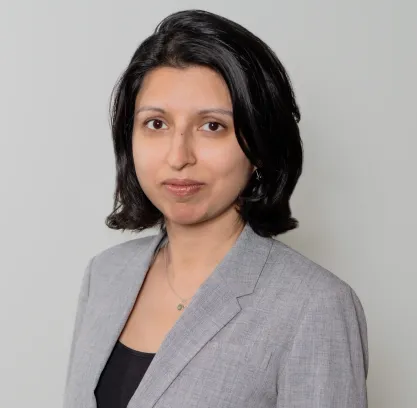
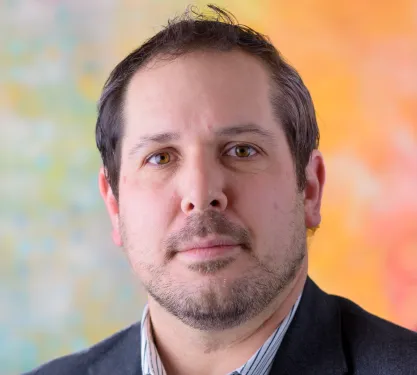
    Mason Kortz (left) and Kendra Albert

    Against that backdrop comes a courageous group of lawyers and press groups led Andrew Sellers, with Mason Kortz joined by Kendra K. Albert as local counsel. 

    Mr. Sellers filed the amicus brief on behalf of 61 media organizations and press freedom advocates in the case of Perkins Coie v. U.S. Department of Justice. At the outset he exposes the real agenda of the authoritarian figure in the White House:

    “The President seeks the simultaneous power to wield the legal system against those who oppose his policies or reveal his administration’s unlawful or unethical acts—who, in many cases, have been members of the press—and then deny them access to the system built to defend their rights. The President could thus ‘permit one side to have a monopoly in expressing its views,’ which is the “antithesis of constitutional guarantees.’”

    Mr. Sellers reminds us that “‘freedom of the press holds an . . . exalted place in the First Amendment firmament,’ because the press plays a vital role in the maintenance of democratic governance. To fulfill that function, the press relies on the work of lawyers. Lawyers assist the press in obtaining access to records and government spaces . . . because the press plays a vital role in the maintenance of democratic governance.”

    Andrew Sellars

    Andrew Sellars

    To honor that principle, Sellers argues that “the press relies on the work of lawyers. Lawyers assist the press in obtaining access to records and government spaces. They advise the press on how to handle sensitive sources and content. And they defend the press against civil and criminal threats for their publications.”

    Among other key points made in this important brief is the following one:

    If the Executive Order stands, many lawyers will be chilled from taking on work so directly in conflict with the President, out of fear for the harm it would cause to their clients whose relationship with the government is more transactional. For the lawyers that remain, the threat of a similar executive order aimed at them or their law firms would practically prevent them from doing their jobs, by denying their access to the people and places necessary to adjudicate their issues. 

    The project was spearheaded by The Press Freedom Defense Fund (a project of Intercept) and the Freedom of the Press Foundation.

    Some of the lawyers who signed this amicus brief include Floyd Abrams, Lee Levine, Seth Berlin, Ashley Kissinger, Elizabeth Koch, Lynn B. Oberlander, David A. Schulz, and Charles Toobin.

    The Table of Contents appears below:

    Introduction & Summary of Argument

    Interests of Amici

    Argument

    1. A Free Press Allows the Public to Check Overreaching Government but Requires Legal Support.
    2. The Oppositional Role of the Press Will Not Function if the Court Allows This executive order.
    3. The government will inevitably use this authoritarian power to target the press.
    4. The executive order will chill lawyers from working with the press.
    5. The lawyers that remain will be unable to do their jobs.
    6. Without a Robust Press, the Public will Lose a Key Vindicator of First Amendment Rights.

    Related

    Pronoun punishment policy in the Trump administration

    You know those email signatures at the end of messages? The ones that include a range of information about the senders — phone numbers, addresses, social media handles. And in recent years, pronouns — letting the recipient know that the sender goes by “she,” “he,” “they” or something else, a digital acknowledgement that people claim a range of gender identities.

    Among those who don’t agree with that are President Donald Trump and members of his administration. They have taken aim at what he calls “gender ideology” with measures like an executive order requiring the United States to recognize only two biological sexes, male and female. Federal employees were told to take any references to their pronouns out of their email signatures.

    That stance seems to have spread beyond those who work for the government to those covering it. According to some journalists’ accounts, officials in the administration have refused to engage with reporters who have pronouns listed in their signatures.

    The New York Times reported that two of its journalists and one at another outlet had received responses from administration officials to email queries that declined to engage with them over the presence of the pronouns. In one case, a reporter asking about the closure of a research observatory received an email reply from Karoline Leavitt, the White House press secretary, saying, “As a matter of policy, we do not respond to reporters with pronouns in their bios.”

    Dare one ask? Is pro-Palestinian speech protected?

    Esha Bhandari

    Esha Bhandari (Photo courtesy of the ACLU)

    Shortly after his inauguration, President Donald Trump vowed to combat antisemitism on U.S. college and university campuses, describing pro-Palestinian activists and protesters as “pro-Hamas,” and threatening to revoke their visas.

    The first target of these threats was Mahmoud Khalil, a pro-Palestinian activist and former student of Columbia University, who was a negotiator for Columbia students during talks with university officials regarding their tent encampment last spring, according to The Associated Press.

    Since his arrestmore than half a dozen scholars, professors, protesters and students have had their visas revoked with threats of deportation. Two opted to leave the country on their own terms, unsure of how legal proceedings against them would play out.

    Free speech and civil liberties organizations have raised concerns over the arrests, claiming the Trump administration is targeting pro-Palestinian protesters for constitutionally protected political speech because of their viewpoints.

    [ . . . ]

    First Amendment Watch spoke with Esha Bhandari, deputy director of the ACLU’s Speech, Privacy and Technology Project, about the First Amendment implications of the Trump administration’s alleged targeting of pro-Palestinian protesters and activists. Bhandari explained how actions taken under the Immigration and Nationality Act need to be consistent with the First Amendment, described the importance of the right to peacefully assemble, and expressed that all Americans, regardless of their viewpoint, should be concerned with the Trump administration’s actions and its chilling of speech.

    [Interview follows]

    David Cole on the war on the First Amendment


    Just released: Oxford University Press handbook on free speech

    Cover of “The Oxford Handbook of Freedom of Speech” edited by Adrienne Stone and Frederick Schauer

    Freedom of speech is central to the liberal democratic tradition. It touches on every aspect of our social and political system and receives explicit and implicit protection in every modern democratic constitution. It is frequently referred to in public discourse and has inspired a wealth of legal and philosophical literature. The liberty to speak freely is often questioned; what is the relationship between this freedom and other rights and values, how far does this freedom extend, and how is it applied to contemporary challenges?

    “The Oxford Handbook on Freedom of Speech” seeks to answer these and other pressing questions. It provides a critical analysis of the foundations, rationales, and ideas that underpin freedom of speech as a political idea, and as a principle of positive constitutional law. In doing so, it examines freedom of speech in a variety of national and supranational settings from an international perspective.

    Compiled by a team of renowned experts in the field, this handbook features original essays by leading scholars and theorists exploring the history, legal framework, and controversies surrounding this tenet of the democratic constitution.

    Forthcoming book on free speech and social media platforms

    Northeastern University Professor John Wihbey

    Northeastern University Professor John Wihbey

    Why social media platforms have a responsibility to look after their platforms, how they can achieve the transparency needed, and what they should do when harms arise.

    The large, corporate global platforms networking the world’s publics now host most of the world’s information and communication. Much has been written about social media platforms, and many have argued for platform accountability, responsibility, and transparency. But relatively few works have tried to place platform dynamics and challenges in the context of history, especially with an eye toward sensibly regulating these communications technologies.

    In ”Governing Babel,” John Wihbey articulates a point of view in the ongoing, high-stakes debate over social media platforms and free speech about how these companies ought to manage their tremendous power.

    Wihbey takes readers on a journey into the high-pressure and controversial world of social media content moderation, looking at issues through relevant cultural, legal, historical, and global lenses. The book addresses a vast challenge — how to create new rules to deal with the ills of our communications and media systems — but the central argument it develops is relatively simple. The idea is that those who create and manage systems for communications hosting user-generated content have both a responsibility to look after their platforms and have a duty to respond to problems. They must, in effect, adopt a central response principle that allows their platforms to take reasonable action when potential harms present themselves. And finally, they should be judged, and subject to sanction, according to the good faith and persistence of their efforts.

    Franks and Corn-Revere to discuss ‘Fearless Speech’

    Coming this Thursday over at Brooklyn Law School:

    Book Talk: Dr. Mary Anne Franks’ Fearless Speech

    Featuring:

    • Dr. Mary Anne Franks
      Eugene L. and Barbara A. Bernard Professor in Intellectual Property, Technology, and Civil Rights Law, George Washington Law School; President and Legislative & Tech Policy Director, Cyber Civil Rights Initiative

    • Robert Corn-Revere
      Chief Counsel, Foundation for Individual Rights and Expression (FIRE)

    Moderators

    • William Araiza, Stanley A. August Professor of Law, Brooklyn Law School

    • Joel Gora, Professor of Law, Brooklyn Law School

    Discussants

    • Ron Collins, Co-founder of the History Book Festival and former Harold S. Shefelman Scholar, University of Washington Law School

    • Sarah C. Haan, Class of 1958 Uncas and Anne McThenia Professor of Law, Washington and Lee University School of Law

    Lukianoff’s TED talk

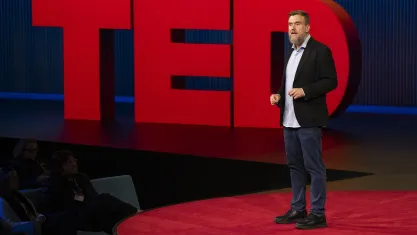
    Greg Lukianoff delivering his TED Talk on April 9, 2025

    FIRE President and CEO Greg Lukianoff (Photo by Gilberto Tadday / TED)

    Last Wednesday, FIRE’s Greg Lukianoff delivered his first TED talk at TED 2025 in Vancouver. He spoke on why so many young people have given up on free speech and how to win them back. As he noted in a recent post for his Substack newsletter, The Eternally Radical Idea:

    “After months of seemingly endless writing, rewriting, and rehearsing, I’m very happy with how it turned out! (Many thanks to Bob Ewing, Kim Hemsley, Maryrose Ewing, and Perry Fein for helping me prepare. Couldn’t have done it without them!)

    We’re not yet sure when the full talk will be available online, but we’ll keep you posted!”

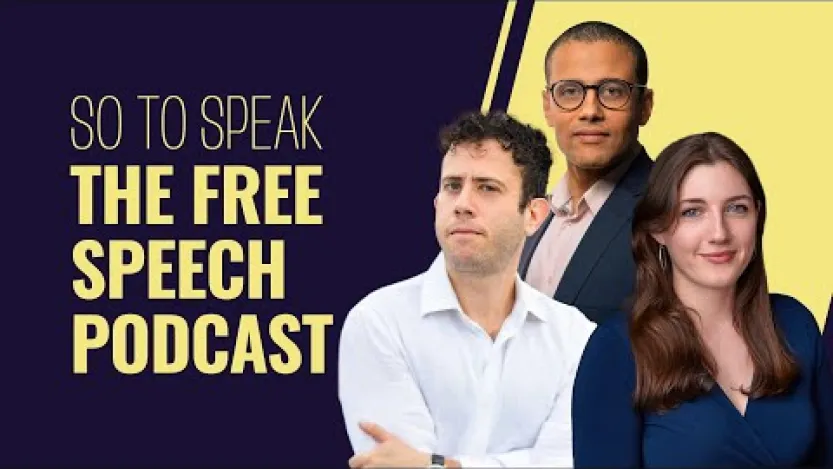
    ‘So to Speak’ podcast: The plight of global free speech


    We travel from America to Europe, Russia, China, and more places to answer the question: Is there a global free speech recession?

    Guests:

    More in the news

    2024-2025 SCOTUS term: Free expression and related cases

    Cases decided 

    • Villarreal v. Alaniz (Petition granted. Judgment vacated and case remanded for further consideration in light of Gonzalez v. Trevino, 602 U. S. ___ (2024) (per curiam))
    • Murphy v. Schmitt (“The petition for a writ of certiorari is granted. The judgment is vacated, and the case is remanded to the United States Court of Appeals for the Eighth Circuit for further consideration in light of Gonzalez v. Trevino, 602 U. S. ___ (2024) (per curiam).”)
    • TikTok Inc. and ByteDance Ltd v. Garland (9-0: The challenged provisions of the Protecting Americans from Foreign Adversary Controlled Applications Act do not violate petitioners’ First Amendment rights.)

    Review granted

    Pending petitions

    Petitions denied

    Emergency applications

    • Yost v. Ohio Attorney General (Kavanaugh, J., “It Is Ordered that the March 14, 2025 order of the United States District Court for the Southern District of Ohio, case No. 2:24-cv-1401, is hereby stayed pending further order of the undersigned or of the Court. It is further ordered that a response to the application be filed on or before Wednesday, April 16, 2025, by 5 p.m. (EDT).”)

    Free speech related

    • Thompson v. United States (decided: 3-21-25/ 9-0 w special concurrences by Alito & Jackson) (interpretation of 18 U. S. C. §1014 re “false statements”)

    Last scheduled FAN

    FAN 465: “‘Executive Watch’: The breadth and depth of the Trump administration’s threat to the First Amendment

    This article is part of First Amendment News, an editorially independent publication edited by Ronald K. L. Collins and hosted by FIRE as part of our mission to educate the public about First Amendment issues. The opinions expressed are those of the article’s author(s) and may not reflect the opinions of FIRE or Mr. Collins.

    Source link

  • Can young people help save local newsrooms?

    Can young people help save local newsrooms?

    Can youth doing journalism help save local news media? 

    Unfortunately, this isn’t a rhetorical question. The crisis around the world for local news outlets is so dire, people who understand the importance of unbiased news at the local level are looking for any and all solutions to save the industry. 

    This is a worldwide phenomenon. Data collected by researcher Amy Watson in August 2023, for example, found that more news outlets in the UK closed than were launched. Between 2008 and 1 April 2025, a total of 566 local news outlets closed in 372 communities across Canada, according to the Local News Map crowd-sourcing data initiative. And a report from the Brookings Institution found that in the United States in 2023, some 2.5 local news outlets folded every week.  

    That’s why Global Youth & News Media, a French nonprofit affiliated with News Decoder, is offering an award for youth collaborations that support struggling local news outlets by providing content produced in their schools and helping to expand the outlet’s audience. Entry deadline is 16 June and details are here.

    “We and the partners in this award around the world want to find and spread the word about the lessons from the best cases of success as well as cautions about inevitable problems and challenges,” said Aralynn McMane, executive director of Global Youth & News Media.

    “At the very minimum, ‘success‘ means a discernible audience for the work that youth reporters — up through university age — produce in news media that serve a wider local community than their classmates,” McMane said “It’s even better if their efforts can be linked to financial sustainability.” 

    Supporting local news efforts

    The main goal of the award is to highlight successful collaborations between youth and local outlets so that other organizations around the world can adopt those strategies. McMane said that she has seen this happen many times — smart news media innovators will come up with a solution to a problem, and those solutions can help news producers even very far away adapt that idea to solve a similar issue. 

    Award partners that support local news efforts internationally as well as from Africa, North America, Europe and Asia have stepped up to help make sure the search for such cases is as wide as possible and to distribute the intelligence gained from this search to as many news organizations in as many places as possible. 

    First to sign up to help was the University of Southern California’s Communication Center on Leadership and Policy (CCLP), located within the USC Annenberg School for Journalism and Communication.

    In 2024, CCLP launched the Local News and Student Journalism Initiative to study the role of student journalists across America and issued this first report on their work.

    “We are delighted to partner with Global Youth & News Media to celebrate impactful local news stories produced by young journalists around the world, as well as to share and amplify their efforts with the goal of inspiring more young people to cover the news of their communities who are already providing first-rate local news coverage,” said Geoffry Cowan, center director. 

    Inspiring young people to tell important stories

    Another national academic partner, the Medill School at Northwestern University, released a report earlier this month about collaborations between local news outlets and student journalists in the United States as part of its Local News Initiative.

    The report found a trend for such collaborations in the United States. “Instead of news organizations giving boosts to students, students are supporting often-short-staffed outlets by providing coverage as part of their curricula,” the report said. 

    Senior Associate Dean Tim Franklin, the project’s director, said Medill started the initiative seven years ago to see how they could leverage the school’s resources to help local news outlets, journalism organizations, scholars and scholastic media at a time of crisis in the industry.

    “Our research provides insights about trends and issues in local news in this fast-changing landscape,” Franklin said. “And through our programs, we’re helping news organizations with things like business strategy and product development at a time when many can’t do R&D themselves. We’re also creating opportunities to inspire young people to pursue careers in journalism.”

    The quest to help local news is global. The Austria-based International Press Institute, for example, has run two editions of an “accelerator” program to support digital innovation in local journalism’s editorial and business models around the world. It also runs a related network.

    Other partners include the International Center for Journalists and the Media Diversity Institute, both of which have extensive local news programs, Youth Community Journalism Institute founded by the Strong Mind Strong Body Foundation, a U.S. nonprofit, Europe Youth Press, a consortium of outlets in 34 countries, Africa Media Perspectives, The Media Lab in Jordan, Asia division of the Asian-American Journalists Association, the Panhellenic Federation of Journalists’ Unions of Greece and Toronto Metropolitan University’s Local News Research Project

    Empowering youth through journalism

    Stefano Zamparo, an executive board member for Europe Youth Press said that the award aligns with the group’s work empowering youth voices through journalism, ensuring their stories resonate within their local communities and beyond. 

    “Celebrating successful collaborations between young journalists and local media helps foster greater press freedom and media literacy across Europe,” Zamparo said. 

    Ivor Price, founder of Africa Media Perspectives, sees young people as the driving force behind a rebirth of local news. “For local news to survive and thrive, it must become a true reflection of the communities it serves, which means opening our newsrooms and our storytelling platforms to new voices,” Price said. 

    Since 2018, the Global Youth & News Media Prize has honored the important work that sees news media meaningfully engage the young with notable results that benefit both parties. 

    Its first award recognized a cooperation between the United States digital edition of the The Guardian news organization and reporters from the Eagle Eye, a student news operation at Marjory Stoneman Douglas High School in Parkland, Florida, which was the site of a 2018 school shooting in which 17 people were killed. Through the journalism collaboration, the Parkland students contributed live digital coverage of an anti-gun violence demonstration in Washington, D.C. 

    News Decoder has been a partner in these competitions from the start.

    “This particular award theme resonates particularly strongly with us,” said News Decoder managing director Maria Krasinski. “All around the globe, student journalists are telling important stories, but often those stories aren’t heard outside their schools. This competition will rightfully recognize the important work youth are doing to help inform local communities.”

    Source link

  • Here we are, at another fork in the road.

    Here we are, at another fork in the road.

    “The
    worst-case scenario is that colleges are involved on both sides of a
    Second US Civil War between Christian Fundamentalists and neoliberals.
    Working families will take the largest hit.”

    It’s
    a stark and provocative warning, but one grounded in decades of
    neoliberal policy, predatory capitalism, and ideological warfare. From our perspective at the Higher Education Inquirer, the College Meltdown is not a future risk—it’s a
    slow-moving catastrophe already unfolding.

    Two Fronts in a Cultural and Economic War

    On one side of this looming conflict are Christian fundamentalists
    who seek to remake public education in their own image: purging
    curricula of critical perspectives, defunding public universities, and
    promoting ideological orthodoxy over inquiry.

    On the other side are neoliberal technocrats,
    who have transformed higher education into a marketplace of
    credentials, debt, and precarious labor. Under their regime, colleges
    prioritize growth, branding, and profit over education, equity, and
    labor rights.

    Both groups, while
    ideologically different, are willing to use colleges as instruments of
    power. In doing so, they turn institutions of higher learning into
    ideological battlegrounds, undermining their civic purpose.

    The Educated Underclass: Evidence of Collapse

    One of the most visible outcomes of this dysfunction is the rise of the educated underclass.
    These are people who did what they were told: they went to college,
    took on debt, and earned degrees. Yet instead of opportunity, they found
    instability.

    “A large proportion of
    those who have attended colleges have become part of a growing educated
    underclass,” Shaulis noted in his interview with Stocker.

    This includes:

    • Adjunct instructors working multiple jobs without benefits

    • Degree holders underemployed in gig work

    • Students lured into expensive, low-return programs at subprime colleges

    These
    individuals are too educated for social support but too broke for
    economic stability. They are the byproduct of a system that treats
    education as a private investment rather than a public good.

    Colleges in Crisis: A Systemic Failure

    At the Higher Education Inquirer, our concept of the College Meltdown
    describes a long-term decline marked by falling enrollment, rising
    costs, debt peonage, and declining academic labor conditions:

    • Enrollment has been falling since 2011, with sharp declines in community colleges and regional publics.

    • Student debt has exploded, with minimal returns for many graduates.

    • Academic labor is being deskilled, with “robocolleges” relying on underpaid, non-tenure-track staff or automated instruction.

    • State funding is shrinking, as aging populations drive up Medicaid costs and crowd out investment in public higher education.

    Enter the Trump Administration (2025)

    The
    return of Donald Trump to the presidency in 2025 has further
    accelerated the higher ed crisis. His administration is now actively
    contributing to the system’s unraveling:

    Deregulation and Predatory Practices

    Trump’s
    Department of Education is dismantling federal oversight of for-profit
    colleges, weakening gainful employment protections and allowing
    discredited institutions back into the federal aid system. This benefits
    subprime colleges that trap students in cycles of debt.

    Political Weaponization of Higher Ed

    Trump-aligned
    state governments and federal agencies are targeting DEI initiatives,
    restricting academic freedom, and enforcing ideological conformity.
    Public colleges are increasingly being used to wage cultural wars.

    Funding Cuts and Favoritism

    Funding
    is being diverted from public institutions toward private religious
    colleges and corporate-friendly training programs. Meanwhile, community
    colleges and regional universities are being left to die on the vine.

    Undermining Debt Relief

    Efforts
    to reform or forgive student loans have been stalled or reversed.
    Borrowers are left stranded in opaque systems, while private loans surge
    in popularity—often with worse terms and even less accountability.

    A Best-Case vs. Worst-Case Future

    When asked what the next few years could look like, I offered a fork in the road:

    Best case:
    Colleges become transparent, accountable, and aligned with the public
    good, confronting crises like climate change, inequality, and
    authoritarianism.

    Worst case:
    Colleges become entrenched ideological battlegrounds, deepening
    inequality and social fragmentation. The educated underclass grows, and
    higher education becomes an engine of despair rather than mobility.

    Conclusion

    The
    College Meltdown is not a singular event—it is a long-term systemic
    crisis. Under the combined forces of privatization, political
    polarization, and demographic stress, U.S. higher education is being
    hollowed out.

    As colleges pick sides in a broader
    culture war, the public mission of higher education is being sacrificed.
    The working class and the educated underclass are the casualties of a
    system that promised prosperity but delivered precarity.

    In
    this volatile moment, the future of American higher education may well
    mirror the broader American crisis: one defined by deepening divides,
    fraying institutions, and a desperate need for accountability, justice,
    and reinvention.

    Source link

  • Leading in complexity: Are higher education leaders ready for the age of austerity?

    Leading in complexity: Are higher education leaders ready for the age of austerity?

    by Robert Perich, Ladina Rageth, Danya He and Maryna Lakhno

    Higher education is at a crossroads. Across Europe and beyond, higher education institutions (HEIs) face increasing financial constraints, shifting political landscapes, and the growing challenge of digital transformation. In this turbulent environment, leadership is not just about managing institutions – it is about navigating uncertainty and ensuring that HEIs remain resilient, innovative, and globally competitive.

    Yet, are higher education leaders equipped for this challenge? A recent Swiss national study of senior leaders (detailed findings are available here) provides a reality check. Our study, the first of its kind in Switzerland, examined the career trajectories, competency sets, and strategic concerns of 312 leaders from 38 institutions. What it uncovered was both revealing and troubling: senior leaders felt largely unprepared for the mounting financial and structural pressures facing higher education.

    HEIs are no longer just institutions of knowledge – they are complex organisations requiring financial stewardship, strategic foresight, and the ability to manage significant institutional change. And yet, many senior leaders step into their roles with little to no formal management training. In a period where every budget decision can mean the difference between institutional sustainability and decline, this skills gap is more than an inconvenience – it is a challenge.

    Who runs Swiss HEIs today?

    The study reveals a leadership demographic that is surprisingly homogeneous. Despite years of diversity initiatives, Swiss HEI leadership remains overwhelmingly male (68%) and Swiss (80%). The average senior leader is in their mid-50s, has spent nearly 14 years at their institution, and was more likely than not promoted from within. Internal hires outnumber external appointments (55% vs 45%), and critically, almost 40% of senior leaders entered their positions without prior general management experience.

    This reliance on internal promotion, while preserving institutional knowledge, raises an uncomfortable question: Are HEIs prioritising academic credentials and institutional loyalty over strategic and managerial competence? As budget cuts tighten and HEIs are forced to make hard choices, is it enough for leaders to understand academic culture, or must they also master the art of institutional strategy and financial sustainability?

    The gap: what competencies do leaders need – and what are they lacking?

    Swiss HEIs, like their counterparts worldwide, are complex ecosystems requiring a balance of academic credibility and managerial acumen. Yet, when surveyed, senior leaders overwhelmingly ranked leadership and strategic design capabilities as the most essential competencies, both of which require years of cultivation. They also emphasised managing organisational change, a competency that will become even more critical as institutions face increasing financial pressures and demands for efficiency.

    The study highlights a concerning discrepancy between the skills leaders find most important and those in which they feel prepared. Many respondents wished they had received more targeted training in financial management, change leadership, and navigating the political landscape of higher education. Given that nearly half of respondents had never participated in formal leadership training before assuming their roles, it is clear that HEIs have largely relied on a ‘learn on the job’ approach to leadership development.

    The perils of academic self-governance

    One of the study’s most compelling findings is the tension between traditional academic self-governance and the need for growing professionalisation of higher education leadership. Research universities, in particular, still operate on a model where deans and department heads rotate through leadership roles while maintaining their academic careers. While this system ensures academic legitimacy, it creates discontinuity and limits long-term strategic vision.

    By contrast, universities of applied sciences, where leadership positions are more commonly filled through open application processes, exhibit a different pattern: leaders tend to have more professional experience and stronger management backgrounds. This divergence begs an essential question: Is the tradition of academic self-governance still fit for purpose in an era that demands more decisive, financially savvy and agile leadership?

    Budget cuts and the leadership challenge ahead

    Financial sustainability is now the defining challenge of higher education leadership. The study underscores that senior leaders see budget constraints as the most pressing issue their institutions face, followed closely by digital transformation and the rising demand for research excellence and collaboration. While leaders anticipate increasing demands in these areas over the next decade, many institutions lack systematic training programmes to equip their leaders for these challenges. The findings suggest that without structured leadership development – particularly in financial strategy, political negotiation, and crisis management – HEIs risk falling into reactive rather than proactive decision-making.

    Rethinking leadership development in higher education

    The data from Swiss HEIs mirror trends seen globally: while the challenges facing HEIs have evolved dramatically, leadership preparation has remained largely static. The fact that nearly 40% of leaders entered their roles with no formal management experience is a stark indicator that institutions must do more to develop leadership talent early in academic careers.

    Structured executive education programmes, mentorship initiatives, and cross-institutional leadership networks are critical. The study also raises the question of whether Switzerland – and other countries – should consider national leadership training programmes, similar to those in the Netherlands and Sweden, to systematically equip future leaders with the skills they need.

    Indeed, other countries have already taken significant steps in this direction. For instance, the UK has developed a comprehensive suite of leadership development programmes through Advance HE, targeting leaders at various career stages across the higher education sector. Such initiatives provide a valuable model for how leadership can be systematically cultivated, and they underscore the importance of moving beyond ad hoc, institution-specific training efforts.

    The future of higher education leadership: a critical juncture

    HEIs are facing a defining moment. Financial constraints, political pressures, and the complexities of global education demand leaders who are not just respected scholars but also strategic visionaries. The findings from our study highlight the urgent need for HEIs to rethink how they identify, train, and support their leaders. Will higher education rise to this challenge? Or will institutions continue to rely on traditional models of leadership selection, hoping that academic merits alone will make their leaders fit for the complexities ahead?

    Prof Dr Robert Perich is Academic Director, Swiss School of Public Governance SSPG, D-MTEC, ETH Zurich. He was CFO of ETH Zurich for 20 years and, as Vice President for Finance and Controlling, was responsible for financial strategy, budget management, asset management, risk management and the digitalisation of central processes. After completing his studies and doctorate at the University of St. Gallen (HSG), he gained 12 years of experience in various management roles at a major Swiss bank. In addition to earlier teaching activities at the University of St. Gallen, he currently lectures at D-MTEC and the University of Zurich (CHESS). He is also Deputy Chairman of the University Council of the University of Cologne.

    Dr Ladina Rageth is Executive Director, Swiss School of Public Governance SSPG, D-MTEC, ETH Zurich. She is a social scientist with extensive experience in research and project management in the academic, public and private sectors. She completed her Master’s degree in Sociology at the University of Zurich and her PhD at ETH Zurich at the Chair of Educational Systems. Her research focuses on the sociology of education, labour market outcomes and the institutionalisation of education systems, with a current emphasis on the functioning and management of HEIs.

    Danya He is Research Assistant, Swiss School of Public Governance SSPG, D-MTEC, ETH Zurich. She completed her Masters in Media and Communication Governance at the London School of Economics and Political Science (LSE) and worked as a research and teaching associate at the University of Zurich specialising in media and internet governance before joining the SSPG. She brings a wealth of experience in public institutions, media relations and legal affairs and has been recognised for her achievements in educational simulations such as the National Model United Nations.

    Dr Maryna Lakhno is the Programme Coordinator at the ETH Swiss School of Public Governance (SSPG), where she manages the school’s continuing education portfolio and oversees its communication. Maryna also contributes to the design of the curriculum and programme activities and is actively involved in research projects within the school. Her doctorate in Public Policy under the Yehuda Elkana Doctoral Fellowship at Central European University in Vienna focused on integrating the United Nations Sustainable Development Goals within higher education. She was awarded the Swiss Government Excellence Scholarship for Foreign Scholars in 2022/23. She co-authored a comprehensive report for the Global Observatory on Academic Freedom.

    Author: SRHE News Blog

    An international learned society, concerned with supporting research and researchers into Higher Education

    Source link

  • Strategies to help girls stay engaged in STEM learning

    Strategies to help girls stay engaged in STEM learning

    Key points:

    • When girls participate in STEM learning, the future is more inclusive
    • 5 practical ways to integrate AI into high school science
    • Linking STEM lessons to real-world applications
    • For more news on STEM learning, visit eSN’s STEM & STEAM hub

    Encouraging girls to engage in STEM is vital for fostering diversity, innovation, and equal opportunities in these fields. Women remain underrepresented in STEM degrees and in careers, often due to societal stereotypes, lack of representation, and limited access to resources.

    More News from eSchool News

    HVAC projects to improve indoor air quality. Tutoring programs for struggling students. Tuition support for young people who want to become teachers in their home communities.

    Almost 3 in 5 K-12 educators (55 percent) have positive perceptions about GenAI, despite concerns and perceived risks in its adoption, according to updated data from Cengage Group’s “AI in Education” research series.

    Our school has built up its course offerings without having to add headcount. Along the way, we’ve also gained a reputation for having a wide selection of general and advanced courses for our growing student body.

    When it comes to visual creativity, AI tools let students design posters, presentations, and digital artwork effortlessly. Students can turn their ideas into professional-quality visuals, sparking creativity and innovation.

    In my work with middle school students, I’ve seen how critical that period of development is to students’ future success. One area of focus in a middle schooler’s development is vocabulary acquisition.

    For students, the mid-year stretch is a chance to assess their learning, refine their decision-making skills, and build momentum for the opportunities ahead.

    Middle school marks the transition from late childhood to early adolescence. Developmental psychologist Erik Erikson describes the transition as a shift from the Industry vs. Inferiority stage into the Identity vs. Role Confusion stage.

    Art has a unique power in the ESL classroom–a magic that bridges cultures, ignites imagination, and breathes life into language. For English Language Learners (ELLs), it’s more than an expressive outlet.

    In the year 2025, no one should have to be convinced that protecting data privacy matters. For education institutions, it’s really that simple of a priority–and that complicated.

    Teachers are superheroes. Every day, they rise to the challenge, pouring their hearts into shaping the future. They stay late to grade papers and show up early to tutor struggling students.

    Want to share a great resource? Let us know at [email protected].

    Source link

  • How one community college helps adult students get prior learning credit

    How one community college helps adult students get prior learning credit

    This audio is auto-generated. Please let us know if you have feedback.

    NASHVILLE – Entering college with prior learning credits can be a huge boon to students, cutting down on the time and money required to complete their degrees. But the pathways to earning these credits may favor traditional college students from well-resourced high schools.

    Since 2020, leaders from Salt Lake Community College have worked to improve prior learning credit options for prospective and current students, they told attendees Monday at the American Association of Community Collegesannual conference in Nashville. The college put a special emphasis on pathways for adult learners — those aged 25 and older — as the average student on its eight campuses is 25 years old.

    Over the past five years, the resulting cross-campus collaboration has yielded Salt Lake Community College some promising results, including more students receiving credit for their work experience and lowered financial barriers for prior learning assessment exams.

    Then

    In 2019, the Utah Legislature passed a law requiring the state’s higher ed board to create a plan aimed at boosting public colleges’ issuance of credit for prior learning, work-based skills and competency-based assessments.

    Salt Lake Community Collegewhich enrolls just under 37,000 credit-bearing students across eight campuses — began an evaluation of its process for awarding prior learning credits the following year.

    Rachel Lewis, Salt Lake Community College’s associate provost of academic systems, said the existing process turned out to be hardly a process at all.

    “It used to be, if you knew the one advisor who knew the process and could talk to this person in the registrar’s office, we could get your prior learning,” she said. “Good for the students who found it — not good for all the others.”

    The college’s leaders also uncovered a gap in what kind of credits were awarded.

    In 2019-20, about 80% of the prior learning credits that Salt Lake Community College awarded were through pathways typically used by high school students, said Andrea Tipton, the institution’s director of credit for prior learning

    For instance, 807 of the 1,291 students who received prior learning credits earned them through Advanced Placement tests offered by the College Board.

    In comparison, only 13 students that year received credit for their professional certifications or licenses, and just one student earned credit for their previous work experience and portfolio.

    Now

    To address this disconnect, Salt Lake Community College standardized its prior learning credit process. That included a new hire.

    “We made a crucial decision to create a position at the college dedicated to prior learning — one person at the college who could be the point of contact to serve in that role,” Lewis said, nodding to Tipton, who was hired for the new role. 

    Salt Lake Community College now emphasizes credits for prior learning as an option through improved communications to students. The institution also works to inform students that it’s free to have their credits evaluated and added to their transcripts.

    Once a prior learning credit is added to a student’s transcript, it is transferable as if they earned it at Salt Lake Community College, according to college policy.

    “When that student goes to the University of Utah, it’s now considered transfer credit,” Lewis said. “They don’t reevaluate it. They don’t look at it.”

    Roughly three-fourths of Salt Lake Community College graduates, 72%, go on to transfer to a four-year institution.

    The college is also highlighting CLEP tests, an exam option offered by the College Board open to learners ages 13 and older.

    The tests can provide a viable alternative to AP tests. But the registration fee — upwards of $95 in 2025 — proved to be a barrier for many students, Tipton said. 

    This year, Salt Lake Community College began directing students to the Modern States Education Alliance, a nonprofit that will cover test costs for students who complete its free prep courses.

    Source link

  • CCRC Loses $12M in Federal Grants

    CCRC Loses $12M in Federal Grants

    The Community College Research Center has lost access to funding from four federal grants collectively worth more than $12 million, the center’s director, Thomas Brock, said in a letter Tuesday. The cut was part of the Trump administration’s broader freeze on $400 million in federal funding at Columbia University over accusations that the institution didn’t do enough to response to antisemitism.

    But Brock argued in the letter that “the terminations did nothing to address perceived problems at Columbia, nor did they challenge ‘woke’ ideology, as our projects were nonideological to begin with.”

    CCRC is based at Teachers College, an education graduate school that became affiliated with the nearby Columbia University in 1898 but was founded independently in 1887 and remains “legally, administratively, and financially separate” from the Ivy League institution, Brock explained.

    Still, when the federal antisemitism task force announced the funding cut, Teachers College, and therefore the CCRC, were affected. All four grants that were cut came from the Institute of Education Sciences. The now-terminated grants supported: 

    • A study on whether work-study programs improve retention, degree completion and employment postgraduation.
    • An analysis of how effective Virginia’s Get a Skill, Get a Job, Get Ahead program has been in helping low-income students access short-term training programs.
    • An apprenticeship program that helps develop the next generation of state-level higher ed policy researchers.
    • A network of six research groups studying ways to reverse post-pandemic enrollment declines.

    It added to the blow CCRC had already experienced in February when the Department of Education canceled 10 contracts with Regional Educational Laboratories, which are also overseen by the IES, saying they were examples of “woke” government spending. The REL Northwest had signed a contract with CCRC to pilot a professional development program for community college faculty members.

    “It is hard to overstate the importance of IES grants and contracts to a research center like CCRC,” said Brock, who was commissioner of the National Center for Education Research at IES from 2013 to 2018.

    CCRC has appealed the decision to terminate the grants.

    “We do not know how long the process will take,” Brock wrote, “but are hopeful that fair minds will rule in our favor.”

    Source link

  • Student Success Podcast: Navigating Students’ Digital Addictions

    Student Success Podcast: Navigating Students’ Digital Addictions

    This season of Voices of Student Success, “Preparing Gen Z for Unknown Futures,” addresses challenges in readying young people for the next chapter of their lives in the face of large-scale global changes. The latest episode addresses how digitization has made it easier for young people to engage in unhealthy habits, including substance abuse, pathological gambling or social media addiction, compared to past generations. 

    Host Ashley Mowreader speaks with Amaura Kemmerer, director of clinical affairs for Uwill, to discuss the role of preventive health measures and how existing research can provide a road map for addressing new challenges. 

    Listen to the episode here and learn more about The Key here.

    Read a transcript of the podcast here.

    Source link

  • Proposed Budget Cuts Could End Fulbright Program

    Proposed Budget Cuts Could End Fulbright Program

    The Trump administration is looking to cut the State Department’s budget by almost half, and educational and cultural exchange programs, like the Fulbright scholarship, could be fully eliminated as a result, The Washington Post reported Monday.

    An internal memo, obtained by the Post, suggested that the department may only have $28.4 billion to spend next fiscal year to cover all of its staffing and operations and to share with the U.S. Agency for International Development, an independent agency that Trump has already tried to eliminate. That’s $27 billion, or 48 percent, less funding than the two groups received in fiscal year 2025.

    The proposed budget cuts would terminate the Fulbright scholarship, a highly selective cultural exchange program established by Congress in 1946, along with the State Department’s other educational and cultural programs. The president has yet to propose his budget for fiscal year 2026 to Congress, though he’s expected to do so later this month, the Post reported. Congress, by law, has the final say about which programs get funding.

    Fulbright funding and operations have already been in flux during the early days of the Trump administration as some participants have struggled to obtain their visas for next academic year and others are waiting on stipend funds that had been promised to get them through the current term, Inside Higher Ed has reported.

    The State Department did not respond to the Post’s request for comment.

    Source link