Author: admin

  • AI in private vs public higher education sector – Episode 164 – Campus Review

    AI in private vs public higher education sector – Episode 164 – Campus Review

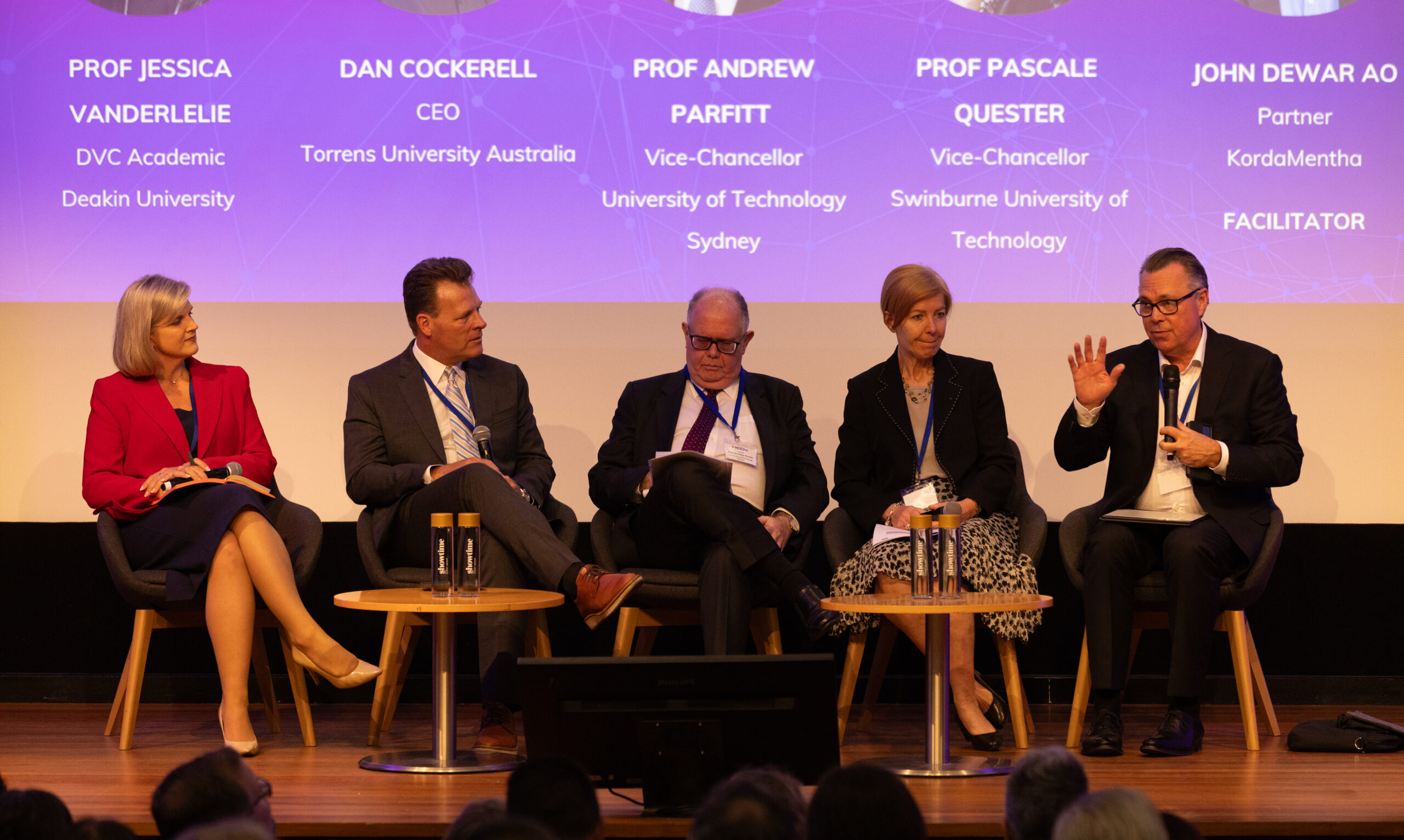
    Partner at consultant KordaMentha John Dewar led a panel of public and private university leaders that re-examined the sector’s current artificial intelligence (AI) strategies and opportunities.

    Please login below to view content or subscribe now.

    Membership Login

    Source link

  • Most popular degrees for NSW, ACT incoming students – Campus Review

    Most popular degrees for NSW, ACT incoming students – Campus Review

    On Campus

    Data from 75,000 applicants showed the degrees of choice for incoming students

    Health and Society and Culture courses remain the most popular for university applicants in NSW and the ACT according to the admissions centre.

    Please login below to view content or subscribe now.

    Membership Login

    Source link

  • Greens to push for free university in a hung parliament – Campus Review

    Greens to push for free university in a hung parliament – Campus Review

    Every Australian would be able to go to university or TAFE for free under a new Greens policy that would cost the federal budget $46.5 billion over the next four years.

    Please login below to view content or subscribe now.

    Membership Login

    Source link

  • Storytelling and arts education can drive social change

    Storytelling and arts education can drive social change

    Netflix drama Adolescence has ignited two vital national conversations.

    The rise of online misogyny among radicalised young men has seen Keir Starmer weighing in on the issue.

    There’s also been a debate surrounding disenfranchisement among boys and young men in primary, secondary and tertiary education.

    The latter has long been on the radar of policymakers, academics, and researchers. HEPI recently linked boys’ educational underattainment to a “veering towards the political extremes,” while discussions around figures like Andrew Tate have kept the former on Parliament’s agenda.

    Yet both issues remained on the margins until Adolescence – written, produced, and starring Rose Bruford College alum Stephen Graham – catalysed real-world conversations and moved us toward legislative action.

    Despite press, and policy, and parliament, the issue broke through because of storytelling.

    Power of creative arts

    Much like the Post Office scandal – exposed by Private Eye but only widely acknowledged after Mr Bates vs The Post Office (co-produced by another Rose Bruford alumus, Sara Huxley) – Adolescence shows how creative arts can achieve what policy papers often cannot: capturing public attention and driving cultural change.

    It highlights a key truth in fostering social change – the arts play a vital role.

    As a membership body representing nearly 40 per cent of creative arts students, we’re concerned by the continued perception of creative degrees as niche or non-essential – leading to disproportionate funding cuts compared to STEM.

    In reality, our graduates shape public discourse on identity, gender, and social responsibility, shifting public discourse, and ultimately contributing to public policy.

    At the same time as a devaluation of creative degrees, there’s another issue hiding in plain sight – working-class boys are falling behind in education.

    HEPI has produced compelling reports on this subject, outlining the growing gender attainment gap, particularly for boys from disadvantaged backgrounds and neurodivergent boys (although we note that some of this may be down to underdiagnosis in girls).

    Concerns in the report also raised that boys are less likely to be steered toward specific disciplines (while girls have been encouraged into STEM) and that traditional educational structures serve girls better.

    Although the authors should avoid biologically deterministic assumptions around how people learn and bear in mind that gendered socialisation probably plays a large part here – regardless of how behaviour and engagement is socially or otherwise fostered, the data shows its material impact – boys academically underperform compared to girls at every age, in almost every subject.

    Class acts

    But it is essential to be clear – the issue is not boys in general, but working class boys who are most at risk of falling behind. Discussions that flatten this into a gender-only concern risk obscuring the real and compounding impact of class-based disadvantage on educational engagement and attainment.

    This issue receives little attention in practice. A rudimentary and quick scan of Access and Participation Plans (APPs) revealed a striking omission: boys are rarely, if ever, mentioned as a specific target group.

    Even when John Blake outlined the significant scale to equality of opportunity faced by “boys from working-class communities” back in 2022, it was primarily in comparison to smaller groups who experience more intense forms of disadvantage, rather than recognising the issue of working-class boys attainment as a standalone concern.

    GuildHE Institutions like Rambert School, Northern School of Contemporary Dance and AUB are already doing vital outreach work to bring boys into the subject spaces they are underrepresented in. But again, this work often happens in isolation, without the policy recognition or funding it truly deserves.

    That’s a mistake. For many boys, especially those disengaged from traditional academic pathways, creative disciplines provide an essential space to connect, reflect, and grow. Dance, drama, music, and film help young men process difficult emotions and identities constructively.

    As our recent written submission to parliament outlined, the dance training boys took part in at Rambert School helped them in areas of life such as creative thinking, managing anger and ADHD symptoms. Arts University Bournemouth runs Being a Boy which provides a supportive space for young men to creatively and safely engage with the role of masculinity in their lives.

    Add in Prof Becky Francis’s review of the school curriculum – which argues it’s failing students outside the A-levels-to-university pipeline, disproportionately boys – and her call to value arts subjects, and we see an emerging case for education that better accounts for how many boys have been socialised to learn and engage.

    This is where creative education comes in. The arts are not just about performance or aesthetic appreciation – they are powerful tools for expression, empathy, and exploration, and a possible way to engage boys who are disenfranchised at an estimated cohort size of half a million from higher education

    While the HEPI report calls for a push to get more men into teaching, care roles, and nursing, we believe in the individual and societal benefits of encouraging boys – particularly working-class boys – into, and their contribution to, the arts.

    Some of this work is already being done by our alumnus – Stephen Graham discovered Owen Cooper, who plays Jamie Miller in Adolescence, who Cooper describes as “a normal working-class family from a normal council estate”. But there needs to be a concerted policy effort.

    That means:

    • Valuing arts and creative degrees as critical to both gendered social progress and supporting widening participation in HE for boys
    • Including boys as a key demographic in widening participation strategies in HE.
    • Supporting cross-sector collaboration between educators, policymakers, creatives, and communities to tackle today’s issues and truly value the impact creative degrees make on individuals and society.

    The success of Adolescence in sparking national debate is a wake-up call. If we want to tackle misogyny, and we must remember that Adolescence was fundamentally about violence against women and girls, as well as male disengagement in education, we need to invest in the places where empathy and identity are formed – and value how these are explored and communicated to wider society.

    Source link

  • Extracurricular activities have big benefits for students

    Extracurricular activities have big benefits for students

    Extracurricular activities have big benefits for both students and the university – but we could do more to get students involved.

    University life for students is busy these days, not just with lectures and assessments but for many students, also the need to work to fund their studies.

    Extracurricular activities can not only add value to the student experience and are a key offering of universities which have some surprising benefits for both.

    They have a demonstrative effect in reducing depression, boosting employability skills, giving students an opportunity to try new things without pressure of assessment – and participation in extracurricular activities is closely related to increasing alumni donations to the university, a clear sign of happy and successful graduates.

    However, in order for us to get the most out of them we need both the benefits, and the activities themselves, to be signposted better within the university as well as ensuring that some groups that would benefit most despite lower engagement are encouraged to get involved.

    Competition for student’s time is fierce, with coursework, exams, and projects, but also for those students who need to work in paid employment to fund their studies and living costs. But extracurricular activities have several benefits for the students, and whilst a small number of students find it harder than others to balance activities and academic work, outcomes are generally positive.

    The vast majority of studies around the world have found a general correlation between taking part in extracurricular activities and improved academic performance. There are a large range of activities that students could do – activities that complement the curriculum such as the MBA programme having a pitching competition or a weekend hackathon (often called cocurricular activities), whilst there are also activities from outside these boundaries such as sports which are unrelated to the student’s core subject.

    Regardless of the actual activity that they do, there are a range of positives. They improve employability skills and leadership skills – giving the student CV-worthy examples, and they are a way to show an employer that you are interested in a specific career.

    Employers have suggested extracurricular activities can help determine your cultural fit, and show examples of commitment and interpersonal skills. Involvement in social enterprise or charitable projects are looked upon favourably. Improving students’ employment prospects, especially with extracurricular activities having a “levelling up” effect for those from minority groups and those from lower socio-economic groups – this reflects well on the university and its mission.

    Extracurricular activities allow students the opportunity to try more hands-on and experiential activities without the risk and pressure of needing a good grade, or being creative using spaces such as makerspaces. It might also be a rare opportunity to work in a cross disciplinary manner and diversifies your group of friends.

    Residential courses and field trips are also valuable, with research showing that they stimulate a sense of togetherness with those on their courses, and with a chance to see their subject in action which helps them put it in context, encourages more enjoyment of it, and allows them to form career plans based on that subject, with those in late adolescence and early adulthood especially attuned for developing career self-efficacy in this way.

    These residential activities seem to disproportionally benefit poorer students and those from minority groups, resulting in higher marks, thus making them ideal activities for universities to support. With the Sutton Trust suggesting the number of students in the UK now living at home due to the cost of living to be 34 per cent, rising to 65 per cent from those in poorer socio-economic groups, it is a rare opportunity for some students to escape from living with parents.

    Extracurricular activities are seen as adding value by students, especially those overseas students who readily sign up for activities, as we have found with off campus opportunities we offer in entrepreneurship quickly booked up by enthusiastic overseas students, such as our “Enterprise School” in the Lake District with postgraduate groups from mixed subject areas working together late into the night (putting the staff to shame) – and keeping in touch when they return to Manchester and beyond, building a network they would never have otherwise met.

    What can we do to improve them?

    We can try to engage older and ethnic minorities more as these groups tend to spend less time on extracurricular activities at the university, and make them more friendly for those who may have carer commitments, for example not always having events in the evening.

    This might help other groups of students – I have also found as an academic adviser that many students in Manchester live with parents and commute from nearby cities such as Liverpool and Sheffield, with their notoriously bad rail lines – and these students are less likely to take part in extracurricular activities as they prioritise when they travel to university.

    Those from lower socio-economic groups also spend less time on extracurricular activities due to the pressure of paid employment, so encouraging them to consider at least some extracurricular activity would be beneficial.

    First year males could also be a target for engagement – whilst suicide rates for students overall are considerably lower than that of the general population, for first year males the rate was found to be 7.8 per 100,000 people, significantly higher than males of other years and female students as a whole, which has been attributed to social isolation, alcohol consumption and the general life change of moving to university.

    Involvement in extracurricular activities reduces suicidal tendencies by increasing the sense of belonging and lessening the sense of burden a student might feel, and are a relatively low cost option as part of the universities commitment to its duty of care. It has been suggested by the Office for Students that those students who are in several minority categories concurrently are particularly vulnerable from a mental health perspective, so being aware of these students is especially important.

    Students partaking in extracurricular activities reported having a depressive mood less often and report the development of a long-lasting social support network – which may well identify problems and help students before the university even becomes aware of anything wrong.

    Unfortunately, many that will benefit most from them won’t take part – so we need to encourage them to do so – especially students’ academic advisers who might have a broader picture on how well the student is getting on. Studies have found that female students are more likely than males to undervalue the skills they have gained from extracurricular activities – again academic advisers could reinforce this for all, especially when preparing for job applications.

    Alumni speakers could also reference what extracurricular activities they did to focus on how this helped them while at university, and examples of how it helped them find employment and fit into the workplace.

    Programme directors might also recommend what co-curricular activities might be useful for the student’s degree, and students themselves such as at the student’s union could communicate more on the benefits of extracurricular activities, especially to engage first years, throughout the year as well as during the whirlwind of welcome week – some students might need time to settle down before they can see how much spare time they can allocate to extracurricular activities.

    Ask students when they want activities to run – this might be different for city centre or out of town campuses – but we have found in Manchester a surprising number of students who are prepared to commit to a whole Saturday working on a hackathon, for example.

    Interestingly, there is a correlation between the number of extracurricular activities that a student partakes in and alumni donations, with a Wonkhe study suggesting that participation in extracurricular activities was a much stronger indicator of donation to their alma mater even than degree class obtained, showing extracurricular activities strengthen the relationship between students and their university.

    There is every reason for universities to provide a full range of opportunities – and to encourage students to get involved.

    Source link

  • With the power of knowledge – for the world

    With the power of knowledge – for the world

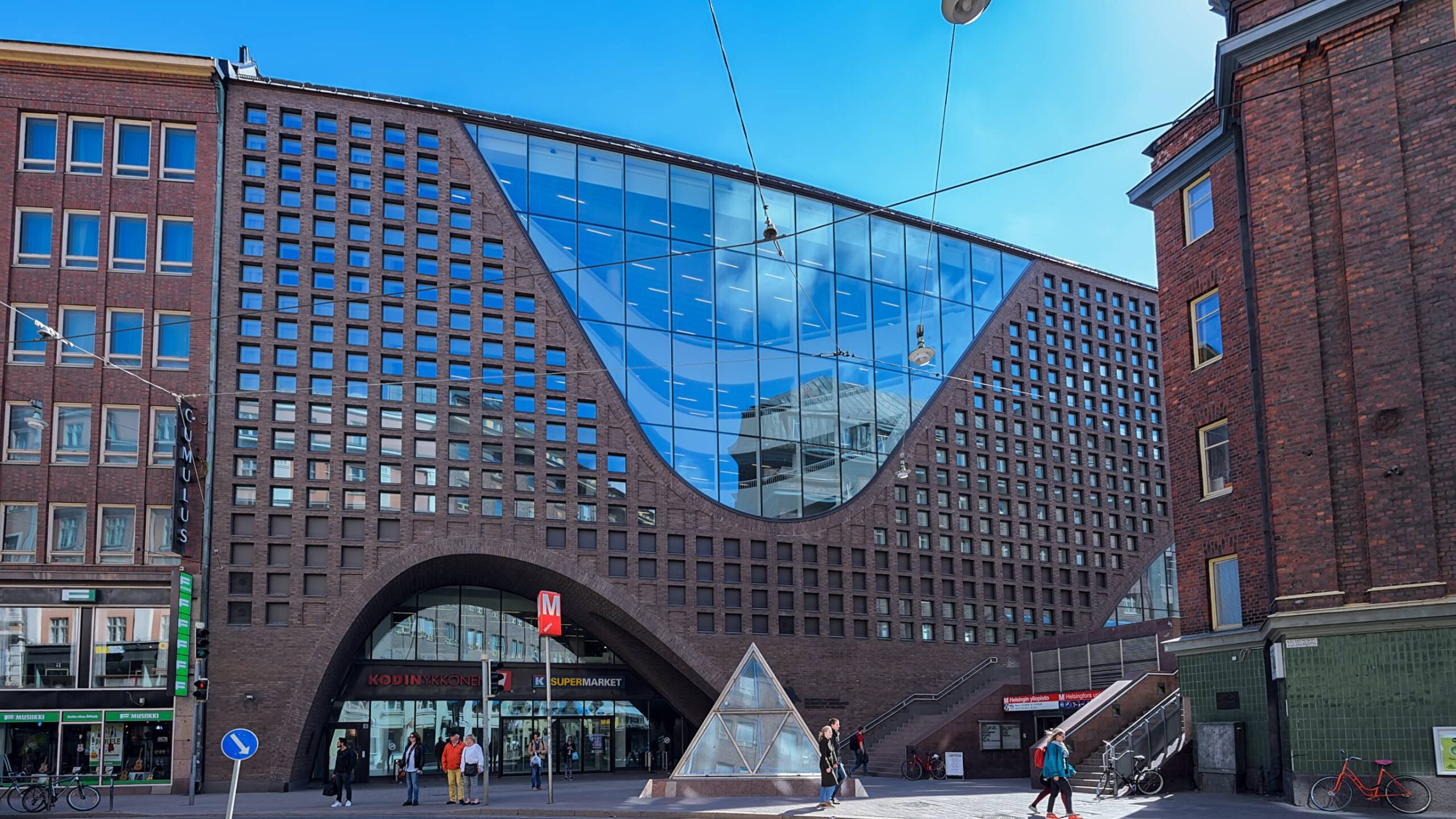
    I went along to AHUA conference on Tuesday, and saw a fascinating presentation from Esa Hämäläinen, who’s the Dir­ector of Ad­min­is­tra­tion at the University of Helsinki.

    The university has easily one of my favourite origin stories – it was established by a 13-year-old girl who the world came to know as Queen Christina of Sweden.

    It also has a cracking set of values, some of which appear now to be the sort of thing that’s banned by the Office for Students in England.

    In 2015, under Prime Minister Juha Sipilä’s administration, the government announced a €500 million cut to higher education budgets in Finland.

    That followed a previous €200 million reduction and included freezing the university index, which had adjusted funding based on inflation.

    As a result, universities like the University of Helsinki had to lay off hundreds of staff – about 400 in the case of Helsinki.

    There’s a lot of different ways of calculating staff-student ratios that often make comparisons problematic – but one of the things I was pondering on the train was how they are doing what they’re doing on an academic SSR of 22.2:1 – significantly higher than in the past, and significantly higher than the UK.

    For the avoidance of doubt, I’m not searching for a blueprint on how to shed academic staff. But if cuts are going to rain down anyway, understanding how other systems work beyond “Oh look they have ECTS too” I think (hope) can help.

    I say this partly because a lot of people I talk to are experiencing or implementing plain and simple “reduce the number of optional modules” strategies based on the efficiency of more/large/core – which most research suggests students don’t like, and I suspect is a probable cause of during and post-degree regret.

    What’s fascinating is that rather than just accept the inevitability of a thinner student academic experience as a result of those cuts, the university evolved its Bildung philosophy to make a whole range of scaffolding changes to cope on fewer staff. And I’ve spent a long train journey trying to work out how.

    They call a Twix a Raider

    First some Twix/Raider basics. There’s 180 ECTS for a Bachelor’s degree, designed to be taken over 3 years. No difference to the UK there (unless we count Scotland) other than students can take longer to obtain those 180, supported via the maintenance system to do so – although universities across Europe are variously under government pressure/incentives to speed that up a bit.

    It’s also worth noting that for various reasons, the average entry age for bachelor’s degree programmes in Finland is 24, compared to an OECD average of 22. We have (along with Belgium) the youngest freshers and the fastest completion times in the OECD. That we then beat Belgium on completion rates often causes me to reflect on whether that’s a sign of success or a signal of conveyor-belt trapping, a cause of mental health problems and a driver of lower of academic standards – but I digress.

    What we’d typically call “modules” in the UK are referred to as “courses” in Finland. As for what we’d call a “programme” or “subject pathway”, it varies – but at Helsinki, undergraduate students complete two core “modules”, each comprising a collection of courses, one for “Basic” studies (what we’d think of as a UG first year), and one for “Intermediate” studies (what we’d think of as a second and third year).

    These two modules are each awarded a single grade on a 1–5 scale, and it’s these two grades that appear on the student’s degree transcript.

    So, instead of the UK-style baffling algorithm of final grades weighted in different ways across multiple modules, students in Finland receive just two key grades on their transcript – simple, succinct, and arguably more transparent, along with the pathways taken within them. Additionally, students can receive a separate distinction mark for their dissertation. A nice touch.

    The University of Helsinki is Finland’s flagship institution – huge in size, high in status, and widely seen as the country’s de facto elite public university. And yet, intriguingly, there are only 32 undergraduate degree programmes on offer across its 11 faculties. Within each of these programmes, students have considerable freedom to create their own study path, but the structure is strikingly straightforward – 11 faculties, 32 programmes, no sub-departments, and no sprawling web of hundreds of “course” leaders.

    That also means 32 academic communities, with 32 academic societies that students join to get support from eachother and engage in things – a nice size that avoids having to find 1500 course reps or trying to sustain a meaningful single student community from 40,000 students – all supported by 32 sets of student tutors, of course.

    The mother of all science

    Let’s take Philosophy as an example. To complete the degree, students have to earn 90 ECTS credits in Philosophy-specific study, 75 elective credits, and 15 from general studies. That structure encourages both specialisation and breadth.

    Oh, and a quick technical note – the standard assumption in Finland is that 1 ECTS credit represents 27 hours of student effort. In the UK, by contrast, it’s 20. The reasons are dull and bureaucratic (that didn’t stop me working out why) but worth bearing in mind when comparing intensity.

    First it’s worth digging into the 90 credits earned in Philosophy. These are split into two main “modules” – Basic Studies (30 credits) and Intermediate Studies (60 credits). As I said earlier, the former corresponds to first-year study, and the latter covers second and third year.

    The 15 credits of general studies are interesting. 2 credits are awarded for a reflective planning exercise where students work with an academic to design their personalised study plan – a kind of “choose your own adventure” approach that signals a departure from spoon-feeding from day one. That’s assessed on a pass/fail basis.

    There are also three credits for digital skills training, delivered via self-study – two credits within the Basic Studies and one within Intermediate. Again, this is assessed pass/fail and serves both to build capability and to ensure students are confident in using the university’s largely self-service systems.

    Then there are 10 credits dedicated to communication and language skills. These span both written and oral communication, include components in both Finnish and Swedish, and feature academic writing training – often completed in groups. All of this is, again, pass/fail.

    What I find interesting about these is a recognition that designing a bespoke study programme (that can change over time), along with IT and communication skills, are really about becoming a student – here they are recognised as taking actual time.

    In the Basic Studies module, students take six standard “intro to…” courses worth 5 credits each. These are relatively straightforward in design, delivery, and assessment. Each course is normally assessed via a single exam, although in most cases students can opt to complete coursework instead.

    In each degree programme, 60 subject-based credits – what we’d call second and third year content – then form the Intermediate “module”. Of these, five are allocated to the thesis (dissertation), while the remainder is typically made up of 5-credit courses, offering students considerable choice and customisation.

    To move into intermediate, there’s a 0 credit “maturity” assessment so students aren’t moving there until they’re ready. Then of the 60 Intermediate credits, 30 are structured as follows. 5 credits are awarded for a proseminar, which functions like a structured, small-group academic workshop:

    At the beginning of the course, students are given a review of the basics of academic writing and how to critically review and oppose an academic work. How to formulate a research question is discussed and advice is given on how to obtain source material. The student is then expected to formulate a research question in the form of a short abstract which is then reviewed and discussed by the teacher and other students. Then a period of research and essay writing takes place where the opportunity for supervision is given. At the end of the course, the student must present an essay for review by an opponent and oppose another student’s essay.

    5 credits are for a Candidate intuition seminar, and that looks like this:

    At the beginning of the course, students receive a refresher course in the basics of academic writing and how to critically review and oppose an academic paper. At the beginning of the course, there is also a discussion on how to formulate a research question and participants are given advice on how to obtain source material. The student is then expected to formulate a research question in the form of a short abstract which is then reviewed and discussed by the teacher and other students. This is followed by a period of research and essay writing where opportunities for supervision are provided. At the end of the course, the student must present an essay for review by an opponent and act as an opponent in the processing of another student essay.

    Then as well as the dissertation (thesis) itself there’s 5 credits for a compulsory internship (pass/fail) and 5 credits for preparing to apply what you did on your degree to the world, and that looks like this (also pass/fail):

    This gives the student the opportunity to independently explore the individual, growing competence that the degree provides and the importance of competence in a changing society and working life. The aim is for the student to become familiar with and reflect on the ways in which the unique competence provided by studies in philosophy, in collaboration also with studies in other subjects, which the student has chosen, can be relevant to our lives, to working life, society and the world.

    It can be completed in various different ways, in consultation with the responsible teacher – collaboration, independent studies and observation and reflection tasks related to other modules. An e-portfolio or course diary can also be included.

    And then finally there’s a 5 credit compulsory, and in Philosophy that’s a classic module on History of Philosophy.

    For the other 30 credits of Intermediate there’s then a collection of “classic” academic modules again, often in pathway clusters.

    So via the 60 “subject” ECTS points and the 15 “general studies” ECTS points, that’s 105 ECTS accounted for. And here’s the thing. The 75 left are acquired by picking the sort of stuff I’ve talked about above, but they must be from other degree programmes!

    That means that a Philosophy student that wants to do the basics in statistics or whatever can access what might be regarded as another course’s core modules. That obviously means a large amount of interdisciplinary stuff happening, with quite a lot of interesting student mixing happening too. It also means that the “courses” are highly efficient.

    Oh, and also if you do Erasmus, or learn skills at work, or as a volunteer, or whatever…

    You can receive credit for studies you have completed at higher education institutions either in Finland (universities, the National Defence University, and universities of applied sciences) or abroad. The studies must have been successfully completed.

    You can also get credit for skills you have acquired in working life, positions of trust or hobbies, for example. In this case, we are talking about skills acquired in a way other than formal education.

    A time for reflection

    At this point down the rabbit hole I see small, simple-to-design and simple-to-assess academic modules (without having to cram in 100 agendas), plenty of pass/fail credit (less grading means less pressure for everyone), and lots of focus on choice and independent study. And an actual recognition that skills development matters without it always having to be crammed into optional activity students don’t have time for, or academic modules.

    Just a note on grading. One of the things happening here is that grading itself is less complex (5 is Excellent, 4 is Very good, 3 is Good, 2 is Satisfactory, 1 is Passable and 0 is Fail), there’s less of it to do in general, and the ability to re-take assessments in a funding system that allows for setbacks reduces the need for extenuating circumstances and extensions and so on – so the stakes are less high, less often.

    So broadly what I take from it all is:

    1. The hidden curriculum is less hidden
    2. Academic staff have a simpler life
    3. The credit system overall creates rounded graduates
    4. The design reduces unnecessary pressure on students
    5. Some of the credit prepares students for graded credit instead of it all being graded
    6. There are lots of personalisation options
    7. There’s a much more meaningful degree transcript
    8. There’s more assessment choice
    9. There’s less pressure to get students through at top speed
    10. There’s less high-stakes assessment in general
    11. There are “millions” of potential (what we would call) “programmes” without the coordination overhead, walled gardens and spoonfeeding of (what we would call) programmes
    12. There’s less traditional academic “teaching” going on here, but what there is is more efficient and more straightfoward

    Crucially, lots of the modules I’ve seen are from research-active academics – whose research area probably wouldn’t sustain a whole “programme” in our systems – but whose little chunk of credit sits neatly and sustainably in this system.

    So what could my little GWR trip down that a Finnish rabbit hole all mean?

    First of all, if I was the higher education minister (haha) I’d require there to be no more than the number and titles of QAA’s subjects in its benchmark statements as the degrees on offer as a condition of access to the loan book.

    On the emerging unit of resource, it’s going to end up impossible to innovate if not – getting new programmes approved will always be based on what marketeers think will “sell” – and doing simplifying in this way would force more “choose your own adventure” without the overhead of running and marketing a “programme”. I also take the view that saying to a student on an Open Day that there will be quite a bit of elective choice – when everyone internally knows that a lot of the choice will have gone by the time the VR round is done and that student is in their third year – is pretty immoral (and almost certainly unlawful).

    In addition, I also suspect the “choose your own adventure within some parameters” approach would reduce some of the regret we see in the UK. Even if students enrol with a strong disciplinary orientation (partly because of the ridiculous specialisation we force onto students at Level 1-3), a topline reading of the Bristol “regret” research is that either during or after the degree, students clock how unhelpful the UK’s obsession with narrowing is. (There’s no equivalent “regret” question in the Finnish NSS, but lots of interesting stuff that suggests less regret nonetheless.)

    You’ll have seen that much of the credit is about what we might generically call study skills – via our Belong project, we have unpublished national polling evidence (that will be on the site soon) that suggests that in general, students often regard what is on offer in the UK as too generic, and when it’s optional and non-credit bearing, other demands on their time tend to win out. This appears to be a system that has solved some of that.

    The rattle through above, by the way, was me diving into a Philosophy degree – but even in subjects where we might usually expect to see a more programmatic approach via more compulsory modules, structures and weighting aren’t hugely dissimilar – here’s the generic Bachelor’s in Science, for example.

    Plenty of the “choice” on offer is about both a dissertation and extra credit in the run-up to said dissertation – where there isn’t teaching on the thing the student wants to study per se but students can access academics who might be research-active in that. And some of the other choice options are doubtless constrained by timetable – but that’s eased somewhat by some of the credit being acquired “centrally”, some in self-directed mode, and a maintenance system that allows the average duration to be over 3.5 years. Clash? Take it next semester.

    Ultimately what I’m struck by, though, is the simplicity of the whole thing – which is not obvious on first look. I’m not saying that it’s simple to design the study plan or to even visualise the whole degree (either by diving into the website or reading this account), but I am saying that a lot of the tasks carried out by students or academics are simpler – where the focus is on academic learning and development (with quite sophisticated pedagogical research, innovation and support) rather than endless assessment, complex degree algorithms and multiple agendas.

    To the extent to which you can see a graduate attributes framework here, it’s delivered via multiple types of credit acquisition, rather than every attribute being loaded into every fat module.

    What is, though, absolutely undeniable is that a Chemistry graduate in this system has done less… Chemistry. Maybe the Royal Society of Chemistry (and all of the other PSRBs) would have things to say about that. But they’re nonetheless demonstrably rounded graduates (without a lot of the rounding depending on inaccessible extracurriculars) – and in a mass system, how many Bachelors graduates all need as much Chemistry individually anyway?

    Put another way, if a dwindling number of students want to study just Chemistry, and this system sustains a large number of Chemistry modules that are available both to those who do and those and don’t, isn’t that better for society overall?

    Source link

  • Unlocking Generative Engine Optimization (GEO): What Marketers Must Do to Stay Ahead

    Unlocking Generative Engine Optimization (GEO): What Marketers Must Do to Stay Ahead

    Remember when SEO was all about keywords and metatags, fueling now-defunct search engines like Yahoo, AltaVista and early Google? Those were the days of “keyword stuffing,” where quantity trumped quality and relevance, delivering poor search results and frustrating users. Google’s PageRank algorithm changed everything by prioritizing content quality, giving birth to the “Content is King” mantra and improving the user experience.

    Fast forward to the Era of the Modern Learner, where digitally astute users demand fast and accurate information at their fingertips. To keep up with their heightened expectations, search engine algorithms have evolved to become more sophisticated, focusing on the intent behind each search query rather than simple keyword matching. This shift has led to the emergence of AI-powered search engines features like Google’s AI Overviews to provide an AI-powered summary which now command prime real estate on the search engine results page.

    In response, Generative Engine Optimization (GEO) is emerging. AI-powered search engines are moving beyond simply ranking websites. They are synthesizing information to provide direct answers. In this fast-paced environment, delivering the right information at the right time is critical now more than ever. All marketers, regardless of industry, must adapt their strategies beyond traditional SEO.

    What is Generative Engine Optimization (GEO)?

    Artificial intelligence is rapidly infiltrating tools across every industry, fundamentally reshaping the digital landscape. Generative Engine Optimization (GEO) is emerging as a new approach to digital marketing, leveraging AI-powered tools to generate and optimize content for search engines. GEO is a catalyst, driving a fundamental shift in how search engines present information and how users consume it

    GEO leverages machine learning algorithms to analyze user search intent, create personalized content, and optimize websites for improved search engine rankings. This advanced algorithmic approach delivers contextually rich information from credible sources, directly answering user searches and proactively addressing related inquiries. A proactive strategy that goes beyond traditional SEO ensures that a school’s information is readily discoverable, easily digestible and favorably presented by AI-powered search engines such as Google’s AI Overviews, ChatGPT, Perplexity and Gemini.

    How GEO Works

    At its core, Generative Engine Optimization (GEO) uses artificial intelligence to bridge the gap between user needs and search engine performance. GEO tools go beyond traditional SEO by harnessing AI to deeply understand user behavior and generate content that’s not only relevant but also personalized and performance driven. Here is how it works across four core functions: 

    • Analyzing User Intent: GEO starts by analyzing user intent. AI models examine search queries, website behavior and browsing patterns to uncover what users are specifically searching for. This helps marketers develop content strategies that directly align with user expectations and needs. 
    • Generating Content: Using these insights, GEO tools generate original content tailored to meet the precise needs of the target audience. The result is content that answers user questions and aligns with how modern search engines evaluate relevance and quality.  
    • Optimizing Content: GEO then optimizes the generated content for performance. AI refines readability, integrates keywords and enhances structural elements for improved visibility in search results, which ensures that content performs well in both traditional and AI-powered search environments.  
    • Personalizing Content: Where GEO truly shines is in content personalization. By leveraging data like demographics, preferences and past interactions, GEO delivers tailored experiences that feel more relevant and engaging to individual users.  

    Comparing SEO and GEO

    While SEO and GEO may seem like competing strategies, they actually complement one another. Both aim to improve visibility in search results and drive meaningful engagement but do so through different methods. Understanding how they align and where they diverge is key to developing a modern, well-rounded digital strategy. 

    Ways GEO is Similar to SEO

    Despite their difference in execution, SEO and GEO share a common goal: delivering valuable content to users and meeting their search intent. Both SEO and GEO strategies contribute to: 

    • Improving website visibility and search rankings in the search engine results pages (SERPs). 
    • Driving organic traffic by making it easier for users to discover relevant information. 
    • Boosting user engagement and conversion rates through informative, well-tailored content.  

    Ways GEO is Different from SEO

    Where SEO and GEO begin to diverge is in their focus, tools, and content strategy:

    • Focus: Traditional SEO emphasizes keyword optimization, meta tags and technical structure. GEO, on the other hand, focuses on understanding user intent and creating dynamic, personalized content that adapts to evolving needs. 
    • Tools: SEO relies on tools like keyword research platforms, backlink analysis, and manual content audits. GEO uses AI-powered platforms to analyze data, generate content, and automate optimization based on real-time user behavior.  
    • Content: SEO often produces static, evergreen content that ranks over time. GEO enables the creation of responsive, personalized content that can shift based on user preferences, past interactions, and demographics. 

    While SEO has historically focused on driving clicks to websites and increasing rankings, GEO recognizes the increasing prominence of zero-click searches—where users find answers directly within AI-powered search overviews. In this new reality, GEO ensures your content remains visible and valuable even when the traditional click doesn’t occur. It does this by optimizing for how AI synthesizes and presents information in search results.

    Is GEO Replacing SEO?

    The rise of GEO has sparked an important question for marketers: Is SEO dead? The short answer is no. Rather than replacing SEO, GEO enhances it.

    GEO builds a foundation of traditional SEO by leveraging artificial intelligence to automate time-consuming tasks, deepen audience insights, and elevate content quality. A strong SEO strategy remains essential, and when paired with GEO, it becomes even more powerful.

    To support marketers in building that foundation, tools like EducationDynamics’ SEO Playbook offer actionable strategies for mastering SEO fundamentals while staying adaptable to innovations like GEO. As the higher education marketing landscape evolves, institutions are reaching a critical inflection point: the status quo no longer meets the expectations of the Modern Learner, and a more dynamic, data-driven approach is essential to stay competitive.

    Here’s how GEO supports and strengthens traditional SEO efforts:

    • Smarter Keyword Research and Optimization: GEO tools analyze search intent more precisely, allowing marketers to choose keywords that better reflect how real users search, creating content that directly answers those queries.  
    • More Personalized Content Experiences: By generating dynamic content based on user behavior, preferences, and demographics, GEO helps ensure the right message reaches the right audience at the right time.  
    • Streamlined Workflows: GEO automates content generation and optimization processes, making it easier to keep web pages fresh, relevant, and aligned with evolving search behaviors—all while saving time and resources.  

    SEO is far from obsolete; however, relying solely on traditional SEO tactics is outdated which is no longer sufficient in today’s evolving higher education landscape. To truly transform their marketing approach, institutions must embrace innovative solutions. 

     As generative AI becomes increasingly embedded in how people search, marketers must adapt. While traditional SEO tactics like on-page optimization, site structure, and link-building still have a role to play, GEO provides the bold innovation needed to drive impactful outcomes. By pairing SEO strategies with GEO’s AI-driven insights and automation, institutions can achieve greater efficiency and effectiveness in their marketing efforts.  

    Together, SEO and GEO provide a holistic, future-ready framework to engage the Modern Learner, enhance digital marketing efforts, and drive both reputation and revenue growth, which are essential for long-term success.

    Integrating GEO and SEO in Your Marketing Strategy for Higher Education Marketers

    As the digital landscape evolves, one thing remains clear: SEO is still essential for institutions looking to connect with today’s students. With the rapid adoption of AI in everyday search habits though, SEO alone is no longer enough.

    According to EducationDynamics 2025 Engaging the Modern Learner Report, generative AI is already transforming how prospective students evaluate their options. Nearly 70% of Modern Learners use AI tools for generative chatbot platforms like ChatGPT, while 37% use these tools specifically to gather information about colleges and universities in their consideration set.

    This shift signals a clear need for higher ed marketers to adapt their digital strategies. GEO provides a pathway to do that while better serving today’s students. By combining the proven fundamentals of SEO with GEO’s advanced AI capabilities, institutions can engage the Modern Learner more effectively at every stage of their decision-making journey.

    Reaching Modern Learners: Integrating GEO and SEO Strategies

    • Speak to What Modern Learners Search For: Modern Learners expect content that speaks directly to their needs and interests. Use GEO tools to identify the actual search terms prospective students use, such as “flexible online MBA,” or “how much does an online degree cost.” Then, develop SEO-optimized pages, blog posts, and FAQs that address these specific questions. Incorporate schema markup, structured headings, and internal links to boost visibility while keeping content informative and student focused.  
    • Personalize the Journey for Every Modern Learner: GEO enables marketers to go beyond generic messaging. Use behavioral data, such as which pages students visit, how long they stay or what programs they explore, to personalize touchpoints across channels. Personalization builds trust and shows Modern Learners you understand what matters to them.  
    • Deliver the Seamless Digital Experiences Modern Learners Expect: Today’s students want fast, seamless experiences. Use GEO insights to identify where users drop off, then optimize navigation and page speed accordingly. Implement clear, scannable layouts with prominent CTAs to enhance your website’s structure and user-friendliness. Consider adding AI-powered chatbots to provide real-time support for everything from application steps to financial aid inquiries.   
    • Use Data to Stay Ahead of the Modern Learner’s Needs: GEO tools give you visibility into what students search for, which content they engage with, and where they lose interest. Regularly review search patterns, click paths, and drop-off points to identify gaps in your content or barriers in the enrollment funnel. Use these insights to refine headlines, adjust keyword targeting, or introduce new resources that better align with what students care about. 

    As prospective students increasingly turn to AI tools to explore their options, higher education marketers must evolve their strategies to keep pace with changing search behaviors. While Search Engine Optimization remains essential for visibility and reach, it no longer fully reflects how today’s students search and engage online. GEO bridges that gap by adapting to real-time behaviors and preferences. To effectively connect with Modern Learners and stay competitive, institutions must evolve their digital strategies to include GEO. 

    The Future of SEO and GEO in Higher Education

    The future of enrollment will be shaped by how well institutions adapt to evolving digital behaviors. GEO is one of the many new components at the forefront of this shift. As AI continues to reshape how students interact with institutions and search for information, GEO will become an instrumental tool for delivering personalized, real-time information to meet their expectations.

    Traditional SEO will still play a vital role in ensuring your institution is discoverable, but GEO takes things further by extracting and tailoring relevant content to meet the specific needs of each user, creating dynamic, intent-driven engagement. With more students using generative AI tools to guide their enrollment journey, institutions must embrace strategies that reflect this new reality.

    Looking ahead, AI-powered SEO strategies will empower higher education marketers to create adaptive content that speaks directly to individual student goals and behaviors. These tools will also make it possible to deliver faster, more relevant information across platforms, often surfacing answers before a student ever clicks a link. With deeper access to behavioral data and user intent, marketers can refine messaging in real time, ensuring they’re reaching the right students with the right information at the right moment in their decision-making journey.

    Unlocking the Power of GEO with EducationDynamics

    As the digital landscape continues to shift, it can be challenging for institutions to keep pace with rapid change—especially when it comes to reaching the demands of today’s students. GEO empowers institutions to transform their digital engagement strategies, moving beyond outdated tactics to cultivate meaningful connections with the Modern Learner. 

    As a leading provider of higher education marketing solutions, EducationDynamics specializes in helping colleges and universities stay ahead. Our team brings deep expertise in foundational SEO and is actively embracing the next wave of digital strategy through Generative Engine Optimization (GEO). We understand what it takes to create meaningful engagement in a competitive enrollment environment and we’re here to help you do just that. 

    Connect with us to discover how we can support your team in building personalized digital strategies—whether it’s laying the groundwork with SEO or embracing innovative approaches like GEO. We’re here to help your institution succeed in today’s ever-changing digital world. 

    Source link

  • Harvard stands firm, rejects Trump administration’s unconstitutional demands

    Harvard stands firm, rejects Trump administration’s unconstitutional demands

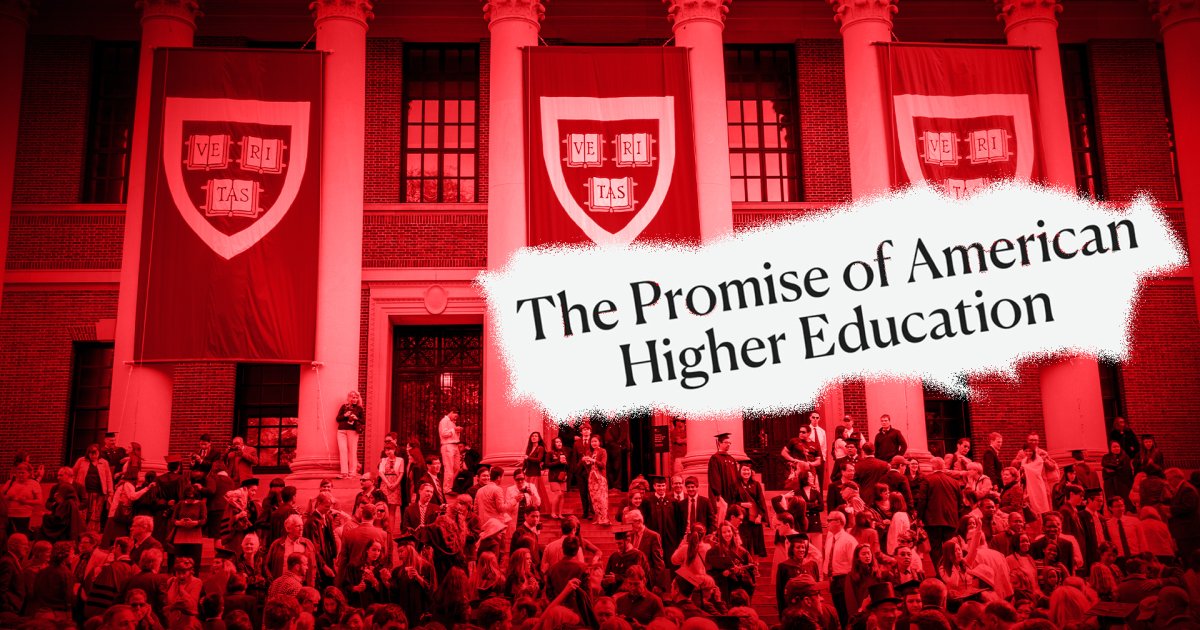
    Last Friday, three federal agencies sent a demand letter to Harvard University laying out conditions for the university to continue receiving federal funds. The letter is unprecedented in its scope. It would essentially render Harvard a vassal institution, subjecting much of its corporate and academic governance to federal directives. 

    If Harvard acceded to these demands, faculty hiring, student admissions, student and faculty disciplinary procedures, university programming decisions, student group recognition processes, and much more would be transformed to align with the government’s ideological preferences.

    Among other things, the university would be required to:

    • Abolish ideological litmus tests in hiring and admissions practices and take steps to ensure viewpoint diversity in the faculty and student body. How Harvard can take both steps simultaneously and also commit to merit-based hiring and admissions, another directive, is unclear. FIRE opposes ideological litmus tests, but you can’t abolish them by trading one litmus test for another.
    • Deny admission to international students who are “hostile to the American values and institutions inscribed in the U.S. Constitution and Declaration of Independence.” These values go undefined. And, as any historian or Supreme Court observer would know, they’re subject to intense debate and varied interpretations. Ironically, this is also an ideological litmus test of the sort prohibited by the directive that Harvard abolish such tests.
    • Audit certain disfavored academic departments. The mandatory audit would include investigations into individual faculty members and would require Harvard to work hand in glove with the government to sanction faculty members who allegedly engaged in anti-Semitic discrimination or otherwise “incited students to violate Harvard’s rules.” The federal government’s definition of anti-Semitism incorporates the IHRA definition, which Harvard recently adopted and FIRE has long criticized as violating First Amendment standards.
    • Discontinue DEI. This would include shuttering all “programs, offices, committees, positions, and initiatives” relating to “diversity, equity, and inclusion.” These terms also go undefined in the letter, and while FIRE has been critical of many university DEI programs for their tendency to chill and censor speech, not all of them do, and many programs are within a university’s prerogative to create. This is especially true at private institutions.
    • Reform student disciplinary processes and procedures. The letter demands Harvard not fund or recognize any student group that “endorses or promotes criminal activity, illegal violence, or illegal harassment.” This amounts to a federal requirement of viewpoint discrimination. While many would find these categories of speech abhorrent, the categories go undefined and would nevertheless be protected by the First Amendment so long as the speech stays confined to endorsement and promotion and the student groups do not themselves engage in any criminal activity, illegal violence, or illegal harassment. The letter also identifies specific student groups that must lose recognition and funding.
    • Implement a comprehensive mask ban. Masks can be used by criminals to commit crimes, the sick to stay healthy, and, yes, protesters to remain anonymous. A blanket mask ban is an overbroad requirement that infringes on individuals’ constitutional right to anonymous speech.
    • Risk double jeopardy. The letter demands that Harvard “carry out meaningful discipline for all violations that occurred during the 2023-2024 and 2024-2025 academic years.” To the extent any student was already tried for these alleged violations, this requirement would amount to “double jeopardy,” violating the venerated and centuries-old principle of fundamental fairness, enshrined in the Fifth Amendment, that says no individual should be tried for the same infraction twice.
    • Generally reform corporate governance structure and practices, including by “reducing the power held by students and untenured faculty” in its current structure. How Harvard governs its academic programs, and who should have a say in that governance, is up to Harvard, not the federal government. The First Amendment and basic principles of academic freedom require no less.

    In addition to these demands, the university would be required to undergo frequent and highly intrusive audits to ensure compliance. In short, the federal government would effectively serve as president and provost of Harvard University.

    The ostensible justification for these demands stems from the government’s belief that Harvard has allowed for a hostile environment for Jewish students in violation of Title VI of the Civil Rights Act. But federal law also dictates specific procedures for adjudicating alleged noncompliance — procedures the government circumvented here. 

    If allowed to stand, the government could revoke federal funding from any institution regardless of the merit of the government’s allegations. This processless approach is a loaded gun for partisan administrations to target institutions and individuals that dissent from administration policies and priorities.

    What Harvard does — for better or worse — others follow. Those of us who support free inquiry, academic freedom, and fair procedures on campus — not to mention institutional autonomy — can hope that maybe its action will inspire other institutions to grow a backbone.

    It’s true that institutions take federal funding voluntarily. But it’s also true that the government cannot condition federal funding on institutions giving up their autonomy and constitutional rights. A requirement that Harvard relinquish its authority to guide core academic programs certainly violates its free speech and academic freedom rights, as well as those of its students and faculty.

    It’s also true that Harvard doesn’t have clean hands. For the past two years, it has sat at the bottom of FIRE’s College Free Speech Rankings, and it may well have violated Title VI by failing to meaningfully respond to conduct creating a hostile environment for Jewish students on campus. But just as with individuals, we don’t punish institutions based on allegations alone. And we cannot restore free speech with censorship.

    This isn’t the first time FIRE has objected to a presidential administration using federal civil rights law to violate rights. Under the Obama and Biden administrations, the federal government weaponized Title IX to erode campus due process and free speech protections. The fight over the Obama/Biden rules lasted over a decade, and has been largely resolved (for now) in court and with President Trump’s Department of Education promulgating federal rules that protect free speech and due process rights in campus sexual misconduct investigations.

    That’s why we’re deeply concerned that the administration doesn’t recognize that what was wrong and unlawful in the Title IX context is also wrong and unlawful in the Title VI context. Indeed, these federal requirements go even further than what we saw in the Title IX context.

    Fortunately, Harvard is fighting back. Yesterday, Harvard President Alan Garber wrote in an open letter:

    The administration’s prescription goes beyond the power of the federal government. It violates Harvard’s First Amendment rights and exceeds the statutory limits of the government’s authority under Title VI. And it threatens our values as a private institution devoted to the pursuit, production, and dissemination of knowledge. No government—regardless of which party is in power—should dictate what private universities can teach, whom they can admit and hire, and which areas of study and inquiry they can pursue.

    Garber’s response didn’t sit well with the federal government, which soon announced it was freezing $2.2 billion in grants to the university. The fight will continue.

    What Harvard does — for better or worse — others follow. Those of us who support free inquiry, academic freedom, and fair procedures on campus — not to mention institutional autonomy — can hope that maybe its action will inspire other institutions to grow a backbone.

    There is some evidence of that already. On the same day Harvard announced it was rejecting the administration’s demands, Columbia University’s new acting president announced Columbia would not agree to any federal demands that “require us to relinquish our independence and autonomy as an educational institution.”

    In addition to Columbia, the administration also froze grants at Cornell University and Northwestern University and is investigating nearly 60 other universities.

    Behavior that gets rewarded gets repeated. Until more universities stand alongside Harvard in opposing the government’s unconstitutional demands, we can be sure these demands won’t be the last.

    Source link

  • HR and the Courts — April 2025

    HR and the Courts — April 2025

    by CUPA-HR | April 15, 2025

    Each month, CUPA-HR General Counsel Ira Shepard provides an overview of several labor and employment law cases and regulatory actions with implications for the higher ed workplace. Here’s the latest from Ira.

    NCAA and Critics Clash Over Proposed $2.8 Billion Settlement of Class Action College Athlete NIL Antitrust Settlement

    The proposed NCAA $2.8 billion settlement of the challenge to the NCAA’s past refusal to allow payment to college athletes for their name, image and likeness (NIL) was criticized in open federal court in California on April 7, 2025 (In re College Athlete NIL Litigation (N.D. Cal. No. 40:20-cv-03919)).

    The federal district court judge held an open hearing to consider the proposed settlement to include college athletes participating in Division I athletics from 2016 to the present. The proposed settlement would pay the athletes a total of $2.8 billion over a 10-year period. Participating colleges would share up to 22 percent of their annual athletic department revenue with athletes, which would be capped at $20 million for the 2025-26 academic year and increase from there in the future. The judge expressed concern over future athletes being bound by a 10-year agreement that they did not negotiate. We will follow future developments in this case as they unfold.

    Volunteer Baseball Coaches Settle $49.3 Million Antitrust Case With NCAA – Separate Case for Other Division I Volunteer Coaches Continues

    A class of former Division I volunteer baseball coaches have reached a proposed settlement of their antitrust claim against the NCAA for a proposed $49.3 million, which must be approved by the federal court handling the litigation (Smart v. NCAA (E.D. Cal. No. 2:22-cv-02125, 3/24/25)). The volunteer coaches argued that the NCAA enforced unfair anti-competitive rules which forced them to work for nothing while they often performed the same duties as paid coaches and worked more than 40 hours per week. The baseball coaches in this case included a class of 1,000 people who worked as volunteer baseball coaches in Division I from Nov. 29, 2018, to July 1, 2023.

    Under the proposed settlement, each class member would receive $36,000 for each year coached during the period. A hearing on this settlement will take place on April 28, 2025.

    A separate class action was recently certified and will move forward independently on behalf of 1,000 Division I, non-baseball coaches (Colon v. NCAA (E.D. Cal. No. 1:23-cv-00245, 3/11/25)). We will report on developments in this case as they unfold.

    Federal Court Rules for University and Rejects Claim That Anti-Racism Training Created a Hostile Work Environment – Professor’s Claim Dismissed on Summary Judgment

    A federal district court judge, who had previously denied Pennsylvania State University’s motion to dismiss hostile work environment claims related to anti-racism training and subsequent “negative” workplace comments, granted the university’s motion for summary judgment on the professor’s claims. The professor claimed that job-related anti-racism trainings and later discussions regarding anti-racism and White privilege made his work environment unlawfully hostile. The judge concluded that 12 alleged incidents over three and a half years of employment were not frequent enough to be pervasive under federal or state law (De Piero v. Pennsylvania State University (2025 BL 73228, E.D. Pa., No. 2:23-cv-02281, 3/6/25)).

    The plaintiff professor claimed that he was exposed to discriminatory comments and a hostile work environment during scholarly discussions, a campus-wide town hall meeting, a professional development meeting, and a guest lecture presentation. The plaintiff also alleged that he voiced discomfort with statements such as, “White teachers are a problem.” The judge noted that the professor was assured by an affirmative action officer that the statements were not an attack on him personally, that he does not “carry the burden” of the White race, and that he is not responsible for what White people have or have not done.

    Finally, the judge rejected the professor’s argument that this case would have been treated differently if the topic involved deriding Black people or Black privilege. The judge concluded that the 3rd Circuit precedent includes cases in which “equally offensive comments directed at Black employees have been found to be insufficiently pervasive.”

    Court of Appeals Reverses Federal Court Injunction Precluding Enforcing the Trump Administration Executive Order Ban on DEI Subject to Its Decision on Constitutionality

    The 4th Circuit Court of Appeals reversed a federal district court judge’s injunction precluding enforcement of the Trump administration executive orders banning DEI. The judge had issued the injunction, concluding that it was likely that the plaintiffs, the National Association of Diversity Officers in Higher Education, would prevail on their claim that the executive orders violated the First Amendment by chilling free speech rights without due process (National Association of Diversity Officers v. Trump (D. Md, No.21-cv-333, 3/10/25)).

    The initial injunction was issued on Feb. 21, 2025, and appealed by the Trump administration. The Court of Appeals stayed the injunction on March 14, 2025. The executive orders now remain enforceable subject ultimately to the Court of Appeals and possibly Supreme Court decisions on constitutionality.

    EEOC and DOJ Publish Guidance About DEI Plans and Discrimination

    On March 19, 2025, the EEOC and the U.S. Department of Justice (DOJ) published two technical assistance documents aimed at “unlawful discrimination” in workplace DEI programs. The first document is a short primer entitled, “What to Do If You Experience Discrimination Related to DEI at Work.” It describes the process of filing a discrimination claim under the Civil Rights Act and examples of actions that could be grounds for filing such charges.

    The second document is an FAQ entitled, “What You Should Know About DEI-Related Discrimination at Work.” One of the Q&As explains the circumstances under which DEI could be unlawful.

    Court Rejects Professor’s First Amendment Claim After Revised Lawsuit Fails to Address Earlier Dismissal Over Gender Slurs in Class

    A San Diego State University philosophy professor, who was suspended without pay following student complaints that he used gender-based slurs in his philosophy class in a way “unrelated” to his teaching, had his amended complaint dismissed. The federal district court judge in California concluded that the amended complaint did not satisfy the court’s original dismissal based on the conclusion that the slurs were unrelated to his teaching (Corlett v. Tong (2025 BL 110938 S.D. Cal. 4/1/25)). The professor had, prior to this incident, been reassigned classes following complaints that he used a race-based slur in another class.

    The professor claimed that he used the language in his philosophy class as a way to demonstrate to students that terms can have multiple meanings. His claims were dismissed by the court, citing a four-page comprehensive investigator report received by the university prior to imposing the suspension, which concluded that the “slurs” were inappropriate and also violated the California Education Code. The court concluded that his amended complaint did not establish a basis to conclude that the university’s reliance on the independent investigator’s report was unreasonable.

    Because of the unprecedented and fast-changing pronouncements of the new presidential administration and the intervening court challenges, the developments contained in this blog post are subject to change. Before acting on the legal issues discussed here, please consult your college or university counsel and, as always, act with caution.


    Source link

  • Could Trump’s tariffs end up spurring green innovation?

    Could Trump’s tariffs end up spurring green innovation?

    U.S. President Donald Trump has never been a champion of the environment. From gutting climate policies to rolling back crucial environmental protections, the track record of the U.S. president speaks for itself. 

    But his announcement this month of steep tariffs on a sweeping range of foreign-made goods intended to boost U.S. production may also inadvertently fuel a global shift toward green innovation and a more sustainable future.

    During his first term, Trump pulled the United States out of the Paris Agreement, slashed pollution regulations and gave the fossil fuel industry a free pass. One of his most controversial moves was opening up the Arctic National Wildlife Refuge (ANWR) to drilling — a pristine, ecologically-sensitive area home to polar bears, caribou and Indigenous communities that depend on the land.

    Now, he’s back — and this time, his weapon of choice is tariffs. The Trump administration has imposed tariffs on all imports from China, Mexico and Canada, as well as on steel, aluminium and cars from around the world.

    By targeting key imports like clean energy components and critical minerals, Trump’s latest trade war threatens to derail climate progress, drive up costs for renewable energy and push the United States further into fossil fuel dependence. The damage is real and the consequences could be catastrophic.

    Tariffs could hamper climate change efforts.

    The implementation of broad tariffs is poised to significantly hinder efforts against climate change and weaken environmental legislation. Here’s how:​

    Disruption of clean energy supply chains: The tariffs, particularly those targeting imports from China like steel, aluminium and lithium directly affect the availability and cost of clean technology components. For instance, the United States imports a substantial amount of lithium batteries from China — $1.9 billion worth in December 2024 alone. Increased tariffs on these imports could raise costs for renewable energy projects and electric vehicles, slowing the transition to cleaner energy sources. ​

    The energy sector is already grappling with shortages of essential parts. New tariffs exacerbate this issue, making it more challenging to procure necessary components for renewable energy infrastructure. This could delay projects and increase reliance on fossil fuels, counteracting efforts to reduce greenhouse gas emissions. ​

    Strain on environmental initiatives: The stock market’s negative reaction to the tariff announcements, with the Dow Jones dropping nearly 1,700 points and erasing approximately $3.1 trillion in market value, indicates broader economic instability. Such financial turmoil can lead to reduced funding and support for environmental programs, as both public and private sectors may prioritize immediate economic concerns over long-term environmental goals. ​

    As Trump imposes tariffs, his administration is also rolling back environmental protections. His Environmental Protection Agency is now questioning a key 2009 ruling that classifies greenhouse gases like carbon dioxide as harmful to human health. If the courts overturn it, this could weaken U.S. climate laws and make it harder to fight climate change.

    Unintended consequences

    While Trump’s tariffs largely threaten climate progress in the United States, they could have unintended environmental benefits elsewhere.

    Boosting green manufacturing in other countries: If U.S. tariffs make Chinese solar panels, batteries and EV components more expensive, other countries — especially in Europe, India and Latin America — may ramp up their own clean energy production. China itself may increase investment and focus on domestic EV adoption, hydrogen technology or battery recycling. 

    This could lead to a more diversified and resilient global supply chain for renewable technologies, while also strengthening domestic energy resilience by encouraging countries to develop and secure their own clean energy resources, reducing reliance on foreign imports.

    Strengthening regional trade alliances for green tech: With the imposing trade barriers, countries looking to avoid tariffs might strengthen regional partnerships, such as the EU-India green energy collaboration or China’s push to supply African and Latin American markets with solar and wind technology. This could decentralize the clean energy economy, reducing reliance on any single country.

    Reducing export-driven deforestation: If tariffs make U.S. imports of commodities like beef, palm oil and timber more expensive, countries that export these products (e.g., Brazil, Indonesia) may face declining demand. Less demand equals less incentive to clear forests for agriculture.

    On the other hand, the EU Deforestation Regulation (EUDR), adopted in June 2023, aims to block imports of commodities linked to deforestation unless they can be verified as deforestation-free. The EU is a huge consumer of these commodities. 

    With two major markets (U.S. and EU) becoming less profitable for deforestation-linked goods, exporters might change their practices to comply with stricter regulations. This could encourage more sustainable supply chains.

    However, this would depend on whether other countries, like China, pick up the slack and implement EUDR-like regulations.

    Backing off petroleum

    If trade wars escalate and tariffs disrupt global markets, long-term investments in fossil fuel projects could become riskier due to economic uncertainty. Tariffs on fossil fuel-related goods — like equipment, machinery or raw materials — can increase production costs for oil and gas companies. 

    As the cost of extraction, refining and transportation rises, companies could face shrinking profit margins, making fossil fuel investments less appealing. This, and shifting focus to clean energy, might push investors toward renewables, which are increasingly seen as more stable and future-proof.

    There’s a catch: These benefits depend on how other countries respond. If the U.S. tariffs cause economic slowdowns, some nations might double down on fossil fuels to stabilize their economies. So while tariffs could have some green silver linings, they’re more of a chaotic wildcard than a deliberate climate strategy.

    While the tariffs imposed by the Trump administration present significant challenges to global climate efforts, they also create opportunities for positive change. The disruptions in the clean energy supply chain, economic instability and rollbacks of environmental protections are certainly concerning. However, the unintended side effects of these actions might just catalyze a shift in global energy dynamics.

    In the long run, this “chaotic wildcard” could make fossil fuel investments riskier and accelerate the global pivot toward renewables. Countries and industries could be forced to innovate and adapt faster than expected. 

    While the path ahead may seem uncertain, there’s a silver lining: resilience, innovation and adaptability are key to overcoming these challenges. As the world adjusts to these new realities, the opportunity to cultivate a cleaner, more sustainable future is within reach — if leaders recognize this moment and take bold action to seize it. 

    So, while the road ahead may be bumpy, there is still reason to hope and act. 


    Questions to consider:

    1. How can governments turn the economic disruptions caused by tariffs into opportunities for advancing clean energy and climate goals?

    2. How can a decentralization of green energy technology be a good thing? 

    3. How can government intervention combined with market forces, like the rising cost of fossil fuels, accelerate the transition to renewable energy?


    Source link