Author: admin

  • How to Better Support Deans (opinion)

    How to Better Support Deans (opinion)

    Being a president is hard. Seriously hard. We are watching the rapidly increasing presidential turnover rate collide with the lack of formal succession planning at a time when higher education is under significant political pressure. This is a serious problem for higher education.

    But contrary to the popular perception, the president is not the sole difference-maker to an institution’s success. Once we look outside the spotlight of the presidency, we remember the institution’s core mission: academics. Skilled, effective academic leadership is vital to the ongoing success of an institution.

    Standing at the forefront of the academic mission is the provost. In case you are wondering what a provost does, they are, on paper, the chief academic officer, responsible for the vision and oversight of all academic affairs. As important as that sounds, Larry A. Nielsen, in his book Provost: Experiences, Reflections and Advice From a Former “Number Two” on Campus, describes the provost as the university’s “stay-at-home parent.” Not so glamorous.

    It is those leaders at the next level below the provost, the deans, who have responsibility for the vision and oversight of their respective colleges or schools. It is in these units where the bulk of the work happens for the academy to accomplish its mission, in research, teaching and service.

    In the current climate for higher education, where its value is being challenged and the fight for student enrollment is running high, the provost and deans hold the key to academic transformation, as they strive to make their institution a strong destination that changes students’ lives and opens doors to new careers. Additionally, the deans and their faculty are closer to the ground in terms of understanding what students and their communities need and want. They primarily shape which courses, programs, majors and minors are offered. They do this work. Not the president.

    This raises a question: What can be done to better support the deans?

    Deans operate at a critical transition point. They serve at the discretion of the provost and president, and, as such, take direction (or sometimes lack of direction) that comes down to them. At the same time, deans are serving and representing their faculty and staff, working to support their success in doing the actual work of educating, advancing knowledge and serving the institution as good citizens and stewards. This crunch between above and below brings a lot of pressure for deans, even in the best of circumstances.

    Thus, having coached and/or consulted with close to 100 deans over the years, I offer the following strategies.

    Give Them Resources and Get Out of the Way

    Being a dean is more closely aligned in its responsibilities to a presidential role than that of a provost. The dean oversees their school, with responsibility to set vision, create strategy, raise money, build and oversee administrative teams, manage politics, and drive results.

    What a dean is not is a “stay-at-home parent.”

    For deans to be most successful, the provost needs (to the best of their abilities) to provide deans with resources, professional development, time and clear direction. The provost (and at times the president) then needs to clear roadblocks, make introductions to key donors and stakeholders, and be available to the deans, as needed. You might say that the provost could consider the deans their most important constituents. If the deans are successful, it will greatly enhance the provost’s success.

    Allow Deans to Meet Alone Regularly

    Being a dean can be lonely. There is no one in their school to whom they can express insecurities or speak candidly, especially about sensitive issues. Providing space for the deans to meet and talk openly, candidly and even vulnerably with one another builds a group of trusted peers and advisers and creates a safe space to discuss challenges and give and get feedback from colleagues who may be experiencing the same.

    This process yields tremendous benefits for a campus, where challenges and opportunities across the schools can become aligned, resulting in better institutional decision-making, accountability and communication. The provost may think they should be in the room for these conversations (to hear what’s happening for the deans, to be helpful, etc.), but their presence limits the quality and openness of the conversations. If provosts want to be helpful, sponsor a monthly breakfast or dinner for the deans to meet alone. At a large R-1 where I have co-facilitated a new department chairs program for many years, the program has become affectionately known as “chairapy.” The same support could be provided for deans (deanhabilitation? I’m still working on a name for this one).

    Build a Team of Deans

    The deanship is an isolating role. The default setting for deans is to engage in turf wars with other deans, each jockeying for the attention and resources from the president, provost and CFO. As a result, many institutions fail to recognize how to leverage the deans as a true governing body on campus. Instead, both the provost and the president would benefit from investing their time and energy in supporting a deans’ council that has (as the Center for Creative Leadership proposes) shared direction, alignment and commitment. A unified team of deans allows for better decision-making, mutual support and resource sharing, as well as more consistent communication throughout the institution. Instead of fueling the common narrative of individual fiefdoms, invest in the deans as a team and reap the rewards of a better-functioning organization.

    Provide Deans With Information

    Deans like independence, running their shops with minimal interference. However, deans also need information and from all directions: above, below, across and outside. When information is lacking, rumors fill the void. Faculty will speculate, staff will complain or withdraw, stakeholders will wonder, “What is that dean doing, anyway?”

    To mitigate these issues, stakeholders need to share information and in particular, give the why, the context and rationale behind an issue. So if anyone wants to be helpful to their deans, overinform them and always include reasons why the information is important. If too much information is being provided, let the dean set the limits. And when a dean asks about an issue, please answer them (barring legal reasons not to). Don’t withhold. A dean left in the dark is only as good as the flashlight they have.

    Be a Thought Partner

    Deans attend a relentless number of meetings. As a client of mine once shared with me, “I have more requests for standing monthly meetings than there are hours in a month.” To avoid crushing deans with ineffective usage of their time, any meeting with them should be generative, one in which problems are being solved, decisions are being made, strategies are being forged and deals are being closed. Come to deans with solutions, with innovations and with energy. As the famous line from the film Jerry Maguire goes, “Help me help you!” Offer to be the dean’s thought partner, to stand (metaphorically) shoulder to shoulder and think through an issue together.

    Get Them a Coach

    As an executive coach, I recognize this one comes with my own inherent biases. And yet, I have seen firsthand the payoffs of providing executive coaching to deans. The return on investment easily justifies the financial cost. I do not wish to oversell this service. Just know it is super helpful—some might even say vitally.

    Ask Deans What They Need

    Finally, if you are not sure how to be helpful to a dean(s), ask them. They will know. A savvy dean, given the right mix of resources, support and collaboration, can accomplish great things, ultimately guiding their school to make the lasting impacts higher education so desperately needs these days: good news stories, student successes and positive contributions to their communities and country. A dean’s success can be a great counterbalance to the political side show that distracts from what truly makes the academy invaluable.

    Rob Kramer is a special adviser to the provost at Southern Oregon University, the former senior leadership adviser at the University of North Carolina’s Institute for the Arts and Humanities, and an executive coach and consultant in higher education and academic medicine.

    Source link

  • Cash-Strapped Colleges Opt for Wellness Vending Machines

    Cash-Strapped Colleges Opt for Wellness Vending Machines

    ADragan/iStock/Getty Images Plus

    According to a May 2024 Student Voice survey, roughly one in five community college students (19 percent) believe their institution should invest in wellness facilities or services to promote well-being. A recent pilot program across the state of California seeks to remove barriers to accessing health supplies for community college students.

    The Wellness Vending Machine Pilot Program, a state-funded program established by Assembly Bill 2482, which passed in 2022, aims to make preventative care products more accessible to college students. The program provides funding for 18 colleges to address students’ physical health and overall academic success in a unique, lower-cost way: through vending machines that dispense everything from Band-Aids to birth control.

    For some institutions, like College of the Redwoods, the vending machine is the primary source of personal care products on campus.

    Community colleges in particular are often underresourced and limited in their ability to provide students with wraparound support services. A 2024 survey by the Richmond Federal Reserve of 80 community colleges in the District of Columbia, Maryland, North Carolina, South Carolina, Virginia and most of West Virginia found that only 3.8 percent of responding institutions offered on-site health services during the 2022–23 academic year. The greatest obstacle to offering such resources is funding.

    Katrina Hanson, manager of retention, basic needs and well-being for the College of the Redwoods community college district in Central California, applied for the vending machine grant in July 2023 to address a service gap on the main campus in Eureka.

    The College of the Redwoods closed its Eureka student health center in spring 2023, shifting from having a part-time nurse to instead offering tele–mental health services through TimelyCare. It also purchased three wellness vending machines: two for Eureka and one for one of its other two campuses, on the Hoopa Indian reservation.

    “It’s not a complete substitute for in-person care,” Hanson said. “But it is more equitable for our students on our Hoopa [Klamath-Trinity Instructional City] and Crescent City [Del Norte Education Center] campuses, as well as all of our online students.”

    How it works: The college set up the three wellness vending machines in August 2023, placing one in Eureka’s library and the other in a residence hall, as well as one on the Hoopa campus. The grant requires participating colleges to place vending machines in a central location that students can access at any time.

    The requirements also outline the products that should be sold, including condoms, dental dams, menstrual cups, lubricants, tampons, menstrual pads, pregnancy tests and emergency contraception pills. College staff identify and supply the machines with other popular or needed supplies.

    Eureka’s wellness vending machine is located in the library, which has the most hours of availability for students, allowing them to access it when they need various health supplies.

    Katrina Hanson/College of the Redwoods

    For example, when Eureka’s health center closed, Hanson asked which services were most popular. She learned that pregnancy tests and urinary tract infection tests were most commonly used, so she now ensures that the campus vending machines has those supplies available.

    Other popular items are Band-Aids, which are free in the machine, and Benadryl, which is discounted.

    The machines themselves are rented from a company that also handles snack machines around campus, so the college does not have to deal with maintenance or money collection. Grant funding will cover the machines for the five years of the pilot, but supplies are budgeted by the institution.

    “We are trying to get it to be at least somewhat self-sustaining by trying out different items,” Hanson said. “The sexual health and menstrual health supplies are free or discounted, per our grant agreement. The other items we can offer at regular price to try to make some money to keep the project going.”

    Survey Says

    Inside Higher Ed’s Student Voice survey of college students found that about two-thirds of respondents (n=5,025) rated the variety and quality of campus health and wellness offerings as good or average; about 5 percent indicated they had poor resources. Numbers were similar for respondents at two- and four-year institutions.

    Two birds, one machine: In addition to offering tailored health products for students, the vending machines also work as a resource hub, displaying informational posters in English and Spanish to equip learners with important information.

    Poster content includes what to know about emergency contraception, how to use the opioid overdose–reversing drug Narcan/naloxone, sexual wellness education and how to provide feedback to the college about using the machine.

    Rightsizing: Since setting up the machines, college staff have noticed that two machines (the one on the reservation campus and the one in the Eureka dorm) weren’t being used often, or students were only buying certain supplies. In the residence hall, for example, students only really wanted condoms. So campus leaders elected to downsize and just keep the one machine in the library, offering free supplies in other places instead.

    This academic year, the most purchased items have been condoms, menstrual cups, fentanyl tests, Narcan, tampons and acetaminophen. Students also frequently purchase deodorant, energy gels, LiquidIV, lip balm, ibuprofen, pregnancy tests and cough drops.

    So far, the machines haven’t been profitable, but staff pull supplies from the Basic Needs Center or local partners to keep costs low and continue to vary their offerings.

    The college is planning to reopen its student health center following construction, so the vending machines will support students in the meantime, Hanson said.

    Do you have a wellness intervention that might help others promote student success? Tell us about it.

    Source link

  • Some Rules for Campus Resistance (opinion)

    Some Rules for Campus Resistance (opinion)

    Given what’s happened at Columbia University (and what is happening now at other Ivies, and beyond), every university leader in the United States ought to be planning in advance what they will do when similar pressures are brought to bear on them. Academics ought to as well; all the citizens of our republics of learning should care about their institutions and be willing to defend them.

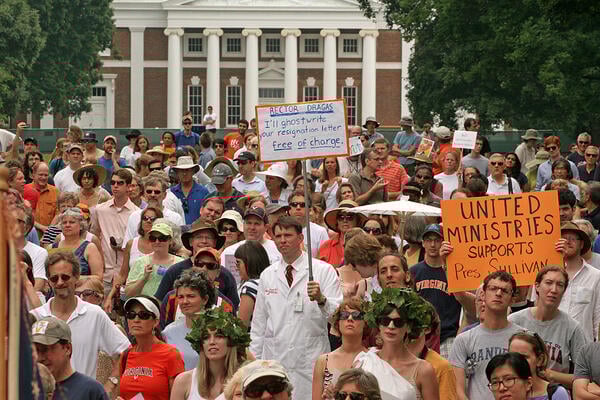
    Over a decade ago, here at the University of Virginia, we had a nasty little fight with our Board of Visitors when they tried to fire President Teresa Sullivan with little more logic or rationale than we’re currently seeing come out of Washington. (The American Association of University Professors produced a pretty good report about it, if you want to read something unsettling.)

    Our opponents in that little pas de deux had a degree of ignorance that amply matched their arrogance, but we were lucky in discovering allies far beyond Charlottesville in our alumni base and other institutions.

    At the time, I recognized that we had learned some smaller, tactical lessons in the whole shindig that might be relatively portable across different universities. I almost published them, but decided that it was better to let my university go forward without adding my two cents.

    Now, however, in our moment, these seem relevant again. So, in the wake of Columbia’s capitulation to Trump’s assault, I dusted them off and polished them up. They didn’t need much polishing, to be honest. Consider this a small pamphlet for thinking about hosting “a little rebellion now and then” on your campus, when such is needful.

    1. Don’t start the fight. Have a prompting event—even if you invite it merely by doing your job. We were lucky to have a “day of infamy” jump-start our events in 2012. It was dropped, gift wrapped, into our lap. We were, from the beginning, in the position of the victim—the one who was wronged. Being the aggrieved party from the start helps. A lot.
    1. Be a big tent, but have one common aim. Because the misdeed was so expansive in its implications, the scope of our “we” was enormously wide. The “we” who was violated included not just the president, but the administration, faculty and staff—and not just them, but the students, and the alumni, and indeed the community of Charlottesville, and possibly all those interested in the future of academia in America and beyond. And anyway, you’re not seeking consensus: You’re seeking alliance. This is hard for us academics, because we are so excellent at invidious distinctions. But remember: World War II was won by an alliance of the British empire, the anticolonialist liberal United States and the definitionally revolutionary U.S.S.R. If those three states could work together, you can say something nice about professors in the business school, or vice versa. The same goes for deans and administrators: They are not the enemy. By coordinating the most expansive community as the community to whom voice could be given, we ensured not just that numbers were on our side, but that the widest set of complaints and grievances were brought to bear on the most precise targets.
    2. Lean into shared governance. No one ever expected the UVA Faculty Senate to be consequential, least of all the Faculty Senate. It was the place where we sent junior faculty “to learn about the university”; given how much import anyone normally gives to learning about the university, that shows you what we thought of it. But, to borrow from Don Rumsfeld, you go to war with the institutions you have, not the institutions you wish you had, and now everyone knows that the Faculty Senate can matter, and matter decisively. I hope we never forget it. I hope you can learn from our example and not your own.
    3. Tenure counts. You know that thing we say about tenure mattering for free expression and for ensuring that you can speak your mind on academic matters without getting fired by administrators who don’t like what you have to say? I used to find it annoying and silly— “of course that’s not going to happen, not today,” I thought; “no one will be so dictatorial.” Well, lookie here—I was wrong. The first and consistently most vocal group in the whole UVA fracas was the faculty. The staff members were behind us (especially the women on the university’s staff, who had felt represented by Sullivan in a powerful way), but obviously they were in the most vulnerable position. And the deans and administrators were by and large ready to accept the coup as a fait accompli. (While the deans of the various schools eventually came around, it took them some time; only after they realized that almost every last one of the faculty were extraordinarily pissed, and shopping their CVs around, did they realize that they were hurting themselves more by not saying anything than they would by saying something.)
    1. “If a problem cannot be solved, enlarge it.” Dwight D. Eisenhower said that, and it’s true here. The prompting event of our crisis was of course the firing of our President Sullivan by our board rector, Helen Dragas, and a few others (let’s be honest about what it was and who did it). But it was clear from the beginning that there were larger issues here—about the disconnect between oversight, management and teachers and researchers, about the creeping “corporatization” of the board (though that does a terrible disservice to wise governance of corporations around the world, which would never be run the way most university boards try to run their institutions), about the failure of faculty to take seriously how the higher levels of the university were operating—matters far larger than simply this act. As the crisis developed, we realized we were reaping the consequences of structural contempt toward the faculty (and the rest of the university, really) by the Board of Visitors and a crisis of apathy about university governance on the part of the faculty. The problem may be larger than you first realize: Get it in focus, first and foremost.
    2. “Do you expect me to talk?” “No, Mr. Bond, I expect you to die.” The idea that disputes of these sorts are amenable most basically to conversation is mistaken. Statements were continually communicated to our Board of Visitors, but we knew almost at once that argument was not our real weapon. Once you decide to dissent, the time for talk is over, at least with opponents such as these; they will not be amenable to conversation—not without a great deal of pressure from other forces and sources. Your aim is not to convince your opponents; your aim is to beat them. To do that, you must persuade potential allies, not actual enemies. That said, it never hurts to be reasonable and produce strong arguments directed at your opponents, so long as you know those arguments are largely valuable because they are overheard by others.
    3. At no point should you demonize or vilify your opponents. It weirdly invests them with power you need not bestow. You’re in a fight with someone who’s like a toddler—do not descend to their level. Speak calmly, as to a toddler having a temper tantrum. You won’t convince them, but you will demonstrate you are not afraid. That will upset them more. If they lose, of course they will say you did demonize and belittle them; they’ll call you “so mean,” “ungracious” and “nasty in tone.” Don’t worry; everyone else knows otherwise. Saying that may be their only consolation prize. Let them have it. You’re walking out with the Benjamins. Or, in our case, the Sullivan.
    1. Time is not your friend, but nonetheless, boil the frog slowly. In a delicious irony, the coup at UVA was reversed “incrementally”—a bad word for Rector Dragas, a good word for President Sullivan. Resistance to the coup began with some immediate disquiet from the faculty and a few students on campus when it was first announced. But the faculty knew from the beginning they wouldn’t be the material cause of any change; they needed more powerful allies. The momentum built slowly, then snowballed at the end. And the momentum built both inside the institution and outside it: inside, mostly by growing outrage at the trickle of information released and the little bit we could discover (or, more properly, the media could discover) over time, and outside, by the gradual but eventually approaching exponential expansion of numbers and kinds of UVA stakeholders who expressed outrage.

    The end of the first week saw the Faculty Senate meeting where 800 faculty and others listened as our provost, John Simon, expressed real and powerful concern, and subtle outrage, over what had happened and how it had happened. By the end of the second week, we had politicians, alumni, other university faculties—and a number of major donors—speaking out in outrage. And then, too, we began to see newspaper editorial boards—and Katie Couric—condemn the firing. Had the Board of Visitors waited a bit longer to reverse its action, no doubt the United Nations, the E.U., the Nature Conservancy, the NBA, al Qaeda and Justin Bieber would have issued statements.

    The lesson here? Don’t try to get everyone on board all at once. Trust the swarm method, but go through your list of stakeholders methodically—moving from the most swayable to the least so. Rank them in their “get-ability,” and then get them, encouraging the ones you already have on your side to increase pressure on the next-most-gettable ones. On day two of a crisis, you probably won’t get The Washington Post and your institution’s major donors to sign on to calling this an outrage; but by day 10, or 14, with a little help, and momentum from other people, you may. And better still, while this is happening, your opponents probably won’t notice the pressure gradually ratcheting up, as they are simply trying to keep responding to different constituencies. By the time they realize that there are a lot of people angry at them, there’s little they can do to quell the anger, except give in.

    1. Have a lousy enemy, and let everyone see that. Maleficence is usually associated with incompetence, and in the case of this episode, that was true. We were extraordinarily fortunate in our foe. The Kremlin-like silence of the Board of Visitors as the shock and anger mounted; the Politburo-like prose when the board decided to speak; the slow uncovering of the incredibly flimsy reasoning behind the decision, revealed in emails over the previous months; the remarkable stubbornness, coupled with utterly no sense of the appearance of absurdity regarding the irrationality of the stubbornness—it’s as if we couldn’t have had a better opponent for this fight.

    But it is important that what gets publicized is your opponents’ badness, not your contempt for them. Academics are really, really skilled at expressing contempt. Few of us realize it doesn’t make us look good, either in faculty meetings or on social media. You never win an argument by judging your opponents. Instead, let your opponents be seen for who they are.

    This is mostly out of your control, but it might be possible to imagine different ways of framing your opponent, so that different profiles of them emerge. In our case it was clear early on that it would be very important not to make this about the entire Board of Visitors but to focus on a small clique inside it so that pressure could be put upon the whole in such a way that some fractures would result; we hoped that such fractures, once they appeared, would quickly cause the whole to shatter. And they did: In the end Sullivan’s reinstatement was a unanimous board decision, the unanimity induced by the fact that the Dragas faction knew they had lost and quickly crumbled.

    Anyway, these are some things I think we learned. Best of luck if you get in a position to need them. You’ll need all the luck you can get. We certainly did. But, you know, luck is what happens when preparation meets opportunity. That was on a motivational poster I saw once. Occasionally such things are useful. If you don’t know what I mean, I fear you will soon.

    Charles Mathewes is a professor of religious studies at the University of Virginia.

    Source link

  • U of Utah Urges Compliance After State Restricts Pride Flags

    U of Utah Urges Compliance After State Restricts Pride Flags

    A University of Utah lawyer last week urged faculty to comply with the state’s new prohibition on the “prominent“ display of pride flags and other flags on campus, The Salt Lake Tribune reported.

    Deputy general counsel Robert Payne urged faculty in a meeting not to “be a lightning rod to the Legislature” and said state lawmakers “have a lot of power over us,” the newspaper reported. Payne also suggested that if employees tried to get around the law by hanging pride posters instead of flags, legislators might “come back with something worse,” the Tribune reported.

    Utah’s Republican-controlled Legislature passed House Bill 77 last month, and Gov. Spencer J. Cox, a Republican, let it become law without signing or vetoing it. When it takes effect May 7, it will ban government entities, including public colleges and universities, from displaying flags on government property “in a prominent location.” Some flags are exempted, such as the U.S. flag and the prisoner of war/missing in action flags.

    Trevor Lee, a Republican Utah House member and HB 77’s chief sponsor, told Inside Higher Ed he didn’t file the legislation specifically to ban pride flags. But “that’s just been the biggest, biggest issue of any political flag,” he said. “I mean, it’s not even close.”

    Lee said the flags go beyond representing inclusivity. He said, “It’s a sex flag. It tells everyone what sexual ideology you believe in.”

    The University of Utah has released guidance online saying the law generally bans pride flags, Juneteenth flags and others from prominent locations. The guidance notes exemptions, including that students and employees can “wear or carry a flag as a personal expression of free speech,” and that employees can decorate their offices with flags “so long as they are not easily visible outside of their personal space (e.g., posted in an office window).”

    Payne said the university hasn’t yet decided how it will enforce the flag ban, according to the Tribune. The university’s guidance says, “Flags may also be used as decorations in connection with a brief cultural celebration hosted by the university within a university building,” but can’t be up for more than a week. It’s unclear whether pride will be considered a cultural celebration.

    Source link

  • Federal Grants Website Gets DOGE’d

    Federal Grants Website Gets DOGE’d

    The Department of Government Efficiency has taken control of a federal website that universities and other organizations use to find out about—and apply for—federal grant opportunities, The Washington Post reported Friday. 

    Federal officials have historically listed on Grants.gov more than $500 billion in annual federal grant opportunities from numerous agencies, including the Defense, State and Interior Departments, that fund research on a range of topics, such as cancer, cybersecurity and wastewater management. However, an engineer from DOGE—the agency run by billionaire Donald Trump donor Elon Musk—deleted, without notice, many of those officials’ permissions to post those funding opportunities.

    Agency officials have been instructed instead to send their planned grant notices to a Department of Health and Human Services email address that DOGE is monitoring. The HHS, which has long managed Grants.gov, said it’s “taking action to ensure new grant opportunities are aligned” with the Trump administration’s priorities outlined in its Make America Healthy Again agenda, according to the Post

    Now DOGE is responsible for posting grant opportunities. And if it delays them or stops posting them altogether, that “could effectively shut down federal-grant making,” an anonymous federal official told the Post.

    Source link

  • Students and Institutions in Limbo After Mass Layoffs at OCR

    Students and Institutions in Limbo After Mass Layoffs at OCR

    A month after the Department of Education closed seven of its 12 regional civil rights offices and laid off nearly half the staff in the Office for Civil Rights, there’s still uncertainty about how the agency will perform its functions with such reduced numbers.

    OCR was founded to ensure equal access to education for all students and is responsible for investigating claims that schools and institutions of higher education failed to protect their students from discrimination. But under the current administration, the office has shifted gears to focus on President Donald Trump’s top priorities: removing trans women from women’s sports teams, protecting against alleged discrimination against white students, and protecting students against alleged antisemitism.

    Back in February, the office’s acting head, Craig Trainor, told employees to pause all investigations except for a handful that aligned with those priorities, according to ProPublica. Trainor quickly told investigators they could once again begin investigating disability-related complaints, which made up the largest share of the pending complaints, but not those related to race- or sex-based discrimination.

    Tracey Vitchers, the executive director of It’s On Us, a nonprofit advocacy organization focused on combating campus sexual violence, says this harks back to the first Trump administration: At the time, a large number of complaints were “quietly ignored” by OCR, leading to a massive backlog for former president Joe Biden’s administration to handle when he came into office in 2021.

    “That was the playbook during the first administration, and it was just that they just sat on shelves, essentially—digital shelves. Those cases were put on the digital shelf, ignored, not opened, not investigated,” she said.

    When Trump took office, more than 12,000 cases were open with OCR, including over 3,000 at institutions of higher education, according to a database of open OCR cases.

    Over half of all OCR cases were being handled by a regional office that is now closed, according to a report from Sen. Bernie Sanders, a Vermont Independent who is the ranking member on the Senate Health, Education, Labor and Pensions Committee. Following the layoffs, each investigator’s caseload—which was already at an all-time high of 42 cases—is expected to skyrocket to 86 cases as a result of the cuts, significantly reducing investigators’ ability to resolve each complaint, per the report.

    The data in the report reflects concerns from former OCR staffers who warned that the layoffs would make protecting students’ civil rights more difficult.

    Experts say that OCR complaints going unresolved can be a serious impediment to a student’s ability to learn.

    “At the postsecondary level, common complaints are refusals to accommodate,” said Paul Grossman, an attorney who worked at OCR for 41 years and is now executive counsel for the Association for Higher Education and Disability. “A student wants a particular kind of accommodation, and the school says, ‘No, that’s a fundamental alteration or an undue burden,’ and the student, as a result, may get dismissed because they don’t meet the academic standards, may get dismissed because they don’t meet conduct standards, whatever the case may be. Or the student may just be unhealthy—they may not be well enough to continue, because they don’t get the accommodation.”

    The public repository of open OCR cases, which used to be updated weekly, has not been updated since Jan. 14, just before Inauguration Day. But ProPublica reported in late February that only about 20 new cases have been opened since Trump took office, whereas about 250 cases were opened in the same period last year.

    That most likely comes down to OCR’s decisions about what to investigate. But Vitchers also noted that, since even before Trump’s second term began, she hasn’t been as eager to advise students to open a case with OCR in response to their institutions mishandling Title IX complaints. After the Biden administration finalized its Title IX regulations, which offered protections to transgender students and which organizations like It’s On Us said were much more sympathetic to victims of sexual violence than Trump’s previous regulations, in the summer of 2024, numerous states sued to block the regulations. The legal tussle made for a complicated environment for students seeking justice for sexual harassment or assault through Title IX, and the Biden rule was eventually vacated just over a week before Inauguration Day.

    “Very honestly, with the back-and-forth on Title IX, and particularly once we saw the Biden rule get challenged, we sort of, somewhat quietly, encouraged students to really pause and take a hard look at, what was the outcome that they were looking for? And help them assess, is the OCR complaint going to get you the outcome that you’re actually looking for here?” she said. “If it is, then we will support you in finding an attorney and filing a case. But with so many of the students that we work with, many of them made the decision to, essentially, protect their own peace.”

    ED did not respond to a request for comment.

    Mediation, Digital Accessibility and More

    On top of concerns about the backlog of complaints going unanswered, experts are also worried about other, lesser-known functions of OCR that likely are not currently happening.

    In some cases, complainants can opt for early mediation, a type of resolution that is more informal and generally quicker than an investigation. But it is unclear if such mediations are happening currently; Grossman said he has heard one example of a planned mediation being canceled, and ED did not respond to a question from Inside Higher Ed about the issue. Grossman also noted that OCR is responsible for continuing to monitor the aftermath of investigations that have already been resolved.

    Jamie Axelrod, director of disability resources at Northern Arizona University and a past president of AHEAD, pointed out that OCR is responsible for conducting digital compliance reviews, in-depth surveys of whether a school or university’s digital resources, such as its website and learning management systems, are accessible to students with disabilities. During the previous Trump administration, Axelrod said, ED stood up a specialized team to complete these reviews and provide technical assistance to institutions to help them make their digital resources more accessible. Now, that team has been reduced significantly, according to Axelrod.

    He also noted that OCR is supposed to be a tool schools and universities can turn to in order to answer any questions about how to appropriately accommodate their students.

    “The point of that is to avoid circumstances that wind up causing discrimination against students with disabilities, and so that’s a key role,” he said. “And it’s hard to really calculate how many instances of discrimination [that prevented from] happening in the first place. It’s hard to count what you prevented, but that is an important role, and I’m sure it leads to resolution of lots of complicated circumstances.”

    The impacts of the cuts are likely to go even deeper than the individual cases that have been displaced to new investigators and the specific programs that will likely fall by the wayside.

    “Like any postsecondary educational institution, there’s a lot of institutional memory that’s developed,” Grossman said. “You have to develop connections, relationships, understandings, insights, experience, and all these people who are going out the door, you’re just lighting a match to all that expertise and experience. And to me, that’s a really sad thing.”

    Source link

  • PSHE education can improve young people’s preparedness for higher education and beyond

    PSHE education can improve young people’s preparedness for higher education and beyond

    Personal, social, health and economic (PSHE) education is the school curriculum subject in England dedicated to supporting children’s safety, health, wellbeing and preparation for life and work. When timetabled and taught effectively, it can play a key role in improving young people’s preparedness for life beyond school, including for higher education and the graduate labour market. For instance, PSHE education can provide a safe and dedicated space for young people to learn about sex and relationships, budgeting and time management, among other things that most students will need to navigate more independently – and sometimes for the first time – during higher education.

    As the official subject association for PSHE education, and a charity and membership body supporting over 50,000 teachers and schools nationally with resources, training and guidance, the PSHE Association was especially interested in the Higher Education Policy Institute’s (HEPI) recent report, One Step Beyond, which investigated how well the curriculum as a whole prepares young people for life beyond school.

    The report, which is based on an analysis of data from a survey of 1,105 undergraduates in England, found that over half of participants wanted to have received more education on personal finances and budgeting (59%) and to have had more opportunities to learn ‘life skills’ (51%) prior to entering higher education. A large minority also wanted to have received more careers education (44%), a topic that PSHE education covers and which, when delivered well, can make a positive difference to young people’s confidence, sense of direction and career trajectories.

    Importantly, the report also found that over half (58%) of participants wanted PSHE education to be compulsory until 18. At present, while relationships, sex and health education (RSHE) is compulsory for 16- to 18-year-olds in schools with sixth forms – and our own PSHE education planning guidance runs up to post-16 / key stage 5 – this requirement is not applicable to other settings, including sixth form and further education colleges. Furthermore, existing PSHE education content on economic wellbeing, personal financial education and careers education is optional in all but independent schools. As there is evidence to suggest that these are topics that young people from more affluent backgrounds are more likely to be taught about and discuss with their parents, all of PSHE education, including economic wellbeing, personal finance and careers education, has the potential to contribute towards narrowing social inequalities. And this is what we argue strongly for in our response to the Curriculum and Assessment Review, alongside strengthening the expectation that all young people should benefit from PSHE education up to the age of 18.

    The good news is that since statutory RSHE requirements were introduced in 2020, these appear to have made a positive impact. And the findings from the One Step Beyond report support this idea, with half of the participants reporting feeling well prepared for sex and relationships in higher education in 2024 (47%) – almost double the percentage that reported feeling this way three years earlier (27%).

    Another aspect of life which PSHE education can help young people to navigate during school, college and higher education is mental health. The One Step Beyond report found that most participants believed that their schools or colleges had done a ‘good’ or ‘excellent’ job of preparing them to plan and manage their workloads (61%); take care of their mental health and wellbeing (56%); and use healthy coping strategies (55%). However, a substantial minority of participants did not feel this way, suggesting that there is room to improve the quality of education that students receive on these topics – and PSHE education can play a crucial role in making this happen.

    PSHE education provides opportunities for young people to learn about mental health and develop skills that can support them in taking care of it. For example, through PSHE education, young people can be taught about how to prevent and manage stress, which can aggravate or contribute towards the development of mental health difficulties. This is achieved in a variety of ways. For instance, by providing opportunities for young people to be taught about how to problem solve, develop greater emotional awareness, use healthy coping strategies, maintain good sleep routines and recognise when and how to access support for themselves or others.

    After leaving school, such teaching could help young people to navigate further and higher education, which both demand greater independence and present unique opportunities and challenges. Illustrating this, when 136 A-level students were asked to describe their experience of sixth form using three words or phrases, the majority (79%) used at least one term to describe it as challenging and almost half (43%) described it as intense, stressful or overwhelming. Furthermore, across several interview studies, students have consistently described studying A-levels as a ‘massive step up’, a ‘jump’ and ‘a completely different ballgame’, which demands far more self-directed learning and can be an emotionally turbulent experience. It has also been found that experiencing education-related problems is among the main reasons why 16- to 18-year-olds contact Childline. So, PSHE education during school and post-16 education has the potential to support young people and contribute to improving higher education students’ mental health by equipping them with knowledge, understanding and skills that can help them to navigate this stage of education prior to entering it.

    To conclude, high-quality PSHE education has the potential to improve young people’s preparedness for many aspects of higher education – social, academic and economic – as well as for life beyond its walls. And it is for this reason that the PSHE Association has argued in response to the Curriculum Review and Assessment Group consultation that personal finance education and careers education should be placed on the same statutory footing as RSHE and for PSHE education, comprising all these elements, to be scheduled as a school curriculum subject in all schools, with at least one timetabled lesson per week.

    Findings from the One Step Beyond report indicate that PSHE education has had a positive impact on preparing young people for life beyond school, but that there is significant potential and need to build on improvements since elements of RSHE became statutory. This includes more emphasis on economic wellbeing, careers and mental health, as well as a guarantee that young people in all post-16 education settings can benefit from PSHE education until the age of 18 – not just those in specific settings.

    Source link

  • Oral histories of Ukrainian refugees in English higher education

    Oral histories of Ukrainian refugees in English higher education

    Since the beginning of the full-scale invasion of Ukraine in February 2022, Ukrainians have fled in mass numbers to seek refuge. Among this group, many (prospective) students and academics had to leave Ukraine to seek safety and new opportunities within the higher education sector elsewhere.

    We conducted research to create an oral history archive of the experiences of Ukrainian refugees in the English higher education sector. We interviewed 11 Ukrainian refugees ranging from prospective students to qualified academics, to explore their ability to navigate the sector. We found that despite some support measures available, Ukrainian refugees face numerous challenges when trying to access and participate in higher education in England, whether they are students or academics.

    Even with special support measures in place, the process is far from straightforward. These refugees often have to be incredibly resourceful, using all available connections and resources, even those outside the higher education sector, to overcome the barriers they face. This journey to become part of the higher education community is not just about finding opportunities but also about actively creating them, demonstrating their resilience and determination.

    A place of opportunity

    Ukrainian students and academics reported that the UK broadly, as well as specifically higher education institutions in England, created opportunities for them to adapt and succeed in their new host community. Institutions individually or in partnership with organisations such as the Council of At-risk Academics (CARA) provided sanctuary scholarships, financial support, free language classes, and safe spaces for Ukrainians to connect within their institutions.

    Ukrainian students and academics as well as those who have been aspiring to become students or academics in England also expressed their gratitude towards the Homes for Ukraine scheme provided by the UK government, as their hosts’ support alleviated pressures that typically burden refugees when entering new countries and the HE sector.

    Here is an example of a positive influence of hosts on the adaptation to life in England by one Ukrainian academic:

    Thank God, there was a family who was ready to host us… We are very happy about this, because I think this is a lifelong acquaintance. The key one, the one that turned our lives around. I came with my children, and my children are almost adults. We settled in very well, they provided us with full support in absolutely everything, such as accommodation and children’s education.

    Persistent challenges and pursuing agency

    Despite the support measures, our interviewees explained that they have faced many persistent challenges that restricted their ability to navigate the English HE sector. Language barriers still existed within HEIs and the high cost of living in England created financial pressures and increased difficulty to find employment and accommodation. Another key obstacle that impacted Ukrainian prospective students and academics’ experiences was the non-recognition of previous qualifications that were attained in Ukraine.

    One of our interviewees summarised their current situation:

    My career in Ukraine seems to have reached almost the highest level. I mean, if you look at the scientific field, it is a doctor, a professor. Whereas in England, it has dropped to a lower level, and now I need to build it back up to a higher one.

    Both Ukrainian students and academics, and those aspiring to become students or academics in England, have been experiencing challenges that the British government and English institutions struggled to rectify. However, we found they were able to discover avenues independently or collectively as Ukrainians to create their own opportunities. By using technology to communicate and discover information, attending extra classes to improve their skillsets, finding appropriate independent agencies that help Ukrainian students enrol to English universities, and creating their own communities within England has provided them with the agency to reach their goals.

    One participant highlighted the importance of have access to a Ukrainian community in England:

    …when all Ukrainians know that, for example, on Saturdays they gather in such a church, and on Thursdays they gather for language courses there. And that is it, it is necessary to give advertisements and announcements through these chats, through some pages on Facebook.

    How HE can help

    These findings are crucial for guiding policymaking at both national and institutional levels in England and beyond. They highlight the effectiveness of current support measures for refugees, including those from Ukraine who have gone to great lengths to generate and apply their resourcefulness in navigating the challenges of integrating into a host community and HE sector.

    While Ukrainian refugees face general challenges such as language barriers, high living costs, and issues in finding suitable or any employment and accommodation, there are also specific challenges related to the HE environment which require interventions: recognition of prior qualifications, enhanced English language support, financial assistance, building social networks, utilising technology.

    All HE stakeholders, from the government to the employees at higher education institutions, play a crucial role in supporting Ukrainian refugees. Thus, by implementing the following recommendations, they can help refugees find and exercise their agency and succeed in the HE environment:

    • Develop clear policies for qualification recognition by working with credential evaluation services to streamline the recognition process for Ukrainian qualifications
    • Expand English language support programs by offering more intensive and specialised language courses tailored to the needs of Ukrainian refugees
    • Explore ways for increasing financial support by provide additional scholarships, grants, and affordable housing options to reduce financial pressures
    • Foster community building by create initiatives that encourage social integration and peer support amongst Ukrainian refugees
    • Leverage technology by using digital platforms to disseminate information, offer virtual support, and connect refugees with resources and mentors

    Source link

  • Sexual misconduct data is coming – here’s what universities should do to prepare

    Sexual misconduct data is coming – here’s what universities should do to prepare

    In 2024, the Office for Students (OfS) launched a pilot survey asking UK students about sexual misconduct during their time in higher education.

    For the first time, there is now a national attempt to capture data on how widespread such incidents are, and how effectively students are supported when they come forward.

    The release of the survey’s results will be a moment that reflects a growing reckoning within the sector: one in which the old tools and quiet handling of disclosures are no longer fit for purpose, and the need for culture change is undeniable.

    This new initiative – known as the Sexual Misconduct Survey (SMS) – ran as a supplement to the National Student Survey (NSS), which since 2005 has become a familiar, if evolving, feature of the higher education calendar.

    While the NSS focuses on broad measures of the student experience, the SMS attempts to delve into one of its most difficult and often under-reported aspects – sexual harassment, violence, and misconduct.

    Its arrival comes against the backdrop of high-profile criticisms of university handling of disclosures, including the misuse of non-disclosure agreements (NDAs), and a new OfS regulatory condition (E6) requiring institutions to take meaningful steps to tackle harassment.

    Understanding the SMS

    The Sexual Misconduct Survey collects both qualitative and quantitative data on students’ experiences. It examines the prevalence of misconduct, the extent to which students are aware of reporting mechanisms, and whether they feel able to use them. Its core aim is clear – to ensure students’ experiences are not just heard, but systematically understood.

    Previous, disparate studies — many led by the National Union of Students and grassroots campaigners — have long indicated that sexual misconduct in higher education is significantly under-reported. This is especially true for marginalised groups, including LGBTQ+ students, Black and disabled students, and students engaged in sex work. The SMS marks an attempt to reach further, with standardised questions asked at scale, across providers.

    Despite its intention, the SMS is not without issues. A key concern raised by student support professionals is the opt-out design. Students were automatically enrolled in the survey unless they actively declined – a move which risks retraumatising victim-survivors who may not have realised the nature of the questions until too late.

    Timing has also drawn criticism. Coming immediately after the exhaustive NSS — with its 26 questions and optional free-text fields — the SMS may suffer from survey fatigue, especially during an already intense period in the academic calendar. Low response rates could undermine the richness or representativeness of the data gathered.

    There are also complex ethical questions about the language used in the survey. In striving for clarity and precision, the SMS employs explicitly descriptive terminology. This can potentially open up difficult experiences unrelated to higher education itself, including childhood abuse or incidents beyond university campuses. Anonymous surveys, by nature, can surface trauma but cannot respond to it — and without parallel safeguarding or signposting mechanisms, the risk of harm increases.

    Lastly, the handling of disclosures matters. While survey responses are anonymous, students need to trust that institutions — and regulators — will treat the findings with sensitivity and respect. Transparency about how data will be used, how institutions will be supported to act on it, and how students will see change as a result is essential to building that trust.

    What to do next?

    The data from the pilot survey will be shared with institutions where response rates and anonymity thresholds allow. But even before the results arrive, universities have an opportunity — and arguably a duty — to prepare.

    Universities should start by preparing leadership and staff to anticipate that the results may reveal patterns or prevalence of sexual misconduct that are difficult to read or acknowledge. Institutional leaders must ensure they are ready to respond with compassion and commitment, not defensiveness or denial.

    Universities should be prepared to review support systems and communication now. Are reporting tools easy to find, accessible, and trauma-informed? Is the student community confident that disclosures will be taken seriously? These questions are important and there is potential for the survey to act as a prompt to review what is already in place as well as what might need urgent attention.

    Universities should also engage students meaningfully. Institutions must commit to involving students — especially survivor advocates and representative bodies — in analysing findings and shaping the response. The worst outcome would be seeing the SMS as a tick-box exercise. The best would be for it to spark co-produced action plans.

    When data is released, institutions avoid the urge to benchmark or downplay. Instead, they should be ready to own the story the data tells and act on the issues it raises. A lower prevalence rate does not necessarily mean a safer campus; it may reflect barriers to disclosure or fear of speaking out. Each result will be different, and a patchwork of responses is no bad thing.

    Finally, it is important to look beyond the numbers and see the person. Qualitative insights from the SMS will be just as important as the statistics. Stories of why students did not report, or how they were treated when they did, offer vital direction for reform and should be something which university leaders and policy makers take time to think about.

    This is only the first year of the SMS, and it is not yet clear whether it will become a permanent feature alongside the NSS. That said, whether the pilot continues or evolves into something new, the challenge it presents is real and overdue.

    The sector cannot afford to wait passively for data. If the SMS is to be more than a compliance exercise, it must be the beginning of a broader culture shift – one that faces up to what students have long known, listens without defensiveness, and builds environments where safety, dignity, and justice are non-negotiable.

    Lasting change will not come from surveys alone. Asking the right questions — and acting with purpose on the answers — is a critical start.

    Source link

  • How (and why) to get beyond traditional essays

    How (and why) to get beyond traditional essays

    I vividly recall the confusion among my classmates when the first assessment grades were released during our master’s course at a leading UK university.

    Many had invested weeks in research and writing, feeling confident in their understanding of the subject. However, despite their efforts, many essays received unexpectedly low grades, and feedback highlighted a lack of critical engagement, analytical depth, and structured argumentation – elements essential at the postgraduate level.

    My cohort was comprised mainly of international students. Many students for whom English was not a first language struggled to articulate their arguments clearly, ultimately impacting the overall coherence of their work.

    During our feedback discussions, it became evident that the core issue was not a lack of subject knowledge but rather a misunderstanding of the academic conventions governing the structure and articulation of ideas.

    The challenges presented by unfamiliar practices, such as citation and referencing, only compounded these difficulties.

    Over time, I heard similar struggles from students of various backgrounds, revealing a recurring theme. Whether I was a student, class representative, tutor, or researcher, I observed that students faced fewer challenges in mastering course content and more challenges in expressing their knowledge through unfamiliar formats, such as essay-based assessments. This realisation left a lasting impression on me.

    Emotional and psychological impact

    For many students, adjusting to such systems is not merely an academic challenge but also an emotional and psychological one. High-achieving students from their home countries often experience the shock of receiving unexpectedly low grades on their initial assignments. This can lead them to question their abilities and sense of self-worth.

    Some, overwhelmed by the high stakes of postgraduate education – especially those managing financial burdens or caring for dependents – find themselves under immense pressure. In extreme cases, I’ve witnessed students spiral into distress, with one even contemplating suicide after failing a dissertation. Such stories are a grim reminder that failure can feel unbearable for someone accustomed to excelling.

    This intense pressure, stemming from rigid assessment structures, can sometimes lead students to engage in academic misconduct and unethical solutions, such as plagiarism and using essay mills.

    Every assignment feels like a make-or-break moment for those juggling the demands of visas, funding, and future careers, further amplifying the emotional toll of education.

    These experiences have convinced me that while essays remain valuable tools for assessing reasoning and critical analysis, they should not be the sole measure of deep learning. Modern assessment structures must evolve to reflect the diversity of student cohorts, embracing various learning styles and backgrounds while upholding academic standards.

    Inclusive assessment practices promote fair evaluation of academic knowledge while prioritising student well-being.

    Broadening the lens – multimodal assessments

    Assessment should not just measure learning – it should facilitate and inspire it. Single-format, high-stakes assessments can disproportionately disadvantage students facing personal challenges, time constraints, or unfamiliarity with academic norms.

    Research consistently shows that students prefer assessments offering flexibility and choice, allowing them to tailor tasks to their strengths and interests.

    Concerns about compromising academic rigour often accompany discussions of diversifying assessments. However, as David Carless emphasises, rigour is not tied to format – it lies in the expectations and standards underpinning any method.

    Multimodal assignments allow students to express their knowledge in diverse ways, such as presentations, reflective journals, or case studies, while fostering essential skills like multimodal literacy.

    In today’s interconnected and media-rich world, these formats prepare students to navigate and engage with complex communication demands.

    Aligning assessments with real-world demands

    Richard Wakeford highlights that an effective assessment must align with course objectives while capturing a meaningful combination of students’ abilities, skills, achievements, and potential. Beyond measuring academic progress, assessment should also provide insight into future performance. Yet, traditional essay-based methods fall somewhat short of developing the practical competencies required in today’s job market beyond academia.

    Students value assessments that reflect real-world professional tasks, as highlighted in a study by David Carless, reinforcing their importance beyond the classroom.

    Many careers demand skills such as report writing, public speaking, and problem-solving – competencies that theoretical essays only partially address. Assessment practices should move beyond rigid academic standards and embrace authentic assessment methods incorporating applied learning to better equip students for professional environments.

    Diverse assessment methods and technologies are now available to facilitate this transition. Digital tools enhance exam delivery, streamline feedback, and improve the overall assessment process.

    By incorporating multimodal assessments – such as policy briefs, research portfolios, infographics, case studies, and presentations – educators can not only evaluate students’ academic knowledge but also cultivate essential workplace skills.

    Standardised rubrics can ensure fairness and consistency across different formats. Ultimately, the aim is to assess the depth of analysis, evidence-based reasoning, and clarity of argumentation.

    Your evaluation, your choice

    Offering students flexibility and choices in assessments fosters autonomy, which in turn boosts engagement and promotes deeper learning. When students are allowed to choose tasks and formats that resonate with their interests and strengths, they become more motivated, perform at higher levels, and show greater persistence in their efforts.

    An example from one of my modules illustrates this well. Offering students the choice to submit either an essay or a presentation for the innovation in education assignment was warmly received, as it allowed them to showcase their expertise in different contexts and disciplines through written analysis, audio-video or verbal presentation.

    Similarly, integrating oral components like brief viva or follow-up discussions alongside written submissions could enable students to express their key arguments verbally, bridging the gap between their knowledge and their ability to convey it in academic writing. Such recorded sessions could ensure that students’ intended messages align with instructors’ understanding by mitigating language barriers while upholding academic integrity.

    Nevertheless, it’s essential to recognise that expanding assessment methods involves several practical considerations, including time, faculty workload, and institutional constraints. JS Curwood points out a common concern among educators – existing rubrics may not be suitable for evaluating innovative assessment formats, and there can be inconsistencies in grading among different instructors.

    To address these issues without overburdening staff or resources, targeted reforms – such as updated rubrics, moderation, staged submissions, and brief sustainable feedback – can be implemented. Such small adjustments can help students navigate potential setbacks by engaging more meaningfully with feedback and developing resilience – elements integral to the learning process.

    Hidden curriculum and transparent expectations

    For many students, especially those from diverse educational systems, academic writing in Western institutions introduces a “hidden curriculum” that is often unspoken. In regions like South Asia, East Africa, and parts of the Middle East, assessments typically focus on knowledge recall and adherence to textbooks.

    Deviation from prescribed content is often penalised. In contrast, UK institutions prioritise originality, critical synthesis, and independent argumentation—expectations that are not always clearly communicated to students initially.

    A study conducted by LSE’s Change Makers program (2022) revealed that many international students struggle not due to lack of knowledge but because they are unfamiliar with the nuanced expectations of UK academic writing. The same report indicated that students often misinterpret feedback, further exacerbating their frustration.

    Research by David Carless emphasises the importance of transparent assessment processes. While rubrics can clarify expectations, students frequently find them abstract and challenging to interpret. Many are confused by vague feedback phrases such as “lacks critical analysis” or “needs better synthesis.” Perceptions of assessment tasks—shaped by previous learning experiences – can also significantly influence how students respond to these tasks. Therefore, ensuring transparency and clarity in the design of assessments and feedback is crucial.

    One effective strategy is using annotated exemplars – high-quality student work paired with commentary explaining key attributes. After my cohort requested such resources in one of our modules, the instructor provided a selection of exemplars to showcase various approaches to academic writing and argument development.

    These insights into different structures and styles proved invaluable in clarifying the expectations for essays. Research supports this approach, showing that students find exemplars helpful, particularly in studies focused on classroom discussions of exemplars and the role of exemplars as formative assessments.

    However, it’s important to approach the use of exemplars with care. Some educators worry that they may stifle creativity if students focus too heavily on imitation rather than innovation. To address this concern, guided discussions can help unpack the elements of quality work while encouraging originality. When combined with structured academic writing workshops, these strategies can equip students to confidently navigate academic expectations.

    Balancing tradition with innovation

    The future of higher education rests on our ability to integrate traditional practices with innovative approaches in assessment. This evolution transcends mere changes in grading, reflecting a broader commitment to cultivating an inclusive academic environment that values diverse pathways to success. By incorporating multimodal strategies, we not only strengthen the rigour of our assessments but also enhance their applicability to real-world challenges.

    This shift underscores the need for education to move beyond the confines of theoretical knowledge and numerical grades. Instead, it should focus on developing graduates who are adaptable, reflective, and equipped with the practical skills necessary to navigate the complexities of life beyond academia. In doing so, assessment practices transform from simple measures of performance into tools that inspire and empower well-rounded individuals capable of leading and innovating in a dynamic world.

    Source link