Author: admin

  • Bettina Apthekar’s Higher Education and Student Rebellion in the United States, 1960-1969–A Bibliography

    Bettina Apthekar’s Higher Education and Student Rebellion in the United States, 1960-1969–A Bibliography


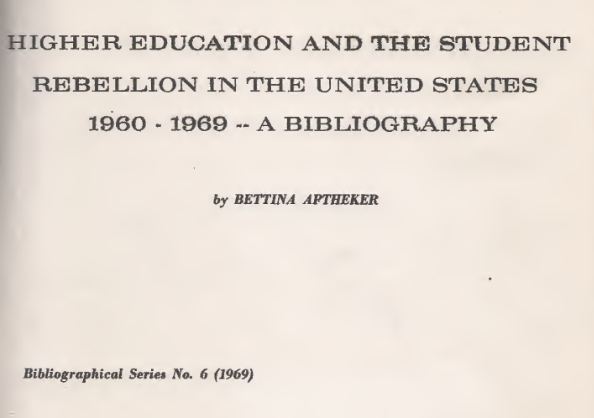
    To gain a historical perspective of what is happening today on US campuses, it’s essential to have a knowledge of what has happened before. The uncensored history of US higher education is poorly understood even on US campuses. Thankfully, some of it has been documented and it’s even available online. A case in point is Bettina Apthekar’s Higher Education and Student Rebellion in the United States, 1960-1969–A Bibliography.  This document is a treasure trove of information from the period of civil disobedience that saw some successes, successes that helped expand democracy in higher education and in society. Something we are struggling for again. If you know of other historical documents that are available online, please inform us. We’ll also add it to our list of resources

    Source link

  • Are smart phones at schools all bad?

    Are smart phones at schools all bad?

    If Bill Schluter had his way, cellphones would be banned five days a week. Schluter is head of Tatnall Upper School, a private high school in the U.S. state of Delaware. He wants cellphones out of school. 

    As increasing numbers of young people seem tied to their phones, researchers have found correlations between cellphone use and cases of depression, anxiety, cyberbullying and decreasing attention span.

    A 2019 study by the nonprofit organization Common Sense found that 84% of teenagers in the United States already possess a cellphone.

    Psychologist Jean Twenge, in her 2017 book “iGen“, wrote that increased phone use by teenagers directly correlates to a recent increase in adolescent anxiety, depression and inability to focus.

    Teens themselves, though, think cellphones have a place in the classroom — if used responsibly and with permission. 

    “I noticed people use them a lot in math class when they forget their calculator,” said Tatnall student Camille Johnson. “If their math teacher allows them to pull out their phone just for the calculator portion, they use it for that as long as you know they’re not being silly and going on other apps. We had a physics lab the other day where we were needing to use it to record our lab.”

    Social media replaces human connections

    Research also suggests that a hybrid class model that integrates technology into classwork, such as Teach to One or Google Classroom, leads to successful test scores as it personalizes the learning journey. 

    Twenge found that phones hinder teenagers’ ability to socially engage with each other. Schulter agreed. “Your ability to talk to each other, hear each other and have productive conversations is lessened with cellphones,” he said. 

    Twenge also found that the recent rise of technological advancements of cellphones and the COVID-19 pandemic encouraged teenagers to shut themselves in and only engage with their devices, as social media has replaced other forms of entertainment such as magazines and books. This leads to a wired, smartphone-dominant society, causing a significant spike in teenage mental health problems.

    A June 2024 Pew Research Center survey shows that 72% of public school teachers report that phones are a major distraction in class and make learning less effective. And a March 2024 report from Thorn, a nonprofit organization that works to fight online sexual abuse of children and teens, emphasized a disturbing increase in the creation and distribution of AI-generated child pornography. 

    The report said that with its ease of use, almost anyone can generate intimate deepfake images of others, whether it be of someone they know or a stranger. Child predators or children interested in their peers can create these pictures with the click of a button. 

    These images are commonly used in “sextortion”, a form of extortion in which the creator or owner of the photos threatens to publicly release them if the victim refuses their demands. 

    Abuse of technology

    Schluter recalled a story about a local and reputable school in which a male student used AI to superimpose nude pictures of his female classmates from the shoulder up to distribute online, resulting in chaos among the school board. “Board members of the school have resigned and everybody’s at each other’s throats,” he said. 

    In recent years, schools have responded to the cell phone issue. In many states across the country, such as California, New York, Maine and Pennsylvania, school districts have been able to limit the usage of cell phones among students, whether that be a phone-free day or an outright ban. 

    My high school, The Tatnall School, has implemented phone-free Wednesdays into the school week, forbidding students from having a cellphone in sight anytime during the day. 

    Schluter said that another local high school has banned smartphones five days a week.  

    “They started right off the school year with having a couple days in the school year, and then within a month, they had gone to a cellphone free policy at the school in its entirety, and it’s working great from all sources,” he said. 

    Resistance to phone bans

    Many students, and parents, aren’t entirely on board with banning phones, even one day a week.  “It just so happens that every single Wednesday, I’m like, oh my gosh, I need to do something really quick, and I can’t have my phone,” Johnson said. 

    She admitted that without a phone people learn to be more present in the moment. “But I don’t believe in completely banning them,” she said.

    Other students noted that the cellphone policy has caused some problems. Some use their phones as keys to their cars, for example, and having their phones confiscated makes that difficult. Some students have have seen teachers collecting phones from students even when they were simply outdoors during lunch. 

    Many parents are concerned that smartphone bans limit communication between them and their children, fearing they cannot contact them during an emergency. With a disturbing number of recent school shootings, this fear is understandable. To dampen parents’ worries, school faculty assure them that communication between parent and child will most likely be unnecessary if school safety precautions are followed.

    “If we’re cellphone free, the school would, if we do a good job of maintaining our safety precautions for the school, we would be a safe environment,” Schluter said.

    Finding a happy medium

    Naturally, parents still worry for their child’s safety and desire to keep constant contact, even if it’s a simple text that tells them that their child is safe. 

    While many educators and some parents believe that phones only impair learning and have no place in a productive academic environment, others argue that the correct classroom model can allow cellphones to enhance education. 

    Consider online programs such as Duolingo or Google Classroom. These apps prove that technology can be effectively integrated into lesson plans to teach new skills while indulging the attachment young people have to phones and capturing their attention, a precious resource. If teachers worry about students using their cellphones for non-academic purposes, they can employ programs to restrict access to certain websites or apps. 

    So what is the best best course of action to solve this problem? While the issues related to cellphones prove problematic, many believe that phones aren’t necessarily the root cause. The spike in cellphone usage may merely be an effect of the issues often associated with them.

    “Cellphones may be a symptom and not the cause of the shift, but the two are very interrelated,” Schluter said.

    Bans are only as effective as their enforcement and only encourage some teens to find ways around the bans. And despite teachers’ efforts to hold students responsible for their actions, this is also not a guaranteed fix. 

    Perhaps the best solution is a happy medium. Schools can allow teachers to create their own classroom phone policies and punish as they see fit. Or they can limit cell phone use while establishing specific areas or periods when people can be on their phones. 

    No matter which solution is most effective, technology is improving, and social media and smartphones are on track to become increasingly prevalent in our lives.

    “High school education has changed in huge ways in the past 30 or 40 years, and cellphones have been have been part of that,” Schluter said. “But I’m curious to know, not how we get back to the way things were in the 1990s necessarily, but to an atmosphere where students are more engaged.”


    Three questions to consider:

    1. Why do many schools trying to ban students’ use of phones?

    2. In what ways can phones by used responsibly in a class?

    3. In what ways do you feel tied to your phone? 


    Source link

  • Ideas for Relationship-Building as Resistance (opinion)

    Ideas for Relationship-Building as Resistance (opinion)

    As Subini Annamma and David Stovall write in their February piece, “Standing Up to the New Segregationists,” “When universities stay silent or indicate their willingness to comply with executive orders that seek to dehumanize anyone who is not white, male and cisgender, they are sending a message.”

    We would argue that all of us in the system of higher education, on individual and collective levels, are sending messages with our action or nonaction at this moment. The past few months have been a period of chaos marked by rapid-fire executive orders, threats to college and university funding, and presidential edicts that undermine higher education’s fundamental values. The whiplash of ongoing executive actions and their judicial reversals is overwhelming, and the ground keeps shaking under our feet.

    Consistent with a traumatic experience (when events occur faster than our ability to cope), some of us may be experiencing a kind of trauma response, an instinctive response to a perceived threat. Most of us have heard about fight-or-flight modes, but it seems to be fawn and freeze responses that are playing out at many institutions across the country. The fawning response in higher education manifested in the form of anticipatory compliance in the face of threats to colleges’ federal funding. Diversity, equity and inclusion offices were jettisoned within a blink of an eye.

    We also are seeing some of our colleagues struggling with the task of revising position descriptions and scrubbing institutional websites, all while trying to support their colleagues who are most at risk. And there are many of us who don’t know what to do; feeling unsettled and fearful, we are just trying to make it through each day.

    Despite what is happening around us, we have to continue to attend to our work—to do all of the things that keep the institution running, to be in relationship with our colleagues and to be in classroom spaces with our students. We may be asking ourselves how we can show up in a meaningful way when our world is on fire, or how we can move forward when we feel so powerless.

    But if we do nothing, what does that say about our commitment to the essential promises of education—to the free exchange of ideas and academic freedom, to a belief in science and innovation, and, most especially, to our commitment to access, diversity and equity, which we know enhances the learning experience for everyone? Are these not the things that drew us to education in the first place?

    This moment is calling us back to our essential purposes—the deep relationships with students, the excitement of new ideas bubbling up and the sense of freedom that comes from the creation of knowledge in the context of community. It is time for us to get to work, to reclaim our spaces, to take a stand. We cannot wait for someone else to save us: We must save ourselves. And we do so through deep relationships within the context of community. As we have learned from bell hooks, Audre Lorde, Paulo Freire and Kimberlé Crenshaw, relationships will be our resistance.

    Relationships are not just the touchy-feely outcome of safe learning spaces: They are the foundation. And what better action can we take to protect ourselves and our communities from harm than by strengthening our foundation for this moment and what lies ahead? Fortunately for us all, whether you are an educator or institutional leader who has always prioritized relationships or one who is looking to strengthen your community as the ground beneath higher education rumbles and shakes, relatively small efforts (which is perhaps all we can muster) can reap far-reaching benefits.

    There are a myriad of brilliant ways to foster belonging, structure brave dialogue spaces and listen deeply to others, indeed, many more than we could possibly incorporate here. What we offer are some practical ways to grow and maintain an ethic of care and relational accountability. We hope this inspires simple ways for you to gather with others or maybe gives you permission to explore your own ideas for slowing down to the speed of relationship-building. What we share here are not new ideas, but they may have been forgotten.

    The offerings below span many cultures and have been practiced in one form or another by communities over time in response to oppressive regimes across the globe. We just have to recall the wisdom of our ancestors and employ some of their communal resistance strategies. They made sense of the world, grieved, resisted and found joy. So, too, must we.

    Notice and Name It

    “I believe we have a responsibility to create ways of understanding political and historical realities that will create possibilities for change. I think that this is our role, to develop ways of working through which, little by little, the oppressed can unveil their reality.” —Paulo Freire

    We can’t pretend that what is happening in the world doesn’t impact us, our students or their learning. Perceived and real threats of harm impede learning and development. In noticing and naming what is happening, we give ourselves and our students a means of coming to terms with it. When we name the fears and acknowledge uncertainty, we release a bit of the tension and welcome participants in all their experiences. This could involve a facilitator-led nod to the political climate, musings from the group of what they are holding in their minds, a meditative moment or a two-minute journaling activity in which students reflect on what they need to let go of in order to be present for the work ahead in class. These techniques can be just as helpful in meetings and other convenings of staff and faculty.

    In location-diverse, online environments, where you can expect a wide range of pressing matters, feel free to use or adapt this Acknowledgment Statement developed by emareena danielles and Deborah Kronenberg for a PODlive series on facilitation.

    Play: A Shortcut to Joy and Laughter

    Play and laughter are part of our ancestral languages, of our somatic ways of being. They exist across every culture to fuel us, nourish us and allow us to be more fully human. When was the last time you used your body or voice or language in a new way? How can you make space for a moment of play at the start of any group work or class, faculty development workshop, or community meeting? As easy as making a sound and movement, drawing with your nondominant hand, appropriating a childhood game toward a collective goal, or engaging in gibberish conversations, the small, silly risk will lead to a room (virtual or otherwise) of laughter.

    The collective release of emotion through play creates a community poised to dig into the work with joy and openness and gives us a reference point of when we took a risk, went with the flow and practiced resilience. For a great resource, Moving Beyond Icebreakers by Stanley Pollack with Mary Fusoni not only has a plethora of games to try but teaches facilitators how to use the games as metaphors for the work ahead. You may also want to check out Professors at Play for a more in-depth discourse.

    Tell Stories

    “We tell stories because we are human. But we are also made more human because we tell stories. When we do this, we tap into an ancient power that makes us, and the world, more of who we are: a single race looking for reasons, searching for purpose, seeking to find ourselves.” —Amanda Gorman

    Storytelling is a tradition that transcends cultures and communities and helps us make meaning of experiences. Nothing creates a connection between two people quite like sharing real stories from their own experiences and making meaning of the ideas together. A brief pair storytelling activity or a full Story Circle process holistically engages us all, pulling more of ourselves into the room. Stories activate our deep listening capacity, build authentic connections and remind us of why we are here in this moment, doing this work.

    Gather Together

    “I have seen, over and over, the connection between tuning into what brings aliveness into our systems and being able to access personal, relational and communal power.” —adrienne maree brown, Pleasure Activism

    When we are exhausted and overwhelmed, it is easy to isolate. But as the news headlines continue to keep us in a state of constant upset and tension, we can choose to pull away from our individual screens as a means of resistance, as a conscious choice to be our full selves and band together with others. Whether through synchronized movie nights, local stitching circles or open mikes, coming together builds our relationships and positively impacts our communities’ efficacy. At College Unbound, students, faculty and staff kick off our in-person classes by breaking bread together to settle into our beautiful community before the academics begin. Gather however and whenever you can and know you are generating power by doing so.

    Self-Care

    As facilitators of relationships, of learning, of change-makers, we also have to care for ourselves. Here, we are not talking about indulging oneself with the luxury of a spa day. We are talking about the radical practice of taking care, slowing down and saying no to productivity as an indicator of self-worth. We can also care for ourselves through connection with peers both within and outside the field of education. We can prioritize our own joy, however that comes, and know that our rest is resistance, too (check out Tricia Hersey’s work).

    Resistance is needed now and mercifully comes in many forms. It might show up in marches and protests, but it can also be found in discovering what is within our locus of control and reclaiming our own agency. Our facilitation of spaces that build a sense of agency for students, staff and ourselves in solidarity can grow power.

    The antidote to oppression can be found in these glimpses of liberation, in spaces where we are unafraid and can imagine a more just world. In this context, we also build up our reserves for the journey toward the future we seek to manifest.

    If we can take a moment away from the chatter and from the bombardment of headlines meant to cause chaos, we can tap into our collective histories and remember: We know how to do this. Let’s recognize all the work we are already doing, the embedded relationship-building that has sustained us until now. And let’s continue to do the work that brought us to these educational spaces. The relational work we foster is the bedrock for the world we need to create together.

    Sylvia C. Spears is serving as provost and Distinguished Professor of Education, Equity and Social Justice at College Unbound, a small, private degree-completion college focused on adult learners.

    Deborah Kronenberg is an educator, consultant and public speaker who approaches communities of learning with creative, interdisciplinary, relationship-centric leadership in faculty and administrative roles in the greater Boston area.

    Source link

  • Some DEI Programs Are Vulnerable, Not Illegal (opinion)

    Some DEI Programs Are Vulnerable, Not Illegal (opinion)

    The Trump administration’s directives on diversity, equity and inclusion have wreaked havoc across the higher education landscape. Confusion persists about whether all DEI activities are forbidden or just ones that are officially illegal. To top it off, there’s much bewilderment about what exactly constitutes an “illegal DEI” activity.

    The ambiguity is a feature, not a bug. When people are confused about what’s legal or not, they’ll overcorrect out of fear. As a result, we see colleges and universities scrubbing DEI websites and cutting diversity-related programming. The outcome? A hasty, often over-the-top retreat from efforts that serve students and faculty alike.

    Critically, some of the programs deemed illegal by the Trump administration have not been ruled unlawful in the courts, such as scholarships and prizes that consider race or ethnicity in the selection process. The more accurate term to describe them is “vulnerable” rather than “illegal.” In Students for Fair Admissions v. Harvard, the Supreme Court specifically struck down a form of race-conscious admissions. While a court technically could apply SFFA in the future to render consideration of race in scholarships and recruitment efforts illegal, that day has yet to come, despite the current administration’s faulty interpretation of the ruling.

    Even Ed Blum, who organized the SFFA lawsuits, acknowledges this distinction, as reported in Inside Higher Ed: “Blum doesn’t actually believe the [SFFA] decision itself extends to those programs [e.g., race-conscious scholarships, internships or pre-college programs]. He does think they’re illegal—there just hasn’t been a successful case challenging them yet.”

    “I haven’t really made myself clear on this, which is my fault,” Blum told Inside Higher Ed in February, “but the SFFA opinion didn’t change the law for those policies.”

    So what does that mean for colleges and universities? The fuzziness over the legality of traditional race-conscious scholarships and recruitment programs will remain until the question is decided by the courts. While the majority ruling in SFFA led some to assume that all race-conscious programs will be deemed unconstitutional, the outcome is unknown. Courts could view the stakes or dynamics of nonadmissions programs (e.g., scholarships, outreach) as differing enough from the hypercompetitive context of selective college admissions to allow continued consideration of race. Institutions and organizations could also argue that race-conscious programs are needed to address specific, documented historic discrimination. This argument is different from defending race-conscious initiatives due to broad societal discrimination, as noted by the nonpartisan Congressional Research Service.

    Likely, many institutions and organizations will move away from using race/ethnicity in the selection process for scholarships and other nonadmissions programs, out of fear of litigation and threats of federal funding being withdrawn. However, they may retool selection processes to consider factors related to their missions and goals, such as prioritizing those who show a commitment to supporting historically underserved populations. Further, if the ruling in SFFA is going to be used to attack nonadmissions programs, we can’t forget that it also affirms the right of programs to consider individuals’ experiences related to race. As Chief Justice John Roberts wrote, “Nothing in this opinion should be construed as prohibiting universities from considering an applicant’s discussion of how race affected his or her life, be it through discrimination, inspiration, or otherwise.”

    The Ph.D. Project, the focus of Title VI investigations by the Department of Education, is an example of a program that was, in prior iterations, vulnerable but not necessarily illegal. The department announced last month that it had launched investigations of 45 universities over their partnerships with the Ph.D. Project, alleging that the nonprofit, which offers mentorship, networking and support for prospective Ph.D. candidates in business, “limits eligibility based on the race of participants.”

    The Ph.D. Project has already said that it changed its eligibility criteria earlier this year to be open to anyone who “is interested in helping to expand and broaden the pool of [business] talent”—so what will become of the investigations? Quite possibly, the Education Department will accuse institutions of breaking the law for partnering with an outreach program that in prior iterations considered race in its selection process—which is how the department likes to interpret SFFA, but that is still unsettled legal territory. Courts likely won’t hear a case on the Ph.D. Project because the program has already changed its selection criteria, so we still won’t know whether it’s legal or not to consider race in outreach programs. Until that question goes to court, we’ll probably have institutional decision-making driven more by the chilling effects of the Title VI investigations as opposed to actual law.

    While programs that consider race in selection criteria are vulnerable, there are plenty of diversity-related programs and initiatives that are not, or should not be as long as they are open to all students. Programs like speaker series, workshops, lunch and learns, training programs, cultural events, resource websites, racial/ethnic or culturally focused student organizations, administrative infrastructure, and task forces related to advancing a more supportive and inclusive environment—all of these can continue to play a critical part in advancing an institution’s mission and goals.

    In spite of this, the Trump administration recently proclaimed that DEI programs fuel “division and hatred” and ordered Harvard to “shutter such programs.” However, in previous communications, even the Trump administration has recognized that common DEI initiatives “do not inherently violate federal civil rights laws,” as noted by a group of leading law faculty. The directive to Harvard is serious overreach on multiple levels. We can only hope that Harvard will not capitulate to the administration’s demands and will defend its rights as an institution.

    Over all, institutions must resist panic-driven overcorrections. When vulnerable programs are threatened, institutions with the resources to do so should defend them in court. In other circumstances, retooling programs, rather than eliminating them, may be necessary. Institutions should not abandon diversity, equity and inclusion efforts out of fear; instead, they should seek to support diversity both lawfully and well.

    The Trump administration’s strategy is clear: sow doubt and encourage institutions to retreat. Instead of gutting diversity-related efforts wholesale, institutions need to take a more thoughtful approach. Our students depend on it, and so does the future of education.

    Julie J. Park is a professor of education at the University of Maryland, College Park, and served as a consulting expert on the side of Harvard College in SFFA v. Harvard. She is the author of the upcoming book Race, Class, and Affirmative Action: A New Era in College Admissions, as well as two other books on race-conscious admissions.

    Source link

  • Admissions Offices Brace for Federal Scrutiny

    Admissions Offices Brace for Federal Scrutiny

    Last month the government cut $400 million in federal funding for Columbia University and sent a list of demands the university would have to meet to get it back. Among them: “deliver a plan for comprehensive admission reform.”

    The administration sent a similar letter earlier this month to Harvard University after freezing $9 billion in funding, demanding that the university “adopt and implement merit-based admissions policies” and “cease all preferences based on race, color, ethnicity or national origin in admissions.”

    And in March the Department of Justice launched investigations into admissions practices at Stanford University and three University of California campuses, accusing them of defying the Supreme Court’s decision banning affirmative action in June 2023’s Students for Fair Admissions v. Harvard.

    Exactly what the Trump administration believes is going on behind closed doors in highly selective college admissions offices remains unclear. The University of California system has been prohibited from considering race in admissions since the state outlawed the practice in 1996, and both Harvard and Columbia have publicly documented changes to their admissions policies post-SFFA, including barring admissions officers from accessing the applicant pool’s demographic data.

    Regardless, given the DOJ investigations and demands of Columbia and Harvard—not to mention potential demands at newly targeted institutions like Princeton, Northwestern and Brown—the federal government appears set to launch a crusade against admissions offices.

    A spokesperson for the Education Department did not respond to multiple questions from Inside Higher Ed, including a request to clarify what “comprehensive admission reform” means and what evidence the administration has that admissions decisions at Columbia and Harvard are not merit-based, or that they continue to consider race even after the SFFA ruling.

    Columbia acquiesced to many of the Trump administration’s demands, but it’s not clear if admissions reform is one of those concessions. When asked, a Columbia spokesperson said that “at this moment” the university had nothing to add beyond the university’s March 21 letter to the administration.

    In that letter, Columbia officials wrote that they would “review our admissions procedures to ensure they reflect best practices,” adding that they’d “established an advisory group to analyze recent trends in enrollment and report to the President” on “concerns over discrimination against a particular group.”

    Interestingly, Columbia officials also wrote that they would investigate “a recent downturn in both Jewish and African American enrollment.”

    A Harvard spokesperson told Inside Higher Ed that the university’s “admissions practices comply with all applicable laws,” but they declined to answer additional questions about potential changes to admission policies or whether they’d received clarification from the Trump administration.

    Angel Pérez, president of the National Association for College Admission Counseling, said the vague demands on college admissions offices are intentional, and that the administration is “setting institutions up for failure.”

    “Institutions are certainly going to defend their process, but it’s going to be chaotic and it’s going to be noisy … it’s almost like we are seeing SFFA play itself out all over again,” he said. “Is there the potential that it could change some things about the [admissions] process? Absolutely. We just don’t know what that would look like.”

    Orwell in the Reading Room

    If the Trump administration’s specific grievances with selective admissions are murky, then its plan to enforce “reform” is downright opaque. However, officials have offered some hints.

    In a December op-ed in The Washington Examiner, which outlined a plan that so far reflects the Trump administration’s higher education agenda with uncanny accuracy, American Enterprise Institute fellow Max Eden suggested “a never-ending compliance review” targeting Harvard and others to enforce the SFFA ruling. In his view, admissions officers should not discuss applicants or make decisions without a federal agent present to ensure they don’t even obliquely discuss race.

    “[They] should assign Office of [sic] Civil Rights employees to the Harvard admissions office and direct the university to hold no admissions meeting without their physical presence,” Eden wrote. “The Office of Civil Rights should be copied on every email correspondence, and Harvard should be forced to provide a written rationale for every admissions decision to ensure nondiscrimination.”

    Eden now works for the Trump administration, though it’s not clear in what capacity. Inside Higher Ed located a White House email address for him, but he did not respond to several interview requests in time for publication.

    Edward Blum, the president of Students for Fair Admissions and the architect of the affirmative action ban, told Inside Higher Ed he thinks rigorous federal oversight of admissions offices is sorely needed.

    “Requiring competitive colleges and universities to disclose in granular detail their admissions practices to various federal agencies is an important and wise decision,” he wrote in an email.

    Pérez said that level of intrusion on a college admissions office’s process would effectively destroy the profession.

    “If that were to happen, I can unequivocally tell you that we are not going to have people who want to do this work,” he said. “We know how critically important it is. But how many more headwinds can they face before they begin to ask themselves, is this really worth it?”

    Crusade in Search of a Problem

    Test-optional admissions policies are likely to become a magnet for federal scrutiny. In a February Dear Colleague letter instructing colleges to eliminate all race-conscious programming, the Education Department wrote that test-optional policies could be “proxies for race” to help colleges “give preference” to certain racial groups.

    Columbia is one of the few Ivy League institutions to retain the test-optional policy it put in place during the COVID-19 pandemic; Harvard reinstated testing requirements this past application cycle.

    Personal essays may also fall under the Trump administration’s microscope. Hard-line affirmative action critics have suggested that colleges may be effectively circumventing the Supreme Court’s ban by imputing an applicant’s race from their essays. Chief Justice John Roberts’s majority opinion said that practice should be tolerated as long as an applicant’s identity is considered in the context of their personal journey. But his vaguely self-contradictory language—he added a caveat that said essays should not be used as a “proxy” for racial consideration—has engendered fierce debate over the role of the essay in applicant reviews.

    Last month the University of Austin, an unaccredited new college in Texas with ideologically conservative roots, announced it would consider only standardized test scores when admitting applicants, disregarding essays, GPA and recommendation letters.

    “Admissions at elite colleges now come down to who you know, your identity group or how well you play the game,” a university official wrote in announcing the policy. “This system rewards manipulation, not merit.”

    Blum suspects many selective colleges of disregarding the affirmative action ban and said he was especially skeptical of those that reported higher or stable enrollments of racial minorities this fall, including Yale, Duke and Princeton. In an interview with Inside Higher Ed in February, he said he expects those institutions to invoke scrutiny from the courts and the Trump administration.

    But both Columbia and Harvard reported declines in underrepresented minority enrollment last fall, especially Black students. At Harvard, Black enrollment fell by 4 percentage points, from 18 percent for the Class of 2027 to 14 percent of the Class of 2028; at Columbia Black enrollment fell by 12 points, from 20 percent to 8 percent. (This paragraph has been updated to correct Harvard’s Black enrollment figures.)

    Pérez said that colleges that reported higher underrepresented minority enrollment have a simple explanation: demographic trends.

    “The truth is that the majority of students applying to institutions right now are incredibly diverse and will only get more diverse,” he said. “You’re putting colleges in an impossible position if you’re penalizing them for having a more diverse applicant pool.”

    Eric Staab, vice president of admissions and financial aid at Lewis & Clark College in Portland, Ore., said his institution isn’t concerned about drawing the Trump administration’s ire, despite going test-blind this year and maintaining a stable level of racial diversity.

    For one, he said, he’s not sure the Office for Civil Rights will be staffed well enough to take on more than a handful of target institutions after the Education Department’s mass layoffs last month. Even if it is, Staab said he’s confident that post-SFFA, investigators wouldn’t find anything illegal or even objectionable at Lewis & Clark.

    “Admissions has always been a merit-based process … with the [SFFA decision], pretty much all of us needed to do some tweaking or major overhaul of our admissions and financial aid policies, and we did that,” he said. “I’m not worried about them sending people into reading sessions, because we have nothing to cover up.”

    But Pérez said there could be a broader chilling effect across admissions offices if the Trump administration pursues a more aggressive approach to its “admissions reform” agenda.

    “Institutions are asking questions of the DOJ and other departments to try to get clarity, but therein lies the challenge: They have not been given clarity, so they don’t know how to prepare,” he said. “That lack of clarity is causing chaos.”

    Source link

  • UNC Chapel Hill Provost Stepping Down Amid Civic Life Strife

    UNC Chapel Hill Provost Stepping Down Amid Civic Life Strife

    The University of North Carolina at Chapel Hill’s provost is stepping down next month to return to the faculty there, a development that news articles last week suggested is tied to his disagreement with hiring practices at the School of Civic Life and Leadership, or SCiLL.

    In a statement Friday to Inside Higher Ed, Chris Clemens, the outgoing provost, said, “I made the decision to step down as provost. During my time as provost, I’ve been able to address challenges I care deeply about and make meaningful progress. However, the issues that have arisen in recent days are not ones I can solve, and I don’t feel the same passion for them.”

    His statement didn’t explain what these recent issues are, and Chapel Hill spokespeople didn’t provide further information beyond campus chancellor Lee Roberts’s April 3 announcement that Clemens had decided to step down.

    Clemens will return May 16 to being the Jaroslav Folda Distinguished Professor of Physics and Astronomy, Roberts said in that announcement. Clemens has been provost since early 2022, starting under former chancellor Kevin M. Guskiewicz, who’s now president of Michigan State University. Roberts credited Clemens with, among other things, helping establish the School of Data Science and Society, the Program for Public Discourse, and SCiLL.

    SCiLL was established after Chapel Hill’s Board of Trustees passed a resolution in January 2023 asking the campus administration to “accelerate its development” of this new school. The then–board chair called SCiLL an effort to “remedy” a shortage of “right-of-center views” on campus. Controversy quickly ensued. Faculty said they didn’t know a whole school was in development.

    The Republican-controlled State Legislature then passed a law requiring Chapel Hill to establish the school and hire 10 to 20 faculty from outside the university, plus make them eligible for tenure. It became one of many civics or civil discourse centers—critics have called them conservative centers—that Republican lawmakers and higher education leaders have established at public universities in recent years.

    In January 2025, Clemens canceled the latest SCiLL tenure-track faculty searches before reversing course days later. Articles in The Assembly and the conservative Real Clear Investigations have now implied that Clemens’s departure was connected to his involvement in the disagreements over hiring within SCiLL.

    Clemens, a self-described conservative, had been an advocate for SCiLL. The Real Clear Investigations article was titled, before the headline was changed, “In North Carolina, Academic Conservatives Have Met the Enemy and It Is … Them.”

    In his Friday statement, Clemens said, “I look forward to returning to the faculty to resume work on optical design technology, with a particular focus on applications for the SOAR telescope and astronomy. This will allow me to spend more time in the classroom—an aspect of academic life I have greatly missed.”

    Source link

  • Beyond the Margin: When might low net revenue in international student recruitment be justified?

    Beyond the Margin: When might low net revenue in international student recruitment be justified?

    • Vincenzo Raimo is an independent international higher education consultant and a Visiting Fellow at the University of Reading where he was previously Pro Vice-Chancellor for Global Engagement.

    In my recent article for The PIE News, I argued that the financial sustainability of international student recruitment deserves much closer scrutiny. With commissions, scholarships, marketing costs, and operational overheads taken into account, the margins on international enrolment are often far lower than they appear on paper – sometimes even negative.

    At a time when the financial health of UK higher education is under intense pressure, it is right that we ask whether international recruitment is really worth it. But this doesn’t mean that every low-margin intake is necessarily a poor strategic decision.

    In fact, there are good, sometimes essential, reasons why institutions might pursue or maintain international student recruitment with lower net financial return. But those decisions must be deliberate, transparent, and aligned with broader institutional aims. That’s not always the case.

    So how can we assess whether low-margin recruitment is justified?

    Here are five scenarios where low net revenue per student might make strategic sense:

    1. Filling Capacity or Managing Fixed Costs

    For many universities, fixed costs dominate the cost base. If recruiting a marginal cohort of international students helps fill underutilised teaching space or resources, and the marginal cost of teaching them is low, then even a small surplus can help improve the overall financial picture. This is particularly relevant in the context of declining domestic demand in some areas.

    2. Maintaining Subject Diversity or Cross-Subsidising Departments

    Low-margin international recruitment can sometimes help sustain strategically important but otherwise financially marginal subjects. This may include courses that support the university’s civic role or feed into regional skills needs. Used appropriately, it can help protect the breadth and integrity of an academic offer.

    3. Building a Pipeline for Higher-Value Activities

    In some cases, international student recruitment may have low margins, but it helps establish relationships that lead to high-value postgraduate, PhD, or alumni outcomes. It may also feed research collaborations, business engagement, or future TNE ventures. But such pipeline logic must be based on more than hope – institutions need to measure conversion, retention, and downstream value.

    4. Advancing Strategic Partnerships or Market Development

    An institution might accept lower margins to anchor a presence in a high-potential market or strengthen a bilateral partnership with a key international institution, government, or agency. These efforts can open the door to broader collaborations – but again, they require long-term planning and evidence of value beyond headcount.

    5. Delivering Mission-Aligned Social or Cultural Impact

    Some universities recruit from particular countries or communities not because it delivers high surplus, but because it aligns with their mission: widening access to UK education, supporting development goals, or enhancing campus diversity. These are valid choices – but they must be recognised as such, and the trade-offs clearly understood.

    A Checklist: Is Low-Margin Recruitment Worth It?

    To support institutions in making informed decisions, I’ve developed the following tool – a series of guiding questions to assess whether low-margin recruitment routes or cohorts align with institutional strategy.

    This is not a tick-box exercise. Rather, it’s a framework to prompt a more strategic, evidence-based approach to planning.

    The Danger of Denial

    The real issue isn’t low-margin recruitment as such – it’s unexamined recruitment. Too often, institutions recruit internationally based on historic patterns, copying what others are doing or perceived opportunity, without fully evaluating cost, risk, or alignment with institutional strengths.

    As pressures continue to mount, universities need to treat international recruitment with the same rigour they apply to research, teaching, and estates: as a strategic investment with benefits and risks. That starts with honest internal conversations about why we recruit, who we are recruiting, and what success looks like.

    Conclusion

    Low net revenue doesn’t automatically mean bad recruitment. But it should always prompt a question: Is this worth it – and why?

    By adopting a more mature and transparent approach to international student recruitment strategy, UK universities can balance growth with sustainability, manage risk, and ensure they are maximising both financial and non-financial returns from their global engagement.

    Catch up here on HEPI’s Weekend Reading on ‘Imperfect information in higher education’.

    Source link

  • 5 Strategies to Create Inclusive Learning Environments for International Students – Faculty Focus

    5 Strategies to Create Inclusive Learning Environments for International Students – Faculty Focus

    Source link

  • Banks to waive HECS-HELP loans in mortgage applications – Campus Review

    Banks to waive HECS-HELP loans in mortgage applications – Campus Review

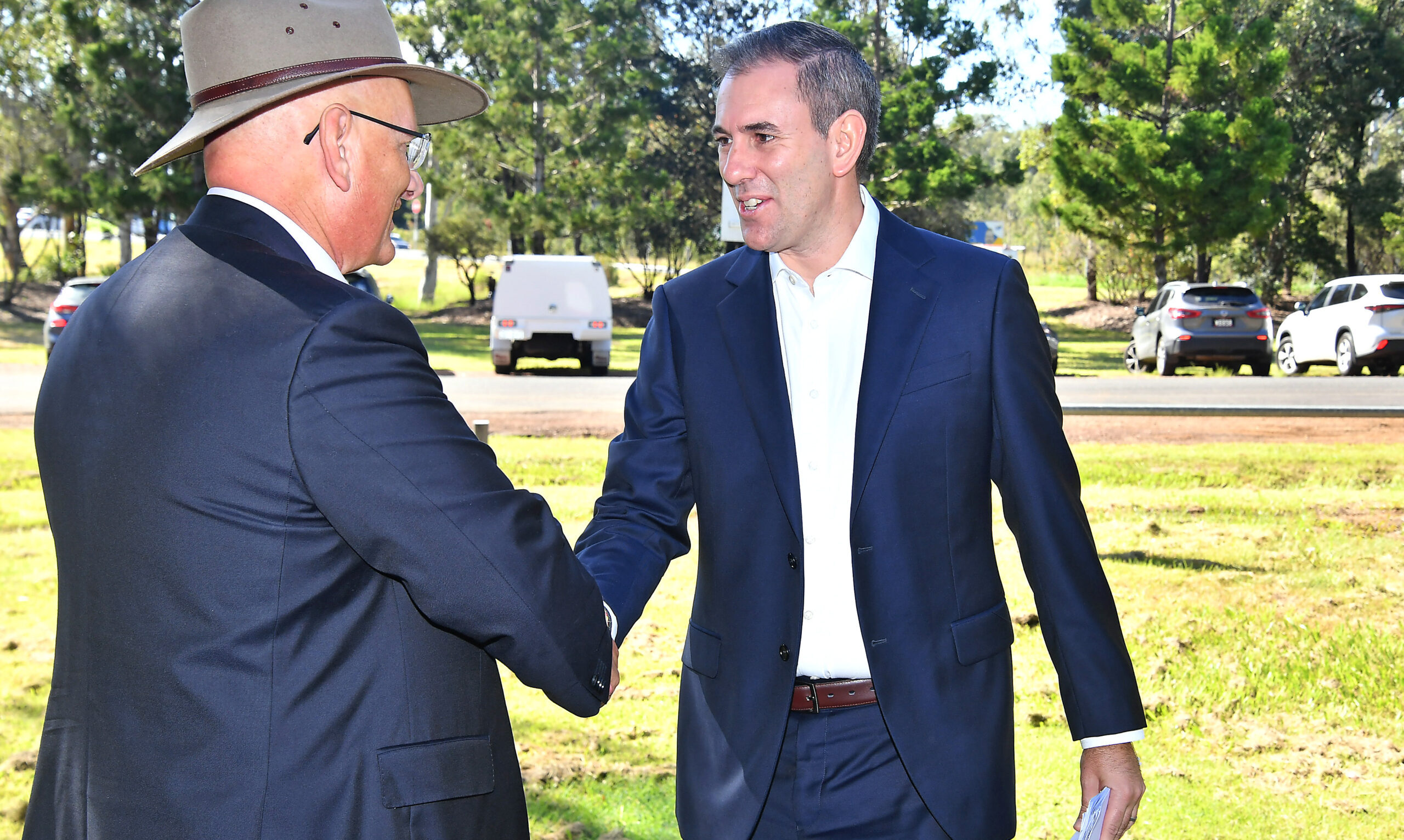
    People with student debt can now borrow more for a house as new government guidance filters through to the banks.

    Please login below to view content or subscribe now.

    Membership Login

    Source link

  • Did union fights for better conditions unintentionally casualise the workforce? – Campus Review

    Did union fights for better conditions unintentionally casualise the workforce? – Campus Review

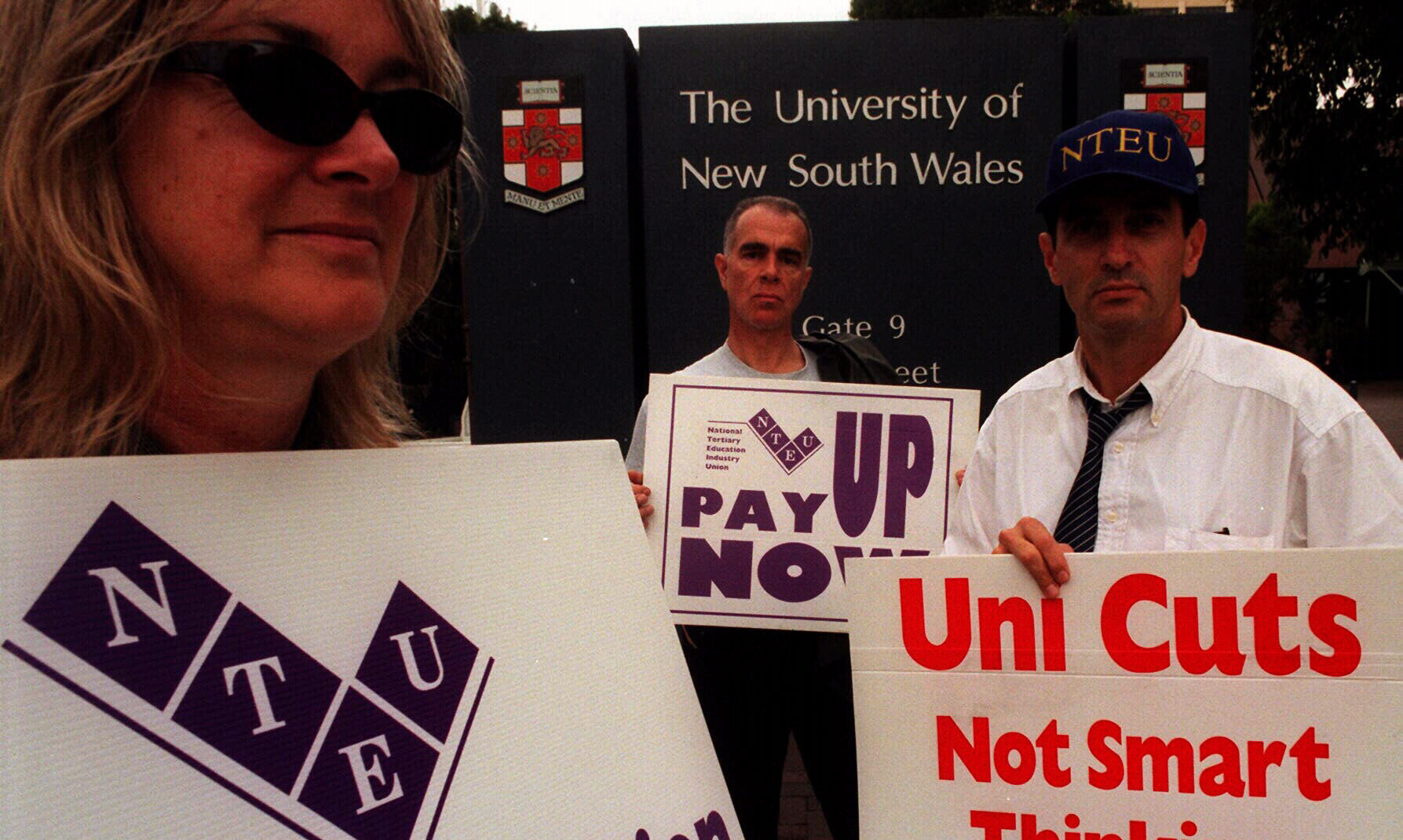
    A new research paper has investigated the factors that have “legitimised” the creation and acceptance of a casual academic workforce in Australia.

    Please login below to view content or subscribe now.

    Membership Login

    Source link