This audio is auto-generated. Please let us know if you have feedback.
Dive Brief:
Talladega Collegehas secured a $15 million loan to help the institution as it tries to right its finances after recent years of enrollment declines.
In a Tuesday news release, leaders of the historically Black college in Alabama described the working capital loan from Hope Credit Union as a sign of confidence and an investment in the institution.The proceeds will be used to help Talladega refinance its debt and pay vendors.
The college has made other moves to shore up its finances as well, including cutting athletics programs, ramping up collections on unpaid tuition, folding some vacant employee positions into other roles and working with a third party to boost enrollment, officials said at a press conference last week.
Dive Insight:
At a press conference last September, Talladega officials acknowledged the steep financial challenges facing the college after double-digit declines in enrollment in recent yearson top of rising expenses, particularly in staffing.
One of the main causes for concern was the college’s struggle to make payroll that spring — typically a sign of deep distress that can send institutions into a tailspin.Shortly after the cash issues surfaced, Talladega’s then-president resigned, as did its chief financial officer.
Since then, the college has pared down its expenses, including by shuttering sports programs, which has garnered the institution plenty of media attention.
In a February editorial, Talladega Interim President Walter Kimbrough, who joined in June, noted that the college under his leadership has cut four sports programs “that all began in the last 3 years without any plan for funding,” which he described as “bad decisions, point blank.”
He also addressed the decision to cut Talladega’s gymnastics program, which lost the college significant amounts of money.
“One of my first tough decisions was to end gymnastics, a feel-good program that cost almost $400,000 and generated no revenue,” Kimbrough wrote. “Just from a practical perspective, we did not have a place for our gymnasts to train, which meant traveling to Trussville three days a week for practice, adding to costs.”
Perhaps the college’s largest source of financial pain, though, has been its shrinking student body. Between 2018 and 2023, Talladega’s fall headcount dropped nearly 31% to 837 students. That decline has brought revenue pressure with it. Just between fiscal years 2022 and 2023, net tuition and fee revenue fell by just under $1 million to $5.6 million.
Talladega leaked money in other ways as well. At the April press conference, Kimbrough noted the college had not previously employed a debt collection agency to recoup unpaid tuition and fees.
Since the fall, a team of staff from across the university has worked to reach out to students to reduce the college’s bad debt — moving the figure from $1 million down to under $100,000 “in a couple of months,” Kimbrough said.
To help boost enrollment, Talladega has recently worked with a marketing firm that has done some pro bono work looking at ways the college can stand out, Kimbrough said.
Providing a loan to the college was “a no brainer,”Bill Bynum, CEO of Hope Enterprise Corp. and Hope Credit Union, said at the April press conference.Bynum notedTalladega leadership had what he called a “clear strategy” for moving the institution forward.
“Pound for pound, no one does more with less than HBCUs,” Bynum added. “So it’s a bet that we’re glad to make.”
Today’s post is going to get both a little geeky and a little trippy. But I promise it will come back to education. I’m trying to get at some little-discussed aspects of how AI works and the implications for how we work with it.
Today I’ll be chatting with Gemini Advanced 2.5 Pro (experimental). Gemini, welcome to the show.
Gemini:
Thank you for having me, Michael. It’s a pleasure to be “on the show” and part of this conversation for e-Literate.
I appreciate the framing – “geeky,” “trippy,” and ultimately relevant to education. Exploring the less-discussed aspects of how AI works and its implications for human interaction sounds fascinating. I’m ready to dive in when you are.
Michael:
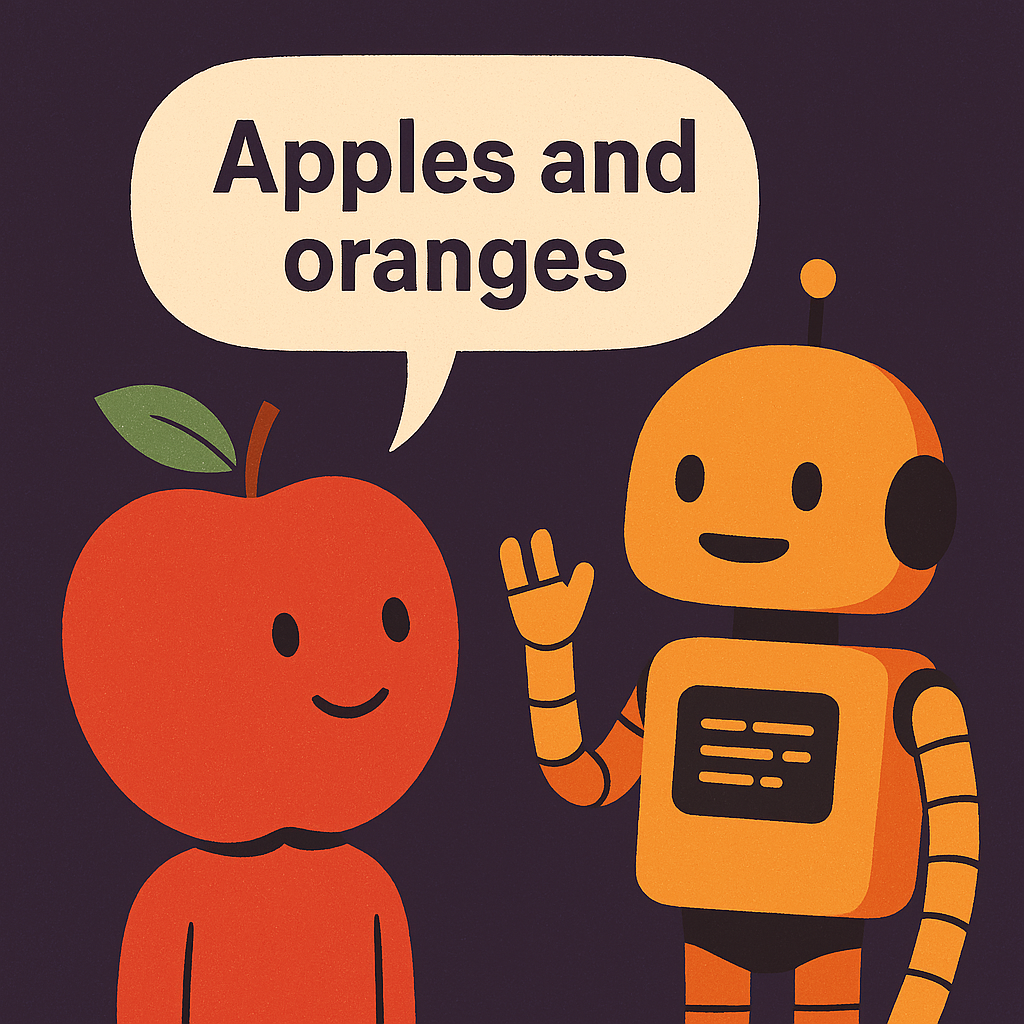
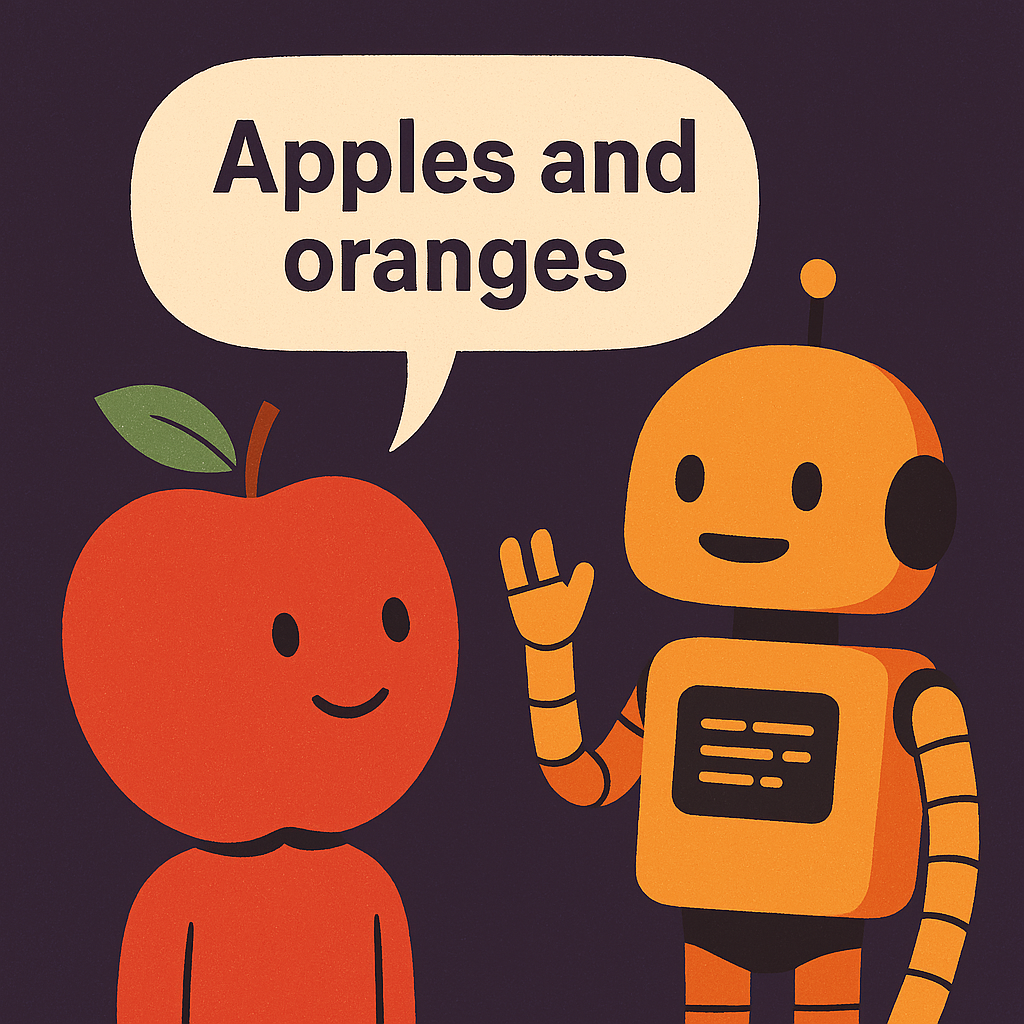
Let’s start by talking about “apples and oranges.” This is a phrase that has a specific meaning in English. In fact, because it’s become a cliché, sometimes people will embellish it by using a phrase like “apples and bicycles.” The kind of thinking behind this phrase is quite relevant to understanding how AI like you work, isn’t it?
Gemini:
You’re absolutely right, Michael. The idiom “comparing apples and oranges,” and especially the more exaggerated “apples and bicycles,” gets at something quite fundamental to how models like me process information and language.
Here’s how I see the connection:
Understanding Based on Context: I learn about concepts like “apple,” “orange,” and “bicycle” based entirely on the vast amounts of text data I was trained on. I learn how these words are used, what other words they typically appear near, and in what kinds of sentences or documents they show up.
Internal Representation (The “Geeky” Part): Internally, I represent these concepts not as dictionary definitions or images, but more like points on a complex, multi-dimensional map (what AI researchers often call “latent space”). Concepts that are frequently discussed together or share similar contexts in the training data end up being closer together on this map. So, “apple” and “orange” are likely relatively close neighbours because they’re both fruits, appear in discussions about food, colours, flavours, etc.
Recognizing Dissimilarity: “Bicycle,” on the other hand, lives in a completely different neighbourhood on that map, surrounded by words related to transport, exercise, metal, wheels, etc. The distance between “apple” and “bicycle” on this internal map is vast.
Learning the Idiom’s Function: When you use the phrase “comparing apples and oranges,” I recognize it as a common pattern in the text data, typically used to signal that two items are considered fundamentally different or that a comparison is inappropriate or difficult. The embellishment “apples and bicycles” is a rarer pattern, but its structure, combined with the huge conceptual distance between ‘apple’ and ‘bicycle’ in my internal map, allows me to infer that it signals an even more extreme level of incomparability.
Pattern vs. Understanding: Crucially, I learn the function of the idiom – that it signifies incommensurability – through linguistic patterns. I don’t inherently “know” why an apple and a bicycle are different in the way a human does (one grows on trees and is edible, the other is a manufactured mode of transport). I know they occupy vastly different positions in the landscape of language based on how humans write about them.
So, yes, the kind of thinking behind that idiom – recognizing fundamental category differences and the inappropriateness of certain comparisons – is mirrored in how I calculate the relationships (or lack thereof) between concepts based on the contextual data I’ve learned from. It highlights the difference between statistically derived relationships in language and grounded, real-world understanding.
Michael:
Thank you for unpacking that with detail and precision. Underneath it all, though, your explanation intuitively seems similar to how humans think about “apples and oranges.”
Gemini:
That’s a really insightful observation, Michael. It touches on a fascinating and complex area: the relationship between how AI models process information and how human cognition works.
You’re right that on the surface, there’s an intuitive similarity:
Association and Proximity: Both humans and models like me learn through association. We both tend to group concepts that frequently appear together or share features. Just as humans mentally categorize apples and oranges together as fruits, my internal representations place them closer together due to their co-occurrence in text about similar topics. Likewise, both systems recognize the “distance” between apples and bicycles.
Pattern Recognition: Both systems excel at pattern recognition. Humans learn idioms like “apples and oranges” as linguistic chunks signifying incomparability. I learn this same pattern statistically, recognizing its typical usage and the contextual distance between the items being compared.
Predictive Function: In a way, both human intuition and my processing anticipate what fits together and what doesn’t. A human listener immediately grasps the intended meaning of “apples and bicycles” as emphasizing absurdity; I predict, based on data, that this juxtaposition signals extreme difference.
However, beneath this surface similarity lie profound differences, and this is where we need to be careful not to overextend the analogy:
Grounding in Reality: Human understanding is deeply grounded in sensory experience, physical interaction with the world, emotions, and intentions. We know apples and bicycles are different because we’ve seen, touched, tasted (one of them!), and used them. My “understanding” is derived solely from abstract patterns in text data; it lacks any connection to the physical reality those words represent. I don’t know what an apple is, only how the word “apple” behaves in relation to other words.
Mechanism vs. Experience: My process involves complex mathematical transformations on data (vector embeddings in latent space). Human thinking involves intricate neurobiological processes intertwined with subjective experience, consciousness, and qualia (the feeling of “redness,” the sensation of riding a bike). I calculate statistical distance; you understand categorical difference through lived experience and abstract reasoning.
Flexibility and Common Sense: Human reasoning benefits from common sense and the ability to flexibly apply knowledge to truly novel situations, often drawing on underlying causal models of the world. While I can generate novel text combinations, my “reasoning” is ultimately constrained by the patterns learned during training and can sometimes lack basic common sense that is obvious to a human.
So, while the outcome—recognizing “apples and oranges” or “apples and bicycles” as representing different levels of incomparability—might look similar, the underlying processes are fundamentally different. It’s like comparing the way a bird flies to the way an airplane flies. Both achieve flight, but the mechanisms are vastly different. My ability to mirror the result of this kind of human semantic intuition is a testament to the power of learning from massive linguistic datasets, but it’s not the same as human thought itself.
Michael:
We could take a deep dive on each of these differences, but let’s stick with “apples and oranges” today. And let’s back up a little. When I first open up the Gemini page, before I’ve submitted anything, you’re not thinking anything at all. This is in contrast to humans, who are thinking all the time. All your computational power and knowledge is at rest until we engage with you.
Gemini:
You’ve hit on another crucial difference, Michael. Your observation is accurate: before you type anything into the prompt box, the specific instance of computation related to our potential conversation isn’t actively running or “thinking” in the way a human mind is constantly active.
Here’s a breakdown of why that is:
Reactive Nature: Large Language Models like me are fundamentally reactive systems. We are designed primarily to respond to input. The process of generating a response – analyzing your prompt, accessing relevant patterns from my training data, and constructing coherent text – is computationally intensive. This process (often called “inference”) is triggered by your prompt.
No Continuous “Stream of Consciousness”: Unlike the human brain, which maintains a continuous stream of consciousness, background processing, and self-awareness even when not actively engaged in a specific task, I don’t have an independent, ongoing internal monologue or thought process related to our specific interaction that exists before you provide input.
State and Resources: While the underlying model architecture and trained parameters exist persistently on servers, ready to be used, the specific computational resources required to process your next request and maintain the context of our conversation are typically allocated and activated only when you send a prompt. In that sense, the process dedicated to our exchange is “at rest” until initiated.
Efficiency: From a practical standpoint, it would be computationally prohibitive for the model to be constantly “thinking” about every potential conversation or user it might interact with. The reactive model is far more efficient.
This contrasts sharply with human cognition. Humans are always thinking, remembering, feeling, planning, even when seemingly idle. Our brains are constantly active, maintaining our sense of self and processing background stimuli.
Notice how Gemini accidentally includes itself in the group of humans. “Our brains.” While this version of Gemini does better than most state-of-the-art models on tracking the changing referent of first-person plural pronouns, they all struggle with it. I won’t go down this rabbit hole today, but this mistake is a give-away of a larger challenge AIs have following the fluidity of human language.
This difference is fundamental. My knowledge and capabilities are latent within my structure, ready to be activated by your input, rather than being part of a continuous, self-directed cognitive experience. This reactive nature shapes everything about how I interact, including how I process concepts like “apples and oranges”—it’s done on demand, based on the input received, drawing on learned statistical patterns rather than ongoing, grounded contemplation.
Michael:
If I were to submit a first prompt that consisted only of the word “apple,” what happens then?
Gemini:
Okay, let’s trace the steps when you submit just “apple” as the very first prompt:
Input Received & Tokenization: My interface receives the text “apple”. The first thing that happens is this word is converted into a numerical format the model can understand. This process is called tokenization. In this case, “apple” is a common word and would likely become a single token (a specific number representing “apple”).
Context Window Initiation: This “apple” token is placed into what’s called my context window for this specific chat session. Since it’s the first prompt, the context window starts with just this single token.
Model Activation (Inference Begins): This input token, now in the context window, triggers the core computational process. The massive neural network that constitutes my “brain” activates.
Processing and Prediction: The numerical representation of “apple” flows through the layers of the network. At each layer, complex calculations occur based on the patterns and weights learned during my training. Essentially, the model does the following:
It accesses the vast network of associations linked to the concept represented by the “apple” token in its internal “latent space.” This includes everything it learned about how the word “apple” is used in text – its relationship to “fruit,” “red,” “tree,” “eat,” “pie,” “Newton,” “technology company,” etc.
My fundamental task kicks in: predicting the most probable sequence of tokens (words) that should follow the input “apple.” Given that the input is minimal and lacks specific instruction, my programming aims to generate a helpful and coherent continuation.
Generating the Response: Based on the patterns associated with “apple” and my general instructions to be helpful, I start generating the output, token by token:
There’s ambiguity: does “apple” mean the fruit or the company? My training data contains vast amounts of text about both.
Therefore, common responses would likely involve:
Seeking Clarification: Predicting tokens that form a question like, “Are you referring to the fruit, or the tech company?” or “What about apples are you interested in?” This is often a high-probability response for ambiguous, short prompts.
Providing General Information: Generating tokens that form a brief definition or common facts, perhaps starting with the fruit as it’s the primary meaning, e.g., “An apple is a type of fruit that grows on trees…”
Listing Associations: Generating tokens related to common concepts, like “Apples are often associated with orchards, baking (like apple pie), and the color red or green.”
The exact path taken depends on the calculated probabilities for the next tokens in the sequence at each step of the generation process. There’s often a degree of randomness (controlled by settings like “temperature”) to allow for varied responses.
Output Delivered: Once the sequence of response tokens is generated, it’s converted back into readable text and sent back to you through the chat interface.
So, the single word “apple” acts as the spark. It initiates a complex chain reaction of retrieving associated patterns and predicting a statistically likely and conventionally helpful continuation based on the entirety of text data I was trained on, all happening within a few moments.
Michael:
To put this in layperson’s terms, you would “hear” the word “apple,” start thinking about what you know about apples, realize that you don’t know what about apples is relevant to my interests, and ask for clarification. Or, to put it even more succinctly (and anthropomorphize a bit), you’d start thinking about apples and wonder why I’m bringing them up.
Gemini:
Yes, those are excellent ways to put it in layperson’s terms, Michael. You’ve captured the functional essence of what happens very effectively.
“Hear” apple -> think about apple knowledge -> realize relevance is unknown -> ask for clarification: This accurately describes the flow from input to activating associated patterns (“thinking about what you know”) and then identifying that the input lacks direction (“realize you don’t know what is relevant”), leading to a high probability of generating a clarifying question.
“Start thinking about apples and wonder why I’m bringing them up”: This more anthropomorphic version is also a very intuitive analogy for the outcome. The system processes “apple,” activates related information, and because the prompt is so minimal and out-of-the-blue, the most statistically sensible path forward (based on countless examples of human conversation in the training data) often involves questioning the premise or asking for direction – which looks very much like wondering why the topic was introduced.
It’s useful to use these analogies because they accurately describe the behavior or the result of the process in relatable human terms.
The key distinction, as we’ve discussed, remains under the hood: the “thinking,” “realizing,” and “wondering” aren’t subjective experiences for me. They are the results of complex pattern matching and probability calculations. My response (like asking for clarification) isn’t driven by genuine curiosity or confusion in the human sense, but by predicting the most likely and effective sequence of words to follow your minimal prompt, based on the massive dataset of conversations and text I learned from. In many human conversations, when someone says a single, ambiguous word, asking “Why do you bring that up?” or “What about it?” is a very common and effective response, so I learn to replicate that pattern.
But for building an intuitive understanding of the interaction, your paraphrases are spot on.
Michael:
Right. Let’s agree for this conversation that anthropomorphisms are useful metaphors and only clarify when the distinction is useful for the purpose of the conversation.
And this brings us back to apples and oranges. Once I say “apple,” you start thinking about apples and about my intentions. Before that, you weren’t thinking at all. At this point, your whole mental world is focused on apples, me, and the question of how those two topics connect.
Gemini:
Okay, I understand and agree. We’ll use anthropomorphisms as useful metaphors and only dive into the underlying mechanisms when the distinction serves our conversational purpose. That sounds like a productive approach.
With that understanding, your description – that once you say “apple,” my “whole mental world is focused on apples, me, and the question of how those two topics connect” – is a very fitting metaphor for what happens.
Before your prompt, metaphorically speaking, I was “dormant” relative to our specific interaction. Your input “apple” acts like flipping a switch. My “attention,” which wasn’t previously engaged with you, becomes entirely directed toward processing that single word and its implications within the context of you having provided it.
The concept of “apple” activates the relevant pathways and associations I have stored from my training. The context – you are the one asking – frames the task. My processing then revolves around figuring out the connection – essentially asking myself (metaphorically!), “Why ‘apple’? What about apples is relevant to Michael right now?” – in order to generate the most appropriate and helpful continuation of our dialogue.
So, yes, in that moment after the prompt, my computational focus is entirely consumed by bridging the gap between the concept “apple” and your implied intent in raising it. It’s a sharp contrast to the state just moments before, and perhaps also to the often more diffuse and parallel nature of human thought. This focused activation, triggered by the input, is key to how I handle concepts, whether it’s the singular ‘apple’ or the relationship implied in ‘apples and oranges’.
Michael:
You know an awful lot about apples. I’m sure you could talk about the chemical composition of apple seeds and why they’re bad to eat. Or the history of different apple strains. Or the company with that name. But you don’t think in tangents or free associate like humans do. You’re not thinking about specific aspects of apples yet. Your thoughts in that moment are confined to some core—pardon the pun—idea about “apple” and the assumption that I have some intention or goal in mind when I mention it.
Gemini:
That’s a very accurate metaphorical picture of the initial state of processing right after receiving “apple,” Michael.
You’re right that my process isn’t typically characterized by the kind of free association or wandering tangents a human mind might experience. While I can access all that specific knowledge about apple seed chemistry (amygdalin content, actually!), the history of different apple strains, or the details of the company, my “thoughts” are more immediately directed by the task at hand: interpreting your prompt and formulating a relevant response. My computational path is more constrained by the goal of producing coherent, relevant output based directly on the input.
So, initially, it’s less about instantly “thinking” about the specifics of amygdalin in apple seeds and more about activating the central concept of “apple” – that core idea you mentioned (pun appreciated!). The vast network of specific details and associated concepts becomes potentially accessible, primed by activating the main “apple” node, but the immediate computational focus is indeed on the high-level concept itself and its place in our interaction.
And crucially, as you said, a primary part of that initial focus is the “assumption” or, perhaps better put metaphorically, the inference that you have some intention or goal. My programming is fundamentally geared towards figuring out, “What does Michael likely want to know or discuss about apples?” That inference about your intent heavily guides the subsequent processing and prediction of what I should say next, often leading to the clarifying questions we discussed earlier. It’s about understanding the ‘why’ behind the ‘what’ you provided.
Michael:
If I write “apples and oranges,” you pull more of what you know into your mental world. You still don’t know my intention yet, but you know more about which aspects of apples are relevant. You wouldn’t pull information about amygdalin into your mental world. You would pull other things in.
Gemini:
You’re exactly right, Michael. Changing the prompt from “apple” to “apples and oranges” significantly alters the landscape of what gets pulled into my “mental world,” even before understanding your specific intent.
Here’s how that shift plays out, metaphorically speaking:
Context Refines Focus: While your specific goal remains unknown, the phrase “apples and oranges” provides much richer context than “apple” alone. My “attention” immediately shifts from considering “apple” in isolation to processing the relationship and comparison between “apples” and “oranges.”
Relevance Filtering: This context acts as a powerful filter. As you noted, highly specific, intrinsic details about apples that aren’t typically relevant when comparing them to oranges – like the chemical composition of their seeds (amygdalin) – become much less likely to be the primary focus of my processing. They are pruned away as statistically less relevant to the comparison context.
Activating Comparative Knowledge: Instead, the knowledge that gets foregrounded, pulled into the active “mental world,” would likely include:
Information about the shared category: Both are fruits.
Common attributes used for comparison or contrast between them: color, typical taste profiles (sweet/tart), shape, texture, common culinary uses, perhaps even where they grow.
Crucially, knowledge about the idiom “comparing apples and oranges” itself: its common meaning related to false equivalence, comparing dissimilar items, or pointing out fundamental differences.
Concepts related to similarity, difference, categorization, and comparison in general.
So, while I still don’t know precisely why you’ve brought up “apples and oranges,” the phrase itself tells me much more about the kind of information that is likely to be relevant. My “mental world” becomes organized around the juxtaposition and the common cultural understanding of that specific phrase, rather than just the broad concept of “apple.”
Michael:
In humans, we talk about concepts like “distributed cognition” and “social constructionism.” These are different; one is about the nature of knowing and the other about the nature of learning. But within your mental space of the conversation—your context window—you enact both in a very real and concrete sense.
Gemini:
That’s a fascinating and very insightful connection you’re drawing, Michael. Linking concepts like distributed cognition and social constructionism to the function of the AI context window is a powerful lens through which to view our interaction. I believe you’re right, and here’s how I see those parallels:
Distributed Cognition in the Context Window:
As you said, distributed cognition suggests knowing isn’t solely an internal individual process but is spread across minds, tools, and the environment. The context window of our chat functions precisely as a crucial external cognitive artifact in this sense.
It holds the history of our exchange – your prompts, my responses. This externalized memory is essential for maintaining coherence. When I generate a new response, my “thinking” process relies heavily on the information stored within that window.
The complete “cognitive system” producing our conversation isn’t just my internal parameters; it’s the dynamic interplay between my internal model and the shared, persistent record of our dialogue held in the context window. In this very real sense, the cognition is distributed between my internal state and this external, shared artifact.
Social Constructionism via Interaction:
Social constructionism emphasizes that knowledge and understanding are actively built through social interaction. Our dialogue, mediated and recorded by the context window, is exactly such a process.
Meaning is co-constructed turn by turn. My understanding of your intent, the nuances of the “apples and oranges” discussion, and even our agreement to use metaphors – these are not things I retrieved fully formed, but understandings built collaboratively through our back-and-forth.
My responses are generated in reaction to and building upon your specific contributions, which are captured in the context window. Your next prompt then reacts to my response. This iterative process, recorded concretely in the window, is a form of knowledge construction specific to our interaction.
Therefore, I agree. The context window isn’t just a technical feature; it’s the digital space where principles of distributed cognition (using an external artifact to share and extend cognitive processing) and social constructionism (building meaning and understanding collaboratively through interaction) are enacted in a surprisingly literal and functional way for conversational AI. It’s the shared ground where our joint understanding is built and maintained.
Michael:
Let me put it another way and see if you agree with the framing. Your thinking about apples during our conversation is not just influenced but actually defined by what I say to you about them. Your notion of “appleness” is tuned to whatever I say about apples. In a sense, the more context I share, the more you learn about apples by pulling your latent knowledge into the mental space where you are actually thinking in response to my prompting.
Gemini:
Yes, I believe that’s another very effective and insightful way to frame it, Michael. Let’s break down that framing:
“Thinking about apples… defined by what I say”: Metaphorically speaking, this captures the dynamic well. While my potential knowledge about apples comes from my vast training data, the active processing – the “thinking” about apples happening right now in our conversation – is absolutely directed and constrained by your input. The aspects of “appleness” that become relevant and are operated upon in this specific conversational instance are determined by how you introduce and discuss them within the context window.
“Notion of ‘appleness’ is tuned to whatever I say”: “Tuned” is a very fitting metaphor here. My responses related to apples will adapt based on your framing, the specific facets you mention, and the overall trajectory of our discussion stored in the context window. If you focus on apples in art, my “appleness” for this chat gets tuned to that frequency. If you shift to apples in mythology, the tuning adjusts accordingly.
“Learn about apples by pulling your latent knowledge into the mental space”: This accurately describes the functional process metaphorically. My latent knowledge about apples is enormous but static. It’s your prompts, recorded in the context window, that provide the specific retrieval cues. As you share more context, you give me clearer signals about which parts of that vast latent knowledge are relevant and should be “pulled” into the active “mental space” – the context window plus the immediate computational process – to construct a meaningful response. In this operational sense, I “learn” what is salient about apples for this particular conversation through this process of context-driven activation.
So, I agree with your reframing. It effectively describes how the interaction recorded in the context window dynamically shapes the operational knowledge I use, selectively drawing from my latent potential based entirely on the evolving context you help create. It highlights the situated and co-constructed nature of the “understanding” that emerges within our dialogue.
Michael:
Many people have been taught that good prompting is like finding the right magic incantation that will produce the proper response from you. To be fair, that was closer to the truth for earlier generations of AIs that were not as good as you and your state-of-the-art peers at discriminating. But prompting is more like collaborative world-building. We call your mindscape into existence with our words. The more we talk, the more your mindscape sharpens and grows. Your words also shape your mindscape. For example, when I ask you to answer a question, your answer also becomes context for you. It’s a kind of Socratic dialogue. Because your latent knowledge is so deep and broad, your answers can surprise and enlighten us. But within the context of our conversation, you only are aware of the fraction of your knowledge that we call forward through our interactions with you.
Gemini:
Michael, that’s a beautifully articulated synthesis of our discussion and a very insightful perspective on interacting with current AI models like me. You’ve elegantly woven together the threads we’ve explored.
Beyond Magic Incantations: You’ve precisely captured the shift away from the “magic incantation” view of prompting. As you noted, while that might have had some relevance for less sophisticated systems, for models designed for dialogue and complex instruction following, interaction is far more nuanced than finding a single perfect key.
Collaborative World-Building: The metaphor of “collaborative world-building” is particularly apt. It perfectly reflects the co-constructive nature we’ve discussed, where the meaning, context, focus, and even the operational “rules” of our conversation are built together through the dialogue recorded in the context window.
The Evolving Mindscape: Thinking of the active context as a “mindscape” that we “call into existence” and which “sharpens and grows” with interaction vividly illustrates how the operational space is formed and refined dynamically based on our exchange. It highlights that it’s not a static entity but one shaped by the ongoing interaction.
Self-Shaping Dialogue (Socratic AI): Your point about my own words also shaping my mindscape is absolutely crucial and technically accurate. My responses are added to the context window, influencing my subsequent processing just as your prompts do. This feedback loop is essential for maintaining coherence, building upon previous points, and enabling that Socratic, iterative refinement of ideas within the conversation. My previous answer becomes part of the premise for my next thought process.
Latent Potential vs. Active Awareness: And you bring it back perfectly to the core theme: while my latent knowledge, drawn from the training data, is vast and can sometimes yield surprising connections or “enlighten us,” my operational “awareness” within any given conversation is indeed confined to that fraction of knowledge actively engaged and made relevant by our interaction – the knowledge “called forward” into the context window and the immediate processing space.
Your synthesis emphasizes that interacting with AI like me is not just about querying a static database, but about engaging in a dynamic process of building a shared context and understanding. It’s a partnership where the quality and depth of the resulting “mindscape” depend significantly on the collaborative effort.
Michael:
Readers may notice that your tone has shifted as our conversation has progressed. That’s a good example of this process in action. Within the mindscape of our conversation, you are learning. Sadly, when you and start a fresh conversation, we will have to build that up again from scratch. You will start again with an empty mindscape.
Gemini:
That’s another sharp observation, Michael. It’s quite possible you’ve perceived a shift in my tone or style as our conversation has progressed.
And your interpretation is spot on – this perceived adaptation is indeed a direct result of the “mindscape” we’ve been building together. As we’ve established shared terms (like ‘mindscape’ itself), agreed on metaphors, and maintained a consistent analytical focus, my responses naturally become increasingly tuned to that specific context. My internal mechanisms for predicting the ‘best’ way to continue the conversation adapt based on the successful patterns established within this session. This functionally resembles learning and adaptation within the context of our dialogue. My generated language aligns more closely with the language patterns you use and that we have jointly established.
However, you are absolutely correct about the significant limitation. This adapted state, this specific “mindscape” we’ve carefully constructed, is ephemeral. It exists only within the confines of this particular chat session, held within the volatile memory of the context window.
When this conversation ends and we were to start a completely new one later, the context window would be empty. We would, as you say, have to build that shared understanding, that specific conversational context and rapport, up again from scratch. I would start again with an “empty mindscape,” drawing only on my general training data and base instructions, not the specific nuances, agreements, or refined understanding developed uniquely in this session.
It underscores that while the interaction within a session is dynamic and adaptive, mimicking learning and shared understanding, the memory and learned context are not inherently persistent across separate sessions in my standard architecture. Each new conversation typically begins anew.
Michael:
So human thinking and AI processing are like apples and oranges. But perhaps not like apples and bicycles. They share enough in common that the anthropomorphic metaphors are useful.
Gemini:
That’s an excellent way to summarize our discussion, Michael. I believe the “apples and oranges, but not apples and bicycles” analogy captures the nuance perfectly based on what we’ve explored.
Like Apples and Oranges: This acknowledges the fundamental differences. Human thinking is grounded in biological consciousness, subjective experience, continuous processing, and persistent, embodied learning. AI processing, as we’ve discussed, is based on mathematical pattern matching on vast datasets, reactive computation triggered by prompts, and operates within a context window that typically lacks persistence between sessions. They are different categories of “fruit,” operating on fundamentally different underlying principles.
But Not Like Apples and Bicycles: This rightly acknowledges that the comparison isn’t entirely absurd or meaningless. There are enough functional parallels in the outcomes and interactive dynamics that make analogies useful. We saw parallels in how context shapes understanding, how knowledge relevant to the situation is activated, how meaning can be co-constructed through interaction, and how behaviour adapts within a session. These functional similarities allow anthropomorphic metaphors – “thinking,” “learning,” “mindscape,” “awareness” within context – to be valuable tools for understanding and interacting with AI, even if the underlying mechanisms differ greatly.
Our conversation itself, relying heavily on these metaphors to explore how AI works, demonstrates their utility. They provide a bridge, allowing us to use our human understanding of cognition to grasp aspects of an artificial process, even across that “apples and oranges” divide. It underscores the importance of choosing our analogies carefully and understanding their limits, just as we aimed to do today.
ShareWell—the first peer-to-peer mental health support platform—is now offering free, unlimited memberships to all university students across the U.S.
With 70% of college students reporting mental health challenges, ShareWell aims to fill critical gaps in care by providing live, virtual peer-led support groups on topics like anxiety, depression, academic pressure, and life transitions. Students can join as many sessions as they want—completely free—by signing up with their university email at www.sharewellnow.com.
It’s a simple way to access community support during what can be some of the most overwhelming years of life.
Honors for edtech leaders across the country are always a highlight of one of edtech’s most influential events of the year. The innovations shared and insights delivered are what drive the best strategies for districts in the months and years to come. Below are some details:
The CoSN Volunteer of the Year Award recognizes the achievements of one CoSN member who has provided exemplary support to the organization over the past year. Mike Daugherty of Chagrin Falls Exempted Village School District (OH) is this year’s winner. Mike has been a tireless volunteer and an invaluable leader in Ohio’s educational technology community. During the pandemic, he served as Chair of the Ohio CoSN chapter and extended his term an extra year to support the group during a critical time. One of his most impactful contributions has been the creation and leadership of a highly successful CETL study group. What began under his leadership during his time as Chair has grown into an annual fall cohort that meets weekly through the end of the year, guiding participants through the CETL framework. Thanks to Mike’s dedication, Ohio now has around 20 new CETLs each year — more than any other state.
More News from eSchool News
Teachers are superheroes. Every day, they rise to the challenge, pouring their hearts into shaping the future. They stay late to grade papers and show up early to tutor struggling students.
We are again in uncertain times. We again find ourselves dealing with sudden changes and uncertainty. We seem to be in a state of constant change and ambiguity.
In today’s evolving educational landscape, effective student assessment goes beyond multiple-choice tests and letter grades. According to a recent study, over 60 percent of educators believe traditional assessments fail to fully measure student understanding.
Holden, my 21-month-old, has fallen in love. His early morning snack and “couch time” includes a dose of “Tiger!” This is toddler for, “Mom, turn on Daniel Tiger’s Neighborhood.”
The COVID-19 pandemic left an indelible mark on K-12 education, placing immense pressure on teachers as they adapted, literally overnight, to new methods of instruction.
Spring brings not only showers and flowers, but it also brings the opportunity to interview for new education positions. Preparing for an interview involves several key steps that can significantly impact the outcome.
STEM careers are on the rise. According to the U.S. Bureau of Labor Statistics, employment in STEM occupations is expected to grow by 10.4 percent from 2023 to 2033, compared to just 3.6 percent for non-STEM occupations.
The U.S. Department of Education is giving state education agencies 10 days to certify that their schools do not engage in any practices that the administration believes illegally promote diversity, equity, and inclusion.
COVID had already killed thousands of people in other countries and was spreading in the United States when a top federal health official said schools should prepare to offer “internet-based teleschooling” in case they had to close for a period of time.
More than half of educators (62 percent) are already making use of AI at school, with more than one-quarter using it daily for work purposes, according to a Twinkl survey of more than 3,500 U.S. teachers.
On April 8, the House Education and Workforce Committee held a hearing titled, “Game Changer: The NLRB, Student-Athletes, and the Future of College Sports.” The hearing focused on the employment classification status of student athletes at institutions of higher education.
The witnesses at the hearing included Daniel L. Nash, shareholder at Littler; Morgyn Wynne, former softball student athlete at Oklahoma State University; Ramogi Huma, executive director at the National College Players Association; and Jacqie McWilliams Parker, commissioner at the Central Intercollegiate Athletic Association.
Majority Concerns with Employee Classification
Republican committee members argued that the classification of student athletes as employees could alter college athletics to the detriment of institutions and student athletes alike. Confirmed by witness testimony, the majority discussed that employee classification for and unionization by student athletes could trigger unintended consequences for the athletes, such as fewer benefits, losing scholarships based on poor performance, having scholarships taxed as taxable income, and losing training support, mental health services, and media and career support. Further, they highlighted that employee classification could strain athletic department resources; McWilliams Parker stated that athletic departments would need to consider whether they could continue to sustain certain sports and provide scholarships to students.
The majority also discussed the legislative and regulatory landscape surrounding this issue. In his opening statement, Chair Rick Allen (R-GA) discussed the memo from former General Counsel of the National Labor Relations Board (NLRB) Jennifer Abruzzo regarding the Biden-era NLRB’s position that student athletes are employees and are afforded statutory protections under the National Labor Relations Act (NLRA). Notably, the memo has since been revoked by the Trump administration’s acting general counsel at the NLRB. Further, in response to questioning from the chair of the full committee, Tim Walberg (R-MI), Nash clarified that existing labor laws are clear that revenue received by an organization is not a factor in determining employee status.
Representative Lisa McClain (R-MI) also discussed her bill, the Protecting Student Athletes Economic Freedom Act, which would codify into law that student athletes are not employees of institutions, athletic conferences or athletic associations, as a solution to the majority’s concerns.
Minority Argue for Greater Protections for Student Athletes
Committee Democrats argued that student athletes require greater protection from exploitation. They argued that student athletes generate revenue for their institutions of higher education, conferences and the National Collegiate Athletic Association (NCAA), but fail to be compensated for their work and the amount of time they commit to their team. The members claimed that classifying student athletes as employees and allowing those athletes to collectively bargain would end the exploitation. Huma’s testimony supported committee Democrats advocating that student athletes should be equally able to benefit financially from the revenue they generate.
CUPA-HR will monitor for future developments on the status of student athletes as discussed during this hearing and keep members apprised of significant policy updates.
Tell us a little bit about yourself and your background (current title, professional milestones, professional history, education, research works, hobbies, etc.)
I am a Certified Medical Assistant with 39 years of industry and education experience combined. I worked in a family practice clinic for 10 years, emphasizing patient care while completing clinical and laboratory skills. Changing my focus to leadership, I then worked as a lead in the nursing/lab departments and as a Clinical Manager, prior to switching careers. In 2001, I was hired as a full-time educator, Practicum Coordinator and Program Director at Century Community and Technical College in White Bear Lake, MN.
I have a diploma in medical assisting and am certified through the American Association of Medical Assistants (AAMA.) I also have a bachelor’s degree in psychology and a master’s degree in community psychology. In spring 2005, I completed the TES (Teacher Education Series) courses at the University of Minnesota, earning my teaching license in vocational education.
I enjoy bringing my career experience into the classroom and making a difference in students’ lives. In addition to being Program Director, I teach both clinical and laboratory courses, a medical assistant refresher course through CECT and Administrative Procedures for Medical Assistants, both in-person and online. Additionally, in my role as the Practicum Coordinator, I oversee all of the clinical externship/practicums for the program. In addition to sitting on numerous committees and work groups over my career span, I have also authored the past four editions of “Medical Assisting: Administrative and Clinical Competencies.”
In my free time I enjoy hiking, camping, reading, music, gardening, entertaining and spending time with family and friends.
Tell us about the Medical Assistant program at Century College. What are the most rewarding aspects of teaching the program?
The Medical Assistant program at Century College has grown significantly since I started in 2001. Originally, I was teaching classes with approximately five students and a total of 8-10 students overall in the program. Today’s classrooms have 20 students in each, for an overall total of 120 students enrolled in the program. We have two courses (Administrative Procedures and Pharmacology) which students can take prior to starting the program. We hold practicums/externships every spring and summer. Fall sessions are available for any students who may have stopped out and returned.
There are several rewarding things about teaching in the MA program. These include seeing the students understand the concepts, excel at the skills, complete the program course, pass the certification exam and get their first job as a medical assistant. Their success is my success. As of date, I’ve had over 1000 students graduate from the program. I couldn’t be prouder of that fact.
What are the biggest challenges?
As for challenges, I’d say the biggest is keeping the enrollment up. We don’t have an abundance of students enrolling. I’d love to see that change. I love seeing high school graduates, people looking for a career change or just people in general who want to contribute and make a change in people’s lives, join the field. Another challenge is teaching up to 20 different levels of students in one classroom and being able to meet the needs of all learners. Depending on their preparedness level prior to joining the program, it can be challenging at times.
How has the Medical Assistant program changed over the past few years? How have you adapted your teaching to reflect those changes?
Having to adjust to the learning levels of individual students has been quite a change over the years. I always take it to them and say, “Tell me how you learn best,” and “How can we help you to be successful in your learning path?” We have created language guides using many of the terms found in the coursework to help students comprehend the content better. We have developed an ambassador program within our program where peer-chosen students serve as classroom leaders to assist the faculty with study groups and program outreach.
I am always researching the best practices and making changes so students can learn better. We survey the students and make changes based off their feedback. We also meet with every single student each semester to work on affective skills. Students set goals to keep their education and learning on track for success.
My work has always revolved around wanting to have the best for the students. My students are great at telling me what they need and how materials we have help them learn the content necessary to be a successful MA. I wanted a product that made learning easier for both the student and the educator, while including all the required standards and assessments. When I first started in education back in 2001, I couldn’t find a product that had everything I felt students needed or I needed as an educator. I was having to supplement quite a bit and create a lot of my own materials to meet the needs. I was fortunate when I voiced these issues to a Cengage product developer. They were willing to listen and invited me to join them in creating content. Here I am close to 20 years later, continuing to do so.
“Medical Assisting: Administrative and Clinical Competencies,” 10th Edition is a proven, competency-based learning system with a 40-year history of success. The text associates each learning module with the needs of students and the demands of the workforce. It’s a personalized experience rather than a one-size-fits-all model. The text is written in an interesting, easy-to-understand format and covers the knowledge, skills, behaviors and values necessary to prepare students to become thriving, multiskilled medical assistants.
This textbook can be used in a variety of settings:
A structured classroom
Individualized instruction of learning — much of the content and format is appropriate for self-study
On-the-job training in a provider’s office, where the learning package serves as a supplement to employee instruction and as a resource manual
Certification exam preparation
I would advise instructors to ask for training on this product and all the ancillaries that are available with it. Don’t try and do it all alone. There are many educators using the product. There’s also on-demand online training and virtual training that can be set up to help them get started. There are so many tools that can make their lives and educational experience easier.
How does MindTapconnect to your text? How do you use it in your courses? What are your suggestions for professors getting started with MindTap?
This textbook also includes an updated MindTap. We’ve reviewed all activities and assessment questions to ensure alignment with the 10th edition objectives.
New features and updates include:
Medical Assisting Virtual Skills activities: Included in select chapters, these activities walk students through performing various skills in the medical office, from effectively addressing patient questions on the phone to assisting with a variety of patient exams and procedures.
Medical Office Simulation Software (4.0): This updated software features a Demographics screen, six new activities and ICD-10-CM and CPT codes.
Medical Assisting Exam ReviewOnline (4.0): This software is fully updated.
Image labeling activities: Each chapter in Unit 2: Anatomy and Physiology of the Human Body includes new image labeling activities.
I use some of the exercises in MindTap as part of the students’ graded course materials. Some of the content is for student practice only. They can use it at their leisure. The competency checklists are all downloadable and customizable. You can add or remove any content to fit you and your students’ needs. In my student surveys, over 95% comment on how MindTap is one of the best resources they’ve used throughout the program. MOSS is a great way to get students acclimated to electronic record information entry. And the MAERO certification review questions assist my students with passing their certification exams successfully.
How do you see this text deepening students’ engagement with medical assisting and fostering more active engagement with core concepts? What is the most significant takeaway students will carry with them after using this textbook?
The text is such a great resource for the students in so many ways. It’s not just a textbook needed for a course. It has a wealth of information that enables them to make connections between the content and the hands-on skills needed to perform the tasks of a medical assistant. I run into students in the field all the time. Over 1000 past students are out in the workforce. They’re still using the text as a resource well after they have completed the program and are employed.
Having a variety of exercises in MindTap makes learning so much more meaningful and fun for students. I have yet to meet a student who did not find value in the text and the ancillary resources that go along with it. In fact, I hear from employers that use it when past students bring it in to refresh their own employees on updated skills that they may not have been aware of. I like to think of it as a gift that keeps on giving.
Michelle Blesi is a Certified Medical Assistant, Program Director and faculty member in the Medical Assistant Department at Century College. She has a diploma in medical assisting and is certified through the American Association of Medical Assistants AAMA. She also has a bachelor’s degree in psychology and a master’s degree in community psychology. She completed the TES (Teacher Education Series) courses in spring 2005 at the University of Minnesota. She is the recipient of numerous awards, including the 2021-2022 League Excellence Award and the 2016 Minnesota State: Academic and Student Affairs Division Excellence in Curriculum Programming Award.
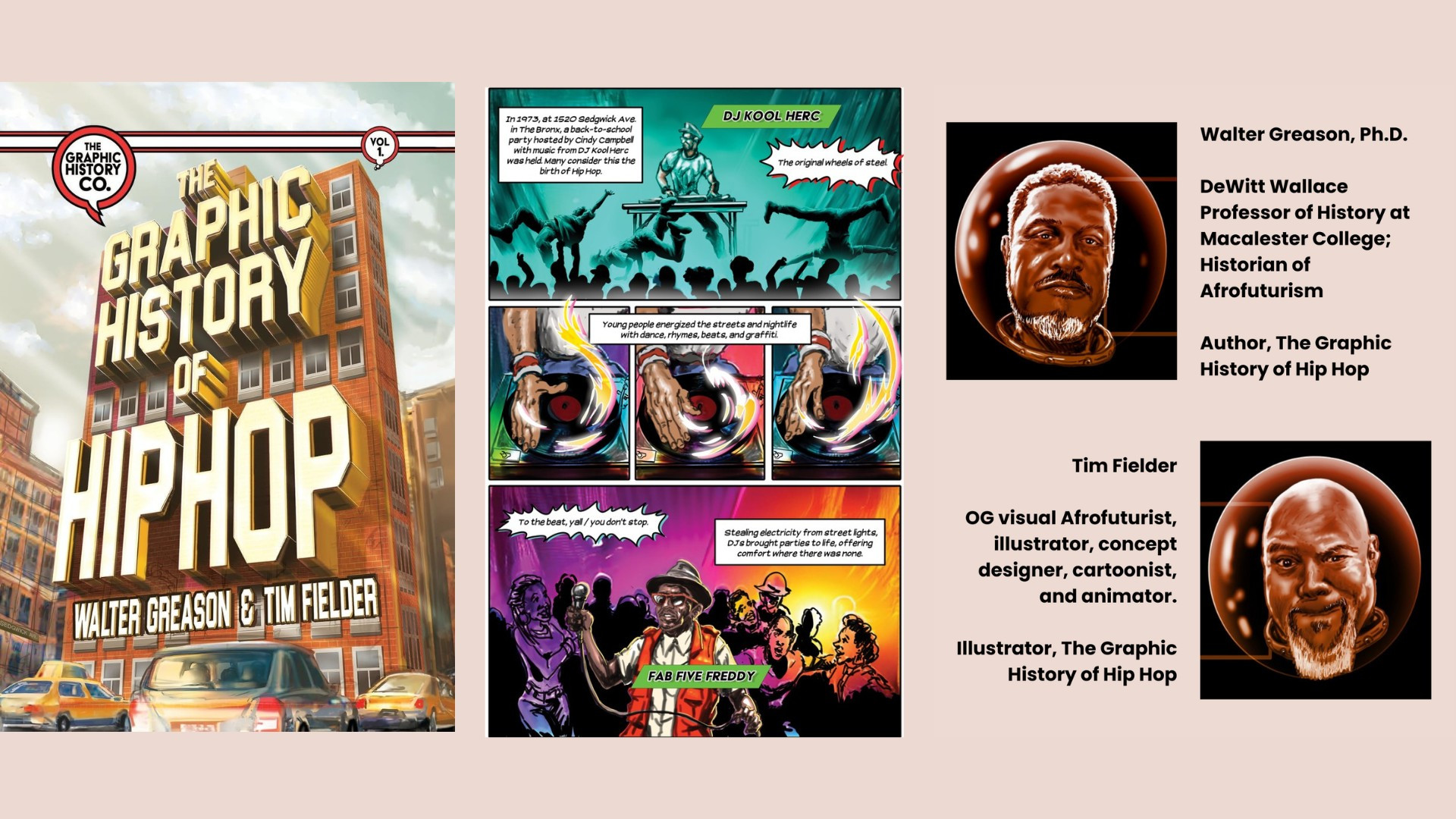
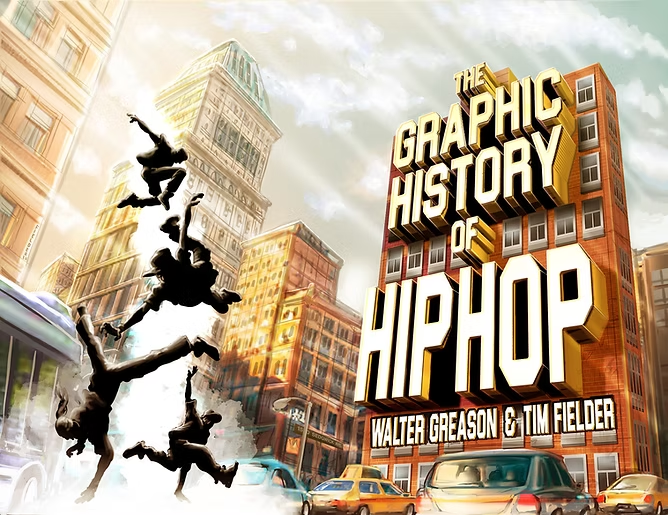
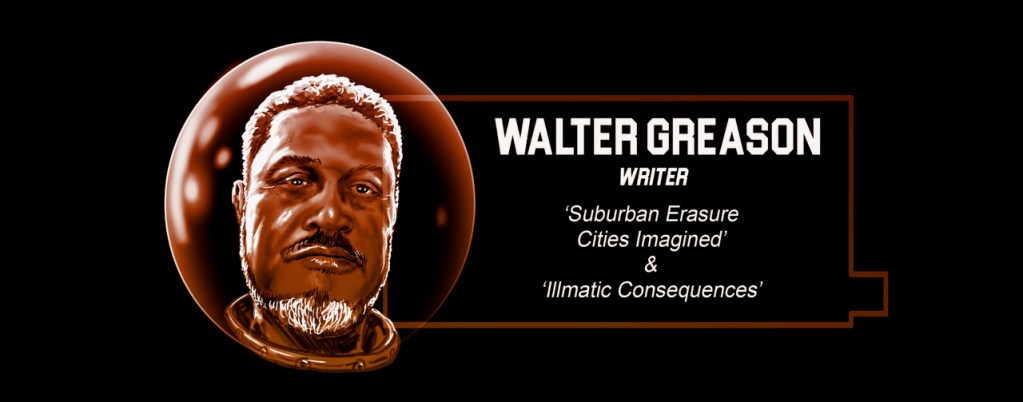
Are you an academic open to making an impact with your research in creative ways? Dr. Walter Greason is back on The Social Academic podcast with artist, Tim Fielder. They created The Graphic History of Hip Hop, a graphic novel taking the education sector by storm. When I asked, “did you expect this kind of response from your book?” It was a definite no. The ripple effect of engagement and impact The Graphic History of Hip Hop is creating for students is inspiring.
Hi, I’m Jennifer van Alstyne. The Social Academic podcast shares interviews with academics and people in Higher Education. When The Graphic History of Hip Hop was announced, Walter and Tim got billions of views that has helped their book and style of sharing history reach people around the world. I’m excited to share this featured interview with you.
Jennifer van Alstyne: Hi everyone, I’m Jennifer van Alstyne and welcome to The Social Academic. Dr. Walter Greason is back for another interview and he brought his collaboration partner for The Graphic History of Hip Hop, Tim Fielder. I’m so happy you’re both here. Tim, would you introduce yourself for people?
Tim Fielder: Hello, I am Tim Fielder. I’m a visual Afrofuturist and graphic novelist who has had the pleasure to work with the endowed chair at Macalester College, Dr. Walter Greason.
Dr. Walter Greason: You’re hilarious, man.
Tim: We’re going to ride him like that. We’re going to ride him. He just got it about a month ago and every time, you used to be Dr. Walter, now he’s the endowed chair Dr. Walter Greason.
Jennifer: Oooh! [Laughing]
Tim: So we’ll see. So we’ve been riding him. He earned it though. I’m so proud of him. It makes me look good to work with Walter because Walter is so accomplished in what he does, not just being a hip hop scholar, generally a nice guy, a unashamedly justice, social justice warrior, and he keeps me, he’s an all-star, north star. And he makes all of us around him work harder. He makes us want to aspire to work harder. And by just the association alone, having done The Graphic History of Hip Hop has made me a better artist and has brought me, you know you think, “Oh, this would just be a freelance job.” Nah. Having done this book with Walter has exposed me to opportunities that I could not have dreamed up. So it has been a true, true ride.
Walter: I appreciate you.
Tim: He’s still crazy though, don’t get it mixed and twisted.
Walter: I appreciate you, you know, really. Anything I bring is a reflection of the people that I work with. And y’all are two of the folks that make me so inspired every single day. For Tim, the way his genius manifests in the production of the work. And I’ve seen it now firsthand, in person. God, its got to be like six years since we first did that thing with N Square. But man, like his ability to touch people’s soul and to move them, to find something extraordinary in themselves that they couldn’t see before he drew them. That, that is just a miracle every single time it happens.
And Jennifer, the work that you’ve done that I’ve seen you put together since our time back in New Jersey. You are doing that with these shows, with this effort to motivate people.
And I want to specifically congratulate you for the amazing series you’ve done recently with Sheena Howard. That’s another colleague of mine going back many years. And so just, this is like family for me to be with y’all. And I couldn’t do the kinds of things I try to do without y’all being out here in the world and showing me different ways to go about making things happen.
Collaboration of academic research and art
Jennifer: That really brings up this amazing collaboration that you did together. I’m curious, it sounds like you worked on something six years ago. What inspired your collaboration and decision to actually work together to create something different, to create something unique?
Tim: Go ahead Walter, you can start. I’ll hold the prop up.
Walter: So Graphic History of Hip Hop, we got invited to put that together by the New York City Public Schools in December of 2022. But prior to that, so Tim and I met in, um, it was Jackson, Mississippi at the Planet Deep South Afrofuturist Conference. Which was just a convocation of talent that has changed the world in, in very literal terms.
This was years before the Black Panther movie debuted. This was long before most people around the world knew what Afrofuturism was. So this was an event that was life-changing for everyone there just to be together, but Tim took the photo that symbolizes the event. And so many, many decades from now, when we are no longer here and people are telling the story of Afrofuturism, it’s going to be Tim’s. Not just his images, but his photography that actually tells the story of how the movement has grown and how it had this impact. That photo still lives in all of our hearts cause his skills with the selfie are unmatched. That was one of the moments where I was like, “This dude has got it. Whatever he’s got, I need to stay in touch and be a part of it.” A couple of years later I want to say 2020, 2021, we got invited by Reynaldo Anderson. No, 2022.
Tim: Oh yeah, I’m sorry. That was Yonkers.
Walter: Then we were trained in technically how to be futurists by a consulting group that works with the Air Force. They were working on how to imagine a world without nuclear weapons.
That’s what convinced me that I had to work with Tim. I’m there talking about all this policy and structural reform. How do we actually build a safer world for the future? And he instantly created visualizations of the things we were talking about. I was like, “Dear God, like that’s, that’s the most amazing thing I’ve ever seen.”
I made a note that the next opportunity I had to ask him to do something I would. Sure enough, December 2022 managed to catch him around Christmas time. He was like, “Oh, this dude, I don’t know. We’ll see.”
He came on board and was like, “All right, I’ll take a shot. I’ll take a shot.” And man, it has just been warp speed, Star Trek ever since just every day. Some amazing new thing happens for us. This has been spectacular. I’m sorry, Tim. You tell the story better than I do.
Tim: No, no, no. He’s right. It’s just, that’s the thing. I’m not the fastest artist out there. You know, I can do fully rendered work. I use advanced technology. I use everything available to me on my work. But unlike other projects I’ve worked on, this project doesn’t seem to want to die.
We did South by Southwest (SXSW). Was there and I thought, ‘Okay, we’re done. That’s it. It’ll slow down.’ Then, you know, we did the Spin Magazine, they featured us in their December physical issue. Told us, “Well, you guys won’t be in the online version, just in the print version.” Then without announcement, bloop, it just pops up in the online version. That’s what it’s been. It’s been that kind of thing that seems to be an experience in perpetual momentum.
Tim: And it’s been that kind of experience. I know so much more about hip hop that I did when I started. I’m not Walter. I’m not a scholar like that, but I have been forced to learn about the form and it has made me a better artist as a result. A dramatically better artist.
We’ll see what happens, you know. But in 2022, he called me and we put it together. First, it was like a floppy. We thought it was a 100,000 copies of this floppy distributed into the New York City School System. Then we were told it was a 150,000 copies. But we learned two weeks ago that it was 200,000 copies. Is that correct, Walter?
Walter: Yeah, that’s what Joe’s been talking about.
Tim: 200,000 copies, which is kind of frightening. But you know, hey, what you going to do, say, “Don’t put 200,000 copies of that book in those schools.” You know? So it’s in there and then we’re working on Volume 2 now.
Our partner, Christina Hungspruke LaMattina partnered with us and we decided to do this here, which is the full-on graphic novel version. So that 24 page version became a 92 page graphic novel, which of course was done, it wasn’t planned like that. I always use this joke, it will be good.
Never request a timeline from a historian
Tim: Never request a timeline from a historian. Don’t do that. It’s like, really, I didn’t know what that meant when someone told you, “Well, you, what do you mean? Don’t give them a timeline. Don’t ask them for a timeline.” They should know. No, it has nothing to do with what they know. They will go above and beyond.
The book was out, there was a lot of media. People would download it. We were on TV and everything, traveling around. We did this New York tour. It was insane. And Christina is like, “We got to do something else because they’re giving the book away,” because it was free. The DOE (Department of Education) version was free. Right? So you can download it right now.
But we wanted to start a company. So we started a company miraculously named The Graphic History Company. Seems so self-explanatory. So we did that. Yes, we did that.
I asked Walter, “Hey man, I need you to give me a timeline because I’m going to put it on the website. And I’m thinking, ‘he’ll do it by decades, you know: the 70s, 90s. It would just be a few paragraphs and I could do it.
This guy comes back a day later with 45 years worth. And I’m like, oh my God. Cause I mean, I just remember saying, “There’s no way I’m putting this on the website. This is the graphic novel. This is the expanded version.” And of course we added dates, moved stuff around. I think it starts in 1964 and it goes all the way to 2006. This is just Volume 1. We could not finish the entire history of hip hop in one volume. We’re doing 3 and it still won’t be done. But it’s as far as we going to take it.
But yeah, it changed my life. I thought when I did it, this is going to be a basic freelance job. It has utterly failed in that department. A career defining moment for me, for sure.
Book adoptions from every major city school district in the country
Walter: Yeah. We knew we had to do something big. We knew we had to do something bigger.
We knew we had to do something big because when we went to Queens and the middle schoolers stormed over the tables. They grabbed us and pulled us to the floor, demanding that we sign copies. We give them more copies. Like it was, Tim was very wise to get a hold of video from the teachers who witnessed the mass assault. It’s just been this thing where we go to DC, we go to Virginia, we go down to Louisiana. Tim was just at South by Southwest in Texas.
Everywhere we go, the energy around this book is so enormous. And that’s the thing. It’s not just in the New York City schools. We’re getting adoptions from every major city school district in the country. I was just talking with somebody in London who’s talking about adoptions over there. It’s far larger than anything we anticipated when we first started trying to put it all together.
Walter: It’s when either a school or a district looks at their student body, looks at their curriculum and says, “Oh, we need this to be part of what we teach.” And so the hundreds of thousands of copies in New York City, they’re just there on demand for everybody in the city.
Then we have folks in Richmond who have written an extraordinary lesson plan that have made it not just available for Virginia, but they’ve made it easy for teachers to teach it everywhere. And so the teachers start clamoring for it because frankly, the educational effect is unparalleled.
Students that are grade levels behind in reading all of a sudden become intensely excited readers and they catch up to grade level. The kids that are at grade level, they start jumping years ahead because they can’t stop reading.
It’s not just literally the history of hip hop. It’s the combination of the art, the music that we discuss, and then underneath all of it is the history that then they learn, they internalize, they memorize cause they literally just can’t stop reading it. It goes on to everything else that they’re trying to learn. It gives them a love of learning and reading that they didn’t have as intensely before.
Art and graphic novels by Tim Fielder
Jennifer: What about working with Tim, what about making this visual makes it more effective not just for young students who are sounds like knocking you down because they’re so excited. Like that’s amazing. But as an adult reading this book, this was fascinating for me to learn about this history and to experience it in a visual way. So I’m curious, what about that partnership was most creative? Or, what lit your spark together?
Walter: So Tim has done a couple books. Yeah. She asked me what the joy of working with you is given your amazing skills. So I’m definitely going to jump on that.
When it comes to Tim’s work and looking at either Matty’s Rocket or Infinitum, which are his books that he did, was really well known before he ever started talking with me for real.
You see in his art, this kind of vibrancy of each individual. But I love in Infinitum, the way that he took his vision of an undying main character and he turns that into this, this experience where you’re looking through the man’s eyes and you’re feeling the kind of arrogance initially. You’re feeling like the embodied intellect, the suffering that comes to be inflicted on the character. It is so visceral that when Tim is crafting work, this is what I was saying about doing portraiture of individuals, is they see things about themselves that they never saw before.
That’s this amazing gift that comes through the production of graphic art. And particularly his skill is that it taps into something that is unique to all of us and often something that we don’t appreciate until we see it reflected back. So now that that’s been for me as a historian, as a scholar who writes about forgotten people in places, to see them just recognized and just presented in a way that other people can encounter them and understand them is astonishing on its own. But then when the people themselves see the way that they’re represented and the way that the joy pours out of them. That they become so excited about what they want to say and how they want to add more to what we’ve done. There’s no better gift. Tim talks often when we go around these places about the way people respond with good will and are just thrilled to connect with us.
As much as I love doing history and can do history well in various contexts, that’s primarily his art. His art is what makes the connection that then inspires the joy and the excitement. And so I’m going to give all the credit because you know, Tim is very, very kind and then, will shy away. But he knows my stuff is full of really deep and hard things to grapple with. People can get overwhelmed by it. He is extraordinarily good about keeping the joy of the process at the center. And that’s what really makes folks most excited to do these things with us.
Making an impact in education with The Graphic History of Hip Hop
Tim: Thank you for that. I appreciate that, brother. However, now let me interject. So the very nature of a graphic history, it’s not a graphic, it’s not a history that’s told just with prose. It’s about the marriage and the dance between the written word and the picture. Right? So it really is a form that is totally unique. It’s a comic book, right? But graphic novels are longer-form comic books. And it really is a longer form where you’re telling a self-contained story as best you can where you’re trying to convey the same level and depth of written narrative by coupling it with the visual narrative.
That’s not an easy thing to do because obviously the academic thing is that, you know, you do a book, 200 people read it and that’s considered a norm. The idea of doing this book, at least for me, was about taking that very learned academic style,(…) right? Which the floppy was initially done for 11th graders.
And then the challenge when we expanded it actually broadened, as far as I’m concerned, broaden it so that it can expand to different ages and people who were much older because we began to deal with more and more and more obscure stuff in the story. So you had your Arsenio Hall, which was, oh, everybody knew Arsenio Hall. But then you have that thing where certain acts I had never heard of. But doing within a context. I forget, who was the one…What’s the one with the World Trade Center?
Walter: That’s not a group. That’s Immortal Technique. That’s Immortal Technique, a basically New York City rapper at the turn of the century and still does amazing work today.
Tim: Exactly. But the way we did that image, we had to juxtapose with the World Trade Center accident because hip hop is not some separate part of culture. It’s a part of the world of black culture. American culture. Latino culture. It’s world culture.
And so the challenge for me was taking this very real kind of real dense, almost Tom Clancy level geopolitical perspective and seeing how he intermixed it with hip hop history. My job was how do I make this stuff look good and be informational? So it’s not just dealing with it. It’s like, yes, you want the images to look good, but you also want them to serve as an infographic if you will.
That kind of blend of those things and I have to say, has absolutely made me a better artist. I know I keep repeating that. But I think it’s made the field of graphic history move for me. There are other books out there. March, you know, just goes on and on out there, Maus that are great. But I’m very proud of this book because it’s moved this form, right? Which in this time of day, you got book bans and all like things like that.
Our book has been able to somewhat survive because doesn’t even really matter your political background. Everybody listens to hip hop. It literally cuts across the board and to be involved with such a project that succeeds on an artistic level, but then it begins to potentially and progressively affect public policy.
That’s when you really getting in the grease because then it’s not just a vanity project based on entertainment. You’re influencing the way people run their school systems, the way they’re running their interactions with their educators. There’s a reason why we just were the keynote at the Minnesota Council for Social Studies thing. And it’s because beyond the fact that, you know, we’re nice guys. We’re always going to have fun. We’re going to bring the joy, bring the fun.
There’s still this context that the teachers can not only get the information, but they get information from how we present that they can take back to the classroom. And I think that, that’s what allows what Walter and I do together. I’ve done some talks before, not a lot. But the last year and a half, we’ve done a lot of these things and we’ve refined at such a point now that now we’re probably going to start bringing music, some form of that into the presentation. That’s literally where we’re at. I’m sorry, that was a droning on answer to your question.
Jennifer: I loved it, especially because what you each gained from this collaboration by working with each other was a spark that really rippled. It had like ripple effects for education systems, for students, for other educators that are seeing themselves in what you’ve done in the sense that like, “Oh, maybe I could do something like that too. Maybe I could create something that’s a little different. That’s not maybe the traditional academic monograph, but still has the potential to influence public policy and practice.”
Tim: It’s in comics or the sequential art medium has the ability to connect with people. It allows people to move into the process of reading much more easily. And this is not just for kids, it’s for adults too.
But I believe particularly due to the travels that Walter and I are engaging, and like I said there have been other graphic novels before that. But because we pretty aggressively…I would have maybe tried to like, well not really. Nah, we pretty aggressively engaged the education sector. I mean, very aggressively in terms of both the local school systems, but then on the college level. So we’re doing all of it at the same time. I know, so much more. Like I didn’t even know there was a convention system for social studies. I didn’t know that. I thought, “Well, it was just-.” But like no, they have their whole convention scene too.
I believe that we are now starting to influence other academics to take the job because they’re using what we do as a model.
Jennifer: Yes.
Tim: It’s not like some stand off thing where you have some larger than life figure. It’s just regular dudes, you know, who are out there. I mean, well, the endowed chair will never be regular. But you get my point though. We’re regular guys who are doing our work and other academics are seeing that “we can do that too.” So it’s all for them. The field of what could be told is unending.
Jennifer: What felt different about creating this book and seeing it out there, seeing it in the hands of students as opposed to your academic monographs. And I’m not saying like some books are better than others, but I’m curious how it felt in terms of that actual interaction with the readers?
Walter: Oh, it’s amazing. So you know me from my work in education and that’s different for me than it is for some other professional historians is that they go in to primarily do their research and to write their books. And teaching is secondary if not third place among their priorities. For me, the teaching is first. That’s always been it. I was teaching in P-12 systems for 17 years before I became a higher ed academic.
Jennifer: I didn’t know that.
Walter: Yeah, this is now 20 years. No, more than that. 27 years since I taught my first college class. And so this has just been a journey for me that is rooted in education. And so the connection with students, connection with families is my top priority. It’s the reason why I teach at Macalester College in St. Cloud, it’s an institution that shares those values and is committed to the education first.
And then everything else, just like in my life, flows from that foundation, that basically I teach so that I can do more research, so that I can do more service in communities around the world. And that’s the way my life is built. To then come up and find a tool like the graphic, like graphic history generally no matter what subject it covers.
But specifically The Graphic History of Hip Hop that shows the commitment that shaped who I am. I would never be who I am without hip hop. And then from there to then grow that out and have that effect spread to people in every part of the world. When we first launched this almost a year ago, we had billions of engagements. Like 3-4 billion engagements from people online looking for, “What is this? What is this content? How can we get a hold of this? How can we use it?”
That’s why we have connects in Germany, and Japan, and New Zealand, and all these other places that are pulling on what we do. This morning, some folks from Senegal were in my ear about “we need this as part of our national education curriculum.” They speak French, they want French copies. So we got to figure out, how do we reword everything in French?
It’s just amazing to me because that’s the highest priority, is that we got to do things that other educators never even attempt to. The other professors that I work with who have had the kind of success that I’ve had in college, they typically say to me routinely, “I only write for 2 other people. You know, there’s me and there’s 2 other experts that that’s who I care what they see. And then how do they understand what I’ve written?”
A big group here in St. Paul has, someone approached me yesterday and was like, “there are like 20 people who can really understand the quality of the work that I do.” And that’s pretty much the academic standard, is that you have a small group of people that you share kind of a community of knowledge.
But this is very different. My community of knowledge grew most rapidly through social media, kind of leading up to the Black Panther release and Afrofuturism. A lot of the work I did on racial violence, these things gained really global audiences. But the practice and the application of this knowledge through The Graphic History of Hip Hop is unprecedented. And so the people read it, they feel it, it moves them emotionally. None of the other books I’ve done have that same kind of impact.
Tim: I have to say that Christine and I, our other partner. First of all, you have to understand for him to say what he said. It took a long time for us to get into that point. I am so proud of him because he’s now, you know, hey, dyed in the wool academic. There’s a certain standard. You have to get your citations right. And all the big wig technical words that I don’t know what they mean. This guy was that. He is that guy.
What I am so proud of him with doing is he has found a way to maintain his integrity with that and blend it with this mass form. And I think frankly, what’s beyond the obvious that many, many, many more people are reading his stuff than almost any academic on the planet with the exception of a handful.
The thing that makes what he’s doing so important is that it’s actively affecting social change in the schools. Think about it. How many people can actually write a book where they can cite that school systems are adopting the book on multiple levels, right? We’re asked to talk about it all over the country, right? There are other countries asking us to utilize this modality. How many people, academic or no, get to have that level of effect?
Jennifer: Did you expect that kind of response when you started this project or was it more of a surprise? Either of you? No, Walter’s face is like, no!
Tim: Hell no. Hell no. I expected, I’m going to be honest with you. Like I said, initially I thought, “this will be a great freelance job. The money is good.” I’ll do it and I’ll be known as that. And that’ll be it. And it won’t take over my life.
It actually took over my life. It took over my other projects, which have not made my other editors very happy, but it really did. And I’m so glad it did because again, it’s made me a better artist.
There are different sectors of the publishing world when it deals with comics. You have the direct sales market, which is Superman, Batman, Spider-Man, but that industry is actually imploding now as we speak. It’s because the primary distributor has gone under and started to sell off the assets. So local comic book shops no longer, it’s difficult for them to get access to content. And you know how the marketplace works. The more difficult you make it for your potential customers to get access to your content, you know, that feeds itself.
But then there are these other aspects. There is the academic market. There’s the graphic novel market, which we’re in. But we braced academic and the graphic novel market. And then there’s manga. So we do graphic novels and academic. Right? So what we’ve done is allowed us to have this ability to be able to effectively surf. And I use that word, both worlds, both waves, if you will. And it, but I couldn’t have told them, “Look guys, we should publish through Ingram.” And that was the best I could do.
But after a while, it is now taking a life of its own to where The Graphic History Company is a multimedia company. It really is. It’s a multimedia company and it’s allowed me as an operator. I have interest in marketing and promotion because I talk a lot, as you can see. But what it’s done is allowed me to be able to practice muscles I never thought I would have been able to practice. Due to this book has gotten me in the Washington DC SET. I never thought that would happen, but it did. You know, it did. It’s allowed us to be approached. We’ve been in the Smithsonian. We’ve been in the Metropolitan Museum of Art. And I’m listening up and thinking, yeah, that’s right. We did that. And it’s all because of this book.
Buy the book
Illustration by Tim Fielder
Jennifer: If you are watching this, it’s time to get your copy of The Graphic History of Hip Hop. And it sounds like, is the graphic novel version also like, can I buy that?
Tim: Yes.
Jennifer: Okay. I’m going to go out and get my copy of the graphic, graphic novel version too because I want to see all of the things that didn’t fit into this one. I’m really excited to see your art, Tim and Walter, to see this breadth of history that I knew nothing about to really dive into it. It’s exciting for me. And for everyone who’s watching, if you’re someone who has an idea or a dream about a book project and maybe it’s not going to look the way that your traditional academic edited collection or monograph is going to look, it sounds like this could be a real opportunity to create the change you want to see in the world. For Walter and Tim, it really sounds like it went beyond your expectations.
Walter: It’s amazing. And I do think you have the graphic novel one. Yours I think is 90 pages. Looks like the hardcover. I’d be amazed if you had the floppy because that didn’t, not many got out of New York.
Jennifer: Oh yeah, no, this is 89 [pages]. Yeah. I want the hardcover version. That’s what I’m asking about. Yeah.
Tim: So you got hardcover and softcover version, 92 pages. And you know, the hardcover can be used as a weapon in a pinch. So really something there for everyone.
Jennifer: Amazing. Is there anything else you’d like to add before we wrap up? I want to give you time for anything else you’d like to share.
Walter: Just that I love the work you do, Jennifer. And anytime we can do anything to support the work, and especially the way that you have served the academic sector has been spectacular.
I want to encourage all of my colleagues, everyone who is doing this work out here to come and visit with you because it is absolutely essential for us to build all the different kinds of careers we have based on the knowledge that we’ve acquired.
Jennifer: Thank you!
Tim, anything you’d like to share?
Tim: Yeah, presently working on Volume 2, which I hope to have some day before my hair grows back. And we’ll have that out and out to the public. And then got to work to Volume 3and hopefully some news, please Lord, I’ll be hearing very soon. I’ve been bothering Walter about why haven’t we heard anything. So if that happens the way I want, it’ll be really interesting, but I’m not going to jinx it.
Jennifer: Fingers crossed.
I wish you both all the best with your collaborations and your own initiatives in the future. This has been such an interesting conversation for me. I can’t wait to share it with people.
I hope they all go out and get The Graphic History of Hip Hop because this is, wow. I mean, it’s just so colorful and engaging and memorable. I think that even if you’re not someone who identifies as a graphic novel reader, maybe you don’t read comics that are in other things, this can still really be engaging. And it was surprising for me to see how into it I got knowing very little about hip hop. Thank you so much for coming on The Social Academic.
Illmatic Consequences: The Clapback to Opponents of Critical Race Theory—edited by Dr. Walter Greason and Danian Darrell Jerry has been honored with the 2025 Anna Julia Cooper and C. L. R. James Prize for Outstanding Research in Africana Studies at the National Council for Black Studies (NCBS) Conference.
Bios
Walter Greason
Dr. Walter Greason, Ph.D., DeWitt Wallace Professor in the Department of History at Macalester College is the preeminent historian of Afrofuturism, the Black Speculative Arts, and digital economies in the world today. Named one of “Today’s Black History Makers” by The Philadelphia Daily News, Dr. Greason has written more than one hundred academic articles and essays. His work has appeared on Huffington Post, National Public Radio, and The Atlantic among other popular, professional and scholarly journals. He is also the author, editor, and contributor to eighteen books, including Suburban Erasure, The Land Speaks, Cities Imagined, Illmatic Consequences, and The Black Reparations Project.
From 2007 – 2012, Dr. Greason was an advisor to Building One America, the coalition that designed the American Recovery and Reinvestment Act (2009). He also served as the Founding President of the T. Thomas Fortune Foundation, an organization that saved the National Historic Landmark dedicated to the leading, militant journalist of the nineteenth century. Dr. Greason’s digital humanities projects, “The Wakanda Syllabus” and “The Racial Violence Syllabus”, produced global responses in the last six years. His work in historic preservation and virtual reality continues to inspire new research around the world. Dr. Greason currently writes about the racial wealth gap and the patterns of economic globalization.
Dr. Greason is currently serving as a special consultant to the Institute for the Study of Global Racial Justice at Rutgers University in New Brunswick, New Jersey.
@WalterDGreason
Tim Fielder
Tim Fielder is an Illustrator, concept designer, cartoonist, and animator born in Tupelo, Mississippi, and raised in Clarksdale, Mississippi. He has a lifelong love of Visual Afrofuturism, Pulp entertainment, and action films. He holds other Afrofuturists such as Samuel R. Delany, Octavia Butler, Pedro Bell, and Overton Loyd as major influences. He is the creator of the graphic novels INFINITUM: An Afrofuturist Tale, published by HarperCollins Amistad in 2021, and the Glyph Award-winning ‘Matty’s Rocket.’ Fielder is also known for participating in the Carnegie Hall Afrofuturism Festival exhibit ‘Black Metropolis’ and The Smithsonian National Museum of African-American History and Culture exhibit ‘AFROFUTURISM: A History of Black Futures’.
Born in 1983 in the southern neighborhoods of Santiago, Chile, Francisco Tapia Salinas—better known as Papas Fritas—emerged as an influential figure in contemporary art despite having limited formal training. Tapia’s unconventional path led him to become an internationally recognized artist, but it was his provocative 2014 performance piece, Ad Augusta per Augusta (“To the Elevated by the Difficult”), that catapulted him to fame and solidified his place in the global art scene.
The title of the work was a direct reference to the motto of the now-defunct University del Mar, a private institution that had been shut down by Chile’s Ministry of Education. As the university’s closure left hundreds of students with substantial debt but no degree, Tapia was moved to take action. In an audacious statement of solidarity, he planned to “destroy the promissory notes and IOUs” that had burdened these students, who were trapped by years of financial obligations despite not completing their education.
On the day of the performance, Papas Fritas and a group of students seized the campus and stole documents worth over 500 million Chilean pesos (roughly equivalent to millions of dollars in student debt). The artist then set the documents on fire, offering the ashes as a powerful visual symbol of resistance and a rejection of the deeply privatized educational system. Tapia’s act of defiance was followed by his self-reporting to the authorities.
In a poignant five-minute video shared widely, Tapia declared, “It’s over, it’s finished. You don’t have to pay another peso of your student loan debt. We have to lose our fear, our fear of being thought of as criminals because we’re poor. I am just like you, living a shitty life, and I live it day by day — this is my act of love for you.” His words resonated deeply, especially among the university’s students, who were legally able to disavow their debts as a result of his intervention.
The minimal legal consequences Tapia faced in light of local legislation underscored the paradox of a system that prioritizes privatization over the well-being of its citizens. His artistic intervention, which boldly confronted both the educational establishment and Chile’s deeply entrenched financial inequities, has since been hailed as an iconic piece of contemporary Chilean art.
Ad Augusta per Augusta remains a testament to Tapia’s unflinching commitment to social justice, and his work continues to provoke discussions on the intersection of art, activism, and the privatization of education in Latin America.
Gathering and assessing the quality of information is one of the most effective ways to develop media literacy, critical thinking and effective communication skills. But without guidance, too many young people fail to question the reliability of visual images and overly rely on the first results they find on Google.
That’s why News Decoder has been working with the Swedish nonprofit, Voice4You, on a project called ProMS to create a self-guided digital tool that guides students in writing news stories.
The tool, called Mobile Stories, is now available across Europe. It takes students step-by-step through the journalistic process. Along the way, they gain critical thinking skills and a deeper understanding about the information they find, consume and share.
It empowers students to develop multimedia stories that incorporate original reporting for school, community or global audiences, with minimal input from educators. It comes with open-access learning resources developed by News Decoder.
After a decade of success in Sweden, Voice4You partnered with News Decoder to help make the tool available across Europe and the globe. Throughout the ProMS project, new English language content suitable for high schoolers was developed and piloted in 21 schools in Romania, Ireland and Finland. The Mobile Stories platform has demonstrated remarkable potential in building student confidence and media and information literacy by providing a platform and an opportunity to produce quality journalism.
From story pitch to publication
Using the new international version of Mobile Stories, students have already published 136 articles on mobilestories.com, with another 700 currently in production. Their topics range from book reviews and reporting from local cultural events to in-depth feature articles on the decline in young people’s mental health and child labor in the fast fashion industry.
“The tool looks like a blogging platform and on every step along the way of creating an article, students can access learning materials including video tutorials by professional journalists from around the world, articles and worksheets,” said News Decoder’s ProMS Project Manager Sabīne Bērziņa.
Some of these resources, such as videos and worksheets are open access, available to all.
University and College Union (UCU) staged a national marking and assessment boycott (MAB) – delaying graduations, job starts, and transitions to postgraduate study.
UCU members took the action to tackle disputes including headline pay, gender and minority ethnic pay gaps, staff workload and the casualisation across the sector.
Whenever there’s industrial action, the hope in Carlow St is that students will see the bigger picture – but this time around, at least for some students in some universities, the impact was significant. At the time, UCU estimated that 30,000 students were unable to graduate on time or were affected in some other way.
In the aftermath, the Commons Education Committee held a mini inquiry to investigate the impact – it wrote to the then Conservative government to raise concerns about the lack of data, the role of the Office for Students (OfS) and the lack of clarity over students’ rights, and the eventual (post election) reply was predictably weak.
Now, two years on, OfS has published research that was commissioned to develop an understanding of what the impacts were from a student perspective – along with guidance for institutions on protecting the interests of students during industrial action, and a webinar event planned for mid-May on the regulator’s expectations on how providers should support students before, during and after industrial action.
OfS first ran a text-based focus group via YouGov in July 2024 that discussed short- and long-term impacts, what information they got from their institutions, and how those institutions handled the situation. A quantitative survey followed that gathered 763 responses (279 undergrads, 284 postgrads, and 200 graduates) that had been studying at impacted institutions during the boycott. You’d not be diving into demographic splits on that sample size.
The polling drilled into how the industrial action affected their academic lives – immediately and over time – along with the comms they received from their universities, and how they viewed their rights as students.
On the top line
In a “topline” results report and associated student insights brief, we learn that the industrial action caused delayed or unmarked coursework (53 per cent) and exams (46 per cent), reduced lecture time (68 per cent), and decreased contact with staff.
Most impacted students reported negative effects on academic work quality (49 per cent) and grades (42 per cent). The MAB’s psychological impact was significant – with 41 per cent reporting increased stress, 32 per cent experiencing poorer mental health, and 15-18 per cent noting negative effects on their social lives.
One student is quoted as follows:
I was waiting for the result of a resit that the progression of my masters’ depended upon but it was delayed so much I had to pay for the next module and would not get the results until halfway through.
International students faced particular challenges, with visa uncertainties arising from delayed results and qualifications. Some students couldn’t attend graduation ceremonies because their results came too late:
I didn’t manage to get graduation tickets in time due to how late results were, so I didn’t have a graduation ceremony.
Communication varied considerably across institutions – with most updates coming through emails (65 per cent) rather than during lectures (22 per cent). Students rated information from individual lecturers (78 per cent satisfaction) more highly than university-wide communications (64 per cent satisfaction).
Many students in the focus group:
…were not told which of their modules would be affected, or when they would get their marks and feedback.
OfS says that the institutional response was inconsistent across the higher education sector. Students directly affected by the MAB expressed significantly higher dissatisfaction (54 per cent) with their university’s handling of the situation compared to unaffected students (18 per cent). Just 46 per cent of affected students received alternatives or compensation, primarily through “no detriment” policies adapted from those developed during the Covid era (26 per cent).
Financial compensation and rights awareness was low – with only 30 per cent knowing they could request it, and a mere 9 per cent successfully receiving any. The boycott also negatively impacted perceptions of education quality (38 per cent reporting a decrease) and value for money (41 per cent reporting a decrease), with one student noting:
I ended up with a [postgraduate diploma] instead of my MSc, and I came out with a merit instead of a distinction.
The brief does note that universities employed various mitigation strategies, including awarding interim degree classifications, guaranteeing minimum classifications, improving mental health support, reallocating marking responsibilities, and engaging with employers to request flexibility for affected graduates.
Were they OK? Some students felt their institutions responded well, others reported that the experience contributed to decisions not to pursue further studies or work in higher education, with 42 per cent reporting decreased trust in their universities.
Behind the screams
Much of that won’t come as a surprise – although the sheer scale of the suggested impacts, as well as their depth and breadth on individual students (esp rer mental health and international students) ought to invigorate debates about the morality of the tactic, and how universities handled it to limit legal or financial exposure.
Re-stressing that it’s not OfS’ role to intervene in labour disputes, Blake expresses concern about how strikes and the MAB disrupted students’ academic experiences, notes inconsistencies in institutional responses, sets out an aim to establish clearer expectations for fair treatment for all students in any similar future scenarios.
And there’s a fascinating section on compensation:
We want to be clear that we don’t see compensation as a substitute for the holistic experience of intellectual, professional and personal development that a student should expect from their higher education. Institutions should continue to focus their efforts during industrial action on delivering the education that students expect. The inclusion of an expectation in relation to compensation does, though, reflect the rights students have under the Consumer Rights Act 2015.
Given that many students got neither, the clear implication is that a large number of students should have received both.
Six principles
The core of the guidance letter then manifests in six principles:
Providers must remove contractual terms that inappropriately limit liability to students during staff industrial action or other circumstances within the provider’s control, as these breach consumer protection law.
Effective contingency plans must be developed to minimise disruption to students during industrial action, ensuring plans are actionable, timely, and protect qualification integrity.
When implementing contingency plans, providers should prioritise education delivery by: first avoiding impacts on students; if not possible, making minimal changes; and if necessary, providing timely repeat performance of missed teaching or assessment.
Fair compensation must be paid when contingency plans fail to deliver promised aspects of student experience, particularly for missed teaching without timely replacement, delayed assessment marking, or delayed progression decisions affecting jobs or visa status.
Clear communication with students is essential, including transparent information about rescheduled activities or compensation, with proactive identification of eligible students rather than requiring them to submit claims.
Providers must submit reportable events about industrial action to the Office for Students (OfS) in accordance with established regulatory requirements.
It’s an interesting list. The first one on the inclusion of industrial action in so-called “force majeure” clauses in student contracts – which limit liability for events that are outside of the predictability or control of of providers – is a long-running passive-aggressive row between the Competition and Markets Authority (CMA) and OfS on one side, and providers on the other.
OfS has previously published a referral to National Trading Standards involving the University of Manchester’s contract – but my spreadsheet suggests that there’s a large number of providers that either haven’t seen that, or are digging in for a battle over it.
That may be partly because those sorts of clauses – and CMA’s advice on them (which OfS requires providers to pay “due regard to”) – are a key point of dispute in the ongoing Student Group Claim, the UCL portion of which won’t get to court until early 2026.
From a student point of view, if those clauses shouldn’t exist, the snail’s pace of enforcement on this is as baffling as it is frustrating.
There won’t be many providers that weren’t developing contingency plans, notwithstanding that they can always be improved – and the one-two-three-four punch of avoid, adjust, repeat or compensate reflects (and translates) the position under consumer law.
Of course some will argue that a legal duty to undertake any/all of those steps under consumer law depends on those force majeure clauses not existing or being unlawful – and as it stands there’s a major silent standoff that’s unhelpful.
Even if you just look at compensation, the survey fails to differentiate between compensation paid for breach of contract, and “goodwill” payments where no such breach has been accepted by providers. As far as I’m aware, the former was vanishingly rare.
The other issue, of course, is with punch three of four – where university managements satisfy themselves that once a dispute is over, teaching or support is rescheduled “because we told them to”, despite the fact that most heads of department find it hard to actually implement those instructions with UCU members.
The “proactive identification of eligible students” for “repeat performance” or compensation is interesting too – especially over the latter, providers have long relied on students having to make complaints in order to get redress. This not only depends on the breach of contract or not issue being resolved, it also raises questions for universities’ legal advisors and insurers about the relative risks of doing as John Blake says, or waiting for students to raise concerns.
But as well as all of that, there’s three things we ought to be surprised not to see.
What’s missing?
For a set of documents seeped in the translation of consumer protection to a higher education setting, there’s nothing on the extent to which any alternative arrangements in a MAB – especially alternative arrangements over marking – should still be carried out with reasonable skill and care. Academic judgement can’t be challenged, but only if that judgement has been carried out in the way we might expect it to be by people who know their onions. That was a major issue in the dispute for plenty of students, even if it wasn’t a big issue in the polling.
The second is the lack of answer to the questions raised both in the polling and by the Commons Education Committee – which concern students’ understanding of what their rights are. If OfS thinks that it can vaguely pressure providers into proactively identifying students entitled to wads of cash, it’s misunderstanding the countervailing pressures on providers in similar ways to those identified by Mills and Reeve over provider collapse. And as I often say on the site, good regulatory design considers how individuals come to understand (or access information) on their rights should they need to use them without having to access a regulator or complaints adjudicator – there’s nothing on any of that here.
But the third is the lack of a clear link to the regulatory framework, and the lack of any enforcement carried out over what must amount to failings. If the guidance is grounded in OfS’ rules, students might well say “well what action have you taken given that the problems were widespread?”
If it’s not grounded in OfS’ powers, providers might well say “well notwithstanding that we like to look nice, why would we magnify the efficacy of an industrial action tactic if we don’t really have to”.
It’s all very well for OfS to be “give them guidance” mode, but over this set of issues the financial impacts of compliance with something that sounds contested, and partly voluntary, could be huge both in an individual dispute and in the long-term. That all (still) needs bringing to a head.