Author: admin

  • Communicate, repeat and compensate – OfS issues principles over industrial action

    Communicate, repeat and compensate – OfS issues principles over industrial action

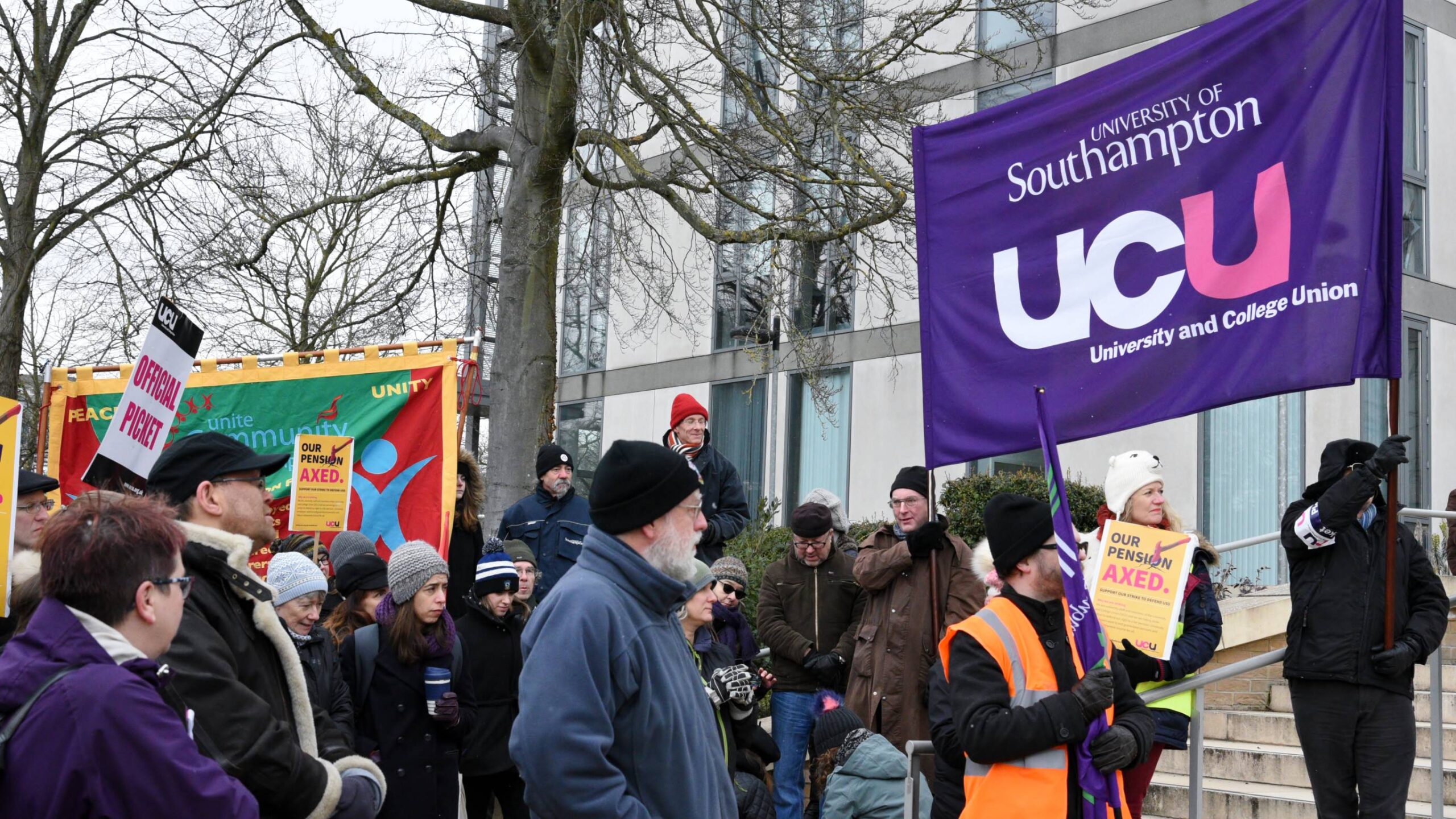
    University and College Union (UCU) staged a national marking and assessment boycott (MAB) – delaying graduations, job starts, and transitions to postgraduate study.

    UCU members took the action to tackle disputes including headline pay, gender and minority ethnic pay gaps, staff workload and the casualisation across the sector.

    Whenever there’s industrial action, the hope in Carlow St is that students will see the bigger picture – but this time around, at least for some students in some universities, the impact was significant. At the time, UCU estimated that 30,000 students were unable to graduate on time or were affected in some other way.

    In the aftermath, the Commons Education Committee held a mini inquiry to investigate the impact – it wrote to the then Conservative government to raise concerns about the lack of data, the role of the Office for Students (OfS) and the lack of clarity over students’ rights, and the eventual (post election) reply was predictably weak.

    Now, two years on, OfS has published research that was commissioned to develop an understanding of what the impacts were from a student perspective – along with guidance for institutions on protecting the interests of students during industrial action, and a webinar event planned for mid-May on the regulator’s expectations on how providers should support students before, during and after industrial action.

    OfS first ran a text-based focus group via YouGov in July 2024 that discussed short- and long-term impacts, what information they got from their institutions, and how those institutions handled the situation. A quantitative survey followed that gathered 763 responses (279 undergrads, 284 postgrads, and 200 graduates) that had been studying at impacted institutions during the boycott. You’d not be diving into demographic splits on that sample size.

    The polling drilled into how the industrial action affected their academic lives – immediately and over time – along with the comms they received from their universities, and how they viewed their rights as students.

    On the top line

    In a “topline” results report and associated student insights brief, we learn that the industrial action caused delayed or unmarked coursework (53 per cent) and exams (46 per cent), reduced lecture time (68 per cent), and decreased contact with staff.

    Most impacted students reported negative effects on academic work quality (49 per cent) and grades (42 per cent). The MAB’s psychological impact was significant – with 41 per cent reporting increased stress, 32 per cent experiencing poorer mental health, and 15-18 per cent noting negative effects on their social lives.

    One student is quoted as follows:

    I was waiting for the result of a resit that the progression of my masters’ depended upon but it was delayed so much I had to pay for the next module and would not get the results until halfway through.

    International students faced particular challenges, with visa uncertainties arising from delayed results and qualifications. Some students couldn’t attend graduation ceremonies because their results came too late:

    I didn’t manage to get graduation tickets in time due to how late results were, so I didn’t have a graduation ceremony.

    Communication varied considerably across institutions – with most updates coming through emails (65 per cent) rather than during lectures (22 per cent). Students rated information from individual lecturers (78 per cent satisfaction) more highly than university-wide communications (64 per cent satisfaction).

    Many students in the focus group:

    …were not told which of their modules would be affected, or when they would get their marks and feedback.

    OfS says that the institutional response was inconsistent across the higher education sector. Students directly affected by the MAB expressed significantly higher dissatisfaction (54 per cent) with their university’s handling of the situation compared to unaffected students (18 per cent). Just 46 per cent of affected students received alternatives or compensation, primarily through “no detriment” policies adapted from those developed during the Covid era (26 per cent).

    Financial compensation and rights awareness was low – with only 30 per cent knowing they could request it, and a mere 9 per cent successfully receiving any. The boycott also negatively impacted perceptions of education quality (38 per cent reporting a decrease) and value for money (41 per cent reporting a decrease), with one student noting:

    I ended up with a [postgraduate diploma] instead of my MSc, and I came out with a merit instead of a distinction.

    The brief does note that universities employed various mitigation strategies, including awarding interim degree classifications, guaranteeing minimum classifications, improving mental health support, reallocating marking responsibilities, and engaging with employers to request flexibility for affected graduates.

    Were they OK? Some students felt their institutions responded well, others reported that the experience contributed to decisions not to pursue further studies or work in higher education, with 42 per cent reporting decreased trust in their universities.

    Behind the screams

    Much of that won’t come as a surprise – although the sheer scale of the suggested impacts, as well as their depth and breadth on individual students (esp rer mental health and international students) ought to invigorate debates about the morality of the tactic, and how universities handled it to limit legal or financial exposure.

    Arguably of more interest is the letter and “regulatory statement” that accompanies the publication from John Blake, Director for Fair Access and Participation.

    Re-stressing that it’s not OfS’ role to intervene in labour disputes, Blake expresses concern about how strikes and the MAB disrupted students’ academic experiences, notes inconsistencies in institutional responses, sets out an aim to establish clearer expectations for fair treatment for all students in any similar future scenarios.

    And there’s a fascinating section on compensation:

    We want to be clear that we don’t see compensation as a substitute for the holistic experience of intellectual, professional and personal development that a student should expect from their higher education. Institutions should continue to focus their efforts during industrial action on delivering the education that students expect. The inclusion of an expectation in relation to compensation does, though, reflect the rights students have under the Consumer Rights Act 2015.

    Given that many students got neither, the clear implication is that a large number of students should have received both.

    Six principles

    The core of the guidance letter then manifests in six principles:

    1. Providers must remove contractual terms that inappropriately limit liability to students during staff industrial action or other circumstances within the provider’s control, as these breach consumer protection law.
    2. Effective contingency plans must be developed to minimise disruption to students during industrial action, ensuring plans are actionable, timely, and protect qualification integrity.
    3. When implementing contingency plans, providers should prioritise education delivery by: first avoiding impacts on students; if not possible, making minimal changes; and if necessary, providing timely repeat performance of missed teaching or assessment.
    4. Fair compensation must be paid when contingency plans fail to deliver promised aspects of student experience, particularly for missed teaching without timely replacement, delayed assessment marking, or delayed progression decisions affecting jobs or visa status.
    5. Clear communication with students is essential, including transparent information about rescheduled activities or compensation, with proactive identification of eligible students rather than requiring them to submit claims.
    6. Providers must submit reportable events about industrial action to the Office for Students (OfS) in accordance with established regulatory requirements.

    It’s an interesting list. The first one on the inclusion of industrial action in so-called “force majeure” clauses in student contracts – which limit liability for events that are outside of the predictability or control of of providers – is a long-running passive-aggressive row between the Competition and Markets Authority (CMA) and OfS on one side, and providers on the other.

    OfS has previously published a referral to National Trading Standards involving the University of Manchester’s contract – but my spreadsheet suggests that there’s a large number of providers that either haven’t seen that, or are digging in for a battle over it.

    That may be partly because those sorts of clauses – and CMA’s advice on them (which OfS requires providers to pay “due regard to”) – are a key point of dispute in the ongoing Student Group Claim, the UCL portion of which won’t get to court until early 2026.

    From a student point of view, if those clauses shouldn’t exist, the snail’s pace of enforcement on this is as baffling as it is frustrating.

    There won’t be many providers that weren’t developing contingency plans, notwithstanding that they can always be improved – and the one-two-three-four punch of avoid, adjust, repeat or compensate reflects (and translates) the position under consumer law.

    Of course some will argue that a legal duty to undertake any/all of those steps under consumer law depends on those force majeure clauses not existing or being unlawful – and as it stands there’s a major silent standoff that’s unhelpful.

    Even if you just look at compensation, the survey fails to differentiate between compensation paid for breach of contract, and “goodwill” payments where no such breach has been accepted by providers. As far as I’m aware, the former was vanishingly rare.

    The other issue, of course, is with punch three of four – where university managements satisfy themselves that once a dispute is over, teaching or support is rescheduled “because we told them to”, despite the fact that most heads of department find it hard to actually implement those instructions with UCU members.

    The “proactive identification of eligible students” for “repeat performance” or compensation is interesting too – especially over the latter, providers have long relied on students having to make complaints in order to get redress. This not only depends on the breach of contract or not issue being resolved, it also raises questions for universities’ legal advisors and insurers about the relative risks of doing as John Blake says, or waiting for students to raise concerns.

    But as well as all of that, there’s three things we ought to be surprised not to see.

    What’s missing?

    For a set of documents seeped in the translation of consumer protection to a higher education setting, there’s nothing on the extent to which any alternative arrangements in a MAB – especially alternative arrangements over marking – should still be carried out with reasonable skill and care. Academic judgement can’t be challenged, but only if that judgement has been carried out in the way we might expect it to be by people who know their onions. That was a major issue in the dispute for plenty of students, even if it wasn’t a big issue in the polling.

    The second is the lack of answer to the questions raised both in the polling and by the Commons Education Committee – which concern students’ understanding of what their rights are. If OfS thinks that it can vaguely pressure providers into proactively identifying students entitled to wads of cash, it’s misunderstanding the countervailing pressures on providers in similar ways to those identified by Mills and Reeve over provider collapse. And as I often say on the site, good regulatory design considers how individuals come to understand (or access information) on their rights should they need to use them without having to access a regulator or complaints adjudicator – there’s nothing on any of that here.

    But the third is the lack of a clear link to the regulatory framework, and the lack of any enforcement carried out over what must amount to failings. If the guidance is grounded in OfS’ rules, students might well say “well what action have you taken given that the problems were widespread?”

    If it’s not grounded in OfS’ powers, providers might well say “well notwithstanding that we like to look nice, why would we magnify the efficacy of an industrial action tactic if we don’t really have to”.

    It’s all very well for OfS to be “give them guidance” mode, but over this set of issues the financial impacts of compliance with something that sounds contested, and partly voluntary, could be huge both in an individual dispute and in the long-term. That all (still) needs bringing to a head.

    Source link

  • Universities face ‘daunting’ facilities needs, report says

    Universities face ‘daunting’ facilities needs, report says

    Dive Brief:

    • Spending on higher education facility operations is keeping up with inflation, but it has yet to return to what it was before and during the pandemic, according to a report by construction data company Gordian.
    • Capital spending is also up, but because the backlog of needs is so high, the spending increase has only slowed the pace of growth in unmet needs; it hasn’t led to progress in closing the gap, the report said.
    • “Planned project costs [are] outstripping available and allocated budgets, tempering the impact of even the most well-meaning and thoughtfully directed dollars,” according to The State of Facilities in Higher Education, released this week.

    Dive Insight:

    Colleges and universities across the United States are facing a systemic enrollment gap driven by a projected drop in the number of high school graduates as well as broader cultural changes in which households are rethinking the value of higher education

    “Difficult choices that [institutions] have been talking about for several years now are upon them,” the Gordian report noted. “Most sustaining models involve reimagining the institution as a smaller place with reductions in employees and property to align spending with revenue. Alternatives demonstrated over the past decade would include merger, sale or dissolution.”

    Despite the long-term trends, 27% of colleges are expanding, although at a modest 3% rate on average. Some are growing because they’re seeing an increase in students, but others are building out because they don’t have high repair and replacement costs. “They are not yet feeling the pressure financially to keep up with what they have already built,” the report says. 

    Where institutions are renovating or replacing obsolete buildings, “these enhancements are being implemented with … thought to the costs to sustain that investment and healthy caution about a future with great uncertainty,” the report noted. 

    When the pandemic ended, schools quickly upped their spending on renovations — increasing spending 26% between 2021 and 2023. Spending is still relatively strong, but growing at a lower rate, Gordian said. Despite the spending, a funding shortfall of more than 32% persists. 

    “The gap between what is being invested and what is needed to sustain the institutional assets … will continue to grow,” the report said

    The backlog of capital renewal projects is more than $140 per gross square feet, up 2% from the previous year and up from just under $125 per gross square feet two years ago, according to the report. 

    Spending on operations is a bright spot — up 4.5% year over year. That rate is higher than inflation, but it’s still below what it was before the pandemic, and operational costs are rising. 

    “There may have been legitimate opportunities to cut back on spending based on innovation, enrollment decline or program changes,” the report said. “But there are usually going to be drivers outside of the department’s immediate control like salaries and wages, utility costs and any number of commodities expenses which continue to drive costs upward.”

    Source link

  • Growing Orchids Amid Dandelions at Work (opinion)

    Growing Orchids Amid Dandelions at Work (opinion)

    Many of us working in higher education, including those of us in teaching and learning centers, might find that our work is dramatically accelerated by rapid technological change and increasing pressures to be more efficient and productive. Technology adoptions such as smartphones and Slack, video communication, and now generative AI all contribute to the acceleration of the organizational culture.

    In her recent essay “Teaching Centers Aren’t Dumping Grounds,” Kerry O’Grady argues that many academic leaders “focus on more instead of on effectiveness and efficiency.” O’Grady recounts continued calls to “create more workshops, more one-pagers or more training when attendance was dismal for initial sessions, or when the original documents went untouched.” She argues that educational developers are in a constant state of emergency response, in which they are tasked with “retroactive cleanup” as opposed to “the work of proactive planning for teaching and learning success.” O’Grady calls for a much-needed reset—something that feels wonderfully exciting—and institutionally unrealistic.

    Our collective teaching and working in higher education at more than 20 institutions over 50 years tells us that we are always working with limited agency to significantly change how our centers align with our strategic vision and the changing needs of the institution. Amid the dizzying pace of constant disruption, we feel a need to find a more sustainable and pragmatic approach. O’Grady’s essay inspired us to reflect on our strategic plans and how we support our respective communities. While the “dumping ground” metaphor importantly calls attention to current challenges, we consider a different metaphor that has guided our decisions as we direct centers and support educators.

    The Dandelion and the Orchid

    Dandelions are versatile flowers—resilient, fast-growing and abundant. In the context of educational development, dandelions represent the many ways developers adapt to institutional demands, producing quick outputs that propagate widely. Dandelion work is essential: It includes the programs and resources we create rapidly to meet pressing needs. However, as with real dandelions, the results of this work are often scattered, growing without the intentional design of a cultivated garden. When we run from meeting to meeting or throw together a one-off workshop to respond to emerging pedagogical issues, we rely on dandelions.

    In contrast, orchids require significant care and controlled environments to flourish. Orchid work symbolizes slow, intentional cultivation—projects that are thoughtfully nurtured over time. These efforts demand patience, consistency and a commitment to depth over breadth. While the process is slower, the results are uniquely meaningful, reflecting a product of deliberate focus. Orchid work requires long-term planning, collaboration across units and thoughtful engagement. While orchids can result in beautiful landscapes, the time taken to cultivate them can mean that we miss many emergent day-to-day needs.

    Together, this framework highlights a central question: Which systemic issues require sustained effort, and which challenges can be addressed through quick, one-off engagements? Balancing dandelion and orchid approaches helps educational developers respond to immediate needs while creating space for intentional growth.

    Growing Relationships

    Resilience does not sprout in isolation but through networks of care, mutual support and shared experiences. To push the floral metaphor further, if our goal in centers for teaching and learning is to help educators help students bloom, then we need to model and promote the space and time needed to learn, even if social pressures point in the opposite direction.

    Although meaningful relationships take time to develop, their benefits are powerful. Research supports the idea that individuals with a high relational self-construal—those who define themselves through their relationships with others—may be better able to embrace inconsistency and instability (two things that very much describe life in education today). Educational developers therefore can foster resilience and adaptability not only by caring for relational networks at their institution but also by defining their work based on such networks.

    In our own ways, we make space for orchids in our work and programming by emphasizing the ways in which relationships and time are necessary conditions for educational development. Some of the ways we do this as we go about our regular, day-to-day “dandelion” programming include:

    Balancing the orchid and the dandelion depends on priorities and time constraints. The dandelion approach can produce quick solutions when the pressure is high, and the orchid approach encourages us to carve out the time and tend to our relationships even in our constant push to maintain that field of flowers.

    While it may disrupt our metaphor, dandelions can give way to orchids and orchids can give way to dandelions. After all, the more often that deeper relationships develop, the more often we’re going to be in contact with faculty and colleagues, which will seed new ideas and possibilities, be they orchids or dandelions.

    The metaphor encourages us to ask how and where we can make space and time for deeper engagement. We cannot just grow a field of dandelions if we want to foster a culture of innovation, nor can we respond effectively and in a timely manner to an institution’s needs if we just focus on orchids. We have found that giving ourselves the permission to grow orchids amid the dandelions allows us to feel more agency and more relationally connected to the work we’re doing and the people we’re doing it with. The metaphor has helped us foster and model a more inclusive, supportive academic culture—one that balances collaboration with efficiency, collective resilience with institutional responsiveness and meaning with productivity.

    JT Torres directs the Houston H. Harte Center for Teaching and Learning at Washington & Lee University.

    Lance Eaton is an educator, writer and public speaker. He has worked in educational development for 15 years and recently became the senior associate director of AI in teaching and learning at Northeastern University.

    Deborah Kronenberg is an educator, consultant and public speaker who approaches communities of learning with creative, interdisciplinary, relationship-centric leadership in faculty and administrative roles in the greater Boston area.

    Source link

  • Wraparound Support Network Aids College Student Math Completion

    Wraparound Support Network Aids College Student Math Completion

    Corequisite educational models are tied to higher pass and completion rates for students compared to remedial education, but ensuring learners are passing college-level courses often requires additional institutional investment.

    Middle Georgia State University reimagined its corequisite education model to embed tutors, peer mentors and success coaches in entry-level math courses. Now, students who are falling behind are identified on a weekly basis, allowing for targeted and individualized outreach.

    After the first term of the initiative, passing rates grew over 10 percentage points and withdrawals decreased, encouraging the university to scale the intervention to English courses and, starting next fall, STEM courses with high failure—D or F—or withdrawal rates.

    What’s the need: Middle Georgia State offers 29 sections of its corequisite math course, Qualitative Reasoning. The course has seen stagnant success rates over the past few years, even though the number of students enrolled in corequisites grew, said Deepa Arora, senior associate provost of student success at Middle Georgia State.

    Students who didn’t pass the class were less likely to stay enrolled and progress, prompting institutional leaders to consider new ways to engage these learners.

    How it works: The solution was to create a support network of professionals who assist learners.

    Faculty members are at the center of the initiative, flagging at-risk learners who are missing goals or failing to submit work.

    From there, student success coaches, who are embedded in the course’s learning management system, reach out to those students to share resources, create a success plan and make referrals. Coaches also initiate a follow-up a week later to see if students have completed any action.

    Depending on the student’s area of weakness, success coaches funnel them to one of two types of student employee: an embedded tutor or a peer mentor.

    Embedded tutors address primarily academic concerns, such as low grades. Tutors attend class sessions, provide content-specific coaching and host review sessions as well as set up appointments for learners who need additional assistance, Arora said.

    Corequisite learners who may be missing or not participating in classes are referred to a peer mentor, Arora said. In addition to teaching academic skills, peer mentors focus on a student’s sense of belonging and connection to the institution. They facilitate workshops, provide referrals to other support resources and connect students with classmates.

    Both tutors and mentors are paid positions for which students must meet certain qualifications: They need to have passed the relevant course, be enrolled at least part-time and fulfill role-specific training.

    Building better: The staffing changes were supported by revenue from tuition increases over the past two years. Faculty buy-in was also essential. “Faculty collaboration and cooperation with the success team was an integral part of the initiative and led to the development of a support ecosystem for the student,” Arora said.

    Prior to implementing the new model, faculty members were briefed on the initiative’s design and asked to provide feedback and meet with the success coaches to build relationships.

    Faculty didn’t receive any specific training other than guidance on how to identify at-risk students—those missing classes, earning low grades or failing to engage. Campus leaders also encouraged professors to send weekly communication regarding student performance and share related information about content with the success coach assigned to their section, Arora said.

    The impact: The initiative succeeded in its goal of improving student pass rates: 73 percent of students who attempted the course in fall 2024 passed, a 14-percentage-point increase from the previous fall’s rate. (Excluding withdrawals, 77 percent of fall 2024 students passed the course.)

    One trend the university noted was that the students who did fail were primarily in the online sections, suggesting that improvements to the in-person experiences were moving the needle.

    Additionally, the connection between faculty and success coaches broke down institutional silos through ensuring timely identification of barriers and sharing of best practices. Success coaches appreciated being embedded in the learning management system, as it gave them greater insight into where the students needed help.

    Support staff also noted increased student use of resources.

    What’s next: After the initial positive results, university leaders chose to extend the initiative this term to include all sections of Composition I and its corequisite support courses. “The plan is also to extend this strategy to all sections of Anatomy and Physiology I and II where additional support is needed to improve their success rates,” Arora said.

    The university will also invest in additional focus on online courses to close success gaps there.

    Do you have an academic intervention that might help others improve student success? Tell us about it.

    Source link

  • To Improve Peer Review, Give Reviewers More Choice (opinion)

    To Improve Peer Review, Give Reviewers More Choice (opinion)

    “Greetings! You’ve been added to our journal’s editorial system because we believe you would serve as an excellent reviewer of [Unexciting Title] manuscript …”

    You probably get these, too. It feels like such emails are propagating. The peer-review system may still be the best we have for academic quality assurance, but it is vulnerable to human overload, preferences and even mood. A result can be low-effort, late or unconstructive reviews, but first the editors must be lucky enough to find someone willing to do a review at all. There should be a better way. Here’s an idea of how to rethink the reviewer allocation process.

    The Pressure on Peer Review

    As the number of academic papers continues to grow, so do refereeing tasks. Scientists struggle to keep up with increasing demands to publish their own work while also accepting the thankless task of reviewing others’ work. In the wake, low-effort, AI-generated and even plagiarized reviewer reports find fertile ground, feeding a vicious circle that slowly undermines the process. Peer review—the bedrock of scientific quality control—is under pressure.

    Editors have been experimenting with ways to rethink the peer-reviewing process. Ideas include paying reviewers, distributing review tasks among multiple reviewers (on project proposals), transparently posting reviews (already an option for some Nature journals) or tracking and giving virtual credits for reviews (as with Publon). However, in one aspect, journals have apparently not experimented a lot: how to assign submitted papers to qualified reviewers.

    The standard approach for reviewer selection is to match signed-up referees with submitted papers using a keyword search, the paper’s reference list or the editors’ knowledge of the field and community. Reviewers are invited to review only one paper at a time—but often en masse to secure enough reviews—and if they decline, someone else may be invited. It’s an unproductive process.

    Choice in Work Task Allocation Can Improve Performance

    Inspired by our ongoing research on giving workers more choice in work task allocation in a manufacturing setting, it struck me that academic referees have limited choices when asked to review a paper for a journal. It’s basically a “yes, I’ll take it” or “no, I won’t.” They are only given the choice of accepting or rejecting one paper from a journal at a time. That seems to be the modus operandi across all disciplines I have encountered.

    In our study in a factory context, productivity increased when workers could choose among several job tasks. The manufacturer we worked with had implemented a smartwatch-based work task allocation system: Workers wore smartwatches showing open work tasks that they could accept or reject. In a field experiment, we provided some workers the opportunity to select from a menu of open tasks instead of only one. Our results showed that giving choice improved work performance.

    A New Approach: Reviewers’ Choice

    Similar to the manufacturing setting, academic reviewers might also do better in a system that empowers them with options. One way to improve peer review may be as simple as presenting potential referees with a few submitted papers’ titles and abstracts to choose from for review.

    The benefits of choice in reviewer allocation are realistic: Referees may be more likely to accept a review when asked to select one among several, and their resulting review reports should be more timely and developmental when they are genuinely curious about the topic. For example, reviewers could choose one among a limited set of titles and abstracts that fit their area of domain or methodological expertise.

    Taking it further, publishers could consider pooling submissions from several journals in a cross-journal submission and peer-review platform. This could help make the review process focus on the research, not where it’s submitted—aligned with the San Francisco Declaration on Research Assessment. I note that double-blind reviews rather than single-blind may be preferable in such a platform to reduce biases based on affiliations and names.

    What Can Go Wrong

    In light of the increased pressure on the publishing process, rethinking the peer-review process is important in its own right. However, shifting to an alternative system based on choice introduces a few new challenges. First, there is the risk of authors exposing ideas to a broader set of reviewers, who may be more interested in getting ideas for their next project than engaging in a constructive reviewing process.

    Relatedly, if the platform is cross-journal, authors may be hesitant to expose their work to many reviewers in case of rejections. Second, authors may be tempted to use clickbait titles and abstracts—although this may backfire on the authors when reviewers don’t find what they expected in the papers. Third, marginalized or new topics may find no interested reviewers. As in the classic review process, such papers can still be handled by editors in parallel. While there are obstacles that should be considered, testing a solution should be low in risk.

    Call to Action

    Publishers already have multi-journal submission platforms, making it easier for authors to submit papers to a range of journals or transfer manuscripts between them. Granting more choices to reviewers as well should be technically easy to implement. The simplest way would be to use the current platforms to assign reviewers a low number of papers and ask them to choose one. A downside could be extended turnaround times, so pooling papers across a subset of journals could be beneficial.

    For success, the reviewers should be vetted and accept a code of conduct. The journal editors must accept that their journals will be reviewed at the same level and with the same scrutiny as other journals in the pool. Perhaps there could be tit-for-tat guidelines, like completing two constructive reviews or more for each paper an author team submits for review. Such rules could work when there is an economy of scale in journals, reviewers and papers. Editors, who will try it first?

    Torbjørn Netland is a professor and chair of production and operations management in the Department of Management, Technology, and Economics at ETH Zurich.

    Source link

  • NSF, NIH Slash Support for Early-Career Scientists

    NSF, NIH Slash Support for Early-Career Scientists

    Both the National Science Foundation and the National Institutes of Health are slashing funding support for graduate students and early-career researchers as President Donald Trump continues dramatic federal budget cuts. 

    Since Trump took office in January, the two agencies—which send billions in funding to research universities each year—have stalled grant reviews, fired scores of workers and terminated or flagged hundreds of active grants that conflict with the administration’s ideological goals.

    On Tuesday, Nature reported the NSF Graduate Research Fellowship Program awarded 1,000 fellowships—fewer than half of the record-setting 2,555 fellowship offers it made in 2023, and the second-smallest number of awards since 2008. 

    Prior to this year, the fellowship program’s stated goal was to “ensure the quality, vitality, and diversity of the scientific and engineering workforce,” though the Trump administration has since replaced the word “diversity” with “strength.” 

    Since 1952, the NSF’s fellowship program has funded more than 75,000 master’s and Ph.D. students pursuing science degrees. Fellows receive five years of funding, which includes a $37,000 annual stipend and the cost of tuition. The fellowships are highly competitive; of the more than 13,000 applicants who apply each year, only about 16 percent typically get an award. While the cuts made it even more competitive this year, a record 3,018 applicants also received “honorable mentions,” which don’t come with an award but can boost a CV nonetheless. 

    Over the past two weeks, the NIH has also canceled numerous institutional and individual training grants, including many that support scientists from underrepresented communities, according to The Transmitter

    The outlet reported that a chemistry professor at the University of Puerto Rico–Río Piedras Campus received a letter from the NIH terminating funding for the Undergraduate Research Training Initiative for Student Enhancement because the award “no longer effectuates agency priorities.”

    That justification is now central to a federal lawsuit researchers and advocacy groups filed against the NIH last week, which among other points argues that the Department of Health and Human Services (the NIH’s parent agency) hasn’t yet adopted rules that would allow it to terminate an award for not effectuating agency priorities. 

    Other terminated NIH training programs, according to The Transmitter, include the Maximizing Access to Research Careers program, which funded undergraduate researchers; the Post-Baccalaureate Research Education Program; the Bridges to the Doctorate program, which trained master’s students; the Initiative for Maximizing Student Development, which supported graduate students; and the Institutional Research and Academic Career Development Award, which aided postdoctoral researchers.

    Source link

  • DHS Formalizes Policy Screening Noncitizens’ Social Media

    DHS Formalizes Policy Screening Noncitizens’ Social Media

    The Department of Homeland Security is formalizing a policy to search the social media accounts of all foreign applicants for U.S. visas or other benefits, according to a memo issued Wednesday morning. 

    U.S. Citizenship and Immigration Services will collect applicants’ social media handles and scour their accounts for any “antisemitic activity.” Social media content “endorsing, espousing or promoting antisemitic terrorism, antisemitic terrorist organizations, or other antisemitic terrorist activity” is now “grounds for denying immigration benefit requests.”

    “This will immediately affect aliens applying for permanent resident status, foreign students and aliens affiliated with educational institutions linked to antisemitic activity,” the memo continued. 

    Secretary of State Marco Rubio proposed the policy last month, drawing criticism from free speech advocates. Others objected to the broad scope of the proposal, which included not just visa applicants but also current residents and green card holders. The new policy is just as broad.

    The news comes after weeks of escalating attacks on international students, many of whom have had their visas and legal resident status revoked for pro-Palestinian speech under an obscure legal clause that allows the secretary of state to determine if a visa holder is a “foreign policy threat.” An Axios report found that the State Department was already using artificial intelligence to scan student visa holders’ social media accounts looking for the allegedly antisemitic speech referenced in the new memo. 

    Many more students have had their visas revoked over minor criminal infractions; others have no clear understanding why their status was terminated. 

    An Inside Higher Ed analysis found that nearly 450 students have had their visas revoked as of Wednesday afternoon. Follow along with our interactive map and tracker

    Source link

  • The secret lives of Subject Benchmark Statements

    The secret lives of Subject Benchmark Statements

    Higher education providers are currently experiencing unprecedented degrees of pressure, not only in terms of the constraints imposed by the current financial climate but in the increased expectations placed upon them by students, policymakers and the public. At the same time, they’re having to address the challenges posed by new technologies and workplace practices, environmental concerns and economic conditions, as well as by a growing focus on fair access to higher education.

    Such issues are at the fore of the sector’s own debates. Recent HEPI blogs have, for example, focused on the importance of reasonable adjustments, the value of widening participation, the UN’s Sustainable Development Goals and institutional AI initiatives. Colleagues from GuildHE have written here and elsewhere about how specialist providers are essential to the delivery of the government’s industrial strategy – just as Universities UK has argued that graduates will play a vital role in that strategy, presenting an analysis which demonstrates that ‘growth sectors identified by the government in its industrial strategy require high levels of graduate skills across all regions and nations of the UK’.

    These priorities reflect those of the UK government. When the Education Secretary for England wrote to providers in November, she said she expected them to ‘play a stronger role in expanding access and improving outcomes for disadvantaged students’, ‘make a stronger contribution to economic growth’, ‘play a greater civic role in their communities’ and ‘raise the bar further on teaching standards’.

    Sector bodies and think tanks have produced valuable reports on these issues. But one lower-profile resource used by educators to anchor provision to such commitments is the Subject Benchmark Statement. This instrument plays a key role in demonstrating and underpinning how HEIs deliver the industry-aligned graduate skills essential for economic growth – those skills highlighted by GuildHE and Universities UK, and required by government strategies.

    Subject Benchmark Statements are curated by QAA as the sector-led descriptors of taught disciplines. They describe the nature of study and the academic standards expected of graduates in specific subject areas – showing what graduates should know and be able to do at the end of their studies. Academic staff use them to inform the design, delivery and enhancement of programmes. They are included as key reference points in guidance on cyclical review in Scotland and Wales, and in institutions’ validation and assurance of provision across the UK.

    They are created by panels of academic experts and representatives of employers and Professional, Statutory and Regulatory Bodies. At a time when providers are expected to demonstrate their contribution to the UK’s industrial strategy, they use industry expertise to determine the skillsets needed for professional success and economic growth. They inform prospective students of the career paths advanced by their subjects, tell prospective employers what they can expect from a graduate of those subjects and assure policymakers of the value of those subjects.

    Today, we are publishing this year’s set of Subject Benchmark Statements: revised editions of the Statements for, Accounting, Education Studies, Finance, Music, and Philosophy, as well as for Librarianship, Information, Knowledge, Records & Archives Management, and Physics, Astronomy & Astrophysics; and a new Statement for Public Policy & Public Administration.

    Key to the formulation of these Statements has been the development, through consultation with sector and industry stakeholders, of a set of themes which underpin their focus. These themes align with concerns shared by policymakers across the political spectrum. They include sustainability, access and success in higher education, graduate employability and artificial intelligence.

    These emphases reflect not only the key expectations set by the Education Secretary last autumn, but also government priorities in such areas as green prosperity and AI. Subject Benchmark Statements also chart strategies for the enhancement of educational quality the Secretary of State has called for. They function alongside other key sector reference points – such as the Qualifications Frameworks and the Quality Code – to underpin the standards and enhance the quality of higher education. They are a mechanism by which programmes assure and articulate their educational, economic and social value and demonstrate the continuing relevance of their subjects to governments and the public.

    To see how this works, it’s worth taking a moment to look at an example from our new set of Statements. This is the first time that there’s been a separate Subject Benchmark Statement dedicated to Public Policy & Public Administration (a subject well suited to this forum), so let’s take a look at that.

    Its subject panel included three representatives of the Local Government Association, alongside practitioners and educators from 13 universities. An emphasis on industry impact shines through its 25 pages. It includes articulations of core skills at varying levels of study and attainment, and explains the purposes of a degree in its discipline, as well as strategies to promote accessibility and sustainable development. It also details the approaches to be taken by the discipline in relation to professional employability, both in terms of broad expectations and in relation to its specific engagement with artificial intelligence.

    In this context, it expects that ‘while degrees will have the capacity to develop career-ready students, they must also equip sector-experienced students with the knowledge, behaviours and skills that will enable them to develop and progress within the workplace’ and that ‘courses may provide and/or require opportunities for students to work individually or collaboratively with employers and/or relevant public sector stakeholders’.

    It adds that its degrees should ‘promote employability in a labour market that is becoming increasingly shaped by artificial intelligence’ and ‘prepare and equip students for work environments that require professionals to work alongside smart machines’ – and that therefore ‘to ensure students can complete their studies responsibly and with integrity, and be equipped to enter a world increasingly impacted by generative AI, Public Policy and/or Public Administration degrees must recognise and respond to employer and workplace needs’.

    Each Subject Benchmark Statement underpins the continuing relevance and value of its discipline to industry and students alike. As the University of Birmingham’s Dr Karin Bottom (who chaired the Public Policy & Public Administration panel) has emphasized, one of the key impacts of a Subject Benchmark Statement is that it ‘gives programmes credibility with organisations that may fund people who take these degrees and that may employ people who’ve taken these degrees’ – and ‘gives employers and practitioner groups a reference point as to what practitioners need to know’.

    At a time when many academic subject areas have come under increasing pressure (whether in terms of their commercial viability, their contribution to economic growth, or the careers they support), it remains crucial for the sector, students, taxpayers and policymakers to ensure that their value is not only expressed but also underpinned by benchmarking at the level of specific disciplines.

    And, as policymakers have recently stressed the need to prevent the emergence of regional ‘cold spots’ in specific subject areas, these sector-led, industry-informed, expert-written documents can also help, in the formulation of such policies, to hone a closer understanding of the impacts and contributions of their disciplines.

    Source link

  • After the Los Angeles fires, Beverly Hills shut out students whose school burned

    After the Los Angeles fires, Beverly Hills shut out students whose school burned

    LOS ANGELES — After the Palisades Fire destroyed her son’s high school, Shoshanha Essakhar found herself among the thousands of Los Angeles County parents wondering what to do.

    “I was thinking, ‘Oh my God, we’re going to be doing Zoom for the next God knows how long,’” said Essakhar. “It was a lot of fear, a lot of uncertainty.”

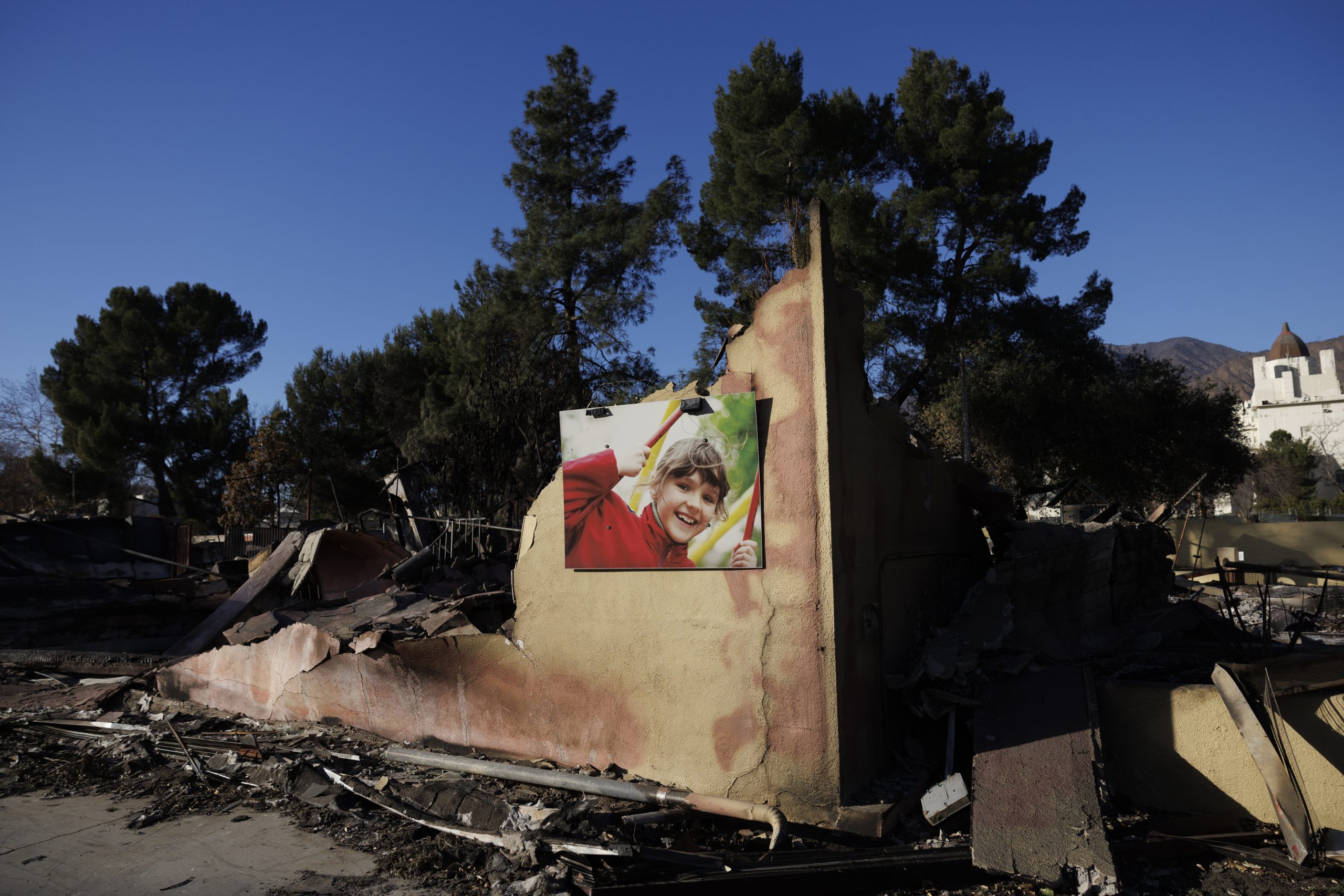
    The fire devastated Palisades Charter High School, where Essakhar’s son was a ninth grader, as well as two elementary schools in the Los Angeles Unified School District. The Eaton Fire, which broke out around the same time in early January, severely damaged or destroyed six school facilities in Pasadena Unified School District. Together, the fires disrupted learning for more than 725,000 kids and displaced thousands of students from their schools, their homes or both.

    For Essakhar, a potential solution came by way of an executive order California Gov. Gavin Newsom signed Jan. 14. For students in Los Angeles County schools affected by the fires, the order paused, through the remainder of the school year, the requirement that a student live within their school district’s boundaries. That meant she could enroll her son at nearby Beverly Hills High School, where another parent she shared carpool duties with was also enrolling her child. She quickly completed the necessary paperwork.

    But roughly a week later, Beverly Hills Unified School District abruptly stopped accepting students displaced by the fires, closing the door on Essakhar’s son and dozens of other students who expected to spend the semester at Beverly Hills High.

    “As a mom, you try to do your best for your child, but it got so unpleasant,” Essakhar said. Beverly Hills school leadership said it could not afford to accept additional students, nor did it need to: Students who lost their school but whose homes were still intact did not need their help.

    Related: Become a lifelong learner. Subscribe to our free weekly newsletter featuring the most important stories in education.

    The dispute between Beverly Hills Unified School District and some Palisades parents raises questions that school districts across the U.S. increasingly must grapple with as wildfires and other extreme weather events become more common because of climate change: What does a school district owe its neighbors after a major disaster?

    For Beverly Hills Unified, the answer was admitting 47 students before pausing enrollment over concerns that a surge of newcomers midyear would siphon resources from the district’s 3,000-plus existing students.

    “You’ve got a community where a lot of those folks lost their homes, and half lost their school but their homes weren’t impacted,” said Los Angeles Unified School District board member Nick Melvoin, whose district includes Palisades Charter High School. Like Beverly Hills, its students are predominantly from affluent backgrounds.

    Newsom’s order was an attempt at a fix: It urged districts to “extend every effort to support and facilitate the enrollment of students displaced by the fires.” Lori Peek, director of the Natural Hazards Center at the University of Colorado, Boulder, which focuses on the societal effects of disasters, said it “provided the necessary flexibility that disaster survivors really need, because their circumstances are so diverse.”

    In Beverly Hills, school board members resisted the order. Beverly Hills is one of the few “basic aid” districts in the state, meaning it collects more in local property tax revenue than an annual funding target set by the state, which is based on average daily attendance and other factors. Most districts fall short of the target, and the state makes up the difference.

     The January fires in Southern California disrupted learning for more than 725,000 students. Credit: Jason Armond / Los Angeles Times via Getty Images

    At a series of meetings in January and February, Beverly Hills school board members argued that the district couldn’t absorb additional students without harming those already enrolled. While other school districts see increased funding from increased attendance, that’s not true for basic aid districts like Beverly Hills.

    Board members also questioned whether students who lost their schools, but not their homes, such as Essakhar’s son, should be considered affected by the fire and able to enroll. Board members told district administration that they believed only students whose homes were destroyed should qualify.

    Not so, said Melissa Schoonmaker with the Los Angeles County Office of Education, which provided guidance to the county’s school districts on implementing the order. “It’s not that they had to lose their home or be evacuated, it could be a broad range of impacts,” she said.

    Eighty-seven families were left in limbo: They had completed all of their pre-enrollment steps and were just awaiting class assignments, Assistant Superintendent Laura Collins-Williams told the board on Feb. 3. Dozens more were interested in enrolling.

    Related: 109 degrees on the first day of school? In some districts, extreme heat is delaying when students go back

    Board members supported making this pause permanent.

    “Going forward we are closed to any enrollment that comes right now as a result of a student going to Pali who has not been displaced from their home but would like to come to Beverly Hills because they don’t want to go on Zoom,” board President Rachelle Marcus said at the meeting, referring to Palisades Charter.

    Essakhar, who lives in Brentwood, a Los Angeles neighborhood roughly halfway between Beverly Hills and the Pacific Palisades, called the entire process traumatic.

    She gave up on finding an in-person school option for her son, settling instead for Zoom through Palisades Charter. “Honestly, I didn’t want to go through the experience again,” she said. Plus, most of his friends who left Palisades Charter had enrolled at Beverly High. “Being with your group of friends is different than sending my kid alone to some other school to transition in the middle of the year after the fires on his own,” said Essakhar. 

    Another Palisades Charter parent, Negeen Ben-Cohen, was initially optimistic that the school would quickly secure a temporary campus. But as the weeks went by, she started considering other options for her ninth grader.

    “It was mostly about keeping my son in a healthy social environment, and not isolated at home,” said Ben-Cohen. “Covid already showed that with the amount of learning loss and how much kids fell behind during Zoom.”

    Like Essakhar, Ben-Cohen filled out all the necessary paperwork to enroll her son and was told she would hear soon about his class placements. Then enrollment was paused.

    “They shut the door in our faces. And that was after the kids got their hopes up, they think that they’re going to be able to go in-person, they think they’re going to be able to start with their friends,” said Ben-Cohen. 

    Related: Want to learn more about how climate change is affecting education? Sign up for our newsletter.

    At board meetings, parents and students expressed similar outrage.

    “Beverly had the opportunity to extend a hand when we needed it the most but instead they turned around and slammed the door in our faces,” said Kylie Abdi, a senior at Palisades Charter, at a Feb. 11 meeting.

    “We do not even want to get an education in a school that kicks others while they are down, you have lost the opportunity to teach your students how to be there for each other,” said another Palisades student, junior Rosha Sinai, calling the board “selfish.”

    Jason Hasty, the interim superintendent of Beverly Hills Unified School District, said in an interview that enrolling any more than 47 students would have strained the district’s resources and required hiring more teachers — although he acknowledged that his district is better funded than most.

    “We get more money than the state formula because of the way we’re funded. That is a fact. Also what is a fact is on July 1 of every year, we set a budget … based on the students we are projecting to have,” Hasty said.

    State Sen. Ben Allen, who represents both the Pacific Palisades and Beverly Hills areas, said that Beverly Hills would be compensated for taking in displaced students, although the details are still being worked out. 

    “We’re going to have their backs and that they’re going to be fully compensated for any students that they take in,” he said.

    Hasty said the district has been “in direct discussion” with Allen’s office, but “until we are sure that those funds are materializing and will be provided,” the pause on enrollment under the executive order (which expires at the end of the school year) remains in place. The district continues to enroll students who move to Beverly Hills or who are eligible under the McKinney-Vento Act, said Hasty. That legislation provides protections for students who are homeless, which is defined as “individuals who lack a fixed, regular, and adequate, nighttime residence.”

    Related: Universal prekindergarten is coming to California — bumpy rollout and all

    Nearby Santa Monica-Malibu Unified School District is also a basic aid district, but it interpreted the order “to mean that any student who wants to come here can come here right now,” said Gail Pinsker, the district’s chief communications officer. So far, the district has enrolled more than 140 students, with about 200 enrollment requests still being processed. The influx of students prompted the district to combine some elementary classes and hire a new high school teacher, Pinsker said.

    Three months after Palisades Charter High School burned, students remain on Zoom. The school just finalized plans to use an old department store building in downtown Santa Monica about 20 minutes southeast of the high school as its temporary campus. In-person instruction should resume sometime after the school’s spring break in mid-April, according to Palisades Charter High School.

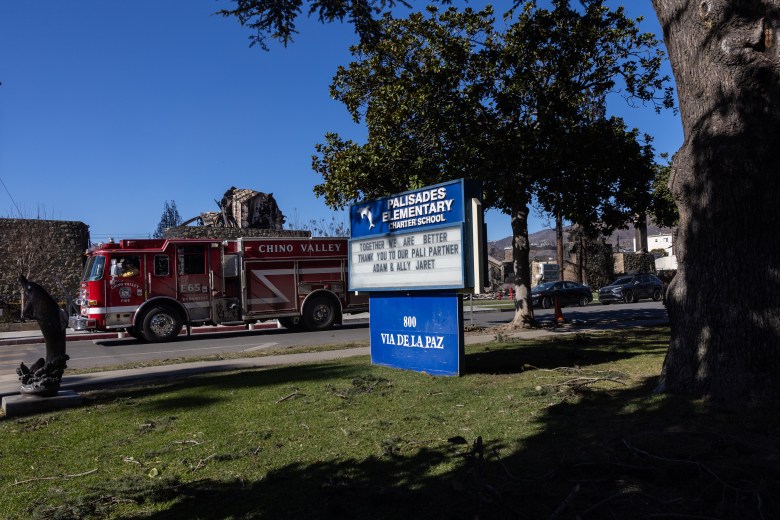
     Palisades Elementary Charter School, which was devastated by the wildfires in January. Credit: Jason Armond / Los Angeles Times via Getty Images

    Allen, the state senator, said the episode shows the need for a policy for compensating basic aid districts that take in displaced students to make the process smoother after future disasters.

    Also helpful would be a website listing districts accepting affected students, said Peek, the University of Colorado researcher.

    Lessons from the Los Angeles fires could inform policymaking elsewhere, she added. “They’re going to need it sooner rather than later, as other disasters continue to unfold across the country.”

    Contact editor Caroline Preston at 212-870-8965, on Signal at CarolineP.83 or via email at [email protected].

    This story about the Los Angeles fires was produced by The Hechinger Report, a nonprofit, independent news organization focused on inequality and innovation in education. Sign up for the Hechinger newsletter.

    The Hechinger Report provides in-depth, fact-based, unbiased reporting on education that is free to all readers. But that doesn’t mean it’s free to produce. Our work keeps educators and the public informed about pressing issues at schools and on campuses throughout the country. We tell the whole story, even when the details are inconvenient. Help us keep doing that.

    Join us today.


    Source link