Author: admin

  • Colorado School Attendance Zones Keep Racial, Socioeconomic Segregation Going – The 74

    Colorado School Attendance Zones Keep Racial, Socioeconomic Segregation Going – The 74


    Get stories like this delivered straight to your inbox. Sign up for The 74 Newsletter

    Colorado school districts should revise their school attendance zones at least every four years with a “civil rights focus.” State lawmakers should increase funding to transport students to and from school. And attorneys, advocates, and community organizations should embrace the right to sue over school assignments that increase racial segregation.

    Those are among the recommendations in a new report from the Colorado Advisory Committee to the U.S. Commission on Civil Rights. “Examining the Racial Impact of Public School Attendance Zones in Colorado” concludes that the way Colorado draws school attendance boundaries and assigns students to schools mirrors segregated housing patterns and results in low-income families having less access to high-quality schools.

    “This segregation fuels a widespread belief that schools serving predominantly white and affluent students are inherently better than those serving predominantly students of color or low-income families,” an accompanying policy brief said.

    Other reports from local and national think tanks and advocacy organizations have reached similar conclusions. While some local school officials, such as the Denver school board, have talked about possible solutions, the federal Trump administration has framed efforts to increase racial diversity in schools as discrimination that could trigger civil rights investigations.

    The Colorado Advisory Committee is a 10-person group of bipartisan appointed volunteers. Each state has an advisory committee that produces reports on civil rights issues ranging from housing discrimination to voting rights to the use of excessive force by police officers.

    In its latest report, the Colorado committee found that “thousands — perhaps tens of thousands — of Colorado students are likely to be assigned to schools in violation” of a federal law that says assigning a student to a school outside their neighborhood is unlawful “if it has segregating effects.”

    The committee’s recommended solutions attempt to balance strong support for neighborhood schools with allowing families to choose the best school for their child. School choice, or the ability for a student to apply to attend any public school, is enshrined in state law.

    The committee advocated for what it called “controlled choice,” which it said could mean that popular schools reserve seats for students who live outside the neighborhood or that schools give priority admission to non-neighborhood students who live the closest.

    To produce its report, the committee held hearings in 2023 to gather input from national experts including university professors, the author of a book on school attendance zones, and representatives from think tanks across the political spectrum.

    The committee also convened a group of 10 local experts including Brenda Dickhoner from the conservative advocacy organization Ready Colorado; Kathy Gebhardt, who was then a member of the Boulder Valley school board and now sits on the State Board of Education; former Aurora Public Schools superintendent Rico Munn; and Nicholas Martinez, a former teacher who heads the education reform organization Transform Education Now.

    The committee’s other recommendations include:

    • The civil rights divisions of the federal education and justice departments should review options for enforcing “the permissible and impermissible use of race in drawing attendance boundaries and setting school assignment policies.”
    • Colorado lawmakers should correct “the systemic racial and ethnic disparities” caused by the state’s school transportation system, which does not require school districts to provide transportation to students who use school choice.
    • State lawmakers should improve Colorado’s school choice system, including by adopting a uniform school enrollment window statewide and providing families with more information about schools’ discipline policies, class sizes, and other factors.
    • Colorado school districts should revise their school attendance zones and student assignment policies at least every four years and “consider racial and ethnic integration as part of the rezoning process.”

    “Redrawing school boundaries every few years can help prevent segregation from becoming entrenched while still allowing students to maintain a sense of stability in their educational environment,” the committee’s policy brief said.

    Chalkbeat is a nonprofit news site covering educational change in public schools.


    Get stories like these delivered straight to your inbox. Sign up for The 74 Newsletter

    Source link

  • Historian Dr. Jonathan Holloway to Lead Henry Luce Foundation Following Rutgers Presidency

    Historian Dr. Jonathan Holloway to Lead Henry Luce Foundation Following Rutgers Presidency

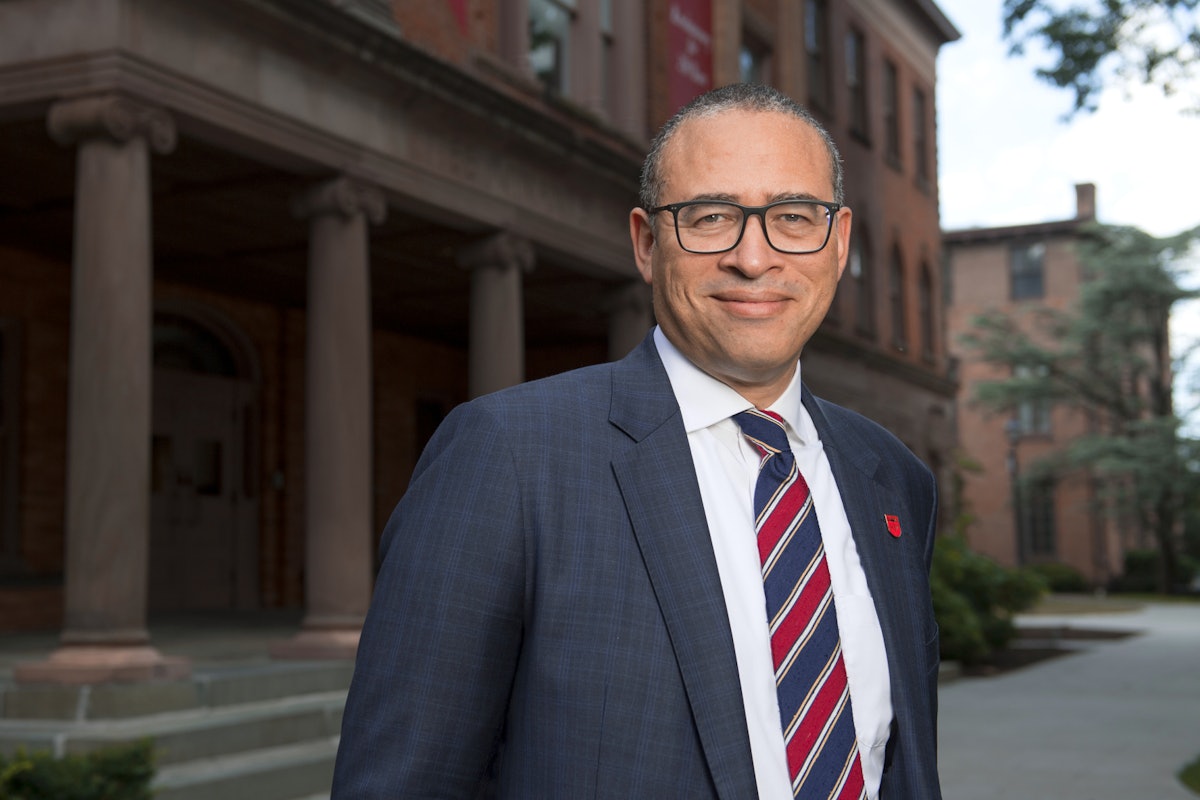
    Dr. Jonathan HollowayDr. Jonathan Holloway has been named the new President and CEO of the Henry Luce Foundation, following his five-year presidency at Rutgers University.

    The Henry Luce Foundation announced on Friday, that Holloway will become its seventh President and CEO in the organization’s 89-year history. The Foundation’s Board Co-Chairs, Debra Knopman and Terry Adamson, praised Holloway as “an eminent historian, a respected scholar of the humanities, a public intellectual, and an influential leader in higher education,” highlighting his “thoughtful approach to collaboration” and “firm commitment to the Foundation’s long-term view.”

    Holloway, who will succeed Dr. Mariko Silver (who departed in October 2024 to lead the Lincoln Center for the Performing Arts), expressed his enthusiasm for the new role.

    “I am honored to join the Henry Luce Foundation after I complete my tenure at Rutgers and to build upon its decades of remarkable work to foster discussion across differences, improve public discourse, and nurture ideas that will strengthen communities.”

    Holloway’s appointment comes after his term as Rutgers’ 21st president and first Black president in the university’s 250-year history. His tenure saw both accomplishments and challenges. In September 2023, the Rutgers University Senate passed a no-confidence vote (89-47) citing concerns about shared governance following decisions including the merger of medical schools and his handling of a faculty strike.

    Despite these challenges, Holloway championed several initiatives during his Rutgers presidency. He established the Rutgers Scarlet Service program, providing students with paid internships at nonprofit and government organizations. He also launched the Rutgers Democracy Lab at the Eagleton Institute of Politics in November 2024, focusing on democratic engagement and civil discourse. Under his leadership, the university saw record-breaking freshman enrollment with increased diversity and research grants reaching an unprecedented $970 million.

    Like many university presidents nationwide, Holloway navigated the complex landscape of campus protests, testifying before Congress about his administration’s response to demonstrations.

    Prior to Rutgers, Holloway served as provost at Northwestern University and held faculty roles at Yale University, where he was also Dean of Yale College. His scholarly work focuses on post-emancipation U.S. history, particularly social and intellectual history. He has authored several notable publications, including African American History: A Very Short Introduction and Jim Crow Wisdom: Memory & Identity in Black America Since 1940.

    The Luce Foundation Board expressed confidence that Holloway’s “exceptional listening skills, patience, and transparency will be instrumental in addressing the complex challenges that lie ahead” as the organization continues its work fostering discourse and strengthening communities.

    Source link

  • OfS insight on institutional closure lacks a firm statutory foundation

    OfS insight on institutional closure lacks a firm statutory foundation

    The Office for Students’ (OfS) insight briefing “Protecting the interests of students when universities and colleges close” is as much a timely reminder of where the law falls short when providers are at risk of closure as it is a briefing on how to protect the student interest under the current policy framework.

    As we set out in our Connect more report which explored, among other things, the legal framework for institutional insolvency, market exit and/or merger, the role of OfS in any institution at risk situation is already unhelpfully ambiguous. Its concern may be the student interest, but it is not empowered to prevent institutional closure (even if, as is often likely to be the case, the student interest would be best served by completing the course they registered for at the institution they enrolled in) – or even to impose order on a disorderly market exit.

    In the absence of express powers or an insolvency or special administration regime for higher education, OfS’ role becomes one of a point person, facilitating conversations with other agencies and stakeholders, but with no powers itself to prevent a disorderly closure. The tone of the briefing is collaborative and collegiate but, in a world where students are no better protected than any other unsecured creditor if a provider becomes insolvent, it’s doubtful that, under the law as it currently stands, the interests of students will be protected to the degree to which OfS desires.

    While OfS may be primarily concerned with protecting students’ interests, the trustees of those providers that are constituted as charities have a statutory duty to act in the best interests of the charity and to pursue their charity’s purposes. This duty will, of course, encompass the needs of present students but will also encompass past students, future students, research activities and much more besides. While no one would disagree with the general sentiment that “throughout the process [of institutional closure] the interests of students, and their options for continued study, must be kept in mind” – and the briefing does offer lots of useful ideas for how to ensure sufficient attention is given to the many types of students who will be affected – the elevation of student interest to a pre-eminent concern is not what the law generally, nor what OfS’ statutory duties currently require.

    University executive teams and boards may wish, therefore, to read OfS guidance in light of these realities, and be aware of the limits of what is realistically possible or likely to occur in giving consideration to the sort of scenario planning and preparation OfS advocates in the briefing.

    A herd of elephants

    OfS’ recommendations about the need to have suitably durable and maintained student records and to have entered into binding contracts with validating and subcontracting partners that contain clauses that deal realistically with the end of the relationship and contain adequate data sharing agreements clauses are all well made.

    But once things actually start to get tricky in real life there is a level of reliance on transparency, for example, in sharing information both with OfS but also with other organisations such as funding or regulatory bodies, or government departments, or even other institutions who might be prevailed upon to welcome displaced students. In the absence of a systematised notification process, any ambiguity about whose role it is to liaise with the various potentially affected stakeholders or the timing of any such communication has high potential to create problems. There are obvious issues raised by disclosing or revealing another institution’s “at risk” status, some of which may have the effect of accelerating the very process everyone is seeking to avoid.

    If OfS considers a registered institution is at risk of closure, it can impose a student protection direction under condition C4 of the conditions of registration. The briefing provides a helpful reminder of what a student protection direction might include and encourages regular thought about these issues to avoid the need for a provider to “improvise at speed and under stress if an institutional closure becomes possible.” That sounds very laudable at first glance, but it confuses the regulatory obligation with the real-world outcome. A provider at risk of closure may well come under pressure from OfS to produce a market exit plan and to map courses at a time when university teams have the least bandwidth to undertake such tasks. In any case, it is highly doubtful whether an insolvency practitioner would be bound by such planning in the event that a provider goes into an insolvency process.

    In scenario planning, OfS moots the idea that higher education providers might consider setting up “agreements in principle” with other institutions “to take on relevant students if one or the other closes” or even “possibly multiple agreements, for different courses and subjects.” It is surprising not to see competition law mentioned in this context. The higher education sector contains a broad range of institution types, with varied teaching and delivery methods, attracting students with different needs and expectations as regards learning and study.

    This means that in practice the providers that pair up to take on one another’s students in the event of institutional failure will need to be similar types of provider – precisely those that are in competition for students in the first place. As Kate Newman has argued in an article on the impact of competition law on higher education collaboration, it would be helpful if OfS and the Competition and Markets Authority could jointly consider these kinds of circumstances for the sector as a whole rather than providers having to navigate this complex legal territory on an individual basis.

    We’re also concerned that any such “agreement in principle” will not be legally binding and will have been reached at a single point in time, when conditions may be quite different to the time when the institutions seek to rely on them. There is a very real risk that unless these agreements are refreshed annually (a time consuming and potentially collusive activity) they will turn out to be like the original student protection plans in being not terribly helpful.

    A sector like no other

    In issuing its briefing OfS argues that “this sort of risk and contingency planning is normal in other regulated sectors,” citing the examples of customer supply contingency plans for energy suppliers and the need for banks to have recovery and resolution plans. However, both of these sectors have highly developed insolvency regimes. Drafting recovery and resolution plans is much easier to achieve when there is a viable insolvency process in place. Both the energy and banking sectors have special administration processes in place and there has been much recent press coverage on the water sector special administration process, in light of Thames Water’s difficulties.

    OfS encourages institutions to undertake extensive course mapping. However, given the scale of the financial pressures facing the sector, it’s doubtful how valuable such course mapping is likely to be where potential recipient institutions are perhaps equally likely to be at risk of closure. To be fair to OfS, the briefing stresses that mapping is particularly relevant for those institutions that offer specialist provision.

    And here, of course, lies the essential problem. As OfS states: “We have drawn on our experience of managing two relevant cases at small and specialist higher education providers during the past year, and of instances where there was a serious risk of a closure which did not materialise.” The counterfactual – closure of a large and generalist provider which does materialise – remains the biggest elephant in the room. While OfS’ openness in sharing its insights is to be welcomed, it does nothing to diminish the need for urgent structural change.

    Source link

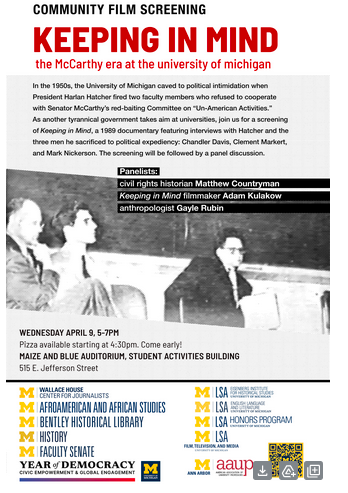
  • 30pm film screening about political intimidation and UM (Community Advocates at the University of Michigan)

    30pm film screening about political intimidation and UM (Community Advocates at the University of Michigan)

    Journalist Jelani Cobb recommended looking at how universities
    responded to Senator Joseph McCarthy’s attacks on professors to better understand
    current strategies. The University of Michigan’s caving to political
    intimidation isn’t new. In the 1950s, then President Harlan Hatcher
    fired two faculty members and suspended one who refused to cooperate
    with Senator McCarthy’s red-baiting Committee on “Un-American
    Activities.”

    As another federal government takes aim at universities, join us for a screening of Keeping in Mind: The McCarthy Era at the University of Michigan,
    a 1989 documentary featuring interviews with Hatcher and the three men
    he sacrificed to political expediency: Chandler Davis, Clement Markert,
    and Mark Nickerson. The screening will be followed by a panel discussion
    that includes the filmmaker, Adam Kulakow, who was a UM student in the
    1980s.

    WHEN: Wednesday, April 9, 5-7:30pm (Pizza available starting at 4:30p. Come early!)
    WHERE: Maize and Blue Auditorium, Student Activities Building, 515 E. Jefferson Street
    WHO: All students, faculty, staff, and community members


    Source link

  • Black Colleges Ponder Their Future As Trump Makes Cuts to Education Dollars – The 74

    Black Colleges Ponder Their Future As Trump Makes Cuts to Education Dollars – The 74


    Get stories like this delivered straight to your inbox. Sign up for The 74 Newsletter

    The nation’s historically Black colleges and universities, known as HBCUs, are wondering how to survive in an uncertain and contentious educational climate as the Trump administration downsizes the scope and purpose of the U.S. Department of Education — while cutting away at federal funding for higher education.

    In January, President Donald Trump signed an executive order pausing federal grants and loans, alarming HBCUs, where most students rely on Pell Grants or federal aid. The order was later rescinded, but ongoing cuts leave key support systems in political limbo, said Denise Smith, deputy director of higher education policy and a senior fellow at The Century Foundation, a left-leaning think tank.

    Leaders worry about Trump’s rollback of the Justice40 Initiative, a climate change program that relied on HBCUs to tackle environmental justice issues, she said. And there’s uncertainty around programs such as federal work-study and TRIO, which provides college access services to disadvantaged students.

    “People are being mum because we’re starting to see a chilling effect,” Smith said. “There’s real fear that resources could be lost at any moment — even the ones schools already know they need to survive.”

    Most students at HBCUs rely on Pell Grants or other federal aid, and a fifth of Black college graduates matriculate from HBCUs. Other minority-serving institutions, known as MSIs, that focus on Hispanic and American Indian populations also heavily depend on federal aid.

    “It’s still unclear what these cuts will mean for HBCUs and MSIs, even though they’re supposedly protected,” Smith said.

    States may be unlikely to make up any potential federal funding cuts to their public HBCUs. And the schools already have been underfunded by states compared with predominantly white schools.

    Congress created public, land-grant universities under the Morrill Act of 1862 to serve the country’s agricultural and industrial industries, providing 10 million acres taken from tribes and offering it for public universities such as Auburn and the University of Georgia. But Black students were excluded.

    The 1890 Morrill Act required states to either integrate or establish separate land-grant institutions for Black students — leading to the creation of many HBCUs. These schools have since faced chronic underfunding compared with their majority-white counterparts.

    ‘None of them are equitable’

    In 2020, the average endowment of white land-grant universities was $1.9 billion, compared with just $34 million for HBCUs, according to Forbes.

    There are other HBCUs that don’t stem from the 1890 law, including well-known private schools such as Fisk University, Howard University, Morehouse College and Spelman College. But more than three-fourths of HBCU students attend public universities, meaning state lawmakers play a significant role in their funding and oversight.

    Marybeth Gasman, an endowed chair in education and a distinguished professor at Rutgers University, isn’t impressed by what states have done for HBCUs and other minority-serving institutions so far. She said she isn’t sure there is a state model that can bridge the massive funding inequities for these institutions, even in states better known for their support.

    “I don’t think North Carolina or Maryland have done a particularly good job at the state level. Nor have any of the other states. Students at HBCUs are funded at roughly 50-60% of what students at [predominately white institutions] are funded. That’s not right,” said Gasman.

    “Most of the bipartisan support has come from the U.S. Congress and is the result of important work by HBCUs and affiliated organizations. I don’t know of a state model that works well, as none of them are equitable.”

    Under federal law, states that accept federal land-grant funding are required to match every dollar with state funds.

    But in 2023, the Biden administration sent letters to 16 governors warning them that their public Black land-grant institutions had been underfunded by more than $12 billion over three decades.

    Tennessee State University alone had a $2.1 billion gap with the University of Tennessee, Knoxville.

    At a February meeting hosted by the Tennessee Black Caucus of State Legislators, Tennessee State interim President Dwayne Tucker said the school is focused on asking lawmakers this year for money to keep the school running.

    Otherwise, Tucker said at the time, the institution could run out of cash around April or May.

    “That’s real money. That’s the money we should work on,” Tucker said, according to a video of the forum.

    In some states, lawsuits to recoup long-standing underfunding have been one course of action.

    In Maryland, a landmark $577 million legal settlement was reached in 2021 to address decades of underfunding at four public HBCUs.

    In Georgia, three HBCU students sued the state in 2023 for underfunding of three HBCUs.

    In Tennessee, a recent state report found Tennessee State University has been shortchanged roughly $150 million to $544 million over the past 100 years.

    But Tucker said he thinks filing a lawsuit doesn’t make much sense for Tennessee State.

    “There’s no account payable set up with the state of Tennessee to pay us $2.1 billion,” Tucker said at the February forum. “And if we want to make a conclusion about whether [that money] is real or not … you’re going to have to sue the state of Tennessee, and I don’t think that makes a whole lot of sense.”

    Economic anchors

    There are 102 HBCUs across 19 states, Washington, D.C., and the U.S. Virgin Islands, though a large number of HBCUs are concentrated in the South.

    Alabama has the most, with 14, and Pennsylvania has the farthest north HBCU.

    Beyond education, HBCUs contribute roughly $15 billion annually to their local economies, generate more than 134,000 jobs and create $46.8 billion in career earnings, proving themselves to be economic anchors in under-resourced regions.

    Homecoming events at HBCUs significantly bolster local economies, local studies show. North Carolina Central University’s homecoming contributes approximately $2.5 million to Durham’s economy annually.

    Similarly, Hampton University’s 2024 homecoming was projected to inject around $3 million into the City of Hampton and the coastal Virginia region, spurred by increased visitor spending and retail sales. In Tallahassee, Florida A&M University’s 2024 homecoming week in October generated about $5.1 million from Sunday to Thursday.

    Their significance is especially pronounced in Southern states — such as North Carolina, where HBCUs account for just 16% of four-year schools but serve 45% of the state’s Black undergraduate population.

    Smith has been encouraged by what she’s seen in states such as Maryland, North Carolina and Tennessee, which have a combined 20 HBCUs among them. Lawmakers have taken piecemeal steps to expand support for HBCUs through policy and funding, she noted.

    Tennessee became the first state in 2018 to appoint a full-time statewide higher education official dedicated to HBCU success for institutions such as Fisk and Tennessee State. Meanwhile, North Carolina launched a bipartisan, bicameral HBCU Caucus in 2023 to advocate for its 10 HBCUs, known as the NC10, and spotlight their $1.7 billion annual economic impact.

    “We created a bipartisan HBCU caucus because we needed people in both parties to understand these institutions’ importance. If you represent a district with an HBCU, you should be connected to it,” said North Carolina Democratic Sen. Gladys Robinson, an alum of private HBCU Bennett College and state HBCU North Carolina A&T State University.

    “It took constant education — getting folks to come and see, talk about what was going on,” she recalled. “It’s like beating the drum constantly until you finally hear the beat.”

    For Robinson, advocacy for HBCUs can be a tough task, especially when fellow lawmakers aren’t aware of the stories of these institutions. North Carolina A&T was among the 1890 land-grant universities historically undermatched in federal agricultural and extension funding.

    The NC Promise Tuition Plan, launched in 2018, reduced in-state tuition to $500 per semester and out-of-state tuition to $2,500 per semester at a handful of schools that now include HBCUs Elizabeth City State University and Fayetteville State University; Western Carolina University, a Hispanic-serving institution; and UNC at Pembroke, founded in 1887 to serve American Indians.

    Through conversations on the floor of the General Assembly, and with lawmakers on both sides of the aisle, Robinson advocated to ensure Elizabeth City State — a struggling HBCU — was included, which helped revive enrollment and public investment.

    “I’m hopeful because we’ve been here before,” Robinson said in an interview.

    “These institutions were built out of churches and land by people who had nothing, just so we could be educated,” Robinson said. “We have people in powerful positions across the country. We have to use our strength and our voices. Alumni must step up.

    “It’s tough, but not undoable.”

    Meanwhile, other states are working to recognize certain colleges that offer significant support to Black college students. California last year passed a law creating a Black-serving Institution designation, the first such title in the country. Schools must have programs focused on Black achievement, retention and graduation rates, along with a five-year plan to improve them. Sacramento State is among the first receiving the designation.

    And this session, California state Assemblymember Mike Gipson, a Democrat, introduced legislation that proposes a $75 million grant program to support Black and underserved students over five years through the Designation of California Black-Serving Institutions Grant Program. The bill was most recently referred to the Assembly’s appropriations committee.

    Stateline is part of States Newsroom, a nonprofit news network supported by grants and a coalition of donors as a 501c(3) public charity. Stateline maintains editorial independence. Contact Editor Scott S. Greenberger for questions: [email protected].


    Get stories like these delivered straight to your inbox. Sign up for The 74 Newsletter

    Source link

  • New Way to Teach Writing by Incorporating AI – Sovorel

    New Way to Teach Writing by Incorporating AI – Sovorel

    AI is here, and it is here to stay, which means that academia needs to incorporate it so that students learn about AI’s capability and are ready to use it properly. The most complained about issue in writing classes today is that students simply use AI to write their essays for them and, in the process, do not learn anything and use AI improperly. “The Anders 4 Phase AI Method of Writing Instruction,” is able to overcome these issues. This instructional method develops students’ writing skills while teaching AI literacy, which includes critical thinking. Different aspects of this method can also be applied to other courses/assignments. The Anders 4 Phase AI Method of Writing Instruction is a much-needed new way to develop writing in a way that better aligns with the new realities of how many people are already writing with AI.

    Key Components (the four phases):

    1. Foundational Writing Skills Development: instruction and assessment on key aspects of writing such as sentence structure, paragraph structure, transitional sentences, use of personal voice, researching, outlining, thesis statements, and any other needed writing components. Done through: multiple-choice, fill-in-the-blank, and short in-class writing.
    2. Understanding of Different Essay Types: instruction and assessment on key aspects of different essay types done through multiple-choice, fill-in-the-blank, and short in-class writing
    3. Prompt Engineering Development: instruction and assessment on prompt engineering using an advanced prompt formula, the ability to create effective prompts for AI to generate good essays that have proper formatting, student voice, and accurate information. Evaluated via multiple-choice, fill-in-the-blank tests, and in-class writing of prompts and additional drafting.
    4. Use of AI for Writing with Full Personal Accountability: assessment on specific essay creation done via student submission of essays developed through the use and assistance of AI. Additional in-class exams on key contents and periodic student presentations on created essays (to help ensure student accountability of knowledge integration).

    Key Benefits:

    • Develops students’ foundational knowledge of writing and ability to create multiple essay types
    • Eliminates issues with students inappropriately using AI to write essays without fully understanding writing components
    • Reduces instructors’ stress/anxiety in feeling the need to run AI detection tools (no longer needed)
    • Helps to directly develop students’ understanding of effective writing while simultaneously developing their critical thinking, AI literacy, and ethical AI use skills

    A much more detailed description of this method is available through the Sovorel Center for Teaching & Learning YouTube educational Channel:

    For an even more detailed informational article on The Anders 4 Phase AI Method of Writing Instruction, you can go here: https://brentaanders.medium.com/the-new-way-to-teach-writing-1e3b9a14ef64

    Source link

  • DEI Under Attack: The Truth from the Frontlines of Academia

    DEI Under Attack: The Truth from the Frontlines of Academia

    Moderator: Dr. Jamal Watson, Professor Trinity Washington University, Executive Editor of Diverse: Issues In Higher Education.                                                 

    Panelists:

    Dr. Michael Eric Dyson, Distinguished Professor, Vanderbilt University

    Dr. Christina Greer, Associate Professor, Fordham University,

    Dr. Annette Gordon Reed, Professor, Harvard University  

    Natasha S. Alford, SVP, The Grio.

    The 2025 National Action Network (NAN) Convention continues to be a clarion call for justice, strategy, and truth-telling. In a climate where DEI (Diversity, Equity, and Inclusion) is being vilified, this year’s panels didn’t hold back. Amid attacks on civil rights, public education, and academic freedom, one of the most critical conversations came from a powerful panel of scholars and journalists who delivered an unflinching perspective on the state of DEI in higher education and beyond.

    As states roll back DEI programs and silence academic voices, these experts stood firm and affirmed that this is not simply a political moment—it’s a moral crisis.

    The War on DEI: A Strategic, Anti-Black Attack Pam McElvanePam McElvane

    Panelists opened with a clear message: what’s happening now is not new—it’s a rebranding of old tactics. As one professor framed it, “We are the canaries in the coal mine.” The dismantling of DEI isn’t isolated, it’s a warning of broader regression.

    They urged us to stop abbreviating “DEI.” Say the words: Diversity, Equity, and Inclusion. The administration’s weaponization of the acronym has become a strategic assault to reassert white supremacy, particularly that of white male dominance. What we are witnessing, they said, is anti-Black racism cloaked in policy and politics.

    This is not a slip or misunderstanding—it is a calculated dismantling of progress.

    The Media and the Misuse of “Woke”

    Journalist Natasha Alford shared how mainstream media has failed to accurately report the DEI backlash. “They took our word—woke—and twisted it into something divisive and dangerous,” she said. The original term was meant to empower and enlighten people of color, yet now it’s used as a slur to silence those demanding equity.

    She called out the need for media literacy among our youth, who are often misled or confused about what’s true. “We must leverage today’s information cycles to educate, not manipulate,” Alford said. Following Black media outlets that tell the truth—like The Grio, Roland Martin Unfiltered, and others—is critical to staying grounded in reality.

    DEI is About Competition—and They Don’t Want That

    Dr. Michael Eric Dyson laid the issue bare: Diversity forces competition, and some in power are unwilling to compete. “When America wants to segregate again, it’s because it longs for a time when it didn’t have to compete with us,” he declared.

    He challenged not only the far right but also white liberals who remain silent, excusing their inaction. “Diversity is what makes America what it is. Equity means recognizing that not everyone starts in the same place. Inclusion means everyone belongs,” he said. And we must beware of the temptation to accept compromises or “payoffs” from those who ultimately seek to suppress our progress.

    Collateral Damage: The Loss of Intellectual and Scientific Power

    Beyond social issues, this anti-DEI movement threatens the entire intellectual infrastructure of the nation. The cancellation of Pell Grants and threats to federal funding for universities that support DEI policies don’t just impact Black communities—they hurt poor and working-class white students too.

    Researchers—some of the greatest minds of our time—are losing funding, careers, and platforms. “We’re watching the dismantling of the very fabric that holds America’s innovation and academic leadership together,” one professor warned.

    What Do We Do Now? Marching Orders for the Movement

    The panel didn’t just offer critique—they offered marching orders:

    • Invest in Black institutions, including churches and Historically Black Colleges and Universities (HBCUs), that are doing the work.
    • Raise your voice. Universities must return to being incubators for critical thought and independent minds.
    • Educate our children at home. If public schools are being silenced, churches and families must step in.
    • Support leaders who support us—vote with intention and integrity.
    • Read—daily. Even just 15 minutes of truth can change your perspective and fuel your power.

    They reminded us that history holds the answers: “We’ve already come through what we’ve been through,” one speaker said. We were once outlawed from reading, yet we learned to read in secret and built institutions that shaped this country. We must now read, remember, and reclaim our narrative.

    A Final Word: This Is the Time to Fight

    “Welcome, white America, to the Black experience,” one professor said, poignantly summing up this moment. As this administration strips away rights, rewrites history, and silences voices, it’s more important than ever to stand on truth.

    This isn’t the end—it’s the beginning of a new resistance. And we must fight not just to be seen or heard—but to lead.

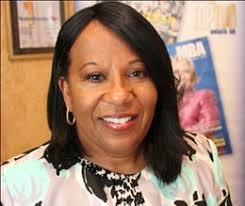
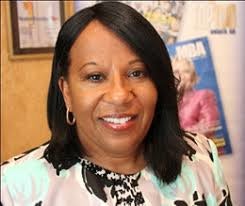
    Pam McElvane is the CEO & Publisher of Diversity MBA Media.

    Source link

  • Punishing Parents for Chronic Absenteeism – The 74

    Punishing Parents for Chronic Absenteeism – The 74


    Get stories like this delivered straight to your inbox. Sign up for The 74 Newsletter

    School (in)Security is our biweekly briefing on the latest school safety news, vetted by Mark KeierleberSubscribe here.

    As educators nationwide grapple with stubbornly high levels of student absences since the pandemic drove schools into disarray five years ago, Oklahoma prosecutor Erik Johnson says he has the solution. 

    Throw parents in jail.

    This week, I offer a look at chronic absenteeism’s persistence long after COVID shuttered classrooms, plunged families into poverty and led to the deaths of more than 1 million Americans. Lawmakers nationwide have proposed dozens of bills this year designed to curtail student absences — with radically different approaches.

    While a proposal in Hawaii would reward kids’ good attendance with ice cream, new laws in Indiana, West Virginia and Iowa impose fines and jail time for parents who can’t compel their children to attend class regularly. In Oklahoma, where Johnson has ushered in a new era of truancy crackdowns, state lawmakers say parents — not principals and teachers — should be held accountable for students’ repeat absences.

    “We prosecute everything from murders to rape to financial crimes, but in my view, the ones that cause the most societal harm is when people do harm to children, either child neglect, child physical abuse, child sexual abuse, domestic violence in homes, and then you can add truancy to the list,” Johnson told me this week. 

    “It’s not as bad, in my opinion, as beating a child, but it’s on the spectrum because you’re not putting that child in a position to be successful,” continued Johnson, who has dubbed 2025 the “Year of the Child.”


    In the news

    Books are not a crime — yet: Under proposed Texas legislation, teachers could soon face jail sentences for teaching classic literary works with sexual content, including The Catcher in the Rye and (unironically?) Brave New World. | Mother Jones

    Mass layoffs at the U.S. Department of Health and Human Services this week could have devastating consequences for the health and well-being of low-income children. | The Associated Press

    Ten days or else: The Education Department demanded Thursday that states certify in writing within the next 10 days that K-12 schools are complying with its interpretation of civil rights laws, namely eliminating any diversity, equity and inclusion programs, or else risk losing their federal funding. | The New York Times

    A Texas teen was kneed in the face by a school cop: Now, with steep cuts to the Education Department’s Office for Civil Rights, her case is one of thousands that have been left to languish. | The 74

    Students’ right to privacy versus parents’ right to know: The Trump administration has opened an investigation into a California law designed to protect transgender students from being outed to their parents, alleging violations of the federal student privacy law. | The New York Times

    • A similar investigation has been opened against officials in Maine, where the feds claim district policies to protect students’ privacy come at the expense of parents’ right to information. | Maine Morning Star
    • “Parents are the most natural protectors of their children,” Education Secretary Linda McMahon said in a statement after a similar federal investigation was launched against Virginia educators. “Yet many states and school districts have enacted policies that imply students need protection from their parents.” | Virginia Mercury
    • A little context: In a recent survey, more than 92% of parents said they were supportive of their child’s transgender identity. | Human Rights Campaign
    Sign-up for the School (in)Security newsletter.

    Get the most critical news and information about students’ rights, safety and well-being delivered straight to your inbox.

    The Student Press Law Center joined a coalition of free speech and journalism organizations in denouncing the recent ICE detention of Tufts University international student Rumeysa Ozturk over opinions she expressed in an op-ed in the student newspaper. 

    • “Such a basis for her detention would represent a blatant disregard for the principles of free speech and free press within the First Amendment,” the groups wrote in their letter. | Student Press Law Center
    • The Turkish doctoral candidate is one of several students who’ve been rounded up by immigration officials in recent weeks based on pro-Palestinian comments. | The New York Times

    Florida lawmakers have a plan to fill the jobs of undocumented workers who are deported: Put kids on the overnight shift. | The Guardian

    Minority report: Following bipartisan opposition, Georgia lawmakers have given up on efforts to create a statewide student-tracking database designed to identify youth who could commit future acts of violence. | WABE

    A majority of school district programs focused on protecting student data are led by administrators with little training in privacy issues, a new report finds. | StateScoop

    Washington students’ sensitive data was exposed. The culprit? A student surveillance tool. | The Seattle Times


    ICYMI @The74


    Emotional Support

    Annie, who lives with The 74 social media guru Christian Skotte, is the cutest regular at Brooklyn’s Prospect Park. You won’t convince me otherwise. 


    Get stories like these delivered straight to your inbox. Sign up for The 74 Newsletter
    Source link