Author: admin

  • The Boycott That Could Shake Corporate America

    The Boycott That Could Shake Corporate America

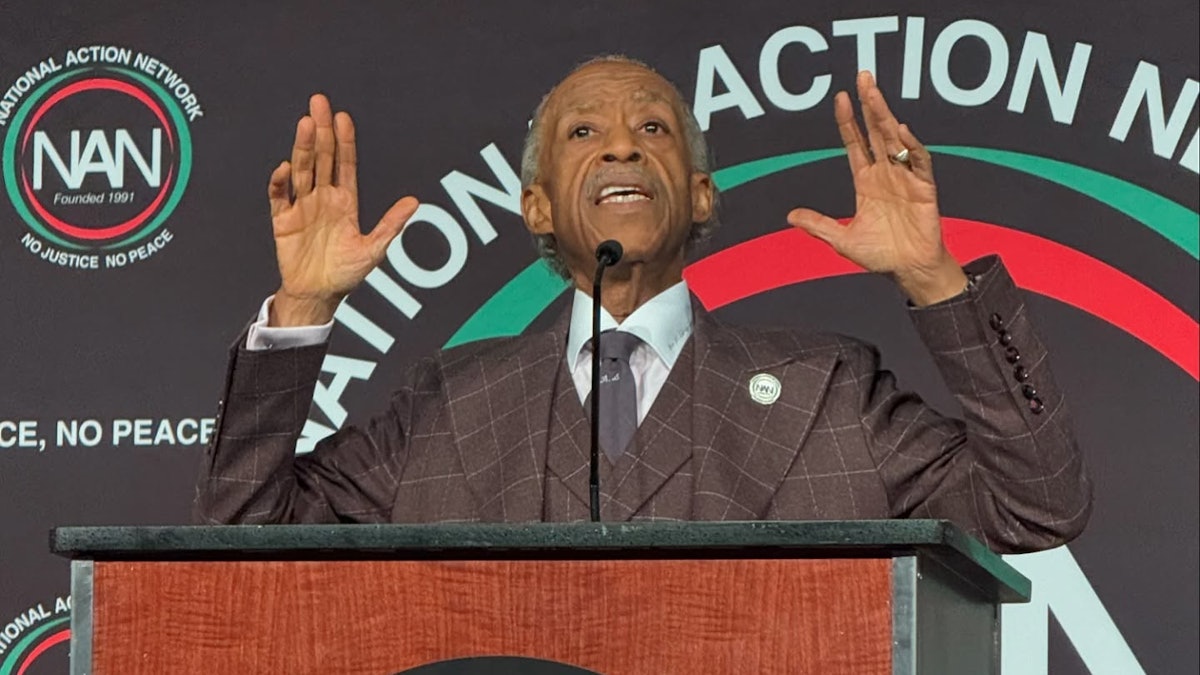
    Reverend Al SharptonNEW YORK–

    The National Action Network (NAN) is preparing to launch a nationwide boycott against PepsiCo if the company doesn’t reverse its recent decision to eliminate diversity, equity, and inclusion initiatives within the next three weeks.

    In a powerful letter sent to PepsiCo CEO Ramon Laguarta on Friday, Rev. Al Sharpton expressed “profound disappointment” that the company would abandon inclusion commitments that helped build its brand and fostered trust with millions of customers.

    “You have walked away from equity,” Sharpton wrote, arguing that removing DEI hiring and retention goals and dismantling community partnerships with minority organizations “are clear signals that political pressure has outweighed principle.”

    At the National Action Network Saturday Action Rally, Sharpton intensified his message:

    “This morning at the National Action Network Saturday Action Rally, I gave PepsiCo 21 days. Not to think about it, to reverse course on walking away from DEI. We helped to build their brand. We won’t fund our own exclusion. If they don’t respond, we begin the boycott. We will not be silent while our dollars are used against our dignity.”

    Sharpton announced plans for a major demonstration on August 28th, the annual commemoration of Dr. Martin Luther King, Jr’s 1963 “I Have a Dream” speech.  “And on August 28th, we’re taking it to Wall Street. From the African Burial Ground in the financial district, we will show them what economic power looks like. We’re not asking. We’re organizing. We’re not your consumers. We are your conscience.”

    The boycott threat comes at a pivotal moment for PepsiCo. In a memo sent to employees in February, Laguarta announced the company would no longer set goals for minority representation in its managerial roles or supplier base.

    At the NAN convention held over the weekend, a panel of academicians and journalists discussed the implications of corporate retreats from DEI commitments. The panel, moderated by Dr. Jamal Watson of Diverse: Issues In Higher Education who is a professor and associate dean of graduate studies at Trinity Washington University, included Dr. Michael Eric Dyson of Vanderbilt University, Christina M. Greer of Fordham University, Pulitzer Prize-winning historian Annette Gordon-Reed of Harvard (who is also president of the Organization of American Historians), and Natasha Alford of The Grio. The distinguished panel examined the historical context and potential consequences of corporations abandoning diversity initiatives under political pressure.

    What makes this particularly striking is PepsiCo’s historical position as a diversity pioneer. As Sharpton pointed out in his letter, in the 1940s and 1950s, PepsiCo hired some of the first Black sales and marketing executives in corporate America, and by the 1980s the company had created Black consumer advisory boards.

    “You did this not because it was easy — but because it was right,” Sharpton wrote. “That legacy is now in jeopardy.”

    Sharpton himself sat on PepsiCo’s African American advisory board in the early 2000s, giving him personal insight into the company’s previous commitments to diversity.

    A boycott of PepsiCo wouldn’t just affect supermarket shelves. It could send significant ripples across college and university campuses nationwide, many of which have exclusive contracts with PepsiCo to provide beverages and snacks.

    These exclusivity agreements often provide substantial revenue for educational institutions, with PepsiCo products filling vending machines, cafeterias, and campus convenience stores. Many colleges rely on these contracts not just for the direct financial benefits but also for sponsorships of campus activities and athletic programs.

    A successful boycott could force university administrators to choose between honoring student activism supporting diversity initiatives and maintaining lucrative corporate relationships. This potential conflict comes at a time when many academic institutions are already facing scrutiny over their own DEI policies. Several college presidents reached over the weekend have told Diverse that if a boycott goes into effect, they would consider canceling their contracts with the corporate giant. 

    Student activist groups across the country are likely to be energized by NAN’s boycott, potentially organizing their own campus-specific actions targeting PepsiCo products. This could create pressure points at universities that have traditionally been centers for social justice movements.

    PepsiCo’s rollback of DEI initiatives is part of a concerning trend. Since President Donald Trump returned to the White House earlier this year, U.S. government agencies, companies, and schools have scrambled to reevaluate policies and programs aimed at increasing diversity among employees and reducing discrimination against members of minority groups, women, and LGBTQ+ people.

    Trump ended DEI programs within the federal government and has warned schools to do the same or risk losing federal money. Large retailers like Walmart and Target have also phased out DEI initiatives since Trump took office.

    What makes PepsiCo’s position particularly notable is that it contrasts sharply with its major competitor, Coca-Cola, which recently reaffirmed support for its DEI efforts. In its annual report, Atlanta-based Coke warned that the inability to attract employees that reflect its broad range of customers could negatively affect its business.

    “Failure to maintain a corporate culture that fosters innovation, collaboration and inclusion… could disrupt our operations and adversely affect our business and our future success,” the company stated.

    As NAN’s deadline approaches, all eyes will be on PepsiCo’s response—and the potential ripple effects across corporate America if one of the country’s largest food and beverage companies faces a coordinated boycott over walking back its diversity commitments.

    Source link

  • Trump Sets Demands Harvard Must Meet to Regain Federal Funds

    Trump Sets Demands Harvard Must Meet to Regain Federal Funds

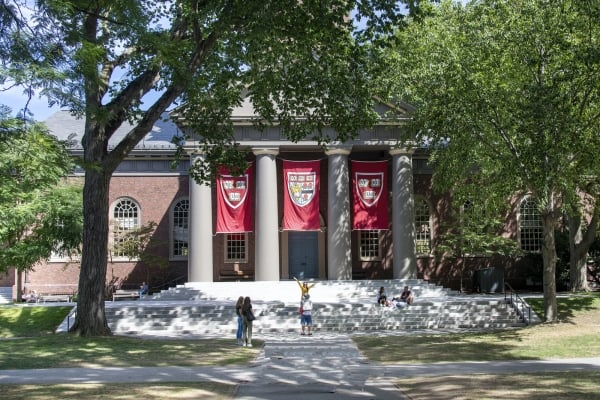
    The Trump administration presented Harvard University with a letter Thursday outlining “immediate next steps” the institution must take in order to have a “continued financial relationship with the United States government,” The Boston Globe reported and Inside Higher Ed confirmed.

    The ultimatum came just three days after the president’s Joint Task Force to Combat Anti-Semitism notified the university it had been placed under review for its alleged failure to protect Jewish students and faculty from discrimination. If the case follows the precedent set at other universities, Harvard and its affiliate medical institutions could lose up to $9 billion in federal grants and contracts if they do not comply.

    Sources say the move is driven less by true concern about antisemitism on campus than by the government’s desire to abolish diversity efforts and hobble higher ed institutions it deems too “woke.” This week alone, the administration has retracted funds from Brown and Princeton Universities. Before that, it targeted the University of Pennsylvania and Columbia University and opened dozens of civil rights investigations at other colleges, all of which are ongoing.

    Many of the task force’s demands for Harvard mirror those presented to Columbia last month, including mandates to reform antisemitism accountability programs on campus, ban masks for nonmedical purposes, review certain academic departments and reshape admissions policies. The main difference: Columbia’s letter targeted specific departments and programs, while Harvard’s was broader.

    For example, while the letter received by Columbia called for one specific Middle Eastern studies department to be placed under receivership, Harvard’s letter called more generally for “oversight and accountability for biased programs [and departments] that fuel antisemitism.”

    Inside Higher Ed requested a copy of the letter from Harvard, which declined to send it but confirmed that they had received it. Inside Higher Ed later received a copy from a different source.

    Some higher education advocates speculate that the Trump administration’s latest demands were deliberately vague in the hopes that colleges will overcomply.

    “What I’ve learned from various experiences with higher ed law is that it’s unusual to be general in legal documents,” said Jon Fansmith, senior vice president of government relations and national engagement for the American Council on Education. Trump’s “open-ended” letter “starts to look like a fishing expedition,” he added. “‘We want you to throw everything open to us so that we get to determine how you do this.’”

    But conservative higher ed analysts believe the demands—even when broadened—are justified.

    “Many of these are extremely reasonable—restricting demonstrations inside academic buildings, requiring participants and demonstrations to identify themselves when asked, committing to antidiscrimination policies, intellectual diversity and institutional neutrality,” said Preston Cooper, a senior fellow at the American Enterprise Institute.

    Still, he raised questions about how certain mandates in the letter will be enforced.

    “When you see this in the context of the federal government trying to use funding as a lever to force some of these reforms, that’s where one might raise some legitimate concern,” he said. “For instance, trying to ensure viewpoint diversity is a very laudable goal, but if the federal government is trying to … decide what constitutes viewpoint diversity, there is a case to be made that that is a violation of the First Amendment.”

    What Does the Letter Say?

    The demands made of Harvard Thursday largely target the same aspects of higher ed that Trump has focused on since taking office in January.

    Some center on pro-Palestinian protests, like the requirements to hold allegedly antisemitic programs accountable, reform discipline procedures and review all “antisemitic rule violations” since Oct. 7, 2023.

    Others focus on enforcing Trump’s interpretation of the Supreme Court’s 2023 ruling on affirmative action; the university must make “durable” merit-based changes to its admissions and hiring practices and shut down all diversity, equity and inclusion programs, which the administration believes promote making “snap judgments about each other based on crude race and identity stereotypes.”

    The letter was signed by the same three task force members who signed Columbia’s demand letter: Josh Gruenbaum, commissioner of the Federal Acquisition Service; Sean Keveney, acting general counsel for the Department of Health and Human Services; and Thomas Wheeler, acting general counsel for the Department of Education.

    The most notable difference in Harvard’s letter is that the task force is demanding “full cooperation” with the U.S. Department of Homeland Security. That department and its Immigration and Customs Enforcement agency have been arresting and revoking visas from international students and scholars who, the government says, are supporting terrorist groups by participating in pro-Palestinian protests.

    Will Harvard Capitulate?

    Harvard already appears to be taking steps to comply. On Wednesday, the university put a pro-Palestinian student group on probation. The week before, a dean removed two top leaders of the Center for Middle Eastern Studies, which has been accused of biased teaching about Israel.

    A letter to the campus community from university president Alan Garber also suggested capitulation is likely.

    “If this funding is stopped, it will halt life-saving research and imperil important scientific research and innovation,” Garber wrote following the task force’s review. “We will engage with members of the federal government’s task force to combat antisemitism.”

    But Fansmith noted such actions may not be enough to predict whether Harvard will fully acquiesce to the Trump administration’s demands.

    “If you look at all of these institutions over the last two years, they’ve been making a number of changes in policies, procedures, personnel and everything else,” he said. “And a lot of that was happening and was at pace before this administration took office and started sending letters.”

    Harvard was one of the first three universities that the House Committee on Education and the Workforce grilled about antisemitism on campus in December 2023. Shortly after, then-president Claudine Gay—the first Black woman to lead Harvard—resigned. The university has since been working to make changes at the campus level.

    Both Fansmith and Cooper pointed to Trump’s mandates regarding curriculum as the most likely to face opposition, as was the case at Columbia.

    A little over a week after the Trump administration laid out its ultimatum, Columbia capitulated and agreed to all but one demand: The university refused to put its department of Middle Eastern studies into receivership, a form of academic probation that involves hiring an outside department chair. Instead, it placed the department under internal review and announced it would hire a new senior vice provost to oversee the academic program.

    “You need to be making sure that Jewish students are not subject to harassment,” Cooper said. But “where that crosses the line is if the federal government is telling the universities … ‘this is how you have to appoint somebody to put an academic department into receivership,’ as was the original demand made of Columbia.”

    Regardless of how Harvard responds, one thing seems likely: There are more funding freezes to come.

    “A lot of folks were expecting Columbia to file a legal challenge, and when that didn’t happen, that might have emboldened the administration a bit to go after some of these other institutions,” Cooper said. But sooner than later, “one of these institutions might say, ‘We’re not going to make the reforms.’”

    “I don’t have a great guess as to which institution that will be,” he added, “but I would expect we probably will see a lawsuit at some point.”

    Source link

  • Higher Education Inquirer : MEDIA ADVISORY UPDATE: ‘Hands Off!’ March at San Diego Civic Center, April 5 Noon

    Higher Education Inquirer : MEDIA ADVISORY UPDATE: ‘Hands Off!’ March at San Diego Civic Center, April 5 Noon

    SAN DIEGO, CA — Community members will gather at the San Diego Civic Center Plaza for
    a “Hands Off!” march on April 5 to protest DOGE and the Trump
    administration’s attack on programs and services used by San Diego
    residents. The local march will coincide with a nationwide day of
    demonstrations expected to be attended by hundreds of thousands

    Organizers
    describe the event as a collective response to policies impacting our
    community. “San Diegans who are veterans, who are postal workers and
    teachers, who rely on Social Security, Medicaid or Medicare, and who are
    horrified at the Trump-Musk billionaire takeover of our government are
    coming together to protest the Trump Administration’s attacks on the
    rights and services they depend upon, many of them for survival” said
    Angela Benson, a member of the organizing coalition.

    Event Details:

    • What:
      Over 10,000 San Diegans expected to peacefully demand “HANDS OFF!”
      their rights and services in one of over 1,000 HANDS OFF! events
      scheduled nationwide on April 5

    • Who: Coalition of San Diego Pro-Democracy Groups

    • When: Saturday, April 5, noon, 1 mile march to leave approximately 12:15 PM

    • Where: March starts at Civic Center Plaza Fountain by 1200 Third St., ends at Hall of Justice at 330 W Broadway

    • Transportation: Participants are encouraged to take public transit to the event

    Planning group:

    • Change Begins With ME

    • CBFD Indivisible

    • Indivisible49

    • Indivisible North San Diego County

    • Democratic Club of Carlsbad and Oceanside

    • Encinitas and North Coast Democratic Club

    • SanDiego350

    • Swing Left/Take Action San Diego

    • Activist San Diego

    • 50501 San Diego

    Media Opportunities:

    • The following representatives will be available day-of the march for interviews.
      If interested, please coordinate with Richard (770-653-6138) prior to
      the event, and plan to arrive at the location marked below by 11:30 AM
      Pacific

      • Representatives

        • Sara Jacobs – House of Representatives, CA-51 district

        • Scott Peters – House of Representatives, CA-50 district

        • Chris Ward – California State Assemblymember, 78 district

        • Stephen Whitburn – San Diego Councilmember

        • Reverend Madison Shockley II – Pilgrim United Church of Christ

        • Yusef Miller – Executive Director of North County Equity & Justice Coalition

        • Brigette Browning – Executive Secretary San Diego and Imperial Counties Labor Council and President, Unite Here!

        • Crystal Irving – President, Service Employees International Union (SEIU)

        • Andy Kopp – Veteran

        • Patrick Saunders – Veteran

        • Phil Petrie – SanDiego350, Climate Activist

      • Recommended Schedule

        • 11:30 AM – 11:40 AM: Representative introductions – Group/cause they’re representing, why they’re marching

        • 11:40 AM – 12:05 PM: Representatives break off, available for interview by Press

        • 12:05 PM – 12:15 PM: Representatives move to beginning of march

        • 12:15 PM: March begins

        • 12:15 PM – 2:00 PM: March to Hall of Justice

        • 2:00 PM: March ends at Hall of Justice, participants may disperse or continue to federal plaza

    Source link

  • Head Start imperiled by HHS cutbacks, advocates say

    Head Start imperiled by HHS cutbacks, advocates say

    This audio is auto-generated. Please let us know if you have feedback.

    Early childhood education advocates predict devastating impacts on young children from a series of federal staff reductions and proposed budget cuts to programs supporting low-income families.

    Mass layoffs in the U.S. Department of Health and Human Services on April 1 led to the shuttering of five Office of Head Start regional offices:  Boston, New York, Chicago, San Francisco and Seattle. The closed offices will be consolidated into the five remaining offices. 

    The regional offices provide federal policy direction, training and technical assistance to Head Start providers.

    “This restructuring will not impact the critical services you rely on, and we are here to ensure a seamless experience as we move forward together,” wrote Laurie Todd-Smith, HHS deputy assistant secretary for early childhood development, in an April 3 announcement to Head Start grant recipients. 

    The move is part of a broader restructuring in HHS that is to save $1.8 billion, according to an agency press release on March 27.

    The National Head Start Association, a nonprofit that represents children, families and educators, has urged the Trump administration to reconsider the office closures until a plan can be created and disseminated. “Closing these regional Head Start offices could create delays in essential program support and weaken the system that has successfully served millions of children for decades,” said NHSA in an April 1 statement.

    The Trump administration says spending cuts at HHS and across the federal government are needed to reduce the country’s deficit and eliminate fiscal bloat and waste in federal agencies. 

    The Head Start move comes just a few months after HHS agreed to improve monitoring and reporting activities based on a U.S. Government Accountability Office report. The report found a small portion of Head Start programs that were operating under interim management in recent years had faced challenges from low student enrollment, unqualified staff and unsafe facilities.

    Head Start, which celebrates its 60th anniversary this year, is a federally funded early childhood and pre-K program that serves infants, toddlers and preschool children from families with low incomes. It also provides prenatal services through Early Head Start.  

    In fiscal year 2023, the program was funded at $11.5 billion to serve 778,420 children and pregnant people in centers and through home-based programs, according to the Office of Head Start.

    Closure of the regional offices could put young children at risk of abuse and other safety threats, early childhood advocates said during a Thursday press call hosted by The Child Care for Every Family Network.

    “You can’t say you’re a champ of kids and then put kids at risk for abuse by gutting the very agency responsible for protecting America’s most vulnerable kids,” said Sen. Ron Wyden, D-Ore., during the press call. 

    The Head Start system was already in a precarious position earlier this year when the Trump administration froze federal funding in many agencies, asking that agency leaders assess how their fiscal programs conflict with President Donald Trump’s executive orders. 

    Even though the funding freeze was lifted just days later, NHSA said that even more than a week later, 52 Head Start grant recipients serving just under 20,000 children and families in 22 states, D.C. and Puerto Rico were still unable to access their already approved grant funding.

    Stability of the child care system

    Advocates are also concerned about stability of the broader child care and early childhood education infrastructure.

    The Republican-led Congress is considering budget cuts that could significantly reduce programs that low-income families rely on, including Temporary Assistance for Needy Families and Social Services Block Grant.

    Rep. Danny Davis, D-Ill, who was also on the press call, said all TANF and SSBG staff at HHS were laid off this week. “The mass layoffs for child care and Head Start programs are threatening the safety and care of children,” Davis said.

    Source link

  • No president gets to decide who deserves a lawyer

    No president gets to decide who deserves a lawyer

    “The first thing we do, let’s chill all the lawyers.” 

    The original line from Shakespeare’s “Henry VI, Part 2” is often wheeled out to take a swipe at the legal profession. But in the play, it’s uttered by a violent rebel intent on dismantling civil society. Supreme Court Justice John Paul Stevens interpreted it as a warning: “Shakespeare insightfully realized that disposing of lawyers is a step in the direction of a totalitarian form of government.”

    Lawyers make easy targets. But freedom and protection of individual rights depend on their efforts to uphold the rule of law, check government overreach, and defend the unpopular. If you’re being prosecuted, suing the government for violating your rights, or challenging an unconstitutional law, you need a lawyer. And you shouldn’t have to worry about whether intimidation from the federal government will prevent you from getting one. 

    That’s why President Trump’s ongoing retaliation against law firms for representing clients or causes he opposes should concern all Americans, regardless of their political beliefs. It not only violates the First Amendment but also undermines access to vigorous legal representation, especially for anyone up against those in power.

    This moment is bigger than one firm or one case. It’s about preserving the integrity of our legal system and the fundamental principles it upholds.

    What did these firms do to draw the president’s ire? Here’s a sample from his executive orders targeting them:

    • Perkins Coie represented “failed Presidential candidate Hillary Clinton,” hired a company that produced “false” opposition research on Trump’s campaign, and “worked with activist donors” to challenge voter ID laws in court.
    • A Paul, Weiss partner brought a lawsuit against protesters at the Capitol on January 6.
    • Jenner & Block conducted pro bono work challenging Trump’s executive orders restricting immigration and withholding federal funding for medical institutions that perform gender transition procedures for minors.
    • WilmerHale pursued pro bono litigation related to immigration, voting, and race-based college admissions policies. 

    The executive orders Trump issued in response to these actions are transparent about his intention to crack down on the firms as a result of their First Amendment-protected activities. 

    The orders slap the firms with a range of sanctions — revoking security clearances, canceling government contracts, and denying access to federal buildings and employees when such access would, among other things, “be inconsistent with the interests of the United States” (whatever that means). 

    For firms representing clients who advocate before, contract with, or are in disputes with the federal government, these sanctions are a gut punch, cutting off access and/or critical information they need to effectively do their jobs.

    Not only that, the orders direct federal agencies to require federal contractors to disclose any business they have with the blacklisted firms, pressuring anyone who has (or might in the future have) business with the government to dissociate from those firms. 

    You don’t need to feel sympathy for large law firms — or support the clients or causes they represent — to see the danger in a president abusing his authority to bend the legal system to his will. Trump isn’t just punishing these firms — he’s chilling legitimate advocacy and eroding the core principle that everyone has a right to legal representation. That’s bad news for the rule of law and protection of individual rights.

    Lawyers are not their clients, and they don’t have to adopt their clients’ views to zealously advocate for them. But Trump’s reprisals are making lawyers think twice about representing anyone who challenges him or the policies he supports.

    It’s also far from clear this crackdown will stop with big firms. Could small and/or public interest firms be next?

    Some may note the administration has also accused the targeted firms of violating employment discrimination laws. But there are established legal processes for fairly and transparently investigating and adjudicating those allegations. The president doesn’t get to decide by fiat that a company or person broke the law and impose whatever penalties he wants. That’s a flagrant violation of due process. And the administration’s concerns about civil rights violations don’t erase its primary stated reason for punishing the firms — their advocacy and potential viewpoints.

    FIRE and coalition partners file brief rebuking the U.S. government for attempting to deport Mahmoud Khalil for his protected speech

    Press Release

    Khalil’s arrest is an affront to the First Amendment and the cherished American principle that the government may not punish people based on their opinions.


    Read More

    Even if you share the president’s dim view of Big Law, consider that his actions set a dangerous precedent that will outlast his administration. A future president might not share Trump’s view of what constitutes “destructive causes” or what activities “limit constitutional freedoms, degrade the quality of American elections, or undermine bedrock American principles.” In the future, perhaps lawyers who represented Republican politicians, challenged mail-in voting procedures, or defended abortion restrictions will face retribution instead.

    Trump’s plan to cow firms into submission is paying off — in part. Multiple firms have made deals with the administration to avoid sanctions. Paul, Weiss was the first to cave, making commitments that included $40 million in pro bono legal services for causes the president supports. Other firms are preemptively falling in line. Skadden and Willkie Farr each pledged $100 million for the same.

    Two days ago, Milbank followed suit. In response, Trump posted on Truth Social, “The President continues to build an unrivaled network of Lawyers, who will put a stop to Partisan Lawfare in America, and restore Liberty and Justice FOR ALL.” He’s not just trying to stop firms from doing work he doesn’t like — he’s pressuring them to do work that advances his political agenda.

    Fortunately, not every firm is willing to be shaken down. Perkins Coie, Jenner & Block, and WilmerHale are challenging Trump’s unconstitutional executive orders in court, and have all secured temporary restraining orders blocking enforcement of the executive orders. 

    Yesterday, FIRE joined a broad coalition led by the ACLU to file an amicus curiae — “friend of the court” — brief supporting Perkins Coie’s lawsuit. 

    Our brief explains that the First Amendment prohibits the government from retaliating against lawyers for the clients they represent or the arguments they make. What’s more, the administration’s actions strike directly at the independence of the legal profession and threaten to unravel America’s deeply rooted commitment to individual rights. 

    As we said in our brief, “If allowed to stand, these pressure tactics will have broad and lasting impacts on Americans’ ability to retain legal counsel in important matters, to arrange their business and personal affairs as they like, and to speak their minds.” 

    Today, the chorus grew louder as more than 500 law firms signed onto a separate amicus brief in support of Perkins Coie’s legal battle. That type of collective defense of America’s core values is exactly what’s needed.

    This moment is bigger than one firm or one case. It’s about preserving the integrity of our legal system and the fundamental principles it upholds.

    Source link

  • The Net Price of College Is Falling for Most Students

    The Net Price of College Is Falling for Most Students

    Title: College Prices Are Falling for Everyone (Almost)

    Source: Brookings Institution

    Author: Phillip Levine

    New research from the Brookings Institution reveals a surprising truth: inflation-adjusted college prices have fallen for most students over the past five years. Phillip Levine’s analysis examines what students actually pay—the net price after financial aid—rather than the sticker prices that dominate media coverage.

    Using data from net price calculators at 200 institutions and proprietary financial aid records from 14 highly endowed colleges, his findings challenge the common narrative:

    Widespread price decreases: Between 2019-20 and 2024-25, inflation-adjusted net prices declined across institution types. Public flagship universities saw reductions of 7.1-17.3 percent, depending on family income level, while other public institutions experienced decreases of 8.5-13.2 percent. Private colleges with very large endowments had substantial declines, ranging from 7.0-43.4 percent, and tuition-dependent private colleges saw net prices drop by 16.8-23.3 percent.

    Lower-income students benefit most: Families earning $40,000 annually, representing the 25th percentile of the income distribution, experienced the largest reductions, with net prices dropping by 13.2-40.9 percent depending on institution type.

    Wide price variation by income: At private institutions with very large endowments, students from families earning $40,000 pay approximately $4,400 annually, while those from families earning $240,000 pay $82,800 annually.

    At many institutions, families earning $40,000 are still expected to contribute $15,000-$20,000 annually. Only the most heavily endowed institutions typically offer aid packages that lower-income families can reasonably manage. This raises important policy implications: proposed increases to endowment taxes may undermine institutions’ ability to provide generous financial aid, potentially harming the very students who benefit most from their pricing models. Private colleges and universities rely heavily on endowments to fund scholarships, research, and education—often more than they rely on tuition revenue. Treating endowments like business profits could shift the financial burden onto students and weaken U.S. innovation.

    The complexity of college pricing creates uncertainty for families, policymakers, and media. Greater transparency about the true cost of attendance is essential. By focusing on actual prices rather than headline-grabbing sticker prices, we can help reshape the national conversation on college affordability and ensure that misconceptions don’t deter qualified students from pursuing higher education.

    To read the full Brookings research analysis, click here.

    —Alex Zhao


    If you have any questions or comments about this blog post, please contact us.

    Source link

  • ‘New sheriff in town’: DOJ to enforce anti-trans Trump orders

    ‘New sheriff in town’: DOJ to enforce anti-trans Trump orders

    This audio is auto-generated. Please let us know if you have feedback.

    The Trump administration on Friday announced a major change in Title IX enforcement at schools and colleges, tapping the U.S. Department of Justice to help investigate and ultimately enforce the separation of transgender students from girls’ and women’s athletics teams and spaces in schools and colleges. 

    The Title IX Special Investigations Team shifts some civil rights investigations and enforcement from the U.S. Department of Education to the Department of Justice — both of which are a part of the newly minted unit.

    The move is part of a Trump administration effort to push through a backlog of complaints at the Education Department’s Office for Civil Rights. These investigations usually take months — sometimes years — to complete. The process typically includes interviews and other tools and ultimately ends in resolution agreements to bring schools into compliance.  

    Instead, the department will rely on a rapid resolution process to address sex discrimination complaints, framing the move as a way to protect cisgender girls and women, according to a Friday announcement. Rapid resolution is “an expedited case processing approach,” according to the Trump administration’s case processing manual, which was updated in January. 

    There are certain requirements before rapid resolution is an option, including having the complainant initiate the expedited process and having schools on board with that plan of action to resolve a complaint. The tool can be tapped when schools have already taken action to resolve the complaint on their own accord. It was used under the previous administration as well to address the increasing volume of complaints.

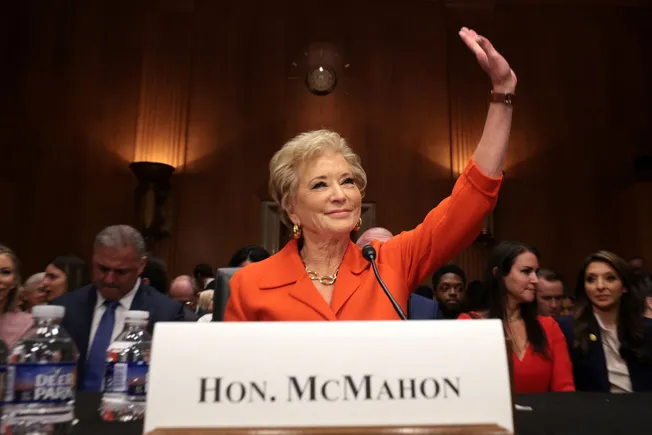
    OCR under this Administration has moved faster than it ever has, and the Title IX SIT will ensure even more rapid and consistent investigations,” U.S. Secretary of Education Linda McMahon said in Friday’s announcement. “To all the entities that continue to allow men to compete in women’s sports and use women’s intimate facilities: there’s a new sheriff in town. We will not allow you to get away with denying women’s civil rights any longer.”

    Attorney General Pamela Bondi said in an accompanying statement that “protecting women and women’s sports is a key priority” for the Department of Justice. The agency will “ take comprehensive action when women’s sports or spaces are threatened,” she continued. The administration has often used that language to separate transgender students from programs spaces aligning with their gender identities with blanket bans. 

    The department’s formal announcement that it is handing off Title IX enforcement to the Justice Department and joining forces on investigations comes after weeks of collaboration between the two agencies, confirming suspicions from education civil rights attorneys that DOJ involvement will be the new normal.

    It was also expected, considering that Education Department layoffs gutted half of OCR enforcement offices nationwide, and the department was already relying on the DOJ in the layoffs’ wake. 

    The Education Department already tapped the Justice Department in an investigation the Trump administration launched into the Maine Department of Education over the state’s transgender athlete policy.

    “Why would they continue to administratively enforce when they’re trying to put themselves out of jobs?” Kayleigh Baker, a Title IX attorney for TNG Consulting, an education civil rights consultant group, surmised late last month in wake of the Maine case. “And so I think leaning on DOJ makes sense.” 

    Prior to this administration, the DOJ was rarely called off the bench to enforce civil rights protections in schools, and its involvement was usually only reserved for complex and high-profile cases.

    Source link

  • ‘New sheriff in town’: DOJ to enforce anti-trans Trump orders

    ‘New sheriff in town’: DOJ to enforce anti-trans Trump orders

    This audio is auto-generated. Please let us know if you have feedback.

    The Trump administration on Friday announced a major change in Title IX enforcement at schools and colleges, tapping the U.S. Department of Justice to help investigate and ultimately enforce the separation of transgender students from girls’ and women’s athletics teams and spaces in schools and colleges. 

    The Title IX Special Investigations Team shifts some civil rights investigations and enforcement from the U.S. Department of Education to the Department of Justice — both of which are a part of the newly minted unit.

    The move is part of a Trump administration effort to push through a backlog of complaints at the Education Department’s Office for Civil Rights. These investigations usually take months — sometimes years — to complete. The process typically includes interviews and other tools and ultimately ends in resolution agreements to bring schools into compliance.  

    Instead, the department will rely on a rapid resolution process to address sex discrimination complaints, framing the move as a way to protect cisgender girls and women, according to a Friday announcement. Rapid resolution is “an expedited case processing approach,” according to the Trump administration’s case processing manual, which was updated in January. 

    There are certain requirements before rapid resolution is an option, including having the complainant initiate the expedited process and having schools on board with that plan of action to resolve a complaint. The tool can be tapped when schools have already taken action to resolve the complaint on their own accord. It was used under the previous administration as well to address the increasing volume of complaints.

    OCR under this Administration has moved faster than it ever has, and the Title IX SIT will ensure even more rapid and consistent investigations,” U.S. Secretary of Education Linda McMahon said in Friday’s announcement. “To all the entities that continue to allow men to compete in women’s sports and use women’s intimate facilities: there’s a new sheriff in town. We will not allow you to get away with denying women’s civil rights any longer.”

    Attorney General Pamela Bondi said in an accompanying statement that “protecting women and women’s sports is a key priority” for the Department of Justice. The agency will “ take comprehensive action when women’s sports or spaces are threatened,” she continued. The administration has often used that language to separate transgender students from programs spaces aligning with their gender identities with blanket bans. 

    The department’s formal announcement that it is handing off Title IX enforcement to the Justice Department and joining forces on investigations comes after weeks of collaboration between the two agencies, confirming suspicions from education civil rights attorneys that DOJ involvement will be the new normal.

    It was also expected, considering that Education Department layoffs gutted half of OCR enforcement offices nationwide, and the department was already relying on the DOJ in the layoffs’ wake. 

    The Education Department already tapped the Justice Department in an investigation the Trump administration launched into the Maine Department of Education over the state’s transgender athlete policy.

    “Why would they continue to administratively enforce when they’re trying to put themselves out of jobs?” Kayleigh Baker, a Title IX attorney for TNG Consulting, an education civil rights consultant group, surmised late last month in wake of the Maine case. “And so I think leaning on DOJ makes sense.” 

    Prior to this administration, the DOJ was rarely called off the bench to enforce civil rights protections in schools, and its involvement was usually only reserved for complex and high-profile cases.

    Source link

  • UC San Diego preps budget for up to a $500M hit from federal cuts

    UC San Diego preps budget for up to a $500M hit from federal cuts

    This audio is auto-generated. Please let us know if you have feedback.

    Dive Brief:

    • University of California San Diego is bracing for budget cuts of up to 12.5% as it faces a potentially massive dropoff in federal funding, according to the university. 
    • Officials predict government changes could lead to annual funding shortfalls of between $75 million and $500 million, Chancellor Pradeep Khosla said in a Wednesday community message. Researchers at the university have so far reported 50 notices of federal grant disruptions. 
    • Citing “unprecedented conditions,” Khosla said UC San Diego is freezing all hiring and delaying capital projects. The latter includes an “indefinite” delay on construction of a new life sciences building and clinical research building.

    Dive Insight:

    UC San Diego is already feeling the brunt of the Trump administration’s efforts to pull the plug on wide swaths of federal funding to the higher education sector, including billions in grants commitments from multiple agencies. 

    In his message, Khosla noted “a concerning rise in payment delays on expected grant revenues from most federal agencies.”

    As the chancellor explained, that impacts the university’s cash flows, with UC San Diego facing both short-term and long-term cash challenges from the government’s actions. 

    “Abrupt termination of research funding has far-reaching and damaging consequences not just for the research, but for individuals, teams, our university and society as a whole,” Khosla said. 

    More, and deeper, funding cuts could be on the way as President Donald Trump and Republicans seek to restructure the federal government’s role in the U.S. and potentially make dramatic reductions to existing education and research programs. 

    A new 15% cap on reimbursement for indirect research costs at the National Institutes of Health — which for now have been blocked by a federal judge — would cost UC San Diego $150 million annually, the university has said.

    Additionally, potential reductions to research funding and grants, as well as to reimbursement rates for Medicare and Medicaid, could all hurt UC San Diego and its medical center, Khosla said.

    The university was under some financial strain even before Trump took office. For fiscal 2024, the institution logged a $2.5 million total operating deficit as its expenses grew faster than revenues, according to its latest financials.  

    The good news is that the university is growing, unlike many of its peers. In fall 2024, its headcount reached 43,533, a record for the university and up about a third from a decade ago, according to institutional data.

    Interest from prospective students has also grown. UC San Diego received 156,906 undergraduate applications for fall 2024, also a record for the institution.

    The university’s hiring freeze is part of a broader initiative across the University of California system as it grapples with funding cuts at both the federal and state levels.

    Source link

  • Harvard University faces funding ultimatum from Trump administration

    Harvard University faces funding ultimatum from Trump administration

    This audio is auto-generated. Please let us know if you have feedback.

    Dive Brief:

    • Harvard University on Thursday received a list of wide-ranging demands from the Trump administration tying the Ivy League institution’s federal funding to its complete compliance.
    • Among the requirements are that Harvard review and change programs and departments that the Trump administration described as “biased” and that “fuel antisemitism,” according to a copy of the letter obtained by Higher Ed Dive. It also calls for the university to make “meaningful governance reforms” that will selectively empower employees “committed to implementing the changes” demanded in the letter.
    • The demands came the same week the Trump administration put $9 billion of Harvard’s federal grants and contracts under review. The government alleged the probe stemmed from reports that the university failed to protect Jewish students from antisemitism.

    Dive Insight:

    The three federal agencies behind the letter — the U.S. Department of Education, U.S. Department of Health and Human Services, and U.S. General Services Administration — said the list of nine demands represent “broad, non-exhaustive areas of reform” that Harvard must enact “to remain a responsible recipient of federal taxpayer dollars.”

    Their letter called on Harvard to eliminate all diversity, equity and inclusion efforts and prove it does not offer preferential treatment based on race, color or national origin in admissions or hiring “through structural and personnel action.” It also called for increased scrutiny of student groups and a comprehensive mask ban, with exemptions for religious and medical reasons.

    But the agencies, operating as members of President Donald Trump’s Joint Task Force to Combat Anti-Semitism, offered few details on how Harvard could meet the demands.

    For example, the letter did not outline which programs or departments it considered biased, nor did it say whether Harvard or the task force would determine which ones needed reform. It also didn’t describe how Harvard officials could determine why someone is wearing a mask.

    The Education Department declined to answer questions on Friday. HHS and GSA did not respond to requests for comment.

    Thursday’s letter marked the first time Harvard officials saw the demands, according to a university spokesperson, who did not respond to further questions. The letter did not set a hard deadline for the ultimatums, instead calling for Harvard’s “immediate cooperation.”

    Before the Trump administration issued its demands, Harvard President Alan Garber acknowledged antisemitism exists on campus and said he had experienced it directly “even while serving as president.”

    “We will engage with members of the federal government’s task force to combat antisemitism to ensure that they have a full account of the work we have done and the actions we will take going forward to combat antisemitism,” he wrote in a Monday message to campus. “We resolve to take the measures that will move Harvard and its vital mission forward while protecting our community and its academic freedom.”

    Many members of the Harvard community, however, had a stronger response.

    As of Friday afternoon, over 800 Harvard faculty members had signed a letter dated March 24 calling on the university’s governing boards to publicly condemn attacks on universities and “legally contest and refuse to comply with unlawful demands that threaten academic freedom and university self-governance.” More than 400 alumni of the university have so far signed their own version of the same letter.

    The demands made of Harvard echo the situation faced by one its Ivy League peers, Columbia University, last month.

    The federal task force is threatening billions in federal funds and grants at Columbia, and it has canceled $400 million worth thus far. When the Trump administration sent Columbia a then-unprecedented list of demands, the university quickly capitulated — to the consternation of faculty and academic freedom advocates alike. 

    The Trump administration lauded Columbia’s compliance as a “positive first step” for maintaining federal funding but has not publicly announced that it has restored the $400 million in canceled grants and contracts.

    “Columbia’s compliance with the Task Force’s preconditions is only the first step in rehabilitating its relationship with the government, and more importantly, its students and faculty,” the task force said in a statement at the time.

    Shortly after, the university’s interim president resigned after less than eight months on the job.

    Source link