Author: admin

  • Thirty ways for DfE to deliver the manifesto and raise the standards of teaching

    Thirty ways for DfE to deliver the manifesto and raise the standards of teaching

    At some point we might get some actual higher education policy out of the Department for Education (DfE), rather then endless crackdowns on the “long tail” of the market.

    There’s rumours of a (next) TEF delay which we might assume ministers will take an interest in, and a signature manifesto commitment on “raising the standards of teaching” to deliver.

    It all raises the question – what should Labour’s agenda on teaching be? How might it realise it? What levers will it pull?

    Of course it’s the case that whatever the agenda, there’s a need for the right funding systems (for both students and providers) and regulatory architecture – and those will always dominate the discussion.

    But you’d like to think there were other things, too.

    Reinstate the QAA as the Designated Quality Body for England

    A nice and easy start – DfE should issue ministerial guidance directing the Office for Students (OfS) to re-designate the QAA as the primary quality assurance body. The QAA has long maintained international credibility and alignment with European standards – something England has steadily drifted away from since Brexit.

    It’s not just a technical concern – it threatens the international recognition of English qualifications at precisely the moment when global educational mobility is increasing. OfS has tried to go it alone on quality – the experiment has failed. No shame in admitting it.

    Re-establish periodic review and enhancement expectations

    DfE should direct OfS to develop requirements for periodic review through regulatory guidance, with funding for QAA to develop a new enhancement framework appropriate for England’s context.

    One of the quietest casualties of England’s regulatory experiment has been the loss of enhancement culture. Where periodic review encouraged reflection and improvement, the pendulum has swung decisively toward compliance and risk-management. England now lags behind Scotland, Wales, and Northern Ireland, where enhancement remains central to quality regimes. We now have a sector where teaching innovation happens despite, not because of, the regulatory framework. It could be different.

    Scrap the current TEF and implement subject-level TEF based solely on metrics

    First, abolish continuation as a metric that somehow represents “teaching quality”. We’re so good at it internationally that it’s starting to look like kidnapping, and seriously harms the sort of flexibility envisaged in the LLE or required from our breathtaking levels of decision regret.

    Then DfE should issue guidance to OfS to develop a revised, metrics-based TEF framework operating at subject level. As currently constituted, the TEF neither drives genuine improvement nor provides meaningful information to prospective students. A subject-level TEF grounded in robust metrics would offer more granular insights while slashing the cost and reducing the burden of institutional storytelling that has become the hallmark of the current approach.

    And it would prevent what is likely to be a key “misleading practice” issue under the DMCC act – a “TEF Gold” banner appearing over the door of a faculty whose metrics would suggest a requires improvement rating.

    Regulation for the struggling, enhancement for the thriving

    A simple distinction should be made in the approach to quality. For provision failing to meet minimum standards (below B3 thresholds), robust regulatory intervention through OfS remains appropriate. More boots on the ground if anything. However, for provision meeting or exceeding these standards, we need to shift from compliance-checking to enhancement-driven approaches led by the QAA.

    In other words, let OfS carry on its inspections against minimums when its thresholds aren’t met at subject, provider or subcontractual status level, and let quality assurance and enhancement via the QAA sit alongside it for everyone and everything else. Neat.

    Require publication of external examiner reports

    External examining is one of the oldest, most trusted mechanisms for maintaining academic standards in the UK and causing collaboration between universities – but it has become increasingly invisible. Reports are buried in back-office systems, rarely seen by students, and seldom discussed publicly.

    DfE should ask OfS to require the publication of external examiner reports, ideally with departmental responses. Visibility would encourage honest, critical engagement with standards, and bring students into the conversation about academic quality. After all, if someone outside the course is checking the quality, why shouldn’t those taking it see what they say?

    Establish targets and metrics for staff teaching training

    Universities are packed with subject experts, but expertise in a field doesn’t automatically translate to expertise in teaching it. The uneven distribution of pedagogical training and teaching qualifications means students experience wildly different teaching quality depending on their course, their institution, and sometimes just luck of the draw.

    OfS should be asked to introduce and publish metrics on staff development, making it clear which institutions invest in teaching capacity. Yes – an input measure! One that students actually want.

    Require compulsory module evaluations with visible results for loan-funded modules

    Every module of credit that accrues a loan charge should be accompanied by a compulsory evaluation, with results that students can see – including action taken in response to previous feedback. A “comply-or-explain” expectation would transform the granularity of information available to students making module choices under the Lifelong Loan Entitlement, and improve teaching. DfE should ask OfS to apply one.

    If students are paying for it (and increasingly borrowing for it), they deserve to know what they’re getting. Student reps can then work with the data and work with departments on problem-solving instead of being asked to supply feedback themselves.

    Reduce the number of subject benchmark statements

    The current proliferation of subject benchmark statements has created a rigid and prescriptive framework that stifles innovation and interdisciplinarity. If they were reduced and broadened, there would be more space for flexible curriculum design that responds to emerging fields and changing student needs. That’s about defining quality and standards in ways that encourage creativity and adaptation – rather than compliance and conformity. The EU is hurtling in this direction anyway – would be nice to… align at least. That should go in the ministerial direction letter too.

    Convene a partnership between NUS and SUs for national student-led teaching awards

    Student-led teaching awards have become an important feature at most universities, celebrating innovative and impactful teaching practice. But their impact remains localised, with limited opportunities to identify and share learning across the sector.

    A national event via a DfE-convened partnership would elevate the student voice in defining teaching excellence, create powerful incentives for innovation, be a good PR opportunity for the sector and the department, and offer a rich source of data on what works for students. It could even be held in 20 Great Smith St to drive down the cost.

    Direct OfS to mine NSS free text responses for insights

    The quantitative metrics of the National Student Survey tell only part of the story, and OfS is sat on a couple of decades of hidden intel – free text comments contain rich insights into student experiences that are currently underutilised.

    With appropriate anonymisation and ethical safeguards, comments could identify emerging concerns, highlight innovative practice, and provide a more nuanced understanding on good teaching that numbers alone cannot capture. Another one for the letter.

    Establish a clear definition of learning gain

    Despite extensive discussion about “learning gain,” there’s no clear consensus on how to define, measure, or evaluate it. The ambiguity undermines meaningful comparison and improvement – so establishing a clear, shared definition, focused not just on knowledge acquisition but on skill development, mindset shifts, and capability building means we’ll get a meaningful framework for universities to then further define for assessing educational value and building degree transcripts. “Dear Susan and Edward, we expect…”

    Establish a regulatory domain focused on “learning environment”

    Currently, various aspects of the learning environment – mental health support, physical spaces, digital infrastructure, library resources – are regulated through bafflingly disconnected processes. The fragmentation creates bureaucratic burden – despite this stuff being essential underpinners of good teaching and learning.

    Asking OfS to establish “learning environment” as a distinct integrated regulatory domain (like it is in most other countries in Europe) would mean a rounded approach – recognising how these elements interact to shape student experiences and outcomes, and clocking that a lot of good learning is self-directed. It would also allow for more proportionate, context-sensitive regulation while maintaining a focus on student needs and concerns.

    Establish a TASO equivalent for teaching enhancement

    England needs its own equivalent to Scotland’s Quality Enhancement Framework – a body akin to TASO (Transforming Access and Student Outcomes) that can convene national conversations, fund pilots, and broker communities of practice around teaching improvement.

    Maybe QAA gets to do it, maybe Advance HE. Maybe someone else. But it’s needed nationally, probably at subject level, and should involve students drawn from academic societies. Can’t DfE convene something? It should CETL for nothing less.

    Push for associate membership of European University Alliances

    Brexit has left UK higher education increasingly isolated from European teaching networks, particularly the European Universities Initiative. They are building the future of cross-border education – shared degrees, joint quality standards, collaborative innovation – while England watches from the sidelines. DfE should push for associate membership of these initiatives to ensure English universities (and their student leaders) are plugged into the networks where the most exciting teaching innovations are emerging.

    Implement DfE approval for franchising arrangements based on qualitative criteria

    DfE should establish a dedicated unit with oversight powers for franchising approvals, with clear guidance on acceptable quality thresholds – as friends in FE somewhere in Great Smith St do. The proliferation of “business/cities” subcontracted provision has created regulatory blind spots where quality can quietly deteriorate – so DfE should hold approval rights for these arrangements based on demonstrable need, track record and quality assurance, not just market opportunity.

    Apply the OfS fairness condition universally across the sector

    DfE should instruct OfS to implement its proposed new fairness condition without exemptions through clear ministerial guidance, requiring equal application regardless of provider type or history. If we’re not careful, we’ll focus regulatory attention on newer providers while established institutions escape scrutiny.

    If a student at Oxford experiences the same poor practice as one at a small private provider, shouldn’t they have the same protections? Fairness cannot be conditional based on institutional prestige or history – either students have rights to good teaching, or they don’t. They do.

    Establish university-level ombuds and a duty to learn from complaints

    DfE should fund a pilot programme for university-level ombuds, followed by regulatory requirements through OfS. The duty to learn from complaints would be implemented through revised regulatory conditions requiring public reporting of complaint outcomes and resulting changes. University-level ombuds – independent officers with investigatory powers and public reporting requirements – could transform how institutions respond to student concerns.

    Rather than treating complaints as irritants to be managed, they would become valuable sources of insight for improvement. OfS should also establish a duty for universities to publicly report on what they’ve learned from complaints and appeals (both uphelds and others), and how practice has changed as a result.

    Require OfS to respond to the National Student Survey each year

    DfE should issue ministerial guidance requiring OfS to produce an annual NSS response document with clear action points – identifying trends, highlighting innovative approaches, and using the data to inform regulatory priorities. Students take the time to respond to the NSS. It’s time the regulator did too. As if students score assessment and feedback badly every year and nothing is done!

    Strengthening student rights and voice

    For all the rhetoric about students as partners, their voice in institutional decision-making remains precarious. The regulatory framework mentions consultation more than it meaningfully embeds representation. Many still treat student engagement as a box-ticking exercise rather than a fundamental right.

    OfS should be told to enshrine stronger rights for students to influence decisions, the curriculum, know their rights, seek redress, and access minimum support for their representative bodies. And every provider should be required to support effective independent student organising (ie SUs) and support for students – not as an optional extra, but as a core expectation given students’ textbook vulnerability.

    Establish “access to the loan book” criteria to drive credit transfer

    England’s student finance system remains one of the major obstacles to student mobility. If you switch institutions, change course, or build credits in non-traditional settings like the workplace, transferring that credit remains difficult and under-rewarded.

    Tying access to student loan funding to a provider’s willingness to recognise credit means DfE could incentivise the sector towards a more flexible future where students have genuine mobility between institutions and learning contexts. Yeah, I know Oxford and Cambridge and a slice of the Russell Group would object. They can probably afford to go exempt.

    Task OfS with monitoring subject/module availability and facilitating collaboration

    The regulator should be asked to monitor subject and module availability – not just full course provision – and be given a duty to drive collaboration across the sector where gaps emerge. Medr has by its minister already. When competition constricts provision, regulation must enable collaboration.

    This might mean funding shared provision between institutions, brokering inter-university module access, or investing in digital platforms that let students study beyond the borders of their enrolled provider. Quality needs choice, and choice has to be protected in the architecture of the system.

    Enshrine the right to build credit across multiple institutions

    What if we enshrined the right for students to accrue credit across multiple higher education institutions? And a domestic mobility scheme – akin to Erasmus, but within the UK – could support students spending terms or modules at other universities, either physically or virtually, learning lessons about excellent teaching along the way. Jacqui would have to have a conversation with Heidi Alexander over the train fares, but it would be great – and we’ve seen it work in several European countries now.

    Allow students to accrue credit through employment and service learning

    Not all “teaching” is done by “teachers”. All students – undergraduate and postgraduate – should have the right to accrue up to 10 ECTS credits per year in recognised learning outside their main subject area, via employment or service learning. For postgraduates, this could extend to 15 ECTS. Whether working in a hospital, mentoring in a school, or delivering a community project, students should gain formal credit for skills developed through real-world application.

    That would reframe how we think about employability – not just as abstract skills development, but as validation of the meaningful, real-world work many students already juggle alongside their studies. It would also encourage universities to connect more deeply with their communities, valuing not just what students learn in the university, but what they contribute through it. The LLE should really be focussed on delivering flexibility in what’s there now, not spending hours figuring out how to stop fraud over single modules.

    Require credit-bearing student induction and transition support

    Every institution should be told to offer structured, credit-bearing induction and transition support – developing core competencies in academic integrity, independent study, and navigating support systems – to ensure that all students, regardless of their educational background, have the tools they need to succeed.

    And while graduate attributes are mapped in fine detail, the early-stage student journey is largely ignored. An embedded framework that builds progressively – with assessment points and optional modules on civic leadership, digital fluency, and self-directed learning – would connect coherently to broader goals around credit mobility and skills development.

    Introduce credit-bearing interdisciplinary “civic lab” modules

    DfE should establish a dedicated civic engagement fund with partners in DCMS to support development and implementation, alongside regulatory expectations for civic engagement through the curriculum. Credit-bearing, interdisciplinary “civic lab” modules across all degree programmes would allow students to apply their disciplinary knowledge to real-world problems while developing transferable skills.

    Develop competency-based academic transcripts

    Revisit Burgess and announce the end of the UK degree classification system. It’s harmful twaddle. A competency-based academic transcript would provide a more helpful picture of graduate capabilities, detailing specific skills, contributions, and attributes developed through their studies.

    It would offer employers and postgraduate admissions tutors a more granular view of student achievement, and would encourage universities to think more broadly about the skills and attributes they’re developing through their teaching. The degree should be about what’s interesting about that graduate, not whether they’re in one of four impossibly broad categories. Just announce it. See what happens.

    Embed inquiry-based learning into teaching quality expectations

    DfE should direct OfS and QAA to develop clear guidance on inquiry-based approaches in teaching, backed by targeted enhancement funding for curriculum development and staff training.

    At its heart, that’s about moving beyond compliance-driven education to something more transformative. We should embed inquiry-based learning into teaching quality expectations, requiring that all students, in all disciplines, experience modules built around active investigation rather than passive content delivery. Module evaluations should track the extent to which learning creates independence, reflection, and curiosity – not just satisfaction scores.

    Communicate NSS standards to students from the outset

    Currently, the National Student Survey functions primarily as a retrospective judgment tool – students reflect on their experiences only after they’ve happened. But the questions within the NSS implicitly define standards for good teaching, assessment, and support.

    If these were made explicit from the outset, students could work collaboratively with academics throughout their courses to realise these standards, rather than just offering critiques after the fact. Doing so would transform the NSS from a retrospective satisfaction measure to a developmental framework that drives ongoing improvement through partnership between students and staff, and empower students to articulate their expectations clearly and engage in constructive dialogue throughout their studies. Pop it in the letter.

    Extend the National Student Survey to postgraduate students

    The experiences of postgraduate students remain considerably less visible than those of undergraduates. Yet these students make up a significant proportion of the higher education population and face distinct challenges around supervision, research support, and career development.

    Extending the NSS to postgraduate taught and research students – with questions appropriately tailored to their contexts – would shine a light on these experiences and drive improvement in areas that are currently under-scrutinised.

    Implement an all-applicant entry survey via UCAS

    Universities currently receive minimal information about their incoming cohorts’ learning needs, preferences, and educational backgrounds – and without that, how can the teaching ever be excellent? It makes it difficult to tailor provision effectively or identify potential support needs early. A universal entry survey, administered through UCAS, would provide invaluable data on learning styles, academic concerns, skills gaps, and support requirements.

    With appropriate data protection safeguards, this information could be shared with providers to inform course planning, induction programmes, and support services. It would also allow for more personalised approaches to teaching and learning, so students receive the support they need from day one rather than waiting for problems to emerge.
    Source link

  • Higher education postcard: statuary | Wonkhe

    Higher education postcard: statuary | Wonkhe

    Greetings from Oxford!

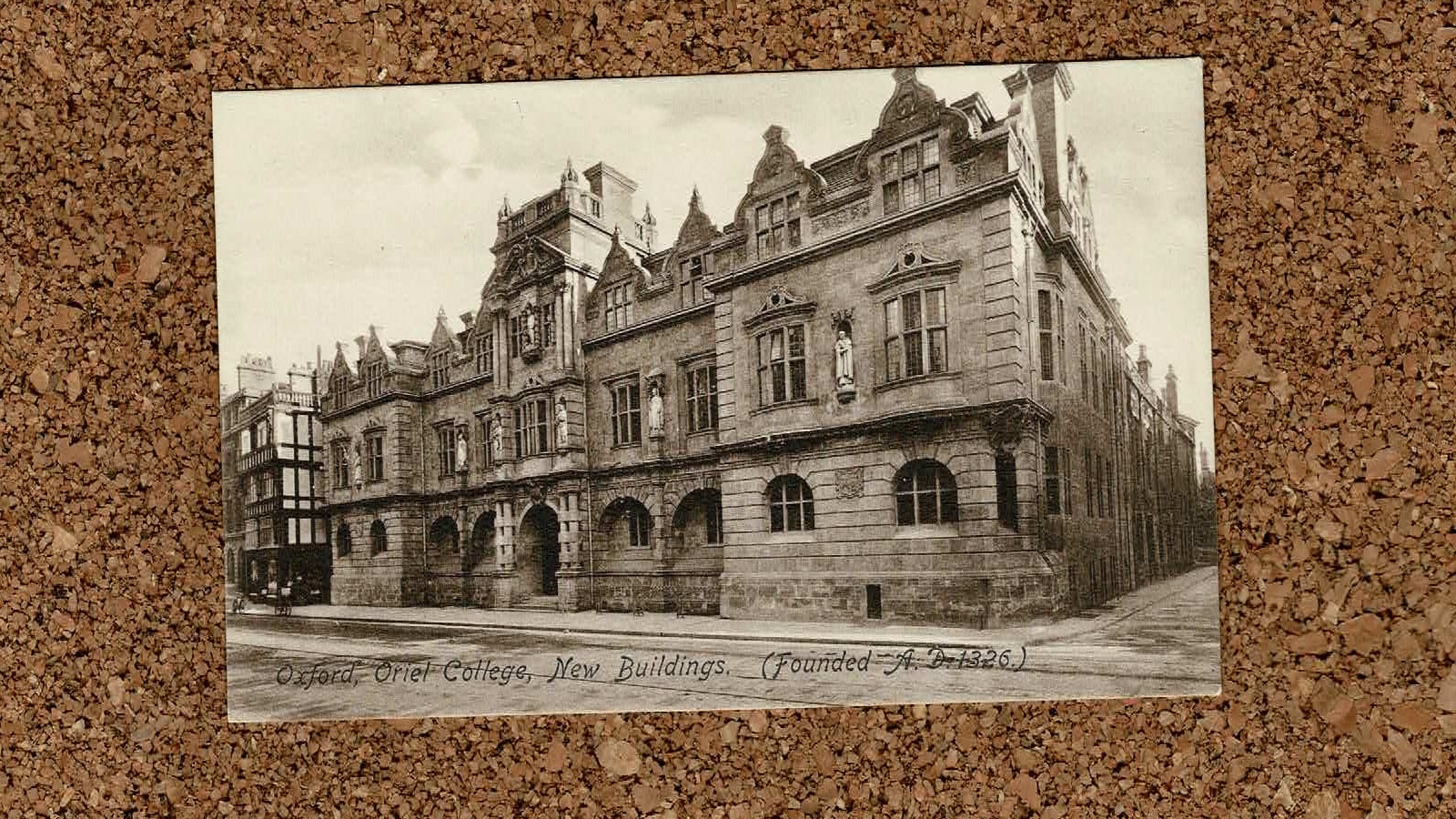
    Many – perhaps even most – universities have a statue or two. But few have a statute which is as troublesome as one of those belonging to Oriel College, Oxford. You can see the statue in question in the alcove directly above the door in the postcard – the one on its own at the top; not one of those along the first floor. And I bet by now you’ve guessed the statue. It’s of Cecil Rhodes: plutocrat, imperialist and, crucially for this post, alumnus of, and donor to, Oriel College, Oxford.

    You can see the statue a little better in this close-up from anther postcard. The Latin reads something like “from the generosity of Cecil Rhodes.” (It is also, apparently, a chronogram – the outsize capitals giving the date of construction, 1911, in Roman numerals. And it does, if you ignore the order and just add up all of the Ls, Ms, Is, Cs, Ds and Vs. There’s a really good site here to help.)

    Rhodes made money – a lot of it – from diamonds, and become politically powerful within the British southern African colonies. I’m not going to attempt a biography in this post; you can read here what Britannica has to say about him. He studied at Oxford between 1873 and 1881, the extended length of time not being explained by his gaining higher and higher degrees, but by his interrupting study to return regularly to South Africa.

    Rhodes became Prime Minister of the Cape Colony (as it was then known), and played critical roles in the British wars against the Zulu and against the Boer (he fomented the incident which led to the war against the Transvaal). He was an ardent imperialist: writing about the English, he said:

    I contend that we are the first race in the world, and that the more of the world we inhabit the better it is for the human race. I contend that every acre added to our territory means the birth of more of the English race who otherwise would not be brought into existence.

    Rhodes died young – aged 48 – and in his will left £100,000 to Oriel College (worth about £10.5 million today), a chunk of which was used for a new building on the High Street side of the college. Its the one in the postcard with the statutes. He also left money for other educational goals – for example, land in South Africa which became the campus for the University of Cape Town; and famously the Rhodes scholarships, which support students attending Oxford from the former British empire, and from Germany.

    In 2015, students at the University of Cape Town protested against a statue of Rhodes on campus. As this piece makes clear, the statue was the symbol, the protests had a broader target: the legacies of colonialism and racism within and beyond the university environment. The university’s council agreed with the protestors, and the statue was removed. Students 1, Rhodes 0. And a slogan – #RhodesMustFall – gained currency.

    In 2016, a focus of what had become a movement fell on Oxford. The Oxford Union debated and passed a motion in favour of the removal of the statue on Oriel college. In 2020 the matter surfaced again, with student protests in Oxford, and resolutions in favour of removing the statue from the undergraduate and postgraduate students of the college. Trickily for the college, the building – and hence the statues – were listed, so simply removing the statue was not possible. The college’s council agreed to hold an independent inquiry to make recommendations, and when the report was received in 2021, voted to seek to remove the statue. But, the environment was hostile, and it was clear that government, whose approval would be necessary, would not approve.

    The college has published a good explainer, which includes links to pieces by Professor William Beinart, Emeritus Rhodes Professor of Race Relations, outlining Rhodes’s legacy; and by Professor Nigel Biggar, Emeritus Regius Professor of Moral and Pastoral Theology, arguing that Beinart’s criticisms of Rhodes were overplayed.

    Now, the issue to me seems fairly simple. Did Rhodes’s actions lead to a state of affairs where if you have black or brown skin you were treated far worse than if you had white skin? The history of the twentieth century in southern Africa say clearly yes. Should we therefore be memorialising him? Reader, I invite you to answer this one for yourself.

    And that is how things currently sit. Whether under a different government permission to remove the statue might be given I do not know. Sculptor Antony Gormley suggested that the statue be turned to face the wall in shame – maybe that would be permitted? I do suspect, though, that we haven’t yet heard the last of this one.

    And here, as is customary, is a jigsaw of the postcard – enjoy!

    Source link

  • Researchers sue NIH over mass cuts to DEI grants

    Researchers sue NIH over mass cuts to DEI grants

    This audio is auto-generated. Please let us know if you have feedback.

    Dive Brief:

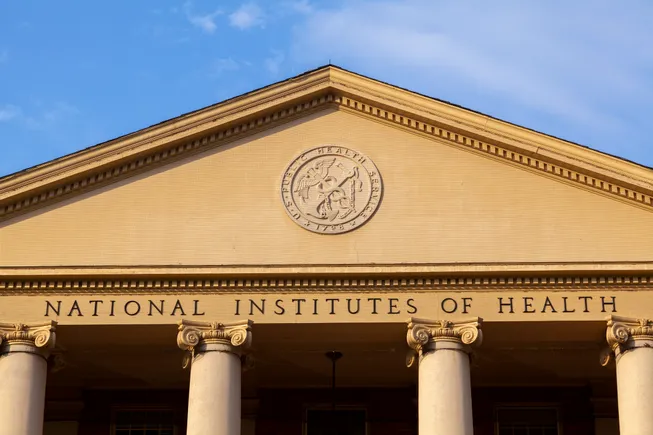
    • Researchers, unions and others sued the National Institutes of Health on Wednesday over the agency’s purge of diversity, equity and inclusion-related research activity that has resulted in lost grant funding and career opportunities. 
    • Plaintiffs, including dozens of academic scientists, alleged that the agency’s leaders, starting in February, “upended NIH’s enviable track record of rigor and excellence, launching a reckless and illegal purge to stamp out NIH-funded research that addresses topics and populations that they disfavor.”
    • They are asking a federal court to block NIH from enforcing its anti-DEI directives both in the short term and permanently and to restore grants to researchers that the agency has cut under the Trump administration. 

    Dive Insight:

    The complaint counts at least 678 research projects that have been terminated by NIH, some of them potentially by the Elon Musk-led Department of Government Efficiency rather than NIH staff. 

    The recently cut grants amount to over $2.4 billion, the lawsuit noted. Of that, $1.3 billion was already spent on projects “stopped midstream that is now wasted,” and $1.1 billion has been revoked.

    Plaintiffs argue that grant terminations “cut across diverse topics that NIH is statutorily required to research,” many of which involve life-threatening diseases. Specifically, they argue that NIH’s actions violate the Administrative Procedures Act and constitutional limits on executive branch authority, and are unconstitutionally vague. 

    In the lawsuit, filed in U.S. district court in Massachusetts, plaintiffs detailed how their lives, careers and potentially life-saving research have been thrown into turmoil by the NIH’s attack on DEI under President Donald Trump.

    Among them is a postdoctoral fellow at the University of New Mexico’s medical school who studies alcohol’s impact on Alzheimer’s risk. The researcher, the first in her family to graduate college, sought a grant created to help promising researchers from underrepresented backgrounds transition to tenure-track faculty positions. 

    According to the lawsuit, the researcher “satisfies the eligibility criteria for the program and invested months into assembling her application,” but NIH refused to consider it “solely because the program is designed to help diversify the profession.”

    Another plaintiff, a Ph.D. candidate at a private California university, had received a high score on a research funding application for a dissertation proposal that would have studied suicide prevention among LGBTQ+ youth experiencing homelessness. 

    But the candidate learned that new restrictions on LGBTQ-related research meant the NIH would not likely fund the project. The turn of events will harm the researcher’s “ability to progress through their PhD program,” the complaint said. 

    Others include a University of Michigan social work professor whose research focuses on sexual violence in minority communities. The NIH has cut at least six grants supporting her research because the agency said it “no longer effectuates agency priorities,” according to the complaint. 

    Setting the various cuts in motion was internal NIH guidance, most of it revealed by the news media and cited in the complaint, that directed agency staff to terminate and deny DEI-related grant proposals. One memo instructed NIH officials to “completely excise all DEI activities.”

    Staff guidance included research topics for grant terminations. One document forbade three research activity topics: China, DEI and transgender issues. A later document, the complaint alleges, effectively banned research grants around vaccine hesitancy and COVID-19.

    NIH did not immediately respond to a request for comment Thursday.

    The scale of impact by both DEI cuts and other funding chaos at NIH is broad, cutting across much of the higher ed world. The United Auto Workers, one of the plaintiffs, counts tens of thousands of members who depend on NIH grants for their work and training, according to the lawsuit. It also noted 18,000 full-time graduate students who received their primary federal funding support through NIH in 2022.

    Source link

  • Two tribal colleges have been allowed to rehire staff that had been cut by the federal government

    Two tribal colleges have been allowed to rehire staff that had been cut by the federal government

    After weeks of uncertainty, two tribal colleges have been told they can hire back all employees who were laid off as part of the Trump administration’s deep cuts across the federal workforce in February, part of a judge’s order restoring some federal employees whose positions were terminated.

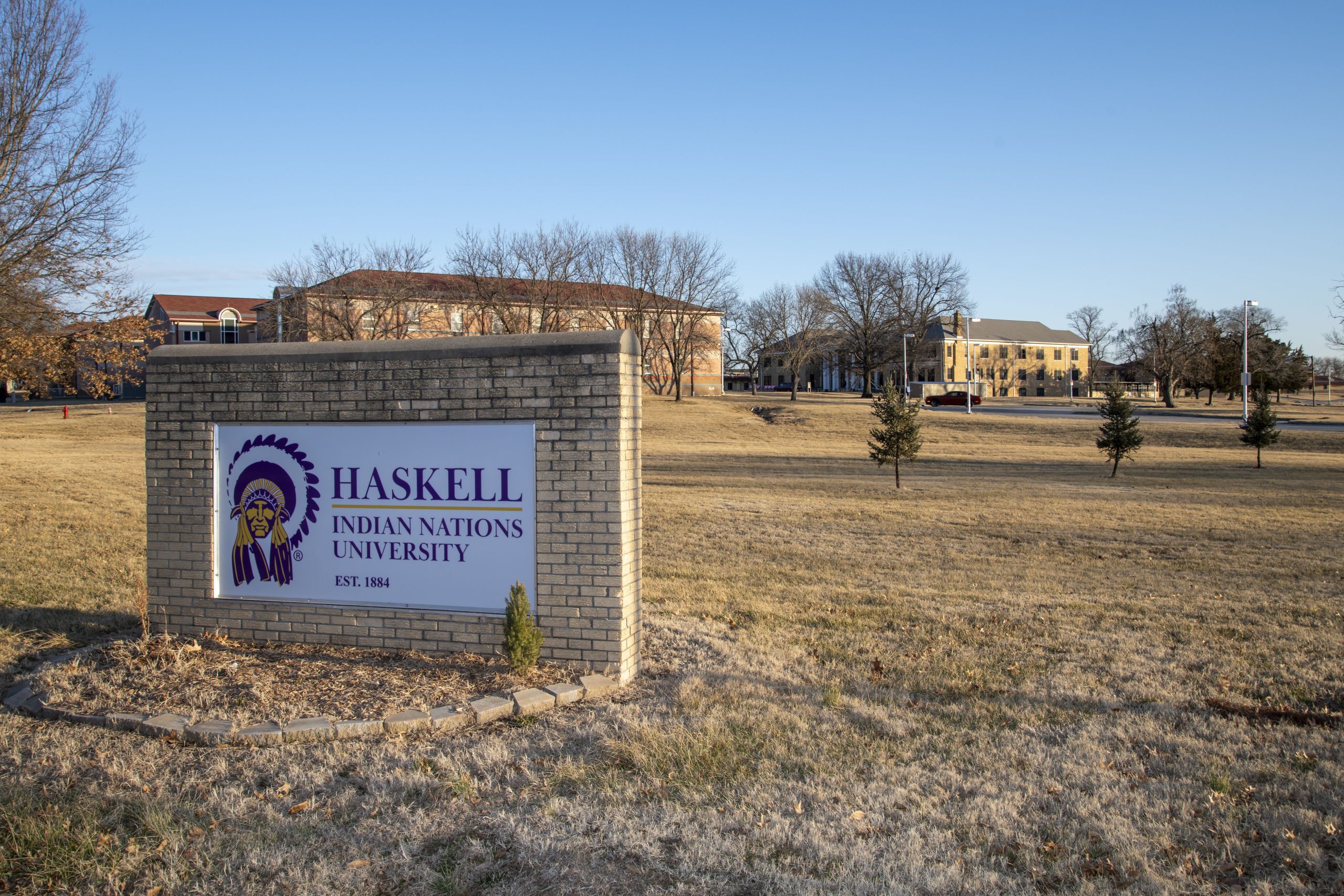
    Haskell Indian Nations University in Kansas and Southwestern Indian Polytechnic Institute, widely known as SIPI, in New Mexico lost about 70 employees in mid-February amid widespread staffing cuts to federal agencies. While most of the nation’s 37 tribal colleges and universities are chartered by American Indian tribes, Haskell and SIPI are not associated with individual tribes and are run by the federal government.

    About 55 employees were laid off and 15 accepted offers to resign, according to a lawsuit filed last month by tribes and students. The colleges were forced to cancel or reconfigure a wide range of services, from sports and food service to financial aid and classes. In some cases, instructors were hired by other universities as adjuncts and then sent back to the tribal colleges to keep teaching.

    Related: Interested in more news about colleges and universities? Subscribe to our free biweekly higher education newsletter.

    It was not clear this week when and if the workers would return, whether the employees who resigned would also be offered their jobs back, or if the government would allow colleges to fill vacancies. Both colleges said some employees had turned down the offers.

    The Bureau of Indian Education, which runs the colleges, declined to answer questions except to confirm the laid-off workers would be offered jobs with back pay to comply with a judge’s order that the government reverse course on thousands of layoffs of probationary employees. But the agency also noted the jobs would be available “as the White House pursues its appeals process,” indicating possible turmoil if an appeals court reinstates the layoffs.

    Both colleges said the bureau also has refused to answer most of their questions.

    SIPI leaders were told last week that the positions were being restored, said Adam Begaye, chairman of the SIPI Board of Regents. The 270-student college lost 21 employees, he said, four of whom decided to take early retirement. All but one of the remaining 17 agreed to return, Begaye said.

    The chaos has been difficult for those employees, he said, and the college is providing counseling.

    “We want to make sure they have an easy adjustment, no matter what they’ve endured,” Begaye said.

    Related: How a tribe won a legal battle against the federal Bureau of Indian Education and still lost

    The chairman of Haskell’s Board of Regents, Dalton Henry, said he was unsure how many of the 50 lost employees were returning. Like SIPI, Haskell was forced after the layoffs to shift job responsibilities and increase the workload for instructors and others.

    Haskell was reviewed by accreditors in December, and Henry said he was worried how the turmoil would affect the process. Colleges and universities must be accredited to offer federal and state financial aid and participate in most other publicly funded programs.

    Henry declined to discuss his thoughts on the chaos, saying there was nothing the college could do about it.

    “Whatever guidance is provided, that’s what we have to adhere to,” he said. “It’s a concern. But at this point, it’s the federal government’s decision.”

    The Bureau of Indian Affairs declined to make the presidents of the two colleges available for interviews.

    Tribal colleges and universities were established to comply with treaties and the federal trust responsibility, legally binding agreements in which the United States promised to fund Indigenous education and other needs. But college leaders argue the country has violated those contracts by consistently failing to fund the schools adequately.

    In the federal lawsuit claiming the Haskell and SIPI cuts were illegal, students and tribes argued the Bureau of Indian Education has long understaffed the colleges. The agency’s “well-documented and persistent inadequacies in operating its schools range from fiscal mismanagement to failure to provide adequate education to inhospitable buildings,” plaintiffs claimed.

    Related: Tribal college campuses are falling apart. The U.S. hasn’t fulfilled its promise to fund the schools

    Sen. Jerry Moran and Rep. Tracey Mann, both Kansas Republicans, said before Trump took office that they plan to introduce a bill shifting Haskell from federal control to a congressional charter, which would protect the university from cuts across federal agencies such as the Bureau of Indian Education.

    “[F]or the last few years the university has been neglected and mismanaged by the Bureau of Indian Education,” Moran said in a written statement in December. “The bureau has failed to protect students, respond to my congressional inquiries or meet the basic infrastructure needs of the school.”

    The February cuts brought rare public visibility to tribal colleges, most of which are in remote locations. Trump’s executive orders spurred outrage from Indigenous communities and a flurry of national news attention.

    “We’re using this chaos as a blessing in disguise to make sure our family and friends in the community know what SIPI provides,” said Begaye, the SIPI board president.

    The uncertainty surrounding the colleges’ funding has left a lasting mark, said Ahniwake Rose, president and CEO of the American Indian Higher Education Consortium, which advocates for tribal colleges. But she added she was proud of how the schools have weathered the cuts.

    “Indian country is always one of the most resourceful and creative populations,” she said. “We’ve always made do with less. I think you saw resilience and creativity from Haskell and SIPI.”

    Contact editor Christina A. Samuels at 212-678-3635 or [email protected].

    This story about tribal colleges was produced by The Hechinger Report, a nonprofit, independent news organization focused on inequality and innovation in education. Sign up for the Hechinger newsletter.

    The Hechinger Report provides in-depth, fact-based, unbiased reporting on education that is free to all readers. But that doesn’t mean it’s free to produce. Our work keeps educators and the public informed about pressing issues at schools and on campuses throughout the country. We tell the whole story, even when the details are inconvenient. Help us keep doing that.

    Join us today.

    Source link

  • What the End of DoED Means for the EdTech Industry

    What the End of DoED Means for the EdTech Industry

    The Fed’s influence over school districts had implications beyond just funding and data. Eliminating The Office of Education Technology (OET) will create significant gaps in educational technology research, validation, and equity assurance. Kris Astle, Education Strategist for SMART Technologies, discusses how industry self-governance, third-party organizations, and increased vendor responsibility might fill these gaps, while emphasizing the importance of research-backed design and implementation to ensure effective technology deployment in classrooms nationwide. Have a listen:

    Key Takeaways

    More News from eSchool News

    In recent years, the rise of AI technologies and the increasing pressures placed on students have made academic dishonesty a growing concern. Students, especially in the middle and high school years, have more opportunities than ever to cheat using AI tools.

    As technology trainers, we support teachers’ and administrators’ technology platform needs, training, and support in our district. We do in-class demos and share as much as we can with them, and we also send out a weekly newsletter.

    Math is a fundamental part of K-12 education, but students often face significant challenges in mastering increasingly challenging math concepts.

    Throughout my education, I have always been frustrated by busy work–the kind of homework that felt like an obligatory exercise rather than a meaningful learning experience.

    During the pandemic, thousands of school systems used emergency relief aid to buy laptops, Chromebooks, and other digital devices for students to use in remote learning.

    Education today looks dramatically different from classrooms of just a decade ago. Interactive technologies and multimedia tools now replace traditional textbooks and lectures, creating more dynamic and engaging learning environments.

    There is significant evidence of the connection between physical movement and learning.  Some colleges and universities encourage using standing or treadmill desks while studying, as well as taking breaks to exercise.

    This story was originally published by Chalkbeat. Sign up for their newsletters at ckbe.at/newsletters. In recent weeks, we’ve seen federal and state governments issue stop-work orders, withdraw contracts, and terminate…

    English/language arts and science teachers were almost twice as likely to say they use AI tools compared to math teachers or elementary teachers of all subjects, according to a February 2025 survey from the RAND Corporation.

    During the seven years I served on the Derry School Board in New Hampshire, the board often came first. During those last two years during COVID, when I was chair, that meant choosing many late-night meetings over dinner with my family.

    Want to share a great resource? Let us know at [email protected].

    Source link

  • The Tools Helping University Students Succeed After Graduation (Post College Journey)

    The Tools Helping University Students Succeed After Graduation (Post College Journey)

    Seattle, Wash.– As thousands of university students graduate each year, many find themselves
    facing an unexpected challenge: career uncertainty. Despite earning degrees, a large portion of
    graduates report feeling unprepared to enter the workforce. Post-college career expert Laurie
    Nilo-Klug
    is tackling this issue head-on, providing students with the tools they need to build
    confidence and thrive in their careers.

    Ms. Nilo-Klug, an Adjunct Professor at Seattle University and the founder of Post College
    Journey
    , has dedicated her work to helping students transition from college to the professional
    world. Through her programs, Laurie has empowered students to take control of their career
    paths, addressing common issues such as imposter syndrome, skill uncertainty, and job market
    navigation.


    After implementing her career confidence-building tools in the classroom, Laurie observed a
    remarkable 60% increase in student confidence levels. “Many students leave college with
    impressive degrees but lack the self-assurance to effectively launch their careers. 

    My goal is to bridge that gap with actionable strategies that instill confidence and competence,” says Laurie. Laurie explains, “In a recent assignment, I had students choose two career exploration activities, and their selections revealed a strong drive to connect classroom learning with their post-college goals. 

    Their enthusiasm for hands-on experiences, such as job applications and simulations, highlighted the critical need for practical, real-world learning opportunities. After gathering student feedback and analyzing the data, I found a 60% increase in their career confidence levels. This reinforced my belief that early and direct exposure to career exploration is essential for student success.”

    In this activity, students were tasked with selecting two career exploration activities from the
    following options:

    ● Attending a career development event;
    ● Having an appointment with the career center;
    ● Joining a student club;
    ● Doing a career self-assessment
    ● Applying to a job;
    ● Or completing a job simulation and then reflecting on what they have learned.

    This assignment aimed to show that career development offers many paths, so it’s crucial to
    understand why you choose an activity, what you hope to gain, and reflect on what you learn.
    Laurie expected students to pick low-effort options like self-assessments or joining a club, given
    their frequent concerns about time constraints. Instead, nearly all chose job simulations or
    applied for a job, showing a strong preference for hands-on experience.

    For media inquiries or to schedule an interview with Laurie Nilo-Klug, please contact:
    Marisa Spano
    [email protected]

    Source link

  • Title IX Case Against Maine Schools Headed to U.S. Department of Justice – The 74

    Title IX Case Against Maine Schools Headed to U.S. Department of Justice – The 74


    Get stories like this delivered straight to your inbox. Sign up for The 74 Newsletter

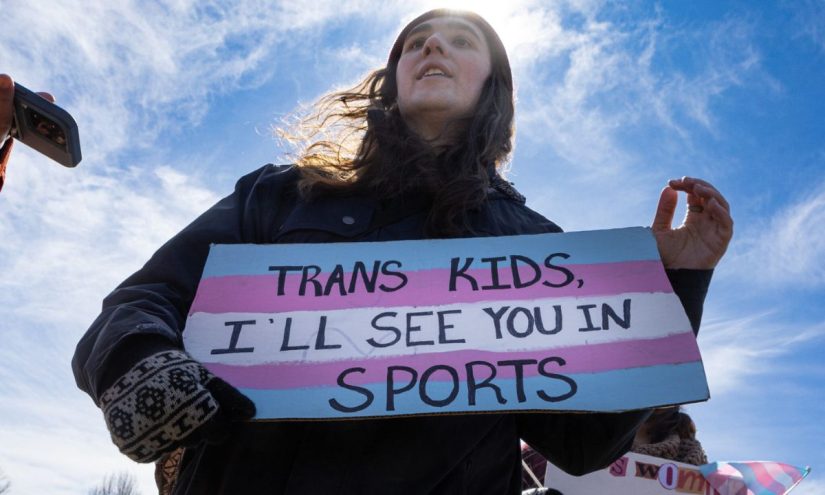
    The conflict between the state of Maine and the Trump administration over transgender student athletes reached a new pivot point on Monday. As the first of several deadlines set by the federal government has now expired, whether Maine can continue to allow trans athletes to participate in school sports appears likely to be decided by the courts.

    Two separate federal agencies determined that Maine is in violation of Title IX based on the Trump administration’s interpretation of the anti-sex discrimination protection.

    The U.S. Department of Education’s Office for Civil Rights issued a final warning Monday to the Maine Department of Education regarding its noncompliance with a federal directive for allowing trans girls to participate in girls’ sports.

    If the state does not propose an agreement that’s acceptable to the office by April 11, the case will be referred to the Department of Justice, the letter said.

    Meanwhile, a separate investigation by the U.S. Department of Health and Human Services’ civil rights office that found Maine in violation of Title IX for “continuing to unlawfully allow” trans girls to compete in girl’s sports has been referred to the U.S. Department of Justice, according to a Monday social media post from the agency.

    In a letter dated March 17, HHS had given Maine a deadline of 10 days to comply with federal guidance. Monday marked ten business days from that warning.

    Both agencies determined that Maine had violated federal law after dayslong investigations that included no interviews, while typical investigations take months and are eventually settled with resolution agreements. The probes were launched after Gov. Janet Mills and President Donald Trump had a heated exchange over the state’s trans athlete policy. Millions of dollars in federal funding might be at risk, depending on how the cases proceed.

    “We just need an answer at this point as to, ‘Does the Trump administration have the authority to do what it’s doing when it comes to fast tracking the removal of federal funds?’” said Jackie Wernz, a former OCR lawyer for the Education Department who now represents school districts nationwide in these types of cases.

    “This is just unprecedented, and we’re not following the process that we’re used to. So I think it’s going to be really helpful for courts to start weighing in on whether or not they have the authority to do this.”

    Meanwhile, Republican state lawmakers said in a news conference on Tuesday that they want the state to repeal trans students’ rights to athletics, locker rooms and bathrooms, and to roll back inclusion of gender as a protected class in the Maine Human Rights Act.

    “The problem is that the term gender identity and the Human Rights Act is being interpreted way too broadly by the left,” said Senate Minority Leader Trey Stewart (R-Aroostook). “And what it’s saying is there’s no boundary between men’s and women’s spaces.”

    Rep. Michael Soboleski (R- Phillips) said he is introducing a bill to remove consideration of gender identity from the act, and asked Democrats and Mills to support the legislation in order to avoid the risk of losing federal funding.

    Earlier this year, Iowa became the first state in the nation to remove civil rights from a state law when its Legislature voted to remove gender identity from its civil rights act.

    “This is not sustainable,” Stewart said. “We’re a poor state. We are heavily reliant on federal money. The governor needs to move on this.”

    On March 19, the Department of Education’s civil rights office notified Maine of its noncompliance and proposed a resolution agreement that would require the state to rescind its support of trans athletes, which is currently required by the Maine Human Rights Act. A Cumberland-area school district and the Maine Principals Association, which runs student athletics, that were also found in violation have already refused to sign the agreement.

    This development is part of a broader effort by the Trump administration to enforce Title IX provisions concerning gender and athletics. Earlier this year, the administration launched investigations in several other states for similar policies allowing trans athletes to compete in alignment with their gender identity.

    Title IX, the federal law banning sex-based discrimination, does not reference trans people directly, but the Trump administration has interpreted Maine’s policy as discrimination against cisgender girls.

    Rachel Perera, a fellow in the governance studies program for the Brown Center on Education Policy at national think tank The Brookings Institution, said the Trump administration’s interpretation of Title IX leaves room for questioning. If the policy goes to trial, she said federal courts may come up with a clearer interpretation.

    “It’s going to be really important to see how Maine proceeds, because they’re sort of setting the tone in terms of these other states and other localities who are going to be trying to navigate these very same dynamics,” she said.

    Maine Morning Star is part of States Newsroom, a nonprofit news network supported by grants and a coalition of donors as a 501c(3) public charity. Maine Morning Star maintains editorial independence. Contact Editor Lauren McCauley for questions: [email protected].


    Get stories like these delivered straight to your inbox. Sign up for The 74 Newsletter

    Source link

  • Princeton Grants Suspended as Federal Pressure on Universities Grows

    Princeton Grants Suspended as Federal Pressure on Universities Grows

    Princeton University
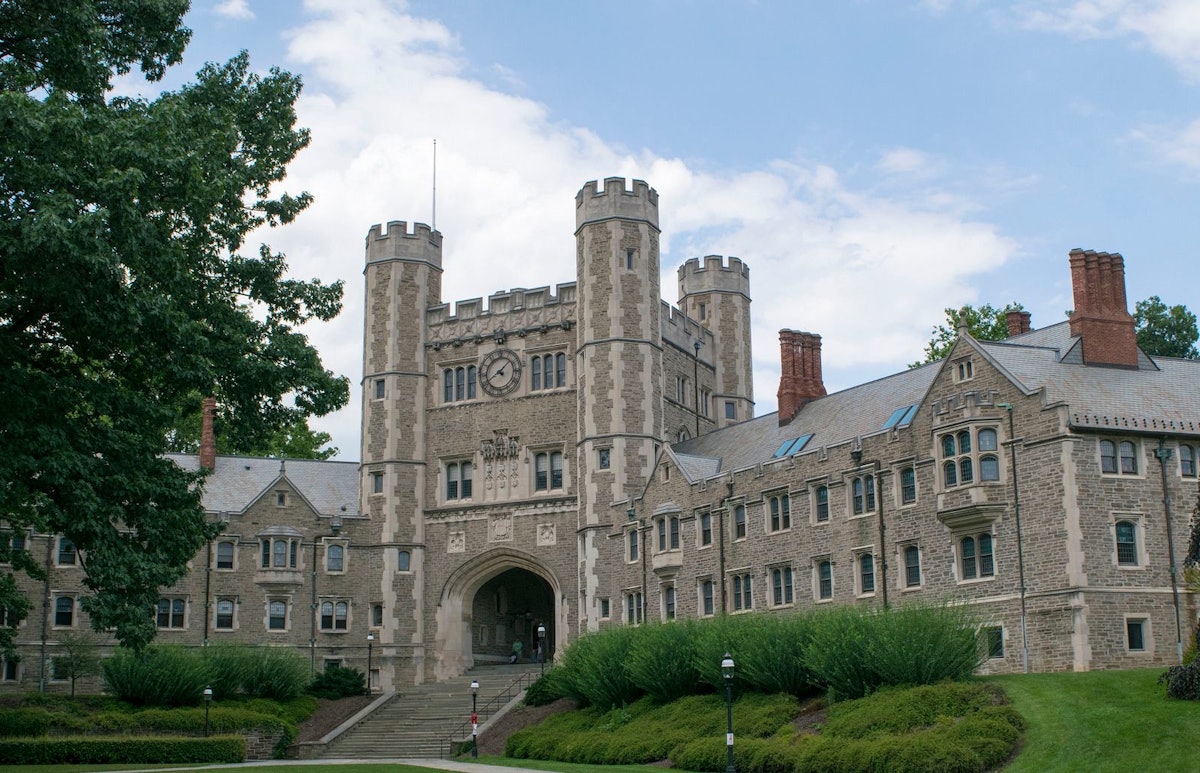
    In a concerning development for research institutions nationwide, Princeton University has become the most recent Ivy League school to have federal funding suspended amid what many academic leaders are describing as an unprecedented federal pressure campaign targeting elite universities.

    Princeton President Dr. Christopher Eisgruber announced earlier this week that “several dozen” federal research grants from agencies including the Department of Energy, NASA, and the Department of Defense have been halted. While the administration’s complete rationale remains unclear, the university is among dozens facing federal investigations into campus antisemitism following pro-Palestinian demonstrations last year.

    “We are committed to fighting antisemitism and all forms of discrimination, and we will cooperate with the government in combating antisemitism,” Eisgruber wrote in a campus-wide message. “Princeton will also vigorously defend academic freedom and the due process rights of this University.”

    The Department of Energy confirmed it had paused Princeton’s funding pending a Department of Education investigation into alleged antisemitic harassment on campus.

    This action follows similar funding suspensions at other prominent institutions:

    • Columbia University lost $400 million in federal grants and agreed to several government demands, including revising student discipline policies and reviewing its Middle East studies department
    • The University of Pennsylvania faced approximately $175 million in suspended funding related to a transgender athlete who previously competed for the school
    • Harvard University is under review for nearly $9 billion in federal grants and contracts amid an antisemitism investigation

    The funding suspensions create significant challenges for research universities, which depend heavily on federal grants. Princeton’s president had previously criticized the Columbia funding cuts as “a radical threat to scholarly excellence and to America’s leadership in research” in a March essay published in The Atlantic.

    Princeton was among 60 universities that received warning letters from the Education Department in March regarding accusations of antisemitism. The department indicated schools could face enforcement actions if they failed to address anti-Jewish bias on campus. Six of the eight Ivy League institutions were included in these warnings.

    The Education Department’s investigation at Princeton began in April 2024 under the previous administration, responding to a complaint that cited pro-Palestinian protests allegedly including antisemitic chants. Similar complaints have been filed against dozens of other institutions.

    The current administration has promised more aggressive measures against campus antisemitism, opening new investigations and taking action against foreign students connected to pro-Palestinian demonstrations. University officials face the challenge of balancing compliance with federal demands while preserving academic freedom and campus autonomy.

    These developments follow congressional hearings on campus antisemitism that contributed to the resignations of presidents at Harvard, Penn, and Columbia. Most recently, Columbia’s interim president Dr. Katrina Armstrong resigned after the university agreed to the government’s demands.

    The situation raises critical questions about federal oversight of higher education, the boundaries of campus free speech, and the future of institutional autonomy at American universities.

    Source link

  • A turning point for UK international higher education

    A turning point for UK international higher education

    In 2019, the UK launched its first international education strategy – a landmark effort that set ambitious, cross-government targets for growing our international education footprint. The years since have exposed the fragility of a strategy without a built-in mechanism for review or refresh when buffeted by events. Changing geopolitics, tightening migration strategies and Covid might not individually have been expected, but exposure to global markets will always bring challenges.

    The 2019 roadmap lacked clarity on whether those targets were a floor or a ceiling and what we were to do when they were reached. In their absence, policy drifted. Reactive decisions replaced proactive planning. Universities, caught in the crosswinds of shifting geopolitics and domestic migration debates, have too often been left guessing what the government’s long-term vision really is.

    That’s why the International Higher Education Commission (IHEC) was formed; to fill this strategic vacuum with a coherent, forward-looking, and inclusive vision. Working across sectors – engaging university leaders, student bodies, recruiters, and policymakers – it’s been working on framework for a new UK international higher education strategy rooted in data, tempered by experience, and open to evolution.

    Our personal view is that we need nothing less than a reinvention of how we plan, manage, and grow international higher education; that we must hack a way through the many things we could do, or would like to do, to get to the essential priorities – what we must do – and be brave enough to make difficult decisions. 

    It is clear that the government wishes the sector well, but is not going to put its hand in its pocket any time soon. Our only way forward in the short term, then, is to ask for modest help, which will provide a short-term, concrete return on investment to trade our way out of the immediate difficulties.

    Our personal view is that we need nothing less than a reinvention of how we plan, manage, and grow international higher education

    If we steady the ship, we can in parallel put in place a framework, acknowledging the likely ongoing volatility in geopolitics and global markets, that moves us to a more strategic and sustainable approach in the medium and longer term. This may not be elegant policy making, but it is rooted in the pragmatic reality of the changes necessary to stabilise a system so economically, socially and culturally significant.

    We have shared our personal views in a number of fora over the past two years as IHEC has unfolded and reiterate them here as we anticipate the imminent publication of our final report. It is very timely now, having been delayed initially by the UK general election, in which higher education as a topic failed to appear. Then the focus of almost everyone was on the US election, and that was followed by the significant challenges in the sector that meant that policy suggestions would not have been appropriate. 

    Now, there is a more proactive, forward-looking context to which we hope we can contribute.

    • A living strategy with built-in review and flexibility

      The UK needs a dynamic framework, not a static document.

      Strategies must adapt to shifting global conditions, student preferences, and national needs. A ‘living’ strategy, reviewed regularly, updated transparently, and framed around multiple scenarios, not a single trajectory. Growth must be deliberate, not accidental.

      • Policy certainty and sustainable structures

          Confidence in the UK’s offer depends in part on consistency. The Graduate Route – allowing students to work post-study – has been a cornerstone of our recent successes, but its future must be secured through clearer legal and policy underpinning in the face of continuing threats from a still-changing migration policy context.

          We also need a more sustainable system that doesn’t rely solely on growth from a few key markets, but diversifies and balances recruitment in line with national capacity and ambition.

          • A competitive, student-centred offer

          International students are not just numbers; they’re individuals with aspirations and needs. Better engagement with the ‘student voice’ is critical, as is a re-examination of how we ensure student success as they enter the workforce.

          • Whole-government coherence and accountability

          Too often, policy is siloed across Whitehall. Education may do better than other areas, but there are key departments missing from discourse – the Home Office, the Department for Science, Innovation and Technology, among others – and they are necessary to provide coordinated oversight.

          It’s also vital to reflect regional priorities and the role of devolved nations, Metro Mayors, and local authorities in shaping recruitment and integration strategies.

          • Strategic marketing and market diversification

          The UK concentrates too heavily on a small number of international markets. We must be smarter.

          Study UK does the best it can with the woefully poor levels of investment, but we must invest in data-driven, market-specific campaigns and learn from countries like Australia that tie marketing to outcomes.  

          • Public-private partnership and institutional innovation

          Strategic delivery needs strategic partners. We must deepen collaboration with sector bodies like UKCISA, NISAU and BUILA to create a more integrated system that shares responsibility across institutions, government, and industry. 

          We also need to support the new found enthusiasm for TNE at scale to ensure that the new initiatives are robustly founded, and better data to inform national and institutional decision making.

          • Reframing migration and public narrative

          International students bring huge value to local economies, research, and the cultural fabric of our campuses. Yet in public discourse they too often become collateral in broader immigration debates.

          We must be able to show, and more effectively communicate, that almost all students return home. A confident, positive narrative is essential, based on evidence – not emotion.

          The road ahead

          This is a moment for boldness and clarity. The sector stands at a crossroads. It is under unprecedented threat, but it is also brimming with opportunity. If we get it right, the UK will not only remain a top destination for international students: we will lead globally on how it integrates education with diplomacy, soft power, and innovation.

    Source link

  • Free speech in an age of fear: The new system loyalty oaths – First Amendment News 464

    Free speech in an age of fear: The new system loyalty oaths – First Amendment News 464

    “Whoever would overthrow the liberty of a nation must begin by subduing the freeness of speech.” — Benjamin Franklin

    If you look beneath the veneer of it all, what surfaces from the chaos of the last eight weeks is a demand for unyielding loyalty to a man and his personal and political whims. 

    His demands, followed in fear, are cravenly honored by political figures, media corporations, university presidents, law firms, Justice Department lawyers, and all others who surrender on bended knee to an authoritarian figure who holds the title of the 47th president of the United States. 

    Few stand up to him; many kowtow to him. Silence and sycophancy surround him. Meanwhile, his agency hitman exercises power with unconstitutional zeal. 

    When persuasion fails, when logic departs, when toleration ceases to be tolerated, and when the very pillars of freedom of expression are battered with ruinous consistency, then the promise of the First Amendment is breached with abandon — this while so many fiddle. 

    Given what has gone on in the first quarter of 2025 alone, this much is true: We are witnessing frontal attacks on freedom, especially our First Amendment freedoms (e.g., FANs 463462461, and 460). 

    Government by executive order is his calling card — his “trump” card. Shakedowns are his tactic. “Administrative error” is the justification given by his confederates for egregious due process violations. 

    No matter how personal, punitive, or partisan, this power (often unconstitutional in principle and authoritarian in practice) has become this administration’s default position. His will is effected by his lieutenants, implemented by his attorney general, executed by his DOGE goons, fulfilled by his FBI director and other cabinet officials, orchestrated by his deputy of policy, and defended by his press secretary. 

    In such ways, as professor Timothy Zick’s “Executive Watch” posts have revealed and will continue to reveal, the First Amendment is also under siege.

    Fear is the engine that drives so much of this aggrandizement of power, and the submission to it. As in the McCarthy era, robotic loyalty fuels that engine. What we are seeing in Washington is a new era in compelled allegiance. Executive order “negotiations” are premised on mandatory loyalty.

    To get a sense of the nature of this problem, simply consider some of what Thomas I. Emerson (a revered civil liberties and free speech scholar) wrote 55 years ago in his seminal “The System of Freedom of Expression.” When liberty is contingent on one’s “beliefs, opinions, or associations,” there is a “grossly inhibiting effect upon the free exercise of expression.” 

    The inevitable result, Emerson added, is to silence “the more conscientious and invite the less scrupulous to pass. ‘Self-executing’ by its nature, it places the burden upon the person…to interpret [the loyalty oaths’] purpose, recall all past events in his life, and decide what current or future [orders might affect him] at his peril.” The net effect is to leave citizens “at the continuing mercy” of the government. 

    Put bluntly: “It is inherently demeaning to a free people.” (emphasis added) 

    It is that fear, born of direct or veiled demands for loyalty, that has seized power in the control rooms of our government. Time and again, day in and day out, yet another executive order, followed by servile enforcement, abridges our First Amendment freedoms. When will it end? When will enough men and women of courage join together and say “enough”? One answer was tendered in 1776 in a work titled “The American Crisis.” To quote its author, Thomas Paine:

    These are the times that try men’s souls. The summer soldier and the sunshine patriot will, in this crisis, shrink from the service of their country; but he that stands by it now, deserves the love and thanks of man and woman.

    Related 

    To preserve America’s tradition as a home for fearless writing, the Foundation for Individual Rights and Expression and Substack are partnering to support writers residing lawfully in this country targeted by the government for the content of their writing — those who, as Hitchens once put it, “committed no crime except that of thought in writing.”

    If you fit this category, whether or not you publish on Substack, we urge you to get in touch immediately at thefire.org/alarm or pages.substack.com/defender.


    Coming Soon

    A Question and Answer interview with Janie Nitze, co-author with Justice Neil Gorsuch of “Over Ruled: The Human Toll of Too Much Law.”

    See “An open invitation to Justice Neil Gorsuch and Janie Nitze to reply to their new book’s critics,” FAN 444 (Oct. 23)


    Voice of America court victory in journalists’ firing case

    The Voice of America can’t be silenced just yet. A federal judge on March 28 halted the Trump administration’s efforts to dismantle the eight-decade-old U.S. government-funded international news service, calling the move a “classic case of arbitrary and capricious decision making.”

    Judge James Paul Oetken blocked the U.S. Agency for Global Media, which runs Voice of America, from firing more than 1,200 journalists, engineers and other staff that it sidelined two weeks ago in the wake of President Donald Trump’s ordering its funding slashed.

    Seth Stern on DOGE and related free speech issues

    First Amendment Watch spoke with director of advocacy at Freedom of the Press Foundation, Seth Stern, about the First Amendment issues baked into the online exchange. Stern described Martin’s letter as intentionally ambiguous, argued that confusion over DOGE as a quasi-government agency brings its transparency responsibilities into question, and described the free speech issues that may arise from Musk’s roles as a social media platform owner and advisor to the president.

    Yale Law School ‘Free Speech in Crisis’ conference

    Agenda

    Friday, March 28

    9:15 a.m. | Welcome/Opening Remarks 

    • Organizers: Jack Balkin, Genevieve Lakier, Mikey McGovern

    9:30 a.m. | Panel 1: Media Environment 

    • Chair: Paul Starr, Princeton University
    • Yochai Benkler, Harvard Law School
    • Mary Anne Franks, George Washington University School of Law
    • Eugene Volokh, Hoover Institution

    11:15 a.m. | Panel 2: Polarization 

    • Chair: Robert Post, Yale Law School
    • Nicole Hemmer, Vanderbilt University
    • Liliana Mason, SNF Agora Institute, Johns Hopkins University
    • Ganesh Sitaraman, Vanderbilt Law School

    2:15 p.m. | Panel 3: Political Marketplace 

    • Chair: Rick Hasen, University of California, Los Angeles School of Law
    • Rick Pildes, NYU Law School
    • Bradley A. Smith, Capital University Law School
    • Ann Southworth, University of California, Irvine School of Law

    4:00 p.m. | Panel 4: Workplace 

    • Chair: Amanda Shanor, University of Pennsylvania
    • Helen Norton, University of Colorado School of Law
    • Benjamin Sachs, Harvard Law School
    • Liz Sepper, University of Texas Law School

    Saturday, March 29

    9:30 a.m. | Panel 5: Knowledge Production 

    • Chair: Amy Kapczynski, Yale Law School
    • E.J. Fagan, University of Illinois Chicago
    • Vicki Jackson, Harvard Law School
    • Naomi Oreskes, Harvard

    11:15 a.m. | Panel 6: Campus Politics 

    Chair: Genevieve Lakier, University of Chicago Law School

    • Judith Butler, University of California, Berkeley
    • Athena Mutua, University at Buffalo School of Law
    • Keith Whittington, Yale Law School

    1:00 p.m. | Wrap-Up Conversation 

    • Organizers: Jack Balkin, Genevieve Lakier, Mikey McGover

    Forthcoming book on free speech and incitement 

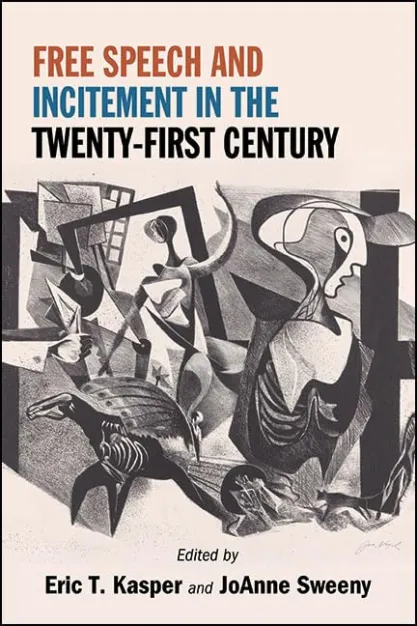
    Cover of the book "Free Speech and Incitement in the Twenty-First Century" by Eric Kasper and JoAnne Sweeny

    Free Speech and Incitement in the Twenty-First Century explores the line between free speech and incitement, which is a form of expression not protected by the First Amendment. Incitement occurs when a person intentionally provokes their audience to engage in illegal or violent action that is likely to, or will, occur imminently. 

    This doctrine evolved from World War I through the Cold War and the civil rights movement era, culminating in a test announced by the U.S. Supreme Court in Brandenburg v. Ohio (1969). Since the 1970s, this doctrine has remained largely unchanged by the Supreme Court and, as such, has received relatively little academic or media attention. 

    Since the late 2010s, however, violence at political rallies, armed protests around Confederate statues, social unrest associated with demonstrations against police, and an attack on the U.S. Capitol have led to new incitement cases in the lower courts and an opportunity to examine how incitement is defined and applied. Authors from different perspectives in Free Speech and Incitement in the Twenty-First Century help the reader understand the difference between free speech and incitement.

    ‘So to Speak’ podcast on Columbia University, DEI, and law firms

    We explore how censorship is impacting institutions — from universities to law firms to the Maine House of Representatives.


    More in the news

    2024-2025 SCOTUS term: Free expression and related cases

    Cases decided 

    • Villarreal v. Alaniz (Petition granted. Judgment vacated and case remanded for further consideration in light of Gonzalez v. Trevino, 602 U. S. ___ (2024) (per curiam))
    • Murphy v. Schmitt (“The petition for a writ of certiorari is granted. The judgment is vacated, and the case is remanded to the United States Court of Appeals for the Eighth Circuit for further consideration in light of Gonzalez v. Trevino, 602 U. S. ___ (2024) (per curiam).”)
    • TikTok Inc. and ByteDance Ltd v. Garland (The challenged provisions of the Protecting Americans from Foreign Adversary Controlled Applications Act do not violate petitioners’ First Amendment rights.)

    Review granted

    Pending petitions 

    Petitions denied

    Free speech related

    Thompson v. United States (Decided: 3-21-25/ 9-0 with special concurrences by Alito and Jackson) (Interpretation of 18 U. S. C. §1014 re “false statements”)

    Last scheduled FAN

    FAN 463: ‘We simply could not practice law . . . if we were still subject to the executive order’

    This article is part of First Amendment News, an editorially independent publication edited by Ronald K. L. Collins and hosted by FIRE as part of our mission to educate the public about First Amendment issues. The opinions expressed are those of the article’s author(s) and may not reflect the opinions of FIRE or Mr. Collins.

    Source link