Author: admin

  • 6 ways tech simplifies school communication and engagement

    6 ways tech simplifies school communication and engagement

    Key points:

    • Streamlining school communication empowers all district stakeholders
    • The dos and don’ts of parent-educator communication
    • Female district leaders target back-to-school priorities
    • For more on school communication, visit eSN’s Educational Leadership hub

    As technology trainers, we support teachers’ and administrators’ technology platform needs, training, and support in our district. We do in-class demos and share as much as we can with them, and we also send out a weekly newsletter. We coordinate a lot of different training sessions across our many different platforms, and support principals during staff meetings and on professional development days.  

    More News from eSchool News

    Many math tasks involve reading, writing, speaking, and listening. These language demands can be particularly challenging for students whose primary language is not English.

    As a career and technical education (CTE) instructor, I see firsthand how career-focused education provides students with the tools to transition smoothly from high school to college and careers.

    In recent years, the rise of AI technologies and the increasing pressures placed on students have made academic dishonesty a growing concern. Students, especially in the middle and high school years, have more opportunities than ever to cheat using AI tools.

    Math is a fundamental part of K-12 education, but students often face significant challenges in mastering increasingly challenging math concepts.

    Throughout my education, I have always been frustrated by busy work–the kind of homework that felt like an obligatory exercise rather than a meaningful learning experience.

    During the pandemic, thousands of school systems used emergency relief aid to buy laptops, Chromebooks, and other digital devices for students to use in remote learning.

    Education today looks dramatically different from classrooms of just a decade ago. Interactive technologies and multimedia tools now replace traditional textbooks and lectures, creating more dynamic and engaging learning environments.

    There is significant evidence of the connection between physical movement and learning.  Some colleges and universities encourage using standing or treadmill desks while studying, as well as taking breaks to exercise.

    This story was originally published by Chalkbeat. Sign up for their newsletters at ckbe.at/newsletters. In recent weeks, we’ve seen federal and state governments issue stop-work orders, withdraw contracts, and terminate…

    English/language arts and science teachers were almost twice as likely to say they use AI tools compared to math teachers or elementary teachers of all subjects, according to a February 2025 survey from the RAND Corporation.

    Want to share a great resource? Let us know at [email protected].

    Source link

  • The one thing that unites French voters

    The one thing that unites French voters

    French President Emmanuel Macron’s grip on stability, progress and voter approval seems to be slipping.

    His party lost its absolute majority in the National Assembly and, following snap elections in the summer of 2024, its relative majority as well. Now, he faces a budget crisis, voter pushback and a geopolitical crisis involving Europe, the United States and Russia.

    Macron had once hoped to bridge France’s political divides and reinvigorate its economy but is now mired in political quicksand and many French voters feel helpless. That’s what I discovered while interviewing people on the street in Rennes, France, where I’m spending a year studying abroad and trying to make sense of French politics.

    One elderly woman I spoke to described what was happening as a catastrophe. “It’s embarrassing,” she said. “All we can do is wait for the next presidential election.”

    My interviews aligned with a November 2024 IPSOS survey, which found that 74% of respondents lack confidence in the presidency, while an overwhelming 86% distrust political parties. Trust in the National Assembly has plummeted as well, with 74% of respondents expressing no faith in the institution.

    What voters say

    People are frustrated. A middle-aged man told me: “Macron has lost his authority. France is unstable, gridlocked and hostile.”

    Back in September, Macron appointed Michel Barnier as prime minister in an attempt to stabilize his government but it backfired. By December, Barnier’s government had collapsed after losing a no-confidence vote, ousting him and his ministers and triggering yet another governmental reset.

    The vote came in response to Barnier’s use of Article 49.3 of the French Constitution, which allows the executive to pass a budget without parliamentary approval.

    It wasn’t until February 2025 that lawmakers finally agreed on a budget — one met with widespread discontent over spending cuts and reallocations. Now, many French citizens are asking: What’s next for the Republic?

    A law student I spoke with who goes to the University of Rennes expressed uncertainty about the country’s future. “I’m scared because we’re walking back on progress,” he said.

    A nation disunited

    Political divisions seem to be deepening, amplified by social media.

    A political science student at Rennes 2 University noted that people seem unable to talk to each other. “It’s harder than ever to have conversations with people who disagree with us,” the student said. “We don’t just see differing opinions, we see them as attacks on who we are.”

    Another student said that at university, now, you find yourself attacked or excluded if you don’t agree.

    This polarization was evident in the most recent European elections. The far-right Rassemblement National secured 31.5% of the vote — a 40-year record for any French party in a European election. Their campaign focused on hard-line immigration policies, crime reduction and tax cuts on fossil fuels.

    Despite shared dissatisfaction, French citizens are divided on the changes they seek. One university student emphasized the need for a more equitable education system.

    “We’ve made strides in accessibility, but students are locked into career paths too early,” she said. “My younger brother, for example, always dreamed of becoming a pilot. But because his undiagnosed ADHD hurt his test scores, he was placed in a vocational high school instead of a general one. Now he’s studying to be an air steward.”

    Some want a strong government.

    A retired woman expressed concern over global instability. “Russia’s invasion of Ukraine is terrifying,” she said. “And with Trump distancing the U.S. from the EU, I worry our military isn’t strong enough. France and the EU need to invest in defense.”

    To put what I found on the streets into perspective, I spoke with Alistair Lyon, a News Decoder correspondent and former reporter with the Reuters international news service who lives in France.

    He highlighted the long-term consequences of the gridlock in French politics. “In a time when France faces huge challenges like a budget deficit and a major geopolitical crisis involving the U.S., Europe and Russia, now is not a great time to have a political stalemate,” Lyon said.

    He expects the stalemate to continue until the 2027 presidential election, given Macron’s loss of both absolute and relative majorities in the National Assembly.

    He pointed to two major sources of division: growing disillusionment with politicians and resistance to reform. Many French voters feel politically homeless, fueling a cycle where reforms are met with fierce backlash, ultimately deterring further change.

    Disinformation breeds distrust.

    Compounding the problem is the erosion of independent journalism.

    “You have to be very careful reading the news,” Lyon said. “Journalists that remain anchored to traditional values of accuracy and impartiality are becoming few and far between.”

    In France, billionaire and right-wing proponent Vincent Bolloré has bought up news and media outlets, raising concerns about bias and misinformation. In a way, Lyon said, the media is fueling the fires of divisions in new ways because now the press is controlled and owned by people with vested political interests.

    France finds itself at a crossroads. Uncertainty, frustration and political polarization are creating more gloom than ever.

    Whether stability can be restored depends on Macron, the parliament and their willingness to compromise. If cooperation remains minimal, France may continue down a path of deepening division, one with consequences far beyond its borders.


    Three questions to consider:

    1. Why has French President Emmanuel Macron lost significant support from voters?

    2. What is one thing voters are in France want from their government?

    3. As a citizen of your country, what do you expect your government to do for you?


    Source link

  • More colleges are creating homeless liaison roles. Here’s why.

    More colleges are creating homeless liaison roles. Here’s why.

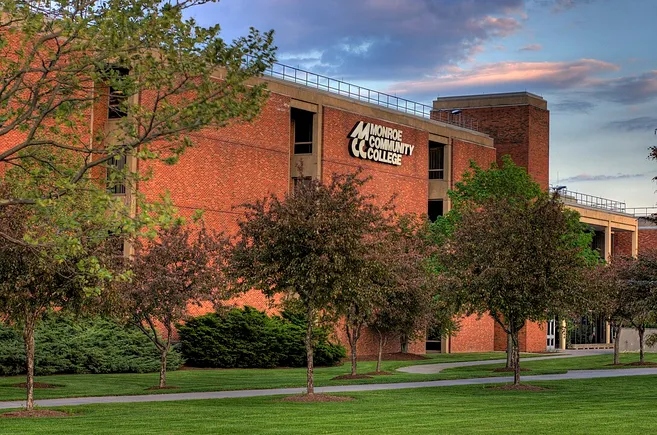
    When students at Monroe Community College experience homelessness, they often meet with Nicole Meyer. Since 2023, Meyer has been the homeless liaison at the two-year public institution in Rochester, New York, which is within the State University of New York system. 

    Nearly two years ago, SUNY required each of its 64 colleges to designate a person to serve as homeless liaison on their campuses — part of a nationwide movement to create such a position at higher education institutions. 

    Higher ed institutions and states throughout the U.S. have passed laws and implemented policies over the past decade or so designating homeless liaisons on campuses. The movement has been fueled by a growing recognition that many students experience homelessness during their college years, experts say.

    Around 8% of undergraduates and nearly 5% of graduate students reported experiencing homelessness in a 2020 survey that was published in 2023 from National Center for Education Statistics.

    “There has long been an assumption that if someone was in college, that they had the financial well-being to cover all their expenses,” said Rashida Crutchfield, executive director of the Center for Equitable Higher Education at California State University, Long Beach. “As higher education has learned that [homelessness] is part of the student experience, you’re seeing a lot more responsiveness to our responsibility to address it.”

    Students experiencing homelessness typically don’t have family or friends who have attended college and therefore lack a network to help them navigate the financial aid system, campus life and important resources, said Barbara Duffield, executive director of the nonprofit SchoolHouse Connection. 

    A homeless liaison thus becomes a point person on campus who can connect these students with resources that will help them remain enrolled through graduation, Duffield said. 

    In fact, a lack of housing can hinder students’ ability to focus on their studies, causing them to drop out, Duffield said. Additionally, such students often grapple with mental health issues, a sense of isolation and family-related issues, she said. On top of all that, they often must balance jobs with their classes, she said. 

    In Meyer’s case, by fall 2024 she had worked with 173 Monroe students experiencing housing insecurity or homelessnessroughly 2% of the college’s student population. A disproportionate share of those students are Black, Brown and women, Meyer said. 

    Meyer helps students find sustainable on- or off-campus housing — a challenging task given surging rental costs in Rochester. She works with the financial aid office and other administrators to help the students access scholarships, grants and the college’s emergency funds. 

    In addition, Meyer said she connects with school districts to help prepare high schoolers experiencing homelessness for the transition to college and partners with local organizations to help Monroe students navigate health insurance, transportation, child care and a host of other needs. Essentially, she’s the designated point person for all those students. 

    “I’m a one-stop-shop for basic needs, and housing and security,” said Meyer


    The origins of homeless liaisons

    The homeless liaison role emerged at the higher ed level following the 2007 passage of the federal College Cost Reduction Access Act a bill that increased funding for Pell Grants, made reforms to the financial aid system such as expanding repayment options for borrowers, and gave unaccompanied homeless youth independent student status when applying for financial aid, Duffield said

    That meant youths living in shelters, outside, in cars, in hotels, or on couches could apply for federal financial aid without their parents’ signatures, she said. 

    “This was really important because for so many young people, they are not in touch with their parents, they’re not being supported by their parents, and it’s just barrier after barrier after barrier to getting financial aid,” Duffield said

    At the time, Duffield said, colleges lacked knowledge about unaccompanied homeless youth, as well as training to identify those students and address the barriers they face. 

    Following the 2007 law, Colorado policymakers tried to rectify that knowledge gap by organizing a task force composed of students and higher ed and K-12 administrators. One of the task force’s recommendations called for establishing a single point of contact at every college and university in Colorado, based on a liaison model already used in K-12 districts. 

    Colorado colleges appointed homeless liaisons in 2009, establishing a first-of-its-kind model in the U.S., according to a fact sheet from the state’s education department. 

    Source link

  • Policy and Practice Foundations and Building Blocks

    Policy and Practice Foundations and Building Blocks

    Two weeks ago Chris Buonocore, Alex Humphreys, Martin Kurzweil and Emily Tichenor (all of the nonprofit organization Ithaka, and part of the Articulation of Credit Transfer Project) posted in this blog the happy news that Transfer Explorer (a website, modeled after CUNY T-Rex, that shows everyone how prior learning experiences will count toward a college’s academic requirements) has been launched containing information from three South Carolina colleges. Information from dozens of additional colleges in Connecticut, New York, South Carolina and Washington will be added in the coming months. 

    A cartoon Tyrannosaurus rex wearing a CUNY T-shirt

    Because this information is now public and usable, students and advisers will be able to make better plans for transfer, students will discover and choose transfer destinations that are a good fit for them, and institutions will be better able to align their programs and equivalencies to facilitate transfer. Transfer Explorer will also reduce the burden on students, advisers and admissions staff to locate and make sense of relevant information across disparate sources, allowing them to focus on higher-value tasks. The evidence from CUNY T-Rex suggests these benefits are already being realized in that context. 

    The advent of Transfer Explorer and other similar efforts to make transparent the rules on credit transfer and degree applicability raises an important question: Which policies and practices are desirable for institutions to have in place to make their credit mobility information public?

    Let’s assume that a public website, such as Transfer Explorer, is available for displaying credit mobility information, and that an institution has the appropriate financial and staff resources to put its information on the website. Now what course credit and program requirement policies and practices must be in place, and which additional ones would be useful to have? This post describes some of these policies and practices.

    Necessary Policies and Practices

    Absolutely essential is that transfer credit rules stating how an institution will treat all types of prior learning experiences (e.g., course A at Institution X will count as equivalent to course B at Institution Y), as well as the program and degree requirements (for majors, concentrations, general education, etc.), must be systematically and consistently stored, recorded and updated in the institution’s software system(s), with the credit mobility website reflecting any changes in any of these rules and requirements in a timely manner. These practices are essential for the website to function as a trusted source of information.

    There should be policies regarding who can change the transfer credit rules and degree requirements recorded in this software and under what conditions. This will reduce the likelihood of erratic, capricious or frequent changes, while ensuring that all students are subject to the same rules and requirements, without prejudice.

    Any additional rules, requirements, restrictions or qualifications related to the conditions for granting credit for prior learning (such as a minimum grade in a prior course or a residency requirement at the destination college) should apply equally to all students and be explicitly and publicly stated. This ensures that all students have access to the same information, again promoting equitable treatment.

    There should be administrative oversight of the above policies and practices, and that oversight should ideally be provided by people who would be unaffected by the rules’ consequences (i.e., conflicts of interest should be minimized). Oversight by people not acting in their own interest is necessary to ensure that policies and practices are appropriately instituted and maintained.

    Additional Desirable Policies and Practices

    It will be helpful to have policies regarding how course equivalencies for prior learning are decided in the first place—who decides and based on what information. This will promote efficient and effective decision-making regarding prior learning assessments.

    There should also be specific, agreed-upon criteria for giving credit for prior learning. It has been effectively argued that transfer credit should be based entirely on learning outcomes, and not on, e.g., a course’s prerequisites, textbook or modality (in-person, online or hybrid); the degree the student may or may not have; the student’s major; etc. AACRAO’s recommended criterion for course equivalency is 70 percent “matching of content.” Such a policy ensures that credit for prior learning is based on only that—prior learning.

    Any characteristics of prior learning, in addition to credits, that would satisfy an institution’s requirements, characteristics such as a course being writing intensive or including material on information literacy, should be recorded and considered for transfer. Students and those who support them need this information to be able to plan students’ complete academic trajectories.

    An explicit appeals procedure that allows students to challenge transfer credit decisions can help in identifying errors and inadequacies in what is shown on the website, as well as promoting equitable treatment of all students (an example of the CUNY appeals procedure is here). Students can more effectively use such a procedure if the website keeps a record of when transfer credit rules and program and degree requirements have changed and how.

    All courses from institutions accredited by what were formerly referred to as regional accreditors (along with, upon review, some other forms of prior learning) should be given at least elective credit. In addition to providing transfer students with predictable transfer credit, such a policy within the CUNY system greatly facilitated the establishment of CUNY T-Rex. For the courses of the 20 CUNY undergraduate colleges, developers had only to reflect on the website existing transfer credit rules (all 1.6 million of them); they did not have to determine what to do with courses that would receive no transfer credit.

    Also highly desirable is that a student should be allowed to use any credit transfer rule in place at College B between when the student first matriculated in College A and subsequently transferred to College B (perhaps within a specified number of years since matriculation at College A). Such a policy is particularly useful for students who first matriculate at a community college and later transfer to a bachelor’s college within the same system. This policy would enable students and those who support them to plan a student’s entire academic trajectory.

    Finally, in developing Transfer Explorer as well as CUNY T-Rex, the engineers had to first parse and deconstruct the colleges’ major and other requirements before programming them for the website. Many of the majors’ diagrams look like a tangled ball of yarn or a Super Bowl football play (diagrams that go way beyond just a sequence of major courses). Faculty and others may not realize how complex they are making requirements until they see them diagrammed. Such requirements can be very difficult to program and so should be simplified, if possible, as well as recorded in systematic, consistent ways.

    Each of the preceding items is useful for constructing an excellent website that will show how an institution will treat a student’s prior learning. However, there are many additional benefits from these policies and practices. For example, concerning the last bullet, keeping the requirements of majors simple and straightforward will not only help the website’s programmers, but will make it easier for students and those who support them to understand and conform to a major’s requirements.

    A basic principle of ACT, Transfer Explorer and CUNY T-Rex is that all of us in higher education benefit by obtaining good information and making it public. We hope that this blog post helps institutions do just that.

    We thank the members of AACRAO, ACT, the Beyond Transfer Advisory Group, the Gates Foundation, Ithaka, the LEARN Commission and SOVA for ideas contributing to this blog post.

    Alexandra W. Logue is professor emerita at the Center for Advanced Study in Education, Graduate Center, CUNY. From 2008 to 2014 she served as executive vice chancellor and university provost of the CUNY system, and she is a founder of CUNY T-Rex.

    Chris Buonocore is the product manager of Transfer Explorer at Ithaka, as well as a founder and the former manager of CUNY T-Rex.

    Christopher Vickery is professor emeritus of computer science at Queens College CUNY, as well as a founder and the creator of CUNY T-Rex.

    Source link

  • Faculty Protest Actions Against Trump Spark Backlash

    Faculty Protest Actions Against Trump Spark Backlash

    Jim West/UCG/Universal Images Group/Getty Images

    While many professors across the U.S. have protested federal funding cuts and other attacks on higher education by President Donald Trump and his campaign donor and aide Elon Musk without incident, two faculty members are now facing sharp scrutiny for their actions on and off campus.

    At the University of Wisconsin–Eau Claire, José Felipe Alvergue, who chairs the English Department, is on leave after he allegedly flipped a table Tuesday set up by the College Republicans to encourage support for Brad Schimel in the Wisconsin Supreme Court race. A video posted by UW–Eau Claire’s College Republicans chapter showed the aftermath of the incident and accused Alvergue (who had not yet been identified when it was uploaded) of being a “violent” supporter of Susan Crawford, the Democratic-backed candidate who later won the race Tuesday.

    “I am deeply concerned that our students’ peaceful effort to share information on campus on election day was disrupted,” UW–Eau Claire interim provost Michael Carney wrote in a statement to Inside Higher Ed. “UW–Eau Claire strongly supports every person’s right to free speech and free expression, and the university remains committed to ensuring that campus is a place where a wide variety of opinions and beliefs can be shared and celebrated. Civil dialogue is a critical part of the university experience, and peaceful engagement is fundamental to learning itself.”

    Carney added that campus officials are working with the Universities of Wisconsin system and its Office of General Counsel, “which is conducting a comprehensive investigation of this matter.”

    The incident prompted broad criticism, particularly from conservatives, many of whom called for the professor to be immediately fired.

    “Outrageous. Yet sadly what many conservatives [sic] students deal with every day on so many campuses,” Scott Walker, a former Republican governor of Wisconsin, wrote on social media.

    Alvergue did not respond to a request for comment.

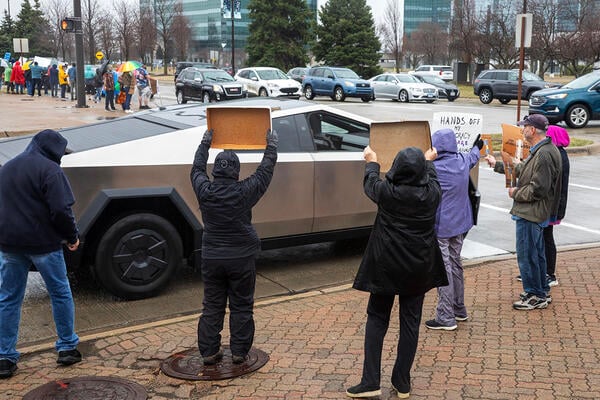
    On the other side of the country, a part-time lecturer at California State University, Fresno, has prompted outrage in conservative quarters over her social media posts, FOX26NEWS reported. Katherine Shurik, who teaches anthropology, allegedly posted an image of Trump in a casket with the caption “I have a dream for this to happen much sooner rather than later” and another of a gravestone with his name on it and a caption reading, “and take Musk and the rest of the Nazi (Republican) party members with you too!” Additionally, in a video of Shurik circulated by conservative influencers, she said students will “get extra credit for coming to the protest.” Some local news sites reported the extra credit was for protesting Tesla, owned by Musk.

    The university was quick to distance itself from Shurik’s posts this week.

    “While Fresno State firmly believes in the principles of free speech, we strongly condemn the abhorrent social media posts and comments made by one of our part-time instructors,” Fresno State officials wrote in a Tuesday statement. “As these views were published by the employee as a private citizen, they do not represent our university in any way. Fresno State firmly denounces wishes of death against any elected official, particularly the President of the United States—these go against our core educational values and are not consistent with our Principles of Community. As Americans and educators, we pride ourselves on democratic dialogue, not words of derision and contempt about the most important political figure of our country.”

    Shurik did not respond to a request for comment from Inside Higher Ed.

    Multiple social media users called for Fresno State to fire Shurik ,and local officials have also weighed in, including Gary Bredefeld, a member of the Fresno County Board of Supervisors.

    “This is a professor at Fresno State posting about her longing for the deaths of President Trump, Elon Musk and Republicans. These are the unhinged radicals teaching our young kids at schools and universities across the country,” he wrote in a Sunday post on Facebook. “People like this are hate-filled, radical lunatics and have no business teaching anywhere. I would expect the President of Fresno State to address this immediately and denounce these postings.”

    Even Musk himself noticed the uproar.

    “Calling for the death of the President is a serious crime,” he wrote in a reply to a post about Shurik.

    Source link

  • Improving Transfer Based on Success Stories

    Improving Transfer Based on Success Stories

    A new transfer playbook, released by the Aspen Institute and the Community College Research Center, offers strategies for improving outcomes for transfer students by examining higher ed institutions with the best records.

    The playbook notes that, for a decade, fewer than a fifth of community college students have successfully transferred and earned bachelor’s degrees, though many aspire to reach that goal. But the playbook stresses that better outcomes are possible. At colleges with the best overall transfer outcomes—those in the top 10 percent for all institutions—at least 52 percent of students transfer and at least 61 percent of transfer students earn bachelor’s degrees, far exceeding national averages. If all community colleges achieved these kinds of results, they could double the bachelor’s degree attainment rates for community college students from 16 percent to 32 percent, the playbook concludes.

    Based on interviews with college leaders, students and staff members at campuses with successful transfer pathways and partnerships, the playbook’s authors offer three core strategies for improving transfer, with examples of relevant practices and case studies.

    First, they recommend that executive leadership spearhead partnerships between community colleges and universities so improvements to transfer can be made at scale. They also suggest working toward more timely bachelor’s degree completion rates within majors by better aligning curriculum and instruction with transfer pathways. Lastly, they recommend tailoring advising and other supports for transfer students in ways that “foster trust and engagement.” For example, the playbook encourages community colleges to ensure transfer advising is offered to all students and occurs before, during and after the transfer process, with outreach to prospective students about transfer options as early as high school.

    “There is immense potential in the dreams and ambitions of bachelor’s-intending community college students—and the many who may have counted themselves out but have the ability to complete a bachelor’s and expand their career horizons,” the foreword to the playbook reads.  

    Source link

  • Scholars’ Stories of Losing Federal Funding

    Scholars’ Stories of Losing Federal Funding

    Sixteen researchers across a range disciplines from the biomedical sciences and STEM to education and political science share their experiences of losing research grants and what impact the loss of billions of dollars in federal funding will have on science, public health and education in Inside Higher Ed today.

    The Trump administration told researchers Rebecca Fielding-Miller, Nicholas Metheny, Abigail Hatcher and Sarah Peitzmeier that trainings connected to their National Institutes of Health grant focused on the prevention of intimate partner violence against pregnant and perinatal women were “antithetical to the scientific inquiry, do nothing to expand our knowledge of living systems, provide low returns on investment, and ultimately do not enhance health, lengthen life, or reduce illness.”

    “We could not disagree more,” Fielding-Miller, Metheny, Hatcher and Peitzmeier write. “Anyone who has cared for a child or for the person who gave birth to them knows that preventing maternal and infant death and abuse should be a nonpartisan issue. The current administration is intent on making even this issue into ‘us’ versus ‘them.’ When it comes to public health, there is no such thing.”

    Meanwhile, Judith Scott-Clayton writes that the decision to cancel a Department of Education grant funding a first-of-its-kind randomized evaluation of the Federal Work-Study program—four and a half years into a six-year project—will leave policymakers “flying blind.”

    “Since 1964, the FWS program has disbursed more than $95 billion in awards,” Scott-Clayton wrote. “In comparison, our grant was less than three-thousandths of 1 percent of that amount, and the amount remaining to finish our work and share our findings with the public was just a fraction of that.”

    Read all of the scholars’ stories here.

    Source link

  • 400 Books Removed From Naval Academy Library

    400 Books Removed From Naval Academy Library

    The U.S. Naval Academy has culled 400 books deemed to promote to diversity, equity and/or inclusion from its library at the insistence of the Trump administration, according to the Associated Press.

    Last week, the Naval Academy, located in Annapolis, Md., identified 900 potential books to review in response to orders from Defense Secretary Pete Hegseth’s office to remove books containing DEI-related content, The New York Times reported. That list included The Autobiography of Martin Luther King Jr., Einstein on Race and Racism, and a biography of Jackie Robinson. A list of the books that were ultimately removed has not been released.

    The nation’s five military academies were also told in February to eliminate admissions “quotas” related to sex, ethnicity or race after President Trump signed an executive order to remove “any preference based on race or sex” from the military. Both the Naval and Air Force Academies have also completed curriculum reviews to remove materials that allegedly promote DEI, and a West Point official also told the AP that it was prepared to review both curriculum and library materials if directed to do so by the Army.

    Source link

  • FSA Executive Retires and Acting Under Secretary Takes Over

    FSA Executive Retires and Acting Under Secretary Takes Over

    The responsibilities of acting under secretary James Bergeron doubled as the Department of Education announced Wednesday that he will not only oversee the regulatory duties related to higher ed but manage the entire Office of Federal Student Aid.

    Even in the wake of major layoffs, FSA remains the largest office in the department. It oversees the Free Application for Federal Student Aid, the allocation of Pell Grants and—at least for now—management of the $1.7 trillion student loan portfolio.

    FSA had been led for much of the last year by Denise Carter, who is now retiring after more than 30 years working in the federal government. Carter also served as acting education secretary earlier this year. The department didn’t say in the news release why Carter was retiring now; the agency has offered early retirement offers and buyouts as part of an effort to reduce the workforce.

    Carter said in the release she was grateful for the opportunity to serve her country.

    “As I move on, I hope we as a nation commit to ensuring every student has the support needed to achieve extraordinary educational outcomes,” Carter added. “The economic strength of our nation depends on their success.”

    Source link

  • Staff and Funding Cuts at the NEH Loom

    Staff and Funding Cuts at the NEH Loom

    The Department of Government Efficiency has struck higher ed institutions once again—this time through the National Endowment for the Humanities.

    Leaders of the agency—which supports research, innovation and preservation in disciplines related to culture, society and values—told staff members Tuesday that the Trump administration intends to make substantial reductions in staff, slash the agency’s grant programs and rescind grants that have already been awarded.

    Humanities advocates don’t know exactly how large the cuts to NEH’s approximately 180-person staff or $78.25 million grant budget will be, but they note that “patterns at other agencies” provide a solid hint. The impact on colleges and universities, they say, would be crushing.

    “The NEH supports the full range of humanities work that takes place at higher ed institutions, including support for research and teaching, academic publishing and professional development programs for faculty,” said Stephen Kidd, executive director of the National Humanities Alliance. “Cuts would be particularly devastating, because unlike a lot of private funders, the NEH is more prestige-blind. With its mandate to support the humanities across the country, it’s more likely to give grants to people at smaller and public institutions.”

    President Trump has been talking about cutting humanities funding since his first term. Even before whispers about the latest cuts began, humanities scholars expressed concern that new grant-eligibility rules imposed to comply with Trump’s executive order on diversity, equity and inclusion would “undercut NEH’s very mission.”

    The president and his cabinet secretaries have already fired or offered buyouts to tens of thousands of government employees in an attempt to hollow out the federal workforce. Two of the most notable cuts impacted the Department of Education—which supports higher ed through federal student aid programs, data collection and accountability measures—and the Department of Health and Human Services, one of the world’s largest research funding sources for colleges and universities.

    Now Trump is turning his focus from educational infrastructure and sciences to history, literature and philosophy. Paula Krebs, executive director of the Modern Language Association, believes the move is “sending a message.”

    The cut “adds up to a huge net loss for all of higher education” and suggests “it is not worth investing in the study of our culture and the culture of others,” Krebs said. “In the larger context of DOGE cuts, the nation is saying that it’s not worth investing in the study of anything at all.”

    The announcement of looming cuts at NEH comes just three weeks after the agency’s Biden-appointed chair, Shelly Lowe, resigned. A citizen of the Navajo Nation, Lowe was the agency’s first Native American chair. Before that, she served as executive director of the Harvard University Native American Program.

    The agency is now being led by interim director Michael McDonald, who previously served as its general counsel.

    Since Lowe stepped down, DOGE staff members have made several appearances at the office. On Tuesday, they said 70 to 80 percent of the staff would be let go, three staff members told The New York Times. Sources also told the Times that all grants approved by the Biden administration but not yet paid out in full will be canceled.

    Neither NEH nor the White House responded to Inside Higher Ed’s request for comment.

    Founded in 1965, the NEH has allocated more than $6 billion in grants to museums, historical sites, libraries, state humanities councils and higher education institutions to support a variety of programs.

    Kidd, from the Humanities Alliance, said one of the most substantial losses universities could face is funding for curriculum development. In an era when public doubt regarding the value of a college degree is on the rise and skills-based hiring is gaining traction, humanities departments across the country are looking for new ways to mix the classical liberal arts with modern pre-professional training. NEH grants, he said, have been a key source of support for such experimentation.

    “These kinds of curricular innovations can help to ensure that students in the humanities have strong pathways to future careers,” Kidd said. It’s “NEH’s support for curricular innovations that might bring the humanities in conversation with business or with biological and health sciences.”

    He and other humanities association leaders have also expressed concern about cuts to grants intended to help libraries and museums preserve historical documents, art and other materials that are key to humanities research. The cuts to NEH, they say, will only compound the damage that has already been done by Trump’s executive order to disband the Institute of Museum and Library Services.

    “Without funding for preservation, materials will disappear, degrade or not be collected in the first place,” Kidd said. “And once those are lost—they’re lost. The record of human activity is gone.”

    Though its mandate is much broader than the humanities, the Association of Public and Land-grant Universities also registered concern about the NEH cuts.

    “NEH-funded research documents American history and culture [and] explores the legal and ethical use of emerging technologies such as AI,” said Craig Lindwarm, the association’s senior vice president of governmental affairs. “While undoubtedly reforms to NEH can be made and efficiencies found, cuts to NEH research would undermine progress in these critical areas and beyond.”

    To Peter Berkey, executive director of the Association of University Presses, the looming endowment cuts are the epicenter of “a disastrous ripple through the entire scholarly ecosystem.”

    “Perhaps most importantly,” he said, “these actions will diminish the very disciplines that drive the development of critical thinking, the understanding of value and the pursuit of justice and democracy among the next generation of scholars and citizens.”

    Source link