Author: admin

  • generative-ai-in-online-education – The Cengage Blog

    generative-ai-in-online-education – The Cengage Blog

    Reading Time: 3 minutes

    The rapid advancements in generative artificial intelligence (GenAI) are reshaping education, offering innovative tools for content creation, adaptive learning, and instructional strategies. GenAI models, such as ChatGPT, assist educators by generating structured lesson plans, assessments, and multimedia content, reducing workload and enhancing efficiency. These tools also support adaptive learning by personalizing content to match students’ strengths and learning gaps, increasing engagement and knowledge retention.

    However, the integration of GenAI presents ethical and legal concerns, including potential biases in AI-generated content, violation of the copyrights held by content creators and data privacy risks. Responsible use, complemented by human oversight, is essential to maintaining educational integrity. Successful applications of GenAI demonstrate its potential to expedite course development and create engaging digital learning experiences. Striking a balance between innovation and ethical considerations ensures AI enhances, rather than replaces, human-led teaching.

    Content creation and lesson planning

    GenAI streamlines lesson planning by allowing educators to input objectives and receive lesson plans tailored to learning goals. In fact, recent Cengage research cites lesson planning as a use-case for how teaching and learning can be supported by AI. While this functionality can save instructors valuable time and ensure their subject needs are met, it’s important to ensure that the use of copyrighted material falls within your license or other legal parameters.

    Additionally, AI-generated assessments support MOOCs, or Massive Open Online Courses, by facilitating adaptive and interactive course components, bridging the gap between large-scale online instruction and personalized learning. GenAI ensures lessons cater to diverse learning styles, enhancing accessibility and retention by integrating various formats, text, video and interactive activities.

    Adaptive learning and personalization

    AI can help assess and target students’ individual learning needs, enhancing student motivation and academic outcomes. Real-time feedback mechanisms allow learners to self-assess progress and focus on areas needing improvement, particularly beneficial in large-scale online courses. Additionally, GenAI can help personalize study materials, such as quizzes and practice tests, ensuring students learn at their own pace while maintaining engagement. When following copyright laws, these advancements help bridge gaps in traditional online learning, where standardized content may not meet diverse student needs.

    The future of AI in online education

    The use of AI in asynchronous learning is revolutionizing how educators develop content. With AI-driven tools, instructors can create high-quality, interactive, and accessible video lectures without the steep learning curve of traditional production methods. As technology continues to advance, AI will play an increasingly pivotal role in shaping the future of online education.

    For educators looking to simplify their lecture creation process, adopting AI tools is a game-changer. Instructors can focus more on teaching and less on technical production, ultimately providing students with a more engaging and effective learning experience.

    Ethical considerations and challenges

    While GenAI enhances education, ethical matters must be addressed. AI systems often rely on extensive data collection, raising privacy concerns that necessitate stringent safeguards. Moreover, biases in training data can result in skewed educational content, underscoring the need for careful dataset curation.

    Another challenge is the risk of over-reliance on AI-generated materials. While AI can assist in lesson planning and content development, human oversight remains critical to ensure contextual understanding and engagement. AI-based assessment tools, though efficient, may fail to interpret nuanced student responses accurately, necessitating human intervention to maintain fairness in evaluations.

    Conclusion

    Collaboration between educators, policymakers, and AI developers is crucial in establishing best practices that optimize AI’s benefits while mitigating risks. A balanced approach — leveraging AI’s efficiency while preserving human oversight — can foster an equitable, innovative, and effective learning environment.

    Follow Matt Larcin, subscribe to the Age of AI in Higher Education newsletter and visit www.mattlarcin.com.

    Written by Matt Larcin, Senior Instructional Designer, University of California, Los Angeles 

    Source link

  • Do More with Less: 7 Strategic Advantages of Shared Services in Higher Education

    Do More with Less: 7 Strategic Advantages of Shared Services in Higher Education

    College administrators wear many hats to ensure their institutions thrive. Stakeholders expect them to be visionaries, budget stewards, tech experts, and student champions. However, wearing too many hats can hinder the ability to meet more strategic and forward-thinking institutional demands, effectively diluting leadership capacity and outcomes. 

    How can administrators remove some of those hats without losing control or spending more? 

    How can they guide their institutions to achieve better outcomes with fewer resources?  

    At the 2024 Collegis Education Summit, keynote speaker Dr. John Smith-Coppes, president of Joyce University, shared his advice for achieving higher ed excellence amid market paradigms, shifting learner expectations, and capacity constraints.

    “Embrace your institutional superpower and then partner for expertise. You have to know what you are really good at, but also where you might need help. Having the bravery to objectively look at the brutal facts can take you from good to great. Keep this in mind: Your institution is perfectly designed to get the outcomes it’s getting.”

    -Dr. John Smith-Coppes, President of Joyce University

    Dr. Smith-Coppes is right. If you’re not getting the results you want, you have to shine a light on the operation and consider what adjustments or changes will better position your institution for desired outcomes.

    To echo Dr. Smith-Coppes and answer the earlier questions, working with a strategic partner who has deep expertise in higher education shared services and can manage certain responsibilities more efficiently can get your institution closer to turning aspiration into reality. A true partnership is not about simply outsourcing tasks. Rather, it’s a strategic way to gain access to specialized knowledge, proven methodologies, and scalable resources, all while enabling administrators to focus on their core areas of expertise.

    Mounting challenges facing higher ed leaders

    When I talk to administrators, the conversation inevitably turns to the challenge of doing more with less. They consistently grapple with four key issues:

    • Budget Cuts: Funding is uncertain or shrinking, forcing them to rethink the allocation of resources.
    • Advancing Technology: Technology is rapidly evolving, leaving administrators to scramble after the next advancement or emerging capability.
    • Socioeconomic Pressures: With some questioning the value of postsecondary education, relevant programs with affordable tuition have never been more critical.
    • Employee Turnover: Retaining top talent is difficult, leaving critical gaps.

    But none of these issues surprise us. On the contrary, Collegis Education has partnered with numerous public and private institutions of varying sizes and levels of brand recognition to address these challenges, uncovering advantageous pathways toward more sustainable and fruitful operations.

    The results speak for themselves. Administrators gain more time to leverage their core strengths to elevate their institution’s mission and educational outcomes while actualizing a variety of clear benefits. Here is what Collegis Education continues to deliver for our shared-service partners.

    Seven ways shared services in higher education deliver results

    Institutions that leverage shared services experience benefits in a variety of key areas. Explore some of the most significant advantages:

    1. Improved financial stability

    Predictability and optimization are the key words here. With our solutions for technology management, enrollment management, and student services, institutions know exactly what to budget every year. At the same time, we find cost savings by getting a better return on technology investments, strategically decommissioning redundancies, and renegotiating contracts.

    2. Enhanced operational efficiency

    Is there a better way to reach an institution’s goals more efficiently? More often than not, the answer is yes. We help bring these opportunities to the surface by fully assessing the school’s infrastructure, technology, processes, and other operating procedures. This assessment denotes areas of excellence and points of failure as well as identifies where lag or waste exists. With these insights, we can identify and prioritize emerging opportunities to drive improvement. All this informs a multiyear roadmap that guides higher ed leaders on how to thoughtfully implement changes that engage key stakeholders to accelerate the change management cycle.

    3. Objective perspective & best practices

    We bring a unique perspective to our recommendations based on our work with other schools while protecting each school’s anonymity and uniqueness. This helps give you a baseline of how your school performs when compared to similar ones. Are you leading or lagging? As an unbiased third party, we offer fresh ideas backed by the knowledge of the results they have produced. It’s a great way to eliminate the “but this is how we’ve always done it” objection and gain buy-in from internal staff.

    4. Risk mitigation & accountability

    There’s rarely a higher ed situation we haven’t already dealt with at another institution. Our partners benefit from this experience, allowing them to proactively avoid operational and technical risks. They also benefit tremendously from having a partner who holds themselves accountable to quantifiable outcomes measured by agreed-upon service level agreements (SLAs). Together, these provide a lot of peace of mind when it comes to issues like cybersecurity, compliance, disaster recovery, and business continuity.

    5. Specialized expertise without the overhead

    Hiring and retaining experienced staff is challenging enough. Finding people with skill sets to leverage evolving technology capabilities like artificial intelligence (AI) is a whole other story. That’s why our partners rely on Collegis to provide the expertise that’s hard to find. We’re software-agnostic and implement solutions that are in the school’s best interest from a financial, operational, and strategic perspective without the need for full-time employees to manage them.

    6. Data-enabled decision making with full transparency

    Data at most institutions is stored in siloes, with limited stewardship and governance over its quality and consistency. However, many of the “data” solutions in the market today are complicated and difficult to implement and support.

    This is why we built Connected Core, a scalable higher education industry cloud solution that integrates siloed data sets, systems, and applications to enable institutional intelligence. This proven approach and methodology for collecting, connecting, and activating institutional data eliminates data doubt and gives leaders the confidence to make quickly make strategic decisions with confidence.

    7. Focus on core mission & educational outcomes

    By outsourcing some functions, administrators can redirect resources and energy to what truly matters: student success. By reducing the number of hats they wear, leaders can instead focus on using the tools they have on hand to manage strategic initiatives that drive institutional growth.

    Strategic delegation to yield better outcomes

    Some leaders fear losing control through outsourcing, and rightfully so. Too many vendors tout “partnership” when, in fact, they are trying to build an unhealthy dependency that is not mutually beneficial.

    That’s just not us. It fundamentally goes against our values and who we are as a company.

    Our partnerships are built on collaboration and shared governance. Institutions set priorities, and all actions follow clear assessments, implementation plans, and progress reviews. Our partners gain greater control over technology, enrollment, and budgets. Control isn’t lost, but visibility and accountability are gained.

    Shared-services models allow administrators to confidently offload specific responsibilities. Leveraging external expertise amplifies your internal strengths and empowers your leaders to focus on building and maintaining a thriving campus community.

    But the first step is starting the conversation with the right partner.

    Innovation Starts Here

    Higher ed is evolving — don’t get left behind. Explore how Collegis can help your institution thrive.

    Source link

  • Your Work Counts More Than Ever: Lessons From a Lifetime in HR

    Your Work Counts More Than Ever: Lessons From a Lifetime in HR

    by Christy Williams | April 2, 2025

    With the constant flow of breaking news impacting higher ed recently, maintaining focus on your mission-driven work and its importance is increasingly difficult. That’s why taking a breather every once in a while — and reminding yourself (and your team!) that your work matters more than ever — is essential.

    As Cheryl Guerin, associate vice president of human resources at Dartmouth College, reminds us in Our Work Matters: Gems From a Lifetime in Higher Ed HR, “The work we do matters, and people matter more.” She emphasizes the relationship aspect of HR, insisting that the sometimes-intangible work matters most.

    In stressing the power of relationships, Guerin also asserts that our willingness to learn from those relationships is vital. Here are some of the lessons she has learned over her 30-year career in higher ed HR.

    Connection Is Key

    Higher ed HR professionals often handle sensitive and complex issues, but that doesn’t mean the workplace has to be devoid of camaraderie. In fact, fostering a positive and connected work environment can strengthen our teams, build trust and even improve problem-solving.

    • Keep It Simple — Offer time for connection — and food if you can. These two seemingly small things can make a huge impact. A workplace survey found that “three types of social opportunities were almost universally ranked highest on the list, no matter how we cut the data: free communal lunches, meetings that devote time to personal chitchat and happy hours.”
    • Recognize Employees — Recognition doesn’t have to be expensive or difficult. Your enterprise software might offer ways of sending customized thank-you notes, for example. If the budget allows, consider purchasing thank-you cards with your institution’s branding — a tangible way for colleagues and supervisors to show appreciation that also provides a lasting reminder of someone’s impact.

    The Power of Self-Reflection

    Not every workplace relationship is easy, and for higher ed HR professionals, navigating challenging dynamics can be emotionally draining. When tensions arise, you might feel frustrated or stuck. That’s why self-reflection is key to maintaining professionalism, resilience and personal well-being.

    Rather than reacting emotionally or feeling powerless, taking a step back — what Guerin calls “getting up in the balcony” — allows for a shift in perspective. This approach encourages curiosity over frustration, helping you assess situations more objectively and question assumptions rather than jumping to conclusions.

    • Develop a Reflective Practice — When workplace tensions arise, take a moment to assess your reactions. Ask yourself, “What else might be true?” to challenge assumptions and consider different perspectives.
    • Embrace Acceptance Without Complacency — Not every difficult relationship can or needs to be changed. Sometimes, the best approach is to acknowledge the situation as it is while focusing on what is within your control — your response and your mindset.

    Your Teammates Are Your Safety Net

    The most enduring and meaningful work relationships go beyond just collaboration — they become a foundation of trust, support and shared experiences. Whether you’re covering lunch breaks for one another, offering help in times of need, or simply being a consistent presence through years of change, connections with colleagues reinforce that, while the work is important, the people behind it matter even more.

    • Invest in Your Work Relationships — Make time to build connections with colleagues beyond daily tasks. Small acts of support and camaraderie can create a lasting foundation of trust.
    • Recognize the Human Side of HR — HR professionals spend so much time supporting others, but you also need a strong network. Cultivating relationships within your team and with your CUPA-HR colleagues ensures that when challenges arise, you have a reliable safety net.

    In higher ed HR, the work you do is critical, but the relationships you build along the way are just as important. By fostering connection, practicing self-reflection and supporting your teammates, you create a stronger, more resilient workplace. Investing in these relationships not only makes the challenges more manageable but also makes our shared journey more meaningful.

    Related CUPA-HR Resources

    Our Work Matters: Gems From a Lifetime in Higher Ed HR (CUPA-HR’s Higher Ed HR Magazine)

    Leading With Kindness: Characteristics of Caring Work Cultures (CUPA-HR’s Higher Ed HR Magazine)

    Organizational Culture & Climate Toolkit

    Recalibrating Employee Recognition in Higher Education (CUPA-HR’s Higher Ed HR Magazine)


    Source link

  • When tuition fee payments are suspended, what happens to students left behind?

    When tuition fee payments are suspended, what happens to students left behind?

    Whilst there may be good reasons for suspending tuition fee payments to “safeguard public funding and ensure students’ interests are protected”, decisions taken to safeguard the public purse often risk overlooking the individual students who are left behind.

    In April 2024 the Office for Students (OfS) opened an investigation in relation to Applied Business Academy (ABA) to consider whether it had complied with requirements to provide accurate information about its students, and whether it had effective management and governance arrangements in place.

    In September 2024, the Department for Education (DfE) instructed the Student Loans Company to suspend all tuition fee payments to ABA, until OfS had completed its investigation. On 27 September, ABA asked the OfS to remove it from the Register because it was no longer able to provide higher education. A decision to permanently close ABA was made on 22 October 2024 and liquidators were appointed.

    On 2 April 2025 OfS published a summary of its investigation. We understand around 300 current and prospective students were on courses partnered with universities who supported students through the closure and offered who were offered individual guidance sessions setting out options which included transfer to complete study as per the student protection plans.

    The other group of students

    However, there were also students who were studying for a Level 5 Diploma in Education and Training (DET) awarded by City and Guilds and some awarded by Organisation for Hospitality and Tourism Management (OTHM) – both at the time eligible for student loan finance. According to the OfS investigation this number looks to be just over 2,000.

    The route to raise complaints and seek redress for these students is different to the route for students on courses partnered with universities. As set out in the section of our Good Practice Framework that covers partnership arrangements, awarding universities and delivery partners will both be members of the OIA, so that students can benefit from a route to independent review of both party’s responsibilities. Where only one partner is a member of the OIA, our remit to review issues of concern to students is more limited.

    As the shape of the HE sector has changed, our legislation has been amended several times to bring as many delivery bodies and awarding institutions accessing public money as possible within our membership, to ensure that all students have access to an independent review of their complaints. But not all Awarding Organisations are currently OIA members, even where these courses are eligible for student finance.

    Access and risk

    There are clearly benefits to students of having access to student finance to access non- universities-awarded courses such as HND, HNC and level 4 or 5 courses with a Higher Technical Qualification approval. But we are concerned that the current arrangements may be inequitable, given that some students cannot seek an independent review of some awarding organisations’ acts or omissions.

    We have sought to close this gap by agreeing with Ofqual that awarding organisations being in membership of the OIA Scheme is compatible with Ofqual regulation and opening our Non-Qualifying membership up for awarding organisations.

    The impact on students of the different arrangements materialises further in cases of provider closure. In previous provider closure cases either the university has proactively put in place appropriate options or if they wanted to raise a complaint, the OIA could look at what the university’s role is in resolving this.

    As things stand, students at a delivery partner that ceases to operate at short notice, on courses awarded by an organisation that is not an OIA member, may find themselves with no clear independent route for complaints and redress. In our experience, students studying at HE level via a non-university awarded route and accessing higher education student finance, have no real understanding of this difference from those on a university awarded course.

    In the case of ABA, we have received a small number of complaints from students on the DET course, who are not able to access any financial remedy since ABA has gone into liquidation and the only option is for the students to become an unsecured creditor against ABA.

    We understand that where City and Guilds has received the work of students, there was not sufficient evidence for them to confirm the qualification requirements had been met for any student. This has been particularly difficult news for some students, many of whom believed that they had passed the course and were simply awaiting receipt of their certificate. They are unable to access further funding to re-take the year, compensation or travel costs to complete their studies.

    In the current financial climate and where franchise provision is coming under more scrutiny, it’s hard to imagine there will not be more students in this situation at a provider impacted by a closure. Alongside this the Lifelong Learning Entitlement (LLE) will potentially open more level 4 and 5 “non university” awarded courses where students may be unable to seek independent redress.

    Whilst we completely agree that protecting public funds is important, we mustn’t forget that there is a real and significant human cost for the genuine students, sometimes with few sources of personal support to help them navigate their limited options, left behind.

    Source link

  • Education providers pivot to TNE in price-sensitive Pakistan

    Education providers pivot to TNE in price-sensitive Pakistan

    Speaking at The PIE Live Europe 2025, Stuart Smith, CEO of pathway provider NCUK, said Pakistan’s position as a growing yet price-sensitive market opens exciting opportunities for students to earn their qualifications before transitioning to a high-quality university in the UK or elsewhere. 

    “Financially, one of the biggest barriers for Pakistani students has been the cost of studying abroad. The pathway model helps address this by offering significant cost savings, allowing students to progress to high-quality universities,” Smith told delegates at the London conference.

    “One of the big advantages of our model is that students can come in on an NCUK qualification, spend one or two years at home making really important cost savings, and academically prepare for studying abroad, all in a comfortable environment.”

    According to Smith, the rise in interest in international qualifications among Pakistani students also means easier visa approvals for them. 

    Visa refusals and delays have forced many Pakistani students to miss their January intake at UK universities, with some even withdrawing their applications, as reported by The PIE News last year. 

    “For students studying in-country pathway programs, we’ve seen fewer visa refusals because they are better prepared for the visa process and qualify better for visa interviews,” Smith added. 

    Last year, Pakistan’s Higher Education Commission revised its TNE policy to provide greater clarity on requirements, operational models, and introduce guidelines for establishing offshore campuses of Pakistani higher education institutions. 

    The update also emphasised quality assurance and regulatory assessments. 

    “Instead of targeting a small number of students at a high price point, a more sustainable approach is to offer programs at a lower price to a larger student base,” stated Smith. 

    “That being said, there is a market for institutions at all price points. The key is to find the right strategy that balances accessibility with quality.”

    The HEC has previously cautioned students and parents in Pakistan about some of the violations made by Pakistani institutions in their TNE programmes. 

    Moreover, the HEC warned recognised domestic HEIs offering foreign qualifications in Pakistan to comply with the government’s TNE policy, stating that any violations would result in non-recognition of the student’s degree.

    According to Vanessa Potter, director of communications and external relations at the University of Essex, while enrolling large numbers of Pakistani students in TNE programmes remains challenging, the university has shifted its focus. It now puts more into collaborating with its Pakistani alumni, supporting research at local universities, and assisting academic staff in the country.

    “One area we’ve significantly expanded is PhD support for academic staff. We offer our partners substantial discounts on PhD programs, as we believe in supporting both the academy and our institutional collaborators,” stated Potter. 

    “Many universities we work with have one or two staff members engaged in these programs, either full-time or part-time under co-supervision arrangements with Pakistani universities.”

    Just last year, the University of Essex partnered with Beaconhouse International College to offer a variety of business, law, and technology courses to students in major Pakistani cities, including Islamabad, Faisalabad, and Lahore.

    Over the years, Pakistan’s investment in research and development has remained notably low, with expenditure dropping from 0.17% of GDP in 2019 to 0.16% in 2021. 

    This limited funding presents challenges for Pakistani universities in securing high global research rankings, keeping the country’s R & D investment well below international standards.

    Such challenges provide an opportunity for research collaboration for institutions like the University of Essex. 

    “There are pockets of excellent research in Pakistan, though they don’t always reflect in global rankings,” stated Potter. 

    “There is funding available – academic exchanges have already been supported, and the British Council in Pakistan has provided funding for specific initiatives. We are also working with them on scholarships in collaboration, while also receiving support from the British High Commission in Pakistan.”

    According to Potter, the university is also working with the HEC to support laboratory staff in universities.

    “It’s a specialised project, and while we are still looking to pay for it, we are committed to enhancing the development of lab staff in science departments in Pakistani universities.” 

    In recent years, Pakistan has emerged as a major TNE market, especially for the UK. 

    According to the revised TNE policy, HEIs with a strong reputation and ranked within the top 700 in the QS or THE world university rankings, or those classified as Fachhochschule, will be eligible to offer their degree programs in Pakistan.

    Some institutions make the mistake of treating local Pakistani-origin agents differently from international aggregators. This is a clear discrimination
    Atif Khan, University of Hertfordshire

    With the launch of its new initiative, ‘Udaan Pakistan,’ aimed at revitalising the country’s economy, Atif Khan, country director at the University of Hertfordshire, believes that Pakistan has a strategic vision for economic growth over the next five to 10 years. 

    This, in turn, could drive a rising demand for international qualifications among students, he said. 

    “Any universities keen to come to Pakistan – this is the time. Demand will not finish, it will grow,” stated Khan. 

    “Currently, Pakistan has 55 recognised TNE programs, with over 15,000 students engaged. Of these, around 12,000 are involved in UK-affiliated programs, meaning nearly 80% of TNE students in Pakistan are already planning to transition to the UK for their postgraduate studies.”

    On the recruitment front, Khan anticipates a rise in study visas from Pakistan to major international study destinations, noting that the UK issued 35,000 student visas by 2024, an increase of 13% from the previous year.

    But he highlighted how some of the practices adopted by UK universities in the country are discriminatory in nature and need to be fixed.

    “When it comes to selecting recruitment agents, universities need a sustained strategy. They must work with the right agents, ensuring strong compliance and regular training sessions. The market is evolving rapidly,” stated Khan. 

    “Some institutions make the mistake of treating local Pakistani-origin agents differently from international aggregators. This is a clear discrimination. If universities continue down this path, they risk attracting lower-quality students.”

    Furthermore, Potter emphasised that while Pakistan’s economic challenges may prevent an exponential rise in student numbers, universities that offer strong career support and employability prospects could continue to attract Pakistani students.

    “I think being able to articulate clearly how you can support students with jobs, and how having a degree from a particular type of university subject might help that career long term, does help students understand the welcoming environment,” she said.

    Source link

  • Will GenAI narrow or widen the digital divide in higher education?

    Will GenAI narrow or widen the digital divide in higher education?

    by Lei Fang and Xue Zhou

    This blog is based on our recent publication: Zhou, X, Fang, L, & Rajaram, K (2025) ‘Exploring the digital divide among students of diverse demographic backgrounds: a survey of UK undergraduates’ Journal of Applied Learning and Teaching, 8(1).

    Introduction – the widening digital divide

    Our recent study (Zhou et al, 2025) surveyed 595 undergraduate students across the UK to examine the evolving digital divide across all forms of digital technologies. Although higher education is expected to narrow this divide and build students’ digital confidence, our findings revealed the opposite. We found that the gap in digital confidence and skills between widening participation (WP) and non-WP students widened progressively throughout the undergraduate journey. While students reported peak confidence in Year 2, this was followed by a notable decline in Year 3, when the digital divide became most pronounced. This drop coincides with a critical period when students begin applying their digital skills in real-world contexts, such as job applications and final-year projects.

    Based on our study (Zhou et al, 2025), while universities offer a wide range of support such as laptop loans, free access to remote systems, extracurricular digital skills training, and targeted funding to WP students, WP students often do not make use of these resources. The core issue lies not in the absence of support, but in its uptake. WP students are often excluded from the peer networks and digital communities where emerging technologies are introduced, shared, and discussed. From a Connectivist perspective (Siemens, 2005), this lack of connection to digital, social, and institutional networks limits their awareness, confidence, and ability to engage meaningfully with available digital tools.

    Building on these findings, this blog asks a timely question: as Generative Artificial Intelligence (GenAI) becomes embedded in higher education, will it help bridge this divide or deepen it further?

    GenAI may widen the digital divide — without proper strategies

    While the digital divide in higher education is already well-documented in relation to general technologies, the emergence of GenAI introduces new risks that may further widen this gap (Cachat-Rosset & Klarsfeld, 2023). This matters because students who are GenAI-literate often experience better academic performance (Sun & Zhou, 2024), making the divide not just about access but also about academic outcomes.

    Unlike traditional digital tools, GenAI often demands more advanced infrastructure — including powerful devices, high-speed internet, and in many cases, paid subscriptions to unlock full functionality. WP students, who already face barriers to accessing basic digital infrastructure, are likely to be disproportionately excluded. This divide is not only student-level but also institutional. A few well-funded universities are able to subscribe to GenAI platforms such as ChatGPT, invest in specialised GenAI tools, and secure campus-wide licenses. In contrast, many institutions, particularly those under financial pressure, cannot afford such investments. These disparities risk creating a new cross-sector digital divide, where students’ access to emerging technologies depends not only on their background, but also on the resources of the university they attend.

    In addition, the adoption of GenAI currently occurs primarily through informal channels via peers, online communities, or individual experimentation rather than structured teaching (Shailendra et al, 2024). WP students, who may lack access to these digital and social learning networks (Krstić et al, 2021), are therefore less likely to become aware of new GenAI tools, let alone develop the confidence and skills to use them effectively. Even when they do engage with GenAI, students may experience uncertainty, confusion, or fear about using it appropriately especially in the absence of clear guidance around academic integrity, ethical use, or institutional policy. This ambiguity can lead to increased anxiety and stress, contributing to wider concerns around mental health in GenAI learning environments.

    Another concern is the risk of impersonal learning environments (Berei & Pusztai, 2022). When GenAI are implemented without inclusive design, the experience can feel detached and isolating, particularly for WP students, who often already feel marginalised. While GenAI tools may streamline administrative and learning processes, they can also weaken the sense of connection and belonging that is essential for student engagement and success.

    GenAI can narrow the divide — with the right strategies

    Although WP students are often excluded from digital networks, which Connectivism highlights as essential for learning (Goldie, 2016), GenAI, if used thoughtfully, can help reconnect them by offering personalised support, reducing geographic barriers, and expanding access to educational resources.

    To achieve this, we propose five key strategies:

    • Invest in infrastructure and access: Universities must ensure that all students have the tools to participate in the AI-enabled classroom including access to devices, core software, and free versions of widely used GenAI platforms. While there is a growing variety of GenAI tools on the market, institutions facing financial pressures must prioritise tools that are both widely used and demonstrably effective. The goal is not to adopt everything, but to ensure that all students have equitable access to the essentials.
    • Rethink training with inclusion in mind: GenAI literacy training must go beyond traditional models. It should reflect Equality, Diversity and Inclusion principles recognising the different starting points students bring and offering flexible, practical formats. Micro-credentials on platforms like LinkedIn Learning or university-branded short courses can provide just-in-time, accessible learning opportunities. These resources are available anytime and from anywhere, enabling students who were previously excluded such as those in rural or under-resourced areas to access learning on their own terms.
    • Build digital communities and peer networks: Social connection is a key enabler of learning (Siemens, 2005). Institutions should foster GenAI learning communities where students can exchange ideas, offer peer support, and normalise experimentation. Mental readiness is just as important as technical skill and being part of a supportive network can reduce anxiety and stigma around GenAI use.
    • Design inclusive GenAI policies and ensure ongoing evaluation: Institutions must establish clear, inclusive policies around GenAI use that balance innovation with ethics (Schofield & Zhang, 2024). These policies should be communicated transparently and reviewed regularly, informed by diverse student feedback and ongoing evaluation of impact.
    • Adopt a human-centred approach to GenAI integration: Following UNESCO’s human-centred approach to AI in education (UNESCO, 2024; 2025), GenAI should be used to enhance, not replace the human elements of teaching and learning. While GenAI can support personalisation and reduce administrative burdens, the presence of academic and pastoral staff remains essential. By freeing staff from routine tasks, GenAI can enable them to focus more fully on this high-impact, relational work, such as mentoring, guidance, and personalised support that WP students often benefit from most.

    Conclusion

    Generative AI alone will not determine the future of equity in higher education, our actions will. Without intentional, inclusive strategies, GenAI risks amplifying existing digital inequalities, further disadvantaging WP students. However, by proactively addressing access barriers, delivering inclusive and flexible training, building supportive digital communities, embedding ethical policies, and preserving meaningful human interaction, GenAI can become a powerful tool for inclusion. The digital divide doesn’t close itself; institutions must embed equity into every stage of GenAI adoption. The time to act is not once systems are already in place, it is now.

    Dr Lei Fang is a Senior Lecturer in Digital Transformation at Queen Mary University of London. Her research interests include AI literacy, digital technology adoption, the application of AI in higher education, and risk management. [email protected]

    Professor Xue Zhou is a Professor in AI in Business Education at the University of Leicester. Her research interests fall in the areas of digital literacy, digital technology adoption, cross-cultural adjustment and online professionalism. [email protected]

    Author: SRHE News Blog

    An international learned society, concerned with supporting research and researchers into Higher Education

    Source link

  • The military footprint of the United States

    The military footprint of the United States

    The United States is keen to withdraw troops from Afghanistan and end its longest war ever, but the number of American soldiers in the South Asian country is dwarfed by many thousands stationed elsewhere across the globe.

    The 200,000 U.S. troops overseas are testimony to Washington’s persistent international commitment despite deep-seated isolationist impulses reflected in President Donald Trump’s “America First” campaign.

    The costly U.S. military footprint is a legacy of its status as Western leader that America inherited, at times reluctantly, after the two world wars in the last century.

    If Washington ever significantly reduced its network of military bases around the world, it would reflect a major turning point in history and possibly a destabilizing shift in the balance of power.

    The United States, Afghanistan and Taliban insurgents hit a roadblock recently as they tried to implement a face-saving pact leading to the partial withdrawal of American troops in the Asian nation after nearly two decades of hostilities.

    U.S. troops stationed around the world

    The anticipated pullout of about 3,400 of the remaining 12,000 U.S. troops was threatened by continuing violence, a squabble over a prisoner swap and the spread of COVID-19.

    But the American troops in Afghanistan are just the tip of an iceberg. Some 200,000 U.S. troops are stationed in overseas bases across Asia, the Middle East, Europe and Latin America.

    Current lists of U.S. troops overseas by the Defense Manpower Data Center include: 38,000 in Japan, 34,000 in Germany, 24,000 in South Korea, 12,000 in Afghanistan, 12,000 in Italy, 8,000 in Britain, 6,000 in Kuwait, 5,000 in Bahrain, 5,000 in Iraq and 3,000 in Spain.

    Smaller deployments are in Qatar, Turkey, Djibouti, Jordan, United Arab Emirates, Australia, Belgium, Cuba, Romania and El Salvador.

    The overseas deployments are a legacy of global military engagement dating back to the first years of the U.S. republic in the early 19th century.

    A fight against pirates

    U.S. founding fathers were no strangers to warfare. With significant French support, they defeated Britain to win control of the 13 original colonies, but they were soon challenged by pirates.

    “We can trace the roots of overseas conflict back to the skirmishes with the Barbary Pirates in the Jefferson years,” Michael O’Hanlon, a military historian at the Brookings Institution, said in an interview.

    In 1801, Thomas Jefferson, the third U.S. president, sent warships to free U.S. merchant seamen held hostage by North African Barbary Coast pirates.

    Between 1812 and 1814, U.S. troops and warships again sent British forces packing, although the White House was burned.

    “But those skirmishes were not really indicative of any major overseas ambition – just yet,” said O’Hanlon.

    The United States becomes a world leader.

    The next military challenge with standing armies was the U.S. Civil War in the 1860s. Then, a strongly isolationist American public was dragged into two world wars in the 20th century, first in 1917 when the German navy began targeting neutral ships, and then in 1941 when the Japanese bombed the American fleet in Pearl Harbor, Hawaii.

    After the world wars, U.S. isolationists sought to keep America out of foreign conflicts and shrink the size of its standing army. “That stopped,” said O’Hanlon, “with the descent of the Iron Curtain in Europe, the communist takeover in China, the Soviet testing of a nuclear bomb and of course the North Korean attack on South Korea, all in the late 1940s or 1950s.”

    Soon the United States joined the North Atlantic Treaty Organization (NATO) and signed military treaties with Japan, the Philippines, Germany and South Korea, leaving U.S. troops in some cases as a “trip wire” to warn off aggressors that an attack on U.S. or NATO bases would mean war.

    The latest expansion of U.S. military forces overseas is the Pentagon’s Africa Command. It is working with French troops to patrol the Sahara region, where Islamist militants have launched attacks in several former French colonies including Mali, Niger, Burkina Faso, Algeria and Tunisia.

    But a proposal to reduce the U.S. military’s involvement in Africa has stoked fears that militants could end up destabilizing or controlling large parts of the sub-Saharan Sahel.

    The spokesman for U.S. forces in Afghanistan, Col. Sonny Leggett, recently tweeted that despite the risks of the COVID-19 pandemic, the United States will pursue its plan to withdraw troops until 8,600 are left.

    Under the deal signed at the end of February, the U.S. is to cut its forces in Afghanistan to 8,600 service members within 135 days of the deal, and the international coalition backing the United States is to draw down by a commensurate amount, the Hill newspaper reported last month.


    Three questions to consider:

    1. Who were the Barbary pirates?

    2. Why did the United States enter World War One and World War Two?

    3. Why did the United States not revert to form and retreat into an isolationist shell after World War Two?


    Source link

  • Teacher with PTSD entitled to accommodation under ADA, 2nd Circuit says

    Teacher with PTSD entitled to accommodation under ADA, 2nd Circuit says

    This audio is auto-generated. Please let us know if you have feedback.

    Dive Brief:

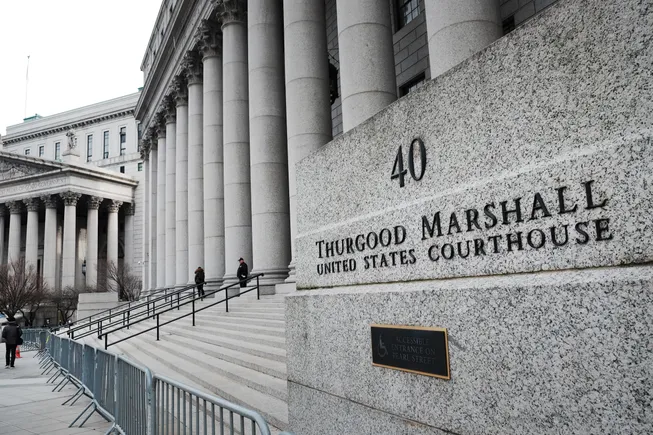
    • A high school math teacher with post-traumatic stress disorder was entitled to a 15-minute break as a reasonable accommodation under the Americans with Disabilities Act even if she didn’t need one to perform her job’s essential functions, the 2nd U.S. Circuit Court of Appeals held March 25 in Tudor v. Whitehall Central School District.
    • The high school math teacher in New York sued her school district under the ADA for failing to accommodate her PTSD, according to court documents. She claimed the school district refused to guarantee her a 15-minute break every afternoon during the 2019-2020 school year. She said she used the breaks to compose herself away from the workplace, which tended to trigger her symptoms.
    • The teacher acknowledged that even without the breaks, she could perform her job’s essential functions, albeit “under great duress and harm.” On that basis, the district court found she had no failure-to-accommodate claim and granted summary judgment against her. The 2nd Circuit vacated the ruling and sent the case back for reconsideration.

    Dive Insight:

    Prohibited discrimination under the ADA includes, absent undue hardship to the employer, “not making reasonable accommodations to the known physical or mental limitations of an otherwise qualified individual with a disability,” the 2nd Circuit explained, quoting the statute.

    In turn, the ADA defines a “qualified individual” as “an individual who, with or without reasonable accommodation, can perform the essential functions” of their job, the appeals court pointed out.

    The district court, relying on this wording, incorrectly inferred that an employee who can perform the job’s essential functions without an accommodation does not, as a matter of law, have a claim for failure to accommodate, the panel said.

    But “a straightforward reading of the ADA confirms that an employee may qualify for a reasonable accommodation even if she can perform the essential functions of her job” without an accommodation, the 2nd Circuit emphasized.

    In other words, “accommodations that are not strictly necessary for an employee’s performance of essential functions may still be reasonable and therefore required by the ADA,” the court held.

    The 2nd Circuit, which covers Connecticut, New York and Vermont, noted that most of the other federal circuit courts of appeal have made similar rulings.

    Relevant to the teacher’s case, the ADA defines reasonable accommodation to include job restructuring or modifying an employee’s schedule, the 2nd Circuit said. A modified schedule may involve adjusting arrival or departure times or providing periodic breaks, according to a U.S. Equal Employment Opportunity Commission guidance.

    For instance, the EEOC announced last week that a construction supply company agreed to pay $150,000 to settle allegations it failed to provide a diabetic worker with requested snack breaks throughout the day to regulate his blood sugar.

    Reasonable accommodations also include allowing an employee to use accrued paid leave and providing unpaid leave, the EEOC guidance states.

    However, the “reasonableness” of a requested accommodation is a fact-specific question, the 2nd Circuit explained.

    On remand, the school district might demonstrate that the teacher’s request for a break while assigned to afternoon study hall was unreasonable and imposed an undue hardship, the court pointed out.

    At the same time, the teacher’s long history of receiving her requested accommodation and the school district’s evolving policies indicated that her request may have been reasonable, notwithstanding that she performed her essential functions without it, the 2nd Circuit noted.

    Court documents reflected that in 2008, the teacher sought and received permission to take one 15-minute break during each of her morning and afternoon “prep periods,” when she wasn’t responsible for overseeing students.

    In 2016, the school district indicated she needed to submit additional documentation to support her request. Rather than doing so, the teacher took paid sick leave and then leave under the Family and Medical Leave Act, according to court records.

    When she returned from FMLA leave in 2017, and throughout the 2018-2019 school year, she was allowed to take a morning and afternoon break when a school librarian could watch the students.

    At issue here were the afternoon breaks the following year that she wasn’t guaranteed (but took anyway) when the librarian or another employee wasn’t to cover for her, court records reflected.

    Source link

  • As EPA pulls back, advocates warn it’s schoolchildren who face the steepest risks

    As EPA pulls back, advocates warn it’s schoolchildren who face the steepest risks

    This story was produced by Floodlight and republished with permission. 

    President Donald Trump and his administration have called it the “Great American Comeback.” But environmental advocates say the U.S. Environmental Protection Agency’s reversing course on enforcing air and water pollution laws is more of a throwback — one that will exacerbate health risks for children who live and study in the shadows of petrochemical facilities. 

    The American Lung Association has found that children face special risks from air pollution because their airways are smaller and still developing and because they breathe more rapidly and inhale more air relative to their size than do adults.

    Environmental lawyers say Trump and EPA Administrator Lee Zeldin’s slashing of federal protections against toxic emissions could lead to increased exposure to dangerous pollutants for kids living in fenceline communities.

    Community advocates like Kaitlyn Joshua, who was born and raised in the southeast corridor of Louisiana dubbed “Cancer Alley,” say they are horrified about what EPA’s deregulation push will mean for the future generation.  

    “That is not an exaggeration; we feel like we are suffocating without the cover and the oversight of the EPA,” Joshua said. “Without that, what can we really do? How can we really save ourselves? How can we really save our communities?” 

    Kaitlyn Joshua is a native of the southeast corridor of Louisiana dubbed “Cancer Alley,” and has spent the last few years leading the fight against a hydrogen and ammonia facility being built within 2,000 feet of an elementary school in Ascension Parish. Joshua says she is ‘horrified’ about the recent deregulation measures the U.S. Environmental Protection Agency recently announced for the petrochemical industry.
    Credit: Claire Bangser/Floodlight

    Ashley Gaignard knows how hard it is to keep kids safe when pollution is all around. 

    When Gaignard’s son was in elementary school, a doctor restricted him from daily recess, saying the emissions from an ammonia facility located within 2 miles of his playground could be exacerbating a pre-existing lung condition, triggering his severe asthma attacks. 

    “I had asthma as a kid growing up, and my grandfather had asthma, so I just figured it was hereditary; he was going to suffer with asthma,” said Gaignard, who was born and raised in Louisiana’s Ascension Parish, also located within Cancer Alley. She’s now chief executive officer of the community advocacy group she created, Rural Roots Louisiana

    “I just never knew until the doctor said, ‘Okay, we have to think about what he is breathing, and what’s causing him to flare up the minute he’s outside’,” she said. 

    Gaignard said the further her son got away from that school, as he moved through the parish’s educational system, the less severe his attacks were. She said he’s now an adult living in Fresno, California — and no longer suffers from asthma.

    Related: How colleges can become ‘living labs’ for fighting climate change

    Zeldin sent shockwaves throughout the environmental justice sector on March 12 when he announced that the EPA was rolling back many of the federal regulations that were put in place under the administration of Joe Biden — many built around environmental justice and mitigating climate change. 

    Those included strengthening the Clean Air Act by implementing more stringent controls on toxic air emissions and increased air quality monitoring in communities near industrial facilities. The new standards were expected to reduce 6,000 tons of air toxins annually and reduce the emissions related to cancer risks in these communities in Texas, Louisiana, Delaware, New Jersey, the Ohio River Valley and elsewhere. 

    A new memo from the Office of Enforcement and Compliance Assurance, which serves as the law enforcement arm of the EPA — circulated the same day as Zeldin’s announcement — states that environmental justice considerations would no longer factor into the federal agency’s oversight of facilities in Black and brown communities. 

    Zeldin said the goal was “driving a dagger straight into the heart of the climate change religion.”

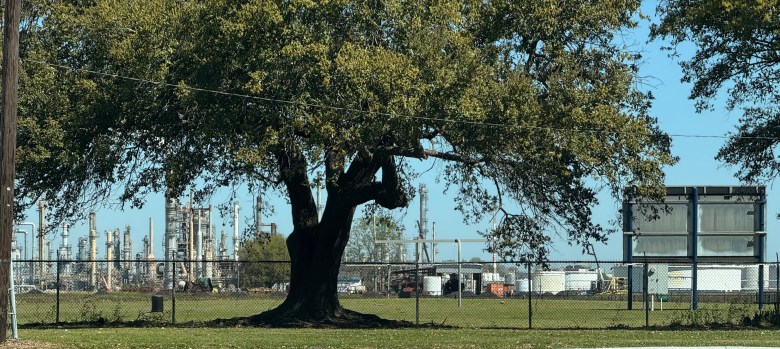
    Port Allen Middle School sits in the shadow of the Placid petrochemical refinery in West Baton Rouge Parish, La. A 2016 report found nearly one in 10 children in the U.S. attends one of the 12,000 schools located within 1 mile of a chemical facility, which for environmental advocates highlights the danger of the recently announced rollbacks of air and water pollution regulations by the U.S. Environmental Protection Agency. Credit: Terry L. Jones / Floodlight

    That means the EPA will no longer target, investigate or address noncompliance issues at facilities emitting cancer-causing chemicals such as benzene, ethylene oxide and formaldehyde in the places already overburdened with hazardous pollution. 

    “While enforcement and compliance assurance can continue to focus on areas with the highest levels of (hazardous air pollutants) affecting human health,” the memo reads, “…to ensure consistency with the President’s Executive Orders, they will no longer focus exclusively on communities selected by the regions as being ‘already highly burdened with pollution impacts.’”

    The agency also will not implement any enforcement and compliance actions that could shut down energy production or power generation “absent an imminent and substantial threat to human health.” 

    In is prepared video statement about the EPA’s deregulation measures, Zeldin said, “The agency is committed to fulfilling President Trump’s promise to unleash American energy, lower cost of living for Americans, revitalize the American auto industry, restore the rule of law, and give power back to states to make their own decisions. ”

    Related: How Trump is disrupting efforts by schools and colleges to combat climate change

    Top officials with the nonprofit environmental advocacy group Earthjustice recently said there is no way for the Trump administration to reconcile what it’s calling “the greatest day of deregulation” in EPA’s history with protecting public health. 

    Patrice Simms, vice president of litigation for healthy communities for Earthjustice, went a step further pointing out during a press briefing that the reason EPA exists is to protect the public from toxic air pollution. 

    “The law demands that EPA control these pollutants, and demands that EPA protect families and communities,” Simms said. “And these impacts on these communities most heavily land on the shoulders of children. Children are more susceptible to the harms from pollutants, and these pollutants are often happening right in the backyards of our schools, of our neighborhoods and our playgrounds.”

    A 2016 report published by the Center for Effective Government found that nearly one in 10 children in the country attends one of the 12,000 schools located within 1 mile of a chemical facility. These children are disproportionately children of color living in low-income areas, the report found. 

    For the past several years, Joshua has been leading the opposition to a hydrogen and ammonia facility being built within 2,000 feet of an elementary school in Ascension Parish. Air Products plans to start commercial operation in 2028 where an estimated 600,000 metric tons of hydrogen will be produced annually from methane gas.

    The $7 billion project has been touted as a clean energy solution because the company intends to use technology to collect its carbon dioxide emissions, and then transport them through pipelines to be stored under a recreational lake 37 miles away. 

    Carbon capture technology has been controversial, with skeptics highlighting the possibilities for earthquakes, groundwater contamination and CO2 leaking back into the atmosphere through abandoned and unplugged oil and gas wells or pipeline breaches. Pipeline ruptures in the past have also led to communities having to evacuate their homes. 

    Related: When a hurricane washes away a region’s child care system

    Joshua said these communities need more federal regulation and oversight — not less.

    “We had a community meeting … for our Ascension Parish residents, and the sentiment and the theme on that call was very much like ‘Kaitlyn, there is nothing we can do.’ Like, we just had to literally lie down and take this,” Joshua said. “We had to kind of challenge people and put them in the space, in time, of a civil rights movement. We have to get creative about how we’re going to organize around it and be our own version of EPA.”

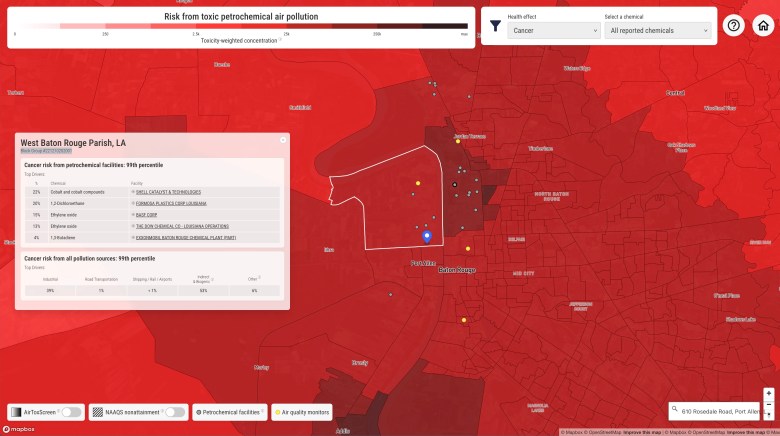
    This screenshot from CLEAR Collaborative’s Petroleum Pollution Map models health risks from hazardous air pollution from petrochemical facilities around West Baton Rouge Parish near Port Allen Middle School. The map uses U.S. Environmental Protection Agency data analyzed by the Environmental Defense Fund. Environmental advocates have sounded the alarm on the dangers of the EPA’s rollback of air and water regulations for children in fenceline communities. Credit: Provided by The Environmental Defense Fund

    Sarah Vogel, senior vice president of health communities with the Environmental Defense Fund, said the move toward deregulation comes as the U.S. Department of Justice announced on March 7 that it was dropping the federal lawsuit the Biden administration lodged against Denka’s Performance Elastomer plant in Louisiana. That plant had been accused of worsening cancer risks for the residents in the surrounding majority-Black community. 

    The DOJ said its decision was tied to Trump’s moves to dismantle all federal programs tied to diversity, equity and inclusion.

    “What they’re trying to do is just completely deregulate everything for oil and gas and petrochemical facilities, just absolutely take the lid off,” Vogel said. “We have long known that children are uniquely susceptible to air pollution and toxic chemicals. Like they’re huge, huge impacts. It’s why what they are doing is so devastating and cruel in my mind.”

    Floodlight, which produced this story, is a nonprofit newsroom that investigates the powers stalling climate action.

    The Hechinger Report provides in-depth, fact-based, unbiased reporting on education that is free to all readers. But that doesn’t mean it’s free to produce. Our work keeps educators and the public informed about pressing issues at schools and on campuses throughout the country. We tell the whole story, even when the details are inconvenient. Help us keep doing that.

    Join us today.

    Source link

  • Adolescence and Boys will be Boys – time for concrete action

    Adolescence and Boys will be Boys – time for concrete action

    Having been involved in the world of men and boys’ issues (chairing charities, running campaigns, trying to get policy change) for a long time, the last few weeks have been potentially game-changing. We saw the Centre for Social Justice report Lost Boys, Netflix’s Adolescence and the Boys will be boys policy report from Nick Hillman and me for this Institute.

    I felt that the Netflix programme raised serious issues facing some, not all, of our teenage boys, albeit it felt a little tick boxy in places (Tate – tick, Incels – tick, dad not around all the time – tick). I felt a little uneasy about how the dad was portrayed (leaving home at 6am and coming home at 8pm as if it was his fault and it was all his choice). Being the eldest son of a van driver, I am somewhat sensitive to negative portrayals of working-class dads doing the best they can to keep the lights on for their families.

    The report Nick and I wrote highlighted the continuing gender gap between male and female teenagers going into higher education. We estimate it is half a million over a decade with no sign of any change on the horizon, given the main predictor is an attainment gap in school. Boys remain behind girls at every level. Therefore, they are not getting the grades and as a consequence, are not taking enough of the exams to qualify.

    The main commonalities between both are that these issues have been hidden in plain sight. The issues raised by Adolescence about disengaged boys, negative influencers and their impact have been known for a long time. The same is true of the gender attainment gap. It shouldn’t, like last years’ Post Office Scandal drama, take TV to bring these to the fore.

    The main difference between our report and the ensuing debate about Adolescence is what comes next.

    We offered a range of policy solutions from schools taking up boy-positive principles to more male teachers and role models. Plus, there should be an increased focus on gender disparities in Access and Participation Plans, a Minister for Men and Boys and re-opening the Select Committee inquiry on boys’ attainment. Many more as well.

    What has been missing with regard to Adolescence at a national political and education level is the lack of commitment for concrete action. More male teachers and role models, came the welcome call from Sir Gareth Southgate. But there was no commitment from anyone to act. The Prime Minister said he was concerned and would look at it, but he made no pledge on action or what that would look like. There was also no huge push on tackling the problems boys have, only talking about the problems boys cause. But of course, tackling the problems boys have reduces the problems some boys cause – to themselves and others, including women and girls.

    My fear is that the media and political agenda will move on as it always does and nothing will change. The higher education attendance gap will remain, 150 plus teenage boys will die by suicide every year, well over 6,000 boys will continue to be excluded from school and 250,000 young men will still be unemployed.

    The higher education sector needs more boys to do well, so more go to higher education, and they do better when they are there. Our economy and society depend on it, too. The lesson from both Adolescence and Boys will be boys is that a continual lack of concrete action will no longer do.

    Source link