Author: admin

  • Community Colleges Expand Four-Year Degree Options as Illinois Joins National Trend

    Community Colleges Expand Four-Year Degree Options as Illinois Joins National Trend

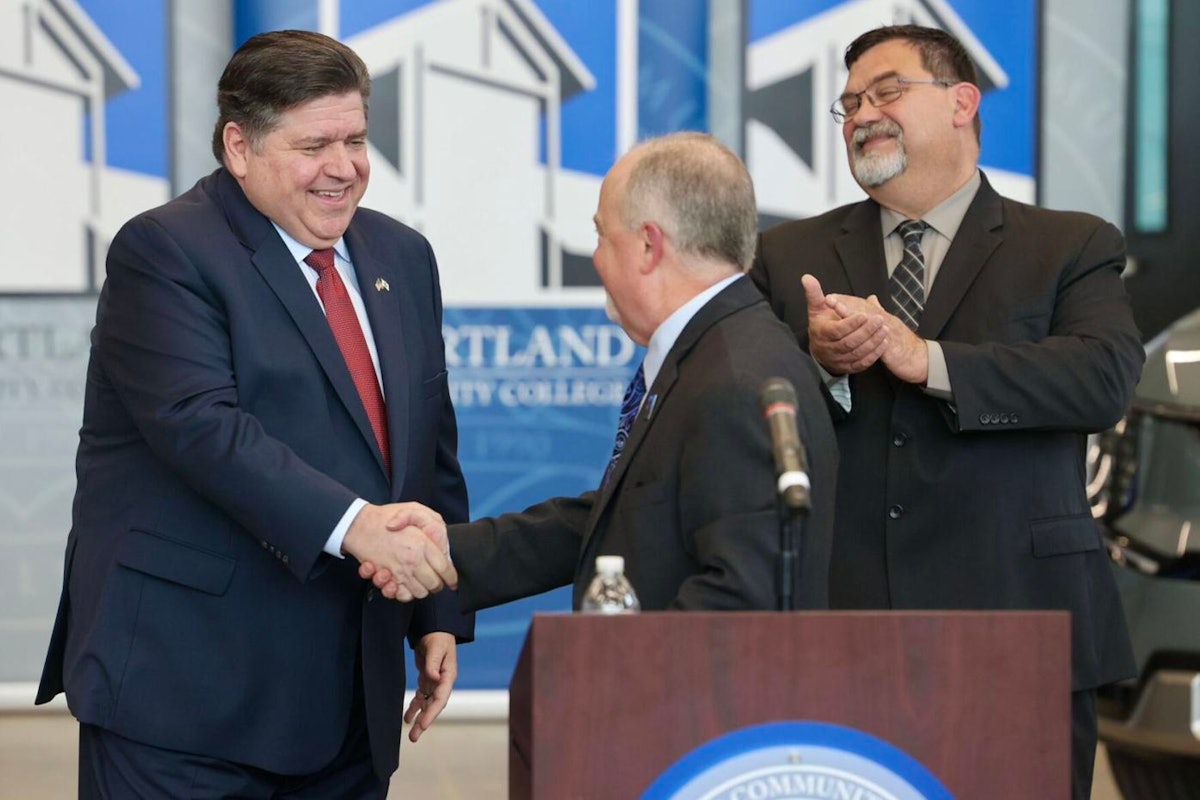
    In a significant shift for higher education access, Illinois Governor JB Pritzker announced his support for new legislation that would allow the state’s community colleges to offer bachelor’s degrees in high-demand fields. The move aligns Illinois with a growing national trend that has seen dramatic expansion in community college baccalaureate (CCB) programs across the country.

    “By allowing our community colleges to offer baccalaureate degrees for in-demand career paths, we are making it easier and more affordable for students to advance their careers while strengthening our state’s economy,” Pritzker said in his February announcement.

    The proposed bills, SB2482 and HB3717, would make Illinois the 25th state to implement such programs, joining states like California, Washington, and Florida that have already embraced community college bachelor’s degrees as a way to meet workforce demands and increase educational access. The measure appears to be stalled in the state legislature. 

    The Illinois initiative addresses practical challenges faced by many community college students. According to State Representative Tracy Katz Muhl, 78% of community college students work while in school, making relocation to four-year institutions impractical.

    “Community college students are deeply rooted in their local communities—they work here, raise families here, and contribute to the local economy,” says Dr. Keith Cornille, President of Heartland Community College. “By expanding community college baccalaureate programs, we’re meeting students where they are.”

    The proposal has gained support from education leaders including Illinois Community College Board Executive Director Brian Durham, who highlighted the potential to increase access to affordable higher education without burdening students with excessive debt.

    A recent survey revealed that 75% of Illinois community college students would pursue a bachelor’s degree if they could complete it at their current institution—a statistic that demonstrates significant untapped potential in the state’s third-largest community college system, which serves 600,000 residents annually.

    Illinois’ move follows a remarkable expansion in community college baccalaureate programs nationwide. According to a recent report from The Community College Baccalaureate Association (CCBA) and higher education consulting firm Bragg & Associates Inc., 187 community colleges across the country were offering or authorized to offer bachelor’s degrees as of last year.

    This represents a 32% increase from Fall 2021, when only 132 institutions had such authorization. Today, approximately one-fifth of the nation’s 932 community colleges offer bachelor’s degrees, with the number of CCB degree programs rising from 583 to 678—a 17% increase in just two years.

    “It’s a big jump over the last two years,” says report author Dr. Debra Bragg, president of Bragg & Associates Inc. Bragg anticipates “tremendous growth” in coming years as more states recognize the potential of these programs.

    The movement began in 1989 when West Virginia became the first state to authorize a community college to confer bachelor’s degrees. By 2010, several more states—including California, Michigan, Florida, Texas, and Georgia—had followed suit. Some states have embraced the model completely, with Florida, Delaware, and Nevada authorizing all their community colleges to confer bachelor’s degrees.

    Geographic and demographic patterns
    Community colleges offering bachelor’s degrees are not distributed evenly across the country. According to the CCBA report, 62% of CCB colleges are located on the West Coast, where there is “less density” of higher education institutions and longer commutes to traditional four-year schools.

    “Geographic access to college, measured through proximal distance from a student’s home to college, correlates with students deciding whether they will ever participate in higher education,” the report notes. “Research on ‘education deserts’ shows most students choose to attend college within 50 miles of their home.”
    Washington (32), California (29), and Florida (28) lead the nation in the number of community colleges offering bachelor’s degrees. These institutions tend to be concentrated in large city and suburban areas (36%) or rural and town settings (27%) rather than in small cities or midsize urban areas.

    Perhaps most significantly, CCB programs appear to be effectively serving traditionally underrepresented student populations. Approximately half of all community colleges offering bachelor’s degrees qualify as minority-serving institutions (MSIs), with Hispanic-Serving Institutions (HSIs) comprising 71% of these MSIs.

    Data from the 2021-22 academic year shows that about half of all CCB graduates come from racially minoritized groups. Hispanic or Latinx students made up the slight majority (52%) of these graduates, followed by those identifying as Black or African American (29%) or Asian (9%).

    Women are also well-represented among CCB graduates, accounting for 64% of degree recipients. This aligns with broader trends in higher education, where women generally attain degrees at higher rates than men.

    The gender distribution varies by field of study. While business programs attract the largest portion of both male and female students (around 40% for each), men are more likely to pursue STEM fields (34%), while women gravitate toward nursing programs (26%).

    The CCBA report highlights that CCB degrees are primarily focused on workforce preparation. Business programs dominate the offerings, followed by health professions, education, and nursing—all areas that align with significant workforce needs.

    This workforce alignment is a key selling point for Illinois’ proposed legislation. The initiative comes as Illinois employers report growing demand for workers with bachelor’s degrees in specialized fields, mirroring workforce gaps seen in other states with successful CCB programs.

    CCBA President Dr. Angela Kersenbrock sees these workforce-focused degrees as central to the community college mission. “To me, this is the community college really embracing its missions,” says Kersenbrock. “I know some folks say this is community colleges stepping over their mission. But I think it’s a full embracing of what they should be doing… closing equity gaps, being the people’s college, setting people up for economic success and mobility, and being very responsive to what a community needs in terms of workers and employees.”

    Despite the growth and apparent success of community college baccalaureate programs, they are not without controversy. Some traditional four-year institutions view them as mission creep or unwelcome competition.

    Illinois’ proposal faces similar scrutiny. Critics question whether community colleges have the resources, faculty expertise, and infrastructure necessary to deliver quality bachelor’s degree programs. Others worry about potential duplication of existing programs at four-year institutions.

    Supporters counter that CCB programs typically focus on applied fields with clear workforce connections rather than traditional academic disciplines. They also emphasize that these programs often serve students who would otherwise not pursue bachelor’s degrees at all, rather than pulling students away from existing institutions.

    Looking Ahead
    If Illinois passes the proposed legislation, it will join a diverse group of states finding success with community college baccalaureate programs. States like Washington, California, and Florida report positive outcomes in terms of both degree attainment and workforce preparation.

    For Illinois’ sprawling community college system—the third largest in the nation—the change could significantly reshape higher education access. Community colleges often serve as entry points to higher education for first-generation college students, working adults, and others who face barriers to traditional four-year institutions.

    “This initiative isn’t about competing with our university partners,” notes one Illinois community college president. “It’s about creating additional pathways for students who might otherwise never earn a bachelor’s degree.”

    As more states consider similar legislation, the community college bachelor’s degree appears poised to become an increasingly common feature of American higher education. With workforce demands continuing to evolve and traditional college enrollment patterns shifting, these programs offer a flexible approach to meeting both student and employer needs.

    For Bragg, the trend represents a natural evolution of community colleges’ historical mission.

    “Community colleges have always adapted to meet changing educational and workforce needs,” she observes. “Bachelor’s degrees are just the latest example of this responsiveness.”

    As Illinois moves forward with its proposal and other states watch closely, the coming years will likely see further expansion of bachelor’s degree options at community colleges nationwide—continuing a transformation that is making higher education more accessible to students who need it most.
    Source link

  • Wake up from the dream…

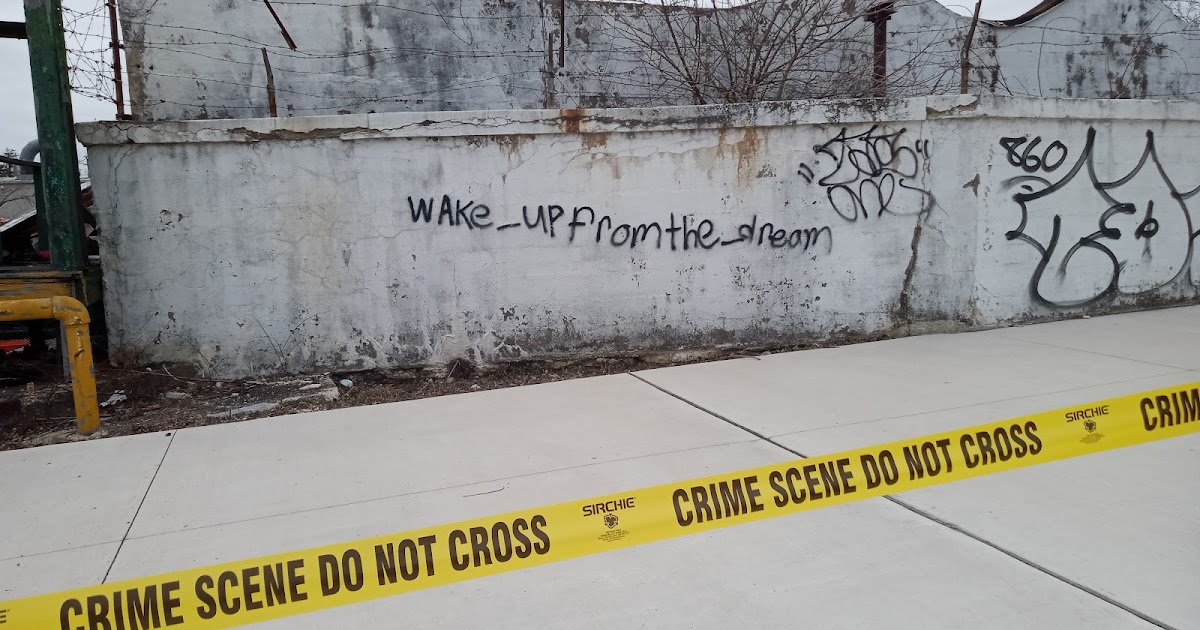
    Wake up from the dream…

    It’s April 1, 2025. And this is no joke. Under Donald Trump and his Republican government, the US is quickly headed down the wrong path, politically, economically, and socially, with little resistance. After three months of government disruption, there are still tens of millions of Americans that do not get what’s happening, and many more that do get it but are unwilling to act. 

    In history, we have seen moments very similar to this. This time, politicians, corporate CEOs, and higher education elites, who should know better, have largely stood on the sidelines. At their worst, these elites have systematically punished those who did have the courage to speak out, making others fearful of even nonviolent resistance. 

    This is nothing new: of nations and societies becoming less democratic, less responsive to the People. This move to the right has developed in a number of countries, and students of history know about the rise of authoritarian leaders in ancient Rome, medieval France and England, and modern Germany, Italy, Japan, and Russia.    

    Can we wake up from the dream before it’s too late? 

    Related links:

    Source link

  • Why some viruses are so difficult to stamp out

    Why some viruses are so difficult to stamp out

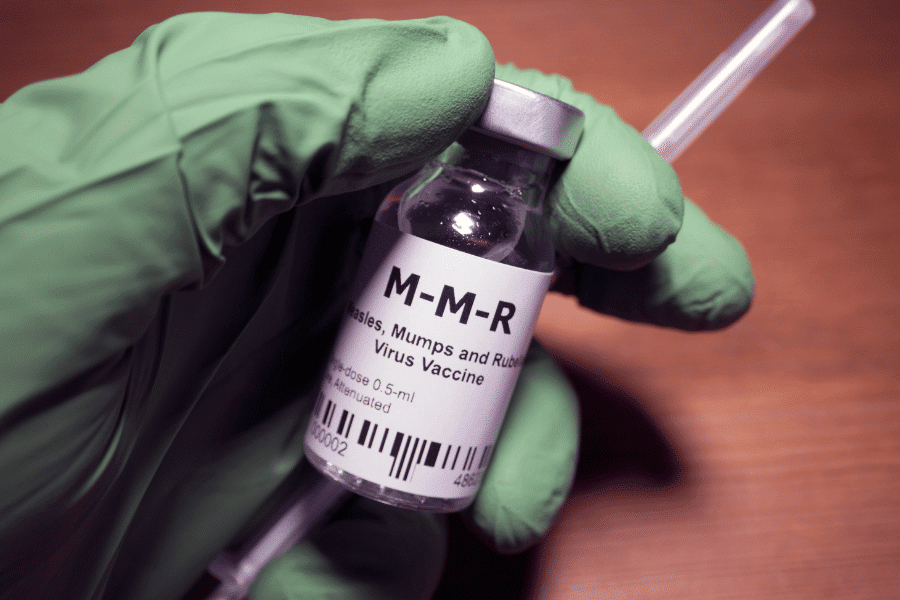
    The United States is fighting an unexpectedly big measles outbreak, with hundreds of cases in the state of Texas alone. Health experts expect it will last for a year or longer, because the virus has a long incubation period — people can be infected for days before they begin to show symptoms. That, in turn, means it can spread silently.

    Another virus that’s spreading silently right now is polio. Tests of wastewater around the world have turned up alarming levels of the virus, notorious for paralyzing children, in Afghanistan and Pakistan, according to the World Health Organization (WHO), but also in Europe, in Spain, Poland, Germany, the United Kingdom and Finland.

    These two viruses should not still be around. They only infect human beings, and mass vaccination campaigns have been ongoing for decades to try to wipe them out. And the medical profession keeps coming so close to success. 

    And where do these viruses come from that keep returning despite our attempts to wipe them out? The answer is from us — from other people.

    Smallpox is the only human disease to have been completely eradicated. That was done with a dedicated global vaccination effort in 1972. Because the smallpox virus doesn’t infect any other animal, there wasn’t another place for it to survive and come back to reinfect people. 

    The same should be true for measles and polio, but war, disruption, poverty and a mistrust of vaccines make it difficult.

    Where viruses hide

    So even as vaccine campaigns come close to succeeding, the viruses can still hide out in unvaccinated and undervaccinated people. Travel and human contact do the rest to keep both measles and polio circulating. When an infected traveler hits a community of unvaccinated people — say a neighborhood of ultra-Orthodox Jews in London or a rural West Texas county full of vaccine skeptics — a contagious virus such as measles or polio can take off. 

    With both measles and polio, it takes immunization rates of more than 90% to protect a population. When rates drop below that, a community becomes vulnerable to outbreaks. A virus can take hold and spread among people, picking up steam.

    That’s happened in Pakistan and Afghanistan with polio, where efforts to reach remote populations fall short because of geography, conflict and mistrust. And in Gaza, where continuous Israeli attacks have destroyed virtually all healthcare facilities, United Nations agencies have struggled to vaccinate Palestinian children against polio outbreaks. 

    Polio is also complicated because of the different vaccine types. One of the vaccines is given orally, and it’s made using a live, but weakened, form of the virus. This gives good immunity but in rare cases the virus can mutate in someone’s body and return to infectious strength — becoming what’s called vaccine-derived virus. 

    A follow-up vaccination with a second type of vaccine made using a fully killed virus will protect against this, but when vaccine campaigns can’t be completed, vaccine-derived viruses can emerge.

    How viruses spread

    In Europe, no cases of polio have been seen, but wastewater evidence suggests the virus is surviving in people’s bodies, and could burst out to cause sickness if it gets to someone unvaccinated. Polio spreads via the fecal-oral route — in contaminated water, via poorly washed hands, on surfaces and also via sneezes and coughs.

    Fully vaccinated communities are safe but in 2022, an unvaccinated man in New York State became paralyzed after he caught polio. Investigation showed a vaccine-derived strain had been spreading quietly in the state.

    Measles is the most infectious disease known and that makes it particularly hard to eradicate. In a podcast interview I did for for One World, One Health, Dr. Peter Hotez, a pediatrician and vaccine scientist at the Baylor College of Medicine, explained just how infectious it is. 

    “If someone has measles, and especially before they get the virus and stop feeling very sick, they’re releasing the virus into the atmosphere,” Hotez said. 

    Even if they leave the room, that virus will linger in the atmosphere for a couple of hours.

    “So you can walk into an empty room that has the measles virus from someone who was there a couple of hours before and become infected,” he said, noting that one measles patient will infect up to 18 other people.

    A virus reemerges.

    Nine out of 10 unvaccinated people who are exposed to the measles virus will become infected. What is disappointing to public health experts in the latest U.S. outbreak is that so many people have become infected when measles was eliminated in the United States in 2000 and in all of the Americas in 2016.

    But pockets of people who are not vaccinated against measles can act like tinder. The spark is usually a traveler who goes to a country where measles is still common because vaccination rates are low — usually due to poverty. 

    In a November 2024 report the WHO said that measles is still common in many places, particularly in parts of Africa, the Middle East and Asia.

    “The overwhelming majority of measles deaths occur in countries with low per capita incomes or weak health infrastructures that struggle to reach all children with immunization,” the report said. Measles kills more than 100,000 people a year, mostly children. But before the vaccine was introduced in the early 1960s, it killed 2.6 million a year.

    The COVID-19 pandemic badly hurt all childhood immunization efforts, WHO and other global health authorities say. Routine childhood vaccines have not caught back up to where they were before the pandemic, leaving children and adults susceptible to vaccine-preventable diseases including measles and polio but also meningitis, hepatitis, tetanus, cervical cancer and rotavirus — a disease that causes diarrhea and vomiting in babies and young children. 

    The retreat of the United States from global health efforts — the dismantling of the U.S. Agency for International Development, its plan to cut $1 billion in funding to Gavi, the Vaccine Alliance, and its withdrawal from the World Health Organization — will further weaken global vaccination, experts say.

    And that means many more children will likely die who might otherwise live healthy lives. 


    Three questions to consider:

    1. How can vaccines help prevent the spread of diseases?

    2. What role should personal choice play in being vaccinated against deadly diseases?

    3. How can global cooperation help in fighting the spread of disease?


    Source link

  • With higher education under siege, college presidents cannot afford to stay silent 

    With higher education under siege, college presidents cannot afford to stay silent 

    Higher education is under siege from the Trump administration. Those opposing this siege and the administration’s attacks on democracy would do well to heed the wise advice of Benjamin Franklin given just prior to the signing of the Declaration of Independence in 1776: “We must all hang together, or most assuredly we shall all hang separately.” 

    This is particularly true right now for college and university presidents.

    College presidents come from a tradition based on the importance of ideas, of fairness, of speaking the truth as they understand it, whatever the consequences. If they don’t speak out, what will later generations say when they look back at this dark, dark time?

    The idea that Trump’s attacks on higher education are necessary to combat antisemitism is the thinnest of covers, and yet only a very few college presidents have been brave enough to call this what it is. 

    The president and those around him don’t care about antisemitism. Trump said people who chanted “Jews will not replace us” were “very fine people”; he dined with avowed antisemites like Nick Fuentes and Ye (Kanye West). 

    Marjorie Taylor Greene blamed the California wildfires of 2018 on space lasers paid for by Jewish bankers. Robert Kennedy claimed that Covid “targeted” white and Black people but spared Ashkenazi Jews and Chinese people. The Proud Boys pardoned by Trump for their part in the January 6 insurrection have routinely proclaimed their antisemitism; they include at least one member who has openly declared admiration for Adolf Hitler.

    Fighting antisemitism? That was never the motive for the Trump administration’s attacks on colleges and universities. The motive was — and continues to be — to discipline and tame institutions of higher learning, to bring them to heel, to turn them into mouthpieces of a single ideology, to put an end to the free flow of ideas under the alleged need to combat “wokeism.”

    Related: Interested in innovations in the field of higher education? Subscribe to our free biweeklyHigher Education newsletter.

    Columbia University has been a prime target of the Trump administration’s financial threats. I’ve been a university provost. I’m not naïve about the tremendous damage the withholding of federal support can have on a school. But the fate of Columbia should be a cautionary tale for those who think keeping their heads down will help them survive. (The Hechinger Report is an independent, nonprofit, nonpartisan organization based at Teachers College, Columbia University.) 

    Columbia was more than conciliatory in responding to concerns of antisemitism. The administration suspended two student groups, Students for Justice in Palestine and Jewish Voice for Peace, for holding rallies that allegedly included “threatening rhetoric and intimidation.” 

    They suspended four students in connection with an event featuring speakers who “support terrorism and promote violence.” 

    They called in police to dismantle the encampment created to protest the War in Gaza. Over 100 protesters were arrested

    They created a Task Force on Antisemitism, and accepted its recommendations. They dismissed three deans for exchanging text messages that seemed to minimize Jewish students’ concerns and referenced antisemitic tropes. 

    President Minouche Shafik resigned after little more than a year in office. (Last week, the university’s interim president, Katrina Armstrong, also resigned.) In September 2024, the ADL reports, the university went so far as to introduce “new policies prohibiting the use of terms like ‘Zionist’ when employed to target Jews or Israelis.” 

    None of this prevented the Trump administration from cancelling $400 million worth of grants and contracts to Columbia — because responding to antisemitism was never the real impetus for the attack. 

    Related: Tracking Trump: His actions to dismantle the Education Department, and more

    Was Marjorie Taylor Greene asked to renounce antisemitism as a condition for her leadership in Congress? 

    Was Robert Kennedy asked to renounce antisemitism in order to be nominated for a Cabinet position?

    Were the Proud Boys asked to renounce antisemitism as a condition for their pardoning? 

    This is an attack on higher education as a whole, and it requires a collective defense. Columbia yesterday. Harvard today, your school tomorrow. College presidents cannot be silent as individual schools are attacked. They need to speak out as a group against each and every incursion. 

    They need to pledge to share resources, including financial resources, to resist these attacks; they should mount a joint legal resistance and a joint public response to an attack on any single institution. 

    These days, as many have observed, are much like the dark days of McCarthyism in the 1950s. In retrospect, we wonder why it took so long for so many to speak up. 

    Today we celebrate those who had the moral strength to stand up right then and say, “No. This isn’t right, and I won’t be part of it.” 

    The politicians of the Republican Party have made it clear they won’t do that, though most of them understand that Trumpism is attacking the very values — freedom, democracy, fairness — that they celebrate as “American.” 

    They have earned the low opinion most people have of politicians. But college and university presidents should — and must — take a stand. 

    Rob Rosenthal is John E. Andrus Professor of Sociology, Emeritus, at Wesleyan University. 

    Contact the opinion editor at [email protected].

    This story about higher education and the Trump administration was produced byThe Hechinger Report, a nonprofit, independent news organization focused on inequality and innovation in education. Sign up for Hechinger’sweekly newsletter.

    The Hechinger Report provides in-depth, fact-based, unbiased reporting on education that is free to all readers. But that doesn’t mean it’s free to produce. Our work keeps educators and the public informed about pressing issues at schools and on campuses throughout the country. We tell the whole story, even when the details are inconvenient. Help us keep doing that.

    Join us today.

    Source link

  • Rosemont College to Merge With Villanova

    Rosemont College to Merge With Villanova

    Rosemont College will merge with its much larger neighbor, Villanova University, joining two private, Catholic institutions in the Philadelphia area, The Philadelphia Inquirer reported.

    The small college, located less than a mile from Villanova, will be renamed Villanova University, Rosemont Campus, in a move that seems more akin to an acquisition than a merger. Tenured and tenure-track faculty at Rosemont will reportedly be offered teaching contacts.

    Like many small colleges, Rosemont has faced financial and enrollment challenges recently. 

    Rosemont’s enrollment stood at 777 students in fall 2023, according to recent federal data. While that number was higher than the two preceding years, it fell short of the 902 students Rosemont enrolled in 2019, or in previous years when the college typically surpassed the 1,000 mark.

    Public financial records show that Rosemont operated at a loss in the last four fiscal years. Amid the financial struggles, Rosemont has borrowed $7 million from its endowment—recently valued at $23 million—since 2020. A recent audit indicated “substantial doubt” that Rosemont would be able to remain open if its financial struggles persisted.

    During the merger process—which is expected to be completed in 2028, pending regulatory approvals—Rosemont will stay open and operate independently, with financial support from Villanova. But officials told the Inquirer they will stop accepting new students in October.

    The Rosemont merger comes after Cabrini University, another small private college in the Philadelphia region, closed in May 2024. Villanova purchased Cabrini’s campus soon afterward.

    Financial challenges have battered colleges in the Keystone State in recent years, with three institutions announcing closures last year. Another, the Pennsylvania Academy of the Fine Arts, ended its degree programs but remains open as a museum. More closures are on the horizon as Pennsylvania State University considers a plan to shutter up to 12 of its campuses.

    Source link

  • Survey: Trump Policies Push 75% of Scientists to Consider Leaving U.S.

    Survey: Trump Policies Push 75% of Scientists to Consider Leaving U.S.

    Survey: Trump Policies Push 75% of Scientists to Consider Leaving U.S.

    kathryn.palmer…

    Tue, 04/01/2025 – 03:00 AM

    Byline(s)

    Source link

  • Tribal Colleges Fear for Their Federal Funding

    Tribal Colleges Fear for Their Federal Funding

    Leaders of Nueta Hidatsa Sahnish College were thrilled to find out two years ago that they won a nearly $5 million grant from the U.S. Department of Agriculture to promote Indigenous food and agriculture practices. That five-year grant, which is roughly the same amount as the college’s endowment, funded student internships and several staff positions.

    But just as the college was gearing up to work on the project after putting in place the initial pieces, like selecting interns, funds for the program ceased when the USDA’s National Institute of Food and Agriculture froze the grant in February.

    The college has already spent about half a million dollars on the project, expecting those funds would be reimbursed, like other government grants, said Twyla Baker, president of Nueta Hidatsa Sahnish College. Now, six students have lost their internships, and the college is scrambling to reassign staff to other projects to avoid having to let anyone go.

    “We don’t have a timeline or any type of information as to when or if that [funding] will be restored to us,” Baker said.

    She and other tribal college leaders across the country are scrambling to make contingency plans as the Trump administration continues to review, freeze and slash federal grants in a massive effort to downsize government and roll back federal programs they perceive as related to diversity, equity and inclusion. Some have already seen grants disappear, while others are preparing just in case. Meanwhile, staff cuts to the Bureau of Indian Education and the Department of Education—not to mention plans to dismantle the department—are exacerbating fears and uncertainty on campuses.

    Tribal college leaders watched nervously as the two tribal colleges administered by the bureau, Haskell Indian Nation University and Southwestern Indian Polytechnic Institute, experienced major layoffs in February, spurring a lawsuit from tribes and students. The cuts sent the two institutions into what some worried was a death spiral, with professor-less classes and mounting infrastructure problems, until those layoffs were reversed in recent weeks.

    We’re survivors, and we’ll be here, but it’s going to be a rough couple years, that’s for sure.”

    —Dan King, president of Red Lake Nation College

    The country’s 37 tribal colleges already live a precarious existence. They tend to serve small, disproportionately first-generation and low-income student populations in remote areas on or near reservations and operate on lean budgets. They depend heavily on federal dollars, and many campuses are struggling with crumbling infrastructure thanks to chronic underfunding from Congress. Some tribal college presidents fear even small changes to federal funding or staffing could mean losing critical student supports, services and academic programs or risk the most vulnerable institutions closing altogether.

    “It takes so many different tiny little grant programs and resources woven all across the federal government just to keep the doors open and the lights on,” said Moriah O’Brien, vice president of congressional and federal relations at the American Indian Higher Education Consortium. “Any interruption or disruption or pausing of federal funding and resources or the federal employees that support those programs … could have very disruptive impacts.”

    ‘Sitting and Waiting’

    Nueta Hidatsa Sahnish College isn’t the only tribal college waiting on frozen USDA funds. College of Menominee Nation in Wisconsin, for example, found out that a grant covering 20 student scholarships was suspended, putting those students’ continued enrollment in jeopardy, ProPublica reported.

    Baker worries other federal funding sources could be next. At this time of the year, she normally would have received a request for proposals for Title III grants from the Department of Education by now. (Title III funds help to support infrastructure improvements at tribal colleges as well as other minority-serving institutions.)

    “We’re sitting and waiting,” she said. “And if those dollars go away, it’s another colossal loss.” Tribal colleges received roughly $82 million in discretionary and mandatory Title III funds last year.

    Amid the uncertainty, tribal colleges are tightening their belts. Nueta Hidatsa Sahnish College is considering a travel moratorium and looking into ways to strengthen partnerships with foundations and state lawmakers in hopes of diversifying its funding. Although Red Lake Nation College in Minnesota hasn’t had its grants suspended, the college has frozen hiring, pay increases and nonessential travel. Red Lake Nation is aiming to cut spending by 20 to 25 percent to prepare for any future funding losses.

    Dan King, president of Red Lake Nation, said he’s been trying to stress to others, “We’re going to make it through this … We’re survivors, and we’ll be here, but it’s going to be a rough couple years, that’s for sure.”

    O’Brien said that AIHEC is working to assess how many institutions have had grants suspended and how colleges are responding to this moment of uncertainty. In the meantime, the group is working to educate federal policymakers about tribal colleges—namely that the federal government is obligated to support them by treaty and that funding for tribal colleges is unrelated to DEI.

    “The federal government’s unique responsibilities to tribal nations have been repeatedly reaffirmed by the Supreme Court, legislation, executive orders and regulations … and this legal duty and trust responsibility applies across all branches of the federal government,” she said. As a result, the “conversation about tribal sovereignty and the federal trust and treaty obligations is entirely separate and distinct from the conversation around diversity, equity and inclusion.”

    Uncertainty at ED

    Tribal college leaders are also anxiously waiting to see what comes of the Education Department after mass layoffs and President Donald Trump’s order to close it down “to the maximum extent appropriate and permitted by law” and “return authority over education to the States.”

    O’Brien noted that not only do many funding sources for institutions flow out of the department, but 75 percent of tribal college students are also eligible for the Pell Grant, a federal financial aid program for low-income students.

    American Indian communities are incredibly resilient, because we have to be, but [there’s] not an unlimited supply of resources to be resilient with. And so, there’s a breaking point.”

    —Sandra Boham, chief operating officer at Native Forward

    “We want to make sure that there’s no interruption to the resources that are going to TCUs as institutions and to individual tribal citizens who are students,” she said.

    O’Brien also wants to ensure that any funding set aside for tribal colleges, through tribal college–specific or broader federal programs, goes directly to them, rather than being administered by states.

    “It’s not clear that those funds would ever get to TCUs,” she said. Plus, “the trust and treaty obligations are between tribal nations and the federal government,” not the states.

    Cheryl Crazy Bull, president and CEO of the American Indian College Fund, said it’s hard to know what will happen to department programs, so tribal colleges are preparing for all kinds of scenarios, including programs possibly coming under the auspices of other federal agencies.

    “We don’t want the Department of Ed to be dismantled,” she said. “At the same time, if it’s going to be dismantled, what strategies need to be used in order to ensure continued funding?”

    Education Secretary Linda McMahon has said that shutting down the department won’t mean funding cuts and said that core functions will continue.

    But major reductions in force at the Department of Education and other federal agencies have made it difficult for tribal colleges to find out which of their funding streams may be at risk.

    Tribal college leaders stressed that getting through to the right people at the Education Department, the USDA, the Department of the Interior or other federal agencies to ask questions is a challenge in and of itself, let alone budgeting for an uncertain landscape.

    Not being able to even “get ahold of” the people who administer grant programs “causes a lot of worries for people, too,” said King at Red Lake Nation. “It’s very stressful. It’s chaotic and it’s unpredictable right now.”

    What’s at Stake

    Tribal college advocates worry some of these institutions wouldn’t survive federal funding losses.

    While some tribal colleges have managed to scrape together meager endowments, many operate on low reserves. Some have as little as 90 days’ worth of operating funds on hand at any given time, said Sandra Boham, chief operating officer at Native Forward, a Native American scholarship provider, and a former president of Salish Kootenai College.

    “American Indian communities are incredibly resilient, because we have to be, but [there’s] not an unlimited supply of resources to be resilient with,” she said. “And so, there’s a breaking point.”

    Tribal college leaders are also concerned about the ripple effects if colleges are forced to cut down on student supports and services.

    “You don’t have the big travel budgets to trim,” Boham said. “You don’t have the big athletic budgets to trim. You’re talking support and instructional staff and shuttering buildings or those kinds of things, and that is not a pleasant conversation to have.”

    O’Brien described tribal colleges as “anchors of their community,” as well, that provide “not just individual classes, but often [serve] as a hub for the community, providing all kinds of different [services] from GED classes to certificate programs to community space to having their libraries open to the community.”

    Baker said the value of tribal colleges “is not a difficult story to tell,” but “just the fact that we’re having to tell it is pretty frustrating.”

    Some of these institutions “function on the brink,” Baker said, and they serve “some of the poorest parts of our nation. If it weren’t for tribal colleges, some of these students wouldn’t access higher education at all.”

    Source link

  • Historians Defend Smithsonian After Trump’s Order

    Historians Defend Smithsonian After Trump’s Order

    The American Historical Association says that President Trump’s executive order targeting the Smithsonian Institution “egregiously misrepresents the work” of the organization and “completely misconstrues the nature of historical work.”

    In the executive order issued late last week, Trump criticized what he saw as “a concerted and widespread effort to rewrite our Nation’s history” that replaces “objective facts with a distorted narrative driven by ideology rather than truth.”

    The order cites an exhibit at the American Art Museum that examines the “role of sculpture in understanding and constructing the concept of race in the United States,” according to the museum’s website. The order also notes that the “National Museum of African American History and Culture has proclaimed that ‘hard work,’ ‘individualism,’ and ‘the nuclear family’ are aspects of ‘White culture.’”

    The order, titled “Restoring Truth And Sanity To American History,” puts Vice President JD Vance in charge of ensuring that Smithsonian museums, research centers and the National Zoo don’t put on exhibits or programs that “degrade shared American values, divide Americans based on race.”

    The AHA defended the work of historians in the statement released Monday, adding that “historians explore the past to understand how our nation has evolved.”

    “Our goal is neither criticism nor celebration; it is to understand—to increase our knowledge of—the past in ways that can help Americans to shape the future,” said the statement, which has been signed by 16 other organizations. “By providing a history with the integrity necessary to enable all Americans to be all they can possibly be, the Smithsonian is fulfilling its duty to all of us.”

    Source link

  • Colonialism-Defending Professor Settles With U of Oregon

    Colonialism-Defending Professor Settles With U of Oregon

    A professor who’s long been controversial for defending colonialism has settled the lawsuit he filed more than two years ago against a former communication manager at the University of Oregon who blocked him from interacting with a university account on Twitter.

    Bruce Gilley—a Portland State University politics and global affairs professor currently serving a stint as A Presidential Scholar in Residence at New College of Florida—filed the lawsuit in August 2022 a former communication manager for the University of Oregon’s Division of Equity and Inclusion.

    Gilley alleged that the Equity and Inclusion Twitter account published a post urging people to “interrupt racism,” suggesting they use this line: “It sounded like you just said [blank]. Is that really what you meant?” Gilley said he was blocked by the account after retweeting the post with the caption “My entry: … you just said ‘all men are created equal.’”

    Gilley and the University of Oregon reached a settlement agreement last week in which the institution admitted the communication manager blocked Gilley. The university agreed in the settlement that its insurer would pay from $95,000 to $382,000 in attorneys’ fees to Gilley’s representatives—the Institute for Free Speech and the Angus Lee Law Firm—and the institution further agreed to a detailed process to clarify its social media policies and train social media managers on them. There will be an email address for people to complain about being blocked, and the whole plan will have a 180-day supervision period for implementation.

    “The guidelines will more clearly state that third parties and the content they post must not be blocked or deleted based on viewpoint, even if that viewpoint can be viewed by some as ‘offensive,’ ‘racist’ or ‘hateful,’” the settlement agreement says.

    In a statement, the university said it “does not agree that it committed any of the violations alleged in Bruce Gilley’s complaint. The agreement reached between the university and Mr. Gilley ended the lawsuit without admission of liability or fault.”

    Source link

  • Wellesley Non-Tenure-Track Strike May Impact Class Credits

    Wellesley Non-Tenure-Track Strike May Impact Class Credits

    Hours after Wellesley College’s non-tenure-track faculty went on strike last Thursday, students received word that they might receive only half credit for courses taught by the professors on strike.

    The college attributed the decision to federal regulations on how much instruction students must receive per credit hour, noting that if the strike ends quickly, students will be able to return to their classes and get full credit. In the meantime, they were told they could sign up for other classes, taught by tenure-track faculty, for the last four weeks of the semester. That would allow them to continue to earn full credit hours, which is especially important for students who need to maintain full-time status for financial aid, athletics or visa-related reasons.

    According to college spokesperson Stacey Schmeidel, only about a third of non-tenure-track faculty members’ classes could be affected by this change; the remaining two-thirds met frequently enough during the first 10 weeks of the semester that they had already reached the required minimum number of instructional hours. Over all, she said, about 30 students out of the 2,350 enrolled at the women’s college are currently at risk of dropping below full-time status, though hundreds opted to switch into new classes to ensure they receive the number of credits they planned on for this semester.

    But students and faculty union members have questioned the college’s solution, noting that students may struggle to find replacement courses that fit their schedule or that they have the necessary prerequisites for.

    “Imagine being a student entering into a class that only has four weeks left,” said Jacquelin Woodford, a chemistry lecturer and organizing committee member for the faculty union, Wellesley Organized Academic Workers. “It’s such a weird plan that could all be avoided if the college just bargained with us and settled the contract.” Woodford also noted that striking faculty members had not been informed before Thursday about this plan and still haven’t received formal communication from the institution about what is happening with their classes.

    Non-tenure-track faculty at Wellesley began unionizing almost a year ago in an attempt to obtain higher wages and better job security. Union organizers say the institution has come back with only bare-bones offers.

    On March 25, administrators offered non-tenure-track faculty 2.75 percent annual raises for the duration of the contract and proposed adding an additional course to their teaching loads, for which they would be paid an additional $10,000. But union members argue that $10,000 is equivalent to what they are already paid for teaching an extra course.

    “The College’s proposal makes working overtime the new, required norm,” wrote Erin Battat, senior lecturer in the writing program and a member of the bargaining committee, in an email to The Wellesley News, the college’s student paper. “We had hoped that Wellesley was serious about their claims to care about averting a strike, but their actions at the bargaining prove otherwise.”

    WOAW’s latest proposal, meanwhile, includes a revised salary scale that would see some NTT faculty with more than 18 years at Wellesley earn over $170,000 a year—25 percent more than full professors with the same amount of experience. Wellesley has countered that the proposed pay scale, which would afford faculty raises of 54 percent in the contract’s first year, is untenable.

    The union voted in February to authorize a strike.

    “We called for a strike authorization vote to encourage Wellesley to make substantial progress towards our key priorities. Our goal is to negotiate a fair contract that will be ratified by our members,” said one bargaining committee member, Christa Skow, senior instructor in biological sciences, in an update on WOAW’s website at the time.

    Pizza and Ponchos

    Students have been supportive of the strike despite its impact on their courses, said Woodford, noting that they have joined the picket lines at the motor and pedestrian entrances to campus over the past several days.

    “They’ll come and go between their courses. They’re so kind; they’ve been sending us food and pizza and they brought us ponchos today for the rain,” she said, noting that tenured colleagues, alumnae and Massachusetts state politicians have also come out to support them.

    The next bargaining session will take place on Tuesday, and union organizers questioned why the institution was unwilling to bargain any earlier than five days into the strike. In an email, Schmeidel said the college and the union had, prior to the strike, mutually agreed to a session on April 3; after the strike began, Wellesley offered to move the session to today, April 1.

    She also said that the union had rejected the college’s proposal to work with a mediator.

    “The College feels that the union’s refusal to go to mediation and to instead call for a strike is arbitrary and premature,” she wrote.

    For some students, it’s unclear what the next few weeks will bring. Jeanne, a freshman who asked to have her last name withheld, is currently taking a writing course impacted by the strike. She said she received an email from the dean of first-year students saying that those in the course would receive full credit, but students should nevertheless attempt to keep up with the syllabus as much as possible. She doubts she’ll be able to, though, as the materials she needs for the next paper haven’t been posted for students to access online yet.

    Still, she said she is in favor of the strike, noting that WOAW has been transparent with the students about what the stoppage will entail since much earlier in the semester.

    “[WOAW] had been speaking about negotiations with the college since I arrived on the campus last semester,” she said. “They’ve been very clear with the students that they believe their treatment is unfair and they’ve been working with the college for a while now to get the situation fixed.”

    In an FAQ about how Wellesley will handle the strike, the institution said it is still figuring out how grading will be impacted by the half-credit courses and noted that it may be necessary to include a transcript note for anyone impacted. It said the same about making up any content students may lose out on as a result of the strike.

    “Department chairs and faculty are thinking seriously about any course content that may not have been covered and how to make up for this in a future semester,” the FAQ says.

    Source link