Author: admin

  • Colonialism-Defending Professor Settles With U of Oregon

    Colonialism-Defending Professor Settles With U of Oregon

    A professor who’s long been controversial for defending colonialism has settled the lawsuit he filed more than two years ago against a former communication manager at the University of Oregon who blocked him from interacting with a university account on Twitter.

    Bruce Gilley—a Portland State University politics and global affairs professor currently serving a stint as A Presidential Scholar in Residence at New College of Florida—filed the lawsuit in August 2022 a former communication manager for the University of Oregon’s Division of Equity and Inclusion.

    Gilley alleged that the Equity and Inclusion Twitter account published a post urging people to “interrupt racism,” suggesting they use this line: “It sounded like you just said [blank]. Is that really what you meant?” Gilley said he was blocked by the account after retweeting the post with the caption “My entry: … you just said ‘all men are created equal.’”

    Gilley and the University of Oregon reached a settlement agreement last week in which the institution admitted the communication manager blocked Gilley. The university agreed in the settlement that its insurer would pay from $95,000 to $382,000 in attorneys’ fees to Gilley’s representatives—the Institute for Free Speech and the Angus Lee Law Firm—and the institution further agreed to a detailed process to clarify its social media policies and train social media managers on them. There will be an email address for people to complain about being blocked, and the whole plan will have a 180-day supervision period for implementation.

    “The guidelines will more clearly state that third parties and the content they post must not be blocked or deleted based on viewpoint, even if that viewpoint can be viewed by some as ‘offensive,’ ‘racist’ or ‘hateful,’” the settlement agreement says.

    In a statement, the university said it “does not agree that it committed any of the violations alleged in Bruce Gilley’s complaint. The agreement reached between the university and Mr. Gilley ended the lawsuit without admission of liability or fault.”

    Source link

  • Wellesley Non-Tenure-Track Strike May Impact Class Credits

    Wellesley Non-Tenure-Track Strike May Impact Class Credits

    Hours after Wellesley College’s non-tenure-track faculty went on strike last Thursday, students received word that they might receive only half credit for courses taught by the professors on strike.

    The college attributed the decision to federal regulations on how much instruction students must receive per credit hour, noting that if the strike ends quickly, students will be able to return to their classes and get full credit. In the meantime, they were told they could sign up for other classes, taught by tenure-track faculty, for the last four weeks of the semester. That would allow them to continue to earn full credit hours, which is especially important for students who need to maintain full-time status for financial aid, athletics or visa-related reasons.

    According to college spokesperson Stacey Schmeidel, only about a third of non-tenure-track faculty members’ classes could be affected by this change; the remaining two-thirds met frequently enough during the first 10 weeks of the semester that they had already reached the required minimum number of instructional hours. Over all, she said, about 30 students out of the 2,350 enrolled at the women’s college are currently at risk of dropping below full-time status, though hundreds opted to switch into new classes to ensure they receive the number of credits they planned on for this semester.

    But students and faculty union members have questioned the college’s solution, noting that students may struggle to find replacement courses that fit their schedule or that they have the necessary prerequisites for.

    “Imagine being a student entering into a class that only has four weeks left,” said Jacquelin Woodford, a chemistry lecturer and organizing committee member for the faculty union, Wellesley Organized Academic Workers. “It’s such a weird plan that could all be avoided if the college just bargained with us and settled the contract.” Woodford also noted that striking faculty members had not been informed before Thursday about this plan and still haven’t received formal communication from the institution about what is happening with their classes.

    Non-tenure-track faculty at Wellesley began unionizing almost a year ago in an attempt to obtain higher wages and better job security. Union organizers say the institution has come back with only bare-bones offers.

    On March 25, administrators offered non-tenure-track faculty 2.75 percent annual raises for the duration of the contract and proposed adding an additional course to their teaching loads, for which they would be paid an additional $10,000. But union members argue that $10,000 is equivalent to what they are already paid for teaching an extra course.

    “The College’s proposal makes working overtime the new, required norm,” wrote Erin Battat, senior lecturer in the writing program and a member of the bargaining committee, in an email to The Wellesley News, the college’s student paper. “We had hoped that Wellesley was serious about their claims to care about averting a strike, but their actions at the bargaining prove otherwise.”

    WOAW’s latest proposal, meanwhile, includes a revised salary scale that would see some NTT faculty with more than 18 years at Wellesley earn over $170,000 a year—25 percent more than full professors with the same amount of experience. Wellesley has countered that the proposed pay scale, which would afford faculty raises of 54 percent in the contract’s first year, is untenable.

    The union voted in February to authorize a strike.

    “We called for a strike authorization vote to encourage Wellesley to make substantial progress towards our key priorities. Our goal is to negotiate a fair contract that will be ratified by our members,” said one bargaining committee member, Christa Skow, senior instructor in biological sciences, in an update on WOAW’s website at the time.

    Pizza and Ponchos

    Students have been supportive of the strike despite its impact on their courses, said Woodford, noting that they have joined the picket lines at the motor and pedestrian entrances to campus over the past several days.

    “They’ll come and go between their courses. They’re so kind; they’ve been sending us food and pizza and they brought us ponchos today for the rain,” she said, noting that tenured colleagues, alumnae and Massachusetts state politicians have also come out to support them.

    The next bargaining session will take place on Tuesday, and union organizers questioned why the institution was unwilling to bargain any earlier than five days into the strike. In an email, Schmeidel said the college and the union had, prior to the strike, mutually agreed to a session on April 3; after the strike began, Wellesley offered to move the session to today, April 1.

    She also said that the union had rejected the college’s proposal to work with a mediator.

    “The College feels that the union’s refusal to go to mediation and to instead call for a strike is arbitrary and premature,” she wrote.

    For some students, it’s unclear what the next few weeks will bring. Jeanne, a freshman who asked to have her last name withheld, is currently taking a writing course impacted by the strike. She said she received an email from the dean of first-year students saying that those in the course would receive full credit, but students should nevertheless attempt to keep up with the syllabus as much as possible. She doubts she’ll be able to, though, as the materials she needs for the next paper haven’t been posted for students to access online yet.

    Still, she said she is in favor of the strike, noting that WOAW has been transparent with the students about what the stoppage will entail since much earlier in the semester.

    “[WOAW] had been speaking about negotiations with the college since I arrived on the campus last semester,” she said. “They’ve been very clear with the students that they believe their treatment is unfair and they’ve been working with the college for a while now to get the situation fixed.”

    In an FAQ about how Wellesley will handle the strike, the institution said it is still figuring out how grading will be impacted by the half-credit courses and noted that it may be necessary to include a transcript note for anyone impacted. It said the same about making up any content students may lose out on as a result of the strike.

    “Department chairs and faculty are thinking seriously about any course content that may not have been covered and how to make up for this in a future semester,” the FAQ says.

    Source link

  • Ohio and Kentucky Ban DEI, Reduce Tenure Protections

    Ohio and Kentucky Ban DEI, Reduce Tenure Protections

    Republican-controlled legislatures in two bordering states, Ohio and Kentucky, have now passed laws requiring post-tenure review policies at public universities and banning diversity, equity and inclusion offices, along with other DEI activities.

    Many faculty and some Democratic leaders say the new laws threaten academic freedom and undermine tenure. In Ohio, lawmakers passed the sweeping higher education legislation, which has been in the works for a few years, over protests from faculty and students. The Ohio Student Association, for instance, said the bill would kill higher education in the state. Meanwhile, in Kentucky, Republican lawmakers rushed legislation through the process in order to successfully override their Democratic governor’s veto and put their higher education changes into law.

    Ohio and Kentucky join Arkansas, Utah and Wyoming this year as states where Republicans have passed laws targeting DEI and/or promoting alternative “intellectual diversity.” Even if the Trump administration’s ongoing nationwide attacks on DEI founder, these laws lock in restrictions on DEI in these states, preventing institutions from reversing course on diversity program rollbacks.

    Much of the new laws in Ohio and Kentucky echo the DEI bans that the other states have enacted, but Ohio’s legislation goes further than Kentucky’s, allowing immediate “for cause post-tenure reviews,” banning strikes for a large group of faculty and much more.

    Ohio governor Mike DeWine, a Republican, signed into law Friday a version of higher education legislation that’s been debated for the last two years but had failed to pass despite Republican majorities in the capitol. Senate Bill 1, the evolution of the failed legislation, combined numerous postsecondary changes that GOP legislators have sought to enact in other states.

    Among many other things, the new law bans full-time faculty from striking. It prohibits DEI offices, DEI in job descriptions and DEI in scholarships, without defining what DEI is. It requires institutions to “demonstrate intellectual diversity” in a range of areas, including course approval, general education requirements, common reading programs and faculty annual reviews. It also requires four-year institutions to publicly post online the syllabi for undergraduate courses, including the names of the instructors and “any required or recommended readings.” Community colleges must post more general syllabi.

    SB 1 also mandates a version of institutional neutrality, requiring colleges and universities to declare they “will not endorse or oppose, as an institution, any controversial belief or policy, except on matters that directly impact the institution’s funding or mission of discovery, improvement, and dissemination of knowledge.” The “controversial” beliefs and policies that institutions are required to stay silent on include any that are “the subject of political controversy, including issues such as climate policies, electoral politics, foreign policy, diversity, equity, and inclusion programs, immigration policy, marriage, or abortion.” (Ohio colleges and universities do retain the right to endorse Congress when it goes to war.)

    The law further requires all institutions to establish post-tenure review policies—which could lead to firing tenured faculty. The legislation bans unions from using their collective bargaining rights to negotiate over these policies. And SB 1 allows certain administrators to launch “an immediate and for cause post-tenure review at any time for a faculty member who has a documented and sustained record of significant underperformance” outside their regular annual performance evaluations.

    “This bill eliminates tenure,” said Sara Kilpatrick, executive director of the Ohio Conference of the American Association of University Professors. “If certain administrators can call for post-tenure review at any time and fire a faculty member without due process, that is not real tenure, that is tenure in name only.”

    Pointing to a provision for an appeals process, Republican state senator Jerry Cirino, who filed SB 1, said, “They’re lying about that” and “once again, the AAUP is misrepresenting the facts.”

    He added that the bill is “very pro–higher education.”

    “I’m not going to fall for these false narratives that the left is trying to put out there mischaracterizing this bill,” Cirino said.

    The Ohio governor’s office didn’t respond to Inside Higher Ed’s requests for comment Monday about why DeWine signed this bill into law.

    In Kentucky, the Democratic governor didn’t go along with the legislature, vetoing an anti-DEI bill. But Republicans overrode Gov. Andy Beshear.

    Bucking Beshear

    Kentucky’s House Bill 4 bans what that legislation defines as DEI offices, employees and training in public colleges and universities, as well as the use of affirmative action in hiring and in deciding scholarships and vendor selection. It also affects curricula by barring institutions from requiring courses whose “primary purpose is to indoctrinate participants with a discriminatory concept.”

    The new law generally defines a “discriminatory concept” as one that “justifies or promotes differential treatment or benefits” for people based on “religion, race, sex, color or national origin.” It broadly characterizes DEI as promoting a discriminatory concept. And it defines “indoctrinate” as imbuing or attempting to “imbue another individual with an opinion, point of view or principle without consideration of any alternative.”

    Additionally, under the new law, the Council on Postsecondary Education, which oversees Kentucky’s public colleges and universities, can’t approve new degrees or certificates that require courses or trainings primarily intended to “indoctrinate” with discriminatory concepts. And it encourages the council to eliminate current academic programs that contain such requirements.

    Beshear vetoed House Bill 4 on March 19 and defended diversity programs, adding that the legislation attempts to “control how universities and colleges meet the needs of their students and prepare them for their future.”

    “Acting like racism and discrimination no longer exist or that hundreds of years of inequality have been somehow overcome and there is a level playing field is disingenuous,” Beshear added. “History may look at this time and this bill as part of the anti–civil rights or pro-discrimination movement. Kentucky should not be a part of that movement.”

    On Thursday, the Kentucky House voted 79 to 19 to override this veto, and the Senate voted 32 to 6.

    Beshear also vetoed another bill, House Bill 424, which required institutions to evaluate president and faculty “productivity” at least once every four years using a board-approved process. Presidents or faculty who fail performance and productivity metrics could lose their jobs, under the bill. Beshear wrote in his veto message that the legislation “threatens academic freedom.”

    “In a time of increased federal encroachment into the public education, this bill will limit employment protections of our postsecondary institution teachers” and the state’s “ability to hire the best people,” he wrote. Lawmakers overrode him with an 80-to-20 House vote and a 29-to-9 Senate vote.

    Amy Reid, Freedom to Learn senior manager at PEN America, a free speech and academic freedom advocacy group, said in an email that the new Ohio and Kentucky laws “are not only significant blows to public higher education, but also reflect a galling disregard for the voters, educators and students in these states.”

    “Ohioans were massively organized in their opposition to SB 1, with hundreds of citizens coming to the capital to testify against the bill,” Reid said. “The legislature ignored them and so did Governor DeWine.” She said there was also “strong opposition across Kentucky” to the new laws there.

    But Tom Young, chairman of the Ohio House Workforce and Higher Education Committee, said he had heard support for the legislation from students and faculty who were concerned about speaking up. He said DEI had become “a tool for dividing people,” and most opposition to SB 1 that he heard regarded its anti-strike and post-tenure review provisions.

    “I don’t believe that any of these professors are concerned about the classroom,” Young said of faculty upset about the new law.


    Source link

  • Teachers need support to understand what’s needed in the UCAS personal statement

    Teachers need support to understand what’s needed in the UCAS personal statement

    Our recent paper found substantial misalignment between state-school teachers and university admissions staff on what makes a high-quality UCAS personal statement.

    In our study, 409 state school teachers were presented with ten paragraphs from UCAS personal statements and asked to select between two pieces of feedback. One ‘correct’ feedback was provided by an admissions tutor, and the one ‘incorrect’ feedback was supplied by another teacher. These paragraphs and feedback were all real-world examples derived from Steven Jones’ (2016) study, used as part of Causeway Education’s pre-training programme for state school teachers.

    We found:

    • There was significant misalignment between teachers and admissions staff. In only 56.5% of cases did teachers select the ‘correct’ feedback response.
    • There are a number of pervasive myths regarding the UCAS personal statement. Teachers had a dual tendency to:
    1. Advise for the incorporation of personal content that aimed to demonstrate a holistic view of the student rather than course-related competencies; and
    2. Suggest reducing content that demonstrated course-related knowledge and skills.

    To give one example, teachers were presented with the paragraph below and asked to choose between two pieces of feedback: (1) Strong reasons backed up by detailed examples; and (2) Too much detail; doesn’t give a sense of the student as an individual. The first of these is from an admissions tutor and the second from a teacher in Jones’ (2016) work.

    My main reason for wanting to study Japanese is because I enjoy studying complex grammar rules to see how languages come together. This is why I chose to undertake Latin at A-Level as I enjoy translating pieces of complex texts. Analysing writers techniques in presenting ideas and characters is also interesting, in particular how Tacitus in Annals I, presents Tiberius as an unsuitable emperor by often comparing him to his father Augustus, an emperor who was deemed ‘an upholder of moral justice’.

    In 58.4% of cases teachers selected the first ‘correct’ answer, and 41.6% selected the ‘incorrect’ second answer.

    These findings should not be interpreted as a criticism of teachers. In the context of studies finding a considerable lack of transparency on how universities use the UCAS personal statement (Fryer et al., 2024), the burden of responsibility for misalignment falls primarily on universities. Without clear and transparent guidance, this misalignment between teachers and admissions staff is inevitable.

    There is an important opportunity to address this situation, as many universities will currently be in the process of updating their public-facing guidance in response to the upcoming UCAS personal statement reform. The shift to three short questions for the 2025-26 application cycle and the corresponding need to update guidance present universities with an opportunity to address and counter the misalignments noted in our paper.

    To support this goal, our paper contains a table of key implications (Table 5, pp.14-15), which can be downloaded directly from this link.

    We hope this is of practical use to admissions staff in updating and developing guidance on the UCAS personal statement. We contend that this new guidance, alongside transparent explanations of how the personal statement is used in selection decisions, is crucial to enable UCAS’s reform to widen participation and address inequalities.

    This blog is based on a paper ‘Investigating the alignment of teachers and admissions professionals on UCAS personal statements’ by Tom Fryer, Anna Burchfiel, Matt Griffin, Sam Holmes and Steven Jones. Due to its time-sensitive nature, the paper has been published as a preprint, and therefore has not yet been subject to peer-review.    

    The table summarising the implications for public-facing guidance is available for download here.  

    Source link

  • How colleges can improve financial efficiency with accounting software

    How colleges can improve financial efficiency with accounting software

    Today’s higher education requires financial efficiency. Outdated accounting processes cause financial inefficiencies in 73% of higher education institutions, according to a 2024 EDUCAUSE analysis. Right software can fix that. Here are 7 benefits of utilizing the best college accounting software, backed by numbers, automation, and improved decision-making.


    Why College Accounting Systems Need Improvement

    College economics are more complicated than ever due to shifting enrollments, diversified revenue streams, and escalating operational expenditures. Reports confirm that up to 30% of administrative time is wasted on manual accounting, resulting in errors, lost income, and lost productivity. Automation for college accounting is no longer optional—it’s game-changing.


    How Colleges Can Improve Financial Efficiency with Accounting Software. 7 Advantages


    1. Usability—simplify complex financial processes

    Do you know 43% of institutions prioritize user-friendliness when purchasing accounting software? The finest solutions enable non-financial workers to manage accounts using intuitive dashboards, drag-and-drop features, and automated reporting.


    2. Flexibility and scalability—grow without financial limits

    Many institutions have 12% yearly enrollment fluctuations, making scalability important. The ideal software expands with your organization as you add programs and revenue streams. Cloud-based upgrades minimize downtime, ensuring operations.


    3. Custom reporting – faster data-driven decision making

    Real-time reporting, according to 67% of officials in higher education, greatly enhances financial decision-making. Imagine being able to instantly have thorough knowledge on grant distributions, operating expenses, and tuition rates, therefore enabling leadership to act on facts rather than speculation.


    4. Reliability – Bid farewell to mistakes and lost data.

    Errors in manual accounting can cost organizations up to 5% of their yearly budget, an intolerable loss. Reliable accounting systems guarantee accurate, real-time tracking of payments, debts, and financial projections. For better processes, it also easily interacts with other campus administration systems.


    5. Automate and synchronize data to reduce administrative tasks

    Accounting automation reduced administrative tasks by 40%. Colleges can distribute resources faster, speed up approvals, and eliminate human error-related income leakage with synchronized data across admissions and payroll systems.


    6. Security – Guard private financial information

    Given 63% of higher education institutions having attacked recently, financial security is not negotiable. Modern accounting systems guarantee that your financial documents are untouchable by illegal hands by means of role-based access, encrypted data storage, and automatic backups.


    7. Efficiency — Save time, cut costs, increase revenue

    Saving time makes money. Academic institutions with accounting automation collect fees 25% faster and spend 18% less. Monitoring finances on the go using mobile and cloud capabilities reduces overhead and improves transparency and cash flow.


    The Bottom Line

    Choice of college accounting software is about developing a smarter, faster, and more robust financial ecosystem, not just convenience. The appropriate software helps universities maximize financial efficiency and future-proof operations through automation, real-time analytics, and cost reductions.

    Has your college been trapped in outmoded accounting? We must embrace intelligent automation-powered financial efficiency. Contact team Creatrix Campus today! 

    Source link

  • International students and asylum claims

    International students and asylum claims

    For at least a couple of years there’s been an issue percolating away without much clarity about its extent, causes and consequences – that of international students in the UK applying for asylum either during or following their studies. Staff in universities have at times told us of a noticeable rise in cases, and we also get rumours every now and then of it being on the Home Office radar.

    Over the weekend the government released for the first time some data on asylum claims by student visa holders – previously there have only been figures for successful applications, according to first visa held, which have been buried in the annual “migrant journey” report. These have not painted a particularly clear picture of the real situation.

    So we now learn that, of the 108,000 who claimed asylum in the UK in 2024, 40,000 were from people who had held a visa. Within this group, student visas were the highest share of the total, with 16,000 claims – those on work visas accounted for 11,500, and 9,500 were on visitor visas (all these figures have been rounded to the nearest 500, for some reason). There’s nothing here about the proportion of claims that were successful, or even resolved.

    The stats release with coordinated with an interview with home secretary Yvette Cooper on the front page of The Sunday Times, focusing on the effects of asylum claims on the government’s floundering accommodation system:

    One of the things that became clear as we examined this really rather chaotic system that we inherited is that we have people who are in the asylum accommodation system who arrived in the UK on a student visa, or a work visa, and who then only claimed asylum at the end of their visa. They have then gone into the asylum accommodation system even though when they arrived in the country they said they had the funding to support themselves.

    The Home Office data release highlights that “almost 10,000 people who claimed asylum after having entered on a visa were provided with asylum support in the form of accommodation at some point during 2024” – this figure isn’t broken down by visa type – and that the most common nationalities here were Pakistan, Nigeria and Sri Lanka.

    So what’s going on?

    In the run-up to last year’s MAC review of the Graduate route, there was a rather convenient Home Office leak to the Daily Mail of the numbers of international students who had gone on to claim asylum, covering the 12 months to March 2023 – and broken down by nationality and even institution. These figures, if accurate, showed 6,136 asylum claims made in that year, so the numbers have only increased since.

    The timing and the pick-up in anti-immigration media was sufficient for the Migration Advisory Committee, in its Graduate route review, to feel the need to comment, if only to damp down hopes that they would consider this as a form of “abuse of the visa system”:

    We note recent reports of an increase in asylum applications from those originally coming to the UK through work and study routes. The government may deem this behaviour undesirable and unintended usage of these routes. However, coming to the UK legally on a work or study visa and proceeding to make a legitimate, admissible asylum application does not constitute abuse. If the government is concerned by the rising number of such applications they should address this issue directly – it does not relate substantively to the Graduate route.

    But the issue hasn’t entirely gone away with the change of government and Labour’s relative de-politicisation of international students. In February, the BBC quoted border security and asylum minister Angela Eagle as having her eye on “those coming on work and student visas and then claiming asylum” – she pins the issue on the disorder the Conservatives left in the asylum system.

    This was then followed by Yvette Cooper’s comments at the weekend, along with the new Home Office data. The home secretary was announcing an expansion of right-to-work checks to gig economy and zero-hours roles in sectors like construction, food delivery, beauty salons and courier services.

    Meanwhile in Canada

    There’s an instructive international comparison here – Canada. Last autumn there was controversy in certain corners of the Canadian media when it emerged that almost 12,000 asylum claims had been made by international students in 2023, rising to more than 13,600 in the first nine months of 2024.

    The potential for political fallout was enough for immigration minister Marc Miller to write to the Canadian College of Immigration and Citizenship Consultants over the “important and concerning issue”, saying:

    I am concerned by reports that some of these students are being counselled by third parties to do so and to provide false information… I request that the College look into the possibility that licensed immigration consultants are illegitimately advising international students to claim asylum.

    This took place against a backdrop of the Canadian government instituting a series of caps on international student numbers, and restrictions on post-study work, ahead of a general election this year.

    Policy levers

    The UK government has pledged to substantially cut the number of people in temporary accommodation with claims or appeals pending – it’s a policy objective driven both by Treasury imperatives to cut the ballooning costs and political considerations around being “tough on migration.”

    If international students claiming asylum gains traction as an area for attention – and it’s worth reiterating that the figures show that just shy of 15 per cent of all claims in 2024 were from student visa holders – then probably the easiest policy lever for the government to pull is simply to throttle student and graduate route numbers: avoid overturning any of the restrictive policies introduced by the Conservatives, and harry away at the edges of the system to discourage any kind of return to the totals seen in 2022–23 and 2023–24.

    There’s a question here, though, about whether this is really an HE-related matter. As the statement from one of the universities in the above-mentioned Daily Mail splash said at the time:

    This particular issue is a result of the government’s own asylum policy, which allows visa switching in a way that is outside the direct control of the universities concerned and is not a failing of the higher education sector.

    And the National Audit Office’s recent report on the skilled worker visa found that the number of asylum claims from holders of that visa had risen from 53 in 2022 to 5,300 in the first ten months of 2024. So if it’s not a phenomenon that is restricted to student visa routes, and one that in many cases is about what happens after the period of study, it would appear an over-correction for the government to take any action specifically focused on the higher education system.

    But there are some issues that the government seems to have in its sights. In the Sunday Times interview, there’s a specific mention of the proof of funds that student visa applicants must demonstrate, and how this seemingly conflicts with asylum claims on economic grounds.

    Last September Labour announced an increase in the amount that students must evidence – though it’s still far from being sufficient to live on in most places. But there are plenty of rumours about this system being gamed by agents who assist applicants by parking temporary funds in their accounts, telling them that they will in fact be able to support themselves (and pay off all the debts they’ve accrued) by working while and after studying.

    It’s another example of failure to provide students with clear-cut, realistic information about visa costs leaving them open to exploitation – and an area where the sector should be arguing for more rigour and scrutiny in the proof of funds process, along with a higher sum required, rather than seeing it as a deterrent to prospective students. We’ve also previously covered – anecdotal – reports that students have been advised to apply for asylum when unable to complete degrees within the specified time limits, or potentially for other reasons such as non-payment of fees, though there’s no evidence that this is a widespread phenomenon.

    So there are specific issues here for institutions to get ahead of. Whether that’s enough to move the dial remains to be seen, especially if these latest figures gain prominence and newspapers investigate promises made by agents overseas.

    Protecting students

    Ensuring that vulnerable people are not exploited through misinformation about how they can, supposedly, game the UK’s dysfunctional immigration system should be a priority. If nothing else, there is the pragmatic benefit of heading off further international restrictions and another round of negative HE headlines.

    But more importantly, upholding the right for international students to claim asylum – as well as scientists, researchers and other staff – is of critical importance for preserving academic freedom (among many other things), not just in the UK but around the world. If the growth in claims, and the government’s flailing attempts to address it, ends up tarnishing the need for a humane, well-managed asylum process, everyone suffers. And the higher education sector being on the back foot over asylum, rather than standing up and advocating for its importance, would be a terrible turn of events.

    While the Daily Mail and others might report on growing application numbers from current and former international students as evidence that the UK is not tough enough, too permissive, too generous in the legal protections and recourse it offers to those seeking asylum, the fact remains that it’s an awful system for anyone to get caught up in.

    Just over a year ago in the House of Commons, the now former SNP MP Alison Thewliss reported on a a parliamentary visit to the Bibby Stockholm barge, used by the previous government for asylum accommodation:

    I will take this opportunity to put on record the sadness, confusion and frustration of those on board. Those men felt that they were being punished for some unknown misdemeanour – unable to get any peace and quiet, living in impossibly close proximity to people for months at a time, with no certainty as to when that will end, and their health needs not being properly assessed. The vessel was not intended to be lived on 24/7, and despite the tabloid rhetoric, none of those I met on that boat had come on small boats. Some had been international students, forced to claim asylum when the political situation in their home countries deteriorated. One told me: ‘the longer you are in here, you turn into a person you don’t know.’ How incredibly sad it is that the UK Government see fit to treat people in that way.

    Source link

  • Trump Investigates Harvard’s Federal Funding

    Trump Investigates Harvard’s Federal Funding

    Craig F. Walker/The Boston Globe via Getty Images

    Harvard University is the latest higher education institution to be investigated by the Trump administration in response to its alleged mishandling of antisemitic harassment on campus. The institution will undergo a “comprehensive” analysis of nearly $9 billion in federal grants and contracts, according to a multi-agency news release.

    The review, announced Monday afternoon, is part of ongoing efforts by the Justice Department’s Joint Task Force to Combat Anti-Semitism to tackle alleged antisemitic harassment on college campuses. The Departments of Education and Health and Human Services and the General Services Administration will carry out the investigation to “ensure the university is in compliance with federal regulations, including its civil rights responsibilities,” the news release said.

    The task force said its review process for Harvard will be similar to the one it is currently carrying out at Columbia University.

    “This initiative strengthens enforcement of President Trump’s Executive Order titled ‘Additional Measures to Combat Anti-Semitism,’” which “ensures that federally funded institutions uphold their legal and ethical responsibilities to prevent anti-Semitic harassment,” the news release said.

    In a matter of weeks, the task force’s investigation into Columbia has upended the institution. It received a notification in early March that the government had launched a review into $54.1 million in federal contracts. Then, on March 7, the department retracted $400 million in grants and contracts, and on March 13 it sent the university a sweeping list of demands, calling for immediate compliance in order to regain the funding. Columbia agreed to nearly all of the demands a week later, but the administration has not reinstated the funds.

    Shortly after announcing the decision to comply, the university’s interim president, Katrina Armstrong, resigned.

    The administration has said it will now review more than $255.6 million in federal contracts and $8.7 billion in multiyear grant commitments at Harvard.

    As with Columbia, the agencies will consider stop-work orders for any contracts the review identifies. But Harvard has also been ordered to submit a list of all federal contracts—both direct and through affiliates—that were not identified in the task force’s initial investigation.

    Addressing the review in a letter to the Harvard community, President Alan M. Garber acknowledged that nearly $9 billion in research funding is at risk: “If this funding is stopped, it will halt life-saving research and imperil important scientific research and innovation.”

    He said the institution had “devoted considerable effort” to addressing antisemitism on campus for the past 15 months, but added, “We still have work to do” and committed to working with the task force.

    “We resolve to take the measures that will move Harvard and its vital mission forward while protecting our community and its academic freedom,” he said.  

    Critics have broadly opposed the Trump administration’s tactics, saying they are prime examples of using claims of antisemitism to justify “aggressive” executive overreach.

    “What we’re seeing is an attempt to weaponize federal funding to punish schools that don’t align with their political views,” said Wesley Whistle, a project director at New America, a left-leaning think tank. “That kind of pressure stifles the free exchange of ideas—and that’s the whole point of higher education.”

    Meanwhile, Education Secretary Linda McMahon said the university’s “failure to protect students on campus from antisemitic discrimination—all while promoting divisive ideologies over free inquiry—has put its reputation in serious jeopardy.

    “Harvard can right these wrongs and restore itself to a campus dedicated to academic excellence and truth-seeking, where all students feel safe on its campus,” she said.

    Source link

  • A Deep Dive into MindTap for Anatomy and Physiology: Now With Visible Body

    A Deep Dive into MindTap for Anatomy and Physiology: Now With Visible Body

    Reading Time: 3 minutes

    Students taking Anatomy and Physiology have many challenging and complex topics to navigate through. Some of the common areas where they may struggle include concept visualization, term memorization and learning how to apply their critical thinking skills within a real-world clinical setting.

    Let’s explore MindTap for Elizabeth Co’s “A&P” and examine its suite of interactive features that improve engagement and comprehension, including Visible Body activities, author concept videos, clinical activities and personalized features.

    Visible Body activities help students exercise factual and spatial knowledge

    With Visible Body embedded into the MindTap Learning Path, students can access accurate visual representations, anatomically correct 3D models and immersive activities. Students can manipulate these 3D models and exercise their factual and spatial knowledge while reinforcing the concepts they’ve learned in Co’s “A&P.” Students can also check their understanding of these concepts by taking quizzes. With multiple Visible Body activities available in every chapter of the title, students can take advantage of a whole semester’s worth of 3D learning.

    Visible Body activity in MindTap Learning Path

    Author-driven content at students’ fingertips

     “A&P” author Liz Co has always been passionate about supporting student learning and study skills. She currently serves on the HAPS (Human Anatomy & Physiology Society) learning objectives panel, is Committee Chair on Inclusive Pedagogy and Principal Investigator of Assessing Student Engagement and Efficacy of Remote Learning. Her wide-reaching experience has influenced new concept videos in each chapter, found under Learn Its in the MindTap Learning Path. Liz walks through what students have deemed to be the toughest topics in A&P, and breaks down those concepts using her pedagogical knowledge.

    Author Elizabeth Co stands next to an A&P graphic image.
    New concept videos with Dr. Elizabeth Co, author of “A&P.”

    Clinical activities get students career-ready

    Many students taking an A&P course are on the nursing/medical profession career track. With various opportunities to practice their critical thinking skills in MindTap for Co’s “A&P,” students can prepare for their future careers working in a clinical setting. Students can enhance those skills through Case Studies, activities which engage them with clinical scenarios and challenge them to achieve a higher-level of understanding with auto-graded assessments.

    Study features reinforce key concepts/terms and personalize the learning experience

    With over 8,000 anatomical terms to cover in the span of two semesters, A&P students need personalized solutions to help hone memorization skills and develop a better understanding of key concepts and terms. Students can improve these valuable skills with:

    • The Student Assistant, leveraging GenAI and exclusive Cengage content, delivers a personalized learning experience to students, available 24/7.


    • Mastery Training (powered by Cerego) uses cognitive science principles to help students learn key terms faster and more effectively. These activities help students make connections between terms and concepts, providing guidance until students have a full grasp of what they’ve learned.


    • Adaptive Test Prep helps students review and understand concepts and skills in the course. Students take a quiz and receive a customized set of study materials.

    Interested in exploring MindTap with Visible Body for your Anatomy and Physiology course?

    The post A Deep Dive into MindTap for Anatomy and Physiology: Now With Visible Body appeared first on The Cengage Blog.

    Source link

  • When musicians get the blues

    When musicians get the blues

    Music is known to boost cognitive and emotional wellbeing, yet those who pursue it professionally experience greater levels of psychological distress compared to the general population.

    Psychological distress among professional musicians is a global phenomenon, shown in studies from Norway, the United Kingdom, Australia and South Korea. More than two-thirds of professional musicians in the UK suffer from depression, according to a 2016 study involving over 2,000 musicians. In Canada, as many as one in five professional musicians experience suicidal ideation.

    Now, musicians are calling on the industry for change. In February, Grammy-winning artist Chappell Roan used her Best New Artist acceptance speech to advocate for healthcare and a living wage for developing artists.

    “I told myself if I ever won a Grammy, and I got to stand up here in front of the most powerful people in music, I would demand that labels in the industry profiting millions of dollars off of artists would offer a livable wage and healthcare, especially to developing artists,” Roan said.

    Major record labels have now provided commitments to the mental health of their artists. Universal Music Group recently partnered with Music Health Alliance to launch the Music Industry Mental Health Fund, which provides a new suite of outpatient mental health support for musicians.

    A lack of support systems

    Musicians’ mental health suffers from a paucity of institutional protections for freelancers, irregular work schedules and profound financial instability. This is often exacerbated by high instances of performance anxiety and perfectionism among professional musicians, said Dr. George Musgrave, senior lecturer in cultural sociology at Goldsmiths, University of London.

    “When people talk about music being good for health and wellbeing, they’re not talking about working musicians,” Musgrave said. “Those who are doing it for leisure or creation are not anxious and depressed in the same way that those who do it for their job are.”

    Unpredictability also characterizes the career trajectories of many professional musicians, said Noah Fralick, artist manager at Huxley Management.

    “You don’t really go to school, get training, then work your way into the workforce and slowly build up,” Fralick said. “There’s no linear path. You might go from total obscurity to huge amounts of popularity quite quickly.”

    Emotional labour is also inherent in this line of work, which can put musicians at risk for mental health pressures, said Dr. Sally Anne Gross, principal lecturer at the University of Westminster.

    “There’s an interrelatedness to sport, where the body’s running so fast and in doing that, you would expect it to get injured,” Gross said. “If you’re working with your emotions in your working environment … you can expect that you might have emotional injuries.”

    The strains of a music career

    The traditional trope of the “tortured artist” — the idea that an artist must suffer pain to generate authentic creative output — has taken on new significance in the digital age.

    “The digital world is desperate for real things,” Gross said. “The artist now has to be larger than life …  in this atmosphere, at this point in time, if you are a young emerging artist or a current artist, you have to engage in a way that is seen to be authentic and there’s nothing more authentic than pain.”

    Mass democratization of music creation has made it easier than ever for musicians to enter the industry, but with no guarantee that their music will find an audience. Musicians feel pressure to show vulnerability as a way to stand out in a market flooded with options.

    “About 100,000 new songs are uploaded to Spotify every day,” Fralick said. “Streaming has sort of eliminated the barrier to access the music industry, but diluted the potential for any one [musician] to be successful.”

    This creates an environment in which consumers fall back to familiar tunes and artists, as deciding between a multitude of new options can feel overwhelming. As a result, it’s a rare artist who becomes a star. But these success stories become well-known, and the dramatic publicization of those who succeed can explain part of the allure of the music business, Fralick said.

    “I always use this analogy of a lottery winner, and the way that lotteries are set up, we see the winner,” Fralick said. “We think ‘I’m going to buy a ticket because that could be me,’ because your brain is only seeing the success story.”

    Pressure to succeed

    Musgrave said that this mindset can be detrimental for musicians. “Many of them are afflicted with what I’ve referred to as cruel optimism. The optimism is cruel because it’s keeping them tethered to an unrealizable ideal,” he said.

    Aside from emotional investment, launching a professional music career can also entail hefty financial costs. These costs could include paying distributors, shooting music videos, receiving coaching and joining premium memberships.

    The opportunity cost can also be significant. “You give up a lot of earning potential in order to invest in this craft,” Musgrave said. 

    For female musicians, age can be a critical stressor and determining factor of success. As the marketability of their music often hinges upon maintaining a youthful image, it can place additional pressures to find success faster.

    Many female musicians see the age of 30 as a hard cut-off, Musgrave said. “Age is a spectre that haunts women’s musical lives in a way that doesn’t haunt men’s,” he said. 

    Getting help to those who need it

    The last 10 years has seen a sea of change regarding mental health interventions for musicians. 

    In the UK, all three major record labels — Universal Music Group, Warner Music and Sony — have mental health support offerings either in-house or through outsourcing. But in-house mental health counselling could present potentially challenging scenarios for conflict of interest, Musgrave said.

    Currently, the biggest source of musicians’ mental health support is the charitable sector. Organizations such as MusiCares, Music Minds Matter, Music Support and the Man Down Programme provide various offerings such as weekly support groups, 24/7 crisis support lines and training packages for music industry workers.

    Gross said that while poor mental health among professional musicians is an urgent concern, that shouldn’t stop schools from providing music education. Instead, the occupational health hazards of professional music careers should be clearly communicated, so that young people can make informed decisions.

    “I think we have to reassess and re-evaluate the ways in which creative industry jobs have been sold to the next generation,” Gross said. “We have to really think about what’s happening in the educational space … and it’s absolutely essential that we deal with the issues and challenges of the working environment for all professionals.”  


    Three questions to consider:

    1. What unique pressures do professional musicians face?

    2. What is meant by the term “cruel optimism”?

    3. Why do so many people dream of becoming famous performers?


    Source link

  • The Compartmentalization and Bureaucracy of Modern Academia

    The Compartmentalization and Bureaucracy of Modern Academia

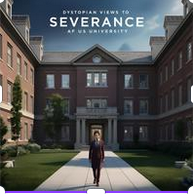
    In the dystopian world of Severance, employees undergo a controversial procedure that separates their work lives from their personal lives, creating a chillingly compartmentalized existence. While this premise seems far-fetched, the show’s underlying critique of institutional control, bureaucratic systems, and dehumanizing workplace environments mirrors certain aspects of U.S. higher education administration.

    The Compartmentalization of Roles

    At the heart of Severance is the radical division of personal and professional identities. Employees, when at work, have no memory of their personal lives, and when they leave the office, their work experiences are erased from their minds. This deliberate separation is an exaggerated version of a common practice in higher education—compartmentalizing roles and interactions.

    In many academic institutions, faculty, staff, and students often navigate strict hierarchies and narrowly defined roles, which can create significant barriers between these groups. Administrators focus on policies and data, while faculty members concentrate on teaching and research. This division can lead to limited communication and a lack of understanding between those shaping the institution’s direction and those most impacted by decisions.

    Dehumanizing Bureaucracy

    Severance also critiques how systems of power, driven by bureaucracy, strip employees of their humanity. This theme resonates with the reality of higher education administration, where decisions are made far from the classroom, often by individuals who may have little connection to the day-to-day experiences of faculty or students.

    Universities rely on complex bureaucratic systems to manage operations, from student admissions to faculty performance assessments. These systems can often feel impersonal, and the pressure to conform to institutional standards—whether in terms of research output, teaching evaluations, or service requirements—can leave faculty and staff feeling like mere cogs in a well-oiled machine. The result is a sense of alienation and detachment from the institution, not unlike the isolated existence portrayed in Severance.

    Institutional Control and Surveillance

    In Severance, employees are constantly surveilled, their actions monitored and manipulated by the corporation to maintain control. This chilling form of oversight is mirrored in higher education, where increasing reliance on data analytics and monitoring systems tracks everything from student performance to faculty productivity.

    Universities increasingly collect vast amounts of data, from tracking graduation rates to measuring faculty research output, with the intent of improving efficiency and accountability. However, for many faculty and staff, these systems can feel intrusive, reducing their work to numbers and metrics, much like the employees of Severance who are stripped of their identities in favor of institutional goals.

    The “Work-Life Balance” Paradox

    One of the key tensions in Severance is the idea of “work-life balance” taken to an extreme, where the characters’ personal and professional identities are completely isolated. In higher education, this balance is a perennial challenge. Administrators often promote the importance of self-care and work-life balance, yet faculty and staff are regularly expected to juggle multiple roles—teaching, research, administrative duties—and produce high levels of output.

    As a result, the lines between personal and professional life often blur, with faculty members frequently working late into the night or on weekends to meet the demands of the job. Despite official policies promoting balance, the pressure to perform can create a culture of burnout, not unlike the invasive control experienced by Severance‘s characters.

    Conformity vs. Individuality

    Finally, Severance explores the tension between conformity and individuality, a dynamic that is also evident in academia. In the show, employees are forced to conform to the institution’s demands, stifling their personal identities. Similarly, universities increasingly measure success through standardized metrics—graduation rates, research grants, and student satisfaction surveys—that prioritize efficiency over creativity or personal growth.

    For faculty members, this pressure to conform to institutional expectations can stifle academic freedom and exploration. While universities often champion individuality and intellectual curiosity, the overwhelming focus on data-driven outcomes can push faculty to prioritize “safe” or “marketable” research topics over more innovative or personal endeavors.

    Source link