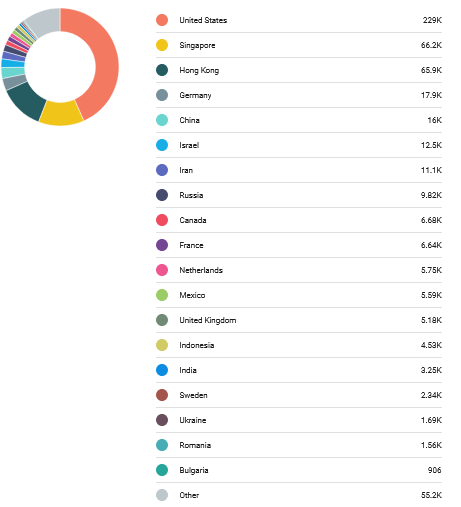
HEI continues to generate a strong international audience. While a substantial portion of our viewers are from the US, we have people (and bots) from across the globe reading our articles and Youtube posts. Our coverage lately, on the revocation of student visas, and of deportations, is particularly important for international students, particularly those who are concerned about US intervention in the Middle East, Asia, and Latin America. For some unknown reasons, we have little traffic from folks in African countries or Latin America countries (other than Mexico). We also have fewer than expected numbers from Canada and India. If there is anything we can do to increase those viewership numbers, please let us know.
Author: admin
-

A Timeline for Job Search Success (opinion)
One of the most common questions I get from Ph.D. students and postdocs is “When should I begin my job search?” Most of the time, they are referring only to the application process—they are asking when they should start actually applying for jobs. While I generally recommend applying three to four months before you are available to start, the job search itself should begin much earlier. There is a lot of information and data that you need to gather in advance so that you are well positioned to recognize that a job is a good fit and make an informed decision with confidence.
I see a lot of similarities between the job search and the way you might approach committing to a large purchase such as that of a car or home: The more research and preparation you do, the more confident and informed you’ll be when the right opportunity comes along.
Like a house, a job needs to align with your values, interests and goals. However, compromise is inevitable. Just as home buyers must balance their wish list with budget constraints and market realities, job seekers must consider factors such as location, salary, job stability and growth potential. A strategic, long-term approach ensures that when the ideal opportunity presents itself, you can recognize it and act decisively.
That said, it’s important to recognize that in both job searching and home buying, there are many variables we can’t control. Many Ph.D. students and postdocs I speak with are understandably concerned about the uncertainty of the job market they’ll be entering into in light of federal employee layoffs and university hiring freezes. This is unfortunate but makes long-term, careful planning all the more important.
The House-Hunting Approach to Job Searching
When I was a postdoc, my husband and I wanted to buy our first home. Initially, I had a long list of must-haves: a safe neighborhood close to work, hardwood floors, a spacious updated kitchen, three bedrooms, two bathrooms, a fireplace, a deck, a two-car garage and a lush yard for gardening. We determined our budget and began our search.
For six months, we attended open houses and scoured online listings, refining our expectations along the way. We learned what features were common in our price range and which ones were unrealistic. We adjusted our priorities, and when we finally found the right home, even though it wasn’t exactly what we had first envisioned, we were confident in our decision because of the knowledge we had gained along the way.
The job search follows a similar process. The more job descriptions you analyze and the more people you talk to, the more attuned you become to industry norms, required skills and job value. This preparation allows you to confidently apply and evaluate offers, just as a seasoned home buyer recognizes a great deal when they see one.
To best position yourself for success, your job search should start long before you submit applications. Here’s a suggested timeline.
More Than One Year Out: Laying the Foundation
- Identify your career interests: Before house hunting, you need a vision for your ideal home. Likewise, before applying for jobs, you need a clear sense of your desired career path. If you’re unsure, conduct informational interviews to learn from professionals in different fields. Ideally, these conversations would be taking place throughout your graduate and postdoctoral training. More about informational interviewing can be found at Live Career. Resources such as MyIDP (for the sciences) and ImaginePhD (for humanities and social sciences) can help you explore career options. Vanderbilt University’s “Beyond the Lab” video and podcast interview series explores a variety of biomedical career paths, and InterSECT Job Simulations offers job simulation exercises to help Ph.D.-level scientists and humanists learn about various career options. Finally, the Propelling Careers podcast is another resource I would recommend that provides valuable insights into career exploration topics and the entire job search process.
- Build your professional presence: Just as no one starts house hunting without securing their financing and mortgage pre-approval, you shouldn’t enter the job market without your professional documents ready. A strong, polished application package is like a solid financial foundation—it ensures you’re taken seriously and can move quickly when the right opportunity appears.
Prepare your CV or résumé well in advance, tailoring it to the roles you’re considering. The National Institutes of Health Office of Intramural Training and Education has a great resource for these on their website. For jobs outside of academia, you will need a résumé, and this can take time to do well. Seek feedback from colleagues and career advisers to refine it. An up-to-date and well-crafted résumé also can be extremely valuable when you are conducting informational interviews to share with the professionals you meet; they will understand your background better, can provide feedback and may pass your document along to hiring managers.
Updating your LinkedIn profile is equally important—it serves as both your online résumé and a networking and research tool. A polished LinkedIn profile increases your visibility and credibility within your target industry.
One Year Out: Researching the Market
- Track job postings: A year before you plan to transition, start monitoring job postings, just as you would start researching and looking at houses online and driving through neighborhoods. Save descriptions of roles that interest you and analyze them for common themes. This practice helps refine your job search keywords and informs the skills you should highlight on your résumé.
- Identify skill gaps: By analyzing job descriptions early, you may discover missing skills that are crucial for your target roles. By recognizing this in advance, you can take online courses, join organizations or gain hands-on experience to strengthen your qualifications before applying.
- Prepare for additional requirements: Depending on the field, you may be asked to share a writing sample or coding project. If you’ve been preparing throughout the year, you won’t be caught off guard.
- Experiment with AI assistance: AI tools like ChatGPT can help analyze job descriptions to identify key themes and skills. They can also provide feedback on your résumé and help tailor application materials to specific roles.
- Be open to exceptional opportunities: Occasionally, a job posting might appear that is a perfect fit—what I call a “Cinderella’s slipper” job. Even if it’s earlier than your planned timeline, consider applying or reaching out to someone in the organization. Expressing interest might open doors for a future opportunity.
Three to Four Months Out: Start Applying
- Start submitting applications: At this stage, it’s time to actively apply for jobs while continuing to network. Informational interviews remain valuable, as many jobs are never publicly posted. Take this time to reach back out to the contacts you have made over the past year or so to let them know you are on the market.
- Tailor your application materials: Customize your résumé and cover letter for each application, incorporating language from the job description to highlight your fit. If the application allows an optional cover letter, always include one—it may be the deciding factor between you and another equally qualified candidate.
- Leverage networking for hidden opportunities: Identify organizations of interest and connect with employees to learn more. This proactive approach often leads to learning about openings before they’re publicly listed. We’ve all heard stories of people reaching out to homeowners with letters expressing interest in a house—even if it’s not for sale—hoping the owners might consider selling in the future.
- Secure references: Consider who can provide strong recommendations. Reach out in advance to confirm their willingness to serve as references and keep them updated on your search.
- Keep a job search log: Maintain a spreadsheet to track applications, including submission dates, job descriptions and tailored résumé and cover letter versions. This record will be invaluable when preparing for interviews and following up with employers.
Conclusion: Finding Your Dream Job
Job searching is a complex and important decision-making process, one that also has to remain flexible in light of changing market conditions and unique personal constraints. Just as home buyers don’t purchase the first house they see, job seekers shouldn’t rush into the first opportunity that arises. A strategic job search, like a well-planned home-buying journey, requires research, patience and flexibility. By starting early, refining your criteria, and actively engaging with your field, you’ll be well prepared when the right job—your “dream home” in the professional world—becomes available. With knowledge and preparation, you can confidently apply, interview and accept an offer, knowing you’ve found the right fit for this stage of your career.
-

13-Percentage-Point Gap in Pell vs. Non-Pell Completion
A survey of community colleges finds, across five states, Pell Grant recipients have lower success rates compared to their peers.
Eduard Figueres/iStock/Getty Images
Low-income students can experience a variety of barriers to success in college, and new data from the Richmond Federal Reserve points to gaps in success and completion among Pell Grant recipients at community colleges, compared to their peers.
An analysis of a 2024 survey of two-year public institutions in Maryland, North Carolina, South Carolina, Virginia and West Virginia identified a 13-percentage-point gap in success rates between Pell Grant recipients and those who do not receive the Pell Grant. Forty percent of Pell Grant students achieved at least one metric of success, versus 53 percent of non-Pell recipients.
Methodology
The 2024 Survey of Community College Outcomes includes data from five states—Maryland, North Carolina, South Carolina, Virginia and West Virginia—and 121 colleges. Data includes all degree- or certificate-seeking students enrolled during the 2019–20 academic year, including dual-enrollment students.
Around 34 percent of students included in the study received a Pell Grant while enrolled at a community college, (compared to the national average of 32 percent). Dual-enrollment students are not eligible for the Pell Grant.
The background: Pell Grant recipients, who are low-income students enrolled in a college or university in the U.S., are more often to be enrolled at public institutions, and the greatest share are from families who earn less than $20,000 annually.
Success, as defined by the Richmond Fed, means a degree- or certificate-seeking student at a community college completed one of the following over a four-year period following enrollment:
- Earned an associate degree
- Earned a diploma or credit-bearing certificate
- Earned an industry- or employer- recognized licensure or credential
- Transferred to a four-year institution prior to degree or award attainment
- Persisted by completing at least 30 credit hours
Over all, Pell and non-Pell students completed an associate degree at similar rates (19 percent), but Pell students were less likely to transfer (10 percent of Pell versus 20 percent of non-Pell) or complete a credential (6 percent versus 7 percent).
Digging into the data: Researchers qualify that while there is a correlation between receiving a Pell Grant and graduation, that does not imply causation, or that receiving Pell Grant funding leads to lower outcomes.
“Students who qualify for and receive Pell Grant funding may have substantively different characteristics than non-Pell students—differences that could be driving the differences in outcomes,” wrote Laura Dawson Ullrich, director of the Community College Initiative at the Richmond Fed, in a blog post.
North Carolina was the only state with higher associate degree completion rates among Pell students, but this could be due to how the state classifies dual-enrollment students as degree-seeking and their ineligibility for the Pell Grant.
South Carolina had the highest transfer rate among Pell (19.3 percent) and non-Pell recipients (27 percent), which could be a result of Clemson University and the University of South Carolina’s bridge programs with community colleges, Ullrich wrote.
Low-income students are more likely to experience basic needs insecurity, which can hinder persistence and completion. The Richmond Fed plans to conduct more surveys focusing on wraparound student supports and how the existence of these resources may contribute to Pell Grant recipients’ success.
Get more content like this directly to your inbox. Subscribe to the Student Success newsletter here.

-

New College of Florida Fires Chinese Adjunct
New College of Florida fired a Chinese adjunct instructor after he asked why he wasn’t being paid and officials replied that they had overlooked regulations prohibiting his employment, according to a Suncoast Searchlight investigation.
Kevin Wang—whose area of concentration was listed as Chinese Language and Culture on his now-deleted college directory page—told the nonprofit news outlet that he previously lost his professorship in China over criticizing Chinese leader Xi Jinping and the Chinese Communist Party. He’s seeking asylum and is allowed to work in the U.S., Searchlight reported.
But New College fired him March 12, citing a university regulation based on Florida’s “countries of concern” law, the outlet reported. This came two days after Wang inquired why he hadn’t been getting paychecks all semester, Searchlight wrote. New College didn’t return Inside Higher Ed’s requests for comment Friday.
Florida’s Legislature has passed multiple laws limiting public colleges’ and universities’ relationships with listed “countries of concern,” such as China. The Searchlight story pointed to 2023’s Senate Bill 846, which—with exceptions—bars institutions from participating “in any agreement” with a “foreign principal.” The law defined foreign principals as “any person who is domiciled in a foreign country of concern and is not a citizen or lawful permanent resident of the United States.” The Florida Board of Governors followed up the law by releasing guidance, Searchlight reported.
Wang told the outlet, “I truly hope that such interference undermining academic freedom will not occur again in a place that claims to be a ‘beacon of democracy.’”
-

So now will the government take the chainsaw to HE regulation?
The Prime Minister recently declared that Britain has ‘too much regulation and too many regulators’ before the shock announcement to abolish the world’s biggest quango, NHS England. Since December, the Government has been fighting a war against red tape, which it believes is hindering economic growth. University Alliance, and I suspect most of the higher education sector, has some sympathy with the PM on this – at least when it comes to higher education regulation. I cannot remember a meeting in the past several years when the burden of regulation was not brought up as a key source of the sector’s woes.
We need to be clear here that regulating higher education is important. The recent Sunday Times coverage alleging serious fraud in the higher education franchised provision system is testament to that, and it is right that the government and the regulator continue to act robustly. The question, then, is less whether higher education needs regulating at all, but rather whether the right regulators are regulating the right activity in the right way. It should be perfectly possible to have a tough regulator that prevents fraud and acts in the student interest while also reducing duplication in the system and focusing in on the areas of highest risk.
The sheer volume of external regulatory demand placed upon our sector goes well beyond the well-documented teething problems with our fledgling regulator, the Office for Students (OfS). To outside observer Alex Usher of Canada’s Higher Education Strategy Associates, it appears extreme:
‘Canada has no REF, no TEF, no KEF. We have nothing resembling the Office for Students. External quality assurance, where it exists, is so light touch as to be basically invisible. This does not stop us from having four or five universities in the Global top 100, eight in the top 200, and twenty or so in the top 500.’
The volume of regulatory requirements is even higher for vocationally oriented and professionally accredited provision, which is the lifeblood of Alliance universities. In addition to the OfS, courses which provide access to the so-called ‘regulated professions’ are also overseen by a wide range of Professional, Statutory and Regulatory Bodies (PSRBs), each with their own requirements. PSRBs have wide authority over course content, assessment, and quality assurance, with formal reaccreditation required every three to six years on average.
In some cases, particularly in the sphere of healthcare education, multiple PSRBs can have some degree of authority over a single course. For example, an undergraduate degree course in Occupational Therapy must meet the requirements of the OfS, the Health and Care Professions Council (HCPC) and the Royal College of Occupational Therapists (RCOT). Often, these different processes and requirements overlap and duplicate one another.
If this seems excessive, it is nothing compared to the requirements imposed upon degree apprenticeships. Not only are they regulated by the OfS and likely PSRBs given their vocational nature, but they are also subject to the fiendishly complex funding assurance review procedure of the Education and Skills Funding Agency (ESFA) as well as in-person Ofsted inspections at least every 5 to 6 years that can take up to a week. A recent UA report on healthcare apprenticeships found that this means they are more expensive to deliver than traditional degrees.
The problem of regulatory burden in higher education has been continually flagged by sector bodies and by the House of Lords Industry and Regulators Committee, which called for a Higher Education Data Reduction Taskforce. Despite this, the issue has been mostly ignored by policymakers, bar a few small initiatives. It does not feature in any of the Government’s higher education reform priorities, although the Education Secretary is asking universities to become more efficient and the OfS expects them to take ‘rapid and decisive action’ to avoid going bust.
With 72% of higher education providers facing potential deficit by 2025/26, it is a mystery why the higher education sector – an acknowledged engine of economic growth – appears to have been left out in the cold while this unexpected reprise of the bonfire of the quangos is being lit. To our knowledge, neither the PM nor the Chancellor have called on higher education sector regulators to demand a cut in the cost and burden of regulation as they have done for others.
Universities are rightfully subject to robust regulation, but the current regime is disproportionate, diverting dwindling resources away from teaching, student services and research. In the absence of more funding, cutting the cost and burden of regulation would go a long way. The establishment of Skills England, with its convening power and wide-angle, long-focus lens, should be used meaningfully to cut bureaucracy for degree apprenticeships while maintaining quality. Responsibility for monitoring the quality of degree apprenticeships should be given back to the OfS rather than Ofsted, and the ESFA audit process should be simplified. The OfS should also make a public commitment to cut the cost and burden of its regulation and work more closely with other sector regulators and PSRBs to avoid overlap and duplication.
At a time when the Chancellor has urged ‘every regulator, no matter what sector’ to enact a ‘cultural shift’ and tear down the regulatory barriers that are holding back growth, cutting the cost of regulation in higher education should be a top priority.
-

Capability for change – preparing for digital learning futures
Digital transformation is an ongoing journey for higher education institutions, but there is something quite distinctive about the current moment.
The combination of financial uncertainty, changing patterns of student engagement, and the seismic arrival of artificial intelligence is pointing to a future for higher education learning and teaching and a digital student experience that will certainly have some core elements in common with current practice but is likely in many respects to look rather different.
At the moment I see myself and my colleagues trying to cling to what we always did and what we always know. And I really do think the whole future of what we do and how we teach our students, and what we teach our students is going to accelerate and change very, very quickly now, in the next five years. Institutional leader
Our conversations with sector leaders and experts over the past six months indicate an ambition to build consistent, inclusive and engaging digital learning environments and to deploy data much more strategically. Getting it right opens up all kinds of possibilities to extend the reach of higher education and to innovate in models for engagement. But future change demands different kinds of technological capabilities, and working practices, and institutions are saying that they are hindered by legacy systems, organisational silos, and a lack of a unified vision.
Outdated systems do not “talk to each other,” and on a cultural level as departments and central teams also do not “talk to each other” – or may struggle to find a common language. And rather than making life easier, many feel that technology creates significant inefficiencies, forcing staff to spend more time on administrative tasks and less on what truly matters.
I think the problem always is when we hope something’s going to make it more efficient. But then it just adds a layer of complexity into what we’re doing…I think that’s what we struggle with – what can genuinely deliver some time savings and efficiencies as opposed to putting another layer in a process? Institutional leader
In the spirit of appreciative inquiry, our report Capability for change – preparing for digital learning futures draws on a series of in depth discussions with leaders of learning and teaching, and digital technology, digital experts and students’ union representatives. We explore the sorts of change that are already in train, and surface insight about how institutions are thinking in terms of building whole-organisation capabilities. “Digital dexterity” – the ability to deploy technology strategically, efficiently, and innovatively to achieve core objectives – may be yet another tech buzzword, but it captures a sense of where organisations are trying to get to.
While immediate financial pressures may require cutting costs and reprofiling investment, long term sustainability depends on moving forward with change, finding ways, not to do more with less but to do things differently. To realise the most value from technology investment institutional leaders need to find ways to ensure that across the institution staff teams have the knowledge, the motivation and the tools to deploy technology in the service of student success.
How institutions are building organisational capability
Running through all our conversations was a tension, albeit a potentially productive one: there needs to be much more consistency and clarity about the primary strategic objectives of the institution and the core technology platforms and applications that enable them. But the effect of, in essence, imposing a more streamlined “central” vision, expectations and processes should be to enable and empower the academic and professional teams to do the things that make for a great student experience. Our research indicates that institutions are focusing on three areas: leadership and strategy; digital capabilities of institutional staff; and breaking down the vertical silos that can hamper effective cross-organisational working.
A number of reflections point to strategy-level improvements – such as ensuring there is strategic alignment between institutional objectives for student success, and technology and digital strategies; listening to the feedback from students and staff about what they need from technology; setting priorities, and resourcing those priorities from end to end from technology procurement to deployment and evaluation of impact. One institutional leader described what happens when digital strategies get lost in principles and forget to align with the wider success of the organisation:
The old strategy is fairly similar, I imagine, to many digital strategies that you would have seen – it talks about being user focused, talks about lean delivery, talks about agile methodologies, product and change management and delivering value through showing, not telling. So it was a very top level strategy, but really not built with outcomes at its absolute core, like, what are the things that are genuinely going to change for people, for students? Institutional leader
Discussions of staff digital capabilities recognised that institutional staff are often hampered by organisational complexity and bureaucracy which too often is mirrored in the digital sphere. One e-learning professional suggested that there is a need for research to really understand why there is a tendency towards proliferation of processes and systems, and confront the impact on staff workloads.
There may also be limits to what can reasonably be expected from teaching staff in terms of digital learning design:
You need to establish minimum benchmarks and get everyone to that place, and then some people will be operating well beyond that. You can be clear about basic benchmark expectations around student experience – and then beyond that you need to put in actual support [such as learning design experts] to implement the curriculum framework. E-learning professional
But the broader insight on staff development was around shifting from provision of training on how to operate systems or tools to a more context-specific exploration of how the available technologies and data can help educators achieve their student success ambitions. Value is more systematically created across the organisation when those academic and professional teams who work directly with students are able to use the technology and data available creatively to enhance their practice and to problem solve.
Where data has been used before it’s very much sat with senior colleagues in the institution. And you know it’s helped in decision making. But the next step is to try and empower colleagues at the coal face to use data in their day to day interventions with their students… How can they use the data to inform how they support their students? Institutional leader
Decisive leadership may be successful in setting priorities and streamlining the processes and technologies that underpin them; strong focus on professional development may engage and enable institutional staff. But culture change will come when institutions find ways to systematically build “horizontals” across silos – mechanisms for collaborative and shared activity that bridge different perspectives, languages and disciplinary and professional cultures.
Some examples we saw included embedding digital professionals in faculties and academic business processes such as recruitment panels, convening of cross-organisation thinking on shared challenges, and appointment of “change agent” roles with a skillset and remit to roam across boundaries.
Technology providers must be part of the solution – acting as strategic partners rather than suppliers. One way to do that is to support institutions to pilot, test, and develop proof of concept before they decide to invest in large-scale change. Another is to work with institutions to understand how technology is deployed in practice, and the evolving needs of user communities. To be a great partner to the higher education sector means having a deep understanding not only of the technological capabilities that could help the sector but how these might weave into an organisation’s wider mission and values. In this way, technology providers can help to build capability for change.
This article is published in association with Kortext. You can download the Capability for change report on Kortext’s website. The authors would like to thank all those who shared their insight to inform the report.
-

Danny Liu, creator of Cogniti.ai – Episode 162 – Campus Review
University of Sydney’s (USyd) Danny Liu built the award-winning artificial intelligence (AI) agent tool Cogniti.ai to enhance student learning in higher education.
Please login below to view content or subscribe now.
Membership Login
-

800 ANU staff vote no confidence in chancellor, vice-chancellor at “scandal-plagued” university – Campus Review
Julie Bishop has been under fire for hiring a former staffer to be her speechwriter. Picture: Josh Woning
Nearly all Australian National University (ANU) union members on Thursday supported a vote of no confidence in vice-chancellor Genevieve Bell and chancellor Julie Bishop.
Please login below to view content or subscribe now.
Membership Login