The third month of the second Trump administration is coming to a close, and the White House has shown no signs of slowing down on the number of actions it’s taking that directly impact the higher education sector.
In the latest episode of The Key, Inside Higher Ed’s news and analysis podcast, Editor in Chief Sara Custer checks in on the latest developments with news editor Katherine Knott and federal policy reporter Jessica Blake.
They discuss the huge staff cuts at the Department of Education, an executive order to shutter the agency, arrests and intimidation of international students and scholars, and a $400 million ultimatum to Columbia University. They share what IHE has learned from the people at the center of these stories.
They also consider what legal and policy experts have said about the potential for these actions to be challenged in courts or through Congress.
Listen to the latest episode here and find more episodes of The Key here.
The University of Michigan announced Thursday that it will essentially eliminate all diversity, equity and inclusion efforts on its campus. That includes shuttering two diversity offices, the Office of Diversity, Equity and Inclusion and the Office for Health Equity and Inclusion, and ending its DEI 2.0 Strategic Plan.
The changes come in response to federal anti-DEI actions, including executive orders and the Feb. 14 Dear Colleague letter, which declared all race-based programs in higher education illegal. Michigan’s decision was made in consultation with “various stakeholders regarding our DEI programs,” according to the announcement.
The university said it plans to increase investments in student-facing programs, including financial aid, a scholarship program for former foster children and student success resources.
The university has long been a champion of DEI efforts, funneling nearly $240 million into such programs over the past nine years, according to The Chronicle of Higher Education, though some have critiqued the efforts for appearing to have little impact despite the big price tag.
Nearly a year after pro-Palestinian encampments sprang up on college campuses across the country—and with them, increased reports of antisemitism—Senate Republicans are saying university leaders need to crack down on campus conduct or be placed “on notice.”
Although the House Republicans have spent more than a year investigating campus antisemitism, the hearing, held Thursday on Capitol Hill, was the Senate Health, Education, Labor and Pensions Committee’s first strike at the issue since it became a top priority after Oct. 7, 2023.
The two-hour discussion didn’t break much new ground, aside from giving members of the GOP a chance to highlight the changes President Trump has made since taking office and to promote several related pieces of legislation. Democrats largely used their time to criticize the Trump administration and the plan to shut down the Education Department.
Last Congress, the House Committee on Education and the Workforce held multiplehearings, blaming diversity, equity and inclusion for what they saw as “the scourge of antisemitism on campus.” They grilled the presidents of elite institutions, subpoenaed universities for documents and lambasted higher ed over all for its handling of protests. Ultimately, they concluded that university leaders made “shocking concessions” to protesters; intentionally declined to support Jewish students, faculty and staff; and failed to impose meaningful discipline, among other findings.
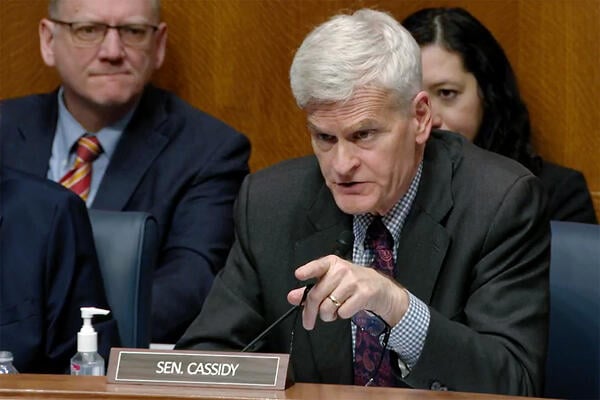
But up until this year, Republicans had limited options to enact legislation that they say would address campus antisemitism. Up until the start of the year, Democrats controlled the Senate and the White House. That meant that no matter what acts of alleged discrimination the committee tried to highlight or what bills it tried to pass, their efforts were almost always dead in the water. But now, with Donald Trump as president and Republicans controlling the House and Senate, the HELP Committee chair, Sen. Bill Cassidy of Louisiana, and his fellow Republicans hold the power. And they were sure to make it known.
“With President Trump in office and a Republican majority in Congress, the time of failed leadership is over,” Cassidy said in his opening remarks. “Universities have been put on notice: Failing to protect a student’s civil rights will no longer be tolerated.”
Cassidy and multiple of his Republican counterparts promoted the Antisemitism Awareness Act, which would require colleges to use the International Holocaust Remembrance Alliance’s definition of antisemitism when conducting civil rights investigations. He also pushed the Protecting Students on Campus Act, which would require institutions to provide students with information about how to file an antisemitism complaint. (Cassidy is lead sponsor of the Protecting Students on Campus Act.)
The witnesses who testified Thursday included rabbis, researchers and Jewish student advocates. As was the case with the hearing over all, they largely echoed comments about campus antisemitism made at previous hearings. The three speakers selected by Republicans believed that the protests were not driven by students but faculty members and outside forces who were trying to demonize the definition of Zionist. The two selected by Democrats said colleges must focus on maintaining free speech while responding to antisemitism and all forms of discrimination.
Meanwhile, lawmakers from both parties wanted to talk about the actions of President Trump since he took office in January.
Republicans praised his decision to strip Columbia University of $400 million in federal funding, saying it was high time to hold the Ivy League institution—an epicenter of campus protests—accountable. (Columbia said last week that it agreed to sweeping demands from the Trump administration, though the funds haven’t been restored.)
The Department of Education has also sent out letters warning more than 60 colleges and universities that they could be the next to face “potential enforcement actions” if they don’t comply with civil rights laws and crack down on antisemitism.
“The days of a tepid response or toothless resolution agreements are over,” said Sen. Ashley Moody, a Florida Republican. “Universities have now been put on notice, and I don’t think there’s any question that there’s been a change in the tenor on how we will protect the rights of Jewish students on our campus.”
The conservatives also used the hearing as a chance to tie allegedly antisemitic protests to concerns about foreign influence on higher education and promote legislation that increases federal oversight of foreign gifts and student visas. On Thursday, the House passed a bill that would increase disclosure requirements for foreign gifts and contracts.
Republicans embraced a report from the Institute for the Study of Global Antisemitism and Policy, which found that American colleges and universities have received more than $3 billion in unreported gifts from Qatar. According to the report, colleges that received undocumented gifts saw a significant increase in incidents of antisemitism compared to those that did not. The report argues, essentially, that the gifts are a use of “soft power” to encourage antisemitic views on campus.
Charles Small, founding director and president of the Institute for the Study of Global Antisemitism and Policy, was one of the witnesses at the hearing, and he urged lawmakers to increase their oversight of what gifts are allowed.
“I don’t think it’s wrong to question foreign funding in universities and colleges and whether foreign nations are trying to persuade or influence or brainwash our children. Do you think that they want us to be more pro-American … is that why they’re giving hundreds of millions of dollars to our universities?” Moody said.
But Sen. Roger Marshall, a Kansas Republican, defended the gifts, saying Qatar played a critical role in the release of Americans held hostage by Hamas.
Sen. Patty Murray, a Democrat from Washington State, said OCR is America’s front line of defense against discrimination. So if the goal is to combat antisemitism, there should be more support and resources distributed to the OCR, not less, she added.
“It’s like saying if you want to fight fires, you should support the fire department. Well, I hate to tell you all, Trump is axing the fire department,” she said. “It’s as straightforward as it gets.”
Last month, the Office for Students (OfS) confirmed the successful bids for their £2 million Equality of Opportunity Innovation Fund, launched to ‘support institutions to undertake new and innovative collaborative work or projects that will reduce risks to equality of opportunity’.
It is the culmination of three years of collaboration, beginning in February 2022 when Impetus hosted John Blake in his first external speaking event as the OfS’s Director for Fair Access and Participation.
This seminal event gave rise to the Third Sector Forum – a quarterly dialogue between the Office for Students and third sector organisations working to support young people into higher education.
As an impact funder supporting the best attainment, engagement, and employment interventions for young people from disadvantaged backgrounds, we recognise the invaluable role of the third sector in addressing deep-seated barriers. We wanted to support this knowledge-sharing in the widening participation space.
Three years on, I spoke to some of the CEOs of Third Sector Forum organisations on what’s made the forum a success.
Trust and openness
I was struck by the number of CEOs who cited the forum’s format as key to its success. While we fund widening participation organisations, Impetus itself is not a direct delivery organisation, meaning we can provide an independent middle ground. As a result, many emphasised the forum’s open and trusting nature and the uniqueness of this set-up. Anna Searle, CEO of The Access Project, reflected on how ‘you don’t often have the [governmental regulatory body] being as open with their constituent group’.
Another key factor in the success of the forum was the genuine engagement from the Office for Students, and particularly John Blake. Jayne Taylor, CEO of The Elephant Group, emphasised how John ‘genuinely listens to the voices around the table’, while Anna was quick to note how he went beyond discussing challenges for the OfS and what was next and provided his genuine views and reflections.
Collaborating and knowledge sharing
Sam Holmes, CEO of Causeway Education, mentioned how participating in the sessions enabled him to form partnerships with other organisations in the space. Sitting next to Jayne when the Innovation Fund was announced, he says they were ‘immediately having conversations about […] potential collaboration’.
For organisations such as Causeway, which occupy a different space to programmatic organisations, it was also valuable to hear from colleagues across the sector. Forum members were able to share updates which, for Sam, demonstrated the wealth of collective knowledge and painted a picture of the higher education landscape.
Shifting the narrative
Action Tutoring is another member of the forum who wouldn’t ordinarily describe itself as a widening participation organisation. Susannah Hardyman, then-CEO, initially wondered if it was the right place for Action Tutoring, whose tutoring stops at age 16. Organisations focusing on Level 2 outcomes have not always been seen as part of the widening participation space, but John Blake’s conscious decision to widen the focus of the equality of opportunity agenda brought them within scope. Over time, Susannah began to feel Action Tutoring had a place, helping to shift the narrative of what ‘widening participation’ means.
At Impetus, we know that each step up the qualification ladder halves your chances of being NEET. We also know that early intervention is critical – before the barriers that young people face become acute – making the case for the importance of Level 2 pathways in achieving equality of opportunity. For Susannah, both the dialogue and John Blake’s emphasis on GCSE attainment, ‘[genuinely] did change the narrative of how we understand widening participation’. The implications of this reverberated beyond the four walls of the forum, opening up opportunities for organisations like Action Tutoring, which was later funded by the University of Brighton to work with two secondary schools on GCSE attainment.
What next?
Policy professionals will know how rare it is to attribute policy change to their work. So, while Third Sector Forum members should undoubtedly shout about the fact that their expertise and dedication have helped to bring about £2 million of funding and a change to regulatory guidance, the work doesn’t end there.
Last year, the widening participation gap grew to 20.8 percentage points – its highest recorded level. The number is staggering, and even more bleak when coupled with a higher education sector on its knees and a ‘fiscal blackhole’ with seemingly no money to plug it up. It is clear that fighting to achieve equality of opportunity is more important than ever, but how?
That a key pillar of the updated regulatory guidance is collaboration with the third sector is a testament to the success of the forum, but we can and must go further.
For Jayne Taylor, this looks like working groups or direct-action areas to facilitate collaboration, leveraging the collective knowledge and resources of the sector. With further investment, the forum could even evolve into an ecosystem, with opportunities for publishing research, bidding and running events together.
Collaboration also looks like an ever-evolving partnership between third sector organisations and the regulator. Anna Searle suggested implementing mechanisms for feedback loops, such as regular newsletters, to continue to foster a transmission of knowledge between forum members and the Office for Students.
For some, it feels like public policy is waiting for a return to pre-pandemic conditions. They believe that to truly move forward, we need to adapt to the present socio-economic landscape. One CEO pointed out the need for realistic conversations about the economic realities of the sector. With 40% of higher education institutions thought to be in deficit in 2023/24, providers and organisations are operating in an unprecedented funding landscape. For Sam Holmes, clearer messaging for charities that have relied on university contracts is increasingly necessary. He suggests there may even be benefits to involving funders in these discussions, alongside considering alternative partnerships, funding models and strategies.
For others, such as Susannah Hardyman, we must continue to reevaluate our understanding of ‘equality of opportunity’. With a record 56% of students now working part-time while studying, foodbank usage doubling since 2022, and 60% stating that money concerns affected their university choice, the landscape has undoubtedly changed. Where two decades ago the focus was relatively narrow – focused mostly around supporting high-achievers from deprived areas into high tariff institutions – this understanding has moved on. For Susannah, this needs to be taken into account, not to quash ambition but to broaden the definition of opportunity to reach as wide a group as possible.
When we hosted the Director for Fair Access and Participation three years ago, he said,
‘We are not short on people who will give up days, weeks, years of their time to pour into projects supporting the vulnerable and disadvantaged. We are not short on good suggestions, possible solutions, and rough ideas how things could be better. No, what we lack, still, is enough commitment for all those dedicated people to work together…’
While the past few years have demonstrated the commitment that may have been missing previously, if we are to give every young person equal opportunity to succeed, our work is far from over.
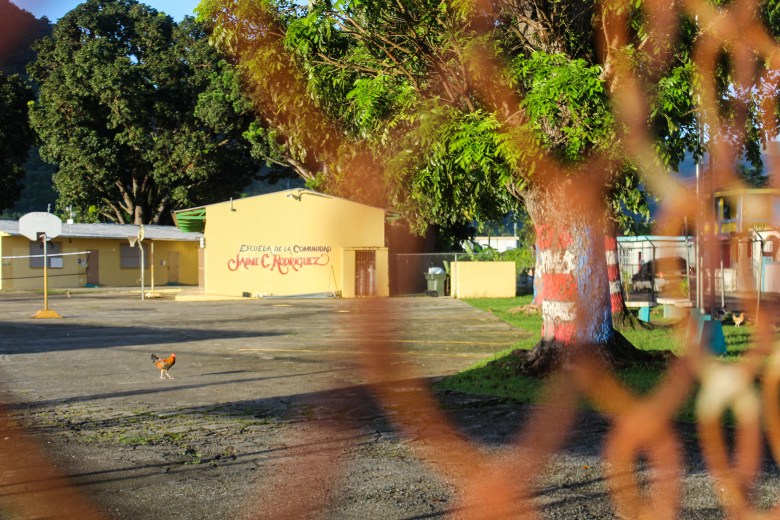
Maraida Caraballo Martinez has been an educator in Puerto Rico for 28 years and the principal of the elementary school Escuela de la Communidad Jaime C. Rodriguez for the past seven. She never knows how much money her school in Yabucoa will receive from the government each year because it isn’t based on the number of children enrolled. One year she got $36,000; another year, it was $12,000.
But for the first time as an educator, Caraballo noticed a big difference during the Biden administration. Because of an infusion of federal dollars into the island’s education system, Caraballo received a $250,000 grant, an unprecedented amount of money. She used it to buy books and computers for the library, white boards and printers for classrooms, to beef up a robotics program and build a multipurpose sports court for her students. “It meant a huge difference for the school,” Caraballo said.
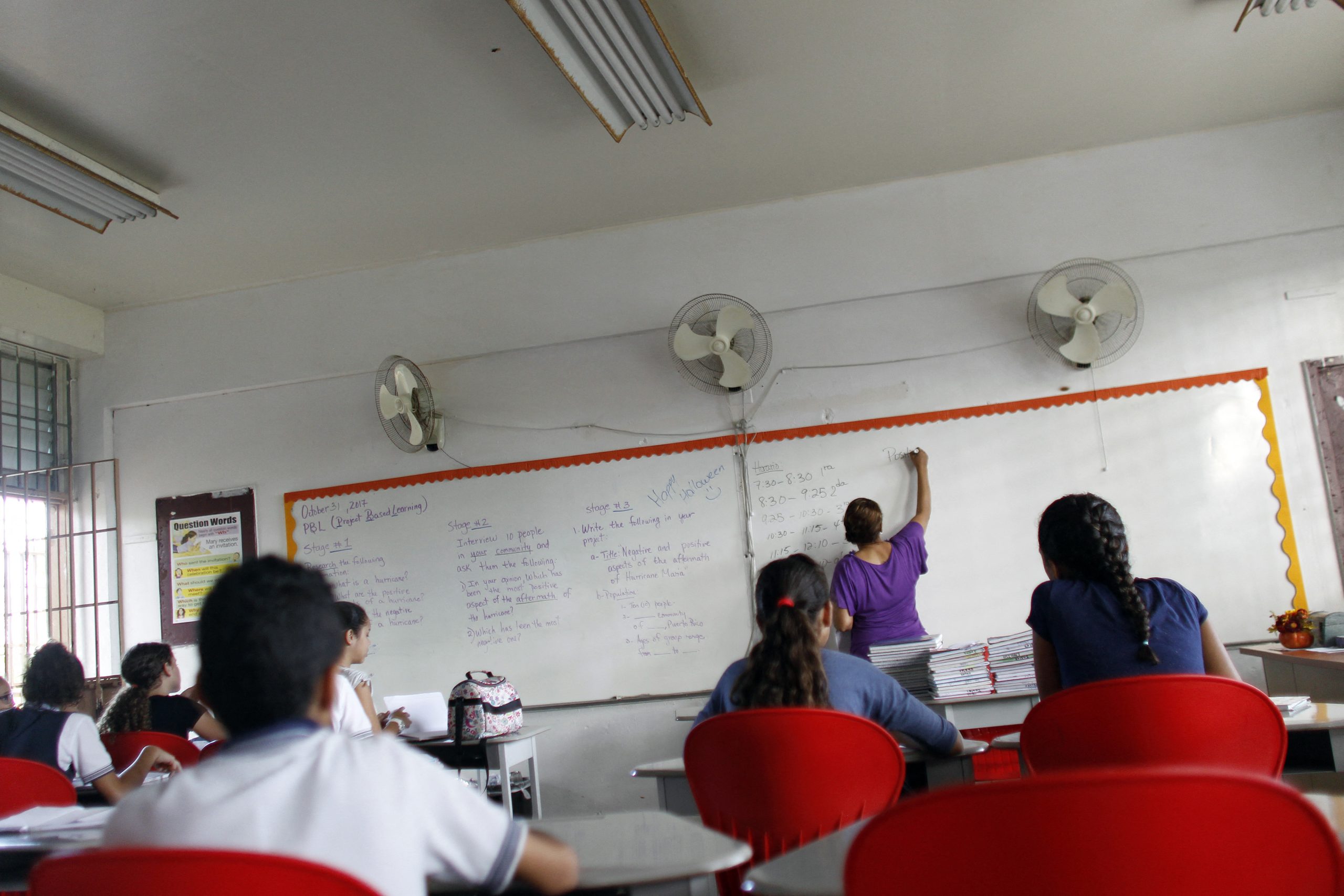
Yabucoa, a small town in southeast Puerto Rico, was one of the regions hardest hit by Hurricane Maria in 2017. And this school community, like hundreds of others in Puerto Rico, has experienced near constant disruption since then. A series of natural disasters, including hurricanes, earthquakes, floods and landslides, followed by the coronavirus pandemic in 2020, has pounded the island and interrupted learning. There has also been constant churn of local education secretaries — seven in the past eight years. The Puerto Rican education system — the seventh-largest school district in the United States — has been made more vulnerable by the island’s overwhelming debt, mass emigration and a crippled power grid.
Maraida Caraballo Martinez has been an educator in Puerto Rico for 28 years and is now the principal of an elementary school. Her school has been slated for closure three times because of mass emigration from the island. Credit: Kavitha Cardoza for The Hechinger Report
Under President Joe Biden, there were tentative gains, buttressed by billions of dollars and sustained personal attention from top federal education officials, many experts and educators on the island said. Now they worry that it will all be dismantled with the change in the White House. President Donald Trump has made no secret of his disdain for the U.S. territory, having reportedly said that it was “dirty and the people were poor.” During his first term, he withheld billions of dollars in federal aid after Hurricane Maria and has suggested selling the island or swapping it for Greenland.
A recent executive order to make English the official language has worried people on the island, where only 1 in 5 people speak fluent English, and Spanish is the medium of instruction in schools. Trump is seeking to eliminate the U.S. Department of Education and has already madesweeping cuts to the agency, which will have widespread implications across the island. Even if federal funds — which last year made up more than two thirds of funding for the Puerto Rican Department of Education, or PRDE — were transferred directly to the local government, it would likely lead to worse outcomes for the most vulnerable children, say educators and policymakers. The PRDE has historically been plagued by political interference, widespread bureaucracy and a lack of transparency.
And the local education department is not as technologically advanced as other state education departments, nor as able to disseminate best practices. For example, Puerto Rico does not have a “per pupil formula,” a calculation commonly used on the mainland to determine the amount of money each student receives for their education. Robert Mujica is the executive director of the Puerto Rico Financial Oversight and Management Board, first convened under President Barack Obama in 2016 to deal with the island’s financial morass. Mujica said Puerto Rico’s current allocation of education funds is opaque. “How the funds are distributed is perceived as a political process,” he said. “There’s no transparency and there’s no clarity.”
Related: Become a lifelong learner. Subscribe to our free weekly newsletter featuring the most important stories in education.
In 2021, Miguel Cardona, Biden’s secretary of education, promised “a new day” for Puerto Rico. “For too long, Puerto Rico’s students and educators were abandoned,” he said. During his tenure, Cardona signed off on almost $6 billion in federal dollars for the island’s educational system, leading to a historic pay increase for teachers, funding for after-school tutoring programs, hiring of hundreds of school mental health professionals and the creation of a pilot program to decentralize the PRDE.
Cardona designated a senior adviser, Chris Soto, to be his point person for the island’s education system to underscore the federal commitment. During nearly four years in office, he made more than 50 trips to the island. Carlos Rodriguez Silvestre, the executive director of the Flamboyan Foundation, a nonprofit in Puerto Rico that has led children’s literacy efforts on the island, said the level of respect and sustained interest felt like a partnership, not a top-down mandate. “I’ve never seen that kind of attention to education in Puerto Rico,” he said. “Soto practically lived on the island.”
Soto also worked closely with Victor Manuel Bonilla Sánchez, the president of the teachers union, Asociación de Maestros de Puerto Rico, or AMPR, which resulted in a deal in which educators received $1,000 more a month to their base salary, a nearly 30 percent increase for the average teacher.“It was the largest salary increase in the history of teachers in Puerto Rico,” Bonilla said, though even with the increase, teachers here still make far less money than teachers on the mainland.
One of the biggest complaints Soto said he heard was how rigid and bureaucratic the Puerto Rico Department of Education was, despite a 2018 education reform law that allows for more local control. The education agency — the largest unit of government on the island, with the most employees and the biggest budget — was set up so that the central office had to sign off on everything. So Soto created and oversaw a pilot program in Ponce, a region on the island’s southern coast, focusing on decentralization.
For the first time, the local community elected an advisory board of education, and superintendent candidates had to apply rather than be appointed, Soto said. The superintendent was given the authority to sign off on budget requests directly rather than sending them through officials in San Juan, as well as the flexibility to spend money in his region based on individual schools’ needs.
In the past, that wasn’t a consideration: For example, Yadira Sanchez, a psychologist who has worked in Puerto Rican education for more than 20 years, remembers when a school got dozens of new air conditioners even though it didn’t need it. “They already had functioning air conditioners,” she said, “so that money was lost.”
The pilot project also focused on increasing efficiency. For example, children with disabilities are now evaluated at their schools rather than having to visit a special center. And Soto says he tried to remove politics and increase transparency around spending in the PRDE as well. “You can improve invoices, but if your political friends are getting the work, then you don’t have a good school system,” he said.
A school bus under a tree that fell during Hurricane Maria, which hit the island of Puerto Rico in September 2017. More than a year later, it had not been removed. Credit: Al Bello/Getty Images for Lumix
Under Biden, Puerto Rico also received a competitive U.S. Department of Education grant for $10.5 million for community schools, another milestone. And the federal department started including data on the territory in some education statistics collected. “Puerto Rico wasn’t even on these trackers, so we started to dig into how do we improve the data systems? Unraveling the data issue meant that Puerto Rico can properly get recognized,” Soto said.
But already there are plans to undo Cardona’s signature effort in Ponce. The island’s newly elected governor, Jenniffer González Colón, is a Republican and a Trump supporter. The popular secretary of education, Eliezer Ramos Parés, returned earlier this year to head the department after leading it from April 2021 to July 2023 when the governor unexpectedly asked him to resign — not an unusual occurrence within the island’s government, where political appointments can end suddenly and with little public debate. He told The Hechinger Report that the program won’t continue in its current form, calling it “inefficient.”
“The pilot isn’t really effective,” he said, noting that politics can influence spending decisions not only at the central level but at the regional level as well. “We want to have some controls.” He also said expanding the effort across the island would cost tens of millions of dollars. Instead, Ramos said he was looking at more limited approaches to decentralization, around some human resource and procurement functions. He said he was also exploring a per pupil funding formula for Puerto Rico and looking at lessons from other large school districts such as New York City and Hawaii.
While education has been the largest budget item on the island for years, it’s still far less than any of the 50 states spend on each student. Puerto Rico spends $9,500 per student, compared with an average of $18,600 in the states.
The U.S. Department of Education, which supplements local and state funding for students in poverty and with disabilities, has an outsized role in Puerto Rico schools. On the island, 55 percent of children live below the poverty line, compared with 17 percent in the 50 states; for students in special education, the figures are 35 percent and 15 percent, respectively. In total, during fiscal year 2024, more than 68 percent of the education budget on the island comes from federal funding, compared to 11 percent in U.S. states. The department also administers Pell Grants for low-income students — some 72 percent of Puerto Rican students apply — and supports professional development efforts and initiatives for Puerto Rican children who move back and forth between the mainland and territory.
Linda McMahon, Trump’s new education secretary, has reportedly said that the government will continue to meet its “statutory obligations” to students even as the department shuts down or transfers some operations and lays off staff. The U.S. Department of Education did not respond to requests for comment.
Some say the Biden administration’s pouring billions of dollars into a troubled education system with little accountability has created unrealistic expectations and there’s no plan for what happens after money is spent. Mujica, the executive director of the oversight board, said the infusion of funds postponed tough decisions by the Puerto Rican government. “When you have so much money, it papers over a lot of problems. You didn’t have to deal with some of the challenges that are fundamental to the system.” And he said there is little discussion of what happens when that money runs out. “How are you going to bridge that gap? Either those programs go away or we’re going to have to find the funding for them,” Mujica said.
He said efforts like the one in Ponce to bring decision making closer to where the students’ needs are is “vitally important.” Still, he said he’s not sure the money improved student outcomes. “This was a huge opportunity to make fundamental changes and investments that will yield long-term results. I’m not sure that we’ve seen the metrics to support that.”
Puerto Rico is one of the most educationally impoverished regions, with academic outcomes well below the mainland. On the math portion of the National Assessment of Educational Progress, or NAEP, a test that students across the U.S. take, just 2 percent of fourth graders in Puerto Rico were proficient, the highest score ever recorded for the island, and zero percent of eighth graders were. Puerto Rican students don’t take the NAEP for reading because they learn in Spanish, not English, though results shared by Ramos at a press conference in 2022 showed only 1 percent of third graders were reading at grade level.
There are some encouraging efforts. Flamboyan Foundation, the nonprofit in Puerto Rico, has been leading an island-wide coalition of 70 partners to improve K-3 literacy, including through professional development. Teacher training through the territory’s education department has often been spotty or optional.
The organization now works closely with the University of Puerto Rico and, as part of that effort, oversees spending of $3 million in literacy training. Approximately 1,500 or a third of Puerto Rico’s K-5 teachers have undergone the rigorous training. Educators were given $500 as an incentive for participating, along with books for their classrooms and three credit hours in continuing education. “It was a lot of quality hours. This was not the ‘spray and pray’ approach,” said Silvestre. That effort will continue, according to Ramos, who called it “very effective.”
A new reading test for first through third graders the nonprofit helped design showed that between the 2023 and 2024 school years, most children were below grade level but made growth in every grade. “But we still have a long way to go so that this data can get to teachers in a timely manner and in a way that they can actually act on it,” Silvestre said.
Kristin Ehrgood, Flamboyan Foundation’s CEO, said it’s too soon to see dramatic gains. “It’s really hard to see a ton of positive outcomes in such a short period of time with significant distrust that has been built over years,” she said. She said they weren’t sure how the Trump administration may work with or fund Puerto Rico’s education system but that the Biden administration had built a lot of goodwill. “There is a lot of opportunity that could be built on, if a new administration chooses to do that.”
Another hopeful sign is that the oversight board, which was widely protested when it was formed, has cut the island’s debt from $73 billion to $31 billion. And last year board members increased education spending by 3 percent. Mujica said the board is focused on making sure that any investment translates into improved outcomes for students: “Our view is resources have to go into the classroom.”
Betty A. Rosa, education commissioner and president of the University of the State of New York and a member of the oversight board, said leadership churn in Puerto Rico drives its educational instability. Every new leader is invested in “rebuilding, restructuring, reimagining, pick your word,” she said. “There is no consistency.” Unlike her New York state position, the Puerto Rican education secretary and other positions are political appointments. “If you have permanent governance, then even when the leadership changes, the work continues.”
Ramos, who experienced this instability when the previous governor unexpectedly asked to resign in 2023, said he met McMahon, the new U.S. secretary of education, in Washington, D.C., and that they had a “pleasant conversation.” “She knows about Puerto Rico, she’s concerned about Puerto Rico, and she demonstrated full support in the Puerto Rico mission,” he said. He said McMahon wanted PRDE to offer more bilingual classes, to expose more students to English. Whether there will be changes in funding or anything else remains to be seen. “We have to look at what happens in the next few weeks and months and how that vision and policy could affect Puerto Rico,” Ramos said.
Ramos was well-liked by educators during his first stint as education secretary. He will also have a lot of decisions to make, including whether to expand public charter schools and close down traditional public schools as the island’s public school enrollment continues to decline precipitously. In the past, both those issues led to fierce and widespread protests.
Soto says he’s realistic about the incoming administration having “different views, both ideologically and policywise,” but he’s hopeful the people of Puerto Rico won’t want to go back to the old way of doing things. “Somebody said, ‘You guys took the genie out of the bottle and it’s going to be hard to put that back’ as it relates to a student-centered school system,” Soto said.
Cardona, whose grandparents are from the island, said Puerto Rico had seen “academic flatlining” for years. “We cannot accept that the students are performing less than we know they are capable of,” he told The Hechinger Report, just before he signed off as the nation’s top education official. “We started change; it needs to continue.”
Principal Carabello’s small school of 150 students and 14 teachers has been slated for closure three times already, though each time it has been spared in part because of community support. She’s hopeful that Ramos, with whom she’s worked previously, will turn things around. “He knows the education system,” she said. “He’s a brilliant person, open to listen.”
Escuela de la Communidad Jaime C. Rodriguez is a Montessori school in Yabucoa, Puerto Rico, that did not have any sports facilities for its students. It recently began work on a multipurpose sports center, made possible by federal funds under former President Joe Biden. Credit: Kavitha Cardoza for The Hechinger Report
But the long hours of the past several years have taken a toll on her. She is routinely in school from 6:30 a.m. to 6:30 p.m. “You come in when it’s dark and you leave when it’s dark,” she said. There have been many new platforms to learn and new projects to implement. She wants to retire but can’t afford to. After decades of the local government underfunding the pension system, allowances that offset the high price of goods and services on the island were cut and pension plans were frozen.
Now instead of retiring with 75 percent of her salary, Carabello will receive only 50 percent, $2,195 a month. She is entitled to Social Security benefits, but it isn’t enough to make up for the lost pension. “Who can live with $2,000 in one month? Nobody. It’s too hard. And my house still needs 12 years more to pay.”
Carabello, who is always so strong and so optimistic around her students, teared up. But it’s rare that she allows herself time to think about herself. “I have a great community. I have great teachers and I feel happy with what I do,” she said.
The Hechinger Report provides in-depth, fact-based, unbiased reporting on education that is free to all readers. But that doesn’t mean it’s free to produce. Our work keeps educators and the public informed about pressing issues at schools and on campuses throughout the country. We tell the whole story, even when the details are inconvenient. Help us keep doing that.
Every semester, a student hoping to “earn their desired grade” approaches me at the last minute, asking to make up all their missed assignments. I have a standard missed due date policy, 1) let me know (communication) and 2) get it done in a week (extended deadline). The students requesting to stockpile assignments at the end of the semester usually had not completed the assignment at all or had not completed the assignment even with an extended deadline. Basically, they hadn’t even tried to complete assignments. It wasn’t like they had completed it at 12:01 am and it was due at 11:59 pm.
That being said, I do wonder, Why not grant a student’s request to get it (the class) all done at once? You know the requests: “I know this already. Isn’t there a test I can take so I don’t have to sit through the class?” or “I am sure I can get all these assignments done before finals week.” It makes sense that if a student can pass all the assessments, they should pass the class. So why not just complete all the assessments at the same time?
Would these students who were absent from most of the class or hadn’t done any of the assignments on their due dates pass the class with a C or better? Probably. So why enforce due dates at all. Why shouldn’t a professor simply allow a student to complete all the assignments before final grades are due without regard to timing?
The caveat in this “all at once” scenario is that a successful grade is wrongly associated with learning. If a student completes all the assignments in a few days during the semester, then assessments are the sole criteria used to define successful learning. However, the truth is that learning means much more than successfully navigating a certain percentage of the assignments.
In my reality, most students could use their previous knowledge to muddle through the assessments of an introductory course at an accelerated pace. Let’s view the situation from the perspective of a student. They have after all been in school for the last 13 years and they have become really good at taking quizzes and exams and writing essays with thesis statements. My pre- and post-quiz data for the course reveals this. At the beginning of the semester without warning, I ask a group of anxious, ill-prepared students to (within a limited and unreasonable amount of time) answer 20 questions about a topic that they haven’t even considered before walking into the room. The questions are a sampling of the final exam. The average on the pre-quiz hovers at about 50%. Given more time and a couple of days to study and contemplate, most of these students would pass the pre-quiz, and in essence, have the knowledge required to pass the final exam.
Nevertheless, is completing all the assessments what defines learning the contents of a course? Should a student be allowed to stockpile all the assignments and get credit for them as long as they get them done before the final grades are due. In my humble opinion, absolutely not, and it’s not for the classic soft skills reason. Of course, deadlines help students to navigate the world, (e.g. being responsible). After all, the professor is required to turn in final grades by a deadline.
That said, to me, deadlines are important because people (not just students) learn best when information is spaced out or interleaved (Birnbaum et al., 2013; Samani and Pan, 2021). In order to retrieve something from memory, you need time to learn it. Retrieving information is when you know something without having to look it up—like your name and phone number or all the lyrics of your favorite song. This type of learning requires time—spaced learning. You need to learn it, forget it, be asked about it, refresh it, forget it, be asked about it, refresh it and then if you’re lucky you can retrieve it (Feng et al., 2019; Kobayashi, 2022). This is considered spaced learning and is why deadlines are so important.
Due dates provide the structure for spaced learning and learning that is more substantive. Much to the chagrin of the student who wants to “get it all done at once,” this isn’t the way to learn retrievable material. Retrieving information is what allows you to progress to the next set of information and then progress to creativity and eventually creation. Assessments play a crucial role, but true learning doesn’t come from merely completing them. Instead, it happens through active participation in class, where students engage with the material and are consistently challenged by the professor to recall and apply previous lessons.
As professors, we should enforce due dates to give students the time to learn content in a meaningful and retrievable way. But maybe, just maybe, we can do it with a spoon full of sugar.
Adriana J. LaGier is an American Cell Biologist, whose main area of research is active learning and mechanobiology. She is a professor of biology at Grand View University in Des Moines, Iowa, specializing in teaching undergraduate level general biology and cell biology courses.
References
Birnbaum, Monica S., Nate Kornell, Elizabeth Ligon Bjork, and Robert A. Bjork. 2013. “Why Interleaving Enhances Inductive Learning: The Roles of Discrimination and Retrieval.” Memory & Cognition 41 (3): 392–402. https://doi.org/10.3758/s13421-012-0272-7.
Feng, Kanyin, Xiao Zhao, Jing Liu, Ying Cai, Zhifang Ye, Chuansheng Chen, and Gui Xue. 2019. “Spaced Learning Enhances Episodic Memory by Increasing Neural Pattern Similarity Across Repetitions.” The Journal of Neuroscience 39 (27): 5351–60. https://doi.org/10.1523/JNeurosci.2741-18.2019.
Kobayashi, Keiichi. 2022. “The Retrieval Practice Hypothesis in Research on Learning by Teaching: Current Status and Challenges.” Frontiers in Psychology 13 (May):842668. https://doi.org/10.3389/fpsyg.2022.842668.
Samani, Joshua, and Steven C. Pan. 2021. “Interleaved Practice Enhances Memory and Problem-Solving Ability in Undergraduate Physics.” NPJ Science of Learning 6 (November):32. https://doi.org/10.1038/s41539-021-00110-x.
Every semester, a student hoping to “earn their desired grade” approaches me at the last minute, asking to make up all their missed assignments. I have a standard missed due date policy, 1) let me know (communication) and 2) get it done in a week (extended deadline). The students requesting to stockpile assignments at the end of the semester usually had not completed the assignment at all or had not completed the assignment even with an extended deadline. Basically, they hadn’t even tried to complete assignments. It wasn’t like they had completed it at 12:01 am and it was due at 11:59 pm.
That being said, I do wonder, Why not grant a student’s request to get it (the class) all done at once? You know the requests: “I know this already. Isn’t there a test I can take so I don’t have to sit through the class?” or “I am sure I can get all these assignments done before finals week.” It makes sense that if a student can pass all the assessments, they should pass the class. So why not just complete all the assessments at the same time?
Would these students who were absent from most of the class or hadn’t done any of the assignments on their due dates pass the class with a C or better? Probably. So why enforce due dates at all. Why shouldn’t a professor simply allow a student to complete all the assignments before final grades are due without regard to timing?
The caveat in this “all at once” scenario is that a successful grade is wrongly associated with learning. If a student completes all the assignments in a few days during the semester, then assessments are the sole criteria used to define successful learning. However, the truth is that learning means much more than successfully navigating a certain percentage of the assignments.
In my reality, most students could use their previous knowledge to muddle through the assessments of an introductory course at an accelerated pace. Let’s view the situation from the perspective of a student. They have after all been in school for the last 13 years and they have become really good at taking quizzes and exams and writing essays with thesis statements. My pre- and post-quiz data for the course reveals this. At the beginning of the semester without warning, I ask a group of anxious, ill-prepared students to (within a limited and unreasonable amount of time) answer 20 questions about a topic that they haven’t even considered before walking into the room. The questions are a sampling of the final exam. The average on the pre-quiz hovers at about 50%. Given more time and a couple of days to study and contemplate, most of these students would pass the pre-quiz, and in essence, have the knowledge required to pass the final exam.
Nevertheless, is completing all the assessments what defines learning the contents of a course? Should a student be allowed to stockpile all the assignments and get credit for them as long as they get them done before the final grades are due. In my humble opinion, absolutely not, and it’s not for the classic soft skills reason. Of course, deadlines help students to navigate the world, (e.g. being responsible). After all, the professor is required to turn in final grades by a deadline.
That said, to me, deadlines are important because people (not just students) learn best when information is spaced out or interleaved (Birnbaum et al., 2013; Samani and Pan, 2021). In order to retrieve something from memory, you need time to learn it. Retrieving information is when you know something without having to look it up—like your name and phone number or all the lyrics of your favorite song. This type of learning requires time—spaced learning. You need to learn it, forget it, be asked about it, refresh it, forget it, be asked about it, refresh it and then if you’re lucky you can retrieve it (Feng et al., 2019; Kobayashi, 2022). This is considered spaced learning and is why deadlines are so important.
Due dates provide the structure for spaced learning and learning that is more substantive. Much to the chagrin of the student who wants to “get it all done at once,” this isn’t the way to learn retrievable material. Retrieving information is what allows you to progress to the next set of information and then progress to creativity and eventually creation. Assessments play a crucial role, but true learning doesn’t come from merely completing them. Instead, it happens through active participation in class, where students engage with the material and are consistently challenged by the professor to recall and apply previous lessons.
As professors, we should enforce due dates to give students the time to learn content in a meaningful and retrievable way. But maybe, just maybe, we can do it with a spoon full of sugar.
Adriana J. LaGier is an American Cell Biologist, whose main area of research is active learning and mechanobiology. She is a professor of biology at Grand View University in Des Moines, Iowa, specializing in teaching undergraduate level general biology and cell biology courses.
References
Birnbaum, Monica S., Nate Kornell, Elizabeth Ligon Bjork, and Robert A. Bjork. 2013. “Why Interleaving Enhances Inductive Learning: The Roles of Discrimination and Retrieval.” Memory & Cognition 41 (3): 392–402. https://doi.org/10.3758/s13421-012-0272-7.
Feng, Kanyin, Xiao Zhao, Jing Liu, Ying Cai, Zhifang Ye, Chuansheng Chen, and Gui Xue. 2019. “Spaced Learning Enhances Episodic Memory by Increasing Neural Pattern Similarity Across Repetitions.” The Journal of Neuroscience 39 (27): 5351–60. https://doi.org/10.1523/JNeurosci.2741-18.2019.
Kobayashi, Keiichi. 2022. “The Retrieval Practice Hypothesis in Research on Learning by Teaching: Current Status and Challenges.” Frontiers in Psychology 13 (May):842668. https://doi.org/10.3389/fpsyg.2022.842668.
Samani, Joshua, and Steven C. Pan. 2021. “Interleaved Practice Enhances Memory and Problem-Solving Ability in Undergraduate Physics.” NPJ Science of Learning 6 (November):32. https://doi.org/10.1038/s41539-021-00110-x.
Plenty has been written in the last few years that discusses the way the pandemic and the cost-of-living and housing crisis have driven the rise in commuter students across the sector.
And as the commuter student series has demonstrated, universities and student unions can take steps to better meet the needs of this community.
We know they are less engaged, more financially constrained, exhausted, and more likely to have lower degree outcomes compared to campus students.
And yet despite knowing all of this, it sometimes feels like we are circling the drain when it comes to implementing better policies for commuter students.
And part of the issue is that we are still framing students’ decision to commute as a choice rather than a necessity when it comes to decision making.
While some may argue this is semantics and that the two words are interchangeable, the difference in experience between choice commuters and necessity commuters is something to interrogate.
Spot the difference
Last year, I read the Blackbullion Student Money & Wellbeing 2024 report and for students who identified themselves as commuters they were asked, “Is this by choice or a necessity?”
319 students identified by choice and 234 by necessity.
While the difference in word choice might seem minor, the data presented throughout the report revealed their experiences were in fact quite different.
For example, non-commuter students need about £577 a month more than what they currently have compared to £671 for commuters by choice and £782 for commuters due to necessity.
Recognising these financial differences as well as others could help universities provide more targeted support.
Things like commuter friendly timetables, better event planning and reducing hidden course costs benefit all students, but it could also potentially provide a noticeable financial reprieve for those who commute due to necessity.
To better support different student groups the sector needs a deeper understanding of the nuances within their student population and the impact on attendance, engagement, and belonging in order to design effective interventions.
Our commuters
At Royal Holloway, 40 per cent of our students are commuters.
And this year the students’ union is running a policy inquiry to examine their academic experience, seeking feedback from current commuter students through online surveys and qualitative activities like a paid in-person focus group and a journaling activity.
We followed Blackbullion’s lead and asked students whether they commuted by choice or necessity in our term one online survey which received 654 responses.
58 per cent of respondents identified as necessity commuters, 39 per cent were choice commuters and three per cent preferred not to say.
The patterns across year groups revealed undergraduates in earlier year groups were more likely to commute by choice while late-year undergraduate and postgraduate students commuted due to necessity.
When asked to explain in more detail why they commuted, the top reasons given were often financially motivated around expensive accommodation, the cost-of-living crisis, not wanting to take out a maintenance loan, and the fact they could not justify the expense of living out when they had close transport links to the university.
Sticky campus
We also wanted to better understand commuter travel patterns.
Looking at the data we learned that 72 per cent of overall commuters come to campus only on the days they have teaching, 17 per cent come to campus more days than they have scheduled teaching and 11 per cent come less days than they have teaching.
Within the 17 per cent who come to campus more days, 63 per cent of those students are commuters by necessity compared to 33 per cent of commuters by choice.
Despite extending their time on campus, 60 per cent of necessity commuters reported that their commute negatively impacts their ability to socialise with other students compared to about 41 per cent of commuters by choice who felt this way.
In terms of forming friendships, commuters by choice felt more positively with 67 per cent feeling they have had good opportunities to form friendships and foster a sense of belonging within the student community versus 55 per cent of commuters by necessity.
These differences extend into their academic socialisation, and 55 per cent of choice commuters agreed to an extent they felt part of an academic community compared to 48 per cent of necessity commuters.
Our survey highlighted that managing their studies was a major barrier which impacted daytime socialisation for commuter students. 85 per cent of choice commuters stated they found their workload manageable versus 72 per cent of necessity commuters.
A high proportion of respondents indicated they manage their workload, but they compensate by studying during their commutes or teaching breaks, limiting their time to socialise.
Taking all of this into account it is no surprise that necessity commuters were more likely to report their commute affects their physical or mental well-being at 37 per cent compared to 17 per cent of choice commuters.
Where do we go from here?
When it comes to commuting by choice or by necessity, necessity commuters face greater financial, academic and social challenges.
Once universities and students’ unions reframe their thinking around commuting as a necessity rather than a choice, they can create more targeted support to support this community.
Things that might alleviate the pressures commuters face include commuter-friendly timetables, hybrid teaching options, travel bursaries or affordable overnight accommodation options to reduce exam stress or attendance at late-night events.
We also need to reach out and ask what types of commuter-friendly events and initiatives they would like and what would work for them to build better social inclusion on their terms.
Right now, commuter students feel left behind and invisible when they’re on campus. But we can change this narrative if we rethink our perception of this community and create more targeted policies to support them across their student journey by first understanding the nuance.
51,000 alumni weigh in on giving priorities, engagement preferences, and more.
This blog features an excerpt from Howard Heevner, fundraising industry leader and co-author of the 2025 RNL National Alumni Survey.
RNL’s 2025 National Alumni Survey was just released and, while the insights gleaned from this report are always valuable, one could argue that this data is worth its weight in gold during times of extreme uncertainty like we are currently facing in our sector. After all, there are a few universal truths that strategic fundraisers understand, regardless of differing priorities, levels of experience, or overall philosophy:
“Hope”‘” is not a strategy.
Stewardship matters.
You will never regret confirming your flight departure time ahead of an important donor visit…
When in doubt, go straight to the source: your donors.
RNL’s National Alumni Survey gives fundraisers a valuable opportunity to refine their engagement strategies by focusing on what truly matters—understanding donor expectations. By analyzing responses from more than 51,000 alumni across generations and institutions of all types, this report sheds light on alumni sentiments toward their alma maters, their giving priorities, generational volunteer trends, and the motivations behind their contributions of time, talent, and financial support.
Facilitated by RNL’s Sarah Kleeberger, this report also benefits from the expertise of longtime RNL partner and industry leader Howard Heevner. Howard provides both a foreword and conclusion to the report, offering insightful commentary, practical applications, and a forward-looking perspective on the future of donor engagement.
Excerpt from the 2025 RNL National Alumni Survey Report, written by Howard Heevner:
Howard Heevner
As part of RNL’s second annual research study, we are again sharing the collective wisdom of 51,000 alumni representing a broad spectrum of higher education. The opportunity to provide a conduit for these voices to be heard is an honor, and along with the team at RNL, we are excited to share the feedback alumni from 21 institutions.
In higher education, we often spend our time looking inward or looking at other institutions instead of turning to those we wish to connect, engage, and inspire to be in a closer relationship with our institutions. For decades, we have been able to rely on an expectation of loyalty from our alumni because that’s how it’s always been. However, so many factors have changed the nature of that relationship and those expectations. Among them are the rising costs of education, the implied and often explicit promise that degree achievement will provide you with a pass to greater opportunity, and the increasing mistrust of institutions and higher education.
There is a growing concern for our pipeline of donors. We have seen a dramatic decrease in alumni donor counts across the United States over the past three decades. These trends pre-date the pandemic but seem to be exacerbated post-pandemic. Many schools are struggling to acquire new donors and are searching for new methodologies to do so. However, it seems most often we are taking the fractured giving structures that brought us here and bringing those into these new strategies. Maybe the issue isn’t our tools or strategies, but our ability to authentically connect with our alumni.
This week on the podcast we’re discussing the Office for Students fine of £585,000 levied against the University of Sussex for breaches of free speech conditions, as vice chancellor Sasha Roseneil calls the process “Kafka-esque” and plans a legal challenge.
Plus we examine what Bridget Phillipson has called “one of the biggest financial scandals universities have faced” – franchising. Does the scandal point towards a shift towards a more “planned” system?
With Vivienne Stern, Chief Executive at Universities UK, Jonathan Simons, Partner and Head of the Education Practice at Public First, Debbie McVitty, Editor at Wonkhe and presented by Mark Leach, Editor-in-Chief at Wonkhe.