Author: admin

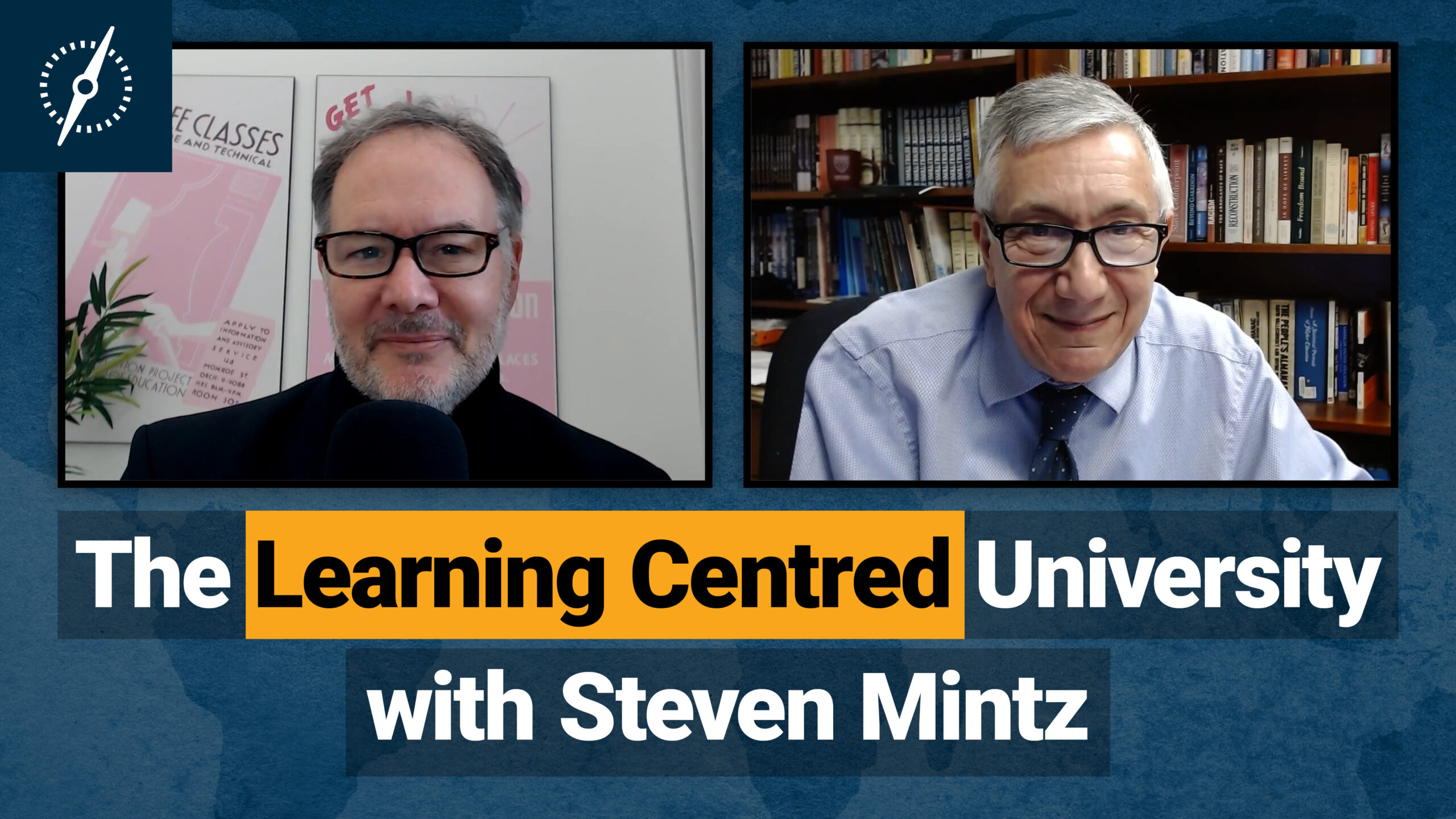
  • The Learning Centred University with Steven Mintz

    The Learning Centred University with Steven Mintz

    Hi everyone, Tiffany and Sam here — your World of Higher Education podcast producers. While Alex is away in Japan, we’re here to introduce this week’s episode.

    In this interview, Alex speaks with Steven Mintz, a renowned scholar and postdoctoral researcher, and author of the book, “The Learning-Centered University: Making College a More Developmental, Transformational, and Equitable Experience” In the following conversation, Mintz discusses what makes a learning-centered university, the benefits of active learning over traditional lectures, and the practical challenges faced in implementing these changes. The discussion also delves into alternative scalable learning models, competency-based education, and the importance of holistic student support systems. Steven also reflects on his experience leading digital learning transformations and provides actionable steps for universities aiming to become learning-centered institutions. Have a listen.


    The World of Higher Education Podcast
    Episode 3.25 | The Learning Centred University with Steven Mintz 

    Transcript

    Alex Usher: Steve, your book makes a pretty strong case for universities shifting from being to what you’d call teaching-centred to being learning-centred. What does that actually mean? In practice, what is a learning-centred university, and how is it different from a teaching-centred one?

    Steven Mintz: If you look at the statistics—even in discussion classes—about 80 percent of classroom time is spent with the instructor transmitting information. And while you can certainly learn from listening to lectures, you can learn a lot more if you’re actually engaged in inquiry, analysis, discussion, and the like. What we’ve done is turn teaching pretty much into a performance, as opposed to focusing on what we’re really interested in—which is learning.

    Alex Usher: So, to use a phrase that was popular about a decade ago—more “guide on the side,” less “sage on the stage”?

    Steven Mintz: I actually disagree with that statement. I believe a professor needs to be a learning architect—essentially, a learning engineer who figures out what students need to know and develops strategies to help them acquire that knowledge. So, it’s not quite as passive as “guide on the side.” A professor is not just a tutor; a professor is a designer of learning experiences—or at least, that’s what a professor ought to be.

    Alex Usher: We’ll come back to how we achieve that in a minute, but—it seemed to me, as I was reading the book, that a lot of what you’re arguing for, implicitly at least, is a lot more resource-intensive than what we’re doing now. You know, we’re talking about smaller classes, personalized instruction, that kind of thing. How do universities manage that? How can they achieve it when budgets are shrinking all the time?

    Steven Mintz: Right now, we essentially have two types of classes: lecture classes and discussion classes. But there are other kinds of classes—other kinds of learning experiences—that we know work, and that we haven’t tried as much as we ought to. We know that in creative writing and art, students take studio classes, where they get a lot of input and feedback from peers. That’s scalable. We have experience with game-designed learning. The most famous example is Reacting to the Past, where students take on roles as historical actors. That’s expandable, and we know it works. Field-based learning works. Service-learning works. So let’s not stay wedded to just two models. Let’s think about other ways we can help students learn.

    Alex Usher: The great thing about the two types of classes we have now is that they seem easier to scale than what you’re talking about. Doesn’t cost come into it somewhere?

    Steven Mintz: Well, let’s think about that for a moment. If we adopt a hybrid approach, where a large part of the class is online and the active learning takes place face-to-face, that’s a scalable model. I’ve created interactive courseware with my students that includes simulations, animations, all kinds of exciting inquiry-based activities, and embedded assessments. But I combine that with active learning in the in-person environment. So in other words, by dividing the delivery, I can double the number of students served.

    Alex Usher: Presumably one of the barriers to this—and you’ll know this from your time in administration—is that it requires faculty to really change their approach, right? I mean, they’ve grown up in the kind of system you described, with those two kinds of classes, and many of them have become comfortable teaching that way over the course of their careers.

    How do you get faculty to rethink those traditional teaching methods? How do you incentivize them to adopt new approaches?

    Steven Mintz: You know, it’s shocking that college professors are the only professionals who aren’t mandated to do professional development. The assumption is that in graduate school, you learned everything you needed to know—and if you didn’t learn it there, you picked it up as an undergraduate by watching others teach. But we know we need to move in a different direction. So the question is: how do we do that?

    First of all, there are always individuals who are pace-setters—innovators—and we need to give those people greater leeway to do what they want to do.

    Second, we need to figure out how to offer professional development in ways that faculty find welcoming and appealing.

    Third, we need to showcase success. We need to reward and incentivize faculty to try new and interesting things.

    Many faculty members already have tools at their disposal that could offer real insight. For example, I get a lot of statistical information from my learning management system about student engagement and where students are getting confused. I can use that data to improve my classes. But we’re not doing enough to make it easy for faculty to use those tools.

    Alex Usher: One of the learning-centred models that’s often pitched is competency-based education. And it’s interesting—you talk a fair bit about it in your book. It strikes me that CBE is relatively straightforward in fields like nursing. Western Governors University, for example, is well known for its CBE models in nursing and other professional areas. But you don’t tend to see it in fields like English, history, or philosophy.

    How do you see competency-based education being integrated into the humanities, social sciences, or even the pure sciences?

    Steven Mintz: There are a couple of different ways to think about competency-based education—and one of those ways, I think, is quite misleading.

    Many faculty members assume that CBE is synonymous with online or asynchronous education. But that’s not how I see it. I think of it as an approach where you first determine what literacies and skills you want students to acquire, then figure out how to instill and cultivate those skills, and finally, how to assess them to make sure students have actually mastered them.

    This shouldn’t be a radical idea. Medical schools have already adopted competency-based education, and that’s largely because many medical students don’t go to lectures anymore.

    They’re do-it-yourself learners—they’re among the best students we have in higher education—and they needed a different approach. Medical schools have found that CBE is a big part of the answer. You tell students what they need to know, you tell them the level at which they need to perform—and, amazingly, they do it.

    Alex Usher: Well, they do it—but even medicine is a bit more outcome-based than, say, history or philosophy, right? I’m curious about your thoughts on examples like Minerva—the Minerva Project—and the way they’ve been trying to apply competency-based approaches to higher education. Their model involves having evaluators watch classroom recordings and assess whether students are demonstrating things like critical thinking or communication skills during those smaller, active learning phases. What’s your take on what Minerva has done?

    Steven Mintz: I’m all in favor of critical thinking, but it’s a pretty abstract term. If I want a student to analyze a work of literature, I can be much more precise than simply saying, “I want them to think critically about the text.” I want them to understand how the author uses language and characterization, what themes are embedded in the work, what symbols are being used, and how the text might be viewed from multiple perspectives. For example, how would a feminist critic read the text? A Marxist critic? A postmodernist? A postcolonialist? These are more precise in my mind—and we can objectively assess whether a student can demonstrate those skills. That’s where “critical thinking” as a term strikes me as overly abstract.

    Alex Usher: So it’s really about figuring out how to operationalize concepts like critical thinking—on a discipline-by-discipline basis.

    Steven Mintz: Precisely. When I think about my own history students, what do I want them to know? I want them to understand historical methods—how to conduct research. I want them to think like historians. That means seeing processes that unfold over time, and recognizing that everything has a history. I want them to have a command of content—and we all know how to measure that. In other words, let’s be precise about the actual learning objectives we want students to meet, and then figure out the best ways to measure them.

    Alex Usher: Steven, you argue that student support structures are really important to a learning-centred university model, and that they need to be redesigned. So, what role does holistic student support play in improving student outcomes? And how is it different from the current student support systems that most institutions have?

    Steven Mintz: We have, right now, all kinds of information that can tell us when students are off track. We have all kinds of information that can tell us that some classes have very high rates of Ds and Fs and withdrawals. And we don’t use that information—which strikes me as absurd. Because why not act proactively to help students when they’re off track? Why not act aggressively when they’re confused about a topic? We can measure that.

    Now, the key is what are called formative assessments. These are low-stakes, frequent assessments that just try to figure out what a student knows and what they don’t know and these are not high-pressure. In my own class, I have students use their cell phones to respond to certain questions, because it helps me understand where they are. I can then judge whether they’re engaged or disengaged, and what I can do to help them learn better.

    Alex Usher: So, technology is often seen as both a solution and a challenge in higher education reform. You know, these days we talk about AI, we talk about adaptive learning, online education—how do each of these things play a role in making learning-centred approaches scalable, while ensuring at the same time that technology doesn’t simply become a, uh, you know, a cost-cutting substitute for quality education?

    Steven Mintz: You know, I believe the key to a successful education—to a great education—is a relationship-rich education. Relationships with faculty and relationships with classmates. But that doesn’t mean we can’t use technology. Let me give you a couple of examples that I use, that I developed with a team of students.

    One is a simulation: you are Christopher Columbus. You are going to sail to the New World and back using current wind and ocean currents. So for every student, it’s different. And what the students discover is you have to sail along the coast of Africa before you swing west towards Brazil. Then you go up the coast of South America to the Caribbean. And to get back, you have to sail northward along the Atlantic coast to New England. And then you curve over towards England. And then head south along the European coast. For students, it’s Flight Simulator 2025. It’s an opportunity to play a bit with history, and it’s fun.

    Another simulation I give my students is—every student gets a number of 18th-century gravestones on Cape Cod. Each student gets different ones, so there’s no cheating possible. And what they do is they figure out how long people lived, whether men lived shorter or longer than women, to what extent children were likely to die, how old people lived—and they also analyze the iconography on the gravestones.

    They learn a lot about naming patterns. They learn about life. And they learn about it not through lecture, but by doing.

    Alex Usher: Look, you were once in a position to drive large-scale digital learning transformation, right? You were the director of the University of Texas System’s Institute for Transformational Learning—which ultimately was shut down after a few years. But looking back, what lessons did you take from that experience? What does it reveal about the challenges of implementing large-scale academic reform?

    Steven Mintz: Well, the first thing you learn, of course, is that it’s very difficult to do top-down. You have to have buy-in at every level. You have to have buy-in from senior leadership at the campuses, you have to have buy-in from faculty members, and the like.

    You can provide resources, which can help with buy-in, but mainly you have to find a coalition of the willing. You have to find innovative people who will buy into a project and who want to see it through—who really share your interest in improving student learning and then finding a way to do it.

    So let me give you an example. We opened a new university in South Texas, in the lower Rio Grande Valley—which is among the poorest parts of the country and urgently in need of more healthcare professionals. So we designed, in conjunction with the faculty, a competency-based biomedical pathway that we called Middle School to Medical School. In that program, every course was aligned. The English class was the literature of pain and illness. The history class was the history of medicine and public health. The economics class was health economics. The sociology class was the sociology of health. The art history class was representations of the body. In other words, what we were trying to do was produce well-rounded professionals. And everyone had a stake in that—not just the physicists, not just the chemists, not just the biologists, not just the mathematicians. Everyone had a stake in these students’ success. And together, we figured out what a wraparound program ought to look like.

    Alex Usher: So, if a university wanted to truly commit to becoming a learning-centred institution, what’s the first step they should take? My second question—my last question—is: how would they know they were on the right track? What metrics, if any, would you use to declare victory? To say, “Yes, now we are a learning-centred institution.” How would you know?

    Steven Mintz: Reform requires one of two things. It either requires a sense of urgency, or it requires a sense of opportunity. Now, many campuses these days feel a sense of urgency. We are experiencing what’s called the enrollment cliff. Because of changing demographics, we have fewer college students. And so, institutions—to survive—need to increase their retention and graduation rates. That’s the simplest solution to their economic problems. But other institutions, and many faculty, want to make a name for themselves. And that’s the opportunity they have: by doing something innovative, they can build their reputation. And more power to them, I say. This benefits everyone.

    So, how do we know that we’re getting there? It’s easy.

    We need to do many more exit surveys of students. We need to do more focus groups with students. And we need to ask them: How’s it going? What’s your level of engagement? Do you feel a sense of belonging on your campus? Do you have rich relationships with your faculty members? And if the answers are yes, then you’re accomplishing your mission. And if the answers are no, then you know you’re not.

    Alex Usher: Steven, thanks so much for joining us today.

    Steven Mintz: You’re welcome. It’s my pleasure.

    Alex Usher: And it just remains for me to thank our excellent producers, Sam Pufek and Tiffany MacLennan, and you—our viewers, listeners, and readers—for joining us. If you have any comments or questions about this week’s episode, or suggestions for future episodes, please don’t hesitate to get in contact with us at [email protected]. Please join us on our YouTube channel. Subscribe so you never miss an episode of The World of Higher Education Podcast.

    Next week, our guest is going to be Dara Melnyk. She’s currently a consultant and the co-host of Constructor University’s Innovative Universities global webinar series. We’ll be talking about what it is that makes a truly innovative university. Bye for now.

    *This podcast transcript was generated using an AI transcription service with limited editing. Please forgive any errors made through this service. Please note, the views and opinions expressed in each episode are those of the individual contributors, and do not necessarily reflect those of the podcast host and team, or our sponsors.

    This episode is sponsored by Studiosity. Student success, at scale – with an evidence-based ROI of 4.4x return for universities and colleges. Because Studiosity is AI for Learning — not corrections – to develop critical thinking, agency, and retention — empowering educators with learning insight. For future-ready graduates — and for future-ready institutions. Learn more at studiosity.com.

    Source link

  • Too much of what’s healthy can be harmful

    Too much of what’s healthy can be harmful

    Some TikTok videos about health and fitness are hard to resist. People describe how they lost weight by eating only raw fruits and vegetables for a month or by substituting protein powder in place of flour or sugar. How many people take these recommendations to heart? What happens if they do?

    Jason Wood was one of them. “I would sprinkle [protein powder] on top of a peanut butter sandwich or a yogurt just to make what I was eating seem healthier,” he said.

    But Wood’s practice of adding protein powder to make his foods healthier wasn’t healthy. Eventually, Wood was diagnosed with orthorexia, an obsession with nutrition. Orthorexia is an eating disorder that differs significantly from better-known eating disorders like bulimia — bingeing and vomiting the food afterwards — and anorexia — not eating at all.

    Wood now works with the National Association of Anorexia Nervosa and Associated Disorders and speaks to audiences about eating disorders. 

    Studies in Australia, Turkey and the United States have found that the viewership of TikTok lifestyle influencers has led to an increase in orthorexia symptoms, which are not well understood by popular culture and are not explicitly defined in psychiatric textbooks. 

    Avoiding what’s bad isn’t always good.

    Rachel Hogg, psychologist and researcher at Charles Sturt University School of Psychology in Australia, defines orthorexia as “the avoidance of foods that are unhealthy or impure.” 

    The term was first coined in 1996 by California doctor Steven Bratman after he decided to eat only clean, nutritious foods. Eventually his research led him to narrow his food options so much that he cut out entire food groups which caused him physical suffering.

    Wood recalls being freezing cold in the middle of summer with his whole body hurting and frequent dizzy spells. Because it’s an outgrowth of healthy eating, the condition is difficult to identify, says Hogg, who calls it “the wolf in sheep’s clothing.”

    Experts feel it is time people paid attention to the risk of developing orthorexia when exposed to high amounts of TikTok content

    Todd Minor Sr. lost his youngest son Matthew in 2019 to the TikTok “Blackout Challenge”; people who took the “challenge” would have themselves choked till they blacked out. In a January 2025 edition of Tech Policy Press, Minor called for social media warning labels as a public health tool. “These labels have a proven track record of raising awareness about the risks of dangerous products, especially among young people,” he wrote. 

    People don’t know what’s bad for them.

    Warning labels inform the consumer of the potential risk of product use and advise limiting dangerous exposure to vulnerable groups of people to avoid premature death or disability. According to orthorexia experts, all of these needs exist when it comes to TikTok. 

    Hadassah Johanna Hazan, a licensed clinical social worker in Jerusalem, knows firsthand how the public is painfully unaware of the dangers of orthorexia from talking to her patients. She describes how over the last 10 years ideal beauty has increasingly been defined as a fit and toned physique for both men and women. 

    This has led people to normalize eating patterns that Hazan describes as “very limiting at best and very harmful and unhealthy at worst.” She said constant and regular avoidance of food groups such as carbs or regularly substituting protein powders for ingredients such as sugar become addictions that her patients do not know how to stop. 

    Even those who teach healthy eating can fall into the orthorexia trap. Research published in the June 2021 supplement of American Society of Nutrition by a group of researchers in the U.S. state of Washington indicated that knowledge of orthorexia was low both in the general public sample group and in the sample group of nutrition students.  

    In fairness to TikTok, the social media giant has established an eating disorder safety page but the term orthorexia is never mentioned and there is no mention of content on TikTok being linked to eating disorders. 

    A balanced diet is best.

    Another group of people who seem ignorant of the risk is the group of TikTok health and fitness influencers who are the ones putting out #WIEIAD (What I Eat In A Day) video diaries and other similar content. 

    Elaina Efird, registered dietician nutritionist and TikTok body positivity influencer, said that influencers don’t realize how much they are entrenched in the problem. What motivates these influencers, she said, is that they either truly believe what they are advertising is healthy or they are so distressed by the alternative of being in a larger body that they overlook the harm in what they promote.

    As a TikTok influencer, Efird creates a space where all body sizes are valued and she wants viewership of her positive message to grow. But as a provider of healthcare to eating disorder patients, she also recognizes her moral responsibility.

    “I tell my clients that if they’re struggling, don’t be on TikTok,” she said. This insight comes from an understanding that certain groups of people are at a higher risk of being triggered by TikTok videos than others. 

    Hogg shares this understanding and even used it when co-designing a research study with fellow researcher Madison R. Blackburn that was published in the peer-reviewed journal PLOS One in August 2024. 

    Each participant was screened to make sure they did not have past or present eating disorders before being asked to watch up to eight minutes of TikTok content, which is the equivalent of just over 50 videos. 

    Algorithms don’t know what’s best for us.

    Hogg said that the sad truth is that an eating disorder patient in remission might search for a body positive video but then suggestions pop up on the TikTok homepage, which is called #ForYou, that might tout orthorexia.  She called the algorithm of TikTok a “blunt instrument.”

    Another vulnerable population with strong connections to TikTok are teens and pre-teens. According to a Statistica 2022 survey, 68% of pre-teens were using social media applications and 47% of respondents ages 11–12 were using TikTok in particular.  As Hogg put it, TikTok is powered by “young people creating content for young people.” 

    The disturbing reality known by psychiatrists is that pre-teens are at the highest risk of developing eating disorders because symptoms manifest typically during adolescence. 

    But what scares the public most about any disease is its lethality. According to an article published in February 2021 by the American Society of Nutrition, some 10,200 people die each year in the United States from eating disorders. 

    Even when death is avoided, an obsession with nutrition can lead to nutritional deficiencies, compromised bone mass, extreme weight loss and malnourishment, including brain starvation, even if that seems counterintuitive. And none of that even touches on the effects on mental or emotional wellbeing. 

    Now that Wood is in remission he wants the label “healthy” to be redefined to indicate support of mental, emotional, social and spiritual health and not just support of physical health. 

    Individuals, he said, should stick to positive reasons for engaging with social media such as community building and avoid using it to make harmful comparisons. 


    Questions to consider:

    1.  How do psychologists define orthorexia?
    2. How does orthorexia differ from anorexia or bulimia?
    3. Has social media influenced what you eat? 


    Source link

  • A Five-Module Course for College Student Career Wellness

    A Five-Module Course for College Student Career Wellness

    Entering the workforce can be a daunting experience for recent college graduates. A May 2024 Student Voice survey by Inside Higher Ed and Generation Lab found 68.9 percent of current students are at least somewhat stressed when they think about and prepare for their life after graduation.

    Working in a career that resonates with their interests is also a goal for students: Two-thirds of young people globally say they want their job to be meaningful and make them happier than they were last year. Of respondents’ top three work ambitions, young people in the U.S. identified financial stability (65 percent) and achieving work-life balance (52 percent) as priorities.

    To help students engage in career wellness, a group of students from the University of Wisconsin at Madison and California State Polytechnic University, Pomona—supported by advisers from Cal Poly Pomona—created Tune In to Strive Out, which encourages students to channel their inner potential for future success and collective well-being.

    The program, housed at the Center for Research on College-Workforce Transitions (CCWT) at Madison, includes student resources and facilitator training. The initiative launched in spring 2022 and has supported over 150 students to date.

    Survey Says

    A survey of young people in the workforce (ages 27 to 35) found about one in four respondents strongly agree their employer has policies or structures in place to support work-life balance.

    How it works: The Tune in to Strive Out Career Wellness Program guides students through practices that build their self-efficacy and understanding of their wellness. The goal is to bridge theory and practice in ways that are applicable and flexible to various circumstances students may be in.

    The intervention can be offered as a stand-alone program or integrated into existing courses.

    Tune in to Strive Out includes five modules, rooted in the radical healing framework, which focus on students’ development of values, career goals, resiliency and senses of hope and community. The program includes a supplemental tool kit of resources for students to explore as well.

    “The program addresses unique challenges individuals face by emphasizing the importance of community and cultural strengths in healing and strategies to foster radical hope to persist in the face of barriers,” said Mindi Thompson, executive director of CCWT.

    To guide practitioners on delivering the intervention, the center provides a three-hour facilitator training, which costs $30 per person and fulfills continuing education hours for National Career Development Association credentials.

    Once training is completed, a facilitator receives access to a portal containing the detailed facilitation manual, a student workbook and presentation slides.

    The impact: Seventeen students from three different postsecondary institutions participated in a pilot study, which has since been scaled to involve more than 150 student participants and 90 professionals who completed the facilitator training to deliver the program.

    In the future, CCWT hopes to further scale and reach practitioners with the resources so they can better support student success.

    Do you have a career-focused intervention that might help others promote student success? Tell us about it.

    Source link

  • Community College of Philadelphia Averts a Strike

    Community College of Philadelphia Averts a Strike

    The Community College of Philadelphia reached a tentative agreement with its faculty and staff union, staving off an impending strike, 6ABC Action News reported.  

    The union, AFT Local 2026, or the Faculty and Staff Federation of Community College of Philadelphia, threatened to strike Wednesday morning if a deal wasn’t reached. But union and college leaders say they worked through Tuesday night to arrive at an agreement after more than a year of bargaining over employee contracts.  

    “After a long night of bargaining, Community College of Philadelphia is glad to have reached a tentative agreement with our partners in the Faculty and Staff Federation,” Donald Guy Generals, president of Community College of Philadelphia, said in a press release. “We are grateful for the hard work and collaboration that brought us to this milestone. The agreement secures fair terms and wage increases while ensuring the financial sustainability of the College. The College is thankful the spring semester will proceed uninterrupted for our students, faculty and staff.”

    The outstanding issues previously holding up an agreement were union proposals for wage and staffing increases and SEPTA passes for employees and students. The tentative agreement includes class size reductions and wage increases that were a compromise between the college and the union’s proposals. The union will also be invited to join ongoing discussions with SEPTA about securing public transportation benefits, according to the release from the college.

    “We showed what can happen when faculty, staff and students stand in real solidarity with each other,” Rainah Chambliss, co-president of the federation, said in a union press release. “This campaign wasn’t just about us. It was about our students and our community.”

    Source link

  • Letter to Faculty on Self-Censorship and Boldness (opinion)

    Letter to Faculty on Self-Censorship and Boldness (opinion)

    This is a call to my dear faculty friends and colleagues in higher education institutions.

    In the first months of the new presidential administration, and indeed since the election, many have been searching for answers. I have been in more meetings, gatherings and brain dump sessions than I can count, all focused on the same existential question: What does this all mean?

    I have heard a number of higher education faculty, in particular those who are committed to diversity, equity and inclusion work, who are wondering what this means in terms of their research and teaching. I do not want to minimize these fears, but I would also like to reframe these discussions.

    The fears are real, and the threats that people face vary greatly from state to state. That is, the potential repercussions for someone in South Dakota or Idaho are substantially greater than for someone in California, for example. I also fully understand that pretenure or non-tenure-track faculty members risk more than those like me with the protections of tenure. I also am aware that issues around federal research funding for DEI-related topics remain highly unsettled as grant cancellations continue.

    I am not calling for us to be lacking in strategy or unaware of our contexts. However, I am extremely concerned that a number of my fellow academics are engaging in pre-emptive self-censorship.

    That is, my dear friends and colleagues continually make statements like these behind closed doors:

    • “Only sign on/speak up on issue X if you are comfortable.”
    • “We need to be sensitive to the potential harm that can befall our members.”

    I do not disagree with these sentiments on their face, but I worry about this on two fronts.

    First, there is one key issue I have not seen engaged in these discussions: While tenured faculty are currently under attack across the country, we also have privileges enjoyed by no one else on college campuses, such as academic freedom and tenure.

    While this does not absolutely insulate us from potential harms stemming from regressive laws or executive actions, it does mean that relative to professors of practice, adjuncts and staff, we enjoy a number of privileges they do not. For example, in my home state of Arizona, staff are considered at-will employees and can be quickly dismissed for speaking out.

    I do not deny that we are living in perilous times, but what good are academic freedom and tenure if we do not use them? Some think, I believe mistakenly, that speaking out will only embolden the attacks on higher education institutions and faculty. I, instead, am more compelled by Frederick Douglass’s proclamation,

    Find out just what any people will quietly submit to and you have found out the exact measure of injustice and wrong which will be imposed upon them, and these will continue till they are resisted …”

    Generation after generation, people have been convinced that being quiet will quell attacks, and generation after generation, this approach has only invited more of them. It also seems fairly clear that the attacks on higher education are not going to stop any time soon.

    I am reminded of the first time I saw Noam Chomsky speak, when he offered, “We are so concerned with the cost of our actions that we forget to ask, what is the cost of inaction?” We are frequently so concerned with the potential consequences of speaking out, we forget what our silence will invite.

    This leads to my second point: What good are academic freedom and tenure if we do not use them? We as academics so often talk about the rights afforded us through academic freedom. Much less frequently do we ask what the social responsibilities of said freedom are. Returning to Chomsky, the responsibility of intellectuals is to “speak the truth and expose lies.” There can be no greater calling for academics in a “post-truth” society than to do both publicly and boldly.

    Finally, and I cannot stress this enough, we are not going to feel comfortable before speaking out. I am reminded of Archie Gates (George Clooney’s character in Three Kings), who said, “The way this works is, you do the thing you’re scared shitless of and you get the courage after you do it, not before you do it.” This is why I am frustrated by the continual asking if my dear faculty friends and colleagues feel comfortable about speaking up, being identified in actions and putting ourselves in harm’s way. We will not a priori feel comfortable, so this should not be a prerequisite for action.

    So let us take comfort in the prophetic words of Audre Lorde in her poem “A Litany for Survival”:

    and when we speak we are afraid
    our words will not be heard
    nor welcomed
    but when we are silent
    we are still afraid

    So it is better to speak
    remembering
    we were never meant to survive.”

    Make no mistake—this is an all-out attack on higher education. When the current president refers to the “enemies from within,” this in part means us. For some reason, higher education leaders currently think that they can simply put their heads down, not make waves and ride out this storm. For every leader like President Danielle Holley of Mount Holyoke College, who openly challenges Trump’s attacks on DEI, there are many more who are removing DEI language from websites while considering shutting down these programs.

    This is extremely misguided, because being quiet will not save us.

    Bending the knee and precomplying will not stave off these attacks.

    Acquiescing to censorship will not stop the threats.

    Only engaging in collective, bold, public, strategic struggle and disruption has the potential to do so.

    We did not pick this fight, but this is the fight that we are in.

    Nolan L. Cabrera is a professor at the University of Arizona, but he writes this as a private citizen. Views expressed here are only his own. He is the author of Whiteness in the Ivory Tower (Teachers College Press, 2024), and this op-ed is adapted from Chapter 3 of the book. He is also the co-author of Banned: The Fight for Mexican American Studies in the Streets and in the Courts (Cambridge University Press, 2025).

    Source link

  • Jay Bhattacharya Confirmed as NIH Director

    Jay Bhattacharya Confirmed as NIH Director

    The Senate confirmed President Donald Trump’s pick to lead the National Institutes of Health on Tuesday. 

    Jay Bhattacharya, a Stanford University health economist who gained notoriety for his criticism of the NIH’s handling of the COVID-19 pandemic, secured the confirmation with a 53-to-47 party-line vote, The New York Times reported

    His confirmation as NIH director comes as the agency, which sends billions in funding each year to researchers at more than 2,500 universities, faces dramatic funding cuts and a shake-up of its research priorities. In the two months since Trump took office, the NIH has eliminated some 1,200 staff, effectively paused grant reviews and sent termination letters to many researchers whose NIH-funded projects allegedly conflict with Trump’s orders to eliminate support for diversity, equity and inclusion initiatives and other topics.

    The NIH also issued guidance in February that would cap the funding it gives to universities for the indirect costs of research, such as building maintenance, hazardous waste removal and adhering to patient safety protocols. A federal judge blocked that guidance after numerous universities, research and higher education advocacy organizations, and 22 Democratic state attorneys general sued the NIH, arguing that the plan will hurt university budgets, local economies and the pace of scientific discovery. 

    At a confirmation hearing before the Senate Committee on Health, Education, Labor and Pensions earlier this month, Bhattacharya said that if confirmed, he would “fully commit to making sure that all the scientists at the NIH and the scientists that the NIH supports have the resources they need to meet the mission of the NIH.” However, he offered few specifics on how he’d do that and wouldn’t commit to axing the agency’s plan to cut indirect costs by more than $4 billion.

    Source link

  • Youngkin Removes Controversial UVA Board Member

    Youngkin Removes Controversial UVA Board Member

    Virginia’s Republican governor, Glenn Youngkin, abruptly removed Bert Ellis—one of his own appointees—from the University of Virginia Board of Visitors, The Washington Post reported Wednesday.

    Youngkin confirmed the move in a letter to Ellis posted online.

    “While I thank you for your hard work, your conduct on many occasions has violated the Commonwealth’s Code of Conduct for our Boards and Commissions and the Board of Visitors’ Statement of Visitor Responsibilities,” Youngkin wrote.

    Youngkin, who appointed Ellis to UVA’s board in June 2022, reportedly disapproved of his combative style. The Post reported that the governor had asked him to step down, but Ellis balked at working with the administration to craft a statement about his resignation. Following that hesitation, Youngkin reportedly took the unusual step of removing Ellis from UVA’s board.

    Ellis was serving a four-year term set to end next June.

    As a member of UVA’s Board of Visitors, Ellis frequently caused controversy. Among other things, he insulted university staffers and sought to downplay the history of slavery at UVA, which was founded by Thomas Jefferson. Before he was appointed to the board, Ellis, who is a UVA graduate, sparked controversy for removing a poster that read “fuck UVA” from a student’s door on campus. Ellis has also been criticized for his connections to the Jefferson Council, a conservative alumni organization, which he led, that is frequently critical of UVA leadership.

    Neither UVA nor Ellis responded to requests for comment from Inside Higher Ed.

    Source link

  • Embracing Workforce Diversity in Higher Education for a Sustainable Future

    Embracing Workforce Diversity in Higher Education for a Sustainable Future

    • Professor Antony C. Moss is Pro Vice Chancellor Education and Student Experience at London South Bank University.

    The recent announcement from Universities UK that it will be setting up a taskforce to look at efficiency and transformation across the higher education sector is very welcome, if not long overdue. As our sector faces existential challenges regarding financial sustainability, it is absolutely right that we look more critically at the way we organise ourselves and run our institutions. This means more than looking at shared professional service models, moving IT systems into the cloud, or diversifying income streams. The argument I want to develop here is that we desperately need a more diverse workforce to support a higher education sector which serves a far broader purpose for society than it did when our current workforce model was first established.

    The Uneven Growth of the Higher Education Sector

    It is a fascinating exercise to visualise the growth of the UK higher education sector over time. Robbins reported the total number of full-time UK students in 1960 was just short of 200,000. Fast forward to the latest data available via the Higher Education Statistics Agency, and in 2022/23, that number has grown to almost three million. While that 1960 figure does not include student numbers enrolled in the polytechnics of the day (which of course mostly became universities in 1992, stimulating a sudden burst of growth in student numbers), this remains an extraordinary expansion by any standard.

    As a sector, we have weathered much criticism in recent years regarding the extent to which we are recruiting too many students. While this might be a tempting conclusion given the figures cited above, it is worth keeping in mind that the needs of our labour market have also changed dramatically since 1960. For example, in 2021/22, over 160,000 of the 2.25 million students in higher education that year were studying towards a nursing qualification. In other words, the nursing student population of 21/22 equates to more than three-quarters of the entire full-time UK university student population in 1960. We all benefit from advancements in modern medicine, but this requires us to invest in a workforce with an ever-increasing level of technical knowledge and skill. This same argument could be made for the workforce in many other sectors of our economy, and so we should continue to expect expansion and diversification of our education sector to support the types of jobs and skillsets required for the future.

    While we might debate and reflect on the number of students entering higher education, it is less common to hear debates and discussions on the size of the workforce who are the backbone of our own sector. While I have been unable to locate accurate workforce data as far back as 1960, the Higher Education Statistics Agency have published data from 2005/6. At that time, UK higher education providers employed a total of 355,410 staff, of which 164,875 were in academic roles. Moving ahead to 2022/23, we now employ 480,845 staff, of whom 240,420 are in academic roles. In itself, this is a significant workforce expansion – a total increase in staffing of over a third, and a 50% increase in academic staff numbers over a 17-year period. Or in more human terms, that is a net increase of 75,545 full-time equivalent academic staff.

    What is perhaps most remarkable is that this expansion of our workforce has been, at a national level, an organic process. We have no whole-sector workforce plan and no sector-wide discussion around the shape and size of the workforce we need in 5, 10, or 25 years’ time. In their 2021 review of HE sector workforce changes, Alison Wolf and Andrew Jenkins illustrated both the expansion and changing shape of the sector workforce but also demonstrated that this has been largely reactive and not driven by a clear set of principles or plans.

    The reason this all matters in the context of discussions about financial sustainability is that the expansion of the higher education sector has been uneven in terms of the growth of our different areas of activity. As illustrated in Figure 1, over the past ten years, the overwhelming majority of our income growth has been linked to teaching.

    Figure 1: Income of UK Higher Education Providers by income type and academic year (£ millions)

    From a workforce perspective, with teaching income rising sharply against relatively stable income for research, it would be reasonable to assume that the additional 75,454 academic staff noted above would be almost entirely focused on teaching. However, the best available data we have on the proportion of time spent by academics on different activities – the Transparent Approach to Costing (TRAC) returns published by the Office for Students – shows that there has been almost no change in the proportion of academic staff time spent on research activity. For years where there are comparable TRAC data, we can see that in 18/19, research activity accounted for 35.3% of academic activity, while in 22/23 that figure was 34.1% (and from Figure 1, we can see that teaching-related income grew over this period by over £7bn, while research income only grew by £821m). If research income to the sector had been growing at the same rate as teaching income, these figures would not be a concern – but that is very clearly not the case.

    One interpretation of these figures could simply be that this is how higher education has always operated. Tuition fees are, in part, spent on recruiting academic staff, and academics are typically recruited on contracts which include an expectation of them engaging in research and scholarly activities. Moreover, the argument goes, this is fundamental to the mission of universities, which is not solely to teach degree courses but also to generate new knowledge.

    This argument is flawed, however, due to a decade of tuition fee freezes set alongside the massive growth in student numbers, which far outstrips growth in research-related income. Our workforce model cannot simply continue growing in a linear fashion while the demands and expectations placed on the workforce are changing as significantly as they have. To provide an analogy, if the government were to announce a massive boost in research funding for universities, and the sector were to respond to this by indicating that around a third of this money would actually be spent on teaching, I would expect eyebrows to be raised across the board. But this is precisely what we have been doing, over a long period of time, in relation to teaching-related income.

    Developing a Workforce Model for the Future

    As noted above, our sector does not have a workforce plan; we have essentially grown our workforce using traditional contract types and workload models. On the other hand, the NHS Long Term Workforce Plan is an example of taking a whole-sector approach to reflect on workforce needs for a large and complex sector. Importantly, the plan proposes a significant expansion of its workforce, which will depend heavily on the capacity and ability of our further and higher education sectors to deliver. This does not simply entail the expansion of current training routes for existing professions, but the diversification of the types of qualification we offer, and continued development of curricula to ensure the skills being taught reflect long-term workforce needs.

    There are many examples of other sectors and, indeed, government departments developing workforce plans and strategies which similarly rely upon the capacity and expertise of further and higher education institutions to fulfil education and training needs. What is invariably missing from such plans is any meaningful reflection on the assumptions made about the capacity and structure of our tertiary education sector. Shortages in teachers can be addressed by funding more training, but are we confident that we have a large enough workforce of teacher-educators to meet this demand? Similarly for nurses, doctors and allied healthcare professionals and, indeed, for any other sector who may be assuming that the tertiary sector is ready and waiting to absorb a continued expansion of students to meet their own future workforce needs.

    Moving beyond subject expertise and whether we can simply recruit a large enough workforce to teach, the higher education sector has also changed beyond recognition in terms of the range of qualifications we offer. The three-year undergraduate degree remains the most common study route, but higher education providers now also offer degree apprenticeships, higher technical qualifications, and a growing number of professional and technical qualifications which are quite different to traditional university study. These differences arise due to the type of students they attract, the content of the qualifications themselves, and also the very different regulatory frameworks which underpin their delivery and monitoring.

    These changes place a very different set of needs and expectations on our workforce – both academic and professional services colleagues. Degree apprenticeship programmes require a different pedagogic approach to a traditional undergraduate degree, and come with a significant set of additional regulatory expectations. Very few academics will have ever encountered the Education and Skills Funding Agency prior to the growth of apprenticeships standards, and Ofsted was the regulator of everyone except us (outside of university education departments). These changes are not trivial, but they have happened rapidly, and without overt consideration of the way we need to support, develop and expand our own workforce.

    While 1960s higher education was, in relative terms, a fairly monolithic sector, today’s higher education sector is extraordinarily diverse and delivers massive economic and societal benefits, which are incomparable to the past. Our sector has changed, and I would strongly argue it has changed for the better. However, in the current climate of deep financial challenge, we must also reflect critically on the way we develop and diversify our own workforce. This, in my view, means stepping outside the well-trodden path of introducing so-called ‘teaching only contracts’ for academics – essentially, academic contracts where the focus is on professional practice and pedagogic leadership, which still retain a career pathway through to the highest academic ranks. Rather, we need to invest in developing a new segment of our workforce, of expert educators who are specialised in areas such as skills development and technical education. If done well, this has the potential to deliver a range of benefits:

    1. Stabilising the financial precarity of our sector. When teaching income is rising faster than research income, we need to ensure we are not disproportionately growing the cross-subsidy of research from teaching income (while recognising that some degree of cross-subsidy is part of the higher education funding model).
    2. Improving the quality of education. By developing more specialised roles within the sector, we can deliver better experiences and outcomes for students, and ensure that they are better able to succeed beyond their time in higher education.
    3. Improving working conditions for all staff. Through the creation of more specialised roles and career pathways which are better aligned to the needs of the sector as a whole.
    4. Supporting our national ambitions for Growth and Skills. As Skills England looks at our future workforce needs, it is critical that we have a stable and high-performing education sector to educate and train the workforce. We cannot continue to take for granted that our education sector can organically bend itself to meet changing industrial and economic needs, without a strategy to support the reforms which will be required.

    Universities UK and its taskforce on efficiency and transformation should, I suggest, prioritise a review of our underpinning workforce model to ensure that we are collectively fit for the future. But this work cannot happen in isolation. Our sector will be able to respond more effectively to changing demands if we work together with Skills England and the Department for Education to better understand the role that higher education can play in delivering on national ambitions for growth and skills development.

    Source link

  • Tufts University student detained. Protest follows. (WCVB Channel 5 Boston)

    Tufts University student detained. Protest follows. (WCVB Channel 5 Boston)

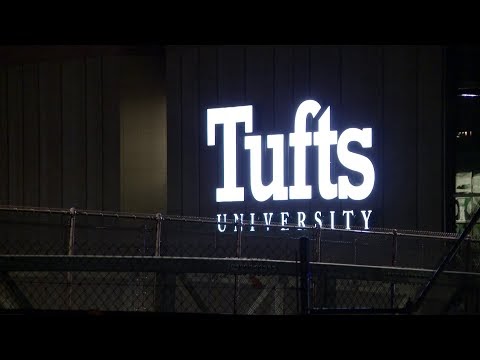
    An international student from Tufts University has been detained. Rumeysa Ozturk, 30, was meeting friends for iftar, a meal that breaks a fast at sunset during Ramadan when she was arrested.  

    Video obtained by The Associated Press appears to show six people, their faces covered, taking away Ozturk’s phone as she yells and is handcuffed. 

    Ozturk co-wrote an op-ed in The Tufts Daily criticizing the university’s response to its community union Senate passing resolutions that demanded Tufts “acknowledge the Palestinian genocide,” disclose its investments and divest from companies with direct or indirect ties to Israel.
    After the arrest, hundreds of Tufts students protested.  

    This arrest is consistent with Trump Administration efforts to intimidate and deport Muslim foreign students. Students from Cornell, Georgetown, Columbia University have also been detained.  

    Source link

  • In the USA, universities are under attack on multiple fronts

    In the USA, universities are under attack on multiple fronts

    Last week I was in the US, as part of the CASE Global Leaders Programme, visiting five leading universities – Harvard, Boston, Princeton, Johns Hopkins and Georgetown. I also visited the United Nations, the Washington Post, the British Embassy and US university associations. I met and spoke with over 100 senior staff – mostly under the Chatham House rule – about the severe current challenges facing US universities.

    US universities are under “an unprecedented political attack,” I was told – it is “a very dangerous moment.” The Trump administration has unleashed a “flood the zone” strategy. University leaders are shocked at the rapid speed and breath of the policy and political assault. Universities are reeling from the ferocity of the attacks. The Trump administration “has declared war on colleges.”

    The Trump administration tactics are clear – they are attempting to weaken and undermine major institutions that they see as liberal ballast, a barrier to the MAGA agenda. The playbook should not be a total surprise. It was largely outlined in Project 2025, with a raft of policies to deconstruct the US administrative state. For universities, it is time for a reckoning.

    Shocks and tremors

    The elite research institutions are the primary target. Amongst these, the President’s Office have deliberated targeted a number of specific institutions – pulling $400m (£310m) of federal funding from Columbia University, saying that it failed to fight antisemitism on campus, and suspending $175m (£135m) in federal funding to the University of Pennsylvania over the school’s policy regarding transgender athletes. Making an example of these universities – through public humiliation and bullying – is an attempt to strike fear in to other institutions and scare others from speaking out. There has been a notable lack of public figures speaking out in defence of these institutions. The tactics were described to me as “if you cross them, they will come after you.”

    Worryingly, the MAGA attacks have some grounding in public opinion, coming at a time when US public confidence in higher education has been falling for a decade. Public opinion research by the Association of American Universities (AAU) shows that only 29 per cent of the US public agree with the statement that Ivy League universities “make us better off” – whereas 57 per cent believe that they “make us worse off.” Although Republicans are even more critical than Democrats, a large majority of both parties’ supporters think Ivy League universities make people worse off.

    Across US universities there is a sense of crisis, with leaders struggling to cope with the tidal wave of political attacks. Shocks and tremors are being felt across the sector – but there is no agreement on which are the primary challenges. The hierarchy of these concerns varies and the impact is certainly not uniform. I heard about over a dozen current threats:

    • removal of federal funding due to accusations of “woke ideology”
    • major research funding cuts due to cuts to USAID
    • detaining and deporting faculty and students accused of holding views and speaking on controversial topics
    • tightening of visas for international students
    • threats to increase tax on university endowments
    • federal government instruction to withdraw specific research funding
    • increasing levels of disinformation
    • hostile environment leading to loss of faculty to universities overseas
    • falling philanthropic donations, due to reputational damage and economic weather
    • falling investment income from an economic downturn
    • a chilling effect on free speech and academic freedom
    • flight of international students as families overseas view the US as not a welcoming place to send their children
    • the growing possibility of a new cold war with China
    • splits and tensions amongst the alumni and donor communities.

    Despite the huge wealth, resources, influence and global reputation, I witnessed a university sector unprepared for the tsunami of political challenges and unsure about how to respond. It is a “a very destabilising moment, we’re trying to work things out… how do we navigate the challenges, the politics…”

    After the crisis response

    US universities face choices: to fight back, to “lean in” towards the Trump agenda, to hunker down, to uphold their values, to adapt or evolve – though these options are not mutually exclusive.

    For some, it is clear that they will speak out powerfully and fight back to defend universities,

    This brave article by the president of Princeton explains how American universities have given the country prosperity and security, and strikes back against the The Trump administration’s attack on academic freedom.

    For others, there is a recognition that this is “not just about telling a better story, we also need to do things better.” Maybe universities haven’t really listened enough to the dissatisfied and acted on concerns. Perhaps there is some truth in the accusations that some parts of higher education have exasperated or created inequality, protecting the “haves” and ignoring the “have nots”. This Atlantic article How the Ivy League broke America is essential reading in this genre. For some, the answer is a much stronger focus on reaching out across divides, and renewed efforts to increase civic impact – and perhaps the curtailment of some activities.

    For all, there is a sense that this is not simply a crisis response moment, rather that universities need to think long-term, to protect the values of higher education and redouble efforts to demonstrate their impact. There is a need to think about the longer term stewardship of the institutions and “play the long game” rather than simply respond to the immediate shocks.

    The search for something to hold onto

    I also heard many comments that gave me reasons for hope. Public opinion research by the Association of American Universities (AAU) shows that 42 per cent most trust American research universities to find a cure for diseases like cancer whereas only five per cent most trust the government, and only three per cent most trust large US corporations.

    At some universities, alumni donors are coming forward to offer support to help plug the financial gap being created by research funding cuts. Many universities are refusing to back-track on commitments made on DEI issues – citing very strong support from faculty and students – and arguing clearly and consistently that diversity of people (minds, experiences, backgrounds and thought) and plurality of views is vital to support excellence.

    On the day on my visit, Harvard became the latest elite school to announce that families with incomes under $200,000 will not pay tuition as a way to bolster diversity. There is also a view that the combination of the stock market falls, public opinion and the Supreme Court may soon have the impact of curtailing some of the President’s most aggressive actions.

    Overall, my visit to the US has left me with mixed emotions: deep concerns for US universities, the loss of vital research programmes, the negative impact on access to universities, the weakening of international collaboration and the personal threats to faculty and students. I also recognise that many of the political and public views which have contributed to this onslaught do not feel alien to the situation in the UK.

    However, the trip has also given me hope. These are deeply resilient institutions, led by exceptional people, with brilliant faculty, supportive alumni and donors. There is continuing strong demand from students for a higher education – and these students want to experience a plurality of views. By upholding their values, by redoubling efforts to build public support by doing things even better, by demonstrating impact, and by taking the longer-term view I am confident that US universities can ride through this storm.

    Source link