Author: admin

  • The Struggling Sanctuary Campus Movement

    The Struggling Sanctuary Campus Movement

    American University’s student government recently passed a referendum calling on the university to designate itself a sanctuary campus and limit its cooperation with federal immigration enforcement. Student protests broke out at the University of North Carolina Asheville, the University of Texas at Austin and elsewhere to push those campuses to embrace sanctuary status. A petition with the same demand from Colorado State University’s chapter of the Young Democratic Socialists of America garnered more than 3,000 signatures.

    “It is of the utmost importance that students, staff, and community members see CSU committing to protect the most threatened students in this community,” read the student petition to Colorado State administrators.

    The petitions and protests have also been fueled by student frustrations with universities’ compliance with other federal immigration actions. The Council on American-Islamic Relations and other groups sued Columbia University on behalf of students after federal immigration agents arrested Mahmoud Khalil, a green card–holding recent Columbia graduate, at his university-owned apartment because of his involvement in pro-Palestinian protests. Shortly afterwards, Department of Homeland Security agents searched two Columbia dorms, though no arrests were made. The CAIR lawsuit, which also targets the House of Representatives’ Committee on Education and the Workforce, led to an injunction that stopped the university from sharing more student records with lawmakers.

    “While I await legal decisions that hold the futures of my wife and child in the balance, those who enabled my targeting remain comfortably at Columbia University,” Khalil said in a statement from an ICE detention center in Louisiana. “Columbia surrendered to federal pressure by disclosing student records to Congress and yielding to the Trump administration’s latest threats.”

    The renewed push for sanctuary campuses harks back to President Donald Trump’s first term, when students at dozens of campuses petitioned their colleges to follow the lead of sanctuary cities and create boundaries for their cooperation with federal immigration officials. At the time, a handful of higher ed institutions agreed to designate themselves sanctuary campuses and protect undocumented students to the fullest extent the law allows. Many more made public declarations of support for undocumented students without actually embracing the title.

    This time around, while some college and university leaders have promised they’ll support students in every way legally possible, few are eager to comment publicly on Trump’s immigration actions or use the sanctuary title, for fear of overpromising the protections they can offer or attracting unwanted attention to their campuses, potentially putting students or federal funds at risk.

    The Trump administration has already gone after sanctuary cities, with Chicago among the first targeted for immigration raids. One of Trump’s early executive orders asserted that “sanctuary jurisdictions” shouldn’t receive federal funding. The Trump administration also sued the city of Chicago, the state of Illinois and New York State over their immigration policies last month. And recently, Republican lawmakers lambasted the mayors of Boston, Chicago, Denver and New York City for their sanctuary statuses at a contentious hearing before the House Committee on Oversight and Government Reform.

    Some college leaders are clearly worried that using the term “sanctuary” could make them a target as well. Even the few colleges and universities that previously designated themselves sanctuary campuses seem hesitant to use, or discuss, the term. Inside Higher Ed reached out to eight higher ed institutions that have called themselves sanctuary campuses in the past. Three institutions declined interviews, and four didn’t respond to email requests for comment.

    A spokesperson for a community college in the Southwest confirmed in an email that the institution “remains committed to serving and supporting all students” but no longer actively uses the term “sanctuary.”

    “Because our top priority is student safety, we prefer not to comment further,” the spokesperson wrote.

    ‘Meaningful,’ ‘Risky’ or Both?

    Current debates over the term “sanctuary” likely reflect some of the ways this political moment differs from Trump’s first term.

    Notably, fears that federal immigration officials could venture onto campuses became a reality after Khalil’s recent arrest, heightening the risks of taking a public stand. Other federal immigration actions affecting students and scholars followed, including the arrest of Badar Khan Suri, an Indian postdoctoral fellow at Georgetown University.

    A professor at an institution that previously declared itself a sanctuary campus emphasized that Khalil’s case made those working with undocumented students “even more alarmed.” During Trump’s first term, campuses ultimately weren’t a target of federal immigration actions, but the events of the past month at Columbia show that may no longer be true, said the professor, who spoke with Inside Higher Ed on condition of anonymity.

    Another key difference between Trump’s first and second terms is that most of today’s undocumented students can’t participate in the Deferred Action for Childhood Arrivals program, which protects those brought to the U.S. as children before 2007 from deportation and allows them to work legally. That means many undocumented students are arguably more vulnerable than they were during Trump’s first term, the professor said. At the same time, campuses have far more infrastructure, resources and legal training to support undocumented students than in the past, they added.

    The professor believes it’s still worthwhile for colleges to call themselves sanctuary campuses—or at least offer undocumented students some kind of public support—because it means a lot to affected students and the faculty and staff supporting them. It helps them feel “braver.”

    “I think it’s both meaningful and risky,” they said. “In fact, I think it might be more meaningful now because it’s so risky.” But “I don’t necessarily think that using the word ‘sanctuary’ is the key. I think the key is saying something.”

    College leaders likely believe “not speaking out is going to give them a layer of safety, because we’re not waving a flag, like, ‘Look over here,’” the professor added. “I get that, but I’m just not sure that it’s right.” They noted that even though Columbia cracked down on pro-Palestinian protesters, the Trump administration has shown no signs of letting up on the institution, vowing to strip it of hundreds of millions of federal dollars.

    Even some college leaders who have long supported undocumented students have always had issues with the sanctuary designation, said Miriam Feldblum, executive director of the Presidents’ Alliance on Higher Education and Immigration. Her organization doesn’t encourage the term because she worries it’s amorphous and sends a confusing message to undocumented students.

    To her, the label evokes the idea of “civil disobedience,” reminiscent of the way churches housed and shielded Central American refugees in the 1980s sanctuary movement. But campuses are still responsible for “complying with the law,” she said. If students interpret the term “sanctuary” to mean otherwise, she fears they might misunderstand what protections they do and don’t have.

    “It’s actually not communicating clearly and transparently what the campus is going to do,” she said.

    Feldblum believes students’ outrage toward Columbia over its handling of federal immigration actions reflects how easy it is to misunderstand campuses’ legal options. From her perspective, Columbia followed best practices by developing policies delineating private and public space on campus—where ICE can and cannot enter without a judicial warrant—and making sure immigration officials had the correct warrants when they came knocking. Feldblum argued a sanctuary campus would have done the same.

    She emphasized that just because campus leaders take extra care with their language doesn’t mean they’re doing any less to support undocumented students. She said many campuses are furiously updating their protocols on how to handle ICE officials on campus and ramping up services and supports for undocumented students without a sanctuary label.

    “The commitment to support students, to use the tools in our toolbox to make sure that we’re protecting students’ right to free speech, that we’re supporting our campuses so they are places for safe and supportive learning is very much at top of mind for campus leaders,” Feldblum said.

    Maryam Ahranjani, professor of law at the University of New Mexico, expressed similar discomfort with the term “sanctuary”; she argued it “may not have the same meaning to everyone” and as a result can be “counterproductive.”

    “There may be people who would actually support the goals of people in favor of a designation, but maybe they just don’t like the term,” Ahranjani said.

    Instead of making a big national push for sanctuary, advocates of undocumented student should “think about how to get the support of highest-level leaders, presidents, provosts” on a set of specific goals informed by the needs and concerns of undocumented students’ on individual campuses, she added.

    Colleges need plans in place for how they’d respond to ICE raids, but undocumented students could also be facing other problems that go unnoticed, like bullying or “how the current climate affects [their] ability to learn,” she said. “I think it’s important to talk to them about what their exact individual needs are.” But some advocates for sanctuary campuses insist the designation is needed now more than ever, with both undocumented populations and campus free speech squarely in the administration’s crosshairs.

    Michelle Ming, political director at United We Dream, an immigrant youth advocacy organization, empathizes with campus leaders who fear for their federal funding but argues that colleges that don’t embrace sanctuary campus status deny undocumented students a sense of security, thus depriving them of the full benefits of the college experience.

    “What is the point of having a school if it’s not going to be safe?” she said. To Ming, sanctuary means students “feel safe to go to class. They feel safe to go and do what they came to do—and paid to do—which is learn, further their education, discover what the next step in life is and form communities that really resonate with who they are and who they want to be. And that includes exercising free speech.”


    Source link

  • Try Reading Job Descriptions With a Growth Mindset (Opinion)

    Try Reading Job Descriptions With a Growth Mindset (Opinion)

    In a résumé workshop with a group of Ph.D. students, I shared a job description for a position for which they were qualified. The students had participated in an advanced pedagogy program at my university’s Center for Teaching and Learning, and the position was an instructional technologist at a small liberal arts college. Immediately, the students searched the job description for qualities and experiences they lacked and reasons why they were unqualified. Many were so turned off by the job title that they likely would not have continued reading had they come across this position on their own.

    Then I encouraged the students to approach the position description with a bias toward “I’m qualified.” In other words, instead of starting with the assumption that they were not qualified for the role, do the opposite. Once they changed their mindset and believed that they were qualified, they were able to see many connections between their skills and experiences and what they read in the job description.

    In my work as a graduate student career adviser, I have found that this tendency for Ph.D. students to approach descriptions for jobs outside their academic field from a deficit perspective is quite common. Graduate students who have trained for years with an eye toward an academic position in their field often see themselves as utterly unqualified when they begin to search for jobs in other sectors. This can even be the case for those who have spent considerable amounts of time on career exploration and self-reflection and feel committed to a career in a field other than academia. Once they get to the job search process, they get hung up on the job descriptions themselves.

    When I told another career adviser about my “bias toward ‘I’m qualified’” approach, she said that this reminded her of the growth mindset concept. Psychologist Carol Dweck came up with the concept of the growth mindset nearly 20 years ago, and it has since been applied to everything from business to professional sports to early childhood education. In short, a growth mindset is, to cite Dweck’s definition, “based on the belief that your basic qualities are things you can cultivate through your efforts, your strategies, and help from others.” In other words, you can change and improve many aspects of yourself through hard work and help from others. This is in contrast to a fixed mindset, which is the belief that your qualities are “carved in stone” and cannot be changed.

    This concept has many applications in work and life, and when we are stressed about a job search it is easy to let a fixed mindset take over. However, adopting a growth mindset in just one context—reading job descriptions—can help you be more positive and open-minded in your job search. Of course, not everyone can do every job, but a growth mindset will help you see and articulate both your qualifications and your potential in a new career field.

    Consider the following ways in which reading job descriptions with a growth mindset can create more opportunities in your career exploration and job search.

    • See and articulate your transferable skills and experiences.

    Talk to a career adviser for five minutes, and they are likely to discuss the importance of transferable skills. Yet it can be tough to conceive of your skills, know which skills are most important, see how they might come in handy in other contexts and then articulate those skills in a way that is appealing to other audiences. Here is an example from my own career about how reading a job description with a growth mindset helped me identify and articulate a skill set I didn’t know I had.

    Shortly after finishing my Ph.D., I came across a job posting for a school relations manager at a nonprofit organization, liaising between high school teachers and the organization. The job fit my interests, but at first glance it didn’t seem to match my skill set. In particular, the job description asked for relationship-building skills, which I had never thought about as a skill set, let alone one that I possessed. As I reflected on my experience throughout my time in graduate school, I thought about a short-term, part-time position I had meeting once a month with high school history teachers to help them design lesson plans. I enjoyed this work and was good at it and, though I had never thought about it before, realized that I could frame this experience as relationship building. In my application materials and job interviews, I emphasized this skill set and expressed confidence in continuing to grow in this area, and I got the job.

    • Open up new career fields.

    Several years ago, I worked with a Ph.D. student in art history who was interested in a career in user experience research. Although she was still two years away from graduation, she started looking at job descriptions to get a better sense of the responsibilities and qualifications for the kinds of roles she desired. In her research, she noticed that many positions asked for evidence of user experience projects, and some even asked for a portfolio. While some students would have seen this as an insurmountable barrier (a fixed mindset), she instead let her growth mindset kick in and got to work building her portfolio through project-based online courses, independent projects and on-campus jobs, and continued to network with practitioners in the field. Her hard work and help from others paid off, and she was able to move into the field after she graduated.

    • Compete for jobs for which you may be somewhat underqualified.

    Students often let the perception of being underqualified for a job prevent them from applying. This is a well-documented tendency among women and underrepresented groups, and, for graduate students, the impostor phenomenon often contributes to reduced confidence in relation to career possibilities. Most graduate students know about this tendency and the advice to apply if you meet 60 to 75 percent of the qualifications, Yet, many still have difficulty getting over the hump to apply when they don’t meet 100 percent of the qualifications in the job description. Or, if they do apply, they undersell their qualifications in their application materials.

    When you approach a position description for a job that interests you but feels like a reach, start with the job responsibilities and imagine yourself performing the tasks listed. If there are things on the list you haven’t done before, imagine how you could build on the skills and capacities you have in a new setting and then improve over time. Next, go through each qualification and look for some connection, however tenuous, to something you have done before and write it down. If you have trouble doing this on your own, work with a career adviser who can help. Usually this process helps you see capacities and qualifications you didn’t know you had and will give you confidence that you can grow into a role that feels like a stretch.

    • Apply for jobs for which you may feel overqualified.

    This next piece of advice addresses the other end of the spectrum—jobs for which you feel overqualified. Ph.D. students who are entering a field other than academia are making a career transition, which often requires spending some time in a role that might feel beneath your qualifications. This is especially true in certain industries like publishing, journalism, marketing and communications, and others. It can feel demoralizing for doctoral students to apply for jobs that only require a bachelor’s degree.

    In this case, use a growth mindset to imagine how you could advance within the organization or how this first position could be a stepping-stone to another opportunity in a couple of years. Keep in mind that people with advanced degrees tend to get promoted to a higher level and more quickly than those with just a bachelor’s. You won’t be stuck in this first role forever, and it will give you a chance to demonstrate your skills in your new field.

    Underlying these tips is a nudge to get online and read some job descriptions, even if you aren’t yet ready to apply. Just make sure that when you do, you suit up with your growth mindset first.

    Rachel Bernard is the GSAS Compass Consultant at Columbia University’s Graduate School of Arts and Sciences, where she focuses on career development for master’s and doctoral students. She is a member of the Graduate Career Consortium—an organization providing a national voice for graduate-level career and professional development leaders.

    Source link

  • Arkansas Passes Higher Ed “Reform” Bill

    Arkansas Passes Higher Ed “Reform” Bill

    Arkansas governor Sarah Huckabee Sanders signed a wide-ranging bill last Tuesday, upending the state’s higher education budget and clamping down on DEI and student protests, according to The Arkansas Democrat-Gazette.

    The Arkansas ACCESS Law includes a number of measures prioritizing funding for trade schools and short-term credential programs, including using the lottery system to fund school scholarships and eliminating support for Advanced Placement accelerated learning tracks in an effort to encourage career readiness over traditional college prep.

    The law also doubles funding for the state’s Academic Challenge Scholarship and expands eligibility to trade school applicants; prohibits colleges from spending on diversity, equity and inclusion initiatives or participating in any external DEI programs; and amends the state’s excused absence policies to prevent students from participating in protests.

    Source link

  • Strengthening data and insights into our changing university research landscape by Jessica Corner

    Strengthening data and insights into our changing university research landscape by Jessica Corner

    The UK continues as a global leader in research and innovation and our universities are uniquely strong contributors, among which are the highest performing in the world. We have some of the highest-intensity innovation ecosystems in the world, with universities as the core driver. As a country, our invention record is well recognised. The UK, with its powerful life sciences effort, delivered one of the first UK COVID-19 vaccines, saving millions of lives around the world and only possible because of long-standing investment in research that became serendipitously essential. In cities across the UK, universities act as pillar institutions with positive and reinforcing effects on their local economies. We have a rich network of specialist institutions that excel in music, the arts, medicine and life sciences. Our universities continue to deliver discoveries, technologies, creative insights, talent for our industries and public services and so much more. Many have the scale and reach to deliver across the full span of research and innovation to enterprise and commercialisation.

    A unique feature, and underpinning this extraordinary record, is our dual support funding system. That system balances competitive grant funding from UKRI Research Councils, charities, business, and others with long-term stable underpinning funds to enable universities to pursue ambitious and necessary strategies, develop research strengths, foster talent, pivot towards new fields, collaborate and maintain research infrastructure.

    However, the sector faces unprecedented challenges. Erosion of the value of student fees and the growing costs of delivering education, disruptions to anticipated income from international student fees, a slow erosion of the value of QR, rising costs of research and a mismatch between this and cost recovery from grants has created a perfect storm and unsustainable operating models for most institutions. The additional £5bn a year in funding from universities’ own surpluses towards research and innovation is no longer guaranteed. The sector has and continues to evolve in response to a changing landscape, but consideration is needed about how best to support the sector to change.

    Research England’s role is to support a healthy, dynamic, diverse, and inclusive, research and innovation system in universities in England6. We work by facilitating and incentivising system coherence, acting as both champion and challenger. In partnership we aim to create and sustain the conditions for the system to continue delivering excellence and leverage resources far beyond funding provided by government. We are working to enhance the data and evidence to support our role as expert, evidence-based funder and on the outcomes that the funding delivers. In fulfilling this role and against the current context, Research England has two initiatives that we will be taking forward in the coming weeks.

    Our ongoing programme to review the principles underpinning our funding and mechanisms by which we allocate research funds to institutions has reached a point where we are seeking to increase the visibility and transparency of how these funds are deployed by institutions. We are developing an approach, designed to be light touch and low burden that asks universities to report back on their use of strategic institutional research funding. We will begin testing the approach with a selection of institutions in the coming months and, subject to the outcomes of this initial engagement, aim to roll out a pilot with institutions in the 2025/26 academic year. We will be communicating to institutions directly about the pilot in the early Autumn. In the second phase of this work, we intend to work with institutions to develop a forward-looking strategic element that will give insight into plans and then how decisions are made about the deployment of funding. For the programme, we are also reviewing the effectiveness of the different unhypothecated and ring-fenced research funds provided to institutions. When fully implemented, the information we will acquire will enable Research England greater visibility of the role of institutions and the contribution of our formula-based research funding (including QR) to the research and innovation system while also contributing to efforts to have more systematic and timely data.

    A second strand of work is our programme to monitor the implications for the sustainability of research in universities against the current financial context. We are seeking to better understand how challenges are impacting universities’ ability to deliver research and innovation and maintain research capabilities, capacity, and facilities and, in turn, further strengthen assurance with more robust data. In partnership with the Department for Innovation Science and Technology, we have commissioned the Innovation Research Caucus with OMB Research Ltd to undertake a survey into how institutions are responding to current pressures with respect to research and innovation. The survey will provide important data that can support advice to government and others on the extent of universities’ financial challenges, how these issues are being managed, and how this impacts their investment and planning in the research and innovation space. The approach is to provide insights that are currently not available at an aggregate level or in a timely way through national data sets. Additionally, Research England will be asking institutions to report on material changes they are making to research and innovation capabilities and capacity or in relation to wider changes in institutional form or organisation when these may affect the basis on which our funding is awarded.

    We continue to see our role as facilitator, enabler and partner and believe we have a strong reputation for having timely and robust insights into the conditions underpinning our great research and innovation system. These two programmes of work are being taken forward in support of universities and, against the current backdrop, will strengthen Research England’s fundamental role in the research and innovation system. We look forward to working in close partnership with universities as we take these critical work programmes forward.

    Source link

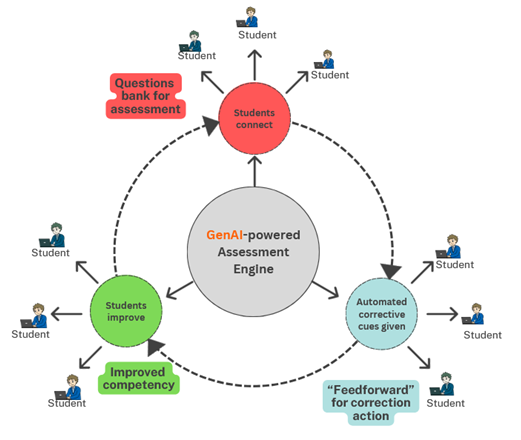
  • From Feedback to Feedforward: Using AI-Powered Assessment Flywheel to Drive Student Competency – Faculty Focus

    From Feedback to Feedforward: Using AI-Powered Assessment Flywheel to Drive Student Competency – Faculty Focus

    Source link

  • HEDx Podcast: Applied learning at Singapore Institute of Technology – Episode 160

    HEDx Podcast: Applied learning at Singapore Institute of Technology – Episode 160

    Dr May Lim Sok Mui is an Associate Professor and the Assistant Provost of Applied Learning at the Singapore Institute of Technology.

    She has pioneered a coaching approach to competency-based education at the Institute, from its new campus in Punggol.

    In this episode, Dr May Lim explains what best practice looks like when teaching skills-based students who need to be lifelong learners.

    Read more:

    Do you have an idea for a story?
    Email [email protected]

    Source link

  • “Portrayed as a place that isn’t what I know it to be”: Professor Bell on ANU’s public perception

    “Portrayed as a place that isn’t what I know it to be”: Professor Bell on ANU’s public perception

    ANU vice-chancellor Genevieve Bell with Rachel Marape at James Marape, the Prime Minister of Papua New Guinea’s address to the ANU in February, 2024. Picture: Martin Ollman

    Australian National University’s (ANU) vice-chancellor Genevieve Bell has made a statement confirming she plans to stand by her university after a “four-month negative media campaign.”

    Please login below to view content or subscribe now.

    Membership Login

    Source link

  • Trump cuts research funding to six Aus universities and counting – Campus Review

    Trump cuts research funding to six Aus universities and counting – Campus Review

    At least six Group of Eight (Go8) universities have had research grants terminated by the United States amid an anti-diversity and gender ideology studies crackdown from US President Donald Trump’s office.

    Please login below to view content or subscribe now.

    Membership Login

    Source link

  • What the UK can learn from Scotland’s tertiary pathfinder experiments

    What the UK can learn from Scotland’s tertiary pathfinder experiments

    It is commonly believed that, if we only had accurate up-to-date data on what skills employers were looking for, we could solve most of Britain’s productivity and social mobility problems in one fell swoop.

    There’s a kind of big state approach to collecting and sharing that knowledge we could follow – all kinds of architectures and data collections we could dream up to ensure that every course offered in every educational establishment was laser-focused on a particular industry demand.

    To do this at the level of fidelity and timeliness needed would be either expensive, or impossible, or both. Remember, right now, we can’t even accurately tell you how many people are currently working in the UK. And even if we did have this up-to-the moment, detailed, reliable data on employer needs: would the sector be able to use it? And would learners see any benefit?

    Pathways and pathfinders

    On the other hand nine projects, funded at a total of just £500,000 by the Scottish Funding Council, offer a glimpse of a set of approaches that are making a real difference to education and employment. It’s the opposite of big and flashy – building on existing structures and using small amounts of money to facilitate data sharing and collaboration. And it might just be a glimpse of the future.

    The key components are what the Regional Tertiary Pathfinder programme calls Regional Delivery Boards – the pathfinder iteration saw two established, one covering Aberdeen and Aberdeenshire (north east Scotland), the other covering Dumfries and Galloway plus the Borders (south of Scotland).

    If you are in England, you might be thinking these are pretty much the same as the Employer Representative Bodies that develop Local Skills Improvement Plans (LSIPs). And you’d be wrong. The LSIP approach simply brings together employers to state their needs and then invites providers (just FE colleges and private training providers, obviously) to meet them. Ewart Keep, in one of the vast numbers of reports published around the programme, describes the LSIP approach as:

    the employer is viewed as a customer (more or less demanding but detached from the actual process of skill production) within a marketized, one-way street, relationship with a range of suppliers

    In contrast, the Regional Delivery Boards encompass providers at all levels (from schools through to universities) and treat employers and industry bodies as partners in designing and delivering not only the provision directly linked to that particular momentary skills need, but in helping to shape a whole skills ecosystem.

    It is, after all, not really worth designing an undergraduate level energy transition course (for example) aimed at a locality if people in that area are not going to have the qualifications and experience required to benefit from it, and if there is no local aspiration to work in that field. Every individual project supported by the board will be taking into account employer demand as one factor, alongside a consideration of wider skills pathways, of learner demand, and of the wider endeavour of offering people good quality and stable employment.

    I’ve always been a fan of small projects that use low levels of funding in carefully targeted ways to make transformative changes and build capacity. I’ve spent large parts of my adult life setting them up. It does not take a lot of money, in the grand scheme of things, to bring about lasting change. Especially if you build on existing interests, existing partnerships, and even existing plans.

    Building on the past

    There’s various models of change and innovation available, but the one I’ve always known to work draws on Eric Von Hippel’s lead user theory which can be summarised as: smart people on the ground doing the work are already inventing ways of getting stuff done – find these people, listen to them, and make the changes they suggest to enable others to do the same. The strength of the Regional Tertiary Pathfinders model is that it explicitly builds on existing work, existing relationships, and even existing projects – offering legitimacy and political backing as much as money to supercharge the good work that is already happening.

    You sometimes come across agencies and individuals that want to start from scratch, designing the perfect system that will replace everything that has gone before. While this is undeniably fun, it ignores the fact that the same people and the same groups that have been working on similar projects before will be unimpressed with branding and a tidy new organogram being presented as a way to solve the problems they’ve been working on for years. You could call it “producer interest” – I much prefer the term “people who are actually going to do the work to solve the problem” interest.

    It doesn’t matter how good you are on PowerPoint, those new boxes are going to be populated by existing domain experts – it would probably save a lot of time if we started listening to them.

    What about the data?

    One of the impressive facets of both the Regional Delivery Boards and the projects they support is what I might term a pragmatism about data. It actually turns out that data on employer needs is just one of the wells that need to be drawn on, of arguably equal importance is data on the needs of the kinds of students who may want to take the new course you are designing.

    It surprises many to learn just how many (technical, legal, procedural) barriers exist around sharing data across educational phases. Schools will have detailed data on their pupils, not just on attainment and personal characteristics, but on career intentions too. But it is rare to see such detailed information shared with colleges, and by the time you get to university or employment a pupil is flattened out to a list of grades and a very generic reference.

    Likewise, different parts of the system will be getting different kinds of information from employers and industry bodies. While an individual employer may be reasonably expected to understand their own immediate skills needs, to get a fuller or longer term picture you need more than one data point. The various employers, bodies, and providers involved all had light to shed – on a global, regional, and local level.

    In order to ensure that skills pipelines are unclogged working in the way they might be needed you need to bring all of these data sources together, and it is to the credit of the two boards that this has been able to happen.

    Designing and delivering courses

    Any provider worth bothering with will be drawing on all kinds of information in designing new courses and reviewing old ones. There’s a landscape of professional bodies, subject interest groups, QAA benchmarks, and comparators that can help academics and quality assurance staff decide what needs to be covered in a course. This intelligence is married with an institutional insight into its own purpose and mission, and the missions of other local providers.

    Employer engagement can and does happen at the design, delivery, and review phases of courses – each of these allows for direct input into the curriculum mediated by the kinds of wider understanding detailed above. What we are also starting to see is partnerships between providers across phases feeding these processes in a similar way – schools, local authorities, and FE colleges, are all components of the skills pipeline and have a key role both in directly preparing students for admission, and in raising awareness and aspiration more widely.

    This nicely illustrates a central strength of the regional tertiary pathfinder approach, an emphasis on the wider needs of the learner. Rather than seeing learners, Gradgrind-like, as vessels to be filled with the correct skills there is a recognition of “meta-skills” and graduate applicants: a genuine consideration of the careers and lives of learners rather than just thinking about the immediate employer or industry need. Again to quote Ewart Keep:

    There are a number of professions and occupations where we know that labour shortages in part (sometimes a growing proportion) spring not from a shortage of individuals qualified to undertake the work, but from the fact that those that are qualified and have entered the workforce are now choosing to leave the occupation because individuals are concluding that the pay and/or working conditions and stress levels are unacceptable

    Courses more closely aligned to employers needs are certainly useful in addressing skills needs – they are not a means of attracting young people to work in unlivable jobs.

    Beyond the programme, beyond Scotland

    The initiatives that the Regional Pathfinder Programme have fostered and nurtured are already becoming “business as usual”, though how the funding council can support and grow this activity remains an open question. The project coordinators that did so much to drive success were largely funded by the small SFC grants – whether such dedicated project delivery roles would exist without this small amount of funding is not clear. Likewise, the attention that SFC involvement (and, frankly, SFC oversight) drove at a senior level is difficult to sustain. As of yet we don’t know how or in what form the programme will continue – but given the small amount of funding involved and the scope to spread the lessons learned so far to other areas it would feel very short-sighted to abandon the approach.

    In other nations of the UK skills planning cleaves much closer to the employer-as-purchaser model that relies on the optimistic idea that employers are engaged in long-term skills planning that can be aggregated and delivered. The results from Scotland should inform England’s long-awaited reform of the LSIP process – and hopefully put a human face on what frequently feels like an impersonal and deterministic skills strategy that understands neither the people who have the skills, the institutions that develop them, and the the employers that react to a rapidly changing world.

    Source link

  • Former Kansas City School Police Officer Fights for Student Safety Via Nonprofit – The 74

    Former Kansas City School Police Officer Fights for Student Safety Via Nonprofit – The 74

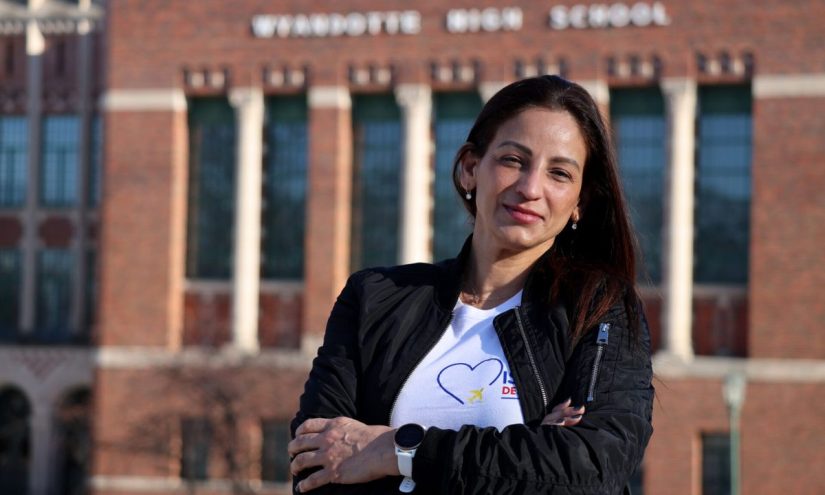
    KANSAS CITY, Kan. — Marialexa Sanoja publicly quit her job as a Kansas City, Kansas, Public Schools police officer over concerns with the district’s handling of student safety needs and founded a nonprofit to help kids escape the challenges in Wyandotte County.

    In the three-and-a-half months Sanoja was stationed at Wyandotte High School, the district’s largest school with 1900 students, Sanoja said she filed 140 incident reports and that in most instances the district failed to take action. The district, through its YouTube channel, disputed her figures and asserted it handled concerns responsibly.

    “It didn’t take long for me to find out that the students were not in the best interest of anybody,” Sanoja said. “When the police officer becomes a safe space for students, there is something wrong with that.”

    After her resignation in December 2023, Sanoja founded Missión Despegue, translated to “mission takeoff,” a nonprofit that helps parents and students document their grievances with the school district to hold the district accountable for its handling of safety issues.

    Sanoja saw the district’s response to a sexual assault case and its communication as inadequate, and experts echo her concerns. Now, Sanoja works with current and former students to get their GED certificates, drivers licenses, mental health care and prevent substance abuse.

    Sanoja’s concerns

    Sanoja said much of the Latino community, which makes up 72% of Wyandotte High School, is afraid to complain or make a scene because many of them are new to the country. She aims to empower them, and help them achieve the “American dream.”

    One reason Sanoja resigned — and a former student dropped out — was because of the district’s response to the former student’s experience of being sexually assaulted at school. Kansas Reflector doesn’t identify minors who have been sexually assaulted.

    According to an incident report filed by Sanoja, the former student was a freshman and alone in the Wyandotte High School stairwell when a group of older boys groped her and made sexual remarks. She began recording the boys with her phone, which prompted them to leave, the report said.

    Sanoja was off duty that day. The former student asked the on-duty officer to file a report, which Sanoja says she never saw. The day after, Sanoja and the former student said they filed an incident, criminal, and Title IX report. The former student wanted to press charges.

    “After that, I just stopped going to school, because I didn’t feel safe,” the former student said in an interview with Kansas Reflector.

    Sanoja said security camera footage and the former student’s video showed the boys’ faces. The former student said the district told her that because the boys never returned to school, it could not suspend them. However, the former student said she continued to see the boys on campus.

    “Ultimately, the district didn’t do anything about it. We were asking, at least, for suspension. That didn’t happen,” Sanoja said.

    A spokesperson from the district told Kansas Reflector it was unable to provide comment on the former student’s case, or the district’s responsibility to handle reports of sexual assault.

    Sanoja publicly resigned with a letter that accused the district of failing to communicate with parents. She wrote that she was worried about instances where students brought guns to school property and all parents weren’t notified.

    In a response video to Sanoja’s resignation, district superintendent Anna Stubblefield said “those incidents are not always relayed to all families. Not because we’re hiding anything, but because the impact is low and to protect the privacy of our students.”

    A district spokesperson told Kansas Reflector the “administration is required to contact parents regarding student issues — such as absences, drug-related concerns, or fights — in accordance with the Student Code of Conduct.”

    Expert opinions

    Ken Trump, an expert in school safety communications who is not related to the president, said parental anxiety over school safety is rising nationwide.

    “It’s very easy to get caught up if you’ve got a couple thousand kids in a school, dealing with incidents and other things. But you need to take a tactical pause in this, and go back to looking at the communications,” Trump said. “You can’t go back to the old-school mindset of if someone finds out about it we’ll talk. That doesn’t work anymore.”

    Sanoja said that after a student overdosed at school and she contacted the parents directly, the high school principal told Sanoja to route all communication with parents through administration.

    Sanoja said that she continues to receive videos of physical fights in the schools, totaling in the hundreds, since her resignation.

    Michael Dorn, a school safety expert who assists schools after major acts of violence, said  Sanoja’s allegations were concerning. He said he would have responded to her concerns differently than the school district did.

    “I was a school district police chief for 10 years,” Dorn said. “If an officer in my department wrote that kind of resignation letter, I would request a state police investigation. I would ask for a polygraph test, and I would ask that she be polygraphed. I wouldn’t do anything like that, but if someone alleged that I did and I didn’t do it, I would request that to clear my name.”

    Sanoja worked as a police officer in Lenexa before transitioning to the school district and said Wyandotte High School presented the most significant challenges she’s seen. She believes the problems are “within the culture” of the school.

    “Everybody’s tired of the way the district is handling things,” Sanoja said. “They’ve been failing these kids for years.”

    Fixing root causes

    Through her nonprofit, Sanoja helps students who leave the district, like the former student who was sexually assaulted, earn their GED certificate.

    When they’re out of the school environment, Sanoja said, they thrive.

    Sanoja said most of the families she works with are immigrants, and the parents do not speak English.

    “We face the daunting task of ending the stigma, shame and judgement that come with our culture,” Sanoja said.

    Missión Despegue seeks to fix the root causes of the problems seen in school — like substance abuse, violence, bullying, and mental health issues. Sanoja said she sees these problems reflected in things like the graduation rate of the district. For the 2023-2024 school year it was 78.1%, which is 11.4 percentage points lower than the state average.

    Through donations, Sanoja covers the cost of mental health appointments, DMV license and GED class registrations, and laptop purchases for students pursuing their GED certificate without one. In February, she began converting first-time offenders’ court fees, in hopes of reducing recidivism.

    With the help of more than 100 volunteers, Sanoja has hosted events where she provides Narcan and educates parents about the dangers of substance abuse. She also guides volunteers to further training, like drug prevention and compassion fatigue workshops.

    Sanoja said she doesn’t get paid for her work with Missión Despegue. She said she needs an assistant, because she has “a long list of people that need help.”

    “I see something in them. I know they’re going to be successful,” Sanoja said. “I want that opportunity for every kid I have.”

    Kansas Reflector is part of States Newsroom, a nonprofit news network supported by grants and a coalition of donors as a 501c(3) public charity. Kansas Reflector maintains editorial independence. Contact Editor Sherman Smith for questions: [email protected].


    Get stories like these delivered straight to your inbox. Sign up for The 74 Newsletter

    Source link