Author: admin

  • In Bid to Close Education Department, President Trump Looks to Rehouse Student Loans, Special Education Programs – The 74

    In Bid to Close Education Department, President Trump Looks to Rehouse Student Loans, Special Education Programs – The 74

    President Donald Trump said Friday that the U.S. Small Business Administration would handle the student loan portfolio for the slated-for-elimination Education Department, and that the Department of Health and Human Services would handle special education services and nutrition programs.

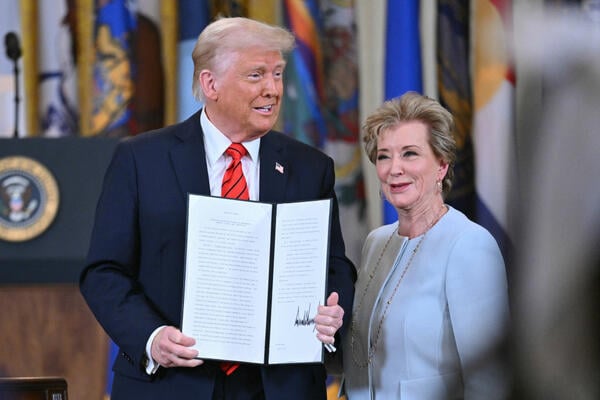
    The announcement — which raises myriad questions over the logistics to carry out these transfers of authority — came a day after Trump signed a sweeping executive order that directs Education Secretary Linda McMahon to “take all necessary steps to facilitate the closure” of the department to the extent she is permitted to by law.

    “I do want to say that I’ve decided that the SBA, the Small Business Administration, headed by Kelly Loeffler — terrific person — will handle all of the student loan portfolio,” Trump said Friday morning.

    The White House did not provide advance notice of the announcement, which Trump made at the opening of an Oval Office appearance with Defense Secretary Pete Hegseth.

    The Education Department manages student loans for millions of Americans, with a portfolio of more than $1.6 trillion, according to the White House.

    In his executive order, Trump said the federal student aid program is “roughly the size of one of the Nation’s largest banks, Wells Fargo,” adding that “although Wells Fargo has more than 200,000 employees, the Department of Education has fewer than 1,500 in its Office of Federal Student Aid.”

    ‘Everything else’ to HHS

    Meanwhile, Trump also said that the Department of Health and Human Services “will be handling special needs and all of the nutrition programs and everything else.”

    It is unclear what nutrition programs Trump was referencing, as the U.S. Department of Agriculture manages school meal and other major nutrition programs.

    One of the Education Department’s core functions includes supporting students with special needs. The department is also tasked with carrying out the federal guarantee of a free public education for children with disabilities Congress approved in the Individuals with Disabilities Education Act, or IDEA.

    Trump added that the transfers will “work out very well.”

    “Those two elements will be taken out of the Department of Education,” he said Friday. “And then all we have to do is get the students to get guidance from the people that love them and cherish them, including their parents, by the way, who will be totally involved in their education, along with the boards and the governors and the states.”

    Trump’s Thursday order also directs McMahon to “return authority over education to the States and local communities while ensuring the effective and uninterrupted delivery of services, programs, and benefits on which Americans rely.”

    SBA, HHS heads welcome extra programs

    Asked for clarification on the announcement, a White House spokesperson on Friday referred States Newsroom to comments from White House press secretary Karoline Leavitt and heads of the Small Business Administration and Health and Human Services Department.

    Leavitt noted the move was consistent with Trump’s promise to return education policy decisions to states.

    “President Trump is doing everything within his executive authority to dismantle the Department of Education and return education back to the states while safeguarding critical functions for students and families such as student loans, special needs programs, and nutrition programs,” Leavitt said. “The President has always said Congress has a role to play in this effort, and we expect them to help the President deliver.”

    Loeffler and HHS Secretary Robert F. Kennedy Jr. said their agencies were prepared to take on the Education Department programs.

    “As the government’s largest guarantor of business loans, the SBA stands ready to deploy its resources and expertise on behalf of America’s taxpayers and students,” Loeffler said.

    Kennedy, on the social media platform X, said his department was “fully prepared to take on the responsibility of supporting individuals with special needs and overseeing nutrition programs that were run by @usedgov.”

    The Education Department directed States Newsroom to McMahon’s remarks on Fox News on Friday, where she said the department was discussing with other federal agencies where its programs may end up, noting she had a “good conversation” with Loeffler and that the two are “going to work on the strategic plan together.” 

    Maine Morning Star is part of States Newsroom, a nonprofit news network supported by grants and a coalition of donors as a 501c(3) public charity. Maine Morning Star maintains editorial independence. Contact Editor Lauren McCauley for questions: [email protected].


    Get stories like these delivered straight to your inbox. Sign up for The 74 Newsletter
    Source link

  • Columbia caves to feds — and sets a dangerous precedent

    Columbia caves to feds — and sets a dangerous precedent

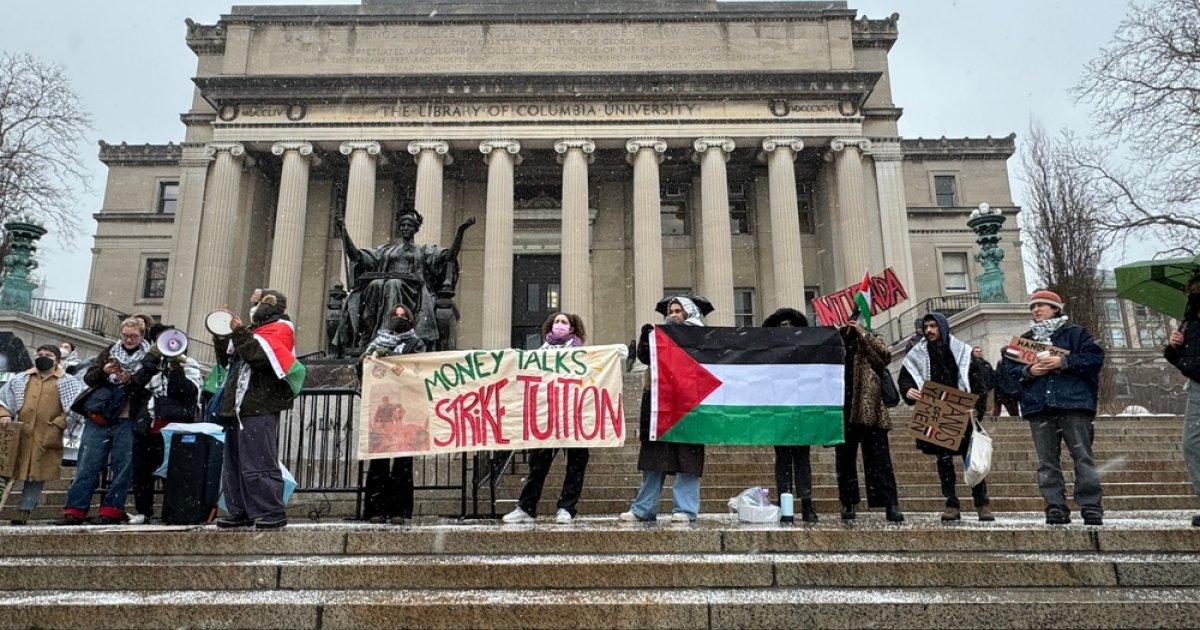
    Today Columbia University announced policies to address government demands after the Department of Health and Human Services, the Department of Education, and the U.S. General Services Administration canceled $400 million in federal grants and contracts, alleging an anti-Semitic hostile environment at the school. The following statement can be attributed to FIRE Lead Counsel Tyler Coward.


    The federal government abandoned its existing process to brow-beat Columbia — and Columbia folded. 

    Higher education reform shouldn’t resemble a shakedown. Colleges and universities shouldn’t be bullied into accepting speech-restrictive demands because the government dangles a $400 million check over an institution’s head. Any changes made as a result of this flawed process are inherently suspect.

    FIRE is looking into the steps Columbia pledged to take in response to government demands, and their implications for free speech and academic freedom. But one stands out instantly: Columbia crafted its own definition of anti-Semitism that is vague and sweeping enough that it will imperil speech otherwise protected by the First Amendment. 

    The federal government shouldn’t pressure any college, private or public, to censor speech critical of any country. 

    Shaking under government pressure, Columbia crumbled. If Columbia — with its immense resources and influence — can’t stand up to government demands that threaten free speech, what are other colleges to do?

    Behavior that gets rewarded gets repeated. Free speech and academic freedom are worth fighting for. FIRE will stand with any institution willing to stand up for itself. 

    Source link

  • Small Business Administration to Take Over Student Loans

    Small Business Administration to Take Over Student Loans

    A day after White House officials said the Education Department would administer the student loan program, President Donald Trump announced that the Small Business Administration would be taking over the $1.7 trillion portfolio.

    He told White House reporters that the move would happen “immediately,” though he didn’t say how that process would work. Currently, federal law requires the Education Department to manage student loans, so the president doesn’t have the authority for the move, several experts and advocates said Friday.

    Neither the White House nor the Small Business Administration responded to requests for more information or details about the plan.

    In response to questions about how moving loans to SBA would work, the Education Department referred Inside Higher Ed to an interview that Education Secretary Linda McMahon did Friday with Fox News. McMahon said she’s working with the SBA on a strategic plan.

    The announcement follows Trump’s executive order, signed Thursday, directing McMahon to close her department “to the maximum extent of the law.” McMahon and others have said a smaller version of the department would focus on core functions, which many experts presumed to include the student loan program. (Trump also said Friday that the Department of Health and Human Services would take over programs that support students with disabilities.)

    Kelly Loeffler, who leads the SBA, wrote on social media that her agency “stands ready to take the lead on restoring accountability and integrity to America’s student loan portfolio.” Whether the department has the capacity to take on the program is an open question; Loeffler is planning to cut 43 percent of the staff, Politico and other news outlets have reported. The SBA runs several programs to support small businesses, including providing loans and helping with disaster recovery.

    The Education Department issues about $100 billion in student loans each year and disburses $30 billion in Pell Grants. That funding is crucial to students who rely on the government to help pay for college.

    But borrowers have struggled over the years to navigate the cumbersome student loan system and often have faced difficulty in repaying their loans. Meanwhile, the federal government’s growing loan portfolio has become a key issue for lawmakers on both sides of the political aisle. Former president Joe Biden’s fix was in part to make student loan forgiveness more accessible and make loan payments more affordable.

    Trump said Friday that the loan system “will be serviced much better than it has in the past,” adding, “it’s been a mess.”

    Agency Blindsided

    It wasn’t clear Friday afternoon whether SBA would also take over the Pell Grant program and the Free Application for Federal Student Aid—a form that millions of students rely on to access federal, student and institutional aid. Currently, the Office of Federal Student Aid, which is part of the Education Department, administers those programs. That office was hit hard by recent mass layoffs at the department, and experts have questioned whether it will be able to fulfill its many responsibilities, which also include overseeing colleges and rooting out fraud in the federal student aid system.

    Trump’s executive order pointed out that the Education Department manages a portfolio the size of Wells Fargo but with significantly fewer employees. “The Department of Education is not a bank, and it must return bank functions to an entity equipped to serve America’s students,” the order said.

    An official high up at Federal Student Aid said Friday that the office was blindsided by the announcement. Just a day before, the official said, the plan was to move the loans to the Treasury Department. Agency officials have yet to receive any plans or communication about handing over the reins to SBA or what that would entail, the official said.

    ‘Clear Violation’

    The federal statute that created FSA specifically gives that office authority to administer student financial assistance programs. Additionally, laws dictating how federal funding is allocated explicitly send money to the Education Department for the student aid programs. A former department staffer told Inside Higher Ed that the administration is “clearly circumventing the spirit and intent of the law if you were to move to functions.”

    Sen. Patty Murray, a Democrat from Washington State, agreed, writing on social media that the announcement “is a clear violation of education [and] appropriations law.”

    Beth Maglione, interim president of the National Association of Student Financial Aid Administrators, added in a statement that only Congress can move the student loan portfolio to a different agency; if the legislative branch agreed, doing so would take time.

    “The administration would first need to articulate a definitive strategy outlining how the work of administering student aid programs would be allocated within the SBA, determine the necessary staffing and resources, and build the requisite infrastructure to facilitate the transition of these programs to another federal agency,” she said. “In the absence of any comprehensive plan, a serious concern remains: how will this restructuring be executed without disruption to students and institutions?”

    Not a ‘Crazy Idea’

    Some conservative policy experts who support shutting down the department cheered the move. Lindsey Burke, director for the Center for Education Policy at the Heritage Foundation, wrote on social media that “without student loans at ED, there will be little left at the agency. Just a few programs—certainly not enough to justify a cabinet-level agency.”

    Beth Akers, a senior fellow at the American Enterprise Institute, like the Heritage Foundation a conservative think tank, acknowledged in an email to Inside Higher Ed that there are a lot of open questions about how the SBA move would work. But she said the announcement shows that the Trump administration understands that the recent staffing cuts “will likely make it too difficult to keep these programs properly administered otherwise,” she wrote.

    Akers noted that since SBA currently manages its own loans, “it isn’t a crazy idea that they could pull this off.”

    “Frankly, the department has handled student loan administration poorly, so the bar is pretty low on what would constitute an improvement,” she added. “I expect that the existing student loan infrastructure (and remaining staff) will likely move over to SBA, and there won’t be immediate changes in how these programs are run. That’s my hope. Because if things change too quickly, I expect that students will see disruptions that could affect their enrollments and personal finances.”

    Liam Knox contributed to this report.

    Source link

  • Columbia Agrees to Trump’s Demands

    Columbia Agrees to Trump’s Demands

    Acquiescing to demands from the Trump administration to address alleged antisemitism on campus, Columbia University has agreed to overhaul disciplinary processes, ban masks at protests, add 36 officers with the authority to make arrests and appoint a new senior vice provost to oversee academic programs focused on the Middle East, among other changes.

    The decision, announced Friday afternoon, is the latest move in Columbia’s ongoing face-off with the federal government over last year’s pro-Palestinian protests, which spawned the nationwide encampment movement. Columbia yielded despite concerns about the legality of the demands, as well as of an associated effort by the Trump administration to strip the university of $400 million in research funding.

    “We have worked hard to address the legitimate concerns raised both from within and without our Columbia community, including by our regulators, with respect to the discrimination, harassment, and antisemitic acts our Jewish community has faced in the wake of October 7, 2023,” university officials said in a Friday statement.

    The acknowledgment is a rare admission of antisemitism on campus, despite the fact that a Title VI investigation by the Department of Education has not yet been completed.

    Columbia announced additional efforts that the Trump administration didn’t request, including advancing the university’s Tel Aviv Center (though initial details are sparse) and creating a K-12 curriculum “focused on topics such as how to have difficult conversations, create classrooms that foster open inquiry, dialogue across difference and topics related to antisemitism.” That curriculum will be free for schools.

    Columbia did not place the Middle East, South Asian and African Studies Department into “academic receivership” for a minimum of five years, as the Trump administration demanded, but the parties appeared to reach a compromise. A new senior vice provost will review a broader range of programs, expanding beyond the department targeted by Trump to include “the Center for Palestine Studies; the Institute for Israel and Jewish Studies; Middle Eastern, South Asian, and African Studies; the Middle East Institute; the Tel Aviv and Amman global hubs; [and] the School of International and Public Affairs Middle East Policy major,” according to the university.

    The new senior provost, who has not yet been named, will review programs “to ensure the educational offerings are comprehensive and balanced” and evaluate “all aspects of leadership and curriculum” among other changes, which may include academic restructuring.

    The full list of changes can be found here.

    Interim president Katrina Armstrong announced the move in a statement titled “Sharing Progress on Our Priorities,” calling it “a privilege to share our progress and plans” after a difficult year of protests and scrutiny.

    “At all times, we are guided by our values, putting academic freedom, free expression, open inquiry, and respect for all at the fore of every decision we make,” Armstrong wrote in the message posted Friday afternoon, which she signed, “Standing together for Columbia.”

    Critics, however, have argued that yielding to the Trump administration undermines academic freedom and urged Columbia to fight the demands.

    Legal scholars at Columbia and in conservative circles have noted that the Trump administration’s demands were likely unlawful. However, it seemed the university had no desire for a protracted legal fight.

    After the news broke—first reported by The Wall Street Journal—many critics panned the move.

    In a Friday press call, American Association of University Professors President Todd Wolfson blasted Columbia for failing to stand up to Trump.

    “This is not the outcome we wanted to see we wanted to see Columbia stand up for their rights for academic freedom and freedom of speech on their campus and we did not expect for them to not only capitulate to the demands of the federal government but actually go beyond the initial demands as far as we can tell,” Wolfson said.

    “This is an unprecedented intervention into academic freedom—never before in Columbia’s 250+ years has the federal government tried to exert control over a department before. And Trump et al. are only getting started,” Columbia history professor Karl Jacoby wrote on Bluesky.

    Outside experts pointed to the likelihood that more universities will give in to Trump’s threats now that Columbia has yielded.

    “Trump gets exactly what he wants from Columbia. Next up: most of the big-name institutions in American higher education. This is a turning point in the history of our industry,” Robert Kelchen, a professor of education and head of the Department of Educational Leadership and Policy Studies at the University of Tennessee at Knoxville, wrote in a Bluesky post.

    (Ryan Quinn contributed to this report.)

    Source link

  • Trump says special education oversight will move to HHS

    Trump says special education oversight will move to HHS

    This audio is auto-generated. Please let us know if you have feedback.

    Federal special education operations, currently spearheaded by the U.S. Department of Education, will move to the U.S. Department of Health and Human Services, President Donald Trump said on Friday.

    “It’s going to be a great situation. I guarantee that in a few years from now… I think that you’re going to have tremendous results,” said Trump, while seated in the Oval Office of the White House. Trump also said he would move federal student loan and school nutrition program oversight from the Education Department to the Small Business Administration.

    Trump did not say when or how the transitions would occur. Additional information from the Education Department about logistics concerning the transfer of responsibilities was not available Friday afternoon.

    U.S. Education Secretary Linda McMahon, in a Fox News interview Friday, said funding for the federal special education law — the Individuals with Disabilities Education Act — was in place before the creation of the Education Department in 1979. McMahon added that before the Education Department was created, special education programming was housed in what was then the U.S. Department of Health, Education and Welfare, “and it managed to work incredibly well.”

    HHS Secretary Robert F. Kennedy, Jr. wrote on the social media platform X on Friday that HHS, “is fully prepared to take on the responsibility” of supporting students with disabilities. He added, “We are committed to ensuring every American has access to the resources they need to thrive. We will make the care of our most vulnerable citizens our highest national priority.”

    The Education Department oversees the distribution of about $15.4 billion for supports to about 8.4 million infants, toddlers, school children and young adults with disabilities. The department’s Office of Special Education and Rehabilatives Services and Office of Special Education Programs also conducts monitoring, provides technical assistance to states and districts, and holds states and districts accountable for compliance to IDEA.

    The president’s comments come a day after he signed an executive order during a White House event directing McMahon to shutter the department to the “maximum extent appropriate.”

    At the Thursday signing of the executive order and during comments on Friday, Trump said the low academic performance of U.S. students required a shakeup at the federal level.

    He and his administration have also cited the desire to reduce federal bureaucracy in order to give more decision-making power to the state and local levels.

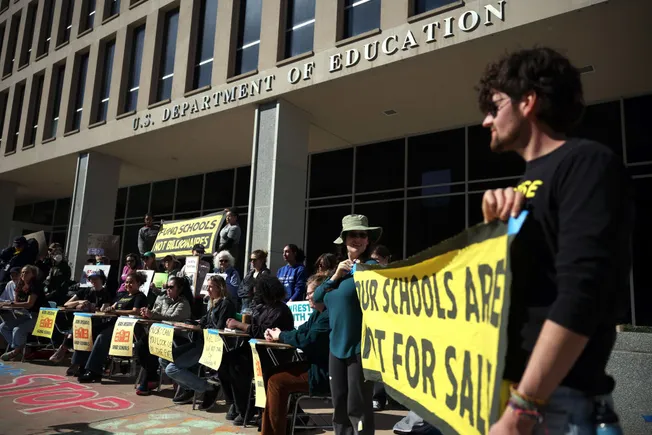
    But public school supporters have vigorously denounced the Trump administration’s moves to dismantle the Education Department, which have already included reducing the workforce by half and canceling research and teacher preparation grants. At least one group — Democracy Forward — says it is planning legal action to stop the department shutdown.

    Chad Rummel, executive director of the Council for Exceptional Children, said in a statement Friday, “IDEA is an education law, not a healthcare law, and belongs at the Department of Education.”

    CEC is a nonprofit for professionals who work in special and gifted education.

    Rummel added, “Moving IDEA programs to HHS would de-emphasize the purpose of IDEA to provide a free and appropriate public education and other critical activities to infants, toddlers, children, and youth with disabilities, and challenge the federal role to provide evidence-based research, personnel preparation, and technical assistance to advance the field of special education.”

    National Parents Union President Keri Rodrigues said in a Friday statement, “This is not a minor bureaucratic reorganization — it is a fundamental redefinition of how our country treats children with disabilities.” The National Parents Union is a 1.7 million membership organization with more than 1,800 affiliated parent organizations in all 50 states, Washington, D.C., and Puerto Rico.

    “We must call this what it is: an effort to dismantle protections, disempower families, and turn education into a battleground for profit-driven insurance corporations,” Rodrigues said. “We will not allow it.”


    Source link

  • ‘Turbulence’ and ‘confusion’: Groups raise alarm over Trump’s push to kill the Education Department

    ‘Turbulence’ and ‘confusion’: Groups raise alarm over Trump’s push to kill the Education Department

    This audio is auto-generated. Please let us know if you have feedback.

    President Donald Trump and Republicans promised to shutter the U.S. Department of Education on the 2024 campaign trail, a goal of many conservatives going back decades. 

    The department — created by statute in 1979 — legally cannot be eliminated without congressional approval and a president’s signature. Such a move would have to pass the 60-vote threshold for overcoming a filibuster in the Senate, which could partly explain why past efforts to nix the department have not gotten far.

    But on Thursday, Trump threw the department’s fate into deep uncertainty after he signed an executive order directing U.S. Secretary of Education Linda McMahon “to the maximum extent appropriate and permitted by law, take all necessary steps to facilitate the closure of the Department of Education and turn its authority over to states. 

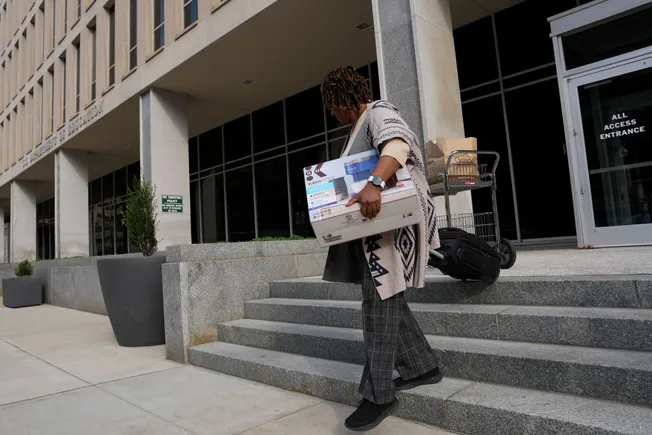
    The order came just over a week after the department announced massive layoffs that cut its workforce in half.

    Thursday’s order provided for the “effective and uninterrupted delivery of [Education Department] services, programs, and benefits on which Americans rely,” but it offered few details on how the Trump administration plans to restructure or distribute the agency’s functions.

    Those include managing and distributing billions in Pell Grants and student loans every year, as well as enforcing civil rights laws related to education on college campuses, among other functions.

    A statement from McMahon similarly offered scant details on what the shuttering would mean in practical terms.

    “We’re going to follow the law and eliminate the bureaucracy responsibly by working through Congress to ensure a lawful and orderly transition,” McMahon said.

    On Friday, Trump told media that the Education Department’s management of student loans would be moved to the Small Business Administration. “That’s coming out of the Department of Education immediately,” he said. The announcement came as the SBA said it will cut 43% of its staff

    While much remains uncertain about the ultimate effects of Trump’s order, higher education groups panned the order and raised alarms over what Trump’s unilateral attempt to shutter the agency will mean for students and institutions.

    “This is political theater, not serious public policy,” American Council on Education President Ted Mitchell said in a statement Thursday. “To dismantle any cabinet-level federal agency requires congressional approval, and we urge lawmakers to reject misleading rhetoric in favor of what is in the best interests of students and their families.”

    Kara Freeman, president and CEO of the National Association of College and University Business Officers, said that Trump’s order “adds to the turbulence colleges and universities are experiencing and the uncertainty students and families are facing at this critical time in the academic year.”

    Freeman voiced concerns around key functions of the department, including federal student aid processing, aid to institutions and data tracking “that is so important to institutional decision-making.”

    “Most troubling is that these collective actions involving the department could cause enough confusion to discourage students and families from considering a path to college,” Freeman said. 

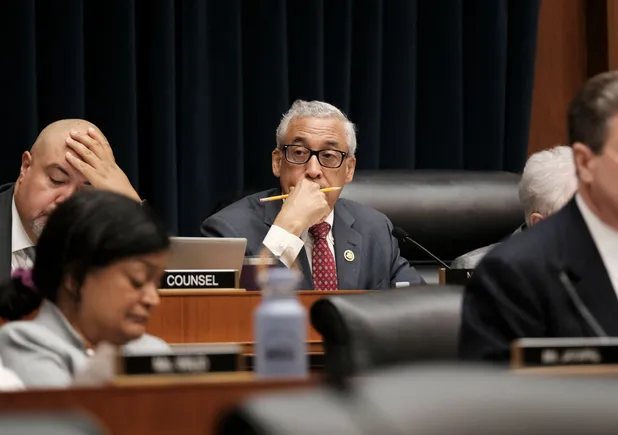
    Congressional Democrats were sharper in their criticism. In a letter to McMahon, Rep. Bobby Scott, ranking member of the House Committee on Education and Workforce, and Rep. Gerald Connolly, ranking member of the Committee on Oversight and Government Reform, described both the Thursday order and the Department’s mass layoffs as illegal moves to “usurp Congress’s authority.”

    Scott is leading an effort within the House to open an inquiry into the effort to dismantle the department. 

    He and Connolly also noted in their letter that the Trump administration’s efforts to shutter the agency run “counter to the will of the American people, the majority of whom oppose efforts to close the Department.”

    To their point, recent nationally representative surveys have found fairly wide support for the department. A March poll from Quinnipiac University found 60% of those surveyed opposed Trump’s plan to close the Education Department, while only 33% supported it. 

    Source link

  • House Democrats push for Education Department closure transparency

    House Democrats push for Education Department closure transparency

    This audio is auto-generated. Please let us know if you have feedback.

    Dive Brief:

    • Democrats on the House Education and Workforce Committee introduced a resolution on Friday calling for transparency and information from the Trump administration and U.S. Secretary of Education Linda McMahon on their efforts to shutter the U.S. Department of Education.
    • Specifically, the resolution requests unredacted copies of all documents from the administration that refer to the Education Department’s closure, including decisions around workforce reductions and those that could affect the agency’s ability to carry out education laws like the Individuals with Disabilities Education Act and the Elementary and Secondary Education Act.
    • The resolution will be taken to the House floor for a vote if the Education and Workforce Committee, led by Chair Tim Walberg, R-Mich., does not adopt it within 14 legislative days.

    Dive Insight:

    The resolution’s introduction comes one day after President Donald Trump signed an executive order directing McMahon to close the Education Department to the “maximum extent appropriate and permitted by law.”

    “Abolishing a federal agency requires an Act of Congress,” said Rep. Bobby Scott, D-Va., ranking member of the House Education and Workforce Committee, in a Friday statement. “President Trump’s executive order has little regard for the irreparable harm it will cause to students, educators, our future workforce, and parents, who are already struggling.”

    After the Trump administration announced massive layoffs that cut the Education Department’s workforce in half earlier this month, the agency has denied that its key functions would be impacted.

    “Closing the Department does not mean cutting off funds from those who depend on them — we will continue to support K-12 students, students with special needs, college student borrowers, and others who rely on essential programs,” said McMahon in a Thursday statement praising the executive order.

    Additionally, Trump said before signing Thursday’s executive order that he plans to redistribute the department’s primary responsibilities to other parts of the government. That includes Pell Grants, Title I funding and resources for students with disabilities, he said. 

    The resolution introduced Friday appears to be part of a broader effort by Democrats in the House and Senate to challenge and seek more information over the slew of changes being made to the Education Department. 

    On March 17, leading Democrats on the congressional appropriations committees demanded details on the Education Department’s mass layoffs in a letter to the agency. The requested information included details on the number of staff terminated in each office and the expected savings from the staffing cuts.

    Source link

  • llinois Community College Bachelor’s Degree Bill Stalls Amid Equity Concerns

    llinois Community College Bachelor’s Degree Bill Stalls Amid Equity Concerns

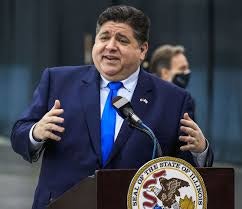
    Illinois Governor JB PritzkerA legislative initiative backed by Illinois Governor JB Pritzker that would allow community colleges to offer four-year bachelor’s degrees in high-demand fields has temporarily stalled in the state’s General Assembly, with lawmakers raising concerns about potential impacts on minority-serving institutions.

    The bill, which was one of Gov. Pritzker’s top legislative priorities announced in his February State of the State address, failed to advance from the House Higher Education Committee before Friday’s deadline for most non-spending bills.

    Rep. Katie Stuart, who chairs the committee, declined to call House Bill 3717 for a vote, though she indicated the legislation may still have a path forward this session.

    “I don’t think around here anything’s really ever dead, and I think there’s a path forward,” Stuart told reporters following last Wednesday’s committee hearing.

    Stuart, whose district includes Southern Illinois University Edwardsville, expressed specific concerns about how the proposed expansion might affect institutions that primarily serve minority students, such as Northeastern Illinois University and Chicago State University.

    “If we’re not careful about what programs are allowed, that it could collapse the existing programs in those institutions, collapse their student base, and just make them not able to be operational,” Stuart explained. “And then we wouldn’t have a four-year institution serving those communities.”

    This sentiment reflects growing concerns in higher education about maintaining equitable access while expanding educational options, particularly when considering the vital role that historically minority-serving institutions play in providing educational pathways for underrepresented populations.

    The governor’s proposal, introduced as House Bill 3717 by Rep. Tracy Katz Muhl, aims to make bachelor’s degrees more affordable and accessible, particularly in rural areas where four-year universities may not have a significant presence.

    “With lower tuition rates and a greater presence across the state — especially in rural areas — community colleges provide the flexibility and affordability students need,” Pritzker said when introducing the initiative. “This is a consumer-driven, student-centered proposal that will help fill the needs of regional employers in high-need sectors and create a pathway to stable, quality jobs for more Illinoisans.”

    The bill would allow community colleges to offer bachelor’s degrees in select fields, provided the college’s board of trustees demonstrates the program would address an “unmet workforce need” in their service area and that the institution possesses adequate resources and expertise to sustain the program.

    Following last week’s committee hearing, a coalition of presidents from several public and private universities in Illinois, including Chicago State and Northeastern Illinois University, released a statement acknowledging their concerns while expressing willingness to find a compromise.

    The university leaders noted they were concerned about “duplicating efforts and increasing costs at a time of limited resources,” but added they are “encouraged by negotiations and remain committed to working collaboratively to build a higher education ecosystem that serves all of our students and employers.”

    Despite missing the committee deadline, both Rep. Stuart and the governor’s office expressed optimism about reaching a compromise that addresses the concerns of all stakeholders.

    .

    Source link

  • Kentucky Gov. Andy Beshear vetoes bill to ban DEI at public colleges

    Kentucky Gov. Andy Beshear vetoes bill to ban DEI at public colleges

    This audio is auto-generated. Please let us know if you have feedback.

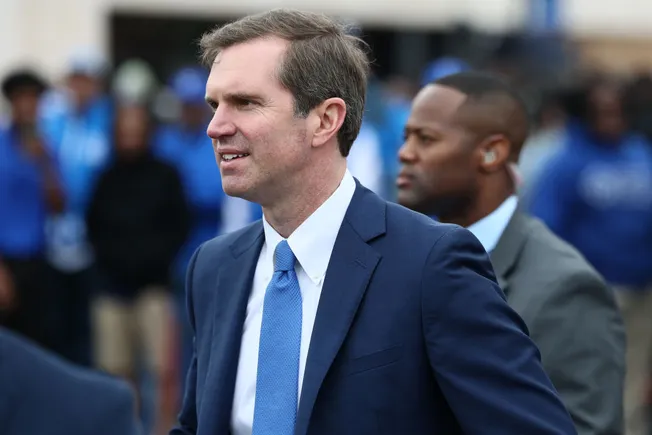
    Kentucky Gov. Andy Beshear on Thursday vetoed a bill aiming to ban the state’s public colleges from spending money on diversity, equity and inclusion efforts.

    “We’ve worked hard to make our commonwealth a welcoming place,” the Democratic governor said in a social media post Thursday. “House Bill 4 takes us away from that. We should be embracing diversity, not banning it.”

    But Beshear’s veto will likely prove to be strictly symbolic, as the state’s Republican lawmakers hold a veto-proof supermajority. 

    State Rep. Josh Calloway, a co-sponsor of the bill, said Thursday that the Legislature plans to override Beshear’s veto next week and blasted the governor’s decision.

    “His veto of our bill to end DEI in colleges is nothing but political theater, and the people of Kentucky see right through it,” he posted on social media.

    The legislation — which offered exemptions for programs required by federal and state law — also seeks to bar colleges from requiring students to take classes that would “indoctrinate participants with a discriminatory concept,” which it defines as promoting “differential treatment or benefits conferred to individuals on the basis of religion, race, sex, color, or national origin.”

    And it would prohibit Kentucky’s higher education coordinating board from approving degree programs with such courses, as well as ban colleges from using diversity statements or requiring employees to undergo DEI training.

    The American Civil Liberties Union of Kentucky praised Beshear’s decision. 

    “Thank you, Governor, for recognizing that diversity makes us stronger, equity makes us fair, and inclusion is a Kentucky value,” the organization said on social media Thursday.

    Should the lawmakers enact the legislation, public colleges would have until the end of June to eliminate all DEI positions and offices.

    Kentucky colleges are facing attacks on DEI at the federal level as well.

    The University of Kentucky is one of more than 50 colleges facing investigations by the U.S. Department of Education over allegations that they offer programs with race-based restrictions.

    On Wednesday, university President Eli Capilouto said that his institution had minimal engagement with the The PhD Project, the organization at the center of the majority of the department’s probes. 

    Nevertheless, Capilouto said the University of Kentucky had formally cut ties with the group and will fully cooperate with the federal investigation. 

    The university previously eliminated its DEI center in August, citing looming state legislation.

    Source link

  • American Jews must not give an inch on free speech — even when words hurt us

    American Jews must not give an inch on free speech — even when words hurt us

    This essay was originally published in Jewish Telegraphic Agency on March 14, 2025.


    We can’t make antisemitism go away by censoring antisemites.

    Nevertheless, the Trump administration has said it is combating antisemitism at Columbia University by canceling $400 million in funding and detaining a former student over what the president has vexingly called “illegal protests” against Israel. It is also making a host of additional demands of the university.

    Some Jewish groups are applauding the effort. But as an American Jew and free speech lawyer, I can tell you that protest alone isn’t illegal — and that giving the government the power to punish hateful speech will only erode our own right to speak out against hate.

    In the wake of the Oct. 7, 2023, attack led by Hamas on Israeli civilians and Israel’s military response, protests erupted on campuses nationwide. Some of the activities by student protesters were unlawful, like blocking fellow students from entering parts of campus or occupying buildings. But many students engaged in pure speech by marching, displaying signs, or shouting slogans. These are protected and celebrated forms of protest in our country. Whether in support of Israel, Palestine, or even Hamas, the First Amendment prevents the government from punishing or censoring them.

    As a historically persecuted population, Jews have a vested interest in ensuring American civil rights protections remain in full force. The First Amendment guarantees not only the freedom to practice our religion in this country, but our ability to speak out when our rights and lives are in danger.

    Our institutions of higher education are supposed to be a marketplace of ideas. Even if you think those ideas are bad, protecting all speech means your speech is protected, too.

    In 1943, 400 rabbis marched on Washington to draw attention to the mass murder of European Jews, helping lead to the creation of an American War Refugee Board that saved thousands of Jewish lives. In 1963, American Jewish leaders like German-born Rabbi Joachim Prinz marched again, this time with Martin Luther King Jr. Speaking just before Dr. King’s “I Have a Dream” speech, Rabbi Prinz lamented that his former countrymen “remained silent in the face of hate” and pleaded that “America must not become a nation of onlookers. America must not remain silent.”

    But we endanger the ability to speak out when we allow the government to erode our First Amendment protections. That’s why White House statements this week threatening punishment for anti-Israel speech should have all Americans concerned — even those of us who would appear, at first blush, to benefit.

    Regarding the arrest of Palestinian protester Mahmoud Kahlil by U.S. Immigration and Customs Enforcement, President Trump said, “We will find, apprehend, and deport these terrorist sympathizers from our country — never to return again.” Secretary of State Marco Rubio posted an advisory from the Department of Homeland Security saying that Khalil had “led activities aligned to Hamas,” and has also claimed the power to deport a legal resident whose activities “would have potentially serious adverse foreign policy consequences for the United States.” But those justifications could merely describe Khalil’s on-campus protests, including his protected speech.

    Threatening to deport Khalil without accusing him of any crimes chills speech. And that threat extends to everyone, no matter what side of the Israeli-Palestinian debate you are on, or whether you are promoting or combatting antisemitism. Would a green-card-holding Jew feel free to criticize special government employee Elon Musk for publicly supporting the far-right, German-nationalist AfD party, knowing our government could deem such criticism creates “adverse foreign policy consequences”? That standard is just too vague to risk deportation, and it permits the government to punish speech it just doesn’t like.

    The Trump administration’s pledge to remove “pro-Hamas” students, coupled with Khalil’s arrest, make it hard to see the administration’s actions this week against Columbia and other institutions of higher education as anything other than attempts to police and punish campus speech.

    To be sure, it has been a difficult year for Jewish college students, and there have been documented instances of bad actors preventing them from getting to class, or even assaulting them. Title VI requires colleges and universities that receive federal funding to ensure discriminatory harassment does not deprive Jewish students of an education, and it is possible Columbia has failed that obligation.

    But protest alone is not grounds by itself for a Title VI violation. And the government did not make sure it was punishing only actionable misconduct before canceling Columbia’s funding, like it is supposed to. The Supreme Court rightly set a high bar for conduct that amounts to discriminatory harassment that is supposed to ensure pure speech rarely rises to that level.

    And with good reason: Our institutions of higher education are supposed to be a marketplace of ideas. Even if you think those ideas are bad, protecting all speech means your speech is protected, too.

    I’m no stranger to fear of the recent public increase in antisemitism. Last year, given online antisemitism approaching the anniversary of Oct. 7, my wife and I chose to keep our daughter home from her Chabad preschool that day. The current political moment terrifies me. Antisemitism is coming from both sides of the political spectrum, and it feels like there is nowhere to run. So instead, I think we should fight.

    But allowing the government to ignore our rights to free speech would only deprive us of our most powerful weapon.

    Source link